

PFAS Molecules: A Major Concern for the Human Health and the Environment
Open accessThe DOI matches its Crossref record; 292 of the 292 references it cites were found in a registry or an index.
Abstract
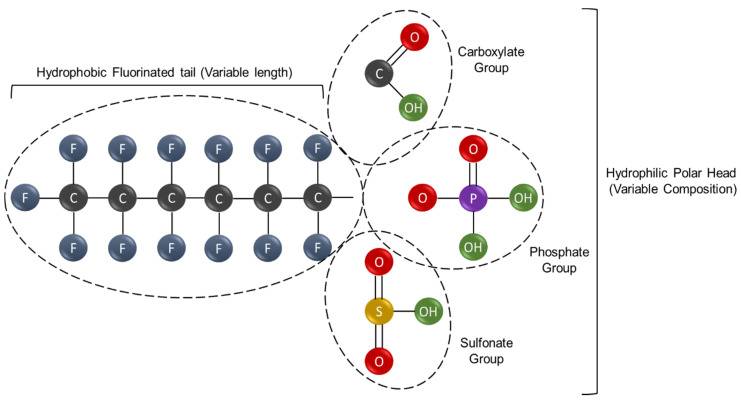
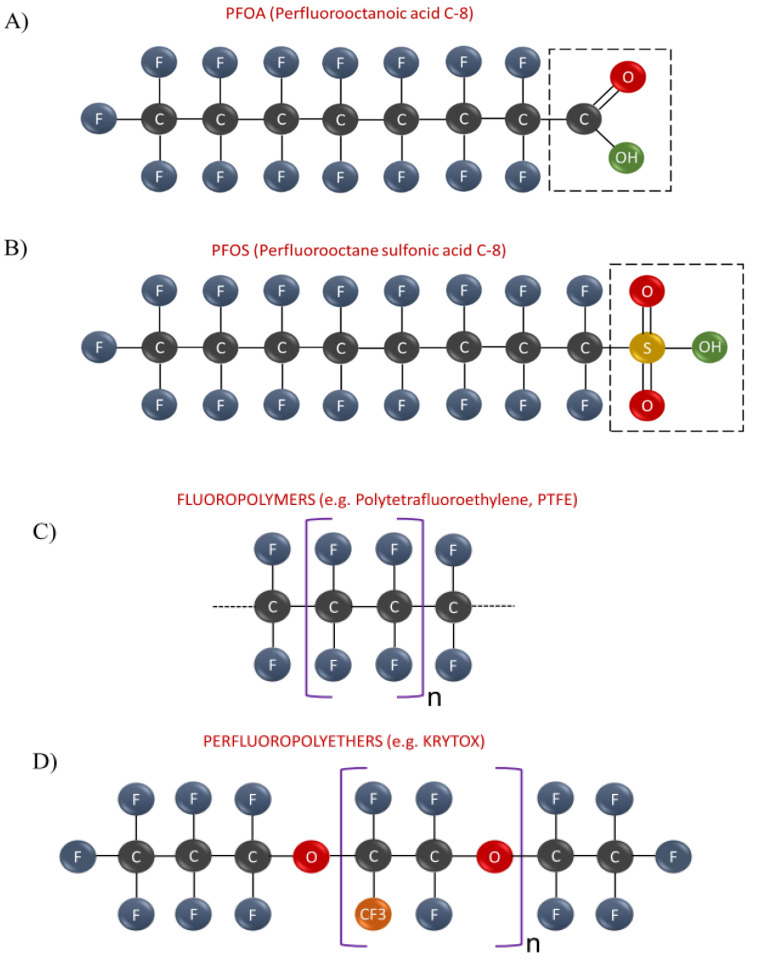
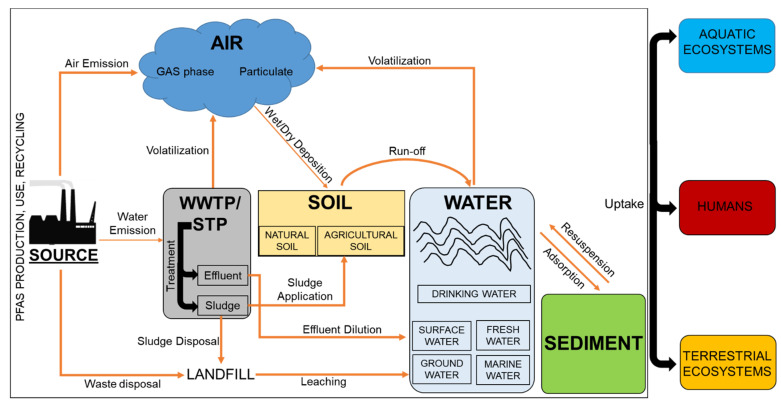
Per- and polyfluoroalkyl substances (PFAS) are a group of over 4700 heterogeneous compounds with amphipathic properties and exceptional stability to chemical and thermal degradation. The unique properties of PFAS compounds has been exploited for almost 60 years and has largely contributed to their wide applicability over a vast range of industrial, professional and non-professional uses. However, increasing evidence indicate that these compounds represent also a serious concern for both wildlife and human health as a result of their ubiquitous distribution, their extreme persistence and their bioaccumulative potential. In light of the adverse effects that have been already documented in biota and human populations or that might occur in absence of prompt interventions, the competent authorities in matter of health and environment protection, the industries as well as scientists are cooperating to identify the most appropriate regulatory measures, substitution plans and remediation technologies to mitigate PFAS impacts. In this review, starting from PFAS chemistry, uses and environmental fate, we summarize the current knowledge on PFAS occurrence in different environmental media and their effects on living organisms, with a particular emphasis on humans. Also, we describe present and provisional legislative measures in the European Union framework strategy to regulate PFAS manufacture, import and use as well as some of the most promising treatment technologies designed to remediate PFAS contamination in different environmental compartments.
Overview
The claims and statistics of this paper haven’t been checked yet.
Free: it reads the open-access text and checks the first 5 claims that cite a source we can check. Create a free account to check every claim.
Integrity signals
Registry
Cites
Statistics
Figures
Verification
Claims the paper makes
The claims and statistics of this paper haven’t been checked yet.
Free: it reads the open-access text and checks the first 5 claims that cite a source we can check. Create a free account to check every claim.
Claims other papers make about this one
Each is checked against this paper’s own text: does it say what the citing paper says it does?
The source backs part of the claim, not all of it — or backs it for a different population, condition or comparison.
In the citing paper
“Humans are exposed to complex mixtures of these substances, with their combined effects potentially being additive, synergistic or antagonistic (Glüge et al., 2020; Panieri et al., 2022).”
From Estimation of per- and polyfluoroalkyl substances (PFAS) half-lives in human studies: a systematic review and meta-analysis (2024) · cites this paper as Panieri et al., 2022
Experimental — accuracy not yet measuredThe source backs part of the claim, not all of it — or backs it for a different population, condition or comparison.
In the citing paper
“In healthcare environments—especially neonatal and pediatric intensive care—PFASs exposure may arise through the prolonged use of medical devices containing fluorinated polymers.”
From Exposure to Per- and Polyfluoroalkyl Substances (PFASs) in Healthcare: Environmental and Clinical Insights (2025) · cites this paper as [71]
Experimental — accuracy not yet measuredThe source backs part of the claim, not all of it — or backs it for a different population, condition or comparison.
In the citing paper
“The medical technology sector relies on PFASs for their unique properties, including chemical resistance, heat resistance, durability, and biocompatibility.”
From Exposure to Per- and Polyfluoroalkyl Substances (PFASs) in Healthcare: Environmental and Clinical Insights (2025) · cites this paper as [71]
Experimental — accuracy not yet measuredThe check wasn’t confident either way, so it gives no verdict — never disputed.
In the citing paper
“It is important to note that PFAS toxicokinetics could also be shaped by the combined effect of joint exposures.”
From Estimation of per- and polyfluoroalkyl substances (PFAS) half-lives in human studies: a systematic review and meta-analysis (2024) · cites this paper as Panieri et al., 2022
Experimental — accuracy not yet measuredThe check wasn’t confident either way, so it gives no verdict — never disputed.
In the citing paper
“PFASs impact platelet function by altering plasma membrane dynamics and calcium signaling, leading to enhanced adhesion, aggregation, and thrombus formation—thus elevating pro-thrombotic risk, especially in individuals with pre-existing vascular conditions [71,72].”
From Exposure to Per- and Polyfluoroalkyl Substances (PFASs) in Healthcare: Environmental and Clinical Insights (2025) · cites this paper as [71]
Experimental — accuracy not yet measured
Self-check
Percentages, sums and reported differences re-computed from the paper’s own numbers.
The self-check needs the paper’s full text.
Citations
Cites
Buck, R. C., Franklin, J., Berger, U., Conder, J. M., Cousins, I. T., de Voogt, P., Jensen, A. A., Kannan, K., Mabury, S. A., & van Leeuwen, S. P. (2011) · Integrated Environmental Assessment and Management · doi:10.1002/ieam.258 · Cited by 4,641
Emerging threats and persistent conservation challenges for freshwater biodiversity
Reid, A. J., Carlson, A. K., Creed, I. F., Eliason, E. J., Gell, P. A., Johnson, P. T. J., Kidd, K. A., MacCormack, T. J., Olden, J. D., Ormerod, S. J., et al. (2019) · Biological Reviews · doi:10.1111/brv.12480 · Cited by 3,645
Sources, fate and transport of perfluorocarboxylates
Prevedouros, K., Cousins, I. T., Buck, R. C., & Korzeniowski, S. H. (2006) · Environmental Science & Technology · doi:10.1021/es0512475 · Cited by 2,594
An overview of the uses of per- and polyfluoroalkyl substances (PFAS)
Glüge, J., Scheringer, M., Cousins, I. T., DeWitt, J. C., Goldenman, G., Herzke, D., Lohmann, R., Ng, C. A., Trier, X., & Wang, Z. (2020) · Environmental Science: Processes & Impacts · doi:10.1039/d0em00291g · Cited by 2,466
Fenton, S. E., Ducatman, A., Boobis, A., DeWitt, J. C., Lau, C., Ng, C., Smith, J. S., & Roberts, S. M. (2020) · Environmental Toxicology and Chemistry · doi:10.1002/etc.4890 · Cited by 2,445
Hu, X. C., Andrews, D. Q., Lindstrom, A. B., Bruton, T. A., Schaider, L. A., Grandjean, P., Lohmann, R., Carignan, C. C., Blum, A., Balan, S. A., et al. (2016) · Environmental Science & Technology Letters · doi:10.1021/acs.estlett.6b00260 · Cited by 1,333
Gagliano, E., Sgroi, M., Falciglia, P. P., Vagliasindi, F. G. A., & Roccaro, P. (2020) · Water Research · doi:10.1016/j.watres.2019.115381 · Cited by 1,249
Kelessidis, A., & Stasinakis, A. S. (2012) · Waste Management · doi:10.1016/j.wasman.2012.01.012 · Cited by 1,241
A first global production, emission, and environmental inventory for perfluorooctane sulfonate
Paul, A. G., Jones, K. C., & Sweetman, A. J. (2009) · Environmental Science & Technology · doi:10.1021/es802216n · Cited by 1,096
Ellis, D. A., Martin, J. W., De Silva, A. O., Mabury, S. A., Hurley, M. D., Sulbaek Andersen, M. P., & Wallington, T. J. (2004) · Environmental Science & Technology · doi:10.1021/es049860w · Cited by 1,000
Cited by
Items 601–700 of 764
Per- ja polyfluorattujen alkyyliyhdisteiden poistaminen yhdyskuntajätevedestä
Käräjäoja, P. (2025) · Tampere University Institutional Repository (Tampere University)
Overview of PFAS in aquatic environments
Lotufo, G. R., Krupa, P. M., Keil, K. G., Hayhurst, B. A., Kimble, A. N., & Moore, D. (2026) · US Army Corps of Engineers: Engineer Research and Development Center (Knowledge Core) · doi:10.21079/11681/50102
Cao, Z., Zhou, C., Zhao, Q. C., & Du, H. (2026) · Environment & Health · doi:10.1021/envhealth.5c00762
Oyelade, O., & Ohanebo, C. G. (2025) · International Journal of Scientific Research in Computer Science Engineering and Information Technology · doi:10.32628/cseit251116282
Welche Relevanz hat der inhalative Aufnahmepfad für die Exposition des Menschen gegenüber PFAS
Muro, D. (2024) · Qucosa (Saxon State and University Library Dresden)
Renai, L., Calabrò, F., Turkina, V., Dewapriya, P., Thomas, K. V., Papazian, S., & Samanipour, S. (2026) · ChemRxiv · doi:10.26434/chemrxiv.15000910/v1
(2026) · Journal of Food and Nutritional Health · doi:10.47275/2692-5222-129
Moon, N., Seo, S., & Kim, J. H. (2026) · Fortune Journal of Health Sciences · doi:10.26502/fjhs.403
Aryal, P., Hefner, C. E., Punnoy, P., Brack, E. M., & Henry, C. (2025) · doi:10.70477/piww7211
Stoycheva, I., Petrova, B., Kosateva, A., Tsyntsarski, B., Petrov, N. V., Dolashka, P. A., & Ranguelov, B. (2026) · Environments · doi:10.3390/environments13030174
Manzoor, R., Sultan, M., CAIRNS, S. C., Robertson, I., Holliman, P. J., & Junaid, M. (2026) · Advances in chemical pollution, environmental management and protection · doi:10.1016/bs.apmp.2026.02.002
Nutrition and Growth: Yearbook 2026
(2026) · World review of nutrition and dietetics · doi:10.1159/isbn.978-3-318-07484-0
Volovsky, M., Seifer, D. B., Şahin, G. N., Chaplia, O., Nichols-Burns, S. M., Halıcıgil, C., & Seli, E. U. (2026) · Research Square · doi:10.21203/rs.3.rs-9247718/v1
Qiu, M., Yang, J., Pang, Y., Wen, Y., Yang, L., Li, G., Yang, Q., & Liu, L. (2026) · Archives of Toxicology · doi:10.1007/s00204-026-04373-4
Martini 3 Coarse-Grain Model For Linear Perfluoroalkyl Substances
Calza, A., Calvaresi, M., Zerbetto, F., & Marrink, . J. (2026) · Journal of Chemical Theory and Computation · doi:10.1021/acs.jctc.6c00250
Wadiak, B., Czarnota, J., & Masłoń, A. A. (2026) · GAZ WODA I TECHNIKA SANITARNA · doi:10.65545/gwits.2026.03.03
Bakker, W., van de Klashorst, D., Schoots, D., Kramer, N. I., & Hughes, S. (2026) · Toxicology in Vitro · doi:10.1016/j.tiv.2026.106244
Early Nutrition and Its Effect on Growth, Body Composition, and Later Obesity
Larnkjær, A., Christensen, S. H., & Mølgaard, C. (2026) · World review of nutrition and dietetics · doi:10.1159/000548899
Garofalo, E. E. N., de Freitas, J. G., Shinzato, M. C., & Hirata, R. (2026) · Elsevier eBooks · doi:10.1016/b978-0-443-36731-1.00014-5
Vivod, D., Davis, B. A., Binninger, T., & Eikerling, M. H. (2026) · Electrochimica Acta · doi:10.1016/j.electacta.2026.149933
Kokkoliadi, P. (2026) · DSpace - NTUA (National Technical University of Athens) · doi:10.26240/heal.ntua.32101
Havens, L. A., Heitz, E. R., Hartley, K. R., Diaz, L., Lei, J., Fenton, S. E., Katz, J. E., Patterson, A., Maraka, S., Vincent-Hall, T. D., et al. (2026) · Journal of Exposure Science & Environmental Epidemiology · doi:10.1038/s41370-026-00884-5
Richmond-Baychev, K. (2026) · Digital Access to Scholarship at Harvard (DASH) (Harvard University)
Dimpor, J. J., Ansah, R. O., & Kusi, J. (2026) · Journal of Hazardous Materials Advances · doi:10.1016/j.hazadv.2026.101194 · Cited by 1
Polyvinylidene Fluoride: Reaction Engineering and Applications
Hanamirian, B., Storti, G., & Sponchioni, M. (2026) · Macromolecular Reaction Engineering · doi:10.1002/mren.70020
Sun, S., Liu, H., Zhang, Y., Liu, J., Zhu, X., Yao, Z., & Sun, B. (2026) · Plasma Chemistry and Plasma Processing · doi:10.1007/s11090-026-10668-2
Marinello, W. P., & Zylka, M. J. (2026) · Frontiers in Toxicology · doi:10.3389/ftox.2026.1814052
Shu, X., Zhou, W., Zhang, T., Ye, J.-F., Zhao, Y.-J., Gu, C., Yu, Y., & Li, M.-Q. (2026) · Frontiers in Endocrinology · doi:10.3389/fendo.2026.1808266
Hasegawa, K., Inaba, Y., Saito, S., Shibazaki, T., Pisonningtyas, M. L., Nakayama, S. F., Kamijima, M., Tsukahara, T., Nomiyama, T., & The Japan Environment and Children's Study (JECS) Group (2026) · Environmental Health and Preventive Medicine · doi:10.1265/ehpm.25-00399
New insights on PFAS inputs to the Great Lakes based on sediments from Lakes Superior and HuronPreprint
Whiting, Q. T., Nelson, S. K., Reavie, E. D., Filstrup, C. T., & Ulrich, B. A. (2026) · ChemRxiv · doi:10.26434/chemrxiv.15003699/v1
Wu, B., Li, S., Li, Y., Tang, W., Yuan, Z., Liu, L., Li, F., Zhang, Q., & Zhang, J. (2026) · Environment International · doi:10.1016/j.envint.2026.110323
Xiao, L., Xu, H., Zhang, Q., Wang, J., & ZHAO, Y. (2026) · Journal of Environmental Sciences · doi:10.1016/j.jes.2026.05.041
Biswas, K., Schlezinger, J. J., Bello, A., & Bello, D. (2026) · Environmental Science & Technology · doi:10.1021/acs.est.5c18596
Sun, M., Chu, C., Zhao, K., Qian, Z. M., Schootman, M., McMillin, S. E., Dong, J., Bao, W., Amjad, M., Moryani, H. T., et al. (2026) · Toxics · doi:10.3390/toxics14060478
Restoration ecology in conflict along the Colorado front range
Brakenridge, G. R., & SEASTED, T. R. (2026) · Restoration Ecology · doi:10.1111/rec.70459
Computational modeling of acute toxicity of pharmaceuticals and related chemicals
Sun, G. (2026) · Elsevier eBooks · doi:10.1016/b978-0-443-36474-7.00012-0
Yang, Z., Wu, Y., Tian, F., Bao, J., Fan, Y., & Huang, S. (2026) · Clinical Rheumatology · doi:10.1007/s10067-026-08213-9
Rodeo, C. (2026) · Digital Commons @ Connecticut College (Connecticut College)
Ichijo, S., Kaji, T., & Fujie, T. (2026) · Toxics · doi:10.3390/toxics14060510
Krishnan, S. A. G., Kumar, I. A., Arthanareeswaran, G., Duong, H. M., Łapkowski, M., & Ravi, Y. K. (2026) · Journal of environmental chemical engineering · doi:10.1016/j.jece.2026.123559
Removal efficiency and emission flux of emerging contaminants from dyeing production activities
Zhang, L., Wei, T., Zhan, X., Liu, S., Diao, J., Sun, Q., Yu, Q., Yu, X., Zhang, J., Huang, Q., et al. (2026) · Environmental Pollution · doi:10.1016/j.envpol.2026.128598
Developing a PFAS-Free Binder Compatible with Green Solvents for Organic Cathodes
Liu, J. T., Qiu, S. Z., Zeng, A., Battaglia, A. M., & Seferos, D. S. (2026) · ACS Applied Materials & Interfaces · doi:10.1021/acsami.6c07307
Tien, J., & Kenny, K. (2026) · Environment and Planning E Nature and Space · doi:10.1177/25148486261438989
Yao, M., Cohen, N., Mouzica, T., Midya, V., Andra, S. S., Arora, M., Armstrong-Davies, L., Chan, J. K. Y., Chan, S., Chan, J. C. Y., et al. (2026) · Environmental Research · doi:10.1016/j.envres.2026.125079
Barrea, C. (2026) · ORBi (University of Liège)
D’Aoust, P. M., Barbeau, B., Sauvé, S., & Houweling, D. (2026) · Journal of Environmental Management · doi:10.1016/j.jenvman.2026.130297
Luz, J. P., Dossena, A. J., Reichert, E. M., Ferrareze, C. W., Grando, A. P., Grassi, G. S., Hahn, R. Z., de Baco, L. S., Steffens, N. A., Brucker, N., et al. (2026) · Microchemical Journal · doi:10.1016/j.microc.2026.118888
Abeyrathne, E. D. N. S., & Maggonage, M. H. U. (2026) · Journal of Agriculture and Value Addition · doi:10.4038/java.v9i1.187
Associations between diet quality and multiple chemical exposures
Pei, Z., Hu, D., Chen, R., Sun, J., & Hu, W. (2026) · Ecotoxicology and Environmental Safety · doi:10.1016/j.ecoenv.2026.120466
Combined Effects of PFAS on Constipation Response Scores and Bowel Movement Frequency
Williams, B. L., & Obeng-Gyasi, E. (2026) · Pollutants · doi:10.3390/pollutants6030035
Lengar, L. (2026) · Repository of the University of Ljubljana (University of Ljubljana)
Serio, T. C., Tomasallo, C. D., He, X., Irvin, E. A., Ragin-Wilson, A., Wang, T. W., Botelho, J. C., Calafat, A. M., & Li, Z. (2026) · Journal of Exposure Science & Environmental Epidemiology · doi:10.1038/s41370-026-00939-7
Guinle, C., Visaliyil, H. J., Delannoy, V., Bely, N., Baratange, C., Cognie, B., Couzinet‐Mossion, A., Wielgosz‐Collin, G., Bertrand, S., Montiel, G., et al. (2026) · Marine Pollution Bulletin · doi:10.1016/j.marpolbul.2026.120109
Madorran, E., & Murua, A. (2026) · Environmental Science and Pollution Research · doi:10.1007/s11356-026-38056-5
Ajana, R., Rachoń, D., & Gałęzowska, G. (2026) · International Journal of Molecular Sciences · doi:10.3390/ijms27146301
Phytotoxicity of Persistent Organic Pollutants (POPs)
Miglioranza, K. S. B., Ondarza, P. M., Lourido, M., & Fideleff, S. (2026) · Elsevier eBooks · doi:10.1016/b978-0-443-33110-7.00002-x
PFAS Adhesion and Adsorption to Porous Media
Qi, L., Alam, S., & Chen, G. (2026) · Wiley eBooks · doi:10.1002/9781394420247.ch2 · Cited by 1
Probing Gas-Phase Pyrolysis of C2–C4 Perfluoroalkanes with Photoionization Mass Spectrometry
Joshi, S. P., Stuhr, M., Jasper, A. W., Dias, N., Lemmens, A. K., Ahmed, M., & Tranter, R. S. (2026) · The Journal of Physical Chemistry A · doi:10.1021/acs.jpca.6c01817
Hauschildt, C., & Becker, R. (2026) · Analytica Chimica Acta · doi:10.1016/j.aca.2026.345997
Lee, S. M., Kim, H. J., Park, J. W., Kwon, J. M., Kim, H., Lee, J. H., Jeong, S. H., Moon, Y. G., & Kim, H. H. (2026) · Ecotoxicology and Environmental Safety · doi:10.1016/j.ecoenv.2026.120519
A Review of Emerging Contaminants in Library Indoor Spaces: Sources, Exposure, and Health Risks
Zhao, X. L., Zhang, J., Zhao, Y., Zhao, X., Zhu, R., & Zhang, Y. (2026) · Journal for the Preservation of Library and Archival Material · doi:10.1515/res-2026-0001
Hauschildt, C., Jung, C., Haase, H., & Becker, R. (2026) · Analytical and Bioanalytical Chemistry · doi:10.1007/s00216-026-06683-z
Doria-Manzur, A. (2026) · ThinkTech (Texas Tech University)
Colussi, A. A. (2026) · York University Digital Library (York University)
Phytoremediation of PFAS: Progress and challenges
Nason, S. L., Chand, P., Thomas, S., & Zuverza‐Mena, N. (2026) · Elsevier eBooks · doi:10.1016/b978-0-443-45503-2.00006-6
PFAS and Western Diet Effects on Adolescent Rat Feeding and Metabolism
Kim, W. (2026) · Digital Commons-DePaul (DePaul University)
Li, H., Hu, X., Guo, Z., & Sun, Z. (2026) · Scientific Reports · doi:10.1038/s41598-026-56614-2
El-Mrabet, L., Michel-Malfait, J., Dorge, S., Fournier, J., & Trouvé, G. (2026) · Environmental Science and Pollution Research · doi:10.1007/s11356-026-38102-2
Xin, X., Wang, H., Wang, Z., Wang, Y., Zhang, C., Yu, K., Hou, P., & Dong, H. (2026) · Talanta · doi:10.1016/j.talanta.2026.130411
Spatial Analysis of PFAS in Sediment from Lake Ontario and Lake Erie
Baude, W. (2026) · University of Minnesota Digital Conservancy (University of Minnesota)
Zhu, X., Rong, H., & Wang, J. (2026) · Environmental Reviews · doi:10.1139/er-2026-0031
MOF-based PFAS removal: Bridging the gap between laboratory performance and real-world application
Wang, Q., & Asamba, M. N. (2026) · Journal of Hazardous Materials Advances · doi:10.1016/j.hazadv.2026.101484
Masud, M. A. A., Kebede, M. M., Ortbal, S. K., Rakib, M. R. J., Samaraweera, H., & Terry, L. G. (2026) · Elsevier eBooks · doi:10.1016/b978-0-443-43856-1.00020-4
Oishy, M. N., Raisa, M. B. H., & Anik, A. H. (2026) · Elsevier eBooks · doi:10.1016/b978-0-443-43856-1.00014-9
Per- and polyfluoroalkyl substances in soil and plants
Adewuyi, A. (2026) · Elsevier eBooks · doi:10.1016/b978-0-443-43856-1.00007-1
Jabr, A., Jaber, L., Al-Othman, A., Tawalbeh, M., & Shirazi, M. M. A. (2026) · Elsevier eBooks · doi:10.1016/b978-0-443-43856-1.00012-5
da Luz, J. P., Dossena, A. J., Reichert, E. M., Ferreira, M. L., Ferrareze, C. W., Grando, A. P., Grassi, G. S., Hahn, R. Z., Charão, M. F., & Linden, R. (2026) · Journal of Chromatography B · doi:10.1016/j.jchromb.2026.125252
Eccles, S., & Pellizzeri, S. (2026) · The Journal of Physical Chemistry A · doi:10.1021/acs.jpca.6c03256
Effect of exposure to per- and polyfluoroalkyl substances in early pregnancy on blood glucose levels
Yang, Y., Zhu, Z., Lin, L., Li, W., Teng, S., Chen, T., Sun, N., Liao, S., Li, L., Peng, F., et al. (2026) · BMC Pregnancy and Childbirth · doi:10.1186/s12884-026-09834-3
Rowsey, R. A., Desormeaux, J. C., & Romero, N. A. (2026) · Journal of the American Chemical Society · doi:10.1021/jacs.6c04593
Simone, B. D., Rosa, E. D., Duca, F. D., Montuori, P., Esposito, F., & Cirillo, T. (2026) · Food Chemistry · doi:10.1016/j.foodchem.2026.150857
PFAS Exposure and the Framing of Reproductive Health Risks: The Role of Mother-Blame
Naudé, A. R., & Lyerly, A. D. (2026) · Women s Reproductive Health · doi:10.1080/23293691.2026.2708989
Determination of per- and polyfluoroalkyl substances (PFAS) in plasma of Italian firefighters
Fornasari, A., Pozzebon, M., Santelli, S., Lago, G. D., Arniani, C., Raniolo, S., Modesto, S., Lenzi, J., Fais, P., & Pascali, J. P. (2026) · Emerging contaminants · doi:10.1016/j.emcon.2026.100725
Reactive electrochemical membranes for the degradation of per- and polyfluoroalkyl substances
Adeleye, O., Nazemi, R., Borch, T., & Cheng, Z. (2026) · doi:10.25675/3.027290
Du, C.-K., Guan, X., Zhang, R.-C., Liu, K.-T., Li, G., Chen, J.-Q., Xue, W.-J., Huang, Q., Xu, P.-Z., Wang, X., et al. (2026) · Journal of Hazardous Materials Advances · doi:10.1016/j.hazadv.2026.101519
Nhi, P. T. H., Nguyen, P. T., Viet, N. H., Huong, D. T. V., Le, D. M., Hien, T. T., Thang, L. V., & Bui, X. (2026) · VNUHCM Journal of Environment and Earth Sciences · doi:10.32508/vnuhcmj-ees.v10i1.833
Scientometric study of the effects of per- and polyfluoroalkyl substances (PFAS) on human health
López, Y. P. C. (2026) · Universidad Industrial de Santander
Niu, Y., Zhu, S., Lang, Y., Zhang, L., Zhang, B., Cui, W., Xing, L., Zhang, X., & Liu, W. (2026) · Environmental Science & Technology · doi:10.1021/acs.est.6c04546
Iwamoto, S., Endo, T., & Hisamoto, H. (2026) · The Analyst · doi:10.1039/d6an00955g
Hamza, M., Waqas, M., Elsayed, I., Schueneman, G. T., & Hassan, E. B. (2026) · Journal of environmental chemical engineering · doi:10.1016/j.jece.2026.124900
Transport, attenuation and modeling of multiple pollutants in the soil-groundwater system
Chen, Q., Xing, K., Yang, L., Zhou, Q., Luo, Y., & Yao, Y. (2026) · Journal of Hazardous Materials Advances · doi:10.1016/j.hazadv.2026.101541
Habitat heterogeneity regulates PFAS behavior and ecological risks in estuarine and coastal wetlands
Chen, H., Jing, W., Zhang, T., & Zeng, M. (2026) · Marine Environmental Research · doi:10.1016/j.marenvres.2026.108387
Groffen, T., Drenckhan, W., Prinsen, E., & Jansen, M. A. (2026) · Aquatic Toxicology · doi:10.1016/j.aquatox.2026.108002
Kabani, S., Khan, M., Akande, F., Russell, K., Taylor, C., Gates, J., & Curran, S. (2026) · Philosophy and Reason · doi:10.67644/pandr.v2i1.1844
Ratnasari, A. (2026) · Current Pollution Reports · doi:10.1007/s40726-026-00428-3
A Policy Analysis of PFAS Regulations in Maine and the US Federal Government
Nachamie, E. E., Schattman, R. E., & Pollard, L. D. (2026) · Maine policy review · doi:10.53558/wsmtdy02
Afzal, H., Mazumder, A. N., & Mehana, M. Z. (2026) · Environmental Technology & Innovation · doi:10.1016/j.eti.2026.105216
Metadata
- Authors
- Panieri, E., Baralic, K., Djukic-Cosic, D., Buha Djordjevic, A., & Saso, L.
- Affiliations
- Sapienza University of Rome (IT)
- Department of Toxicology “Akademik Danilo Soldatović”, Faculty of Pharmacy, University of Belgrade, 11211 Belgrade, Serbia
- Corresponding author
- Panieri, Emiliano
- ORCID
- Venue
- Toxics
- Publisher
- MDPI AG
- Published
- 2022-01-18
- Volume
- 10
- Issue
- 2
- Pages
- 44
- ISSN
- 2305-6304 (ISSN-L)
- PMC
- PMC8878656
- OpenAlex
- W4205243779
- Cited by
- 651
- References
- 292
- Citations by year
- 2026: 199 · 2025: 221 · 2024: 144 · 2023: 71 · 2022: 16
- FWCI
- 7.97
- Type
- journal article
- Language
- en
- Open access
- gold
- doi.org
- Licence
- Locations
- Toxics (publishedVersion, cc-by)
- PubMed Central (publishedVersion, cc-by)
- PubMed (publishedVersion)
- DOAJ (DOAJ: Directory of Open Access Journals) (submittedVersion, cc-by-sa)
- IRIS Research product catalog (Sapienza University of Rome) (submittedVersion, cc-by)
- Topics
- Physical Sciences › Environmental Science › Environmental Chemistry › Per- and polyfluoroalkyl substances research
- Physical Sciences › Chemistry › Organic Chemistry › Fluorine in Organic Chemistry
- Physical Sciences › Materials Science › Polymers and Plastics › Synthesis and properties of polymers
- Keywords
- per- and polyfluoroalkyl substances, PFAS, human health effects, environmental fate, bioaccumulation, environmental contamination, PFAS regulation, remediation strategies, wildlife toxicity
About these checks
Registry, retraction, Cites and statistics results are computed, not judged, with one exception: a printed reference that no index lists is read once by a model before it counts as a citation error. Claims are extracted by a model and kept only when their quote appears verbatim in the text; each cited source is then checked, with a model’s help, for whether it says what the claim relies on. Those verdicts can be wrong — read the claim’s quote and the cited source before relying on one.
Statistics and arithmetic are recomputed, not judged.
Confidence bands are shown only for fields calibrated on our annotated test set. None is calibrated yet, so no band is shown.
What counts as a claim ›How we measure confidence ›How we check this ›
Are you an author, or do you see a problem with this page? Request a review
Data sources
Bibliographic data: Semantic Scholar, OpenAlex, Crossref.
Contains information from the Semantic Scholar Academic Graph Datasets, made available under the ODC Attribution License (ODC-BY 1.0).
Semantic Scholar’s data is described in: Kinney, R., et al. (2023). The Semantic Scholar Open Data Platform. arXiv:2301.10140.
