

PFAS Molecules: A Major Concern for the Human Health and the Environment
Open accessThe DOI matches its Crossref record; 292 of the 292 references it cites were found in a registry or an index.
Abstract
Per- and polyfluoroalkyl substances (PFAS) are a group of over 4700 heterogeneous compounds with amphipathic properties and exceptional stability to chemical and thermal degradation. The unique properties of PFAS compounds has been exploited for almost 60 years and has largely contributed to their wide applicability over a vast range of industrial, professional and non-professional uses. However, increasing evidence indicate that these compounds represent also a serious concern for both wildlife and human health as a result of their ubiquitous distribution, their extreme persistence and their bioaccumulative potential. In light of the adverse effects that have been already documented in biota and human populations or that might occur in absence of prompt interventions, the competent authorities in matter of health and environment protection, the industries as well as scientists are cooperating to identify the most appropriate regulatory measures, substitution plans and remediation technologies to mitigate PFAS impacts. In this review, starting from PFAS chemistry, uses and environmental fate, we summarize the current knowledge on PFAS occurrence in different environmental media and their effects on living organisms, with a particular emphasis on humans. Also, we describe present and provisional legislative measures in the European Union framework strategy to regulate PFAS manufacture, import and use as well as some of the most promising treatment technologies designed to remediate PFAS contamination in different environmental compartments.
Overview
The claims and statistics of this paper haven’t been checked yet.
Free: it reads the open-access text and checks the first 5 claims that cite a source we can check. Create a free account to check every claim.
Integrity signals
Registry
Cites
Statistics
Figures
Verification
Claims the paper makes
The claims and statistics of this paper haven’t been checked yet.
Free: it reads the open-access text and checks the first 5 claims that cite a source we can check. Create a free account to check every claim.
Claims other papers make about this one
Each is checked against this paper’s own text: does it say what the citing paper says it does?
The source backs part of the claim, not all of it — or backs it for a different population, condition or comparison.
In the citing paper
“Humans are exposed to complex mixtures of these substances, with their combined effects potentially being additive, synergistic or antagonistic (Glüge et al., 2020; Panieri et al., 2022).”
From Estimation of per- and polyfluoroalkyl substances (PFAS) half-lives in human studies: a systematic review and meta-analysis (2024) · cites this paper as Panieri et al., 2022
Experimental — accuracy not yet measuredThe source backs part of the claim, not all of it — or backs it for a different population, condition or comparison.
In the citing paper
“In healthcare environments—especially neonatal and pediatric intensive care—PFASs exposure may arise through the prolonged use of medical devices containing fluorinated polymers.”
From Exposure to Per- and Polyfluoroalkyl Substances (PFASs) in Healthcare: Environmental and Clinical Insights (2025) · cites this paper as [71]
Experimental — accuracy not yet measuredThe source backs part of the claim, not all of it — or backs it for a different population, condition or comparison.
In the citing paper
“The medical technology sector relies on PFASs for their unique properties, including chemical resistance, heat resistance, durability, and biocompatibility.”
From Exposure to Per- and Polyfluoroalkyl Substances (PFASs) in Healthcare: Environmental and Clinical Insights (2025) · cites this paper as [71]
Experimental — accuracy not yet measuredThe check wasn’t confident either way, so it gives no verdict — never disputed.
In the citing paper
“It is important to note that PFAS toxicokinetics could also be shaped by the combined effect of joint exposures.”
From Estimation of per- and polyfluoroalkyl substances (PFAS) half-lives in human studies: a systematic review and meta-analysis (2024) · cites this paper as Panieri et al., 2022
Experimental — accuracy not yet measuredThe check wasn’t confident either way, so it gives no verdict — never disputed.
In the citing paper
“PFASs impact platelet function by altering plasma membrane dynamics and calcium signaling, leading to enhanced adhesion, aggregation, and thrombus formation—thus elevating pro-thrombotic risk, especially in individuals with pre-existing vascular conditions [71,72].”
From Exposure to Per- and Polyfluoroalkyl Substances (PFASs) in Healthcare: Environmental and Clinical Insights (2025) · cites this paper as [71]
Experimental — accuracy not yet measured
Self-check
Percentages, sums and reported differences re-computed from the paper’s own numbers.
The self-check needs the paper’s full text.
Citations
Cites
Buck, R. C., Franklin, J., Berger, U., Conder, J. M., Cousins, I. T., de Voogt, P., Jensen, A. A., Kannan, K., Mabury, S. A., & van Leeuwen, S. P. (2011) · Integrated Environmental Assessment and Management · doi:10.1002/ieam.258 · Cited by 4,641
Emerging threats and persistent conservation challenges for freshwater biodiversity
Reid, A. J., Carlson, A. K., Creed, I. F., Eliason, E. J., Gell, P. A., Johnson, P. T. J., Kidd, K. A., MacCormack, T. J., Olden, J. D., Ormerod, S. J., et al. (2019) · Biological Reviews · doi:10.1111/brv.12480 · Cited by 3,645
Sources, fate and transport of perfluorocarboxylates
Prevedouros, K., Cousins, I. T., Buck, R. C., & Korzeniowski, S. H. (2006) · Environmental Science & Technology · doi:10.1021/es0512475 · Cited by 2,594
An overview of the uses of per- and polyfluoroalkyl substances (PFAS)
Glüge, J., Scheringer, M., Cousins, I. T., DeWitt, J. C., Goldenman, G., Herzke, D., Lohmann, R., Ng, C. A., Trier, X., & Wang, Z. (2020) · Environmental Science: Processes & Impacts · doi:10.1039/d0em00291g · Cited by 2,466
Fenton, S. E., Ducatman, A., Boobis, A., DeWitt, J. C., Lau, C., Ng, C., Smith, J. S., & Roberts, S. M. (2020) · Environmental Toxicology and Chemistry · doi:10.1002/etc.4890 · Cited by 2,445
Hu, X. C., Andrews, D. Q., Lindstrom, A. B., Bruton, T. A., Schaider, L. A., Grandjean, P., Lohmann, R., Carignan, C. C., Blum, A., Balan, S. A., et al. (2016) · Environmental Science & Technology Letters · doi:10.1021/acs.estlett.6b00260 · Cited by 1,333
Gagliano, E., Sgroi, M., Falciglia, P. P., Vagliasindi, F. G. A., & Roccaro, P. (2020) · Water Research · doi:10.1016/j.watres.2019.115381 · Cited by 1,249
Kelessidis, A., & Stasinakis, A. S. (2012) · Waste Management · doi:10.1016/j.wasman.2012.01.012 · Cited by 1,241
A first global production, emission, and environmental inventory for perfluorooctane sulfonate
Paul, A. G., Jones, K. C., & Sweetman, A. J. (2009) · Environmental Science & Technology · doi:10.1021/es802216n · Cited by 1,096
Ellis, D. A., Martin, J. W., De Silva, A. O., Mabury, S. A., Hurley, M. D., Sulbaek Andersen, M. P., & Wallington, T. J. (2004) · Environmental Science & Technology · doi:10.1021/es049860w · Cited by 1,000
Cited by
Items 101–200 of 764
Chemi-Impeditive Sensing Platform Based on Single-Walled Carbon Nanotubes
Han, S. H., Pioch, T. N., & Swager, T. M. (2024) · Journal of the American Chemical Society · doi:10.1021/jacs.4c07986 · Cited by 29
Brunn, H. E., Arnold, G., Körner, W., Rippen, G., Steinhäuser, K. G., & Valentin, I. (2023) · Environmental Sciences Europe · doi:10.1186/s12302-023-00730-7 · Cited by 30
Research priorities for the environmental risk assessment of per- and polyfluorinated substances
Gkika, I. S., Xie, G., van Gestel, C. A. M., Ter Laak, T. L., Vonk, J. A., van Wezel, A. P., & Kraak, M. H. S. (2023) · Environmental Toxicology and Chemistry · doi:10.1002/etc.5729 · Cited by 28
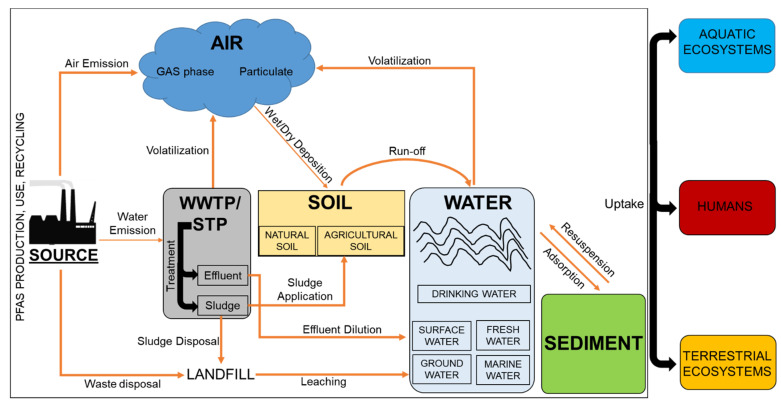
“Exposure pathways and environmental distribution processes of PFAS have been previously described by Panieri et al. (2022) and the ITRC (2022).”
BackgroundWang, J., Lin, Z.-W., Dichtel, W. R., & Helbling, D. E. (2024) · Water Research · doi:10.1016/j.watres.2024.121897 · Cited by 28
Yadav, A., Vuković, L., & Narayan, M. (2024) · Journal of the American Chemical Society · doi:10.1021/jacs.4c02934 · Cited by 28
Corviseri, M. C., Polidoro, A. D. S., Poli, M. D., Stevanin, C., Chenet, T., D’Anna, C., Cavazzini, A., Pasti, L., & Franchina, F. A. (2025) · Talanta · doi:10.1016/j.talanta.2025.127944 · Cited by 28
Gautam, R. K., Mottaghipisheh, J., Verma, S., Singh, R. P., Muthukumaran, S., Navaratna, D., & Ahrens, L. (2025) · Journal of Hazardous Materials Advances · doi:10.1016/j.hazadv.2025.100748 · Cited by 29
Tancreda, G., Campisi, L., Sarti, M., Pozzo, L., & Vornoli, A. (2025) · Current Issues in Molecular Biology · doi:10.3390/cimb47110944 · Cited by 29
Dangudubiyyam, S. V., Mishra, J. S., Song, R., & Kumar, S. (2022) · Biology of Reproduction · doi:10.1093/biolre/ioac141 · Cited by 28
Timshina, A. S., Robey, N. M., Oldnettle, A., Barron, S., Mehdi, Q., Cerlanek, A. R., Townsend, T. G., & Bowden, J. A. (2024) · Waste Management · doi:10.1016/j.wasman.2024.03.026 · Cited by 28
Jiang, Z., Denisov, S. A., Adjei, D., Mostafavi, M., & Ma, J. (2024) · Environmental Science & Technology · doi:10.1021/acs.est.4c01444 · Cited by 27
Electrochemical methods for treatment of per- and polyfluoroalkyl substances (PFAS): A review
Tan, B., Bakar, N. H. H. A., & Lee, H. L. (2024) · Journal of environmental chemical engineering · doi:10.1016/j.jece.2024.114990 · Cited by 27
Arora, S., & Verma, N. (2026) · ChemistrySelect · doi:10.1002/slct.202502016 · Cited by 27
Transient Kinetics of Short-Chain Perfluoroalkyl Sulfonate with Radiolytic Reducing Species
Jiang, Z., Adjei, D., Denisov, S. A., Mostafavi, M., & Ma, J. (2022) · Environmental Science & Technology Letters · doi:10.1021/acs.estlett.2c00837 · Cited by 27
Prada, A. F., Scott, J. W., Green, L., & Hoellein, T. J. (2024) · The Science of The Total Environment · doi:10.1016/j.scitotenv.2024.176751 · Cited by 27
Forthun, I. H., Roelants, M., Haug, L. S., Knutsen, H. K., Schell, L. M., Jugessur, A., Bjerknes, R., Sabaredzovic, A., Bruserud, I. S., & Juliusson, P. B. (2023) · International Journal of Hygiene and Environmental Health · doi:10.1016/j.ijheh.2023.114199 · Cited by 26
Impacts of PFAS Exposure on Neurodevelopment: A Comprehensive Literature Review
Currie, S. D., Wang, J.-S., & Tang, L. (2024) · Environments · doi:10.3390/environments11090188 · Cited by 26
Hvizdak, M., Kandel, S. E., Work, H. M., Gracey, E. G., McCullough, R. L., & Lampe, J. N. (2023) · Journal of Inorganic Biochemistry · doi:10.1016/j.jinorgbio.2023.112120 · Cited by 26
Spyrou, A., Vlastos, D., & Αντωνοπούλου, Μ. (2024) · Environmental Research · doi:10.1016/j.envres.2024.118298 · Cited by 26
Anik, A. H., Basir, M. S., Sultan, M. B., Alam, M., Rahman, M. M., & Tareq, S. M. (2025) · Marine Pollution Bulletin · doi:10.1016/j.marpolbul.2025.117554 · Cited by 26
Marzi, D., Valente, F., Luche, S., Caissutti, C., Sabia, A., Capitani, I., Capobianco, G., Serranti, S., Masi, A., Panozzo, A., et al. (2025) · Science of The Total Environment · doi:10.1016/j.scitotenv.2024.178323 · Cited by 25
Mancinelli, M., Martucci, A., & Ahrens, L. (2023) · Environmental Science Water Research & Technology · doi:10.1039/d3ew00225j · Cited by 25
Karataş, O., Khataee, A., Kobya, M., & Yoon, Y. (2023) · Journal of Water Process Engineering · doi:10.1016/j.jwpe.2023.104292 · Cited by 25
Morales, M., Arp, H. P. H., Castro, G., Asimakopoulos, A. G., Sørmo, E., Peters, G. M., & Cherubini, F. (2024) · Journal of Hazardous Materials · doi:10.1016/j.jhazmat.2024.134242 · Cited by 25
Morales-Grahl, E., Hilz, E. N., & Gore, A. C. (2024) · International Journal of Molecular Sciences · doi:10.3390/ijms25136887 · Cited by 25
Singh, A., Soorya, K. K., Bhatnagar, A., & Gupta, A. K. (2024) · Separation and Purification Technology · doi:10.1016/j.seppur.2024.128588 · Cited by 25
DeLuca, N. M., Boettger, J. D., Miller, K. E., Fuller, C., Minucci, J. M., Ashley, P. J., Cox, D., Dewalt, G., Friedman, W., Pinzer, E. A., et al. (2024) · Indoor Environments · doi:10.1016/j.indenv.2024.100033 · Cited by 25
MacKeown, H., Magi, E., Carro, M. D., & Benedetti, B. (2024) · The Science of The Total Environment · doi:10.1016/j.scitotenv.2024.176764 · Cited by 24
Liu, J., Chen, X., Carey, G. R., Liu, X., Lowry, G. V., Fan, D., Danko, A. S., & Li, G. (2025) · Environmental Science & Technology · doi:10.1021/acs.est.4c07958 · Cited by 25
Menegatto, M., Lezzi, S., Musolino, M., & Zamperini, A. (2022) · International Journal of Environmental Research and Public Health · doi:10.3390/ijerph192214761 · Cited by 24
Fortela, D. L. B., Mikolajczyk, A. P., Carnes, M. R., Sharp, W. W., Revellame, E. D., Hernandez, R. A., Holmes, W. E., & Zappi, M. E. (2023) · BioTechniques · doi:10.2144/btn-2023-0070 · Cited by 24
Park, S., Gordon, C. T., & Swager, T. M. (2024) · Proceedings of the National Academy of Sciences · doi:10.1073/pnas.2317300121 · Cited by 24
Per- and polyfluoroalkyls used as cosmetic ingredients - Qualitative study of 765 cosmetic products
Couteau, C., Catherine, B., Romane, C., & Coiffard, L. J. M. (2024) · Food and Chemical Toxicology · doi:10.1016/j.fct.2024.114625 · Cited by 25
Weed, R. A., Campbell, G., Brown, L., May, K., Sargent, D., Sutton, E., Burdette, K., Rider, W., Baker, E. S., & Enders, J. R. (2024) · Toxics · doi:10.3390/toxics12060403 · Cited by 24
Yi, Y., Feng, Y., Shi, Y., Xiao, J., Liu, M., & Wang, K. (2024) · Toxics · doi:10.3390/toxics12080539 · Cited by 24
Medina, H., & Farmer, C. (2024) · Toxics · doi:10.3390/toxics12080610 · Cited by 24
Pitruzzella, R., Chiodi, A., Rovida, R., Arcadio, F., Porto, G., Moretti, S., Brambilla, G., Zeni, L., & Cennamo, N. (2024) · Nanomaterials · doi:10.3390/nano14211764 · Cited by 24
Lewis, N., Abdulkadir, A. S., Kandel, S., Rosby, R., & Hossain, E. (2024) · Physiologia · doi:10.3390/physiologia4040035 · Cited by 24
Xie, X., Lu, Y., Lei, H., Cheng, J., An, X., Wang, W., Jiang, X., Xie, J., Xiong, Y., & Wu, T. (2024) · Science of The Total Environment · doi:10.1016/j.scitotenv.2024.172094 · Cited by 23
Sukhram, S. D., Kim, J., Musovic, S., Anidugbe, A., Corte, E., Ahsan, T., Rofail, S., Mesquita, N., & Padilla, M. (2025) · International Journal of Environmental Research and Public Health · doi:10.3390/ijerph22071116 · Cited by 24
Domingo, J. L., & Nadal, M. (2026) · Chemical Research in Toxicology · doi:10.1021/acs.chemrestox.5c00375 · Cited by 24
Nübler, S., Esteban, M., Castaño, A., Mol, H. G. J., Haji-Abbas-Zarrabi, K., Schäfer, M., Müller, J., Hajšlová, J., Dvořáková, D., Antignac, J., et al. (2022) · The Science of The Total Environment · doi:10.1016/j.scitotenv.2022.157481 · Cited by 23
Ali, Z. A., Yamijala, S. S. R. K. C., & Wong, B. M. (2023) · Current Opinion in Chemical Engineering · doi:10.1016/j.coche.2023.100947 · Cited by 23
Cui, R., Ye, L., Qiao, X., Wang, S., Zheng, K., Yang, J., Ge, R., Lin, H., & Wang, Y. (2024) · Chemico-Biological Interactions · doi:10.1016/j.cbi.2024.110987 · Cited by 23
Baralić, K., Petkovski, T., Piletić, N., Marić, Đ., Djordjević, A. B., Antonijević, B., & Đukić-Ćosić, D. (2024) · International Journal of Molecular Sciences · doi:10.3390/ijms252212333 · Cited by 23
Beccacece, L., Costa, F., Pascali, J. P., & Giorgi, F. M. (2023) · Toxics · doi:10.3390/toxics11070567 · Cited by 22
Wu, Z., Gao, Y., Cao, L., Peng, Q., & Yao, X. (2023) · Scientific Reports · doi:10.1038/s41598-023-45048-9 · Cited by 22
Dioxins vs. PFAS: Science and Policy Challenges
George, A. J., & Birnbaum, L. S. (2024) · Environmental Health Perspectives · doi:10.1289/ehp14449 · Cited by 22
Chambial, P., Thakur, N., Kushawaha, J., & Kumar, R. (2025) · The Science of The Total Environment · doi:10.1016/j.scitotenv.2025.178803 · Cited by 23
Ilieva, Z., Sühring, R., Bastos, N., Ezzahraoui, F.-Z., & Hamza, R. (2025) · Journal of environmental chemical engineering · doi:10.1016/j.jece.2025.116377 · Cited by 22
Industrial Applications, Environmental Fate, Human Exposure, and Health Effects of PFAS
Hasan, M., Habib, A., Alam, M., Islam, S., & Halim, E. (2025) · Pollutants · doi:10.3390/pollutants5040043 · Cited by 21
“The persistence, bioaccumulation, and potential for transformation or degradation of PFASs in soils and other media underscore the need for integrated, multi-compartmental approaches to understanding and managing their environmental fate [73,169–171].”
Hatem, G., Faria, A. M., Pinto, M. B., Salamova, A., Teixeira, J. P., Costa, C., & Madureira, J. (2025) · Journal of Hazardous Materials · doi:10.1016/j.jhazmat.2025.137978 · Cited by 21
Labine, L. M., Pereira, E. A. O., Kleywegt, S. M., Jobst, K. J., Simpson, A. J., & Simpson, M. J. (2022) · Environmental Toxicology and Chemistry · doi:10.1002/etc.5517 · Cited by 21
Timshina, A. S., Sobczak, W. J., Griffin, E. K., Lin, A. M., Townsend, T. G., & Bowden, J. A. (2023) · Chemosphere · doi:10.1016/j.chemosphere.2023.138307 · Cited by 21
Mielke, H. W., & Egendorf, S. P. (2023) · Medical Research Archives · doi:10.18103/mra.v11i5.3813 · Cited by 21
Llewellyn, M. J., Griffin, E. K., Caspar, R. J., Timshina, A. S., Bowden, J. A., Miller, C. J., Baker, B. B., & Baker, T. R. (2024) · The Science of The Total Environment · doi:10.1016/j.scitotenv.2024.173325 · Cited by 21
“Forever chemicals”: a sticky environmental problem
Fang, J., Li, S., Qiu, R., & Zhang, W. (2024) · Frontiers of Environmental Science & Engineering · doi:10.1007/s11783-024-1891-5 · Cited by 21
Thyroid under Attack: The Adverse Impact of Plasticizers, Pesticides, and PFASs on Thyroid Function
Rodrigues, V. G., Henrique, G., Vidal, É. K. D. S., de Souza, R. M. M., Tavares, E. F. C., Mezzalira, N., Marques, T. D. O., Alves, B. M., Pinto, J. D. L., Irikura, L. N. N., et al. (2024) · Endocrines · doi:10.3390/endocrines5030032 · Cited by 21
Zhai, C., Zhang, K., Liu, Y., & Xia, S. (2025) · Water Research · doi:10.1016/j.watres.2025.124315 · Cited by 20
A critical review of per- and polyfluoroalkyl substances (PFAS) in wastewater biosolids and sludge
Ismail, U. M., & Tizaoui, C. (2025) · Journal of environmental chemical engineering · doi:10.1016/j.jece.2025.120422 · Cited by 21
Neto, G. D. A. M., Polcrova, A. B., Pospíšilová, A., Bláha, L., Klánová, J., Bobák, M., & Gonzalez-Rivas, J. P. (2022) · International Journal of Environmental Research and Public Health · doi:10.3390/ijerph192113898 · Cited by 20
Albers, J., Mylroie, J., Kimble, A. N., Steward, C., Chapman, K., Wilbanks, M. S., Perkins, E. J., & García‐Reyero, N. (2024) · Toxics · doi:10.3390/toxics12030192 · Cited by 20
Dhulia, A., Khalil, C. A., Kewalramani, J. A., Sarkar, D., & Boufadel, M. C. (2024) · Chemosphere · doi:10.1016/j.chemosphere.2024.142503 · Cited by 20
Li, S., Hu, G., Zhang, B., Yao, X., Chen, Z., & Luo, X. (2024) · The Science of The Total Environment · doi:10.1016/j.scitotenv.2024.177961 · Cited by 19
Trends in the Diversification of the Detergentome
Wycisk, V., Wagner, M., & Urner, L. H. (2023) · ChemPlusChem · doi:10.1002/cplu.202300386 · Cited by 19
Takayama, T., Shingu, A., Kato, S., Nagatomo, R., Tsutsumi, T., & Inoue, K. (2024) · Journal of Food Composition and Analysis · doi:10.1016/j.jfca.2024.106436 · Cited by 20
Li, L., Ren, J., Guo, M., An, Z., Duan, W., Lv, J., Tan, Z., Yang, J., Zhu, Y., Yang, H., et al. (2024) · The Science of The Total Environment · doi:10.1016/j.scitotenv.2024.175612 · Cited by 19
Janssen, A. W. F., Duivenvoorde, L. P. M., Beekmann, K., Pinckaers, N. E. T., van der Hee, B., Noorlander, A., Leenders, L., Louisse, J., & van der Zande, M. (2024) · Archives of Toxicology · doi:10.1007/s00204-024-03851-x · Cited by 19
Knox, B., Güil-Oumrait, N., Basagaña, X., Cserbik, D., Dadvand, P., Foraster, M., Galmés, T., Gascón, M., Gómez‐Roig, M. D., Gómez-Herrera, L., et al. (2024) · Environment International · doi:10.1016/j.envint.2024.109090 · Cited by 19
Lagostena, L., Rotondo, D., Gualandris, D., Calisi, A., Lorusso, C., Magnelli, V., & Dondero, F. (2024) · Journal of Xenobiotics · doi:10.3390/jox14040094 · Cited by 19
Singh, S., Suthar, G., Gupta, A. B., & Bezbaruah, A. N. (2025) · ACS ES&T Water · doi:10.1021/acsestwater.4c01003 · Cited by 19
Reproductive Toxicity of Per- and Polyfluoroalkyl Substances
Ajana, R., Rachoń, D., & Gałęzowska, G. (2025) · Environmental Toxicology and Pharmacology · doi:10.1016/j.etap.2025.104740 · Cited by 18
Musella, F., Guarnieri, M. G., Amore, S., Montano, L., Bertola, F., Micali, S., Busardò, F. P., Giovanni, C. D., Lettieri, G., & Piscopo, M. (2025) · Biomolecules · doi:10.3390/biom15091279 · Cited by 18
A critical review of per- and polyfluoroalkyl substances adsorption by soil
Ghaznavi, S. M., Choudhary, M., Hannan, M., Hettiarachchi, G. M., & Apul, O. G. (2025) · Journal of Hazardous Materials Organics · doi:10.1016/j.hazmo.2025.100001 · Cited by 19
Ogunsuyi, O. M., Fasakin, P. T., Ajibiye, O. P., Ogunsuyi, O. I., & Adekoya, K. O. (2023) · Chemosphere · doi:10.1016/j.chemosphere.2023.139491 · Cited by 18
What can Blyholder teach us about PFAS degradation on metal surfaces?
Jenness, G. R., & Shukla, M. K. (2024) · Environmental Science Advances · doi:10.1039/d3va00281k · Cited by 18
Zhang, X., Li, Z., Qian, M., Zhang, B., Zhang, H., Wang, L., & Liu, H. (2024) · Food and Chemical Toxicology · doi:10.1016/j.fct.2024.114632 · Cited by 18
Lu, X., Wang, X., Chen, S., Fan, T., Zhao, L., Zhong, R., & Sun, G. (2024) · Archives of Toxicology · doi:10.1007/s00204-024-03739-w · Cited by 18
Cui, Z., Liu, Z., Yuan, X., Lu, K., Li, M., Xu, S., Chen, K., Zheng, F., Li, Y., Héroux, P., et al. (2024) · Chemosphere · doi:10.1016/j.chemosphere.2024.142758 · Cited by 18
Surveillance of PFAS in sludge and biosolids at 12 water resource recovery facilities
Oza, S., Bell, K. Y., Xu, Z., Wang, Y., Wells, M. J. M., Norton, J., Winchell, L. J., Huang, Q., & Li, H. (2024) · Journal of Environmental Quality · doi:10.1002/jeq2.20595 · Cited by 18
Ezeorba, T. P. C., Okeke, E. S., Nwankwo, C. E. I., Emencheta, S. C., Enochoghene, A. E., Okeke, V. C., & Ozougwu, V. E. (2024) · Chemosphere · doi:10.1016/j.chemosphere.2024.143168 · Cited by 18
Current trends and patterns of PFAS in agroecosystems and environment: A review
Verley, J. C., Mclennon, E., Rein, K. S., Dikgang, J., & Kankarla, V. (2024) · Journal of Environmental Quality · doi:10.1002/jeq2.20607 · Cited by 18
Liu, Y., Wang, Y., Ren, T., Yu, G., Meng, X., Feng, L., Li, F. R., Zhang, J., & Wang, C. (2024) · The Science of The Total Environment · doi:10.1016/j.scitotenv.2024.176858 · Cited by 18
Voros, C., Athanasiou, D., Papapanagiotou, I., Mavrogianni, D., Varthaliti, A., Bananis, K., Athanasiou, A. I., Athanasiou, A. V., Papadimas, G. K., Gkirgkinoudis, A., et al. (2025) · International Journal of Molecular Sciences · doi:10.3390/ijms26146604 · Cited by 18
Liu, C. Y., Zhou, B., Huang, L., Han, D., He, M., Zhou, M., Xu, P., & Zhang, R. (2025) · Nutrients · doi:10.3390/nu17101660 · Cited by 17
Impact of Chemicals and Processing Treatments on Thermo-Mechanical Recycling of Polyester Textiles
Standring, Z., Macintyre, L., Jiang, G., Bucknall, D. G., & Arrighi, V. (2025) · Molecules · doi:10.3390/molecules30132758 · Cited by 17
Atomistic insights into the hydrodefluorination of PFAS using silylium catalysts
Jenness, G. R., Koval, A. M., Etz, B. D., & Shukla, M. K. (2022) · Environmental Science Processes & Impacts · doi:10.1039/d2em00291d · Cited by 17
Stable Carbon and Sulfur Isotopic Compositions of Per- and Polyfluoroalkyl Substances
Dombrowski, A., Wojtal, P. K., Pan, H., Lane, C. S., & Mead, R. N. (2025) · Environmental Science & Technology Letters · doi:10.1021/acs.estlett.5c00021 · Cited by 17
Bird’s-eye view of per- and polyfluoroalkyl substances pollution research in the African hydrosphere
Mukonza, S. S., & Chaukura, N. (2025) · npj Clean Water · doi:10.1038/s41545-025-00495-x · Cited by 17
Sealants and Other Management Strategies for PFAS-Contaminated Concrete and Asphalt
Douglas, G., Vanderzalm, J. L., Kirby, J. K., Williams, M., Bastow, T. P., Bauer, M., Bowles, K. C., Skuse, D., Kookana, R. S., & Davis, G. B. (2023) · Current Pollution Reports · doi:10.1007/s40726-023-00276-5 · Cited by 17
Qiao, W., Li, J., Luo, L., Peng, W., Wang, X., Jin, R., & Li, J. (2025) · Ecotoxicology and Environmental Safety · doi:10.1016/j.ecoenv.2024.117436 · Cited by 16
Ratier, A., Casas, M., Grazuleviciene, R., Slama, R., Småstuen Haug, L., Thomsen, C., Vafeiadi, M., Wright, J., Zeman, F. A., Vrijheid, M., et al. (2024) · Environment International · doi:10.1016/j.envint.2024.108621 · Cited by 16
Amin, K. A., Ahmad, A., Ali, S. A., Alkaabi, A., Alazem, G., Amreen, H., Safar, H. A., & Ashraf, S. M. (2025) · Chemical Engineering Journal Advances · doi:10.1016/j.ceja.2025.100910 · Cited by 18
Chukwuka, A. V., & Adeogun, A. O. (2024) · Environmental Monitoring and Assessment · doi:10.1007/s10661-024-12723-x · Cited by 16
Wang, J., Wang, Z., Tang, Y., Yuan, Z. K., Fang, H., Zhang, Y., Hou, X., Tan, H., Yu, S., Zhang, H., et al. (2024) · ACS Omega · doi:10.1021/acsomega.4c03767 · Cited by 16
Considerations for Measurements of Aggregate PFAS Exposure in Precision Environmental Health
Manz, K. E. (2024) · ACS Measurement Science Au · doi:10.1021/acsmeasuresciau.4c00052 · Cited by 16
Kognou, A. L. M., Ngane, R. A. N., Jiang, Z., Xu, C. C., Qin, W., & Inui, H. (2025) · Chemosphere · doi:10.1016/j.chemosphere.2025.144221 · Cited by 16
Huang, Y., & Chung, T. (2025) · Water Research · doi:10.1016/j.watres.2025.124365 · Cited by 16
Briassoulis, G., Ilia, S., & Briassouli, E. (2025) · Life · doi:10.3390/life15071057 · Cited by 15
Xu, N., Lin, H., Lin, J., Cheng, J., Wang, P., & Lin, L. (2023) · Analytical Chemistry · doi:10.1021/acs.analchem.3c03892 · Cited by 15
Metadata
- Authors
- Panieri, E., Baralic, K., Djukic-Cosic, D., Buha Djordjevic, A., & Saso, L.
- Affiliations
- Sapienza University of Rome (IT)
- Department of Toxicology “Akademik Danilo Soldatović”, Faculty of Pharmacy, University of Belgrade, 11211 Belgrade, Serbia
- Corresponding author
- Panieri, Emiliano
- ORCID
- Venue
- Toxics
- Publisher
- MDPI AG
- Published
- 2022-01-18
- Volume
- 10
- Issue
- 2
- Pages
- 44
- ISSN
- 2305-6304 (ISSN-L)
- PMC
- PMC8878656
- OpenAlex
- W4205243779
- Cited by
- 651
- References
- 292
- Citations by year
- 2026: 199 · 2025: 221 · 2024: 144 · 2023: 71 · 2022: 16
- FWCI
- 7.97
- Type
- journal article
- Language
- en
- Open access
- gold
- doi.org
- Licence
- Locations
- Toxics (publishedVersion, cc-by)
- PubMed Central (publishedVersion, cc-by)
- PubMed (publishedVersion)
- DOAJ (DOAJ: Directory of Open Access Journals) (submittedVersion, cc-by-sa)
- IRIS Research product catalog (Sapienza University of Rome) (submittedVersion, cc-by)
- Topics
- Physical Sciences › Environmental Science › Environmental Chemistry › Per- and polyfluoroalkyl substances research
- Physical Sciences › Chemistry › Organic Chemistry › Fluorine in Organic Chemistry
- Physical Sciences › Materials Science › Polymers and Plastics › Synthesis and properties of polymers
- Keywords
- per- and polyfluoroalkyl substances, PFAS, human health effects, environmental fate, bioaccumulation, environmental contamination, PFAS regulation, remediation strategies, wildlife toxicity
About these checks
Registry, retraction, Cites and statistics results are computed, not judged, with one exception: a printed reference that no index lists is read once by a model before it counts as a citation error. Claims are extracted by a model and kept only when their quote appears verbatim in the text; each cited source is then checked, with a model’s help, for whether it says what the claim relies on. Those verdicts can be wrong — read the claim’s quote and the cited source before relying on one.
Statistics and arithmetic are recomputed, not judged.
Confidence bands are shown only for fields calibrated on our annotated test set. None is calibrated yet, so no band is shown.
What counts as a claim ›How we measure confidence ›How we check this ›
Are you an author, or do you see a problem with this page? Request a review
Data sources
Bibliographic data: Semantic Scholar, OpenAlex, Crossref.
Contains information from the Semantic Scholar Academic Graph Datasets, made available under the ODC Attribution License (ODC-BY 1.0).
Semantic Scholar’s data is described in: Kinney, R., et al. (2023). The Semantic Scholar Open Data Platform. arXiv:2301.10140.
