

The DOI matches its Crossref record; 106 of the 107 references it cites were found in a registry or an index.
Iron overload and immunity.
Open accessAbstract
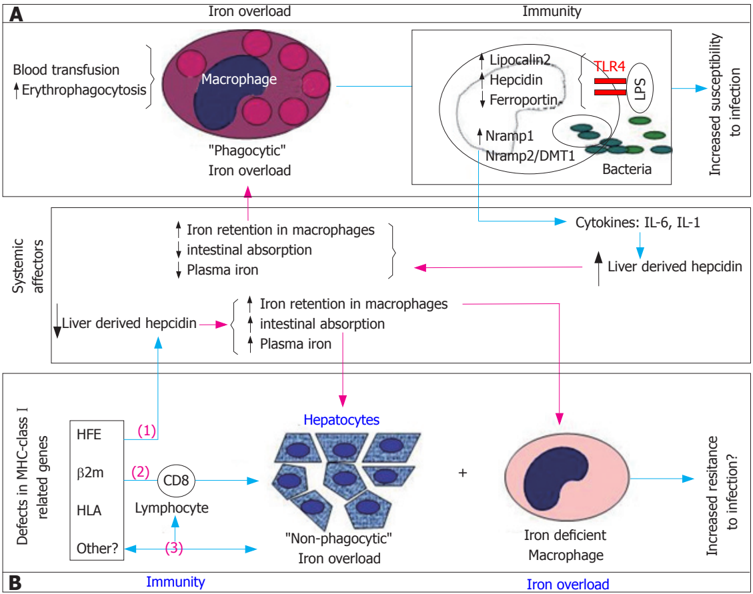
Progress in the characterization of genes involved in the control of iron homeostasis in humans and in mice has improved the definition of iron overload and of the cells affected by it. The cell involved in iron overload with the greatest effect on immunity is the macrophage. Intriguing evidence has emerged, however, in the last 12 years indicating that parenchymal iron overload is linked to genes classically associated with the immune system. This review offers an update of the genes and proteins relevant to iron metabolism expressed in cells of the innate immune system, and addresses the question of how this system is affected in clinical situations of iron overload. The relationship between iron and the major cells of adaptive immunity, the T lymphocytes, will also be reviewed. Most studies addressing this last question in humans were performed in the clinical model of Hereditary Hemochromatosis. Data will also be reviewed demonstrating how the disruption of molecules essentially involved in adaptive immune responses result in the spontaneous development of iron overload and how they act as modifiers of iron overload.
Overview
The claims and statistics of this paper haven’t been checked yet.
Run the check — free, no account needed. It reads the open-access text and checks the sources it cites.
Integrity signals
Registry
Cites
Statistics
Figures
Verification
Claims the paper makes
The claims and statistics of this paper haven’t been checked yet.
Run the check — free, no account needed. It reads the open-access text and checks the sources it cites.
Claims other papers make about this one
Each is checked against this paper’s own text: does it say what the citing paper says it does?
In the citing paper
“Previous studies support the notion that optimal immunity operates within a range of physiological Fe concentrations [41].”
From Host Iron Withholding Demands Siderophore Utilization for Candida glabrata to Survive Macrophage Killing (2011) · cites this paper as [41]
Self-check
Percentages, sums and reported differences re-computed from the paper’s own numbers.
The self-check needs the paper’s full text.
Citations
Cites
Takeda, K., Kaisho, T., & Akira, S. (2003) · Annual Review of Immunology · doi:10.1146/annurev.immunol.21.120601.141126 · Cited by 6,143
Tolerance, Danger and the Extended Family
Matzinger, P. (1994) · Annual Review of Immunology · doi:10.1146/annurev.iy.12.040194.005015 · Cited by 5,107
Targeting Hypoxia-Inducible Factors for the Treatment of Anemia in Chronic Kidney Disease Patients
Locatelli, F., Fishbane, S. N., Block, G. A., & Macdougall, I. C. (2017) · American Journal of Nephrology · doi:10.1159/000455166 · Cited by 4,836
Hepcidin Regulates Cellular Iron Efflux by Binding to Ferroportin and Inducing Its Internalization
Nemeth, E., Tuttle, M. S., Powelson, J., Vaughn, M. B., Donovan, A., Ward, D. M., Ganz, T., & Kaplan, J. (2004) · Science · doi:10.1126/science.1104742 · Cited by 4,803
A novel MHC class I-like gene is mutated in patients with hereditary haemochromatosis
Feder, J. N., Gnirke, A., Thomas, W., Tsuchihashi, Z., Ruddy, D. A., Basava, A., Dormishian, F., Domingo, R., Ellis, M. C., Fullan, A., et al. (1996) · Nature Genetics · doi:10.1038/ng0896-399 · Cited by 3,664
Approaching the asymptote? Evolution and revolution in immunology.Preprint
Janeway, C. (1989) · Cold Spring Harbor Symposia on Quantitative Biology · doi:10.1101/sqb.1989.054.01.003 · Cited by 3,396
Cloning and characterization of a mammalian proton-coupled metal-ion transporter
Gunshin, H., Mackenzie, B., Berger, U. V., Gunshin, Y., Romero, M. F., Boron, W. F., Nussberger, S., Gollan, J. L., & Hediger, M. A. (1997) · Nature · doi:10.1038/41343 · Cited by 3,166
Nemeth, E., Rivera, S., Gabayan, V., Keller, C., Taudorf, S., Pedersen, B. K., & Ganz, T. (2004) · Journal of Clinical Investigation · doi:10.1172/jci200420945 · Cited by 2,650
IDENTIFICATION OF A NOVEL CELL TYPE IN PERIPHERAL LYMPHOID ORGANS OF MICE
Steinman, R. M., & Cohn, Z. A. (1973) · The Journal of Experimental Medicine · doi:10.1084/jem.137.5.1142 · Cited by 2,443
Hepcidin, a urinary antimicrobial peptide synthesized in the liver
Park, C. H., Valore, E. V., Waring, A. J., & Ganz, T. (2001) · Journal of Biological Chemistry · doi:10.1074/jbc.m008922200 · Cited by 2,168
Research works printed but not linked: 9
- Fischer R, Debbabi H, Dubarry M, Boyaka P, Tomé D. Regulation of physiological and pathological Th1 and Th2 responses by lactoferrin. Biochem Cell Biol 2006; 84: 303-311
- Porto G et al . Iron overload and immunity presentation. Nature 1990; 346: 751-754
- Goetz DH, Holmes MA, Borregaard N, Bluhm ME, Raymond K N , S t r o n g R K . T h e n e u t r o p h i l l i p o c a l i n N G A L i s a bacteriostatic agent that interferes with siderophore-mediated iron acquisition. Mol Cell 2002; 10: 1033-1043
- De Sousa M. The Immunology of Iron Overload. In: De Sousa M and Brock J eds. Iron in Immunity, Cancer and Inflammation. John Wiley & Sons Ltd 1989: 247-258
- De Sousa M. Lymphocyte Circulation. Experimental & Clinical Aspects. John Wiley & Sons, New York 1981: 201-216
- Grady RW, Akbar AN, Giardina PJ, Hilgartner MW, de Sousa M. Disproportionate lymphoid cell subsets in thalassaemia m a j o r : t h e r e l a t i v e c o n t r i b u t i splenectomy. Br J Haematol 1985; 59: 713-724
- Miranda CJ, Makui H, Andrews NC, Santos MM. Contributions o f b e t a 2 -m i c r o g l -lymphocytes to iron regulation: insights from HfeRag1(-/-) and beta2mRag1(-/-) double knock-out mice. Blood 2004; 103: 2847-2849
- Pérarnau B, Saron MF, Reina San Martin B, Bervas N, Ong H, Soloski MJ, Smith AG, Ure JM, Gairin JE, Lemonnier FA. Single H2Kb, H2Db and double H2KbDb knockout mice: peripheral CD8+ T cell repertoire and anti-lymphocytic choriomeningitis virus cytolytic responses. Eur J Immunol 1999; 29: 1243-1252
- De Sousa M. Iron and the Lymphomyeloid System: A Growing Knowledge. In: De Sousa M and Brock J eds. Iron in Immunity, Cancer and Inflammation. John Wiley & Sons Ltd. 1989: 3-16 97
Cited by
Sorted by citations
The struggle for iron - a metal at the host-pathogen interface: Iron at the host-pathogen interface
Nairz, M., Schroll, A., Sonnweber, T., & Weiss, G. (2010) · Cellular Microbiology · doi:10.1111/j.1462-5822.2010.01529.x · Cited by 398
Diet in the Pathogenesis and Treatment of Inflammatory Bowel Diseases
Lee, D. Y., Albenberg, L. G., Compher, C. W., Baldassano, R. N., Piccoli, D. A., Lewis, J. D., & Wu, G. D. (2015) · Gastroenterology · doi:10.1053/j.gastro.2015.01.007 · Cited by 388
Infections in Patients with Multiple Myeloma in the Era of High‐Dose Therapy and Novel Agents
Nucci, M., & Anaissie, E. (2009) · Clinical Infectious Diseases · doi:10.1086/605664 · Cited by 347
“Conditioning regimen for HCT, post-engraftment Decrease in CMI, very severe in allogeneic HCT if severe GVHD [33] HSV, VZV, CMV, PJP; aspergillosis and other moulds in allogeneic HCT TPM-SMX prophylaxis for PJP; if severe GVHD, monitor serum CMV by PCR or antigenemia, Aspergillus galactomannan antigen Iron overload [3…”
Bone loss caused by iron overload in a murine model: importance of oxidative stress.
Tsay, J., Yang, Z., Ross, F., Cunningham-Rundles, S., Lin, H., Coleman, R. M., Mayer-Kuckuk, P., Doty, S. B., Grady, R., Giardina, P., et al. (2010) · Blood · doi:10.1182/blood-2009-12-260083 · Cited by 336
Iron at the interface of immunity and infection
Nairz, M., Haschka, D., Demetz, E., & Weiss, G. (2014) · Frontiers in Pharmacology · doi:10.3389/fphar.2014.00152 · Cited by 325
Iron metabolism in the anemia of chronic disease
Weiss, G. (2009) · Biochimica et Biophysica Acta (BBA) - General Subjects · doi:10.1016/j.bbagen.2008.08.006 · Cited by 322
“Importantly, monocyte/macrophage iron status affects macrophage immune effector function by regulating cytokine activities, the induction of the anti-microbial machinery of macrophages and indirectly via regulating lymphocyte proliferation and activities which then affect macrophage differentiation and activation [146…”
BackgroundThe Role of Iron Regulation in Immunometabolism and Immune-Related Disease
Cronin, S. J. F., Woolf, C. J., Weiss, G., & Penninger, J. M. (2019) · Frontiers in Molecular Biosciences · doi:10.3389/fmolb.2019.00116 · Cited by 299
Heme scavenging and the other facets of hemopexin
Tolosano, E., Fagoonee, S., Morello, N., Vinchi, F., & Fiorito, V. (2010) · Antioxidants & Redox Signaling · doi:10.1089/ars.2009.2787 · Cited by 272
“For instance, hereditary hemochromatosis, an autosomal recessive disorder of iron metabolism, has been associated with several T-cell abnormalities (91).”
ACG Clinical Guideline: Hereditary Hemochromatosis
Kowdley, K. V., Brown, K. E., Ahn, J. C., & Sundaram, V. (2019) · The American Journal of Gastroenterology · doi:10.14309/ajg.0000000000000315 · Cited by 294
“Patients with HH may also have a compromised immune system as iron overload is associated with dysregulation of CD8 1 T cells, which can facilitate the growth of certain bacteria including Listeria monocytogenes , Yersinia enterocolitica , Escherichia coli , and Vibrio vulni fi cus (105).”
BackgroundAnomalous Venous Blood Flow and Iron Deposition in Multiple Sclerosis
Singh, A. V., & Zamboni, P. (2009) · Journal of Cerebral Blood Flow & Metabolism · doi:10.1038/jcbfm.2009.180 · Cited by 199
Shah, A. B., & Dobrovolskaia, M. A. (2018) · Nanomedicine Nanotechnology Biology and Medicine · doi:10.1016/j.nano.2018.01.014 · Cited by 163
Iron in the Tumor Microenvironment-Connecting the Dots
Pfeifhofer-Obermair, C., Tymoszuk, P., Petzer, V., Weiss, G., & Nairz, M. (2018) · Frontiers in Oncology · doi:10.3389/fonc.2018.00549 · Cited by 151
Ward, R. J., Crichton, R. R., Taylor, D. L., Corte, L., Srai, S. K., & Dexter, D. T. (2010) · Journal of Neural Transmission · doi:10.1007/s00702-010-0479-3 · Cited by 150
“Various knockout mice models of spontaneous iron overload have been created, which show the modifying effect of components of the adaptive immune system, namely an MHC class 1-dependent effect, on the iron overload phenotype ( Porto and De Sousa 2007 ).”
BackgroundMethodHFE C282Y homozygotes are at increased risk of breast and colorectal cancer†
Osborne, N. J., Gurrin, L. C., Allen, K. J., Constantine, C. C., Delatycki, M. B., McLaren, C. E., Gertig, D. M., Anderson, G. J., Southey, M. C., Olynyk, J. K., et al. (2009) · Hepatology · doi:10.1002/hep.23448 · Cited by 144
“21 Therefore, there were four HFE genotype groups: (1) C282Y homozygotes, (2) simple heterozygotes with one copy of the C282Y variant and no copies of the H63D variant, (3) compound heterozygotes with one copy each of the C282Y and H63D variants, and (4) other HFE genotype with no copies of the C282Y variant and unkno…”
MethodIron metabolism and related genetic diseases: A cleared land, keeping mysteries
Brissot, P., & Loréal, O. (2015) · Journal of Hepatology · doi:10.1016/j.jhep.2015.11.009 · Cited by 131
“Among them : i) the mechanism whereby heme iron is taken up by the enterocyte, the precise role of the candidate protein HCP1 (heme carrier protein 1) remaining to be identified(57, 58) ; ii) the biochemical nature of NTBI(59) ;iii) the way iron circulates within the cytosol with the possible role of chaperone molecul…”
BackgroundHypoxia-Inducible Factor and Its Role in the Management of Anemia in Chronic Kidney Disease
Kaplan, J., Sharma, N., & Dikdan, S. J. (2018) · International Journal of Molecular Sciences · doi:10.3390/ijms19020389 · Cited by 108
“Several in vitro studies have shown a negative impact of iron therapy on T-lymphocytes, with induced apoptosis and disruption of the phagocytic potency of polymorphonuclear leukocytes [107,108].”
BackgroundMolecular and cellular bases of iron metabolism in humans
Васильевич, М. И., Suhodolo, I. V., Prokopieva, V. D., & Klimenteva, T. K. (2016) · Biochemistry (Moscow) · doi:10.1134/s0006297916060018 · Cited by 103
Nevitt, T., & Thiele, D. J. (2011) · PLoS Pathogens · doi:10.1371/journal.ppat.1001322 · Cited by 95
“of physiological Fe concentrations [41].”
Tejedor, J. R., Papasaikas, P., & Valcárcel, J. (2014) · Molecular Cell · doi:10.1016/j.molcel.2014.10.029 · Cited by 94
Crosstalk between Macrophages, T Cells, and Iron Metabolism in Tumor Microenvironment
Shen, L., Zhou, Y., He, H., Chen, W., Lenahan, C., Li, X., Deng, Y., Shao, A., & Huang, J. (2021) · Oxidative Medicine and Cellular Longevity · doi:10.1155/2021/8865791 · Cited by 92
“Iron homeostasis is an important determinant of valid T cell-mediated immune response, as either iron overload or iron deficiency adversely impacts the adaptive immune response in human disease states [120, 121].”
BackgroundZivadinov, R., Schirda, C., Dwyer, M. G., Haacke, M. E., Weinstock‐Guttman, B., Menegatti, E., Heininen‐Brown, M., Magnano, C. R., Malagoni, A. M., Wack, D. S., et al. (2010) · PubMed · Cited by 83
Vaziri, N. D. (2013) · American Journal of Kidney Diseases · doi:10.1053/j.ajkd.2012.10.027 · Cited by 82
Altered Iron Metabolism Is Part of the Choroid Plexus Response to Peripheral Inflammation
Marques, F., Falcão, A. M., Sousa, J. C., Coppola, G., Geschwind, D. H., Sousa, N., Correia‐Neves, M., & Palha, J. A. (2009) · Endocrinology · doi:10.1210/en.2008-1610 · Cited by 86
“Other pathways involved in controlling the expression of iron-related genes have been the focus of intense research (36).”
BackgroundHepcidin messenger RNA expression in human lymphocytes
Pinto, J. P., Dias, V., Zoller, H., Porto, G., Carmo, H., Carvalho, F. D., & de Sousa, M. A. B. (2010) · Immunology · doi:10.1111/j.1365-2567.2009.03226.x · Cited by 81
Self-citationBeguin, Y. P., Aapro, M., Ludwig, H., Mizzen, L., & Österborg, A. (2013) · Critical Reviews in Oncology/Hematology · doi:10.1016/j.critrevonc.2013.10.008 · Cited by 82
“Consistent ith this idea, low iron status has been associated with nhanced immunoprotection against certain infections such s malaria and tuberculosis [139,140].”
Trottier, B. J., Burns, L. J., DeFor, T. E., Cooley, S., & Majhail, N. S. (2013) · Blood · doi:10.1182/blood-2013-04-499772 · Cited by 72
“Median age (range), y 52 (19-70) 52 (20-69) .”
Haemin-induced cell death in human monocytic cells is consistent with ferroptosis
Imoto, S., Kono, M., Suzuki, T., Shibuya, Y., Sawamura, T., Mizokoshi, Y., Sawada, H., Ohbuchi, A., & Saigo, K. (2018) · Transfusion and Apheresis Science · doi:10.1016/j.transci.2018.05.028 · Cited by 68
Trace Mineral Micronutrients and Chronic Periodontitis—a Review
Gaur, S., & Agnihotri, R. (2016) · Biological Trace Element Research · doi:10.1007/s12011-016-0832-y · Cited by 61
Dao, M. C., & Meydani, S. N. (2013) · Advances in Nutrition · doi:10.3945/an.113.004424 · Cited by 59
“In addition, high CD4-to-CD8 T-cell ratios, low numbers of CD28 cells, and impaired CD8 T-cell function have been reported in patients with hemochromatosis (39), although direct causality with iron overload cannot be proven in this scenario.”
BackgroundInfluentialMcLaren, G. D., & Gordeuk, V. R. (2009) · Hematology · doi:10.1182/asheducation-2009.1.195 · Cited by 57
“In recent years, genes classically linked to the immune system have emerged as modifiers of iron overload.(65)”
BackgroundIron Metabolism and the Inflammatory Response
Martins, A. C., Almeida, J. I., Lima, I. S., Kapitão, A., & Gozzelino, R. (2017) · IUBMB Life · doi:10.1002/iub.1635 · Cited by 54
“This results in a low number of total lymphocyte counts and higher proliferation of CD41 T cells (77).”
BackgroundKao, J., Wang, S., Ho, L.-W., Huang, S.-W., Chang, S.-H., Yang, R.-C., Ke, Y., Wu, C., Wang, J., & Shieh, J. (2016) · PLoS ONE · doi:10.1371/journal.pone.0156713 · Cited by 55
Saeed, H. M., Woods, R. R., Lester, J. D., Herzig, R. H., Gul, Z., & Monohan, G. P. (2015) · International Journal of Hematology · doi:10.1007/s12185-015-1813-1 · Cited by 50
“Serum ferritin is derived mainly from T cells and macrophages, while iron overload and deficiency have strong influence on immunity [22, 23].”
BackgroundFunction of the hemochromatosis protein HFE: Lessons from animal models
Pantopoulos, K. (2008) · World Journal of Gastroenterology · doi:10.3748/wjg.14.6893 · Cited by 49
Melanoma-Bearing Libechov Minipig (MeLiM): The Unique Swine Model of Hereditary Metastatic Melanoma
Horák, V., Palanova, A., Čížková, J., Miltrova, V., Vodička, P., & Skalníková, H. K. (2019) · Genes · doi:10.3390/genes10110915 · Cited by 50
Immunodeficiency caused by cirrhosis
Tuchendler, E., Tuchendler, P., & Madej, G. (2018) · Clinical and Experimental Hepatology · doi:10.5114/ceh.2018.78119 · Cited by 48
“Cirrhosis sufferers have often been diagnosed with the syndrome of excessive iron residues (no connection to transferrin), which might, in vivo, inhibit the proliferation and activities of lymphocytes (B and T), particularly of subtype CD4, and result in a disturbed CD4/CD8 ratio [24].”
BackgroundReuben, A., Chung, J. W., Lapointe, R., & Santos, M. M. (2017) · Immunity Inflammation and Disease · doi:10.1002/iid3.158 · Cited by 46
“tuberculosis, and Chlamydia pneumoniae, which depend on high intracellular iron concentrations to multiply in their host cell [6, 105, 106].”
BackgroundInfluentialGupta, A., Zhuo, J., Zha, J., Reddy, S. T., Olp, J., & Pai, A. B. (2010) · BMC Nephrology · doi:10.1186/1471-2369-11-16 · Cited by 44
“Transfusional iron overload has long been linked with immune dysfunction including defective neutrophil and macrophage chemotaxis and phagocytic activity as well as decreased natural killer (NK) cell activity [3].”
BackgroundArezes, J., Costa, M., Vieira, I. H., Dias, V., Kong, X. L., Fernandes, R., Vos, M. R. J., Carlsson, A., Rikers, Y. G. M., Porto, G., et al. (2013) · PLoS ONE · doi:10.1371/journal.pone.0079870 · Cited by 43
“We are especially grateful to Maria de Sousa (University of Porto, Portugal), who first suggested a role for lymphocytes in controlling iron toxicity, therefore motivating and supporting the present work.”
InfluentialSelf-citationReilly, L., Nausch, N., Midzi, N., Mduluza, T., & Mutapi, F. (2012) · Journal of Parasitology Research · doi:10.1155/2012/128628 · Cited by 42
“Ferritin is a marker of iron status, but rises with inflammation [27, 38] and this was measured by an ELISA kit from BioQuant (Cat.”
The outer membrane protein OprQ and adherence of Pseudomonas aeruginosa to human fibronectin
Arhin, A., & Boucher, C. (2010) · Microbiology · doi:10.1099/mic.0.033472-0 · Cited by 44
Established and Emerging Concepts to Treat Imbalances of Iron Homeostasis in Inflammatory Diseases
Petzer, V., Theurl, I., & Weiß, G. (2018) · Pharmaceuticals · doi:10.3390/ph11040135 · Cited by 41
“This is based on the observation that iron impacts on the differentiation and proliferation of immune cells, but also directly impacts on immune effector pathways either by promoting oxygen radical formation or inhibiting pro-inflammatory cytokine production or anti-microbial immune effector pathways of macrophages [2…”
BackgroundMolecular pathogenesis and clinical consequences of iron overload in liver cirrhosis
Sikorska, K., Bernat, A., & Wróblewska, A. (2016) · Hepatobiliary & pancreatic diseases international · doi:10.1016/s1499-3872(16)60135-2 · Cited by 41
Frost, J. N., & Drakesmith, H. (2025) · Nature reviews. Immunology · doi:10.1038/s41577-025-01193-y · Cited by 42
The kinase PDK1 regulates regulatory T cell survival via controlling redox homeostasis
Feng, P., Yang, Q., Luo, L., Sun, Y., Lv, W., Wan, S., Guan, Z., Xiao, Z., Liu, F., Li, Z., et al. (2021) · Theranostics · doi:10.7150/thno.63992 · Cited by 39
“The maintenance of iron homeostasis is crucial for the adaptive immune system [30-32].”
BackgroundVale-Costa, S., Gomes‐Pereira, S., Teixeira, C. M., Rosa, G. M., Rodrigues, P., Tomás, A. M., Appelberg, R., & Gomes, M. S. (2013) · PLoS neglected tropical diseases · doi:10.1371/journal.pntd.0002061 · Cited by 35
“hepatocytes, keeping macrophages relatively iron depleted [28,29,41].”
Valenzuela‐Muñoz, V., Valenzuela‐Miranda, D., Gonçalves, A. T., Novoa, B., Figueras, A. J., & Gallardo‐Escárate, C. (2020) · Aquaculture · doi:10.1016/j.aquaculture.2020.735058 · Cited by 36
Impact of hemochromatosis gene (HFE) mutations on epithelial ovarian cancer risk and prognosis
Gannon, P. O., Medelci, S., Page, C. L., Beaulieu, M., Provencher, D. M., Mes‐Masson, A., & Santos, M. M. (2010) · International Journal of Cancer · doi:10.1002/ijc.25577 · Cited by 33
“Iron is an essential trace element that can be carcinogenic through a variety of mechanisms including acting as an essential nutrient for proliferating tumor cells,(1) catalyzing the formation of mutagenic hydroxyl radicals,(2) and by suppressing the host immune response.(3,4) In the past decades, several genes were i…”
BackgroundCosta, M., Cruz, E., Oliveira, S., Benes, V., Ivacevic, T., Silva, M. J., Vieira, I., Dias, F., Fonseca, S., Gonçalves, M., et al. (2015) · PLOS ONE · doi:10.1371/journal.pone.0124246 · Cited by 32
“Abnormalities in the pool of CD8, but not CD4, T lymphocytes have been consistently reported in HH patients [5].”
BackgroundSelf-citationMonge‐Fuentes, V., Garcia, M. P., Tavares, M. C. H., Valois, C. R. A., Lima, E. C. D. O., Teixeira, D. S., Morais, P. C., Tomaz, C. A. B., & Azevedo, R. B. (2011) · Nanomedicine · doi:10.2217/nnm.11.47 · Cited by 32
do Nascimento, P. R. P., Martins, D. R. A., Monteiro, G. R., Queiroz, P. V. S., Freire‐Neto, F. P., Queiroz, J. W., Lima, Á. L. M., & Jerônimo, S. M. B. (2013) · PLoS ONE · doi:10.1371/journal.pone.0073873 · Cited by 30
“However, iron is extremely toxic to the cell in its reduced form (Fe2+), through increase in hydroxyl radicals, via Fenton’s reaction, which may damage organelles, DNA or cell membranes [18].”
BackgroundThe roles of essential trace elements in T cell biology
Lan, L., Zhao, F., Liu, X., & Zhang, B. (2024) · Journal of Cellular and Molecular Medicine · doi:10.1111/jcmm.18390 · Cited by 32
“63 Iron participates in the development and activation of T cells, and alterations in iron concentrations modulate T cell differentiation and function during the immune responses.”
BackgroundGroßekatthöfer, M., Güclü, E. D., Lawitschka, Á., Matthes‐Martin, S., Mann, G., Minkov, M., Peters, C., & Seidel, M. G. (2013) · Annals of Hematology · doi:10.1007/s00277-013-1737-x · Cited by 30
Iron deposition and inflammation in multiple sclerosis. Which one comes first?
Zivadinov, R., Weinstock‐Guttman, B., & Pirko, I. (2011) · BMC Neuroscience · doi:10.1186/1471-2202-12-60 · Cited by 30
“It has been observed that the cell involved in iron overload with the greatest effect on immunity is the macrophage, and there is a close relationship between iron and the major cells of adaptive immunity, the T lymphocytes, since they are major players in recycling the iron from hemoglobin [20].”
BackgroundIron metabolism: microbes, mouse, and man
Latunde‐Dada, G. O. (2009) · BioEssays · doi:10.1002/bies.200900101 · Cited by 29
“The mammalian immune system is therefore a double-edged sword, that is, equipped with mechanisms to withhold iron from microbes, to resist direct attack by invading pathogens and prevent iron overload.((10)) Consequently, the immune system has protective functions against both infection and the potential toxic effects…”
BackgroundToo much iron: A masked foe for leukemias
Brissot, É., Bernard, D. G., Loréal, O., Brissot, P., & Troadec, M. (2019) · Blood Reviews · doi:10.1016/j.blre.2019.100617 · Cited by 29
Iron deprivation restrains the differentiation and pathogenicity of T helper 17 cell
Li, L., Xia, Y., Yuan, S., Li, F., Xie, X., Luo, Y. M., Yang, X., & He, R. (2021) · Journal of Leukocyte Biology · doi:10.1002/jlb.3ma0821-015r · Cited by 28
Ige, A. O., Ongele, F. A., Adele, B. O., Emediong, I. E., Odetola, A. O., & Adewoye, E. O. (2019) · Pathophysiology · doi:10.1016/j.pathophys.2019.03.002 · Cited by 27
Ba, T., Zhao, D., Chen, Y., Zeng, C., Zhang, C., Niu, S., & Dai, H. (2022) · Nutrients · doi:10.3390/nu14214549 · Cited by 27
“Importantly, iron overload had the greatest effect on immunity [67].”
BackgroundTelser, J., Volani, C., Hilbe, R., Seifert, M., Brigo, N., Paglia, G., & Weiß, G. (2019) · Microbial Cell · doi:10.15698/mic2019.12.700 · Cited by 23
“Moreover, iron exerts subtle effects on cellular immune regulation by affecting the differentiation of lymphocytes [18] but also by impacting on macrophage anti-microbial immune effector mechanisms including the formation of oxy-”
BackgroundSafety Issues in Iron Treatment in CKD
Vaziri, N. D. (2016) · Seminars in Nephrology · doi:10.1016/j.semnephrol.2016.02.005 · Cited by 23
“For example, iron overload has been shown to deplete helper CD4þ T lymphocytes and increase expansion of CD8þCD28- suppressor T cells.(52,53) Lymphocytes have a poor ability to sequester iron such that excess iron impairs proliferation and promotes apoptosis in these cells.”
BackgroundEstablishment of a novel ferroptosis-related lncRNA pair prognostic model in colon adenocarcinoma
Li, H., Liu, L., Huang, T., Jin, M. L., Zheng, Z., Zhang, H., Ye, M., & Liu, K. (2021) · Aging · doi:10.18632/aging.203599 · Cited by 23
“Intriguing evidence indicated that parenchymal iron overload is linked to genes classically associated with the immune system [55].”
BackgroundDo Laboratory Mouse Females that Lose Their Litters Behave Differently around Parturition?
Weber, E. M., Hultgren, J., Algers, B., & Olsson, I. A. S. (2016) · PLoS ONE · doi:10.1371/journal.pone.0161238 · Cited by 22
Hong, J. Y., Davaa, G., Yoo, H., Hong, K., & Hyun, J. K. (2020) · Cells · doi:10.3390/cells9051310 · Cited by 21
Hultman, P. A., & Pollard, K. M. (2014) · Elsevier eBooks · doi:10.1016/b978-0-444-59453-2.00019-6 · Cited by 19
Adaptive immunity and vaccination – iron in the spotlight
Preston, A. E., Drakesmith, H., & Frost, J. N. (2021) · Immunotherapy Advances · doi:10.1093/immadv/ltab007 · Cited by 21
Ma, C. K. K., Clancy, L. E., Deo, S. S., Blyth, E., Micklethwaite, K. P., & Gottlieb, D. J. (2016) · Cytotherapy · doi:10.1016/j.jcyt.2016.09.013 · Cited by 18
“HLA-A3positive HH patients have reduced percentages of CD8+ CD28+ T cells in peripheral blood [57], and functional studies have shown that CD8 T cells from such donors exhibit reduced cytotoxic activity compared with CD8 T cells from healthy controls [57,58].”
BackgroundSumida, K., Diskin, C. J., Molnar, M. Z., Potukuchi, P. K., Thomas, F., Lü, J., Rhee, C. M., Streja, E., Yamagata, K., Kalantar‐Zadeh, K., et al. (2017) · American Journal of Nephrology · doi:10.1159/000484356 · Cited by 18
Azcárate, I. G., Sánchez-Jaut, S., Marín-García, P., Linares, M., Pérez-Benavente, S., García-Sánchez, M., Uceda, J., Kamali, A. N., Morán-Jiménez, M.-J., Puyet, A., et al. (2017) · Biochimica et Biophysica Acta (BBA) - Molecular Basis of Disease · doi:10.1016/j.bbadis.2017.09.027 · Cited by 12
“Not much research has addressed the interaction between iron loading and DCs function [67], and we have observed a preference of monocyte recruitment into spleens to differentiate into macrophages.”
BackgroundCiobanu, L. G., Sachdev, P. S., Trollor, J. N., Reppermund, S., Thalamuthu, A., Mather, K. A., Cohen‐Woods, S., Stacey, D., Toben, C. G., Schubert, K. O., et al. (2020) · Journal of Affective Disorders · doi:10.1016/j.jad.2020.02.001 · Cited by 16
Functional Consequences of Human Lymphocyte Cryopreservation
Faint, J., Tuncer, C., Garg, A., Adams, D., & Lalor, P. F. (2011) · Journal of Immunotherapy · doi:10.1097/cji.0b013e31822bc3d0 · Cited by 16
Resch, T., Ashraf, M., Ritschl, P. V., Ebner, S., Fabritius, C., Brunner, A., Schäfer, G., Regele, H. M., Günther, J., Weiß, G., et al. (2017) · The Journal of Heart and Lung Transplantation · doi:10.1016/j.healun.2017.03.004 · Cited by 15
Das, S., Saqib, M., Meng, R. C., Chittur, S. V., Guan, Z., Wan, F., & Sun, W. (2021) · Proceedings of the National Academy of Sciences · doi:10.1073/pnas.2110166119 · Cited by 14
“As mentioned earlier (48), iron-overload tips the immunoregulatory balance of hosts unfavorably and impairs host immunity, which may favor the explosive proliferation of Δfur in HH mice.”
Graff, R. E., Cho, E., Lindström, S., Kraft, P. L., Willett, W. C., & Eliassen, A. H. (2014) · Cancer Epidemiology Biomarkers & Prevention · doi:10.1158/1055-9965.epi-13-0907 · Cited by 13
“Iron also suppresses host defenses, thereby permitting cancer cell proliferation, and acts as a nutrient for unrestricted tumor cell multiplication (8, 11-13).”
Wróblewska, A., Bernat, A., Woziwodzka, A., Markiewicz, J., Romanowski, T., Bielawski, K. P., Smiatacz, T., & Sikorska, K. (2016) · Clinical and Experimental Medicine · doi:10.1007/s10238-016-0423-4 · Cited by 14
“Deficiency in proteins of the adaptive immune response such as b-microglobulin or MHC class I leads to iron overload in mice [32].”
BackgroundIron and the Reticuloendothelial System
Weiß, G. (2011) · Humana Press eBooks · doi:10.1007/978-1-60327-485-2_11 · Cited by 13
Advances in Parasite Control in Africa: From Basic Science to Translation
Mutapi, F. (2012) · Journal of Parasitology Research · doi:10.1155/2012/158039 · Cited by 12
Grubwieser, P., Brigo, N., Seifert, M., Grander, M., Theurl, I., Nairz, M., Weiß, G., & Pfeifhofer‐Obermair, C. (2024) · BIO-PROTOCOL · doi:10.21769/bioprotoc.4929 · Cited by 14
“Appropriately, a state of systemic or cellular iron excess is associated with increased bacterial proliferation (Khan et al., 2007; Porto and De Sousa, 2007; Kao et al., 2016).”
BackgroundNasir, N. J. M., Heemskerk, H., Jenkins, J., Hamadee, N. H., Bunte, R. M., & Tucker‐Kellogg, L. (2023) · eLife · doi:10.7554/elife.85633 · Cited by 11
Hong-bin, S., Wan-jun, Y., Chen-hui, D., Yang, X., Shen-song, L., & Zhou, P. (2022) · Frontiers in Genetics · doi:10.3389/fgene.2022.816460 · Cited by 12
The role of iron in immunity and inflammation: implications for the response to infection
Kuvibidila, S. R., Baliga, S. B., Chandra, L. C., & French, C. (2013) · Elsevier eBooks · doi:10.1533/9780857095749.2.193 · Cited by 11
Immune Function in Chronic Kidney Disease
Pahl, M. V., & Vaziri, N. D. (2014) · Elsevier eBooks · doi:10.1016/b978-0-12-411602-3.00024-x · Cited by 11
Su, J., Zhong, G., Qin, W., Zhou, L., Ye, J., Ye, Y., Chen, C., Liang, P., Zhao, W., Xiao, X., et al. (2024) · Discover Oncology · doi:10.1007/s12672-024-00969-3 · Cited by 10
“Decreased transferrin and its receptor may lead to reduced thymic cell numbers [68, 69].”
BackgroundHistopathological changes in myocardial tissue due to coronary venous hypertension
Akşıt, E., Büyük, B., & Oğuz, S. (2020) · Archives of Medical Science · doi:10.5114/aoms.2019.91472 · Cited by 10
“Reportedly, iron overload directly damages the tissue by oxidative stress and indirectly by leading to the primary activation of the autoimmune cascade [25].”
BackgroundInflammation-induced effects on iron-related proteins in splenic macrophages and the liver in mice
Sukumaran, A., Venkatraman, A., & Jacob, M. (2012) · Blood Cells Molecules and Diseases · doi:10.1016/j.bcmd.2012.03.002 · Cited by 10
Iron overload in HFE-related hemochromatosis severely impairs Vδ2+ γδ T-cell homeostasis
Erdoğdu, D., Becoku, I., Huber, V., Wang, Y., Eyrich, M. K., Hashimoto, H., Döring, M., Schulte, J. H., & Schilbach, K. (2025) · Blood · doi:10.1182/blood.2024025345 · Cited by 9
Fernández‐Ruiz, M., Parra, P., Ruiz‐Merlo, T., López‐Medrano, F., Juan, R. S., Polanco, N., González, E., Andrés, A., & Aguado, J. M. (2017) · Transplant Infectious Disease · doi:10.1111/tid.12807 · Cited by 9
Elevated Iron Indices in Preterm Infants: Association with Male Gender
Molloy, E. J., EL-Khuffash, A. F., Bieda, A., Jelinek, M., & Baley, J. E. (2008) · American Journal of Perinatology · doi:10.1055/s-0028-1090588 · Cited by 9
“Iron overload alters immune function.(25) Iron overload decreases antibody-mediated and mitogenstimulated phagocytosis by monocytes and macrophages, alters T-lymphocyte subsets, modifies lymphocyte distribution in different compartments of the immune system,(26) suppresses functions of the complement system, may cause…”
BackgroundIron in the inflammed gut: another pro-inflammatory hit?
Weiß, G. (2010) · Gut · doi:10.1136/gut.2010.229047 · Cited by 9
“The induction of experimental iron overload in rats resulted in a shift in the ratio between T-helper (CD4+) and T-suppressor/cytotoxic T cells (CD8+) with a relative expansion of the latter.(2) Moreover, T-helper (Th) subsets respond differently to iron perturbations with Th-1 cells being more sensitive to iron restr…”
BackgroundInfluentialSikorska, K., Romanowski, T., & Bielawski, K. P. (2014) · Biotechnologia · doi:10.5114/bta.2011.46517 · Cited by 8
Şıvgın, S., Baldane, S., Denız, K., Zararsız, G., Kaynar, L., Çetın, M., Ünal, A., & Eser, B. (2016) · Clinical Lymphoma Myeloma & Leukemia · doi:10.1016/j.clml.2016.02.005 · Cited by 8
“0 386 (210-5904) 28 (13-54) 1 922 (123-1565) 26 (12-83) 2 1689 (576-14,865) 49 (3-97) 3 2272 (1348-3869) 43.”
Foka, P., Dimitriadis, A., Karamichali, E., Kochlios, E., Eliadis, P., Valiakou, V., Koskinas, J. S., Mamalaki, A., & Georgopoulou, U. (2021) · Cells · doi:10.3390/cells10092251 · Cited by 10
“This may have serious connotations for viral elimination during early infection, since it has been suggested that the iron-mediated deregulation of innate immune responses may in turn affect adaptive immune responses, possibly on top of a more direct effect of iron-driven changes on T-lymphocytes [70].”
BackgroundGhaith, M. M., El‐Boshy, M., Almasmoum, H. A., Abdelghany, A. H., Azzeh, F. S., Almaimani, R. A., Idris, S., Ahmad, J., Mahbub, A. A., Basalamah, M. A., et al. (2022) · Journal of Trace Elements in Medicine and Biology · doi:10.1016/j.jtemb.2022.127085 · Cited by 8
Nday, C. M., Malollari, G., Petanidis, S., & Salifoglou, A. (2012) · Journal of Inorganic Biochemistry · doi:10.1016/j.jinorgbio.2012.08.009 · Cited by 8
Use of Metal-Rich Slag as a Source of Grit and Its Effects on Pigeon Health and Fitness
Parker, G. H., & Kraak, G. V. D. (2018) · Journal of Environmental Science and Pollution Research · doi:10.30799/jespr.121.18040201 · Cited by 7
“Other fitness parameters, including assessment of the status and performance of the immunological system, as discussed by Porto and De Sousa [30] and Walker and Walker [31], were not examined but may represent a worthwhile direction for future studies.”
MethodÉléments-trace essentiels en nutrition humaine: chrome, sélénium, zinc et fer
Roussel, A.-M., & Hininger‐Favier, I. (2009) · EMC - Endocrinologie - Nutrition · doi:10.1016/s1155-1941(09)49501-5 · Cited by 7
Hepatic Pathobiology of Iron Overload
Ruddell, R. G., & Ramm, G. A. (2011) · Humana Press eBooks · doi:10.1007/978-1-60327-485-2_18 · Cited by 7
Estevam, M., Appoloni, C. R., Malvezi, A. D., Tatakihara, V. L. H., Panis, C., Cecchini, R., Rizzo, L. V., & Pinge‐Filho, P. (2011) · FEMS Immunology & Medical Microbiology · doi:10.1111/j.1574-695x.2011.00917.x · Cited by 5
Norris, S., White, M., Mankan, A. K., & Lawless, M. W. (2010) · International Journal of Immunogenetics · doi:10.1111/j.1744-313x.2010.00904.x · Cited by 5
Mason, A. B., Judson, G. L., Bravo, M. C., Edelstein, A., Byrne, S. L., James, N. G., Roush, E. D., Fierke, C. A., Bobst, C. E., Kaltashov, I. A., et al. (2008) · Biochemistry · doi:10.1021/bi801133d · Cited by 5
Metadata
- Authors
- Porto, G.
- Affiliations
- Instituto de Biologia Molecular e Celular (PT)
- Corresponding author
- Porto, Graça
- ORCID
- Porto, Graça
- Venue
- World Journal of Gastroenterology
- Publisher
- Baishideng Publishing Group Inc.
- Published
- 2007
- Volume
- 13
- Issue
- 35
- Pages
- 4707
- ISSN
- 1007-9327 (ISSN-L)
- PMC
- PMC4611192
- OpenAlex
- W2126983810
- Cited by
- 140
- References
- 107
- Citations by year
- 2026: 4 · 2025: 5 · 2024: 6 · 2023: 4 · 2022: 5 · 2021: 8 · 2020: 6 · 2019: 9 · 2018: 7 · 2017: 8 · 2016: 10 · 2015: 6 · 2014: 6 · 2013: 10 · 2012: 5
- FWCI
- 1.40
- Type
- journal article
- Language
- en
- Open access
- hybrid
- doi.org
- Licence
- cc-by-nc
- Locations
- World Journal of Gastroenterology (publishedVersion, cc-by-nc)
- PubMed Central (publishedVersion)
- PubMed (publishedVersion)
- Portuguese National Funding Agency for Science, Research and Technology (RCAAP Project by FCT) (submittedVersion, other-oa)
- Topics
- Health Sciences › Medicine › Hematology › Iron Metabolism and Disorders
- Life Sciences › Neuroscience › Neurology › Neurological diseases and metabolism
- Health Sciences › Nursing › Nutrition and Dietetics › Trace Elements in Health
- Keywords
- iron overload, iron homeostasis, innate immunity, macrophages, T cells, adaptive immunity, hereditary hemochromatosis, iron metabolism genes
- MeSH terms
- Hemochromatosis Protein, Animals, Genes, MHC Class I, Homeostasis, Humans, Immunity, Innate, Iron, Membrane Proteins, Histocompatibility Antigens Class I, Iron Overload, Mice
About these checks
Registry, retraction, Cites and statistics results are computed, not judged, with one exception: a printed reference that no index lists is read once by a model before it counts as a citation error. Claims are extracted by a model and kept only when their quote appears verbatim in the text; each cited source is then checked, with a model’s help, for whether it says what the claim relies on. Those verdicts can be wrong — read the claim’s quote and the cited source before relying on one.
Statistics and arithmetic are recomputed, not judged.
Confidence bands are shown only for fields calibrated on our annotated test set. None is calibrated yet, so no band is shown.
What counts as a claim ›How we measure confidence ›How we check this ›
Are you an author, or do you see a problem with this page? Request a review
