

The DOI matches its Crossref record; 106 of the 107 references it cites were found in a registry or an index.
Iron overload and immunity.
Open accessAbstract
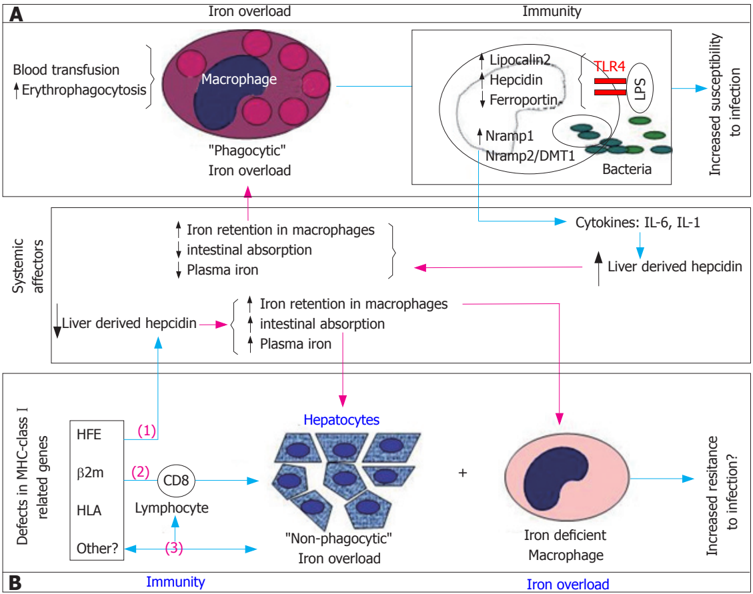
Progress in the characterization of genes involved in the control of iron homeostasis in humans and in mice has improved the definition of iron overload and of the cells affected by it. The cell involved in iron overload with the greatest effect on immunity is the macrophage. Intriguing evidence has emerged, however, in the last 12 years indicating that parenchymal iron overload is linked to genes classically associated with the immune system. This review offers an update of the genes and proteins relevant to iron metabolism expressed in cells of the innate immune system, and addresses the question of how this system is affected in clinical situations of iron overload. The relationship between iron and the major cells of adaptive immunity, the T lymphocytes, will also be reviewed. Most studies addressing this last question in humans were performed in the clinical model of Hereditary Hemochromatosis. Data will also be reviewed demonstrating how the disruption of molecules essentially involved in adaptive immune responses result in the spontaneous development of iron overload and how they act as modifiers of iron overload.
Overview
The claims and statistics of this paper haven’t been checked yet.
Run the check — free, no account needed. It reads the open-access text and checks the sources it cites.
Integrity signals
Registry
Cites
Statistics
Figures
Verification
Claims the paper makes
The claims and statistics of this paper haven’t been checked yet.
Run the check — free, no account needed. It reads the open-access text and checks the sources it cites.
Claims other papers make about this one
Each is checked against this paper’s own text: does it say what the citing paper says it does?
In the citing paper
“Previous studies support the notion that optimal immunity operates within a range of physiological Fe concentrations [41].”
From Host Iron Withholding Demands Siderophore Utilization for Candida glabrata to Survive Macrophage Killing (2011) · cites this paper as [41]
Self-check
Percentages, sums and reported differences re-computed from the paper’s own numbers.
The self-check needs the paper’s full text.
Citations
Cites
Takeda, K., Kaisho, T., & Akira, S. (2003) · Annual Review of Immunology · doi:10.1146/annurev.immunol.21.120601.141126 · Cited by 6,143
Tolerance, Danger and the Extended Family
Matzinger, P. (1994) · Annual Review of Immunology · doi:10.1146/annurev.iy.12.040194.005015 · Cited by 5,107
Targeting Hypoxia-Inducible Factors for the Treatment of Anemia in Chronic Kidney Disease Patients
Locatelli, F., Fishbane, S. N., Block, G. A., & Macdougall, I. C. (2017) · American Journal of Nephrology · doi:10.1159/000455166 · Cited by 4,836
Hepcidin Regulates Cellular Iron Efflux by Binding to Ferroportin and Inducing Its Internalization
Nemeth, E., Tuttle, M. S., Powelson, J., Vaughn, M. B., Donovan, A., Ward, D. M., Ganz, T., & Kaplan, J. (2004) · Science · doi:10.1126/science.1104742 · Cited by 4,803
A novel MHC class I-like gene is mutated in patients with hereditary haemochromatosis
Feder, J. N., Gnirke, A., Thomas, W., Tsuchihashi, Z., Ruddy, D. A., Basava, A., Dormishian, F., Domingo, R., Ellis, M. C., Fullan, A., et al. (1996) · Nature Genetics · doi:10.1038/ng0896-399 · Cited by 3,664
Approaching the asymptote? Evolution and revolution in immunology.Preprint
Janeway, C. (1989) · Cold Spring Harbor Symposia on Quantitative Biology · doi:10.1101/sqb.1989.054.01.003 · Cited by 3,396
Cloning and characterization of a mammalian proton-coupled metal-ion transporter
Gunshin, H., Mackenzie, B., Berger, U. V., Gunshin, Y., Romero, M. F., Boron, W. F., Nussberger, S., Gollan, J. L., & Hediger, M. A. (1997) · Nature · doi:10.1038/41343 · Cited by 3,166
Nemeth, E., Rivera, S., Gabayan, V., Keller, C., Taudorf, S., Pedersen, B. K., & Ganz, T. (2004) · Journal of Clinical Investigation · doi:10.1172/jci200420945 · Cited by 2,650
IDENTIFICATION OF A NOVEL CELL TYPE IN PERIPHERAL LYMPHOID ORGANS OF MICE
Steinman, R. M., & Cohn, Z. A. (1973) · The Journal of Experimental Medicine · doi:10.1084/jem.137.5.1142 · Cited by 2,443
Hepcidin, a urinary antimicrobial peptide synthesized in the liver
Park, C. H., Valore, E. V., Waring, A. J., & Ganz, T. (2001) · Journal of Biological Chemistry · doi:10.1074/jbc.m008922200 · Cited by 2,168
Lipocalin 2 mediates an innate immune response to bacterial infection by sequestrating iron
Flo, T. H., Smith, K. D., Sato, S., Rodriguez, D. J., Holmes, M. A., Strong, R. K., Akira, S., & Aderem, A. (2004) · Nature · doi:10.1038/nature03104 · Cited by 1,877
Hepcidin, a key regulator of iron metabolism and mediator of anemia of inflammation
Ganz, T. (2003) · Blood · doi:10.1182/blood-2003-03-0672 · Cited by 1,544
Goetz, D. H., Holmes, M. A., Borregaard, N., Bluhm, M. E., Raymond, K. N., & Strong, R. K. (2002) · Molecular Cell · doi:10.1016/s1097-2765(02)00708-6 · Cited by 1,355
Dysmetabolic Hyperferritinemia: All Iron Overload Is Not Hemochromatosis
Makker, J. S., Hanif, A., Bajantri, B., & Chilimuri, S. S. (2015) · Case Reports in Gastroenterology · doi:10.1159/000373883 · Cited by 1,353
Heme oxygenase 1 is required for mammalian iron reutilization
Poss, K. D., & Tonegawa, S. (1997) · Proceedings of the National Academy of Sciences · doi:10.1073/pnas.94.20.10919 · Cited by 1,016
β2-Microglobulin deficient mice lack CD4−8+ cytolytic T cells
Zijlstra, M., Bix, M., Simister, N. E., Loring, J. M., Raulet, D. H., & Jaenisch, R. (1990) · Nature · doi:10.1038/344742a0 · Cited by 1,009
Mutations in HFE2 cause iron overload in chromosome 1q–linked juvenile hemochromatosis
Papanikolaou, G., Samuels, M. E., Ludwig, E. H., MacDonald, M. L. E., Franchini, P. L., Dubé, M.-P., Andres, L., MacFarlane, J., Sakellaropoulos, N., Politou, M., et al. (2004) · Nature Genetics · doi:10.1038/ng1274 · Cited by 974
Fleming, M. D., Romano, M. A., Su, M. A., Garrick, L. M., Garrick, M. D., & Andrews, N. C. (1998) · Proceedings of the National Academy of Sciences · doi:10.1073/pnas.95.3.1148 · Cited by 936
Normal Development of Mice Deficient in β 2 M, MCClass I Proteins, and CD8 + T Cells
Koller, B. H., Marrack, P., Kappler, J. W., & Smithies, O. (1990) · Science · doi:10.1126/science.2112266 · Cited by 884
Iron withholding: a defense against infection and neoplasia
Weinberg, E. D. (1984) · Physiological Reviews · doi:10.1152/physrev.1984.64.1.65 · Cited by 881
Mutant antimicrobial peptide hepcidin is associated with severe juvenile hemochromatosis
Roetto, A., Papanikolaou, G., Politou, M., Alberti, F., Girelli, D., Christakis, J., Loukopoulos, D., & Camaschella, C. (2003) · Nature Genetics · doi:10.1038/ng1053 · Cited by 860
IDENTIFICATION OF A NOVEL CELL TYPE IN PERIPHERAL LYMPHOID ORGANS OF MICE
Steinman, R. M., & Cohn, Z. A. (1974) · The Journal of Experimental Medicine · doi:10.1084/jem.139.2.380 · Cited by 837
Regulatory T cells and mechanisms of immune system control
O’Garra, A., & Vieira, P. (2004) · Nature Medicine · doi:10.1038/nm0804-801 · Cited by 809
Variations in the NRAMP1 Gene and Susceptibility to Tuberculosis in West Africans
Bellamy, R., Ruwende, C., Corrah, T., McAdam, K. P. W. J., Whittle, H. C., & Hill, A. V. S. (1998) · New England Journal of Medicine · doi:10.1056/nejm199803053381002 · Cited by 738
Regulation of hepcidin transcription by interleukin-1 and interleukin-6
Lee, P. L., Peng, H., Gelbart, T., Wang, L., & Beutler, E. (2005) · Proceedings of the National Academy of Sciences · doi:10.1073/pnas.0409808102 · Cited by 542
HFE gene knockout produces mouse model of hereditary hemochromatosis
Zhou, X. Y., Tomatsu, S., Fleming, R. E., Parkkila, S., Waheed, A., Jiang, J., Fei, Y., Brunt, E. M., Ruddy, D. A., Prass, C. E., et al. (1998) · Proceedings of the National Academy of Sciences · doi:10.1073/pnas.95.5.2492 · Cited by 519
Antiviral activities of lactoferrin
van der Strate, B. W. A., Beljaars, L., Molema, G., Harmsen, M. C., & Meijer, D. K. F. (2001) · Antiviral Research · doi:10.1016/s0166-3542(01)00195-4 · Cited by 468
Neckers, L., & Cossman, J. (1983) · Proceedings of the National Academy of Sciences · doi:10.1073/pnas.80.11.3494 · Cited by 453
Flemming (1998) · Medical Entomology and Zoology · Cited by 412
Innate and adaptive lymphoid cells in the human liver
Doherty, D. G., & O’Farrelly, C. (2000) · Immunological Reviews · doi:10.1034/j.1600-0528.2002.017416.x · Cited by 404
TLR4-dependent hepcidin expression by myeloid cells in response to bacterial pathogens
Peyssonnaux, C., Zinkernagel, A. S., Datta, V., Lauth, X., Johnson, R. S., & Nizet, V. (2006) · Blood · doi:10.1182/blood-2005-06-2259 · Cited by 379
Iron Metabolism in the Reticuloendothelial System
Knutson, M. D., & Wessling‐Resnick, M. (2003) · Critical Reviews in Biochemistry and Molecular Biology · doi:10.1080/713609210 · Cited by 360
Tolerance, Danger and the Extended Family
Matzinger, P. (1994) · Annual Review of Immunology · doi:10.1146/annurev.immunol.12.1.991 · Cited by 343
Truksa, J., Peng, H., Lee, P., & Beutler, E. (2006) · Proceedings of the National Academy of Sciences · doi:10.1073/pnas.0603124103 · Cited by 309
Decreased Liver Hepcidin Expression in the Hfe Knockout Mouse
Ahmad, K. A., Ahmann, J. R., Migas, M. C., Waheed, A., Britton, R. S., Bacon, B. R., Sly, W. S., & Fleming, R. E. (2002) · Blood Cells Molecules and Diseases · doi:10.1006/bcmd.2002.0575 · Cited by 276
Effects of iron overload on the immune system.
Walker, E. M., & Walker, S. M. (2000) · PubMed · Cited by 258
Targeted disruption of the hepcidin 1 gene results in severe hemochromatosis
Lesbordes-Brion, J.-C., Viatte, L., Bennoun, M., Lou, D.-Q., Ramey, G., Houbron, C., Hamard, G., Kahn, A., & Vaulont, S. (2006) · Blood · doi:10.1182/blood-2006-02-003376 · Cited by 257
Competitive regulation of hepcidin mRNA by soluble and cell-associated hemojuvelin
Lin, L., Goldberg, Y. P., & Ganz, T. (2005) · Blood · doi:10.1182/blood-2005-05-1845 · Cited by 241
Genes that modify the hemochromatosis phenotype in mice
Levy, J. E., Montross, L. K., & Andrews, N. C. (2000) · Journal of Clinical Investigation · doi:10.1172/jci9635 · Cited by 212
Santos, M. M., Schilham, M. W., Rademakers, L. H. P. M., Marx, J. J. M., de Sousa, M. A. B., & Clevers, H. C. (1996) · The Journal of Experimental Medicine · doi:10.1084/jem.184.5.1975 · Cited by 195
Rothenberg, B. E., & Voland, J. R. (1996) · Proceedings of the National Academy of Sciences · doi:10.1073/pnas.93.4.1529 · Cited by 185
A novel MHC class-I-like gene is mutated in patients with hereditary haemochromatosis
(1996) · Trends in Genetics · doi:10.1016/0168-9525(96)81483-1 · Cited by 183
Iron overload in β2-microglobulin-deficient mice
DESOUSA, M., REIMAO, R., Lacerda, R., Hugo, P., Kaufmann, S. H. E., & Porto, G. (1994) · Immunology Letters · doi:10.1016/0165-2478(94)90094-9 · Cited by 172
Self-citationRodrigues, P., Vázquez-Dorado, S., Neves, J. V., & Wilson, J. M. (2006) · Developmental & Comparative Immunology · doi:10.1016/j.dci.2006.02.005 · Cited by 169
Vidal, S. M., Gros, P., & Skamene, E. (1995) · Journal of Leukocyte Biology · doi:10.1002/jlb.58.4.382 · Cited by 153
Hepcidin—A Peptide Hormone at the Interface of Innate Immunity and Iron Metabolism
Ganz, T. (2006) · Springer eBooks · doi:10.1007/3-540-29916-5_7 · Cited by 147
Montosi, G., Paglia, P., Garuti, C., Guzmán, C. A., Bastin, J. M., Colombo, M. P., & Pietrangelo, A. (2000) · Blood · doi:10.1182/blood.v96.3.1125 · Cited by 147
An innately interesting decade of research in immunology
Germain, R. N. (2004) · Nature Medicine · doi:10.1038/nm1159 · Cited by 136
Moura, E., Noordermeer, M. A., Verhoeven‐Duif, N. M., Verheul, A. F. M., & Marx, J. J. M. (1998) · Blood · doi:10.1182/blood.v92.7.2511 · Cited by 129
Iron and infection: competition between host and microbes for a precious element
MARX, J. (2002) · Best Practice & Research Clinical Haematology · doi:10.1053/beha.2002.0001 · Cited by 129
The hemochromatosis protein HFE inhibits iron export from macrophages
Drakesmith, H., Sweetland, E., Schimanski, L., Edwards, J., Cowley, D., Ashraf, M., Bastin, J., & Townsend, A. R. M. (2002) · Proceedings of the National Academy of Sciences · doi:10.1073/pnas.242614699 · Cited by 128
Fischer, R., Debbabi, H., Dubarry, M., Boyaka, P., & Tomé, D. (2006) · Biochemistry and Cell Biology · doi:10.1139/o06-058 · Cited by 104
Immune cell functions in iron overload.
de Sousa, M. A. B. (1989) · PubMed Central · Cited by 98
Cairo, G., Recalcati, S., Montosi, G., Castrusini, E., Conte, D., & Pietrangelo, A. (1997) · Blood · doi:10.1182/blood.v89.7.2546 · Cited by 96
Hepcidin: A direct link between iron metabolism and immunity
Vyoral, D., & Petrák, J. (2005) · The International Journal of Biochemistry & Cell Biology · doi:10.1016/j.biocel.2005.02.023 · Cited by 95
HIV-1 Nef down-regulates the hemochromatosis protein HFE, manipulating cellular iron homeostasis
Drakesmith, H., Chen, N., Ledermann, H., Screaton, G. R., Townsend, A., & Xu, X. (2005) · Proceedings of the National Academy of Sciences · doi:10.1073/pnas.0504823102 · Cited by 94
Olakanmi, O., Schlesinger, L. S., & Britigan, B. E. (2007) · Journal of Leukocyte Biology · doi:10.1189/jlb.0606405 · Cited by 88
Intracellular innate resistance to bacterial pathogens
Radtke, A. L., & O’Riordan, M. X. (2006) · Cellular Microbiology · doi:10.1111/j.1462-5822.2006.00795.x · Cited by 85
Ferritin Synthesis by Human T Lymphocytes
Dörner, M. H., Silverstone, A. E., Nishiya, K., de Sostoa, A., Munn, G., & de Sousa, M. A. B. (1980) · Science · doi:10.1126/science.6967622 · Cited by 81
Jabado, N., Canonne‐Hergaux, F., Gruenheid, S., Picard, V., & Gros, P. (2002) · Blood · doi:10.1182/blood-2002-04-1182 · Cited by 75
Gordeuk, V., Ballou, S. P., Lozanski, G., & Brittenham, G. (1992) · Blood · doi:10.1182/blood.v79.7.1855.1855 · Cited by 73
Grady, R. W., Akbar, A. N., Giardina, P. J., Hilgartner, M. W., & de Sousa, M. A. B. (1985) · British Journal of Haematology · doi:10.1111/j.1365-2141.1985.tb07367.x · Cited by 72
Relative Impact of Hla Phenotype and Cd4–Cd8 Ratios on the Clinical Expression of Hemochromatosis
Porto, G., Vicente, C. M. F. D. B., Teixeira, M., Martins, O., Cabeda, J. M., Lacerda, R., Gonçalves, C., Fraga, J., Macedo, G., Silva, B. M., et al. (1997) · Hepatology · doi:10.1002/hep.510250223 · Cited by 72
Self-citationβ2-Microglobulin restriction of antigen presentation
Pérarnau, B., Siegrist, C., Gillet, A., Vincent, C., Kimura, S., & Lemonnier, F. A. (1990) · Nature · doi:10.1038/346751a0 · Cited by 71
Anomalies of the CD8+ T cell pool in haemochromatosis: HLA-A3-linked expansions of CD8+CD28- T cells
AROSA, F. A., OLIVEIRA, L., PORTO, G., DA SILVA, B. M., KRUIJER, W., VELTMAN, J., & DE SOUSA, M. (2003) · Clinical and Experimental Immunology · doi:10.1046/j.1365-2249.1997.d01-967.x · Cited by 70
Self-citationPorto, G., Reimαo, R., Gonçalves, C., Vicente, C. M. F. D. B., Justiça, B., & de Sousa, M. A. B. (1994) · European Journal Of Haematology · doi:10.1111/j.1600-0609.1994.tb00097.x · Cited by 68
Self-citationKramer, J. L., Baltathakis, I., Alcantara, O., & Boldt, D. H. (2002) · British Journal of Haematology · doi:10.1046/j.1365-2141.2002.03498.x · Cited by 64
Transferrin is required for early T‐cell differentiation
Macedo, M. F., de Sousa, M. A. B., Ned, R. M., Mascarenhas, C., Andrews, N. C., & Correia‐Neves, M. (2004) · Immunology · doi:10.1111/j.1365-2567.2004.01915.x · Cited by 63
The immunological system in hemochromatosis
de Sousa, M. A. B., & Porto, G. (1998) · Journal of Hepatology · doi:10.1016/s0168-8278(98)80367-x · Cited by 57
Self-citationIron Overload and Heart Fibrosis in Mice Deficient for Both β2-Microglobulin and Rag1
Santos, M. M., de Sousa, M. A. B., Rademakers, L. H. P. M., Clevers, H. C., Marx, J. J. M., & Schilham, M. W. (2000) · American Journal Of Pathology · doi:10.1016/s0002-9440(10)64827-4 · Cited by 49
Elshof, A. E. T., Brittenham, G. M., Chorney, K. A., Page, M. J., Gerhard, G. S., Cable, E. E., & Chorney, M. J. (1999) · Immunological Reviews · doi:10.1111/j.1600-065x.1999.tb01395.x · Cited by 48
Iron chelators modulate the fusogenic properties of Salmonella -containing phagosomes
Jabado, N., Cuéllar‐Mata, P., Grinstein, S., & Gros, P. (2003) · Proceedings of the National Academy of Sciences · doi:10.1073/pnas.0937287100 · Cited by 48
Arosa, F. A., Silva, A. J. D., Godinho, I., ter Steege, J. C. A., Porto, G., Rudd, C. E., & de Sousa, M. A. B. (1994) · Scandinavian Journal of Immunology · doi:10.1111/j.1365-3083.1994.tb03396.x · Cited by 45
Self-citationSTAT6-independent production of IL-4 by mast cells
Sherman, M. A., Secor, V. H., Lee, S. K., Lopez, R. D., & Brown, M. A. (1999) · European Journal of Immunology · doi:10.1002/(sici)1521-4141(199904)29:04 · Cited by 45
HFE, the MHC and hemochromatosis: Paradigm for an extended function for MHC class I
Cardoso, C. S. D. F. L. P., & de Sousa, M. A. B. (2003) · Tissue Antigens · doi:10.1034/j.1399-0039.2003.00065.x · Cited by 43
Molecular analysis of iron overload in β2-microglobulin-deficient mice
Muckenthaler, M. U., Rodrigues, P., Macedo, M. G., Miñana, B., Brennan, K., Cardoso, E. M., Hentze, M. W., & de Sousa, M. A. B. (2004) · Blood Cells Molecules and Diseases · doi:10.1016/j.bcmd.2004.05.003 · Cited by 43
Santos, M. M., Clevers, H. C., de Sousa, M. A. B., & Marx, J. J. M. (1998) · Blood · doi:10.1182/blood.v91.8.3059.3059_3059_3065 · Cited by 42
Lymphoid cell positioning: a new proposal for the mechanism of control of lymphoid cell migration.
de Sousa, M. A. B. (1978) · PubMed · Cited by 39
Hepatic damage in C282Y homozygotes relates to low numbers of CD8+ cells in the liver lobuli
Cardoso, E. M., Hagen, K., de Sousa, M. A. B., & Hultcrantz, R. (2001) · European Journal of Clinical Investigation · doi:10.1046/j.1365-2362.2001.00744.x · Cited by 38
Cruz, E., Vieira, J., Almeida, S., Lacerda, R., Gärtner, A., Cardoso, C. S. D. F. L. P., Alves, H., & Porto, G. (2006) · BMC Medical Genetics · doi:10.1186/1471-2350-7-16 · Cited by 37
Self-citationCruz, E., Melo, G., Lacerda, R., Almeida, S., & Porto, G. (2006) · Blood Cells Molecules and Diseases · doi:10.1016/j.bcmd.2006.04.004 · Cited by 37
Self-citationZhong, W., Lafuse, W. P., & Zwilling, B. S. (2001) · Infection and Immunity · doi:10.1128/iai.69.11.6618-6624.2001 · Cited by 37
Özkalay, N., Anıl, M., Ağuş, N., Helvaci, M., & Sirti, S. (2006) · Journal of Clinical Microbiology · doi:10.1128/jcm.00588-06 · Cited by 35
Reimão, R., Porto, G., & de Sousa, M. A. B. (1991) · PubMed · Cited by 35
Self-citationIron Binding Proteins in Selected Human Peripheral Blood Cell Sets: Immunofluorescence
Nishiya, K., Chiao, J. W., & de Sousa, M. A. B. (1980) · British Journal of Haematology · doi:10.1111/j.1365-2141.1980.tb05962.x · Cited by 33
Barton, J. C., Wiener, H. W., Acton, R. T., & Go, R. C. P. (2005) · BMC Hematology · doi:10.1186/1471-2326-5-5 · Cited by 31
Miranda, C. J., Makui, H., Andrews, N. C., & Santos, M. M. (2003) · Blood · doi:10.1182/blood-2003-09-3300 · Cited by 31
Prohepcidin localises to the Golgi compartment and secretory pathway in hepatocytes
Wallace, D. F., Summerville, L., Lusby, P. E., & Subramaniam, V. N. (2005) · Journal of Hepatology · doi:10.1016/j.jhep.2005.02.047 · Cited by 30
Porto, G., Cardoso, C. S. D. F. L. P., Gordeuk, V. R., Cruz, E., Fraga, J., Areias, J., Oliveira, J. C., Bravo, F., Gangaidzo, I. T., MacPhail, A. P., et al. (2001) · European Journal Of Haematology · doi:10.1034/j.1600-0609.2001.t01-1-00481.x · Cited by 30
Self-citationIncreased hepatic iron in mice lacking classical MHC class I molecules
Cardoso, E. M., Macedo, M. G., Rohrlich, P., Ribeiro, E., Silva, M. T., Lemonnier, F. A., & de Sousa, M. A. B. (2002) · Blood · doi:10.1182/blood-2002-05-1565 · Cited by 28
Cardoso, C., Porto, G., Lacerda, R., Resende, D., Rodrigues, P., Bravo, F., Oliveira, J. C., Justiça, B., & de Sousa, M. (2001) · Human Immunology · doi:10.1016/s0198-8859(01)00233-6 · Cited by 28
Self-citationde Sousa, M. A. B. (1992) · Memórias do Instituto Oswaldo Cruz · doi:10.1590/s0074-02761992000900003 · Cited by 25
Ferritins in malignant and non‐malignant lymphoid cells
Vezzoni, P., Levi, S., Gabri, E., Pozzi, M. R., Spinazzé, S., & Arosio, P. (1986) · British Journal of Haematology · doi:10.1111/j.1365-2141.1986.tb02905.x · Cited by 24
Peripheral lymphocytes and intracellular cytokines in C282Y homozygous hemochromatosis patients
Fabio, G., Zarantonello, M., Mocellin, C., Bonara, P., Corengia, C., Fargion, S. R., & Fiorelli, G. (2002) · Journal of Hepatology · doi:10.1016/s0168-8278(02)00276-3 · Cited by 23
Rodrigues, P., Lopes, C. C. C., Mascarenhas, C., Arosio, P., Porto, G., & de Sousa, M. A. B. (2006) · International Journal of Experimental Pathology · doi:10.1111/j.1365-2613.2006.00491.x · Cited by 20
Self-citationCruz, E., Vieira, J., Gonçalves, R., Alves, H., Almeida, S., Rodrigues, P., Lacerda, R., & Porto, G. (2004) · Tissue Antigens · doi:10.1111/j.1399-0039.2004.00245.x · Cited by 19
Self-citationBrinkmann, M., Teuffel, R., Laham-Karam, N., Ehrlich, R. L., Decker, P., Lemonnier, F. A., & Pascolo, S. (2006) · Cell Biochemistry and Function · doi:10.1002/cbf.1363 · Cited by 16
Iron Withholding as a Defense Strategy
Weinberg, E. D. (2005) · CRC Press eBooks · doi:10.1201/b14192-12 · Cited by 11
Montosi, G., Paglia, P., Garuti, C., et al. (2000) · Blood · doi:10.1182/blood.v96.3.1125.015k19_1125_1129 · Cited by 8
Approaching the asymptote? Evolution and revolution in immunology
Janeway, C. (1984) · Medical Entomology and Zoology · Cited by 7
Long‐term survival in a patient with AIDS and hereditary haemochromatosis
Nielsen, P., Degen, O., Brümmer, J., & Gabbe, E. E. (1999) · European Journal Of Haematology · doi:10.1111/j.1600-0609.1999.tb01768.x · Cited by 6
Gordeuk, V., Ballou, S. P., Lozanski, G., et al. (1992) · Blood · doi:10.1182/blood.v79.7.1855.bloodjournal7971855 · Cited by 4
Iron, Iron Genes, and the Immune System
Cardoso, C. S., Weiss, G., & de Sousa, M. A. B. (2005) · CRC Press eBooks · doi:10.1201/b14192-13 · Cited by 2
Relative impact of HLA phenotype and CD4-CD8 ratios on the clinical expression of hemochromatosis
Porto, G. (1997) · Hepatology · doi:10.1053/jhep.1997.v25.pm0009021953 · Cited by 2
Self-citationIron overload and heart fibrosis in mice deficient for both beta2-microglobulin and Rag 1
Santos, M. M., de Sousa, M., Rademakers, L. H. P. M., Clevers, H. C., Marx, J. J. M., & Schilham, M. (2000) · Data Archiving and Networked Services (DANS) · Cited by 1
Santos, M., Clevers, H. C., de Sousa, M., & Marx, J. J. M. (1998) · Data Archiving and Networked Services (DANS) · Cited by 1
Research works printed but not linked: 9
- Fischer R, Debbabi H, Dubarry M, Boyaka P, Tomé D. Regulation of physiological and pathological Th1 and Th2 responses by lactoferrin. Biochem Cell Biol 2006; 84: 303-311
- Porto G et al . Iron overload and immunity presentation. Nature 1990; 346: 751-754
- Goetz DH, Holmes MA, Borregaard N, Bluhm ME, Raymond K N , S t r o n g R K . T h e n e u t r o p h i l l i p o c a l i n N G A L i s a bacteriostatic agent that interferes with siderophore-mediated iron acquisition. Mol Cell 2002; 10: 1033-1043
- De Sousa M. The Immunology of Iron Overload. In: De Sousa M and Brock J eds. Iron in Immunity, Cancer and Inflammation. John Wiley & Sons Ltd 1989: 247-258
- De Sousa M. Lymphocyte Circulation. Experimental & Clinical Aspects. John Wiley & Sons, New York 1981: 201-216
- Grady RW, Akbar AN, Giardina PJ, Hilgartner MW, de Sousa M. Disproportionate lymphoid cell subsets in thalassaemia m a j o r : t h e r e l a t i v e c o n t r i b u t i splenectomy. Br J Haematol 1985; 59: 713-724
- Miranda CJ, Makui H, Andrews NC, Santos MM. Contributions o f b e t a 2 -m i c r o g l -lymphocytes to iron regulation: insights from HfeRag1(-/-) and beta2mRag1(-/-) double knock-out mice. Blood 2004; 103: 2847-2849
- Pérarnau B, Saron MF, Reina San Martin B, Bervas N, Ong H, Soloski MJ, Smith AG, Ure JM, Gairin JE, Lemonnier FA. Single H2Kb, H2Db and double H2KbDb knockout mice: peripheral CD8+ T cell repertoire and anti-lymphocytic choriomeningitis virus cytolytic responses. Eur J Immunol 1999; 29: 1243-1252
- De Sousa M. Iron and the Lymphomyeloid System: A Growing Knowledge. In: De Sousa M and Brock J eds. Iron in Immunity, Cancer and Inflammation. John Wiley & Sons Ltd. 1989: 3-16 97
Cited by
Sorted by citations
The struggle for iron - a metal at the host-pathogen interface: Iron at the host-pathogen interface
Nairz, M., Schroll, A., Sonnweber, T., & Weiss, G. (2010) · Cellular Microbiology · doi:10.1111/j.1462-5822.2010.01529.x · Cited by 398
Diet in the Pathogenesis and Treatment of Inflammatory Bowel Diseases
Lee, D. Y., Albenberg, L. G., Compher, C. W., Baldassano, R. N., Piccoli, D. A., Lewis, J. D., & Wu, G. D. (2015) · Gastroenterology · doi:10.1053/j.gastro.2015.01.007 · Cited by 388
Infections in Patients with Multiple Myeloma in the Era of High‐Dose Therapy and Novel Agents
Nucci, M., & Anaissie, E. (2009) · Clinical Infectious Diseases · doi:10.1086/605664 · Cited by 347
“Conditioning regimen for HCT, post-engraftment Decrease in CMI, very severe in allogeneic HCT if severe GVHD [33] HSV, VZV, CMV, PJP; aspergillosis and other moulds in allogeneic HCT TPM-SMX prophylaxis for PJP; if severe GVHD, monitor serum CMV by PCR or antigenemia, Aspergillus galactomannan antigen Iron overload [3…”
Bone loss caused by iron overload in a murine model: importance of oxidative stress.
Tsay, J., Yang, Z., Ross, F., Cunningham-Rundles, S., Lin, H., Coleman, R. M., Mayer-Kuckuk, P., Doty, S. B., Grady, R., Giardina, P., et al. (2010) · Blood · doi:10.1182/blood-2009-12-260083 · Cited by 336
Iron at the interface of immunity and infection
Nairz, M., Haschka, D., Demetz, E., & Weiss, G. (2014) · Frontiers in Pharmacology · doi:10.3389/fphar.2014.00152 · Cited by 325
Metadata
- Authors
- Porto, G.
- Affiliations
- Instituto de Biologia Molecular e Celular (PT)
- Corresponding author
- Porto, Graça
- ORCID
- Porto, Graça
- Venue
- World Journal of Gastroenterology
- Publisher
- Baishideng Publishing Group Inc.
- Published
- 2007
- Volume
- 13
- Issue
- 35
- Pages
- 4707
- ISSN
- 1007-9327 (ISSN-L)
- PMC
- PMC4611192
- OpenAlex
- W2126983810
- Cited by
- 140
- References
- 107
- Citations by year
- 2026: 4 · 2025: 5 · 2024: 6 · 2023: 4 · 2022: 5 · 2021: 8 · 2020: 6 · 2019: 9 · 2018: 7 · 2017: 8 · 2016: 10 · 2015: 6 · 2014: 6 · 2013: 10 · 2012: 5
- FWCI
- 1.40
- Type
- journal article
- Language
- en
- Open access
- hybrid
- doi.org
- Licence
- cc-by-nc
- Locations
- World Journal of Gastroenterology (publishedVersion, cc-by-nc)
- PubMed Central (publishedVersion)
- PubMed (publishedVersion)
- Portuguese National Funding Agency for Science, Research and Technology (RCAAP Project by FCT) (submittedVersion, other-oa)
- Topics
- Health Sciences › Medicine › Hematology › Iron Metabolism and Disorders
- Life Sciences › Neuroscience › Neurology › Neurological diseases and metabolism
- Health Sciences › Nursing › Nutrition and Dietetics › Trace Elements in Health
- Keywords
- iron overload, iron homeostasis, innate immunity, macrophages, T cells, adaptive immunity, hereditary hemochromatosis, iron metabolism genes
- MeSH terms
- Hemochromatosis Protein, Animals, Genes, MHC Class I, Homeostasis, Humans, Immunity, Innate, Iron, Membrane Proteins, Histocompatibility Antigens Class I, Iron Overload, Mice
About these checks
Registry, retraction, Cites and statistics results are computed, not judged, with one exception: a printed reference that no index lists is read once by a model before it counts as a citation error. Claims are extracted by a model and kept only when their quote appears verbatim in the text; each cited source is then checked, with a model’s help, for whether it says what the claim relies on. Those verdicts can be wrong — read the claim’s quote and the cited source before relying on one.
Statistics and arithmetic are recomputed, not judged.
Confidence bands are shown only for fields calibrated on our annotated test set. None is calibrated yet, so no band is shown.
What counts as a claim ›How we measure confidence ›How we check this ›
Are you an author, or do you see a problem with this page? Request a review
