

The DOI matches its Crossref record; 34 of the 35 references it cites were found in a registry or an index.
Irritable bowel syndrome symptom severity improves equally with probiotic and placebo
Open accessAbstract
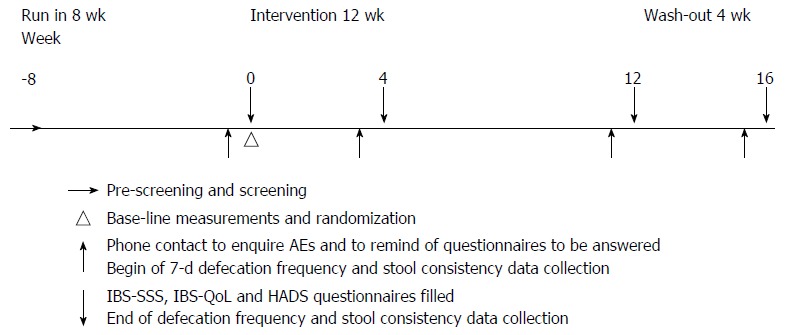
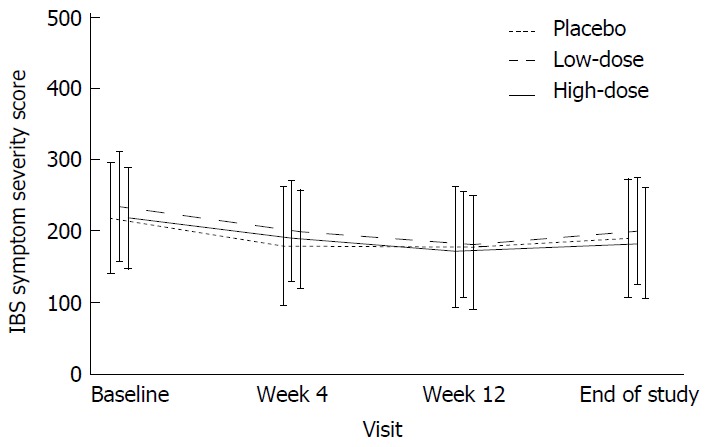
AIM: NCFM on irritable bowel syndrome (IBS) symptoms and quality of life (QoL). METHODS: colony-forming units of NCFM or placebo daily for 12 wk. IBS Symptom Severity Score (IBS-SSS), which constituted the primary outcome, and secondary outcomes, including individual IBS symptoms, IBS-related QoL questionnaire, anxiety and depression, defecation frequency, and stool consistency, were assessed at baseline at the end of the 8-wk run-in period, after 4 and 12 wk of intervention, and after a 4-wk washout. RESULTS: combined active doses = 0.0460). CONCLUSION: NCFM alleviates moderate to severe abdominal pain, consistent with earlier observations of this strain mitigating visceral pain through increased analgesic receptor expression.
Overview
The claims and statistics of this paper haven’t been checked yet.
Run the check — free, no account needed. It reads the open-access text and checks the sources it cites.
Integrity signals
Registry
Cites
Statistics
Figures
Verification
Claims the paper makes
The claims and statistics of this paper haven’t been checked yet.
Run the check — free, no account needed. It reads the open-access text and checks the sources it cites.
Claims other papers make about this one
Each is checked against this paper’s own text: does it say what the citing paper says it does?
The cited source says what the claim attributes to it.
In the citing paper
“Based on the international consensus and existing evidence, probiotics are beneficial in improving overall symptoms in patients with IBS [29,30,31,32,33,34,35], but there are still contradictory reports on improvements in specific symptoms [36,37,38].”
Self-check
Percentages, sums and reported differences re-computed from the paper’s own numbers.
The self-check needs the paper’s full text.
Citations
Cites
The Hospital Anxiety and Depression Scale
Zigmond, A. S., & Snaith, R. P. (1983) · Acta Psychiatrica Scandinavica · doi:10.1111/j.1600-0447.1983.tb09716.x · Cited by 47,139
Depression and quality of life in older persons: A review
Sivertsen, H., Bjørkløf, G. H., Engedal, K., Selbæk, G., & Helvik, A.-S. (2015) · Dementia and Geriatric Cognitive Disorders · doi:10.1159/000437299 · Cited by 14,152
Hill (2014) · doi:10.1038/nrgastro.2014.66 · Cited by 9,592
Longstreth, G. F., Thompson, W. G., Chey, W. D., Houghton, L. A., Mearin, F., & Spiller, R. C. (2006) · Gastroenterology · doi:10.1053/j.gastro.2005.11.061 · Cited by 4,856
Stool form scale as a useful guide to intestinal transit time
Lewis, S. J., & Heaton, K. W. (1997) · Scandinavian Journal of Gastroenterology · doi:10.3109/00365529709011203 · Cited by 3,244
Psychosomatic medicine in Germany: more timely than ever
Zipfel, S., Herzog, W., Kruse, J., & Henningsen, P. (2016) · Psychotherapy and Psychosomatics · doi:10.1159/000447701 · Cited by 2,323
FRANCIS, C. Y., MORRIS, J., & WHORWELL, P. J. (1997) · Alimentary Pharmacology & Therapeutics · doi:10.1046/j.1365-2036.1997.142318000.x · Cited by 1,708
An irritable bowel syndrome subtype defined by species-specific alterations in faecal microbiota
Jeffery, I. B., O'Toole, P. W., Öhman, L., Claesson, M. J., Deane, J., Quigley, E. M. M., & Simrén, M. (2012) · Gut · doi:10.1136/gutjnl-2011-301501 · Cited by 835
Lactobacillus acidophilus modulates intestinal pain and induces opioid and cannabinoid receptors
Rousseaux, C., Thuru, X., Gelot, A., Barnich, N., Neut, C., Dubuquoy, L., Dubuquoy, C., Merour, E., Geboes, K., Chamaillard, M., et al. (2007) · Nature Medicine · doi:10.1038/nm1521 · Cited by 793
Self-citationPatrick, D. L., Drossman, D. A., Frederick, I. O., Dicesare, J., & Puder, K. L. (1998) · Digestive Diseases and Sciences · doi:10.1023/a:1018831127942 · Cited by 761
Ford, A. C., Quigley, E. M. M., Lacy, B. E., Lembo, A. J., Saito, Y. A., Schiller, L. R., Soffer, E. E., Spiegel, B. M. R., & Moayyedi, P. (2014) · American Journal of Gastroenterology · doi:10.1038/ajg.2014.202 · Cited by 747
Complete genome sequence of the probiotic lactic acid bacterium Lactobacillus acidophilus NCFM
Altermann, E., Russell, W. M., Azcárate-Peril, M. A., Barrangou, R., Buck, B. L., McAuliffe, O. E., Souther, N. E., Dobson, A., Duong, T., Callanan, M. J., et al. (2005) · Proceedings of the National Academy of Sciences · doi:10.1073/pnas.0409188102 · Cited by 611
An update on the use and investigation of probiotics in health and disease
Sanders, M. E., Guarner, F., Guerrant, R., Holt, P. R., Quigley, E. M., Sartor, R. B., Sherman, P. M., & Mayer, E. A. (2013) · Gut · doi:10.1136/gutjnl-2012-302504 · Cited by 503
Stress and the Microbiota–Gut–Brain Axis in Visceral Pain: Relevance to Irritable Bowel Syndrome
Moloney, R. D., Johnson, A. C., O’Mahony, S. M., Dinan, T. G., Meerveld, B. G., & Cryan, J. F. (2015) · CNS Neuroscience & Therapeutics · doi:10.1111/cns.12490 · Cited by 412
Intestinal microbiota and diet in IBS: causes, consequences, or epiphenomena?
Rajilić-Stojanović, M., Jonkers, D. M., Salonen, A., Hanevik, K., Raes, J., Jalanka, J., de Vos, W. M., Manichanh, C., Golic, N., Enck, P., et al. (2015) · American Journal of Gastroenterology · doi:10.1038/ajg.2014.427 · Cited by 359
Irritable bowel syndrome: A microbiome-gut-brain axis disorder?
Kennedy, P. J. (2014) · World Journal of Gastroenterology · doi:10.3748/wjg.v20.i39.14105 · Cited by 347
Hungin, A. P. S., Mulligan, C., Pot, B., Whorwell, P., Agréus, L., Fracasso, P., Lionis, C., Mendive, J., Philippart de Foy, J.-M., Rubin, G., et al. (2013) · Alimentary Pharmacology & Therapeutics · doi:10.1111/apt.12460 · Cited by 212
Childs, C. E., Röytiö, H., Alhoniemi, E. J., Fekete, A. A., Forssten, S. D., Hudjec, N., Lim, Y. N., Steger, C. J., Yaqoob, P., Tuohy, K. M., et al. (2014) · British Journal Of Nutrition · doi:10.1017/s0007114513004261 · Cited by 177
Self-citationRingel-Kulka, T., Palsson, O. S., Maier, D., Carroll, I., Galanko, J. A., Leyer, G., & Ringel, Y. (2011) · Journal of Clinical Gastroenterology · doi:10.1097/mcg.0b013e31820ca4d6 · Cited by 174
SIMRÉN, M., ÖHMAN, L., OLSSON, J., SVENSSON, U., OHLSON, K., POSSERUD, I., & STRID, H. (2010) · Alimentary Pharmacology & Therapeutics · doi:10.1111/j.1365-2036.2009.04183.x · Cited by 169
WILLIAMS, E. A., STIMPSON, J., WANG, D., PLUMMER, S., GARAIOVA, I., BARKER, M. E., & CORFE, B. M. (2009) · Alimentary Pharmacology & Therapeutics · doi:10.1111/j.1365-2036.2008.03848.x · Cited by 156
Sisson, G., Ayis, S., Sherwood, R. A., & Bjarnason, I. (2014) · Alimentary Pharmacology & Therapeutics · doi:10.1111/apt.12787 · Cited by 147
Hillilä, M. T., & Färkkilä, M. A. (2004) · Alimentary Pharmacology & Therapeutics · doi:10.1111/j.1365-2036.2004.02034.x · Cited by 143
Self-citationGuidance on the scientific requirements for health claims related to gut and immune function
EFSA Panel on Dietetic Products, N. A. A. (. (2011) · EFSA Journal · doi:10.2903/j.efsa.2011.1984 · Cited by 99
(2014) · PubMed Central · doi:10.3748/wjg.v20.i27.8859 · Cited by 95
Ringel‐Kulka, T., Goldsmith, J. R., Carroll, I. M., Barros, S. P., Palsson, O. S., Jobin, C., & Ringel, Y. (2014) · Alimentary Pharmacology & Therapeutics · doi:10.1111/apt.12800 · Cited by 78
Bonfrate, L., Tack, J. F., Grattagliano, I., Cuomo, R., & Portincasa, P. (2013) · Scandinavian Journal of Gastroenterology · doi:10.3109/00365521.2013.799220 · Cited by 69
Krogsgaard, L. R., Engsbro, A. L., & Bytzer, P. (2013) · Scandinavian Journal of Gastroenterology · doi:10.3109/00365521.2013.775328 · Cited by 66
Engsbro, A. L., Simrén, M., & Bytzer, P. M. (2011) · Alimentary Pharmacology & Therapeutics · doi:10.1111/j.1365-2036.2011.04948.x · Cited by 64
Adequate Relief in a Treatment Trial With IBS Patients: A Prospective Assessment
Passos, M. C., Lembo, A. J., Conboy, L. A., Kaptchuk, T. J., Kelly, J. M., Quilty, M. T., Kerr, C. E., Jacobson, E., Hu, R., Friedlander, E., et al. (2009) · The American Journal of Gastroenterology · doi:10.1038/ajg.2009.13 · Cited by 61
Irritable bowel syndrome: a concise review of current treatment concepts
Wall, G. C., Bryant, G. A., Bottenberg, M. M., Maki, E. D., & Miesner, A. R. (2014) · World Journal of Gastroenterology · doi:10.3748/wjg.v20.i27.8796 · Cited by 56
Lackner, J. M., Jaccard, J. J., Keefer, L., Firth, R., Carosella, A. M., Sitrin, M. D., & Brenner, D. M. (2014) · Neurogastroenterology & Motility · doi:10.1111/nmo.12466 · Cited by 42
Randomized controlled trial of probiotics after colonoscopy
D’Souza, B., Slack, T., Wong, S. W., Lam, F., Muhlmann, M. D., Köstenbauer, J., Dark, J., & Newstead, G. L. (2015) · ANZ Journal of Surgery · doi:10.1111/ans.13225 · Cited by 30
Digestive Symptoms in Healthy People and Subjects With Irritable Bowel Syndrome
Azpiroz, F., Guyonnet, D., Donazzolo, Y., Gendre, D., Tanguy, J., & Guarner, F. (2014) · Journal of Clinical Gastroenterology · doi:10.1097/mcg.0000000000000178 · Cited by 28
Cited by
Sorted by citations
Ford, A. C., Harris, L. A., Lacy, B. E., Quigley, E. M. M., & Moayyedi, P. (2018) · Alimentary Pharmacology & Therapeutics · doi:10.1111/apt.15001 · Cited by 619
Liu, R. T., Walsh, R. F. L., & Sheehan, A. E. (2019) · Neuroscience & Biobehavioral Reviews · doi:10.1016/j.neubiorev.2019.03.023 · Cited by 564
American College of Gastroenterology Monograph on Management of Irritable Bowel Syndrome
Ford, A. C., Moayyedi, P., Chey, W. D., Harris, L. A., Lacy, B. E., Saito, Y. A., & Quigley, E. M. M. (2018) · American Journal of Gastroenterology · doi:10.1038/s41395-018-0084-x · Cited by 388
A review of dose-responses of probiotics in human studies
Ouwehand, A. C. (2016) · Beneficial Microbes · doi:10.3920/bm2016.0140 · Cited by 233
Self-citationMoayyedi, P., Andrews, C. N., MacQUEEN, G. M., Korownyk, C. S., Marsiglio, M., Graff, L. A., Kvern, B. L., Lazarescu, A., Liu, L., Paterson, W. G., et al. (2019) · Journal of the Canadian Association of Gastroenterology · doi:10.1093/jcag/gwy071 · Cited by 216
Metadata
- Authors
- Lyra, A., Hillilä, M., Huttunen, T., Männikkö, S., Taalikka, M., Tennilä, J., Tarpila, A., Lahtinen, S., Ouwehand, A. C., & Veijola, L.
- Affiliations
- DuPont (Finland) (FI)
- Venue
- World Journal of Gastroenterology
- Publisher
- Baishideng Publishing Group Inc.
- Published
- 2016
- Volume
- 22
- Issue
- 48
- Pages
- 10631
- ISSN
- 1007-9327 (ISSN-L)
- PMC
- PMC5192275
- OpenAlex
- W2560913755
- Cited by
- 106
- References
- 35
- Citations by year
- 2026: 5 · 2025: 8 · 2024: 11 · 2023: 16 · 2022: 15 · 2021: 17 · 2020: 14 · 2019: 8 · 2018: 10 · 2017: 1 · 2016: 1
- FWCI
- 7.30
- Type
- journal article
- Language
- en
- Open access
- hybrid
- doi.org
- Licence
- cc-by-nc
- Locations
- World Journal of Gastroenterology (publishedVersion, cc-by-nc)
- Europe PMC (PubMed Central) (publishedVersion, cc-by-nc)
- PubMed Central (publishedVersion, cc-by-nc)
- PubMed (publishedVersion)
- Työväentutkimus Vuosikirja (submittedVersion, other-oa)
- Topics
- Health Sciences › Medicine › Gastroenterology › Gastrointestinal motility and disorders
- Life Sciences › Agricultural and Biological Sciences › Food Science › Probiotics and Fermented Foods
- Life Sciences › Biochemistry, Genetics and Molecular Biology › Molecular Biology › Gut microbiota and health
- Keywords
- irritable bowel syndrome, probiotics, placebo, symptom severity, quality of life, abdominal pain, anxiety, depression, stool frequency, stool consistency, visceral pain
- MeSH terms
- Adult, Colon, Dose-Response Relationship, Drug, Female, Humans, Intestinal Mucosa, Lactobacillus acidophilus, Male, Middle Aged, Pain Measurement, Surveys and Questionnaires, Receptors, Opioid, Severity of Illness Index, Abdominal Pain, Treatment Outcome, Probiotics, Irritable Bowel Syndrome, Visceral Pain
About these checks
Registry, retraction, Cites and statistics results are computed, not judged, with one exception: a printed reference that no index lists is read once by a model before it counts as a citation error. Claims are extracted by a model and kept only when their quote appears verbatim in the text; each cited source is then checked, with a model’s help, for whether it says what the claim relies on. Those verdicts can be wrong — read the claim’s quote and the cited source before relying on one.
Statistics and arithmetic are recomputed, not judged.
Confidence bands are shown only for fields calibrated on our annotated test set. None is calibrated yet, so no band is shown.
What counts as a claim ›How we measure confidence ›How we check this ›
Are you an author, or do you see a problem with this page? Request a review
