

Unraveling the benefits of experiencing errors during learning: Definition, modulating factors, and explanatory theories
The DOI matches its Crossref record; 28 of the 28 references it cites were found in a registry or an index.
Overview
The claims and statistics of this paper haven’t been checked yet.
Free: it reads the open-access text and checks the first 5 claims that cite a source we can check. Create a free account to check every claim.
Integrity signals
Registry
Cites
Statistics
Figures
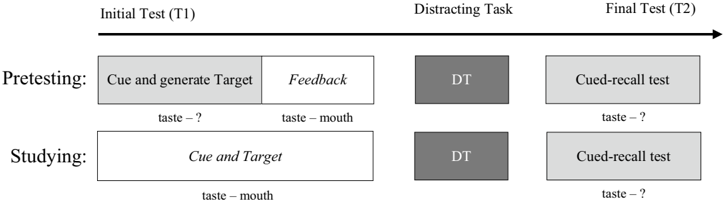
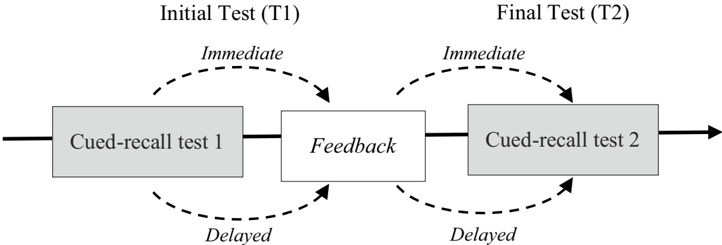
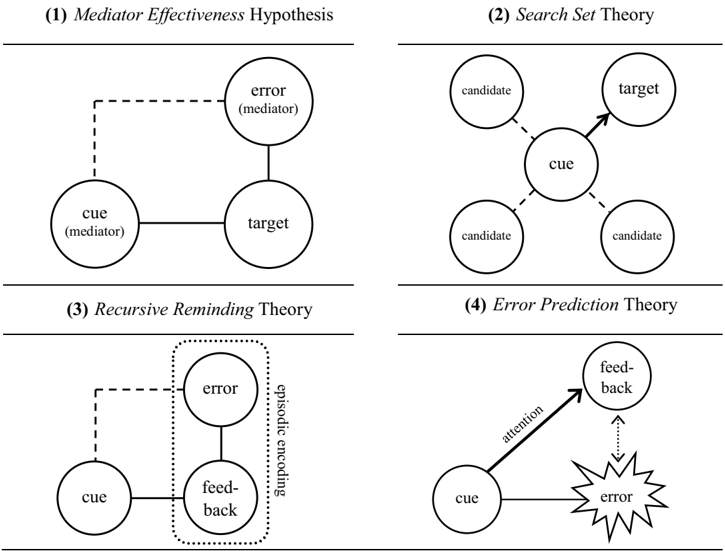
Verification
Claims the paper makes
The claims and statistics of this paper haven’t been checked yet.
Free: it reads the open-access text and checks the first 5 claims that cite a source we can check. Create a free account to check every claim.
Claims other papers make about this one
Each is checked against this paper’s own text: does it say what the citing paper says it does?
In the citing paper
“the affective and self-regulatory model explains engagement or withdrawal”
From From Obstacle to Catalyst: A Narrative Review of Learning from Errors in Science Education (2026) · cites this paper as [35]
In the citing paper
“Errors can arise from interacting sources, including gaps or conflicts in prior knowledge, excessive cognitive load, ambiguous task interpretation, limited motivation, and constraints in instructional materials or support [10,35].”
From From Obstacle to Catalyst: A Narrative Review of Learning from Errors in Science Education (2026) · cites this paper as [35]
In the citing paper
“negative knowledge describes one possible learning product”
From From Obstacle to Catalyst: A Narrative Review of Learning from Errors in Science Education (2026) · cites this paper as [35]
In the citing paper
“Rasmussen's taxonomy identifies the form and origin of the error”
From From Obstacle to Catalyst: A Narrative Review of Learning from Errors in Science Education (2026) · cites this paper as [35]
In the citing paper
“the GE/DCE model specifies a temporal sequence through which generation, detection, explanation, feedback, and correction can become productive”
From From Obstacle to Catalyst: A Narrative Review of Learning from Errors in Science Education (2026) · cites this paper as [35]
1 more claim about this paper
Create a free account to see every claim other papers make about this one.
Self-check
Percentages, sums and reported differences re-computed from the paper’s own numbers.
The self-check needs the paper’s full text.
Citations
Cites
Landauer, T. K., & Dumais, S. T. (1997) · Psychological Review · doi:10.1037/0033-295x.104.2.211 · Cited by 6,282
(2007) · Cognitive Psychology · doi:10.4135/9781446212967.n15 · Cited by 3,749
Memory: A Contribution to Experimental Psychology
Ebbinghaus, H. (2013) · Annals of Neurosciences · doi:10.5214/ans.0972.7531.200408 · Cited by 2,827
The power of testing memory: Basic research and implications for educational practice
Roediger, H. L., & Karpicke, J. D. (2006) · Perspectives on Psychological Science · doi:10.1111/j.1745-6916.2006.00012.x · Cited by 2,037
The neural basis of error detection: Conflict monitoring and the error-related negativity
Yeung, N., Botvinick, M. M., & Cohen, J. D. (2004) · Psychological Review · doi:10.1037/0033-295x.111.4.931 · Cited by 1,924 · cited 2×
“, 2020) suggest that errors produce a cognitive discrepancy that would activate conflict resolution processes, which is thought to increase attention and task engagement (Botvinick et al., 2001; Yeung et al., 2004).”
BackgroundCategorization of action slips
Norman, D. A. (1981) · Psychological Review · doi:10.1037/0033-295x.88.1.1 · Cited by 1,736 · cited 1×
“Slips refer to the cases in which learners execute an incorrect response accidentally, while mistakes refer to errors that result from incorrect knowledge (Norman, 1981; Wong & Lim, 2019).”
BackgroundMetacognition: Knowing about Knowing
(1994) · The MIT Press eBooks · doi:10.7551/mitpress/4561.001.0001 · Cited by 1,720
The generation effect: delineation of a phenomenon
Slamecka, N. J., & Graf, P. (1978) · Journal of Experimental Psychology: Human Learning and Memory · doi:10.1037/0278-7393.4.6.592 · Cited by 1,659
Memory: A contribution to experimental psychology.
Ebbinghaus, H. (1913) · doi:10.1037/10011-000 · Cited by 1,645
Replication and Analysis of Ebbinghaus’ Forgetting Curve
Murre, J. M. J., & Dros, J. (2015) · PLOS ONE · doi:10.1371/journal.pone.0120644 · Cited by 777 · cited 1×
“Classic studies (e.g., Ebbinghaus, 1885) demonstrated that the speed of forgetting depends on different variables such as time since learning and that this relationship follows a logarithmic function, findings that have recently been replicated (Murre & Dros, 2015).”
BackgroundUnsuccessful retrieval attempts enhance subsequent learning.
Kornell, N., Hays, M. J., & Bjork, R. A. (2009) · Journal of Experimental Psychology: Learning, Memory, and Cognition · doi:10.1037/a0015729 · Cited by 484 · cited 5×
“The most common procedure is cued-recall, in which a cue is presented and participants are asked to remember the associated target (e.g., Huelser & Metcalfe, 2012; Kornell et al., 2009).”
BackgroundMethodInfluentialMetcalfe, J. (2017) · Annual Review of Psychology · doi:10.1146/annurev-psych-010416-044022 · Cited by 483
When Does Feedback Facilitate Learning of Words?
Pashler, H., Cepeda, N. J., Wixted, J. T., & Rohrer, D. (2005) · Journal of Experimental Psychology: Learning, Memory, and Cognition · doi:10.1037/0278-7393.31.1.3 · Cited by 445
Why Testing Improves Memory: Mediator Effectiveness Hypothesis
Pyc, M. A., & Rawson, K. A. (2010) · Science · doi:10.1126/science.1191465 · Cited by 371 · cited 1×
“First, the Mediator Effectiveness hypothesis (Pyc & Rawson, 2010) was originally proposed as an explanation for the Testing effect (see earlier definition).”
MethodThe pretesting effect: do unsuccessful retrieval attempts enhance learning?
Richland, L. E., Kornell, N., & Kao, L. S. (2009) · Journal of Experimental Psychology: Applied · doi:10.1037/a0016496 · Cited by 302 · cited 2×
“, 2019a, b; Slamecka & Fevreiski, 1983; Vaughn & Rawson, 2012), along with more ecologically relevant materials such as facts (Kang et al., 2011; Kornell et al., 2015; Richland et al., 2009); sentence translations (Guzmán-Muñoz, 2020); texts (van Loon et al.”
BackgroundErrors committed with high confidence are hypercorrected.
Butterfield, B., & Metcalfe, J. (2001) · Journal of Experimental Psychology: Learning, Memory, and Cognition · doi:10.1037/0278-7393.27.6.1491 · Cited by 223 · cited 6×
“In addition, the hypercorrection effect is a phenomenon related to errorful learning described by Butterfield and Metcalfe (2001).”
BackgroundResultInfluentialWhen and why do retrieval attempts enhance subsequent encoding?
Grimaldi, P. J., & Karpicke, J. D. (2012) · Memory & Cognition · doi:10.3758/s13421-011-0174-0 · Cited by 200 · cited 10×
“Research shows that in order to be most helpful for learning, errors must be self-generated rather than be observed in others, or be presented as mistaken items (e.g., Grimaldi & Karpicke, 2012; Metcalfe & Xu, 2018).”
BackgroundMethodInfluentialMaking related errors facilitates learning, but learners do not know it
Huelser, B. J., & Metcalfe, J. (2012) · Memory & Cognition · doi:10.3758/s13421-011-0167-z · Cited by 171
The benefit of generating errors during learning
Potts, R., & Shanks, D. R. (2014) · Journal of Experimental Psychology: General · doi:10.1037/a0033194 · Cited by 166 · cited 11×
“These results were replicated with Basque-English translations (e.g., “hodei–cloud”; Potts & Shanks, 2014).”
BackgroundMethodResultInfluentialWhen generating a prediction boosts learning: The element of surprise
Brod, G., Hasselhorn, M., & Bunge, S. A. (2018) · Learning and Instruction · doi:10.1016/j.learninstruc.2018.01.013 · Cited by 131
When and why a failed test potentiates the effectiveness of subsequent study.
Hays, M. J., Kornell, N., & Bjork, R. A. (2013) · Journal of Experimental Psychology: Learning, Memory, and Cognition · doi:10.1037/a0028468 · Cited by 113
Kornell, N. (2014) · Journal of Experimental Psychology: Learning, Memory, and Cognition · doi:10.1037/a0033699 · Cited by 88 · cited 3×
“However, this remains a matter of debate since contradictory results have been found (Kornell, 2014; Metcalfe et al., 2009).”
ResultThe benefit of generating errors during learning: What is the locus of the effect?
Potts, R., Davies, G., & Shanks, D. R. (2019) · Journal of Experimental Psychology: Learning, Memory, and Cognition · doi:10.1037/xlm0000637 · Cited by 75
Multiple-choice pretesting potentiates learning of related information
Little, J. L., & Bjork, E. L. (2016) · Memory & Cognition · doi:10.3758/s13421-016-0621-z · Cited by 75 · cited 2×
“…of experiencing errors only occurs when such material is semantically related, such as in the case of word-pairs, for example, when there is a semantic association between the cue and the target (Grimaldi & Karpicke, 2012; Huelser & Metcalfe, 2012; Little & Bjork, 2016; Seabrooke et al., 2019a, b).”
BackgroundDoes incorrect guessing impair fact learning?
Kang, S. H. K., Pashler, H., Cepeda, N. J., Rohrer, D., Carpenter, S. K., & Mozer, M. C. (2011) · Journal of Educational Psychology · doi:10.1037/a0021977 · Cited by 67
Learning from errors: Students' and instructors' practices, attitudes, and beliefs
Pan, S. C., Sana, F., Samani, J., Cooke, J., & Kim, J. A. (2020) · Memory · doi:10.1080/09658211.2020.1815790 · Cited by 65
When is guessing incorrectly better than studying for enhancing memory?
Vaughn, K. E., & Rawson, K. A. (2012) · Psychonomic Bulletin & Review · doi:10.3758/s13423-012-0276-0 · Cited by 62 · cited 3×
“The dominant view is that in order to benefit from experiencing errors, corrective feedback needs to be provided shortly after the error is committed (e.g., Grimaldi & Karpicke, 2012; Hays et al., 2013; Vaughn & Rawson, 2012).”
BackgroundLearning from your mistakes: does it matter if you’re out in left foot, I mean field?
Cyr, A.-A., & Anderson, N. D. (2018) · Memory · doi:10.1080/09658211.2018.1464189 · Cited by 20 · cited 7×
“In this regard, Cyr and Anderson (2018) conducted a pretesting experiment.”
BackgroundResultInfluential
Research works printed but not linked: 48
- Baddeley, A., & Wilson, B. A. (1994). When implicit learning fails: Amnesia and the problem of error elimination. Neuropsychologia , 32 (1), 53-68. https:// doi. org/ 10. 1016/ 0028- 3932(94) 90068-X · DOI · Paper page
- Bjork, E. L., & Bjork, R. A. (2014). Making Things Hard on Yourself, But in a Good Way: Creating Desirable Difficulties to Enhance Learning. In M. A. Gernsbacher & J. R. Pomerantz (Eds.), Psychology and the real world: Essays illustrating fundamental contributions to society (2nd ed., pp. 59-68). Worth.
- Bonwell, C. C., & Eison, J. A. (1991). Active Learning: Creating Excitement in the Classroom . ASHE-ERIC Higher Education Reports.
- Botvinick, M. M., Carter, C. S., Braver, T. S., Barch, D. M., & Cohen, J. D. (2001). Conflict monitoring and cognitive control. Psychological Review , 108 (3), 624-652. https:// doi. org/ 10. 1037/ 0033- 295X. 108.3. 624 · DOI · Paper page
- Butler, A. C., Karpicke, J. D., & Roediger, H. L. (2008). Correcting a Metacognitive Error: Feedback Increases Retention of Low-Confidence Correct Responses. Journal of Experimental Psychology: Learning Memory and Cognition , 34 (4), 918-928. https:// doi. org/ 10. 1037/ 0278- 7393. 34.4. 918 · DOI · Paper page
- Butterfield, B., & Metcalfe, J. (2006). The correction of errors committed with high confidence. Metacognition and Learning , 1 , 69-84. https:// doi. org/ 10. 1007/ s11409- 006- 6894-z · DOI · Paper page
- Carneiro, P., Lapa, A., & Finn, B. (2018). The effect of unsuccessful retrieval on children's subsequent learning. Journal of Experimental Child Psychology , 166 , 400-420. https:// doi. org/ 10. 1016/j. jecp. 2017. 09. 010 · DOI
- Clare, L., & Jones, R. S. P. (2008). Errorless learning in the rehabilitation of memory impairment: A critical review. Neuropsychology Review , 18 (1), 1-23. https:// doi. org/ 10. 1007/ s11065- 008- 9051-4 · DOI · Paper page
- Clark, C. M. (2016). When and Why does Learning Profit from the Introduction of Errors? (Doctoral Dissertation, University of California Los Angeles). Retrieved August 8, 2020, from https:// escho larsh ip. org/ uc/ item/ 6zv58 67p
- Collins, A. M., & Loftus, E. F. (1975). A spreading-activation theory of semantic processing. Psychological Review , 82 (6), 407-428. https:// doi. org/ 10. 1037// 0033- 295X. 82.6. 407 · doi:10.1037//0033-295x.82.6.407 · Paper page
- Cyr, A. A., & Anderson, N. D. (2012). Trial-and-error learning improves source memory among young and older adults. Psychology and Aging , 27 (2), 429-439. https:// doi. org/ 10. 1037/ a0025 115 · DOI
- Cyr, A. A., & Anderson, N. D. (2015). Mistakes as stepping stones: Effects of errors on episodic memory among younger and older adults. Journal of Experimental Psychology: Learning Memory and Cognition , 41 (3), 841-850. https:// doi. org/ 10. 1037/ xlm00 00073 · DOI · Paper page
- Decker, A., Finn, A., & Duncan, K. (2020). Errors lead to transient impairments in memory formation. Cognition , 204 , 104338. https:// doi. org/ 10. 1016/j. cogni tion. 2020. 104338 · DOI
- Flavell, J. H., & Wellman, H. M. (1977). Metamemory. In R. V. Kail & J. W. Hagen (Eds.), Perspectives on the development of memory and cognition . Lawrence Erlbau.
- Guzmán-Muñoz, F. J. (2020). Effects of making errors in learning a foreign language. Journal of Cognitive Psychology , 32 (2), 229-241. https:// doi. org/ 10. 1080/ 20445 911. 2020. 17117 66 · DOI
- Houtman, F., & Notebaert, W. (2013). Blinded by an error. Cognition , 128 (2), 228-236. https:// doi. org/ 10. 1016/j. cogni tion. 2013. 04. 003 · DOI
- Hunkin, N. M., Squires, E. J., Parkin, A. J., & Tidy, J. A. (1998). Are the benefits of errorless learning dependent on implicit memory? Neuropsychologia , 36 (1), 25-36. https:// doi. org/ 10. 1016/ S00283932(97) 00106-1 · DOI
- Iwaki, N., Matsushima, H., & Kodaira, K. (2013). Hypercorrection of High Confidence Errors in Lexical Representations. Perceptual and Motor Skills , 117 (1), 219-235. https:// doi. org/ 10. 2466/ 27. 22. pms. 117x1 3z7 · DOI
- Knight, J. B., Hunter Ball, B., Brewer, G. A., DeWitt, M. R., & Marsh, R. L. (2012). Testing unsuccessfully: A specification of the underlying mechanisms supporting its influence on retention. Journal of Memory and Language , 66 (4), 731-746. https:// doi. org/ 10. 1016/j. jml. 2011. 12. 008 · DOI
- Kornell, N., Klein, P. J., & Rawson, K. A. (2015). Retrieval attempts enhance learning, but retrieval success (versus failure) does not matter. Journal of Experimental Psychology: Learning Memory and Cognition , 41 (1), 283-294. https:// doi. org/ 10. 1037/ a0037 850 · DOI · Paper page
- Melton, A. W., & Irwin, J. M. (1940). The Influence of Degree of Interpolated Learning on Retroactive Inhibition and the Overt Transfer of Specific Responses. The American Journal of Psychology , 53 (2), 173-203. https:// doi. org/ 10. 2307/ 14174 15 · DOI · Paper page
- Metcalfe, J., & Finn, B. (2012). Hypercorrection of high confidence errors in children. Learning and Instruction , 22 (4), 253-261. https:// doi. org/ 10. 1016/j. learn instr uc. 2011. 10. 004 · DOI
- Neuropsychologia , 138 . https:// doi. org/ 10. 1016/j. neuro psych ologia. 2019. 107296 https://doi.org/10.1016/j.neuropsychologia.2019.107296 · DOI
- Metcalfe, J., & Kornell, N. (2007). Principles of cognitive science in education: The effects of generation, errors, and feedback. Psychonomic Bulletin and Review , 14 (2), 225-229. https:// doi. org/ 10. 3758/ BF031 94056 · DOI
- Metcalfe, J., & Miele, D. B. (2014). Hypercorrection of high confidence errors: Prior testing bothenhances delayed performance and blocks the return of the errors. Journal of Applied Research in Memory and Cognition , 3 (3), 189-197. https:// doi. org/ 10. 1016/j. jarmac. 2014. 04. 001 · DOI
- Metcalfe, J., & Xu, J. (2018). Learning from one's own errors and those of others. Psychonomic Bulletin and Review , 25 (1), 402408. https:// doi. org/ 10. 3758/ s13423- 017- 1287-7 · DOI
- Metcalfe, J., Kornell, N., & Finn, B. (2009). Delayed versus immediate feedback in children's and adults' vocabulary learning. Memory and Cognition , 37 (8), 1077-1087. https:// doi. org/ 10. 3758/ MC. 37.8. 1077 · DOI · Paper page
- Metcalfe, J., Butterfield, B., Habeck, C., & Stern, Y. (2012). Neural Correlates of People's Hypercorrection of Their False Beliefs. Journal of Cognitive Neuroscience , 24 (7), 1571-1583. https:// doi. org/ 10. 1162/ jocn\_a\_ 00228 · DOI
- Metcalfe, J., Casal-Roscum, L., Radin, A., & Friedman, D. (2015). On Teaching Old Dogs New Tricks. Psychological Science , 26 (12), 1833-1842. https:// doi. org/ 10. 1177/ 09567 97615 597912 · DOI
- Middleton, E. L., & Schwartz, M. F. (2012). Errorless learning in cognitive rehabilitation: A critical review. Neuropsychological Rehabilitation , 22 (2), 138-168. https:// doi. org/ 10. 1080/ 09602 011. 2011. 639619 · DOI · Paper page
- Mueller, M. M., Palkovic, C. M., & Maynard, C. S. (2007). Errorless learning: Review and practical application for teaching children with pervasive developmental disorders. Psychology in the Schools , 44 (7), 691-700. https:// doi. org/ 10. 1002/ pits. 20258 · DOI
- Notebaert, W., Houtman, F., Opstal, F. Van, Gevers, W., Fias, W., & Verguts, T. (2009). Post-error slowing: An orienting account. Cognition , 111 (2), 275-279. https:// doi. org/ 10. 1016/j. cogni tion. 2009. 02. 002 · DOI · Paper page
- Postman, L., & Underwood, B. J. (1973). Critical issues in interference theory. Memory & Cognition , 1 (1), 19-40. https:// doi. org/ 10. 3758/ BF031 98064 · DOI · Paper page
- Rescorla, R. A., & Wagner, A. R. (1972). A theory of Pavlovian conditioning: variations in the effectiveness of reinforcement and nonreinforcement. In A. H. Black & W. F. Prokasy (Eds.), Clasical conditioning II: current research and theory (pp. 64-99). Appleton-Century-Crofts.
- Seabrooke, T., Hollins, T. J., Kent, C., Wills, A. J., & Mitchell, C. J. (2019a). Learning from failure: Errorful generation improves memory for items, not associations. Journal of Memory and Language , 104 , 70-82. https:// doi. org/ 10. 1016/j. jml. 2018. 10. 001 · DOI
- Seabrooke, T., Mitchell, C. J., Wills, A. J., Waters, J. L., & Hollins, T. J. (2019b). Selective effects of errorful generation on recognition memory: the role of motivation and surprise. Memory , 27 (9), 1250-1262. https:// doi. org/ 10. 1080/ 09658 211. 2019. 16472 47 · DOI
- Slamecka, N. J., & Fevreiski, J. (1983). The generation effect when generation fails. Journal of Verbal Learning and Verbal Behavior , 22 (2), 153-163. https:// doi. org/ 10. 1016/ S0022- 5371(83) 90112-3 · DOI · Paper page
- Soraci, S. A., Franks, J. J., Bransford, J. D., Chechile, R. A., Belli, R. F., Carr, M., & Carlin, M. (1994). Incongruous Item Generation Effects: A Multiple-Cue Perspective. Journal of Experimental Psychology: Learning, Memory, and Cognition , 20 (1), 67-78. https:// doi. org/ 10. 1037/ 0278- 7393. 20.1. 67 · DOI
- Soraci, S. A., Carlin, M. T., Chechile, R. A., Franks, J. J., Wills, T., & Watanabe, T. (1999). Encoding Variability and Cuing in Generative Processing. Journal of Memory and Language , 41 (4), 541-559. https:// doi. org/ 10. 1006/ jmla. 1999. 2661 · DOI
- Squires, E. J., Hunkin, N. M., & Parkin, A. J. (1997). Errorless learning of novel associations in amnesia. Neuropsychologia , 35 (8), 1103-1111. https:// doi. org/ 10. 1016/ S0028- 3932(97) 00039-0 · DOI
- Stevenson, H. W., & Stigler, J. W. (1994). The learning gap: why our schools are failing and what we can learn from Japanese and Chinese education . Simon & Schuster.
- Tanaka, S., Miyatani, M., & Iwaki, N. (2019). Response format, not semantic activation, influences the failed retrieval effect. Frontiers in Psychology , 10 , 1-13. https:// doi. org/ 10. 3389/ fpsyg. 2019. 00599 · DOI
- Tulis, M. (2013). Error management behavior in classrooms: Teachers' responses to student mistakes. Teaching and Teacher Education , 33 , 56-68. https:// doi. org/ 10. 1016/j. tate. 2013. 02. 003 · DOI · Paper page
- van Loon, M. H., Dunlosky, J., van Gog, T., van Merriënboer, J. J. G., & de Bruin, A. B. H. (2015). Refutations in science texts lead to hypercorrection of misconceptions held with high confidence. Contemporary Educational Psychology , 42 , 39-48. https:// doi. org/ 10. 1016/j. cedps ych. 2015. 04. 003 · DOI
- Wahlheim, C. N., & Jacoby, L. L. (2013). Remembering change: The critical role of recursive remindings in proactive effects of memory. Memory and Cognition , 41 (1), 1-15. https:// doi. org/ 10. 3758/ s13421- 012- 0246-9 · DOI
- Wong, S. S. H., & Lim, S. W. H. (2019). Prevention-Permission-Promotion: A Review of Approaches to Errors in Learning. Educational Psychologist , 54 (1), 1-19. https:// doi. org/ 10. 1080/ 00461 520. 2018. 15016 93 · DOI · Paper page
- Yang, C., Potts, R., & Shanks, D. R. (2017). Metacognitive unawareness of the errorful generation benefit and its effects on self-regulated learning. Journal of Experimental Psychology: Learning Memory and Cognition , 43 (7), 1073-1092. https:// doi. org/ 10. 1037/ xlm00 00363 · DOI · Paper page
- Zawadzka, K., & Hanczakowski, M. (2019). Two routes to memory benefits of guessing. Journal of Experimental Psychology. Learning, Memory, and Cognition , 45 (10), 1748-1760. https:// doi. org/ 10. 1037/ xlm00 00676 · DOI · Paper page
Cited by
Pan, S. C., & Carpenter, S. K. (2023) · Educational Psychology Review · doi:10.1007/s10648-023-09814-5 · Cited by 60
“…of change detection in multi-list, paired associate learning studies (Jacoby & Wahlheim, 2013; Wahlheim & Jacoby, 2013), proposes that the experience of generating an error and learning the correct answer through feedback are encoded in the same episodic event (Mera et al., 2022; Metcalfe, 2017).”
BackgroundMath Education with Large Language Models: Peril or Promise?
Kumar, H., Rothschild, D. M., Goldstein, D. G., & Hofman, J. (2023) · doi:10.2139/ssrn.4641653 · Cited by 54
Math Education With Large Language Models: Peril or Promise?
Kumar, H., Rothschild, D. M., Goldstein, D. G., & Hofman, J. M. (2025) · Lecture Notes in Computer Science · doi:10.1007/978-3-031-98459-4_5 · Cited by 54
From Obstacle to Catalyst: A Narrative Review of Learning from Errors in Science Education
Fabre-Mitjans, N., Jiménez-Valverde, G., Viciana, S., & Crespo i Torres, F. (2026) · Encyclopedia · doi:10.3390/encyclopedia6090192 · Cited by 2
Metadata
- Authors
- Mera, Y., Rodríguez, G., & Marin-Garcia, E.
- ORCID
- Mera, Yeray
- Venue
- Psychonomic Bulletin & Review
- Published
- 2021-11-24
- Volume
- 29
- Issue
- 3
- Pages
- 753-765
- ISSN
- 1069-9384
- 1531-5320
- Cited by
- 48
- References
- 28
- Language
- en
- Licence
- www.springer.com/tdm (tdm)
- www.springer.com/tdm (vor)
About these checks
Registry, retraction, Cites and statistics results are computed, not judged, with one exception: a printed reference that no index lists is read once by a model before it counts as a citation error. Claims are extracted by a model and kept only when their quote appears verbatim in the text; each cited source is then checked, with a model’s help, for whether it says what the claim relies on. Those verdicts can be wrong — read the claim’s quote and the cited source before relying on one.
Statistics and arithmetic are recomputed, not judged.
Confidence bands are shown only for fields calibrated on our annotated test set. None is calibrated yet, so no band is shown.
What counts as a claim ›How we measure confidence ›How we check this ›
Are you an author, or do you see a problem with this page? Request a review
Data sources
Bibliographic data: Semantic Scholar, OpenAlex, Crossref.
Contains information from the Semantic Scholar Academic Graph Datasets, made available under the ODC Attribution License (ODC-BY 1.0).
Semantic Scholar’s data is described in: Kinney, R., et al. (2023). The Semantic Scholar Open Data Platform. arXiv:2301.10140.
