

The DOI matches its Crossref record; 52 of the 52 references it cites were found in a registry or an index.
The Role of Advanced Glycation End Products in Diabetic Vascular Complications
Open accessAbstract
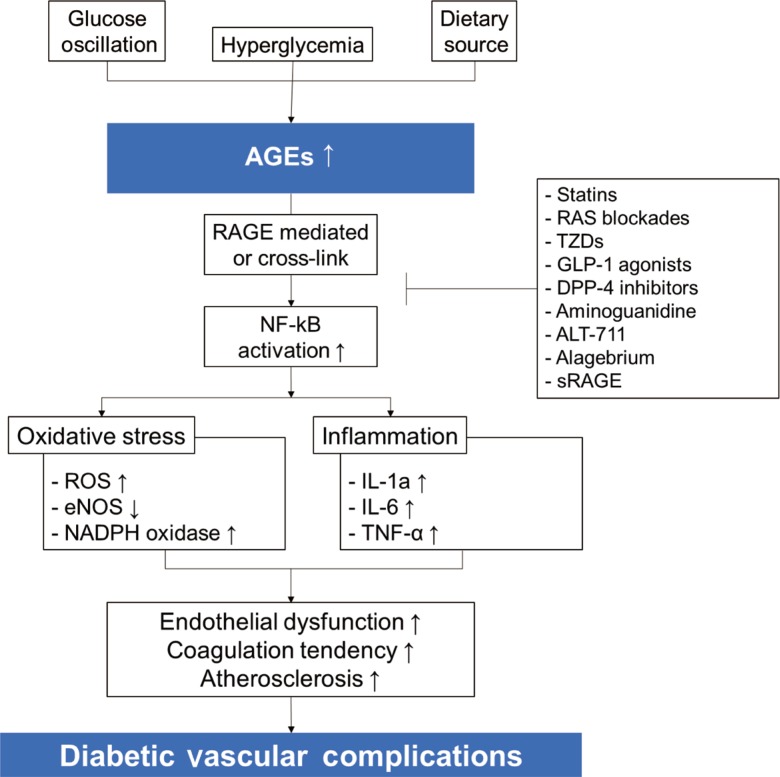
In cases of chronic hyperglycemia, advanced glycation end-products (AGEs) are actively produced and accumulated in the circulating blood and various tissues. AGEs also accelerate the expression of receptors for AGEs, and they play an important role in the development of diabetic vascular complications through various mechanisms. Active interventions for glucose and related risk factors may help improve the clinical course of patients by reducing AGEs. This review summarizes recent updates on AGEs that have a significant impact on diabetic vascular complications.
Overview
The claims and statistics of this paper haven’t been checked yet.
Run the check — free, no account needed. It reads the open-access text and checks the sources it cites.
Integrity signals
Registry
Cites
Statistics
Figures
Verification
Claims the paper makes
The claims and statistics of this paper haven’t been checked yet.
Run the check — free, no account needed. It reads the open-access text and checks the sources it cites.
Claims other papers make about this one
Each is checked against this paper’s own text: does it say what the citing paper says it does?
In the citing paper
“Endogenous AGEs represent adducts that are produced and slowly accumulated within the body during the normal aging process and under the oxidative stress, inflammatory, and hyperglycemic (high blood sugar) conditions often observed in diabetes and other metabolic syndromes1,4,12,13.”
From Advanced glycation end products (AGEs) and other adducts in aging-related diseases and alcohol-mediated tissue injury (2021) · cites this paper as [12]
Self-check
Percentages, sums and reported differences re-computed from the paper’s own numbers.
The self-check needs the paper’s full text.
Citations
Cites
10-year follow-up of intensive glucose control in type 2 diabetes
Holman, R. R., Paul, S. K., Bethel, M. A., Matthews, D. R., & Neil, H. A. W. (2008) · New England Journal of Medicine · doi:10.1056/nejmoa0806470 · Cited by 7,751
Advanced glycation end-products: A review
Singh, R., Barden, A., Mori, T., & Beilin, L. (2001) · Diabetologia · doi:10.1007/s001250051591 · Cited by 2,597
Advanced Glycation End Products and Diabetic Complications
Singh, V. P., Bali, A., Singh, N., & Jaggi, A. S. (2014) · The Korean Journal of Physiology & Pharmacology · doi:10.4196/kjpp.2014.18.1.1 · Cited by 1,518
Advanced glycation end products in foods and a practical guide to their reduction in the diet
Uribarri, J., Woodruff, S., Goodman, S., Cai, W., Chen, X., Pyzik, R., Yong, A., Striker, G. E., & Vlassara, H. (2010) · Journal of the American Dietetic Association · doi:10.1016/j.jada.2010.03.018 · Cited by 1,289
Bucala, R., Tracey, K. J., & Cerami, A. (1991) · Journal of Clinical Investigation · doi:10.1172/jci115014 · Cited by 1,162
Writing Team for the Diabetes Control and Complications Trial/Epidemiology of Diabetes Interventions and Complications Research Group (2003) · JAMA · doi:10.1001/jama.290.16.2159 · Cited by 1,009
Diabetes and advanced glycation endproducts
Vlassara, H., & Palace, M. R. (2002) · Journal of Internal Medicine · doi:10.1046/j.1365-2796.2002.00932.x · Cited by 723
YONEKURA, H., YAMAMOTO, Y., SAKURAI, S., PETROVA, R. G., ABEDIN, M. J., LI, H., YASUI, K., TAKEUCHI, M., MAKITA, Z., TAKASAWA, S., et al. (2003) · Biochemical Journal · doi:10.1042/bj20021371 · Cited by 716
Lo, T. W. C., Westwood, M. E., McLellan, A. C., Selwood, T., & Thornalley, P. J. (1994) · Journal of Biological Chemistry · doi:10.1016/s0021-9258(18)31635-1 · Cited by 695
Bierhaus, A. (1998) · Cardiovascular Research · doi:10.1016/s0008-6363(97)00233-2 · Cited by 554
Research works printed but not linked: 1
- Soulis-Liparota, 1991, Diabetes, 40, 1328, 10.2337/diab.40.10.1328 · DOI
Cited by
Sorted by citations
Pisoschi, A. M., Pop, A., Iordache, F., Stanca, L., Predoi, G., & Șerban, A. I. (2020) · European Journal of Medicinal Chemistry · doi:10.1016/j.ejmech.2020.112891 · Cited by 883
Papachristoforou, E., Lambadiari, V., Maratou, E., & Makrilakis, K. (2020) · Journal of Diabetes Research · doi:10.1155/2020/7489795 · Cited by 519
Rungratanawanich, W., Qu, Y., Wang, X., Essa, M. M., & Song, B.-J. (2021) · Experimental & Molecular Medicine · doi:10.1038/s12276-021-00561-7 · Cited by 411
Health benefits of resveratrol administration
Galiniak, S., Aebisher, D., & Bartusik‐Aebisher, D. (2019) · Acta Biochimica Polonica · doi:10.18388/abp.2018_2749 · Cited by 349
Novel advances in inhibiting advanced glycation end product formation using natural compounds
Song, Q., Liu, J., Dong, L., Wang, X., & Zhang, X. (2021) · Biomedicine & Pharmacotherapy · doi:10.1016/j.biopha.2021.111750 · Cited by 259
Snelson, M., & Coughlan, M. (2019) · Nutrients · doi:10.3390/nu11020215 · Cited by 230
Advanced Glycation End Products (AGEs) May Be a Striking Link Between Modern Diet and Health
Gill, V., Kumar, V., Singh, K., Kumar, A., & Kim, J.-J. (2019) · Biomolecules · doi:10.3390/biom9120888 · Cited by 232
Endothelial Dysfunction in Diabetic Retinopathy
Gui, F., You, Z., Fu, S., Wu, H., & Zhang, Y. (2020) · Frontiers in Endocrinology · doi:10.3389/fendo.2020.00591 · Cited by 230
Endogenous advanced glycation end products in the pathogenesis of chronic diabetic complications
Mengstie, M. A., Abebe, E. C., Teklemariam, A. B., Mulu, A. T., Agidew, M. M., Azezew, M. T., Zewde, E. A., & Teshome, A. A. (2022) · Frontiers in Molecular Biosciences · doi:10.3389/fmolb.2022.1002710 · Cited by 232
Targeting inflammation in diabetic nephropathy: a tale of hope
Moreno, J. A., Gómez‐Guerrero, C., Mas, S., Sanz, A. B., Lorenzo, Ó., Ruiz‐Ortega, M., Opazo-Ríos, L., Mezzano, S. A., & Egido, J. (2018) · Expert Opinion on Investigational Drugs · doi:10.1080/13543784.2018.1538352 · Cited by 174
Kim, M. E., & Lee, J. S. (2025) · International Journal of Molecular Sciences · doi:10.3390/ijms26031204 · Cited by 178
Anwar, S., Khan, A. A., Almatroudi, A., Khan, A. A., Alsahli, M. A., Almatroodi, S. A., & Rahmani, A. H. (2021) · Molecular Biology Reports · doi:10.1007/s11033-020-06084-0 · Cited by 158
Lee, J., Yun, J., & Ko, S. (2022) · Nutrients · doi:10.3390/nu14153086 · Cited by 161
Functional and Structural Changes of the Blood-Nerve-Barrier in Diabetic Neuropathy
Richner, M., Ferreira, N., Dudele, A., Jensen, T. S., Vægter, C. B., & Gonçalves, N. P. (2019) · Frontiers in Neuroscience · doi:10.3389/fnins.2018.01038 · Cited by 138
Metabolic and Metabo-Clinical Signatures of Type 2 Diabetes, Obesity, Retinopathy, and Dyslipidemia
Yousri, N. A., Suhre, K., Yassin, E., Al-Shakaki, A., Robay, A., Elshafei, M., Chidiac, O. M., Hunt, S. C., Crystal, R. G., & Fakhro, K. A. (2021) · Diabetes · doi:10.2337/db21-0490 · Cited by 108
Yoo, J. H., Choi, M. S., Ahn, J., Park, S. W., Kim, Y., Hur, K. Y., Jin, S., Kim, G., & Kim, J. H. (2020) · Diabetes Technology & Therapeutics · doi:10.1089/dia.2019.0499 · Cited by 102
Self-citationPathophysiology of diabetes mellitus complications: Metabolic events and control
Ohiagu, F. O., Chikezie, P. C., & Chikezie, C. M. (2021) · Biomedical Research and Therapy · doi:10.15419/bmrat.v8i3.663 · Cited by 97
Mosterd, C. M., Kanbay, M., van den Born, B. H., van Raalte, D. H., & Rampanelli, E. (2021) · Best Practice & Research Clinical Endocrinology & Metabolism · doi:10.1016/j.beem.2021.101484 · Cited by 96
Cerebral small vessel disease: A glymphopathy?
Benveniste, H., & Nedergaard, M. (2021) · Current Opinion in Neurobiology · doi:10.1016/j.conb.2021.07.006 · Cited by 94
Cognitive impairments in type 2 diabetes, risk factors and preventive strategies
Sharma, G., Parihar, A., Talaiya, T., Dubey, K., Porwal, B., & Parihar, M. S. (2020) · Journal of Basic and Clinical Physiology and Pharmacology · doi:10.1515/jbcpp-2019-0105 · Cited by 94
Diabetes, a Contemporary Risk for Parkinson’s Disease: Epidemiological and Cellular Evidences
Sergi, D., Renaud, J., Simola, N., & Martinoli, M. (2019) · Frontiers in Aging Neuroscience · doi:10.3389/fnagi.2019.00302 · Cited by 87
Dutta, B. J., Singh, S., Seksaria, S., Gupta, G. D., & Singh, A. (2022) · Pharmacological Research · doi:10.1016/j.phrs.2022.106358 · Cited by 89
Dietary advanced glycation end products (dAGEs): An insight between modern diet and health
Tian, Z., Chen, S., Shi, Y., Wang, P., Wu, Y., & Li, G. (2023) · Food Chemistry · doi:10.1016/j.foodchem.2023.135735 · Cited by 90
Mitochondrial superoxide/hydrogen peroxide: An emerging therapeutic target for metabolic diseases
Yan, J., Jiang, J., He, L., & Chen, L. (2020) · Free Radical Biology and Medicine · doi:10.1016/j.freeradbiomed.2020.02.029 · Cited by 78
The Role of Advanced Glycation End Products and Its Soluble Receptor in Kidney Diseases
Steenbeke, M., Speeckaert, R., Desmedt, S., Glorieux, G., Delanghe, J., & Speeckaert, M. M. (2022) · International Journal of Molecular Sciences · doi:10.3390/ijms23073439 · Cited by 73
Diabetes and cardiovascular disease: inter-relation of risk factors and treatment
Sharma, A., Mittal, S., Aggarwal, R., & Chauhan, M. K. (2020) · Future Journal of Pharmaceutical Sciences · doi:10.1186/s43094-020-00151-w · Cited by 83
Recent advances in the pathogenesis of microvascular complications in diabetes
Park, S., Kang, H., Jeon, J., Kim, M., & Lee, I. (2019) · Archives of Pharmacal Research · doi:10.1007/s12272-019-01130-3 · Cited by 69
Lysophosphatidic Acid Signaling in Diabetic Nephropathy
Lee, J., Kim, D., Oh, Y. S., & Jun, H. (2019) · International Journal of Molecular Sciences · doi:10.3390/ijms20112850 · Cited by 69
Sellegounder, D., Zafari, P., Rajabinejad, M., Taghadosi, M., & Kapahi, P. (2021) · International Immunopharmacology · doi:10.1016/j.intimp.2021.107806 · Cited by 70
Giordo, R., Ahmed, Y. M. A., Allam, H., Abusnana, S., Pappalardo, L., Nasrallah, G. K., Mangoni, A. A., & Pintus, G. (2021) · Frontiers in Cell and Developmental Biology · doi:10.3389/fcell.2021.683594 · Cited by 64
Bansal, S., Burman, A., & Tripathi, A. K. (2023) · World Journal of Diabetes · doi:10.4239/wjd.v14.i8.1146 · Cited by 66
The Role of AGE-RAGE Signalling as a Modulator of Gut Permeability in Diabetes
Snelson, M., Lucut, E., & Coughlan, M. T. (2022) · International Journal of Molecular Sciences · doi:10.3390/ijms23031766 · Cited by 59
Amin, F. M., Abdelaziz, R. R., Hamed, M. F., Nader, M. A., & Shehatou, G. S. G. (2020) · Life Sciences · doi:10.1016/j.lfs.2020.117887 · Cited by 59
Silveira, É. A., Filho, R. R. D. S., Spexoto, M. C. B., Haghighatdoost, F., Sarrafzadegan, N., & de Oliveira, C. M. (2021) · International Journal of Molecular Sciences · doi:10.3390/ijms22094339 · Cited by 59
Yuan, X., Nie, C., Liu, H., Ma, Q., Peng, B., Zhang, M., Chen, Z., & Li, J. (2021) · Critical Reviews in Food Science and Nutrition · doi:10.1080/10408398.2021.1991265 · Cited by 52
Dong, L., Li, Y., Chen, Q., Liu, Y., Wu, Z., Pan, D., Yan, N., & Liu, L. (2023) · Critical Reviews in Food Science and Nutrition · doi:10.1080/10408398.2023.2213768 · Cited by 49
Davanso, M. R., Crisma, A. R., Braga, T. T., Masi, L. N., do Amaral, C. L., Leal, V. N. C., de Lima, D. S., Patente, T. A., Barbuto, J. A. M., Corrêa‐Giannella, M. L., et al. (2020) · Clinical Science · doi:10.1042/cs20201348 · Cited by 50
Sghaireen, M. G., Alduraywish, A. A., Srivastava, K. C., Shrivastava, D., Patil, S. R., Alhabib, S., Hamza, M. O., Rahman, S. A., Lynch, E. J., & Alam, M. K. (2020) · International Journal of Environmental Research and Public Health · doi:10.3390/ijerph17145253 · Cited by 48
Nabi, R., Alvi, S. S., Shah, M. S., Ahmad, S., Faisal, M., Alatar, A. A., & Khan, M. S. (2020) · Archives of Biochemistry and Biophysics · doi:10.1016/j.abb.2020.108373 · Cited by 46
Zeng, T., Wang, X., Wang, W., Feng, Q., Lao, G., Liang, Y., Wang, C., Zhou, J., Chen, Y., Liu, J., et al. (2019) · Clinical Science · doi:10.1042/cs20190008 · Cited by 46
Blood–Nerve Barrier (BNB) Pathology in Diabetic Peripheral Neuropathy and In Vitro Human BNB Model
Takeshita, Y., Sato, R., & Kanda, T. (2020) · International Journal of Molecular Sciences · doi:10.3390/ijms22010062 · Cited by 50
Martini, S., Solieri, L., Cattivelli, A., Pizzamiglio, V., & Tagliazucchi, D. (2021) · Biology · doi:10.3390/biology10060563 · Cited by 45
Glucose Variability and Coronary Artery Disease
Xia, J., & Yin, C. (2018) · Heart Lung and Circulation · doi:10.1016/j.hlc.2018.10.019 · Cited by 42
Ciavarella, A., Gnocchi, D., Custodero, C., Lenato, G. M., Fiore, G., Sabbà, C., & Mazzocca, A. (2020) · Thrombosis Research · doi:10.1016/j.thromres.2020.12.002 · Cited by 43
Ravichandran, G., Lakshmanan, D. K., Murugesan, S., Elangovan, A., Rajasekaran, N. S., & Thilagar, S. (2020) · Food Research International · doi:10.1016/j.foodres.2020.110081 · Cited by 42
Endothelial-to-mesenchymal transition: An underappreciated mediator of diabetic complications
Wang, E., Wang, H., & Chakrabarti, S. (2023) · Frontiers in Endocrinology · doi:10.3389/fendo.2023.1050540 · Cited by 44
Red Meat Consumption (Heme Iron Intake) and Risk for Diabetes and Comorbidities?
Misra, R., Balagopal, P., Raj, S., & Patel, T. G. (2018) · Current Diabetes Reports · doi:10.1007/s11892-018-1071-8 · Cited by 44
Xu, D., Li, L., Zhang, X., Yao, H. L., Yang, M., Gai, Z., Li, B., & Zhao, D. (2019) · Journal of Agricultural and Food Chemistry · doi:10.1021/acs.jafc.9b03520 · Cited by 42
An Insight into Potential Pharmacotherapeutic Agents for Painful Diabetic Neuropathy
Qureshi, Z., Ali, M. N., & Khalid, M. (2022) · Journal of Diabetes Research · doi:10.1155/2022/9989272 · Cited by 42
Pathophysiology of diabetic kidney disease and autophagy: A review
Yu, J., Liu, Y., Li, H., & Zhang, P. (2023) · Medicine · doi:10.1097/md.0000000000033965 · Cited by 39
Chen, Y., & Guo, T. L. (2021) · Journal of Immunotoxicology · doi:10.1080/1547691x.2021.1959677 · Cited by 41
Diabetes, insulin resistance, and asthma: a review of potential links
Wu, T. D. (2020) · Current Opinion in Pulmonary Medicine · doi:10.1097/mcp.0000000000000738 · Cited by 38
Therapeutic Potential of Polyphenols in the Management of Diabetic Neuropathy
Kabir, M. T., Tabassum, N., Uddin, M. S., Aziz, F., Behl, T., Mathew, B., Rahman, M. H., Akter, R., Rauf, A., & Aleya, L. (2021) · Evidence-based Complementary and Alternative Medicine · doi:10.1155/2021/9940169 · Cited by 39
Application of Biomaterials in Diabetic Wound Healing: The Recent Advances and Pathological Aspects
Han, C., Singla, R. K., & Wang, C. (2025) · Pharmaceutics · doi:10.3390/pharmaceutics17101295 · Cited by 40
Huang, J., Ren, J., Tao, G., Chen, Y., Yao, S., Han, D., & Qiu, R. (2019) · Food Research International · doi:10.1016/j.foodres.2019.04.040 · Cited by 34
Moskovitz, M., Nassar, M., Moriel, N., Cher, A., Faibis, S., Ram, D., Zangen, D., Yassour, M., & Steinberg, D. (2021) · Frontiers in Microbiology · doi:10.3389/fmicb.2021.756808 · Cited by 44
Cerebral Microvascular Senescence and Inflammation in Diabetes
Phoenix, A., Chandran, R., & Ergul, A. (2022) · Frontiers in Physiology · doi:10.3389/fphys.2022.864758 · Cited by 34
Li, H., Cao, J., Wu, X., Deng, Y., Ning, N., Geng, C., Lei, T., Lin, R., Wu, D., Wang, S., et al. (2020) · Journal of Ethnopharmacology · doi:10.1016/j.jep.2020.113045 · Cited by 33
Agustin, A. T., Safitri, A., & Fatchiyah, F. (2020) · Acta Informatica Medica · doi:10.5455/aim.2020.28.170-179 · Cited by 33
Parveen, A., Sultana, R., Lee, S. M., Kim, T. H., & Kim, S. Y. (2021) · Archives of Pharmacal Research · doi:10.1007/s12272-021-01323-9 · Cited by 32
Duan, Y., Ren, W., Xu, L., Ye, W., Jan, Y., & Pu, F. (2021) · BMC Musculoskeletal Disorders · doi:10.1186/s12891-021-04437-9 · Cited by 32
Farrag, E. A. E., Hammad, M. O., Safwat, S. M., Hamed, S. M., & Hellal, D. (2023) · Scientific Reports · doi:10.1038/s41598-023-37678-w · Cited by 31
Risk factors for mild cognitive impairment in type 2 diabetes: a systematic review and meta-analysis
Zhao, Y., Wang, H., Tang, G., Wang, L., Tian, X., & Li, R. (2025) · Frontiers in Endocrinology · doi:10.3389/fendo.2025.1617248 · Cited by 31
Chen, T., Dong, J., Zhou, H., Deng, X., Li, R., Ni, C., Luo, M., Li, Y., Wu, J., & Wang, L. (2020) · Journal of Cellular and Molecular Medicine · doi:10.1111/jcmm.15552 · Cited by 28
Djeujo, F. M., Francesconi, V., Gonella, M., Ragazzi, E., Tonelli, M., & Froldi, G. (2022) · Molecules · doi:10.3390/molecules27020547 · Cited by 29
Rezaei, M., Rabizadeh, S., Mirahmad, M., Hajmiri, M. S., Nakhjavani, M., Hemmatabadi, M., & Shirzad, N. (2022) · Diabetology & Metabolic Syndrome · doi:10.1186/s13098-022-00895-w · Cited by 29
Tan, G. C. J., Tan, S. M. Q., Phang, S. C. W., Ng, Y. T., Ng, E. Y., Ahmad, B., Palamisamy, U. D. M., & Kadir, K. A. (2019) · Therapeutic Advances in Endocrinology and Metabolism · doi:10.1177/2042018819895462 · Cited by 28
Recent Updates on Vascular Complications in Patients with Type 2 Diabetes Mellitus
Jung, C., & Mok, J. (2020) · Endocrinology and Metabolism · doi:10.3803/enm.2020.35.2.260 · Cited by 28
Cui, Y., Zhao, Z., Liu, Z., Liu, J., Piao, C., & Liu, D. (2020) · Food Science & Nutrition · doi:10.1002/fsn3.1683 · Cited by 28
Sharif, H., Akash, M. S. H., Rehman, K., Irshad, K., & Imran, I. (2020) · Journal of Food Biochemistry · doi:10.1111/jfbc.13449 · Cited by 30
Grosse, L., & Bulavin, D. V. (2020) · Aging · doi:10.18632/aging.103492 · Cited by 27
Zhang, Y., Pan, Y., Li, J., Zhang, Z., He, Y., Yang, H., & Zhou, P. (2022) · Molecules · doi:10.3390/molecules27051457 · Cited by 27
Advancements in diabetic foot ulcer research: Focus on mesenchymal stem cells and their exosomes
Wu, S., Zhou, Z., Li, Y., & Jiang, J. (2024) · Heliyon · doi:10.1016/j.heliyon.2024.e37031 · Cited by 30
Obesity and Comorbidity: Could Simultaneous Targeting of esRAGE and sRAGE Be the Panacea?
Eleazu, C. O., Omar, N., Lim, O. Z., Yeoh, B. S., Hussain, N. H. N., & Mohamed, M. (2019) · Frontiers in Physiology · doi:10.3389/fphys.2019.00787 · Cited by 26
Alvi, S. S., Nabi, R., Khan, M. S., Akhter, F., Ahmad, S., & Khan, M. S. (2021) · Oxidative Medicine and Cellular Longevity · doi:10.1155/2021/7086951 · Cited by 26
Wang, Z., Cui, H., Ma, M., Hayat, K., Zhang, X., & Ho, C. (2022) · Journal of Agricultural and Food Chemistry · doi:10.1021/acs.jafc.1c07391 · Cited by 26
Edgerton-Fulton, M., & Ergul, A. (2022) · American Journal of Physiology-Cell Physiology · doi:10.1152/ajpcell.00072.2022 · Cited by 29
Froldi, G., Djeujo, F. M., Bulf, N., Caparelli, E., & Ragazzi, E. (2022) · Pharmaceutics · doi:10.3390/pharmaceutics14102141 · Cited by 26
Zhang, Y., Zhang, R., Wang, S., Hong, H., Jiaerken, Y., Li, K., Zeng, Q., Luo, X., Yu, X., Zhang, M., et al. (2022) · NeuroImage Clinical · doi:10.1016/j.nicl.2022.103229 · Cited by 27
Unraveling the Link between Ιnsulin Resistance and Bronchial Asthma
Bartziokas, Κ., Papaioannou, A. Ι., Drakopanagiotakis, F., Gouveri, E., Παπάνας, Ν., & Steiropoulos, P. (2024) · Biomedicines · doi:10.3390/biomedicines12020437 · Cited by 26
Shi, X., Zhang, X., Wang, L., Ge, Y., & Chen, G. (2025) · Food Chemistry · doi:10.1016/j.foodchem.2024.142745 · Cited by 26
Chen, X.-M., Yang, W., Wang, X., Chen, C., Qian, Z., Wang, S., & Tang, D. (2022) · Food & Function · doi:10.1039/d2fo00245k · Cited by 25
Glucose Lowering Effect of Basil Leaves in Diabetic Rats
Widjaja, S. S., Rusdiana, R., & Savira, M. (2019) · Open Access Macedonian Journal of Medical Sciences · doi:10.3889/oamjms.2019.293 · Cited by 25
Chatzakis, C., Sotiriadis, A., Tsakmaki, E., Papagianni, M., Paltoglou, G., Dinas, K. D., & Mastorakos, G. P. (2021) · Nutrients · doi:10.3390/nu13072284 · Cited by 25
Patial, V., Katoch, S., Chhimwal, J., Singh, P. P., Suresh, P. S., & Padwad, Y. S. (2021) · Phytomedicine · doi:10.1016/j.phymed.2021.153663 · Cited by 24
Sirangelo, I., Borriello, M., Liccardo, M., Scafuro, M., Russo, P., & Iannuzzi, C. (2021) · Antioxidants · doi:10.3390/antiox10071127 · Cited by 24
Kim, K., Oh, T. J., Cho, H. C., Lee, Y. K., Ahn, C. H., Koo, B. K., Moon, J. H., Choi, S. H., & Jang, H. C. (2021) · Scientific Reports · doi:10.1038/s41598-021-03870-z · Cited by 24
Tang, D., Xiao, W. L., Gu, W.-T., Zhang, Z., Xu, S.-H., Chen, Z.-Q., Xu, Y., Zhang, L., Wang, S., & Nie, H. (2021) · Food and Chemical Toxicology · doi:10.1016/j.fct.2021.112244 · Cited by 24
In Vitro Antioxidant and Anti-Glycation Activity of Resveratrol and Its Novel Triester with Trolox
Intagliata, S., Spadaro, A., Lorenti, M., Panico, A., Siciliano, E. A., Barbagallo, S., Macaluso, B., Kamble, S. H., Modica, M. N., & Montenegro, L. (2020) · Antioxidants · doi:10.3390/antiox10010012 · Cited by 23
Vascular Inflammation Risk Factors in Retinal Disease
Soto, I., Krebs, M. P., Reagan, A. M., & Howell, G. R. (2019) · Annual Review of Vision Science · doi:10.1146/annurev-vision-091517-034416 · Cited by 24
Santolla, M. F., Talia, M., Cirillo, F., Scordamaglia, D., Rosis, S. D., Spinelli, A., Miglietta, A., Nardo, B., Filippelli, G., Francesco, E. M. D., et al. (2022) · Cells · doi:10.3390/cells11152402 · Cited by 23
Adebayo, A. A., Oboh, G., & Ademosun, A. O. (2019) · Heliyon · doi:10.1016/j.heliyon.2019.e03035 · Cited by 22
Thilavech, T., Marnpae, M., Mäkynen, K., & Adisakwattana, S. (2021) · Plant Foods for Human Nutrition · doi:10.1007/s11130-021-00903-w · Cited by 22
Taderegew, M. M., Woldeamanuel, G. G., Emire, M. S., Tilahun, M., Yitbarek, G. Y., & Zegeye, B. (2021) · Diabetes Metabolic Syndrome and Obesity · doi:10.2147/dmso.s300460 · Cited by 20
Drygalski, K., Fereniec, E., Zalewska, A., Kretowski, A. J., Żendzian‐Piotrowska, M., & Maciejczyk, M. (2021) · Biomedicine & Pharmacotherapy · doi:10.1016/j.biopha.2021.111958 · Cited by 20
Ononamadu, C. J., Ahmed, Z. B., & Seidel, V. (2025) · Plants · doi:10.3390/plants14182828 · Cited by 22
Chayaratanasin, P., Adisakwattana, S., & Thilavech, T. (2021) · BMC Complementary Medicine and Therapies · doi:10.1186/s12906-021-03255-9 · Cited by 27
Esculin reduces P2X7 and reverses mitochondrial dysfunction in the renal cortex of diabetic rats
Serralha, R. S., Rodrigues, I., Bertolini, A., Lima, D. Y., Nascimento, M., Mouro, M. G., Punaro, G., Visoná, I., Rodrigues, A. M., & Higa, E. M. S. (2020) · Life Sciences · doi:10.1016/j.lfs.2020.117787 · Cited by 19
Iannantuoni, F., Marañón, A., Abad‐Jiménez, Z., Canet, F., Díaz-Pozo, P., López‐Domènech, S., Morillas, C., Rocha, M., & Víctor, V. M. (2020) · Journal of Clinical Medicine · doi:10.3390/jcm9072155 · Cited by 19
Xu, S., Bao, W., Men, X., Liu, Y., Sun, J., Li, J., Liu, H., Cai, H., Zhang, W., Lou, J.-N., et al. (2019) · Experimental and Clinical Endocrinology & Diabetes · doi:10.1055/a-0826-4374 · Cited by 18
Metadata
- Authors
- Rhee, S. Y., & Kim, Y. S.
- Affiliations
- Kyung Hee University (KR)
- Corresponding author
- Kim, Young Seol
- Venue
- Diabetes & Metabolism Journal
- Publisher
- Korean Diabetes Association
- Published
- 2018
- Volume
- 42
- Issue
- 3
- Pages
- 188
- ISSN
- 2233-6079 (ISSN-L)
- 2233-6087
- PMC
- PMC6015964
- OpenAlex
- W2806671364
- Cited by
- 274
- References
- 52
- Citations by year
- 2026: 20 · 2025: 33 · 2024: 20 · 2023: 25 · 2022: 44 · 2021: 58 · 2020: 46 · 2019: 24 · 2018: 3
- FWCI
- 4.26
- Type
- journal article
- Language
- en
- Open access
- gold
- doi.org
- Licence
- Locations
- Diabetes & Metabolism Journal (publishedVersion, cc-by-nc)
- Europe PMC (PubMed Central) (publishedVersion, cc-by-nc)
- PubMed Central (publishedVersion, cc-by-nc)
- PubMed (publishedVersion)
- DOAJ (DOAJ: Directory of Open Access Journals) (submittedVersion, cc-by-sa)
- Funders
- Ministry of Health and Welfare (HI10C2020)
- Topics
- Life Sciences › Biochemistry, Genetics and Molecular Biology › Clinical Biochemistry › Advanced Glycation End Products research
- Health Sciences › Medicine › Nephrology › Chronic Kidney Disease and Diabetes
- Health Sciences › Medicine › Dermatology › Skin Diseases and Diabetes
- Keywords
- advanced glycation end products, diabetic vascular complications, chronic hyperglycemia, AGE receptor, AGE formation, glycemic control, diabetes complications
About these checks
Registry, retraction, Cites and statistics results are computed, not judged, with one exception: a printed reference that no index lists is read once by a model before it counts as a citation error. Claims are extracted by a model and kept only when their quote appears verbatim in the text; each cited source is then checked, with a model’s help, for whether it says what the claim relies on. Those verdicts can be wrong — read the claim’s quote and the cited source before relying on one.
Statistics and arithmetic are recomputed, not judged.
Confidence bands are shown only for fields calibrated on our annotated test set. None is calibrated yet, so no band is shown.
What counts as a claim ›How we measure confidence ›How we check this ›
Are you an author, or do you see a problem with this page? Request a review
