

The DOI matches its Crossref record; 84 of the 84 references it cites were found in a registry or an index.
Case-Based Learning and its Application in Medical and Health-Care Fields: A Review of Worldwide Literature
Open accessAbstract
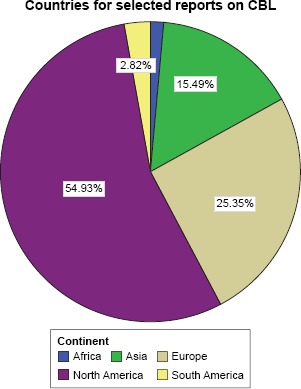
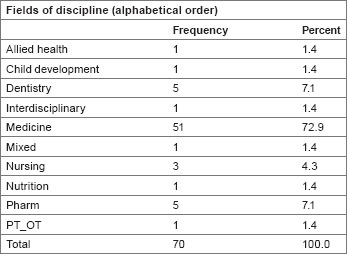
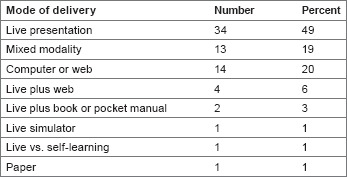
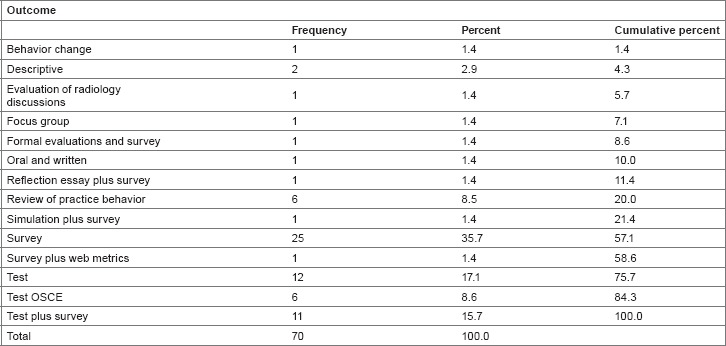
INTRODUCTION: Case-based learning (CBL) is a newer modality of teaching healthcare. In order to evaluate how CBL is currently used, a literature search and review was completed. METHODS: A literature search was completed using an OVID© database using PubMed as the data source, 1946-8/1/2015. Key words used were "Case-based learning" and "medical education", and 360 articles were retrieved. Of these, 70 articles were selected to review for location, human health care related fields of study, number of students, topics, delivery methods, and student level. RESULTS: All major continents had studies on CBL. Education levels were 64% undergraduate and 34% graduate. Medicine was the most frequently represented field, with articles on nursing, occupational therapy, allied health, child development and dentistry. Mean number of students per study was 214 (7-3105). The top 3 most common methods of delivery were live presentation in 49%, followed by computer or web-based in 20% followed by mixed modalities in 19%. The top 3 outcome evaluations were: survey of participants, knowledge test, and test plus survey, with practice outcomes less frequent. Selected studies were reviewed in greater detail, highlighting advantages and disadvantages of CBL, comparisons to Problem-based learning, variety of fields in healthcare, variety in student experience, curriculum implementation, and finally impact on patient care. CONCLUSIONS: CBL is a teaching tool used in a variety of medical fields using human cases to impart relevance and aid in connecting theory to practice. The impact of CBL can reach from simple knowledge gains to changing patient care outcomes.
Overview
The claims and statistics of this paper haven’t been checked yet.
Run the check — free, no account needed. It reads the open-access text and checks the sources it cites.
Integrity signals
Registry
Cites
Statistics
Figures
Verification
Claims the paper makes
The claims and statistics of this paper haven’t been checked yet.
Run the check — free, no account needed. It reads the open-access text and checks the sources it cites.
Claims other papers make about this one
Each is checked against this paper’s own text: does it say what the citing paper says it does?
The check wasn’t confident either way, so it gives no verdict — never disputed.
In the citing paper
“However, the standard case-based learning approach often faces a significant shortage of materials featuring authentic clinical cases5,6.”
From A large language model digital patient system enhances ophthalmology history taking skills (2025) · cites this paper as [5]
Experimental — accuracy not yet measured
Self-check
Percentages, sums and reported differences re-computed from the paper’s own numbers.
The self-check needs the paper’s full text.
Citations
Cites
The Adult Learner: The Definitive Classic in Adult Education and Human Resource Development
Knowles, M. S., Holton, E. F., Robinson, P. A., & Caraccioli, C. (2005) · Civil War Book Review · Cited by 2,860
Thistlethwaite, J. E., Davies, D., Ekeocha, S., Kidd, J. M., Macdougall, C. F., Matthews, P., Purkis, J., & Clay, D. (2012) · Medical Teacher · doi:10.3109/0142159x.2012.680939 · Cited by 1,255
Knowles, M. S., Holton, E. F., & Swanson, R. A. (2005) · Routledge eBooks · doi:10.4324/9780080481913 · Cited by 1,105
Evaluating the Quality of Learning: The Solo Taxonomy : Structure of the Observed Learning Outcome
Biggs, J., & Collis, K. F. (1977) · Cited by 1,079
Motivational profiles from a self-determination perspective: The quality of motivation matters.
Vansteenkiste, M., Sierens, E., Soenens, B., Luyckx, K., & Lens, W. (2009) · Journal of Educational Psychology · doi:10.1037/a0015083 · Cited by 1,074
Srinivasan, M., Wilkes, M. S., Stevenson, F. T., Nguyen, T. D., & Slavin, S. J. (2006) · Academic Medicine · doi:10.1097/01.acm.0000249963.93776.aa · Cited by 572
Problem-based learning: have the expectations been met?
Berkson, L. (1993) · Academic Medicine · doi:10.1097/00001888-199310000-00053 · Cited by 430
Williams, B. A. (2005) · Emergency Medicine Journal · doi:10.1136/emj.2004.022707 · Cited by 356
Schulz-Quach, C., Möller, M. F., Seidler, D., & Schnell, M. W. (2013) · BMC Medical Education · doi:10.1186/1472-6920-13-1 · Cited by 240
Baeten, M., Dochy, F. J. R. C., & Struyven, K. (2012) · British Journal of Educational Psychology · doi:10.1111/j.2044-8279.2012.02076.x · Cited by 223
Research works printed but not linked: 16
- Mitruka K., 2014, MMWR Morb Mortal Wkly Rep., 63, 393
- Malau-Aduli B.S., 2013, BMC Med Educ., 13, 1
- Keeve P.L., 2012, GMS Zeitschrift für Medizinische Ausbildung., 29, 1
- Karpa K., 2012, BMC Complement Altern Med., 12, 1
- Persky A.M., 2012, Am J Pharm Edu., 76, 1
- Zimmerman S.C., 2011, J Allied Health., 40, 15
- Telner D., 2010, Can Fam Physician., 56, e345
- Kulier R., 2008, BMC Med Educ., 8, 1
- Giddens J.F., 2007, Nurs Educ Perspect., 28, 251
- Massonetto J.C., 2004, BMC Med Educ., 4, 1
- Sturdy S., 2007, Bull Hist Med., 81, 92
- Williams B., 2005, Emerg Med., 22, 577
- Donner R.S., 1993, Bull Med Libr Assoc., 81, 294
- Kirkpatrick D., 1996, Train Dev., 50, 54
- The American College of Surgeons Committee on Trauma; Rotondo, MF, Peterson N., 2012, Advance Trauma Life Support Student Manual.
- American College of Surgeons., 2013, Surgical Education and Self Assessment Program 15
Cited by
Sorted by citations
Items 201–300 of 759
Teaching With Case Studies in Higher Education
Orr, L., & Weekley, L. (2019) · Advances in higher education and professional development book series · doi:10.4018/978-1-5225-9429-1.ch009 · Cited by 8
Stackhouse, A. A., Rafi, D., Walls, R., Dodd, R. V., Badger, K., Davies, D., Brown, C., Cowell, A., Meeran, K. M., Halse, O., et al. (2023) · Advances in Medical Education and Practice · doi:10.2147/amep.s391816 · Cited by 8
Practical solutions for implementation of blood cholesterol guidelines in clinical practice
Piazza, G., Desai, N. R., Baber, U., Exter, J., Kalich, B. A., & Monteleone, P. P. (2023) · Trends in Cardiovascular Medicine · doi:10.1016/j.tcm.2023.08.001 · Cited by 8
Kubbara, E. A., Ahmed, N. M., Alamri, T. A., Bakarman, M. A., Malibary, H. M., Eid, R., & Alzahrani, A. O. (2023) · Biochemistry and Molecular Biology Education · doi:10.1002/bmb.21795 · Cited by 8
Online Learning in Medical Student Clerkship: A Survey of Student Perceptions and Future Directions
Patel, R., Bannister, S. L., Degelman, E., Sharma, T., Beran, T., Lewis, M., & Novak, C. (2024) · Cureus · doi:10.7759/cureus.54541 · Cited by 9
Creation and evaluation of a cancer survivorship curriculum for pediatric resident physicians
Schwartz, L. F., Braddock, C. H., Kao, R. L., Sim, M., & Casillas, J. (2018) · Journal of Cancer Survivorship · doi:10.1007/s11764-018-0702-z · Cited by 8
Tostes, H. C. M. R., Oliveira, L. B., Franco, A., Junqueira, J. L. C., Nascimento, M. D. C. C., & Oenning, A. C. C. (2020) · European Journal Of Dental Education · doi:10.1111/eje.12567 · Cited by 8
Carrasco, G. A., Behling, K. C., & López, O. J. (2021) · BMC Medical Education · doi:10.1186/s12909-021-02948-6 · Cited by 13
Implementation of a Surgical Problem-Based Learning Curriculum: A One-Year Single-Center Experience
Kronenfeld, J. P., Saberi, R. A., Cioci, A. C., Urréchaga, E. M., Ryon, E. L., Thorson, C. M., Hui, V. W., Rodgers, S. E., & Sands, L. R. (2022) · The American Surgeon · doi:10.1177/00031348211068014 · Cited by 8
New innovations and educational process in undergraduate neurology education in blended learning
Mu, S., Hu, J., Liu, F., Zhao, C., & Sun, Y. (2023) · Postgraduate Medicine · doi:10.1080/00325481.2023.2234273 · Cited by 8
Professional Development of Environmental Health Workers
Ernawati, K., Burhan, A., Albar, A. S., Al-Khaliel, A. T., & Fatich, A. S. F. A. (2025) · Advances in medical education, research, and ethics (AMERE) book series · doi:10.4018/979-8-3693-4334-0.ch010 · Cited by 7
Creighton, L., Mitchell, G., Hamilton, C., Craig, S. G., Stark, P., McLaughlin-Borlace, N., Slade, C., & Wilson, C. B. (2025) · International Journal for Educational Integrity · doi:10.1007/s40979-025-00181-y · Cited by 7
Felemban, R. A., Khan, M. A., & Alharbi, N. S. (2025) · Journal of Medical Education and Curricular Development · doi:10.1177/23821205251332814 · Cited by 7
Chintavalakorn, R., Chanwanichkulchai, C., Buranasing, N., Parivisutt, N., Patchasri, N., & Sipiyaruk, K. (2025) · JMIR Serious Games · doi:10.2196/73956 · Cited by 8
Constructive alignment: Teaching introductory gross anatomy to sport science students
Downie, C., & Burke, M. D. (2023) · Anatomical Sciences Education · doi:10.1002/ase.2338 · Cited by 7
Large language model‐supported interactive case‐based learning: a pilot study
Gim, H., Cook, B., Le, J., Stretton, B., Gao, C., Gupta, A. K., Kovoor, J. G., Guo, C. W., Arnold, M., Gheihman, G., et al. (2025) · Internal Medicine Journal · doi:10.1111/imj.70030 · Cited by 7
Fisher, R., & Machirori, T. L. (2019) · Innovations in Education and Teaching International · doi:10.1080/14703297.2019.1675528 · Cited by 7
Implementation of a Medical School Elective Course Incorporating Case-Based Learning: a Pilot Study
Dai, A., Wu, L. Q., Jacobs, R. C., Raghuram, A. C., & Dhar, S. U. (2020) · Medical Science Educator · doi:10.1007/s40670-019-00911-1 · Cited by 7
IUPS Physiology Education Workshop series in India: organizational mechanics, outcomes, and lessons
Chandran, D. S., Muthukrishnan, S. P., Barman, S. M., Peltonen, L. M., Ghosh, S., Sharma, R., Bhattacharjee, M., Bhandari, B., Carroll, R. G., Sengupta, J., et al. (2020) · AJP Advances in Physiology Education · doi:10.1152/advan.00128.2020 · Cited by 7
Simulação em saúde para ensino e avaliação: conceitos e práticas
Médica, A. B. D. E. (2021) · doi:10.4322/978-65-86819-11-3 · Cited by 23
Case-based Method and its Implementation in English for Medical Purposes
Hidayati, L. (2021) · Journal of Language Literature and English Teaching (JULIET) · doi:10.31629/juliet.v2i2.3695 · Cited by 7
Pallàs, B. R., Lumillo‐Gutiérrez, I., Catalina, Q. M., Escarrer, E. T., Juncadella, J. S. I., & Fraile, V. M. (2023) · JMIR Formative Research · doi:10.2196/41706 · Cited by 7
Chen, Y., Li, X., Zhao, J., Li, S., Dai, Y., & Zhou, Z. (2023) · International Journal of Nursing Sciences · doi:10.1016/j.ijnss.2023.06.013 · Cited by 7
Supporting the Development of Clinical Reasoning of Preprofessional Novices in Dysphagia Management
Doeltgen, S., Attrill, S., & Murray, J. (2019) · Seminars in Speech and Language · doi:10.1055/s-0039-1688814 · Cited by 8
Johnston, S. S., & Vaughan, B. (2020) · International journal of osteopathic medicine · doi:10.1016/j.ijosm.2020.02.001 · Cited by 7
Bashir, A., Dudley, K., Rana, K. S., Wilkins, K., & Pallett, R. (2024) · British Journal of Biomedical Science · doi:10.3389/bjbs.2024.12017 · Cited by 6
Obeagu, G. U., & Muhammad, T. (2025) · Advances in Medical Education and Practice · doi:10.2147/amep.s547292 · Cited by 6
Devine, E., Hunt, J., Anderson, S. L., & Mavromatis, M. V. (2022) · Journal of Veterinary Medical Education · doi:10.3138/jvme-2022-0093 · Cited by 6
Reynolds, C. W., Rooney, D. M., Jeffcoach, D. R., Barnard, M. L., Snell, M. J., Ngam, B. N., Tanyi, J., El-Hayek, K. M., Bidwell, S. S., Anidi, C. M., et al. (2024) · Global Surgical Education - Journal of the Association for Surgical Education · doi:10.1007/s44186-023-00217-2 · Cited by 6
Jones, D., & Oh, S. (2024) · Journal of Medical Education and Curricular Development · doi:10.1177/23821205241239496 · Cited by 6
Lindsey, A. C., Bolton, C. D., Finley, E. P., Potter, J. S., Lanham, H. J., & Fleming, S. (2024) · Substance Use & Addiction Journal · doi:10.1177/29767342241252296 · Cited by 6
Case-based learning in undergraduate orthodontic education: A cross sectional study
Shafique, A., Rehman, A. U., Ibnerasa, S., Glanville, R., & Ali, K. (2024) · MedEdPublish · doi:10.12688/mep.20096.3 · Cited by 6
Yi, V., Duong, K. D., Prom, V., Thao, T., Tran, L., Phuc, V. M., Vuong, L. N., Duong, D., & Gottlieb, B. R. (2025) · Annals of Global Health · doi:10.5334/aogh.4660 · Cited by 6
Braunstein, M. L., Oancea, I., Barry, B. K., Darlington, S., Steel, J. R. H., Hansen, D. P., Battock, J., Cheung, D., Gan, G., Hooper, B., et al. (2019) · JAMIA Open · doi:10.1093/jamiaopen/ooz055 · Cited by 6
Vignette element analysis for automated generation of vignettes in pharmacy education
McLaughlin, J. E., Ma, C., & Hubal, R. C. (2020) · Education in the Health Professions · doi:10.4103/ehp.ehp_3_20 · Cited by 6
A Preliminary Study on Case-Based Learning Teaching Pedagogy
Ameta, D., Tiwari, S., & Singh, P. (2020) · Innovations in Software Engineering Conference (ISEC) · doi:10.1145/3385032.3385045 · Cited by 8
Pharmacy educators' views on graduate attributes and case-based learning in an undergraduate degree
Singh, V., Samuel, M., & Wassermann, J. (2020) · Currents in Pharmacy Teaching and Learning · doi:10.1016/j.cptl.2020.02.013 · Cited by 6
A General Framework for Exploring Ethical and Legal Issues in Sports Medicine
Lennon, R. P., Day, P. G., Marfin, E. C., Onks, C. A., & Silvis, M. L. (2022) · The Journal of the American Board of Family Medicine · doi:10.3122/jabfm.2022.220208r1 · Cited by 6
Gartmeier, M., Hapfelmeier, A., Grünewald, M., Häusler, J., Pfurtscheller, T., Seidel, T., & Berberat, P. O. (2022) · BMC Medical Education · doi:10.1186/s12909-022-03944-0 · Cited by 6
Pediatrician Perspectives on Feasibility and Acceptability of the MOCA-Peds 2017 Pilot
Leslie, L. K., Turner, A. L., Smith, A. C., Dounoucos, V., Olmsted, M. G., & Althouse, L. A. (2019) · PEDIATRICS · doi:10.1542/peds.2019-2303 · Cited by 6
Curriculum Integration for Medical and Dental Students
Reddy, R., & Pathak, L. (2021) · Journal of Universal College of Medical Sciences · doi:10.3126/jucms.v9i01.37989 · Cited by 6
Shen, Y., Wang, T., Gao, M., Zhu, X., Zhang, X., He, C. G., Li, Y., & Sun, X. (2019) · Patient Preference and Adherence · doi:10.2147/ppa.s194667 · Cited by 7
Khalid, A. M., Sohail, M., Naiyar, I., Khalid, H., Riaz, M., & Baig, M. (2021) · Journal of Taibah University Medical Sciences · doi:10.1016/j.jtumed.2021.02.011 · Cited by 6
Artificial Intelligence–Empowered Radiation Oncology Residency Education
Kwon, Y. S., Dohopolski, M. J., Morgan, H., Garant, A., Sher, D. J., Rahimi, A. S., Sanford, N. N., Vo, D. T., Albuquerque, K., Kumar, K. A., et al. (2023) · Practical Radiation Oncology · doi:10.1016/j.prro.2022.09.003 · Cited by 6
Oliván‐Blázquez, B., Méndez-López, F., León-Herrera, S., Asensio-Martínez, Á., Magallón-Botaya, R. M., García-Uceda, E., Oliván-Bláquez, D., & Sánchez‐Recio, R. (2023) · Active Learning in Higher Education · doi:10.1177/14697874231210981 · Cited by 5
Pouliou, A. (2025) · Distance Education · doi:10.1080/01587919.2025.2453457 · Cited by 5
Salehi, A. M., Ramezani, M., Khanlarzadeh, E., Khatiban, M., Ahmadian, M., & Alizadeh, Z. (2025) · Journal of Medical Education and Curricular Development · doi:10.1177/23821205251317942 · Cited by 5
Tak, S. H., Lee, D., Suh, I., Choi, H., & Lee, E. (2025) · Nurse Education in Practice · doi:10.1016/j.nepr.2025.104370 · Cited by 5
Stadler, M. J., Richters, C., Fischer, M. R., & Hutmacher, F. (2025) · JMIR Research Protocols · doi:10.2196/78505 · Cited by 5
Agarwal, R., Agarwal, U., Das, C., Reddy, R. A., Pant, R., Ho, C., Kumar, B. R., Dabla, V., Moonan, P. K., Nyendak, M. R., et al. (2022) · BMC Infectious Diseases · doi:10.1186/s12879-022-07957-4 · Cited by 5
Tran, J. H., Loebel, E. M., Edouard, M., Quehl, T., Walsh, E., Ginsburg, R. N., Frempong, T., Fredrick, D. R., Stein, L. K., Fara, M. G., et al. (2023) · BMC Medical Education · doi:10.1186/s12909-023-04514-8 · Cited by 8
Schwarzkopf, S.-C., Distler, M., Welsch, T., Krause-Jüttler, G., Weitz, J., & Kolbinger, F. R. (2023) · JMIR Serious Games · doi:10.2196/44708 · Cited by 6
Smail, Y., Dursun, E., Ciers, J., Taleb, C., Nardari, C., Keosouvanh, N., Heckly, L., Layan, P., Ceinos, R., Jordan, L., et al. (2024) · Journal of Dental Education · doi:10.1002/jdd.13760 · Cited by 6
Yuriditsky, E., Mireles‐Cabodevila, E., & Alviar, C. L. (2024) · ATS Scholar · doi:10.34197/ats-scholar.2024-0059ht · Cited by 5
Lackenbauer, W., Gasselich, S., Lickel, M. E., Schabel, L., Beikircher, R., Keip, C., Wieser, M., Selfe, J., Mazuquin, B., Yeowell, G., et al. (2025) · BMJ Open · doi:10.1136/bmjopen-2024-097107 · Cited by 5
Addressing Frailty in Cardiology
Wong, J. J., Hong, R., Ong, T. I. W., Lim, J., Yan, T., Park, D., Tan, G. H. N., Zhang, H., Nguyen, T. T. H., Nguyen, H. T. T., et al. (2025) · JACC Asia · doi:10.1016/j.jacasi.2025.07.002 · Cited by 5
Application of the BOPPPS combined with CBL method in clinical clerkship of pediatric dentistry
Lu, J., Wu, R., Zhu, L., Zhao, L., Zhao, W. G., & Ma, L. (2025) · BMC Medical Education · doi:10.1186/s12909-025-07967-1 · Cited by 5
Utilizing Learning Management System (LMS) Tools to Foster Innovative Teaching
Palahicky, S., & Halcomb-Smith, L. (2019) · Advances in higher education and professional development book series · doi:10.4018/978-1-5225-9232-7.ch001 · Cited by 5
González, M. J., & Gelman, C. R. (2019) · Families in Society The Journal of Contemporary Social Services · doi:10.1177/1044389419866579 · Cited by 5
Perception of dental students towards case-based orthodontic education
Tuncer, B. B., Sökmen, T., Çelik, B., & Tortop, T. (2021) · Journal of Orofacial Orthopedics / Fortschritte der Kieferorthopädie · doi:10.1007/s00056-021-00325-y · Cited by 5
Effective Strategies for Planning and Facilitating Morning Report
Elisseou, S., & Holt, S. R. (2022) · Journal of Graduate Medical Education · doi:10.4300/jgme-d-21-01084.1 · Cited by 5
An Online Ethics Curriculum for Short-Term Global Health Experiences: Evaluating a Decade of Use
Modlin, C., DeCamp, M. W., Barry, M., Rockney, D., & Sugarman, J. (2022) · Annals of Global Health · doi:10.5334/aogh.3716 · Cited by 5
Yunus, F. W., Romli, M. H., Rasdi, H. F. M., Harun, D., & Kadar, M. (2022) · Frontiers in Medicine · doi:10.3389/fmed.2022.967511 · Cited by 5
Bruner, L. P., Szymik, B. G., House, E. M., Chappell, M. T., Teshager, D., & Baldwin, A. E. (2022) · Medical Science Educator · doi:10.1007/s40670-022-01681-z · Cited by 5
Atiah, N., Dahlseide, P., Sharmin, N., Ganatra, S., & Perez, A. J. (2023) · Journal of Dental Education · doi:10.1002/jdd.13396 · Cited by 5
Gunder, A., & Buckner, M. (2023) · Ubiquity Proceedings · doi:10.5334/uproc.88 · Cited by 5
Gilliam, C. A., Lurie, B., Winn, A. S., Barber, A., Jackson, D., Weisgerber, M. C., & Unaka, N. I. (2024) · Current problems in pediatric and adolescent health care · doi:10.1016/j.cppeds.2024.101641 · Cited by 8
Fatahzadeh, M., Sabato, E. H., Singhal, V., Wagner, M., & Fenesy, K. E. (2024) · Journal of Dental Education · doi:10.1002/jdd.13689 · Cited by 5
Safadi, M. F., Zayegh, O., & Hawoot, Z. (2024) · Cureus · doi:10.7759/cureus.74978 · Cited by 7
Mohyuddin, G. R., Jobe, A., & Thomas, L. (2020) · Cureus · doi:10.7759/cureus.6872 · Cited by 5
Nayak, K. R., Punja, D., Suryavanshi, C. A., & Kamath, A. (2020) · Medical Science Educator · doi:10.1007/s40670-020-00967-4 · Cited by 5
Neurosurgical Interactive Teaching Series: Multidisciplinary Educational Approach
Ramos‐Fresnedo, A., Domingo, R. A., ReFaey, K., Gassie, K., Clifton, W. E., Grewal, S. S., Chen, S. G., Chaichana, K. L., & Quiñones‐Hinojosa, A. (2020) · World Neurosurgery · doi:10.1016/j.wneu.2020.09.074 · Cited by 5
COVID-19 Restrictions Presented Opportunities and Challenges for Plastic Surgery Residents
Zaidman, M., Al‐Shaqsi, S., Yeung, C., Novak, C. B., & Dengler, J. (2021) · Plastic Surgery · doi:10.1177/22925503211024842 · Cited by 6
Prevalence of Novel Pedagogical Methods in the Radiology Education of Medical Students
Martin, J. G., Fimbres, D. C. P., Wang, S. S., Wang, J. P., Krupinski, E. A., & Frigini, L. A. (2022) · Southern Medical Journal · doi:10.14423/smj.0000000000001475 · Cited by 6
Roberts, J. K., Sullivan, M., Atwater, S., Desai, K., Prabhu, N. K., Hertz, J. T., Buhr, G. T., Peyser, B., & Weigle, N. (2023) · Academic Medicine · doi:10.1097/acm.0000000000005286 · Cited by 5
Lau, Y.-T. K., Alemán, M. J., Medina, R., Brondfield, S., & Nematollahi, S. (2023) · Teaching and Learning in Medicine · doi:10.1080/10401334.2023.2226661 · Cited by 5
Edwards-Callaway, L., Mijares, S. H., Okoren, C., Rogers, C. D., Sullivan, P. A., Davis, M., Cramer, C., & Roman-Muniz, I. N. (2023) · Journal of Dairy Science · doi:10.3168/jds.2023-23698 · Cited by 5
Paula, R. D. S., Colares, F. C. D. J., de Toledo, J. O., & Nóbrega, O. D. T. (2010) · Americanae (AECID Library) · doi:10.23925/2176-901x.2008v11i1p%p · Cited by 5
Geriatric Care Boot Camp Series: Interprofessional education for a new training paradigm
Solberg, L. B., Carter, C. S., & Solberg, L. M. (2019) · Geriatric Nursing · doi:10.1016/j.gerinurse.2019.05.010 · Cited by 5
Case-Based Learning: An Immersive and Effective Educational Approach
Valencia, V. F., Gonzales, H. R., Llinás, J. R. O., & Ortegón, J. D. C. (2023) · Academic Radiology · doi:10.1016/j.acra.2023.09.003 · Cited by 5
A knowledge construction methodology to automate case‐based learning using clinical documents
Ali, M., Hussain, J., Lee, S., Kang, B. H., & Sattar, K. (2020) · Expert Systems · doi:10.1111/exsy.12401 · Cited by 4
Case-Based Learning for Teaching Statistical Collaboration: Development, Application, and Evaluation
Davidson, M., & Russell, R. G. (2025) · Journal of Statistics and Data Science Education · doi:10.1080/26939169.2025.2525140 · Cited by 4
Unprepared and overwhelmed: A case for clinician-focused AI education
Siddiqui, N., Bouchi, Y., Kim, E., Hron, J. D., Park, J. S., & Kang, J. J. (2025) · Artificial Intelligence in Medicine · doi:10.1016/j.artmed.2025.103252 · Cited by 4
Evidence for a case-based module in the low-resource setting to teach ectopic pregnancy management
Hsu, I. J., Lenders, J., Johnson-Griggs, M. A., Gist, H., Vaishampayan, N., Ryder, C. Y., Obayemi, J. E., Hsu, P. J., Jeffcoach, D. R., Barnard, M. L., et al. (2023) · Surgery in Practice and Science · doi:10.1016/j.sipas.2023.100209 · Cited by 4
McCormack, Z., Kerr, A., Simpson, A., Keating, D., & Strawbridge, J. (2024) · BMJ Open · doi:10.1136/bmjopen-2023-078130 · Cited by 5
Simulation Modalities in Clinical Practice
Horsley, E., & Dale-Tam, J. (2024) · Nursing Clinics of North America · doi:10.1016/j.cnur.2024.02.009 · Cited by 4
Protocol for a realist review of case-based learning in undergraduate medical education
Daly, R., Spooner, M., Offiah, G., Flood, K., & Illing, J. C. (2024) · International Journal of Educational Research Open · doi:10.1016/j.ijedro.2024.100366 · Cited by 7
Evaluation of an oral health education training program for kindergarten teachers
Hui, J. C. Y., Chu, C. H., & Chen, K. J. (2025) · Frontiers in Oral Health · doi:10.3389/froh.2024.1503221 · Cited by 4
Spence, A. D., Carr, D., Kajamaa, A. M., & Gormley, G. (2025) · Medical Education · doi:10.1111/medu.15631 · Cited by 5
Sulena, S., Kapoor, A., Kulkarni, A., Garg, R., Bhagat, K., Nagar, A., & Charokar, K. (2025) · Neurology Education · doi:10.1212/ne9.0000000000200213 · Cited by 4
Clinical Neuroscience Education in Psychiatry Residency Training: Where Do We Go from Here?
Zhang, Y., & Lizano, P. L. (2025) · Harvard Review of Psychiatry · doi:10.1097/hrp.0000000000000428 · Cited by 4
Twelve tips for creating asynchronous e-learning modules in health professions education
Paniszyn, L., Daddario, S., Colocci, I., Ibikunle, O., & Schwartz, A. W. (2025) · Medical Teacher · doi:10.1080/0142159x.2025.2505120 · Cited by 4
Jain, S., Feldman, R., Althouse, A. D., Spagnoletti, C. L., & Proksell, S. S. (2020) · MedEdPORTAL · doi:10.15766/mep_2374-8265.11027 · Cited by 4
Silva, S. R. D., Gates, M., & Waczek, A. D. (2021) · Nursing Education Perspectives · doi:10.1097/01.nep.0000000000000782 · Cited by 4
Idika, M. I. (2021) · African Journal of Teacher Education · doi:10.21083/ajote.v10i1.6281 · Cited by 4
Clinical Genitourinary Pathology
(2018) · Springer eBooks · doi:10.1007/978-3-319-72194-1 · Cited by 4
Díaz-Rodríguez, L., Vargas-Román, K., Díaz-Rodríguez, M. D. M., Sánchez-García, J., Liñán-González, A., & Rodríguez-Blanque, R. (2022) · Journal of Clinical Medicine · doi:10.3390/jcm11102771 · Cited by 3
Taylor, C. M., Heaton, L., Parrish, T., & Salamonson, Y. (2023) · Teaching and learning in nursing · doi:10.1016/j.teln.2023.03.002 · Cited by 4
Developing Mathematics Written Communication through Case-Based Learning
Suratno, J., Hamid, I., & Waliyanti, I. K. (2023) · JTAM (Jurnal Teori dan Aplikasi Matematika) · doi:10.31764/jtam.v7i2.13318 · Cited by 4
Halalsheh, R., Al-Rawashdeh, A., & Rababah, E. M. (2023) · BMC Medical Education · doi:10.1186/s12909-023-04661-y · Cited by 4
Metadata
- Authors
- McLean, S. F.
- Affiliations
- Texas Tech University Health Sciences Center (US)
- Corresponding author
- McLean, Susan F.
- ORCID
- McLean, Susan F.
- Venue
- Journal of Medical Education and Curricular Development
- Publisher
- SAGE Publications
- Published
- 2016-01
- Volume
- 3
- ISSN
- 2382-1205 (ISSN-L)
- PMC
- PMC5736264
- OpenAlex
- W2343537248
- Cited by
- 759
- References
- 84
- Citations by year
- 2026: 103 · 2025: 128 · 2024: 124 · 2023: 108 · 2022: 91 · 2021: 83 · 2020: 75 · 2019: 33 · 2018: 9 · 2017: 2 · 2016: 2
- FWCI
- 5.95
- Type
- journal article
- Language
- en
- Open access
- gold
- doi.org
- Locations
- Journal of Medical Education and Curricular Development (publishedVersion, cc-by-nc)
- PubMed Central (publishedVersion, cc-by-nc)
- PubMed (publishedVersion)
- DOAJ (DOAJ: Directory of Open Access Journals) (submittedVersion)
- DOAJ (DOAJ: Directory of Open Access Journals) (submittedVersion, cc-by-sa)
- Topics
- Social Sciences › Education › Problem and Project Based Learning
- Social Sciences › Education › Innovations in Medical Education
- Social Sciences › Education › Simulation-Based Education in Healthcare
- Keywords
- case-based learning, medical education, healthcare education, problem-based learning, nursing education, occupational therapy, allied health, curriculum implementation, teaching methods, student outcomes, theory-practice connection, patient outcomes
About these checks
Registry, retraction, Cites and statistics results are computed, not judged, with one exception: a printed reference that no index lists is read once by a model before it counts as a citation error. Claims are extracted by a model and kept only when their quote appears verbatim in the text; each cited source is then checked, with a model’s help, for whether it says what the claim relies on. Those verdicts can be wrong — read the claim’s quote and the cited source before relying on one.
Statistics and arithmetic are recomputed, not judged.
Confidence bands are shown only for fields calibrated on our annotated test set. None is calibrated yet, so no band is shown.
What counts as a claim ›How we measure confidence ›How we check this ›
Are you an author, or do you see a problem with this page? Request a review
