

The DOI matches its Crossref record; 136 of the 136 references it cites were found in a registry or an index.
Candida albicans pathogenicity mechanisms
Open accessAbstract
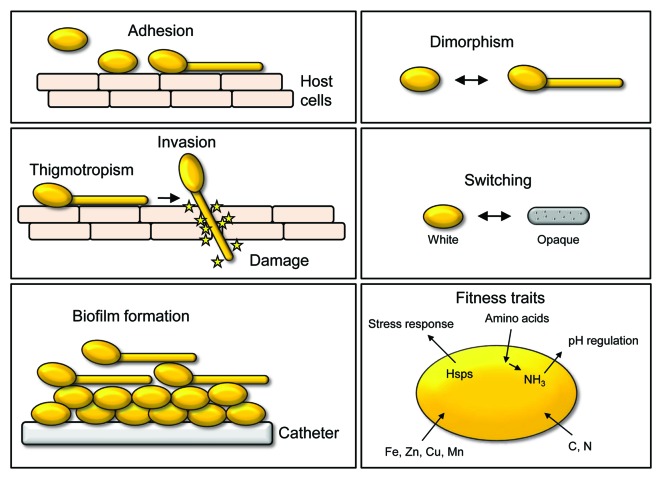
The polymorphic fungus Candida albicans is a member of the normal human microbiome. In most individuals, C. albicans resides as a lifelong, harmless commensal. Under certain circumstances, however, C. albicans can cause infections that range from superficial infections of the skin to life-threatening systemic infections. Several factors and activities have been identified which contribute to the pathogenic potential of this fungus. Among them are molecules which mediate adhesion to and invasion into host cells, the secretion of hydrolases, the yeast-to-hypha transition, contact sensing and thigmotropism, biofilm formation, phenotypic switching and a range of fitness attributes. Our understanding of when and how these mechanisms and factors contribute to infection has significantly increased during the last years. In addition, novel virulence mechanisms have recently been discovered. In this review we present an update on our current understanding of the pathogenicity mechanisms of this important human pathogen.
Overview
The claims and statistics of this paper haven’t been checked yet.
Run the check — free, no account needed. It reads the open-access text and checks the sources it cites.
Integrity signals
Registry
Cites
Statistics
Figures
Verification
Claims the paper makes
The claims and statistics of this paper haven’t been checked yet.
Run the check — free, no account needed. It reads the open-access text and checks the sources it cites.
Claims other papers make about this one
Each is checked against this paper’s own text: does it say what the citing paper says it does?
The source backs part of the claim, not all of it — or backs it for a different population, condition or comparison.
In the citing paper
“The link between mitochondrial respiration and pathogenicity in C. albicans is well established, and the capability of adapting cellular metabolism to different stress conditions is an important aspect of this connection (Mayer et al. 2013; Sun et al. 2019; Liu et al. 2023).”
From Mitochondrial retrograde control of transcription evolves with respiratory stress, metabolic adaptation, and virulence in budding yeasts (2026) · cites this paper as Mayer et al. 2013
Experimental — accuracy not yet measuredThe source backs part of the claim, not all of it — or backs it for a different population, condition or comparison.
In the citing paper
“Besides this, lipase activity has been detected and shown to be involved in the pathogenicity of yeasts such as Candida, Cryptococcus, or Malassezia species (Mayer et al. 2013; Park et al. 2013; Sommer et al. 2016).”
From Biocontrol yeasts: mechanisms and applications (2019) · cites this paper as Mayer et al. 2013
Experimental — accuracy not yet measured
Self-check
Percentages, sums and reported differences re-computed from the paper’s own numbers.
The self-check needs the paper’s full text.
Citations
Cites
Lindquist, S. L. (1986) · Annual Review of Biochemistry · doi:10.1146/annurev.bi.55.070186.005443 · Cited by 4,629
Epidemiology of Invasive Candidiasis: a Persistent Public Health Problem
Pfaller, M. A., & Diekema, D. J. (2007) · Clinical Microbiology Reviews · doi:10.1128/cmr.00029-06 · Cited by 4,174 · cited 2×
“Indeed, Candida spp are the fourth most common cause of hospital-acquired systemic infections in the United States with crude mortality rates of up to 50%.(3,4) C.”
BackgroundInfectious Diseases Society of America
Enders, J. F. (1969) · The Journal of Infectious Diseases · doi:10.1093/infdis/119.3.317 · Cited by 3,296
Pappas, P. G., Kauffman, C. A., Andes, D., Benjamin, D. K., Calandra, T. F., Edwards, J. E., Filler, S. G., Fisher, J. F., Kullberg, B.-J., Zeichner, L. O., et al. (2009) · Clinical Infectious Diseases · doi:10.1086/596757 · Cited by 3,191
How Many Species Are There on Earth and in the Ocean?
Mora, C., Tittensor, D. P., Adl, S., Simpson, A. G. B., & Worm, B. (2011) · PLoS Biology · doi:10.1371/journal.pbio.1001127 · Cited by 3,045 · cited 1×
“7 million, with fungi making up approximately 7% (611,000 species) of this number.(1) Of all fungi, only around 600 species are human pathogens.”
BackgroundThe Heat Shock Response: Life on the Verge of Death
Richter, K., Haslbeck, M., & Büchner, J. (2010) · Molecular Cell · doi:10.1016/j.molcel.2010.10.006 · Cited by 2,025
Nonfilamentous C. albicans Mutants Are Avirulent
Lo, H.-J., Köhler, J. R., DiDomenico, B., Loebenberg, D., Cacciapuoti, A., & Fink, G. R. (1997) · Cell · doi:10.1016/s0092-8674(00)80358-x · Cited by 1,809
Nutritional immunity: transition metals at the pathogen–host interface
Hood, M. I., & Skaar, E. P. (2012) · Nature Reviews Microbiology · doi:10.1038/nrmicro2836 · Cited by 1,535
Odds, F. C. (1979) · Medical Entomology and Zoology · Cited by 1,297
Sobel, J. D. (2007) · The Lancet · doi:10.1016/s0140-6736(07)60917-9 · Cited by 1,270
Research works printed but not linked: 3
- Ruhnke M. Skin and mucous membrane infections. In: Calderone RA, ed. Candida and Candidiasis: ASM Press, Washington, DC, pp. 307-325., 2002.
- Zordan R, Cormack B. Adhesins on Opportunistic Fungal Pathogens. In: Calderone RA, Clancy, C.J., ed. Candida and Candidiasis: ASM Press, Washington, DC, pp 243-259, 2012.
- Brown AJP, Haynes K, Gow NAR, Quinn J. Stress Responses in Candida . In: Calderone RA, Clancy, C.J., ed. Candida and Candidiasis: ASM Press, Washington, DC, pp. 225-242., 2012.
Cited by
Sorted by citations
Items 901–1,000 of 1,004
Distinct Roles of Candida albicans-Specific Genes in Host-Pathogen Interactions
Wilson, D., Mayer, F. L., Miramón, P., Citiulo, F., Slesiona, S., Jacobsen, I. D., & Hube, B. (2014) · Eukaryotic Cell · doi:10.1128/ec.00051-14 · Cited by 15
Self-citationIntroduction to Clinical Microbiology for the General Dentist
Rams, T. E., & Winkelhoff, A. J. V. (2017) · Dental Clinics of North America · doi:10.1016/j.cden.2016.11.001 · Cited by 12
Defosse, T. A., Govic, Y. L., Courdavault, V., Clastre, M., Vandeputte, P., Chabasse, D., Bouchara, J.-P., Giglioli‐Guivarc’h, N., & Papon, N. (2018) · Journal de Mycologie Médicale · doi:10.1016/j.mycmed.2018.02.009 · Cited by 14
Ahmed, R., Kodgire, S., Santhakumari, B., Patil, R., Kulkarni, M. J., & Zore, G. B. (2018) · Journal of Proteomics · doi:10.1016/j.jprot.2018.06.018 · Cited by 11
Cullen, M. A., Jacob, M. E., Cornish, V., VanderSchel, I. Q., Cotter, H. V. T., Cubeta, M. A., Carbone, I., & Gilger, B. C. (2019) · PLoS ONE · doi:10.1371/journal.pone.0214214 · Cited by 12
Xu, D., Zhang, X., Zhang, B., Zeng, X. W., Mao, H., Xu, H., Jiang, L., & Li, F. (2019) · FEMS Yeast Research · doi:10.1093/femsyr/foz033 · Cited by 12
Llopis-Torregrosa, V., Vaz, C., Monteoliva, L., Ryman, K., Engström, Y., Gácser, A., Gil, C., Ljungdahl, P. O., & Sychrová, H. (2019) · Scientific Reports · doi:10.1038/s41598-019-43912-1 · Cited by 11
Lu, Y., Zhou, Z., Mo, L., Guo, Q., Peng, X., Hu, T., Zhou, X., Ren, B., & Xu, X. (2019) · Applied Microbiology and Biotechnology · doi:10.1007/s00253-019-09960-3 · Cited by 12
Tams, R. N., Wagner, A. S., Jackson, J. W., Gann, E. R., Sparer, T. E., & Reynolds, T. B. (2019) · Infection and Immunity · doi:10.1128/iai.00480-19 · Cited by 11
Hung, T. T., Trang, P. T., Hoàng, V., Lan, N. T. M., Ngân, L. T. M., & Hieu, T. T. (2020) · Biomedical Research and Therapy · doi:10.15419/bmrat.v7i6.610 · Cited by 12
Antifungal activity of styrylpyridinium compounds against Candida albicans
Vaitkienė, S., Kuliešienė, N., Sakalauskaitė, S., Bekere, L., Krasnova, L., Vı̄gante, B., Duburs, G., & Daugelavičius, R. (2020) · Chemical Biology & Drug Design · doi:10.1111/cbdd.13777 · Cited by 12
Cerdeira, C. D., da Silva, J. J., Netto, M. F. R., Boriollo, M. F. G., Moraes, G. O. I., Santos, G. B., dos Reis, L. F. C., & Brigagão, M. R. P. L. (2020) · Revista Colombiana de Ciencias Químico Farmacéuticas · doi:10.15446/rcciquifa.v49n2.89704 · Cited by 11
Ex vivo immune profiling in patient blood enables quantification of innate immune effector functions
Lehnert, T., Leonhardt, I., Timme, S., Thomas-Rüddel, D. O., Bloos, F., Sponholz, C., Kurzai, O., Figge, M. T., & Hünniger, K. (2021) · Scientific Reports · doi:10.1038/s41598-021-91362-5 · Cited by 12
Hamzah, H., Siregar, K. A. A. K., Suffiana, Y., Yudhawan, I., & Nurwijayanto, A. (2022) · Food Research · doi:10.26656/fr.2017.6(1).560 · Cited by 11
Zheng, S., Chang, W., Li, C., & Lou, H. (2016) · FEMS Yeast Research · doi:10.1093/femsyr/fow029 · Cited by 12
Ansari, S. A., Deshmukh, S. U., Patil, R. B., Damale, M. G., Patil, R., Alkahtani, H. M., Almehizia, A. A., Al‐Tuwajiri, H. M., Aleanizy, F. S., Alqahtani, F. Y., et al. (2019) · ChemistrySelect · doi:10.1002/slct.201803795 · Cited by 12
Adaptation of Candida albicans to Reactive Sulfur Species
Chebaro, Y., Lorenz, M., Fa, A., Zheng, R., & Gustin, M. (2017) · Genetics · doi:10.1534/genetics.116.199679 · Cited by 11
Jakab, Á., Kovács, F., Balla, N., Nagy-Köteles, C., Ragyák, Á. Z., Nagy, F., Borman, A. M., Majoros, L., & Kovács, R. (2024) · Microbiology Spectrum · doi:10.1128/spectrum.02278-23 · Cited by 11
Bravo, E., Arce, M., Ribeiro‐Vidal, H., Herrera, D., & Sanz, M. (2024) · International Journal of Molecular Sciences · doi:10.3390/ijms25063277 · Cited by 14
El-Gazzar, N. S., Elez, R. M. M. A., Attia, A. S. A., Abdel‐Warith, A. A., Darwish, M. M., Younis, E. M., El-Tahlawi, R., Ibraheem, K. I. M., Davies, S. J., & Elsohaby, I. (2024) · Frontiers in Cellular and Infection Microbiology · doi:10.3389/fcimb.2024.1358270 · Cited by 12
Fonseca-López, D., Lozano, J. D., Macias, M. A., Muñoz-Castro, A. R., MacLeod‐Carey, D., Nagles, É., & Hurtado, J. (2024) · International Journal of Molecular Sciences · doi:10.3390/ijms25126536 · Cited by 11
Kulig, K., Rąpała‐Kozik, M., & Karkowska‐Kuleta, J. (2024) · Current Research in Microbial Sciences · doi:10.1016/j.crmicr.2024.100255 · Cited by 11
Immunity to fungi and vaccine considerations
Whitehead, A. J., Woodring, T. S., & Klein, B. S. (2024) · Cell Host & Microbe · doi:10.1016/j.chom.2024.09.011 · Cited by 11
Lactic acid in the vaginal milieu modulates the Candida -host interaction
Rosati, D., Valentine, M., Bruno, M., Pradhan, A., Dietschmann, A., Jaeger, M., Leaves, I., van de Veerdonk, F. L., Joosten, L. A. B., Roy, S., et al. (2025) · Virulence · doi:10.1080/21505594.2025.2451165 · Cited by 14
Self-citationEskezia, A., Mikru, A., & Alemayehu, T. (2025) · BMC Pregnancy and Childbirth · doi:10.1186/s12884-025-07402-9 · Cited by 14
Pasman, R., Krom, B. P., Jonker, M. J., de Leeuw, W. C., Kramer, G., Brul, S., Zaat, S. A. J., & Zhang, J. (2025) · Frontiers in Cellular and Infection Microbiology · doi:10.3389/fcimb.2025.1629373 · Cited by 11
Virulence of South African Candida albicans strains isolated from different clinical samples
Ells, R., Kilian, W., Hugo, A., Albertyn, J., Kock, J. L. F., & Pohl, C. H. (2014) · Medical Mycology · doi:10.1093/mmy/myt013 · Cited by 11
Jiang, L., Xu, D., Chen, Z., Cao, Y., Gao, P., & Jiang, Y. (2016) · FEMS Yeast Research · doi:10.1093/femsyr/fow024 · Cited by 12
Antibiofilm activity of (1)-N-2-methoxybenzyl-1,10-phenanthrolinium bromide against Candida albicans
Nuryastuti, T., Setiawati, S., Ngatidjan, N., Mustofa, M. K., Jumina, J., Fitriastuti, D., & Mardjan, M. I. D. (2018) · Journal de Mycologie Médicale · doi:10.1016/j.mycmed.2017.12.010 · Cited by 11
Shiradhone, A. B., Ingle, S., & Zore, G. B. (2018) · Journal of Fungi · doi:10.3390/jof4020047 · Cited by 13
Lycorine Hydrochloride Inhibits the Virulence Traits ofCandida albicans
Yang, L., Liu, X., Sui, Y., Ma, Z., Feng, X., Wang, F., & Ma, T. (2019) · BioMed Research International · doi:10.1155/2019/1851740 · Cited by 11
Targeted Genetic Changes in Candida albicans Using Transient CRISPR‐Cas9 Expression
Huang, M. Y., Cravener, M. V., & Mitchell, A. P. (2021) · Current Protocols · doi:10.1002/cpz1.19 · Cited by 12
Lueyar, T. K., Karygianni, L., Attin, T., & Thurnheer, T. (2023) · MicrobiologyOpen · doi:10.1002/mbo3.1381 · Cited by 11
Khamzeh, A., Rudin, A. D., Venkatakrishnan, V., Stylianou, M., Klose, F. P. S., Urban, C. F., Björnsdóttir, H., Bylund, J., & Christenson, K. (2023) · Journal of Leukocyte Biology · doi:10.1093/jleuko/qiad146 · Cited by 11
Hu, Z., Zhang, J., & Cheng, X. (2014) · Pharmaceutical Biology · doi:10.3109/13880209.2014.914232 · Cited by 11
Staniszewska, M., Bondaryk, M., Żukowski, K., & Chudy, M. (2015) · Polish Journal of Microbiology · doi:10.5604/01.3001.0009.2115 · Cited by 11
Roles of Rack1 Proteins in Fungal Pathogenesis
Zhang, X., Jain, R., & Li, G. (2016) · BioMed Research International · doi:10.1155/2016/4130376 · Cited by 11
Effect of microstructural changes in the biological behavior of magnetron sputtered ZnO thin films
Costa, D., Borges, J., Mota, M. F. S., Rodrigues, M. S., Pereira‐Silva, P., Ferreira, A., Santos‐Pereira, C., Sampaio, P., & Vaz, F. (2018) · Journal of Vacuum Science & Technology A Vacuum Surfaces and Films · doi:10.1116/1.5048785 · Cited by 11
Protective Effects of cis-2-Dodecenoic Acid in an Experimental Mouse Model of Vaginal Candidiasis.
Yang, D., Zhang, Y. Q., Hu, Y. L., Weng, L. X., Zeng, G., & Wang, L. H. (2018) · PubMed · doi:10.3967/bes2018.109 · Cited by 11
Liu, Y., Wang, W., Yan, H., Wang, D., Zhang, M., & Sun, S. (2019) · Future Microbiology · doi:10.2217/fmb-2019-0076 · Cited by 11
Role of the Inositol Polyphosphate Kinase Vip1 in Autophagy and Pathogenesis in Candida Albicans
Ma, T., Yu, Q., Ma, C., Mao, X., Liu, Y., Peng, X., & Li, M. (2020) · Future Microbiology · doi:10.2217/fmb-2019-0298 · Cited by 11
Cutaneous candidiasis caused by Candida kefyr
Nurdin, R. S. C., Vitayani, S., Amin, S., Kadir, D., Djamaluddin, W., & Adriani, A. (2021) · Pan African Medical Journal · doi:10.11604/pamj.2021.38.178.28054 · Cited by 11
Lipid Transport by Candida albicans Dnf2 Is Required for Hyphal Growth and Virulence
Jain, B. K., Wagner, A. S., Reynolds, T. B., & Graham, T. R. (2022) · Infection and Immunity · doi:10.1128/iai.00416-22 · Cited by 11
Hossain, T. J., Nafiz, I. H., Ali, F., Mozumder, H. A., Islam, S., Rahman, N., Ferdouse, J., & Khan, M. S. (2022) · Journal of Microbiology Biotechnology and Food Sciences · doi:10.2139/ssrn.4161742 · Cited by 10
Tejima, K., Ishiai, M., Murayama, S. O., Iwatani, S., & Kajiwara, S. (2017) · Current Genetics · doi:10.1007/s00294-017-0751-2 · Cited by 11
Jiang, L., Xu, D., Hameed, A., Fang, T., Fazili, A. B. A., & Asghar, F. (2018) · Fungal Genetics and Biology · doi:10.1016/j.fgb.2018.04.001 · Cited by 12
A tale of two yeasts: Saccharomyces cerevisiae as a therapeutic against candidiasis
Wilson, D. (2016) · Virulence · doi:10.1080/21505594.2016.1230580 · Cited by 11
Self-citationAntibacterial and Antifungal Potential of Hermetia illucens Hemolymph Contained-Peptides
Giglio, F., Stefano, F. D., Fusco, A., Salvia, R., Scieuzo, C., Cos, P., Donnarumma, G., & Falabella, P. (2025) · Probiotics and Antimicrobial Proteins · doi:10.1007/s12602-025-10697-x · Cited by 11
Urbanek, A. K., Łapińska, Z., Derkacz, D., & Krasowska, A. (2022) · Pathogens · doi:10.3390/pathogens11111289 · Cited by 11
Optimization of the antifungal properties of the bacterial peptide EntV by variant analysis
Guha, S., Cristy, S. A., Cesare, G. B. D., Cruz, M. R., Lorenz, M. C., & Garsin, D. A. (2024) · mBio · doi:10.1128/mbio.00570-24 · Cited by 10
Xu, Z., Li, Y., Xu, A., Xue, L., Soteyome, T., Yuan, L., Ma, Q., Seneviratne, G., Hong, W., Mao, Y., et al. (2024) · Microbiology Spectrum · doi:10.1128/spectrum.00353-24 · Cited by 12
Singh, R., Shukla, J., Ali, M. S., & Dubey, A. K. (2024) · Journal of Applied Microbiology · doi:10.1093/jambio/lxae139 · Cited by 10
Effect of cold atmospheric plasma on common oral pathogenic microorganisms: a narrative review
Xin, J., Zhang, H., Li, Y., Dai, Y., Chen, X., Zou, J., Wang, R., Liu, Z., & Wang, B. (2025) · Annals of Medicine · doi:10.1080/07853890.2025.2457518 · Cited by 10
Sahoo, B., Goyal, R., Dutta, S., Joshi, P., & Sanyal, K. (2025) · ACS Infectious Diseases · doi:10.1021/acsinfecdis.5c00079 · Cited by 13
Bastos, R. G., Rosa, C. P., Oliver, J. C., Silva, N. C., Dias, A. L. T., da Rocha, C. Q., Vilegas, W., Silva, G. A. D., & da Silva, M. A. (2016) · UNESP Institutional Repository (São Paulo State University) · Cited by 10
Ibe, C., Walker, L. A., Gow, N. A. R., & Munro, C. A. (2017) · Springer eBooks · doi:10.1007/978-3-319-50409-4_16 · Cited by 11
Araújo, D., Azevedo, N. F., BARBOSA, A. B. D. O., Almeida, C., Rodrigues, M. E., Henriques, M., & Silva, S. M. (2019) · Molecular Therapy — Nucleic Acids · doi:10.1016/j.omtn.2019.09.016 · Cited by 11
Therapeutic potentials of littoral vegetation: an antifungal perspective
Baishya, S., Banik, S. K., Choudhury, M. D., Talukdar, D. D., & Talukdar, A. D. (2020) · Elsevier eBooks · doi:10.1016/b978-0-12-819532-1.00011-1 · Cited by 10
Prevalence and susceptibility profile of Candida spp. isolated from patients in cancer therapy
Silva, V. C. D. S. E., Oliveira, V. D. C., de Sousa, Á. F. L., Bim, F. L., Macedo, A. P., de Andrade, D., & Watanabe, E. (2020) · Archives of Oral Biology · doi:10.1016/j.archoralbio.2020.104906 · Cited by 11
Virulence Factors as Promoters of Chronic Vulvovaginal Candidosis: A Review
Faria-Gonçalves, P., Rolo, J., Gaspar, C., Palmeira‐de‐Oliveira, R., Martinez‐de‐Oliveira, J., & Palmeira‐de‐Oliveira, A. (2021) · Mycopathologia · doi:10.1007/s11046-021-00592-8 · Cited by 10
Memariani, M., Memariani, H., Poursafavi, Z., & Baseri, Z. (2022) · International Journal of Peptide Research and Therapeutics · doi:10.1007/s10989-022-10401-5 · Cited by 9
Kanchanapiboon, J., Maiuthed, A., Rukthong, P., Thunyaharn, S., Tuntoaw, S., Poonsatha, S., & Santimaleeworagun, W. (2022) · Research in Microbiology · doi:10.1016/j.resmic.2022.104009 · Cited by 9
Associations of Rap1 with Cell Wall Integrity, Biofilm Formation, and Virulence in Candida albicans
Wang, W., Lai, T.-X., Wu, Y., Chen, Z.-T., Tseng, K., & Lan, C. (2022) · Microbiology Spectrum · doi:10.1128/spectrum.03285-22 · Cited by 11
Synthesis, Anti‐Fungal Potency and In silico Studies of Novel Steroidal 1,4‐Dihydropyridines
Khan, A., Iqbal, A., Ahmedi, S., Manzoor, N., & Siddiqui, T. (2023) · Chemistry & Biodiversity · doi:10.1002/cbdv.202300096 · Cited by 10
Phenotypes characterization and ABC genotypes distribution of clinical Candida albicans isolates
Mahmoodi, M., Nouraei, H., Nasr, R., Zomorodian, K., Khodadadi, H., & Pakshir, K. (2023) · Journal of Clinical Laboratory Analysis · doi:10.1002/jcla.24888 · Cited by 11
Strain variation in gene expression impact of hyphal cyclin Hgc1 in Candida albicans
Sharma, A., & Mitchell, A. P. (2023) · G3 Genes Genomes Genetics · doi:10.1093/g3journal/jkad151 · Cited by 10
Fletcher, J., O’Connor-Moneley, J., Frawley, D., Flanagan, P. R., Alaalm, L., Menéndez-Manjón, P., Estevez, S. V., Hendricks, S., Woodruff, A. L., Buscaino, A., et al. (2023) · PLoS Genetics · doi:10.1371/journal.pgen.1011082 · Cited by 10
Vulvovaginal candidiasis in pregnant women attending a tertiary care centre in North-Eastern India
Roy, M., Majumdar, T., & Ray, J. (2024) · Indian Journal of Medical Microbiology · doi:10.1016/j.ijmmb.2024.100738 · Cited by 10
Kathwate, G. H., & Karuppayil, S. M. (2016) · Assay and Drug Development Technologies · doi:10.1089/adt.2016.760 · Cited by 10
Jain, T., Muktapuram, P. R., Pochampalli, S., Sharma, K., Pant, G., Mitra, K., Bathula, S. R., & Banerjee, D. (2017) · Journal of Medical Microbiology · doi:10.1099/jmm.0.000610 · Cited by 10
Monapathi, M. E., Bezuidenhout, C. C., & Rhode, O. H. J. (2017) · Water Science & Technology · doi:10.2166/wst.2017.607 · Cited by 10
Epidemiology and Outcomes of Candidemia in a Referral Center in Tehran.
Salehi, M., Ghomi, Z., Mirshahi, R., Manshadi, S. A. D., & Rezahosseini, O. (2019) · Europe PMC (PubMed Central) · doi:10.22088/cjim.10.1.73 · Cited by 10
Gacemi, S., Benarous, K., Imperial, S., & Yousfi, M. (2019) · Endocrine Metabolic & Immune Disorders - Drug Targets · doi:10.2174/1871530319666190415141520 · Cited by 10
Maheronnaghsh, M., Fatahinia, M., Dehghan, P., Mahmoudabadi, A. Z., & Kheirkhah, M. (2019) · Jundishapur Journal of Microbiology · doi:10.5812/jjm.91556 · Cited by 10
López, A. D. L. R., Lee, M., Wang, N., Dunn, K. K., Sánchez, H., Raman, N., Andes, D. R., Lynn, D. M., & Palecek, S. P. (2019) · Antimicrobial Agents and Chemotherapy · doi:10.1128/aac.02653-18 · Cited by 10
Multicopper Oxidases in Saccharomyces cerevisiae and Human Pathogenic Fungi
Chakraborty, T., Tóth, R., Nosanchuk, J. D., & Gácser, A. (2020) · Journal of Fungi · doi:10.3390/jof6020056 · Cited by 10
Sung, J. Y., Kim, J. M., Lee, J. U., Lee, Y. H., & Lee, S. B. (2021) · BMC Complementary Medicine and Therapies · doi:10.1186/s12906-021-03343-w · Cited by 10
Pan, M., Wang, Q., Cheng, T., Wu, D., Wang, T., Yan, G., & Shao, J. (2021) · Biofouling · doi:10.1080/08927014.2021.1985473 · Cited by 10
Bataineh, M. T. A., Soares, N. C., Semreen, M. H., Cacciatore, S., Dash, N. R., Hamad, M., Mousa, M., Salam, J. S. A., Gharaibeh, M. F. A., Zerbini, L. F., et al. (2021) · PLoS ONE · doi:10.1371/journal.pone.0259588 · Cited by 10
Mashaly, G. E.-S., & Zeid, M. S. (2022) · Infection and Drug Resistance · doi:10.2147/idr.s344998 · Cited by 10
Dhandapani, K., Sivarajan, K., Ravindhiran, R., & Sekar, J. N. (2022) · Frontiers in Cellular and Infection Microbiology · doi:10.3389/fcimb.2022.887971 · Cited by 10
Al-Madboly, L. A., El-Salam, M. A. A., Bastos, J. K., El-Shorbagy, S. H., & El-Morsi, R. M. (2022) · Microbiology Spectrum · doi:10.1128/spectrum.02724-21 · Cited by 12
Chen, X., Zhang, R., Takada, A., Iwatani, S., Oka, C., Kitamoto, Y., & Kajiwara, S. (2016) · Mycoses · doi:10.1111/myc.12554 · Cited by 10
Córdova-Dávalos, L. E., Escobedo-Chávez, K., & Evangelista-Martínez, Z. (2017) · Archives of Biological Sciences · doi:10.2298/abs170908057c · Cited by 9
Effects of denture adhesives on growth and morphological transformation of Candida albicans
Nomura, T., Murakami, T., Shimoyama, Y., Kobayashi, T., Furuya, J., Sasaki, M., & Kondo, H. (2019) · Journal of Prosthodontic Research · doi:10.1016/j.jpor.2019.04.006 · Cited by 10
Binding and potential antibiofilm activities of Amaranthus proteins against Candida albicans
Shafreen, R. B., Siddharthan, S., Ayala, A. L. M., Lozano-Grande, M. A., Robles‐Sánchez, M., Szterk, A., Grishko, M., Hanuka, E., Katrich, E., & Gorinstein, S. (2019) · Colloids and Surfaces B Biointerfaces · doi:10.1016/j.colsurfb.2019.110479 · Cited by 10
Fungus produces a toxic surprise
Mitchell, A. P. (2016) · Nature · doi:10.1038/nature17319 · Cited by 10
Hay, R. J., & Ashbee, H. R. (2016) · Wiley eBooks · doi:10.1002/9781118441213.rtd0033 · Cited by 11
Ichikawa, Y., Bruno, V. M., Woolford, C. A., Kim, H., Do, E., Brewer, G. C., & Mitchell, A. P. (2021) · Genetics · doi:10.1093/genetics/iyab075 · Cited by 9
Inhibitory effects of a maleimide compound on the virulence factors of Candida albicans
Li, Y., Chen, C., Liu, C., Mao, S., Shan, M., Han, Z., Mao, J., Xie, Z., & Zhu, Z. (2023) · Virulence · doi:10.1080/21505594.2023.2230009 · Cited by 10
Rai, L. S., Chauvel, M., Sánchez, H., van Wijlick, L., Maufrais, C., Cokelaer, T., Sertour, N., Legrand, M., Sanyal, K., Andes, D. R., et al. (2024) · PLoS Biology · doi:10.1371/journal.pbio.3002693 · Cited by 8
Commensal, pathogen, or passenger? Rethinking the role of Blastocystis in human health
Heneberg, P. (2025) · One Health · doi:10.1016/j.onehlt.2025.101272 · Cited by 12
James, S. A., Parker, A., Purse, C., Telatin, A., Baker, D., Holmes, S., Durham, J., Funnell, S. G. P., & Carding, S. R. (2022) · Journal of Fungi · doi:10.3390/jof8101054 · Cited by 9
Reis, V. H. D. O. T., Rodrigues, B. M., Filho, P. S. L., Cazarin, C. B. B., Rafacho, B. P. M., & dos Santos, E. F. (2022) · Heliyon · doi:10.1016/j.heliyon.2022.e11018 · Cited by 12
Effects of Hst3p inhibition in Candida albicans: a genome-wide H3K56 acetylation analysis
Conte, M., Eletto, D., Pannetta, M., Petrone, A. M., Monti, M. C., Cassiano, C., Giurato, G., Rizzo, F. M., Tessarz, P., Petrella, A., et al. (2022) · Frontiers in Cellular and Infection Microbiology · doi:10.3389/fcimb.2022.1031814 · Cited by 9
Minh, P. T. H., Tuan, N. T., Van, N. T. H., Bich, H. T., & Do, T. L. (2023) · Molecules · doi:10.3390/molecules28062580 · Cited by 9
Plasma activated Ezhangfeng Cuji as innovative antifungal agent and its inactivation mechanism
Lin, L., Zhuo, Y., Dong, Q., Yang, C., Cheng, C., & Liu, T. (2023) · AMB Express · doi:10.1186/s13568-023-01571-6 · Cited by 10
Scaife, K., Vo, T. D., Dommels, Y. E. M., Leune, E., Albermann, K., & Pařenicová, L. (2023) · Food and Chemical Toxicology · doi:10.1016/j.fct.2023.113972 · Cited by 9
Eukaryotic Infections in Dairy Calves: Impacts, Diagnosis, and Strategies for Prevention and Control
Robi, D. T., Mossie, T., & Temteme, S. (2023) · Veterinary Medicine Research and Reports · doi:10.2147/vmrr.s442374 · Cited by 9
Ascomycetes yeasts: The hidden part of human microbiome
Nenciarini, S., Renzi, S., Paola, M. D., Meriggi, N., & Cavalieri, D. (2024) · WIREs Mechanisms of Disease · doi:10.1002/wsbm.1641 · Cited by 11
Metadata
- Authors
- Mayer, F. L., Wilson, D., & Hube, B.
- Affiliations
- Leibniz-Institut für Naturstoff-Forschung und Infektionsbiologie e. V. - Hans-Knöll-Institut (HKI) (DE)
- Jena University Hospital (DE)
- Corresponding author
- Hube, Bernhard
- Venue
- Virulence
- Publisher
- Informa UK Limited
- Published
- 2013-02-15
- Volume
- 4
- Issue
- 2
- Pages
- 119-128
- ISSN
- 2150-5594 (ISSN-L)
- 2150-5608
- PMC
- PMC3654610
- OpenAlex
- W2144035662
- Semantic Scholar
- ea82d70b2925d03c8aa23ad612a18cdb8c6906ed
- Cited by
- 1,848
- References
- 136
- Citations by year
- 2026: 99 · 2025: 162 · 2024: 163 · 2023: 180 · 2022: 195 · 2021: 189 · 2020: 164 · 2019: 156 · 2018: 150 · 2017: 119 · 2016: 97 · 2015: 84 · 2014: 57 · 2013: 30
- FWCI
- 11.35
- Type
- journal article
- Language
- en
- Open access
- gold
- doi.org
- Licence
- cc-by-nc
- Locations
- Virulence (publishedVersion, cc-by-nc)
- Europe PMC (PubMed Central) (publishedVersion, cc-by-nc)
- PubMed Central (publishedVersion, cc-by-nc)
- PubMed (publishedVersion)
- Aberdeen University Research Archive (Aberdeen University) (submittedVersion)
- Funders
- Deutsche Forschungsgemeinschaft (01EO1002)
- Bundesministerium für Bildung und Forschung (01EO1002)
- International Leibniz Research School for Microbial and Biomolecular Interactions
- Leibniz-Gemeinschaft
- Center for Sepsis Control and Care (BMBF 01EO1002, 01EO1002)
- Topics
- Health Sciences › Medicine › Infectious Diseases › Antifungal resistance and susceptibility
- Life Sciences › Biochemistry, Genetics and Molecular Biology › Molecular Biology › Fungal and yeast genetics research
- Health Sciences › Medicine › Infectious Diseases › Fungal Infections and Studies
- Keywords
- Candida albicans, fungal pathogenicity, virulence factors, host cell invasion, yeast-to-hypha transition, tactile sensing, thigmotropism, biofilm formation, phenotypic switching, commensal to pathogen transition, systemic candidiasis, superficial fungal infections
- MeSH terms
- Candida albicans, Candidiasis, Humans, Virulence Factors
About these checks
Registry, retraction, Cites and statistics results are computed, not judged, with one exception: a printed reference that no index lists is read once by a model before it counts as a citation error. Claims are extracted by a model and kept only when their quote appears verbatim in the text; each cited source is then checked, with a model’s help, for whether it says what the claim relies on. Those verdicts can be wrong — read the claim’s quote and the cited source before relying on one.
Statistics and arithmetic are recomputed, not judged.
Confidence bands are shown only for fields calibrated on our annotated test set. None is calibrated yet, so no band is shown.
What counts as a claim ›How we measure confidence ›How we check this ›
Are you an author, or do you see a problem with this page? Request a review
