

The DOI matches its Crossref record; 136 of the 136 references it cites were found in a registry or an index.
Candida albicans pathogenicity mechanisms
Open accessAbstract
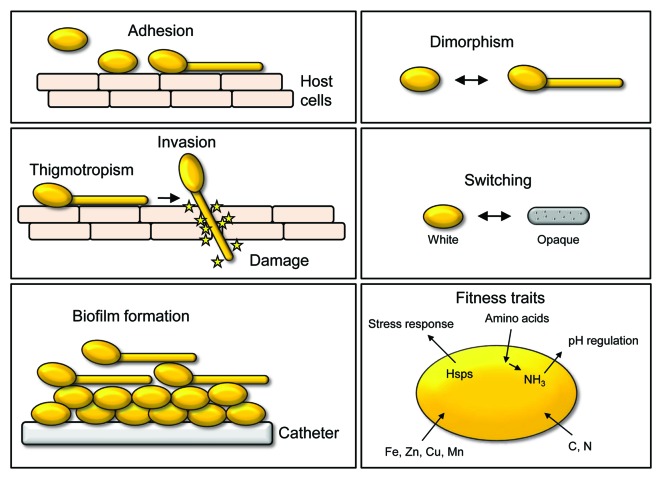
The polymorphic fungus Candida albicans is a member of the normal human microbiome. In most individuals, C. albicans resides as a lifelong, harmless commensal. Under certain circumstances, however, C. albicans can cause infections that range from superficial infections of the skin to life-threatening systemic infections. Several factors and activities have been identified which contribute to the pathogenic potential of this fungus. Among them are molecules which mediate adhesion to and invasion into host cells, the secretion of hydrolases, the yeast-to-hypha transition, contact sensing and thigmotropism, biofilm formation, phenotypic switching and a range of fitness attributes. Our understanding of when and how these mechanisms and factors contribute to infection has significantly increased during the last years. In addition, novel virulence mechanisms have recently been discovered. In this review we present an update on our current understanding of the pathogenicity mechanisms of this important human pathogen.
Overview
The claims and statistics of this paper haven’t been checked yet.
Run the check — free, no account needed. It reads the open-access text and checks the sources it cites.
Integrity signals
Registry
Cites
Statistics
Figures
Verification
Claims the paper makes
The claims and statistics of this paper haven’t been checked yet.
Run the check — free, no account needed. It reads the open-access text and checks the sources it cites.
Claims other papers make about this one
Each is checked against this paper’s own text: does it say what the citing paper says it does?
The source backs part of the claim, not all of it — or backs it for a different population, condition or comparison.
In the citing paper
“The link between mitochondrial respiration and pathogenicity in C. albicans is well established, and the capability of adapting cellular metabolism to different stress conditions is an important aspect of this connection (Mayer et al. 2013; Sun et al. 2019; Liu et al. 2023).”
From Mitochondrial retrograde control of transcription evolves with respiratory stress, metabolic adaptation, and virulence in budding yeasts (2026) · cites this paper as Mayer et al. 2013
Experimental — accuracy not yet measuredThe source backs part of the claim, not all of it — or backs it for a different population, condition or comparison.
In the citing paper
“Besides this, lipase activity has been detected and shown to be involved in the pathogenicity of yeasts such as Candida, Cryptococcus, or Malassezia species (Mayer et al. 2013; Park et al. 2013; Sommer et al. 2016).”
From Biocontrol yeasts: mechanisms and applications (2019) · cites this paper as Mayer et al. 2013
Experimental — accuracy not yet measured
Self-check
Percentages, sums and reported differences re-computed from the paper’s own numbers.
The self-check needs the paper’s full text.
Citations
Cites
Lindquist, S. L. (1986) · Annual Review of Biochemistry · doi:10.1146/annurev.bi.55.070186.005443 · Cited by 4,629
Epidemiology of Invasive Candidiasis: a Persistent Public Health Problem
Pfaller, M. A., & Diekema, D. J. (2007) · Clinical Microbiology Reviews · doi:10.1128/cmr.00029-06 · Cited by 4,174 · cited 2×
“Indeed, Candida spp are the fourth most common cause of hospital-acquired systemic infections in the United States with crude mortality rates of up to 50%.(3,4) C.”
BackgroundInfectious Diseases Society of America
Enders, J. F. (1969) · The Journal of Infectious Diseases · doi:10.1093/infdis/119.3.317 · Cited by 3,296
Pappas, P. G., Kauffman, C. A., Andes, D., Benjamin, D. K., Calandra, T. F., Edwards, J. E., Filler, S. G., Fisher, J. F., Kullberg, B.-J., Zeichner, L. O., et al. (2009) · Clinical Infectious Diseases · doi:10.1086/596757 · Cited by 3,191
How Many Species Are There on Earth and in the Ocean?
Mora, C., Tittensor, D. P., Adl, S., Simpson, A. G. B., & Worm, B. (2011) · PLoS Biology · doi:10.1371/journal.pbio.1001127 · Cited by 3,045 · cited 1×
“7 million, with fungi making up approximately 7% (611,000 species) of this number.(1) Of all fungi, only around 600 species are human pathogens.”
BackgroundThe Heat Shock Response: Life on the Verge of Death
Richter, K., Haslbeck, M., & Büchner, J. (2010) · Molecular Cell · doi:10.1016/j.molcel.2010.10.006 · Cited by 2,025
Nonfilamentous C. albicans Mutants Are Avirulent
Lo, H.-J., Köhler, J. R., DiDomenico, B., Loebenberg, D., Cacciapuoti, A., & Fink, G. R. (1997) · Cell · doi:10.1016/s0092-8674(00)80358-x · Cited by 1,809
Nutritional immunity: transition metals at the pathogen–host interface
Hood, M. I., & Skaar, E. P. (2012) · Nature Reviews Microbiology · doi:10.1038/nrmicro2836 · Cited by 1,535
Odds, F. C. (1979) · Medical Entomology and Zoology · Cited by 1,297
Sobel, J. D. (2007) · The Lancet · doi:10.1016/s0140-6736(07)60917-9 · Cited by 1,270
Research works printed but not linked: 3
- Ruhnke M. Skin and mucous membrane infections. In: Calderone RA, ed. Candida and Candidiasis: ASM Press, Washington, DC, pp. 307-325., 2002.
- Zordan R, Cormack B. Adhesins on Opportunistic Fungal Pathogens. In: Calderone RA, Clancy, C.J., ed. Candida and Candidiasis: ASM Press, Washington, DC, pp 243-259, 2012.
- Brown AJP, Haynes K, Gow NAR, Quinn J. Stress Responses in Candida . In: Calderone RA, Clancy, C.J., ed. Candida and Candidiasis: ASM Press, Washington, DC, pp. 225-242., 2012.
Cited by
Sorted by citations
The wound microbiota: microbial mechanisms of impaired wound healing and infection
Uberoi, A., McCready-Vangi, A. R., & Grice, E. A. (2024) · Nature Reviews Microbiology · doi:10.1038/s41579-024-01035-z · Cited by 963
Antifungal Drug Resistance: Molecular Mechanisms in Candida albicans and Beyond
Lee, Y., Puumala, E., Robbins, N., & Cowen, L. E. (2021) · Chemical Reviews · doi:10.1021/acs.chemrev.0c00199 · Cited by 801
Candida albicans—The Virulence Factors and Clinical Manifestations of Infection
Talapko, J., Juzbašić, M., Matijević, T., Pustijanac, E., Bekić, S., Kotris, I., & Škrlec, I. (2021) · Journal of Fungi · doi:10.3390/jof7020079 · Cited by 794
“The transition from yeast to the hyphal form is a transition into a pathogenic form [22,23].”
BackgroundNeutrophil Extracellular Traps and Its Implications in Inflammation: An Overview
Delgado‐Rizo, V., Martinez-Guzman, M. A., Íñiguez-Gutiérrez, L., García-Orozco, A., Alvarado‐Navarro, A., & Fafutis‐Morris, M. (2017) · Frontiers in Immunology · doi:10.3389/fimmu.2017.00081 · Cited by 703
Chitosan: A Potential Biopolymer in Drug Delivery and Biomedical Applications
Desai, N., Rana, D., Salave, S., Gupta, R., Patel, P., Karunakaran, B., Sharma, A. K., Giri, J., Benival, D. M., & Kommineni, N. (2023) · Pharmaceutics · doi:10.3390/pharmaceutics15041313 · Cited by 668
The emerging world of the fungal microbiome
Huffnagle, G. B., & Noverr, M. C. (2013) · Trends in Microbiology · doi:10.1016/j.tim.2013.04.002 · Cited by 582
Oral Candidiasis: A Disease of Opportunity
Vila, T., Sultan, A. S., Montelongo-Jauregui, D., & Jabra-Rizk, M. A. (2020) · Journal of Fungi · doi:10.3390/jof6010015 · Cited by 537
Pathogenesis ofCandida albicansbiofilm
Tsui, C., Kong, E. F., & Jabra‐Rizk, M. A. (2016) · Pathogens and Disease · doi:10.1093/femspd/ftw018 · Cited by 522
Biocontrol yeasts: mechanisms and applications
Freimoser, F. M., Rueda-Mejia, M. P., Tilocca, B., & Migheli, Q. (2019) · World Journal of Microbiology and Biotechnology · doi:10.1007/s11274-019-2728-4 · Cited by 462
Skrzypek, M. S., Binkley, J., Binkley, G., Miyasato, S. R., Simison, M., & Sherlock, G. (2017) · Nucleic Acids Research · doi:10.1093/nar/gkw924 · Cited by 455
Kaempferol: Antimicrobial Properties, Sources, Clinical, and Traditional Applications
Periferakis, A., Periferakis, K., Bădărău, I. A., Petran, M. E., Popa, D. C., Căruntu, A., Costache, R. S., Scheau, C., Căruntu, C., & Costache, D. O. (2022) · International Journal of Molecular Sciences · doi:10.3390/ijms232315054 · Cited by 385
Santos, G. C. D. O., Vasconcelos, C. C., Lopes, A. J. O., Cartágenes, M. D. S. D. S., Filho, A. K. D. B., do Nascimento, F. R. F., Ramos, R. M., Pires, E. R. R. B., de Andrade, M. S., Rocha, F. M. G., et al. (2018) · Frontiers in Microbiology · doi:10.3389/fmicb.2018.01351 · Cited by 381
d’Enfert, C., Kaune, A.-K., Alaban, L. R., Chakraborty, S., Cole, N. L., Delavy, M., Kosmala, D., Marsaux, B., Fróis-Martins, R., Morelli, M., et al. (2020) · FEMS Microbiology Reviews · doi:10.1093/femsre/fuaa060 · Cited by 377
Self-citationMicrobial biosurfactants: current trends and applications in agricultural and biomedical industries
NAUGHTON, P. J., Marchant, R., Naughton, V. R., & Banat, I. M. (2019) · Journal of Applied Microbiology · doi:10.1111/jam.14243 · Cited by 365
Oral microbiome: a review of its impact on oral and systemic health
Rajasekaran, J. J., Krishnamurthy, H. K., Bosco, J., Jayaraman, V., Krishna, K., Wang, T., & Bei, K. (2024) · Microorganisms · doi:10.3390/microorganisms12091797 · Cited by 272
Effects of Chlorhexidine mouthwash on the oral microbiome
Bescós, R., Ashworth, A., Clarke, C., Brookes, Z. L. S., Belfield, L., Rodiles, A., Casas‐Agustench, P., Farnham, G., Liddle, L., Burleigh, M. C., et al. (2020) · Scientific Reports · doi:10.1038/s41598-020-61912-4 · Cited by 361
Dadar, M., Tiwari, R., Karthik, K., Chakraborty, S., Shahali, Y., & Dhama, K. (2018) · Microbial Pathogenesis · doi:10.1016/j.micpath.2018.02.028 · Cited by 349
Control of Phagocytosis by Microbial Pathogens
Uribe‐Querol, E., & Rosales, C. (2017) · Frontiers in Immunology · doi:10.3389/fimmu.2017.01368 · Cited by 336
Compositional and immunobiological analyses of extracellular vesicles released by Candida albicans
Vargas, G., Rocha, J., Oliveira, D. L., Albuquerque, P., Frases, S., Santos, S. S., Nosanchuk, J., Gomes, A. M. O., Medeiros, L., Miranda, K., et al. (2015) · Cellular Microbiology · doi:10.1111/cmi.12374 · Cited by 274
McCarty, T. P., & Pappas, P. G. (2016) · Infectious Disease Clinics of North America · doi:10.1016/j.idc.2015.10.013 · Cited by 285
Candida albicans biofilms and polymicrobial interactions
Ponde, N. O., Lortal, L., Ramage, G., Naglik, J. R., & Richardson, J. P. (2021) · Critical Reviews in Microbiology · doi:10.1080/1040841x.2020.1843400 · Cited by 281
Nanotechnology-based drug delivery systems for control of microbial biofilms: a review
Ramos, M. A. D. S., da Silva, P. B., Spósito, L., de Toledo, L. G., Bonifácio, B., Rodero, C. F., dos Santos, K. C., Chorilli, M., & Bauab, T. M. (2018) · International Journal of Nanomedicine · doi:10.2147/ijn.s146195 · Cited by 286
Candidiasis: Predisposing Factors, Prevention, Diagnosis and Alternative Treatment
Martins, N. A., Ferreira, I. C. F. R., Barros, L., Silva, S. M., & Henriques, M. (2014) · Mycopathologia · doi:10.1007/s11046-014-9749-1 · Cited by 293
Kalia, N., Singh, J., & Kaur, M. (2020) · Annals of Clinical Microbiology and Antimicrobials · doi:10.1186/s12941-020-0347-4 · Cited by 308
Candidemia and Invasive Candidiasis
McCarty, T. P., White, C. M., & Pappas, P. G. (2021) · Infectious Disease Clinics of North America · doi:10.1016/j.idc.2021.03.007 · Cited by 260
Multifunctional antimicrobial materials: From rational design to biomedical applications
Duan, S., Wu, R., Xiong, Y., Ren, H., Lei, C., Zhao, Y., Zhang, X., & Xu, F. (2021) · Progress in Materials Science · doi:10.1016/j.pmatsci.2021.100887 · Cited by 260
Advances in Research on the Bioactivity of Alginate Oligosaccharides
Xing, M., Cao, Q., Wang, Y., Han, X., Zhao, J., Zhang, Q., Ji, A., & Song, S. (2020) · Marine Drugs · doi:10.3390/md18030144 · Cited by 251
Witchley, J. N., Penumetcha, P., Abon, N. V., Woolford, C. A., Mitchell, A. P., & Noble, S. M. (2019) · Cell Host & Microbe · doi:10.1016/j.chom.2019.02.008 · Cited by 245
Hoefs, S., Mogavero, S., & Hube, B. (2016) · The Journal of Microbiology · doi:10.1007/s12275-016-5514-0 · Cited by 251
Self-citationCandidalysin: discovery and function in Candida albicans infections
Naglik, J. R., Gaffen, S. L., & Hube, B. (2019) · Current Opinion in Microbiology · doi:10.1016/j.mib.2019.06.002 · Cited by 236
Self-citationKumamoto, C. A., Gresnigt, M. S., & Hube, B. (2020) · Current Opinion in Microbiology · doi:10.1016/j.mib.2020.05.006 · Cited by 219
Self-citationAntibacterial and antifungal activity of chitosan coated iron oxide nanoparticles
Nehra, P., Chauhan, R., Garg, N., & Verma, K. K. (2017) · British Journal of Biomedical Science · doi:10.1080/09674845.2017.1347362 · Cited by 207
Antifungals discovery: an insight into new strategies to combat antifungal resistance
Fuentefría, A. M., Pippi, B., Lana, D. F. D., Donato, K., & de Andrade, S. F. (2017) · Letters in Applied Microbiology · doi:10.1111/lam.12820 · Cited by 216
Mechanisms of Antifungal Properties of Metal Nanoparticles
Slavin, Y. N., & Bach, H. (2022) · Nanomaterials · doi:10.3390/nano12244470 · Cited by 222
Inhibition of gold nanoparticles (AuNPs) on pathogenic biofilm formation and invasion to host cells
Yu, Q., Li, J., Zhang, Y., Wang, Y., Liu, L., & Li, M. (2016) · Scientific Reports · doi:10.1038/srep26667 · Cited by 206
The human gut mycobiome: pitfalls and potentials—a mycologist’s perspective
Haute, M. J. S. V., & Hallen‐Adams, H. E. (2015) · Mycologia · doi:10.3852/15-147 · Cited by 205
Development of the Human Mycobiome over the First Month of Life and across Body Sites
Ward, T., Domínguez-Bello, M. G., Heisel, T. J., Al‐Ghalith, G. A., Knights, D., & Gale, C. A. (2018) · mSystems · doi:10.1128/msystems.00140-17 · Cited by 196
Invasive candidiasis: current clinical challenges and unmet needs in adult populations
Soriano, À., Honoré, P. M., Puerta‐Alcalde, P., García‐Vidal, C., Pagotto, A., Gonçalves, D. C., & Verweij, P. E. (2023) · Journal of Antimicrobial Chemotherapy · doi:10.1093/jac/dkad139 · Cited by 215
Breakthrough invasive fungal infections: Who is at risk?
Jenks, J. D., Cornely, O. A., Chen, S. C. ‐., Thompson, G. R., & Hoenigl, M. (2020) · Mycoses · doi:10.1111/myc.13148 · Cited by 191
The vaginal mycobiome: A contemporary perspective on fungi in women's health and diseases
Bradford, L. L., & Ravel, J. (2016) · Virulence · doi:10.1080/21505594.2016.1237332 · Cited by 192
Candida and Candidiasis—Opportunism Versus Pathogenicity: A Review of the Virulence Traits
Ciurea, C. N., Kosovski, I.-B., Mare, A. D., Toma, F., Pintea-Simon, I. A., & Man, A. (2020) · Microorganisms · doi:10.3390/microorganisms8060857 · Cited by 210
Polke, M., Hube, B., & Jacobsen, I. D. (2015) · Advances in applied microbiology · doi:10.1016/bs.aambs.2014.12.002 · Cited by 205
Self-citationInkjet printing for pharmaceutical applications
Boehm, R. D., Miller, P. R., Daniels, J. W., Stafslien, S. J., & Narayan, R. J. (2014) · Materials Today · doi:10.1016/j.mattod.2014.04.027 · Cited by 184
Radhakrishnan, V. S., Mudiam, M. K. R., Kumar, M., Dwivedi, S. P., Singh, S. P., & Prasad, T. (2018) · International Journal of Nanomedicine · doi:10.2147/ijn.s150648 · Cited by 184
Targeting Candida albicans filamentation for antifungal drug development
Vila, T., Romo, J. A., Pierce, C. G., McHardy, S. F., Saville, S. P., & Lopez-Ribot, J. L. (2017) · Virulence · doi:10.1080/21505594.2016.1197444 · Cited by 174
Metabolism in fungal pathogenesis
Ene, I. V., Brunke, S., Brown, A. J. P., & Hube, B. (2014) · Cold Spring Harbor Perspectives in Medicine · doi:10.1101/cshperspect.a019695 · Cited by 169
Self-citationNanotechnology in combating biofilm: A smart and promising therapeutic strategy
Mohanta, Y. K., Chakrabartty, I., Mishra, A. K., Chopra, H., Mahanta, S., Avula, S. K., Patowary, K., Ahmed, R., Mishra, B., Mohanta, T. K., et al. (2023) · Frontiers in Microbiology · doi:10.3389/fmicb.2022.1028086 · Cited by 173
Candida albicans and Candida glabrata : global priority pathogens
Katsipoulaki, M., Stappers, M. H. T., Malavia-Jones, D., Brunke, S., Hube, B., & Gow, N. A. R. (2024) · Microbiology and Molecular Biology Reviews · doi:10.1128/mmbr.00021-23 · Cited by 180
Self-citationPeters, B. M., Palmer, G. E., Nash, A. K., Lilly, E. A., Fidel, P. L., & Noverr, M. C. (2013) · Infection and Immunity · doi:10.1128/iai.01417-13 · Cited by 169
Raschmanová, H., Weninger, A., Glieder, A., Kovar, K., & Vogl, T. J. (2018) · Biotechnology Advances · doi:10.1016/j.biotechadv.2018.01.006 · Cited by 167
Cross-Domain and Viral Interactions in the Microbiome
Rowan-Nash, A. D., Korry, B. J., Mylonakis, E. E., & Belenky, P. A. (2019) · Microbiology and Molecular Biology Reviews · doi:10.1128/mmbr.00044-18 · Cited by 173
Interaction of Candida Species with the Skin
Kühbacher, A., Burger‐Kentischer, A., & Rupp, S. (2017) · Microorganisms · doi:10.3390/microorganisms5020032 · Cited by 170
Urinary tract infections and Candida albicans
Behzadi, P., Behzadi, E., & Ranjbar, R. (2015) · Editor-in-Chief s Voice List of Authors is an Important Element in a Scientific Publication · doi:10.5173/ceju.2015.01.474 · Cited by 157
Gil-Bona, A., Llama‐Palacios, A., Parra‐Giraldo, C. M., Vivanco, F., Nombela, C., Monteoliva, L., & Gil, C. (2014) · Journal of Proteome Research · doi:10.1021/pr5007944 · Cited by 157
Wang, S., Wang, Q., Yang, E., Yan, L., Li, T., & Zhuang, H. (2017) · Frontiers in Microbiology · doi:10.3389/fmicb.2017.00564 · Cited by 152
Francisco, C. S., Ma, X., Zwyssig, M. M., McDonald, B. A., & Palma‐Guerrero, J. (2019) · Scientific Reports · doi:10.1038/s41598-019-45994-3 · Cited by 147
Mechanism of Candida pathogenesis: Revisiting the vital drivers
Mba, I. E., & Nweze, E. I. (2020) · European Journal of Clinical Microbiology & Infectious Diseases · doi:10.1007/s10096-020-03912-w · Cited by 143
Effects of chlorhexidine mouthwash on the oral microbiome
Brookes, Z. L. S., Belfield, L., Ashworth, A., Casas‐Agustench, P., Raja, M., Pollard, A. J., & Bescós, R. (2021) · Journal of Dentistry · doi:10.1016/j.jdent.2021.103768 · Cited by 154
Candida albicans the main opportunistic pathogenic fungus in humans
Macias-Paz, I. U., Pérez-Hernández, S., Tavera-Tapia, A., Luna-Arias, J. P., Guerra-Cárdenas, J. E., & Reyna-Beltrán, E. (2023) · Revista Argentina de Microbiología · doi:10.1016/j.ram.2022.08.003 · Cited by 141
Longitudinal Survey of Fungi in the Human Gut: ITS Profiling, Phenotyping, and Colonization
Raimondi, S., Amaretti, A., Gozzoli, C., Simone, M., Righini, L., Candeliere, F., Brun, P., Ardizzoni, A., Colombari, B., Paulone, S., et al. (2019) · Frontiers in Microbiology · doi:10.3389/fmicb.2019.01575 · Cited by 143
From Jekyll to Hyde: The Yeast–Hyphal Transition of Candida albicans
Chow, E. W. L., Pang, L. M., & Wang, Y. (2021) · Pathogens · doi:10.3390/pathogens10070859 · Cited by 154
Antibiotic-induced collateral damage to the microbiota and associated infections
de Nies, L., Kobras, C. M., & Stracy, M. (2023) · Nature Reviews Microbiology · doi:10.1038/s41579-023-00936-9 · Cited by 156
Jiangfan, X., Wang, T., Wang, Y., Jianwei, W., Guo, G., Yingchun, Z., & Xiaoli, S. (2016) · Brazilian Archives of Biology and Technology · doi:10.1590/1678-4324-2016160147 · Cited by 137
Fungal persister cells: The basis for recalcitrant infections?
Wuyts, J., Van Dijck, P., & Holtappels, M. (2018) · PLOS Pathogens · doi:10.1371/journal.ppat.1007301 · Cited by 136
Activity of phenolic compounds from plant origin against Candida species
Martins, N. A., Barros, L., Henriques, M., Silva, S. M., & Ferreira, I. C. F. R. (2015) · Industrial Crops and Products · doi:10.1016/j.indcrop.2015.05.067 · Cited by 138
Portrait of Candida Species Biofilm Regulatory Network Genes
Araújo, D., Henriques, M., & Silva, S. M. (2016) · Trends in Microbiology · doi:10.1016/j.tim.2016.09.004 · Cited by 140
Biofilms and vulvovaginal candidiasis
Rodríguez‐Cerdeira, C., Carnero-Gregorio, M., Molares-Vila, A., López-Bárcenas, A., Fabbrocini, G., Bardhi, B., Sinani, A., Sánchez-Blanco, E., Arenas, R., & Hernández‐Castro, R. (2018) · Colloids and Surfaces B Biointerfaces · doi:10.1016/j.colsurfb.2018.11.011 · Cited by 159
Sabino, R., Veríssimo, C., Pereira, Á. A., & Antunes, F. (2020) · Microorganisms · doi:10.3390/microorganisms8020181 · Cited by 133
Holland, L., Schröder, M., Turner, S. A., Taff, H. T., Andes, D. R., Grózer, Z., Gácser, A., Ames, L., Haynes, K., Higgins, D. G., et al. (2014) · PLoS Pathogens · doi:10.1371/journal.ppat.1004365 · Cited by 134
Defensins: antifungal lessons from eukaryotes
Silva, P. M. D. S., Gonçalves, S. N., & Santos, N. C. (2014) · Frontiers in Microbiology · doi:10.3389/fmicb.2014.00097 · Cited by 126
Pierce, C. G., Chaturvedi, A. K., Lazzell, A. L., Powell, A. T., Saville, S. P., McHardy, S. F., & Lopez-Ribot, J. L. (2015) · npj Biofilms and Microbiomes · doi:10.1038/npjbiofilms.2015.12 · Cited by 124
Fungal Endocarditis: Pathophysiology, Epidemiology, Clinical Presentation, Diagnosis, and Management
Thompson, G. R., Jenks, J. D., Baddley, J. W., Lewis, J. S., Egger, M., Schwartz, I. S., Boyer, J., Patterson, T. F., Chen, S. C. ‐., Pappas, P. G., et al. (2023) · Clinical Microbiology Reviews · doi:10.1128/cmr.00019-23 · Cited by 132
Genomic factors shape carbon and nitrogen metabolic niche breadth across Saccharomycotina yeasts
Opulente, D. A., LaBella, A. L., Harrison, M.-C., Wolters, J. F., Liu, C., Li, Y., Kominek, J., Steenwyk, J. L., Stoneman, H. R., VanDenAvond, J., et al. (2024) · Science · doi:10.1126/science.adj4503 · Cited by 121
Iron at the Centre of Candida albicans Interactions
Fourie, R., Kuloyo, O. O., Mochochoko, B. M., Albertyn, J., & Pohl, C. H. (2018) · Frontiers in Cellular and Infection Microbiology · doi:10.3389/fcimb.2018.00185 · Cited by 118
Lu, S.-Y. (2021) · Journal of Fungi · doi:10.3390/jof7070555 · Cited by 118
Candida albicans Hyphae: From Growth Initiation to Invasion
Desai, J. (2018) · Journal of Fungi · doi:10.3390/jof4010010 · Cited by 117
de Toledo, L. G., Ramos, M. A. D. S., Spósito, L., Castilho, E. M., Pavan, F. R., Lopes, É. O., Zocolo, G. J., Silva, F., Soares, T., dos Santos, A. G., et al. (2016) · International Journal of Molecular Sciences · doi:10.3390/ijms17081252 · Cited by 120
The Missing Link between Candida albicans Hyphal Morphogenesis and Host Cell Damage
Wilson, D., Naglik, J. R., & Hube, B. (2016) · PLoS Pathogens · doi:10.1371/journal.ppat.1005867 · Cited by 122
Self-citationLevetin, E., Horner, W. E., Scott, J. A., Barnes, C. S., Baxi, S., Chew, G. L., Grimes, C., Horner, W. E., Kennedy, K., Larenas-Linnemann, D., et al. (2015) · The Journal of Allergy and Clinical Immunology In Practice · doi:10.1016/j.jaip.2015.10.012 · Cited by 115
Teoh, F., & Pavelka, N. (2016) · Pathogens · doi:10.3390/pathogens5010006 · Cited by 121
Candida albicans Hyphal Expansion Causes Phagosomal Membrane Damage and Luminal Alkalinization
Westman, J., Moran, G. P., Mogavero, S., Hube, B., & Grinstein, S. (2018) · mBio · doi:10.1128/mbio.01226-18 · Cited by 108
Self-citationGrahl, N., Demers, E. G., Lindsay, A. K., Harty, C. E., Willger, S. D., Piispanen, A. E., & Hogan, D. A. (2015) · PLOS Pathogens · doi:10.1371/journal.ppat.1005133 · Cited by 111
“Hyphal growth increases tissue adherence and penetration, as well as the formation of adherent biofilms on medical devices [6,25,26].”
BackgroundMacAlpine, J., Daniel-Ivad, M., Liu, Z., Yano, J., Revie, N. M., Todd, R. T., Stogios, P. J., Sánchez, H., O’Meara, T. R., Tompkins, T. A., et al. (2021) · Nature Communications · doi:10.1038/s41467-021-26390-w · Cited by 111
Vaginal lactobacilli inhibit growth and hyphae formation of Candida albicans
Jang, S. J., Lee, K., Kwon, B., You, H. J., & Ko, G. (2019) · Scientific Reports · doi:10.1038/s41598-019-44579-4 · Cited by 110
Romo, J. A., Pierce, C. G., Chaturvedi, A. K., Lazzell, A. L., McHardy, S. F., Saville, S. P., & Lopez-Ribot, J. L. (2017) · mBio · doi:10.1128/mbio.01991-17 · Cited by 109
Interspecies Interactions between Clostridium difficile and Candida albicans
van Leeuwen, P. T., van der Peet, J. M., Bikker, F. J., Hoogenkamp, M. A., Paiva, A. M. O., Kostidis, S., Mayboroda, O. A., Smits, W. K., & Krom, B. P. (2016) · mSphere · doi:10.1128/msphere.00187-16 · Cited by 107
Circuit diversification in a biofilm regulatory network
Huang, M. Y., Woolford, C. A., May, G. E., McManus, C. J., & Mitchell, A. P. (2019) · PLoS Pathogens · doi:10.1371/journal.ppat.1007787 · Cited by 107
Divergent Approaches to Virulence in C. albicans and C. glabrata: Two Sides of the Same Coin
Galocha, M., Pais, P., Cavalheiro, M., Pereira, D., Viana, R., & Teixeira, M. C. (2019) · International Journal of Molecular Sciences · doi:10.3390/ijms20092345 · Cited by 105
Sun, L., Liao, K., Hang, C., & Wang, D. (2017) · PLOS ONE · doi:10.1371/journal.pone.0172228 · Cited by 105
Chew, S. Y., Chee, W. J. Y., & Than, L. T. L. (2019) · Journal of Biomedical Science · doi:10.1186/s12929-019-0546-5 · Cited by 111
Lara, H. H., Guisbiers, G., Mendoza, J., Mimun, L. C., Vincent, B., Lopez-Ribot, J. L., & Nash, K. L. (2018) · International Journal of Nanomedicine · doi:10.2147/ijn.s151285 · Cited by 104
Deng, X., Nikiforov, A. Y., Coenye, T., Cools, P., Aziz, G., Morent, R., Geyter, N. D., & Leys, C. (2015) · Scientific Reports · doi:10.1038/srep10138 · Cited by 104
Activation and Alliance of Regulatory Pathways in C. albicans during Mammalian Infection
Xu, W., Solis, N. V., Ehrlich, R. L., Woolford, C. A., Filler, S. G., & Mitchell, A. P. (2015) · PLOS Biology · doi:10.1371/journal.pbio.1002076 · Cited by 103
Overview of carbon and nitrogen catabolite metabolism in the virulence of human pathogenic fungi
Ries, L. N. A., Beattie, S. R., Cramer, R. A., & Goldman, G. H. (2017) · Molecular Microbiology · doi:10.1111/mmi.13887 · Cited by 102
Dühring, S., Germerodt, S., Skerka, C., Zipfel, P. F., Dandekar, T., & Schuster, S. (2015) · Frontiers in Microbiology · doi:10.3389/fmicb.2015.00625 · Cited by 108
Cheah, H.-L., Lim, V., & Sandai, D. A. (2014) · PLoS ONE · doi:10.1371/journal.pone.0095951 · Cited by 104
Zeise, K. D., Woods, R. J., & Huffnagle, G. B. (2021) · Clinical Microbiology Reviews · doi:10.1128/cmr.00323-20 · Cited by 107
Kong, E. F., Tsui, C., Kucharíková, S., Dijck, P. V., & Jabra‐Rizk, M. A. (2017) · Antimicrobial Agents and Chemotherapy · doi:10.1128/aac.01573-17 · Cited by 99
Gabaldón, T., & Carreté, L. (2016) · FEMS Yeast Research · doi:10.1093/femsyr/fov110 · Cited by 99
He, J., Zhou, S., Lv, J., & Zhang, H. (2020) · Theranostics · doi:10.7150/thno.49778 · Cited by 106
Metadata
- Authors
- Mayer, F. L., Wilson, D., & Hube, B.
- Affiliations
- Leibniz-Institut für Naturstoff-Forschung und Infektionsbiologie e. V. - Hans-Knöll-Institut (HKI) (DE)
- Jena University Hospital (DE)
- Corresponding author
- Hube, Bernhard
- Venue
- Virulence
- Publisher
- Informa UK Limited
- Published
- 2013-02-15
- Volume
- 4
- Issue
- 2
- Pages
- 119-128
- ISSN
- 2150-5594 (ISSN-L)
- 2150-5608
- PMC
- PMC3654610
- OpenAlex
- W2144035662
- Semantic Scholar
- ea82d70b2925d03c8aa23ad612a18cdb8c6906ed
- Cited by
- 1,848
- References
- 136
- Citations by year
- 2026: 99 · 2025: 162 · 2024: 163 · 2023: 180 · 2022: 195 · 2021: 189 · 2020: 164 · 2019: 156 · 2018: 150 · 2017: 119 · 2016: 97 · 2015: 84 · 2014: 57 · 2013: 30
- FWCI
- 11.35
- Type
- journal article
- Language
- en
- Open access
- gold
- doi.org
- Licence
- cc-by-nc
- Locations
- Virulence (publishedVersion, cc-by-nc)
- Europe PMC (PubMed Central) (publishedVersion, cc-by-nc)
- PubMed Central (publishedVersion, cc-by-nc)
- PubMed (publishedVersion)
- Aberdeen University Research Archive (Aberdeen University) (submittedVersion)
- Funders
- Deutsche Forschungsgemeinschaft (01EO1002)
- Bundesministerium für Bildung und Forschung (01EO1002)
- International Leibniz Research School for Microbial and Biomolecular Interactions
- Leibniz-Gemeinschaft
- Center for Sepsis Control and Care (BMBF 01EO1002, 01EO1002)
- Topics
- Health Sciences › Medicine › Infectious Diseases › Antifungal resistance and susceptibility
- Life Sciences › Biochemistry, Genetics and Molecular Biology › Molecular Biology › Fungal and yeast genetics research
- Health Sciences › Medicine › Infectious Diseases › Fungal Infections and Studies
- Keywords
- Candida albicans, fungal pathogenicity, virulence factors, host cell invasion, yeast-to-hypha transition, tactile sensing, thigmotropism, biofilm formation, phenotypic switching, commensal to pathogen transition, systemic candidiasis, superficial fungal infections
- MeSH terms
- Candida albicans, Candidiasis, Humans, Virulence Factors
About these checks
Registry, retraction, Cites and statistics results are computed, not judged, with one exception: a printed reference that no index lists is read once by a model before it counts as a citation error. Claims are extracted by a model and kept only when their quote appears verbatim in the text; each cited source is then checked, with a model’s help, for whether it says what the claim relies on. Those verdicts can be wrong — read the claim’s quote and the cited source before relying on one.
Statistics and arithmetic are recomputed, not judged.
Confidence bands are shown only for fields calibrated on our annotated test set. None is calibrated yet, so no band is shown.
What counts as a claim ›How we measure confidence ›How we check this ›
Are you an author, or do you see a problem with this page? Request a review
