

The DOI matches its Crossref record; 136 of the 136 references it cites were found in a registry or an index.
Candida albicans pathogenicity mechanisms
Open accessAbstract
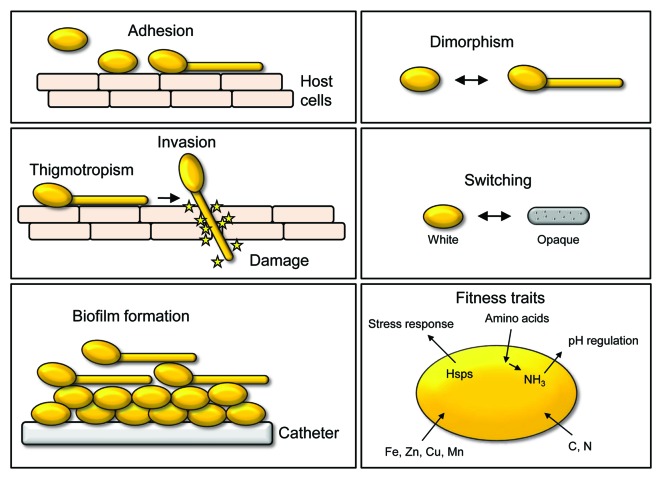
The polymorphic fungus Candida albicans is a member of the normal human microbiome. In most individuals, C. albicans resides as a lifelong, harmless commensal. Under certain circumstances, however, C. albicans can cause infections that range from superficial infections of the skin to life-threatening systemic infections. Several factors and activities have been identified which contribute to the pathogenic potential of this fungus. Among them are molecules which mediate adhesion to and invasion into host cells, the secretion of hydrolases, the yeast-to-hypha transition, contact sensing and thigmotropism, biofilm formation, phenotypic switching and a range of fitness attributes. Our understanding of when and how these mechanisms and factors contribute to infection has significantly increased during the last years. In addition, novel virulence mechanisms have recently been discovered. In this review we present an update on our current understanding of the pathogenicity mechanisms of this important human pathogen.
Overview
The claims and statistics of this paper haven’t been checked yet.
Run the check — free, no account needed. It reads the open-access text and checks the sources it cites.
Integrity signals
Registry
Cites
Statistics
Figures
Verification
Claims the paper makes
The claims and statistics of this paper haven’t been checked yet.
Run the check — free, no account needed. It reads the open-access text and checks the sources it cites.
Claims other papers make about this one
Each is checked against this paper’s own text: does it say what the citing paper says it does?
The source backs part of the claim, not all of it — or backs it for a different population, condition or comparison.
In the citing paper
“The link between mitochondrial respiration and pathogenicity in C. albicans is well established, and the capability of adapting cellular metabolism to different stress conditions is an important aspect of this connection (Mayer et al. 2013; Sun et al. 2019; Liu et al. 2023).”
From Mitochondrial retrograde control of transcription evolves with respiratory stress, metabolic adaptation, and virulence in budding yeasts (2026) · cites this paper as Mayer et al. 2013
Experimental — accuracy not yet measuredThe source backs part of the claim, not all of it — or backs it for a different population, condition or comparison.
In the citing paper
“Besides this, lipase activity has been detected and shown to be involved in the pathogenicity of yeasts such as Candida, Cryptococcus, or Malassezia species (Mayer et al. 2013; Park et al. 2013; Sommer et al. 2016).”
From Biocontrol yeasts: mechanisms and applications (2019) · cites this paper as Mayer et al. 2013
Experimental — accuracy not yet measured
Self-check
Percentages, sums and reported differences re-computed from the paper’s own numbers.
The self-check needs the paper’s full text.
Citations
Cites
Lindquist, S. L. (1986) · Annual Review of Biochemistry · doi:10.1146/annurev.bi.55.070186.005443 · Cited by 4,629
Epidemiology of Invasive Candidiasis: a Persistent Public Health Problem
Pfaller, M. A., & Diekema, D. J. (2007) · Clinical Microbiology Reviews · doi:10.1128/cmr.00029-06 · Cited by 4,174 · cited 2×
“Indeed, Candida spp are the fourth most common cause of hospital-acquired systemic infections in the United States with crude mortality rates of up to 50%.(3,4) C.”
BackgroundInfectious Diseases Society of America
Enders, J. F. (1969) · The Journal of Infectious Diseases · doi:10.1093/infdis/119.3.317 · Cited by 3,296
Pappas, P. G., Kauffman, C. A., Andes, D., Benjamin, D. K., Calandra, T. F., Edwards, J. E., Filler, S. G., Fisher, J. F., Kullberg, B.-J., Zeichner, L. O., et al. (2009) · Clinical Infectious Diseases · doi:10.1086/596757 · Cited by 3,191
How Many Species Are There on Earth and in the Ocean?
Mora, C., Tittensor, D. P., Adl, S., Simpson, A. G. B., & Worm, B. (2011) · PLoS Biology · doi:10.1371/journal.pbio.1001127 · Cited by 3,045 · cited 1×
“7 million, with fungi making up approximately 7% (611,000 species) of this number.(1) Of all fungi, only around 600 species are human pathogens.”
BackgroundThe Heat Shock Response: Life on the Verge of Death
Richter, K., Haslbeck, M., & Büchner, J. (2010) · Molecular Cell · doi:10.1016/j.molcel.2010.10.006 · Cited by 2,025
Nonfilamentous C. albicans Mutants Are Avirulent
Lo, H.-J., Köhler, J. R., DiDomenico, B., Loebenberg, D., Cacciapuoti, A., & Fink, G. R. (1997) · Cell · doi:10.1016/s0092-8674(00)80358-x · Cited by 1,809
Nutritional immunity: transition metals at the pathogen–host interface
Hood, M. I., & Skaar, E. P. (2012) · Nature Reviews Microbiology · doi:10.1038/nrmicro2836 · Cited by 1,535
Odds, F. C. (1979) · Medical Entomology and Zoology · Cited by 1,297
Sobel, J. D. (2007) · The Lancet · doi:10.1016/s0140-6736(07)60917-9 · Cited by 1,270
Candida albicans Secreted Aspartyl Proteinases in Virulence and Pathogenesis
Naglik, J. R., Challacombe, S. J., & Hube, B. (2003) · Microbiology and Molecular Biology Reviews · doi:10.1128/mmbr.67.3.400-428.2003 · Cited by 1,179
Self-citationGrowth of Candida albicans hyphae
Sudbery, P. E. (2011) · Nature Reviews Microbiology · doi:10.1038/nrmicro2636 · Cited by 1,110
Quorum Sensing in the Dimorphic Fungus Candida albicans Is Mediated by Farnesol
Hornby, J. M., Jensen, E. C., Lisec, A. D., Tasto, J. J., Jahnke, B., Shoemaker, R., Dussault, P., & Nickerson, K. W. (2001) · Applied and Environmental Microbiology · doi:10.1128/aem.67.7.2982-2992.2001 · Cited by 983
Calderone, R. (2012) · ASM Press eBooks · Cited by 912
Epidemiology of Invasive Mycoses in North America
Pfaller, M. A., & Diekema, D. J. (2010) · Critical Reviews in Microbiology · doi:10.3109/10408410903241444 · Cited by 901
The distinct morphogenic states of Candida albicans
Sudbery, P., Gow, N., & Berman, J. (2004) · Trends in Microbiology · doi:10.1016/j.tim.2004.05.008 · Cited by 876
Sorger, P. K., & Pelham, H. R. B. (1988) · Cell · doi:10.1016/s0092-8674(88)91219-6 · Cited by 832
The glyoxylate cycle is required for fungal virulence
Lorenz, M. C., & Fink, G. R. (2001) · Nature · doi:10.1038/35083594 · Cited by 745
Nosocomial fungal infections: epidemiology, diagnosis, and treatment
Perlroth, J., Choi, B., & Spellberg, B. (2007) · Medical Mycology · doi:10.1080/13693780701218689 · Cited by 738
Transcriptional Response of Candida albicans upon Internalization by Macrophages
Lorenz, M. C., Bender, J. A., & Fink, G. R. (2004) · Eukaryotic Cell · doi:10.1128/ec.3.5.1076-1087.2004 · Cited by 712
A Recently Evolved Transcriptional Network Controls Biofilm Development in Candida albicans
Nobile, C. J., Fox, E. P., Nett, J. E., Sorrells, T. R., Mitrovich, Q. M., Hernday, A. D., Tuch, B. B., Andes, D. R., & Johnson, A. D. (2012) · Cell · doi:10.1016/j.cell.2011.10.048 · Cited by 711
Adhesive and mammalian transglutaminase substrate properties of Candida albicans Hwp1.
Staab, J., Bradway, S. D., Fidel, P., & Sundstrom, P. (1999) · Science · doi:10.1126/science.283.5407.1535 · Cited by 683
Parczewska, O. K., Posaconazol, przeciwgrzybicze, L., Anidulafungina, Micafungina, & wrażliwość, O. (2009) · Cited by 656
Saville, S. P., Lazzell, A. L., Monteagudo, C., & Lopez-Ribot, J. L. (2003) · Eukaryotic Cell · doi:10.1128/ec.2.5.1053-1060.2003 · Cited by 655
Genetic control of Candida albicans biofilm development
Finkel, J. S., & Mitchell, A. P. (2010) · Nature Reviews Microbiology · doi:10.1038/nrmicro2475 · Cited by 641
Als3 Is a Candida albicans Invasin That Binds to Cadherins and Induces Endocytosis by Host Cells
Phan, Q. T., Myers, C. L., Fu, Y., Sheppard, D. C., Yeaman, M. R., Welch, W. H., Ibrahim, A. S., Edwards, J. E., & Filler, S. G. (2007) · PLoS Biology · doi:10.1371/journal.pbio.0050064 · Cited by 641
Tackling Human Fungal Infections
Brown, G. D., Denning, D. W., & Levitz, S. M. (2012) · Science · doi:10.1126/science.1222236 · Cited by 619
Flocculation, adhesion and biofilm formation in yeasts
Verstrepen, K. J., & Klis, F. M. (2006) · Molecular Microbiology · doi:10.1111/j.1365-2958.2006.05072.x · Cited by 589
Candida albicans: A molecular revolution built on lessons from budding yeast
Berman, J., & Sudbery, P. E. (2002) · Nature Reviews Genetics · doi:10.1038/nrg948 · Cited by 578
Narberhaus, F. (2002) · Microbiology and Molecular Biology Reviews · doi:10.1128/mmbr.66.1.64-93.2002 · Cited by 534
Tyrosol is a quorum-sensing molecule in Candida albicans
Chen, H., Fujita, M., Feng, Q., Clardy, J., & Fink, G. R. (2004) · Proceedings of the National Academy of Sciences · doi:10.1073/pnas.0401416101 · Cited by 500
Fanning, S., & Mitchell, A. P. (2012) · PLoS Pathogens · doi:10.1371/journal.ppat.1002585 · Cited by 465
Hsp26: a temperature‐regulated chaperone
Haslbeck, M., Walke, S., Stromer, T., Ehrnsperger, M., White, H. E., Chen, S., Saibil, H. R., & Büchner, J. (1999) · The EMBO Journal · doi:10.1093/emboj/18.23.6744 · Cited by 449
Dispersion as an Important Step in the Candida albicans Biofilm Developmental Cycle
Uppuluri, P., Chaturvedi, A. K., Srinivasan, A., Banerjee, M., Ramasubramaniam, A. K., Köhler, J. R., Kadosh, D., & Lopez-Ribot, J. L. (2010) · PLoS Pathogens · doi:10.1371/journal.ppat.1000828 · Cited by 432
Quorum sensing in fungi – a review
Albuquerque, P., & Casadevall, A. (2012) · Medical Mycology · doi:10.3109/13693786.2011.652201 · Cited by 431
Cowen, L. E., Singh, S. D., Köhler, J. R., Collins, C., Zaas, A. K., Schell, W. A., Aziz, H., Mylonakis, E., Perfect, J. R., Whitesell, L., et al. (2009) · Proceedings of the National Academy of Sciences · doi:10.1073/pnas.0813394106 · Cited by 413
Cellular interactions of Candida albicans with human oral epithelial cells and enterocytes
Dalle, F., Wächtler, B., L’Ollivier, C., Holland, G., Bannert, N., Wilson, D., Labruère, C., Bonnin, A., & Hube, B. (2009) · Cellular Microbiology · doi:10.1111/j.1462-5822.2009.01394.x · Cited by 371
Self-citationThe Fungal Pathogen Candida albicans Autoinduces Hyphal Morphogenesis by Raising Extracellular pH
Vylkova, S., Carman, A. J., Danhof, H. A., Collette, J. R., Zhou, H., & Lorenz, M. C. (2011) · mBio · doi:10.1128/mbio.00055-11 · Cited by 365
Candida albicans dimorphism as a therapeutic target
Jacobsen, I. D., Wilson, D., Wächtler, B., Brunke, S., Naglik, J. R., & Hube, B. (2012) · Expert Review of Anti-infective Therapy · doi:10.1586/eri.11.152 · Cited by 363
Self-citationHsp90 Governs Echinocandin Resistance in the Pathogenic Yeast Candida albicans via Calcineurin
Singh, S. D., Robbins, N., Zaas, A. K., Schell, W. A., Perfect, J. R., & Cowen, L. E. (2009) · PLoS Pathogens · doi:10.1371/journal.ppat.1000532 · Cited by 362
Mucosal damage and neutropenia are required for Candida albicans dissemination
Koh, A. Y., Köhler, J. R., Coggshall, K. T., Van Rooijen, N., & Pier, G. B. (2008) · PLoS Pathogens · doi:10.1371/journal.ppat.0040035 · Cited by 360
Complementary Adhesin Function in C. albicans Biofilm Formation
Nobile, C. J., Schneider, H. A., Nett, J. E., Sheppard, D. C., Filler, S. G., Andes, D. R., & Mitchell, A. P. (2008) · Current Biology · doi:10.1016/j.cub.2008.06.034 · Cited by 351
Alonso-Monge, R., Navarro-García, F., Molero, G., Diez-Orejas, R., Gustin, M., Pla, J., Sánchez, M., & Nombela, C. (1999) · Journal of Bacteriology · doi:10.1128/jb.181.10.3058-3068.1999 · Cited by 344
Purification and characterization of a heat‐shock element binding protein from yeast.
Sorger, P. K., & Pelham, H. R. B. (1987) · The EMBO Journal · doi:10.1002/j.1460-2075.1987.tb02609.x · Cited by 340
Zheng, X., Wang, Y.-M., & Wang, Y. (2004) · The EMBO Journal · doi:10.1038/sj.emboj.7600195 · Cited by 339
Biofilm Matrix Regulation by Candida albicans Zap1
Nobile, C. J., Nett, J. E., Hernday, A. D., Homann, O. R., Deneault, J.-S., Nantel, A., Andes, D. R., Johnson, A. D., & Mitchell, A. P. (2009) · PLoS Biology · doi:10.1371/journal.pbio.1000133 · Cited by 337
Sundstrom, P. (2002) · Cellular Microbiology · doi:10.1046/j.1462-5822.2002.00206.x · Cited by 336
Almeida, R. S., Brunke, S., Albrecht, A., Thewes, S., Laue, M., Edwards, J. E., Filler, S. G., & Hube, B. (2008) · PLoS Pathogens · doi:10.1371/journal.ppat.1000217 · Cited by 330
Self-citationLaFayette, S. L., Collins, C., Zaas, A. K., Schell, W. A., Betancourt-Quiroz, M., Gunatilaka, A. A. L., Perfect, J. R., & Cowen, L. E. (2010) · PLoS Pathogens · doi:10.1371/journal.ppat.1001069 · Cited by 329
Csank, C., Schröppel, K., Leberer, E., Harcus, D., Mohamed, O. A., Meloche, S., Thomas, D. Y., & Whiteway, M. S. (1998) · Infection and Immunity · doi:10.1128/iai.66.6.2713-2721.1998 · Cited by 329
Ene, I. V., Adya, A. K., Wehmeier, S., Brand, A. C., MacCallum, D. M., Gow, N. A. R., & Brown, A. J. P. (2012) · Cellular Microbiology · doi:10.1111/j.1462-5822.2012.01813.x · Cited by 313
Hsp90 Orchestrates Temperature-Dependent Candida albicans Morphogenesis via Ras1-PKA Signaling
Shapiro, R. S., Uppuluri, P., Zaas, A. K., Collins, C., Senn, H., Perfect, J. R., Heitman, J., & Cowen, L. E. (2009) · Current Biology · doi:10.1016/j.cub.2009.03.017 · Cited by 311
Hube, B., Sanglard, D., Odds, F. C., Hess, D., Monod, M., Schäfer, W., Brown, A. J. P., & Gow, N. A. R. (1997) · Infection and Immunity · doi:10.1128/iai.65.9.3529-3538.1997 · Cited by 311
Self-citationIdentification and Characterization of TUP1-Regulated Genes in Candida albicans
Braun, B. R., Head, W. S., Wang, M. X., & Johnson, A. D. (2000) · Genetics · doi:10.1093/genetics/156.1.31 · Cited by 306
A Chaperone Pathway in Protein Disaggregation
Cashikar, A. G., Duennwald, M. L., & Lindquist, S. L. (2005) · Journal of Biological Chemistry · doi:10.1074/jbc.m502854200 · Cited by 296
Hwang, C., Rhie, G., Oh, J., Huh, W., Yim, H., & Kang, S.-O. (2002) · Microbiology · doi:10.1099/00221287-148-11-3705 · Cited by 293
Hsp90 Governs Dispersion and Drug Resistance of Fungal Biofilms
Robbins, N., Uppuluri, P., Nett, J., Rajendran, R., Ramage, G., Lopez-Ribot, J. L., Andes, D., & Cowen, L. E. (2011) · PLoS Pathogens · doi:10.1371/journal.ppat.1002257 · Cited by 291
A Candida Biofilm-Induced Pathway for Matrix Glucan Delivery: Implications for Drug Resistance
Taff, H. T., Nett, J. E., Zarnowski, R., Ross, K. M., Sanchez, H., Cain, M. T., Hamaker, J., Mitchell, A. P., & Andes, D. R. (2012) · PLoS Pathogens · doi:10.1371/journal.ppat.1002848 · Cited by 291
Martchenko, M., Alarco, A.-M., Harcus, D., & Whiteway, M. (2004) · Molecular Biology of the Cell · doi:10.1091/mbc.e03-03-0179 · Cited by 290
Zakikhany, K., Naglik, J. R., Schmidt-Westhausen, A., Holland, G., Schaller, M., & Hube, B. (2007) · Cellular Microbiology · doi:10.1111/j.1462-5822.2007.01009.x · Cited by 288
Self-citationWächtler, B., Wilson, D., Haedicke, K., Dalle, F., & Hube, B. (2011) · PLoS ONE · doi:10.1371/journal.pone.0017046 · Cited by 282
Self-citationFrohner, I. E., Bourgeois, C., Yatsyk, K., Majer, O., & Kuchler, K. (2008) · Molecular Microbiology · doi:10.1111/j.1365-2958.2008.06528.x · Cited by 280
Candida albicans interactions with epithelial cells and mucosal immunity
Naglik, J. R., Moyes, D. L., Wächtler, B., & Hube, B. (2011) · Microbes and Infection · doi:10.1016/j.micinf.2011.06.009 · Cited by 277
Self-citationCandida albicans RIM101 pH Response Pathway Is Required for Host-Pathogen Interactions
Davis, D. A., Edwards, J. E., Mitchell, A. P., & Ibrahim, A. S. (2000) · Infection and Immunity · doi:10.1128/iai.68.10.5953-5959.2000 · Cited by 276
Albrecht, A., Felk, A., Pichova, I., Naglik, J. R., Schaller, M., de Groot, P., MacCallum, D., Odds, F. C., Schäfer, W., Klis, F., et al. (2006) · Journal of Biological Chemistry · doi:10.1074/jbc.m509297200 · Cited by 270
Self-citationThe MAP kinase signal transduction network in Candida albicans
Alonso‐Monge, R., Román, E., Nombela, C., & Plá, J. (2006) · Microbiology · doi:10.1099/mic.0.28616-0 · Cited by 266
The pH of the Host Niche Controls Gene Expression in and Virulence of Candida albicans
De Bernardis, F., Mühlschlegel, F. A., Cassone, A., & Fonzi, W. A. (1998) · Infection and Immunity · doi:10.1128/iai.66.7.3317-3325.1998 · Cited by 258
Mavor, A., Thewes, S., & Hube, B. (2005) · Current Drug Targets · doi:10.2174/138945005774912735 · Cited by 252
Self-citationWächtler, B., Citiulo, F., Jablonowski, N., Förster, S., Dalle, F., Schaller, M., Wilson, D., & Hube, B. (2012) · PLoS ONE · doi:10.1371/journal.pone.0036952 · Cited by 250
Self-citationCandida albicans Scavenges Host Zinc via Pra1 during Endothelial Invasion
Citiulo, F., Jacobsen, I. D., Miramón, P., Schild, L., Brunke, S., Zipfel, P., Brock, M., Hube, B., & Wilson, D. (2012) · PLoS Pathogens · doi:10.1371/journal.ppat.1002777 · Cited by 242
Self-citationLeidich, S. D., Ibrahim, A. S., Fu, Y., Koul, A., Jessup, C., Vitullo, J., Fonzi, W., Mirbod, F., Nakashima, S., Nozawa, Y., et al. (1998) · Journal of Biological Chemistry · doi:10.1074/jbc.273.40.26078 · Cited by 241
Weissman, Z., & Kornitzer, D. (2004) · Molecular Microbiology · doi:10.1111/j.1365-2958.2004.04199.x · Cited by 231
Schaller, M., Korting, H. C., Schäfer, W., Bastert, J., Chen, W., & Hube, B. (1999) · Molecular Microbiology · doi:10.1046/j.1365-2958.1999.01590.x · Cited by 230
Self-citationHeymann, P., Gerads, M., Schaller, M., Dromer, F., Winkelmann, G., & Ernst, J. F. (2002) · Infection and Immunity · doi:10.1128/iai.70.9.5246-5255.2002 · Cited by 226
Interactions of Candida albicans with epithelial cells
Zhu, W., & Filler, S. G. (2010) · Cellular Microbiology · doi:10.1111/j.1462-5822.2009.01412.x · Cited by 223
Host Cell Invasion and Virulence Mediated by Candida albicans Ssa1
Sun, J. N., Solis, N. V., Phan, Q. T., Bajwa, J. S., Kashleva, H., Thompson, A., Liu, Y., Dongari-Bagtzoglou, A., Edgerton, M., & Filler, S. G. (2010) · PLoS Pathogens · doi:10.1371/journal.ppat.1001181 · Cited by 220
Hube, B., Stehr, F., Bossenz, M., Mazur, A., Kretschmar, M., & Schäfer, W. (2000) · Archives of Microbiology · doi:10.1007/s002030000218 · Cited by 212
Self-citationMühlschlegel, F. A., & Fonzi, W. A. (1997) · Molecular and Cellular Biology · doi:10.1128/mcb.17.10.5960 · Cited by 209
Park, H., Myers, C. L., Sheppard, D. C., Phan, Q. T., Sanchez, A. A., E. Edwards, J., & Filler, S. G. (2004) · Cellular Microbiology · doi:10.1111/j.1462-5822.2004.00476.x · Cited by 207
Cloning and Sequencing of a Candida albicans Catalase Gene and Effects of Disruption of This Gene
Wysong, D. R., Christin, L., Sugar, A. M., Robbins, P. W., & Diamond, R. D. (1998) · Infection and Immunity · doi:10.1128/iai.66.5.1953-1961.1998 · Cited by 201
Candida albicans iron acquisition within the host
Almeida, R. S., Wilson, D., & Hube, B. (2009) · FEMS Yeast Research · doi:10.1111/j.1567-1364.2009.00570.x · Cited by 199
Self-citationInglis, D. O., Arnaud, M. B., Binkley, J., Shah, P., Skrzypek, M. S., Wymore, F., Binkley, G., Miyasato, S. R., Simison, M., & Sherlock, G. (2011) · Nucleic Acids Research · doi:10.1093/nar/gkr945 · Cited by 194
Fonzi, W. A. (1999) · Journal of Bacteriology · doi:10.1128/jb.181.22.7070-7079.1999 · Cited by 193
Hromatka, B. S., Noble, S. M., & Johnson, A. D. (2005) · Molecular Biology of the Cell · doi:10.1091/mbc.e05-05-0435 · Cited by 183
How human pathogenic fungi sense and adapt to pH: the link to virulence
Davis, D. A. (2009) · Current Opinion in Microbiology · doi:10.1016/j.mib.2009.05.006 · Cited by 177
Targeting virulence: A new paradigm for antifungals
Gauwerky, K. J., Borelli, C., & Körting, H. C. (2009) · Drug Discovery Today · doi:10.1016/j.drudis.2008.11.013 · Cited by 174
Mechanisms of hypha orientation of fungi
Brand, A., & Gow, N. A. R. (2009) · Current Opinion in Microbiology · doi:10.1016/j.mib.2009.05.007 · Cited by 170
Candida albicans Ssa1/2p Is the Cell Envelope Binding Protein for Human Salivary Histatin 5
Li, X. S., Reddy, M. S., Baev, D., & Edgerton, M. (2003) · Journal of Biological Chemistry · doi:10.1074/jbc.m300680200 · Cited by 167
Ghosh, S., Navarathna, D. H. M. L. P., Roberts, D. D., Cooper, J. T., Atkin, A. L., Petro, T. M., & Nickerson, K. W. (2009) · Infection and Immunity · doi:10.1128/iai.01452-08 · Cited by 165
Hyphal Orientation of Candida albicans Is Regulated by a Calcium-Dependent Mechanism
Brand, A., Shanks, S., Duncan, V. M. S., Yang, M., Mackenzie, K. S., & Gow, N. A. R. (2007) · Current Biology · doi:10.1016/j.cub.2006.12.043 · Cited by 154
Molecular mechanisms of mechanosensing and their roles in fungal contact sensing
Kumamoto, C. A. (2008) · Nature Reviews Microbiology · doi:10.1038/nrmicro1960 · Cited by 153
Nobile, C. J., Solis, N., Myers, C. L., Fay, A. J., Deneault, J.-S., Nantel, A., Mitchell, A. P., & Filler, S. G. (2008) · Cellular Microbiology · doi:10.1111/j.1462-5822.2008.01198.x · Cited by 150
Thewes, S., Kretschmar, M., Park, H., Schaller, M., Filler, S. G., & Hube, B. (2007) · Molecular Microbiology · doi:10.1111/j.1365-2958.2007.05614.x · Cited by 140
Self-citationHall, R. A., Turner, K. J., Chaloupka, J., Cottier, F., Sordi, L. D., Sanglard, D., Levin, L. R., Buck, J., & Mühlschlegel, F. A. (2011) · Eukaryotic Cell · doi:10.1128/ec.05060-11 · Cited by 139
Why doesCandida albicans switch?
Soll, D. R. (2009) · FEMS Yeast Research · doi:10.1111/j.1567-1364.2009.00562.x · Cited by 136
Heat-shock proteins and stress tolerance in microorganisms
Lindquist, S. L. (1992) · Current Opinion in Genetics & Development · doi:10.1016/s0959-437x(05)80135-2 · Cited by 136
Sundstrom, P., Balish, E., & Allen, C. M. (2002) · The Journal of Infectious Diseases · doi:10.1086/338836 · Cited by 134
Murciano, C., Moyes, D. L., Runglall, M., Tobouti, P. L., Islam, A., Hoyer, L. L., & Naglik, J. R. (2012) · PLoS ONE · doi:10.1371/journal.pone.0033362 · Cited by 132
Candida albicansversusCandida dubliniensis: Why IsC. albicansMore Pathogenic?
Moran, G. P., Coleman, D. C., & Sullivan, D. J. (2011) · International Journal of Microbiology · doi:10.1155/2012/205921 · Cited by 131
Hurley, R., & de Louvois, J. (1979) · Postgraduate Medical Journal · doi:10.1136/pgmj.55.647.645 · Cited by 130
Lermann, U., & Morschhäuser, J. (2008) · Microbiology · doi:10.1099/mic.0.2008/022525-0 · Cited by 128
A Role for Amyloid in Cell Aggregation and Biofilm Formation
Garcia, M. C., Lee, J. T., Ramsook, C. B., Alsteens, D., Dufrêne, Y. F., & Lipke, P. N. (2011) · PLoS ONE · doi:10.1371/journal.pone.0017632 · Cited by 128
Sundstrom, P., Cutler, J., & Staab, J. (2002) · Infection and Immunity · doi:10.1128/iai.70.6.3281-3283.2002 · Cited by 128
Diez‐Orejas, R., Molero, G., Navarro-García, F., Plá, J., Nombela, C., & Sánchez‐Pérez, M. (1997) · Infection and Immunity · doi:10.1128/iai.65.2.833-837.1997 · Cited by 120
(2011) · ASM Press eBooks · doi:10.1128/9781555817176 · Cited by 116
Fungal metabolism in host niches
Brock, M. (2009) · Current Opinion in Microbiology · doi:10.1016/j.mib.2009.05.004 · Cited by 115
Candida albicans Biofilms Do Not Trigger Reactive Oxygen Species and Evade Neutrophil Killing
Xie, Z., Thompson, A. K., Sobue, T., Kashleva, H., Xu, H., Vasilakos, J. P., & Dongari‐Bagtzoglou, A. I. (2012) · The Journal of Infectious Diseases · doi:10.1093/infdis/jis607 · Cited by 114
Nicholls, S., MacCallum, D. M., Kaffarnik, F., Selway, L., Peck, S. C., & Brown, A. J. P. (2010) · Fungal Genetics and Biology · doi:10.1016/j.fgb.2010.08.010 · Cited by 114
N-cadherin Mediates Endocytosis of Candida albicans by Endothelial Cells
Phan, Q. T., Fratti, R. A., Prasadarao, N. V., Edwards, J. E., & Filler, S. G. (2005) · Journal of Biological Chemistry · doi:10.1074/jbc.m412592200 · Cited by 113
Nature’s molecular sponges: Small heat shock proteins grow into their chaperone roles
Eyles, S. J., & Gierasch, L. M. (2010) · Proceedings of the National Academy of Sciences · doi:10.1073/pnas.0915160107 · Cited by 112
Fleck, C. B., Schöbel, F., & Brock, M. (2011) · International Journal of Medical Microbiology · doi:10.1016/j.ijmm.2011.04.007 · Cited by 110
Theiß, S., Ishdorj, G., Brenot, A., Kretschmar, M., Lan, C., Nichterlein, T., Hacker, J. H., Nigam, S., Agabian, N. M., & Köhler, G. A. (2006) · International Journal of Medical Microbiology · doi:10.1016/j.ijmm.2006.03.003 · Cited by 109
Mayer, F. L., Wilson, D., Jacobsen, I. D., Miramón, P., Slesiona, S., Bohovych, I., Brown, A. J. P., & Hube, B. (2012) · PLoS ONE · doi:10.1371/journal.pone.0038584 · Cited by 101
Self-citationLipase 8 Affects the Pathogenesis ofCandida albicans
Gácser, A., Stehr, F., Kröger, C., Kredics, L., Schäfer, W., & Nosanchuk, J. D. (2007) · Infection and Immunity · doi:10.1128/iai.00372-07 · Cited by 100
Fu, Y., Ibrahim, A. S., Fonzi, W. A., Zhou, X., Ramos, C. F., & Ghannoum, M. A. (1997) · Microbiology · doi:10.1099/00221287-143-2-331 · Cited by 96
Phospholipases of Candida albicans
Niewerth, M., & Körting, H. C. (2001) · Mycoses · doi:10.1046/j.1439-0507.2001.00685.x · Cited by 96
Staib, P., & Morschhäuser, J. (2006) · Mycoses · doi:10.1111/j.1439-0507.2006.01308.x · Cited by 94
Cheng, G., Wozniak, K. L., Wallig, M. A., Fidel, P. L., Trupin, S. R., & Hoyer, L. L. (2005) · Infection and Immunity · doi:10.1128/iai.73.3.1656-1663.2005 · Cited by 93
Foxman, B., MARSH, J. V., Gillespie, B. W., & Sobel, J. D. (1998) · Journal of Women s Health · doi:10.1089/jwh.1998.7.1167 · Cited by 92
Li, X. S., Sun, J. N., Okamoto‐Shibayama, K., & Edgerton, M. (2006) · Journal of Biological Chemistry · doi:10.1074/jbc.m604064200 · Cited by 90
Correia, A., Lermann, U., Teixeira, L., Cerca, F., Botelho, A. S., da Costa, R. M. G., Sampaio, P., Gärtner, F., Morschhäuser, J., Vilanova, M., et al. (2010) · Infection and Immunity · doi:10.1128/iai.00248-10 · Cited by 86
History and new insights into host defense against vaginal candidiasis
Fidel, P. L. (2004) · Trends in Microbiology · doi:10.1016/j.tim.2004.03.006 · Cited by 85
Regulation of Innate Immune Response toCandida albicansInfections by αMβ2-Pra1p Interaction
Soloviev, D. A., Jawhara, S., & Fonzi, W. A. (2011) · Infection and Immunity · doi:10.1128/iai.00650-10 · Cited by 82
Brand, A., Vacharaksa, A., Bendel, C. M., Norton, J., Haynes, P. R., Henry‐Stanley, M. J., Wells, C. L., Ross, K., Gow, N. A. R., & Gale, C. A. (2008) · Eukaryotic Cell · doi:10.1128/ec.00453-07 · Cited by 73
The Candida albicans CTR1 gene encodes a functional copper transporter
Marvin, M. E., WILLIAMS, P. H., & Cashmore, A. M. (2003) · Microbiology · doi:10.1099/mic.0.26172-0 · Cited by 67
Leach, M. D., Stead, D., Argo, E., & Brown, A. J. P. (2011) · Molecular Biology of the Cell · doi:10.1091/mbc.e10-07-0632 · Cited by 66
The Novel Candida albicans Transporter Dur31 Is a Multi-Stage Pathogenicity Factor
Mayer, F. L., Wilson, D., Jacobsen, I. D., Miramón, P., Große, K., & Hube, B. (2012) · PLoS Pathogens · doi:10.1371/journal.ppat.1002592 · Cited by 62
Self-citationCleary, I. A., Reinhard, S. M., Miller, C. L., Murdoch, C., Thornhill, M. H., Lazzell, A. L., Monteagudo, C. C., Thomas, D. P., & Saville, S. P. (2011) · Microbiology · doi:10.1099/mic.0.046326-0 · Cited by 58
Sun, J. N., Li, W., Jang, W. S., Nayyar, N., Sutton, M. D., & Edgerton, M. (2008) · Molecular Microbiology · doi:10.1111/j.1365-2958.2008.06480.x · Cited by 50
Taylor, B., Hannemann, H., Sehnal, M., Biesemeier, A., Schweizer, A., Röllinghoff, M., & Schröppel, K. (2005) · Infection and Immunity · doi:10.1128/iai.73.10.7061-7063.2005 · Cited by 44
Mitchell, B. M., Wu, T. G., Jackson, B. E., & Wilhelmus, K. R. (2007) · Investigative Ophthalmology & Visual Science · doi:10.1167/iovs.06-0793 · Cited by 38
Functional Characterization of the Small Heat Shock Protein Hsp12p from Candida albicans
Fu, M. S., Sordi, L. D., & Mühlschlegel, F. A. (2012) · PLoS ONE · doi:10.1371/journal.pone.0042894 · Cited by 38
Fiori, A., Kucharíková, S., Govaert, G., Cammue, B. P. A., Thevissen, K., & Dijck, P. V. (2012) · Eukaryotic Cell · doi:10.1128/ec.00147-12 · Cited by 34
Yuan, X., Mitchell, B. M., Hua, X., Davis, D. A., & Wilhelmus, K. R. (2010) · Investigative Opthalmology & Visual Science · doi:10.1167/iovs.09-4726 · Cited by 30
Brown, A. J. P., Haynes, K., Gow, N. A. R., & Quinn, J. (2014) · ASM Press eBooks · doi:10.1128/9781555817176.ch15 · Cited by 16
Candida: What Should Clinicians and Scientists Be Talking About?
Spellberg, B. J., Marr, K. A., & Filler, S. G. (2014) · ASM Press eBooks · doi:10.1128/9781555817176.ch1 · Cited by 13
Research works printed but not linked: 3
- Ruhnke M. Skin and mucous membrane infections. In: Calderone RA, ed. Candida and Candidiasis: ASM Press, Washington, DC, pp. 307-325., 2002.
- Zordan R, Cormack B. Adhesins on Opportunistic Fungal Pathogens. In: Calderone RA, Clancy, C.J., ed. Candida and Candidiasis: ASM Press, Washington, DC, pp 243-259, 2012.
- Brown AJP, Haynes K, Gow NAR, Quinn J. Stress Responses in Candida . In: Calderone RA, Clancy, C.J., ed. Candida and Candidiasis: ASM Press, Washington, DC, pp. 225-242., 2012.
Cited by
Sorted by citations
The wound microbiota: microbial mechanisms of impaired wound healing and infection
Uberoi, A., McCready-Vangi, A. R., & Grice, E. A. (2024) · Nature Reviews Microbiology · doi:10.1038/s41579-024-01035-z · Cited by 963
Antifungal Drug Resistance: Molecular Mechanisms in Candida albicans and Beyond
Lee, Y., Puumala, E., Robbins, N., & Cowen, L. E. (2021) · Chemical Reviews · doi:10.1021/acs.chemrev.0c00199 · Cited by 801
Candida albicans—The Virulence Factors and Clinical Manifestations of Infection
Talapko, J., Juzbašić, M., Matijević, T., Pustijanac, E., Bekić, S., Kotris, I., & Škrlec, I. (2021) · Journal of Fungi · doi:10.3390/jof7020079 · Cited by 794
“The transition from yeast to the hyphal form is a transition into a pathogenic form [22,23].”
BackgroundNeutrophil Extracellular Traps and Its Implications in Inflammation: An Overview
Delgado‐Rizo, V., Martinez-Guzman, M. A., Íñiguez-Gutiérrez, L., García-Orozco, A., Alvarado‐Navarro, A., & Fafutis‐Morris, M. (2017) · Frontiers in Immunology · doi:10.3389/fimmu.2017.00081 · Cited by 703
Chitosan: A Potential Biopolymer in Drug Delivery and Biomedical Applications
Desai, N., Rana, D., Salave, S., Gupta, R., Patel, P., Karunakaran, B., Sharma, A. K., Giri, J., Benival, D. M., & Kommineni, N. (2023) · Pharmaceutics · doi:10.3390/pharmaceutics15041313 · Cited by 668
Metadata
- Authors
- Mayer, F. L., Wilson, D., & Hube, B.
- Affiliations
- Leibniz-Institut für Naturstoff-Forschung und Infektionsbiologie e. V. - Hans-Knöll-Institut (HKI) (DE)
- Jena University Hospital (DE)
- Corresponding author
- Hube, Bernhard
- Venue
- Virulence
- Publisher
- Informa UK Limited
- Published
- 2013-02-15
- Volume
- 4
- Issue
- 2
- Pages
- 119-128
- ISSN
- 2150-5594 (ISSN-L)
- 2150-5608
- PMC
- PMC3654610
- OpenAlex
- W2144035662
- Semantic Scholar
- ea82d70b2925d03c8aa23ad612a18cdb8c6906ed
- Cited by
- 1,848
- References
- 136
- Citations by year
- 2026: 99 · 2025: 162 · 2024: 163 · 2023: 180 · 2022: 195 · 2021: 189 · 2020: 164 · 2019: 156 · 2018: 150 · 2017: 119 · 2016: 97 · 2015: 84 · 2014: 57 · 2013: 30
- FWCI
- 11.35
- Type
- journal article
- Language
- en
- Open access
- gold
- doi.org
- Licence
- cc-by-nc
- Locations
- Virulence (publishedVersion, cc-by-nc)
- Europe PMC (PubMed Central) (publishedVersion, cc-by-nc)
- PubMed Central (publishedVersion, cc-by-nc)
- PubMed (publishedVersion)
- Aberdeen University Research Archive (Aberdeen University) (submittedVersion)
- Funders
- Deutsche Forschungsgemeinschaft (01EO1002)
- Bundesministerium für Bildung und Forschung (01EO1002)
- International Leibniz Research School for Microbial and Biomolecular Interactions
- Leibniz-Gemeinschaft
- Center for Sepsis Control and Care (BMBF 01EO1002, 01EO1002)
- Topics
- Health Sciences › Medicine › Infectious Diseases › Antifungal resistance and susceptibility
- Life Sciences › Biochemistry, Genetics and Molecular Biology › Molecular Biology › Fungal and yeast genetics research
- Health Sciences › Medicine › Infectious Diseases › Fungal Infections and Studies
- Keywords
- Candida albicans, fungal pathogenicity, virulence factors, host cell invasion, yeast-to-hypha transition, tactile sensing, thigmotropism, biofilm formation, phenotypic switching, commensal to pathogen transition, systemic candidiasis, superficial fungal infections
- MeSH terms
- Candida albicans, Candidiasis, Humans, Virulence Factors
About these checks
Registry, retraction, Cites and statistics results are computed, not judged, with one exception: a printed reference that no index lists is read once by a model before it counts as a citation error. Claims are extracted by a model and kept only when their quote appears verbatim in the text; each cited source is then checked, with a model’s help, for whether it says what the claim relies on. Those verdicts can be wrong — read the claim’s quote and the cited source before relying on one.
Statistics and arithmetic are recomputed, not judged.
Confidence bands are shown only for fields calibrated on our annotated test set. None is calibrated yet, so no band is shown.
What counts as a claim ›How we measure confidence ›How we check this ›
Are you an author, or do you see a problem with this page? Request a review
