

The DOI matches its DataCite record.
Systematic human learning and generalization from a brief tutorial with explanatory feedback
Abstract
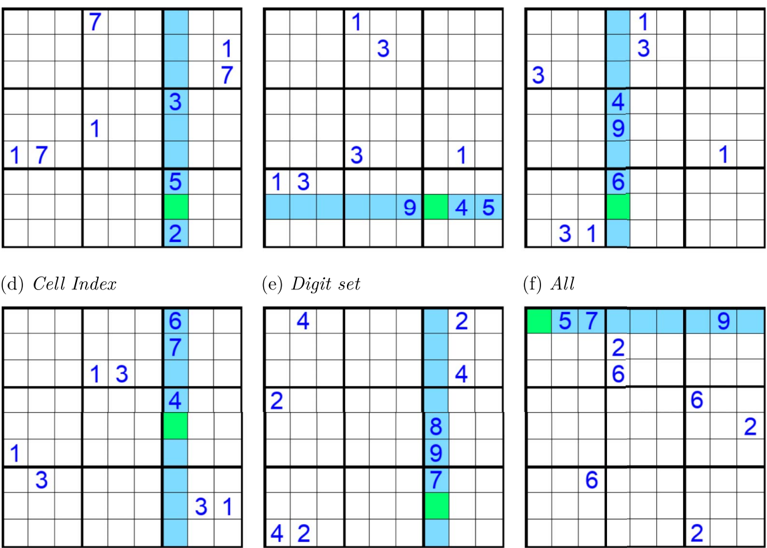
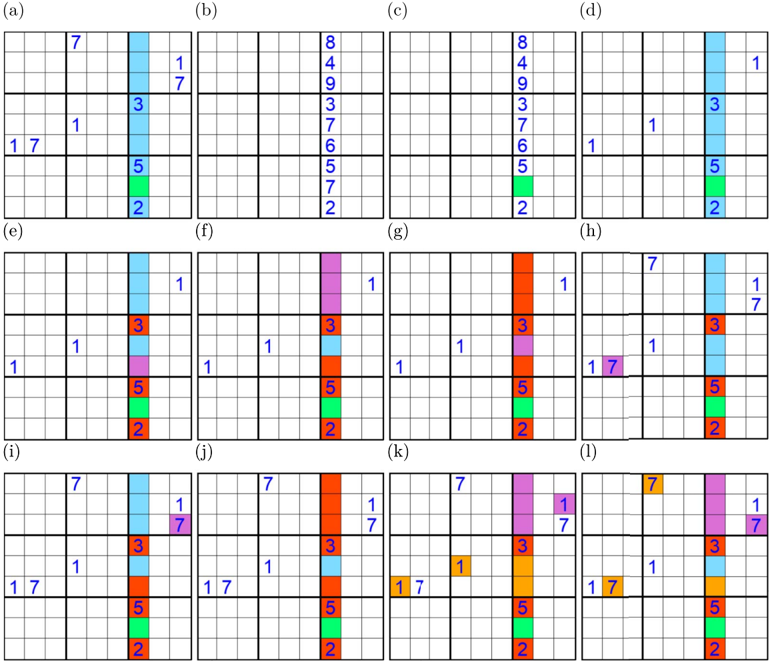
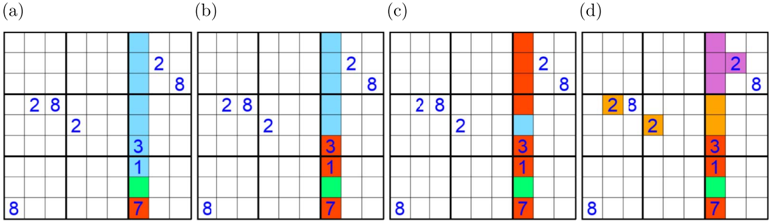
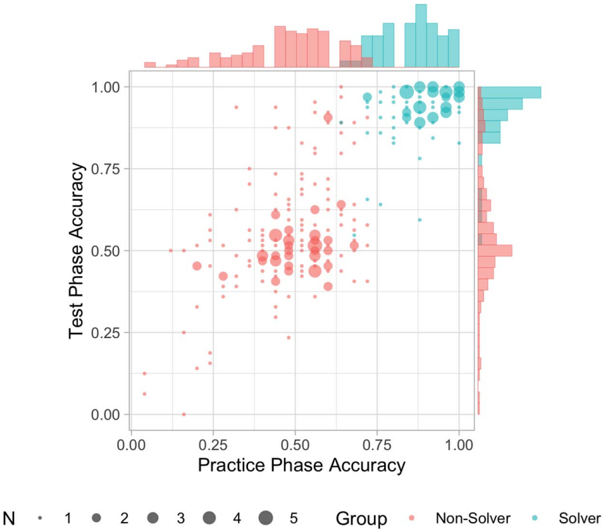
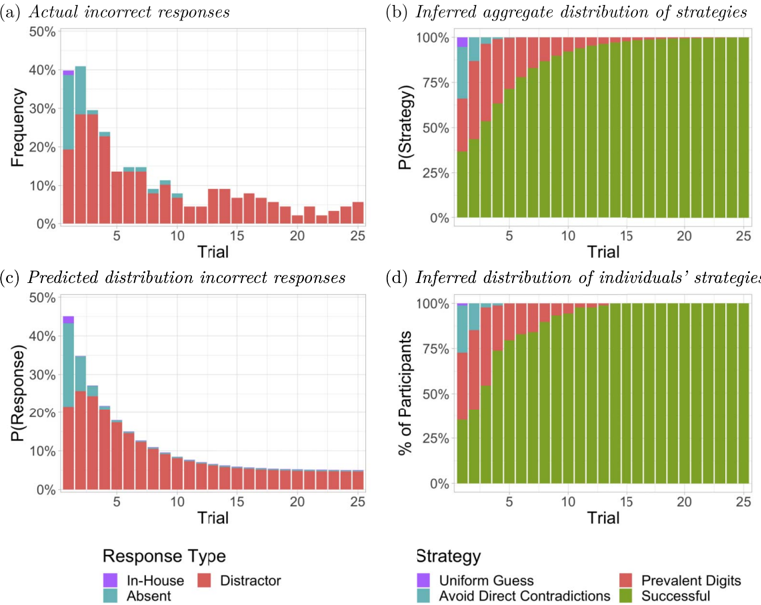
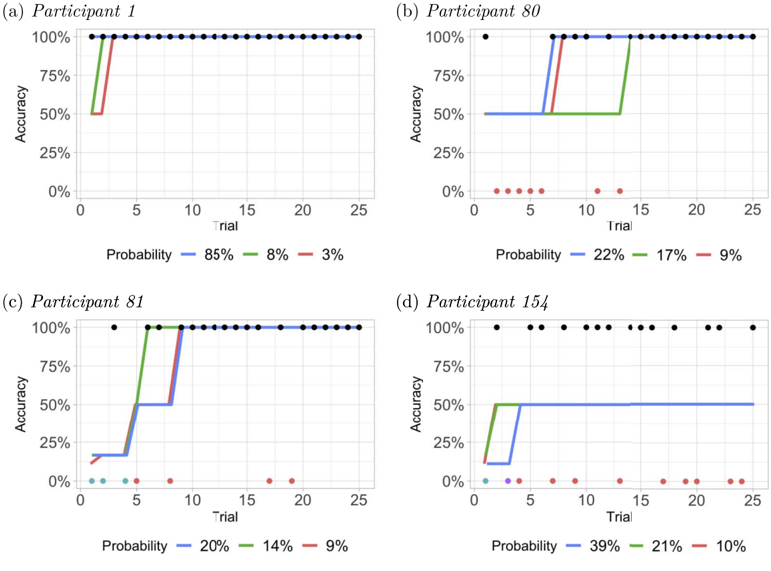
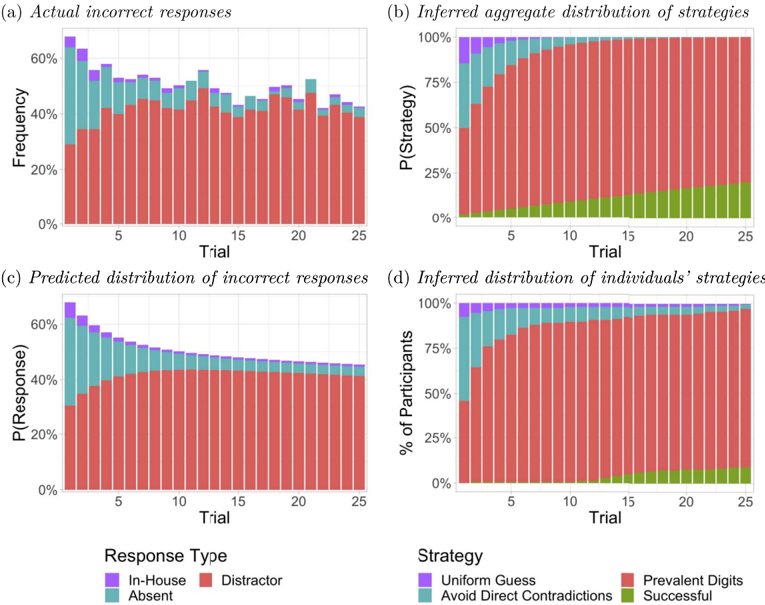
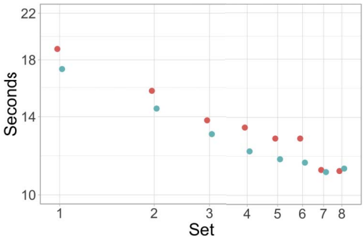
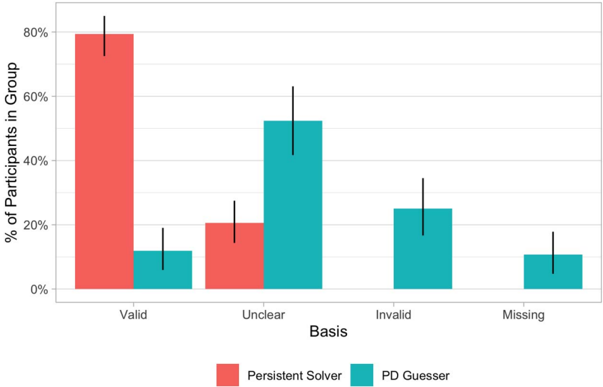
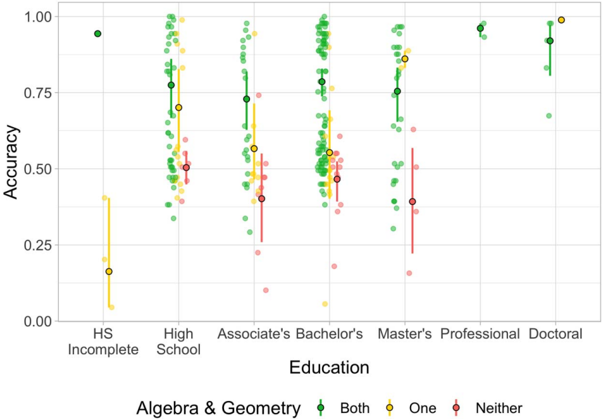
Neural networks have long been used to model human intelligence, capturing elements of behavior and cognition, and their neural basis. Recent advancements in deep learning have enabled neural network models to reach and even surpass human levels of intelligence in many respects, yet unlike humans, their ability to learn new tasks quickly remains a challenge. People can reason not only in familiar domains, but can also rapidly learn to reason through novel problems and situations, raising the question of how well modern neural network models capture human intelligence and in which ways they diverge. In this work, we explore this gap by investigating human adults' ability to learn an abstract reasoning task based on Sudoku from a brief instructional tutorial with explanatory feedback for incorrect responses using a narrow range of training examples. We find that participants who master the task do so within a small number of trials and generalize well to puzzles outside of the training range. We also find that most of those who master the task can describe a valid solution strategy, and such participants perform better on transfer puzzles than those whose strategy descriptions are vague or incomplete. Interestingly, fewer than half of our human participants were successful in acquiring a valid solution strategy, and this ability is associated with high school mathematics education. We consider the challenges these findings pose for building computational models that capture all aspects of our findings and point toward a possible role for learning to engage in explanation-based reasoning to support rapid learning and generalization.
Overview
The claims and statistics of this paper haven’t been checked yet.
Run the check — free, no account needed. It reads the open-access text and checks the sources it cites.
Integrity signals
Registry
Cites
Statistics
Figures
Verification
Claims the paper makes
The claims and statistics of this paper haven’t been checked yet.
Run the check — free, no account needed. It reads the open-access text and checks the sources it cites.
Claims other papers make about this one
Each is checked against this paper’s own text: does it say what the citing paper says it does?
In the citing paper
“Beyond natural language, people require a years-long process of education to master other forms of systematic generalization and symbolic reasoning6,7, including mathematics, logic and computer programming.”
From Human-like systematic generalization through a meta-learning neural network (2023) · cites this paper as [7]
In the citing paper
“However, people also relied on inductive biases that sometimes support the algebraic solution and sometimes deviate from it; indeed, people are not purely algebraic machines3,6,7.”
From Human-like systematic generalization through a meta-learning neural network (2023) · cites this paper as [7]
Self-check
Percentages, sums and reported differences re-computed from the paper’s own numbers.
The self-check needs the paper’s full text.
Citations
Cites
No references could be resolved yet.
Research works printed but not linked: 88
- Abdool, M., Nam, A. J., & McClelland, J. L. (2023). Continual learning and out of distribution generalization in a systematic reasoning task. In MATH-AI: The 3rd Workshop on Mathemat- ical Reasoning and AI at NeurIPS'23. https://nips.cc/virtual /2023/74990
- Ahn, W.-K., Brewer, W. F., & Mooney, R. J. (1992). Schema acqui- sition from a single example. Journal of Experimental Psychology: Learning, Memory, and Cognition, 18(2), 391-412. https://doi .org/10.1037/0278-7393.18.2.391 · DOI
- Ashby, F. G., Alfonso-Reese, L. A., Turken, A. U., & Waldron, E. M. (1998). A neuropsychological theory of multiple systems in category learning. Psychological Review, 105(3), 442-481. https://doi.org/10.1037/0033-295X.105.3.442, PubMed: 9697427 · DOI
- Baker, D. P., Eslinger, P. J., Benavides, M., Peters, E., Dieckmann, N. F., & Leon, J. (2015). The cognitive impact of the education revolution: A possible cause of the Flynn effect on population IQ. Intelligence, 49, 144-158. https://doi.org/10.1016/j.intell.2015 .01.003 · DOI
- Berglund, L., Tong, M., Kaufmann, M., Balesni, M., Stickland, A. C., Korbak, T., & Evans, O. (2023). The reversal curse: LLMs trained on "A is B" fail to learn "B is A." arXiv:2309.12288. https://doi .org/10.48550/arXiv.2309.12288 · DOI · Paper page
- Bommasani, R., Hudson, D. A., Adeli, E., Altman, R., Arora, S., von Arx, S., Bernstein, M. S., Bohg, J., Bosselut, A., Brunskill, E., Brynjolfsson, E., Buch, S., Card, D., Castellon, R., Chatterji, N., Chen, A., Creel, K., Davis, J. Q., Demszky, D., …, Liang, P. (2021). On the opportunities and risks of foundation models. arXiv:2108.07258. https://doi.org/10.48550/arXiv.2108.07258 · DOI · Paper page
- Brophy, C., & Hahn, L. (2014). Engaging students in a large lecture: An experiment using sudoku puzzles. Journal of Statistics Education, 22(1). https://doi.org/10.1080/10691898.2014.11889690 · DOI
- Brown, T. B., Mann, B., Ryder, N., Subbiah, M., Kaplan, J., Dhariwal, P., Neelakantan, A., Shyam, P., Sastry, G., Askell, A., Agarwal, S., Herbert-Voss, A., Krueger, G., Henighan, T., Child, R., Ramesh, A., Ziegler, D. M., Wu, J., Winter, C., … Amodei, D. (2020). Language models are few-shot learners. In Proceedings of the 34th International Conference on Neural Information Processing Systems (NIPS'20) (pp. 1877-1901).
- Bubeck, S., Chandrasekaran, V., Eldan, R., Gehrke, J., Horvitz, E., Kamar, E., Lee, P., Lee, Y. T., Li, Y., Lundberg, S., Nori, H., Palangi, H., Tulio Ribeiro, M., & Zhang, Y. (2023). Sparks of arti- ficial general intelligence: Early experiments with GPT-4. arXiv:2303.12712. https://doi.org/10.48550/arXiv.2303.12712 · DOI · Paper page
- Burger, W. F., & Shaughnessy, J. M. (1986). Characterizing the van Hiele levels of development in geometry. Journal for Research in Mathematics Education, 17(1), 31-48. https://doi.org/10.5951 /jresematheduc.17.1.0031 · DOI
- Bürkner, P.-C. (2017). brms: An R package for Bayesian multi- level models using Stan. Journal of Statistical Software, 80(1), 1-28. https://doi.org/10.18637/jss.v080.i01 · DOI · Paper page
- Camburu, O.-M., Rocktäschel, T., Lukasiewicz, T., & Blunsom, P. (2018). e-SNLI: Natural language inference with natural language explanations. In Proceedings of the 32nd International Confer- ence on Neural Information Processing Systems (NIPS'18) (pp. 9560-9572).
- Chan, S. C. Y., Santoro, A., Lampinen, A. K., Wang, J. X., Singh, A., Richemond, P. H., McClelland, J., & Hill, F. (2022). Data distribu- tional properties drive emergent in-context learning in transformers. arXiv:2205.05055. https://doi.org/10.48550/arXiv.2205.05055 · DOI · Paper page
- Chi, M. T. H., Bassok, M., Lewis, M. W., Reimann, P., & Glaser, R. (1989). Self-explanations: How students study and use examples in learning to solve problems. Cognitive Science, 13(2), 145-182. https://doi.org/10.1207/s15516709cog1302_1 · DOI · Paper page
- Chi, M. T. H., De Leeuw, N., Chiu, M.-H., & Lavancher, C. (1994). Eli- citing self-explanations improves understanding. Cognitive Science, 18(3), 439-477. https://doi.org/10.1207/s15516709cog1803_3 · DOI · Paper page
- Chomsky, N. (1957). Syntactic structures. De Gruyter Mouton. https://doi.org/10.1515/9783112316009 · DOI · Paper page
- Ciregan, D., Meier, U., & Schmidhuber, J. (2012). Multi-column deep neural networks for image classification. In Proceedings of the 2012 IEEE Conference on Computer Vision and Pattern Recognition (CVPR'12) (pp. 3642-3649). IEEE. https://doi.org/10 .1109/CVPR.2012.6248110 · DOI
- Cobbe, K., Kosaraju, V., Bavarian, M., Chen, M., Jun, H., Kaiser, L., Plappert, M., Tworek, J., Hilton, J., Nakano, R., Hesse, C., & Schulman, J. (2021). Training verifiers to solve math word problems. arXiv:2110.14168. https://doi.org/10.48550/arXiv.2110.14168 · DOI · Paper page
- Cohen, J. (1960). A coefficient of agreement for nominal scales. Educational and Psychological Measurement, 20(1), 37-46. https://doi.org/10.1177/001316446002000104 · DOI · Paper page
- DeJong, G., & Mooney, R. (1986). Explanation-based learning: An alternative view. Machine Learning, 1(2), 145-176. https://doi .org/10.1007/BF00114116 · DOI
- Duncan, J., Assem, M., & Shashidhara, S. (2020). Integrated intelligence from distributed brain activity. Trends in Cognitive Sciences, 24(10), 838-852. https://doi.org/10.1016/j.tics.2020 .06.012, PubMed: 32771330 · DOI
- Ericsson, K. A. (2017). Protocol analysis. In W. Bechtel & G. Graham (Eds.), A companion to cognitive science (pp. 425-432). Basil Blackwell. https://doi.org/10.1002/9781405164535. · DOI
- ch33 · DOI
- Ericsson, K. A., & Simon, H. A. (1980). Verbal reports as data. Psy- chological Review, 87(3), 215-251. https://doi.org/10.1037/0033 -295X.87.3.215 · DOI
- Falkenhainer, B., Forbus, K. D., & Gentner, D. (1989). The structure-mapping engine: Algorithm and examples. Artificial Intelligence, 41(1), 1-63. https://doi.org/10.1016/0004 -3702(89)90077-5 · DOI · Paper page
- Felgenhauer, B., & Jarvis, F. (2006). Mathematics of sudoku I. Math- ematical Spectrum, 39(1), 15-22.
- Flynn, J. R. (1984). The mean IQ of Americans: Massive gains 1932 to 1978. Psychological Bulletin, 95(1), 29-51. https://doi.org/10 .1037/0033-2909.95.1.29 · DOI · Paper page
- Fodor, J. A. (1975). The language of thought. Harvard University Press.
- Fodor, J. A., & Pylyshyn, Z. W. (1988). Connectionism and cogni- tive architecture: A critical analysis. Cognition, 28(1-2), 3-71. https://doi.org/10.1016/0010-0277(88)90031-5, PubMed: 2450716 · DOI · Paper page
- Frank, M. C., Slemmer, J. A., Marcus, G. F., & Johnson, S. P. (2009). Information from multiple modalities helps 5-month-olds learn abstract rules. Developmental Science, 12(4), 504-509. https:// doi.org/10.1111/j.1467-7687.2008.00794.x, PubMed: 19635078 · DOI
- Geiger, A., Carstensen, A., Frank, M. C., & Potts, C. (2023). Rela- tional reasoning and generalization using nonsymbolic neural networks. Psychological Review, 130(2), 308-333. https://doi .org/10.1037/rev0000371, PubMed: 35834185 · DOI
- Gick, M. L., & Holyoak, K. J. (1980). Analogical problem solving. Cognitive Psychology, 12(3), 306-355. https://doi.org/10.1016 /0010-0285(80)90013-4 · DOI · Paper page
- Gray, J. R., & Thompson, P. M. (2004). Neurobiology of intelli- gence: Science and ethics. Nature Reviews Neuroscience, 5(6), 471-482. https://doi.org/10.1038/nrn1405, PubMed: 15152197 · DOI · Paper page
- Hendrycks, D., Burns, C., Kadavath, S., Arora, A., Basart, S., Tang, E., Song, D., & Steinhardt, J. (2021). Measuring mathematical problem solving with the MATH dataset. arXiv:2103.03874. https://doi.org/10.48550/arXiv.2103.03874 · DOI · Paper page
- Kingma, D. P., & Ba, J. (2014). Adam: A method for stochastic optimi- zation. arXiv:1412.6980. https://doi.org/10.48550/arXiv.1412.6980 · DOI · Paper page
- Lake, B. M., & Baroni, M. (2023). Human-like systematic general- ization through a meta-learning neural network. Nature, 623(7985), 115-121. https://doi.org/10.1038/s41586-023-06668-3, PubMed: 37880371 · DOI · Paper page
- Lake, B. M., Ullman, T. D., Tenenbaum, J. B., & Gershman, S. J. (2017). Building machines that learn and think like people. Behavioral and Brain Sciences, 40, Article e253. https://doi.org /10.1017/S0140525X16001837, PubMed: 27881212 · DOI · Paper page
- Lampinen, A. K., Dasgupta, I., Chan, S. C. Y, Matthewson, K., Tessler, M. H., Creswell, A., McClelland, J. L., Wang, J. X., & Hill, F. (2022). Can language models learn from explanations in context? In Y. Goldberg, Z. Kozareva, & Y. Zhang (Eds.), Findings of the Association for Computational Linguistics: EMNLP 2022 (pp. 537-563). Association for Computational Linguistics. https://doi.org/10.18653/v1/2022.findings-emnlp.38 · DOI · Paper page
- Lampinen, A. K., Roy, N. A., Dasgupta, I., Chan, S. C. Y., Tam, A. C., McClelland, J. L., Yan, C., Santoro, A., Rabinowitz, N. C., Wang, J. X., & Hill, F. (2022). Tell me why! Explanations support learning relational and causal structure. In Proceedings of the 39th International Conference on Machine Learning (pp. 11868-11890).
- PMLR.
- Lee, N. Y. L., Goodwin, G. P., & Johnson-Laird, P. N. (2008). The psychological puzzle of sudoku. Thinking & Reasoning, 14(4), 342-364. https://doi.org/10.1080/13546780802236308 · DOI
- Lewkowycz, A., Andreassen, A., Dohan, D., Dyer, E., Michalewski, H., Ramasesh, V., Slone, A., Anil, C., Schlag, I., Gutman-Solo, T., Wu, Y., Neyshabur, B., Gur-Ari, G., & Misra, V. (2022). Solving quantitative reasoning problems with language models. arXiv:2206.14858. https://doi.org/10.48550/arXiv.2206.14858 · DOI · Paper page
- Lombrozo, T. (2006). The structure and function of explanations. Trends in Cognitive Sciences, 10(10), 464-470. https://doi.org /10.1016/j.tics.2006.08.004, PubMed: 16942895 · DOI
- Lu, P., Mishra, S., Xia, T., Qiu, L., Chang, K.-W., Zhu, S.-C., Tafjord, O., Clark, P., & Kalyan, A. (2022). Learn to explain: Multimodal reasoning via thought chains for science question answering. arXiv:2209.09513. https://doi.org/10.48550/arXiv.2209.09513 · DOI
- Marcus, G. F. (2003). The algebraic mind: Integrating connection- ism and cognitive science. MIT Press. https://doi.org/10.7551 /mitpress/1187.001.0001 · DOI · Paper page
- Matuschek, H., Kliegl, R., Vasishth, S., Baayen, H., & Bates, D. (2017). Balancing type I error and power in linear mixed models. Journal of Memory and Language, 94, 305-315. https://doi.org /10.1016/j.jml.2017.01.001 · DOI
- McClelland, J. L. (2013). Incorporating rapid neocortical learning of new schema-consistent information into complementary learn- ing systems theory. Journal of Experimental Psychology: General, 142(4), 1190-1210. https://doi.org/10.1037/a0033812, PubMed: 23978185 · DOI
- McClelland, J. L. (2022). Capturing advanced human cognitive abilities with deep neural networks. Trends in Cognitive Sciences, 26(12), 1047-1050. https://doi.org/10.1016/j.tics.2022.09.018, PubMed: 36335015 · DOI
- McHugh, M. L. (2012). Interrater reliability: The kappa statistic. Biochemia Medica, 22(3), 276-282. https://doi.org/10.11613 /BM.2012.031, PubMed: 23092060 · DOI · Paper page
- Min, S., Lyu, X., Holtzman, A., Artetxe, M., Lewis, M., Hajishirzi, H., & Zettlemoyer, L. (2022). Rethinking the role of demon- strations: What makes in-context learning work? In Y. Goldberg, Z. Kozareva, & Y. Zhang (Eds.), Proceedings of the 2022 Confer- ence on Empirical Methods in Natural Language Processing (pp. 11048-11064). Association for Computational Linguistics. https://doi.org/10.18653/v1/2022.emnlp-main.759 · DOI · Paper page
- Mishra, B. D., Tafjord, O., & Clark, P. (2022). Towards teachable reasoning systems: Using a dynamic memory of user feedback for continual system improvement. In Y. Goldberg, Z. Kozareva, & Y. Zhang (Eds.), Proceedings of the 2022 Conference on Empir- ical Methods in Natural Language Processing (pp. 9465-9480). Association for Computational Linguistics. https://doi.org/10 .18653/v1/2022.emnlp-main.644 · DOI
- Momennejad, I., Hasanbeig, H., Vieira, F., Sharma, H., Ness, R. O., Jojic, N., Palangi, H., & Larson, J. (2023). Evaluating cognitive maps and planning in large language models with CogEval. arXiv:2309.15129. https://doi.org/10.48550/arXiv.2309.15129 · DOI · Paper page
- Nam, A. J., Ren, M., Finn, C., & McClelland, J. L. (2022). Learning to reason with relational abstractions. arXiv:2210.02615. https:// doi.org/10.48550/arXiv.2210.02615 · DOI
- Nathan, M. J., & Petrosino, A. (2003). Expert blind spot among pre- service teachers. American Educational Research Journal, 40(4), 905-928. https://doi.org/10.3102/00028312040004905 · DOI
- Newell, A. & Simon, H. A. (1961). GPS, a program that simulates human thought. In H. Billing (Ed.), Lernende automaten (pp. 109-124).
- Nisbett, R. E., & Wilson, T. D. (1977). Telling more than we can know: Verbal reports on mental processes. Psychological Review, 84(3), 231-259. https://doi.org/10.1037/0033-295X.84 .3.231 · DOI · Paper page
- Oberauer, K. (2022). The importance of random slopes in mixed models for Bayesian hypothesis testing. Psychological Science, 33(4), 648-665. https://doi.org/10.1177/09567976211046884, PubMed: 35357978 · DOI
- Olsson, C., Elhage, N., Nanda, N., Joseph, N., DasSarma, N., Henighan, T., Mann, B., Askell, A., Bai, Y., Chen, A., Conerly, T., Drain, D., Ganguli, D., Hatfield-Dodds, Z., Hernandez, D., Johnston, S., Jones, A., Kernion, J., Lovitt, L., … Olah, C. (2022). In-context learning and induction heads. arXiv:2209.11895. https://doi.org/10.48550/arXiv.2209.11895 · DOI · Paper page
- Palm, R. B., Paquet, U., & Winther, O. (2018). Recurrent relational networks. In Proceedings of the 32nd International Conference on Neural Information Processing Systems (NIPS'18) (pp. 3368-3378).
- Pearl, J. (2009). Causality: Models, reasoning, and inference (2nd ed.). Cambridge University Press. https://doi.org/10.1017 /CBO9780511803161 · DOI · Paper page
- Pearl, J. (2019). The seven tools of causal inference, with reflections on machine learning. Communications of the ACM, 62(3), 54-60. https://doi.org/10.1145/3241036 · DOI · Paper page
- Reber, A. S. (1969). Transfer of syntactic structure in synthetic lan- guages. Journal of Experimental Psychology, 81(1), 115-119. https://doi.org/10.1037/h0027454 · DOI
- Reber, A. S. (1976). Implicit learning of synthetic languages: The role of instructional set. Journal of Experimental Psychology: Human Learning and Memory, 2(1), 88-94. https://doi.org/10 .1037/0278-7393.2.1.88 · DOI · Paper page
- Reber, A. S. (1989). Implicit learning and tacit knowledge. Journal of Experimental Psychology: General, 118(3), 219-235. https:// doi.org/10.1037/0096-3445.118.3.219 · DOI · Paper page
- Ripp, I., Emch, M., Wu, Q., Lizarraga, A., Udale, R., von Bastian, C. C., Koch, K., & Yakushev, I. (2022). Adaptive working memory training does not produce transfer effects in cognition and neu- roimaging. Translational Psychiatry, 12(1), Article 512. https://doi .org/10.1038/s41398-022-02272-7, PubMed: 36513642 · DOI · Paper page
- Rumelhart, D. E. (1980). Schemata: The building blocks of cog- nition. In R. J. Spiro, B. C. Bruce, & W. F. Brewer (Eds.), The- oretical issues in reading comprehension: Perspectives from cognitive psychology, linguistics, artificial intelligence and education (pp. 33-58). Routledge. https://doi.org/10.4324 /9781315107493-4 · DOI
- Russell, E., & Jarvis, F. (2006). Mathematics of sudoku II. Mathemat- ical Spectrum, 39(2), 54-58.
- Saffran, J. R., Aslin, R. N., & Newport, E. L. (1996). Statistical learn- ing by 8-month-old infants. Science, 274(5294), 1926-1928. https://doi.org/10.1126/science.274.5294.1926, PubMed: 8943209 · DOI · Paper page
- Scribner, S., & Cole, M. (1973). Cognitive consequences of formal and informal education: New accommodations are needed between school-based learning and learning experiences of everyday life. Science, 182(4112), 553-559. https://doi.org/10 .1126/science.182.4112.553, PubMed: 17739714 · DOI
- Silver, D., Huang, A., Maddison, C. J., Guez, A., Sifre, L., van den Driessche, G., Schrittwieser, J., Antonoglou, I., Panneershelvam, V., Lanctot, M., Dieleman, S., Grewe, D., Nham, J., Kalchbrenner, N., Sutskever, I., Lillicrap, T., Leach, M., Kavukcuoglu, K., Graepel, T., & Hassabis, D. (2016). Mastering the game of Go with deep neural networks and tree search. Nature, 529(7587), 484-489. https://doi.org/10.1038/nature16961, PubMed: 26819042 · DOI · Paper page
- Srivastava, A., Rastogi, A., Rao, A., Shoeb, A. A. M., Abid, A., Fisch, A., Brown, A. R., Santoro, A., Gupta, A., Garriga-Alonso, A., Kluska, A., Lewkowycz, A., Agarwal, A., Power, A., Ray, A., Warstadt, A., Kocurek, A. W., Safaya, A., Tazarv, A., … Wu, Z. (2022). Beyond the Imitation Game: Quantifying and extrapo- lating the capabilities of language models. arXiv:2206.04615. https://doi.org/10.48550/arXiv.2206.04615 · DOI · Paper page
- Sternberg, D. A., & McClelland, J. L. (2012). Two mechanisms of human contingency learning. Psychological Science, 23(1): 59-68. https://doi.org/10.1177/0956797611429577, PubMed: 22198929 · DOI
- Stuhlmüller, A., Tenenbaum, J. B., & Goodman, N. D. (2010). Learning structured generative concepts. In Proceedings of the 32nd Annual Meeting of the Cognitive Science Society (pp. 2296-2301). Cognitive Science Society.
- Tenenbaum, J. B., Kemp, C., Griffiths, T. L., & Goodman, N. D. (2011). How to grow a mind: Statistics, structure, and abstraction. Science, 331(6022), 1279-1285. https://doi.org/10.1126/science .1192788, PubMed: 21393536 · DOI · Paper page
- Tsividis, P. A., Pouncy, T., Xu, J. L., Tenenbaum, J. B., & Gershman, S. J. (2017). Human learning in Atari. In AAAI 2017 Spring Sym- posium on Science of Intelligence: Computational Principles of Natural and Artificial Intelligence (pp. 643-646). AAAI.
- Turing, A. M. (1950). Computing machinery and intelligence. Mind, 59(236), 433-460. https://doi.org/10.1093/mind/LIX.236.433 · DOI · Paper page
- Uesato, J., Kushman, N., Kumar, R., Song, F., Siegel, N., Wang, L., Creswell, A., Irving, G., & Higgins, I. (2022). Solving math word problems with process-and outcome-based feedback. arXiv:2211.14275. https://doi.org/10.48550/arXiv.2211.14275 · DOI · Paper page
- Vaswani, A., Shazeer, N., Parmar, N., Uszkoreit, J., Jones, L., Gomez, A. N., Kaiser, Ł., & Polosukhin, I. (2017). Attention is all you need. In Proceedings of the 31st International Conference on Neural Information Processing Systems (NIPS' 17 ) (pp. 5998-6008).
- Vermaercke, B., Cop, E., Willems, S., D'Hooge, R., & Op de Beeck, H. P. (2014). More complex brains are not always better: Rats outperform humans in implicit category-based generalization by implementing a similarity-based strategy. Psychonomic Bulle- tin & Review, 21(4), 1080-1086. https://doi.org/10.3758/s13423 -013-0579-9, PubMed: 24408657 · DOI
- Vinyals, O., Babuschkin, I., Czarnecki, W. M., Mathieu, M., Dudzik, A., Chung, J., Choi, D. H., Powell, R., Ewalds, T., Georgiev, P., Oh, J., Horgan, D., Kroiss, M., Danihelka, I., Huang, A., Sifre, L., Cai, T., Agapiou, J. P., Jaderberg, M., … Silver, D. (2019). Grandmaster level in StarCraft II using multi-agent reinforcement learning. Nature, 575(7782), 350-354. https://doi.org/10.1038/s41586-019-1724-z, PubMed: 31666705 · DOI · Paper page
- Vygotsky, L. S. (1934). Thought and language. MIT Press.
- Waltz, J. A., Knowlton, B. J., Holyoak, K. J., Boone, K. B., Mishkin, F. S., de Menezes Santos, M., Thomas, C. R., & Miller, B. L. (1999). A system for relational reasoning in human prefrontal cortex. Psychological Science, 10(2), 119-125. https://doi.org /10.1111/1467-9280.00118 · DOI · Paper page
- Watson, J. B. (1913). Psychology as the behaviorist views it. Psy- chological Review, 20(2), 158-177. https://doi.org/10.1037 /h0074428 · DOI · Paper page
- Webb, T., Holyoak, K. J., & Lu, H. (2023). Emergent analogical rea- soning in large language models. Nature Human Behaviour, 7(9), 1526-1541. https://doi.org/10.1038/s41562-023-01659-w, PubMed: 37524930 · DOI · Paper page
- Webson, A., & Pavlick, E. (2022). Do prompt-based models really understand the meaning of their prompts? In M. Carpuat, M.-C. de Marneffe, & I. V. M. Ruiz (Eds.), Proceedings of the 2022 Conference of the North American Chapter of the Association for Computational Linguistics: Human Language Technologies (pp. 2300-2344). Association for Computational Linguistics. https://doi.org/10.18653/v1/2022.naacl-main.167 · DOI · Paper page
- Wei, J., Wang, X., Schuurmans, D., Bosma, M., Ichter, B., Xia, F., Chi, E., Le, Q., & Zhou, D. (2022). Chain-of-thought prompting elicits reasoning in large language models. arXiv:2201.11903. https://doi.org/10.48550/arXiv.2201.11903 · DOI · Paper page
- Xie, S. M., Raghunathan, A., Liang, P., & Ma, T. (2021). An expla- nation of in-context learning as implicit Bayesian inference. arXiv:2111.02080. https://doi.org/10.48550/arXiv.2111.02080 · DOI · Paper page
- Yadlowsky, S., Doshi, L., & Tripuraneni, N. (2023). Pretraining data mixtures enable narrow model selection capabilities in trans- former models. arXiv:2311.00871. https://doi.org/10.48550 /arXiv.2311.00871 · DOI · Paper page
Cited by
Human-like systematic generalization through a meta-learning neural network
Lake, B. M., & Baroni, M. (2023) · Nature · doi:10.1038/s41586-023-06668-3 · Cited by 230
Metadata
- Authors
- Nam, A. J., & McClelland, J. L.
- Affiliations
- Stanford University
- Venue
- arXiv
- Publisher
- arXiv
- Published
- 2021
- arXiv
- 2107.06994
- References
- 0
- Type
- Preprint
About these checks
Registry, retraction, Cites and statistics results are computed, not judged, with one exception: a printed reference that no index lists is read once by a model before it counts as a citation error. Claims are extracted by a model and kept only when their quote appears verbatim in the text; each cited source is then checked, with a model’s help, for whether it says what the claim relies on. Those verdicts can be wrong — read the claim’s quote and the cited source before relying on one.
Statistics and arithmetic are recomputed, not judged.
Confidence bands are shown only for fields calibrated on our annotated test set. None is calibrated yet, so no band is shown.
What counts as a claim ›How we measure confidence ›How we check this ›
Are you an author, or do you see a problem with this page? Request a review
How to cite
Cite CoChat for the checks on this page, and the paper for its own findings.
- This page
- CoChat. (2026). Citation check: Systematic human learning and generalization from a brief tutorial with explanatory feedback. https://app.cochat.ai/papers/10.48550/arxiv.2107.06994
- The paper
- Nam, A. J., & McClelland, J. L. (2021). Systematic human learning and generalization from a brief tutorial with explanatory feedback. arXiv. https://doi.org/10.48550/arxiv.2107.06994
Data sources
Bibliographic data: Semantic Scholar, OpenAlex, Crossref.
Contains information from the Semantic Scholar Academic Graph Datasets, made available under the ODC Attribution License (ODC-BY 1.0).
Semantic Scholar’s data is described in: Kinney, R., et al. (2023). The Semantic Scholar Open Data Platform. arXiv:2301.10140.
