

The DOI matches its Crossref record; 88 of the 88 references it cites were found in a registry or an index.
Gut Hormones and Appetite Control: A Focus on PYY and GLP-1 as Therapeutic Targets in Obesity
Open accessAbstract
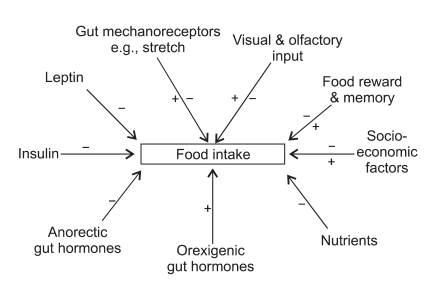
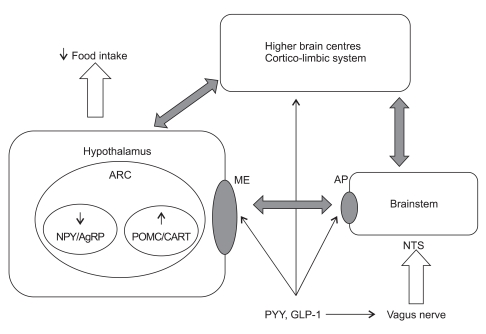
The global obesity epidemic has resulted in significant morbidity and mortality. However, the medical treatment of obesity is limited. Gastric bypass is an effective surgical treatment but carries significant perioperative risks. The gut hormones, peptide tyrosine tyrosine (PYY) and glucagon-like peptide 1 (GLP-1), are elevated following gastric bypass and have been shown to reduce food intake. They may provide new therapeutic targets. This review article provides an overview of the central control of food intake and the role of PYY and GLP-1 in appetite control. Key translational animal and human studies are reviewed.
Overview
The claims and statistics of this paper haven’t been checked yet.
Run the check — free, no account needed. It reads the open-access text and checks the sources it cites.
Integrity signals
Registry
Cites
Statistics
Figures
Verification
Claims the paper makes
The claims and statistics of this paper haven’t been checked yet.
Run the check — free, no account needed. It reads the open-access text and checks the sources it cites.
Claims other papers make about this one
Each is checked against this paper’s own text: does it say what the citing paper says it does?
The source backs part of the claim, not all of it — or backs it for a different population, condition or comparison.
In the citing paper
“The receptors to these peptides are expressed locally in the gut enteric neurons and vagal afferents, as well as in the central nervous system (CNS), including the brainstem and hypothalamus (De Silva and Bloom, 2012;Richards et al., 2014).”
From The Microbiota-Gut-Brain Axis (2019) · cites this paper as De Silva and Bloom, 2012
Experimental — accuracy not yet measuredThe source backs part of the claim, not all of it — or backs it for a different population, condition or comparison.
In the citing paper
“This basal secretion of GLP-1 and PYY is thought to play an important role in the control of food intake, body weight, and metabolism since obese individuals are generally characterized by decreased serum levels of both GLP-1 and PYY (De Silva and Bloom, 2012).”
From The Microbiota-Gut-Brain Axis (2019) · cites this paper as De Silva and Bloom, 2012
Experimental — accuracy not yet measuredIn the citing paper
“GLP-1 and PYY signal the brain via the vagus nerve, impacting appetite and feeding [89].”
From Unraveling the Connections: Eating Issues, Microbiome, and Gastrointestinal Symptoms in Autism Spectrum Disorder (2025) · cites this paper as [89]
Self-check
Percentages, sums and reported differences re-computed from the paper’s own numbers.
The self-check needs the paper’s full text.
Citations
Cites
Central nervous system control of food intake
Schwartz, M. W., Woods, S. C., Porte, D., Seeley, R. J., & Baskin, D. G. (2000) · Nature · doi:10.1038/35007534 · Cited by 6,451
A Potential Decline in Life Expectancy in the United States in the 21st Century
Olshansky, S. J., Passaro, D. J., Hershow, R. C., Layden, J., Carnes, B. A., Brody, J., Hayflick, L., Butler, R. N., Allison, D. B., & Ludwig, D. S. (2005) · New England Journal of Medicine · doi:10.1056/nejmsr043743 · Cited by 2,612
Long-term mortality after gastric bypass surgery
Adams, T. D., Gress, R. E., Smith, S. C., Halverson, R. C., Simper, S. C., Rosamond, W. D., LaMonte, M. J., Stroup, A. M., & Hunt, S. C. (2007) · New England Journal of Medicine · doi:10.1056/nejmoa066603 · Cited by 2,572
Gut hormone PYY3-36 physiologically inhibits food intake
Batterham, R. L., Cowley, M. A., Small, C. J., Herzog, H., Cohen, M. A., Dakin, C. L., Wren, A. M., Brynes, A. E., Low, M. J., Ghatei, M. A., et al. (2002) · Nature · doi:10.1038/nature00887 · Cited by 2,351
Self-citationThe human orbitofrontal cortex: linking reward to hedonic experience
Kringelbach, M. L. (2005) · Nature Reviews Neuroscience · doi:10.1038/nrn1747 · Cited by 2,180
A role for glucagon-like peptide-1 in the central regulation of feeding
Turton, M. D., O'Shea, D., Gunn, I., Beak, S. A., Edwards, C. M. B., Meeran, K., Choi, S. J., Taylor, G. M., Heath, M. M., Lambert, P. D., et al. (1996) · Nature · doi:10.1038/379069a0 · Cited by 1,950
Self-citationA Potential Decline in Life Expectancy in the United States in the 21st Century
Olshansky, S. J., Passaro, D. J., Hershow, R. C., Layden, J. E., Carnes, B. A., Brody, J. A., Hayflick, L., Butler, R. N., Allison, D. B., & Ludwig, D. S. (2005) · Obstetrical & Gynecological Survey · doi:10.1097/01.ogx.0000167407.83915.e7 · Cited by 1,947
Glucagon-like peptide-1 7–36: a physiological incretin in man
Kreymann, B., Ghatei, M. A., Williams, G., & Bloom, S. R. (1987) · The Lancet · doi:10.1016/s0140-6736(87)91194-9 · Cited by 1,928
Self-citationBrain Lesions, Obesity, and Other Disturbances in Mice Treated with Monosodium Glutamate
Olney, J. (1969) · Science · doi:10.1126/science.164.3880.719 · Cited by 1,885
Inhibition of Food Intake in Obese Subjects by Peptide YY 3–36
Batterham, R. L., Cohen, M. A., Ellis, S. M., Le Roux, C. W., Withers, D. J., Frost, G. S., Ghatei, M. A., & Bloom, S. R. (2003) · New England Journal of Medicine · doi:10.1056/nejmoa030204 · Cited by 1,604
Self-citation
Research works printed but not linked: 7
- Rossi, 1998, Endocrinology, 139, 4428, 10.1210/en.139.10.4428 · DOI · Paper page
- Abbott, 2001, Endocrinology, 142, 3457, 10.1210/en.142.8.3457 · DOI
- Lluis, 1989, Rev Esp Fisiol, 45, 377
- Kanatani, 2000, Endocrinology, 141, 1011, 10.1210/en.141.3.1011 · DOI
- Kieffer, 1995, Endocrinology, 136, 3585, 10.1210/en.136.8.3585 · DOI · Paper page
- Willms, 1996, J Clin Endocrinol Metab, 81, 327, 10.1210/jc.81.1.327 · DOI · Paper page
- Larsen, 1997, Endocrinology, 138, 4445, 10.1210/en.138.10.4445 · DOI
Cited by
Sorted by citations
Cryan, J. F., O'Riordan, K. J., Cowan, C. S. M., Sandhu, K. V., Bastiaanssen, T. F. S., Boehme, M., Codagnone, M. G., Cussotto, S., Fulling, C., Golubeva, A. V., et al. (2019) · Physiological Reviews · doi:10.1152/physrev.00018.2018 · Cited by 5,286
Short-chain fatty acids in control of body weight and insulin sensitivity
Canfora, E. E., Jocken, J. W., & Blaak, E. E. (2015) · Nature Reviews Endocrinology · doi:10.1038/nrendo.2015.128 · Cited by 2,298
The role of microbial amino acid metabolism in host metabolism
Neis, E., Dejong, C., & Rensen, S. (2015) · Nutrients · doi:10.3390/nu7042930 · Cited by 920
Nogal, A., Valdes, A. M., & Menni, C. (2021) · Gut Microbes · doi:10.1080/19490976.2021.1897212 · Cited by 917
Short chain fatty acids: Microbial metabolites for gut-brain axis signalling
O’Riordan, K. J., Collins, M., Moloney, G. M., Knox, E. G., Aburto, M. R., Fülling, C., Morley, S. J., Clarke, G. A., Schellekens, H., & Cryan, J. F. (2022) · Molecular and Cellular Endocrinology · doi:10.1016/j.mce.2022.111572 · Cited by 788
Metadata
- Authors
- Silva, A. D., & Bloom, S. R.
- Affiliations
- Imperial College London (GB)
- Corresponding author
- Bloom, Stephen R.
- ORCID
- Bloom, Stephen R.
- Venue
- Gut and Liver
- Published
- 2012-01-30
- Volume
- 6
- Issue
- 1
- Pages
- 10-20
- ISSN
- 1976-2283 (ISSN-L)
- 2005-1212
- PMC
- PMC3286726
- OpenAlex
- W2004923528
- Cited by
- 373
- References
- 85
- Citations by year
- 2026: 29 · 2025: 46 · 2024: 22 · 2023: 19 · 2022: 31 · 2021: 23 · 2020: 36 · 2019: 36 · 2018: 32 · 2017: 23 · 2016: 20 · 2015: 16 · 2014: 18 · 2013: 15 · 2012: 7
- FWCI
- 7.99
- Type
- journal article
- Language
- en
- Open access
- diamond
- doi.org
- Licence
- cc-by-nc
- Locations
- Gut and Liver (publishedVersion, cc-by-nc)
- Europe PMC (PubMed Central) (publishedVersion, cc-by-nc)
- PubMed Central (publishedVersion, cc-by-nc)
- PubMed (publishedVersion)
- DOAJ (DOAJ: Directory of Open Access Journals) (submittedVersion)
- Spiral (Imperial College London) (submittedVersion, other-oa)
- Topics
- Life Sciences › Neuroscience › Endocrine and Autonomic Systems › Regulation of Appetite and Obesity
- Health Sciences › Medicine › Pharmacology (medical) › Pharmacology and Obesity Treatment
- Health Sciences › Medicine › Endocrinology, Diabetes and Metabolism › Diabetes Treatment and Management
- Keywords
- gastrointestinal hormones, appetite regulation, peptide YY, glucagon-like peptide-1, obesity, gastric bypass, food intake regulation, therapeutic target
About these checks
Registry, retraction, Cites and statistics results are computed, not judged, with one exception: a printed reference that no index lists is read once by a model before it counts as a citation error. Claims are extracted by a model and kept only when their quote appears verbatim in the text; each cited source is then checked, with a model’s help, for whether it says what the claim relies on. Those verdicts can be wrong — read the claim’s quote and the cited source before relying on one.
Statistics and arithmetic are recomputed, not judged.
Confidence bands are shown only for fields calibrated on our annotated test set. None is calibrated yet, so no band is shown.
What counts as a claim ›How we measure confidence ›How we check this ›
Are you an author, or do you see a problem with this page? Request a review
