

The DOI matches its Crossref record; 52 of the 53 references it cites were found in a registry or an index, and 1 are not checked yet; none of the 77 sources its claims cite is checked for support yet.
Teaching AI Ethics in Medical Education: A Scoping Review of Current Literature and Practices
Open accessAbstract
Introduction: The increasing use of Artificial Intelligence (AI) in medicine has raised ethical concerns, such as patient autonomy, bias, and transparency. Recent studies suggest a need for teaching AI ethics as part of medical curricula. This scoping review aimed to represent and synthesize the literature on teaching AI ethics as part of medical education. Methods: The PRISMA-SCR guidelines and JBI methodology guided a literature search in four databases (PubMed, Embase, Scopus, and Web of Science) for the past 22 years (2000-2022). To account for the release of AI-based chat applications, such as ChatGPT, the literature search was updated to include publications until the end of June 2023. Results: 1384 publications were originally identified and, after screening titles and abstracts, the full text of 87 publications was assessed. Following the assessment of the full text, 10 publications were included for further analysis. The updated literature search identified two additional relevant publications from 2023 were identified and included in the analysis. All 12 publications recommended teaching AI ethics in medical curricula due to the potential implications of AI in medicine. Anticipated ethical challenges such as bias were identified as the recommended basis for teaching content in addition to basic principles of medical ethics. Case-based teaching using real-world examples in interactive seminars and small groups was recommended as a teaching modality. Conclusion: This scoping review reveals a scarcity of literature on teaching AI ethics in medical education, with most of the available literature being recent and theoretical. These findings emphasize the importance of more empirical studies and foundational definitions of AI ethics to guide the development of teaching content and modalities. Recognizing AI's significant impact of AI on medicine, additional research on the teaching of AI ethics in medical education is needed to best prepare medical students for future ethical challenges.
Checked 2026-10-10 · 1 reference not checked yet
Overview
AI snapshot
Written from the paper’s full text.
TL;DR
This scoping review synthesizes 12 publications on teaching AI ethics in medical education and finds the literature is scarce, recent, and mostly theoretical. All included publications recommend teaching AI ethics in medical curricula, but only two specifically focus on it.
Key findings
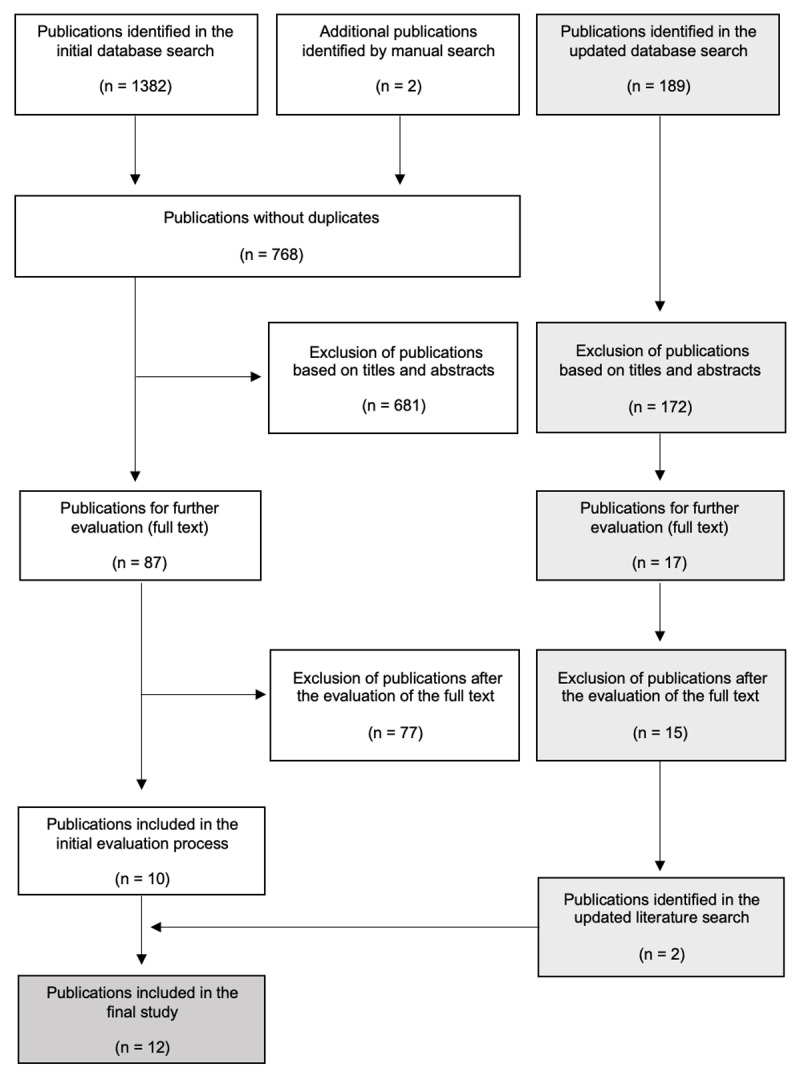
- The search identified 1384 publications initially; after screening, 10 publications were included from the initial search, and an updated search added 2 more, for a total of 12 publications.
- All 12 publications recommended teaching AI ethics in medical curricula due to AI’s potential implications in medicine; only 2 publications specifically focused on teaching AI ethics in medical education.
- Recommended teaching content included data protection (half of included publications), liability (4 publications), and ethical challenges such as bias, informed consent, safety, transparency, patient privacy, and allocation; case-based teaching using real-world examples was recommended in 5 publications.
- Only 1 of the 12 included publications provided a definition of AI ethics, and the authors propose a more specific definition of “medical AI ethics” for teaching and implementation.
Methods
- Scoping review following PRISMA-ScR guidelines and JBI methodology; databases searched were PubMed, Embase, Scopus, and Web of Science.
- Initial search covered 2000–2022, with an updated search in July 2023 to include publications until the end of June 2023; inclusion required English or German language and an accessible abstract.
- Data were extracted into Microsoft Excel on first author, year, title, study type, rationale for teaching AI ethics, recommended teaching content, teaching modalities, and curricular integration.
Limitations
- The paper states limitations including limited search terms and databases, only English publications included (no German publications identified), only 12 publications identified with only 2 focused on teaching AI ethics, and likely extensive changes due to rapid AI developments.
- The paper notes no scoping review protocol was published in advance.
- The text makes evident that most included publications were commentaries or viewpoints, with limited empirical evaluation and inconsistent definitions of AI and AI ethics.
Model-written summary. Check it against the paper before relying on it.
Integrity signals
Registry
Cites
Statistics
Figures
Verification
Claims the paper makes
78 Not checked yet · 22 Own result · 10 Own interpretation · 10 No basis given · 5 Own method
A result the paper reports from its own data — it cites no other source for it, so there is none to check. The quote shows it is in the paper.
In the paper
“Despite the initial search period of 22 years (2000–2022), all publications included in the first analysis were published in the last four years (2018: n = 1; 2019: n = 2; 2020: n = 1; 2021: n = 4; 2022: n = 2).”
§ Teaching AI Ethics in Medical Education: A Scoping Review of Current Literature and Practices > Results > Study characteristics
plainn = 4- Asserted: passes — The authors put it forward as true.
- Checkable: passes — It can be checked against evidence.
- Load-bearing: unclear — It is unclear whether the paper’s conclusions depend on it.
- Based: passes — The paper gives a reason why it holds.
A result the paper reports from its own data — it cites no other source for it, so there is none to check. The quote shows it is in the paper.
In the paper
“After removing duplicates (n = 616), and screening 10 publications remained.”
§ Teaching AI Ethics in Medical Education: A Scoping Review of Current Literature and Practices > Results
plainn = 616- Asserted: passes — The authors put it forward as true.
- Checkable: passes — It can be checked against evidence.
- Load-bearing: unclear — It is unclear whether the paper’s conclusions depend on it.
- Based: passes — The paper gives a reason why it holds.
In the paper
“Instead, three of the four publications propose broadly addressing general ethical problems and challenges that the use of AI in medicine may pose [434648].”
§ Teaching AI Ethics in Medical Education: A Scoping Review of Current Literature and Practices > Results > Recommendations for teaching content
What the sources say
- Not checked yetcites [434648]
plain- Asserted: passes — The authors put it forward as true.
- Checkable: passes — It can be checked against evidence.
- Load-bearing: unclear — It is unclear whether the paper’s conclusions depend on it.
- Based: passes — The paper gives a reason why it holds.
In the paper
“Four publications do not specify possible teaching content for AI ethics [43464850].”
§ Teaching AI Ethics in Medical Education: A Scoping Review of Current Literature and Practices > Results > Recommendations for teaching content
What the sources say
- Not checked yetcites [43464850]
plain- Asserted: passes — The authors put it forward as true.
- Checkable: passes — It can be checked against evidence.
- Load-bearing: unclear — It is unclear whether the paper’s conclusions depend on it.
- Based: passes — The paper gives a reason why it holds.
In the paper
“Except for two studies [4749], the publications identified during the initial literature search focused on the integration and teaching of AI within medical curricula, without an emphasis on AI ethics.”
§ Teaching AI Ethics in Medical Education: A Scoping Review of Current Literature and Practices > Results > Study characteristics
What the sources say
- Not checked yetcites [4749]
plainn = 2- Asserted: passes — The authors put it forward as true.
- Checkable: passes — It can be checked against evidence.
- Load-bearing: passes — The paper’s conclusions depend on it.
- Based: passes — The paper gives a reason why it holds.
None of the sources cited for this claim have been checked yet.
In the paper
“In addition to two reviews [4344] and one cross-sectional study among medical students [45], commentaries or ‘viewpoints’ were the predominant study design among the included studies [22234246474849].”
§ Teaching AI Ethics in Medical Education: A Scoping Review of Current Literature and Practices > Results > Study characteristics
What the sources say
- Not checked yetcites [4344]
- Not checked yetcites [45] 2022, Artificial intelligence in medical education: a cross-sectional needs assessment, BMC Med Educ source
- Not checked yetcites [22234246474849]
plain- Asserted: passes — The authors put it forward as true.
- Checkable: passes — It can be checked against evidence.
- Load-bearing: unclear — It is unclear whether the paper’s conclusions depend on it.
- Based: passes — The paper gives a reason why it holds.
In the paper
“The potential for bias due to unrepresentative data and the resulting disadvantage for certain populations is a frequently cited reason for the need to integrate or expand the teaching of AI ethics in medical education, as well as recommended teaching content [224245474950].”
§ Teaching AI Ethics in Medical Education: A Scoping Review of Current Literature and Practices > Results > The rationale for teaching ethical aspects of AI as part of medical education
What the sources say
- Not checked yetcites [224245474950]
plaindirect- Asserted: passes — The authors put it forward as true.
- Checkable: passes — It can be checked against evidence.
- Load-bearing: unclear — It is unclear whether the paper’s conclusions depend on it.
- Based: passes — The paper gives a reason why it holds.
A result the paper reports from its own data — it cites no other source for it, so there is none to check. The quote shows it is in the paper.
In the paper
“Two publications that focus on teaching ethics on AI as part of medical education were identified.”
§ Teaching AI Ethics in Medical Education: A Scoping Review of Current Literature and Practices > Results > Recommendations for teaching content
plain- Asserted: passes — The authors put it forward as true.
- Checkable: passes — It can be checked against evidence.
- Load-bearing: passes — The paper’s conclusions depend on it.
- Based: passes — The paper gives a reason why it holds.
In the paper
“In contrast, half of the included publications recommend teaching data protection and its potential impact on patient care when using AI in clinical practice [224445474951].”
§ Teaching AI Ethics in Medical Education: A Scoping Review of Current Literature and Practices > Results > Recommendations for teaching content
What the sources say
- Not checked yetcites [224445474951]
plain- Asserted: passes — The authors put it forward as true.
- Checkable: passes — It can be checked against evidence.
- Load-bearing: unclear — It is unclear whether the paper’s conclusions depend on it.
- Based: passes — The paper gives a reason why it holds.
In the paper
“Four of the 12 included publications also recommend these principles as the foundation for teaching AI ethics [44454749].”
§ Teaching AI Ethics in Medical Education: A Scoping Review of Current Literature and Practices > Results > Recommendations for teaching content
What the sources say
- Not checked yetcites [44454749]
plain- Asserted: passes — The authors put it forward as true.
- Checkable: passes — It can be checked against evidence.
- Load-bearing: unclear — It is unclear whether the paper’s conclusions depend on it.
- Based: passes — The paper gives a reason why it holds.
- It may state two separate claims as one. 24
- Probably not a substantial claim. 74
The paper states this without a source or data behind it here, so there is nothing to check it against. The quote shows it is in the paper.
In the paper
“Consequently, two additional publications were included in the subsequent analysis, resulting in a total of 12 publications.”
§ Teaching AI Ethics in Medical Education: A Scoping Review of Current Literature and Practices > Results
plaindirect- Asserted: passes — The authors put it forward as true.
- Checkable: passes — It can be checked against evidence.
- Load-bearing: passes — The paper’s conclusions depend on it.
- Based: passes — The paper gives a reason why it holds.
It may state two separate claims as one.
A result the paper reports from its own data — it cites no other source for it, so there is none to check. The quote shows it is in the paper.
In the paper
“The initial database search (January 2023) retrieved 1382 publications.”
§ Teaching AI Ethics in Medical Education: A Scoping Review of Current Literature and Practices > Results
plain- Asserted: passes — The authors put it forward as true.
- Checkable: passes — It can be checked against evidence.
- Load-bearing: fails — The paper’s conclusions may not depend on it.
- Based: passes — The paper gives a reason why it holds.
Probably not a substantial claim. The paper’s conclusions may not depend on it.
A result the paper reports from its own data — it cites no other source for it, so there is none to check. The quote shows it is in the paper.
In the paper
“In the updated literature search (July 2023), 189 additional publications were identified.”
§ Teaching AI Ethics in Medical Education: A Scoping Review of Current Literature and Practices > Results
plain- Asserted: passes — The authors put it forward as true.
- Checkable: passes — It can be checked against evidence.
- Load-bearing: fails — The paper’s conclusions may not depend on it.
- Based: passes — The paper gives a reason why it holds.
Probably not a substantial claim. The paper’s conclusions may not depend on it.
A result the paper reports from its own data — it cites no other source for it, so there is none to check. The quote shows it is in the paper.
In the paper
“By manual search, two additional publications were identified and included in the selection process.”
§ Teaching AI Ethics in Medical Education: A Scoping Review of Current Literature and Practices > Results
plain- Asserted: passes — The authors put it forward as true.
- Checkable: passes — It can be checked against evidence.
- Load-bearing: fails — The paper’s conclusions may not depend on it.
- Based: passes — The paper gives a reason why it holds.
Probably not a substantial claim. The paper’s conclusions may not depend on it.
In the paper
“Two of the publications here were published by the same first author [4243].”
§ Teaching AI Ethics in Medical Education: A Scoping Review of Current Literature and Practices > Results > Study characteristics
What the sources say
- Not checked yetcites [4243]
plainn = 2- Asserted: passes — The authors put it forward as true.
- Checkable: passes — It can be checked against evidence.
- Load-bearing: fails — The paper’s conclusions may not depend on it.
- Based: passes — The paper gives a reason why it holds.
Probably not a substantial claim. The paper’s conclusions may not depend on it.
A result the paper reports from its own data — it cites no other source for it, so there is none to check. The quote shows it is in the paper.
In the paper
“After reviewing the titles and abstracts, the full texts of 17 articles were further evaluated.”
§ Teaching AI Ethics in Medical Education: A Scoping Review of Current Literature and Practices > Results
plain- Asserted: passes — The authors put it forward as true.
- Checkable: passes — It can be checked against evidence.
- Load-bearing: fails — The paper’s conclusions may not depend on it.
- Based: passes — The paper gives a reason why it holds.
Probably not a substantial claim. The paper’s conclusions may not depend on it.
A result the paper reports from its own data — it cites no other source for it, so there is none to check. The quote shows it is in the paper.
In the paper
“Based on the prespecified exclusion criteria, 15 publications were excluded owing to a lack of thematic focus (e.g., publications regarding the impact of ChatGPT on medical education).”
§ Teaching AI Ethics in Medical Education: A Scoping Review of Current Literature and Practices > Results
plaindirect- Asserted: passes — The authors put it forward as true.
- Checkable: passes — It can be checked against evidence.
- Load-bearing: fails — The paper’s conclusions may not depend on it.
- Based: passes — The paper gives a reason why it holds.
Probably not a substantial claim. The paper’s conclusions may not depend on it.
The paper states this without a source or data behind it here, so there is nothing to check it against. The quote shows it is in the paper.
In the paper
“There is unanimity among the authors regarding the expected significant impact that the use of AI in medicine will bring.”
§ Teaching AI Ethics in Medical Education: A Scoping Review of Current Literature and Practices > Results > The rationale for teaching ethical aspects of AI as part of medical education
boosted- Asserted: passes — The authors put it forward as true.
- Checkable: passes — It can be checked against evidence.
- Load-bearing: passes — The paper’s conclusions depend on it.
- Based: fails — The paper may give no reason why it holds.
Probably not a substantial claim. The paper may give no reason why it holds.
In the paper
“The expected significant impact of AI in medicine also brings various ethical challenges, such as the potential loss of empathy in the doctor-patient relationship and changes in the structure of trust [4245].”
§ Teaching AI Ethics in Medical Education: A Scoping Review of Current Literature and Practices > Results > The rationale for teaching ethical aspects of AI as part of medical education
What the sources say
- Not checked yetcites [4245]
plainconditional- Asserted: passes — The authors put it forward as true.
- Checkable: passes — It can be checked against evidence.
- Load-bearing: passes — The paper’s conclusions depend on it.
- Based: passes — The paper gives a reason why it holds.
It may state two separate claims as one.
In the paper
“Given the lack of guidelines on the use of AI in medicine and the associated ethical challenges, it is recommended that medical education consistently include teaching on the ethical aspects of AI [434651].”
§ Teaching AI Ethics in Medical Education: A Scoping Review of Current Literature and Practices > Results > The rationale for teaching ethical aspects of AI as part of medical education
What the sources say
- Not checked yetcites [434651]
plainconditional- Asserted: passes — The authors put it forward as true.
- Checkable: fails — It may be too vague to check against evidence.
- Load-bearing: passes — The paper’s conclusions depend on it.
- Based: passes — The paper gives a reason why it holds.
Probably not a substantial claim. It may be too vague to check against evidence. It may state two separate claims as one.
- Rests on an assumption: There is a lack of guidelines on the use of AI in medicine.
In the paper
“Katznelson et al. not only illustrate the relevance of teaching ethics on AI but also present six specific ethical challenges (‘informed consent’, ‘bias’, ‘safety’, ‘transparency’, ‘patient privacy’, and ‘allocation’) that should be addressed as part of medical school teaching and student training [47].”
§ Teaching AI Ethics in Medical Education: A Scoping Review of Current Literature and Practices > Results > Recommendations for teaching content
What the sources say
- Not checked yetcites [47] 2021, The need for health AI ethics in medical school education, Adv Health Sci Educ Theory Pract source
plain- Asserted: passes — The authors put it forward as true.
- Checkable: passes — It can be checked against evidence.
- Load-bearing: passes — The paper’s conclusions depend on it.
- Based: passes — The paper gives a reason why it holds.
Probably not a substantial claim.
None of the sources cited for this claim have been checked yet.
In the paper
“Quinn et al. also echo the possible teaching content defined by Katznelson et al. on the ethics of AI as part of medical school teaching and illustrate its relevance.”
§ Teaching AI Ethics in Medical Education: A Scoping Review of Current Literature and Practices > Results > Recommendations for teaching content
plaincorrelational- Asserted: passes — The authors put it forward as true.
- Checkable: passes — It can be checked against evidence.
- Load-bearing: fails — The paper’s conclusions may not depend on it.
- Based: passes — The paper gives a reason why it holds.
Probably not a substantial claim. The paper’s conclusions may not depend on it. It may state two separate claims as one.
In the paper
“Rethinking the teaching of ethics is recommended to prepare medical students for the complex ethical issues that may arise between patients, caregivers, and AI [23].”
§ Teaching AI Ethics in Medical Education: A Scoping Review of Current Literature and Practices > Results > Recommendations for teaching content
What the sources say
- Not checked yetcites [23] 2019, Reimagining Medical Education in the Age of AI, AMA J Ethics source
plainconditional- Asserted: passes — The authors put it forward as true.
- Checkable: passes — It can be checked against evidence.
- Load-bearing: passes — The paper’s conclusions depend on it.
- Based: passes — The paper gives a reason why it holds.
Probably not a substantial claim.
In the paper
“The authors of these publications do not provide further information about their definition of general ethical problems or challenges [434648].”
§ Teaching AI Ethics in Medical Education: A Scoping Review of Current Literature and Practices > Results > Recommendations for teaching content
What the sources say
- Not checked yetcites [434648]
plain- Asserted: passes — The authors put it forward as true.
- Checkable: passes — It can be checked against evidence.
- Load-bearing: fails — The paper’s conclusions may not depend on it.
- Based: passes — The paper gives a reason why it holds.
Probably not a substantial claim. The paper’s conclusions may not depend on it.
In the paper
“In their publication, McCoy et al. recommend the promotion of an understanding of fairness, transparency, and responsibility regarding the use of AI, similar to the established principles of medical ethics outlined by Beauchamp and Childress, including beneficence, justice, autonomy, and non-maleficence [2236].”
§ Teaching AI Ethics in Medical Education: A Scoping Review of Current Literature and Practices > Results > Recommendations for teaching content
What the sources say
- Not checked yetcites [2236]
plain- Asserted: passes — The authors put it forward as true.
- Checkable: passes — It can be checked against evidence.
- Load-bearing: fails — The paper’s conclusions may not depend on it.
- Based: passes — The paper gives a reason why it holds.
Probably not a substantial claim. The paper’s conclusions may not depend on it.
In the paper
“Wartman et al. highlight empathy as a cornerstone of teaching and curriculum development on AI [23].”
§ Teaching AI Ethics in Medical Education: A Scoping Review of Current Literature and Practices > Results > Recommendations for teaching content
What the sources say
- Not checked yetcites [23] 2019, Reimagining Medical Education in the Age of AI, AMA J Ethics source
plain- Asserted: passes — The authors put it forward as true.
- Checkable: passes — It can be checked against evidence.
- Load-bearing: fails — The paper’s conclusions may not depend on it.
- Based: passes — The paper gives a reason why it holds.
Probably not a substantial claim. The paper’s conclusions may not depend on it.
In the paper
“While a discussion on ethics regarding the use of AI is proposed to be taught in the clinical years in one of these publications there was no further specification [50].”
§ Teaching AI Ethics in Medical Education: A Scoping Review of Current Literature and Practices > Results > Recommendations for teaching content
What the sources say
- Not checked yetcites [50] Grounded in reality: artificial intelligence in medical education, JAMIA Open
plain- Asserted: passes — The authors put it forward as true.
- Checkable: passes — It can be checked against evidence.
- Load-bearing: fails — The paper’s conclusions may not depend on it.
- Based: passes — The paper gives a reason why it holds.
Probably not a substantial claim. The paper’s conclusions may not depend on it.
In the paper
“The anticipated ethical implications of using AI in medicine, including issues related to bias and patient and physician autonomy, are identified as the basis for developing detailed teaching content on AI ethics in three of the included publications which will be further examined in more detail [224749].”
§ Teaching AI Ethics in Medical Education: A Scoping Review of Current Literature and Practices > Results > Recommendations for teaching content
What the sources say
- Not checked yetcites [224749]
plaindirect- Asserted: passes — The authors put it forward as true.
- Checkable: passes — It can be checked against evidence.
- Load-bearing: fails — The paper’s conclusions may not depend on it.
- Based: passes — The paper gives a reason why it holds.
Probably not a substantial claim. The paper’s conclusions may not depend on it.
In the paper
“In addition, Quinn et al. cite other possible teaching content based on fundamental ethical challenges and issues that may arise from the use of AI such as the ethical issues that may arise from overreliance on AI by users and potential interference with patient autonomy [49].”
§ Teaching AI Ethics in Medical Education: A Scoping Review of Current Literature and Practices > Results > Recommendations for teaching content
What the sources say
- Not checked yetcites [49] 2021, Readying Medical Students for Medical AI: The Need to Embed AI Ethics Education
hedged- Asserted: passes — The authors put it forward as true.
- Checkable: passes — It can be checked against evidence.
- Load-bearing: fails — The paper’s conclusions may not depend on it.
- Based: passes — The paper gives a reason why it holds.
Probably not a substantial claim. The paper’s conclusions may not depend on it.
In the paper
“Quinn et. Al present a much less disruptive approach, which is intended not only to allow the integration of teaching ethical aspects of AI without significant changes to existing medical ones, but also to allow simultaneous teaching of ethical and technical backgrounds to AI [49].”
§ Teaching AI Ethics in Medical Education: A Scoping Review of Current Literature and Practices > Results > Recommendations on teaching modalities and integration of teaching content
What the sources say
- Not checked yetcites [49] 2021, Readying Medical Students for Medical AI: The Need to Embed AI Ethics Education
plaindirect- Asserted: passes — The authors put it forward as true.
- Checkable: passes — It can be checked against evidence.
- Load-bearing: fails — The paper’s conclusions may not depend on it.
- Based: passes — The paper gives a reason why it holds.
Probably not a substantial claim. The paper’s conclusions may not depend on it. It may state two separate claims as one.
None of the sources cited for this claim have been checked yet.
In the paper
“Quinn et al. further emphasize the need to understand the impact of AI on existing basic principles of medical ethics.”
§ Teaching AI Ethics in Medical Education: A Scoping Review of Current Literature and Practices > Results > Recommendations for teaching content
plain- Asserted: passes — The authors put it forward as true.
- Checkable: passes — It can be checked against evidence.
- Load-bearing: fails — The paper’s conclusions may not depend on it.
- Based: passes — The paper gives a reason why it holds.
Probably not a substantial claim. The paper’s conclusions may not depend on it.
In the paper
“Teaching as part of medical curricula should continue to address the ethical aspects that may arise from incorrect, absent, or abusive use of AI in medicine [49].”
§ Teaching AI Ethics in Medical Education: A Scoping Review of Current Literature and Practices > Results > Recommendations for teaching content
What the sources say
- Not checked yetcites [49] 2021, Readying Medical Students for Medical AI: The Need to Embed AI Ethics Education
plain- Asserted: passes — The authors put it forward as true.
- Checkable: fails — It may be too vague to check against evidence.
- Load-bearing: passes — The paper’s conclusions depend on it.
- Based: passes — The paper gives a reason why it holds.
Probably not a substantial claim. It may be too vague to check against evidence.
In the paper
“This approach would involve a fundamental and radical rethinking of teaching in medicine to prepare for the expected impact of AI on the field [23].”
§ Teaching AI Ethics in Medical Education: A Scoping Review of Current Literature and Practices > Results > Recommendations on teaching modalities and integration of teaching content
What the sources say
- Not checked yetcites [23] 2019, Reimagining Medical Education in the Age of AI, AMA J Ethics source
hedgeddirect- Asserted: fails — The authors may not put it forward as true.
- Checkable: passes — It can be checked against evidence.
- Load-bearing: fails — The paper’s conclusions may not depend on it.
- Based: passes — The paper gives a reason why it holds.
Probably not a substantial claim. The authors may not put it forward as true. The paper’s conclusions may not depend on it.
None of the sources cited for this claim have been checked yet.
In the paper
“In the second step, ‘readying lessons’, previously defined teaching content needs to be aligned with existing modules in the field of ethics.”
§ Teaching AI Ethics in Medical Education: A Scoping Review of Current Literature and Practices > Results > Recommendations on teaching modalities and integration of teaching content
plain- Asserted: passes — The authors put it forward as true.
- Checkable: passes — It can be checked against evidence.
- Load-bearing: fails — The paper’s conclusions may not depend on it.
- Based: passes — The paper gives a reason why it holds.
Probably not a substantial claim. The paper’s conclusions may not depend on it.
None of the sources cited for this claim have been checked yet.
In the paper
“The fourth and final step, ‘readying students’, is intended to teach medical students.”
§ Teaching AI Ethics in Medical Education: A Scoping Review of Current Literature and Practices > Results > Recommendations on teaching modalities and integration of teaching content
plaindirect- Asserted: passes — The authors put it forward as true.
- Checkable: passes — It can be checked against evidence.
- Load-bearing: fails — The paper’s conclusions may not depend on it.
- Based: passes — The paper gives a reason why it holds.
Probably not a substantial claim. The paper’s conclusions may not depend on it.
In the paper
“Wartman et al. advocate for a major overhaul of current medical curricula, emphasizing empathy and compassion and focusing on knowledge management rather than information acquisition and retention [23].”
§ Teaching AI Ethics in Medical Education: A Scoping Review of Current Literature and Practices > Results > Recommendations on teaching modalities and integration of teaching content
What the sources say
- Not checked yetcites [23] 2019, Reimagining Medical Education in the Age of AI, AMA J Ethics source
plain- Asserted: passes — The authors put it forward as true.
- Checkable: passes — It can be checked against evidence.
- Load-bearing: fails — The paper’s conclusions may not depend on it.
- Based: passes — The paper gives a reason why it holds.
Probably not a substantial claim. The paper’s conclusions may not depend on it. It may state two separate claims as one.
None of the sources cited for this claim have been checked yet.
In the paper
“In the first step, ‘formulation’, teaching content should be defined based on potential ethical problems and challenges.”
§ Teaching AI Ethics in Medical Education: A Scoping Review of Current Literature and Practices > Results > Recommendations on teaching modalities and integration of teaching content
plaindirect- Asserted: passes — The authors put it forward as true.
- Checkable: passes — It can be checked against evidence.
- Load-bearing: fails — The paper’s conclusions may not depend on it.
- Based: passes — The paper gives a reason why it holds.
Probably not a substantial claim. The paper’s conclusions may not depend on it.
In the paper
“These authors propose four steps to integrate AI ethics teaching into medical curricula [49].”
§ Teaching AI Ethics in Medical Education: A Scoping Review of Current Literature and Practices > Results > Recommendations on teaching modalities and integration of teaching content
What the sources say
- Not checked yetcites [49] 2021, Readying Medical Students for Medical AI: The Need to Embed AI Ethics Education
plain- Asserted: passes — The authors put it forward as true.
- Checkable: passes — It can be checked against evidence.
- Load-bearing: fails — The paper’s conclusions may not depend on it.
- Based: passes — The paper gives a reason why it holds.
Probably not a substantial claim. The paper’s conclusions may not depend on it.
None of the sources cited for this claim have been checked yet.
In the paper
“‘readying staff’, the third step, provides ethics instructors with the technical knowledge to effectively communicate potential ethical issues and challenges posed by AI.”
§ Teaching AI Ethics in Medical Education: A Scoping Review of Current Literature and Practices > Results > Recommendations on teaching modalities and integration of teaching content
plaindirect- Asserted: passes — The authors put it forward as true.
- Checkable: passes — It can be checked against evidence.
- Load-bearing: fails — The paper’s conclusions may not depend on it.
- Based: passes — The paper gives a reason why it holds.
Probably not a substantial claim. The paper’s conclusions may not depend on it.
In the paper
“Recommendations on teaching modalities and the procedure for integrating the teaching of ethical aspects of AI vary based on the included publications [4348].”
§ Teaching AI Ethics in Medical Education: A Scoping Review of Current Literature and Practices > Results > Recommendations on teaching modalities and integration of teaching content
What the sources say
- Not checked yetcites [4348]
plaincorrelational- Asserted: passes — The authors put it forward as true.
- Checkable: passes — It can be checked against evidence.
- Load-bearing: passes — The paper’s conclusions depend on it.
- Based: passes — The paper gives a reason why it holds.
Probably not a substantial claim.
A result the paper reports from its own data — it cites no other source for it, so there is none to check. The quote shows it is in the paper.
In the paper
“Anticipated ethical challenges such as bias were identified as the recommended basis for teaching content in addition to basic principles of medical ethics.”
§ Teaching AI Ethics in Medical Education: A Scoping Review of Current Literature and Practices > Abstract > Results:
plain- Asserted: passes — The authors put it forward as true.
- Checkable: passes — It can be checked against evidence.
- Load-bearing: passes — The paper’s conclusions depend on it.
- Based: passes — The paper gives a reason why it holds.
Probably not a substantial claim.
The paper states this without a source or data behind it here, so there is nothing to check it against. The quote shows it is in the paper.
In the paper
“Case-based teaching using real-world examples in interactive seminars and small groups was recommended as a teaching modality.”
§ Teaching AI Ethics in Medical Education: A Scoping Review of Current Literature and Practices > Abstract > Results:
plain- Asserted: passes — The authors put it forward as true.
- Checkable: passes — It can be checked against evidence.
- Load-bearing: passes — The paper’s conclusions depend on it.
- Based: passes — The paper gives a reason why it holds.
Probably not a substantial claim.
A result the paper reports from its own data — it cites no other source for it, so there is none to check. The quote shows it is in the paper.
In the paper
“All 12 publications recommended teaching AI ethics in medical curricula due to the potential implications of AI in medicine.”
§ Teaching AI Ethics in Medical Education: A Scoping Review of Current Literature and Practices > Abstract > Results:
plaindirect- Asserted: passes — The authors put it forward as true.
- Checkable: passes — It can be checked against evidence.
- Load-bearing: passes — The paper’s conclusions depend on it.
- Based: passes — The paper gives a reason why it holds.
It may state two separate claims as one.
A result the paper reports from its own data — it cites no other source for it, so there is none to check. The quote shows it is in the paper.
In the paper
“The updated literature search identified two additional relevant publications from 2023 were identified and included in the analysis.”
§ Teaching AI Ethics in Medical Education: A Scoping Review of Current Literature and Practices > Abstract > Results:
plain- Asserted: passes — The authors put it forward as true.
- Checkable: passes — It can be checked against evidence.
- Load-bearing: fails — The paper’s conclusions may not depend on it.
- Based: passes — The paper gives a reason why it holds.
Probably not a substantial claim. The paper’s conclusions may not depend on it.
A result the paper reports from its own data — it cites no other source for it, so there is none to check. The quote shows it is in the paper.
In the paper
“This scoping review reveals a scarcity of literature on teaching AI ethics in medical education, with most of the available literature being recent and theoretical.”
§ Teaching AI Ethics in Medical Education: A Scoping Review of Current Literature and Practices > Abstract > Conclusion:
plain- Asserted: passes — The authors put it forward as true.
- Checkable: passes — It can be checked against evidence.
- Load-bearing: passes — The paper’s conclusions depend on it.
- Based: passes — The paper gives a reason why it holds.
It may state two separate claims as one.
A result the paper reports from its own data — it cites no other source for it, so there is none to check. The quote shows it is in the paper.
In the paper
“1384 publications were originally identified and, after screening titles and abstracts, the full text of 87 publications was assessed.”
§ Teaching AI Ethics in Medical Education: A Scoping Review of Current Literature and Practices > Abstract > Results:
plain- Asserted: passes — The authors put it forward as true.
- Checkable: passes — It can be checked against evidence.
- Load-bearing: fails — The paper’s conclusions may not depend on it.
- Based: passes — The paper gives a reason why it holds.
Probably not a substantial claim. The paper’s conclusions may not depend on it.
A result the paper reports from its own data — it cites no other source for it, so there is none to check. The quote shows it is in the paper.
In the paper
“Following the assessment of the full text, 10 publications were included for further analysis.”
§ Teaching AI Ethics in Medical Education: A Scoping Review of Current Literature and Practices > Abstract > Results:
plain- Asserted: passes — The authors put it forward as true.
- Checkable: passes — It can be checked against evidence.
- Load-bearing: passes — The paper’s conclusions depend on it.
- Based: passes — The paper gives a reason why it holds.
Probably not a substantial claim.
In the paper
“Case-based teaching using real-world examples of AI in clinical contexts and the associated ethical challenges is recommended in five publications [2242454647].”
§ Teaching AI Ethics in Medical Education: A Scoping Review of Current Literature and Practices > Results > Recommendations on teaching modalities and integration of teaching content
What the sources say
- Not checked yetcites [2242454647]
plain- Asserted: passes — The authors put it forward as true.
- Checkable: passes — It can be checked against evidence.
- Load-bearing: passes — The paper’s conclusions depend on it.
- Based: passes — The paper gives a reason why it holds.
Probably not a substantial claim.
In the paper
“The remaining ten publications emphasized the relevance of AI ethics in medical education but varied in their specification of possible teaching content and modalities [2223424344454648].”
§ Teaching AI Ethics in Medical Education: A Scoping Review of Current Literature and Practices > Discussion
What the sources say
- Not checked yetcites [2223424344454648]
plain- Asserted: passes — The authors put it forward as true.
- Checkable: passes — It can be checked against evidence.
- Load-bearing: unclear — It is unclear whether the paper’s conclusions depend on it.
- Based: passes — The paper gives a reason why it holds.
It may state two separate claims as one.
In the paper
“the ethics of AI is proposed to be taught in the clinical years based on discussions in the second one [50].”
§ Teaching AI Ethics in Medical Education: A Scoping Review of Current Literature and Practices > Results > Recommendations on teaching modalities and integration of teaching content
What the sources say
- Not checked yetcites [50] Grounded in reality: artificial intelligence in medical education, JAMIA Open
plain- Asserted: passes — The authors put it forward as true.
- Checkable: passes — It can be checked against evidence.
- Load-bearing: fails — The paper’s conclusions may not depend on it.
- Based: passes — The paper gives a reason why it holds.
Probably not a substantial claim. The paper’s conclusions may not depend on it.
The paper states this without a source or data behind it here, so there is nothing to check it against. The quote shows it is in the paper.
In the paper
“While Quinn et al. present concrete steps for integrating the teaching of AI ethics in their publication, there is no specification of possible teaching modalities concerning the respective teaching units.”
§ Teaching AI Ethics in Medical Education: A Scoping Review of Current Literature and Practices > Results > Recommendations on teaching modalities and integration of teaching content
plain- Asserted: passes — The authors put it forward as true.
- Checkable: passes — It can be checked against evidence.
- Load-bearing: fails — The paper’s conclusions may not depend on it.
- Based: passes — The paper gives a reason why it holds.
Probably not a substantial claim. The paper’s conclusions may not depend on it. It may state two separate claims as one.
The paper states this without a source or data behind it here, so there is nothing to check it against. The quote shows it is in the paper.
In the paper
“While utilizing expected ethical challenges from AI in medicine, and Beauchamp and Childress’s principles of medical ethics, as a foundation for AI ethics teaching content seems beneficial, the practicability and implications for teaching AI ethics have yet to be assessed in subsequent research.”
§ Teaching AI Ethics in Medical Education: A Scoping Review of Current Literature and Practices > Discussion > Recommended teaching content
hedged- Asserted: passes — The authors put it forward as true.
- Checkable: passes — It can be checked against evidence.
- Load-bearing: passes — The paper’s conclusions depend on it.
- Based: passes — The paper gives a reason why it holds.
Probably not a substantial claim.
In the paper
“The principles of medical ethics defined by Beauchamp and Childress are widely cited as the essential foundation of any teaching content [3644454749].”
§ Teaching AI Ethics in Medical Education: A Scoping Review of Current Literature and Practices > Discussion > Recommended teaching content
What the sources say
- Not checked yetcites [3644454749]
boosted- Asserted: passes — The authors put it forward as true.
- Checkable: passes — It can be checked against evidence.
- Load-bearing: fails — The paper’s conclusions may not depend on it.
- Based: passes — The paper gives a reason why it holds.
Probably not a substantial claim. The paper’s conclusions may not depend on it.
None of the sources cited for this claim have been checked yet.
In the paper
“The authors’ recommendations for the best possible integration of teaching on the ethics of AI range from a fundamental restructuring of medical school teaching [22] to an integrative teaching of technical and ethical content on AI without the need for significant changes to existing curricula [49].”
§ Teaching AI Ethics in Medical Education: A Scoping Review of Current Literature and Practices > Discussion > Recommended teaching modalities
What the sources say
- Not checked yetcites [22] 2020, NPJ Digit Med source
- Not checked yetcites [49] 2021, Readying Medical Students for Medical AI: The Need to Embed AI Ethics Education
plain- Asserted: passes — The authors put it forward as true.
- Checkable: passes — It can be checked against evidence.
- Load-bearing: passes — The paper’s conclusions depend on it.
- Based: passes — The paper gives a reason why it holds.
Probably not a substantial claim.
In the paper
“Similarly, Quinn et al. (2021) defined anticipated ethical challenges as the foundation of potential teaching content [49].”
§ Teaching AI Ethics in Medical Education: A Scoping Review of Current Literature and Practices > Discussion > Recommended teaching content
What the sources say
- Not checked yetcites [49] 2021, Readying Medical Students for Medical AI: The Need to Embed AI Ethics Education
plain- Asserted: passes — The authors put it forward as true.
- Checkable: passes — It can be checked against evidence.
- Load-bearing: fails — The paper’s conclusions may not depend on it.
- Based: passes — The paper gives a reason why it holds.
Probably not a substantial claim. The paper’s conclusions may not depend on it.
In the paper
“Other significant challenges include overloaded medical curricula with no dedicated time for AI ethics, and a lack of established standards for this emerging field of study [4950].”
§ Teaching AI Ethics in Medical Education: A Scoping Review of Current Literature and Practices > Discussion > Recommended teaching modalities
What the sources say
- Not checked yetcites [4950]
plain- Asserted: passes — The authors put it forward as true.
- Checkable: passes — It can be checked against evidence.
- Load-bearing: unclear — It is unclear whether the paper’s conclusions depend on it.
- Based: passes — The paper gives a reason why it holds.
It may state two separate claims as one.
In the paper
“Although all publications included in the evaluation emphasize the relevance of teaching the ethics of AI, possible teaching was only concretized in three publications [434648].”
§ Teaching AI Ethics in Medical Education: A Scoping Review of Current Literature and Practices > Discussion > Recommended teaching content
What the sources say
- Not checked yetcites [434648]
plain- Asserted: passes — The authors put it forward as true.
- Checkable: passes — It can be checked against evidence.
- Load-bearing: passes — The paper’s conclusions depend on it.
- Based: passes — The paper gives a reason why it holds.
It may state two separate claims as one.
A result the paper reports from its own data — it cites no other source for it, so there is none to check. The quote shows it is in the paper.
In the paper
“During the updated literature search, articles discussing the use of AI-based chat applications, such as ChatGPT, in medical education were discovered.”
§ Teaching AI Ethics in Medical Education: A Scoping Review of Current Literature and Practices > Discussion > Updated literature search
plain- Asserted: passes — The authors put it forward as true.
- Checkable: passes — It can be checked against evidence.
- Load-bearing: passes — The paper’s conclusions depend on it.
- Based: passes — The paper gives a reason why it holds.
Probably not a substantial claim.
None of the sources cited for this claim have been checked yet.
In the paper
“For instance, while Krive et al. proposed a four-week elective course on AI in medicine to be incorporated into the preclinical years of medical education, they suggested teaching AI ethics in clinical years without providing specifics.”
§ Teaching AI Ethics in Medical Education: A Scoping Review of Current Literature and Practices > Discussion > Updated literature search
plain- Asserted: passes — The authors put it forward as true.
- Checkable: passes — It can be checked against evidence.
- Load-bearing: fails — The paper’s conclusions may not depend on it.
- Based: passes — The paper gives a reason why it holds.
Probably not a substantial claim. The paper’s conclusions may not depend on it. It may state two separate claims as one.
None of the sources cited for this claim have been checked yet.
In the paper
“Both publications underscore the significance of ethics in the context of AI usage in medicine, with references to potential bias [50] and ethical principles concerning AI data utilization [51]; however, they fail to provide a clear definition of AI ethics or specific teaching content.”
§ Teaching AI Ethics in Medical Education: A Scoping Review of Current Literature and Practices > Discussion > Updated literature search
What the sources say
- Not checked yetcites [50] Grounded in reality: artificial intelligence in medical education, JAMIA Open
- Not checked yetcites [51] 2023, Commentary: The desire of medical students to integrate artificial intelligence into medical education: An opinion article, Front. Digit. Health source
plain- Asserted: passes — The authors put it forward as true.
- Checkable: passes — It can be checked against evidence.
- Load-bearing: fails — The paper’s conclusions may not depend on it.
- Based: passes — The paper gives a reason why it holds.
Probably not a substantial claim. The paper’s conclusions may not depend on it. It may state two separate claims as one.
In the paper
“Although these publications did not meet the predefined selection criteria due to insufficient focus on AI ethics, they underscored the anticipated substantial impact of AI-based chat applications on medical education [575859].”
§ Teaching AI Ethics in Medical Education: A Scoping Review of Current Literature and Practices > Discussion > Updated literature search
What the sources say
- Not checked yetcites [575859]
plain- Asserted: passes — The authors put it forward as true.
- Checkable: passes — It can be checked against evidence.
- Load-bearing: fails — The paper’s conclusions may not depend on it.
- Based: passes — The paper gives a reason why it holds.
Probably not a substantial claim. The paper’s conclusions may not depend on it.
A result the paper reports from its own data — it cites no other source for it, so there is none to check. The quote shows it is in the paper.
In the paper
“Although both of these works were published after November 2022 and, thus, after the launch of ChatGPT, neither specifically mentions AI-based chat applications or ChatGPT.”
§ Teaching AI Ethics in Medical Education: A Scoping Review of Current Literature and Practices > Discussion > Updated literature search
plain- Asserted: passes — The authors put it forward as true.
- Checkable: passes — It can be checked against evidence.
- Load-bearing: passes — The paper’s conclusions depend on it.
- Based: passes — The paper gives a reason why it holds.
It may state two separate claims as one.
In the paper
“Although these publications did not meet the predefined selection criteria due to insufficient focus on AI ethics, they underscored the anticipated substantial impact of AI-based chat applications on medical education [575859].”
§ Teaching AI Ethics in Medical Education: A Scoping Review of Current Literature and Practices > Discussion > Updated literature search
What the sources say
- Not checked yetcites [575859]
plaindirect- Asserted: passes — The authors put it forward as true.
- Checkable: passes — It can be checked against evidence.
- Load-bearing: fails — The paper’s conclusions may not depend on it.
- Based: passes — The paper gives a reason why it holds.
Probably not a substantial claim. The paper’s conclusions may not depend on it.
In the paper
“Furthermore, the evaluated publications recommend the integration of practical and theoretical teaching content on AI ethics as well as teaching in interactive small groups and seminars [224548].”
§ Teaching AI Ethics in Medical Education: A Scoping Review of Current Literature and Practices > Discussion > Recommended teaching modalities
What the sources say
- Not checked yetcites [224548]
plain- Asserted: passes — The authors put it forward as true.
- Checkable: passes — It can be checked against evidence.
- Load-bearing: passes — The paper’s conclusions depend on it.
- Based: passes — The paper gives a reason why it holds.
Probably not a substantial claim. It may state two separate claims as one.
In the paper
“while others advocate for its introduction during the clinical years, reasoning that students would have a better comprehension of the potential challenges and issues at this later stage [50].”
§ Teaching AI Ethics in Medical Education: A Scoping Review of Current Literature and Practices > Discussion > Recommended teaching modalities
What the sources say
- Not checked yetcites [50] Grounded in reality: artificial intelligence in medical education, JAMIA Open
plaindirect- Asserted: fails — The authors may not put it forward as true.
- Checkable: passes — It can be checked against evidence.
- Load-bearing: fails — The paper’s conclusions may not depend on it.
- Based: passes — The paper gives a reason why it holds.
Probably not a substantial claim. The authors may not put it forward as true. The paper’s conclusions may not depend on it.
In the paper
“Quinn et al. proposed the idea of incorporating the technical aspects of AI into the medical ethics segment of the curriculum, where ethicists, once trained in the basics of AI, would serve as educators [49].”
§ Teaching AI Ethics in Medical Education: A Scoping Review of Current Literature and Practices > Discussion > Recommended teaching modalities
What the sources say
- Not checked yetcites [49] 2021, Readying Medical Students for Medical AI: The Need to Embed AI Ethics Education
plain- Asserted: passes — The authors put it forward as true.
- Checkable: passes — It can be checked against evidence.
- Load-bearing: fails — The paper’s conclusions may not depend on it.
- Based: passes — The paper gives a reason why it holds.
Probably not a substantial claim. The paper’s conclusions may not depend on it.
In the paper
“Some propose introducing AI ethics in the preclinical phase in line with the conventional schedule for medical ethics instruction [43444649]”
§ Teaching AI Ethics in Medical Education: A Scoping Review of Current Literature and Practices > Discussion > Recommended teaching modalities
What the sources say
- Not checked yetcites [43444649]
hedged- Asserted: passes — The authors put it forward as true.
- Checkable: passes — It can be checked against evidence.
- Load-bearing: fails — The paper’s conclusions may not depend on it.
- Based: passes — The paper gives a reason why it holds.
Probably not a substantial claim. The paper’s conclusions may not depend on it.
The paper states this without a source or data behind it here, so there is nothing to check it against. The quote shows it is in the paper.
In the paper
“The lack of precise recommended teaching content in these two newly identified publications aligns with the results of the initial literature search.”
§ Teaching AI Ethics in Medical Education: A Scoping Review of Current Literature and Practices > Discussion > Updated literature search
plaincorrelational- Asserted: passes — The authors put it forward as true.
- Checkable: passes — It can be checked against evidence.
- Load-bearing: fails — The paper’s conclusions may not depend on it.
- Based: passes — The paper gives a reason why it holds.
Probably not a substantial claim. The paper’s conclusions may not depend on it.
None of the sources cited for this claim have been checked yet.
In the paper
“Both publications underscore the significance of ethics in the context of AI usage in medicine, with references to potential bias [50] and ethical principles concerning AI data utilization [51]; however, they fail to provide a clear definition of AI ethics or specific teaching content.”
§ Teaching AI Ethics in Medical Education: A Scoping Review of Current Literature and Practices > Discussion > Updated literature search
What the sources say
- Not checked yetcites [50] Grounded in reality: artificial intelligence in medical education, JAMIA Open
- Not checked yetcites [51] 2023, Commentary: The desire of medical students to integrate artificial intelligence into medical education: An opinion article, Front. Digit. Health source
plain- Asserted: passes — The authors put it forward as true.
- Checkable: passes — It can be checked against evidence.
- Load-bearing: fails — The paper’s conclusions may not depend on it.
- Based: passes — The paper gives a reason why it holds.
Probably not a substantial claim. The paper’s conclusions may not depend on it. It may state two separate claims as one.
The paper states this without a source or data behind it here, so there is nothing to check it against. The quote shows it is in the paper.
In the paper
“Moreover, the results suggest that there is currently a lack of a foundational definition of AI ethics, which could be beneficial for guiding the creation of teaching content and modalities.”
§ Teaching AI Ethics in Medical Education: A Scoping Review of Current Literature and Practices > Conclusion
hedged- Asserted: passes — The authors put it forward as true.
- Checkable: passes — It can be checked against evidence.
- Load-bearing: passes — The paper’s conclusions depend on it.
- Based: passes — The paper gives a reason why it holds.
Probably not a substantial claim.
A result the paper reports from its own data — it cites no other source for it, so there is none to check. The quote shows it is in the paper.
In the paper
“The findings underscore the recency, theoretical nature, and scarcity of the available literature on this topic.”
§ Teaching AI Ethics in Medical Education: A Scoping Review of Current Literature and Practices > Conclusion
plain- Asserted: passes — The authors put it forward as true.
- Checkable: passes — It can be checked against evidence.
- Load-bearing: passes — The paper’s conclusions depend on it.
- Based: passes — The paper gives a reason why it holds.
It may state two separate claims as one.
In the paper
“These include, but are not limited to, the transparency and explainability of the provided medical information and the accessibility of the applications [58].”
§ Teaching AI Ethics in Medical Education: A Scoping Review of Current Literature and Practices > Discussion > Updated literature search
What the sources say
- Not checked yetcites [58] 2023, The Role of ChatGPT, Generative Language Models, and Artificial Intelligence in Medical Education: A Conversation with ChatGPT and a Call for Papers, JMIR Med Educ
plain- Asserted: passes — The authors put it forward as true.
- Checkable: passes — It can be checked against evidence.
- Load-bearing: unclear — It is unclear whether the paper’s conclusions depend on it.
- Based: passes — The paper gives a reason why it holds.
It may state two separate claims as one.
What the paper did — it cites no source for this, so there is none to check. The quote shows it is in the paper.
In the paper
“No scoping review protocol was published in advance of the research.”
§ Teaching AI Ethics in Medical Education: A Scoping Review of Current Literature and Practices > Methods
plain- Asserted: passes — The authors put it forward as true.
- Checkable: passes — It can be checked against evidence.
- Load-bearing: fails — The paper’s conclusions may not depend on it.
- Based: passes — The paper gives a reason why it holds.
Probably not a substantial claim. The paper’s conclusions may not depend on it.
In the paper
“The present research was conducted based on the PRISMA-ScR guidelines as well as the methodological guidance for scoping reviews (JBI methodology) [4041].”
§ Teaching AI Ethics in Medical Education: A Scoping Review of Current Literature and Practices > Methods
What the sources say
- Not checked yetcites [4041]
plain- Asserted: passes — The authors put it forward as true.
- Checkable: passes — It can be checked against evidence.
- Load-bearing: fails — The paper’s conclusions may not depend on it.
- Based: passes — The paper gives a reason why it holds.
Probably not a substantial claim. The paper’s conclusions may not depend on it. It may state two separate claims as one.
What the paper did — it cites no source for this, so there is none to check. The quote shows it is in the paper.
In the paper
“The publication and all associated research have been approved by the ethical committee of the UMIT TIROL – Private University for Health Sciences and Health Technology.”
§ Teaching AI Ethics in Medical Education: A Scoping Review of Current Literature and Practices > Methods
plain- Asserted: passes — The authors put it forward as true.
- Checkable: passes — It can be checked against evidence.
- Load-bearing: fails — The paper’s conclusions may not depend on it.
- Based: passes — The paper gives a reason why it holds.
Probably not a substantial claim. The paper’s conclusions may not depend on it.
In the paper
“Recent studies suggest a need for teaching AI ethics as part of medical curricula.”
- Also stated in: § Introduction · plain
“current research on the topic recommends consistent and early teaching of future users [222324].”
§ Teaching AI Ethics in Medical Education: A Scoping Review of Current Literature and Practices > Abstract > Introduction:
What the sources say
- Not checked yetcites [222324]
plain- Asserted: passes — The authors put it forward as true.
- Checkable: passes — It can be checked against evidence.
- Load-bearing: passes — The paper’s conclusions depend on it.
- Based: passes — The paper gives a reason why it holds.
Probably not a substantial claim.
- Also stated in: § Introduction · plain
In the paper
“The increasing use of Artificial Intelligence (AI) in medicine has raised ethical concerns, such as patient autonomy, bias, and transparency.”
- Also stated in: § Introduction · plain
“Ethical challenges also include issues related to patient autonomy, data privacy, and transparency [51421].”
§ Teaching AI Ethics in Medical Education: A Scoping Review of Current Literature and Practices > Abstract > Introduction:
What the sources say
- Not checked yetcites [51421]
plaindirect- Asserted: passes — The authors put it forward as true.
- Checkable: passes — It can be checked against evidence.
- Load-bearing: passes — The paper’s conclusions depend on it.
- Based: passes — The paper gives a reason why it holds.
It may state two separate claims as one.
- Also stated in: § Introduction · plain
In the paper
“In addition to the principles of autonomy, non-maleficence, beneficence, and justice, recurring themes of AI ethics are for example transparency, explainability, accountability, and fairness [3738].”
§ Teaching AI Ethics in Medical Education: A Scoping Review of Current Literature and Practices > Introduction > AI ethics definition
What the sources say
- Not checked yetcites [3738]
hedged- Asserted: passes — The authors put it forward as true.
- Checkable: passes — It can be checked against evidence.
- Load-bearing: fails — The paper’s conclusions may not depend on it.
- Based: passes — The paper gives a reason why it holds.
Probably not a substantial claim. The paper’s conclusions may not depend on it.
In the paper
“In addition to essential questions of user liability in the event of any errors in the use of AI-based applications in patient care or the security of patient data, ethical challenges are expected to be the most important [1617].”
§ Teaching AI Ethics in Medical Education: A Scoping Review of Current Literature and Practices > Introduction
What the sources say
- Not checked yetcites [1617]
plain- Asserted: passes — The authors put it forward as true.
- Checkable: passes — It can be checked against evidence.
- Load-bearing: passes — The paper’s conclusions depend on it.
- Based: passes — The paper gives a reason why it holds.
Probably not a substantial claim.
In the paper
“Owing to the potential challenges posed by using AI in medicine, current research on the topic recommends consistent and early teaching of future users [222324].”
§ Teaching AI Ethics in Medical Education: A Scoping Review of Current Literature and Practices > Introduction
What the sources say
- Not checked yetcites [222324]
plain- Asserted: passes — The authors put it forward as true.
- Checkable: passes — It can be checked against evidence.
- Load-bearing: passes — The paper’s conclusions depend on it.
- Based: passes — The paper gives a reason why it holds.
Probably not a substantial claim.
In the paper
“In addition to imparting knowledge and fostering an understanding of AI in general, teaching about the ethics of AI is broadly recommended [242526].”
§ Teaching AI Ethics in Medical Education: A Scoping Review of Current Literature and Practices > Introduction
What the sources say
- Not checked yetcites [242526]
plain- Asserted: passes — The authors put it forward as true.
- Checkable: passes — It can be checked against evidence.
- Load-bearing: passes — The paper’s conclusions depend on it.
- Based: passes — The paper gives a reason why it holds.
Probably not a substantial claim.
The paper states this without a source or data behind it here, so there is nothing to check it against. The quote shows it is in the paper.
In the paper
“As the authors’ understanding of AI and AI ethics is crucial to interpret the results of the respective studies, such as the recommended teaching contents, this review highlights the need for a common and clear understanding of these terms in the context of medical education.”
§ Teaching AI Ethics in Medical Education: A Scoping Review of Current Literature and Practices > Discussion > Recommended teaching content
plaindirect- Asserted: passes — The authors put it forward as true.
- Checkable: fails — It may be too vague to check against evidence.
- Load-bearing: passes — The paper’s conclusions depend on it.
- Based: passes — The paper gives a reason why it holds.
Probably not a substantial claim. It may be too vague to check against evidence.
In the paper
“Both publications which focused on teaching AI ethics within medical education were published in 2021, which, in addition to recent research interest, may also imply limited awareness within the scientific community [4749].”
§ Teaching AI Ethics in Medical Education: A Scoping Review of Current Literature and Practices > Discussion
What the sources say
- Not checked yetcites [4749]
hedgedconditional- Asserted: passes — The authors put it forward as true.
- Checkable: passes — It can be checked against evidence.
- Load-bearing: fails — The paper’s conclusions may not depend on it.
- Based: passes — The paper gives a reason why it holds.
Probably not a substantial claim. The paper’s conclusions may not depend on it.
A conclusion the paper draws from its own results — it cites no other source for it, so there is none to check. The quote shows it is in the paper.
In the paper
“Although the complexity of AI and the novelty of the field of AI ethics seem to be leading factors regarding the difficulty to find sufficiently trained teaching staff, without standardization in terms of AI ethics and related teaching content, the preparation of teaching staff and students will be significantly more difficult.”
§ Teaching AI Ethics in Medical Education: A Scoping Review of Current Literature and Practices > Discussion > Recommended teaching modalities
plaindirect- Asserted: passes — The authors put it forward as true.
- Checkable: fails — It may be too vague to check against evidence.
- Load-bearing: fails — The paper’s conclusions may not depend on it.
- Based: passes — The paper gives a reason why it holds.
Probably not a substantial claim. It may be too vague to check against evidence. The paper’s conclusions may not depend on it.
A conclusion the paper draws from its own results — it cites no other source for it, so there is none to check. The quote shows it is in the paper.
In the paper
“Nonetheless, reaching some level of agreement on the core elements of AI ethics and related teaching content, at least at the national level, could contribute to the comparability and standardization of medical education beyond individual institutions.”
§ Teaching AI Ethics in Medical Education: A Scoping Review of Current Literature and Practices > Discussion > Recommended teaching modalities
hedgedconditional- Asserted: passes — The authors put it forward as true.
- Checkable: fails — It may be too vague to check against evidence.
- Load-bearing: fails — The paper’s conclusions may not depend on it.
- Based: fails — The paper may give no reason why it holds.
Probably not a substantial claim. It may be too vague to check against evidence. The paper’s conclusions may not depend on it. The paper may give no reason why it holds.
A conclusion the paper draws from its own results — it cites no other source for it, so there is none to check. The quote shows it is in the paper.
In the paper
“Furthermore, the current lack of consistency in teaching AI ethics, often viewed as a challenge, may also reflect the necessary diversity native to ethics.”
§ Teaching AI Ethics in Medical Education: A Scoping Review of Current Literature and Practices > Discussion > Recommended teaching modalities
hedgedconditional- Asserted: passes — The authors put it forward as true.
- Checkable: fails — It may be too vague to check against evidence.
- Load-bearing: fails — The paper’s conclusions may not depend on it.
- Based: fails — The paper may give no reason why it holds.
Probably not a substantial claim. It may be too vague to check against evidence. The paper’s conclusions may not depend on it. The paper may give no reason why it holds.
A conclusion the paper draws from its own results — it cites no other source for it, so there is none to check. The quote shows it is in the paper.
In the paper
“This lack of expertise can likely be linked to the novelty of AI in medical education and the rapidly evolving nature of the field.”
§ Teaching AI Ethics in Medical Education: A Scoping Review of Current Literature and Practices > Discussion > Recommended teaching modalities
hedgedcorrelational- Asserted: passes — The authors put it forward as true.
- Checkable: passes — It can be checked against evidence.
- Load-bearing: fails — The paper’s conclusions may not depend on it.
- Based: passes — The paper gives a reason why it holds.
Probably not a substantial claim. The paper’s conclusions may not depend on it.
A conclusion the paper draws from its own results — it cites no other source for it, so there is none to check. The quote shows it is in the paper.
In the paper
“While establishing clear terminology regarding AI, AI ethics, and teaching content can contribute to a shared academic understanding, it may not directly address the current limitations of faculty expertise in this area.”
§ Teaching AI Ethics in Medical Education: A Scoping Review of Current Literature and Practices > Discussion > Recommended teaching modalities
hedgedconditional- Asserted: passes — The authors put it forward as true.
- Checkable: fails — It may be too vague to check against evidence.
- Load-bearing: fails — The paper’s conclusions may not depend on it.
- Based: passes — The paper gives a reason why it holds.
Probably not a substantial claim. It may be too vague to check against evidence. The paper’s conclusions may not depend on it. It may state two separate claims as one.
In the paper
“The adoption of AI-based chat applications, such as ChatGPT, in medical education highlights the need for additional research on AI ethics in this context [59].”
§ Teaching AI Ethics in Medical Education: A Scoping Review of Current Literature and Practices > Discussion > Updated literature search
What the sources say
- Not checked yetcites [59] 2023, The Advent of Generative Language Models in Medical Education, JMIR Med Educ
plaindirect- Asserted: passes — The authors put it forward as true.
- Checkable: passes — It can be checked against evidence.
- Load-bearing: passes — The paper’s conclusions depend on it.
- Based: passes — The paper gives a reason why it holds.
Probably not a substantial claim.
In the paper
“Given the emphasis on case-based teaching by nearly half of the publications, the lack of concretization on possible examples related to teaching AI ethics becomes imminent [424346].”
§ Teaching AI Ethics in Medical Education: A Scoping Review of Current Literature and Practices > Discussion > Recommended teaching modalities
What the sources say
- Not checked yetcites [424346]
plaindirect- Asserted: passes — The authors put it forward as true.
- Checkable: passes — It can be checked against evidence.
- Load-bearing: fails — The paper’s conclusions may not depend on it.
- Based: passes — The paper gives a reason why it holds.
Probably not a substantial claim. The paper’s conclusions may not depend on it.
A conclusion the paper draws from its own results — it cites no other source for it, so there is none to check. The quote shows it is in the paper.
In the paper
“This diversity allows for a range of perspectives and facilitates interdisciplinarity, which could be particularly valuable in such a rapidly evolving field.”
§ Teaching AI Ethics in Medical Education: A Scoping Review of Current Literature and Practices > Discussion > Recommended teaching modalities
hedgedconditional- Asserted: passes — The authors put it forward as true.
- Checkable: fails — It may be too vague to check against evidence.
- Load-bearing: fails — The paper’s conclusions may not depend on it.
- Based: passes — The paper gives a reason why it holds.
Probably not a substantial claim. It may be too vague to check against evidence. The paper’s conclusions may not depend on it. It may state two separate claims as one.
A conclusion the paper draws from its own results — it cites no other source for it, so there is none to check. The quote shows it is in the paper.
In the paper
“This further emphasizes the necessity for future physicians to be acutely aware of the ethical challenges inherent to AI utilization in medicine.”
§ Teaching AI Ethics in Medical Education: A Scoping Review of Current Literature and Practices > Discussion > Updated literature search
boosteddirect- Asserted: passes — The authors put it forward as true.
- Checkable: passes — It can be checked against evidence.
- Load-bearing: passes — The paper’s conclusions depend on it.
- Based: passes — The paper gives a reason why it holds.
Probably not a substantial claim.
A conclusion the paper draws from its own results — it cites no other source for it, so there is none to check. The quote shows it is in the paper.
In the paper
“AI is predicted to significantly impact medicine, which makes the teaching of AI ethics an indispensable part of medical education.”
§ Teaching AI Ethics in Medical Education: A Scoping Review of Current Literature and Practices > Conclusion
plain- Asserted: passes — The authors put it forward as true.
- Checkable: fails — It may be too vague to check against evidence.
- Load-bearing: passes — The paper’s conclusions depend on it.
- Based: passes — The paper gives a reason why it holds.
Probably not a substantial claim. It may be too vague to check against evidence.
- Rests on an assumption: AI will significantly impact medicine.
What the paper did — it cites no source for this, so there is none to check. The quote shows it is in the paper.
In the paper
“While an updated literature search was performed to account for the release of AI-based chat applications, such as ChatGPT, the results of this study are likely to be subject to extensive changes due to the rapid developments in AI technologies.”
§ Teaching AI Ethics in Medical Education: A Scoping Review of Current Literature and Practices > Discussion > Limitations
hedgedconditional- Asserted: passes — The authors put it forward as true.
- Checkable: fails — It may be too vague to check against evidence.
- Load-bearing: fails — The paper’s conclusions may not depend on it.
- Based: passes — The paper gives a reason why it holds.
Probably not a substantial claim. It may be too vague to check against evidence. The paper’s conclusions may not depend on it.
What the paper did — it cites no source for this, so there is none to check. The quote shows it is in the paper.
In the paper
“Additionally, only publications written in English were included in the evaluation (no publications in German could be identified).”
§ Teaching AI Ethics in Medical Education: A Scoping Review of Current Literature and Practices > Discussion > Limitations
plain- Asserted: passes — The authors put it forward as true.
- Checkable: passes — It can be checked against evidence.
- Load-bearing: unclear — It is unclear whether the paper’s conclusions depend on it.
- Based: passes — The paper gives a reason why it holds.
It may state two separate claims as one.
The paper relies on this without support.
There is a lack of guidelines on the use of AI in medicine.
“Given the lack of guidelines on the use of AI in medicine and the associated ethical challenges, it is recommended that medical education consistently include teaching on the ethical aspects of AI [434651].”
The paper relies on this without support.
AI will significantly impact medicine.
“AI is predicted to significantly impact medicine, which makes the teaching of AI ethics an indispensable part of medical education.”
The paper relies on this without support.
Medical products or applications specifically developed for use in healthcare must comply with ethical standards and principles during their development and implementation.
“Notably, unlike medical products or applications specifically developed for use in healthcare, which must comply with ethical standards and principles during their development and implementation processes, AI-based chat applications such as ChatGPT do not need to comply with the same strict and formal requirements, as they are not explicitly designed for medical use.”
The paper relies on this without support.
AI-based chat applications such as ChatGPT are not explicitly designed for medical use.
“Notably, unlike medical products or applications specifically developed for use in healthcare, which must comply with ethical standards and principles during their development and implementation processes, AI-based chat applications such as ChatGPT do not need to comply with the same strict and formal requirements, as they are not explicitly designed for medical use.”
Claims other papers make about this one
Each is checked against this paper’s own text: does it say what the citing paper says it does?
The cited source says what the claim attributes to it.
In the citing paper
“A lack of empirical research and foundational definitions of AI ethics was noted as a barrier to guiding curriculum development [190, 195, 198–200].”
From Artificial intelligence in undergraduate medical education: an updated scoping review (2025) · cites this paper as [200]
The cited source says what the claim attributes to it.
In the citing paper
“In addition to the technical and legal aspects of the use of AI in medicine, recent publications emphasize the importance of teaching AI ethics in medical education [9-11].”
From Proposing a Principle-Based Approach for Teaching AI Ethics in Medical Education (2024) · cites this paper as [10]
In the citing paper
“Despite the need for early teaching of AI ethics, there is a lack of guidance on specific content and methods for integrating AI ethics into medical curricula [10].”
From Proposing a Principle-Based Approach for Teaching AI Ethics in Medical Education (2024) · cites this paper as [10]
In the citing paper
“A recurrent theme related to the teaching of AI ethics as part of medical education focuses on the principles of medical ethics according to Beauchamp and Childress (autonomy, beneficence, nonmaleficence, and justice) [10].”
From Proposing a Principle-Based Approach for Teaching AI Ethics in Medical Education (2024) · cites this paper as [10]
In the citing paper
“In a recent scoping review, only a limited number of publications specifically focusing on the teaching of AI ethics as part of medical education were identified [10].”
From Proposing a Principle-Based Approach for Teaching AI Ethics in Medical Education (2024) · cites this paper as [10]
In the citing paper
“As the proposed AI ethics teaching subjects for medical education in the existing scientific literature primarily focus on the challenges associated with the use of AI in medicine, they fail to acknowledge the broader implications of foundational ethical principles.”
From Proposing a Principle-Based Approach for Teaching AI Ethics in Medical Education (2024) · cites this paper as [10]
Self-check
Percentages, sums and reported differences re-computed from the paper’s own numbers.
Each contradiction between two passages listed here was confirmed by an independent check.
Rated minor: it would not touch a result — a value no result rests on, a p-value that stays on the same side of the significance level, or a conflict that is clerical, resolved elsewhere in the paper, or outside its own findings.
In the paper
§ Teaching AI Ethics in Medical Education: A Scoping Review of Current Literature and Practices > Results > Recommendations for teaching content
“Furthermore, four publications emphasized the importance of teaching the ethical aspects of user liability when AI is used in a clinical context [22444549].”
§ Teaching AI Ethics in Medical Education: A Scoping Review of Current Literature and Practices > Results > Recommendations for teaching content
“| Liabilitya | Liability in case of mistakes due to programming or construction flaws, lack of proper documentation, and user guidance [49]Ethical implications of liability in the clinical context (not specified) [42444546] | [2244454649] |”
Rated minor: it would not touch a result — a value no result rests on, a p-value that stays on the same side of the significance level, or a conflict that is clerical, resolved elsewhere in the paper, or outside its own findings.
In the paper
§ Teaching AI Ethics in Medical Education: A Scoping Review of Current Literature and Practices > Discussion > Recommended teaching content
“Although all publications included in the evaluation emphasize the relevance of teaching the ethics of AI, possible teaching was only concretized in three publications [434648].”
§ Teaching AI Ethics in Medical Education: A Scoping Review of Current Literature and Practices > Results > Recommendations for teaching content
“Four publications do not specify possible teaching content for AI ethics [43464850]. Instead, three of the four publications propose broadly addressing general ethical problems and challenges that the use of AI in medicine may pose [434648].”
Citations
Cites
PRISMA Extension for Scoping Reviews (PRISMA-ScR): Checklist and Explanation
Tricco, A. C., Lillie, E., Zarin, W., O'Brien, K. K., Colquhoun, H., Levac, D., Moher, D., Peters, M. D. J., Horsley, T., Weeks, L., et al. (2018) · Annals of Internal Medicine · doi:10.7326/m18-0850 · Cited by 43,565 · cited 2×
“Figure 1 Flow chart of the search and selection process (adapted from PRISMA) [40].”
MethodDermatologist-level classification of skin cancer with deep neural networks
Esteva, A., Kuprel, B., Novoa, R. A., Ko, J., Swetter, S. M., Blau, H. M., & Thrun, S. (2017) · Nature · doi:10.1038/nature21056 · Cited by 14,362 · cited 1×
“Because of the ability to precisely analyze and process large amounts of data, applications based on ML are being successfully used in various medical fields, such as radiology, pathology, or dermatology [4–7].”
MethodHigh-performance medicine: the convergence of human and artificial intelligence
Topol, E. J. (2019) · Nature Medicine · doi:10.1038/s41591-018-0300-7 · Cited by 10,450 · cited 1×
“Ethical challenges also include issues related to patient autonomy, data privacy, and transparency [5, 14, 21].”
BackgroundThe global landscape of AI ethics guidelines
Jobin, A., Ienca, M., & Vayena, E. (2019) · Nature Machine Intelligence · doi:10.1038/s42256-019-0088-2 · Cited by 6,220 · cited 1×
“While the lack of concretization might not only be attributable to the divergent focus on the general integration of AI within the scientific community, but rather due to the missing content on AI ethics in general [35, 52].”
Artificial intelligence in healthcare: past, present and future
Jiang, F., Jiang, Y., Zhi, H., Dong, Y., Li, H., Ma, S., Wang, Y., Dong, Q., Shen, H., & Wang, Y. (2017) · Stroke and Vascular Neurology · doi:10.1136/svn-2017-000101 · Cited by 4,837 · cited 1×
“Moreover, the use of AI in medicine is expected to reduce health-related expenditures and improve the accessibility of health services for patients [8, 14, 15].”
BackgroundKung, T. H., Cheatham, M., ChatGPT, Medenilla, A., Sillos, C., De Leon, L., Elepaño, C., Madriaga, M., Aggabao, R., Diaz-Candido, G., et al. (2022) · doi:10.1101/2022.12.19.22283643 · Cited by 4,115
Kung, T. H., Cheatham, M., Medenilla, A., Sillos, C., De Leon, L., Elepaño, C., Madriaga, M., Aggabao, R., Diaz-Candido, G., Maningo, J., et al. (2023) · PLOS Digital Health · doi:10.1371/journal.pdig.0000198 · Cited by 4,115 · cited 1×
“Owing to the capabilities of ChatGPT in the medical field, for example, being able to pass the written portion of the US medical licensing examination (USMLE) [11], AI-based chat applications are expected to have a significant impact on medical practice [10, 12].”
BackgroundArtificial intelligence in medicine
Hamet, P., & Tremblay, J. (2017) · Metabolism · doi:10.1016/j.metabol.2017.01.011 · Cited by 2,334
Gilson, A., Safranek, C. W., Huang, T., Socrates, V., Chi, L., Taylor, R. A., & Chartash, D. (2023) · JMIR Medical Education · doi:10.2196/45312 · Cited by 2,078 · cited 2×
“First released to the public in November 2022, ChatGPT can be considered as the first consumer-grade and broadly used AI application [10].”
BackgroundThe Ethics of AI Ethics: An Evaluation of Guidelines
Hagendorff, T. (2020) · Minds and Machines · doi:10.1007/s11023-020-09517-8 · Cited by 1,911 · cited 2×
“While the lack of concretization might not only be attributable to the divergent focus on the general integration of AI within the scientific community, but rather due to the missing content on AI ethics in general [35, 52].”
BackgroundResult
Research works printed but not linked: 8
- 2010, Artificial Intelligence (A Modern Approach)
- 2017, Artificial intelligence in medicine, Metabolism, 69, 36, 10.1016/j.metabol.2017.01.011 · DOI · Paper page
- 2020, AI Ethics
- 2019, Understanding artificial intelligence ethics and safety
- IEEE Global Initiative on Ethics of Autonomous and Intelligent Systems. Ethically Aligned Design: A Vision for Prioritizing Human Well-Being with Autonomous and Intelligent Systems. https://standards.ieee.org/wp-content/uploads/import/documents/other/ead_v2.pdf (accessed 02 August 2023).
- 2021, Principles of biomedical ethics
- 2021, Ethics and Governance of Artificial Intelligence for Health
- 2022, Artificial intelligence in healthcare
Cited by
Sorted by citations
Generative AI in education and research: A systematic mapping review
Yusuf, A., Pervin, N., Román‐González, M., & Noor, N. M. (2024) · Review of Education · doi:10.1002/rev3.3489 · Cited by 182
Weidener, L., & Fischer, M. (2024) · JMIR Medical Education · doi:10.2196/51247 · Cited by 163
“Medical students perceived all 8 proposed ethical AI topics as highly relevant, which were recommended as potential teaching content for AI ethics in the current literature [37-39].”
BackgroundSelf-citationNovel research and future prospects of artificial intelligence in cancer diagnosis and treatment
Zhang, C., Xu, J., Tang, R., Yang, J., Wang, W., Yu, X., & Shi, S. (2023) · Journal of Hematology & Oncology · doi:10.1186/s13045-023-01514-5 · Cited by 148
“An increasing number of ethical questions around patient autonomy, prejudice, and transparency have been raised by the application of artificial intelligence (AI) in medicine [249].”
BackgroundLarge language models for generating medical examinations: systematic review
Artsi, Y., Sorin, V., Konen, E., Glicksberg, B. S., Nadkarni, G., & Klang, E. (2024) · BMC Medical Education · doi:10.1186/s12909-024-05239-y · Cited by 128
“Particular concerns in regards to applications of AI in medical education are ethics and data privacy [55].”
BackgroundProposing a Principle-Based Approach for Teaching AI Ethics in Medical Education
Weidener, L., & Fischer, M. (2024) · JMIR Medical Education · doi:10.2196/55368 · Cited by 90
“A recurrent theme related to the teaching of AI ethics as part of medical education focuses on the principles of medical ethics according to Beauchamp and Childress (autonomy, beneficence, nonmaleficence, and justice) [10].”
BackgroundMethodInfluentialSelf-citationAdvancements in artificial intelligence transforming medical education: a comprehensive overview
Khakpaki, A. (2025) · Medical Education Online · doi:10.1080/10872981.2025.2542807 · Cited by 109
“When grounded in sound pedagogical theory and implemented with equity and ethics in mind, AI can serve as a transformative force in medical education – augmenting, rather than replacing, the essential role of human educators [69–71].”
Duan, S., Liu, C., Rong, T., Zhao, Y., & Liu, B. (2025) · BMC Medical Education · doi:10.1186/s12909-025-07177-9 · Cited by 85
“Educational institutions need to strike a balance between the proliferation of technology and ethical standards [32].”
Bennis, I., & Mouwafaq, S. (2025) · BMC Medical Informatics and Decision Making · doi:10.1186/s12911-025-02961-5 · Cited by 60
“…and reproducibility of the analysis depending on the introduced modalities, categories or variables and the targeted outcomes from A.I. that should match the researchers main objectives, as well as being able to decide how to divide the labour of time and effort between A.I. and human [58].”
Omar, M., Brin, D., Glicksberg, B., & Klang, E. (2024) · American Journal of Infection Control · doi:10.1016/j.ajic.2024.03.016 · Cited by 59
Artificial intelligence in undergraduate medical education: an updated scoping review
Simoni, J., Urtubia-Fernandez, J., Mengual, E., Simoni, D. A., Royo, M., Egaña-Yin, D., Hertog, O. L. A., López-Ortiz, L., Muñoz-Tomás, A., Santiago-Martínez, P., et al. (2025) · BMC Medical Education · doi:10.1186/s12909-025-08188-2 · Cited by 62
“A lack of empirical research and foundational definitions of AI ethics was noted as a barrier to guiding curriculum development [190, 195, 198–200].”
Ogundiya, O., Rahman, T. J., Valnarov-Boulter, I., & Young, T. (2024) · Journal of Medical Internet Research · doi:10.2196/60312 · Cited by 66
“AI has been used in areas as diverse as medical practice management, patient monitoring, diagnostics, and device integration and within medical education in a range of fields, including radiology, dermatology, and surgery [131,132].”
Monzon, N., & Hays, F. A. (2025) · JMIR Medical Education · doi:10.2196/59210 · Cited by 61
“Though not seamless, especially when considering potential for malfeasance or hallucinations [10], GenAI can integrate throughout curricula to reduce overhead and improve outcomes (Figure 1).”
Ichikawa, T., Olsen, E., Vinod, A., Glenn, N., Hanna, K., Lund, G. C., & Pierce-Talsma, S. (2025) · JMIR Medical Education · doi:10.2196/58766 · Cited by 34
Li, X., Yan, X., & Lai, H. (2025) · PLoS ONE · doi:10.1371/journal.pone.0333411 · Cited by 38
“In the long term, AI ethics education can be incorporated in medical education to ensure that future healthcare professionals not only apprehend the ethical dimensions of AI in medicine but also are competent to make ethical decisions in practice [59].”
InfluentialDe‐Giorgio, F., Benedetti, B., Mancino, M., Sala, E., & Pascali, V. L. (2025) · European Journal of Radiology · doi:10.1016/j.ejrad.2025.112014 · Cited by 34
Almalki, M., Alkhamis, M. A., Khairallah, F. M., & Choukou, M.-A. (2025) · BMC Medical Education · doi:10.1186/s12909-025-06995-1 · Cited by 44
“Case-based discussions, simulations, and interprofessional workshops can help students explore the complex ethical dilemmas associated with AI [35, 37].”
Mehta, N., Mehta, S., Rubenstein, A., & Wood, S. K. (2025) · Perspectives on Medical Education · doi:10.5334/pme.2233 · Cited by 32
“Training should reinforce this balance, using interactive, case-based workshops to help learners explore AI’s ethical challenges in real-world contexts [19].”
Sallam, M., Al-Mahzoum, K., Almutairi, Y. M., Alaqeel, O., Abu Salami, A., Almutairi, Z. E., Alsarraf, A. N., & Barakat, M. (2024) · International Medical Education · doi:10.3390/ime3040031 · Cited by 30
“It is recommended that medical schools develop specific modules or courses focused on genAI ethics, highlighting transparency and clarity to foster trust among students, faculty, and genAI technologies [87–89].”
Artificial Intelligence in Medical Education and Mentoring in Rehabilitation Medicine
Silver, J. K., Dodurgali, M. R., & Gavini, N. (2024) · American Journal of Physical Medicine & Rehabilitation · doi:10.1097/phm.0000000000002604 · Cited by 29
Weidener, L., & Fischer, M. (2024) · JMIR AI · doi:10.2196/51204 · Cited by 35
“Although advancements in the field of AI can offer transformative benefits for medicine, they also introduce new ethical considerations and challenges that warrant attention [19,20].”
BackgroundSelf-citationHussain, M. S., Ramalingam, P. S., Chellasamy, G., Yun, K., Bisht, A. S., & Gupta, G. (2025) · Clinical Breast Cancer · doi:10.1016/j.clbc.2025.03.006 · Cited by 28
Pohn, B., Mehnen, L., Fitzek, S., Choi, K., Braun, R. J., & Hatamikia, S. (2025) · Frontiers in Education · doi:10.3389/feduc.2025.1570389 · Cited by 32
“Students should be trained in AI literacy, emphasizing the responsible use of AI tools and the necessity of critical thinking and scientific rigor when interpreting AI-generated results (Borenstein and Howard, 2021; Weidener and Fischer, 2023; Katyal et al., 2024; Jebreen et al., 2024; Nguyen, 2024).”
Quality of ChatGPT-Generated Therapy Recommendations for Breast Cancer Treatment in Gynecology
Stalp, J. L., Denecke, A., Jentschke, M., Hillemanns, P., & Klapdor, R. (2024) · Current Oncology · doi:10.3390/curroncol31070284 · Cited by 27
“The increasing use of AI systems in medicine and the ethical challenges they pose are of utmost relevance today [19].”
BackgroundGenerative AI Governance Model in Educational Research
de Pinho, I. G., Costa, A. P., & Pinho, C. S. B. (2025) · Frontiers in Education · doi:10.3389/feduc.2025.1594343 · Cited by 33
Lei, P., Duo, E. N., Gao, Y., & Zhu, X. (2025) · BMC Nursing · doi:10.1186/s12912-025-03704-7 · Cited by 30
“The application of AI also introduces new ethical and technical concerns, such as algorithmic bias, data privacy, and lack of explainability, which are not fully addressed by traditional ethical frameworks [11, 12].”
ChatGPT in Medical Education: Bibliometric and Visual Analysis
Zhang, Y., Xie, X., & Xu, Q. (2025) · JMIR Medical Education · doi:10.2196/72356 · Cited by 35
“However, little research has been conducted on ChatGPT in medical ethics education (eg, medical ethics courses) and its educational impact [89].”
Itani, A., Gronseth, S. L., Musaad, S. M. A., Nguyen, T. T., Mirabile, Y. Z., & Beech, B. M. (2025) · International Journal of Educational Technology in Higher Education · doi:10.1186/s41239-025-00563-9 · Cited by 36
Ballard, D. H., Antigua-Made, A., Barré, E., Edney, E. A., Gordon, E. B., Kelahan, L. C., Lodhi, T., Martin, J. G., Özkan, M. U., Serdynski, K. C., et al. (2024) · Academic Radiology · doi:10.1016/j.acra.2024.10.023 · Cited by 25
Okamoto, S., Kataoka, M., Itano, M., & Sawai, T. (2025) · BMC Medical Education · doi:10.1186/s12909-025-06801-y · Cited by 18
Stroud, A. M., Anzabi, M. D., Wise, J. L., Barry, B. A., Malik, M. M., McGowan, M. L., & Sharp, R. R. (2024) · Mayo Clinic Proceedings Digital Health · doi:10.1016/j.mcpdig.2024.100189 · Cited by 25
Hopson, S., Mildon, C., Hassard, K., Kubalek, C., Laverty, L., Urie, P., & Corte, D. D. (2025) · BMC Medical Education · doi:10.1186/s12909-025-07556-2 · Cited by 17
Reis, T. C. (2025) · Atención Primaria · doi:10.1016/j.aprim.2025.103228 · Cited by 21
Jalali, A., Harbi, K., & Fotsing, S. (2025) · JMIR Medical Education · doi:10.2196/81297 · Cited by 14
Jong, M. (2024) · Annals of the Academy of Medicine Singapore · doi:10.47102/annals-acadmedsg.2024242 · Cited by 23
Sumner, B., Martin, R., Gladman, T., WILKINSON, T. J., & Grainger, R. (2025) · BMC Medical Education · doi:10.1186/s12909-025-07194-8 · Cited by 16
“The increasing adoption of healthcare technology, accelerated by the rise of telemedicine [1] and advancements in artificial intelligence (AI) [2, 3]. presents significant benefits and risks for patient care.”
Reid, M., French, M. B., Andreopoulos, S., Wong, C., & Kee, N. (2025) · Current Research in Physiology · doi:10.1016/j.crphys.2025.100160 · Cited by 15
Jiang, H., Wang, Z., Meng, M., Li, B., Chen, S., Yang, D., Li, X., & Hao, Y. (2026) · BMC Nursing · doi:10.1186/s12912-025-04187-2 · Cited by 12
“National-level policy should also promote standardization of AI ethics education [26] to ensure quality and alignment across institutions.”
Mohammadi, A., & Maghsoudi, M. (2025) · AI & Society · doi:10.1007/s00146-025-02331-9 · Cited by 13
“Context-specific governance frameworks have gained importance, with recognition that approaches must be tailored to particular applications, such as healthcare (Goisauf and Cano Abadía, 2022; Weidener and Fischer 2023) and specific challenges in low-income countries (López et al. 2022).”
The Emergence of AI in Public Health Is Calling for Operational Ethics to Foster Responsible Uses
Chassang, G., Béranger, J., & Rial‐Sebbag, E. (2025) · International Journal of Environmental Research and Public Health · doi:10.3390/ijerph22040568 · Cited by 18
“Moreover, it calls to educate the different publics to AI ethics and AIS uses in public health, including policy-makers and health workers [109], with a neutral and pragmatic approach, in the long run.”
Tolentino, R., Hersson-Edery, F., Yaffe⃰, M. J., & Rahimi, S. A. (2025) · JMIR Medical Education · doi:10.2196/66828 · Cited by 21
“According to a scoping review of teaching AI ethics in medical education, 5 publications reported in using case-based learning when understanding ethical challenges [70].”
Regmi, A., Mao, X., Qi, Q., Tang, W., & Yang, K. (2024) · BMC Medical Education · doi:10.1186/s12909-024-06339-5 · Cited by 21
“However, the integration of AI in education also presents challenges, including the need for equitable access to AI tools, concerns about data privacy, and the potential loss of human interaction that is essential for fostering critical thinking and social skills [41].”
Transforming Military Healthcare Education and Training: AI Integration for Future Readiness
Peacock, J. G., Cole, R., Duncan, J. R., Jensen, B., Snively, B., & Samuel, A. (2025) · Military Medicine · doi:10.1093/milmed/usaf169 · Cited by 14
Onetiu, F., Bratu, M. L., Folescu, R., Bratosin, F., & Bratu, T. (2025) · Healthcare · doi:10.3390/healthcare13090990 · Cited by 13
“…novices first learn foundational terminology, intermediates participate in supervised “black-box dissection” workshops that force them to audit an AI’s decision path, and advanced trainees co-design clinical algorithms under faculty oversight, ensuring a persistent “human-in-the-loop” mindset [33].”
Disrupting Education: Artificial Intelligence in Higher Education
Alangari, H. (2024) · The Evolution of Artificial Intelligence in Higher Education · doi:10.1108/978-1-83549-486-820241004 · Cited by 9
Zamora, T., Salas, P., Zuñiga, S., Botello, E., & Andía, M. E. (2025) · Journal of Clinical Orthopaedics and Trauma · doi:10.1016/j.jcot.2025.103161 · Cited by 7
Challenges in the Clinical Application of Machine Learning for Pancreatic Cancer
Večurkovská, I., Roškovičová, V., & Kaťuchová, J. (2025) · Bratislavské lekárske listy/Bratislava medical journal · doi:10.1007/s44411-025-00312-4 · Cited by 9
“It is becoming essential to include topics such as fairness, transparency, accountability, and privacy in medical education, ideally through practical case-based seminars [70].”
Tariq, R., Dilmaghani, S., Advani, R. R., Soroush, A., Berzin, T. M., & Khanna, S. (2025) · Digestive Diseases and Sciences · doi:10.1007/s10620-025-09067-y · Cited by 6
“One systematic review identified a dearth of literature on teaching AI ethics as part of medical education [24].”
Torres, V. H. G., Baldevenites, E. V. L., Esparza, M. D. J. A.-R., Bracho-Fuenmayor, P. L., & de Lamarque, C. P. C. (2025) · LatIA · doi:10.62486/latia2025304 · Cited by 6
Ren, Y., Wang, Y., Dong, S., Su, W., Wu, Y., Liang, S., & Yang, X. (2026) · Advances in Medical Education and Practice · doi:10.2147/amep.s567190 · Cited by 11
“31”
Brockmann, M. (2025) · World Journal of Otorhinolaryngology - Head and Neck Surgery · doi:10.1002/wjo2.70015 · Cited by 5
“In addition, rules for the application of AI should be standardized and reported and refinements for the new field of audiomics should be incorporated [9, 14, 35, 36].”
Barry, B. A., Sharp, R. R., & McGowan, M. L. (2025) · International Journal of Ethics Education · doi:10.1007/s40889-025-00218-3 · Cited by 10
“A recent scoping review by Weidener and Fischer also revealed a dearth of literature on teaching AI ethics in medical education, noting that most scholarship published to date is theoretical in nature or very recent (Weidener and Fischer 2023).”
A multi-model longitudinal assessment of ChatGPT performance on medical residency examinations
Souto, M. E. V. C., Fernandes, A. C., da Silva, A. E. C., Ribeiro, L. H. D. F., & Fernandes, T. A. A. D. M. (2025) · Frontiers in Artificial Intelligence · doi:10.3389/frai.2025.1614874 · Cited by 5
“However, the potential applications and associated ethical dilemmas must be carefully evaluated (Weidener and Fischer, 2023; Weidener and Fischer, 2024).”
Medical ChatGPT – A systematic Meta-ReviewPreprint
Egger, J., Sallam, M., Luijten, G., Gsaxner, C., Pepe, A., Kleesiek, J., Puladi, B., & Li, J. (2024) · medRxiv · doi:10.1101/2024.04.02.24304716 · Cited by 5
Exploring the Integration of AI in Education
Mohebi, L. (2025) · Advances in computational intelligence and robotics book series · doi:10.4018/979-8-3693-7332-3.ch022 · Cited by 4
Wiss, A., Joosten‐Hagye, D., Pattershall-Geide, J., Showstark, M., Zschaebitz, E., Potter, K., Embry, E., Hageman, H. L., & Brooks, P. (2025) · Journal of Interprofessional Education & Practice · doi:10.1016/j.xjep.2025.100752 · Cited by 5
Viceconti, N., Andaloro, S., Paratore, M., Miliani, S., Giulia, D., Cerniglia, G., Mancuso, F., Melita, E., Gasbarrini, A., Riccardi, L., et al. (2026) · World Journal of Gastroenterology · doi:10.3748/wjg.v32.i2.113059 · Cited by 4
“Several ethical and regulatory considerations must be addressed when applying AI to clinical practice[92-94].”
Framework for AI integration into the undergraduate medical curricula: a scoping review
Cheng, D., Chan, E. Y. S., Song, Y., Cui, A., Chang, A., & Wang, W. (2026) · BMC Medical Education · doi:10.1186/s12909-026-08620-1 · Cited by 4
“…four-step model has been proposed to integrate AI ethics into existing programs: define the ethical issues likely to arise, align content with current ethics modules, upskill ethics instructors with technical fun-damentals, and prepare students to address AI-specific dilemmas in practice [34].”
Ethics Education in Neonatology: Integrating Theory, Multimodal Methods, and AI Innovation
Sullivan, A., Geis, G. M., & Cummings, C. L. (2026) · NeoReviews · doi:10.1542/neo.27-2-099 · Cited by 5
Predicting outcomes using neural networks in the intensive care unit
Sridhar, G. R., Yarabati, V., & Gumpeny, L. (2024) · World Journal of Clinical Cases · doi:10.12998/wjcc.v13.i11.100966 · Cited by 4
Lee, I., & Lee, Y. (2025) · Korean Medical Education Review · doi:10.17496/kmer.24.042 · Cited by 5
Visci, P., Lupelli, F., Calò, F., Sirago, G., Solarino, B., Dell'Erba, A., & Ferorelli, D. (2026) · Medical Teacher · doi:10.1080/0142159x.2026.2663855 · Cited by 3
“Other reviews have situated artificial intelligence within the broader landscape of digital innovation in medical education, examining its relationship with other emerging educational technologies and pedagogical strategies [25 – 27].”
Kim, Y. I., Kim, K. H., Oh, H.-J., Seo, Y., Kwon, S. M., Sung, K. S., Chong, K., & Lee, M. H. (2024) · World Neurosurgery · doi:10.1016/j.wneu.2024.05.023 · Cited by 4
Equipping Future Physicians with Artificial Intelligence Competencies through Student Associations
Hopson, S., Mildon, C., Hassard, K., Urie, P. M., & Corte, D. D. (2024) · International Medical Education · doi:10.3390/ime3040029 · Cited by 3
“Additionally, across all included literature, education on the use of AI in navigating electronic health records was given considerable attention [1,12,15–20].”
InfluentialÁrvai, N., Meskó, B., & Katonai, G. (2025) · doi:10.2196/preprints.85373 · Cited by 3
AI in medicine: An analysis of threats, risks, and solutions for the future of healthcare
Brawańska, H., Jędrzejowska, M., Lau, K., & Kasperczyk, J. (2025) · Annales Academiae Medicae Silesiensis · doi:10.18794/aams/207480 · Cited by 3
“Strengthening education in ethics and AI in medicine – Introducing educational modules that address not only the technical aspects, but also the ethical, legal, and communication issues related to the use of AI can help prepare future doctors for the responsible, informed use of these tools [50,51].”
Wang, Y., & Wu, Q. (2025) · Cancer Management and Research · doi:10.2147/cmar.s532944 · Cited by 2
Karageorgos, S. A., Hibberd, O., Ren, D., Hornsby, Y., Roland, D., & Koutroulis, I. (2025) · Children · doi:10.3390/children12111542 · Cited by 3
“In fact, a recent scoping review on teaching AI ethics in medical education highlighted the need for incorporating AI teaching into the medical curriculum and also the importance of training future generations of healthcare professionals on the prompt and ethical use of AI in medical education [45].”
Singh, S., Singh, P., Kumar, R., & Vaidyar, R. (2026) · Cureus · doi:10.7759/cureus.103999 · Cited by 4
A Student-Centered Approach Towards Implementing Large Language Models (LLMs) in Medical Education
Herpin, L. P., Vadlamudi, P. S., Mahawa, R., Troftgruben, M. H. S., Hua, J., Dine, C. J., & Hashikawa, A. N. (2026) · Medical Science Educator · doi:10.1007/s40670-026-02675-x · Cited by 2
“Student emphasized critical thinking, ethical, and legal skills as important topics to cover, consistent with prior work identifying key ethi - cal AI topics for instruction [21, 22].”
Li, Y., Wang, W., Zhang, Y. L., Li, S. X., Mei, X., & Huang, B. (2026) · Frontiers in Medicine · doi:10.3389/fmed.2026.1820545 · Cited by 2
“…classification of AI tools (e.g., generative AI vs. clinically validated systems), together with distinct guidance for their educational use (4, 5); (2) rigorous bias testing and validation of AI models, including transparent reporting of performance across diverse patient subgroups (10, 13);…”
InfluentialFernandes, D. M., Lisker, T., Arora, S., Hui, A., Hulkower, A., Jariwala, S. P., & John, J. T. (2026) · MedEdPORTAL · doi:10.15766/mep_2374-8265.11611 · Cited by 3
Moshkin, A. S., Fedorov, M., Arlazarov, V. V., Gribova, V. V., Nazarenko, A., Репин, Д. А., Клевцова, О. Ю., & Romanov, A. Y. (2026) · Algorithms · doi:10.3390/a19070523 · Cited by 2
Fernández, J. M. B., González-Soltero, R., Fernández, C. J. B., del Pozo, R. B. M., & Rodríguez-Learte, A. I. (2024) · Revista Iberoamericana de Bioética · doi:10.14422/rib.i25.y2024.007 · Cited by 4
Ndacyayisenga, J. C. Y., Kidega, C., & Aciro Can, L. (2026) · BMC Medical Education · doi:10.1186/s12909-026-09303-7 · Cited by 1
“This has influenced the training of present-day and future physicians [3].”
Pattanayak, S., Basu, M., Sinha, D., & Kerketta, P. (2025) · Healthline · doi:10.51957/healthline_664_2024 · Cited by 1
Shiekh, K., Geraci, C., Mower, D. S., Miller, G., & Zhu, Q. (2025) · IEEE International Symposium on Ethics in Engineering, Science, and Technology (ETHICS) · doi:10.1109/ethics65148.2025.11098311 · Cited by 1
“Despite the rapid expansion of AI ethics education interventions across various institutions, there is a notable absence of empirical research systematically mapping or comparing these interventions [5].”
Venkateswaran, P. S., Manimaran, S., & Suba, S. (2026) · Advances in computational intelligence and robotics book series · doi:10.4018/979-8-3373-9195-3.ch001 · Cited by 1
Mir, M. M., Alharthi, M. H., Alfaifi, J. A., Sohail, S. K., Mir, S. M., Raina, N. T., Wani, J. I., Wani, S. J., Aziz, S., Patel, A. A., et al. (2026) · International Medical Education · doi:10.3390/ime5010027 · Cited by 1
How to Teach Generative Artificial Intelligence in Undergraduate Medical Education
Feigerlová, E. (2026) · The Clinical Teacher · doi:10.1111/tct.70420 · Cited by 2
Bardakçı, T., Barış, M., Dabbagh, H., Savulescu, J., Saraçoğlu, M., & Razai, M. S. (2026) · BMJ Open · doi:10.1136/bmjopen-2025-111721 · Cited by 1
“10 19 In this context, a well-rounded curriculum for medical education must strike a meaningful balance between technological proficiency and ethical literacy.”
Improving Resident Knowledge of Artificial Intelligence Ethics and Prompting for Clinical Use
Cunningham, J. M., Jin, L., Kazi, I., Skandhan, A., & Rodriguez, R. (2026) · The Clinical Teacher · doi:10.1111/tct.70472 · Cited by 1
Performance of artificial intelligence in the collection of patient history in general practice
Besnier, M., Bonnet, C., & Coudert, A. L. (2026) · Atención Primaria · doi:10.1016/j.aprim.2026.103529 · Cited by 1
“45 It 30,46 47 48 49 evolution of this tool and its use should make us both optimistic and cautious about its appropriation by tomorrow’s doctors.”
The fundamentals of AI ethics in medical imaging
Amann, J., Bürger, V. K., Livne, M., Bui, C. K. T., & Madai, V. I. (2025) · Elsevier eBooks · doi:10.1016/b978-0-44-323761-4.00010-9 · Cited by 3
Artificial Intelligence Education for Health Professions Students: A Scoping ReviewPreprint
Buckmaster, F., van Staden, D. B., & Coetzee, L. (2025) · Research Square · doi:10.21203/rs.3.rs-6972197/v1 · Cited by 1
Reese, A. D., Evancho, P., Richards, R., Arbel, E. J., & O’Shea, A. W. (2024) · Journal of Graduate Medical Education · doi:10.4300/jgme-d-24-00282.1
Ethical consideration in program evaluation for health professional education programs
Farrukh, K. (2024) · Journal of the Pakistan Medical Association · doi:10.47391/jpma.11103
“18,19 A recent study focussed on the importance of ethics in artificial intelligence (AI) tools used in medical education.”
BackgroundNecessity of artificial intelligence in medical education and teaching
Wang, X., & Chen, Z. (2024) · International Symposium on Artificial Intelligence for Education (ISAIE) · doi:10.1145/3700297.3700325 · Cited by 1
Yang, B. X., Zhou, F., Bai, N., Zhou, S., Luo, C., Wáng, Q., Wong, A. K. C., & Lin, F. (2025) · Frontiers of digital education. · doi:10.1007/s44366-025-0046-y · Cited by 2
“…digital and intelligence education in medicine, there is a notable gap in understanding the broader implications of these technologies, including ethical concerns such as data privacy, algorithmic fairness, and transparency in AI-driven assessments (Kashyap et al., 2024; Weidener & Fischer, 2023).”
Wie Digitalisierung und künstliche Intelligenz die Wissensvermittlung in der Medizin verändern
Hoheisel, A., & Hanke, W. R. L. (2025) · Zeitschrift für Pneumologie · doi:10.1007/s10405-025-00623-x
Migriauli, I., VELLALAR, M. J. S., HOTA, S., ABHYANKAR, A. A., KHARGELIA, I., GOGENIA, K., OKUJAVA, I., & CHAKHNASHVILI, K. (2025) · EXPERIMENTAL & CLINICAL MEDICINE GEORGIA · doi:10.52340/jecm.2025.02.01
Tariciotti, L., Zohdy, Y. M., Riva, M., Levi, R., Pessina, F., & Pradilla, G. (2025) · Springer eBooks · doi:10.1007/978-3-031-81850-9_21
Garcia-Pi, B., Seo, J. H., Fantus, S., Li, J., Wang, T., & Tang, L. (2025) · Lecture notes in computer science · doi:10.1007/978-3-031-93864-1_14
Looking at the Influence of AI on Criminal Ethics
Rodríguez, I. H., Cervantes, G. O., & Morales, M. A. (2025) · Advances in computational intelligence and robotics book series · doi:10.4018/979-8-3693-8871-6.ch002
Mehndiratta, S. (2025) · Journal of Postgraduate Medicine Education and Research · doi:10.5005/jp-journals-10028-1750
From AI peer review to AI ethics: addressing terminological confusion in science
Kozak, M. (2025) · Journal of Documentation · doi:10.1108/jd-07-2025-0201 · Cited by 3
Zhang, Z., Su, X. X., Wang, X., & Deng, Z. (2025) · 中国科学基金 · doi:10.3724/bnsfc-2025.06.20.0002
Shen, P., Yuan, Y., He, X., & Wang, F. (2025) · Global Medical Education · doi:10.1515/gme-2025-0009
“…ethical and critical concerns still exist, such as model“hallucinations,”[12]lackofcommonreasoning,poor explainability, and multi-faceted ethical challenges in medical teaching, which are all key obstacles to the application of LLM in high-risk, high-reliability medical educational scenarios [13].”
Additional file 1 of Large language models for generating medical examinations: systematic review
Artsi, Y., Sorin, V., Konen, E., Glicksberg, B. S., Nadkarni, G., & Klang, E. (2024) · Figshare · doi:10.6084/m9.figshare.26699639
Additional file 3 of Large language models for generating medical examinations: systematic review
Artsi, Y., Sorin, V., Konen, E., Glicksberg, B. S., Nadkarni, G., & Klang, E. (2024) · Figshare · doi:10.6084/m9.figshare.26699645
Metadata
- Authors
- Weidener, L., & Fischer, M.
- Affiliations
- UMIT TIROL - Private University for Health Sciences and Health Technology (AT)
- Corresponding author
- Weidener, Lukas
- Fischer, Michael
- Venue
- Perspectives on Medical Education
- Publisher
- Ubiquity Press, Ltd.
- Published
- 2023
- Volume
- 12
- Issue
- 1
- Pages
- 399-410
- ISSN
- 2212-2761 (ISSN-L)
- 2212-277X
- PMC
- PMC10588522
- OpenAlex
- W4387681231
- Cited by
- 133
- References
- 45
- Citations by year
- 2026: 45 · 2025: 61 · 2024: 26 · 2023: 1
- FWCI
- 1.56
- Type
- journal article
- Language
- en
- Open access
- diamond
- doi.org
- Licence
- cc-by
- Locations
- Perspectives on Medical Education (publishedVersion, cc-by)
- PubMed Central (publishedVersion, cc-by)
- PubMed (publishedVersion)
- DOAJ (DOAJ: Directory of Open Access Journals) (submittedVersion, cc-by-sa)
- Topics
- Health Sciences › Medicine › Health Informatics › Artificial Intelligence in Healthcare and Education
- Social Sciences › Education › Innovations in Medical Education
- Physical Sciences › Computer Science › Artificial Intelligence › Ethics and Social Impacts of AI
- Keywords
- AI ethics, artificial intelligence in healthcare, medical education, medical curriculum, ethics education, algorithmic bias, patient autonomy, transparency, case-based teaching, ChatGPT, medical students
- MeSH terms
- Artificial Intelligence, Curriculum, Education, Medical, Ethics, Medical, Humans, Medicine
About these checks
Registry, retraction, Cites and statistics results are computed, not judged, with one exception: a printed reference that no index lists is read once by a model before it counts as a citation error. Claims are extracted by a model and kept only when their quote appears verbatim in the text; each cited source is then checked, with a model’s help, for whether it says what the claim relies on. Those verdicts can be wrong — read the claim’s quote and the cited source before relying on one.
A language model drew the claims from the paper on 2026-10-10, under version 3 of the claim definition (model deepseek-v4.1-flash, prompt extract-v3).
A second model labelled each claim on 2026-10-10 (model jev-1.13-20260917, definition revision gold-guideline-v0.2).
Statistics and arithmetic are recomputed, not judged.
Confidence bands are shown only for fields calibrated on our annotated test set. None is calibrated yet, so no band is shown.
What counts as a claim ›How we measure confidence ›How we check this ›
Are you an author, or do you see a problem with this page? Request a review
