

The DOI matches its Crossref record; 34 of the 34 references it cites were found in a registry or an index; 1 of the 7 sources its claims cite were checked for support.
Fleming’s penicillin producing strain is not Penicillium chrysogenum but P. rubens
Open accessAbstract
Penicillium chrysogenum is a commonly occurring mould in indoor environments and foods, and has gained much attention for its use in the production of the antibiotic penicillin. Phylogenetic analysis of the most important penicillin producing P. chrysogenum isolates revealed the presence of two highly supported clades, and we show here that these two clades represent two species, P. chrysogenum and P. rubens. These species are phenotypically similar, but extrolite analysis shows that P. chrysogenum produces secalonic acid D and F and/or a metabolite related to lumpidin, while P. rubens does not produce these metabolites. Fleming's original penicillin producing strain and the full genome sequenced strain of P. chrysogenum are re-identified as P. rubens. Furthermore, the well-known claim that Alexander Fleming misidentified the original penicillin producing strain as P. rubrum is discussed.
Overview
AI snapshot
Written from the paper’s full text.
TL;DR
Phylogenetic and extrolite analyses show that *Penicillium chrysogenum* sensu lato comprises two species, *P. chrysogenum* and *P. rubens*. Fleming’s original penicillin-producing strain, the Wisconsin wild-type strain, and the full genome-sequenced strain are all re-identified as *P. rubens*.
Key findings
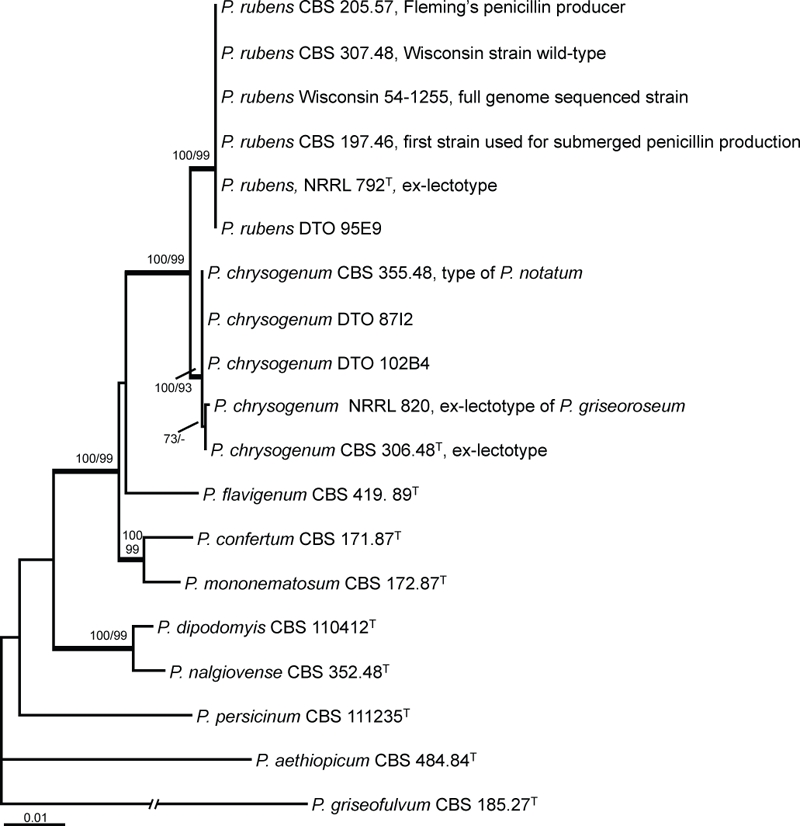
- Combined β-tubulin, calmodulin, and RPB2 data resolve two highly supported clades: one around the ex-type of *P. chrysogenum* (CBS 306.48), the other around the ex-type of *P. rubens* (NRRL 792).
- Fleming’s original penicillin strain (CBS 205.57), the wild-type Wisconsin strain (CBS 307.48 = NRRL 1951), the full genome-sequenced strain Wisconsin 54-1255, and the submerged-production strain CBS 197.46 = NRRL 832 all fall in the *P. rubens* clade.
- *P. chrysogenum* produces secalonic acid D and F and/or a lumpidin-related metabolite, whereas *P. rubens* does not produce these metabolites.
- Phenotypic macro- and microscopic characters did not clearly separate the two species; three strains showed deviating growth: CBS 355.48 had smaller colonies, while NRRL 792 and CBS 307.48 had reduced sporulation on most agar media.
Methods
- Morphology: strains from Table 1 were inoculated on CYA, YES, CREA, and MEA, incubated 7 d at 25 °C, and examined macro- and microscopically.
- Molecular analysis: partial β-tubulin, calmodulin, and RPB2 were sequenced; maximum likelihood used RAxML v. 7.2.8 with GTR and separate partitions, and maximum parsimony used MEGA5 with 500 bootstrap replicates; *P. griseofulvum* CBS 185.27 was the outgroup. The calmodulin partition was 506 bp with 90 distinct alignment patterns, RPB2 was 981 characters with 91 distinct patterns, and β-tubulin was 434 bp with 62 distinct patterns; parsimony analysis found 118 parsimony-informative sites (3150 MP trees, length = 400, CI 0.69, RI 0.83).
- Extrolite analysis: strains were grown 7–14 d at 25 °C on YES, CYA, and MEA, then extracted and analyzed by HPLC-DAD against characterized compounds.
Limitations
- Stated in the paper: the status of Scott et al. lineage 3 remains under investigation; a more detailed molecular or extrolite analysis is needed to place additional synonyms within *P. chrysogenum*, *P. rubens*, or other unrecognized species; and the suggestion that *P. rubens* has a competitive advantage in indoor niches requires investigation of distribution patterns in other geographic regions.
- Evident from the text: phenotypic examination did not reveal clear differences between the two species, so separation depends on molecular and extrolite data; the study focuses on historically important penicillin-producing strains rather than a comprehensive population sample.
Model-written summary. Check it against the paper before relying on it.
Integrity signals
Registry
Cites
Statistics
Figures
Verification
Claims the paper makes
8 Own result · 4 Own interpretation · 2 No full text of the sources · 1 Partly supported · 1 Sources not found · 1 Not checked yet · 1 No basis given · accuracy not yet measured
The cited sources support only part of this claim — read each source’s verdict below.
In the paper
“the full genome sequenced strain of P. chrysogenum are re-identified as P. rubens”
- Also stated in: § Phylogenetic analysis · plain
“Fleming’s original penicillin producing strain (CBS 205.57), the wild-type Wisconsin strain isolated from a mouldy cantaloupe (CBS 307.48 = NRRL 1951), the full genome sequenced strain derived from NRRL 1951 (Wisconsin 54-1255) (van den Berg et al. 2008), the strain first found to produce satisfactory yields of penicillin when grown submerged (CBS 197.46 = NRRL 832), are accommodated in this clade”
- Also stated in: § Current taxonomy and implications · plain
“The full genome sequenced strain derived from NRRL 1951 (van den Berg 2008) is also a P. rubens”
§ Fleming’s penicillin producing strain is not Penicillium chrysogenum but P. rubens > Abstract
What the sources say
- Partly supportedcites van den Berg et al. 2008 sourceExperimental — accuracy not yet measured
The Abstract and Methods identify Wisconsin 54-1255 as the P. chrysogenum strain whose genome was sequenced; the Abstract also says industrial strains derive from NRRL1951. Neither passage, nor the additional passages searched, says Wisconsin 54-1255 was re-identified as P. rubens. That central taxonomic claim is therefore unsupported by this source. (LLM, conf=0.86)
plain- Asserted: passes — The authors put it forward as true.
- Checkable: passes — It can be checked against evidence.
- Load-bearing: passes — The paper’s conclusions depend on it.
- Based: passes — The paper gives a reason why it holds.
- Also stated in: § Phylogenetic analysis · plain
A result the paper reports from its own data — it cites no other source for it, so there is none to check. The quote shows it is in the paper.
In the paper
“Fleming’s original penicillin producing strain (CBS 205.57), the wild-type Wisconsin strain isolated from a mouldy cantaloupe (CBS 307.48 = NRRL 1951), the full genome sequenced strain derived from NRRL 1951 (Wisconsin 54-1255) (van den Berg et al. 2008), the strain first found to produce satisfactory yields of penicillin when grown submerged (CBS 197.46 = NRRL 832), are accommodated in this clade”
§ Fleming’s penicillin producing strain is not Penicillium chrysogenum but P. rubens > RESULTS > Phylogenetic analysis
plain- Asserted: passes — The authors put it forward as true.
- Checkable: passes — It can be checked against evidence.
- Load-bearing: passes — The paper’s conclusions depend on it.
- Based: passes — The paper gives a reason why it holds.
- Rests on an assumption: The wild-type Wisconsin strain isolated from a mouldy cantaloupe is CBS 307.48 = NRRL 1951.
A result the paper reports from its own data — it cites no other source for it, so there is none to check. The quote shows it is in the paper.
In the paper
“Fleming’s original penicillin producing strain (CBS 205.57), the wild-type Wisconsin strain isolated from a mouldy cantaloupe (CBS 307.48 = NRRL 1951), the full genome sequenced strain derived from NRRL 1951 (Wisconsin 54-1255) (van den Berg et al. 2008), the strain first found to produce satisfactory yields of penicillin when grown submerged (CBS 197.46 = NRRL 832), are accommodated in this clade”
§ Fleming’s penicillin producing strain is not Penicillium chrysogenum but P. rubens > RESULTS > Phylogenetic analysis
plain- Asserted: passes — The authors put it forward as true.
- Checkable: passes — It can be checked against evidence.
- Load-bearing: passes — The paper’s conclusions depend on it.
- Based: passes — The paper gives a reason why it holds.
- Rests on an assumption: The strain first found to produce satisfactory yields of penicillin when grown submerged is CBS 197.46 = NRRL 832.
A result the paper reports from its own data — it cites no other source for it, so there is none to check. The quote shows it is in the paper.
In the paper
“Phylogenetic analysis of the most important penicillin producing P. chrysogenum isolates revealed the presence of two highly supported clades”
- Also stated in: § Phylogenetic analysis · plain
“Phylogenetic analysis of the combined partial β-tubulin, calmodulin and RPB2 datasets revealed two highly supported clades in Penicillium chrysogenum sensu lato.”
§ Fleming’s penicillin producing strain is not Penicillium chrysogenum but P. rubens > Abstract
plain- Asserted: passes — The authors put it forward as true.
- Checkable: passes — It can be checked against evidence.
- Load-bearing: passes — The paper’s conclusions depend on it.
- Based: passes — The paper gives a reason why it holds.
- Also stated in: § Phylogenetic analysis · plain
A result the paper reports from its own data — it cites no other source for it, so there is none to check. The quote shows it is in the paper.
In the paper
“Extrolite analysis differentiated the P. chrysogenum and P. rubens clades.”
§ Fleming’s penicillin producing strain is not Penicillium chrysogenum but P. rubens > RESULTS > Phenotypic and extrolite analysis
plaindirect- Asserted: passes — The authors put it forward as true.
- Checkable: passes — It can be checked against evidence.
- Load-bearing: passes — The paper’s conclusions depend on it.
- Based: passes — The paper gives a reason why it holds.
A result the paper reports from its own data — it cites no other source for it, so there is none to check. The quote shows it is in the paper.
In the paper
“while P. rubens does not produce these metabolites”
- Also stated in: § Phenotypic and extrolite analysis · plain
“while P. rubens does not produce these metabolites”
§ Fleming’s penicillin producing strain is not Penicillium chrysogenum but P. rubens > Abstract
plain- Asserted: passes — The authors put it forward as true.
- Checkable: passes — It can be checked against evidence.
- Load-bearing: passes — The paper’s conclusions depend on it.
- Based: passes — The paper gives a reason why it holds.
- Also stated in: § Phenotypic and extrolite analysis · plain
A result the paper reports from its own data — it cites no other source for it, so there is none to check. The quote shows it is in the paper.
In the paper
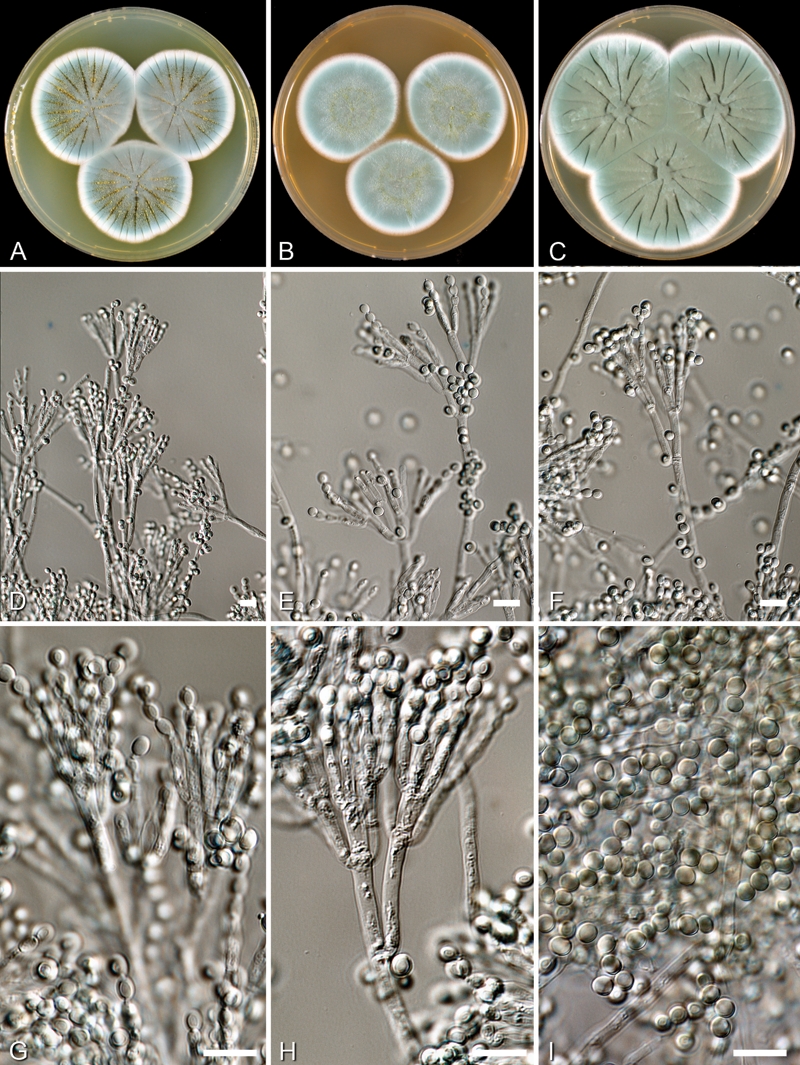
“The majority of the examined strains showed similar growth characteristics, such as good growth and sporulation on YES agar, weak or moderate growth on CREA with poor acid production and large clear or yellow coloured exudate droplets on MEA and/or CYA (Fig. 2).”
§ Fleming’s penicillin producing strain is not Penicillium chrysogenum but P. rubens > RESULTS > Phenotypic and extrolite analysis
plain- Asserted: passes — The authors put it forward as true.
- Checkable: passes — It can be checked against evidence.
- Load-bearing: unclear — It is unclear whether the paper’s conclusions depend on it.
- Based: passes — The paper gives a reason why it holds.
A conclusion the paper draws from its own results — it cites no other source for it, so there is none to check. The quote shows it is in the paper.
In the paper
“However, it was the mycologist, Charles J La Touche (1904–1981), working in a room on the floor below that occupied by Fleming, who actually identified the strain as Penicillium rubrum.”
§ Fleming’s penicillin producing strain is not Penicillium chrysogenum but P. rubens > DISCUSSION > Identity of Fleming’s original penicillin-producing strain
plaindirect- Asserted: passes — The authors put it forward as true.
- Checkable: passes — It can be checked against evidence.
- Load-bearing: passes — The paper’s conclusions depend on it.
- Based: passes — The paper gives a reason why it holds.
A conclusion the paper draws from its own results — it cites no other source for it, so there is none to check. The quote shows it is in the paper.
In the paper
“Fleming’s original penicillin producing strain and the full genome sequenced strain of P. chrysogenum are re-identified as P. rubens.”
- Also stated in: § Phylogenetic analysis · plain
“Fleming’s original penicillin producing strain (CBS 205.57), the wild-type Wisconsin strain isolated from a mouldy cantaloupe (CBS 307.48 = NRRL 1951), the full genome sequenced strain derived from NRRL 1951 (Wisconsin 54-1255) (van den Berg et al. 2008), the strain first found to produce satisfactory yields of penicillin when grown submerged (CBS 197.46 = NRRL 832), are accommodated in this clade”
- Also stated in: § Identity of Fleming’s original penicillin-producing strain · boosted
“Our current study shows that the correct name of this strain is P. rubens.”
§ Fleming’s penicillin producing strain is not Penicillium chrysogenum but P. rubens > Abstract
boosted- Asserted: passes — The authors put it forward as true.
- Checkable: passes — It can be checked against evidence.
- Load-bearing: passes — The paper’s conclusions depend on it.
- Based: passes — The paper gives a reason why it holds.
- Rests on an assumption: Fleming’s original penicillin producing strain is CBS 205.57.
- Also stated in: § Phylogenetic analysis · plain
A conclusion the paper draws from its own results — it cites no other source for it, so there is none to check. The quote shows it is in the paper.
In the paper
“we show here that these two clades represent two species, P. chrysogenum and P. rubens.”
- Also stated in: § Phylogenetic analysis · boosted
“These two clades evidently represent two different species, P. chrysogenum and P. rubens.”
§ Fleming’s penicillin producing strain is not Penicillium chrysogenum but P. rubens > Abstract
boosted- Asserted: passes — The authors put it forward as true.
- Checkable: passes — It can be checked against evidence.
- Load-bearing: passes — The paper’s conclusions depend on it.
- Based: passes — The paper gives a reason why it holds.
- Also stated in: § Phylogenetic analysis · boosted
- It may state two separate claims as one. 7
A result the paper reports from its own data — it cites no other source for it, so there is none to check. The quote shows it is in the paper.
In the paper
“These species are phenotypically similar”
- Also stated in: § Phenotypic and extrolite analysis · plain
“Phenotypic examination using macro- and microscopical characters of strains of the Penicillium rubens and P. chrysogenum clades did not reveal clear differences.”
§ Fleming’s penicillin producing strain is not Penicillium chrysogenum but P. rubens > Abstract
plain- Asserted: passes — The authors put it forward as true.
- Checkable: passes — It can be checked against evidence.
- Load-bearing: passes — The paper’s conclusions depend on it.
- Based: passes — The paper gives a reason why it holds.
It may state two separate claims as one.
- Also stated in: § Phenotypic and extrolite analysis · plain
In the paper
“P. chrysogenum produces secalonic acid D and F and/or a metabolite related to lumpidin”
- Also stated in: § Phenotypic and extrolite analysis · plain
“P. chrysogenum produces secalonic acid D and F and/or a metabolite related to lumpidin (Larsen et al. 2001)”
§ Fleming’s penicillin producing strain is not Penicillium chrysogenum but P. rubens > Abstract
What the sources say
- Not checked — no full text of the sourcecites Larsen et al. 2001 source
plain- Asserted: passes — The authors put it forward as true.
- Checkable: passes — It can be checked against evidence.
- Load-bearing: passes — The paper’s conclusions depend on it.
- Based: passes — The paper gives a reason why it holds.
It may state two separate claims as one.
- Also stated in: § Phenotypic and extrolite analysis · plain
A result the paper reports from its own data — it cites no other source for it, so there is none to check. The quote shows it is in the paper.
In the paper
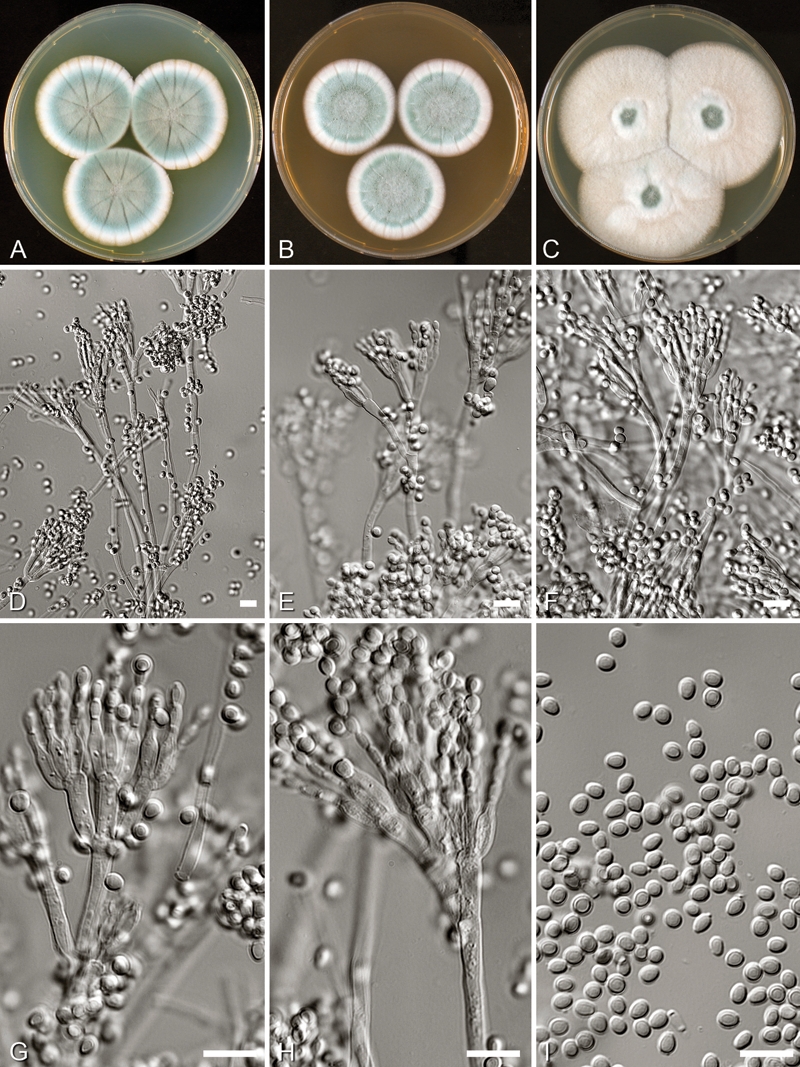
“Three strains had deviating growth characteristics: CBS 355.48 (ex-type culture of P. notatum) had smaller colonies on all tested agar media, and NRRL 792 (ex-type culture of P. rubens; Fig. 3), and CBS 307.48 ( = NRRL 1951, wild-type full genome-sequenced strain) deviated in having reduced sporulation on most agar media.”
§ Fleming’s penicillin producing strain is not Penicillium chrysogenum but P. rubens > RESULTS > Phenotypic and extrolite analysis
plain- Asserted: passes — The authors put it forward as true.
- Checkable: passes — It can be checked against evidence.
- Load-bearing: unclear — It is unclear whether the paper’s conclusions depend on it.
- Based: passes — The paper gives a reason why it holds.
It may state two separate claims as one.
The paper states this without a source or data behind it here, so there is nothing to check it against. The quote shows it is in the paper.
In the paper
“It is noticeable that the historical important penicillin producers (Wisconsin strain NRRL 1951, Fleming’s strain CBS 205.57 = NRRL 824 = IMI 015378, and the strain first used for producing penicillin in submerged conditions CBS 197.46), all proved to be P. rubens.”
§ Fleming’s penicillin producing strain is not Penicillium chrysogenum but P. rubens > DISCUSSION > Origin of the Fleming strain
plain- Asserted: passes — The authors put it forward as true.
- Checkable: passes — It can be checked against evidence.
- Load-bearing: passes — The paper’s conclusions depend on it.
- Based: passes — The paper gives a reason why it holds.
It may state two separate claims as one.
- Rests on an assumption: Fleming’s original penicillin producing strain is CBS 205.57.
- Rests on an assumption: The wild-type Wisconsin strain isolated from a mouldy cantaloupe is CBS 307.48 = NRRL 1951.
- Rests on an assumption: The strain first found to produce satisfactory yields of penicillin when grown submerged is CBS 197.46 = NRRL 832.
None of the sources cited for this claim have been checked yet.
In the paper
“Both P. rubens and P. chrysogenum produce penicillin”
- Also stated in: § INTRODUCTION · plain
“all species produce penicillin (Frisvad et al. 1987, Andersen & Frisvad 1994, Banke et al. 1997, Färber & Geisen 1994)”
§ Fleming’s penicillin producing strain is not Penicillium chrysogenum but P. rubens > DISCUSSION > Origin of the Fleming strain
What the sources say
plain- Asserted: passes — The authors put it forward as true.
- Checkable: passes — It can be checked against evidence.
- Load-bearing: unclear — It is unclear whether the paper’s conclusions depend on it.
- Based: passes — The paper gives a reason why it holds.
It may state two separate claims as one.
- Also stated in: § INTRODUCTION · plain
In the paper
“Scott’s lineages 1 and 2 are P. chrysogenum, and lineage 4 corresponds to P. rubens.”
§ Fleming’s penicillin producing strain is not Penicillium chrysogenum but P. rubens > DISCUSSION > Current taxonomy and implications
What the sources say
- Not checked — no full text of the sourcecites Scott et al. 2004 source
plaincorrelational- Asserted: passes — The authors put it forward as true.
- Checkable: passes — It can be checked against evidence.
- Load-bearing: passes — The paper’s conclusions depend on it.
- Based: passes — The paper gives a reason why it holds.
It may state two separate claims as one.
In the paper
“In conclusion, La Touche used Biourge’s taxonomic scheme and identified Fleming’s strain as P. rubrum Grassberger-Stoll (as defined by Biourge) and this identification was accurate at that time and not incorrect as claimed in literature (Thom 1945, Raper & Thom 1949, Lax 2005).”
§ Fleming’s penicillin producing strain is not Penicillium chrysogenum but P. rubens > DISCUSSION > Identity of Fleming’s original penicillin-producing strain
What the sources say
- Not matchedcites Biourge 1923
Couldn’t be matched to a paper in Crossref, so it can’t be checked.
plain- Asserted: passes — The authors put it forward as true.
- Checkable: passes — It can be checked against evidence.
- Load-bearing: passes — The paper’s conclusions depend on it.
- Based: passes — The paper gives a reason why it holds.
It may state two separate claims as one.
- Not matched
The paper relies on this without support.
Fleming’s original penicillin producing strain is CBS 205.57.
“Fleming’s original penicillin producing strain (CBS 205.57)”
The paper relies on this without support.
The wild-type Wisconsin strain isolated from a mouldy cantaloupe is CBS 307.48 = NRRL 1951.
“the wild-type Wisconsin strain isolated from a mouldy cantaloupe (CBS 307.48 = NRRL 1951)”
The paper relies on this without support.
The strain first found to produce satisfactory yields of penicillin when grown submerged is CBS 197.46 = NRRL 832.
“the strain first found to produce satisfactory yields of penicillin when grown submerged (CBS 197.46 = NRRL 832)”
Self-check
Percentages, sums and reported differences re-computed from the paper’s own numbers.
Each contradiction between two passages listed here was confirmed by an independent check.
Rated minor: it would not touch a result — a value no result rests on, a p-value that stays on the same side of the significance level, or a conflict that is clerical, resolved elsewhere in the paper, or outside its own findings.
In the paper
§ Fleming’s penicillin producing strain is not Penicillium chrysogenum but P. rubens > RESULTS > Phenotypic and extrolite analysis
“CBS 307.48 ( = NRRL 1951, wild-type full genome-sequenced strain)”
§ Fleming’s penicillin producing strain is not Penicillium chrysogenum but P. rubens > RESULTS > Phylogenetic analysis
“the full genome sequenced strain derived from NRRL 1951 (Wisconsin 54-1255)”
Citations
Cites
CONFIDENCE LIMITS ON PHYLOGENIES: AN APPROACH USING THE BOOTSTRAP
Felsenstein, J. (1985) · Evolution · doi:10.1111/j.1558-5646.1985.tb00420.x · Cited by 44,735
A Rapid Bootstrap Algorithm for the RAxML Web Servers
Stamatakis, A., Hoover, P., & Rougemont, J. (2008) · Systematic Biology · doi:10.1080/10635150802429642 · Cited by 7,028
Fleming, A. (1929) · PubMed Central · Cited by 1,647
The genus Penicillium and its teleomorphic states Eupenicillium and Talaromyces
Pitt, J. I. (1979) · Medical Entomology and Zoology · Cited by 1,481
Raper, K. B., & Pramer, D. (1969) · Soil Science · doi:10.1097/00010694-196903000-00015 · Cited by 928
Frisvad, J. C., & Samson, R. A. (2004) · Technical University of Denmark, DTU Orbit (Technical University of Denmark, DTU) · Cited by 519
Self-citationGenome sequencing and analysis of the filamentous fungus Penicillium chrysogenum
van den Berg, M. A., Albang, R., Albermann, K., Badger, J. H., Daran, J.-M., M Driessen, A. J., Garcia-Estrada, C., Fedorova, N. D., Harris, D. M., Heijne, W. H. M., et al. (2008) · Nature Biotechnology · doi:10.1038/nbt.1498 · Cited by 473
Smedsgaard, J. (1997) · Journal of Chromatography A · doi:10.1016/s0021-9673(96)00803-5 · Cited by 435
Samson, R. A., Houbraken, J. A. M. P., Thrane, U., Frisvad, J. C., & Andersen, B. (2010) · VBN Forskningsportal (Aalborg Universitet) · Cited by 431
Self-citationFrisvad, J. C., & Thrane, U. (1987) · Journal of Chromatography A · doi:10.1016/s0021-9673(01)86850-3 · Cited by 387
Self-citation
Research works printed but not linked: 6
- Biourge P (1923) Les moisissures du groupe Penicillium Link. Cellule 33: 7–331.
- Gravesen S (1999) Microfungal contamination of damp buildings. In: Johanning E (ed.), Bioaerosols, Fungi and Mycotoxins: 505–515. [Proceedings of the Third International Conference on Fungi, Mycotoxins and Bioaerosols. Saratoga Springs, New York. September 23–25, 1998.] Albany, NY: Eastern New York Occupational and Environmental Health Center.
- Hare R (1970) The Birth of Penicillin and the Discovery of Microbes. London: George Allen & Unwin.
- Raper KB, Thorn C (1949) Manual of the Penicillia. Baltimore: Williams & Wilkins.
- Stoll O (1904) Beiträge zur Morphologischen und Biologischen Charakteristik von Penicillium-Arten. Inaugural Dissertation, Würzburg.
- Thorn C (1930) The Penicillia. Baltimore: Williams and Wilkins.
Cited by
Sorted by citations
Colletotrichum – current status and future directions
Cannon, P. F., Damm, U., Johnston, P. R., & Weir, B. S. (2012) · Studies in Mycology · doi:10.3114/sim0014 · Cited by 1,105
Identification and nomenclature of the genus Penicillium
Visagie, C. M., Houbraken, J. A. M. P., Frisvad, J. C., Hong, S., Klaassen, C. H. W., Perrone, G., Seifert, K. A., Varga, J., Yaguchi, T., & Samson, R. A. (2014) · Studies in Mycology · doi:10.1016/j.simyco.2014.09.001 · Cited by 996
Self-citationPhylogeny of Penicillium and the segregation of Trichocomaceae into three families
Houbraken, J. A. M. P., & Samson, R. A. (2011) · Studies in Mycology · doi:10.3114/sim.2011.70.01 · Cited by 530
Self-citationGrowing a circular economy with fungal biotechnology: a white paper
Meyer, V., Basenko, E. Y., Benz, J. P., Braus, G. H., Caddick, M. X., Csukai, M., de Vries, R. P., Endy, D., Frisvad, J. C., Gunde-Cimerman, N., et al. (2020) · Fungal Biology and Biotechnology · doi:10.1186/s40694-020-00095-z · Cited by 515
Self-citationSamson, R. A., Yılmaz, N., Houbraken, J. A. M. P., Spierenburg, H., Seifert, K. A., Peterson, S. W., Varga, J., & Frisvad, J. C. (2011) · Studies in Mycology · doi:10.3114/sim.2011.70.04 · Cited by 434
Self-citationHistory of Antibiotics Research
Mohr, K. I. (2016) · Current topics in microbiology and immunology · doi:10.1007/82_2016_499 · Cited by 296
Modern Taxonomy of Biotechnologically Important Aspergillus and Penicillium Species
Houbraken, J. A. M. P., de Vries, R. P., & Samson, R. A. (2014) · Advances in applied microbiology · doi:10.1016/b978-0-12-800262-9.00004-4 · Cited by 281
Self-citationAspergillus, Penicillium and Talaromyces isolated from house dust samples collected around the world
Visagie, C. M., Hirooka, Y., Tanney, J. B., Whitfield, E., Mwange, K. N., Meijer, M., Amend, A. S., Seifert, K. A., & Samson, R. A. (2014) · Studies in Mycology · doi:10.1016/j.simyco.2014.07.002 · Cited by 261
Self-citationIndoor fungi: companions and contaminants
Nevalainen, A. I., Täubel, M., & Hyvärinen, A. (2014) · Indoor Air · doi:10.1111/ina.12182 · Cited by 234
Godinho, V. M., Furbino, L. E., Santiago, I. F., Pellizzari, F., Yokoya, N. S., Pupo, D., Alves, T. M. D. A., Policarpo, A. S., Romanha, Á. J., Zani, C. L., et al. (2013) · The ISME Journal · doi:10.1038/ismej.2013.77 · Cited by 196
The contribution of fungi to the global economy
Niego, A. G., Lambert, C., Mortimer, P., Thongklang, N., Rapior, S., Grosse, M., Schrey, H., Charria-Girón, E., Walker, A., Hyde, K., et al. (2023) · Fungal diversity · doi:10.1007/s13225-023-00520-9 · Cited by 168
Fungal systematics: is a new age of enlightenment at hand?
Hibbett, D. S., & Taylor, J. W. (2013) · Nature Reviews Microbiology · doi:10.1038/nrmicro2963 · Cited by 185
The genera of Hyphomycetes – 2011 update
Seifert, K. A., & Gams, W. (2011) · Persoonia - Molecular Phylogeny and Evolution of Fungi · doi:10.3767/003158511x617435 · Cited by 184
Fungal Origins of the Bicyclo[2.2.2]diazaoctane Ring System of Prenylated Indole Alkaloids
Finefield, J. M., Frisvad, J. C., Sherman, D. H., & Williams, R. M. (2012) · Journal of Natural Products · doi:10.1021/np200954v · Cited by 160
Self-citationNew penicillin-producing Penicillium species and an overview of section Chrysogena
Houbraken, J., Frisvad, J. C., Seifert, K. A., Overy, D. P., Tuthill, D. M., Valdez, J. G., & Samson, R. A. (2012) · Persoonia - Molecular Phylogeny and Evolution of Fungi · doi:10.3767/003158512x660571 · Cited by 152
Self-citationAnticancer and Antifungal Compounds from Aspergillus, Penicillium and Other Filamentous Fungi
Bladt, T. T., Frisvad, J. C., Knudsen, P. B., & Larsen, T. O. (2013) · Molecules · doi:10.3390/molecules180911338 · Cited by 155
Self-citationFungal secondary metabolites and their biotechnological applications for human health
Devi, R., Kaur, T., Guleria, G., Rana, K. L., Kour, D., Yadav, N., Yadav, A. N., & Saxena, A. K. (2020) · Elsevier eBooks · doi:10.1016/b978-0-12-820528-0.00010-7 · Cited by 150
Overview of Bioactive Fungal Secondary Metabolites: Cytotoxic and Antimicrobial Compounds
Conrado, R., Gomes, T. C., Roque, G. S. C., & de Souza, A. O. (2022) · Antibiotics · doi:10.3390/antibiotics11111604 · Cited by 151
Böhm, J. W., Hoff, B., O’Gorman, C. M., Wolfers, S., Klix, V., Binger, D., Zadra, I., Kürnsteiner, H., Pöggeler, S., Dyer, P. S., et al. (2013) · Proceedings of the National Academy of Sciences · doi:10.1073/pnas.1217943110 · Cited by 127
Reconstituted biosynthesis of fungal meroterpenoid andrastin A
Matsuda, Y., Awakawa, T., & Abe, I. (2013) · Tetrahedron · doi:10.1016/j.tet.2013.07.029 · Cited by 124
Fungal–fungal co-culture: a primer for generating chemical diversity
Knowles, S. L., Raja, H. A., Roberts, C. D., & Oberlies, N. H. (2022) · Natural Product Reports · doi:10.1039/d1np00070e · Cited by 123
Levetin, E., Horner, W. E., Scott, J. A., Barnes, C. S., Baxi, S., Chew, G. L., Grimes, C., Horner, W. E., Kennedy, K., Larenas-Linnemann, D., et al. (2015) · The Journal of Allergy and Clinical Immunology In Practice · doi:10.1016/j.jaip.2015.10.012 · Cited by 115
Engineering of the Filamentous Fungus Penicillium chrysogenum as Cell Factory for Natural Products
Chavez, F. F. G., Zwahlen, R. D., Bovenberg, R. A. L., & Driessen, A. J. M. (2018) · Frontiers in Microbiology · doi:10.3389/fmicb.2018.02768 · Cited by 112
Leitão, A. L., & Enguita, F. J. (2015) · Microbiological Research · doi:10.1016/j.micres.2015.11.004 · Cited by 109
Diversity of Myxobacteria—We Only See the Tip of the Iceberg
Mohr, K. I. (2018) · Microorganisms · doi:10.3390/microorganisms6030084 · Cited by 109
Diversity, specificity, co-occurrence and hub taxa of the bacterial–fungal pollen microbiome
Manirajan, B. A., Maisinger, C., Ratering, S., Rusch, V., Schwiertz, A., Cardinale, M., & Schnell, S. (2018) · FEMS Microbiology Ecology · doi:10.1093/femsec/fiy112 · Cited by 121
Fungal secondary metabolites as harmful indoor air contaminants: 10 years on
Miller, J. D., & McMullin, D. R. (2014) · Applied Microbiology and Biotechnology · doi:10.1007/s00253-014-6178-5 · Cited by 98
Guevara‐Suarez, M., Sutton, D. A., Cano, J., García, D., Martín‐Vicente, A., Wiederhold, N. P., Guarro, J., & Gené, J. (2016) · Journal of Clinical Microbiology · doi:10.1128/jcm.00960-16 · Cited by 98
Diversity, Ecology, and Prevalence of Antimicrobials in Nature
Mullis, M. M., Rambo, I. M., Baker, B. J., & Reese, B. K. (2019) · Frontiers in Microbiology · doi:10.3389/fmicb.2019.02518 · Cited by 90
Cellulases fromPenicilliumspecies for producing fuels from biomass
Gusakov, A. V., & Sinitsyn, A. P. (2012) · Biofuels · doi:10.4155/bfs.12.41 · Cited by 84
A taxonomic and phylogenetic revision of Penicillium section Aspergilloides
Houbraken, J. A. M. P., Visagie, C. M., Meijer, M., Frisvad, J. C., Busby, P. E., Pitt, J. I., Seifert, K. A., Louis-Seize, G., Demirel, R., Yılmaz, N., et al. (2014) · Studies in Mycology · doi:10.1016/j.simyco.2014.09.002 · Cited by 84
Self-citationMarine Fungi: Opportunities and Challenges
Gonçalves, M. F. M., Esteves, A. C., & Alves, A. (2022) · Encyclopedia · doi:10.3390/encyclopedia2010037 · Cited by 83
Penicillium chrysogenum, a Vintage Model with a Cutting-Edge Profile in Biotechnology
Fierro, F., Vaca, I., Castillo, N. I., García-Rico, R. O., & Chávez, R. (2022) · Microorganisms · doi:10.3390/microorganisms10030573 · Cited by 79
Exploitation of Fungal Biodiversity for Discovery of Novel Antibiotics
Karwehl, S., & Stadler, M. (2016) · Current topics in microbiology and immunology · doi:10.1007/82_2016_496 · Cited by 76
Frisvad, J. C., Petersen, L. M., Lyhne, E. K., & Larsen, T. O. (2014) · PLoS ONE · doi:10.1371/journal.pone.0094857 · Cited by 72
Self-citationSegers, F. J. J., van Laarhoven, K., Huinink, H., Adan, O. C. G., Wösten, H. A. B., & Dijksterhuis, J. (2016) · Applied and Environmental Microbiology · doi:10.1128/aem.00510-16 · Cited by 72
The Biosynthesis of Fungal Secondary Metabolites: From Fundamentals to Biotechnological Applications
Mosunova, O. V., Navarro-Muñoz, J. C., & Collemare, J. (2020) · Elsevier eBooks · doi:10.1016/b978-0-12-809633-8.21072-8 · Cited by 72
Include all fungi in biodiversity goals
Gonçalves, S. C., Haelewaters, D., Furci, G., & Mueller, G. M. (2021) · Science · doi:10.1126/science.abk1312 · Cited by 71
Barrett, K., Jensen, K. L., Meyer, A. S., Frisvad, J. C., & Lange, L. (2020) · Scientific Reports · doi:10.1038/s41598-020-61907-1 · Cited by 68
Self-citationLopes, B. S., Hanafiah, A., Nachimuthu, R., Saravanan, M., Nesran, Z. N. M., & Patil, S. (2022) · Molecules · doi:10.3390/molecules27092995 · Cited by 70
Fungal Drug Discovery for Chronic Disease: History, New Discoveries and New Approaches
Prescott, T. A. K., Hill, R., Mas‐Claret, E., Gaya, E., & Burns, E. (2023) · Biomolecules · doi:10.3390/biom13060986 · Cited by 68
Searching for eukaryotic life preserved in Antarctic permafrost
Zucconi, L., Selbmann, L., Buzzini, P., Turchetti, B., Guglielmin, M., Frisvad, J. C., & Onofri, S. (2011) · Polar Biology · doi:10.1007/s00300-011-1119-6 · Cited by 66
Self-citationBoruta, T. (2017) · Bioengineered · doi:10.1080/21655979.2017.1341022 · Cited by 65
CRISPR-based transcriptional activation tool for silent genes in filamentous fungi
Mózsik, L., Hoekzema, M., de Kok, N. A. W., Bovenberg, R. A. L., Nygård, Y., & Driessen, A. J. M. (2021) · Scientific Reports · doi:10.1038/s41598-020-80864-3 · Cited by 68
Transcriptional Activation of Biosynthetic Gene Clusters in Filamentous Fungi
Mózsik, L., Iacovelli, R., Bovenberg, R. A. L., & Driessen, A. J. M. (2022) · Frontiers in Bioengineering and Biotechnology · doi:10.3389/fbioe.2022.901037 · Cited by 68
Design of a spaceflight biofilm experiment
Zea, L., Nisar, Z., Rubin, P., Cortesão, M., Luo, J., McBride, S. A., Moeller, R., Klaus, D. M., Müller, D. W., Varanasi, K. K., et al. (2018) · Acta Astronautica · doi:10.1016/j.actaastro.2018.04.039 · Cited by 64
Colletotrichum gloeosporioides: pathogen of anthracnose disease in mango (Mangifera indica L.)
Kamle, M., & Kumar, P. (2016) · Fungal Biology · doi:10.1007/978-3-319-27312-9_9 · Cited by 60
Salazar-Cerezo, S., Kun, R. S., de Vries, R. P., & Garrigues, S. (2019) · Enzyme and Microbial Technology · doi:10.1016/j.enzmictec.2019.109463 · Cited by 59
Fungal-bacterial interactions and their relevance in health
Arvanitis, M., & Mylonakis, E. E. (2015) · Cellular Microbiology · doi:10.1111/cmi.12493 · Cited by 56
What are the 100 most cited fungal genera?
Bhunjun, C. S., Chen, Y. J., Phukhamsakda, C., Boekhout, T., Groenewald, J. Z., McKenzi, E. H. C., Francisco, E. C., Frisvad, J. C., Groenewald, M., Hurdeal, V. G., et al. (2024) · Studies in Mycology · doi:10.3114/sim.2024.108.01 · Cited by 58
Self-citationFarag, M. A., Sheashea, M., Zhao, C., & Maamoun, A. A. (2022) · Foods · doi:10.3390/foods11182867 · Cited by 54
Dyer, P. S., & Kück, U. (2017) · Microbiology Spectrum · doi:10.1128/microbiolspec.funk-0043-2017 · Cited by 55
Sex in Cheese: Evidence for Sexuality in the Fungus Penicillium roqueforti
Ropars, J., Dupont, J., Fontanillas, E., de la Vega, R. C. R., Malagnac, F., Coton, M., Giraud, T., & López‐Villavicencio, M. (2012) · PLoS ONE · doi:10.1371/journal.pone.0049665 · Cited by 54
Discovery, Development, and Regulation of Natural Products
Krause, J., & Tobi, G. (2013) · InTech eBooks · doi:10.5772/56424 · Cited by 56
Nonribosomal peptide synthetases and their biotechnological potential in Penicillium rubens
Iacovelli, R., Bovenberg, R. A. L., & Driessen, A. (2021) · Journal of Industrial Microbiology & Biotechnology · doi:10.1093/jimb/kuab045 · Cited by 46
Qiao, H., Sun, X.-R., Wu, X., Li, G.-E., Wang, Z., & Li, D. (2019) · Biology Open · doi:10.1242/bio.046797 · Cited by 48
Meybohm, P., Zacharowski, K. D., Cremer, J., Roesner, J. P., Kletzin, F., Schaelte, G., Felzen, M., Strouhal, U., Reyher, C., Heringlake, M., et al. (2012) · PubMed · Cited by 46
Myxobacteria as a Source of New Bioactive Compounds: A Perspective Study
Bhat, M. A., Mishra, A. K., Bhat, M. A., Banday, M. I., Bashir, O., Rather, I. A., Rahman, S., Shah, A. A., & Jan, A. T. (2021) · Pharmaceutics · doi:10.3390/pharmaceutics13081265 · Cited by 43
Proteomics and Penicillium chrysogenum: Unveiling the secrets behind penicillin production
Barreiro, C., & García‐Estrada, C. (2018) · Journal of Proteomics · doi:10.1016/j.jprot.2018.11.006 · Cited by 43
van Laarhoven, K., Huinink, H., Segers, F. J. J., Dijksterhuis, J., & Adan, O. C. G. (2015) · Environmental Microbiology · doi:10.1111/1462-2920.13012 · Cited by 41
Gonçalves, V. N., Vitoreli, G. A., de Menezes, G. C. A., Mendes, C. R. B., Secchi, E. R., Rosa, C. A., & Rosa, L. H. (2017) · Extremophiles · doi:10.1007/s00792-017-0959-6 · Cited by 41
Correia, J., Borges, A. D. S., Simões, M. V., & Simões, L. C. (2023) · Antibiotics · doi:10.3390/antibiotics12081250 · Cited by 41
Kosalková, K., Domínguez‐Santos, R., Coton, M., Coton, E., García‐Estrada, C., Liras, P., & Martin, J. F. (2015) · Applied Microbiology and Biotechnology · doi:10.1007/s00253-015-6676-0 · Cited by 40
García‐Estrada, C., Martin, J. F., Cueto, L., & Barreiro, C. (2020) · Genes · doi:10.3390/genes11060712 · Cited by 40
Phage Therapy as an Alternative Treatment Modality for Resistant Staphylococcus aureus Infections
Atshan, S. S., Hamat, R. A., Aljaberi, M. A. A., Chen, J., Huang, S.-W., Lin, C., Mullins, B. J., & Kicic, A. (2023) · Antibiotics · doi:10.3390/antibiotics12020286 · Cited by 40
8 Degradation and Modification of Plant Biomass by Fungi
Mäkelä, M., Hildén, K., & de Vries, R. P. (2014) · Springer eBooks · doi:10.1007/978-3-642-45218-5_8 · Cited by 38
Wang, X., Chen, K., Zeng, Z.-Q., & Zhuang, W.-Y. (2017) · Scientific Reports · doi:10.1038/s41598-017-08697-1 · Cited by 38
Screening and Identification of Novel Ochratoxin A-Producing Fungi from Grapes
Zhang, X., Li, Y., Wang, H., Gu, X., Zheng, X., Wang, Y., Diao, J., Peng, Y., & Zhang, H. (2016) · Toxins · doi:10.3390/toxins8110333 · Cited by 36
Gillot, G., Jany, J., Domínguez‐Santos, R., Poirier, E., Debaets, S., Hidalgo, P. I., Ullán, R. V., Coton, E., & Coton, M. (2016) · Food Microbiology · doi:10.1016/j.fm.2016.10.013 · Cited by 34
Li, D., Johanning, E., & Yang, C. S. (2015) · ASM Press eBooks · doi:10.1128/9781555818821.ch3.2.5 · Cited by 35
Harnessing biotechnology for penicillin production: Opportunities and environmental considerations
Haque, M. A., Nath, N. D., Johnston, T. V., Haruna, S. I., Ahn, J., Ovissipour, R., & Ku, S. (2024) · The Science of The Total Environment · doi:10.1016/j.scitotenv.2024.174236 · Cited by 38
Extrolites ofWallemia sebi, a very common fungus in the built environment
Desroches, T., McMullin, D. R., & Miller, J. D. (2014) · Indoor Air · doi:10.1111/ina.12100 · Cited by 32
Mechanisms Underlying the Pathogenic and Endophytic Lifestyles in Diaporthe: An Omics-Based Approach
Hilário, S., & Gonçalves, M. F. M. (2023) · Horticulturae · doi:10.3390/horticulturae9040423 · Cited by 31
Mycobiota of Underground Habitats: Case Study of Harmanecká Cave in Slovakia
Ogórek, R., Višňovská, Z., & Tančinová, D. (2015) · Microbial Ecology · doi:10.1007/s00248-015-0686-4 · Cited by 30
Terfehr, D., Dahlmann, T. A., & Kück, U. (2017) · BMC Genomics · doi:10.1186/s12864-017-3663-0 · Cited by 30
Arias, A. A., Lambert, S., Martinet, L., Adam, D., Tenconi, E., Hayette, M., Ongena, M., & Rigali, S. (2015) · FEMS Microbiology Ecology · doi:10.1093/femsec/fiv080 · Cited by 31
Orfali, R. S., Perveen, S., Alajmi, M. F., Ghaffar, S., Rehman, M. T., Alanzi, A. R., Gamea, S. B., & Khwayri, M. E. (2022) · Molecules · doi:10.3390/molecules27113630 · Cited by 29
Induction of Gliotoxin Secretion in Aspergillus fumigatus by Bacteria-Associated Molecules
Svahn, K. S., Göransson, U., Chryssanthou, E., Olsén, B., Sjölin, J., & Strömstedt, A. A. (2014) · PLoS ONE · doi:10.1371/journal.pone.0093685 · Cited by 28
Production of an Extracellular Matrix as an Isotropic Growth Phase of Penicillium rubens on Gypsum
Bekker, M., Huinink, H., Adan, O. C. G., Samson, R. A., Wyatt, T. T., & Dijksterhuis, J. (2012) · Applied and Environmental Microbiology · doi:10.1128/aem.01506-12 · Cited by 27
Self-citationSpecies Diversity of Penicillium in Southwest China with Discovery of Forty-Three New Species
Wang, X., Zhang, Z., & Zhuang, W.-Y. (2023) · Journal of Fungi · doi:10.3390/jof9121150 · Cited by 26
Developing filamentous fungal chassis for natural product production
Fan, J., Wei, P., Li, Y., Zhang, S., Ren, Z., Li, W., & Yin, W. (2024) · Bioresource Technology · doi:10.1016/j.biortech.2024.131703 · Cited by 26
How to Completely Squeeze a Fungus—Advanced Genome Mining Tools for Novel Bioactive Substances
Schüller, A., Studt, L., & Strauss, J. (2022) · Pharmaceutics · doi:10.3390/pharmaceutics14091837 · Cited by 26
Barreiro, C., Martínez-Cámara, S., García‐Estrada, C., de la Torre, M., & Barredo, J. L. (2023) · Elsevier eBooks · doi:10.1016/b978-0-323-95388-7.00001-2 · Cited by 26
Mold allergy: is it real and what do we do about it?
Rudert, A., & Portnoy, J. M. (2017) · Expert Review of Clinical Immunology · doi:10.1080/1744666x.2017.1324298 · Cited by 26
Jami, M., Martı́n, J.-F., Barreiro, C., Domínguez‐Santos, R., Vasco-Cárdenas, M. F., Pascual, M., & García‐Estrada, C. (2018) · Journal of Proteomics · doi:10.1016/j.jprot.2018.08.006 · Cited by 25
Boruta, T., Milczarek, I., & Bizukojć, M. (2019) · Applied Microbiology and Biotechnology · doi:10.1007/s00253-019-09874-0 · Cited by 26
Engineered and total biosynthesis of fungal specialized metabolites
Cox, R. J. (2024) · Nature Reviews Chemistry · doi:10.1038/s41570-023-00564-0 · Cited by 24
Mohtar, W. H. M. W., Wan‐Mohtar, W. A. A. Q. I., Zahuri, A. A., Ibrahim, M. F., Show, P.-L., Ilham, Z., Jamaludin, A. A., Patah, M. F. A., Usuldin, S. R. A., & Rowan, N. J. (2022) · Bioengineered · doi:10.1080/21655979.2023.2184785 · Cited by 27
Okeah, B. O., Morrison, V., & Huws, J. C. (2021) · BMJ Open · doi:10.1136/bmjopen-2021-051983 · Cited by 23
Prigent, S., Nielsen, J. C. F., Frisvad, J. C., & Nielsen, J. (2018) · Biotechnology and Bioengineering · doi:10.1002/bit.26739 · Cited by 22
Self-citationMartin, J. F. (2020) · International Journal of Molecular Sciences · doi:10.3390/ijms21113936 · Cited by 22
Growth of indoor fungi on gypsum
Segers, F. J. J., van Laarhoven, K., Wösten, H. A. B., & Dijksterhuis, J. (2017) · Journal of Applied Microbiology · doi:10.1111/jam.13487 · Cited by 22
Sterflinger, K., Voitl, C., Lopandić, K., Piñar, G., & Tafer, H. (2018) · Life · doi:10.3390/life8020022 · Cited by 22
Katoch, A., Sharma, P., & Sharma, P. N. (2016) · Journal of Plant Biochemistry and Biotechnology · doi:10.1007/s13562-016-0384-4 · Cited by 23
Enguita, F. J., Pereira, S., & Leitão, A. L. (2023) · Journal of Fungi · doi:10.3390/jof9040408 · Cited by 21
Zhgun, A. A. (2023) · Fermentation · doi:10.3390/fermentation9121027 · Cited by 21
Villarino, M., Cal, A. D., Melgarejo, P., Larena, I., & Espeso, E. A. (2015) · Microbial Biotechnology · doi:10.1111/1751-7915.12325 · Cited by 21
Pathak, A., Nowell, R. W., Wilson, C. G., Ryan, M. J., & Barraclough, T. G. (2020) · Scientific Reports · doi:10.1038/s41598-020-72584-5 · Cited by 21
Ramírez, J. A. M., Strien, J., Sanft, J., Mall, G., Walther, G., & Peters, F. T. (2013) · Analytical and Bioanalytical Chemistry · doi:10.1007/s00216-013-7250-1 · Cited by 20
Domínguez‐Santos, R., García‐Estrada, C., Kosalková, K., Prieto, C. A. V., Santamarta, I., & Martı́n, J.-F. (2015) · Biochimie · doi:10.1016/j.biochi.2015.05.015 · Cited by 20
Metadata
- Authors
- Houbraken, J., Frisvad, J. C., & Samson, R. A.
- Affiliations
- Westerdijk Fungal Biodiversity Institute (NL)
- Technical University of Denmark (DK)
- Corresponding author
- Houbraken, Jos
- Venue
- IMA Fungus
- Publisher
- Pensoft Publishers
- Published
- 2011-06
- Volume
- 2
- Issue
- 1
- Pages
- 87-95
- ISSN
- 2210-6340 (ISSN-L)
- 2210-6359
- PMC
- PMC3317369
- OpenAlex
- W2149410962
- Semantic Scholar
- e6db8d20571d3de7cbf7141caba340c28a6f3f58
- Cited by
- 262
- References
- 32
- Citations by year
- 2026: 9 · 2025: 14 · 2024: 13 · 2023: 45 · 2022: 26 · 2021: 24 · 2020: 21 · 2019: 10 · 2018: 13 · 2017: 18 · 2016: 15 · 2015: 17 · 2014: 15 · 2013: 11 · 2012: 7
- FWCI
- 8.67
- Type
- journal article
- Language
- en
- Open access
- gold
- doi.org
- Licence
- Locations
- IMA Fungus (publishedVersion, cc-by-nc)
- Europe PMC (PubMed Central) (publishedVersion, cc-by-nc-nd)
- PubMed Central (publishedVersion, cc-by-nc-nd)
- PubMed (publishedVersion)
- KNAW Research Portal (The Royal Netherlands Academy of Arts and Sciences) (publishedVersion, other-oa)
- Data Archiving and Networked Services (DANS) (submittedVersion)
- DOAJ (DOAJ: Directory of Open Access Journals) (submittedVersion)
- Technical University of Denmark, DTU Orbit (Technical University of Denmark, DTU) (submittedVersion, cc-by-nc-nd)
- KNAW research portal (Royal Academy of Art and Sciences (KNAW)) (submittedVersion, other-oa)
- Topics
- Life Sciences › Immunology and Microbiology › Applied Microbiology and Biotechnology › Microbial Natural Products and Biosynthesis
- Life Sciences › Agricultural and Biological Sciences › Plant Science › Plant Pathogens and Fungal Diseases
- Life Sciences › Agricultural and Biological Sciences › Plant Science › Mycotoxins in Agriculture and Food
- Keywords
- Penicillium chrysogenum, Penicillium rubens, penicillin production, phylogenetic analysis, secalonic acid D, Alexander Fleming, Penicillium rubrum, fungal taxonomy
About these checks
Registry, retraction, Cites and statistics results are computed, not judged, with one exception: a printed reference that no index lists is read once by a model before it counts as a citation error. Claims are extracted by a model and kept only when their quote appears verbatim in the text; each cited source is then checked, with a model’s help, for whether it says what the claim relies on. Those verdicts can be wrong — read the claim’s quote and the cited source before relying on one.
A language model drew the claims from the paper on 2026-10-30, under version 3 of the claim definition (model deepseek-v4.1-flash, prompt extract-v3).
A second model labelled each claim on 2026-10-30 (model jev-1.13-20260917, definition revision gold-guideline-v0.2).
Cited sources are checked with a language model’s help (gpt-6-sol).
Statistics and arithmetic are recomputed, not judged.
Confidence bands are shown only for fields calibrated on our annotated test set. None is calibrated yet, so no band is shown.
What counts as a claim ›How we measure confidence ›How we check this ›
Are you an author, or do you see a problem with this page? Request a review
