

The DOI matches its Crossref record; 108 of the 110 references it cites were found in a registry or an index.
IL-6 Trans-Signaling via the Soluble IL-6 Receptor: Importance for the Pro-Inflammatory Activities of IL-6
Open accessAbstract
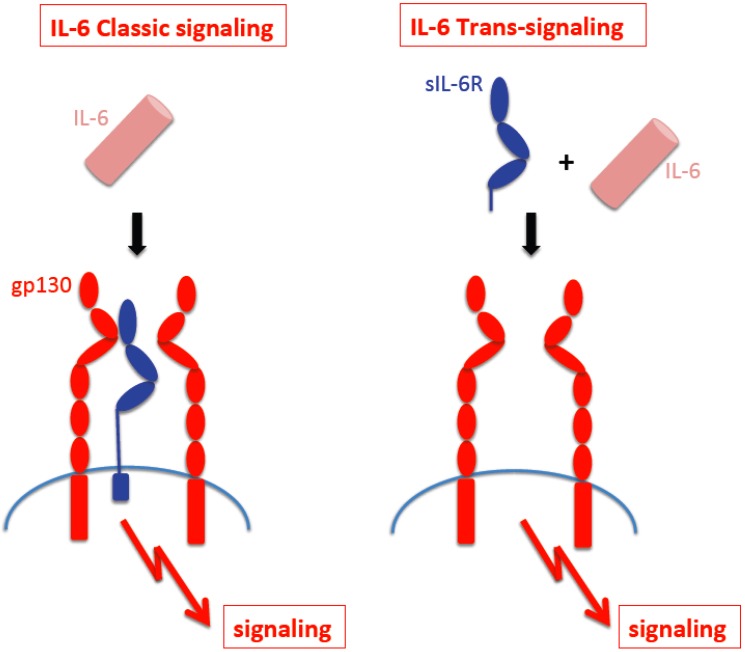
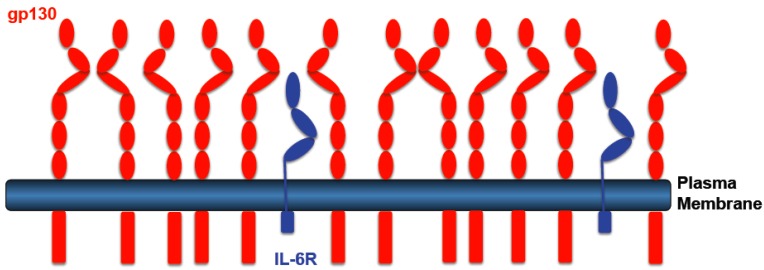
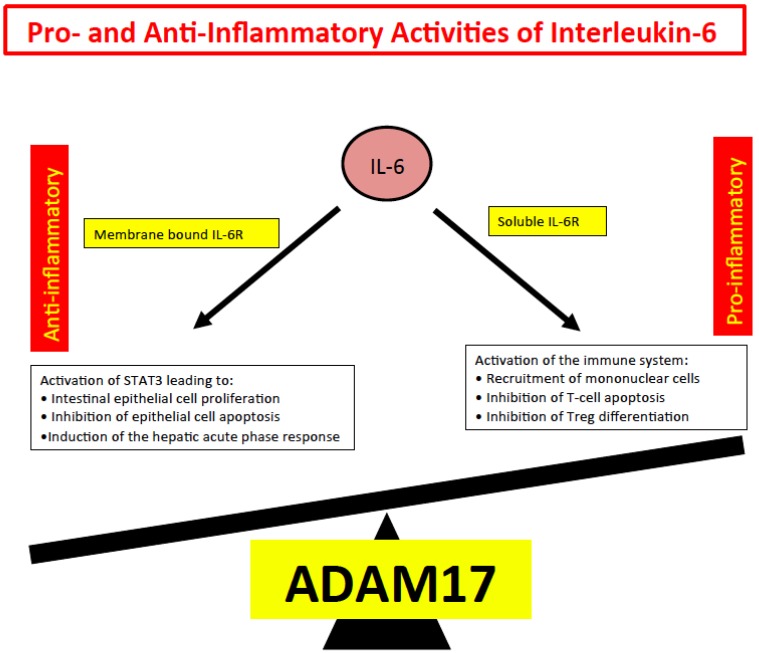
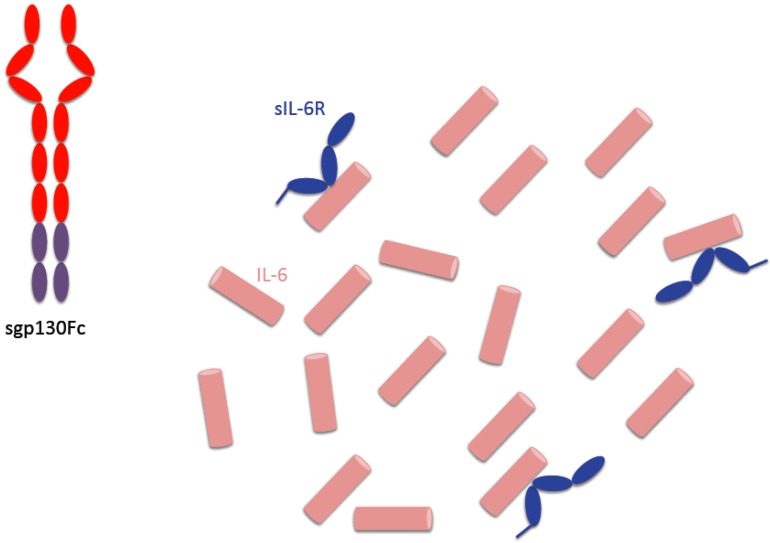
Interleukin-6 (IL-6) is a cytokine with many activities. It has functions in the regulation of the immune system and the nervous system. Furthermore, IL-6 is involved in liver regeneration and in the metabolic control of the body. On target cells, IL-6 binds to an 80 kDa IL-6 receptor (IL-6R). The complex of IL-6 and IL-6R associates with a second protein, gp130, which thereupon dimerizes and initiates intracellular signaling. Whereas gp130 is expressed on all cells, IL-6R is only present on few cells in the body including hepatocytes and some leukocytes. Cells, which do not express IL-6R cannot respond to the cytokine, since gp130 alone has no measurable affinity for IL-6. Interestingly, a soluble form of IL-6R (sIL-6R) comprising the extracellular portion of the receptor can bind IL-6 with a similar affinity as the membrane bound IL-6R. The complex of IL-6 and sIL-6R can bind to gp130 on cells, which do not express the IL-6R, and which are unresponsive to IL-6. This process has been called trans-signaling. Here I will review published evidence that IL-6 trans-signaling is pro-inflammatory whereas classic IL-6 signaling via the membrane bound IL-6R is needed for regenerative or anti-inflammatory activities of the cytokine. Furthermore, the detailed knowledge of IL-6 biology has important consequences for therapeutic strategies aimed at the blockade of the cytokine IL-6.
Overview
The claims and statistics of this paper haven’t been checked yet.
Run the check — free, no account needed. It reads the open-access text and checks the sources it cites.
Integrity signals
Registry
Cites
Statistics
Figures
Verification
Claims the paper makes
The claims and statistics of this paper haven’t been checked yet.
Run the check — free, no account needed. It reads the open-access text and checks the sources it cites.
Claims other papers make about this one
Each is checked against this paper’s own text: does it say what the citing paper says it does?
The source backs part of the claim, not all of it — or backs it for a different population, condition or comparison.
In the citing paper
“Therefore, the balance between mbIL-6R and sIL-6R availability, along with signal duration and tissue context, determines whether IL-6 acts in a protective or pathogenic manner [40].”
From Exercise-Induced Muscle–Fat Crosstalk: Molecular Mediators and Their Pharmacological Modulation for the Maintenance of Metabolic Flexibility in Aging (2025) · cites this paper as [40]
Experimental — accuracy not yet measuredThe source backs part of the claim, not all of it — or backs it for a different population, condition or comparison.
In the citing paper
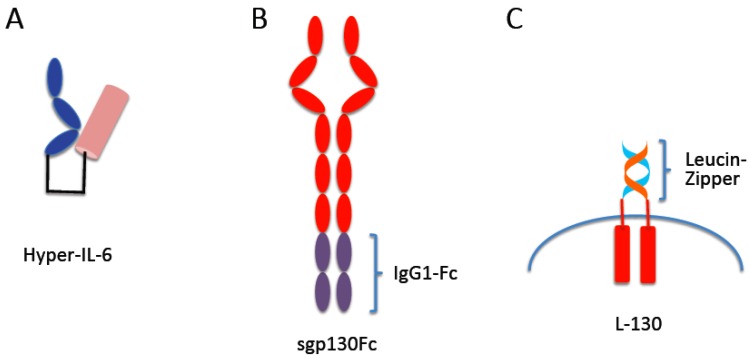
“HyIL-6 triggers signaling in all cells expressing gp130, producing a more robust and homogenous signaling output”
From CDK8 fine-tunes IL-6 transcriptional activities by limiting STAT3 resident time at the gene loci (2020) · cites this paper as Rose-John, 2012
Experimental — accuracy not yet measuredThe cited source says what the claim attributes to it.
In the citing paper
“This is in line with the view that classic and trans-signaling promote anti- and pro-inflammatory responses, respectively (85)”
From T H 17 cells require ongoing classic IL-6 receptor signaling to retain transcriptional and functional identity (2020) · cites this paper as [85]
Self-check
Percentages, sums and reported differences re-computed from the paper’s own numbers.
The self-check needs the paper’s full text.
Citations
Cites
Bettelli, E., Carrier, Y., Gao, W., Korn, T., Strom, T. B., Oukka, M., Weiner, H. L., & Kuchroo, V. K. (2006) · Nature · doi:10.1038/nature04753 · Cited by 6,992 · cited 3×
“The induction of TH17-cells by IL-6 was strongly increased by the presence of sIL-6R indicating a role for trans-signaling in this process [29].”
BackgroundPrinciples of interleukin (IL)-6-type cytokine signalling and its regulation
HEINRICH, P. C., BEHRMANN, I., HAAN, S., HERMANNS, H. M., MÜLLER-NEWEN, G., & SCHAPER, F. (2003) · Biochemical Journal · doi:10.1042/bj20030407 · Cited by 3,272 · cited 1×
“In addition to the activation of the canonical JAK/STAT pathway, the phosphatase SHP-2 is recruited to tyrosine phosphorylated gp130, becomes phosphorylated by JAK1 and thereupon mediates the activation of the Ras-Raf-MAPK signaling pathway [5, 6].”
BackgroundThe pro- and anti-inflammatory properties of the cytokine interleukin-6
Scheller, J., Chalaris, A., Schmidt-Arras, D., & Rose-John, S. (2011) · Biochimica et Biophysica Acta (BBA) - Molecular Cell Research · doi:10.1016/j.bbamcr.2011.01.034 · Cited by 3,212 · cited 2×
“Under physiologic conditions IL-6 is thought to act in a paracrine fashion [69].”
BackgroundSelf-citationKaposi's sarcoma-associated herpesvirus-like DNA sequences in multicentric Castleman's disease.
Soulier, J., Grollet, L., Oksenhendler, E., Cacoub, P., Cazals-Hatem, D., Babinet, P., d'Agay, M., Clauvel, J., Raphael, M., Degos, L., et al. (1995) · Blood · doi:10.1182/blood.v86.4.1276.bloodjournal8641276 · Cited by 2,296 · cited 1×
“This might be very relevant for the situation in patients because HHV8 has been associated with multicentric Castleman disease and 100% of HIV positive patients and 50% of HIV negative patients harbor the virus [94].”
BackgroundGrivennikov, S., Karin, E., Terzic, J., Mucida, D., Yu, G.-Y., Vallabhapurapu, S., Scheller, J., Rose-John, S., Cheroutre, H., Eckmann, L., et al. (2009) · Cancer Cell · doi:10.1016/j.ccr.2009.01.001 · Cited by 2,155
Self-citationHirano, T., Yasukawa, K., Harada, H., Taga, T., Watanabe, Y., Matsuda, T., Kashiwamura, S.-I., Nakajima, K., Koyama, K., Iwamatsu, A., et al. (1986) · Nature · doi:10.1038/324073a0 · Cited by 2,139 · cited 1×
“The cDNA of IL-6 was cloned in 1986 [1] and it was recognized that IL-6 belonged to a large family of cytokines, which all shared the four-helical protein topology [2].”
BackgroundInterleukin-6 triggers the association of its receptor with a possible signal transducer, gp130
Taga, T., Hibi, M., Hirata, Y., Yamasaki, K., Yasukawa, K., Matsuda, T., Hirano, T., & Kishimoto, T. (1989) · Cell · doi:10.1016/0092-8674(89)90438-8 · Cited by 1,396
Atreya, R., Mudter, J., Finotto, S., Müllberg, J., Jostock, T., Wirtz, S., Schütz, M., Bartsch, B., Holtmann, M., Becker, C., et al. (2000) · Nature Medicine · doi:10.1038/75068 · Cited by 1,293
Self-citationWaage, A., Brandtzaeg, P., Halstensen, A. I., Kierulf, P., & Espevik, T. (1989) · The Journal of Experimental Medicine · doi:10.1084/jem.169.1.333 · Cited by 1,175
(2012) · The Lancet · doi:10.1016/s0140-6736(12)60110-x · Cited by 1,146 · cited 1×
“In two recent publications, it was shown that a single nucleotide polymorphism in the IL-6R gene changing glutamine 258 into alanine resulted in higher serum concentrations of sIL-6R was connected to a lower risk of coronary heart disease [71, 72].”
Background
Cited by
Sorted by citations
Targeting the IL-6/JAK/STAT3 signalling axis in cancer
Johnson, D. E., O'Keefe, R. A., & Grandis, J. R. (2018) · Nature Reviews Clinical Oncology · doi:10.1038/nrclinonc.2018.8 · Cited by 3,110
IL-6 as a keystone cytokine in health and disease
Hunter, C. A., & Jones, S. A. (2015) · Nature Immunology · doi:10.1038/ni.3153 · Cited by 2,511
Chimeric antigen receptor T-cell therapy—assessment and management of toxicities
Neelapu, S. S., Tummala, S., Kebriaei, P., Wierda, W., Gutierrez, C., Locke, F. L., Komanduri, K. V., Lin, Y., Jain, N., Daver, N., et al. (2018) · Nature Reviews Clinical Oncology · doi:10.1038/nrclinonc.2017.148 · Cited by 2,438
Shimabukuro‐Vornhagen, A., Gödel, P., Subklewe, M. S., Stemmler, H., Schlößer, H., Schlaak, M. S., Kochanek, M., Böll, B., & von Bergwelt‐Baildon, M. S. (2018) · Journal for ImmunoTherapy of Cancer · doi:10.1186/s40425-018-0343-9 · Cited by 1,712
“This soluble IL-6/IL-6 receptor complex binds to gp130 and therefore can also induce signaling in cell types that do not express membrane bound IL-6 receptors [59].”
BackgroundSARS-CoV-2 infection: The role of cytokines in COVID-19 disease
Costela-Ruiz, V. J., Montes, R. I., Puerta, J. M., Ruíz, C., & Melguizo‐Rodríguez, L. (2020) · Cytokine & Growth Factor Reviews · doi:10.1016/j.cytogfr.2020.06.001 · Cited by 1,132
“It has been reported that it has regenerative and anti-inflammatory effects mediated by the conventional signaling process, although it also exerts proinflammatory effects mediated by trans-signaling, as in the case of viral infections [76].”
Metadata
- Authors
- Rose-John, S.
- Venue
- International Journal of Biological Sciences
- Publisher
- Ivyspring International Publisher
- Published
- 2012
- Volume
- 8
- Issue
- 9
- Pages
- 1237-1247
- ISSN
- 1449-2288 (ISSN-L)
- PMC
- PMC3491447
- OpenAlex
- W2100478793
- Cited by
- 1,040
- References
- 110
- Citations by year
- 2026: 87 · 2025: 98 · 2024: 77 · 2023: 73 · 2022: 94 · 2021: 108 · 2020: 107 · 2019: 76 · 2018: 72 · 2017: 65 · 2016: 49 · 2015: 48 · 2014: 54 · 2013: 30 · 2012: 1
- FWCI
- 4.28
- Type
- journal article
- Language
- en
- Open access
- gold
- doi.org
- Licence
- cc-by-nc
- Locations
- International Journal of Biological Sciences (publishedVersion, cc-by-nc)
- Europe PMC (PubMed Central) (publishedVersion, cc-by-nc-nd)
- PubMed Central (publishedVersion, cc-by-nc-nd)
- PubMed (publishedVersion)
- DOAJ (DOAJ: Directory of Open Access Journals) (submittedVersion)
- Funders
- Deutsche Forschungsgemeinschaft (SFB654, SFB841, project C1; SFB877, project A1, SFB 877, SFB841 project C1, SFB877, project A1, SFB 841)
- Exzellenzclusters Entzündungsforschung
- Topics
- Life Sciences › Immunology and Microbiology › Immunology › Cytokine Signaling Pathways and Interactions
- Life Sciences › Immunology and Microbiology › Immunology › Psoriasis: Treatment and Pathogenesis
- Life Sciences › Biochemistry, Genetics and Molecular Biology › Molecular Biology › Receptor Mechanisms and Signaling
- Keywords
- interleukin-6, IL-6 trans-signaling, soluble IL-6 receptor, gp130, IL-6 receptor, pro-inflammatory activity, cytokine signaling, liver regeneration, anti-inflammatory activity, IL-6 inhibition, hepatocytes, leukocytes
- MeSH terms
- Animals, Humans, Mice, Transgenic, Models, Biological, Solubility, Signal Transduction, Interleukin-6, Receptors, Interleukin-6, Cytokine Receptor gp130, Mice
About these checks
Registry, retraction, Cites and statistics results are computed, not judged, with one exception: a printed reference that no index lists is read once by a model before it counts as a citation error. Claims are extracted by a model and kept only when their quote appears verbatim in the text; each cited source is then checked, with a model’s help, for whether it says what the claim relies on. Those verdicts can be wrong — read the claim’s quote and the cited source before relying on one.
Statistics and arithmetic are recomputed, not judged.
Confidence bands are shown only for fields calibrated on our annotated test set. None is calibrated yet, so no band is shown.
What counts as a claim ›How we measure confidence ›How we check this ›
Are you an author, or do you see a problem with this page? Request a review
