

The DOI matches its Crossref record; 108 of the 110 references it cites were found in a registry or an index.
IL-6 Trans-Signaling via the Soluble IL-6 Receptor: Importance for the Pro-Inflammatory Activities of IL-6
Open accessAbstract
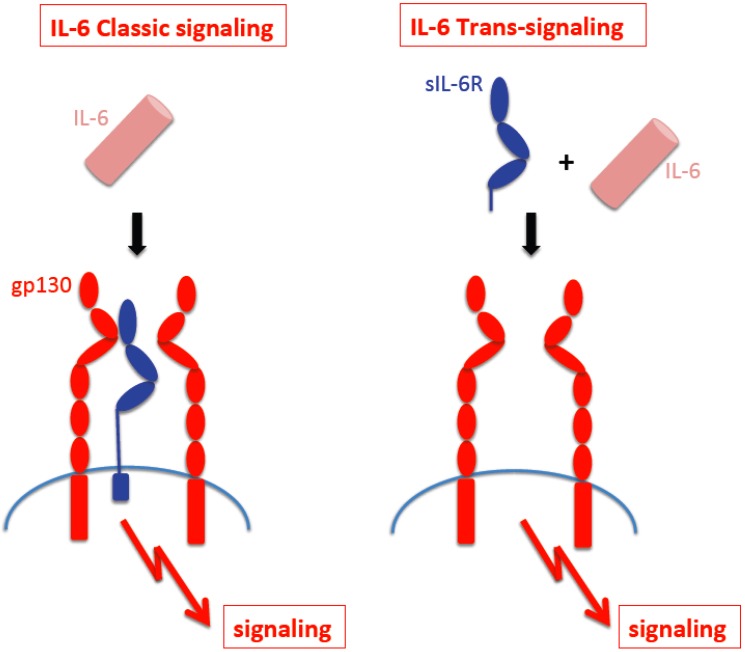
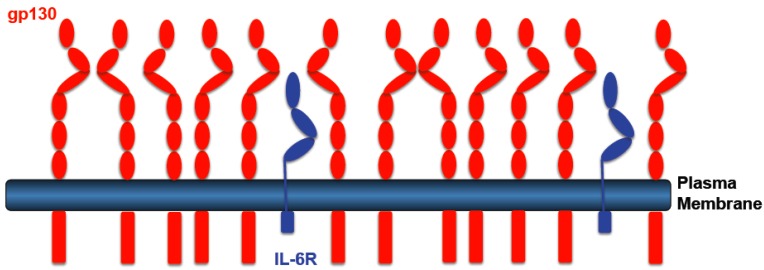
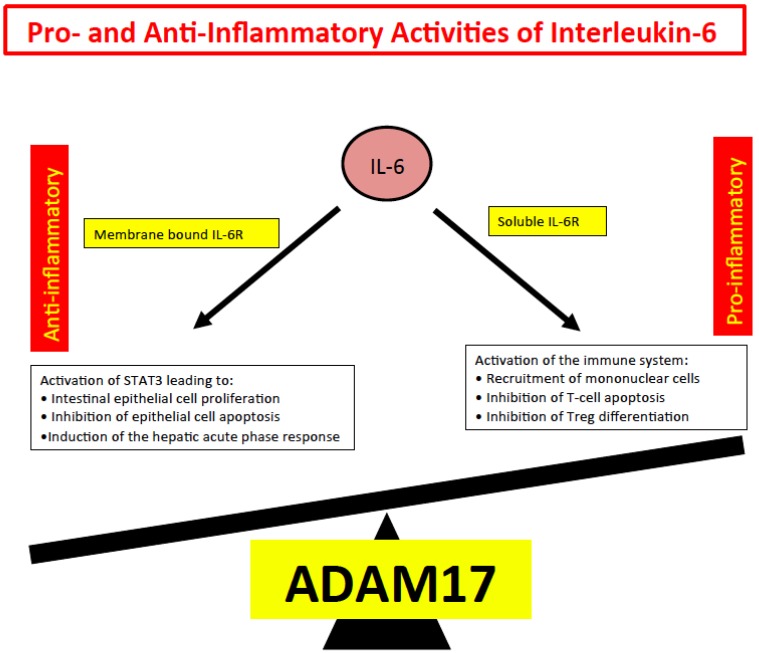
Interleukin-6 (IL-6) is a cytokine with many activities. It has functions in the regulation of the immune system and the nervous system. Furthermore, IL-6 is involved in liver regeneration and in the metabolic control of the body. On target cells, IL-6 binds to an 80 kDa IL-6 receptor (IL-6R). The complex of IL-6 and IL-6R associates with a second protein, gp130, which thereupon dimerizes and initiates intracellular signaling. Whereas gp130 is expressed on all cells, IL-6R is only present on few cells in the body including hepatocytes and some leukocytes. Cells, which do not express IL-6R cannot respond to the cytokine, since gp130 alone has no measurable affinity for IL-6. Interestingly, a soluble form of IL-6R (sIL-6R) comprising the extracellular portion of the receptor can bind IL-6 with a similar affinity as the membrane bound IL-6R. The complex of IL-6 and sIL-6R can bind to gp130 on cells, which do not express the IL-6R, and which are unresponsive to IL-6. This process has been called trans-signaling. Here I will review published evidence that IL-6 trans-signaling is pro-inflammatory whereas classic IL-6 signaling via the membrane bound IL-6R is needed for regenerative or anti-inflammatory activities of the cytokine. Furthermore, the detailed knowledge of IL-6 biology has important consequences for therapeutic strategies aimed at the blockade of the cytokine IL-6.
Overview
The claims and statistics of this paper haven’t been checked yet.
Run the check — free, no account needed. It reads the open-access text and checks the sources it cites.
Integrity signals
Registry
Cites
Statistics
Figures
Verification
Claims the paper makes
The claims and statistics of this paper haven’t been checked yet.
Run the check — free, no account needed. It reads the open-access text and checks the sources it cites.
Claims other papers make about this one
Each is checked against this paper’s own text: does it say what the citing paper says it does?
The source backs part of the claim, not all of it — or backs it for a different population, condition or comparison.
In the citing paper
“Therefore, the balance between mbIL-6R and sIL-6R availability, along with signal duration and tissue context, determines whether IL-6 acts in a protective or pathogenic manner [40].”
From Exercise-Induced Muscle–Fat Crosstalk: Molecular Mediators and Their Pharmacological Modulation for the Maintenance of Metabolic Flexibility in Aging (2025) · cites this paper as [40]
Experimental — accuracy not yet measuredThe source backs part of the claim, not all of it — or backs it for a different population, condition or comparison.
In the citing paper
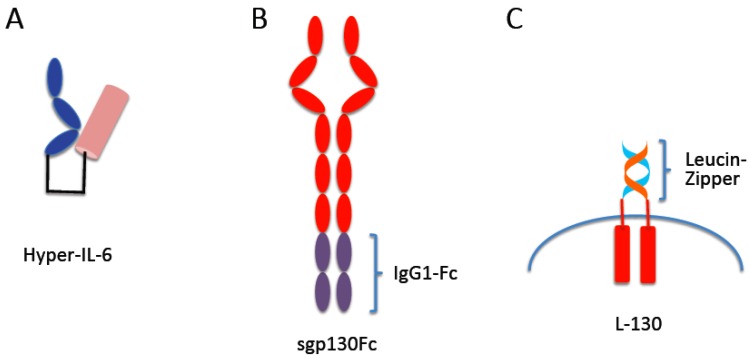
“HyIL-6 triggers signaling in all cells expressing gp130, producing a more robust and homogenous signaling output”
From CDK8 fine-tunes IL-6 transcriptional activities by limiting STAT3 resident time at the gene loci (2020) · cites this paper as Rose-John, 2012
Experimental — accuracy not yet measuredThe cited source says what the claim attributes to it.
In the citing paper
“This is in line with the view that classic and trans-signaling promote anti- and pro-inflammatory responses, respectively (85)”
From T H 17 cells require ongoing classic IL-6 receptor signaling to retain transcriptional and functional identity (2020) · cites this paper as [85]
Self-check
Percentages, sums and reported differences re-computed from the paper’s own numbers.
The self-check needs the paper’s full text.
Citations
Cites
Bettelli, E., Carrier, Y., Gao, W., Korn, T., Strom, T. B., Oukka, M., Weiner, H. L., & Kuchroo, V. K. (2006) · Nature · doi:10.1038/nature04753 · Cited by 6,992 · cited 3×
“The induction of TH17-cells by IL-6 was strongly increased by the presence of sIL-6R indicating a role for trans-signaling in this process [29].”
BackgroundPrinciples of interleukin (IL)-6-type cytokine signalling and its regulation
HEINRICH, P. C., BEHRMANN, I., HAAN, S., HERMANNS, H. M., MÜLLER-NEWEN, G., & SCHAPER, F. (2003) · Biochemical Journal · doi:10.1042/bj20030407 · Cited by 3,272 · cited 1×
“In addition to the activation of the canonical JAK/STAT pathway, the phosphatase SHP-2 is recruited to tyrosine phosphorylated gp130, becomes phosphorylated by JAK1 and thereupon mediates the activation of the Ras-Raf-MAPK signaling pathway [5, 6].”
BackgroundThe pro- and anti-inflammatory properties of the cytokine interleukin-6
Scheller, J., Chalaris, A., Schmidt-Arras, D., & Rose-John, S. (2011) · Biochimica et Biophysica Acta (BBA) - Molecular Cell Research · doi:10.1016/j.bbamcr.2011.01.034 · Cited by 3,212 · cited 2×
“Under physiologic conditions IL-6 is thought to act in a paracrine fashion [69].”
BackgroundSelf-citationKaposi's sarcoma-associated herpesvirus-like DNA sequences in multicentric Castleman's disease.
Soulier, J., Grollet, L., Oksenhendler, E., Cacoub, P., Cazals-Hatem, D., Babinet, P., d'Agay, M., Clauvel, J., Raphael, M., Degos, L., et al. (1995) · Blood · doi:10.1182/blood.v86.4.1276.bloodjournal8641276 · Cited by 2,296 · cited 1×
“This might be very relevant for the situation in patients because HHV8 has been associated with multicentric Castleman disease and 100% of HIV positive patients and 50% of HIV negative patients harbor the virus [94].”
BackgroundGrivennikov, S., Karin, E., Terzic, J., Mucida, D., Yu, G.-Y., Vallabhapurapu, S., Scheller, J., Rose-John, S., Cheroutre, H., Eckmann, L., et al. (2009) · Cancer Cell · doi:10.1016/j.ccr.2009.01.001 · Cited by 2,155
Self-citationHirano, T., Yasukawa, K., Harada, H., Taga, T., Watanabe, Y., Matsuda, T., Kashiwamura, S.-I., Nakajima, K., Koyama, K., Iwamatsu, A., et al. (1986) · Nature · doi:10.1038/324073a0 · Cited by 2,139 · cited 1×
“The cDNA of IL-6 was cloned in 1986 [1] and it was recognized that IL-6 belonged to a large family of cytokines, which all shared the four-helical protein topology [2].”
BackgroundInterleukin-6 triggers the association of its receptor with a possible signal transducer, gp130
Taga, T., Hibi, M., Hirata, Y., Yamasaki, K., Yasukawa, K., Matsuda, T., Hirano, T., & Kishimoto, T. (1989) · Cell · doi:10.1016/0092-8674(89)90438-8 · Cited by 1,396
Atreya, R., Mudter, J., Finotto, S., Müllberg, J., Jostock, T., Wirtz, S., Schütz, M., Bartsch, B., Holtmann, M., Becker, C., et al. (2000) · Nature Medicine · doi:10.1038/75068 · Cited by 1,293
Self-citationWaage, A., Brandtzaeg, P., Halstensen, A. I., Kierulf, P., & Espevik, T. (1989) · The Journal of Experimental Medicine · doi:10.1084/jem.169.1.333 · Cited by 1,175
(2012) · The Lancet · doi:10.1016/s0140-6736(12)60110-x · Cited by 1,146 · cited 1×
“In two recent publications, it was shown that a single nucleotide polymorphism in the IL-6R gene changing glutamine 258 into alanine resulted in higher serum concentrations of sIL-6R was connected to a lower risk of coronary heart disease [71, 72].”
Background
Cited by
Sorted by citations
Targeting the IL-6/JAK/STAT3 signalling axis in cancer
Johnson, D. E., O'Keefe, R. A., & Grandis, J. R. (2018) · Nature Reviews Clinical Oncology · doi:10.1038/nrclinonc.2018.8 · Cited by 3,110
IL-6 as a keystone cytokine in health and disease
Hunter, C. A., & Jones, S. A. (2015) · Nature Immunology · doi:10.1038/ni.3153 · Cited by 2,511
Chimeric antigen receptor T-cell therapy—assessment and management of toxicities
Neelapu, S. S., Tummala, S., Kebriaei, P., Wierda, W., Gutierrez, C., Locke, F. L., Komanduri, K. V., Lin, Y., Jain, N., Daver, N., et al. (2018) · Nature Reviews Clinical Oncology · doi:10.1038/nrclinonc.2017.148 · Cited by 2,438
Shimabukuro‐Vornhagen, A., Gödel, P., Subklewe, M. S., Stemmler, H., Schlößer, H., Schlaak, M. S., Kochanek, M., Böll, B., & von Bergwelt‐Baildon, M. S. (2018) · Journal for ImmunoTherapy of Cancer · doi:10.1186/s40425-018-0343-9 · Cited by 1,712
“This soluble IL-6/IL-6 receptor complex binds to gp130 and therefore can also induce signaling in cell types that do not express membrane bound IL-6 receptors [59].”
BackgroundSARS-CoV-2 infection: The role of cytokines in COVID-19 disease
Costela-Ruiz, V. J., Montes, R. I., Puerta, J. M., Ruíz, C., & Melguizo‐Rodríguez, L. (2020) · Cytokine & Growth Factor Reviews · doi:10.1016/j.cytogfr.2020.06.001 · Cited by 1,132
“It has been reported that it has regenerative and anti-inflammatory effects mediated by the conventional signaling process, although it also exerts proinflammatory effects mediated by trans-signaling, as in the case of viral infections [76].”
Teachey, D. T., Lacey, S. F., Shaw, P. A., Melenhorst, J. J., Maude, S. L., Frey, N., Pequignot, E., Gonzalez, V. E., Chen, F., Finklestein, J., et al. (2016) · Cancer Discovery · doi:10.1158/2159-8290.cd-16-0040 · Cited by 1,102
“In other IL6-mediated diseases, IL6 levels often go up and sIL6R levels either increase or decrease after treatment as the interaction between IL6R and IL6 is blocked (21, 23, 24).”
BackgroundSelf-citationRole of interleukin-6 in cancer progression and therapeutic resistance
Kumari, N., Dwarakanath, B. S. R., Das, A., & Bhatt, A. N. (2016) · Tumor Biology · doi:10.1007/s13277-016-5098-7 · Cited by 1,132
“Like sIL-6R, a soluble form of the signal transducer protein gp130 (sgp130) is also present in the circulation at relatively high concentrations during inflammation and cancer [37, 39].”
BackgroundIL-6 pathway in the liver: From physiopathology to therapy
Schmidt-Arras, D., & Rose-John, S. (2016) · Journal of Hepatology · doi:10.1016/j.jhep.2016.02.004 · Cited by 881
Self-citationInflammation: The Common Pathway of Stress-Related Diseases
Liu, Y.-Z., Wang, Y.-X., & Jiang, C.-L. (2017) · Frontiers in Human Neuroscience · doi:10.3389/fnhum.2017.00316 · Cited by 800
“Moreover, evidence that disruption of IL-6 trans-signaling delays growth in established murine tumors demonstrates that IL-6 activities are important during neoplastic progression (Grivennikov et al., 2009; Rose-John, 2012).”
BackgroundIL-6R/STAT3/miR-34a feedback loop promotes EMT-mediated colorectal cancer invasion and metastasis
Rokavec, M., Öner, M. G., Li, H., Jackstadt, R., Jiang, L., Lodygin, D., Kaller, M., Horst, D., Ziegler, P. K., Schwitalla, S., et al. (2014) · Journal of Clinical Investigation · doi:10.1172/jci73531 · Cited by 753
“However, the CRC cell lines with a mesenchymal phenotype, which consist only of tumor cells, showed elevated expression of the s–IL-6R, which is involved in IL-6 transsignal-ing (55) and is also under control of miR-34a.”
BackgroundIL-6 and related cytokines as the critical lynchpins between inflammation and cancer
Taniguchi, K., & Karin, M. (2014) · Seminars in Immunology · doi:10.1016/j.smim.2014.01.001 · Cited by 724
JAK-STAT Signaling: A Double-Edged Sword of Immune Regulation and Cancer Progression
Owen, K. L., Brockwell, N. K., & Parker, B. S. (2019) · Cancers · doi:10.3390/cancers11122002 · Cited by 728
“transendothelial migration of tumor cells [107], the recruitment of neutrophils and macrophages into the TME through endothelial cell secretion of monocyte chemoattractant protein-1 (MCP-1) [108], M2 polarization of macrophages, inhibition of DC activation, and Treg differentiation [109].”
BackgroundThe two faces of IL-6 in the tumor microenvironment
Fisher, D. T., Appenheimer, M. M., & Evans, S. S. (2014) · Seminars in Immunology · doi:10.1016/j.smim.2014.01.008 · Cited by 693
Targeting inflammation in the treatment of type 2 diabetes: time to start
Donath, M. Y. (2014) · Nature Reviews Drug Discovery · doi:10.1038/nrd4275 · Cited by 690
A Review of SARS-CoV-2 and the Ongoing Clinical Trials
Tu, Y. F., Chien, C., Yarmishyn, A. A., Lin, Y., Luo, Y., Lin, Y.-T., Lai, W.-Y., Yang, D., Chou, S., Yang, Y., et al. (2020) · International Journal of Molecular Sciences · doi:10.3390/ijms21072657 · Cited by 702
“Hence, specific blockade of IL-6-regulated signaling pathways represents a promising approach to attenuate inflammation-associated damage [78].”
BackgroundMendelian randomization in cardiometabolic disease: challenges in evaluating causality
Holmes, M. V., Ala-Korpela, M., & Smith, G. D. (2017) · Nature Reviews Cardiology · doi:10.1038/nrcardio.2017.78 · Cited by 679
Interleukin-6 and its receptors: a highly regulated and dynamic system
Wolf, J., Rose-John, S., & Garbers, C. (2014) · Cytokine · doi:10.1016/j.cyto.2014.05.024 · Cited by 618
Self-citationThe Role of IL-6 in Skin Fibrosis and Cutaneous Wound Healing
Johnson, B. Z., Stevenson, A. W., Prêle, C. M., Fear, M. W., & Wood, F. M. (2020) · Biomedicines · doi:10.3390/biomedicines8050101 · Cited by 557
“IL-6 trans-signaling, whereby sIL-6Rα/IL-6 associates with gp130 and initiates JAK/STAT and MAPK signaling pathways [32], stimulates the migration of fibroblasts to sites of injury.”
BackgroundChanges in Nutritional Status Impact Immune Cell Metabolism and Function
Alwarawrah, Y., Kiernan, K., & MacIver, N. J. (2018) · Frontiers in Immunology · doi:10.3389/fimmu.2018.01055 · Cited by 534
“IL-6 can signal through binding to the IL-6 receptor dimerized with gp130 on the surface of cells; however, IL-6 effects can also be mediated through trans-signaling, in which IL-6 binds to soluble IL-6 receptor, thereby permitting IL-6 to act on any cell that expresses gp130.”
BackgroundInfluentialInterleukin-6: Biology, signaling and strategies of blockade
Schaper, F., & Rose‐John, S. (2015) · Cytokine & Growth Factor Reviews · doi:10.1016/j.cytogfr.2015.07.004 · Cited by 532
“During inflammation or infection, IL-6 is secreted by neutrophils, monocytes, macrophages, fibroblasts, endothelial cells, smooth muscle cells and T-cells [29].”
BackgroundSelf-citationSide-effect management of chimeric antigen receptor (CAR) T-cell therapy
Schubert, M., Schmitt, M. W., Wang, L., Ramos, C. A., Jordan, K., Müller‐Tidow, C., & Dreger, P. (2020) · Annals of Oncology · doi:10.1016/j.annonc.2020.10.478 · Cited by 502
Targeting cytokine and chemokine signaling pathways for cancer therapy
Yi, M., Li, T., Niu, M., Zhang, H., Wu, Y., Wu, K., & Dai, Z. (2024) · Signal Transduction and Targeted Therapy · doi:10.1038/s41392-024-01868-3 · Cited by 528
The IL-1β, IL-6, and TNF cytokine triad is associated with post-acute sequelae of COVID-19
Schultheiß, C., Willscher, E., Paschold, L., Gottschick, C., Klee, B., Henkes, S.-S., Henkes, S.-S., Bosurgi, L., Sedding, D., Sedding, D., et al. (2022) · Cell Reports Medicine · doi:10.1016/j.xcrm.2022.100663 · Cited by 487
“38,80 The relevance of IL-6 trans -signaling for acute COVID-19 has recently been reported.”
The IL-6/gp130/STAT3 signaling axis: recent advances towards specific inhibition
Garbers, C., Aparicio-Siegmund, S., & Rose‐John, S. (2015) · Current Opinion in Immunology · doi:10.1016/j.coi.2015.02.008 · Cited by 432
“The soluble IL-6R: a buffer in the blood In healthy individuals levels of IL-6 in the plasma are extremely low, close to the detection limit of 1 pg/ml [23].”
BackgroundSelf-citationUnderstanding the role of cytokines in the pathogenesis of rheumatoid arthritis
Mateen, S., Zafar, A., Moin, S., Khan, A. Q., & Zubair, S. (2016) · Clinica Chimica Acta · doi:10.1016/j.cca.2016.02.010 · Cited by 418
Interleukin-6: an emerging regulator of pathological pain
Zhou, Y.-Q., Liu, Z., Liu, Z.-H., Chen, S.-P., Li, M., Shahveranov, A., Ye, D., & Tian, Y.-K. (2016) · Journal of Neuroinflammation · doi:10.1186/s12974-016-0607-6 · Cited by 390
The Role of Pro-Inflammatory Cytokines in the Pathogenesis of Cardiovascular Disease
Zhang, H., & Dhalla, N. S. (2024) · International Journal of Molecular Sciences · doi:10.3390/ijms25021082 · Cited by 426
Nagasaki, T., Hara, M., Nakanishi, H., Takahashi, H., Sato, M., & Takeyama, H. (2013) · British Journal of Cancer · doi:10.1038/bjc.2013.748 · Cited by 401
Zegeye, M. M., Lindkvist, M., Fälker, K., Kumawat, A. K., Paramel, G. V., Grenegård, M., Sirsjö, A., & Ljungberg, L. U. (2018) · Cell Communication and Signaling · doi:10.1186/s12964-018-0268-4 · Cited by 378
Cai, Y., Liu, J., Wang, B., Sun, M., & Yang, H. (2022) · Frontiers in Immunology · doi:10.3389/fimmu.2022.856376 · Cited by 351
Inflammation in obesity and diabetes: islet dysfunction and therapeutic opportunity
Donath, M. Y., Dalmas, É., Sauter, N. S., & Böni-Schnetzler, M. (2013) · Cell Metabolism · doi:10.1016/j.cmet.2013.05.001 · Cited by 338
“However, this remains speculative, and due to the complex effects of IL-6, clinical translation should await the outcome of further studies clarifying the precise role of IL-6 in metabolism and the development of drugs, allowing IL-6 effects to be targeted to a specific tissue (Rose-John, 2012).”
BackgroundThe shedding protease ADAM17: Physiology and pathophysiology
Zunke, F., & Rose‐John, S. (2017) · Biochimica et Biophysica Acta (BBA) - Molecular Cell Research · doi:10.1016/j.bbamcr.2017.07.001 · Cited by 337
Self-citationHeichler, C., Koop, K., Schmied, A., Geppert, C. I., Schmid, B., Wirtz, S. J., Thoma, O., Kramer, V., Waldner, M. J., Büttner, C., et al. (2019) · Gut · doi:10.1136/gutjnl-2019-319200 · Cited by 330
Self-citationIL-6 biology: implications for clinical targeting in rheumatic disease
Calabrese, L., & Rose-John, S. (2014) · Nature Reviews Rheumatology · doi:10.1038/nrrheum.2014.127 · Cited by 329
Self-citationSheppard, M., Laskou, F., Stapleton, P., Hadavi, S., & Dasgupta, B. (2017) · Human Vaccines & Immunotherapeutics · doi:10.1080/21645515.2017.1316909 · Cited by 305
“© 2017 Taylor & Francis immune defense against bacterial infection.15 These findings led to the conclusion that the IL-6 classic pathway is important for regenerative and protective function whereas the IL-6 trans-signaling pathway constitutes the pro-inflammatory activity of IL-6.”
BackgroundInfluentialThe role of cytokines in the development of atherosclerosis
Fatkhullina, A. R., Peshkova, I. O., & Koltsova, E. K. (2016) · Biochemistry (Moscow) · doi:10.1134/s0006297916110134 · Cited by 338
Fernando, M., Reyes, J. L., Iannuzzi, J. P., Leung, G., & McKay, D. M. (2014) · PLoS ONE · doi:10.1371/journal.pone.0094188 · Cited by 320
Interleukin-6: from basic biology to selective blockade of pro-inflammatory activities
Scheller, J., Garbers, C., & Rose-John, S. (2014) · Seminars in Immunology · doi:10.1016/j.smim.2013.11.002 · Cited by 308
“Levels of sIL-6R, however, are in the range of 50 ng/ml and levels of sgp130 are found to be between 250 and 400 ng/ml [79,80].”
BackgroundSelf-citationEffects of IL-1β, IL-6 and IL-8 on erythrocytes, platelets and clot viscoelasticity
Bester, J., & Pretorius, E. (2016) · Scientific Reports · doi:10.1038/srep32188 · Cited by 303
IL-6 signalling pathways and the development of type 2 diabetes
Akbari, M., & Hassan‐Zadeh, V. (2018) · Inflammopharmacology · doi:10.1007/s10787-018-0458-0 · Cited by 315
“While it is generally believed that IL-6 classic signalling is involved in the anti-inflammatory and regenerative activities of IL-6, IL-6 trans-signalling is considered to be responsible for the pro-inflammatory responses caused by this cytokine (Rose-John 2012; Schaper and Rose-John 2015).”
BackgroundMasjedi, A., Hashemi, V., Hojjat-Farsangi, M., Ghalamfarsa, G., Azizi, G., Yousefi, M., & Jadidi-Niaragh, F. (2018) · Biomedicine & Pharmacotherapy · doi:10.1016/j.biopha.2018.09.177 · Cited by 303
Diabetic Macular Edema: Current Understanding, Molecular Mechanisms and Therapeutic Implications
Zhang, J., Zhang, J., Zhang, J., Zhang, J., Gu, L., Luo, D., & Qiu, Q. (2022) · Cells · doi:10.3390/cells11213362 · Cited by 325
“IL-6 signaling occurs through its membranebound receptor IL-6R (classical signaling) or through the soluble IL-6R (sIL-6R, transsignaling) [198,199].”
BackgroundThe Clinical Significance of Interleukin-6 in Heart Failure: Results from the BIOSTAT-CHF Study
Markousis‐Mavrogenis, G., Tromp, J., Ouwerkerk, W., Devalaraja, M., Anker, S. D., Cleland, J. G. F., Dickstein, K., Filippatos, G. S., van der Harst, P., Lang, C. C., et al. (2019) · European Journal of Heart Failure · doi:10.1002/ejhf.1482 · Cited by 300
“3 The results of CANTOS and the accumulating evidence for the role of inflammation in HF resulted in renewed interest to investigate anti-inflammatory agents in HF. Interleukin-6 is a cytokine with both pro-inflammatory and anti-inflammatory properties.”
BackgroundThe role of cytokines in the regulation of NK cells in the tumor environment.
Konjević, G., Vuletić, A., Martinović, K. M., Larsen, A., & Jurišić, V. (2019) · Cytokine · doi:10.1016/j.cyto.2019.02.001 · Cited by 234
Chernyak, B. V., Popova, E. N., Prikhodko, A. S., Grebenchikov, O. A., Zinovkina, L. A., & Zinovkin, R. A. (2020) · Biochemistry (Moscow) · doi:10.1134/s0006297920120068 · Cited by 290
Cytokines and abnormal glucose and lipid metabolism
Shi, J., Fan, J., Su, Q., & Yang, Z. (2019) · Frontiers in Endocrinology · doi:10.3389/fendo.2019.00703 · Cited by 282
“While it is generally believed that the classic signaling is participated in the anti-inflammatory and regenerative activities of IL-6, the trans-signaling is involved in the pro-inflammatory responses induced by this cytokine (85, 86).”
Oxidative stress and the ageing endocrine system
Vitale, G., Salvioli, S., & Franceschi, C. (2013) · Nature Reviews Endocrinology · doi:10.1038/nrendo.2013.29 · Cited by 271
Acute Inflammation in Tissue Healing
Soliman, A. M., & Barreda, D. R. (2022) · International Journal of Molecular Sciences · doi:10.3390/ijms24010641 · Cited by 301
Crosstalk of Inflammatory Cytokines within the Breast Tumor Microenvironment
Habanjar, O., Bingula, R., Decombat, C., Diab‐Assaf, M., Caldefie‐Chezet, F., & Delort, L. (2023) · International Journal of Molecular Sciences · doi:10.3390/ijms24044002 · Cited by 287
Mahmud, F., Sarker, D. B., Jocelyn, J. A., & Sang, Q. A. (2024) · Cells · doi:10.3390/cells13211788 · Cited by 272
Immunopathogenesis of inflammatory bowel disease and mechanisms of biological therapies
Ahluwalia, B., Moraes, L., Magnusson, M. K., & Öhman, L. (2018) · Scandinavian Journal of Gastroenterology · doi:10.1080/00365521.2018.1447597 · Cited by 264
“Targeting IL-6 is already a reality in other chronic inflammatory diseases such as rheumatoid arthritis, where tocilizumab, an antibody against IL-6R, is already in use [40,41].”
BackgroundLiu, C., Lee, T.-L., Chen, Y., Liang, C., Wang, S.-H., Lue, J., Tsai, J., Lee, S.-W., Chen, S., Yang, Y.-F., et al. (2018) · Particle and Fibre Toxicology · doi:10.1186/s12989-018-0240-x · Cited by 233
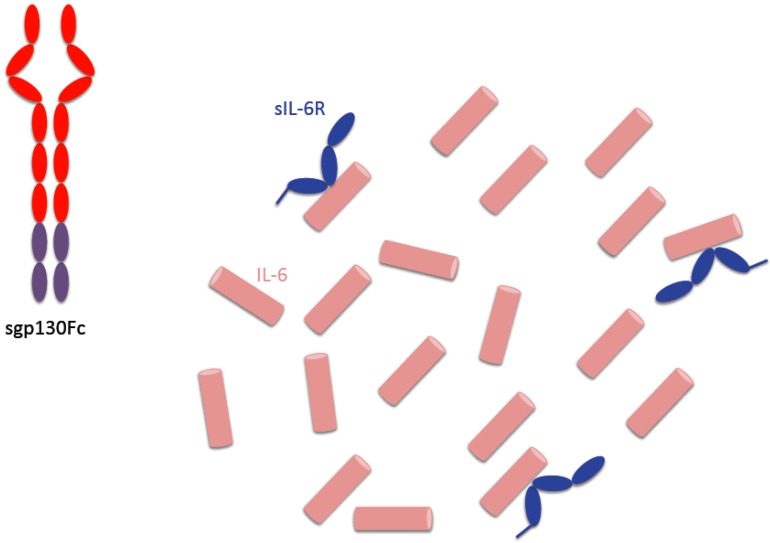
“sgp130Fc specifically blocks IL-6 trans-signaling without affecting IL-6 classic signaling [29], but it did not affect ICAM-1 expression in cells according to Western blot (see Additional file 1: Fig.”
Iwasaki, M., Saito, J., Zhao, H., Sakamoto, A., Hirota, K., & Ma, D. (2020) · Inflammation · doi:10.1007/s10753-020-01337-3 · Cited by 234
The Role of IL-6 in Cancer Cell Invasiveness and Metastasis—Overview and Therapeutic Opportunities
Rašková, M., Lacina, L., Kejík, Z., Venhauerova, A., Skaličková, M., Kolář, M., Jakubek, M., Rösel, D., Smetana, K., & Brábek, J. (2022) · Cells · doi:10.3390/cells11223698 · Cited by 241
Brown, M. C., Holl, E. K., Boczkowski, D., Dobrikova, E. Y., Mosaheb, M., Chandramohan, V., Bigner, D. D., Gromeier, M., & Nair, S. K. (2017) · Science Translational Medicine · doi:10.1126/scitranslmed.aan4220 · Cited by 228
Patra, T., Meyer, K., Geerling, L., Isbell, T. S., Hoft, D. F., Brien, J. D., Pinto, A. K., Ray, R. B., & Ray, R. (2020) · PLoS Pathogens · doi:10.1371/journal.ppat.1009128 · Cited by 229
“In general, classic IL-6 signaling is responsible for the anti-inflammatory properties of IL-6, whereas trans-signaling is responsible for the pro-inflammatory actions of IL-6 [41].”
BackgroundIL-6/STAT3 Is a Promising Therapeutic Target for Hepatocellular Carcinoma
Xu, J., Lin, H., Wu, G., Zhu, M., & Li, M. (2021) · Frontiers in Oncology · doi:10.3389/fonc.2021.760971 · Cited by 228
Cytokine-Induced Modulation of Colorectal Cancer
Mager, L. F., Wasmer, M.-H., Rau, T. T., & Krebs, P. (2016) · Frontiers in Oncology · doi:10.3389/fonc.2016.00096 · Cited by 223
“Soluble IL-6R, then, associates with the ubiquitously expressed glycoprotein 130 (IL-6 ST/GP130) (60).”
BackgroundInterleukin 6 and Rheumatoid Arthritis
Yoshida, Y., & Tanaka, T. (2014) · BioMed Research International · doi:10.1155/2014/698313 · Cited by 214
Immunological functions of liver sinusoidal endothelial cells
Knolle, P. A., & Wohlleber, D. (2016) · Cellular and Molecular Immunology · doi:10.1038/cmi.2016.5 · Cited by 218
The Two-Faced Cytokine IL-6 in Host Defense and Diseases
Narazaki, M., & Kishimoto, T. (2018) · International Journal of Molecular Sciences · doi:10.3390/ijms19113528 · Cited by 214
“The IL-6/sIL-6R complex activates gp130-expressing cells, even if cells lack membrane IL-6R, a process known as trans-signaling [29].”
BackgroundPeripheral Markers of Depression
Nobis, A., Zalewski, D., & Waszkiewicz, N. (2020) · Journal of Clinical Medicine · doi:10.3390/jcm9123793 · Cited by 197
“The activation of soluble IL-6 receptors (sIL-6R) is responsible for IL-6 trans-signaling [44], which is characteristic of inflammation, while IL-6 classic signaling contributes to anti-inflammatory effects [97].”
BackgroundCook, S. A., & Schäfer, S. (2020) · Annual Review of Medicine · doi:10.1146/annurev-med-041818-011649 · Cited by 178
Interleukin-6 as a Multifunctional Regulator: Inflammation, Immune Response, and Fibrosis
Choy, E., & Rose-John, S. (2017) · Journal of Scleroderma and Related Disorders · doi:10.5301/jsrd.5000265 · Cited by 174
“Human endothelial cells express gp130 but not IL-6R (9, 37, 52), whereas sIL-6R–mediated trans-signaling is known to increase the expression of adhesion molecules by endothelial cells and the binding of neutrophils, thereby causing vascular inflammation (37).”
BackgroundInfluentialSelf-citationDurlacher, K., Hassan, A., Levi, R., Axelrod, J. H., Silver, J., & Naveh‐Many, T. (2018) · Kidney International · doi:10.1016/j.kint.2018.02.026 · Cited by 181
Immune‐suppressive effects of interleukin‐6 on T‐cell‐mediated anti‐tumor immunity
Tsukamoto, H., Fujieda, K., Senju, S., Ikeda, T., Oshiumi, H., & Nishimura, Y. (2017) · Cancer Science · doi:10.1111/cas.13433 · Cited by 168
“In addition to IL-6, elevated levels of sIL-6R have been proposed as a poor prognostic factor in patients with certain types of cancer,(27) because they promote IL-6 stabilization and amplify IL-6 signaling through protecting IL-6 from rapid degradation in vivo.(26) sIL-6R is produced by the shedding of membrane-bound…”
BackgroundMiao, L., Qi, J., Zhao, Q., Wu, Q.-N., Wei, D., Wei, X., Liu, J., Chen, J., Zeng, Z.-L., Ju, H., et al. (2019) · Theranostics · doi:10.7150/thno.37745 · Cited by 170
“immune responses and cancer progression [43].”
BackgroundA new era for the treatment of inflammatory autoimmune diseases by interleukin-6 blockade strategy
Tanaka, T., Narazaki, M., Ogata, A., & Kishimoto, T. (2014) · Seminars in Immunology · doi:10.1016/j.smim.2014.01.009 · Cited by 166
Shahini, A., & Shahini, A. (2022) · Journal of Cell Communication and Signaling · doi:10.1007/s12079-022-00695-x · Cited by 171
“1997; Rose-John 2012).”
BackgroundThe soluble interleukin 6 receptor: advanced therapeutic options in inflammation
Rose‐John, S. (2017) · Clinical Pharmacology & Therapeutics · doi:10.1002/cpt.782 · Cited by 169
Self-citationIL ‐6 in diabetes and cardiovascular complications
Qu, D. C., Liu, J., Lau, C. W., & Huang, Y. (2014) · British Journal of Pharmacology · doi:10.1111/bph.12713 · Cited by 166
“The anti-inflammatory and regenerative activities of IL-6 are generally mediated by the classic signalling mode, whereas pro-inflammatory responses in many pathological conditions involve trans-signalling (Rabe et al., 2008; Rose-John, 2012).”
BackgroundThe genetics of asthma and the promise of genomics-guided drug target discovery
Elhusseini, Z. W., Gosens, R., Dekker, F. J., & Koppelman, G. H. (2020) · The Lancet Respiratory Medicine · doi:10.1016/s2213-2600(20)30363-5 · Cited by 172
Interleukin-6 signalling in health and disease
Rose‐John, S. (2020) · F1000Research · doi:10.12688/f1000research.26058.1 · Cited by 167
Self-citationPu, C., Liu, C., Liang, C., Yen, Y., Chen, S., Jiang‐Shieh, Y., Chien, C. L., Chen, Y.-C., & Chen, Y.-L. (2017) · Journal of Investigative Dermatology · doi:10.1016/j.jid.2016.12.030 · Cited by 160
Current challenges and emerging opportunities of CAR-T cell therapies
Abreu, T. R., Fonseca, N. A., Gonçalves, N., & Moreira, J. N. (2019) · Journal of Controlled Release · doi:10.1016/j.jconrel.2019.12.047 · Cited by 159
Favalli, E. G. (2020) · Rheumatology and Therapy · doi:10.1007/s40744-020-00219-2 · Cited by 164
“The IL-6/sIL-6R/ gp130 complex then dimerizes as described above to initiate signaling in a much wider range of cells [19, 21].”
BackgroundInfluentialThe role of inflammation in diabetic eye disease
Mesquida, M., Drawnel, F., & Fauser, S. (2019) · Seminars in Immunopathology · doi:10.1007/s00281-019-00750-7 · Cited by 159
The Therapeutic Landscape of Rheumatoid Arthritis: Current State and Future Directions
Shams, S., Martinez, J. M., Dawson, J. R. D., Flores, J. C., Gabriel, M., Garcia, G., de Guevara, A. L., Murray, K. M., Pacifici, N. J., Vargas, M. V., et al. (2021) · Frontiers in Pharmacology · doi:10.3389/fphar.2021.680043 · Cited by 162
“Studies have associated IL-6’s pro-inflammatory responses with signaling through its soluble receptor, whereas signaling through its transmembrane IL-6R, IL-6’s canonical signaling pathway, is needed for its regenerative or anti-inflammatory properties(Rose-John, 2012).”
BackgroundGupta, S., Hirota, M., Waugh, S. M., Murakami, I., Suzuki, T., Muraguchi, M., Shibamori, M., Ishikawa, Y., Jarvis, T. C., Carter, J. D., et al. (2014) · Journal of Biological Chemistry · doi:10.1074/jbc.m113.532580 · Cited by 151
“This is also known as the trans-signaling pathway (8, 9).”
BackgroundHarbour, S. N., DiToro, D. F., Witte, S. J., Zindl, C. L., Gao, M., Schoeb, T. R., Jones, G. W., Jones, S. A., Hatton, R. D., & Weaver, C. T. (2020) · Science Immunology · doi:10.1126/sciimmunol.aaw2262 · Cited by 151
“This is in line with the view that classic and trans-signaling promote anti- and proinflammatory responses, respectively (84), and suggests that inhibiting classic signaling and, thus, the protective effects of IL-6 may exacerbate disease.”
BackgroundGarbers, C., Monhasery, N., Aparicio-Siegmund, S., Lokau, J., Baran, P., Nowell, M. A., Jones, S. A., Rose-John, S., & Scheller, J. (2014) · Biochimica et Biophysica Acta (BBA) - Molecular Basis of Disease · doi:10.1016/j.bbadis.2014.05.018 · Cited by 155
“An increased proteolytic conversion of IL-6R due to the Asp358Ala SNP might therefore contribute to this increased buffer capacity of IL-6 and to overall reduced IL-6 activity [5,38].”
BackgroundSelf-citationNovel antiatherosclerotic therapies
Libby, P., & Everett, B. M. (2019) · Arteriosclerosis, Thrombosis, and Vascular Biology · doi:10.1161/atvbaha.118.310958 · Cited by 145
Zhang, C., Xin, H., Zhang, W., Yazaki, P. J., Zhang, Z., Le, K., Li, W., Lee, H., Kwak, L. W., Forman, S. J., et al. (2016) · Immunity · doi:10.1016/j.immuni.2016.04.003 · Cited by 147
“…microenvironment conditions, IL-6R is known to be cleaved from the surface of the cell to form soluble IL-6Ra (sIL-6Ra), which nevertheless can activate IL-6 signaling and Stat3 by virtue of ‘‘IL-6 trans-signaling’’ (Neu- rath and Finotto, 2011; Rose-John, 2012; Rose-John and Neu- rath, 2004).”
BackgroundMolecular Mechanisms of Cancer-Induced Sleep Disruption
Walker, W. H., II, & Borniger, J. C. (2019) · International Journal of Molecular Sciences · doi:10.3390/ijms20112780 · Cited by 149
“It is important to note that IL-6 signaling can occur via classical or trans-signaling pathways [140].”
BackgroundThe JAK/STAT Pathway in Skeletal Muscle Pathophysiology
Moresi, V., Adamo, S., & Berghella, L. (2019) · Frontiers in Physiology · doi:10.3389/fphys.2019.00500 · Cited by 145
“Frontiers in Physiology | www.frontiersin.org 7 April 2019 | Volume 10 | Article 500 the membrane bound IL-6R, which instead is needed for regenerative or anti-inflammatory activities of the cytokine (Scheller et al., 2011; Rose-John, 2012; Belizário et al., 2016).”
BackgroundPhysiological effects of modulating the interleukin-6 axis
Schett, G. A. (2018) · Rheumatology · doi:10.1093/rheumatology/kex513 · Cited by 148
The JAK-STAT pathway: from structural biology to cytokine engineering
Lv, Y., Qi, J., Babon, J. J., Cao, L., Fan, G.-H., Lang, J., Zhang, J., Mi, P., Kobe, B., & Wang, F. (2024) · Signal Transduction and Targeted Therapy · doi:10.1038/s41392-024-01934-w · Cited by 157
Tocilizumab in the treatment of rheumatoid arthritis: an evidence-based review and patient selection
Biggioggero, M., Crotti, C., Becciolini, A., & Favalli, E. G. (2018) · Drug Design Development and Therapy · doi:10.2147/dddt.s150580 · Cited by 147
“52 IL-6 may interact with the membrane-bound subunit in the classical (cis-) signaling pathway which activates the acute-phase response and is involved in metabolic effects, infection defense, and tissue regeneration.”
Riegler, L. L., Jones, G. P., & Lee, D. W. (2019) · Therapeutics and Clinical Risk Management · doi:10.2147/tcrm.s150524 · Cited by 148
“Siltuximab is another monoclonal antibody that blocks IL-6 signaling by binding IL-6 itself and preventing it from activating immune effector cells through either the trans or cis mechanisms.(38) Siltuximab has a higher affinity for IL-6 than tocilizumab has for the IL-6R making it an attractive tool in managing CRS.”
BackgroundMethodPorter, R. J., Arends, M. J., Churchhouse, A. M. D., & Din, S. (2021) · Journal of Crohn s and Colitis · doi:10.1093/ecco-jcc/jjab102 · Cited by 149
Myokines and Resistance Training: A Narrative Review
Zunner, B. E. M., Wachsmuth, N. B., Eckstein, M. L., Scherl, L., Schierbauer, J., Haupt, S., Stumpf, C., Reusch, L., & Moser, O. (2022) · International Journal of Molecular Sciences · doi:10.3390/ijms23073501 · Cited by 146
“Furthermore, there are different pathways following the activation of IL-6 receptor (IL-6R) that are responsible for either proinflammatory or anti-inflammatory effects of IL-6 [58,59].”
BackgroundDistinct Effects of IL-6 Classic and Trans -Signaling in Bone Fracture Healing
Prystaz, K., Kaiser, K., Kovtun, A., Haffner-Luntzer, M., Fischer, V., Rapp, A. E., Liedert, A., Strauss, G., Waetzig, G. H., Rose-John, S., et al. (2018) · The American Journal of Pathology · doi:10.1016/j.ajpath.2017.10.011 · Cited by 142
“25,27 To our knowledge, studies discriminating between the roles of both IL-6 signaling pathways in the in fl ammatory response to fracture and bone healing are lacking.”
BackgroundInfluentialSelf-citationProteolytic Cleavage Governs Interleukin-11 Trans-signaling
Lokau, J., Nitz, R., Agthe, M., Monhasery, N., Aparicio-Siegmund, S., Schumacher, N., Wolf, J., Möller‐Hackbarth, K., Waetzig, G. H., Grötzinger, J., et al. (2016) · Cell Reports · doi:10.1016/j.celrep.2016.01.053 · Cited by 135
Self-citationThe role of the interleukin (IL)-6/IL-6 receptor axis in cancer
Taher, M. Y., Davies, D. M., & Maher, J. F. (2018) · Biochemical Society Transactions · doi:10.1042/bst20180136 · Cited by 138
Diabetes and Sepsis: Risk, Recurrence, and Ruination
Frydrych, L. M., Fattahi, F., He, K., Ward, P. A., & Delano, M. J. (2017) · Frontiers in Endocrinology · doi:10.3389/fendo.2017.00271 · Cited by 141
“In the paradigm of inflammation within obesity, it is hypothesized that IL-6 enhances the prevailing inflammation, thus precipitating insulin resistance and leading to further micro- and macrovascular complications (245).”
BackgroundNițulescu, G. M., Păunescu, H., Moschos, S. A., Petrakis, D., Nițulescu, G., Ion, D., Spandidos, D. A., Νikolouzakis, Τ. Κ., Drakoulis, N., & Tsatsakis, A. M. (2020) · International Journal of Molecular Medicine · doi:10.3892/ijmm.2020.4608 · Cited by 135
“Tocilizumab is a humanized monoclonal antibody (mAb) directed against the IL-6 receptor used as an effective therapeutic agent for rheumatoid arthritis patients who do not respond to methotrexate (176).”
InfluentialInterplay of skeletal muscle and adipose tissue: sarcopenic obesity.
Park, M., & Choi, K. M. (2023) · Metabolism: Clinical and Experimental · doi:10.1016/j.metabol.2023.155577 · Cited by 106
Santoro, A., Pini, E., Scurti, M., Palmas, M. G., Berendsen, A. A. M., Brzozowska, A., Pietruszka, B., Szczecińska, A., Cano, N., Meunier, N., et al. (2013) · Mechanisms of Ageing and Development · doi:10.1016/j.mad.2013.12.001 · Cited by 129
“…and anti-inflammatory effects, depending on the signalling pathway that is activated, i.e. ‘‘direct’’ through IL-6 receptor present in a limited number of cells or ‘‘trans-signalling’’ mediated by a previous binding to sIL-6R and then to gp130 present in a variety of cell types (Rose-John, 2012).”
Nääv, Å., Erlandsson, L., Isaxon, C., Frostner, E. Å., Ehinger, J. K., Sporre, M. K., Krais, A. M., Strandberg, B., Lundh, T., Elmér, E., et al. (2020) · Frontiers in Endocrinology · doi:10.3389/fendo.2020.00075 · Cited by 129
“It has effects on both cells from the immune system and other cell types, such as hepatocytes (48).”
BackgroundRoan, F., Stoklasek, T. A., Whalen, E., Molitor, J. A., Bluestone, J. A., Buckner, J. H., & Ziegler, S. F. (2016) · The Journal of Immunology · doi:10.4049/jimmunol.1501491 · Cited by 135
“as well as ILC2, which can also express significant levels of IL6Ra, may serve as sources of soluble IL-6Ra, which can amplify IL-6 responses in inflammatory conditions (75).”
Background
Metadata
- Authors
- Rose-John, S.
- Venue
- International Journal of Biological Sciences
- Publisher
- Ivyspring International Publisher
- Published
- 2012
- Volume
- 8
- Issue
- 9
- Pages
- 1237-1247
- ISSN
- 1449-2288 (ISSN-L)
- PMC
- PMC3491447
- OpenAlex
- W2100478793
- Cited by
- 1,040
- References
- 110
- Citations by year
- 2026: 87 · 2025: 98 · 2024: 77 · 2023: 73 · 2022: 94 · 2021: 108 · 2020: 107 · 2019: 76 · 2018: 72 · 2017: 65 · 2016: 49 · 2015: 48 · 2014: 54 · 2013: 30 · 2012: 1
- FWCI
- 4.28
- Type
- journal article
- Language
- en
- Open access
- gold
- doi.org
- Licence
- cc-by-nc
- Locations
- International Journal of Biological Sciences (publishedVersion, cc-by-nc)
- Europe PMC (PubMed Central) (publishedVersion, cc-by-nc-nd)
- PubMed Central (publishedVersion, cc-by-nc-nd)
- PubMed (publishedVersion)
- DOAJ (DOAJ: Directory of Open Access Journals) (submittedVersion)
- Funders
- Deutsche Forschungsgemeinschaft (SFB654, SFB841, project C1; SFB877, project A1, SFB 877, SFB841 project C1, SFB877, project A1, SFB 841)
- Exzellenzclusters Entzündungsforschung
- Topics
- Life Sciences › Immunology and Microbiology › Immunology › Cytokine Signaling Pathways and Interactions
- Life Sciences › Immunology and Microbiology › Immunology › Psoriasis: Treatment and Pathogenesis
- Life Sciences › Biochemistry, Genetics and Molecular Biology › Molecular Biology › Receptor Mechanisms and Signaling
- Keywords
- interleukin-6, IL-6 trans-signaling, soluble IL-6 receptor, gp130, IL-6 receptor, pro-inflammatory activity, cytokine signaling, liver regeneration, anti-inflammatory activity, IL-6 inhibition, hepatocytes, leukocytes
- MeSH terms
- Animals, Humans, Mice, Transgenic, Models, Biological, Solubility, Signal Transduction, Interleukin-6, Receptors, Interleukin-6, Cytokine Receptor gp130, Mice
About these checks
Registry, retraction, Cites and statistics results are computed, not judged, with one exception: a printed reference that no index lists is read once by a model before it counts as a citation error. Claims are extracted by a model and kept only when their quote appears verbatim in the text; each cited source is then checked, with a model’s help, for whether it says what the claim relies on. Those verdicts can be wrong — read the claim’s quote and the cited source before relying on one.
Statistics and arithmetic are recomputed, not judged.
Confidence bands are shown only for fields calibrated on our annotated test set. None is calibrated yet, so no band is shown.
What counts as a claim ›How we measure confidence ›How we check this ›
Are you an author, or do you see a problem with this page? Request a review
