

Sensitivity Analysis in Observational Research: Introducing the E-Value
Open accessThe DOI matches its Crossref record; 58 of the 59 references it cites were found in a registry or an index.
Abstract
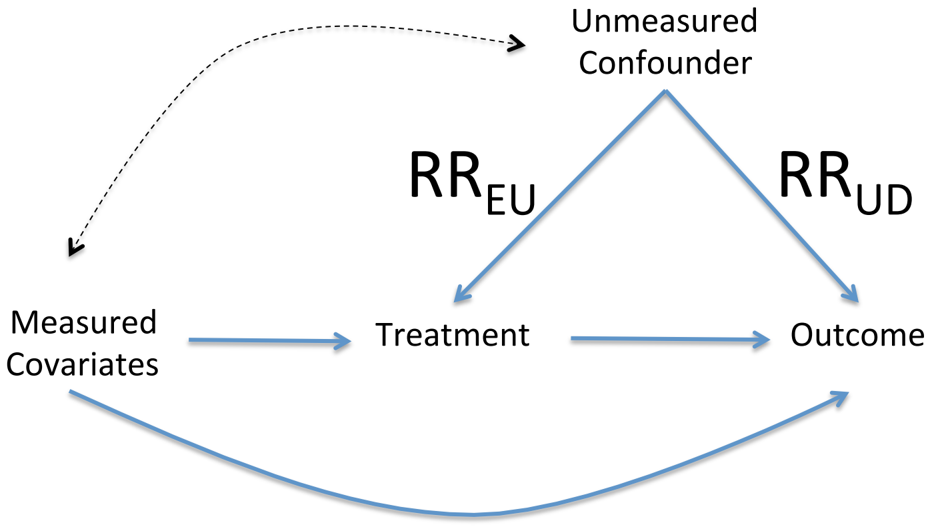
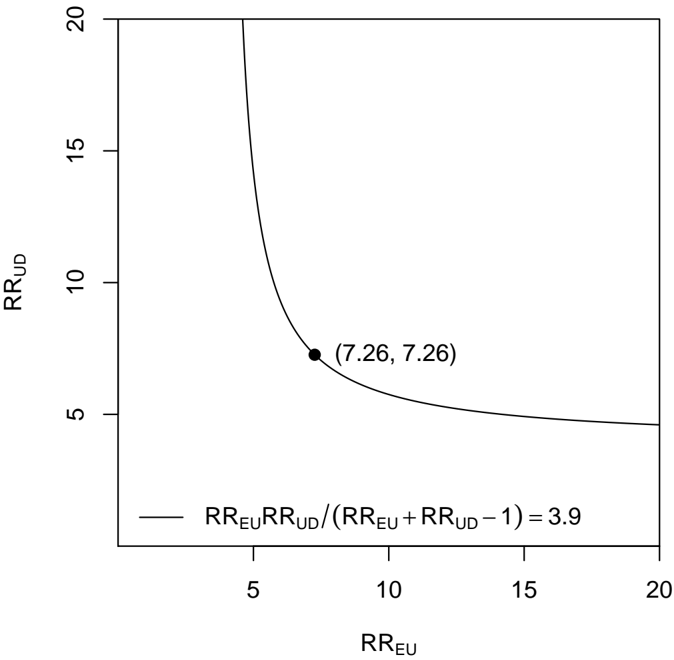
Sensitivity analysis is useful in assessing how robust an association is to potential unmeasured or uncontrolled confounding. This article introduces a new measure called the "E-value," which is related to the evidence for causality in observational studies that are potentially subject to confounding. The E-value is defined as the minimum strength of association, on the risk ratio scale, that an unmeasured confounder would need to have with both the treatment and the outcome to fully explain away a specific treatment-outcome association, conditional on the measured covariates. A large E-value implies that considerable unmeasured confounding would be needed to explain away an effect estimate. A small E-value implies little unmeasured confounding would be needed to explain away an effect estimate. The authors propose that in all observational studies intended to produce evidence for causality, the E-value be reported or some other sensitivity analysis be used. They suggest calculating the E-value for both the observed association estimate (after adjustments for measured confounders) and the limit of the confidence interval closest to the null. If this were to become standard practice, the ability of the scientific community to assess evidence from observational studies would improve considerably, and ultimately, science would be strengthened.
Overview
The claims and statistics of this paper haven’t been checked yet.
Free: it reads the open-access text and checks the first 5 claims that cite a source we can check. Create a free account to check every claim.
Integrity signals
Registry
Cites
Statistics
Figures
Verification
Claims the paper makes
The claims and statistics of this paper haven’t been checked yet.
Free: it reads the open-access text and checks the first 5 claims that cite a source we can check. Create a free account to check every claim.
Claims other papers make about this one
Each is checked against this paper’s own text: does it say what the citing paper says it does?
The cited source says what the claim attributes to it.
In the citing paper
“Quantitative bias analyses, such as the calculation of E-values to estimate the strength of unmeasured confounding required to explain away an observed association, provide useful context for the robustness of findings.64”
From Artificial Intelligence in Oncology: Practical Applications Across Clinical Care, Scholarship, and Translation. (2026) · cites this paper as [64]
The cited source says what the claim attributes to it.
In the citing paper
“We performed the sensitivity analysis using the E value [29] to evaluate the robustness of our findings to potential unmeasured confounding, with the calculation based on the observed odds ratio (OR) point estimate for rare outcome (<15%) or the square root of OR otherwise.”
The cited source says what the claim attributes to it.
In the citing paper
“To further assess the robustness of our findings to potential unmeasured confounding, we conducted an E-value analysis, a quantitative method for sensitivity analysis in observational research [31].”
From Acute Respiratory Tract Infection and Sudden Sensorineural Hearing Loss: A Multinational Cohort Study (2025) · cites this paper as [31]
In the citing paper
“We also computed E-values: indicators of how robust findings are to potential unmeasured confounding”
From Leading a meaningful life at older ages and its relationship with social engagement, prosperity, health, biology, and time use (2019) · cites this paper as [12]
Self-check
Percentages, sums and reported differences re-computed from the paper’s own numbers.
The self-check needs the paper’s full text.
Citations
Cites
Borenstein, M., Hedges, L. V., Higgins, J. P. T., & Rothstein, H. R. (2009) · doi:10.1002/9780470743386 · Cited by 14,225
The environment and disease: association or causation?
Hill, A. B. (2015) · Journal of the Royal Society of Medicine · doi:10.1177/0141076814562718 · Cited by 7,285
The Environment and Disease: Association or Causation?
Hill, A. B. (1965) · Proceedings of the Royal Society of Medicine · doi:10.1177/003591576505800503 · Cited by 6,974 · cited 1×
“Sensitivity analysis makes clear quantitatively why Bradford Hill's criterion of “strength of association” (12) is important in establishing that a given association is, in fact, causal.”
BackgroundThe ASA Statement on p -Values: Context, Process, and Purpose
Wasserstein, R. L., & Lazar, N. A. (2016) · The American Statistician · doi:10.1080/00031305.2016.1154108 · Cited by 6,306 · cited 2×
“While potentially subject to mis-use and misinterpretation (1,5-12), the p-value can be informative as a continuous measure of evidence as to whether an association is present.”
BackgroundCausal Inference for Statistics, Social, and Biomedical Sciences: An Introduction
Imbens, G. W., & Rubin, D. B. (2015) · doi:10.1017/cbo9781139025751 · Cited by 4,210
Statistical tests, P values, confidence intervals, and power: a guide to misinterpretations
Greenland, S., Senn, S. J., Rothman, K. J., Carlin, J. B., Poole, C., Goodman, S. N., & Altman, D. G. (2016) · European Journal of Epidemiology · doi:10.1007/s10654-016-0149-3 · Cited by 3,200
Explanation in Causal Inference: Methods for Mediation and Interaction
VanderWeele, T. J. (2015) · Cited by 2,217
Self-citationSmithson, M. (2000) · SAGE Publications Ltd eBooks · doi:10.4135/9781446218525 · Cited by 1,871
Fundamentals of Biostatistics.
Cornell, R. G., & Rosner, B. (1987) · Journal of the American Statistical Association · doi:10.2307/2289416 · Cited by 1,603
Breastfeeding and Maternal and Infant Health Outcomes In Developed Countries
(2007) · AAP Grand Rounds · doi:10.1542/gr.18-2-15 · Cited by 1,540 · cited 2×
“A study by the Agency for Healthcare Research and Quality (42) reported the association between breastfeeding and childhood leukemia as RR=0.”
MethodInfluential
Research works printed but not linked: 3
- Greenland S, 2011, Jurimetrics, 51, 11329
- Cornfield J, 1959, J Natl Cancer Inst, 22, 173
- Schlesselman JJ, 1978, Am J Epidemiol, 108, 3
Cited by
Items 901–1,000 of 1,031
High risk of developing dementia in Parkinson’s disease: a Swedish registry-based study
Åström, D. O., Simonsen, J., Rakêt, L. L., Sgarbi, S., Hellsten, J., Hagell, P., Norlin, J. M., Kellerborg, K., Martínez‐Martín, P., & Odin, P. (2022) · Scientific Reports · doi:10.1038/s41598-022-21093-8 · Cited by 33
Engström, A., Wintzell, V., Melbye, M., Hviid, A. P., Eliasson, B., Guðbjörnsdóttir, S., Hveem, K., Jonasson, C., Svanström, H., Pasternak, B., et al. (2022) · Diabetes Care · doi:10.2337/dc22-0714 · Cited by 30
Time to treatment and mortality for clinical sepsis subtypes
Yang, A., Kennedy, J. N., Reitz, K. M., Phillips, G. S., Terry, K. M., Levy, M. M., Angus, D. C., & Seymour, C. W. (2023) · Critical Care · doi:10.1186/s13054-023-04507-5 · Cited by 42
“The appropriateness of initial antibiotic choice has been associated with risk-adjusted mortality [19], but our E-value analysis revealed that potential confounders would need substantial imbalance across groups as well as a strong independent association with outcome to obviate the main study result [14].”
BackgroundMethodHidden biases in observational epidemiology: the case of unmeasured confounding
Ananth, C., & Schisterman, E. F. (2017) · BJOG An International Journal of Obstetrics & Gynaecology · doi:10.1111/1471-0528.14960 · Cited by 33
An, J., Wei, R. X., Zhou, H. C., Luong, T. Q., Gould, M. K., Mefford, M. T., Harrison, T. N., Creekmur, B., Lee, M. S., Sim, J. J., et al. (2020) · Journal of the American Heart Association · doi:10.1161/jaha.120.019669 · Cited by 29
“Diastolic BP 71 (12) 71 (12) 72 (13) 69 (14) 74 (13)”
Formánek, T., Krupchanka, D., Mladá, K., Winkler, P., & Jones, P. B. (2022) · The Lancet Psychiatry · doi:10.1016/s2215-0366(22)00335-2 · Cited by 31
Achieving Molecular Profiling in Pleural Biopsies
Sundaralingam, A., Aujayeb, A., Akca, B., Tiedeman, C., George, V., Carling, M., Brown, J. R., Banka, R. A., Addala, D., Bedawi, E. O., et al. (2022) · CHEST Journal · doi:10.1016/j.chest.2022.11.019 · Cited by 37
Cao, Z., Li, W., Wen, C. P., Li, S., Chen, C., Jia, Q., Li, W., Zhang, W., Tu, H., & Wu, X. (2023) · JAMA Network Open · doi:10.1001/jamanetworkopen.2023.4989 · Cited by 40
Materne, E., Choi, H. K., Zhou, B., Costenbader, K. H., Zhang, Y., & Jorge, A. M. (2023) · Arthritis & Rheumatology · doi:10.1002/art.42620 · Cited by 31
“We also calculated E-values in a sensitivity analysis to assess the potential effect of unmeasured confounders (25).”
MethodHu, J., Cai, X., Zhu, Q., Heizhati, M., Wen, W., Luo, Q., Hong, J., Dang, Y., Yang, W., & Li, N. (2023) · Diabetes Metabolic Syndrome and Obesity · doi:10.2147/dmso.s408722 · Cited by 32
“Lastly, to address potential unmeasured confounding, we calculated E-values.37 Details of the statistical analysis are shown in the Supplementary Materials.”
MethodLagerberg, T., Matthews, A., Zhu, N., Fazel, S., Carrero, J. J., & Chang, Z. (2023) · Neuropsychopharmacology · doi:10.1038/s41386-023-01676-3 · Cited by 38
“69 for the lower confidence interval, in the overall 12-week per-protocol analysis indicates that a moderate amount of unmeasured confounding would be sufficient to produce our results, given a true null effect [26].”
BackgroundMethodChen, C., Wei, L., He, W., Zhang, Y., Xiao, J., Lu, Y., Wang, F., & Zhu, X. (2024) · EClinicalMedicine · doi:10.1016/j.eclinm.2024.102424 · Cited by 32
“41 This methodology estimated what the minimum risk ratio an unmeasured confounder would need to have between both liver disease and cataract to negate the observed associations in our study (see Supplementary Methods for details).”
BackgroundLiang, W., Wang, Y., Huang, Q., Shang, B., Su, N., Zhou, L., Rhodes, R. E., Baker, J. S., & Duan, Y. (2024) · JMIR Public Health and Surveillance · doi:10.2196/46072 · Cited by 36
“All the association analyses were reconducted with the exclusion of participants who were obese (BMI ≥ 28 kg/m 2 ) or who had moderate to severe depressive symptoms (PHQ-9 score ≥ 10) as suggested by previous studies [58,59].”
MethodColorectal Cancer and Central Obesity
Safizadeh, F., Mandic, M., Hoffmeister, M., & Brenner, H. (2025) · JAMA Network Open · doi:10.1001/jamanetworkopen.2024.54753 · Cited by 33
Zhang, J., Yuan, M., Liu, Y., Zhong, X., Wu, J., & Chen, W. (2025) · Journal of Hazardous Materials · doi:10.1016/j.jhazmat.2025.137731 · Cited by 31
Dani, S. S., Makwana, B., Khadke, S., Kumar, A., Jhund, P., Nasir, K., Sattar, N., Al-Kindi, S., Fonarow, G., Butler, J., et al. (2025) · JACC: Advances · doi:10.1016/j.jacadv.2025.101740 · Cited by 30
Okubo, Y., Hayakawa, I., Sugitate, R., & Nariai, H. (2025) · Paediatric and Perinatal Epidemiology · doi:10.1111/ppe.70071 · Cited by 46
“Firstly, we calculated the E - values, the minimum strength of unmeasured confounding needed to fully explain away the observed association, as proposed by VanterWeele [36].”
Advancing causal inference in ecology: Pathways for biodiversity change detection and attribution
Schrodt, F., Beck, M., Estopinan, J., Bowler, D. E., Fontaine, C., Gaüzère, P., Goury, R., Grenié, M., Martins, I. S., Morueta‐Holme, N., et al. (2025) · Methods in Ecology and Evolution · doi:10.1111/2041-210x.70131 · Cited by 55
Outcomes in adulthood of adoption after long-term foster care: A sibling study
Hjern, A., Vinnerljung, B., & Brännström, L. (2019) · Developmental Child Welfare · doi:10.1177/2516103218815702 · Cited by 32
Solitary kidney and risk of chronic kidney disease
Kim, S., Chang, Y., Lee, Y. R., Jung, H. S., Hyun, Y. Y., Lee, K., Joo, K. J., Yun, K. E., Shin, H. C., & Ryu, S. (2019) · European Journal of Epidemiology · doi:10.1007/s10654-019-00520-7 · Cited by 30
Pregnant women with IBD are more likely to be adherent to biologic therapies than other medications
Lee, S., Seow, C. H., Adhikari, K., & Metcalfe, A. (2019) · Alimentary Pharmacology & Therapeutics · doi:10.1111/apt.15596 · Cited by 30
Serum vitamin D status and metabolic syndrome: a systematic review and dose-response meta-analysis
Lee, K., & Kim, J. (2021) · Nutrition Research and Practice · doi:10.4162/nrp.2021.15.3.329 · Cited by 39
“However, a small E-value indicates no unmeasured confounding is needed to explain away the observed association [63].”
BackgroundJiang, Y., & Ni, W. (2020) · BMC Medical Research Methodology · doi:10.1186/s12874-020-01124-6 · Cited by 33
“where HRUD is the maximal possible effect of U on D and RREU is the risk ratio of U = 1 of the exposed group to the non-exposed group [21, 22].”
BackgroundThe mortality burden of non-trauma fracture for adults with cerebral palsy
Whitney, D. G., Bell, S., Hurvitz, E. A., Peterson, M. D., Caird, M. S., & Jepsen, K. J. (2020) · Bone Reports · doi:10.1016/j.bonr.2020.100725 · Cited by 32
Nimmo, A., Forsyth, J. L., Oniscu, G. C., Robb, M. L., Watson, C. J. E., Fotheringham, J., Roderick, P. J., Ravanan, R., & Taylor, D. M. (2020) · Kidney International · doi:10.1016/j.kint.2020.10.019 · Cited by 30
Kotimäki, S., Härkönen, J., Karlsson, L., Karlsson, H., & Scheinin, N. M. (2020) · SSM - Population Health · doi:10.1016/j.ssmph.2020.100690 · Cited by 39
Periodontal disease and preterm birth: Findings from the 2015 Pelotas birth cohort study
de Oliveira, L. J. C., Cademartori, M. G., Schuch, H. S., Barros, F. C., da Silveira, M. F., Corrêa, M. B., & Demarco, F. F. (2020) · Oral Diseases · doi:10.1111/odi.13670 · Cited by 41
Kobayashi, T., Tani, Y., Kino, S., Fujiwara, T., Kondo, K., & Kawachi, I. I. (2021) · Journal of Epidemiology · doi:10.2188/jea.je20200427 · Cited by 34
Modifiable Lifestyle Recommendations and Mortality in Denmark: A Cohort Study
Ibsen, D. B., Søgaard, K., Sørensen, L. H., Olsen, A., Tjønneland, A. M., Overvad, K., & Dahm, C. C. (2021) · American Journal of Preventive Medicine · doi:10.1016/j.amepre.2021.01.003 · Cited by 30
Safety and Outcomes of Thrombectomy in Ischemic Stroke With vs Without IV Thrombolysis
Ahmed, N., Mazya, M. V., Nunes, A. P., Moreira, T., Ollikainen, J., Escudero‐Martínez, I., Bigliardi, G., Dorado, L., Dávalos, A., Egido, J. A., et al. (2021) · Neurology · doi:10.1212/wnl.0000000000012327 · Cited by 30
“Studies have reported conflicting results of safety and efficacy of IVT treatment in patients receiving EVT compared to EVT alone.(14-21) IVT treatment may prolong the time to EVT initiation and increase the risk of hemorrhagic complications.”
MethodResultLian, Q., Yu, C., Tu, X., Deng, M., Wang, T., Su, Q., & Zuo, X. (2021) · PLoS Medicine · doi:10.1371/journal.pmed.1003846 · Cited by 41
“The recently proposed E-value quantifies the minimum strength of association with both the exposure and the outcome that would be required of an unmeasured confounder to fully explain away the observed effect [38,40].”
BackgroundMethodRahman, S., Thomas, B., Maynard, N., Park, M. H., Wahedally, M. A. H., Trudgill, N. J., Crosby, T. D. L., Cromwell, D. A., & Underwood, T. (2021) · British journal of surgery · doi:10.1093/bjs/znab427 · Cited by 37
Huang, H.-K., Liu, P. P.-S., Lin, S.-M., Hsu, J.-Y., Yeh, J.-I., Lai, E. C.-C., Peng, C. C., Munir, K. M., Loh, C., & Tu, Y.-K. (2022) · Annals of Internal Medicine · doi:10.7326/m21-3498 · Cited by 31
“We also calculated E-values to assess how strong an unmeasured confounder would have to be to disregard an observed treatment– outcome relationship (33).”
MethodShiba, K., Cowden, R. G., Gonzalez, N., Ransome, Y., Nakagomi, A., Chen, Y., Lee, M. T., VanderWeele, T. J., & Fancourt, D. E. (2022) · Psychological Medicine · doi:10.1017/s0033291722000551 · Cited by 37
“First, to evaluate the robustness of our effect estimates to unmeasured confounding, we calculated E values for each exposure–outcome association (VanderWeele & Ding, 2017).”
MethodSelf-citationCinelli, C., LaPierre, N., Hill, B. L., Sankararaman, S., & Eskin, E. (2022) · Nature Communications · doi:10.1038/s41467-022-28553-9 · Cited by 34
Young‐Wolff, K. C., Slama, N. E., Alexeeff, S., Sakoda, L. C., Fogelberg, R., Myers, L. C., Campbell, C. I., Adams, A. S., & Prochaska, J. J. (2022) · Nicotine & Tobacco Research · doi:10.1093/ntr/ntac090 · Cited by 34
Racial survival disparities in head and neck cancer clinical trials
Liu, J., Egleston, B. L., Blackman, E. L., & Ragin, C. C. R. (2022) · JNCI Journal of the National Cancer Institute · doi:10.1093/jnci/djac219 · Cited by 30
Sugden, K., Moffitt, T. E., Arpawong, T. E., Arseneault, L., Belsky, D. W., Corcoran, D. L., Crimmins, E. M., Hannon, E. J., Houts, R., Mill, J. S., et al. (2023) · The Journals of Gerontology Series B · doi:10.1093/geronb/gbad056 · Cited by 34
Steenen, S. A., Steenen, C. C., van Westrhenen, R., Klausch, T. L. T., & de Jongh, A. (2023) · SSRN Electronic Journal · doi:10.2139/ssrn.4597991 · Cited by 30
Social Support and Depression among Stroke Patients: A Topical Review
Zhou, H., & Kulick, E. R. (2023) · International Journal of Environmental Research and Public Health · doi:10.3390/ijerph20247157 · Cited by 41
“This is due to the nature of observational studies, of which the purpose is to measure the robustness of effect estimates to uncontrolled confounding and provide evidence of causality [90,93,94].”
BackgroundChan, A. Y. L., Gao, L., Hsieh, M. H., Kjerpeseth, L. J., Avelar, R., Banaschewski, T., Chan, A. H. Y., Coghill, D., Cohen, J. M., Gissler, M., et al. (2024) · Nature Medicine · doi:10.1038/s41591-024-02917-8 · Cited by 33
“…to assess the impact of any unmeasured confounders, we computed the E-value, which is defined as the minimum strength of association that an unmeasured confounder would need to have with both exposure and outcome, conditional on the measured covariates, to explain away an observed association 78 .”
Cai, M., Su, B., Hu, G. X., Wu, Y., Wang, M., Tian, Y., & Lin, H. (2024) · The Innovation Medicine · doi:10.59717/j.xinn-med.2024.100077 · Cited by 29
Environmental Risk Factors for Gallbladder Cancer: Field-Wide Systematic Review and Meta-Analysis
Piovani, D., Nikolopoulos, G. K., Aghemo, A., Lleò, A., Alqahtani, S. A., Hassan, C., Repici, A., & Bonovas, S. (2024) · Clinical Gastroenterology and Hepatology · doi:10.1016/j.cgh.2024.07.046 · Cited by 37
Maia, I. W. A., Besen, B. A. M. P., Silva, L. O. J. E., von Hellmann, R., Hajjar, L. A., Sandefur, B. J., Pedrollo, D. F., Nogueira, C. G., Figueiredo, N. M. P., Miranda, C. H., et al. (2025) · Critical Care · doi:10.1186/s13054-025-05392-w · Cited by 29
“Furthermore, we performed sensitivity analyses for unmeasured confounding with E-values, which evaluate the strength of the association of an unknown confounder that would neutralize the observed associations [19].”
Zhang, Y., Yue, Y., Sun, Z., Li, P., Wang, X., Cheng, G., Huang, H., & Li, Z. (2025) · Frontiers in Endocrinology · doi:10.3389/fendo.2025.1534018 · Cited by 30
“…on the complete dataset (33,710 participants) without multiple imputation; (2) repeating the analyses after excluding participants with cancer, cardiovascular disease, or diabetes; and (3) calculating the E-value to determine the in fl uence of unmeasured confounders on the study ’ s fi ndings (25).”
Ton, T. G. N., Bennett, M. V., Incerti, D., Peneva, D., Druzin, M. L., Stevens, W., Butwick, A. J., & Lee, H. C. (2019) · American Journal of Perinatology · doi:10.1055/s-0039-1679916 · Cited by 33
Allen, J. M., Bakare, L. S., Casapao, A. M., Klinker, K. P., Childs‐Kean, L. M., & Pomputius, A. F. (2019) · Infectious Diseases and Therapy · doi:10.1007/s40121-019-00259-4 · Cited by 29
Wallert, J., Olsson, E. M. G., Pingel, R., Norlund, F., Leósdóttir, M., Burell, G. K., & Held, C. (2019) · European Journal of Preventive Cardiology · doi:10.1177/2047487319871714 · Cited by 36
Brunström, M., Ng, N., Dahlström, J., Lindholm, L. H., Lönnberg, G., Norberg, M., Nyström, L., Weinehall, L., & Carlberg, B. (2020) · JAMA Network Open · doi:10.1001/jamanetworkopen.2019.18625 · Cited by 32
Association of Tramadol Use With Risk of Hip Fracture
Wei, J., Lane, N. E., Bolster, M. B., Dubreuil, M., Zeng, C., Misra, D., Lu, N., Choi, H. K., Lei, G., & Zhang, Y. (2020) · Journal of Bone and Mineral Research · doi:10.1002/jbmr.3935 · Cited by 32
“Fifth, we conducted quantitative sensitivity analyses to evaluate the minimum unmeasured confounding effect that would explain away an association observed in previous analyses.((40)) Sixth, we conducted a sensitivity analysis for atraumatic hip fracture.”
MethodNie, J., Wang, J., Aune, D., Huang, W., Xiao, D., Wang, Y., & Chen, X. (2020) · Journal of Epidemiology & Community Health · doi:10.1136/jech-2019-213179 · Cited by 29
Skalkidou, A., Poromaa, I. S., Wikman, A., Hesselman, S., Wikström, A., & Elenis, E. (2020) · BJOG An International Journal of Obstetrics & Gynaecology · doi:10.1111/1471-0528.16210 · Cited by 34
Bjørnestad, E. Ø., Olset, H., Dhar, I., Løland, K. H., Pedersen, E. R., Svingen, G. F. T., Svardal, A. M., Berge, R. K., Ueland, P. M., Tell, G. S., et al. (2020) · Journal of Internal Medicine · doi:10.1111/joim.13067 · Cited by 31
Association between cesarean delivery types and obesity in preadolescence
Sitarik, A. R., Havstad, S. L., Johnson, C. C., Jones, K. J., Levin, A. M., Lynch, S. V., Ownby, D. R., Rundle, A., Straughen, J. K., Wegienka, G., et al. (2020) · International Journal of Obesity · doi:10.1038/s41366-020-00663-8 · Cited by 28
Adolescent Nonalcoholic Fatty Liver Disease and Type 2 Diabetes in Young Adulthood
Bardugo, A., Bendor, C. D., Zucker, I., Lutski, M., Cukierman‐Yaffe, T., Derazne, E., Mosenzon, O., Tzur, D., Beer, Z. A., Pinhas‐Hamiel, O., et al. (2020) · The Journal of Clinical Endocrinology & Metabolism · doi:10.1210/clinem/dgaa753 · Cited by 30
Zeng, Z., Bian, Y., Cui, Y., Yang, D., Wang, Y., & Yu, C. (2020) · International Journal of Environmental Research and Public Health · doi:10.3390/ijerph17217803 · Cited by 30
“A larger E-value implies that considerable unmeasured confounding would be needed to explain away an effect estimate [16].”
BackgroundZheng, H., Bergamino, M., Ford, B. N., Kuplicki, R., Yeh, F.-C. F., Bodurka, J., Burrows, K., Tulsa 1000 Investigators, Aupperle, R. L., Bodurka, J., et al. (2021) · Neuropsychopharmacology · doi:10.1038/s41386-021-00971-1 · Cited by 30
Anderson, L. N., Fatima, T., Shah, B., Smith, B. T., Fuller, A. E., Borkhoff, C. M., Keown‐Stoneman, C. D. G., Maguire, J. L., & Birken, C. S. (2021) · Journal of Epidemiology & Community Health · doi:10.1136/jech-2021-216455 · Cited by 33
Yazdchi, F., Hirji, S. A., Nohria, A., Percy, E., Harloff, M. T., Malarczyk, A. A., Newell, P. C., Kerolos, M., McGurk, S., Shekar, P., et al. (2021) · JACC CardioOncology · doi:10.1016/j.jaccao.2021.07.005 · Cited by 31
Menopausal hormone therapy and risk of biliary tract cancers
Jackson, S. S., Pfeiffer, R. M., Gabbi, C., Anderson, L. A., Gadalla, S. M., & Koshiol, J. E. (2021) · Hepatology · doi:10.1002/hep.32198 · Cited by 30
“As a sensitivity analysis, we calculated Evalues[46] to estimate the minimum strength of association on the risk ratio scale an unmeasured confounder would have to have with both the outcome and exposure to completely explain away our observed associations between MHT use and GBC and CCA, respectively.[46] Statistical…”
MethodShao, S., Chang, K., Lin, S., Chang, S., Hung, M., Chan, Y., & Lai, E. C. (2021) · Cardiovascular Diabetology · doi:10.1186/s12933-021-01406-3 · Cited by 29
“to estimate the minimum strength of association that an unmeasured confounder, conditional on the measured covariates, would require to fully explain away the observed associations [40].”
BackgroundMethodWelk, B. K., Etaby, K., McArthur, E., & Chou, Q. (2021) · Neurourology and Urodynamics · doi:10.1002/nau.24827 · Cited by 31
“We used E‐values to assess the required strength of unmeasured confounded that would negate our results.(21) The analytic dataset was complete, aside from the income quintile and rural residence variable, which were missing in <0.”
MethodGoldman-Mellor, S. J., Bhat, H. S., Allen, M. H., & Schoenbaum, M. (2021) · American Journal of Preventive Medicine · doi:10.1016/j.amepre.2021.08.028 · Cited by 30
Hayes, K. N., Brown, K. A., Cheung, A. M., Kim, S. A., Juurlink, D. N., & Cadarette, S. M. (2022) · Annals of Internal Medicine · doi:10.7326/m21-2512 · Cited by 31
“The E-value provides a risk ratio for the minimum association that an unmeasured confounder would need to have with both the outcome and the exposure, independently of all measured covariates, to nullify the observed results (32, 33).”
ResultReece, A. S., & Hulse, G. K. (2022) · Environmental Epigenetics · doi:10.1093/eep/dvab015 · Cited by 32
Emulating a target trial of proton pump inhibitors and dementia risk using claims data
Ahn, N., Nolde, M., Günter, A., Güntner, F., Gerlach, R., Tauscher, M., Amann, U., Linseisen, J., Meisinger, C., Rückert‐Eheberg, I., et al. (2022) · European Journal of Neurology · doi:10.1111/ene.15284 · Cited by 34
“Lastly, an Evalue was calculated, which indicates the minimum strength of an association that an unmeasured confounder would need to have to account for the observed association between PPI exposure and incidence of dementia [37].”
Fu, E. L., Clase, C. M., Janse, R. J., Lindholm, B., Dekker, F. W., Jardine, M., & Carrero, J. J. (2022) · International Journal of Cardiology · doi:10.1016/j.ijcard.2022.01.042 · Cited by 30
McLeod, D. S. A., Bedno, S. A., Cooper, D. S., Hutfless, S. M., Ippolito, S., Jordan, S. J., Matos, P. G., Neale, R. Ε., Sabini, E., Whiteman, D. C., et al. (2022) · Journal of Clinical Oncology · doi:10.1200/jco.21.02618 · Cited by 33
Xie, Z., Tan, J., Fang, G., Ji, H., Miao, M., Tian, Y., Hu, H., Cao, W., Liang, H., & Yuan, W. (2022) · Ecotoxicology and Environmental Safety · doi:10.1016/j.ecoenv.2022.113818 · Cited by 29
“The E-value is the minimum strength of association that an unmeasured confounder would need to be Z. Xie et al. associated with both the exposure and the outcome to fully explain the observed exposure-outcome association, conditional on the measured covariates (VanderWeele and Ding, 2017).”
Nakamura, J. S., Chen, Y., VanderWeele, T. J., & Kim, E. S. (2022) · SSM - Population Health · doi:10.1016/j.ssmph.2022.101235 · Cited by 38
“…of disease, investigators are increasingly seeking potentially modifiable health assets that uniquely enhance a person’s ability to foster healthy behaviors and physical health (Kim et al., 2021; Kubzansky et al., 2018; Levine et al., 2021; Ryff, 2014; VanderWeele, 2017; VanderWeele et al., 2020).”
BackgroundSelf-citationWerkman, N. C. C., Driessen, J. H. M., Stehouwer, C. D. A., Vestergaard, P., Schaper, N. C., van den Bergh, J. P., & Nielen, J. T. H. (2023) · Cardiovascular Diabetology · doi:10.1186/s12933-023-01897-2 · Cited by 31
“We calculated the e-value, which estimates the strength of unmeasured confounding required to nullify the observed effect [42, 43].”
MethodRisk of Stroke Hospitalization After Infertility Treatment
Sachdev, D., Yamada, R., Lee, R. M., Sauer, M. V., & Ananth, C. V. (2023) · JAMA Network Open · doi:10.1001/jamanetworkopen.2023.31470 · Cited by 31
Virtual Visits With Own Family Physician vs Outside Family Physician and Emergency Department Use
Lapointe‐Shaw, L., Salahub, C. M., Austin, P. C., Bai, L., Bhatia, R. S., Bird, C., Glazier, R. H., Hedden, L., Ivers, N. M., Martin, D., et al. (2023) · JAMA Network Open · doi:10.1001/jamanetworkopen.2023.49452 · Cited by 36
Thrombolysis in young adults with stroke
Dodds, J. A., Xian, Y., Sheng, S., Fonarow, G. C., Bhatt, D. L., Matsouaka, R., Schwamm, L. H., Peterson, E. D., & Smith, E. E. (2019) · Neurology · doi:10.1212/wnl.0000000000007653 · Cited by 29
“For models with dichotomous outcomes, we performed sensitivity analyses for vulnerability to unmeasured confounding by calculating E values.(11) The E value is “the minimum strength of association, on the risk ratio scale, that an unmeasured confounder would need to have with both the treatment and the outcome to full…”
MethodHoertel, N., Rico, M. S., Kornhuber, J., Gulbins, E., Reiersen, A. M., Lenze, E. J., Fritz, B. A., Jalali, F., Mills, E. J., Cougoule, C., et al. (2022) · Journal of Clinical Medicine · doi:10.3390/jcm11195882 · Cited by 30
“E-values were used to quantify the sensitivity of the findings to unmeasured confounders in the main analyses [59].”
MethodKristensen, F., Christensen, D. H., Mortensen, M. B., Mæng, M., Kahlert, J. A., Sørensen, H. T., & Thomsen, R. W. (2023) · Cardiovascular Diabetology · doi:10.1186/s12933-023-01921-5 · Cited by 29
“An analysis calculating E-values, assessing the minimum strength needed by any unmeasured confounder to fully explain the observed associations [33].”
MethodBlood Pressure Level in Late Adolescence and Risk for Cardiovascular Events: A Cohort Study
Rietz, H., Pennlert, J., Nordström, P., & Brunström, M. (2023) · Annals of Internal Medicine · doi:10.7326/m23-0112 · Cited by 31
First Trimester Use of Buprenorphine or Methadone and the Risk of Congenital Malformations
Suarez, E. A., Bateman, B. T., Straub, L., Hernández–Díaz, S., Jones, H. E., Gray, K. J., Connery, H. S., Davis, J. M., Lester, B. M., Terplan, M., et al. (2024) · JAMA Internal Medicine · doi:10.1001/jamainternmed.2023.6986 · Cited by 30
Age-Related Risk of Serious Fall Events and Opioid Analgesic Use
Hopkins, R. E., Bharat, C., Buizen, L., Close, J., Ivers, R., Draper, B., Pearson, S., Degenhardt, L. J., & Gisev, N. (2024) · JAMA Internal Medicine · doi:10.1001/jamainternmed.2023.8154 · Cited by 32
Duan, C., Lyu, M., Shi, J., Shou, X., Zhao, L., & Hu, Y. (2024) · Cardiovascular Diabetology · doi:10.1186/s12933-024-02511-9 · Cited by 36
“Thirdly, the potential impact of unmeasured confounding factors was assessed using E-values, further validating the study’s results [27].”
Henney, A. E., Riley, D. R. J., Hydes, T., Anson, M., Ibarburu, G. H., Frost, F., Alam, U., & Cuthbertson, D. J. (2024) · Thorax · doi:10.1136/thorax-2024-221906 · Cited by 35
“34 Despite these suggestions, further mechanistic evaluation is warranted in this area.”
Lin, L., Chen, J., Huang, T. T.-M., & Wu, V. (2025) · Cardiovascular Diabetology · doi:10.1186/s12933-025-02649-0 · Cited by 36
“A large E-value suggests that only very strong unmeasured confounders could negate the observed treatment-outcome association [48].”
Lin, Y., Liao, K., Yu, T., Wu, J., & Lai, C. (2025) · Nature Communications · doi:10.1038/s41467-025-59616-2 · Cited by 42
“Lastly, we calculated E-values to further gauge the impact of potential unmeasured confounders on the primary and secondary outcomes 29 .”
Lehmann, P. S., & Meldrum, R. C. (2019) · Justice Quarterly · doi:10.1080/07418825.2019.1688853 · Cited by 33
“…confounder would need to have with both the predictor and the outcome to confound the association between the predictor and outcome (VanderWheele & Ding, 2017).12 Our analyses conclude with a presentation of supplementary models that estimate the relationships of interest under alternative…”
ResultBurst Suppression: Causes and Effects on Mortality in Critical Illness
Hogan, J. S., Sun, H., Nour, H. A., Jing, J., Tabaeizadeh, M., Shoukat, M., Javed, F., Kassa, S., Edhi, M. M., Bordbar, E., et al. (2020) · Neurocritical Care · doi:10.1007/s12028-020-00932-4 · Cited by 28
Thieffry, S., Klein, P., Baulac, M., Plumb, J., Pelgrims, B., Steeves, S., & Borghs, S. (2020) · Epilepsia · doi:10.1111/epi.16476 · Cited by 28
Nie, Z., Yang, B.-Y., Ou, Y., Bloom, M. S., Han, F., Qu, Y., Nasca, P. C., Matale, R., Mai, J., Wu, Y., et al. (2020) · Environment International · doi:10.1016/j.envint.2020.105859 · Cited by 30
Rezende, L. F. M., Lee, D. H., Ferrari, G., & Giovannucci, E. L. (2020) · Annals of Epidemiology · doi:10.1016/j.annepidem.2020.09.009 · Cited by 31
Knisely, A. T., Gamble, C. R., Clair, C. M. S., Hou, J. Y., Khoury‐Collado, F., Gockley, A. A., Wright, J. D., & Melamed, A. (2020) · Journal of Minimally Invasive Gynecology · doi:10.1016/j.jmig.2020.11.007 · Cited by 28
Zheng, H., Ford, B. N., Bergamino, M., Kuplicki, R., Tulsa 1000 Investigators, Aupperle, R. L., Bodurka, J., Cha, Y., Feinstein, J. S., Khalsa, S. S., et al. (2020) · Molecular Psychiatry · doi:10.1038/s41380-020-00932-y · Cited by 30
“To evaluate the robustness of the results to potential unmeasured confounders, we calculated the E-value using the ‘EValue’ package [65].”
MethodBeachler, D. C., de Luise, C., Jamal‐Allial, A., Yin, R., Taylor, D. H., Suzuki, A., Lewis, J. H., Freston, J. W., & Lanes, S. (2021) · BMC Cancer · doi:10.1186/s12885-021-07790-z · Cited by 31
Werneck, A. O., Hoare, E., Stubbs, B., van Sluijs, E. M. F., & Corder, K. L. (2021) · Preventive Medicine · doi:10.1016/j.ypmed.2021.106436 · Cited by 33
“The bias of potential unobserved/unmeasured confounders in the main analyses was estimated through the “E-value” (VanderWeele and Ding, 2017), which is defined as the minimum strength of association (risk ratio scale) that an unmeasured confounder would need to have with both exposure and the outcome to fully explain…”
MethodOrthogeriatric co-management reduces incidence of delirium in hip fracture patients
Pollmann, C. T., Mellingsæter, M. R., Neerland, B. E., Straume-Næsheim, T. M., Årøen, A., & Watne, L. O. (2021) · Osteoporosis International · doi:10.1007/s00198-021-05974-8 · Cited by 30
“As a sensitivity analysis for the causal association between orthogeriatric co-management and the incidenceofSSD/delirium, we calculated the E-value [27].”
BackgroundMethodInfluentialWen, X., Lawal, O. D., Belviso, N., Matson, K. L., Wang, S., Quilliam, B. J., & Meador, K. J. (2021) · Drug Safety · doi:10.1007/s40264-021-01080-0 · Cited by 31
“Finally, we calculated the E-value to assess the potential effect of unmeasured confounding on the primary estimates [43]; that is, the minimum magnitude of association an unmeasured confounder would need to have with the treatment–outcome relationship, conditional on the measured covariates to fully explain away the…”
MethodCastelnuovo, A. F. D., Costanzo, S., Antinori, A., Berselli, N., Blandi, L., Bonaccio, M., Bruno, R., Cauda, R., Gialluisi, A., Guaraldi, G., et al. (2021) · Frontiers in Medicine · doi:10.3389/fmed.2021.639970 · Cited by 28
Lanzkron, S., Little, J. A., Wang, H., Field, J. J., Shows, J. R., Haywood, C., Saheed, M. O., Proudford, M., Robertson, D. P., Kincaid, A., et al. (2021) · Annals of Internal Medicine · doi:10.7326/m20-7171 · Cited by 30
“To assess the potential vulnerability of our treatment effect to residual confounding, we computed the E-values for the 3 primary outcomes (20, 21).”
MethodTierney, B. T., Anderson, E. C., Tan, Y., Claypool, K. T., Tangirala, S., Kostic, A. D., Manrai, A. K., & Patel, C. J. (2021) · PLoS Biology · doi:10.1371/journal.pbio.3001398 · Cited by 28
“A nonexhaustive list includes E-values (which measures how strong the association between potential confounding variables, the outcome, and the exposure would have to be to influence an association of interest), Monte Carlo sensitivity analysis (which attempts to correct for bias based on model parameters), or the Con…”
MethodVisontay, R., Sunderland, M., Slade, T. N., Wilson, J., & Mewton, L. R. (2022) · BMC Medical Research Methodology · doi:10.1186/s12874-021-01486-5 · Cited by 35
Dawwas, G. K., Flory, J., Hennessy, S., Leonard, C. E., & Lewis, J. D. (2022) · Diabetes Care · doi:10.2337/dc21-2177 · Cited by 33
Gu, X., Jing, D., Xiao, Y., Zhou, G., Yang, S., Liu, H., Chen, X., & Shen, M. (2023) · Ecotoxicology and Environmental Safety · doi:10.1016/j.ecoenv.2023.114683 · Cited by 28
Metadata
- Authors
- VanderWeele, T. J., & Ding, P.
- Affiliations
- Harvard University (US)
- Venue
- Annals of Internal Medicine
- Publisher
- American College of Physicians
- Published
- 2017-08-15
- Volume
- 167
- Issue
- 4
- Pages
- 268-274
- ISSN
- 0003-4819 (ISSN-L)
- 1539-3704
- OpenAlex
- W2735301415
- Cited by
- 6,350
- References
- 59
- Citations by year
- 2026: 1516 · 2025: 1020 · 2024: 860 · 2023: 736 · 2022: 716 · 2021: 583 · 2020: 498 · 2019: 290 · 2018: 113 · 2017: 15
- FWCI
- 174.58
- Type
- journal article
- Language
- en
- Open access
- green
- nrs.harvard.edu
- Licence
- cc-by
- www.acpjournals.org/journal/aim/text-and-data-mining (tdm)
- Locations
- Annals of Internal Medicine (publishedVersion)
- PubMed (publishedVersion)
- Digital Access to Scholarship at Harvard (DASH) (Harvard University) (submittedVersion, cc-by)
- Funders
- National Institute of Environmental Health Sciences (ES017876)
- Topics
- Physical Sciences › Mathematics › Statistics and Probability › Advanced Causal Inference Techniques
- Physical Sciences › Mathematics › Statistics and Probability › Statistical Methods in Epidemiology
- Social Sciences › Decision Sciences › Statistics, Probability and Uncertainty › Meta-analysis and systematic reviews
- Keywords
- E-value, unmeasured confounding, sensitivity analysis, causal inference, observational studies, relative risk
- MeSH terms
- Humans, Sensitivity and Specificity, Epidemiologic Research Design, Confounding Factors, Epidemiologic, Observational Studies as Topic
About these checks
Registry, retraction, Cites and statistics results are computed, not judged, with one exception: a printed reference that no index lists is read once by a model before it counts as a citation error. Claims are extracted by a model and kept only when their quote appears verbatim in the text; each cited source is then checked, with a model’s help, for whether it says what the claim relies on. Those verdicts can be wrong — read the claim’s quote and the cited source before relying on one.
Statistics and arithmetic are recomputed, not judged.
Confidence bands are shown only for fields calibrated on our annotated test set. None is calibrated yet, so no band is shown.
What counts as a claim ›How we measure confidence ›How we check this ›
Are you an author, or do you see a problem with this page? Request a review
Data sources
Bibliographic data: Semantic Scholar, OpenAlex, Crossref.
Contains information from the Semantic Scholar Academic Graph Datasets, made available under the ODC Attribution License (ODC-BY 1.0).
Semantic Scholar’s data is described in: Kinney, R., et al. (2023). The Semantic Scholar Open Data Platform. arXiv:2301.10140.
