

Sensitivity Analysis in Observational Research: Introducing the E-Value
Open accessThe DOI matches its Crossref record; 58 of the 59 references it cites were found in a registry or an index.
Abstract
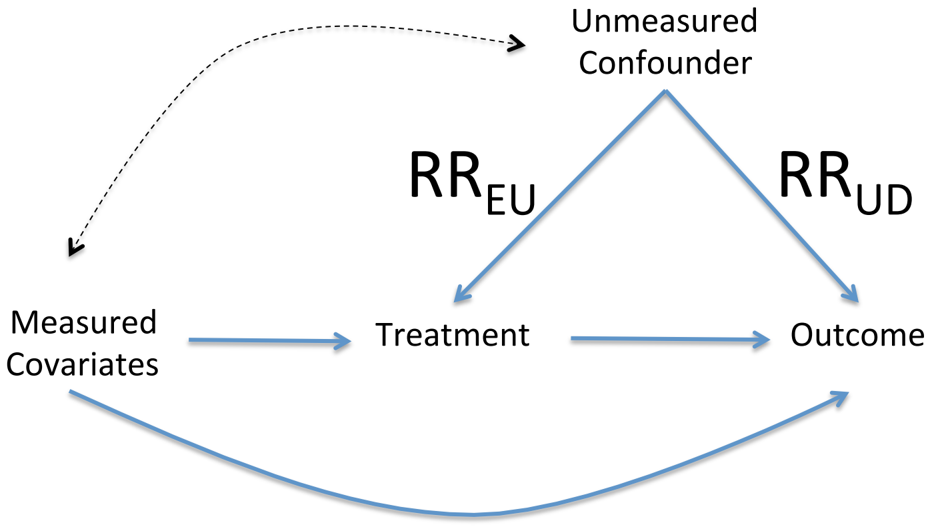
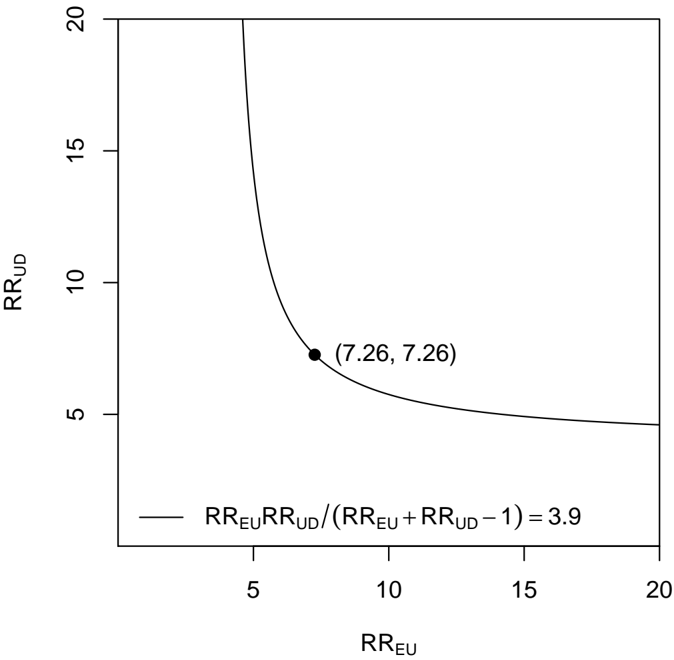
Sensitivity analysis is useful in assessing how robust an association is to potential unmeasured or uncontrolled confounding. This article introduces a new measure called the "E-value," which is related to the evidence for causality in observational studies that are potentially subject to confounding. The E-value is defined as the minimum strength of association, on the risk ratio scale, that an unmeasured confounder would need to have with both the treatment and the outcome to fully explain away a specific treatment-outcome association, conditional on the measured covariates. A large E-value implies that considerable unmeasured confounding would be needed to explain away an effect estimate. A small E-value implies little unmeasured confounding would be needed to explain away an effect estimate. The authors propose that in all observational studies intended to produce evidence for causality, the E-value be reported or some other sensitivity analysis be used. They suggest calculating the E-value for both the observed association estimate (after adjustments for measured confounders) and the limit of the confidence interval closest to the null. If this were to become standard practice, the ability of the scientific community to assess evidence from observational studies would improve considerably, and ultimately, science would be strengthened.
Overview
The claims and statistics of this paper haven’t been checked yet.
Free: it reads the open-access text and checks the first 5 claims that cite a source we can check. Create a free account to check every claim.
Integrity signals
Registry
Cites
Statistics
Figures
Verification
Claims the paper makes
The claims and statistics of this paper haven’t been checked yet.
Free: it reads the open-access text and checks the first 5 claims that cite a source we can check. Create a free account to check every claim.
Claims other papers make about this one
Each is checked against this paper’s own text: does it say what the citing paper says it does?
The cited source says what the claim attributes to it.
In the citing paper
“Quantitative bias analyses, such as the calculation of E-values to estimate the strength of unmeasured confounding required to explain away an observed association, provide useful context for the robustness of findings.64”
From Artificial Intelligence in Oncology: Practical Applications Across Clinical Care, Scholarship, and Translation. (2026) · cites this paper as [64]
The cited source says what the claim attributes to it.
In the citing paper
“We performed the sensitivity analysis using the E value [29] to evaluate the robustness of our findings to potential unmeasured confounding, with the calculation based on the observed odds ratio (OR) point estimate for rare outcome (<15%) or the square root of OR otherwise.”
The cited source says what the claim attributes to it.
In the citing paper
“To further assess the robustness of our findings to potential unmeasured confounding, we conducted an E-value analysis, a quantitative method for sensitivity analysis in observational research [31].”
From Acute Respiratory Tract Infection and Sudden Sensorineural Hearing Loss: A Multinational Cohort Study (2025) · cites this paper as [31]
In the citing paper
“We also computed E-values: indicators of how robust findings are to potential unmeasured confounding”
From Leading a meaningful life at older ages and its relationship with social engagement, prosperity, health, biology, and time use (2019) · cites this paper as [12]
Self-check
Percentages, sums and reported differences re-computed from the paper’s own numbers.
The self-check needs the paper’s full text.
Citations
Cites
Borenstein, M., Hedges, L. V., Higgins, J. P. T., & Rothstein, H. R. (2009) · doi:10.1002/9780470743386 · Cited by 14,225
The environment and disease: association or causation?
Hill, A. B. (2015) · Journal of the Royal Society of Medicine · doi:10.1177/0141076814562718 · Cited by 7,285
The Environment and Disease: Association or Causation?
Hill, A. B. (1965) · Proceedings of the Royal Society of Medicine · doi:10.1177/003591576505800503 · Cited by 6,974 · cited 1×
“Sensitivity analysis makes clear quantitatively why Bradford Hill's criterion of “strength of association” (12) is important in establishing that a given association is, in fact, causal.”
BackgroundThe ASA Statement on p -Values: Context, Process, and Purpose
Wasserstein, R. L., & Lazar, N. A. (2016) · The American Statistician · doi:10.1080/00031305.2016.1154108 · Cited by 6,306 · cited 2×
“While potentially subject to mis-use and misinterpretation (1,5-12), the p-value can be informative as a continuous measure of evidence as to whether an association is present.”
BackgroundCausal Inference for Statistics, Social, and Biomedical Sciences: An Introduction
Imbens, G. W., & Rubin, D. B. (2015) · doi:10.1017/cbo9781139025751 · Cited by 4,210
Statistical tests, P values, confidence intervals, and power: a guide to misinterpretations
Greenland, S., Senn, S. J., Rothman, K. J., Carlin, J. B., Poole, C., Goodman, S. N., & Altman, D. G. (2016) · European Journal of Epidemiology · doi:10.1007/s10654-016-0149-3 · Cited by 3,200
Explanation in Causal Inference: Methods for Mediation and Interaction
VanderWeele, T. J. (2015) · Cited by 2,217
Self-citationSmithson, M. (2000) · SAGE Publications Ltd eBooks · doi:10.4135/9781446218525 · Cited by 1,871
Fundamentals of Biostatistics.
Cornell, R. G., & Rosner, B. (1987) · Journal of the American Statistical Association · doi:10.2307/2289416 · Cited by 1,603
Breastfeeding and Maternal and Infant Health Outcomes In Developed Countries
(2007) · AAP Grand Rounds · doi:10.1542/gr.18-2-15 · Cited by 1,540 · cited 2×
“A study by the Agency for Healthcare Research and Quality (42) reported the association between breastfeeding and childhood leukemia as RR=0.”
MethodInfluential
Research works printed but not linked: 3
- Greenland S, 2011, Jurimetrics, 51, 11329
- Cornfield J, 1959, J Natl Cancer Inst, 22, 173
- Schlesselman JJ, 1978, Am J Epidemiol, 108, 3
Cited by
Items 301–400 of 1,031
Doumouras, A. G., Hong, D., Lee, Y., Tarride, J.-E., Paterson, J. M., & Anvari, M. (2020) · Annals of Internal Medicine · doi:10.7326/m19-3925 · Cited by 75
“The E-value is defined as the minimum strength of association on both the outcome and predictor that an unmeasured confounder would need to have to explain a specific treatment–outcome association (21).”
BackgroundSteenland, K., Schubauer-Berigan, M. K., Vermeulen, R., Lunn, R. M., Straif, K., Zahm, S., Stewart, P., Arroyave, W. D., Mehta, S. S., & Pearce, N. (2020) · Environmental Health Perspectives · doi:10.1289/ehp6980 · Cited by 69
“Yet, even today, smoking, other identified confounders, and other unknown confounders continue to be raised as possible sources of bias to explain positive findings (VanderWeele and Ding 2017).”
BackgroundMethodVlieg‐ Boerstra, B., de Jong, N., Meyer, R., Agostoni, C., De Cosmi, V., Grimshaw, K., Milani, G. P., Muraro, A., Oude Elberink, H., Pali‐ Schöll, I., et al. (2022) · Allergy · doi:10.1111/all.15136 · Cited by 75
Quantifying the impact of unmeasured confounding in observational studies with the E value
Gaster, T., Eggertsen, C. M., Støvring, H., Ehrenstein, V., & Petersen, I. (2023) · BMJ Medicine · doi:10.1136/bmjmed-2022-000366 · Cited by 70
“8 In common with many new epidemiological tools, integrating the E value into applied health research has taken time, and many researchers might still be unfamiliar with the method.”
BackgroundKazemi, A., Soltani, S., Aune, D., Hosseini, E., Mokhtari, Z., Hassanzadeh, Z., Jayedi, A., Pitanga, F. J. G., & Akhlaghi, M. (2024) · International Journal of Behavioral Nutrition and Physical Activity · doi:10.1186/s12966-024-01593-8 · Cited by 107
“To better control for residual confounding, we estimated the E value using the methodology proposed by Vanderweele and Ding [23].”
MethodPan, H.-C., Chen, J.-Y., Chen, H.-Y., Yeh, F.-Y., Sun, C.-Y., Huang, T. T.-M., & Wu, V.-C. (2024) · Nature Communications · doi:10.1038/s41467-024-50199-y · Cited by 75
“E -values, following VanderWeele and Ding ’ s approach, estimated the minimum strength of association needed by unmeasured confounders to fully explain observed associations, addressing potential biases from unmeasured confounding 53,54 .”
2-Year Outcomes After Complete or Staged Procedure for Tetralogy of Fallot in Neonates
Savla, J. J., Faerber, J., Huang, Y.-S. V., Zaoutis, T. E., Goldmuntz, E., Kawut, S. M., & Mercer‐Rosa, L. (2019) · Journal of the American College of Cardiology · doi:10.1016/j.jacc.2019.05.057 · Cited by 80
“To address unmeasured confounding and quantify how strong unmeasured confounding would have to be to explain away the associations observed, we calculated E values (with 95% confidence intervals [CIs]) for the estimated HRs and odds ratios obtained from the weighted Cox models and weighted generalized estimating equat…”
MethodMarijuana smoking and markers of testicular function among men from a fertility centre
Nassan, F. L., Arvizu, M., Mínguez-Alarcón, L., Williams, P. L., Attaman, J., Petrozza, J., Hauser, R., Chavarro, J., EARTH Study Team, Ford, J. B., et al. (2019) · Human Reproduction · doi:10.1093/humrep/dez002 · Cited by 75
“Finally, we calculated the E-value (VanderWeele and Ding, 2017) to quantitatively assess the potential impact of unmeasured confounding on the observed associations, conditional on the measured covariates.”
MethodZheng, D., Li, N., Hou, R., Zhang, X., Wu, L., Sundquist, J., Sundquist, K., & Ji, J. (2023) · BMC Medicine · doi:10.1186/s12916-023-02753-6 · Cited by 74
“Fourth, to assess the influence of unmeasured confounding, the E value was calculated based on the estimated HR for DR [30].”
MethodSaline versus Lactated Ringer’s Solution
Maheshwari, K. K., Turan, A., Makarova, N., Ma, C., Esa, W. A. S., Ruetzler, K., Barsoum, S., Kuhel, A. G., Ritchey, M. R., Higuera, C. A., et al. (2020) · Anesthesiology · doi:10.1097/aln.0000000000003130 · Cited by 76
Smischney, N. J., Shaw, A., Stapelfeldt, W. H., Boero, I. J., Chen, Q., Stevens, M., & Khanna, A. K. (2020) · Critical Care · doi:10.1186/s13054-020-03412-5 · Cited by 77
Preconception Antidiabetic Drugs in Men and Birth Defects in Offspring: A Nationwide Cohort Study
Wensink, M. J., Lü, Y., Tian, L., Shaw, G. M., Rizzi, S., Jensen, T. K., Mathiesen, E. R., Skakkebæk, N. E., Lindahl‐Jacobsen, R., & Eisenberg, M. L. (2022) · Annals of Internal Medicine · doi:10.7326/m21-4389 · Cited by 81
Accelerometer-Measured Sedentary Behavior and Risk of Future Cardiovascular Disease
Ajufo, E. C., Kany, S., Rämö, J. T., Churchill, T. W., Guseh, J. S., Aragam, K. G., Ellinor, P. T., & Khurshid, S. S. (2024) · Journal of the American College of Cardiology · doi:10.1016/j.jacc.2024.10.065 · Cited by 100
VanderWeele, T. J. (2020) · International Journal for the Psychology of Religion · doi:10.1080/10508619.2020.1748932 · Cited by 80
Self-citationLudvigsson, J. F., Neovius, M., Söderling, J., Gudbjörnsdottir, S., Svensson, A.-M., Franzén, S., Stephansson, O., & Pasternak, B. (2019) · Annals of Internal Medicine · doi:10.7326/m18-1974 · Cited by 75
Eleftheriadou, A., Riley, D., Zhao, S. S., Austin, P., Hernández, G., Lip, G. Y. H., Jackson, T. L., Wilding, J. P. H., & Alam, U. (2024) · Diabetologia · doi:10.1007/s00125-024-06132-5 · Cited by 73
“…to establish the minimum strength of association, on the HR, that an unmeas-ured confounder would need to have with both the exposure and the outcome, conditional on the measured covariates, to fully explain away a specific exposure–outcome association, as described by VanderWeele and Ding [21].”
BackgroundSingla, D. R., MacKinnon, D. P., Fuhr, D. C., Sikander, S., Rahman, A., & Patel, V. (2019) · The British Journal of Psychiatry · doi:10.1192/bjp.2019.184 · Cited by 106
Variation in blood pressure and long-term risk of dementia: A population-based cohort study
Ma, Y., Wolters, F. J., Chibnik, L. B., Licher, S., Ikram, M. A., Albert Hofman, D., & Ikram, M. K. (2019) · PLoS Medicine · doi:10.1371/journal.pmed.1002933 · Cited by 83
“estimating how strong residual confounding would need to be to explain away the observed associations [20].”
BackgroundLiang, C., Bai, Y., Hsu, J.-W., Huang, K., Ko, N., Chu, H., Yeh, T., Tsai, S., Chen, T., & Chen, M. (2019) · Schizophrenia Bulletin · doi:10.1093/schbul/sbz126 · Cited by 76
Drozd, M., Pujades‐Rodríguez, M., Lillie, P. J., Straw, S., Morgan, A. W., Kearney, M. T., Witte, K. K., & Cubbon, R. M. (2021) · The Lancet Infectious Diseases · doi:10.1016/s1473-3099(20)30978-6 · Cited by 75
Nakagomi, A., Tsuji, T., Saito, M., Ide, K., Kondo, K., & Shiba, K. (2023) · Social Science & Medicine · doi:10.1016/j.socscimed.2023.115937 · Cited by 90
A causal roadmap for generating high-quality real-world evidence
Dang, L. E., Gruber, S., Lee, H., Dahabreh, I. J., Stuart, E. A., Williamson, B. D., Wyss, R., Diaz, I. M., Ghosh, D., Kıcıman, E., et al. (2023) · Journal of Clinical and Translational Science · doi:10.1017/cts.2023.635 · Cited by 114
“Importance: The process of using prior evidence to reason about likely values of the causal gap helps investigators to assess the plausibility that the bias due to a violation of identification assumptions could be large enough that the observed effect is negated [27,68,69,89].”
BackgroundInfluentialPatel, R., Wadid, M., Makwana, B., Kumar, A., Khadke, S., Bhatti, A., Banker, A., Husami, Z., Labib, S., Venesy, D., et al. (2024) · JACC: Heart Failure · doi:10.1016/j.jchf.2024.07.006 · Cited by 72
Foundations and Future Directions for Causal Inference in Ecological Research
Siegel, K., & Dee, L. E. (2025) · Ecology Letters · doi:10.1111/ele.70053 · Cited by 94
Sense of Mission and Subsequent Health and Well-Being Among Young Adults: An Outcome-Wide Analysis
Chen, Y., Kim, E. S., Koh, H. K., Frazier, A. L., & VanderWeele, T. J. (2019) · American Journal of Epidemiology · doi:10.1093/aje/kwz009 · Cited by 72
“Similarly strong E-values were found with other psychological well-being outcomes, and to a lesser extent with volunteering outcomes and preventive health care, suggesting that these associations were also somewhat robust to unmeasured confounding.”
MethodInfluentialSelf-citationGuloksuz, S., Pries, L., ten Have, M., de Graaf, R., van Dorsselaer, S., Klingenberg, B., Bak, M., Lin, B. D., van Eijk, K. R., Delespaul, P., et al. (2020) · World Psychiatry · doi:10.1002/wps.20755 · Cited by 72
Cardenas, V., Cen, R., Clemens, M., Moody, H., Ekanem, U., Policherla, A., Fischbach, L., Eswaran, H., Magann, E., Delongchamp, R., et al. (2019) · Tobacco Induced Diseases · doi:10.18332/tid/106089 · Cited by 72
Lerman, B. J., Popat, R. A., Assimes, T. L., Heidenreich, P. A., & Wren, S. M. (2019) · JAMA Surgery · doi:10.1001/jamasurg.2019.2110 · Cited by 79
Timing of diagnosis, depression and self-harm in adolescents with autism spectrum disorder
Hosozawa, M., Sacker, A., & Cable, N. (2020) · Autism · doi:10.1177/1362361320945540 · Cited by 91
“(3) We calculated the magnitude of an unobserved confounder that would explain away the main effect of exposures on outcomes using a method outlined by VanderWeele and Ding (2017).”
MethodVölz, S., Redfors, B., Angerås, O., Ioanes, D., Odenstedt, J., Koul, S. M., Valeljung, I., Dworeck, C., Hofmann, R., Hansson, E. C., et al. (2021) · European Heart Journal · doi:10.1093/eurheartj/ehab273 · Cited by 79
Dawwas, G. K., Leonard, C. E., Lewis, J. D., & Cuker, A. C. (2021) · Annals of Internal Medicine · doi:10.7326/m21-0717 · Cited by 83
“We also calculated the E-value to assess the potential for unmeasured confounders (31).”
MethodAustin, A. E., Naumann, R. B., & Simmons, E. (2022) · Archives of Pediatrics and Adolescent Medicine · doi:10.1001/jamapediatrics.2022.3396 · Cited by 82
EAT-Lancet Healthy Reference Diet score and diabetes incidence in a cohort of Mexican women
López, G. E., Batis, C., González, C., Chávez, M., Cortés-Valencia, A., López‐Ridaura, R., Lajous, M., & Stern, D. (2022) · European Journal of Clinical Nutrition · doi:10.1038/s41430-022-01246-8 · Cited by 83
“Additionally, we calculated the Evalue, defined as the minimum strength of the association that an unmeasured (or residual) confounder would need to have with both, the exposure and the outcome, conditional on the measured covariates, to explain away a specific exposure-outcome association [64, 65].”
MethodZhao, E., Cheng, Y., Yu, C., Li, H., & Fan, X. (2023) · Annals of Medicine · doi:10.1080/07853890.2023.2197652 · Cited by 80
“Using the E-value algorithm, we quantified the minimum degree of correlation between unmeasured predictors and outcomes or exposures that would fully explain associations between SII (the exposure) and all-cause death (the outcome) [31].”
MethodDelaney, A., Finnis, M., Bellomo, R., Udy, A., Jones, D., Keijzers, G., MacDonald, S., & Peake, S. (2020) · Emergency Medicine Australasia · doi:10.1111/1742-6723.13394 · Cited by 71
“Median APACHE II, [IQR] 17 [13, 23] 16 [12, 21] 0.”
Associations Between Employment Changes and Mental Health: US Data From During the COVID-19 Pandemic
McDowell, C. P., Herring, M. P., Lansing, J. E., Brower, C. S., & Meyer, J. D. (2021) · Frontiers in Psychology · doi:10.3389/fpsyg.2021.631510 · Cited by 74
“The E-value denotes the minimum strength of association that an uncontrolled confounder would need to have with both the predictor and outcome to fully explain away their associations, conditional on the measured covariates (Vander Weele and Ding, 2017; Haneuse et al., 2019).”
BackgroundPopat, S., Liu, S. V., Scheuer, N., Hsu, G. G., Lockhart, A., Ramagopalan, S. V., Griesinger, F., & Subbiah, V. (2022) · Nature Communications · doi:10.1038/s41467-022-30908-1 · Cited by 71
Association of Chronic Kidney Disease With Allopurinol Use in Gout Treatment
Vargas‐Santos, A. B., Peloquin, C. E., Zhang, Y., & Neogi, T. (2018) · JAMA Internal Medicine · doi:10.1001/jamainternmed.2018.4463 · Cited by 77
“84).(50) Second, there is potential misclassification of allopurinol status because allopurinol use was based on prescription data, without ability to evaluate adherence in these data.”
BackgroundHorta, F., Vollenhoven, B. J., Healey, M., Busija, L., Catt, S. L., & Temple-Smith, P. D. (2019) · Human Reproduction · doi:10.1093/humrep/dez223 · Cited by 69
Estimating the Impact of Sustained Social Participation on Depressive Symptoms in Older Adults
Shiba, K., Torres, J. M., Daoud, A., Inoue, K., Kanamori, S., Tsuji, T., Kamada, M., Kondo, K., & Kawachi, I. I. (2021) · Epidemiology · doi:10.1097/ede.0000000000001395 · Cited by 81
Aune, D., Schlesinger, S., Mahamat‐Saleh, Y., Zheng, B., Udeh‐Momoh, C. T., & Middleton, L. T. (2023) · European Journal of Epidemiology · doi:10.1007/s10654-023-00970-0 · Cited by 83
Comparative Outcomes of Empagliflozin to Dapagliflozin in Patients With Heart Failure
Modzelewski, K. L., Pipilas, A. R., & Bosch, N. A. (2024) · JAMA Network Open · doi:10.1001/jamanetworkopen.2024.9305 · Cited by 79
Li, M., Li, S., Chavarro, J. E., Gaskins, A. J., Ley, S. H., Hinkle, S. N., Wang, X., Ding, M., Bell, G., Bjerregaard, A. A., et al. (2019) · Diabetes Care · doi:10.2337/dc18-2198 · Cited by 68
“Although unobserved confounding cannotbe ruledout, theE-valuesestimated in our study suggest that a confoundermust have relatively strong associations with both supplemental folate intakes and GDM risk to completely explain the observed association.”
BackgroundMethodInfluentialDong, B., Morrison, C. N., Branas, C. C., Richmond, T. S., & Wiebe, D. J. (2019) · Journal of Quantitative Criminology · doi:10.1007/s10940-019-09419-8 · Cited by 70
Ahlin, S., Peltonen, M., Sjöholm, K., Anveden, Å., Jacobson, P., Andersson‐Assarsson, J. C., Taube, M., Larsson, I., Lohmander, L. S., Näslund, I., et al. (2020) · Journal of Internal Medicine · doi:10.1111/joim.13020 · Cited by 68
To Adjust or Not to Adjust? When a “Confounder” Is Only Measured After Exposure
Groenwold, R. H. H., Palmer, T., & Tilling, K. M. (2021) · Epidemiology · doi:10.1097/ede.0000000000001312 · Cited by 79
“22 In addition, all error terms ( σ ) were set to 1.”
A principled approach to mediation analysis in perinatal epidemiology
Ananth, C. V., & Brandt, J. S. (2022) · American Journal of Obstetrics and Gynecology · doi:10.1016/j.ajog.2021.10.028 · Cited by 65
Wester, A., Shang, Y., Grip, E. T., Matthews, A., & Hagström, H. (2024) · Gut · doi:10.1136/gutjnl-2023-330962 · Cited by 91
“40 This suggests that the observed RR in the per-protocol analysis might be explained by residual confounding (eg, fibrosis stage).”
Comparison of Hospital Mortality and Readmission Rates by Physician and Patient Sex
Miyawaki, A., Jena, A. B., Rotenstein, L. S., & Tsugawa, Y. (2024) · Annals of Internal Medicine · doi:10.7326/m23-3163 · Cited by 79
“…to be associated with physician sex and patient mortality to explain away the observed difference in patient mortality treated by female physicians versus male physicians by calculating an E-value (48). sex and patient outcomes in female and male patients varied by patients ’ primary diagnoses.”
BackgroundInfluentialEmergency Intracranial Stenting in Acute Stroke: Predictors for Poor Outcome and for Complications
Stracke, C. P., Fiehler, J., Meyer, L., Thomalla, G., Krause, L. U., Lowens, S., Rothaupt, J., Kim, B. M., Heo, J. H., Yeo, L. L. L., et al. (2020) · Journal of the American Heart Association · doi:10.1161/jaha.119.012795 · Cited by 68
Iob, E., Lacey, R. E., & Steptoe, A. (2020) · Brain Behavior and Immunity · doi:10.1016/j.bbi.2020.07.045 · Cited by 75
“In addition, we calculated E-values and least extreme confidence limits for all statistically significant direct effects in order to determine the minimum strength of the association on the risk ratio scale that an unmeasured confounder should have with both the exposure and the outcome to fully explain their relation…”
MethodCozzolino, M., Busnelli, A., Pellegrini, L., Riviello, E., & Vitagliano, A. (2020) · Fertility and Sterility · doi:10.1016/j.fertnstert.2020.05.040 · Cited by 68
Weziak-Bialowolska, D., Bialowolski, P., VanderWeele, T. J., & McNeely, E. (2021) · American Journal of Health Promotion · doi:10.1177/0890117120964083 · Cited by 67
“Sensitivity measures—E-values—were calculated to assess the extent to which an unmeasured confounder would need to be associated with both the exposure and the outcome to explain away the observed temporal association,(37,38) The E-value is the minimum strength of association on the risk ratio scale that an unmeasured…”
BackgroundSelf-citationOxygen therapy and inpatient mortality in COPD exacerbation
Echevarria, C., Steer, J., Wason, J. M. S., & Bourke, S. C. (2020) · Emergency Medicine Journal · doi:10.1136/emermed-2019-209257 · Cited by 87
Pharmacoepidemiology for nephrologists (part 2): potential biases and how to overcome them
Fu, E. L., van Diepen, M., Xu, Y., Trevisan, M., Dekker, F. W., Zoccali, C., Jager, K. J., & Carrero, J. J. (2020) · Clinical Kidney Journal · doi:10.1093/ckj/sfaa242 · Cited by 75
“that an unmeasured confounder would need to have with both the treatment and the outcome to fully explain away a specific treatment-outcome association, conditional on the measured covariates’ [36].”
BackgroundHuang, S., Zhong, D., Lv, Z., Cheng, J., Zou, X., Wang, T., Wen, Y. R., Wang, C., Yu, S., Huang, H., et al. (2022) · Ecotoxicology and Environmental Safety · doi:10.1016/j.ecoenv.2022.113183 · Cited by 68
PASCALE, G. D., Antonelli, M. M., Deschepper, M., Arvaniti, K., Blot, K. Y., Creagh-Brown, B., de Lange, D., Waele, J. J. D., Dikmen, Y., Dimοpoulos, G., et al. (2022) · Intensive Care Medicine · doi:10.1007/s00134-022-06883-y · Cited by 83
“As observational studies are susceptible for potential uncontrolled confounding, we calculated the E-value for our logistic regression model using the VanderWeele & Ding approach (ESM2) [23].”
MethodChokkalingam, A. P., Hayden, J., Goldman, J. D., Li, H., Asubonteng, J. O., Mozaffari, E., Bush, C., Wang, J. R., Kong, A. M., Osinusi, A. O., et al. (2022) · JAMA Network Open · doi:10.1001/jamanetworkopen.2022.44505 · Cited by 67
Wang, Y., Jiang, Y., Luo, Y., Lin, X., Mi, S., Li, J., Zhao, J., Li, M., Jiang, Y., Yin, P., et al. (2023) · International Journal of Surgery · doi:10.1097/js9.0000000000000614 · Cited by 73
“Fourth, we evaluated the potential bias from unmeasured confounder factors, such as the impact of surgeons, general health status, and daily activity, using the E-value approach [42,43] .”
Thoren, M., Dixit, A. K., Escudero‐Martínez, I., Gdovinová, Z., Klečka, L., Rand, V., Toni, D., Vilionskis, A., Wahlgren, N. G., & Ahmed, N. (2019) · Stroke · doi:10.1161/strokeaha.119.026692 · Cited by 72
“E-values can be interpreted as the minimum strength of association on the risk ratio scale that an unmeasured confounder needs to have with both recanalization and CED, given covariates, to fully explain away the estimated effects; larger E-values indicate more robust results.(17,18) Finally, we investigated the effec…”
BackgroundMan, K. K. C., Lau, W. C. Y., Coghill, D., Besag, F. M. C., Cross, J. H., Ip, P., & Wong, I. C. K. (2020) · The Lancet Child & Adolescent Health · doi:10.1016/s2352-4642(20)30100-0 · Cited by 68
Suicide and self-harm in adult survivors of critical illness: population based cohort study
Fernando, S. M., Qureshi, D., Sood, M. M., Pugliese, M., Talarico, R., Myran, D. T., Herridge, M. S., Needham, D. M., Rochwerg, B. N., Cook, D. J., et al. (2021) · BMJ · doi:10.1136/bmj.n973 · Cited by 85
Levy, B. L., Vachuska, K. F., Subramanian, S. V., & Sampson, R. J. (2022) · Science Advances · doi:10.1126/sciadv.abl3825 · Cited by 77
“Although observational research like ours generally precludes estimation of a precisely identified causal effect, we do consider the extent to which estimated associations are robust to unobserved confounding using the E value sensitivity analysis (36, 37).”
BackgroundMethodRisk of cardiovascular disease and loss in life expectancy in NAFLD
Shang, Y., Nasr, P., Widman, L., & Hagström, H. (2022) · Hepatology · doi:10.1002/hep.32519 · Cited by 67
“In sensitivity analyses, we calculated E- values to evaluate the robustness of the results to the potential unmeasured confounding.[21] Briefly, this estimates the minimum strength of association that an unmeasured confounder would need to have with both the exposure and the outcome to fully explain away the found ass…”
MethodA brief primer on conducting regression-based causal mediation analysis.
Li, Y., Yoshida, K., Kaufman, J. S., & Mathur, M. B. (2023) · Psychological Trauma Theory Research Practice and Policy · doi:10.1037/tra0001421 · Cited by 89
Fitness and Body Mass Index During Adolescence and Disability Later in Life: A Cohort Study
Henriksson, P., Henriksson, H., Tynelius, P., Berglind, D., Löf, M., Lee, I.-M. M., Shiroma, E. J., & Ortega, F. B. (2019) · Annals of Internal Medicine · doi:10.7326/m18-1861 · Cited by 77
“VanderWeele TJ, Ding P. Sensitivity analysis in observational research: introducing the E-value.”
InfluentialIn-utero and perinatal influences on suicide risk: a systematic review and meta-analysis
Orri, M., Gunnell, D., Richard-Devantoy, S., Bolanis, D., Boruff, J., Turecki, G., & Geoffroy, M.-C. (2019) · The Lancet Psychiatry · doi:10.1016/s2215-0366(19)30077-x · Cited by 67
Pussinen, P. J., Paju, S., Koponen, J., Viikari, J. S. A., Taittonen, L., Laitinen, T., Burgner, D. P., Kähönen, M., Hutri-Kähönen, N., Raitakari, O. T., et al. (2019) · JAMA Network Open · doi:10.1001/jamanetworkopen.2019.2523 · Cited by 67
Long-Term Particulate Matter Exposure and Onset of Depression in Middle-Aged Men and Women
Zhang, Z., Zhao, D., Hong, Y. S., Chang, Y., Ryu, S., Kang, D., Monteiro, J., Shin, H. C., Güallar, E., & Cho, J. (2019) · Environmental Health Perspectives · doi:10.1289/ehp4094 · Cited by 73
“Increasing E-values indicate that a higher degree of unmeasured confounding would be needed to reduce the observed association to the null (VanderWeele and Ding 2017).”
Guglielminotti, J., & Li, G. (2020) · Anesthesia & Analgesia · doi:10.1213/ane.0000000000004663 · Cited by 67
Potentially Inappropriate Opioid Prescribing, Overdose, and Mortality in Massachusetts, 2011–2015
Rose, A. J., Bernson, D., Chui, K. K. H., Land, T. G., Walley, A. Y., Larochelle, M. R., Stein, B. D., & Stopka, T. J. (2018) · Journal of General Internal Medicine · doi:10.1007/s11606-018-4532-5 · Cited by 66
Ronaldson, A., de la Torre, J. A., Gaughran, F., Bakolis, I., Hatch, S. L., Hotopf, M. H., & Dregan, A. (2020) · Psychological Medicine · doi:10.1017/s0033291720003657 · Cited by 76
“Finally, the robustness of the fully-adjusted cross-sectional and prospective results to unmeasured confounding was assessed using the E-value methodology (VanderWeele & Ding, 2017).”
Sodium–glucose cotransporter 2 inhibitors and risk of nephrolithiasis
Kristensen, K. B., Henriksen, D. P., Hallas, J., Pottegård, A., & Lund, L. C. (2021) · Diabetologia · doi:10.1007/s00125-021-05424-4 · Cited by 73
Zhang, X., Molsberry, S. A., Yeh, T., Cassidy, A., Schwarzschild, M. A., Ascherio, A., & Gao, X. (2022) · Neurology · doi:10.1212/wnl.0000000000013275 · Cited by 72
“To evaluate the effect of unmeasured residual confounding, we calculated E values using the HRs andCIs derived from the main models to estimate the minimum risk ratio that an unmeasured confounder outside the covariates in the adjusted model would need to have with both the exposure (flavonoid intake) and the outcome…”
MethodRacial Disparities in COVID-19 Outcomes Among Black and White Patients With Cancer
Fu, J. C., Reid, S., French, B. C., Hennessy, C., Hwang, C., Gatson, N. T., Duma, N., Mishra, S., Nguyen, R. H.-T., Hawley, J. E., et al. (2022) · JAMA Network Open · doi:10.1001/jamanetworkopen.2022.4304 · Cited by 69
Kaster, T. S., Blumberger, D. M., Gomes, T., Sutradhar, R., Wijeysundera, D. N., & Vigod, S. N. (2021) · The Lancet Psychiatry · doi:10.1016/s2215-0366(22)00077-3 · Cited by 69
Seafood Intake, Sexual Activity, and Time to Pregnancy
Gaskins, A. J., Sundaram, R., Louis, G. M. B., & Chavarro, J. E. (2018) · The Journal of Clinical Endocrinology & Metabolism · doi:10.1210/jc.2018-00385 · Cited by 68
Associations between dietary scores with asthma symptoms and asthma control in adults
Andrianasolo, R. M., Kesse‐Guyot, E., Adjibade, M., Herçberg, S., Galan, P., & Varraso, R. (2018) · European Respiratory Journal · doi:10.1183/13993003.02572-2017 · Cited by 72
Jencks, S. F., Schuster, A. B., Dougherty, G. B., Gerovich, S., Brock, J. E., & Kind, A. (2019) · Annals of Internal Medicine · doi:10.7326/m16-2671 · Cited by 71
“We evaluated sensitivity of the ADI and safety-net index coefficients to inclusion of a hypothetical unmeasured confounder using the method of VanderWeele and Ding (26).”
Ebrahimi, F., Hagström, H., Sun, J., Bergman, D., Shang, Y., Yang, W., Roelstraete, B., & Ludvigsson, J. F. (2023) · Journal of Hepatology · doi:10.1016/j.jhep.2023.08.018 · Cited by 65
Gray, C. M., Grimson, F., Layton, D., Pocock, S., & Kim, J. (2020) · Drug Safety · doi:10.1007/s40264-020-00944-1 · Cited by 65
Association of household income and adverse outcomes in patients with atrial fibrillation
LaRosa, A. R., Claxton, J., O'Neal, W. T., Lutsey, P. L., Chen, L. Y., Bengtson, L., Chamberlain, A. M., Alonso, A., & Magnani, J. W. (2020) · Heart · doi:10.1136/heartjnl-2019-316065 · Cited by 65
“17 Specifically, we calculated the E-value for the HRs obtained comparing the lowest to the highest income category for those endpoints in which we found associations.”
MethodYuan, J., He, Q., Nguyen, L. H., Wong, M. C. S., Huang, J., Yu, Y., Xia, B., Tang, Y., He, Y., & Zhang, C. (2020) · Gut · doi:10.1136/gutjnl-2020-322557 · Cited by 73
Obstructive Sleep Apnea and Incident Cancer: A Large Retrospective Multicenter Clinical Cohort Study
Kendzerska, T., Povitz, M., Leung, R. S. T., Boulos, M. I., McIsaac, D. I., Murray, B. J., Bryson, G. L., Talarico, R., Hilton, J. F., Malhotra, A., et al. (2020) · Cancer Epidemiology Biomarkers & Prevention · doi:10.1158/1055-9965.epi-20-0975 · Cited by 77
“To assess how robust associations found in our study are to potential unmeasured or uncontrolled confounding, we utilized the E-value (49).”
MethodEsperatti, M., Busico, M., Fuentes, N. A., Gallardo, A., Osatnik, J., Vitali, A., Wasinger, E. G., Olmos, M., Quintana, J., Saavedra, S. N., et al. (2022) · Critical Care · doi:10.1186/s13054-021-03881-2 · Cited by 66
“Several strategies were employed to minimize the potential biases inherent to the design: The prospective nature of the cohort allowed us to consider most of the known confounders; the use of IPW in the adjustment permitted to reduce multidimensionality and balance the factors that could influence the hypothesis [23],…”
BackgroundMethodA Healthy Lifestyle in Men at Increased Genetic Risk for Prostate Cancer
Plym, A., Zhang, Y., Stopsack, K. H., Delcoigne, B., Wiklund, F. E., Haiman, C. A., Kenfield, S. A., Kibel, A. S., Giovannucci, E. L., Penney, K. L., et al. (2022) · European Urology · doi:10.1016/j.eururo.2022.05.008 · Cited by 70
Air and Noise Pollution Exposure in Early Life and Mental Health From Adolescence to Young Adulthood
Newbury, J. B., Heron, J. E., Kirkbride, J. B., Fisher, H. L., Bakolis, I., Boyd, A., Thomas, R., & Zammit, S. (2024) · JAMA Network Open · doi:10.1001/jamanetworkopen.2024.12169 · Cited by 83
del Buey, J. F. B., Martínez, J. Í., Rodríguez, M. Á. G., García, M. A., Sánchez‐Gómez, A., Carbajo, M. D. L., Bueno, S. J., Esteban-Vasallo, M. D., López-Zambrano, M. A., Rey, C. C., et al. (2024) · Frontiers in Public Health · doi:10.3389/fpubh.2024.1441786 · Cited by 69
“Given the lack of knowledge of possible confounders, this approach has been chosen because it avoids arbitrariness in the election of the different assumptions that required other types of analysis (25, 26).”
MethodWearable accelerometer-derived physical activity and incident disease
Khurshid, S., Weng, L.-C., Nauffal, V., Pirruccello, J. P., Venn, R. A., Al-Alusi, M. A., Benjamin, E. J., Ellinor, P. T., & Lubitz, S. A. (2022) · npj Digital Medicine · doi:10.1038/s41746-022-00676-9 · Cited by 63
Kelli, H. M., Mehta, A., Tahhan, A. S., Liu, C., Kim, J. H., Dong, T. A., Dhindsa, D. S., Ghazzal, B., Choudhary, M. K., Sandesara, P. B., et al. (2019) · Journal of the American Heart Association · doi:10.1161/jaha.119.013165 · Cited by 61
“Additionally, the effect of unmeasured confounders on these associations was estimated by computing E-values.(15) We further adjusted Cox models for zip-code based estimated annual income as a sensitivity analysis.”
Polygenic risk score, healthy lifestyles, and risk of incident depression
Cao, Z., Yang, H., Ye, Y., Zhang, Y., Li, S., Zhao, H., & Wang, Y. (2021) · Translational Psychiatry · doi:10.1038/s41398-021-01306-w · Cited by 75
Kutcher, S., Brophy, J. M., Banack, H. R., Kaufman, J. S., & Samuel, M. (2021) · Canadian Journal of Cardiology · doi:10.1016/j.cjca.2021.05.012 · Cited by 87
Li, X., Huan, J.-M., Lin, L., & Hu, Y. (2023) · Frontiers in Psychiatry · doi:10.3389/fpsyt.2023.1097196 · Cited by 77
Clinical Outcomes of Intensive Inpatient Blood Pressure Management in Hospitalized Older Adults
Anderson, T. S., Herzig, S. J., Jing, B., Boscardin, W. J., Fung, K. Z., Marcantonio, E. R., & Steinman, M. A. (2023) · JAMA Internal Medicine · doi:10.1001/jamainternmed.2023.1667 · Cited by 65
Chen, L., Xu, J. Y., Soh, S. E., Aris, I. M., Tint, M. T., Gluckman, P. D., Tan, K. H., Shek, L. P., Chong, Y. S., Yap, F. K. P., et al. (2020) · International Journal of Obesity · doi:10.1038/s41366-020-0572-0 · Cited by 69
Constipation and risk of cardiovascular diseases: a Danish population-based matched cohort study
Sundbøll, J., Szépligeti, S. K., Adelborg, K., Szentkúti, P., Gregersen, H. N., & Sørensen, H. T. (2020) · BMJ Open · doi:10.1136/bmjopen-2020-037080 · Cited by 68
Sparks, M. A., South, A. M., Badley, A. D., Baker-Smith, C. M., BATLLE, D. C., Bozkurt, B., Cattaneo, R., Crowley, S. D., Dell’Italia, L. J., Ford, A. L., et al. (2020) · Hypertension · doi:10.1161/hypertensionaha.120.15948 · Cited by 72
Yu, Z., Wei, F., Wu, M., Lin, H., Shui, L., Jin, M., Wang, J., Tang, M., & Chen, K. (2021) · Ecotoxicology and Environmental Safety · doi:10.1016/j.ecoenv.2021.111956 · Cited by 64
Primary Prophylaxis for Pneumocystis jirovecii Pneumonia in Patients Receiving Rituximab
Park, J. W., Curtis, J. R., Jun, K. I., Kim, T. M., Heo, D. S., Ha, J., Suh, K., Lee, K., Lee, H., Yang, J., et al. (2021) · CHEST Journal · doi:10.1016/j.chest.2021.11.007 · Cited by 69
Kang, M., Yao, Y., Li, Y., Sun, L., Deng, A., Hu, T., Zhang, J., Liu, J., Cheng, M., Xie, S., et al. (2021) · Annals of Internal Medicine · doi:10.7326/m21-3509 · Cited by 74
“potential effect of unmeasured confounders, we computed the E-values (E-Value section of the Appendix), which are the minimum strengths of association, on the RR scale, that unmeasured confounders would need to have with both the vaccination status and the outcomes to fully explain away a specific vaccination status–o…”
Method
Metadata
- Authors
- VanderWeele, T. J., & Ding, P.
- Affiliations
- Harvard University (US)
- Venue
- Annals of Internal Medicine
- Publisher
- American College of Physicians
- Published
- 2017-08-15
- Volume
- 167
- Issue
- 4
- Pages
- 268-274
- ISSN
- 0003-4819 (ISSN-L)
- 1539-3704
- OpenAlex
- W2735301415
- Cited by
- 6,350
- References
- 59
- Citations by year
- 2026: 1516 · 2025: 1020 · 2024: 860 · 2023: 736 · 2022: 716 · 2021: 583 · 2020: 498 · 2019: 290 · 2018: 113 · 2017: 15
- FWCI
- 174.58
- Type
- journal article
- Language
- en
- Open access
- green
- nrs.harvard.edu
- Licence
- cc-by
- www.acpjournals.org/journal/aim/text-and-data-mining (tdm)
- Locations
- Annals of Internal Medicine (publishedVersion)
- PubMed (publishedVersion)
- Digital Access to Scholarship at Harvard (DASH) (Harvard University) (submittedVersion, cc-by)
- Funders
- National Institute of Environmental Health Sciences (ES017876)
- Topics
- Physical Sciences › Mathematics › Statistics and Probability › Advanced Causal Inference Techniques
- Physical Sciences › Mathematics › Statistics and Probability › Statistical Methods in Epidemiology
- Social Sciences › Decision Sciences › Statistics, Probability and Uncertainty › Meta-analysis and systematic reviews
- Keywords
- E-value, unmeasured confounding, sensitivity analysis, causal inference, observational studies, relative risk
- MeSH terms
- Humans, Sensitivity and Specificity, Epidemiologic Research Design, Confounding Factors, Epidemiologic, Observational Studies as Topic
About these checks
Registry, retraction, Cites and statistics results are computed, not judged, with one exception: a printed reference that no index lists is read once by a model before it counts as a citation error. Claims are extracted by a model and kept only when their quote appears verbatim in the text; each cited source is then checked, with a model’s help, for whether it says what the claim relies on. Those verdicts can be wrong — read the claim’s quote and the cited source before relying on one.
Statistics and arithmetic are recomputed, not judged.
Confidence bands are shown only for fields calibrated on our annotated test set. None is calibrated yet, so no band is shown.
What counts as a claim ›How we measure confidence ›How we check this ›
Are you an author, or do you see a problem with this page? Request a review
Data sources
Bibliographic data: Semantic Scholar, OpenAlex, Crossref.
Contains information from the Semantic Scholar Academic Graph Datasets, made available under the ODC Attribution License (ODC-BY 1.0).
Semantic Scholar’s data is described in: Kinney, R., et al. (2023). The Semantic Scholar Open Data Platform. arXiv:2301.10140.
