

Sensitivity Analysis in Observational Research: Introducing the E-Value
Open accessThe DOI matches its Crossref record; 58 of the 59 references it cites were found in a registry or an index.
Abstract
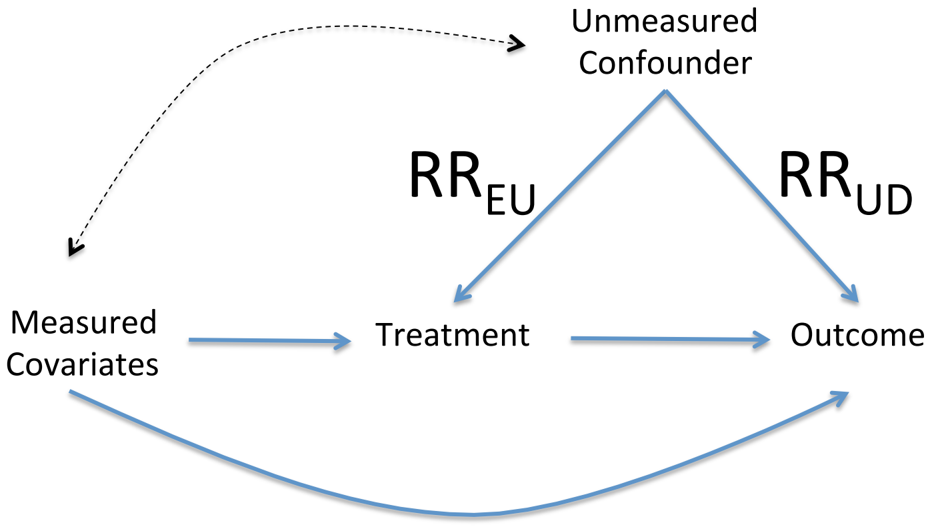
Sensitivity analysis is useful in assessing how robust an association is to potential unmeasured or uncontrolled confounding. This article introduces a new measure called the "E-value," which is related to the evidence for causality in observational studies that are potentially subject to confounding. The E-value is defined as the minimum strength of association, on the risk ratio scale, that an unmeasured confounder would need to have with both the treatment and the outcome to fully explain away a specific treatment-outcome association, conditional on the measured covariates. A large E-value implies that considerable unmeasured confounding would be needed to explain away an effect estimate. A small E-value implies little unmeasured confounding would be needed to explain away an effect estimate. The authors propose that in all observational studies intended to produce evidence for causality, the E-value be reported or some other sensitivity analysis be used. They suggest calculating the E-value for both the observed association estimate (after adjustments for measured confounders) and the limit of the confidence interval closest to the null. If this were to become standard practice, the ability of the scientific community to assess evidence from observational studies would improve considerably, and ultimately, science would be strengthened.
Overview
The claims and statistics of this paper haven’t been checked yet.
Free: it reads the open-access text and checks the first 5 claims that cite a source we can check. Create a free account to check every claim.
Integrity signals
Registry
Cites
Statistics
Figures
Verification
Claims the paper makes
The claims and statistics of this paper haven’t been checked yet.
Free: it reads the open-access text and checks the first 5 claims that cite a source we can check. Create a free account to check every claim.
Claims other papers make about this one
Each is checked against this paper’s own text: does it say what the citing paper says it does?
The cited source says what the claim attributes to it.
In the citing paper
“Quantitative bias analyses, such as the calculation of E-values to estimate the strength of unmeasured confounding required to explain away an observed association, provide useful context for the robustness of findings.64”
From Artificial Intelligence in Oncology: Practical Applications Across Clinical Care, Scholarship, and Translation. (2026) · cites this paper as [64]
The cited source says what the claim attributes to it.
In the citing paper
“We performed the sensitivity analysis using the E value [29] to evaluate the robustness of our findings to potential unmeasured confounding, with the calculation based on the observed odds ratio (OR) point estimate for rare outcome (<15%) or the square root of OR otherwise.”
The cited source says what the claim attributes to it.
In the citing paper
“To further assess the robustness of our findings to potential unmeasured confounding, we conducted an E-value analysis, a quantitative method for sensitivity analysis in observational research [31].”
From Acute Respiratory Tract Infection and Sudden Sensorineural Hearing Loss: A Multinational Cohort Study (2025) · cites this paper as [31]
In the citing paper
“We also computed E-values: indicators of how robust findings are to potential unmeasured confounding”
From Leading a meaningful life at older ages and its relationship with social engagement, prosperity, health, biology, and time use (2019) · cites this paper as [12]
Self-check
Percentages, sums and reported differences re-computed from the paper’s own numbers.
The self-check needs the paper’s full text.
Citations
Cites
Borenstein, M., Hedges, L. V., Higgins, J. P. T., & Rothstein, H. R. (2009) · doi:10.1002/9780470743386 · Cited by 14,225
The environment and disease: association or causation?
Hill, A. B. (2015) · Journal of the Royal Society of Medicine · doi:10.1177/0141076814562718 · Cited by 7,285
The Environment and Disease: Association or Causation?
Hill, A. B. (1965) · Proceedings of the Royal Society of Medicine · doi:10.1177/003591576505800503 · Cited by 6,974 · cited 1×
“Sensitivity analysis makes clear quantitatively why Bradford Hill's criterion of “strength of association” (12) is important in establishing that a given association is, in fact, causal.”
BackgroundThe ASA Statement on p -Values: Context, Process, and Purpose
Wasserstein, R. L., & Lazar, N. A. (2016) · The American Statistician · doi:10.1080/00031305.2016.1154108 · Cited by 6,306 · cited 2×
“While potentially subject to mis-use and misinterpretation (1,5-12), the p-value can be informative as a continuous measure of evidence as to whether an association is present.”
BackgroundCausal Inference for Statistics, Social, and Biomedical Sciences: An Introduction
Imbens, G. W., & Rubin, D. B. (2015) · doi:10.1017/cbo9781139025751 · Cited by 4,210
Statistical tests, P values, confidence intervals, and power: a guide to misinterpretations
Greenland, S., Senn, S. J., Rothman, K. J., Carlin, J. B., Poole, C., Goodman, S. N., & Altman, D. G. (2016) · European Journal of Epidemiology · doi:10.1007/s10654-016-0149-3 · Cited by 3,200
Explanation in Causal Inference: Methods for Mediation and Interaction
VanderWeele, T. J. (2015) · Cited by 2,217
Self-citationSmithson, M. (2000) · SAGE Publications Ltd eBooks · doi:10.4135/9781446218525 · Cited by 1,871
Fundamentals of Biostatistics.
Cornell, R. G., & Rosner, B. (1987) · Journal of the American Statistical Association · doi:10.2307/2289416 · Cited by 1,603
Breastfeeding and Maternal and Infant Health Outcomes In Developed Countries
(2007) · AAP Grand Rounds · doi:10.1542/gr.18-2-15 · Cited by 1,540 · cited 2×
“A study by the Agency for Healthcare Research and Quality (42) reported the association between breastfeeding and childhood leukemia as RR=0.”
MethodInfluential
Research works printed but not linked: 3
- Greenland S, 2011, Jurimetrics, 51, 11329
- Cornfield J, 1959, J Natl Cancer Inst, 22, 173
- Schlesselman JJ, 1978, Am J Epidemiol, 108, 3
Cited by
Items 501–600 of 1,031
Samples, H., Nowels, M., Williams, A. R., Olfson, M., & Crystal, S. (2023) · American Journal of Preventive Medicine · doi:10.1016/j.amepre.2023.01.037 · Cited by 54
Zhang, W., Zhang, K., Liu, C., Gao, W., Si, T., Zou, Q., Guo, Z., Yang, X., Li, M., Liu, D., et al. (2023) · Frontiers in Immunology · doi:10.3389/fimmu.2023.1127349 · Cited by 57
Sun, M., da Silva, M., Bjørge, T., Fritz, J., Mboya, I. B., Jerkeman, M., Stattin, P. E., Wahlström, J., Michaëlsson, K., Guelpen, B. R. V., et al. (2024) · The Lancet Regional Health - Europe · doi:10.1016/j.lanepe.2024.101034 · Cited by 65
“16 We also calculated sex-speci fi c absolute risks by age, strati fi ed by BMI categories, for potential obesity-related cancers separately and in combination with established obesity-related cancers using competing risk models.”
MethodHu, L., Li, J., Tang, Z., Gong, P., Chang, Z., Chen, Y., Ma, T., Jiang, S., Yang, C., & Zhang, T. (2025) · Cardiovascular Diabetology · doi:10.1186/s12933-025-02770-0 · Cited by 60
“The E -value represents the minimum strength of association an unmeasured confounder would need to have with both treatment and outcome, conditional on measured covariates, to fully explain the observed treatment-outcome association [44]; (9) Missing data handling.”
White Blood Cell BRCA1 Promoter Methylation Status and Ovarian Cancer Risk
Lønning, P. E., Berge, E. O., Bjørnslett, M., Minsaas, L., Chrisanthar, R., Høberg‐Vetti, H., Dulary, C., Busato, F., Bjørneklett, S., Eriksen, C., et al. (2018) · Annals of Internal Medicine · doi:10.7326/m17-0101 · Cited by 50
Huang, W., Sundquist, J., Sundquist, K., & Ji, J. (2019) · Gastroenterology · doi:10.1053/j.gastro.2019.05.012 · Cited by 49
Segura, L. E., Mauro, C., Levy, N. S., Khauli, N., Philbin, M. M., Mauro, P. M., & Martins, S. S. (2019) · JAMA Network Open · doi:10.1001/jamanetworkopen.2019.7216 · Cited by 51
Solomon, M. D., Leong, T. K., Levin, E. G., Rana, J. S., Jaffe, M. G., Sidney, S., Sung, S. H., Lee, C., DeMaria, A. N., & Go, A. S. (2020) · Journal of the American Heart Association · doi:10.1161/jaha.119.014415 · Cited by 60
“27 This estimates what the relative risk would have to be for any unmeasured confounder to negate the observed association of guideline adherence and mortality (Data S1).”
The deleterious effects of cannabis during pregnancy on neonatal outcomes
Grzeskowiak, L. E., Grieger, J. A., Andraweera, P. H., Knight, E., Leemaqz, S., Poston, L., McCowan, L. M. E., Kenny, L. C., Myers, J., Walker, J. J., et al. (2020) · The Medical Journal of Australia · doi:10.5694/mja2.50624 · Cited by 51
Samnani, S., Cenzer, I., Kline, G. A., Lee, S. J., Hundemer, G. L., McClurg, C., Pasieka, J. L., Boscardin, W. J., Ronksley, P. E., & Leung, A. A. (2024) · The Journal of Clinical Endocrinology & Metabolism · doi:10.1210/clinem/dgad654 · Cited by 50
Primary care continuity and potentially avoidable hospitalization in persons with dementia
Godard‐Sebillotte, C., Strumpf, E., Sourial, N., Rochette, L., Pelletier, E., & Vedel, I. (2021) · Journal of the American Geriatrics Society · doi:10.1111/jgs.17049 · Cited by 50
“We performed sensitivity analyses to (1) extreme weights and (2) unmeasured confounders.(35,36) See details in Texts S7 and S8, Tables S7 and S8.”
MethodInfluentialBlood Transfusion and Risk of Venous Thromboembolism: A Population-Based Cohort Study
Lin, S.-Y., Chang, Y.-L., Yeh, H., Lin, C., & Kao, C. (2019) · Thrombosis and Haemostasis · doi:10.1055/s-0039-1697664 · Cited by 50
Verbeek, J. H. A. M., Whaley, P., Morgan, R. L., Taylor, K. W., Rooney, A. A., Schwingshackl, L., Hoving, J. L., Katikireddi, S. V., Shea, B., Mustafa, R. A., et al. (2021) · Environment International · doi:10.1016/j.envint.2021.106868 · Cited by 55
Chen, L., Hong, L., Ma, A., Chen, Y., Xiao, Y., Jiang, F., Huang, R., Zhang, C., Bu, X., Ge, Y., et al. (2022) · British Journal of Anaesthesia · doi:10.1016/j.bja.2022.01.032 · Cited by 52
Association Between Meniere Disease and Migraine
Kim, S. Y., Lee, C. H., Yoo, D. M., Kwon, M. J., Kim, J. H., Kim, J., Park, B., Lee, H., & Choi, H. G. (2022) · JAMA Otolaryngology–Head & Neck Surgery · doi:10.1001/jamaoto.2022.0331 · Cited by 49
Cai, M., Lin, X., Wang, X., Zhang, S., Qian, Z. M., McMillin, S. E., Aaron, H. E., Lin, H., Wei, J., Zhang, Z., et al. (2022) · The Science of The Total Environment · doi:10.1016/j.scitotenv.2022.159104 · Cited by 50
Saito, M., McGready, R. M., Tinto, H., Rouamba, T., Mosha, D., Rulisa, S., Kariuki, S., Desai, M. R., Manyando, C., Njunju, E. M., et al. (2022) · The Lancet · doi:10.1016/s0140-6736(22)01881-5 · Cited by 54
Intracerebral Hemorrhage Among Blood Donors and Their Transfusion Recipients
Zhao, J., Rostgaard, K., Lauwers, E., Dahlén, T., Ostrowski, S. R., Erikstrup, C., Pedersen, O. B., Strooper, B. D., Lemmens, R., Hjalgrim, H., et al. (2023) · JAMA · doi:10.1001/jama.2023.14445 · Cited by 51
Woodworth, G. F., Anastasiadis, P., Ozair, A., Chabros, J., Bettegowda, C., Chen, C., Gerstl, J. V. E., Douville, C. B., Mekary, R. A., Smith, T. R., et al. (2025) · The Lancet Oncology · doi:10.1016/s1470-2045(25)00492-9 · Cited by 73
Wiernik, E., Airagnes, G., Lequy, É., Gomajee, R., Melchior, M., Faou, A.-L. L., Limosin, F., Goldberg, M., Zins, M., & Lemogne, C. (2018) · Addictive Behaviors · doi:10.1016/j.addbeh.2018.10.021 · Cited by 53
Masarwa, R., Platt, R. W., & Filion, K. B. (2020) · Paediatric and Perinatal Epidemiology · doi:10.1111/ppe.12615 · Cited by 55
Islam, N., Sheils, N. E., Jarvis, M. S., & Cohen, K. (2022) · Nature Communications · doi:10.1038/s41467-022-30059-3 · Cited by 52
Faucon, A., Flamant, M., Metzger, M., Boffa, J., Haymann, J., Houillier, P., Thervet, É., Vrtovsnik, F., Stengel, B., Géri, G., et al. (2019) · Kidney International · doi:10.1016/j.kint.2019.06.017 · Cited by 53
Exposure to Perfluoroalkyl Substances and Glucose Homeostasis in Youth
Goodrich, J. A., Alderete, T. L., Baumert, B. O., Berhane, K., Chen, Z., Gilliland, F. D., Goran, M. I., Hu, X., Jones, D. P., Margetaki, K., et al. (2021) · Environmental Health Perspectives · doi:10.1289/ehp9200 · Cited by 48
“For this analysis, we reran the OGTT glucose concentration analysis in the SOLAR, including all visits above the age of 20 y. Fourth, to assess potential bias resulting from an unknown or unmeasured confounder, we calculated the E-value (Ding and VanderWeele 2016; VanderWeele and Ding 2017).”
MethodAssociation between smoking, e-cigarette use and severe COVID-19: a cohort study
Gao, M., Aveyard, P. N., Lindson, N., Hartmann‐Boyce, J., Watkinson, P., Young, D., Coupland, C. A. C., Clift, A. K., Harrison, D. A., Gould, D. W., et al. (2022) · International Journal of Epidemiology · doi:10.1093/ije/dyac028 · Cited by 53
“5, respectively..(15,16) This means that an unmeasured confounder would need to be 2.”
Ma, H., Ahrens, E., Wachtendorf, L. J., Suleiman, A., Shay, D., Munoz‐Acuna, R., Tartler, T. M., Teja, B. J., Wagner, S., Subramaniam, B., et al. (2023) · Anesthesiology · doi:10.1097/aln.0000000000004774 · Cited by 49
“…ratio scale, that an unmeasured confounding factor would need to have with both the exposure and the outcome, conditional on the measured confounders, to fully explain away a specific exposure–outcome association 27,28 was 2.04 for the point estimate and 1.31 for the CI of our primary analysis.”
BackgroundInfluentialData-Driven Causal Effect Estimation Based on Graphical Causal Modelling: A Survey
Cheng, D., Li, J., Liu, L., Liu, J., & Le, T. D. (2023) · ACM Computing Surveys · doi:10.1145/3636423 · Cited by 77
“Sensitivity analysis aims to explore the effect of residual latent confounders in causal effect estimation from observational data [113, 149].”
BackgroundShreves, A. H., Small, S. R., Walmsley, R., Chan, S., Saint‐Maurice, P. F., Moore, S. C., Papier, K., Gaitskell, K. L., Travis, R. C., Matthews, C. E., et al. (2025) · British Journal of Sports Medicine · doi:10.1136/bjsports-2024-109360 · Cited by 59
Rigotti, N. A., Chang, Y., Tindle, H. A., Kalkhoran, S. M., Levy, D. E., Regan, S., Kelley, J. H. K., Davis, E. M., & Singer, D. E. (2018) · Annals of Internal Medicine · doi:10.7326/m17-2048 · Cited by 50
“To quantify the effect of unmeasured potential confounding factors, we report the E-value, which represents the minimum strength of association on the risk ratio scale that an unmeasured confounder would need to have with both the exposure (e-cigarette use) and the outcome (smoking abstinence) to fully explain away an…”
Association Between Statin Use and Risk of Dementia After a Concussion
Redelmeier, D. A., Manzoor, F., & Thiruchelvam, D. (2019) · JAMA Neurology · doi:10.1001/jamaneurol.2019.1148 · Cited by 48
Miller, J. E., Goldacre, R., Moore, H. C., Zeltzer, J., Knight, M., Morris, C., Nowell, S., Wood, R., Carter, K. W., Fathima, P., et al. (2020) · PLoS Medicine · doi:10.1371/journal.pmed.1003429 · Cited by 57
“Lastly, to address potential unmeasured confounding, we calculated site-specific E-values [27].”
InfluentialRisk of miscarriage in women with psychiatric disorders
Magnus, M. C., Havdahl, A., Morken, N., Wensaas, K., Wilcox, A. J., & Håberg, S. E. (2021) · The British Journal of Psychiatry · doi:10.1192/bjp.2020.259 · Cited by 64
Lampach, N., To‐The, N., & Nguyen‐Anh, T. (2019) · Land Use Policy · doi:10.1016/j.landusepol.2021.105289 · Cited by 57
Rheumatoid arthritis and risk of lung cancer: Meta-analysis and Mendelian randomization study
Wu, X., Peng, H., Wen, Y., Cai, X., Li, C., Zhong, R., Huang, Y., Chen, J., Huo, Z., Wang, R., et al. (2021) · Seminars in Arthritis and Rheumatism · doi:10.1016/j.semarthrit.2021.03.015 · Cited by 53
Early postpartum physical activity and pelvic floor support and symptoms 1 year postpartum
Nygaard, I. E., Wolpern, A., Bardsley, T., Egger, M. J., & Shaw, J. M. (2021) · American Journal of Obstetrics and Gynecology · doi:10.1016/j.ajog.2020.08.033 · Cited by 48
Sedentary behaviour in relation to ovarian cancer risk: a systematic review and meta-analysis
Biller, V. S., Leitzmann, M. F., Sedlmeier, A. M., Berger, F. F., Ortmann, O., & Jochem, C. (2021) · European Journal of Epidemiology · doi:10.1007/s10654-020-00712-6 · Cited by 55
Xu, Y., Fu, E. L., Clase, C. M., Mazhar, F., Jardine, M., & Carrero, J. J. (2021) · Kidney International · doi:10.1016/j.kint.2021.10.033 · Cited by 52
Associations between air pollution and multimorbidity in the UK Biobank: A cross-sectional study
Ronaldson, A., de la Torre, J. A., Ashworth, M. J., Hansell, A., Hotopf, M. H., Mudway, I., Stewart, R. J., Dregan, A., & Bakolis, I. (2022) · Frontiers in Public Health · doi:10.3389/fpubh.2022.1035415 · Cited by 51
Parasuaraman, G., Ayyasamy, L., Aune, D., Sen, A., Nagarajan, R., Rajkumar, P., Velusamy, S., Ponnaiah, M., & Sivaprakasam, S. (2023) · Scientific Reports · doi:10.1038/s41598-023-31373-6 · Cited by 56
“…strong positive dose–response relationship between increasing BMI and risk of asthma, with RRs of 1.23, 1.69, 2.45 and 3.64 at BMI values of 25, 30, 35, and 40 compared with the reference BMI of 20, and there was some indication of increased risk even within the high range of the normal weight…”
InfluentialZeng, C., Wei, J., Terkeltaub, R. A., Yang, T., Choi, H. K., Wang, Y., Xie, D., Hunter, D. J., Zhang, Y., Li, H., et al. (2017) · Arthritis Research & Therapy · doi:10.1186/s13075-017-1450-6 · Cited by 48
“We performed sensitivity analysis to assess to what extent the residual confounding could explain the association, using the E-value proposed by VanderWeele and Ding [43].”
MethodReinholdt, K., Thomsen, L. T., Dehlendorff, C., Larsen, H. K., Sørensen, S. S., Hædersdal, M., & Kjær, S. K. (2019) · International Journal of Cancer · doi:10.1002/ijc.32565 · Cited by 50
“To assess whether differences in the hazard of anogenital premalignancies in RTRs compared to non-RTRs were likely to be explained by different screening patterns, we computed socalled E-values for both the HRs and the lower limits of the Cis.(37) The E-value indicates how strong the association between a potential co…”
MethodThe Association between Limited English Proficiency and Sepsis Mortality
Jacobs, Z. G., Prasad, P. A., Fang, M. C., Abe‐Jones, Y., & Kangelaris, K. N. (2019) · Journal of Hospital Medicine · doi:10.12788/jhm.3334 · Cited by 51
“Admission level of care, N (%) Acute care Transitional care unit Intensive care unit 4,648 (52) 2,497 (28) 1,781 (20) 3,881 (54) 1,933 (27) 1,405 (19) 767 (45) 564 (33) 376 (22) <.”
Outcomes in Adulthood After Long-Term Foster Care: A Sibling Approach
Brännström, L., Vinnerljung, B., & Hjern, A. (2020) · Child Maltreatment · doi:10.1177/1077559519898755 · Cited by 73
“Conditional on included control variables in the model, a large/small E-value suggests considerable/little unobserved confounding would be needed to fully explain away the effect estimate (VanderWeele & Ding, 2017).”
BackgroundOlsen, F., af Segerstad, M. H., Nellgård, B., Houltz, E., & Ricksten, S. (2020) · Acta Orthopaedica · doi:10.1080/17453674.2020.1745510 · Cited by 48
“In another sensitivity analysis, we used the E-value methodology, as described by VanderWeele and Ding (2017), which estimates the minimum strength of association (risk ratio, 95% CI) that an unmeasured or uncontrolled confounding would need to have (on a risk ratio scale) with both the treatment…”
MethodSocial connections and the healthfulness of food choices in an employee population
Levy, D. E., Pachucki, M. C., O’Malley, A. J., Porneala, B., Yaqubi, A., & Thorndike, A. N. (2021) · Nature Human Behaviour · doi:10.1038/s41562-021-01103-x · Cited by 58
Yaghmaei, E., Lu, H., Ehwerhemuepha, L., Zheng, J., Danioko, S., Rezaie, A., Sajjadi, S. A., & Rakovski, C. (2024) · Communications Medicine · doi:10.1038/s43856-024-00527-6 · Cited by 47
“WeusetheE-Valuemeasurewhichis thede fi ned as the minimum strength of association on the risk ratio scale that a missing confounder would need to have with both the treatment and outcome variables to completely explain away the treatment outcome association 30 .”
BackgroundAssessing the impact of unmeasured confounders for credible and reliable real‐world evidence
Zhang, X., Stamey, J. D., & Mathur, M. B. (2020) · Pharmacoepidemiology and Drug Safety · doi:10.1002/pds.5117 · Cited by 56
“That is, it is possible that if there existed unmeasured confounder(s) with confounding strengths at least as large as the E-value, such confounder(s) could potentially explain away the effect, but not all confounders with confounding strengths at least as large as the E-value are capable of explaining away the effect…”
BackgroundInfluentialRisks for Anaphylaxis With Intravenous Iron Formulations: A Retrospective Cohort Study
Dave, C. V., Brittenham, G. M., Carson, J. L., & Setoguchi, S. (2022) · Annals of Internal Medicine · doi:10.7326/m21-4009 · Cited by 53
“We also calculated the E-value to assess the potential for unmeasured confounding (19).”
BackgroundTsamantioti, E., Lisonkova, S., Muraca, G. M., Örtqvist, A. K., & Razaz, N. (2022) · American Journal of Obstetrics and Gynecology · doi:10.1016/j.ajog.2022.03.028 · Cited by 59
Muhsen, K., Maimon, N., Mizrahi, A., Boltyansky, B., Bodenheimer, O., Diamant, Z. H., Gaon, L., Cohen, D., & Dagan, R. (2022) · JAMA Internal Medicine · doi:10.1001/jamainternmed.2022.2658 · Cited by 50
Ehmann, M. R., Mitchell, J., Levin, S., Smith, A., Menez, S. P., Hinson, J. S., & Klein, E. Y. (2023) · Intensive Care Medicine · doi:10.1007/s00134-022-06966-w · Cited by 47
“E-values were calculated to measure the potential effect of unmeasured confounders [37].”
BackgroundMethodMehta, A., Taylor, J. K., Day, G. L., Lane, T. C., & Douglas, I. S. (2023) · Annals of the American Thoracic Society · doi:10.1513/annalsats.202212-1029oc · Cited by 50
Impact of Teeth on Social Participation: Modified Treatment Policy Approach
Cooray, U., Tsakos, G., Heilmann, A., Watt, R. G., Takeuchi, K., Kondo, K., Osaka, K., & Aida, J. (2023) · Journal of Dental Research · doi:10.1177/00220345231164106 · Cited by 51
“We reported E values for estimates to reflect the potential effect of unmeasured confounding (VanderWeele and Ding 2017).”
BackgroundMethodLiu, B. D. X., Udemba, S. C., Liang, K., Tarabichi, Y., Hill, H., Fass, R., & Song, G. (2023) · Gut · doi:10.1136/gutjnl-2023-329651 · Cited by 61
Brown, J. P., Hunnicutt, J. N., Ali, M. S., Bhaskaran, K., Cole, A. L., Langan, S., Nitsch, D., Rentsch, C. T., Galwey, N. W., Wing, K., et al. (2024) · BMJ · doi:10.1136/bmj-2023-076365 · Cited by 58
“45 Simplifying assumptions are required by many methods of quantitative bias analysis.”
Wan, E. S., Yen, A., Elalami, R., Grumley, S. A., Nath, H. P., Wang, W., Brouha, S. S., Manapragada, P. P., Abozeed, M., Aziz, M. U., et al. (2024) · American Journal of Respiratory and Critical Care Medicine · doi:10.1164/rccm.202403-0632oc · Cited by 63
Varicella-zoster virus reactivation and the risk of dementia
Polisky, V., Littmann, M., Triastcyn, A., Horn, M., Georgiou, A., Widenmaier, R., Anspach, B., Tahrat, H., Kumar, S., Buser‐Doepner, C., et al. (2025) · Nature Medicine · doi:10.1038/s41591-025-03972-5 · Cited by 56
Herpes Zoster as a Risk Factor for Incident Giant Cell Arteritis
England, B. R., Mikuls, T. R., Xie, F., Yang, S., Chen, L., & Curtis, J. R. (2017) · Arthritis & Rheumatology · doi:10.1002/art.40236 · Cited by 47
“Additionally, following recent recommendations for observational studies, we calculated E-values as a representation of the minimum strength of association that an unmeasured confounder would need to have with the exposure and outcome to nullify an observed exposure–outcome association (25).”
BackgroundMethodResultInfluentialKalichman, S. C., Mathews, C., Banas, E., & Kalichman, M. O. (2018) · International Journal of STD & AIDS · doi:10.1177/0956462418813047 · Cited by 47
Cohort Analysis of Immigrant Rhetoric on Timely and Regular Access of Prenatal Care
Chu, D. M., Aagaard, J., Levitt, R., Whitham, M. D., Mastrobattista, J. M., Rac, M. W. F., Eppes, C. S., Gandhi, M., Belfort, M. A., & Aagaard, K. M. (2018) · Obstetrics and Gynecology · doi:10.1097/aog.0000000000003023 · Cited by 49
Zhang, M., Zhang, Y., Terkeltaub, R. A., Chen, C. A., & Neogi, T. (2019) · Arthritis & Rheumatology · doi:10.1002/art.40896 · Cited by 48
“92fold each, above and beyond the measured confounders, while weaker confounding could not do so (45).”
BackgroundIkehara, S., Kimura, T., Kakigano, A., Sato, T., Iso, H., & the Japan Environment Children's Study Group (2019) · BJOG An International Journal of Obstetrics & Gynaecology · doi:10.1111/1471-0528.15899 · Cited by 47
Gatti, M., Bianchin, M., Raschi, E., & Ponti, F. D. (2020) · European Journal of Internal Medicine · doi:10.1016/j.ejim.2020.01.009 · Cited by 54
Metabolome subtyping of severe bronchiolitis in infancy and risk of childhood asthma
Zhu, Z., Camargo, C. A., Raita, Y., Fujiogi, M., Liang, L., Rhee, E. P., Woodruff, P. G., & Hasegawa, K. (2021) · Journal of Allergy and Clinical Immunology · doi:10.1016/j.jaci.2021.05.036 · Cited by 47
Cancer and risk of Alzheimer's disease: Small association in a nationwide cohort study
Ording, A. G., Horváth‐Puhó, E., Veres, K., Glymour, M. M., Rørth, M., Sørensen, H. T., & Henderson, V. W. (2020) · Alzheimer's & Dementia · doi:10.1002/alz.12090 · Cited by 47
Hypothetical case replacement can be used to quantify the robustness of trial results
Frank, K. A., Lin, Q., Maroulis, S. J., Mueller, A. S., Xu, R., Rosenberg, J. M., Hayter, C. S., Mahmoud, R. A., Kolak, M., Dietz, T. M., et al. (2021) · Journal of Clinical Epidemiology · doi:10.1016/j.jclinepi.2021.01.025 · Cited by 46
de Havenon, A., Castonguay, A. C., Nogueira, R. G., Nguyen, T. N., English, J., Satti, S. R., Veznedaroglu, E., Saver, J. L., Mocco, J., Khatri, P., et al. (2021) · Neurology · doi:10.1212/wnl.0000000000012827 · Cited by 46
Hanley‐Cook, G., Huybrechts, I., Biessy, C., Remans, R., Kennedy, G., Deschasaux, M., Murray, K. A., Touvier, M., Skeie, G., Kesse‐Guyot, E., et al. (2021) · PLoS Medicine · doi:10.1371/journal.pmed.1003834 · Cited by 54
“To assess potential residual confounding from unmeasured or uncontrolled confounders, E-values were used [53,54].”
Monteiro, C., Maricoto, T., Prazeres, F., Simões, P. A., & Simões, J. A. (2021) · Respiratory Medicine · doi:10.1016/j.rmed.2021.106724 · Cited by 56
Trajectories of Sugar Consumption and Dental Caries in Early Childhood
Echeverria, M. S., Schuch, H. S., Cenci, M. S., Motta, J. V. D. S., Bertoldi, A. D., Hallal, P. C., & Demarco, F. F. (2022) · Journal of Dental Research · doi:10.1177/00220345211068743 · Cited by 52
“Assessing the E-values, it is unlikely that there will be unmeasured confounders, especially considering that the most important confounding factors mentioned in the literature have already been adjusted for.”
MethodInfluentialNakamura, J. S., Hong, J. H., Smith, J., Chopik, W. J., Chen, Y., VanderWeele, T. J., & Kim, E. S. (2022) · JAMA Network Open · doi:10.1001/jamanetworkopen.2021.47797 · Cited by 58
Self-citationZinc supplement use and risk of aggressive prostate cancer: a 30-year follow-up study
Zhang, Y., Song, M., Mucci, L. A., & Giovannucci, E. L. (2022) · European Journal of Epidemiology · doi:10.1007/s10654-022-00922-0 · Cited by 48
Jiang, Y., Lin, X., Wang, Y., Li, J., Wang, G., Meng, Y., Li, M., Li, Y., Luo, Y., Gao, Z., et al. (2023) · Clinical Interventions in Aging · doi:10.2147/cia.s404211 · Cited by 53
“Additionally, we assessed the potential bias caused by unmeasured confounders (eg, other comorbidities and severity of fracture) using the E-value.(18) A large E-value implies that considerable unmeasured confounders were needed to explain the effect estimate while a small one implies little unmeasured confounders.”
MethodLeisure engagement in older age is related to objective and subjective experiences of aging
Bone, J. K., Bu, F., Sonke, J. K., & Fancourt, D. E. (2024) · Nature Communications · doi:10.1038/s41467-024-45877-w · Cited by 56
“We computed E-values as indicators of how robust fi ndings were to potential unmeasured confounding 29 .”
MethodSequential intravenous-to-oral outpatient antibiotic therapy for MRSA bacteraemia: one step closer
Jorgensen, S. C. J., Lagnf, A. M., Bhatia, S., Shamim, M.-D., & Rybak, M. J. (2018) · Journal of Antimicrobial Chemotherapy · doi:10.1093/jac/dky452 · Cited by 45
The Association Between Cancer and Dementia: A National Cohort Study in Sweden
Sun, M., Wang, Y., Sundquist, J., Sundquist, K., & Ji, J. (2020) · Frontiers in Oncology · doi:10.3389/fonc.2020.00073 · Cited by 43
Confounding and effect measure modification in reproductive medicine research
Correia, K. F. B., Dodge, L. E., Farland, L. V., Hacker, M. R., Ginsburg, E. S., Whitcomb, B. W., Wise, L. A., & Missmer, S. A. (2020) · Human Reproduction · doi:10.1093/humrep/deaa051 · Cited by 51
“The E-value has been proposed as one way to assess how strong of an association the confounder would need to have with the exposure and the outcome in order to meaningfully change the overall result (Ding & VanderWeele, 2016; VanderWeele, 2017; Haneause et al., 2019).”
BackgroundEffects of short-term fine particulate matter exposure on acute respiratory infection in children
Kim, K., Kim, S., Lim, Y.-H., Song, I. G., & Hong, Y. (2020) · International Journal of Hygiene and Environmental Health · doi:10.1016/j.ijheh.2020.113571 · Cited by 46
Ploubidis, G. B., Batty, G. D., Patalay, P., Bann, D., & Goodman, A. (2021) · JAMA Psychiatry · doi:10.1001/jamapsychiatry.2020.2893 · Cited by 46
Brown, J. C., Caan, B. J., Cespedes Feliciano, E. M., Xiao, J., Weltzien, E., Prado, C. M., Kroenke, C. H., Castillo, A., Kwan, M. L., & Meyerhardt, J. A. (2021) · The American Journal of Clinical Nutrition · doi:10.1093/ajcn/nqaa440 · Cited by 46
“Sensitivity analyses were conducted to determine how robust the association between skeletal muscle depletion and overall survival was to unmeasured or uncontrolled confounding (32).”
BackgroundGlucose Intolerance in Pregnancy and Offspring Obesity in Late Adolescence
Bendor, C. D., Bardugo, A., Rotem, R. S., Derazne, E., Gerstein, H. C., Tzur, D., Pinhas-Hamiel, O., Tsur, A. M., Cukierman-Yaffe, T., Lebenthal, Y., et al. (2022) · Diabetes Care · doi:10.2337/dc21-2634 · Cited by 46
Sensitivity Analysis for Unmeasured Confounding: E-Values for Observational Studies
Localio, A. R., Stack, C. B., & Griswold, M. E. (2017) · Annals of Internal Medicine · doi:10.7326/m17-1485 · Cited by 46
“First, because the outcome is not rare, we must use the formula in Table 2 in VanderWeele and Ding's article (1) to convert the hazard ratios into approximate relative risks (RRs).”
BackgroundMethodInfluentialAinamani, H., Alele, P. E., Rukundo, G. Z., Maling, S., Wakida, E. K., Obua, C., & Tsai, A. C. (2020) · Cambridge Prisms Global Mental Health · doi:10.1017/gmh.2020.7 · Cited by 54
“To quantify the extent to which unmeasured confounding could have explained our findings, we computed the e-value as defined by VanderWeele and Ding (2017): the e-value is defined as the minimum strength of association, on the risk ratio scale, that an unmeasured covariate would need to have with…”
MethodJung, S. J., Lee, G. B., Nishimi, K. M., Chibnik, L. B., Koenen, K. C., & Kim, H. C. (2021) · GeroScience · doi:10.1007/s11357-021-00406-1 · Cited by 50
Wahood, W., Rizvi, A. A., Alexander, A. Y., Yolcu, Y. U., Lanzino, G. S., Brinjikji, W., & Rabinstein, A. A. (2022) · Neurocritical Care · doi:10.1007/s12028-022-01476-5 · Cited by 45
“, explain away) the association between covariate and outcome [13].”
BackgroundVisontay, R., Mewton, L. R., Slade, T. N., Aris, I. M., & Sunderland, M. (2023) · American Journal of Psychiatry · doi:10.1176/appi.ajp.22010043 · Cited by 50
Prescription opioids, alcohol and fatal motor vehicle crashes: a population-based case-control study
Li, G., & Chihuri, S. T. (2019) · Injury Epidemiology · doi:10.1186/s40621-019-0187-x · Cited by 45
Noone, A., Pfeiffer, R. M., Dorgan, J. F., Magder, L. S., Bromberg, J. S., Lynch, C. F., Morris, C. R., Pawlish, K. S., & Engels, E. A. (2019) · Cancer · doi:10.1002/cncr.32136 · Cited by 45
“Because the SRTR does not have complete information regarding tobacco use, we calculated a bias factor to adjust the HR for smoking (see Supporting Materials for details).(13,14) This method relies on external estimates of the relative risk of death for smokers versus nonsmokers and smoking prevalence among recipients.”
MethodLight to moderate amount of lifetime alcohol consumption and risk of cancer in Japan
Zaitsu, M., Takeuchi, T., Kobayashi, Y., & Kawachi, I. I. (2019) · Cancer · doi:10.1002/cncr.32590 · Cited by 45
Wei, J., Choi, H. K., Neogi, T., Dalbeth, N., Terkeltaub, R., Stamp, L. K., Lyu, H., McCormick, N., Niu, J., Zeng, C., et al. (2022) · Annals of Internal Medicine · doi:10.7326/m21-2347 · Cited by 47
“Sixth, we calculated the E-value to quantitatively evaluate the minimum residual confounding effect that would nullify an association observed in the primary analyses (51).”
MethodJacobson, L. T., Hade, E. M., Collins, T. C., Margolis, K. L., Waring, M. E., Van Horn, L. V., Silver, B., Sattari, M., Bird, C. E., Kimminau, K., et al. (2018) · Journal of the American Heart Association · doi:10.1161/jaha.118.008739 · Cited by 44
“As a measure of potential unmeasured confounding, we also report the e-value for the primary models.(67) All reported P-values and confidence intervals (CIs) were 2-sided and reported at the nominal level.”
BackgroundDeath and long-term disability after gun injury: a cohort analysis
Raza, S., Thiruchelvam, D., & Redelmeier, D. A. (2020) · CMAJ Open · doi:10.9778/cmajo.20190200 · Cited by 49
Albani, F., Sepe, L., Fusina, F., Prezioso, C., Baronio, M., Caminiti, F., Maio, A. D., Faggian, B., Franceschetti, M. E., Massari, M., et al. (2020) · EClinicalMedicine · doi:10.1016/j.eclinm.2020.100562 · Cited by 52
“1¢66) to nullify the protective effect of enoxaparin [13,24].”
Low Somatosensory Cortex Excitability in the Acute Stage of Low Back Pain Causes Chronic Pain
Jenkins, L. C., Chang, W., Buscemi, V., Liston, M. B., Skippen, P., Cashin, A. G., McAuley, J. H., & Schabrun, S. M. (2021) · Journal of Pain · doi:10.1016/j.jpain.2021.08.003 · Cited by 48
Chang, J., Höfer, P., Böhling, N., Lingohr, P., Manekeller, S., Kalff, J. C., Dohmen, J., Kaczmarek, D. J., Jansen, C., Meyer, C. H., et al. (2022) · JHEP Reports · doi:10.1016/j.jhepr.2022.100442 · Cited by 49
Fjeld, M. K., Årnes, A. P., Engdahl, B., Morseth, B., Hopstock, L. A., Horsch, A., Stubhaug, A., Strand, B. H., Nielsen, C. S., & Steingrímsdóttir, Ó. A. (2022) · Pain · doi:10.1097/j.pain.0000000000002773 · Cited by 52
“com/PAIN/B713).(59) All statistical analyses were performed in Stata 15 (StataCorp LP, College Station, TX).”
MethodDMD Genotypes and Motor Function in Duchenne Muscular Dystrophy
Francesco Muntoni, A., Signorovitch, J., Sajeev, G., Lane, H. C., Jenkins, M. D., Dieye, I., Ward, S. J., McDonald, C. M., Goemans, N., Niks, E. H., et al. (2023) · Neurology · doi:10.1212/wnl.0000000000201626 · Cited by 44
Association Between Vonoprazan and the Risk of Gastric Cancer After Helicobacter pylori Eradication
Arai, J., Miyawaki, A., Aoki, T., Niikura, R., Hayakawa, Y., Fujiwara, H., Ihara, S., Fujishiro, M., & Kasuga, M. (2024) · Clinical Gastroenterology and Hepatology · doi:10.1016/j.cgh.2024.01.037 · Cited by 52
Zhao, Y., Lai, Y., Konijnenberg, H., Huerta, J. M., Vinagre‐Aragón, A., Sabin, J., Hansen, J., Petrova, D., Sacerdote, C., Zamora‐Ros, R., et al. (2024) · Neurology · doi:10.1212/wnl.0000000000209201 · Cited by 50
Addo, P. N. O., Mundagowa, P. T., Zhao, L., Kanyangarara, M., Brown, M. J., & Liu, J. (2024) · BMC Public Health · doi:10.1186/s12889-024-18381-5 · Cited by 53
“The E-value shows the minimum strength of association an unmeasured confounder would need to have with the exposure and outcome to explain away the observed exposure-outcome association [21].”
Background
Metadata
- Authors
- VanderWeele, T. J., & Ding, P.
- Affiliations
- Harvard University (US)
- Venue
- Annals of Internal Medicine
- Publisher
- American College of Physicians
- Published
- 2017-08-15
- Volume
- 167
- Issue
- 4
- Pages
- 268-274
- ISSN
- 0003-4819 (ISSN-L)
- 1539-3704
- OpenAlex
- W2735301415
- Cited by
- 6,350
- References
- 59
- Citations by year
- 2026: 1516 · 2025: 1020 · 2024: 860 · 2023: 736 · 2022: 716 · 2021: 583 · 2020: 498 · 2019: 290 · 2018: 113 · 2017: 15
- FWCI
- 174.58
- Type
- journal article
- Language
- en
- Open access
- green
- nrs.harvard.edu
- Licence
- cc-by
- www.acpjournals.org/journal/aim/text-and-data-mining (tdm)
- Locations
- Annals of Internal Medicine (publishedVersion)
- PubMed (publishedVersion)
- Digital Access to Scholarship at Harvard (DASH) (Harvard University) (submittedVersion, cc-by)
- Funders
- National Institute of Environmental Health Sciences (ES017876)
- Topics
- Physical Sciences › Mathematics › Statistics and Probability › Advanced Causal Inference Techniques
- Physical Sciences › Mathematics › Statistics and Probability › Statistical Methods in Epidemiology
- Social Sciences › Decision Sciences › Statistics, Probability and Uncertainty › Meta-analysis and systematic reviews
- Keywords
- E-value, unmeasured confounding, sensitivity analysis, causal inference, observational studies, relative risk
- MeSH terms
- Humans, Sensitivity and Specificity, Epidemiologic Research Design, Confounding Factors, Epidemiologic, Observational Studies as Topic
About these checks
Registry, retraction, Cites and statistics results are computed, not judged, with one exception: a printed reference that no index lists is read once by a model before it counts as a citation error. Claims are extracted by a model and kept only when their quote appears verbatim in the text; each cited source is then checked, with a model’s help, for whether it says what the claim relies on. Those verdicts can be wrong — read the claim’s quote and the cited source before relying on one.
Statistics and arithmetic are recomputed, not judged.
Confidence bands are shown only for fields calibrated on our annotated test set. None is calibrated yet, so no band is shown.
What counts as a claim ›How we measure confidence ›How we check this ›
Are you an author, or do you see a problem with this page? Request a review
Data sources
Bibliographic data: Semantic Scholar, OpenAlex, Crossref.
Contains information from the Semantic Scholar Academic Graph Datasets, made available under the ODC Attribution License (ODC-BY 1.0).
Semantic Scholar’s data is described in: Kinney, R., et al. (2023). The Semantic Scholar Open Data Platform. arXiv:2301.10140.
