

Sensitivity Analysis in Observational Research: Introducing the E-Value
Open accessThe DOI matches its Crossref record; 58 of the 59 references it cites were found in a registry or an index.
Abstract
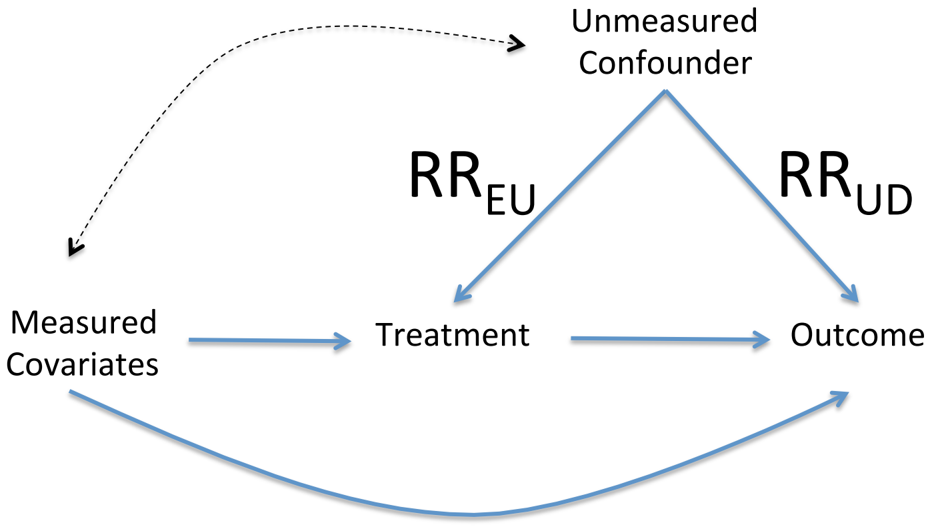
Sensitivity analysis is useful in assessing how robust an association is to potential unmeasured or uncontrolled confounding. This article introduces a new measure called the "E-value," which is related to the evidence for causality in observational studies that are potentially subject to confounding. The E-value is defined as the minimum strength of association, on the risk ratio scale, that an unmeasured confounder would need to have with both the treatment and the outcome to fully explain away a specific treatment-outcome association, conditional on the measured covariates. A large E-value implies that considerable unmeasured confounding would be needed to explain away an effect estimate. A small E-value implies little unmeasured confounding would be needed to explain away an effect estimate. The authors propose that in all observational studies intended to produce evidence for causality, the E-value be reported or some other sensitivity analysis be used. They suggest calculating the E-value for both the observed association estimate (after adjustments for measured confounders) and the limit of the confidence interval closest to the null. If this were to become standard practice, the ability of the scientific community to assess evidence from observational studies would improve considerably, and ultimately, science would be strengthened.
Overview
The claims and statistics of this paper haven’t been checked yet.
Free: it reads the open-access text and checks the first 5 claims that cite a source we can check. Create a free account to check every claim.
Integrity signals
Registry
Cites
Statistics
Figures
Verification
Claims the paper makes
The claims and statistics of this paper haven’t been checked yet.
Free: it reads the open-access text and checks the first 5 claims that cite a source we can check. Create a free account to check every claim.
Claims other papers make about this one
Each is checked against this paper’s own text: does it say what the citing paper says it does?
The cited source says what the claim attributes to it.
In the citing paper
“Quantitative bias analyses, such as the calculation of E-values to estimate the strength of unmeasured confounding required to explain away an observed association, provide useful context for the robustness of findings.64”
From Artificial Intelligence in Oncology: Practical Applications Across Clinical Care, Scholarship, and Translation. (2026) · cites this paper as [64]
The cited source says what the claim attributes to it.
In the citing paper
“We performed the sensitivity analysis using the E value [29] to evaluate the robustness of our findings to potential unmeasured confounding, with the calculation based on the observed odds ratio (OR) point estimate for rare outcome (<15%) or the square root of OR otherwise.”
The cited source says what the claim attributes to it.
In the citing paper
“To further assess the robustness of our findings to potential unmeasured confounding, we conducted an E-value analysis, a quantitative method for sensitivity analysis in observational research [31].”
From Acute Respiratory Tract Infection and Sudden Sensorineural Hearing Loss: A Multinational Cohort Study (2025) · cites this paper as [31]
In the citing paper
“We also computed E-values: indicators of how robust findings are to potential unmeasured confounding”
From Leading a meaningful life at older ages and its relationship with social engagement, prosperity, health, biology, and time use (2019) · cites this paper as [12]
Self-check
Percentages, sums and reported differences re-computed from the paper’s own numbers.
The self-check needs the paper’s full text.
Citations
Cites
Borenstein, M., Hedges, L. V., Higgins, J. P. T., & Rothstein, H. R. (2009) · doi:10.1002/9780470743386 · Cited by 14,225
The environment and disease: association or causation?
Hill, A. B. (2015) · Journal of the Royal Society of Medicine · doi:10.1177/0141076814562718 · Cited by 7,285
The Environment and Disease: Association or Causation?
Hill, A. B. (1965) · Proceedings of the Royal Society of Medicine · doi:10.1177/003591576505800503 · Cited by 6,974 · cited 1×
“Sensitivity analysis makes clear quantitatively why Bradford Hill's criterion of “strength of association” (12) is important in establishing that a given association is, in fact, causal.”
BackgroundThe ASA Statement on p -Values: Context, Process, and Purpose
Wasserstein, R. L., & Lazar, N. A. (2016) · The American Statistician · doi:10.1080/00031305.2016.1154108 · Cited by 6,306 · cited 2×
“While potentially subject to mis-use and misinterpretation (1,5-12), the p-value can be informative as a continuous measure of evidence as to whether an association is present.”
BackgroundCausal Inference for Statistics, Social, and Biomedical Sciences: An Introduction
Imbens, G. W., & Rubin, D. B. (2015) · doi:10.1017/cbo9781139025751 · Cited by 4,210
Statistical tests, P values, confidence intervals, and power: a guide to misinterpretations
Greenland, S., Senn, S. J., Rothman, K. J., Carlin, J. B., Poole, C., Goodman, S. N., & Altman, D. G. (2016) · European Journal of Epidemiology · doi:10.1007/s10654-016-0149-3 · Cited by 3,200
Explanation in Causal Inference: Methods for Mediation and Interaction
VanderWeele, T. J. (2015) · Cited by 2,217
Self-citationSmithson, M. (2000) · SAGE Publications Ltd eBooks · doi:10.4135/9781446218525 · Cited by 1,871
Fundamentals of Biostatistics.
Cornell, R. G., & Rosner, B. (1987) · Journal of the American Statistical Association · doi:10.2307/2289416 · Cited by 1,603
Breastfeeding and Maternal and Infant Health Outcomes In Developed Countries
(2007) · AAP Grand Rounds · doi:10.1542/gr.18-2-15 · Cited by 1,540 · cited 2×
“A study by the Agency for Healthcare Research and Quality (42) reported the association between breastfeeding and childhood leukemia as RR=0.”
MethodInfluential
Research works printed but not linked: 3
- Greenland S, 2011, Jurimetrics, 51, 11329
- Cornfield J, 1959, J Natl Cancer Inst, 22, 173
- Schlesselman JJ, 1978, Am J Epidemiol, 108, 3
Cited by
Items 601–700 of 1,031
Bazoukis, G., Naka, K. Κ., Alsheikh-Ali, A. A. A., Tse, G., Letsas, Κ. P., Korantzopoulos, P. G., Liu, T., Yeung, C., Efremidis, M., Tsioufis, K. P., et al. (2019) · Heart Failure Reviews · doi:10.1007/s10741-019-09839-5 · Cited by 49
Oral Fluoroquinolones and Risk of Mitral and Aortic Regurgitation
Etminan, M., Sodhi, M., Ganjizadeh‐Zavareh, S., Carleton, B., Kezouh, A., & Brophy, J. M. (2019) · Journal of the American College of Cardiology · doi:10.1016/j.jacc.2019.07.035 · Cited by 44
Cohen, J. B., McGowan, L. D., Jensen, E. T., Rigdon, J., & South, A. M. (2020) · Journal of Hypertension · doi:10.1097/hjh.0000000000002706 · Cited by 47
Fitzgerald, K. C., Damian, A., Conway, D. S., & Mowry, E. M. (2021) · Multiple Sclerosis Journal · doi:10.1177/1352458520984746 · Cited by 49
Anson, M., Henney, A. E., Broadwell, N., Zhao, S. S., Ibarburu, G. H., Lip, G. Y. H., Wilding, J. P. H., Cuthbertson, D. J., & Alam, U. (2024) · eClinicalMedicine · doi:10.1016/j.eclinm.2024.102777 · Cited by 44
Risk of miscarriage in women with chronic diseases in Norway: A registry linkage study
Magnus, M. C., Morken, N., Wensaas, K., Wilcox, A. J., & Håberg, S. E. (2021) · PLoS Medicine · doi:10.1371/journal.pmed.1003603 · Cited by 53
“We used E-values to estimate the magnitude of the relationship that any unmeasured confounder would have to have to completely explain away our findings [50].”
MethodPescarini, J., Campbell, D. D., Amorim, L., Falcão, I. R., Ferreira, . J., Allik, M., Shaw, R., Malta, D., Ali, M. S., Smeeth, L., et al. (2022) · International Journal of Epidemiology · doi:10.1093/ije/dyac188 · Cited by 26
“We calculated the e-values to assess the sensitivity of our results to potential unmeasured confounding.(43,44) To test the robustness of our findings, we estimated the effect of BFP on mortality by (i) using time-varying Cox regression models adjusted for socio-economic and demographic covariates, (ii) weighting indi…”
BackgroundMethodQuantifying the robustness of causal inferences: Sensitivity analysis for pragmatic social science
Frank, K. A., Lin, Q., Xu, R., Maroulis, S. J., & Mueller, A. S. (2022) · Social Science Research · doi:10.1016/j.ssresearch.2022.102815 · Cited by 53
Cannioto, R. A., Attwood, K. M., Davis, E. W., Mendicino, L., Hutson, A. D., Zirpoli, G., Tang, L., Nair, N. M., Barlow, W. E., Hershman, D. L., et al. (2023) · JAMA Network Open · doi:10.1001/jamanetworkopen.2023.11673 · Cited by 50
Maraolo, A. E., Licciardi, F., Gentile, I., Saracino, A., Belati, A., & Bavaro, D. F. (2023) · Antibiotics · doi:10.3390/antibiotics12050910 · Cited by 52
“value was calculated, defined as the minimum strength of association that an unmeasured confounder would need to have with both the treatment and the outcome to completely explain away a specific association [20].”
BackgroundWeinberg, M. S., Zafar, A., Magdamo, C., Chung, S. Y., Chou, W. H., Nayan, M., Deodhar, M., Frendl, D. M., Feldman, A. S., Faustman, D. L., et al. (2023) · JAMA Network Open · doi:10.1001/jamanetworkopen.2023.14336 · Cited by 44
Xie, Z., Qi, B., Wang, Z., Li, F., Chen, C.-F., Li, C., Yuan, S., Yao, S., Zhou, J., & Ge, J. (2023) · EP Europace · doi:10.1093/europace/euad363 · Cited by 49
Panagiotou, O. A., Kumar, A., Gutman, R., Keohane, L. M., Rivera‐Hernandez, M., Rahman, M., Gozalo, P. L., Mor, V., & Trivedi, A. N. (2019) · Annals of Internal Medicine · doi:10.7326/m18-1795 · Cited by 44
“Our sensitivity analysis using E-values showed that a covariate with moderate association in Medicare Advantage enrollment (relative risk of at least 1.2 for AMI, 1.4 for CHF, or 1.2 for pneumonia) is required to reduce the observed association between Medicare Advantage enrollment and readmission risk to previously r…”
InfluentialRanasinghe, I., Labrosciano, C., Horton, D., Ganesan, A. N., Curtis, J. P., Krumholz, H. M., McGavigan, A. D., Hossain, S., Air, T., & Hariharaputhiran, S. (2019) · Annals of Internal Medicine · doi:10.7326/m18-2810 · Cited by 49
Boulain, T., Malet, A., & Maître, O. (2019) · Internal and Emergency Medicine · doi:10.1007/s11739-019-02231-z · Cited by 53
Tian, Y., Reichardt, B., Dunkler, D., Hronský, M., Winkelmayer, W. C., Bucsics, A., Strohmaier, S., & Heinze, G. (2020) · Scientific Reports · doi:10.1038/s41598-020-62318-y · Cited by 47
“**E-values (VanderWeele and Ding, 2017) for IPTW adjusted point estimate and lower confidence limit.”
BackgroundZhou, L., Bhattacharjee, S., Kwoh, C. K., Tighe, P. J., Reisfield, G. M., Malone, D. C., Slack, M. K., Wilson, D. L., Chang, C., & Lo‐Ciganic, W. (2020) · Addiction · doi:10.1111/add.15189 · Cited by 45
“(46) A large E-value implies that considerable unmeasured confounding would be needed to account for an effect estimate; whereas, a small E-value implies little unmeasured confounding would be needed to do so.”
BackgroundCowden, R. G., Pargäment, K. I., Chen, Z. J., Davis, E. B., Lemke, A. W., Glowiak, K. J., Rueger, S. Y., & Worthington, E. L. (2021) · Journal of Clinical Psychology · doi:10.1002/jclp.23232 · Cited by 57
Cadeddu, C., Regazzi, L., Bonaccorsi, G., Rosano, A., Unim, B., Griebler, R., Link, T., CASTRO, P. D., D’Elia, R., Mastrilli, V., et al. (2022) · International Journal of Environmental Research and Public Health · doi:10.3390/ijerph19084429 · Cited by 48
“Adopting the methodology proposed by VanderWeele and Ding [32], a sensitivity analysis was performed to evaluate how much residual confounding might be needed to explain away an effect estimate.”
BackgroundMethodPinter, A., Puig, L., Schäkel, K., Reich, A., Zaheri, S., Costanzo, A., Tsai, T., Smith, S. D., Lynde, C. W., Brnabic, A. J. M., et al. (2022) · Journal of the European Academy of Dermatology and Venereology · doi:10.1111/jdv.18376 · Cited by 43
Colquhoun, D. A., Vaughn, M. T., Bash, L. D., Janda, A. M., Shah, N. J., Ghaferi, A. A., Sjoding, M. W., Mentz, G. B., Kheterpal, S., Craft, R. M., et al. (2022) · British Journal of Anaesthesia · doi:10.1016/j.bja.2022.04.023 · Cited by 47
Rodrigues, D., Kreif, N., Lawrence‐Jones, A., Barahona, M., & Mayer, E. K. (2022) · International Journal of Epidemiology · doi:10.1093/ije/dyac135 · Cited by 41
Rituximab vs Cyclophosphamide Induction Therapy for Patients With Granulomatosis With Polyangiitis
Puéchal, X., Iudici, M., Perrodeau, É., Bonnotte, B., Lifermann, F., Gallou, T. L., Karras, A., Blanchard‐Delaunay, C., Quéméneur, T., Aouba, A., et al. (2022) · JAMA Network Open · doi:10.1001/jamanetworkopen.2022.43799 · Cited by 48
“Characteristic All (N = 194) Rituximab group (n = 61) Cyclophosphamide group (n = 133) Age, mean (SD), y 54 (15) 52 (18) 55 (14)”
Wang, M., Su, W., Cao, N., Chen, H., & Li, H. (2023) · Cardiovascular Diabetology · doi:10.1186/s12933-023-01790-y · Cited by 48
“Finally, we did a sensitivity analysis using E-values to assess how strongly associated unmeasured confounders would need to be with exposure and outcome to potentially fully explain observed non-null association [29].”
MethodQiu, W., Cai, A., Li, L., & Feng, Y. (2023) · Journal of Hypertension · doi:10.1097/hjh.0000000000003609 · Cited by 50
“Third , we also conducted the E-value test [29] to estimate the impact of residual confounders on the relationship between CES-D-10 trajectories and hypertension and CVDs, which is to assess the minimum strength of correlation on the risk ratio scale that unmeasured confounders may pose [30].”
MethodYang, C., Yao, W., Yang, C., Peng, Z., Ou, H., & Kuo, S. (2024) · Journal of Internal Medicine · doi:10.1111/joim.13751 · Cited by 42
“Sixth, an E -value analysis was conducted to assess how strongly a potential unmeasured confounder would negate the observed treatment-outcome association [27, 28].”
MethodYang, H., Kuang, M., Yang, R., Xie, G., Sheng, G., & Zou, Y. (2024) · Cardiovascular Diabetology · doi:10.1186/s12933-023-02108-8 · Cited by 44
“(4) We also computed the E-value to quantify the required strength of an unmeasured confounder [45].”
MethodTang, H., Lu, Y., Okun, M. S., Donahoo, W. T., Ramirez‐Zamora, A., Wang, F., Huang, Y., Armstrong, M. J., Svensson, M., Virnig, B. A., et al. (2024) · Movement Disorders · doi:10.1002/mds.29992 · Cited by 47
Kerem, L., & Stokar, J. (2024) · Archives of Pediatrics and Adolescent Medicine · doi:10.1001/jamapediatrics.2024.3812 · Cited by 45
The impact of body mass index on mortality in COPD: an updated dose–response meta-analysis
Tenda, E. D., Henrina, J., Setiadharma, A., Felix, I., Yulianti, M., Pitoyo, C. W., Kho, S. S., Tay, C. K., Purnamasari, D., Soejono, C. H., et al. (2024) · European Respiratory Review · doi:10.1183/16000617.0261-2023 · Cited by 51
“Other effect measures such as odds ratios and hazard ratios were transformed into risk ratios using validated formulas [9, 10].”
Aminian, A., Aljabri, A., Wang, S. Z., Bena, J., Allende, D. S., Rosen, H., Arnold, E., Wilson, R. L., Milinovich, A., Loomba, R. S., et al. (2025) · Nature Medicine · doi:10.1038/s41591-024-03480-y · Cited by 54
Electronic Screen Use and Sleep Duration and Timing in Adults
Zhong, C., Masters, M., Donzella, S. M., Diver, W. R., & Patel, A. V. (2025) · JAMA Network Open · doi:10.1001/jamanetworkopen.2025.2493 · Cited by 79
Liu, B., Wanders, A., Wirdefeldt, K., Sjölander, A., Sachs, M. C., Eberhardson, M., Ye, W., Ekbom, A., Olén, O., & Ludvigsson, J. F. (2020) · Alimentary Pharmacology & Therapeutics · doi:10.1111/apt.15715 · Cited by 44
Hagström, H., Thiele, M., Sharma, R., Simon, T. G., Roelstraete, B., Söderling, J., & Ludvigsson, J. F. (2022) · Clinical Gastroenterology and Hepatology · doi:10.1016/j.cgh.2021.01.005 · Cited by 42
Hwang, Y. J., Alexander, G. C., An, H., Moore, T. J., & Mehta, H. B. (2021) · Neurology · doi:10.1212/wnl.0000000000012601 · Cited by 46
“Briefly, E-value is the strength of association that an unmeasured confounder needs to have with both the exposure and outcome variables, conditional on the measured covariates, to entirely explain the observed association between the 2 variables.(30,31)”
BackgroundCowden, R. G., Rueger, S. Y., Davis, E. B., Counted, V., Kent, B. V., Chen, Y., VanderWeele, T. J., Rim, M., Lemke, A. W., & Worthington, E. L. (2021) · Mental Health Religion & Culture · doi:10.1080/13674676.2021.1948000 · Cited by 47
“We used E-values to assess the robustness of the associations observed in the primary analysis to potential unmeasured confounding (VanderWeele & Ding, 2017).”
MethodSelf-citationAssociation of Medication Treatment for Opioid Use Disorder With Suicide Mortality
Watts, B. V., Gottlieb, D. J., Riblet, N. B. V., Gui, J., & Shiner, B. R. (2022) · American Journal of Psychiatry · doi:10.1176/appi.ajp.2021.21070700 · Cited by 49
Studdert, D. M., Zhang, Y., Holsinger, E. E., Prince, L., Holsinger, A. F., Rodden, J., Wintemute, G. J., & Miller, M. (2022) · Annals of Internal Medicine · doi:10.7326/m21-3762 · Cited by 48
“These analyses used the E-value calculator developed by VanderWeele and colleagues (32, 33).”
MethodZhang, Z., Li, Q., Hao, F., Wu, Y., Liu, S., & Zhong, G. (2020) · Cancer Medicine · doi:10.1002/cam4.3348 · Cited by 45
Bedaso, A., Adams, J., Peng, W., & Sibbritt, D. W. (2021) · BMC Pregnancy and Childbirth · doi:10.1186/s12884-021-04188-4 · Cited by 52
Reece, A. S., & Hulse, G. K. (2022) · BMC Pediatrics · doi:10.1186/s12887-021-02996-3 · Cited by 43
Simon, T. G., Ebrahimi, F., Roelstraete, B., Hagström, H., Sundström, J., & Ludvigsson, J. F. (2023) · Cardiovascular Diabetology · doi:10.1186/s12933-023-02070-5 · Cited by 43
“Third, we computed an “E-value” [41], which is the minimum strength of the association that an unmeasured confounder would need to have with both the exposure and the outcome, to fully attenuate the observed association between MASLD and the study outcome.”
MethodInfluentialYang, M., Shangguan, Q., Xie, G., Sheng, G., & Yang, J. (2024) · Frontiers in Endocrinology · doi:10.3389/fendo.2024.1452896 · Cited by 48
“As a supplementary explanatory approach, we further calculated the E-values based on the results of Model 3.”
MethodQiu, J., Li, J., Xu, S. M., Yang, J., Zeng, H., Zhang, Y., Yang, S., Fang, L., Huang, J., Zhou, H., et al. (2025) · Cardiovascular Diabetology · doi:10.1186/s12933-025-02873-8 · Cited by 49
“Finally, to account for the impact of potential unmeasured confounding factors, we calculated the E value via the E value package in R software [55], which quantifies the potential influence of unmeasured confounders on the association between the TyG-WWI and cardiovascular mortality risk. rates of…”
Zhang, L., Shen, S., He, J., Chan, F., Lu, J., Li, W., Wang, P., Lam, H. K. B., Mol, B. W., Yeung, S. L. A., et al. (2018) · Paediatric and Perinatal Epidemiology · doi:10.1111/ppe.12432 · Cited by 42
Streja, E., Gosmanova, E. O., Molnar, M. Z., Soohoo, M., Moradi, H., Potukuchi, P. K., Kalantar‐Zadeh, K., & Kovesdy, C. P. (2018) · JAMA Network Open · doi:10.1001/jamanetworkopen.2018.2311 · Cited by 43
Physical activity and cancer risk: Findings from the UK Biobank, a large prospective cohort study
Murray, J., Coleman, H. G., & Hunter, R. F. (2020) · Cancer Epidemiology · doi:10.1016/j.canep.2020.101780 · Cited by 42
Management of Aortic Stenosis in Patients With End-Stage Renal Disease on Hemodialysis
Mentias, A. G., Desai, M. Y., Saad, M. S., Horwitz, P. A., Rossen, J. D., Panaich, S., Jneid, H. M., Kapadia, S. R., & Vaughan‐Sarrazin, M. (2020) · Circulation Cardiovascular Interventions · doi:10.1161/circinterventions.120.009252 · Cited by 41
Plasma cadmium is associated with increased risk of long-term kidney graft failure
Sotomayor, C. G., Groothof, D., Vodegel, J. J., Eisenga, M. F., Knobbe, T. J., IJmker, J., Lammerts, R. G. M., de Borst, M. H., Berger, S. P., Nolte, I. M., et al. (2020) · Kidney International · doi:10.1016/j.kint.2020.08.027 · Cited by 42
Dawwas, G. K., Dietrich, E. A., Cuker, A. C., Barnes, G. D., Leonard, C. E., & Lewis, J. D. (2021) · Annals of Internal Medicine · doi:10.7326/m20-6194 · Cited by 44
Wang, Z., Brauer, R., Man, K. K. C., Alfageh, B. H., Mongkhon, P., & Wong, I. C. K. (2021) · British Journal of Clinical Pharmacology · doi:10.1111/bcp.14839 · Cited by 41
“A large E-value indicates that considerable unmeasured confounding would be necessary to explain an effect estimate.(26,27) (ii) We conducted subgroup analysis according to the time of exposure during pregnancy.”
Bobbio, E., Björkenstam, M., Nwaru, B. I., Giallauria, F., Hessman, E., Bergh, N., Polte, C. L., Lehtonen, J. Y. A., Karason, K., & Bollano, E. (2021) · Clinical Research in Cardiology · doi:10.1007/s00392-021-01920-0 · Cited by 42
“[26] 2012; USA Moderate Moderate High Low High Low Elamm et al.”
BackgroundMethodGimbrone, C., Bates, L., Prins, S. J., & Keyes, K. (2021) · SSM - Mental Health · doi:10.1016/j.ssmmh.2021.100043 · Cited by 41
Majmundar, M. M., Kumar, A., Doshi, R. P., Shariff, M., Krishnaswamy, A., Reed, G. W., Brockett, J., Lahorra, J. L., Svensson, L. S., Puri, R., et al. (2022) · EuroIntervention · doi:10.4244/eij-d-21-00757 · Cited by 41
Chawla, S., Wyckoff, M. H., Rysavy, M. A., Patel, R. M., Chowdhury, D., Natarajan, G., Laptook, A. R., Lakshminrusimha, S., Bell, E. F., Shankaran, S., et al. (2022) · JAMA Network Open · doi:10.1001/jamanetworkopen.2022.33331 · Cited by 41
Berkowitz, S. A., Palakshappa, D., Rigdon, J., Seligman, H. K., & Basu, S. (2021) · Annals of Internal Medicine · doi:10.7326/m21-1588 · Cited by 46
“To formally test the sensitivity of the outcome regression analyses to unmeasured confounding, we used the E-value approach to quantify the strength of association an unmeasured confounder would need to have with both SNAP enrollment and the outcome for a given analysis to render the observed association null (58).”
BackgroundMethodShao, S.-C., Su, Y.-C., Lai, E. C.-C., Chang, K.-C., Lee, C.-N., Hung, M.-J., Lai, C.-C., Huang, F.-C., & Hung, J.-H. (2022) · Diabetes & Metabolism · doi:10.1016/j.diabet.2022.101318 · Cited by 40
Health Insurance Disruptions and Care Access and Affordability in the U.S.
Yabroff, K. R., Zhao, J., Halpern, M. T., Fedewa, S. A., Han, X., Nogueira, L., Zheng, Z., & Jemal, A. (2021) · American Journal of Preventive Medicine · doi:10.1016/j.amepre.2021.02.014 · Cited by 40
Fertility outcomes in women with pre-existing type 2 diabetes—a prospective cohort study
Mattsson, K., Nilsson-Condori, E., Elmerstig, E., Vassard, D., Schmidt, L., Ziebe, S., & Jöud, A. (2021) · Fertility and Sterility · doi:10.1016/j.fertnstert.2021.02.009 · Cited by 49
Exposure to unconventional oil and gas development and all-cause mortality in Medicare beneficiaries
Li, L., Dominici, F., Blomberg, A. J., Bargagli-Stoffi, F. J., Schwartz, J. D., Coull, B. A., Spengler, J. D., Wei, Y., Lawrence, J. E., & Koutrakis, P. (2022) · Nature Energy · doi:10.1038/s41560-021-00970-y · Cited by 48
Liew, Z., Meng, Q., Yan, Q. J., Schullehner, J., Hansen, B., Kristiansen, S. M., Voutchkova, D. D., Olsen, J., Ersbøll, A. K., Ketzel, M., et al. (2023) · Archives of Pediatrics and Adolescent Medicine · doi:10.1001/jamapediatrics.2023.0346 · Cited by 43
Keen, R., Chen, J. T., Slopen, N. B., Sandel, M. T., Copeland, W., & Tiemeier, H. W. (2023) · Archives of Pediatrics and Adolescent Medicine · doi:10.1001/jamapediatrics.2023.1733 · Cited by 44
Mendelian randomization study of diabetes and dementia in the Million Veteran Program
LITKOWSKI, E. M., Logue, M. W., Zhang, R., CHAREST, B. R., Lange, E. M., Hokanson, J. E., Lynch, J. A., Vujković, M., Phillips, L. S., Hauger, R. L., et al. (2023) · Alzheimer s & Dementia · doi:10.1002/alz.13373 · Cited by 44
“We used therecommendedriskratioformula 42 forthescenarioinwhichdisease prevalence is 15%.”
BackgroundMethodSocioeconomic inequalities in cardiovascular disease: a causal perspective
Bann, D., Wright, L., Hughes, A. D., & Chaturvedi, N. (2023) · Nature Reviews Cardiology · doi:10.1038/s41569-023-00941-8 · Cited by 54
Chen, M., Guo, J., Shangguan, Y., Sun, Z., He, X., Tu, Q., & Yan, Q. (2025) · Cardiovascular Diabetology · doi:10.1186/s12933-025-02921-3 · Cited by 49
“The mediation framework follows the approach proposed by VanderWeele [43], while the E-value logic is based on the method introduced by VanderWeele & Ding [44].”
Trinquart, L., Erlinger, A. L., Petersen, J. M., Fox, M. P., & Galea, S. (2019) · American Journal of Epidemiology · doi:10.1093/aje/kwz063 · Cited by 45
Beta-blocker therapy and risk of vascular dementia: A population-based prospective study
Holm, H., Ricci, F., Martino, G. D., Bachus, E., Nilsson, E. D., Ballerini, P., Melander, O., Hansson, O., Nägga, K., Magnusson, M., et al. (2020) · Vascular Pharmacology · doi:10.1016/j.vph.2020.106649 · Cited by 42
Morgan, J. R., Barocas, J. A., Murphy, S. M., Epstein, R. L., Stein, M. D., Schackman, B. R., Walley, A. Y., & Linas, B. P. (2020) · JAMA Network Open · doi:10.1001/jamanetworkopen.2020.29676 · Cited by 44
Association of sleep duration with all-cause and disease-specific mortality in US adults
Yang, L., Xi, B., Zhao, M., & Magnussen, C. G. (2021) · Journal of Epidemiology & Community Health · doi:10.1136/jech-2020-215314 · Cited by 47
Liu, X., Wong, C. K. H., Chan, W., Tang, E. H. M., Woo, Y. C., Lam, C. L. K., & Lang, B. H. (2021) · Annals of Surgery · doi:10.1097/sla.0000000000004828 · Cited by 41
“unmeasured confounding factors and treatment, and between confounding factors and outcome.(30) For the relapse rate, sensitivity analyses at censoring time of 2-year, 5-year, and 10-year follow-up were conducted to test the difference of results.”
BackgroundZeraatkar, D., Bhasin, A. A., Morassut, R. E., Churchill, I. F., Gupta, A. A., Lawson, D. O., Miroshnychenko, A., Sirotich, E., Aryal, K., Mikhail, D., et al. (2021) · American Journal of Clinical Nutrition · doi:10.1093/ajcn/nqab002 · Cited by 45
Maraolo, A. E., Mazzitelli, M., Zappulo, E., Scotto, R., Granata, G., Andini, R., Durante‐Mangoni, E., Petrosillo, N., & Gentile, I. (2022) · Antibiotics · doi:10.3390/antibiotics11020183 · Cited by 43
“For quantitative bias analyses to gauge the robustness of the results, the E-value was calculated, namely the minimum strength of association that an unmeasured confounder would need to have with both the treatment and the outcome to fully explain away a specific association; in this case, with the occurrence of CDI […”
The impact of sarcopenia on short‐term and long‐term mortality in patients with septic shock
Oh, H. J., Kim, J. H., Kim, H. R., Ahn, J. Y., Jeong, S. J., Ku, N. S., Choi, J. Y., Yeom, J., & Song, Y. G. (2022) · Journal of Cachexia Sarcopenia and Muscle · doi:10.1002/jcsm.12995 · Cited by 42
“We also calculated E-values representing the amount of unmeasured confounding required to explain any association between exposure and mortality.(27,28) Kaplan–Meier (K-M) survival analyses and log-rank tests were performed to compare the short-term and long-term prognoses of patients with and without sarcopenia.”
Methodvon Olshausen, G., Benson, L., Dahlström, U., Lund, L. H., Savarese, G., & Braunschweig, F. (2022) · European Journal of Heart Failure · doi:10.1002/ejhf.2604 · Cited by 44
Risk of dementia in patients with inflammatory bowel disease: a Danish population‐based study
Sand, J. R., Troelsen, F. S., Horváth–Puhó, E., Henderson, V. W., Sørensen, H. T., & Erichsen, R. (2022) · Alimentary Pharmacology & Therapeutics · doi:10.1111/apt.17119 · Cited by 44
Vilar-Gomez, E., Vuppalanchi, R., Gawrieh, S., Pike, F., Samala, N., & Chalasani, N. (2023) · American Journal of Gastroenterology · doi:10.14309/ajg.0000000000002222 · Cited by 39
“E values associated with the minimal and optimal doses were calculated to estimate the likelihood of bias fromunmeasured confounding (49,50).”
BackgroundThe Importance of Making Assumptions in Bias Analysis
MacLehose, R. F., Ahern, T. P., Lash, T. L., Poole, C., & Greenland, S. (2021) · Epidemiology · doi:10.1097/ede.0000000000001381 · Cited by 39
Causal inference with observational data in addiction research
Chan, G., Lim, C. C. W., Sun, T., Stjepanović, D., Connor, J. P., Hall, W., & Leung, J. (2022) · Addiction · doi:10.1111/add.15972 · Cited by 41
“The impact of its violation can be evaluated through sensitivity analyses [8].”
BackgroundInfluentialAssociation of copper exposure with prevalence of chronic kidney disease in older adults
Guo, F., Lin, Y., Meng, L., Peng, L., Zhang, H., Zhang, X., Jin, M., Wang, J., Zhang, Y., Tang, M., et al. (2022) · Clinical Nutrition · doi:10.1016/j.clnu.2022.10.016 · Cited by 41
Gonçalves, P. D., Levy, N. S., Segura, L. E., Bruzelius, E., Boustead, A. E., Hasin, D. S., Mauro, P. M., & Martins, S. S. (2022) · Journal of General Internal Medicine · doi:10.1007/s11606-022-07948-w · Cited by 43
Węziak‐Białowolska, D., Lee, M. T., Cowden, R. G., Białowolski, P., Chen, Y., VanderWeele, T. J., & McNeely, E. (2023) · Social Science & Medicine · doi:10.1016/j.socscimed.2023.115841 · Cited by 49
Self-citationMatthews, A. H., Perl, A. E., Luger, S. M., Gill, S. I., Lai, C., Porter, D. L., Skuli, S. J., Bruno, X. J., Carroll, M. P., Freyer, C. W., et al. (2023) · American Journal of Hematology · doi:10.1002/ajh.26991 · Cited by 46
Comorbidity Burden in Severe and Nonsevere Asthma: A Nationwide Observational Study (FINASTHMA)
Kankaanranta, H., Viinanen, A., Ilmarinen, P., Hisinger‐Mölkänen, H., Mehtälä, J., Ylisaukko‐oja, T., Idänpään-Heikkilä, J. J., & Lehtimäki, L. A. (2023) · The Journal of Allergy and Clinical Immunology In Practice · doi:10.1016/j.jaip.2023.09.034 · Cited by 52
Income or Job Loss and Psychological Distress During the COVID-19 Pandemic
Ringlein, G., Ettman, C. K., & Stuart, E. A. (2024) · JAMA Network Open · doi:10.1001/jamanetworkopen.2024.24601 · Cited by 43
Tian, L., Ding, P., Kuang, X., Ai, W., & Shi, H. (2024) · BMC Public Health · doi:10.1186/s12889-024-20524-7 · Cited by 48
“Finally, to further assess the stability of our finding, we calculated the E -value [39], which is defined as the minimum strength of association on the odds ratio scale that an unmeasured confounder must have with both sleep duration trajectories and the successful aging to fully suppress the…”
Self-citationStocking, K., Wilkinson, J., Lensen, S. F., Brison, D. R., Roberts, S. A., & Vail, A. (2019) · Human Reproduction · doi:10.1093/humrep/dez017 · Cited by 46
“In the hands of skilled researchers, they may still form the basis of well-designed epidemiological studies, subject to careful interpretation supported by appropriate sensitivity analyses (Fox and Lash, 2017; VanderWeele and Ding, 2017).”
BackgroundSing, C., Kiel, D. P., Hubbard, R., Lau, W. C. Y., Li, G. H., Kung, A. W. C., Wong, I. C. K., & Cheung, C. (2020) · Journal of Bone and Mineral Research · doi:10.1002/jbmr.4030 · Cited by 40
“The E-value for point estimate and upper 95% CI limit was 2.54 and 2.0 respectively.”
MethodInfluentialBenjamin-Chung, J., Crider, Y. S., Mertens, A., Ercumen, A., Pickering, A. J., Lin, A., Steinbaum, L., Swarthout, J., Rahman, M., Parvez, S. M., et al. (2021) · The Lancet Global Health · doi:10.1016/s2214-109x(20)30523-4 · Cited by 39
Arku, R. E., Brauer, M. D., Duong, M., Li, W., Hu, B., Tse, L. A., Mony, P. K., Lakshmi, P. V. M., Pillai, R. K., Mohan, V., et al. (2020) · Environmental Research · doi:10.1016/j.envres.2020.109851 · Cited by 44
Salmon, C., Song, L., Muir, K. R., Collaborators, U., Pashayan, N., Dunning, A. M., Batra, J., BioResource), A. B. (. P. C., Chambers, S. K., Stanford, J. L., et al. (2021) · European Journal of Epidemiology · doi:10.1007/s10654-021-00781-1 · Cited by 39
Song, X., Shu, J., Zhang, S., Chen, L., Diao, J., Li, J., Li, Y., Wei, J., Liu, Y., Sun, M., et al. (2022) · Nutrients · doi:10.3390/nu14051072 · Cited by 49
“The E-value was defined as the minimum strength of association that an unmeasured confounder would require to explain away a given association, based on measured covariates [20].”
BackgroundPhysical Activity in Stage III Colon Cancer: CALGB/SWOG 80702 (Alliance)
Brown, J. C., Ma, C., Shi, Q., Fuchs, C. S., Meyer, J., Niedzwiecki, D., Zemla, T., Couture, F., Kuebler, P. J., Kumar, P., et al. (2022) · Journal of Clinical Oncology · doi:10.1200/jco.22.00171 · Cited by 44
“Sensitivity analyses were conducted to quantify the strength that an unmeasured confounder must have to explain the observed associations.(30) To test for differences in baseline patient characteristics by inclusion or exclusion from the nested cohort, x(2) was used for categorical variables and the t-test was used fo…”
MethodLee, T. T. L., Hui, J. M. H., Lee, Y. H. A., Satti, D. I., Shum, Y. K. L., Tang, P., Wai, A. K. C., Liu, T., Wong, W. T., Chan, J. S. K., et al. (2022) · Journal of the American Heart Association · doi:10.1161/jaha.122.026289 · Cited by 43
Zhang, Y., Mustieles, V., Sun, Y., Oulhote, Y., Wang, Y.-X., & Messerlian, C. (2022) · Environment International · doi:10.1016/j.envint.2022.107239 · Cited by 39
Hill Almeida, L. M., Flicker, L., Hankey, G. J., Golledge, J., Yeap, B. B., & Almeida, O. P. (2022) · Journal of Affective Disorders · doi:10.1016/j.jad.2022.04.133 · Cited by 38
Exposure to Air Pollution, Genetic Susceptibility, and Psoriasis Risk in the UK
Wu, J., Ma, Y., Yang, J., & Tian, Y. (2024) · JAMA Network Open · doi:10.1001/jamanetworkopen.2024.21665 · Cited by 38
Oates, G. R., Juarez, L., Horswell, R. L., Chu, S. T., Miele, L., Fouad, M. N., Curry, W. A., Fort, D. G., Hillegass, W. B., & Danos, D. (2021) · Journal of Community Health · doi:10.1007/s10900-021-00998-x · Cited by 41
“E-values of this magnitude generally indicate reasonable robustness of the observed associations to unknown and unmeasured confounding [34].”
BackgroundYeo, I., Axman, R., Lu, D. Y., Feldman, D. N., Cheung, J. W., Minutello, R. M., Karas, M. G., Iannacone, E., Srivastava, A., Girardi, L. N., et al. (2024) · Journal of the American Heart Association · doi:10.1161/jaha.123.032607 · Cited by 42
“15 Finally, given the possibility of the same-day implantation and removal of Impella or IABP followed by escalation to VA-ECMO, analyses were repeated in patients on ECMO only or whose LV unloading was started on days subsequent to ECMO cannulation day (n=6411).”
Age-dependent association of cannabis use with risk of psychotic disorder
McDonald, A. J., Kurdyak, P. A., Rehm, J. T., Roerecke, M., & Bondy, S. J. (2024) · Psychological Medicine · doi:10.1017/s0033291724000990 · Cited by 44
“…the confidence interval could be moved to include the null by an unmeasured confounder that was associated with both cannabis use and psychotic disorders by a hazard ratio of 8.7-fold each, above and beyond the measured confounders, but weaker confounding could not do so (VanderWeele & Ding, 2017).”
BackgroundInfluentialOrandi, B. J., Chen, Y., Li, Y., Charyton, D., Lentine, K. L., Lee, B. P., Ali, N., DeMarco, M. P., Weintraub, M. A., Bae, S., et al. (2025) · Clinical Journal of the American Society of Nephrology · doi:10.2215/cjn.0000000750 · Cited by 38
Metadata
- Authors
- VanderWeele, T. J., & Ding, P.
- Affiliations
- Harvard University (US)
- Venue
- Annals of Internal Medicine
- Publisher
- American College of Physicians
- Published
- 2017-08-15
- Volume
- 167
- Issue
- 4
- Pages
- 268-274
- ISSN
- 0003-4819 (ISSN-L)
- 1539-3704
- OpenAlex
- W2735301415
- Cited by
- 6,350
- References
- 59
- Citations by year
- 2026: 1516 · 2025: 1020 · 2024: 860 · 2023: 736 · 2022: 716 · 2021: 583 · 2020: 498 · 2019: 290 · 2018: 113 · 2017: 15
- FWCI
- 174.58
- Type
- journal article
- Language
- en
- Open access
- green
- nrs.harvard.edu
- Licence
- cc-by
- www.acpjournals.org/journal/aim/text-and-data-mining (tdm)
- Locations
- Annals of Internal Medicine (publishedVersion)
- PubMed (publishedVersion)
- Digital Access to Scholarship at Harvard (DASH) (Harvard University) (submittedVersion, cc-by)
- Funders
- National Institute of Environmental Health Sciences (ES017876)
- Topics
- Physical Sciences › Mathematics › Statistics and Probability › Advanced Causal Inference Techniques
- Physical Sciences › Mathematics › Statistics and Probability › Statistical Methods in Epidemiology
- Social Sciences › Decision Sciences › Statistics, Probability and Uncertainty › Meta-analysis and systematic reviews
- Keywords
- E-value, unmeasured confounding, sensitivity analysis, causal inference, observational studies, relative risk
- MeSH terms
- Humans, Sensitivity and Specificity, Epidemiologic Research Design, Confounding Factors, Epidemiologic, Observational Studies as Topic
About these checks
Registry, retraction, Cites and statistics results are computed, not judged, with one exception: a printed reference that no index lists is read once by a model before it counts as a citation error. Claims are extracted by a model and kept only when their quote appears verbatim in the text; each cited source is then checked, with a model’s help, for whether it says what the claim relies on. Those verdicts can be wrong — read the claim’s quote and the cited source before relying on one.
Statistics and arithmetic are recomputed, not judged.
Confidence bands are shown only for fields calibrated on our annotated test set. None is calibrated yet, so no band is shown.
What counts as a claim ›How we measure confidence ›How we check this ›
Are you an author, or do you see a problem with this page? Request a review
Data sources
Bibliographic data: Semantic Scholar, OpenAlex, Crossref.
Contains information from the Semantic Scholar Academic Graph Datasets, made available under the ODC Attribution License (ODC-BY 1.0).
Semantic Scholar’s data is described in: Kinney, R., et al. (2023). The Semantic Scholar Open Data Platform. arXiv:2301.10140.
