

The DOI matches its Crossref record; 80 of the 80 references it cites were found in a registry or an index.
Homeostatic reinforcement learning for integrating reward collection and physiological stability
Open accessPublished version of a preprint
Abstract
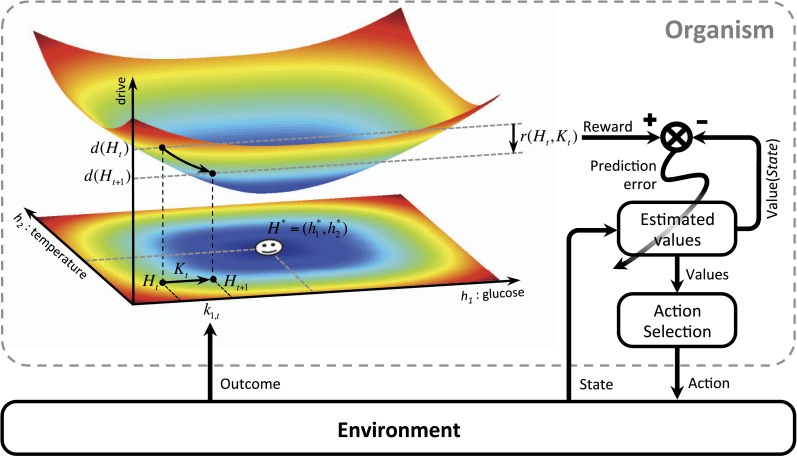
Efficient regulation of internal homeostasis and defending it against perturbations requires adaptive behavioral strategies. However, the computational principles mediating the interaction between homeostatic and associative learning processes remain undefined. Here we use a definition of primary rewards, as outcomes fulfilling physiological needs, to build a normative theory showing how learning motivated behaviors may be modulated by internal states. Within this framework, we mathematically prove that seeking rewards is equivalent to the fundamental objective of physiological stability, defining the notion of physiological rationality of behavior. We further suggest a formal basis for temporal discounting of rewards by showing that discounting motivates animals to follow the shortest path in the space of physiological variables toward the desired setpoint. We also explain how animals learn to act predictively to preclude prospective homeostatic challenges, and several other behavioral patterns. Finally, we suggest a computational role for interaction between hypothalamus and the brain reward system.
Overview
The claims and statistics of this paper haven’t been checked yet.
Run the check — free, no account needed. It reads the open-access text and checks the sources it cites.
Integrity signals
Registry
Cites
Statistics
Figures
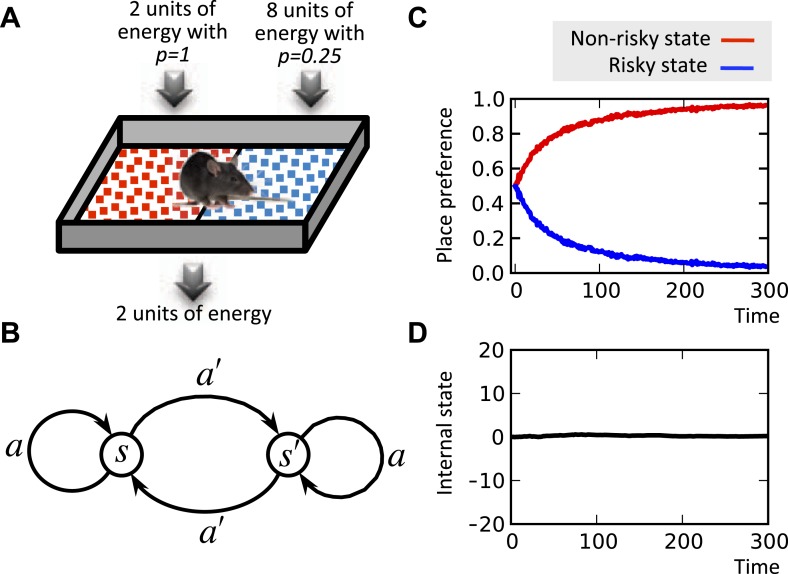
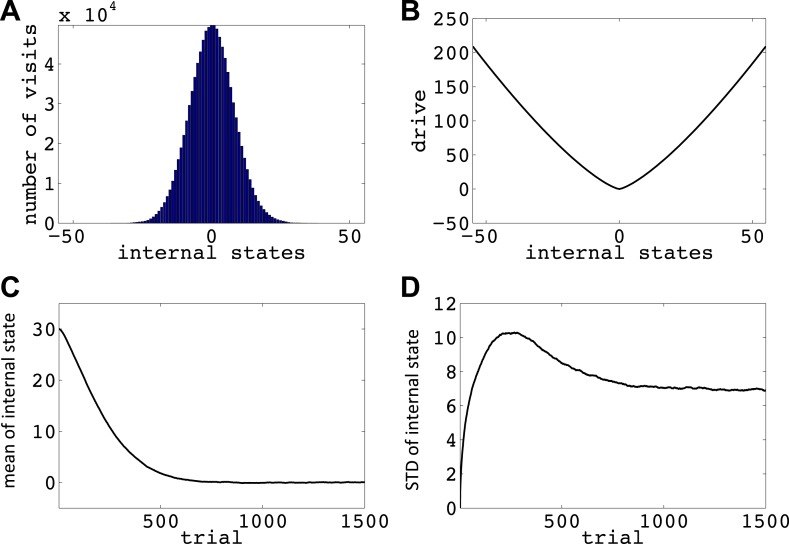

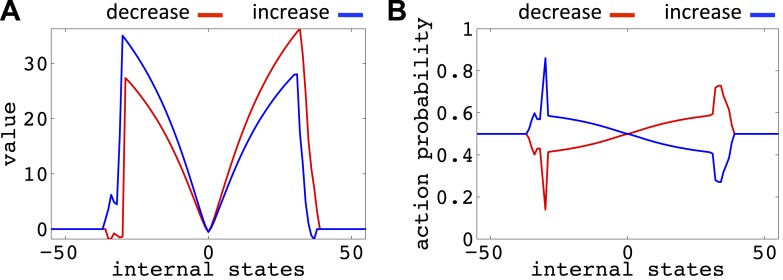
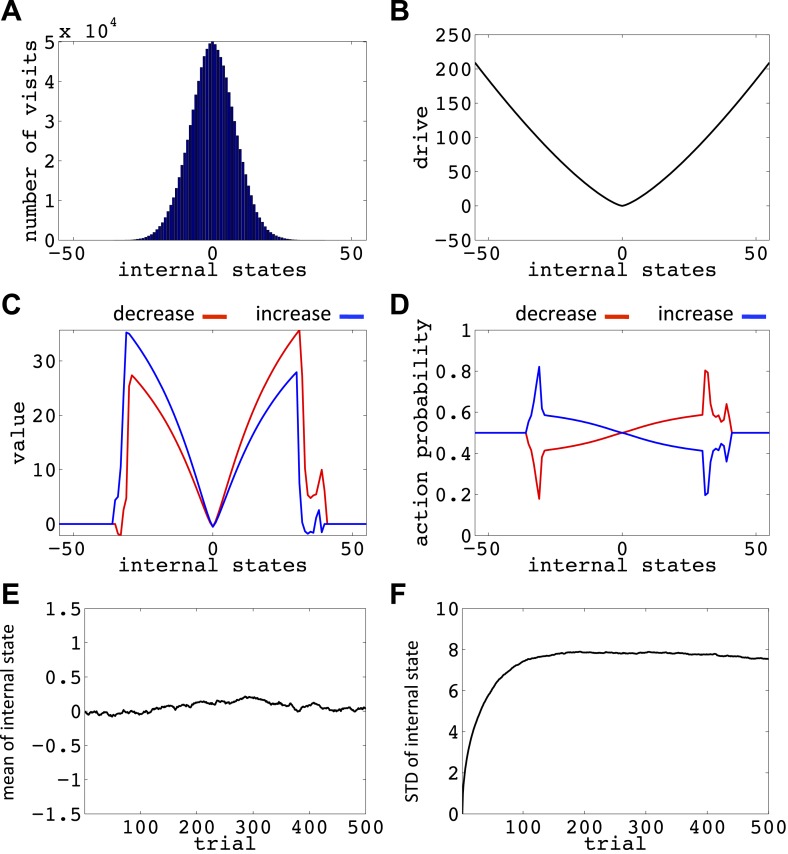
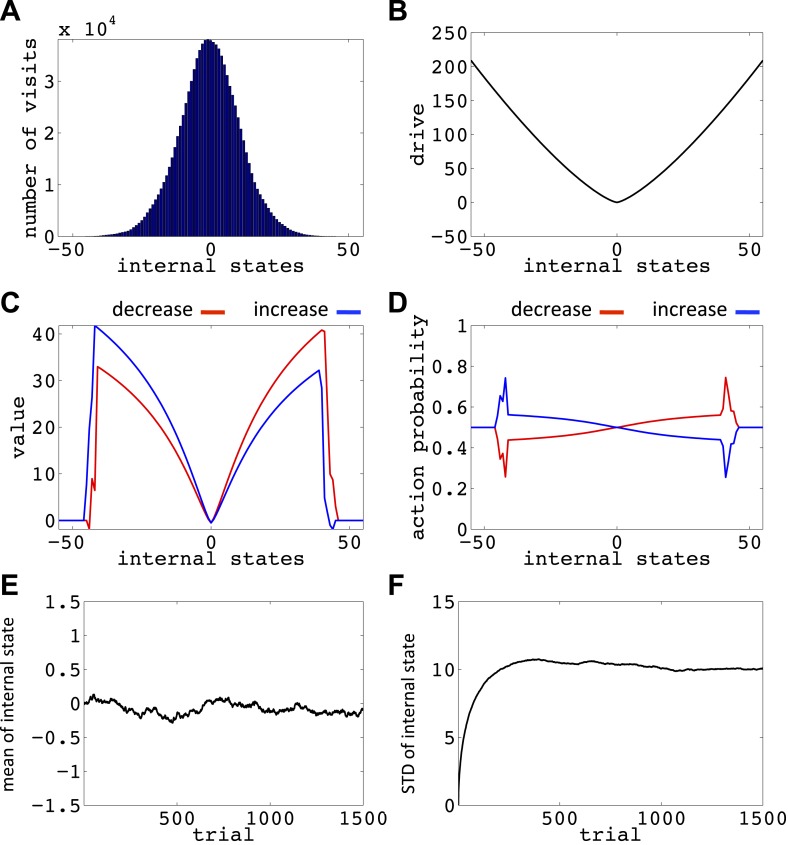
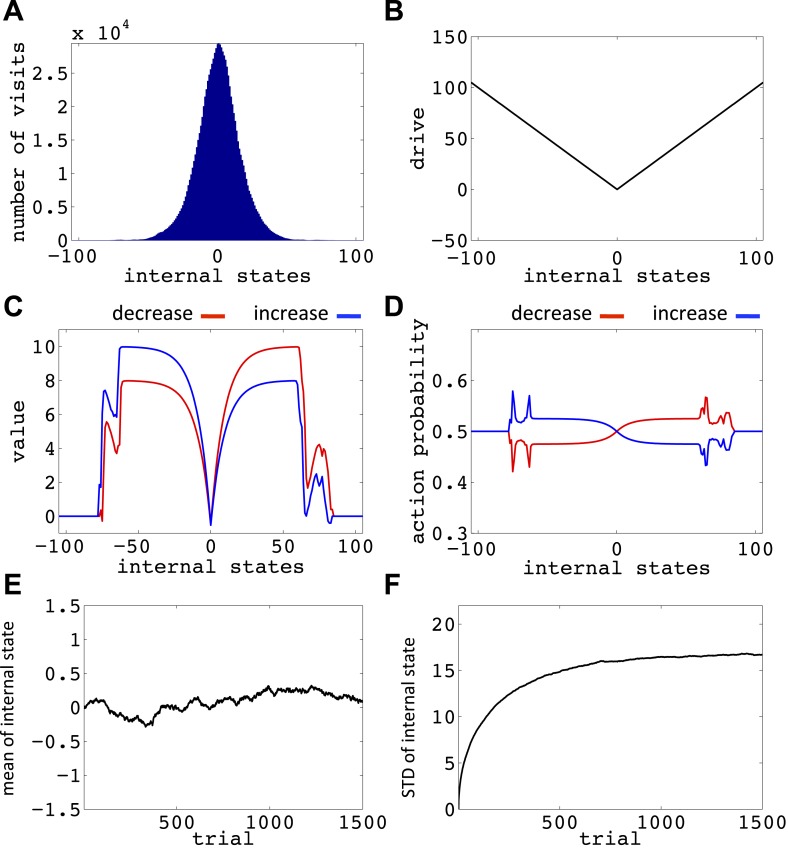
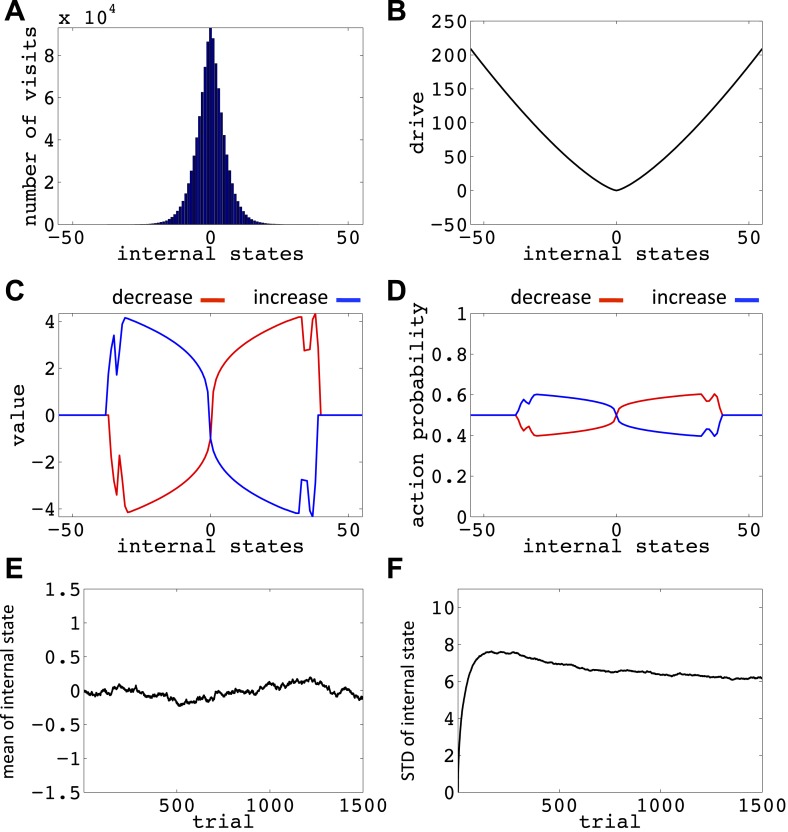
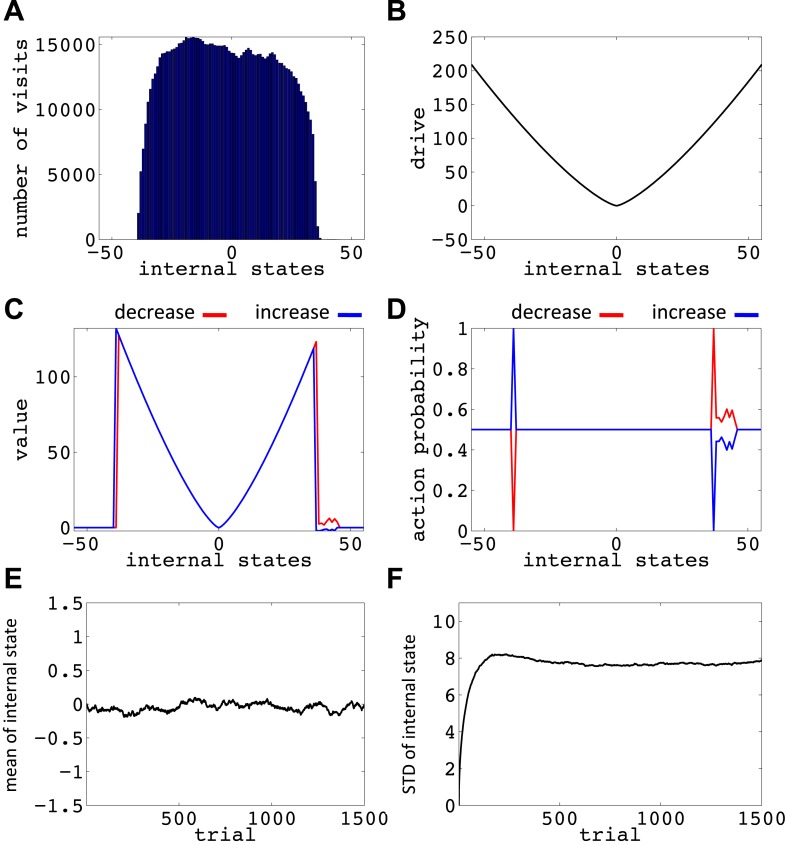
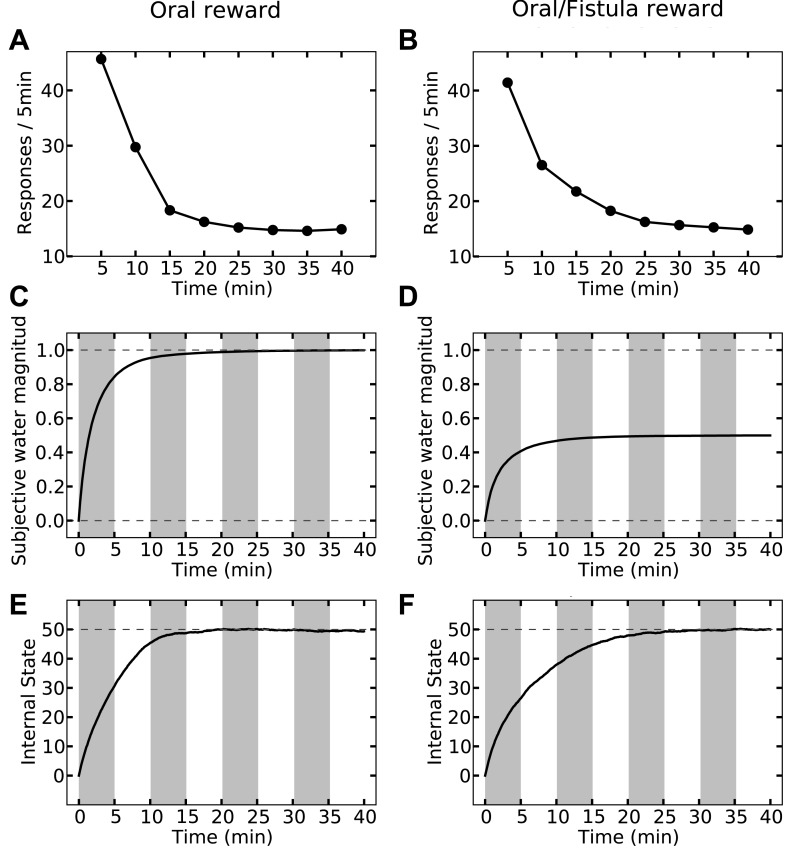
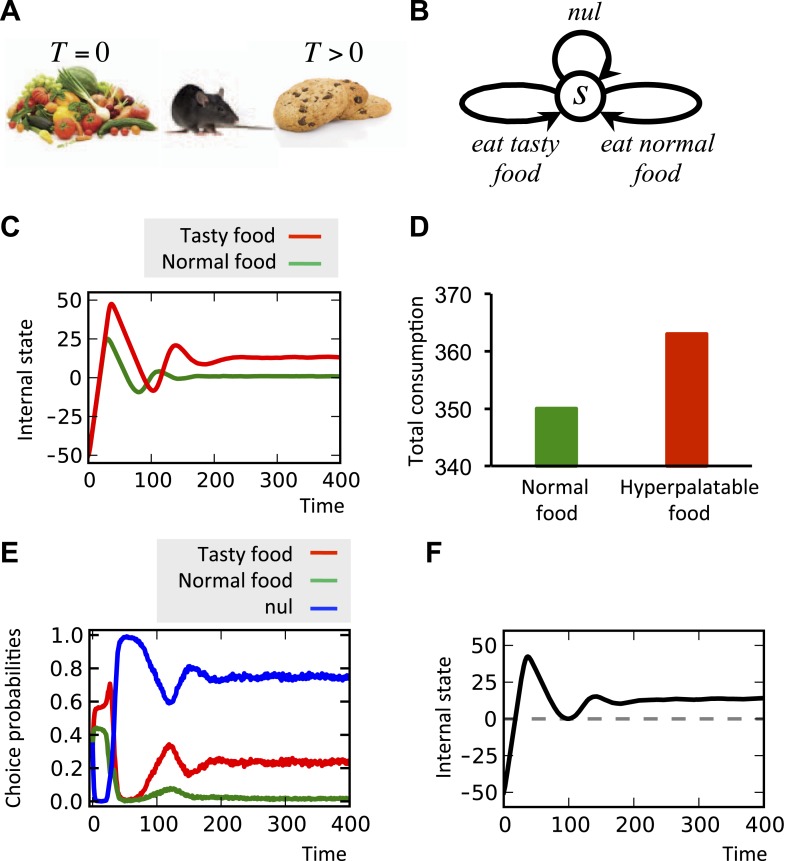
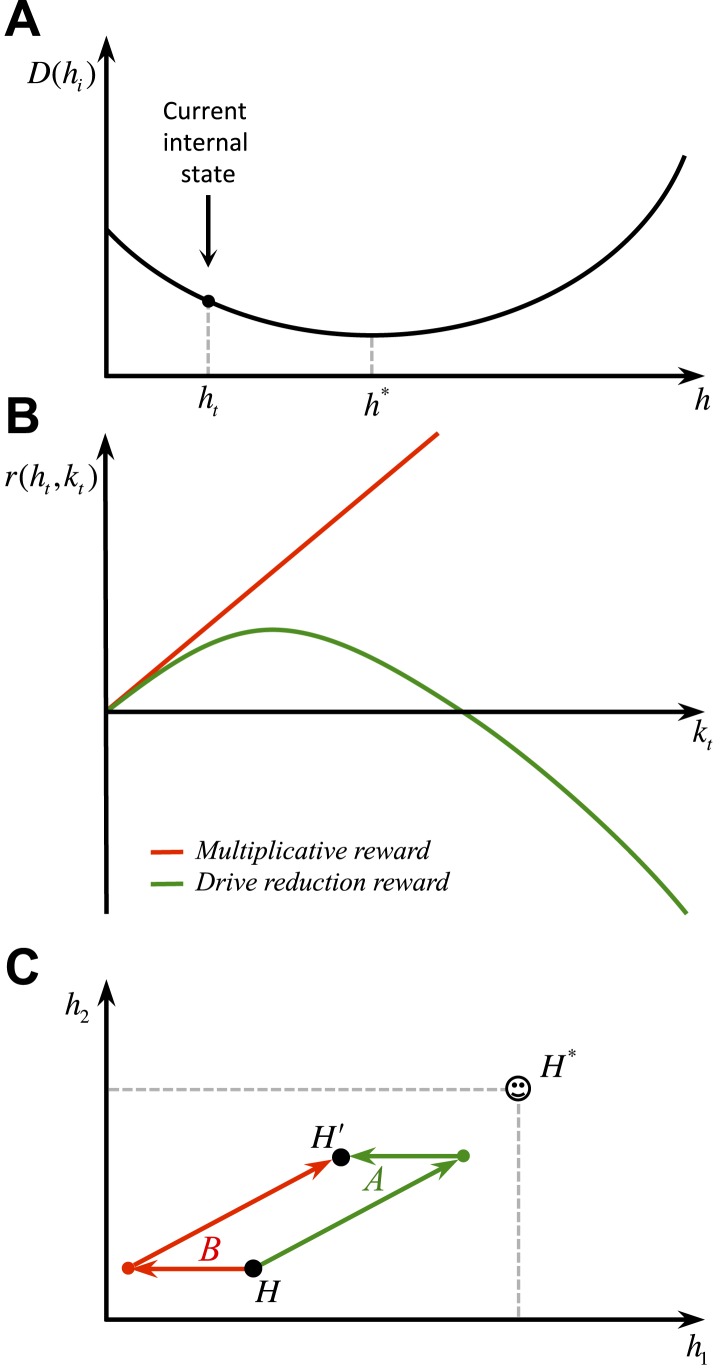
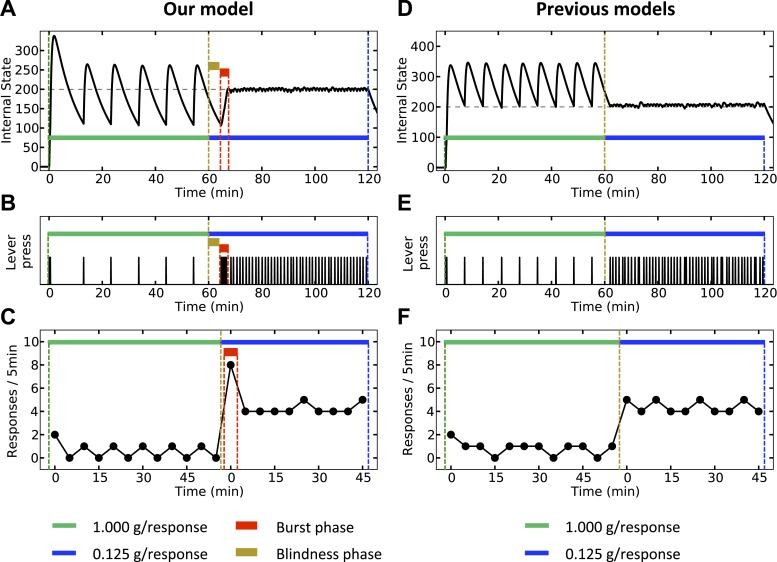
Verification
Claims the paper makes
The claims and statistics of this paper haven’t been checked yet.
Run the check — free, no account needed. It reads the open-access text and checks the sources it cites.
Claims other papers make about this one
Each is checked against this paper’s own text: does it say what the citing paper says it does?
The source backs part of the claim, not all of it — or backs it for a different population, condition or comparison.
In the citing paper
“Current models of decision-making do not incorporate all of these aspects, and first attempts of accounting for homeostasis and allostasis in formal models of decision-making have only surfaced relatively recently (e.g., Keramati and Gutkin, 2014; Penny and Stephan, 2014; Pezzulo et al., 2015).”
From Allostatic Self-efficacy: A Metacognitive Theory of Dyshomeostasis-Induced Fatigue and Depression (2016) · cites this paper as Keramati and Gutkin, 2014
Experimental — accuracy not yet measuredThe source backs part of the claim, not all of it — or backs it for a different population, condition or comparison.
In the citing paper
“Current models of decision-making do not incorporate all of these aspects, and first attempts of accounting for homeostasis and allostasis in formal models of decision-making have only surfaced relatively recently (e.g., Keramati and Gutkin, 2014; Penny and Stephan, 2014; Pezzulo et al., 2015).”
From Allostatic Self-efficacy: A Metacognitive Theory of Dyshomeostasis-Induced Fatigue and Depression (2016) · cites this paper as Keramati and Gutkin, 2014
Experimental — accuracy not yet measured
Self-check
Percentages, sums and reported differences re-computed from the paper’s own numbers.
The self-check needs the paper’s full text.
Citations
Cites
Prospect Theory: An Analysis of Decision under Risk
Kahneman, D., & Tversky, A. (1979) · Econometrica · doi:10.2307/1914185 · Cited by 48,524
Prospect theory: An analysis of decision under risk
Kahneman, D. J., & Tversky, A. (1988) · Cambridge University Press eBooks · doi:10.1017/cbo9780511609220.014 · Cited by 32,720
Reinforcement Learning: An Introduction
Sutton, R. S., & Barto, A. G. (1998) · IEEE Transactions on Neural Networks · doi:10.1109/tnn.1998.712192 · Cited by 27,225
Reinforcement Learning: An Introduction
Sutton, R. S., & Barto, A. (2005) · IEEE Transactions on Neural Networks · doi:10.1109/tnn.2004.842673 · Cited by 25,268
A neural substrate of prediction and reward
Schultz, W., Dayan, P., & Montague, P. R. (1997) · Science · doi:10.1126/science.275.5306.1593 · Cited by 9,388
The free-energy principle: a unified brain theory?
Friston, K. (2010) · Nature Reviews Neuroscience · doi:10.1038/nrn2787 · Cited by 8,120 · cited 3×
“A self-organizing system (i.e. an organism) can be defined as a system that opposes the second law of thermodynamics (Friston, 2010).”
BackgroundMethodInfluentialSakurai, T., Amemiya, A., Ishii, M., Matsuzaki, I., Chemelli, R. M., Tanaka, H., Williams, S. C., Richardson, J. A., Kozlowski, G. P., Wilson, S., et al. (1998) · Cell · doi:10.1016/s0092-8674(00)80949-6 · Cited by 5,501
Skinner, B. F. (1938) · Cited by 3,571
Daw, N. D., Niv, Y., & Dayan, P. (2005) · Nature Neuroscience · doi:10.1038/nn1560 · Cited by 2,533
A framework for studying the neurobiology of value-based decision making
Rangel, A., Camerer, C., & Montague, P. R. (2008) · Nature Reviews Neuroscience · doi:10.1038/nrn2357 · Cited by 2,184
Research works printed but not linked: 3
- Bernard, 1957, Lectures on the physiological properties and the pathological alternations of the liquids of the organism: Third lecture, 89
- Marr, 1982, Vision
- Sibly, 1974, State Space Approach to Motivation, Motivational Control System Analysis
Cited by
Sorted by citations
Allostatic Self-efficacy: A Metacognitive Theory of Dyshomeostasis-Induced Fatigue and Depression
Stephan, K. E., Manjaly, Z. M., Mathys, C. D., Weber, L. A. E., Paliwal, S., Gard, T., Tittgemeyer, M., Fleming, S. M., Haker, H., Seth, A. K., et al. (2016) · Frontiers in Human Neuroscience · doi:10.3389/fnhum.2016.00550 · Cited by 437
“Current models of decision-making do not incorporate all of these aspects, and first attempts of accounting for homeostasis and allostasis in formal models of decisionmaking have only surfaced relatively recently (e.g., Keramati and Gutkin, 2014; Penny and Stephan, 2014; Pezzulo et al., 2015).”
BackgroundAtzil, S., Gao, W., Fradkin, I., & Barrett, L. F. (2018) · Nature Human Behaviour · doi:10.1038/s41562-018-0384-6 · Cited by 415
Emotion words, emotion concepts, and emotional development in children: A constructionist hypothesis
Hoemann, K., Xu, F., & Barrett, L. F. (2019) · Developmental Psychology · doi:10.1037/dev0000686 · Cited by 354
Computational Models of Interoception and Body Regulation
Petzschner, F. H., Garfinkel, S. N., Paulus, M. P., Koch, C., & Khalsa, S. S. (2021) · Trends in Neurosciences · doi:10.1016/j.tins.2020.09.012 · Cited by 227
Reinforcement learning across development: What insights can we draw from a decade of research?
Nussenbaum, K., & Hartley, C. A. (2019) · Developmental Cognitive Neuroscience · doi:10.1016/j.dcn.2019.100733 · Cited by 225
Estimation of Current and Future Physiological States in Insular Cortex
Livneh, Y., Sugden, A. U., Madara, J. C., Essner, R. A., Flores, V. I., Sugden, L. A., Resch, J. M., Lowell, B. B., & Andermann, M. L. (2020) · Neuron · doi:10.1016/j.neuron.2019.12.027 · Cited by 209
Consciousness in Artificial Intelligence: Insights from the Science of Consciousness
Butlin, P., Long, R., Elmoznino, E., Bengio, Y., Birch, J., Constant, A., Deane, G., Fleming, S. M., Frith, C., Ji, X., et al. (2023) · arXiv · doi:10.48550/arxiv.2308.08708 · Cited by 196
Petzschner, F. H., Weber, L. A. E., Gard, T., & Stephan, K. E. (2017) · Biological Psychiatry · doi:10.1016/j.biopsych.2017.05.012 · Cited by 181
Homeostasis and soft robotics in the design of feeling machines
Man, K., & Damásio, A. R. (2019) · Nature Machine Intelligence · doi:10.1038/s42256-019-0103-7 · Cited by 174
The brain’s reward system in health and disease
Lewis, R. G., Florio, E., Punzo, D., & Borrelli, E. (2021) · Advances in experimental medicine and biology · doi:10.1007/978-3-030-81147-1_4 · Cited by 170
Pain: A Precision Signal for Reinforcement Learning and Control
Seymour, B. (2019) · Neuron · doi:10.1016/j.neuron.2019.01.055 · Cited by 175
Corcoran, A. W., Pezzulo, G., & Hohwy, J. (2020) · Biology & Philosophy · doi:10.1007/s10539-020-09746-2 · Cited by 161
Long, M., Verbeke, W., Ein‐Dor, T., & Vrtička, P. (2020) · Cortex · doi:10.1016/j.cortex.2020.01.010 · Cited by 169
Juechems, K., & Summerfield, C. (2019) · Trends in Cognitive Sciences · doi:10.1016/j.tics.2019.07.012 · Cited by 160
The whole prefrontal cortex is premotor cortex
Fine, J. M., & Hayden, B. Y. (2021) · Philosophical Transactions of the Royal Society B Biological Sciences · doi:10.1098/rstb.2020.0524 · Cited by 151
Consciousness matters: phenomenal experience has functional value
Axel Cleeremans, B., & Tallon‐Baudry, C. (2022) · Neuroscience of Consciousness · doi:10.1093/nc/niac007 · Cited by 170
Vagus nerve stimulation boosts the drive to work for rewards
Neuser, M. P., Teckentrup, V., Kühnel, A., Hallschmid, M., Walter, M., & Kroemer, N. B. (2020) · Nature Communications · doi:10.1038/s41467-020-17344-9 · Cited by 111
Interoception as modeling, allostasis as control
Sennesh, E., Theriault, J., Brooks, D., van de Meent, J.-W., Barrett, L. F., & Quigley, K. S. (2022) · Biological Psychology · doi:10.1016/j.biopsycho.2021.108242 · Cited by 107
Livneh, Y., & Andermann, M. L. (2021) · Neuron · doi:10.1016/j.neuron.2021.08.036 · Cited by 105
Dopamine role in learning and action inference
Bogacz, R. (2020) · eLife · doi:10.7554/elife.53262 · Cited by 96
Context-dependent outcome encoding in human reinforcement learning
Palminteri, S., & Lebreton, M. P. (2021) · Current Opinion in Behavioral Sciences · doi:10.1016/j.cobeha.2021.06.006 · Cited by 87
Emotions as ComputationsPreprint
Emanuel, A., & Eldar, E. (2022) · PsyArXiv (OSF Preprints) · doi:10.1016/j.neubiorev.2022.104977 · Cited by 84
An Analysis of Decision under Risk in Rats
Constantinople, C. M., Piet, A. T., & Brody, C. D. (2019) · Current Biology · doi:10.1016/j.cub.2019.05.013 · Cited by 80
Modelling Stock Markets by Multi-agent Reinforcement Learning
Lussange, J., Lazarevich, I. A., Bourgeois‐Gironde, S., Palminteri, S., & Gutkin, B. S. (2020) · Computational Economics · doi:10.1007/s10614-020-10038-w · Cited by 69
Self-citationMulti-task reinforcement learning in humans
Tomov, M. S., Schulz, E., & Gershman, S. J. (2021) · Nature Human Behaviour · doi:10.1038/s41562-020-01035-y · Cited by 64
A goal-centric outlook on learning
Molinaro, G., & Collins, A. G. E. (2023) · Trends in Cognitive Sciences · doi:10.1016/j.tics.2023.08.011 · Cited by 63
Arnaldo, I., Corcoran, A. W., Friston, K. J., & Ramstead, M. J. D. (2022) · Neuroscience & Biobehavioral Reviews · doi:10.1016/j.neubiorev.2022.104590 · Cited by 56
Valuing what happens: a biogenic approach to valence and (potentially) affect
Lyon, P., & Kuchling, F. (2021) · Philosophical Transactions of the Royal Society B Biological Sciences · doi:10.1098/rstb.2019.0752 · Cited by 61
Bronleigh, M., Baumann, O., & Stapleton, P. (2022) · Eating and Weight Disorders - Studies on Anorexia Bulimia and Obesity · doi:10.1007/s40519-022-01390-x · Cited by 56
Reinforcement learning with Marr
Niv, Y., & Langdon, A. (2016) · Current Opinion in Behavioral Sciences · doi:10.1016/j.cobeha.2016.04.005 · Cited by 52
Forgetting in Reinforcement Learning Links Sustained Dopamine Signals to Motivation
Kato, A., & Morita, K. (2016) · PLoS Computational Biology · doi:10.1371/journal.pcbi.1005145 · Cited by 59
Azzalini, D., Buot, A., Palminteri, S., & Tallon-Baudry, C. (2021) · The Journal of Neuroscience · doi:10.1523/jneurosci.1932-20.2021 · Cited by 47
Active inference models do not contradict folk psychology
Smith, R. S., Ramstead, M. J. D., & Kiefer, A. B. (2022) · Synthese · doi:10.1007/s11229-022-03480-w · Cited by 55
Cocaine addiction as a homeostatic reinforcement learning disorder.
Keramati, M., Durand, A., Girardeau, P., Gutkin, B., & Ahmed, S. H. (2017) · Psychological Review · doi:10.1037/rev0000046 · Cited by 44
Self-citationChakravarthy, V. S., Balasubramani, P. P., Mandali, A., Jahanshahi, M., & Moustafa, A. A. (2018) · Physiology & Behavior · doi:10.1016/j.physbeh.2018.06.032 · Cited by 45
Stimulation of the vagus nerve reduces learning in a go/no-go reinforcement learning task
Kühnel, A., Teckentrup, V., Neuser, M. P., Huys, Q. J. M., Burrasch, C., Walter, M., & Kroemer, N. B. (2020) · European Neuropsychopharmacology · doi:10.1016/j.euroneuro.2020.03.023 · Cited by 43
A dopamine mechanism for reward maximization
Schultz, W. (2024) · Proceedings of the National Academy of Sciences · doi:10.1073/pnas.2316658121 · Cited by 47
A Network for Computing Value Equilibrium in the Human Medial Prefrontal Cortex
Juechems, K., Balaguer, J., Castañón, S. H., Ruz, M., O’Reilly, J. X., & Summerfield, C. (2019) · Neuron · doi:10.1016/j.neuron.2018.12.029 · Cited by 44
Post-injury pain and behaviour: a control theory perspective
Seymour, B., Crook, R. J., & Chen, Z. S. (2023) · Nature reviews. Neuroscience · doi:10.1038/s41583-023-00699-5 · Cited by 43
A rubric for human-like agents and NeuroAI
Momennejad, I. (2022) · Philosophical Transactions of the Royal Society B Biological Sciences · doi:10.1098/rstb.2021.0446 · Cited by 42
Goals, usefulness and abstraction in value-based choice
Martino, B. D., & Cortese, A. (2022) · Trends in Cognitive Sciences · doi:10.1016/j.tics.2022.11.001 · Cited by 46
The affective gradient hypothesis: An affect-centered account of motivated behavior
Shenhav, A. (2024) · Trends in Cognitive Sciences · doi:10.1016/j.tics.2024.08.003 · Cited by 49
Adaptive Empathy: A Model for Learning Empathic Responses in Response to Feedback
Shamay‐Tsoory, S., & Hertz, U. (2022) · Perspectives on Psychological Science · doi:10.1177/17456916211031926 · Cited by 38
The function of consciousness is to generate experiencePreprint
Cleeremans, A., & Tallon‐Baudry, C. (2021) · doi:10.31234/osf.io/jfpw2 · Cited by 34
Computational Mechanisms of Addiction: Recent Evidence and Its Relevance to Addiction Medicine
Smith, R. S., Taylor, S., & Bilek, E. (2021) · Current Addiction Reports · doi:10.1007/s40429-021-00399-z · Cited by 32
Neurocomputational Theories of Homeostatic Control
Hulme, O. J., Morville, T., & Gutkin, B. S. (2019) · Physics of Life Reviews · doi:10.1016/j.plrev.2019.07.005 · Cited by 33
Self-citationLearning Outside the Brain: Integrating Cognitive Science and Systems Biology
Gunawardena, J. (2022) · Proceedings of the IEEE · doi:10.1109/jproc.2022.3162791 · Cited by 33
A parabrachial hub for need-state control of enduring pain
Goldstein, N., Maes, A., Allen, H. N., Nelson, T. S., Kruger, K. A., Kindel, M., Yeung, A. T. M., Smith, N. K., Carty, J. R. E., Boccia, L., et al. (2025) · Nature · doi:10.1038/s41586-025-09602-x · Cited by 35
Intrinsic rewards explain context-sensitive valuation in reinforcement learning
Molinaro, G., & Collins, A. G. E. (2023) · PLoS Biology · doi:10.1371/journal.pbio.3002201 · Cited by 29
Maintaining Homeostasis by Decision-Making
Korn, C. W., & Bach, D. R. (2015) · PLoS Computational Biology · doi:10.1371/journal.pcbi.1004301 · Cited by 26
The computational structure of consummatory anhedonia
Hall, A., Browning, M. D., & Huys, Q. J. M. (2024) · Trends in Cognitive Sciences · doi:10.1016/j.tics.2024.01.006 · Cited by 31
Dynamics of glia and neurons regulate homeostatic rest, sleep and feeding behavior in Drosophila
Flores-Valle, A., Vishniakou, I., & Seelig, J. D. (2025) · Nature Neuroscience · doi:10.1038/s41593-025-01942-1 · Cited by 33
To Do or Not to Do: Dopamine, Affordability and the Economics of Opportunity
Beeler, J. A., & Mourra, D. (2018) · Frontiers in Integrative Neuroscience · doi:10.3389/fnint.2018.00006 · Cited by 28
A mathematical model of reward-mediated learning in drug addiction
Chou, T., & D'Orsogna, M. R. (2022) · Chaos An Interdisciplinary Journal of Nonlinear Science · doi:10.1063/5.0082997 · Cited by 25
“Liking” as an early and editable draft of long-run affective value
Dayan, P. (2022) · PLoS Biology · doi:10.1371/journal.pbio.3001476 · Cited by 27
Tian, L., Oviatt, S. L., Muszyński, M., Chamberlain, B. C., Healey, J., & Sano, A. (2022) · ACM eBooks · doi:10.1145/3502398 · Cited by 25
Modeling the effects of motivation on choice and learning in the basal ganglia
van Swieten, M. M. H., & Bogacz, R. (2020) · PLoS Computational Biology · doi:10.1371/journal.pcbi.1007465 · Cited by 23
A Computational View on the Nature of Reward and Value in Anhedonia
Huys, Q. J. M., & Browning, M. D. (2021) · Current topics in behavioral neurosciences · doi:10.1007/7854_2021_290 · Cited by 27
Neural Networks With Motivation
Shuvaev, S. A., Tran, N. B., Stephenson‐Jones, M., Li, B., & Koulakov, A. A. (2021) · UCL Discovery (University College London) · Cited by 20
Exploring internal body heat balance to understand thermal sensation
Kingma, B., Schweiker, M., Wagner, A., & Lichtenbelt, W. D. V. M. (2017) · Building Research & Information · doi:10.1080/09613218.2017.1299996 · Cited by 20
The interoceptive origin of reinforcement learning
Weber, L. A. E., Yee, D. M., Small, D. M., & Petzschner, F. H. (2025) · Trends in Cognitive Sciences · doi:10.1016/j.tics.2025.05.008 · Cited by 34
Having multiple selves helps learning agents explore and adapt in complex changing worlds
Dulberg, Z., Dubey, R., Berwian, I. M., & Cohen, J. D. (2023) · Proceedings of the National Academy of Sciences · doi:10.1073/pnas.2221180120 · Cited by 19
Artificial consciousness: the missing ingredient for ethical AI?
Chella, A. (2023) · Frontiers in Robotics and AI · doi:10.3389/frobt.2023.1270460 · Cited by 19
Badiani, A., Caprioli, D., & Pirro, S. D. (2019) · Psychopharmacology · doi:10.1007/s00213-019-05318-9 · Cited by 20
Huang, F.-Y., Sutcliffe, M. P. F., & Fabian Grabenhorst, B. (2021) · Proceedings of the National Academy of Sciences · doi:10.1073/pnas.2101954118 · Cited by 23
Interrupting behaviour: Minimizing decision costs via temporal commitment and low-level interrupts
Lloyd, K., & Dayan, P. (2018) · PLoS Computational Biology · doi:10.1371/journal.pcbi.1005916 · Cited by 22
What Is Social about Autism? The Role of Allostasis-Driven Learning
Djerassi, M., Ophir, S., & Atzil, S. (2021) · Brain Sciences · doi:10.3390/brainsci11101269 · Cited by 22
Misdeed of the need: towards computational accounts of transition to addiction
Keramati, M., Ahmed, S. H., & Gutkin, B. S. (2017) · Current Opinion in Neurobiology · doi:10.1016/j.conb.2017.08.014 · Cited by 19
Self-citationThe Homeostatic Logic of RewardPreprint
Morville, T., Friston, K. J., Burdakov, D., Siebner, H. R., & Hulme, O. J. (2018) · bioRxiv (Cold Spring Harbor Laboratory) · doi:10.1101/242974 · Cited by 22
Old Strategies, New Environments: Reinforcement Learning on Social Media
Turner, G., Ferguson, A. M., Katiyar, T., Palminteri, S., & Orben, A. C. (2024) · Biological Psychiatry · doi:10.1016/j.biopsych.2024.12.012 · Cited by 35
Mitchell, D., Maloney, S. K., Snelling, E. P., Hetem, R. S., & Fuller, A. (2025) · Acta Physiologica · doi:10.1111/apha.70063 · Cited by 17
Physiological Needs: Sensations and Predictions in the Insular Cortex
Prilutski, Y., & Livneh, Y. (2022) · Physiology · doi:10.1152/physiol.00019.2022 · Cited by 18
Chalmers, E., Luczak, A., & Gruber, A. J. (2016) · Frontiers in Computational Neuroscience · doi:10.3389/fncom.2016.00128 · Cited by 18
Bronfman, Z. Z., Ginsburg, S., & Jablonka, E. (2021) · Journal of Artificial Intelligence and Consciousness · doi:10.1142/s2705078521500168 · Cited by 17
Neurobiology of Thirst and Hunger Drives
Encarnacion-Rivera, L., Deisseroth, K. A., & Luo, L. (2025) · Annual Review of Neuroscience · doi:10.1146/annurev-neuro-112723-032328 · Cited by 16
High‐fat diet‐induced elevation of body weight set point in male mice
Fang, L. Z., Vidal, J. A. L., Hawlader, O., & Hirasawa, M. (2023) · Obesity · doi:10.1002/oby.23650 · Cited by 14
Emergence of integrated behaviors through direct optimization for homeostasis
Yoshida, N., Daikoku, T., Nagai, Y., & Kuniyoshi, Y. (2024) · Neural Networks · doi:10.1016/j.neunet.2024.106379 · Cited by 18
Dahl, R. E., Armstrong‐Carter, E., & van den Bos, W. (2024) · Developmental Cognitive Neuroscience · doi:10.1016/j.dcn.2024.101430 · Cited by 17
Reward Bases: A simple mechanism for adaptive acquisition of multiple reward types
Millidge, B., Song, Y., Lak, A., Walton, M. E., & Bogacz, R. (2024) · PLoS Computational Biology · doi:10.1371/journal.pcbi.1012580 · Cited by 20
The topological space of subjective experience
Tallon‐Baudry, C. (2022) · Trends in Cognitive Sciences · doi:10.1016/j.tics.2022.09.002 · Cited by 16
Drive competition underlies effective allostatic orchestration
Rosado, O. G., Amil, A. F., Freire, I. T., & Verschure, P. F. M. J. (2022) · Frontiers in Robotics and AI · doi:10.3389/frobt.2022.1052998 · Cited by 12
Torres–Martínez, S. (2025) · AI & Society · doi:10.1007/s00146-024-02165-x · Cited by 17
Hypothalamic-Extended Amygdala Circuit Regulates Temporal Discounting
Li, H. E., Rossi, M. A., Watson, G. D. R., Moore, H. G., Cai, M. T., Kim, N., Vokt, K. A., Lu, D., Bartholomew, R. A., Hughes, R. N., et al. (2021) · Journal of Neuroscience · doi:10.1523/jneurosci.1836-20.2020 · Cited by 13
Context-dependent outcome encoding in human reinforcement learningPreprint
Palminteri, S., & Lebreton, M. P. (2021) · PsyArXiv (OSF Preprints) · doi:10.31234/osf.io/4qh2d · Cited by 18
Neural and Computational Mechanisms of Motivation and Decision-making
Yee, D. M. (2024) · Journal of Cognitive Neuroscience · doi:10.1162/jocn_a_02258 · Cited by 13
Duriez, A., Bergerot, C., Cone, J. J., Roitman, M. F., & Gutkin, B. S. (2023) · Nutrients · doi:10.3390/nu15041015 · Cited by 12
Self-citationA Control Theory Model of Smoking
Bobashev, G., Holloway, J. W., Solano, E., & Gutkin, B. S. (2017) · doi:10.3768/rtipress.2017.op.0040.1706 · Cited by 11
Self-citationA probabilistic model of relapse in drug addiction
Mao, S., Chou, T., & D'Orsogna, M. R. (2024) · Mathematical Biosciences · doi:10.1016/j.mbs.2024.109184 · Cited by 16
Interoception in pregnancy: Implications for peripartum depression
Savoca, P. W., Glynn, L. M., Fox, M. M., Richards, M., & Callaghan, B. L. (2024) · Neuroscience & Biobehavioral Reviews · doi:10.1016/j.neubiorev.2024.105874 · Cited by 12
Computational Mechanisms of Osmoregulation: A Reinforcement Learning Model for Sodium Appetite
Uchida, Y., Hikida, T., & Yamashita, Y. (2022) · Frontiers in Neuroscience · doi:10.3389/fnins.2022.857009 · Cited by 9
31st Annual Computational Neuroscience Meeting: CNS*2022
Corsi, M., Sorrentino, P., Schwartz, D., George, N., Hugueville, L., Kahn, A. E., Dupont, S., Bassett, D. S., Jirsa, V., & Fallani, F. D. V. (2023) · Journal of Computational Neuroscience · doi:10.1007/s10827-022-00841-9 · Cited by 11
Ghrelin is associated with an elevated mood after an overnight fast in depression
Fahed, R., Schulz, C., Klaus, J., Ellinger, S., Walter, M., & Kroemer, N. B. (2024) · Journal of Psychiatric Research · doi:10.1016/j.jpsychires.2024.04.053 · Cited by 11
Computational Neural Mechanisms of Goal-Directed Planning and Problem Solving
Fine, J. M., Zarr, N., & Brown, J. W. (2020) · Computational Brain & Behavior · doi:10.1007/s42113-020-00095-7 · Cited by 9
A normative framework dissociates need and motivation in hypothalamic neurons
Kim, K. S., Lee, Y. H., Kim, Y., Yun, J. W., Song, H. Y., Park, J. S., Jung, S.-H., Sohn, J., Kim, K. W., Kim, H. R., et al. (2024) · Science Advances · doi:10.1126/sciadv.ado1820 · Cited by 9
Nutrient-Sensitive Reinforcement Learning in Monkeys
Huang, F.-Y., & Fabian Grabenhorst, B. (2023) · Journal of Neuroscience · doi:10.1523/jneurosci.0752-22.2022 · Cited by 8
The nervous system as a solution for implementing closed negative feedback control loops
Sosa, R., & Alcalá, E. (2022) · Journal of the Experimental Analysis of Behavior · doi:10.1002/jeab.736 · Cited by 10
The Secret of Human Existence Homeostasis: Spiritual Intelligence is the Hope of All Humanity
Alkhatib, A. J. (2019) · Open Access Journal of Addiction and Psychology · doi:10.33552/oajap.2019.02.000537 · Cited by 8
Smith, B. J., & Read, S. J. (2021) · Cognitive Affective & Behavioral Neuroscience · doi:10.3758/s13415-021-00953-2 · Cited by 9
Predictive Processing of Interoception, Decision-Making, and Allostasis
Ohira, H. (2020) · Psihologijske teme · doi:10.31820/pt.29.1.1 · Cited by 13
The Emotional Divergent–Convergent Thinking Program (EDICOP): Design, Implementation, and Results
Soroa, G., Aritzeta, A., Muela, A., Balluerka, N., Gorostiaga, A., & Aliri, J. (2020) · European Journal of Investigation in Health Psychology and Education · doi:10.3390/ejihpe10040074 · Cited by 10
Metadata
- Authors
- Keramati, M., & Gutkin, B.
- Affiliations
- Inserm (FR)
- National Research University Higher School of Economics (RU)
- Corresponding author
- Keramati, Mehdi
- Gutkin, Boris
- Venue
- eLife
- Publisher
- eLife Sciences Publications, Ltd
- Published
- 2014-12-02
- Volume
- 3
- ISSN
- 2050-084X (ISSN-L)
- PMC
- PMC4270100
- OpenAlex
- W2142110758
- Cited by
- 218
- References
- 80
- Citations by year
- 2026: 23 · 2025: 35 · 2024: 29 · 2023: 15 · 2022: 37 · 2021: 23 · 2020: 16 · 2019: 16 · 2018: 10 · 2017: 8 · 2016: 5 · 2015: 1
- FWCI
- 2.13
- Type
- journal article
- Language
- en
- Open access
- gold
- doi.org
- Licence
- Locations
- eLife (publishedVersion, cc-by)
- bioRxiv (Cold Spring Harbor Laboratory) (acceptedVersion, cc-by-nc-nd)
- PubMed Central (publishedVersion, cc-by)
- PubMed (publishedVersion)
- City Research Online (City University London) (acceptedVersion)
- DOAJ (DOAJ: Directory of Open Access Journals) (submittedVersion, cc-by-sa)
- Funders
- Gatsby Charitable Foundation
- National Research University Higher School of Economics (Basic Research Program)
- Institut national de la santé et de la recherche médicale (INSERM U960, France)
- Center for Research and Interdisciplinary (Frontiers du Vivant)
- Agence Nationale de la Recherche (ANR-10-LABX-0087 IEC, France, ANR-10-IDEX-0001-02 PSL, France)
- Topics
- Life Sciences › Neuroscience › Cellular and Molecular Neuroscience › Neurotransmitter Receptor Influence on Behavior
- Life Sciences › Neuroscience › Cognitive Neuroscience › Neural and Behavioral Psychology Studies
- Physical Sciences › Computer Science › Artificial Intelligence › Reinforcement Learning in Robotics
- Keywords
- physiological stability, primary reward, normative theory, delay discounting, predictive learning, hypothalamus, brain reward system, adaptive behavior
- MeSH terms
- Animals, Behavior, Computer Simulation, Conditioning, Psychological, Extinction, Psychological, Homeostasis, Learning, Models, Neurological, Reinforcement, Psychology, Reward, Satiety Response
About these checks
Registry, retraction, Cites and statistics results are computed, not judged, with one exception: a printed reference that no index lists is read once by a model before it counts as a citation error. Claims are extracted by a model and kept only when their quote appears verbatim in the text; each cited source is then checked, with a model’s help, for whether it says what the claim relies on. Those verdicts can be wrong — read the claim’s quote and the cited source before relying on one.
Statistics and arithmetic are recomputed, not judged.
Confidence bands are shown only for fields calibrated on our annotated test set. None is calibrated yet, so no band is shown.
What counts as a claim ›How we measure confidence ›How we check this ›
Are you an author, or do you see a problem with this page? Request a review
