

The DOI matches its Crossref record; 43 of the 43 references it cites were found in a registry or an index.
Arid1b haploinsufficient mice reveal neuropsychiatric phenotypes and reversible causes of growth impairment
Open accessAbstract
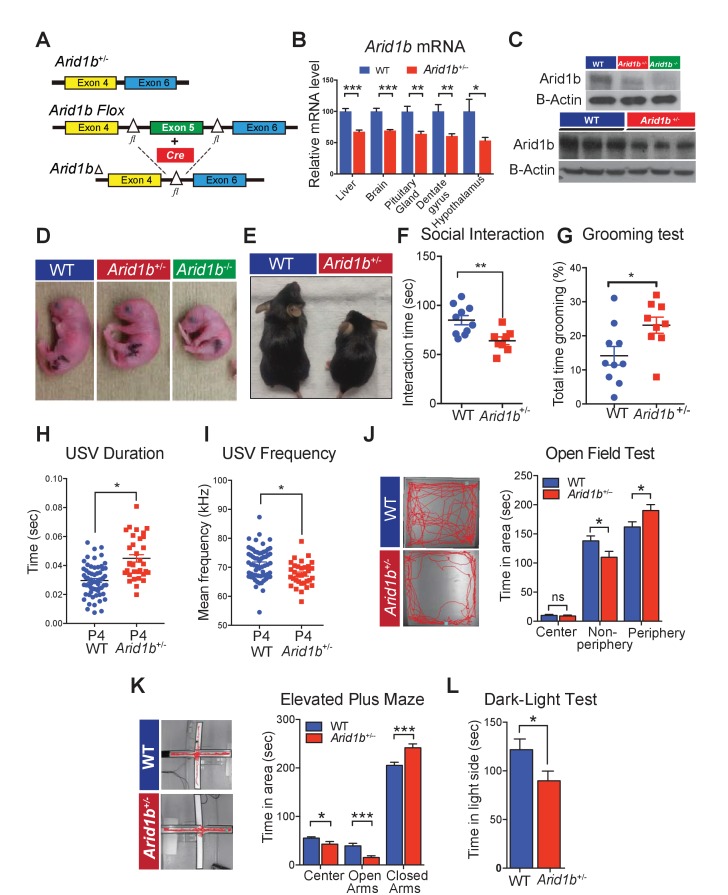
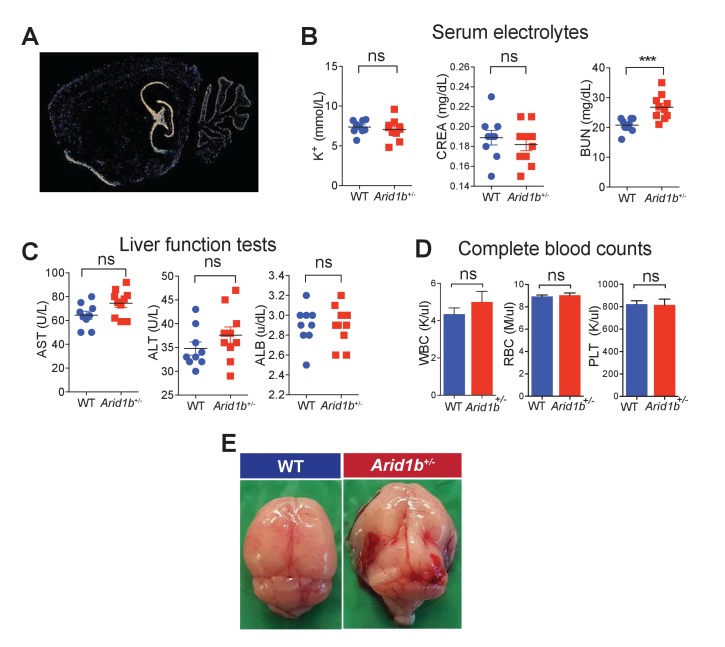
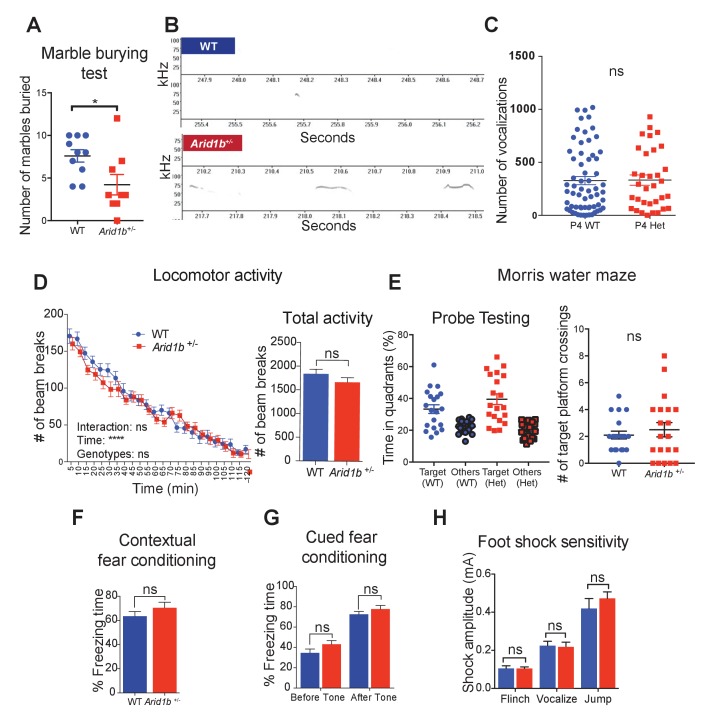
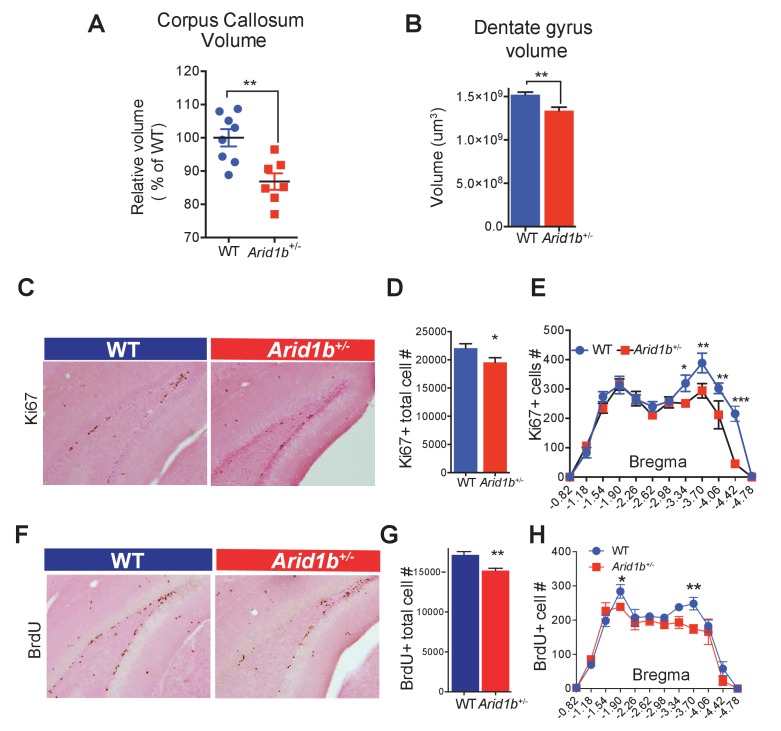
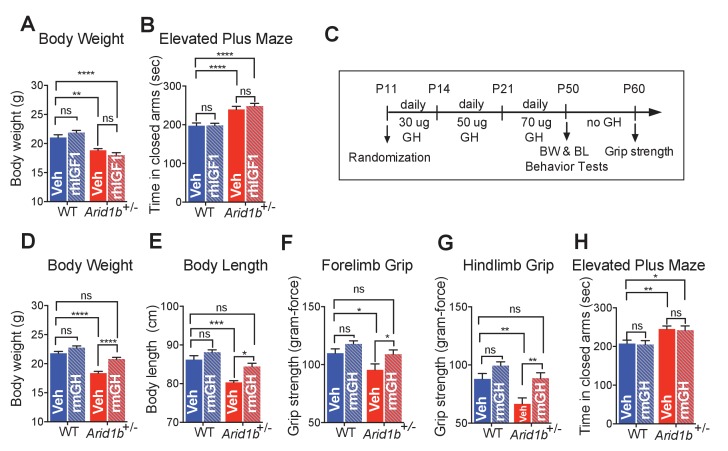
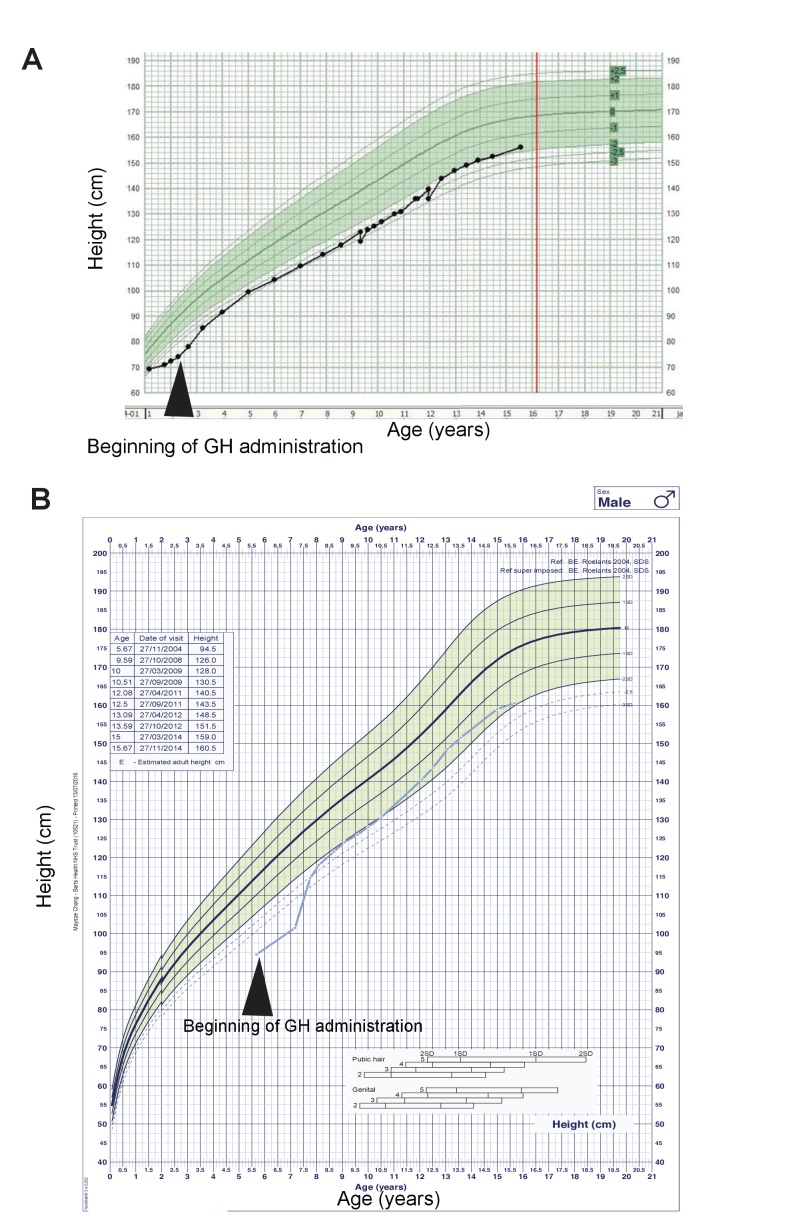
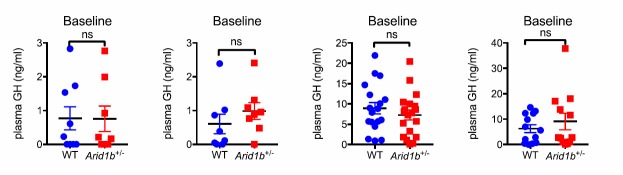
Sequencing studies have implicated haploinsufficiency of ARID1B , a SWI/SNF chromatin-remodeling subunit, in short stature (Yu et al., 2015), autism spectrum disorder (O'Roak et al., 2012), intellectual disability (Deciphering Developmental Disorders Study, 2015), and corpus callosum agenesis (Halgren et al., 2012). In addition, ARID1B is the most common cause of Coffin-Siris syndrome, a developmental delay syndrome characterized by some of the above abnormalities (Santen et al., 2012; Tsurusaki et al., 2012; Wieczorek et al., 2013). We generated Arid1b heterozygous mice, which showed social behavior impairment, altered vocalization, anxiety-like behavior, neuroanatomical abnormalities, and growth impairment. In the brain, Arid1b haploinsufficiency resulted in changes in the expression of SWI/SNF-regulated genes implicated in neuropsychiatric disorders. A focus on reversible mechanisms identified Insulin-like growth factor (IGF1) deficiency with inadequate compensation by Growth hormone-releasing hormone (GHRH) and Growth hormone (GH), underappreciated findings in ARID1B patients. Therapeutically, GH supplementation was able to correct growth retardation and muscle weakness. This model functionally validates the involvement of ARID1B in human disorders, and allows mechanistic dissection of neurodevelopmental diseases linked to chromatin-remodeling.
Overview
The claims and statistics of this paper haven’t been checked yet.
Run the check — free, no account needed. It reads the open-access text and checks the sources it cites.
Integrity signals
Registry
Cites
Statistics
Figures
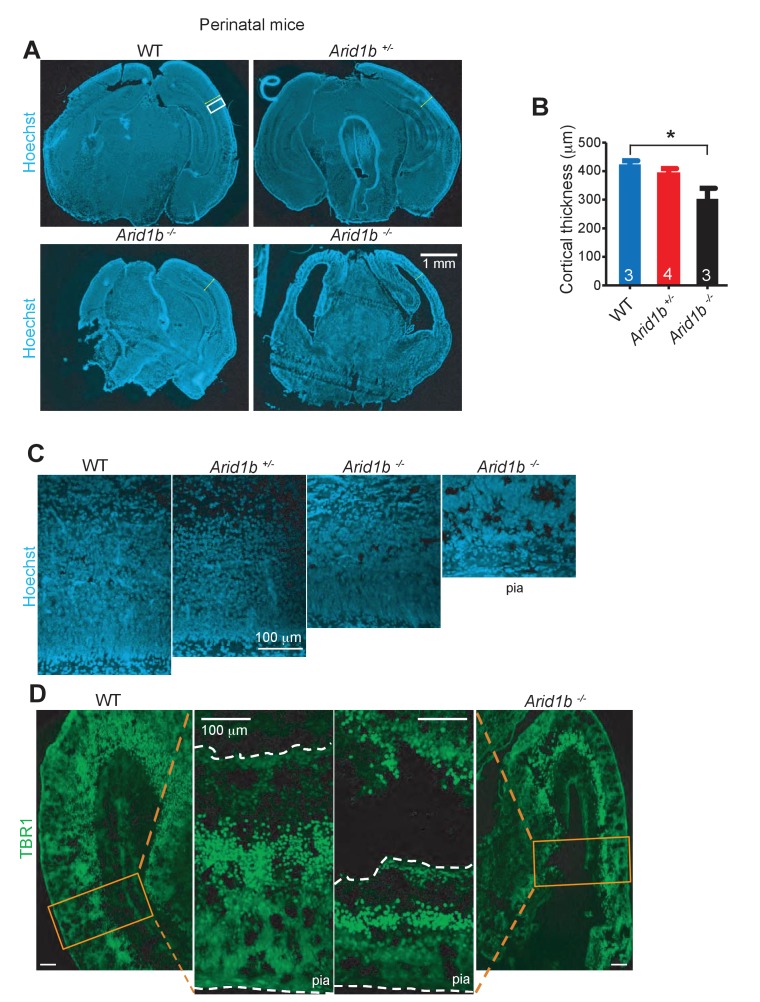
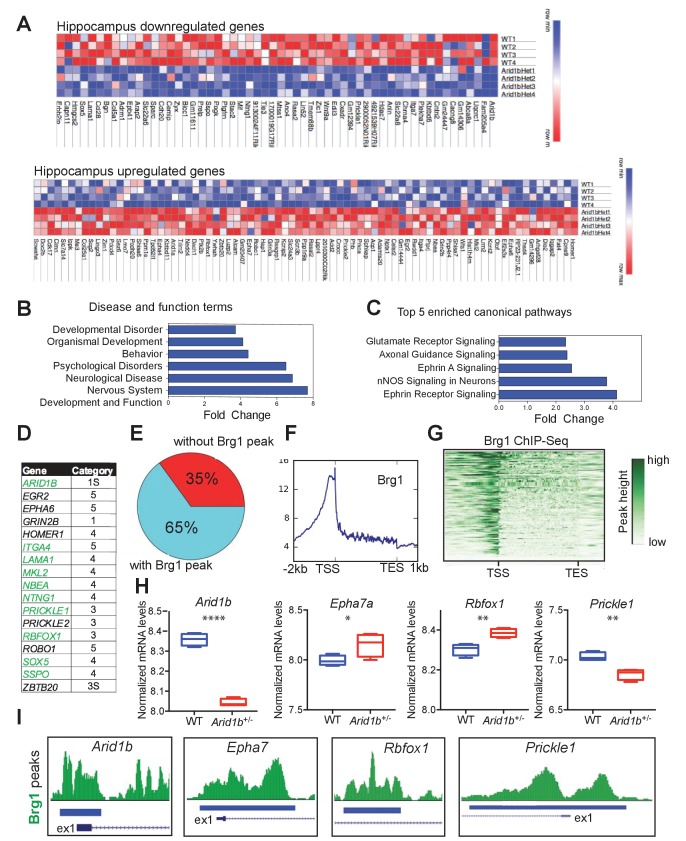
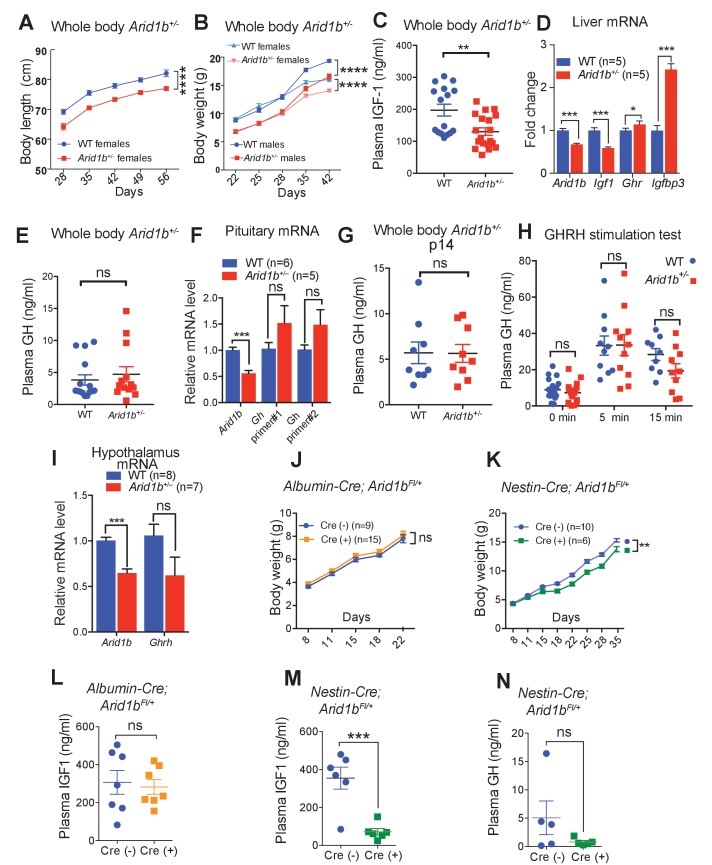
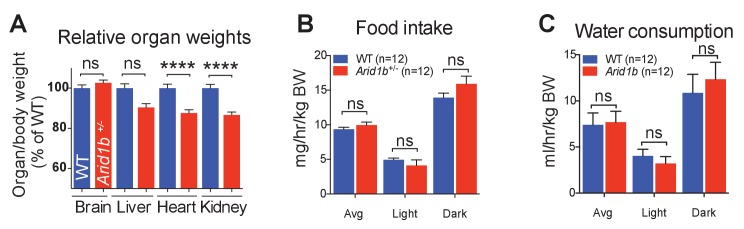
Verification
Claims the paper makes
The claims and statistics of this paper haven’t been checked yet.
Run the check — free, no account needed. It reads the open-access text and checks the sources it cites.
Claims other papers make about this one
Each is checked against this paper’s own text: does it say what the citing paper says it does?
The source backs part of the claim, not all of it — or backs it for a different population, condition or comparison.
In the citing paper
“For some of these syndromes it has recently been shown that deficits in the structural development of the PFC underlie these problems [281–287].”
From Development of prefrontal cortex (2022) · cites this paper as [285]
Experimental — accuracy not yet measured
Self-check
Percentages, sums and reported differences re-computed from the paper’s own numbers.
The self-check needs the paper’s full text.
Citations
Cites
The Sequence Alignment/Map format and SAMtools
Li, H., Handsaker, B., Wysoker, A., Fennell, T., Ruan, J., Homer, N., Marth, G., Abecasis, G., Durbin, R., & 1000 Genome Project Data Processing Subgroup (2009) · Bioinformatics · doi:10.1093/bioinformatics/btp352 · Cited by 62,041
Robinson, M. D., McCarthy, D. J., & Smyth, G. K. (2010) · Bioinformatics · doi:10.1093/bioinformatics/btp616 · Cited by 41,364
featureCounts: an efficient general purpose program for assigning sequence reads to genomic features
Liao, Y., Smyth, G. K., & Shi, W. (2014) · Bioinformatics · doi:10.1093/bioinformatics/btt656 · Cited by 27,219
HISAT: a fast spliced aligner with low memory requirements
Kim, D., Langmead, B., & Salzberg, S. L. (2015) · Nature Methods · doi:10.1038/nmeth.3317 · Cited by 24,112
(1943) · The Nervous child · Cited by 8,870
Genome-wide atlas of gene expression in the adult mouse brain
Lein, E. S., Hawrylycz, M. J., Ao, N., Ayres, M., Bensinger, A., Bernard, A., Boe, A. F., Boguski, M. S., Brockway, K. S., Byrnes, E. J., et al. (2007) · Nature · doi:10.1038/nature05453 · Cited by 5,572
GENCODE: The reference human genome annotation for The ENCODE Project
Harrow, J., Frankish, A., Gonzalez, J. M., Tapanari, E., Diekhans, M., Kokocinski, F., Aken, B. L., Barrell, D., Zadissa, A., Searle, S., et al. (2012) · Genome Research · doi:10.1101/gr.135350.111 · Cited by 4,585
Autistic disturbances of affective contact.
Kanner, L. (1968) · PubMed · Cited by 2,282
Behavioural phenotyping assays for mouse models of autism
Silverman, J. L., Yang, M., Lord, C., & Crawley, J. N. (2010) · Nature Reviews Neuroscience · doi:10.1038/nrn2851 · Cited by 1,462
for the ENIGMA-Major Depressive Disorder Working Group, Schmaal, L., Hibar, D. P., Sämann, P. G., Hall, G. B., Baune, B. T., Jahanshad, N., Cheung, J. W., van Erp, T. G. M., Bos, D., et al. (2017) · Molecular Psychiatry · doi:10.1038/mp.2016.60 · Cited by 1,330
Multiplex Targeted Sequencing Identifies Recurrently Mutated Genes in Autism Spectrum Disorders
O’Roak, B. J., Vives, L., Fu, W., Egertson, J. D., Stanaway, I. B., Phelps, I. G., Carvill, G., Kumar, A., Lee, C., Ankenman, K., et al. (2012) · Science · doi:10.1126/science.1227764 · Cited by 1,240
Large-scale discovery of novel genetic causes of developmental disorders
Study, T. D. D. D. (2015) · Nature · doi:10.1038/nature14135 · Cited by 1,124
Chromatin remodelling during development
Ho, L., & Crabtree, G. R. (2010) · Nature · doi:10.1038/nature08911 · Cited by 1,114
Kadoch, C., & Crabtree, G. R. (2015) · Science Advances · doi:10.1126/sciadv.1500447 · Cited by 877
Partial reversal of Rett Syndrome-like symptoms in MeCP2 mutant mice
Tropea, D., Giacometti, E., Wilson, N. R., Beard, C., McCurry, C., Fu, D. D., Flannery, R., Jaenisch, R., & Sur, M. (2009) · Proceedings of the National Academy of Sciences · doi:10.1073/pnas.0812394106 · Cited by 593
From neural development to cognition: unexpected roles for chromatin
Ronan, J. L., Wu, W., & Crabtree, G. R. (2013) · Nature Reviews Genetics · doi:10.1038/nrg3413 · Cited by 544
Mutations affecting components of the SWI/SNF complex cause Coffin-Siris syndrome
Tsurusaki, Y., Okamoto, N., Ohashi, H., Kosho, T., Imai, Y., Hibi‐Ko, Y., Kaname, T., Naritomi, K., Kawame, H., Wakui, K., et al. (2012) · Nature Genetics · doi:10.1038/ng.2219 · Cited by 518
AutDB: a gene reference resource for autism research
Basu, S. N., Kollu, R., & Banerjee-Basu, S. (2009) · Nucleic Acids Research · doi:10.1093/nar/gkn835 · Cited by 394
Boldrini, M., Santiago, A. N., Hen, R., Dwork, A. J., Rosoklija, G. B., Tamir, H., Arango, V., & John Mann, J. (2013) · Neuropsychopharmacology · doi:10.1038/npp.2013.5 · Cited by 361
CHD8 haploinsufficiency results in autistic-like phenotypes in mice
Katayama, Y., Nishiyama, M., Shoji, H., Ohkawa, Y., Kawamura, A., Sato, T., Suyama, M., Takumi, T., Miyakawa, T., & Nakayama, K. I. (2016) · Nature · doi:10.1038/nature19357 · Cited by 353
Mutations in SWI/SNF chromatin remodeling complex gene ARID1B cause Coffin-Siris syndrome
Santen, G. W. E., Aten, E., Sun, Y., Almomani, R., Gilissen, C., Nielsen, M., Kant, S. G., Snoeck, I. N., Peeters, E. A. J., Hilhorst-Hofstee, Y., et al. (2012) · Nature Genetics · doi:10.1038/ng.2217 · Cited by 347
Self-citationHoyer, J., Ekici, A. B., Endele, S., Popp, B., Zweier, C., Wiesener, A., Wohlleber, E., Dufke, A., Rossier, E., Petsch, C., et al. (2012) · The American Journal of Human Genetics · doi:10.1016/j.ajhg.2012.02.007 · Cited by 263
Functional recovery with recombinant human IGF1 treatment in a mouse model of Rett syndrome
Castro, J., Garcia, R. I., Kwok, S., Banerjee, A., Petravicz, J., Woodson, J., Mellios, N., Tropea, D., & Sur, M. (2014) · Proceedings of the National Academy of Sciences · doi:10.1073/pnas.1311685111 · Cited by 242
Wieczorek, D., Bögershausen, N., Beleggia, F., Steiner-Haldenstätt, S., Pohl, E., Li, Y., Milz, E., Martin, M., Thiele, H., Altmüller, J., et al. (2013) · Human Molecular Genetics · doi:10.1093/hmg/ddt366 · Cited by 223
Coffin-Siris Syndrome and the BAF Complex: Genotype-Phenotype Study in 63 Patients
Santen, G. W. E., Aten, E., Vulto-van Silfhout, A. T., Pottinger, C., van Bon, B. W. M., van Minderhout, I. J. H. M., Snowdowne, R., van der Lans, C. A. C., Boogaard, M., Linssen, M. M. L., et al. (2013) · Human Mutation · doi:10.1002/humu.22394 · Cited by 221
Self-citationAbnormal Speech Spectrum and Increased Pitch Variability in Young Autistic Children
Bonneh, Y. S., Levanon, Y., Dean-Pardo, O., Lossos, L., & Adini, Y. (2011) · Frontiers in Human Neuroscience · doi:10.3389/fnhum.2010.00237 · Cited by 172
Walker, A. K., Rivera, P. D., Wang, Q., Chuang, J.-C., Tran, S., Osborne-Lawrence, S., Estill, S. J., Starwalt, R., Huntington, P., Morlock, L., et al. (2015) · Molecular Psychiatry · doi:10.1038/mp.2014.34 · Cited by 161
Self-citationHalgren, C., Kjaergaard, S., Bak, M., Hansen, C. S., El-Schich, Z., Anderson, C., Henriksen, K. F., Hjalgrim, H., Kirchhoff, M., Bijlsma, E. K., et al. (2011) · Clinical Genetics · doi:10.1111/j.1399-0004.2011.01755.x · Cited by 145
Autism-related behavioral abnormalities in synapsin knockout mice
Greco, B., Managò, F., Tucci, V., Kao, H., Valtorta, F., & Benfenati, F. (2012) · Behavioural Brain Research · doi:10.1016/j.bbr.2012.12.015 · Cited by 140
FoxP1 orchestration of ASD-relevant signaling pathways in the striatum
Araujo, D. J., Anderson, A. G., Berto, S., Runnels, W., Harper, M., Ammanuel, S., Rieger, M. A., Huang, H.-C., Rajkovich, K., Loerwald, K. W., et al. (2015) · Genes & Development · doi:10.1101/gad.267989.115 · Cited by 111
The ARID1B phenotype: What we have learned so far
Santen, G. W. E., & Clayton‐Smith, J. (2014) · American Journal of Medical Genetics Part C Seminars in Medical Genetics · doi:10.1002/ajmg.c.31414 · Cited by 94
Self-citationKa, M., Chopra, D. A., Dravid, S. M., & Kim, W.-Y. (2016) · Journal of Neuroscience · doi:10.1523/jneurosci.2321-15.2016 · Cited by 84
ARID1B-mediated disorders: Mutations and possible mechanisms
Sim, J. C. H., White, S. M., & Lockhart, P. J. (2014) · Intractable & Rare Diseases Research · doi:10.5582/irdr.2014.01021 · Cited by 77
Dentate gyrus volume and memory performance in major depressive disorder
Travis, S., Coupland, N. J., Silversone, P. H., Huang, Y., Fujiwara, E., Carter, R., Seres, P., & Malykhin, N. V. (2015) · Journal of Affective Disorders · doi:10.1016/j.jad.2014.09.048 · Cited by 71
Tissue-specific SMARCA4 binding at active and repressed regulatory elements during embryogenesisPreprint
Attanasio, C., Nord, A. S., Zhu, Y., Blow, M. J., Biddie, S. C., Mendenhall, E. M., Dixon, J. R., Wright, C., Hosseini, R., Akiyama, J. A., et al. (2014) · Genome Research · doi:10.1101/gr.168930.113 · Cited by 63
Persson, A., Sim, S. C., Virding, S., Onishchenko, N. R., Schulte, G., & Ingelman‐Sundberg, M. (2013) · Molecular Psychiatry · doi:10.1038/mp.2013.89 · Cited by 63
Animal Models of Speech and Vocal Communication Deficits Associated With Psychiatric Disorders
Konopka, G., & Roberts, T. F. (2015) · Biological Psychiatry · doi:10.1016/j.biopsych.2015.07.001 · Cited by 44
De novo mutations in ARID1B associated with both syndromic and non-syndromic short stature
Yu, Y., Yao, R., Wang, L., Fan, Y., Huang, X., Hirschhorn, J. N., Dauber, A. N., & Shen, Y. (2015) · BMC Genomics · doi:10.1186/s12864-015-1898-1 · Cited by 35
DeCarolis, N. A., Rivera, P. D., Ahn, F., Amaral, W. Z., LeBlanc, J. A., Malhotra, S., Shih, H.-Y., Petřík, D., Melvin, N. R., Chen, B. P. C., et al. (2014) · Life Sciences in Space Research · doi:10.1016/j.lssr.2014.06.004 · Cited by 33
Self-citationDandy-Walker variant in Coffin-Siris syndrome
Imai, T., Hattori, H., Miyazaki, M., Higuchi, Y., Adachi, S., & Nakahata, T. (2001) · American Journal of Medical Genetics · doi:10.1002/ajmg.1231 · Cited by 26
Is this the Coffin–Siris syndrome or the BOD syndrome?
Brautbar, A., Ragsdale, J. R., & Shinawi, M. S. (2009) · American Journal of Medical Genetics Part A · doi:10.1002/ajmg.a.32671 · Cited by 13
BASSIO, W. A. D. (1987) · Elsevier eBooks · doi:10.1016/b978-0-409-90018-7.50039-6 · Cited by 11
First-in-man study with a novel PEGylated recombinant human insulin-like growth factor-I
Kletzl, H., Guenther, A., Höflich, A., Höflich, C., Frystyk, J., Staack, R. F., Schick, E., Wandel, C., Bleich, N., & Metzger, F. (2017) · Growth Hormone & IGF Research · doi:10.1016/j.ghir.2017.01.001 · Cited by 7
Cited by
Sorted by citations
Development of prefrontal cortex
Kolk, S. M., & Rakic, P. (2022) · Neuropsychopharmacology · doi:10.1038/s41386-021-01137-9 · Cited by 378
COMPASS and SWI/SNF complexes in development and disease
Cenik, B. K., & Shilatifard, A. (2020) · Nature Reviews Genetics · doi:10.1038/s41576-020-0278-0 · Cited by 280
Arid1b haploinsufficiency disrupts cortical interneuron development and mouse behavior
Jung, E., Moffat, J. J., Liu, J., Dravid, S. M., Gurumurthy, C. B., & Kim, W.-Y. (2017) · Nature Neuroscience · doi:10.1038/s41593-017-0013-0 · Cited by 181
De Novo Mutation in Genes Regulating Neural Stem Cell Fate in Human Congenital Hydrocephalus
Furey, C. G., Choi, J., Jin, S. C., Zeng, X. Q., Timberlake, A. T., Nelson-Williams, C. J., Mansuri, M. S., Lu, Q., Durán, D., Panchagnula, S., et al. (2018) · Neuron · doi:10.1016/j.neuron.2018.06.019 · Cited by 148
Genetic and Epigenetic Etiology Underlying Autism Spectrum Disorder
Yoon, S. H., Choi, J., Lee, W. Y., & Do, J. (2020) · Journal of Clinical Medicine · doi:10.3390/jcm9040966 · Cited by 175
Metadata
- Authors
- Celen, C., Chuang, J.-C., Luo, X., Nijem, N., Walker, A. K., Chen, F., Zhang, S., Chung, A. S., Nguyen, L. H., Nassour, I., Budhipramono, A., Sun, X., Bok, L. A., McEntagart, M., Gevers, E. F., Birnbaum, S. G., Eisch, A. J., Powell, C. M., Ge, W.-P., Santen, G. W., Chahrour, M., & Zhu, H.
- Affiliations
- The University of Texas Southwestern Medical Center (US)
- Máxima Medisch Centrum (NL)
- Great Ormond Street Hospital (GB)
- Queen Mary University of London (GB)
- Children's Hospital of Philadelphia (US)
- Leiden University Medical Center (NL)
- Corresponding author
- Zhu, Hao
- ORCID
- Venue
- eLife
- Publisher
- eLife Sciences Publications, Ltd
- Published
- 2017-07-11
- Volume
- 6
- ISSN
- 2050-084X (ISSN-L)
- PMC
- PMC5515576
- OpenAlex
- W2734654523
- Cited by
- 113
- References
- 43
- Citations by year
- 2026: 7 · 2025: 5 · 2024: 18 · 2023: 11 · 2022: 14 · 2021: 19 · 2020: 22 · 2019: 8 · 2018: 6 · 2017: 2
- FWCI
- 6.88
- Type
- journal article
- Language
- en
- Open access
- gold
- doi.org
- Licence
- Locations
- eLife (publishedVersion, cc-by)
- PubMed Central (publishedVersion, cc-by)
- PubMed (publishedVersion)
- St George's Online Research Archive (St George's University of London) (submittedVersion)
- Data Archiving and Networked Services (DANS) (submittedVersion)
- Leiden Repository (Leiden University) (submittedVersion)
- DOAJ (DOAJ: Directory of Open Access Journals) (submittedVersion, cc-by-sa)
- Funders
- Hamon Center for Regenerative Science and Medicine (Regenerative medicine training grant)
- Postdoctoral Institutional training grant (NIDA T32-DA007290)
- HHMI International Student Research Fellowship
- National Institutes of Health (DA023701, DA023555, MH107945, R21(NS099950), 1K08CA157727)
- National Institute of Neurological Disorders and Stroke (NINDS K99/R00 (R00NS073735))
- Pollock Foundation
- National Cancer Institute (1R01CA190525)
- Burroughs Wellcome Fund
- CPRIT New Investigator Award (R1209)
- CPRIT Early Translation Grant (DP150077)
- University of Texas Southwestern Medical Center
- NARSAD Young Investigator Grant (NARSAD 24951)
- Cancer Prevention and Research Institute of Texas (RP150596)
- Barts Health NHS Trust
- Queen Mary University London
- Topics
- Life Sciences › Biochemistry, Genetics and Molecular Biology › Genetics › Genetics and Neurodevelopmental Disorders
- Life Sciences › Biochemistry, Genetics and Molecular Biology › Molecular Biology › Chromatin Remodeling and Cancer
- Life Sciences › Biochemistry, Genetics and Molecular Biology › Genetics › Genomic variations and chromosomal abnormalities
- Keywords
- ARID1B, haploinsufficiency, SWI/SNF chromatin remodeling, growth retardation, short stature, Coffin-Siris syndrome, autism spectrum disorder, intellectual disability, social behavior impairment, anxiety-like behavior, vocalizations, neuroanatomical abnormalities, growth hormone, growth hormone-releasing hormone, growth hormone supplementation, neuropsychiatric disorders, muscle weakness
- MeSH terms
- Animals, Behavior, Animal, Mental Disorders, Brain, Developmental Disabilities, Disease Models, Animal, Gene Expression Regulation, Heterozygote, Insulin-Like Growth Factor I, Growth Hormone-Releasing Hormone, Transcription Factors, Protein Serine-Threonine Kinases, Mice, Haploinsufficiency
About these checks
Registry, retraction, Cites and statistics results are computed, not judged, with one exception: a printed reference that no index lists is read once by a model before it counts as a citation error. Claims are extracted by a model and kept only when their quote appears verbatim in the text; each cited source is then checked, with a model’s help, for whether it says what the claim relies on. Those verdicts can be wrong — read the claim’s quote and the cited source before relying on one.
Statistics and arithmetic are recomputed, not judged.
Confidence bands are shown only for fields calibrated on our annotated test set. None is calibrated yet, so no band is shown.
What counts as a claim ›How we measure confidence ›How we check this ›
Are you an author, or do you see a problem with this page? Request a review
