

The DOI matches its Crossref record; 75 of the 82 references it cites were found in a registry or an index, and 2 are not checked yet.
Effect of Pain Reprocessing Therapy vs Placebo and Usual Care for Patients With Chronic Back Pain: A Randomized Clinical Trial
Open accessAbstract
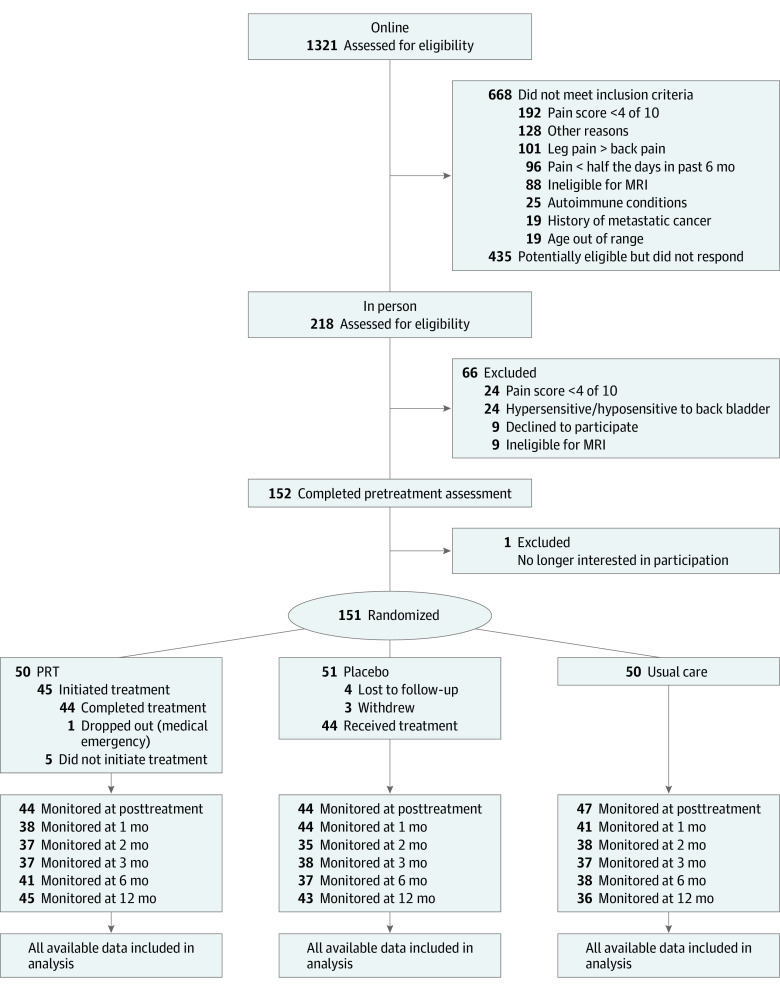
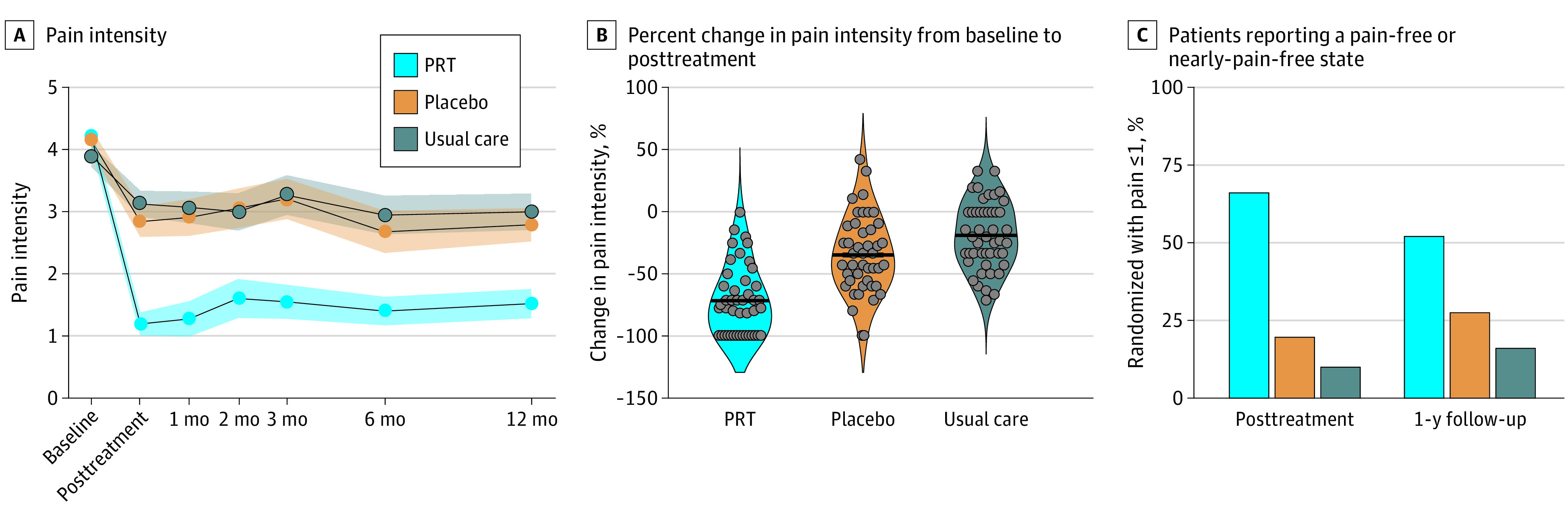
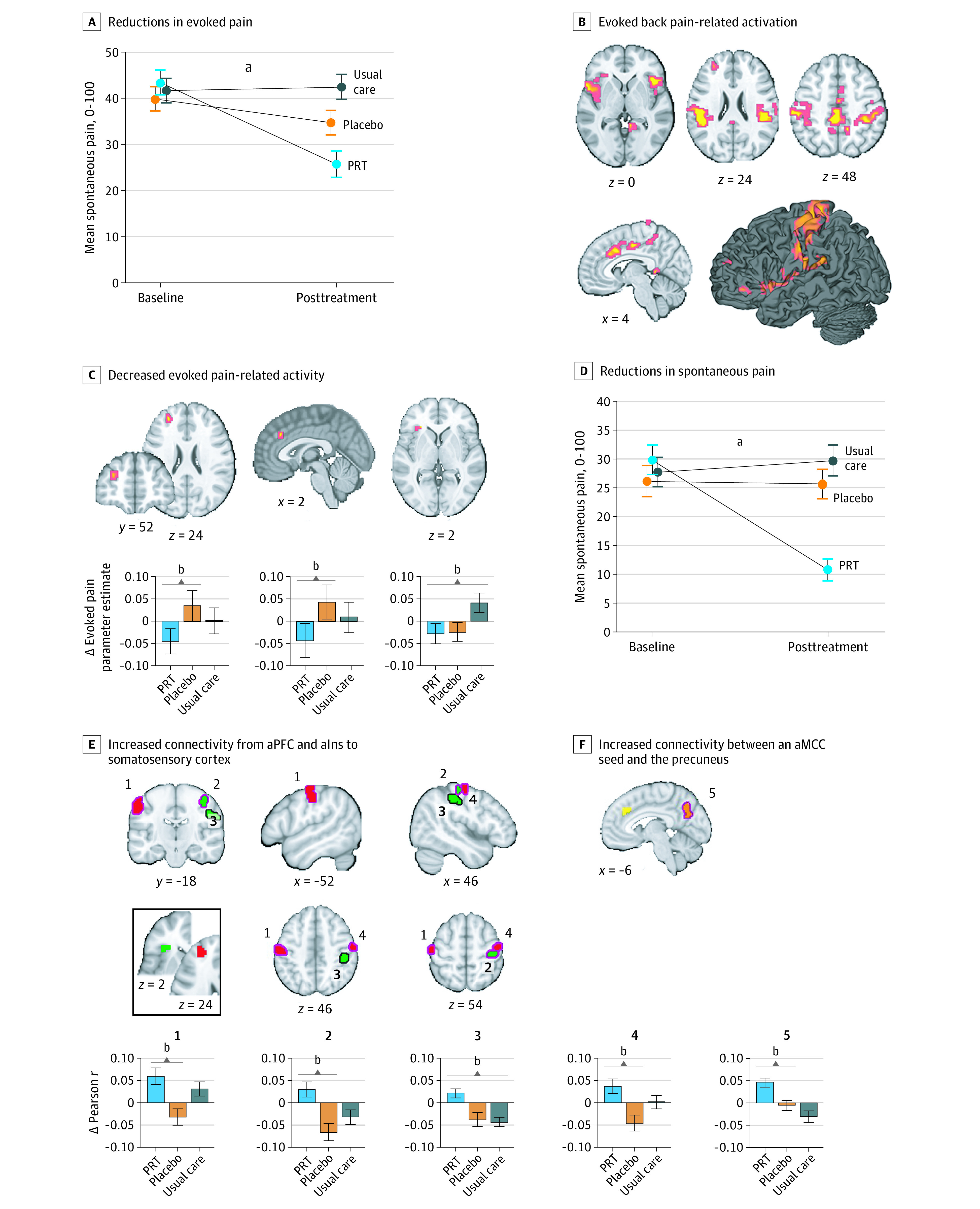
Importance: Chronic back pain (CBP) is a leading cause of disability, and treatment is often ineffective. Approximately 85% of cases are primary CBP, for which peripheral etiology cannot be identified, and maintenance factors include fear, avoidance, and beliefs that pain indicates injury. Objective: To test whether a psychological treatment (pain reprocessing therapy [PRT]) aiming to shift patients' beliefs about the causes and threat value of pain provides substantial and durable pain relief from primary CBP and to investigate treatment mechanisms. Design, Setting, and Participants: This randomized clinical trial with longitudinal functional magnetic resonance imaging (fMRI) and 1-year follow-up assessment was conducted in a university research setting from November 2017 to August 2018, with 1-year follow-up completed by November 2019. Clinical and fMRI data were analyzed from January 2019 to August 2020. The study compared PRT with an open-label placebo treatment and with usual care in a community sample. Interventions: Participants randomized to PRT participated in 1 telehealth session with a physician and 8 psychological treatment sessions over 4 weeks. Treatment aimed to help patients reconceptualize their pain as due to nondangerous brain activity rather than peripheral tissue injury, using a combination of cognitive, somatic, and exposure-based techniques. Participants randomized to placebo received an open-label subcutaneous saline injection in the back; participants randomized to usual care continued their routine, ongoing care. Main Outcomes and Measures: One-week mean back pain intensity score (0 to 10) at posttreatment, pain beliefs, and fMRI measures of evoked pain and resting connectivity. Results: At baseline, 151 adults (54% female; mean [SD] age, 41.1 [15.6] years) reported mean (SD) pain of low to moderate severity (mean [SD] pain intensity, 4.10 [1.26] of 10; mean [SD] disability, 23.34 [10.12] of 100) and mean (SD) pain duration of 10.0 (8.9) years. Large group differences in pain were observed at posttreatment, with a mean (SD) pain score of 1.18 (1.24) in the PRT group, 2.84 (1.64) in the placebo group, and 3.13 (1.45) in the usual care group. Hedges g was -1.14 for PRT vs placebo and -1.74 for PRT vs usual care (P < .001). Of 151 total participants, 33 of 50 participants (66%) randomized to PRT were pain-free or nearly pain-free at posttreatment (reporting a pain intensity score of 0 or 1 of 10), compared with 10 of 51 participants (20%) randomized to placebo and 5 of 50 participants (10%) randomized to usual care. Treatment effects were maintained at 1-year follow-up, with a mean (SD) pain score of 1.51 (1.59) in the PRT group, 2.79 (1.78) in the placebo group, and 3.00 (1.77) in the usual care group. Hedges g was -0.70 for PRT vs placebo (P = .001) and -1.05 for PRT vs usual care (P < .001) at 1-year follow-up. Longitudinal fMRI showed (1) reduced responses to evoked back pain in the anterior midcingulate and the anterior prefrontal cortex for PRT vs placebo; (2) reduced responses in the anterior insula for PRT vs usual care; (3) increased resting connectivity from the anterior prefrontal cortex and the anterior insula to the primary somatosensory cortex for PRT vs both control groups; and (4) increased connectivity from the anterior midcingulate to the precuneus for PRT vs usual care. Conclusions and Relevance: Psychological treatment centered on changing patients' beliefs about the causes and threat value of pain may provide substantial and durable pain relief for people with CBP. Trial Registration: ClinicalTrials.gov Identifier: NCT03294148.
Overview
The claims and statistics of this paper haven’t been checked yet.
Run the check — free, no account needed. It reads the open-access text and checks the sources it cites.
Integrity signals
Registry
Cites
Statistics
Figures
Verification
Claims the paper makes
The claims and statistics of this paper haven’t been checked yet.
Run the check — free, no account needed. It reads the open-access text and checks the sources it cites.
Claims other papers make about this one
Each is checked against this paper’s own text: does it say what the citing paper says it does?
The cited source says what the claim attributes to it.
In the citing paper
“In a study on patients with chronic lower back pain, it produced significant pain relief relative to placebo and usual care, mediated by decreased fear and threat beliefs (Ashar et al., 2022).”
From Listen to your inner body: embodied emotions in predictive neuroscience and traditional East Asian medicine (2026) · cites this paper as Ashar et al., 2022
The cited source says what the claim attributes to it.
In the citing paper
“There are highly successful therapeutic approaches, notably to chronic back pain, that proceed from this insight, engage with catastrophic thinking and give it a positive twist [22].”
From Endometriosis: patient–doctor communication and psychological counselling (2023) · cites this paper as [22]
Self-check
Percentages, sums and reported differences re-computed from the paper’s own numbers.
The self-check needs the paper’s full text.
Citations
Cites
How do you feel — now? The anterior insula and human awareness
(Bud) Craig, A. D. (2009) · Nature Reviews Neuroscience · doi:10.1038/nrn2555 · Cited by 6,657
Adler, N. E., Epel, E. S., Castellazzo, G., & Ickovics, J. R. (2000) · Health Psychology · doi:10.1037/0278-6133.19.6.586 · Cited by 5,080
Central sensitization: implications for the diagnosis and treatment of pain
Woolf, C. J. (2011) · Pain · doi:10.1016/j.pain.2010.09.030 · Cited by 4,771
What low back pain is and why we need to pay attention
Hartvigsen, J., Hancock, M. J., Kongsted, A., Louw, Q., Ferreira, M. L., Genevay, S., Hoy, D., Karppinen, J., Pransky, G., Sieper, J., et al. (2018) · The Lancet · doi:10.1016/s0140-6736(18)30480-x · Cited by 4,652
Prevalence of Chronic Pain and High-Impact Chronic Pain Among Adults — United States, 2016
Dahlhamer, J., Lucas, J., Zelaya, Nahin, R., Mackey, S., DeBar, L., Kerns, R., Von Korff, M., Porter, L., & Helmick, C. (2018) · MMWR. Morbidity and Mortality Weekly Report · doi:10.15585/mmwr.mm6736a2 · Cited by 2,598
Maher, C., Underwood, M., & Buchbinder, R. (2017) · The Lancet · doi:10.1016/s0140-6736(16)30970-9 · Cited by 2,535 · cited 5×
“Techniques included (1) providing personalized evidence for centralized pain; (2) guided reappraisal of pain sensations while seated and while engaging in feared postures or movements; (3) techniques addressing psychosocial threats (eg, difficult emotions) potentially amplifying pain; and (4) techniques to increase po…”
BackgroundMethodInfluentialThe brain basis of emotion: a meta-analytic review
Lindquist, K. A., Wager, T. D., Kober, H., Bliss-Moreau, E., & Barrett, L. F. (2012) · Behavioral and Brain Sciences · doi:10.1017/s0140525x11000446 · Cited by 2,320
Self-citationRELIEVING PAIN IN AMERICA: A BLUEPRINT FOR TRANSFORMING PREVENTION, CARE, EDUCATION, AND RESEARCH
Simon, L. S. (2012) · Journal of Pain & Palliative Care Pharmacotherapy · doi:10.3109/15360288.2012.678473 · Cited by 2,200
Cognitive and emotional control of pain and its disruption in chronic pain
Bushnell, M. C., Čeko, M., & Low, L. A. (2013) · Nature Reviews Neuroscience · doi:10.1038/nrn3516 · Cited by 2,076 · cited 1×
“Full-time (>30 h/wk) 33 (66) 26 (51) 28 (56)”
Interoceptive predictions in the brain
Barrett, L. F., & Simmons, W. K. (2015) · Nature Reviews Neuroscience · doi:10.1038/nrn3950 · Cited by 1,766 · cited 1×
“Part-time (5-30 h/wk) 10 (20) 12 (24) 13 (26)”
Research works printed but not linked: 1
- Schubiner, 2010, Unlearn Your Pain
Cited by
Sorted by citations
Items 201–300 of 330
Marchand, S. (2024) · Springer eBooks · doi:10.1007/978-3-031-56541-0_1 · Cited by 1
Psychophysiologic symptom relief therapy for chronic back pain: hypothesis and trial rationale
Paschali, M., Thompson, G. S., Mehta, S. M., Howard, P. M., Yamin, J. B., Edwards, R. R., & Donnino, M. W. (2024) · Frontiers in Pain Research · doi:10.3389/fpain.2024.1328495 · Cited by 1
Barndomstraumer og langvarige smerter hos barn, ungdom og unge voksne
Baumann‐Larsen, M., Rème, S. E., & Stensland, S. Ø. (2024) · Tidsskrift for Norsk psykologforening · doi:10.52734/lsnu7172 · Cited by 1
Feng, B., Chen, G., Lu, W. W., Wang, Y., & Ip, W. (2025) · Brain Communications · doi:10.1093/braincomms/fcaf375 · Cited by 1
“No Pain, More Gain”: Subjective Responses to a T’ai Chi and Qigong Program For Back Pain
Yang, Y., Caldwell, K. L., Schlagal, R., DeCelle, S., Simmons, S., Yang, L., Abduljawad, S. A., Ayar, J., Singh, J. R., Sheeler, R. D., et al. (2025) · Global Advances in Integrative Medicine and Health · doi:10.1177/27536130251384679 · Cited by 2
Hüsing, P., Busmann, M., Löwe, B., & Engelmann, P. (2025) · Internet Interventions · doi:10.1016/j.invent.2025.100892 · Cited by 1
Mindfulness-Based Interventions for Psychiatry
Ivkovic, A., Evans, S., Mirsky, P., Ashar, Y. K., & Muskin, P. R. (2023) · Springer eBooks · doi:10.1007/978-3-030-42825-9_159-1 · Cited by 1
Self-citationGenetic relationships between chronic pain, psychopathologies, and neuroticism.Preprint
Zorina-Lichtenwalter, K., Bango, C. I., ˇCeko, M., Ashar, Y., Keller, M. C., Wager, T., & Friedman, N. P. (2023) · medRxiv · doi:10.1101/2023.06.20.23291689 · Cited by 1
Self-citationFendel, J. C., Tiersch, C., Sölder, P., Gaab, J., & Schmidt, S. (2024) · Research Square · doi:10.21203/rs.3.rs-5216072/v1 · Cited by 1
Precision Functional Mapping of Imagined and Experienced PainPreprint
Sun, M. M. C., Petre, B., Bo, K., Bango, C. I., Hershkop, M., Shohan, S. L., Jung, H., & Wager, T. D. (2025) · bioRxiv (Cold Spring Harbor Laboratory) · doi:10.1101/2025.08.06.668906 · Cited by 1
“…exposure therapies, which activate neural circuits involved in extinction learning 17 — a core mechanism underlying symptom reduction in posttraumatic stress disorder 18 , anxiety disorders (e.g., specific phobia and obsessive-compulsive disorder) 19 , and, increasingly, in chronic pain 20,21 .”
Self-citationPain-regulation circuitry as a predictor of chronic pain phenotypesPreprint
Aleali, A., Hashmı, M. A., Friedman, A., Beaupre, I., Cane, D. B., & Hashmi, J. A. (2026) · bioRxiv (Cold Spring Harbor Laboratory) · doi:10.64898/2026.01.20.699535 · Cited by 2
“Interventional therapy generally grounded in the fear-avoidance model, such as Pain Reprocessing Therapy, 99 Cognitive-behavioral approaches 100 , and Acceptance and Commitment Therapy, have been shown to have promising effectiveness in reducing chronic pain by helping patients reinterpret pain as…”
Lee, S., Yoon, S.-I., Liao, H.-Y., Kim, J. W., Lee, I.-S., & Chae, Y. (2026) · Frontiers in Human Neuroscience · doi:10.3389/fnhum.2026.1807034
Skelly, A. C., Brodt, E., Kantner, S. N., Diulio-Nakamura, A., Mauer, K., & Shetty, K. D. (2022) · doi:10.23970/ahrqepcsurveillancenoninvasivenonpharma
Pain Reprocessing Therapy May Relieve Chronic Low Back Pain
Hoffmeister, E. (2022) · Lippincott s Bone and Joint Newsletter · doi:10.1097/01.bonej.0000818600.31641.0d
Donnino, M. W., Howard, P., Mehta, S. M., Silverman, J. M., Cabrera, M. J., Yamin, J. B., Balaji, L., Tolin, R., Berg, K. M., Edwards, R. R., et al. (2022) · medRxiv · doi:10.1101/2022.10.07.22280732
“Chronic psychophysiologic processes tend to be less recognized but have been recently described in some chronic pain syndromes (19,20) and can be seen in entities such as Post-Traumatic Stress Disorder (PTSD) (21–23).”
BackgroundJAMA Psychiatry—The Year in Review, 2022
Öngür, D. (2023) · JAMA Psychiatry · doi:10.1001/jamapsychiatry.2023.0168
Goerlitz, D. S., Hong, A., Bailey, V., & Wachholtz, A. (2023) · Journal of Health Psychology · doi:10.1177/13591053231186050
“…as well as addressing risks and obstacles with opi-oid-based post-surgical pain management and subsequent tapering (Acevedo et al., 2022; Addington et al., 2020; Amanullah et al., 2021; Ashar et al., 2022; Frumkin and Rodebaugh, 2021; Geers et al., 2019; McPhee and Graven-Nielsen, 2022).”
BackgroundActualización en Anestesiología Vol. 1
Barcia, J. A. S., Domínguez, D. C. S., Calvopiña, D. C. P., Benavides, A. P. P., & Figueroa, A. M. C. (2023) · Juan Cuevas eBooks · doi:10.56470/978-9942-627-82-7
Pain Can’t Be Carved at the JointsPreprint
Barron, D. S., Saltoun, K., Kiesow, H., Fu, M., Tanugi, J., Geha, P., Scheinost, D., Silbersweig, D., & Bzdok, D. (2023) · Research Square · doi:10.21203/rs.3.rs-3143167/v1
Actualización en Anestesiología Vol. 2
Florez, A. F. Z., Jadán, L. D. R. J., Calvopiña, D. C. P., Santana, S. R. D., Jara, B. E. M., & Narváez, S. V. C. (2023) · Juan Cuevas eBooks · doi:10.56470/978-9942-627-91-9
Actualización en Anestesiología Vol. 3
Bonilla, J. A. O., Gómez, K. M. M., Pinto, V. G. C., Zurita, J. G. M., Leroux, G. A. E. R., & Fuentes, J. N. I. (2023) · Juan Cuevas eBooks · doi:10.56470/978-9942-650-07-8
Nijs, J. (2023) · Journal of physiotherapy · doi:10.1016/j.jphys.2023.07.002
Bewegungsmangel, Folgen und Psychologie
Laube, W. (2023) · Springer eBooks · doi:10.1007/978-3-662-67753-7_14
Bildgebung bei CMD – Indikation und klinische Relevanz
Herpel, C., Rammelsberg, P., & Hilgenfeld, T. (2023) · Zahnmedizin up2date · doi:10.1055/a-2202-2389
Addressing the Quandary of Chronic Pain: Learning From Phenomenological Research
Sessa, M., Marks, D. R., & Block‐Lerner, J. (2024) · Ethical Human Psychology and Psychiatry · doi:10.1891/ehpp-2023-0011
Actualización en Anestesiología Vol. 11
Torres, K. E. R., Coloma, M. B. P., Zambrano, J. T. M., Basurto, J. E. Z., Lema, A. L. B., Jiménez, E. M. B., Cobo, F. C. A., Zambrano, S. D. C., Jadan, M. S. O., Núñez, C. R. D., et al. (2024) · Juan Cuevas eBooks · doi:10.56470/978-9942-650-93-1
Differenzialdiagnosen bei Verletzungen der (oberen) Halswirbelsäule
Eisner, W. (2024) · Schmerz Nachrichten · doi:10.1007/s44180-024-00184-0
Bagg, M. K., Hince, D., Travers, M. J., Truter, P., Orange, G. M., & Wand, B. M. (2024) · Journal of Pain · doi:10.1016/j.jpain.2023.11.024
Tankha, H., Lumley, M. A., Gordon, A., Schubiner, H. H., Uipi, C., Harris, J., Wager, T. D., & Ashar, Y. K. (2024) · Journal of Pain · doi:10.1016/j.jpain.2024.01.004
Self-citationEnhanced recovery program in neurosurgery (current trends)
Yarikov, A. V., Filyaeva, A. S., Perlmutter, O. A., Fraerman, A., Tsybusov, S., Mukhin, A. S., Sosnin, A. G., Владимирович, Г. И., & Simonov, A. (2024) · Vrach · doi:10.29296/25877305-2024-04-02
Nonpharmacological Pain Treatment
Marchand, S. (2024) · Springer eBooks · doi:10.1007/978-3-031-56541-0_7 · Cited by 3
Estee, M. M., Wang, Y., Heritier, S. R., Urquhart, D. M., Cicuttini, F., Kotowicz, M. A., Anderson, K. B., Brennan-Olsen, S. L., Pasco, J. A., & Wluka, A. E. (2024) · JBMR Plus · doi:10.1093/jbmrpl/ziae076
Zolfaghari, N., Letafatkar, A., & Rossettini, G. (2024) · Research Square · doi:10.21203/rs.3.rs-4485068/v1
What are the Tools in Your CM Toolbox for Pain?
Powell, S. K. (2024) · Professional Case Management · doi:10.1097/ncm.0000000000000763
Chronic Pain Associated Alcohol Use Disorder Among Participants in a Small Clinical Trial
Terasaki, D., Frank, J. W., & Schacht, J. P. (2024) · Journal of Addiction Medicine · doi:10.1097/adm.0000000000001393
Grundlagen einer neurobiologisch fundierten Schmerzpsychotherapie
Egle, U. T., & Egloff, N. (2024) · PiD - Psychotherapie im Dialog · doi:10.1055/a-2249-8238
Cui, X., Zhao, P., Guo, X., Wang, J., Han, T., Zhang, X., Zhou, X., & Qi, Y. (2024) · Frontiers in Physiology · doi:10.3389/fphys.2024.1451345 · Cited by 2
Hanscom, D. A., Halaris, A. E., & Erb, M. (2024) · Elsevier eBooks · doi:10.1016/b978-0-12-816996-4.00009-5
Temporomandibular Joint (TMJ) Dilemma: How to Resolve?
Barghash, H. (2025) · IntechOpen eBooks · doi:10.5772/intechopen.1009276
Conservative, Nonsurgical Management of Low Back Pain in the Primary Care Setting
Mohialdin, A. M. A. (2024) · Asian Journal of Pharmaceutical Research and Health Care · doi:10.4103/ajprhc.ajprhc_91_24 · Cited by 1
Unraveling the Complexities of Chronic Low Back Pain: A Comprehensive Case Study
Sultan, W., Ayad, S., & Pawlowski, R. H. T. (2025) · Cureus · doi:10.7759/cureus.83523
“Preliminary studies suggest that PRT may relieve chronic pain, including LBP, particularly when emotional and cognitive factors are significant contributors [5].”
Psychosomatische Schmerztherapie – ein Update
Egloff, N., & Egle, U. T. (2025) · Die Psychotherapie · doi:10.1007/s00278-025-00781-6
“Beim Vergleich der Pain reprocessing therapy mit „treatment as usual“ bzw. der Placebogruppe betrug die Effektstärke g= 1,05 bzw. g= 0,70 (Ashar et al. 2022).”
Grenier, J., & Thiel, A. (2025) · Musculoskeletal Care · doi:10.1002/msc.70120 · Cited by 1
Weissfeld, R. K. (2026) · Clinical and Translational Neuroscience · doi:10.3390/ctn10020009
Frequency and Correlates of Physical Activity Among Young Adults With Chronic Pain
Laumann, L. E., Gnall, K. E., Sinnott, S. M., Park, C. L., & Cruess, D. G. (2025) · Clinical Journal of Pain · doi:10.1097/ajp.0000000000001314
Das Gehirn ist heute die Psyche von gestern
Nilges, P. (2025) · Die Orthopädie · doi:10.1007/s00132-025-04691-y
Actualización en el manejo del dolor: ¿Qué nuevas herramientas tenemos disponibles?
Moreno-Ortega, D. C., Acosta, N. A. C. –., Nates, V. M. –., Mosquera–Serrano, J. C., Escobar, L. C. A. –., Estacio-Díaz, J. D., Bermúdez–Moyano, S. G., & Serna–Trejos, J. S. (2025) · Revista Chilena de Rehabilitación y Actividad Física · doi:10.32457/reaf1.3082
Wickramasekera, I. E., II (2025) · Brain Sciences · doi:10.3390/brainsci15090955
Gao, F., Pan, Y., Huang, Y., Gu, C., Song, X., & Wang, C. (2025) · CNS Neuroscience & Therapeutics · doi:10.1111/cns.70578
Psychological Factors in Chronic Sore Throat
Yalınkılıç, A., Erdem, M. Z., Aydın, M. N., Ağırbaş, S., & Işık, M. (2025) · Online Türk Sağlık Bilimleri Dergisi · doi:10.26453/otjhs.1717729
Case, L. K. (2025) · Brain and Behavior · doi:10.1002/brb3.70892
Blackstone, V. (2025) · CBT: science into practice · doi:10.1007/978-3-031-98876-9_4
Yamada, K., Yamamoto, A., Ueno, K., Takahashi, Y., Ueda, M., Khoo, H. M., Hosomi, K., Ishii, R., & Kato, F. (2025) · Neuropsychopharmacology Reports · doi:10.1002/npr2.70064
Trials for computational psychiatry
Huys, Q. J. M., & Browning, M. D. (2025) · Nature Computational Science · doi:10.1038/s43588-025-00879-6
Terapia sistémica del conocimiento clínico
Jurado, A. J. N. (2025) · Revista Clínica de Medicina de Familia · doi:10.55783/rcmf.180306
Frederick, C., Ghafoor, F., & Yang, N. (2025) · Cureus · doi:10.7759/cureus.95655
“Clinical trials on chronic back pain, IBS, menopausal hot flushes, CRF, and seasonal allergic rhinitis showed significant improvements using OLPs [11,12,14,18-21].”
Persisting Symptoms After Concussion and Functional Neurological Disorder: Points of Intersection
Mollica, A., DeDominicis, M., Silverberg, N. D., & Burke, M. J. (2025) · Seminars in Neurology · doi:10.1055/a-2752-8940
Modeling the Action-Perception loop and its role in phantom limb pain using active inference
Ramne, M., Lundh, T., & Sensinger, J. W. (2026) · Journal of Theoretical Biology · doi:10.64898/2025.12.05.692511
“Pain reprocessing therapy (PRT), for instance, suggests that certain forms of chronic pain may be sustained by fear and other aversive emotional states [41].”
Pain Reprocessing Therapy: An Opportunity for Social Work Practice and Visibility
London, M. (2025) · Health & Social Work · doi:10.1093/hsw/hlaf047
Sherriff, B., Clark, C., Killingback, C., & Newell, D. (2022) · Figshare · doi:10.6084/m9.figshare.19634828
Murillo, C., Wager, T. D., & Ashar, Y. K. (2025) · Journal of Pain · doi:10.1016/j.jpain.2025.105644
Self-citationSannes, A., Kretz, L., Pripp, A. H., Vigdal, Ø. N., Killingmo, R. M., Stensrud, S., Storheim, K., Grotle, M., & Axén, I. (2025) · BMC Musculoskeletal Disorders · doi:10.1186/s12891-025-09442-w
Albajes, K., Barrios, V., Keegan, E. G., Queraltó, J. M., Miracco, M., & Jones, L. E. (2026) · Journal of Contextual Behavioral Science · doi:10.1016/j.jcbs.2026.100975
Rabiei, P., Massé‐Alarie, H., & Desrosiers, P. (2026) · medRxiv · doi:10.64898/2026.02.09.26345929
Sezer, D., de Leeuw, M., Meyer, A. H., Buergler, S., Netzer, C., Locher, C., Gaab, J., Ruppen, W., & Schneider, T. (2026) · PAIN Reports · doi:10.1097/pr9.0000000000001405
“…studies have shown that open-label placebos (OLPs) can elicit statistically significant and clinically relevant effects on various conditions (standardized mean difference 5 0.72; standardized mean difference 5 0.45–0.87 for pain), 9,64 in both chronic 3,10,29,32,49 as well as in acute pain.”
InfluentialBott, F. S., Turgut, Ö., Zebhauser, P. T., Adhia, D. B., Ashar, Y. K., Day, M. A., Granovsky, Y., Jensen, M. P., Wager, T. D., Yarnitsky, D., et al. (2026) · medRxiv · doi:10.64898/2026.03.06.26347785
Self-citationHypnosis in chronic pain: from new hope to emerging standard?
Rizzo, R. R. N., & Jensen, M. P. (2026) · Pain · doi:10.1097/j.pain.0000000000003944
How Americans Experience and Understand Neuroplastic Symptoms
Clarke, D. /. D., Sondag, M., Goldberg, M., & Gustafson, A. (2025) · doi:10.66323/20250928
Lee, J., Lazaridou, A., Paschali, M., Anzolin, A., Grahl, A., Ellingsen, D., Loggia, M. L., Wasan, A. D., Edwards, R. R., & Napadow, V. (2026) · Pain · doi:10.1097/j.pain.0000000000003957
Adenis, N. (2025) · theses.fr (ABES) · doi:10.70675/37675cd0z9427z45fczaa8az3f1af854d94e
Zhdanova, I. V., & Shakhova, O. H. (2026) · Psychiatry Neurology and Medical Psychology · doi:10.26565/2312-5675-2026-33-09
Approaches to psychological pain management: what is the way forward?
Sharpe, L. (2026) · Pain · doi:10.1097/j.pain.0000000000003994
A recurrent neural network model of chronic pain development and recoveryPreprint
Huang, K., Marmor, G., van der Molen, T., Zhang, Z., Gicqueau, P., Reveles, J. J., Morrissey, K., Tang, J., Lu, L., Ilmi, K., et al. (2026) · bioRxiv (Cold Spring Harbor Laboratory) · doi:10.64898/2026.04.18.719337
Aarseth, E. B., Jareid, I. V., Demmo-Bru, C., Rønning, S. D., & Ringheim, I. (2026) · Journal of Technology in Behavioral Science · doi:10.1007/s41347-026-00634-2
Belton, S., Goss, H. R., Whyte, E., McCaffrey, N., Gibney, S., & Sheridan, K. (2026) · Health Expectations · doi:10.1111/hex.70681
Feeling Like a Woman: Interoception and the Objectified Body
Roberts, T., Pennebaker, J. W., & Jackson, B. M. (2026) · Brain Sciences · doi:10.3390/brainsci16050494
“Support for this perspective on pain comes from a randomized clinical trial evaluating Pain Reprocessing Therapy (PRT), a psychological treatment designed to reduce chronic pain by retraining how the brain interprets pain signals [129].”
Moderne und neurowissenschaftlich fundierte Schmerzmedizin
Burmeister, L. (2026) · Schmerzmedizin · doi:10.1007/s00940-026-5115-x
An investigation of a novel public health campaign to improve understanding of persistent pain
Middleton, T., Mankelow, J., Graham, A. P., Newport, R., Suri, S., Robinson, T., Pell, R., Livadas, N., Shepherdson, C., Fielding, S., et al. (2026) · Musculoskeletal Science and Practice · doi:10.1016/j.msksp.2026.103576
Rani, V. I., Jha, V. K., Padma, V., Rengaramanujam, K., Mahapatra, A. P. K., & Prabha, K. S. (2026) · Physiotherapy Quarterly · doi:10.5114/pq/211756
“Perron et al. [29] and Pairot de Fontenay et al. [26] emphasised tailored programs for physically demanding roles like military personnel, demonstrating reduced injury rates [34].”
Thomson, C. J., Holden, K. N., Giles, L. V., & Cianfrini, L. R. (2026) · Canadian Journal of Pain · doi:10.1080/24740527.2026.2650304
Jurado, A. J. N. (2026) · Atención Primaria · doi:10.1016/j.aprim.2026.103513
Frisch, S., & Tesarz, J. (2026) · Journal of Psychosomatic Research · doi:10.1016/j.jpsychores.2026.112862
Wynia, Z., Gasienica, J., Amondson, R., Heil, J., Nolan, C., Cox, L., Truesdell, V., Frank, J. W., & Ashar, Y. K. (2026) · Journal of Pain · doi:10.1016/j.jpain.2026.106322
Self-citationVoluntary attention regulates acute immune responses in humans
Mizrachi, N., Rottem, M., & Rozenkrantz, L. (2026) · Nature Human Behaviour · doi:10.1038/s41562-026-02541-1
Boehnke, K. F., Pouyan, N., & Aday, J. S. (2026) · Drugs · doi:10.1007/s40265-026-02339-5 · Cited by 2
Coulombe-Lévêque, A., Bonin, R. P., & Léonard, G. (2026) · Pain · doi:10.1097/j.pain.0000000000004013 · Cited by 1
“…for chronic pain are mixed approaches such as the Pain Neuromatrix approach, 120 Cognitive Functional Therapy, 133 and Pain Reprocessing Therapy, 6 which target explicit beliefs (through various education modalities, notably Pain Neuroscience Education) and implicit associations (through…”
Interictal avoidance of sensory stimuli among individuals with migraine
Rogers, D. G., Protti, T. A., & Smitherman, T. A. (2026) · Headache The Journal of Head and Face Pain · doi:10.1111/head.70142
“55,56 To the extent interictal avoidance represents a manifestation of trigger beliefs or generalized fear avoidance, these processes may provide novel intervention targets for exposure-based”
Su, D.-M., Li, Z.-H., Xiong, Y., Xiong, D., Yang, D., & Zhou, J. (2026) · Frontiers in Medicine · doi:10.3389/fmed.2026.1851073
Proposed Conditions for Pain Reprocessing Therapy Readiness: Beyond Phenotyping Neuroplastic Pain
Thérond, A., Starnino, L., & Robinson, C. L. (2026) · Current Pain and Headache Reports · doi:10.1007/s11916-026-01518-z
“Somatic tracking, emotional processing, and cognitive reappraisal all require patients to participate rather than receive treatment passively [2].”
Christine, D., Brinkman, V., Slagboom, M. N., Vos, H. M. M., & Bussemaker, J. (2026) · Journal of Psychosomatic Research · doi:10.1016/j.jpsychores.2026.112820
Zetterberg, H., Zhao, X., Bergbom, S., Lennartsson, R., Flink, I. K., Linton, S. J., & Boersma, K. (2026) · European Journal of Pain · doi:10.1002/ejp.70310
“This treatment model is one of a range of new treatment approaches that aim to target pain–emotion connections explicitly and directly (Ashar et al. 2022; Lumley and Schubiner 2019; Michal et al. 2025; Norman-Nott et al. 2022).”
Reply to Noe-Steinmuller and Tesarz
Sullivan, M. D., & Williams, A. C. D. C. (2026) · Pain · doi:10.1097/j.pain.0000000000003992
Flegge, L. G., Penman, J. C., Tracy, C., & Bushey, M. A. (2026) · Global Advances in Integrative Medicine and Health · doi:10.1177/27536130261456244
Jenkins, L. C., Bilska, K., Cashin, A. G., Chang, W., Nicholas, M., McAuley, J. H., & Schabrun, S. M. (2026) · Pain · doi:10.1097/j.pain.0000000000004023
The Placebo Effect in Pain: Mechanisms, Applications, and Ethical Considerations
Sun, J., & Zhang, X. (2026) · International Journal of Pain Research · doi:10.11648/j.ijpr.20260202.15
Wu, Y., Kong, Q., Saccà, V., Reddy, S., Hodges, S., Li, Y., & Kong, J. (2026) · Brain Research · doi:10.1016/j.brainres.2026.150447
Psychosocial Interventions for Chronic Non-Cancer Pain Among Older Adults: A Scoping Review
Low, E. L., Gibson, S. L., Patel, K. B., Hickner, A., Sanni, M., Scher, C. J., & Reid, M. C. (2026) · Journal of Applied Gerontology · doi:10.1177/07334648261462221
ХРОНИЧЕСКИЙ БОЛЕВОЙ СИНДРОМ: СОВРЕМЕННЫЕ ПОДХОДЫ К ДИАГНОСТИКЕ И ЛЕЧЕНИЮ
Shibitova, D. V., Пекур, И. А., Равилевна, С. Ф., Жанакулова, Ж. М., & Акболат, Л. (2026) · International Journal of Applied and Fundamental Research (Международный журнал прикладных и фундаментальных исследований) · doi:10.17513/mjpfi.13793
Threats to social safety and pain: A global study
Baranik, L. E., Gorman, B., Seguin, C., & Schubiner, H. H. (2026) · Journal of Pain · doi:10.1016/j.jpain.2026.106374
Self-citationEffort and control of pain: a dilemma for patients and providers
Sturgeon, J. A., Jennings, M. B., & Trost, Z. (2026) · PAIN Reports · doi:10.1097/pr9.0000000000001468
Metadata
- Authors
- Ashar, Y. K., Gordon, A., Schubiner, H., Uipi, C., Knight, K., Anderson, Z., Carlisle, J., Polisky, L., Geuter, S., Flood, T. F., Kragel, P. A., Dimidjian, S., Lumley, M. A., & Wager, T. D.
- Affiliations
- University of Colorado Boulder (US)
- Pain Psychology Center, Los Angeles, California
- Ascension Providence Hospital (US)
- Panorama Orthopedics and Spine Center, Golden, Colorado
- Northwestern University (US)
- Johns Hopkins University (US)
- Brigham and Women's Hospital (US)
- Emory University (US)
- Wayne State University (US)
- Dartmouth College (US)
- Corresponding author
- Ashar, Yoni K.
- Wager, Tor D.
- ORCID
- Venue
- JAMA Psychiatry
- Publisher
- American Medical Association (AMA)
- Published
- 2022-01-01
- Volume
- 79
- Issue
- 1
- Pages
- 13
- ISSN
- 2168-622X (ISSN-L)
- PMC
- PMC8482298
- OpenAlex
- W3204387157
- Cited by
- 331
- References
- 82
- Citations by year
- 2026: 87 · 2025: 80 · 2024: 85 · 2023: 45 · 2022: 32
- FWCI
- 23.94
- Type
- journal article
- Language
- en
- Open access
- hybrid
- doi.org
- Licence
- cc-by
- Locations
- JAMA Psychiatry (publishedVersion, cc-by)
- PubMed Central (publishedVersion, cc-by)
- PubMed (publishedVersion)
- Funders
- Deutsche Forschungsgemeinschaft
- National Institutes of Health (TL1TR002386)
- National Institute of Mental Health (R01MH076136)
- National Institute on Drug Abuse (R01DA035484)
- National Center for Advancing Translational Sciences
- Topics
- Health Sciences › Health Professions › Physical Therapy, Sports Therapy and Rehabilitation › Musculoskeletal pain and rehabilitation
- Health Sciences › Medicine › Anesthesiology and Pain Medicine › Pain Management and Treatment
- Life Sciences › Neuroscience › Cognitive Neuroscience › Pain Management and Placebo Effect
- Keywords
- chronic back pain, pain beliefs, fear avoidance, placebo effect, psychological intervention, telemedicine, evoked pain, resting-state functional connectivity, therapeutic mechanisms, pain intensity, disability, treatment durability, fear-avoidance beliefs, pain catastrophizing, pain-related guilt, pain-related shame, pain-related hopelessness
- MeSH terms
- Adult, Back Pain, Disability Evaluation, Female, Humans, Male, Middle Aged, Pain, Treatment Outcome, Pain Management
About these checks
Registry, retraction, Cites and statistics results are computed, not judged, with one exception: a printed reference that no index lists is read once by a model before it counts as a citation error. Claims are extracted by a model and kept only when their quote appears verbatim in the text; each cited source is then checked, with a model’s help, for whether it says what the claim relies on. Those verdicts can be wrong — read the claim’s quote and the cited source before relying on one.
Statistics and arithmetic are recomputed, not judged.
Confidence bands are shown only for fields calibrated on our annotated test set. None is calibrated yet, so no band is shown.
What counts as a claim ›How we measure confidence ›How we check this ›
Are you an author, or do you see a problem with this page? Request a review
