

The DOI matches its Crossref record; 75 of the 82 references it cites were found in a registry or an index, and 2 are not checked yet.
Effect of Pain Reprocessing Therapy vs Placebo and Usual Care for Patients With Chronic Back Pain: A Randomized Clinical Trial
Open accessAbstract
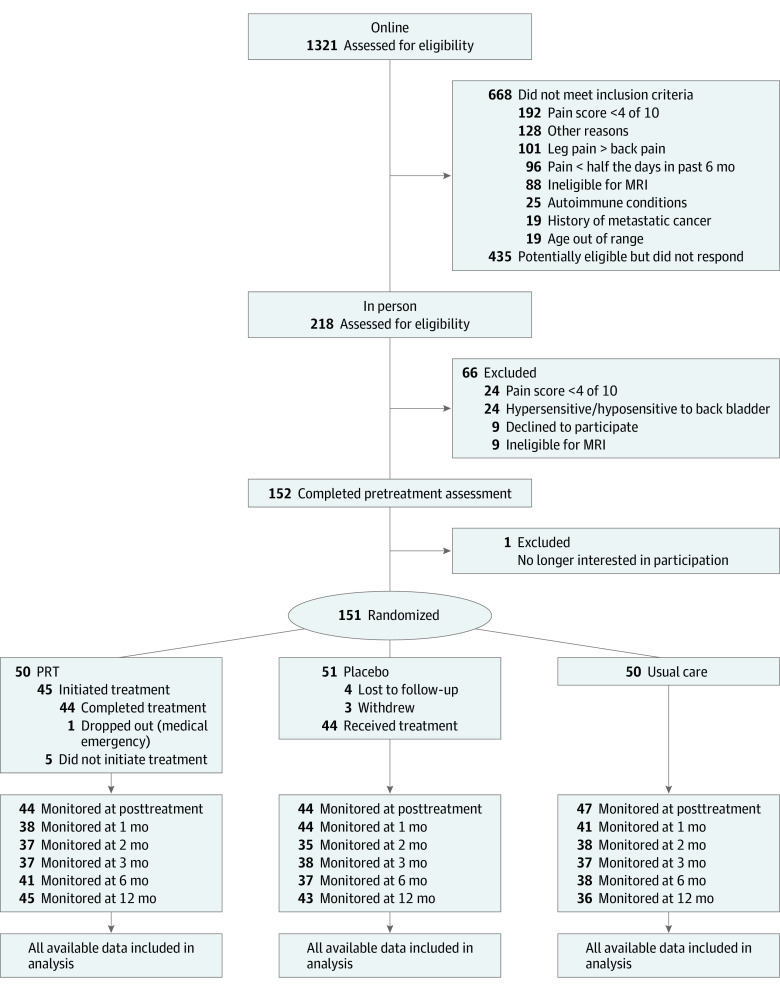
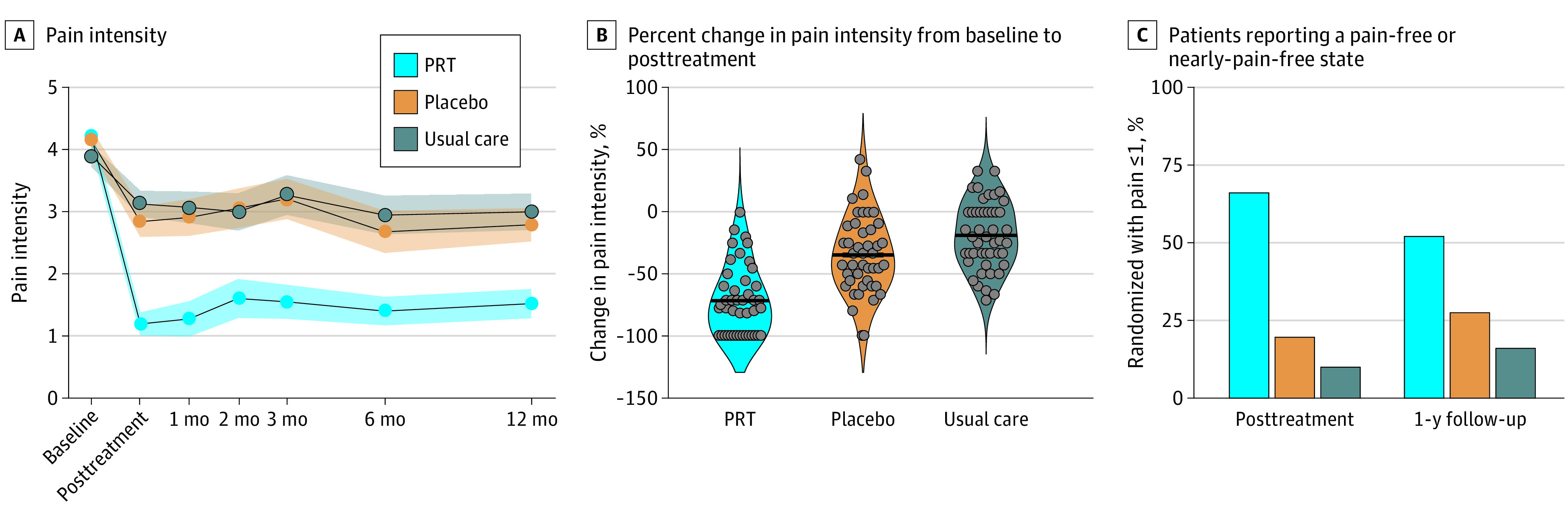
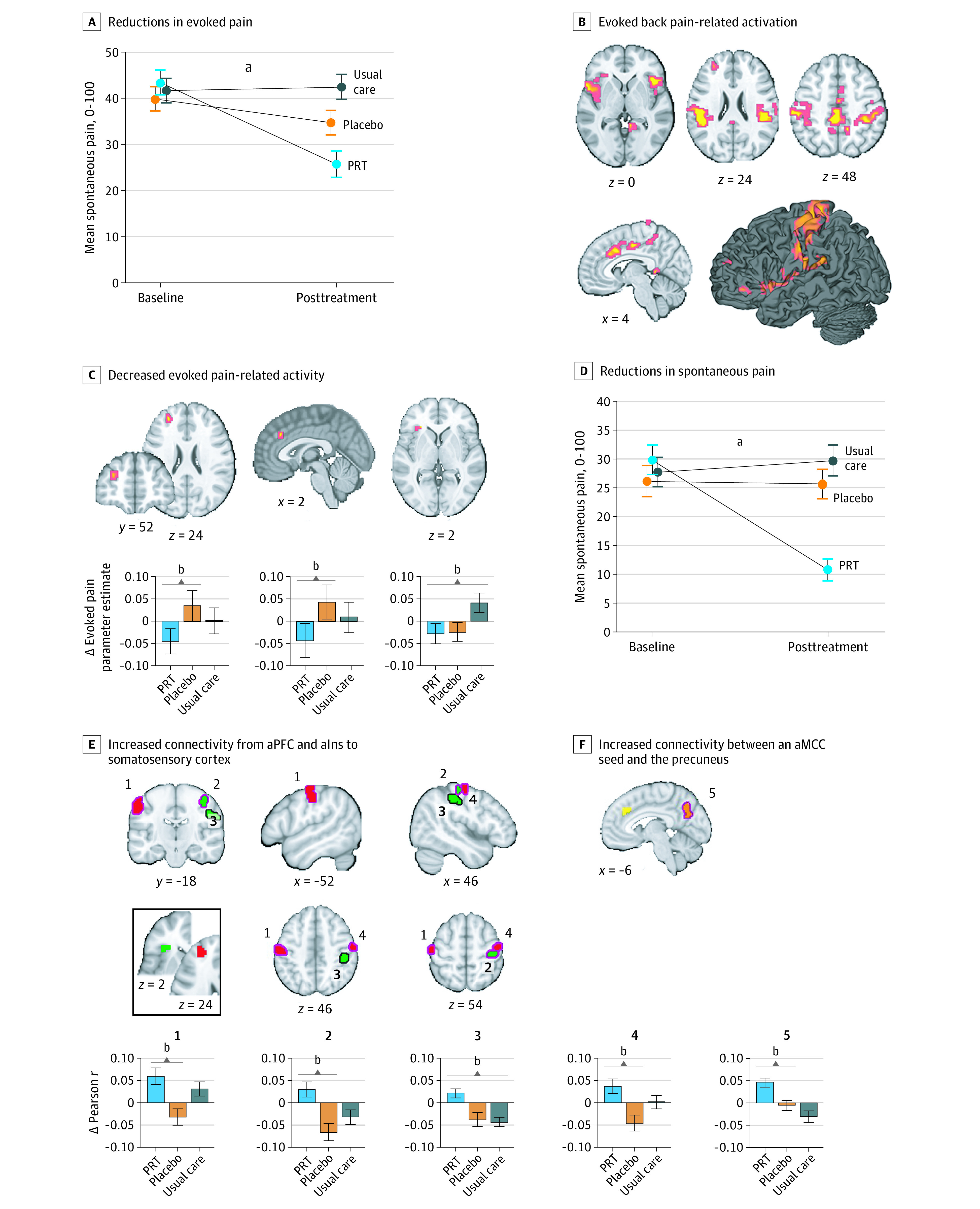
Importance: Chronic back pain (CBP) is a leading cause of disability, and treatment is often ineffective. Approximately 85% of cases are primary CBP, for which peripheral etiology cannot be identified, and maintenance factors include fear, avoidance, and beliefs that pain indicates injury. Objective: To test whether a psychological treatment (pain reprocessing therapy [PRT]) aiming to shift patients' beliefs about the causes and threat value of pain provides substantial and durable pain relief from primary CBP and to investigate treatment mechanisms. Design, Setting, and Participants: This randomized clinical trial with longitudinal functional magnetic resonance imaging (fMRI) and 1-year follow-up assessment was conducted in a university research setting from November 2017 to August 2018, with 1-year follow-up completed by November 2019. Clinical and fMRI data were analyzed from January 2019 to August 2020. The study compared PRT with an open-label placebo treatment and with usual care in a community sample. Interventions: Participants randomized to PRT participated in 1 telehealth session with a physician and 8 psychological treatment sessions over 4 weeks. Treatment aimed to help patients reconceptualize their pain as due to nondangerous brain activity rather than peripheral tissue injury, using a combination of cognitive, somatic, and exposure-based techniques. Participants randomized to placebo received an open-label subcutaneous saline injection in the back; participants randomized to usual care continued their routine, ongoing care. Main Outcomes and Measures: One-week mean back pain intensity score (0 to 10) at posttreatment, pain beliefs, and fMRI measures of evoked pain and resting connectivity. Results: At baseline, 151 adults (54% female; mean [SD] age, 41.1 [15.6] years) reported mean (SD) pain of low to moderate severity (mean [SD] pain intensity, 4.10 [1.26] of 10; mean [SD] disability, 23.34 [10.12] of 100) and mean (SD) pain duration of 10.0 (8.9) years. Large group differences in pain were observed at posttreatment, with a mean (SD) pain score of 1.18 (1.24) in the PRT group, 2.84 (1.64) in the placebo group, and 3.13 (1.45) in the usual care group. Hedges g was -1.14 for PRT vs placebo and -1.74 for PRT vs usual care (P < .001). Of 151 total participants, 33 of 50 participants (66%) randomized to PRT were pain-free or nearly pain-free at posttreatment (reporting a pain intensity score of 0 or 1 of 10), compared with 10 of 51 participants (20%) randomized to placebo and 5 of 50 participants (10%) randomized to usual care. Treatment effects were maintained at 1-year follow-up, with a mean (SD) pain score of 1.51 (1.59) in the PRT group, 2.79 (1.78) in the placebo group, and 3.00 (1.77) in the usual care group. Hedges g was -0.70 for PRT vs placebo (P = .001) and -1.05 for PRT vs usual care (P < .001) at 1-year follow-up. Longitudinal fMRI showed (1) reduced responses to evoked back pain in the anterior midcingulate and the anterior prefrontal cortex for PRT vs placebo; (2) reduced responses in the anterior insula for PRT vs usual care; (3) increased resting connectivity from the anterior prefrontal cortex and the anterior insula to the primary somatosensory cortex for PRT vs both control groups; and (4) increased connectivity from the anterior midcingulate to the precuneus for PRT vs usual care. Conclusions and Relevance: Psychological treatment centered on changing patients' beliefs about the causes and threat value of pain may provide substantial and durable pain relief for people with CBP. Trial Registration: ClinicalTrials.gov Identifier: NCT03294148.
Overview
The claims and statistics of this paper haven’t been checked yet.
Run the check — free, no account needed. It reads the open-access text and checks the sources it cites.
Integrity signals
Registry
Cites
Statistics
Figures
Verification
Claims the paper makes
The claims and statistics of this paper haven’t been checked yet.
Run the check — free, no account needed. It reads the open-access text and checks the sources it cites.
Claims other papers make about this one
Each is checked against this paper’s own text: does it say what the citing paper says it does?
The cited source says what the claim attributes to it.
In the citing paper
“In a study on patients with chronic lower back pain, it produced significant pain relief relative to placebo and usual care, mediated by decreased fear and threat beliefs (Ashar et al., 2022).”
From Listen to your inner body: embodied emotions in predictive neuroscience and traditional East Asian medicine (2026) · cites this paper as Ashar et al., 2022
The cited source says what the claim attributes to it.
In the citing paper
“There are highly successful therapeutic approaches, notably to chronic back pain, that proceed from this insight, engage with catastrophic thinking and give it a positive twist [22].”
From Endometriosis: patient–doctor communication and psychological counselling (2023) · cites this paper as [22]
Self-check
Percentages, sums and reported differences re-computed from the paper’s own numbers.
The self-check needs the paper’s full text.
Citations
Cites
How do you feel — now? The anterior insula and human awareness
(Bud) Craig, A. D. (2009) · Nature Reviews Neuroscience · doi:10.1038/nrn2555 · Cited by 6,657
Adler, N. E., Epel, E. S., Castellazzo, G., & Ickovics, J. R. (2000) · Health Psychology · doi:10.1037/0278-6133.19.6.586 · Cited by 5,080
Central sensitization: implications for the diagnosis and treatment of pain
Woolf, C. J. (2011) · Pain · doi:10.1016/j.pain.2010.09.030 · Cited by 4,771
What low back pain is and why we need to pay attention
Hartvigsen, J., Hancock, M. J., Kongsted, A., Louw, Q., Ferreira, M. L., Genevay, S., Hoy, D., Karppinen, J., Pransky, G., Sieper, J., et al. (2018) · The Lancet · doi:10.1016/s0140-6736(18)30480-x · Cited by 4,652
Prevalence of Chronic Pain and High-Impact Chronic Pain Among Adults — United States, 2016
Dahlhamer, J., Lucas, J., Zelaya, Nahin, R., Mackey, S., DeBar, L., Kerns, R., Von Korff, M., Porter, L., & Helmick, C. (2018) · MMWR. Morbidity and Mortality Weekly Report · doi:10.15585/mmwr.mm6736a2 · Cited by 2,598
Maher, C., Underwood, M., & Buchbinder, R. (2017) · The Lancet · doi:10.1016/s0140-6736(16)30970-9 · Cited by 2,535 · cited 5×
“Techniques included (1) providing personalized evidence for centralized pain; (2) guided reappraisal of pain sensations while seated and while engaging in feared postures or movements; (3) techniques addressing psychosocial threats (eg, difficult emotions) potentially amplifying pain; and (4) techniques to increase po…”
BackgroundMethodInfluentialThe brain basis of emotion: a meta-analytic review
Lindquist, K. A., Wager, T. D., Kober, H., Bliss-Moreau, E., & Barrett, L. F. (2012) · Behavioral and Brain Sciences · doi:10.1017/s0140525x11000446 · Cited by 2,320
Self-citationRELIEVING PAIN IN AMERICA: A BLUEPRINT FOR TRANSFORMING PREVENTION, CARE, EDUCATION, AND RESEARCH
Simon, L. S. (2012) · Journal of Pain & Palliative Care Pharmacotherapy · doi:10.3109/15360288.2012.678473 · Cited by 2,200
Cognitive and emotional control of pain and its disruption in chronic pain
Bushnell, M. C., Čeko, M., & Low, L. A. (2013) · Nature Reviews Neuroscience · doi:10.1038/nrn3516 · Cited by 2,076 · cited 1×
“Full-time (>30 h/wk) 33 (66) 26 (51) 28 (56)”
Interoceptive predictions in the brain
Barrett, L. F., & Simmons, W. K. (2015) · Nature Reviews Neuroscience · doi:10.1038/nrn3950 · Cited by 1,766 · cited 1×
“Part-time (5-30 h/wk) 10 (20) 12 (24) 13 (26)”
Research works printed but not linked: 1
- Schubiner, 2010, Unlearn Your Pain
Cited by
Sorted by citations
Items 301–330 of 330
Conceptualizing and treating the polytrauma clinical triad as a complex chronic pain syndrome
Manhapra, A., Kennedy, E., Cifu, D. X., Miles, S. R., & Pugh, M. J. (2026) · Frontiers in Neurology · doi:10.3389/fneur.2026.1752206
Gessl, I. (2026) · rheuma plus · doi:10.1007/s12688-026-00997-7
Feng, X., Zhou, Y., Yang, Y., Peng, J., Zhang, H., & Zhu, J. (2026) · Medicine · doi:10.1097/md.0000000000049900
“[1,2] Notably, pain substantially impairs patients’ quality of life and is associated with healthcare expenditures that exceed those of heart disease and cancer, thereby imposing a significant economic burden on both families and society.”
Applying Pain Science to Voice Care
Wodzak, J. (2026) · Perspectives of the ASHA Special Interest Groups · doi:10.1044/2026_persp-25-00291
Yanai, Y., Gefen-Doron, D., Sivan-Speier, K., Ohry, A., & Gimmon, Y. (2026) · Journal of Head Trauma Rehabilitation · doi:10.1097/htr.0000000000001201
Rethinking chronic pain in the emergency department: a threat reduction approach to care
Allen, M. A. (2026) · Canadian Journal of Emergency Medicine · doi:10.1007/s43678-026-01246-8
Newell, D., Segal, S., Rossettini, G., O’Neill, S. F. D., Lothe-Raven, T., Lothe, L. R., Weiniger, S., du Rose, A., Beira, B., Walker, K., et al. (2026) · Chiropractic & Manual Therapies · doi:10.1186/s12998-026-00669-5
“…way of interpreting well-recognised clinical observations, including why pain may persist in the absence of clear pathology, why reassurance [146] and biopsychosocial approaches [8, 16] can reduce symptoms, and why therapeutic alliance [2, 100, 111, 147] and context [3, 46] can influence outcomes.”
Caring for the Patient with Chronic Pain
Louw, W. F., & Rabago, D. (2026) · Springer eBooks · doi:10.1007/978-1-4939-0779-3_68-3
Harte, S. E., Arnold, L. M., Ichesco, E., Peltier, S., Cecil, K. M., Kaplan, C. M., Pluimer, B. R., Sridhar, A., Larkin, T. E., Schrepf, A., et al. (2026) · PAIN Reports · doi:10.1097/pr9.0000000000001489
“5 The mPFC is also a component of the DMN and may contribute to psychological comorbidities associated with chronic pain.”
Jenssen, M. D. K., Fors, E. A., Berntsen, G., Fagerlund, A. J., Bellika, J. G., & Godtliebsen, F. (2026) · Applied Sciences · doi:10.3390/app16168209
Neumann, A., Longo, J., De, E., Schrepf, A., Kelly, A. G., & McKernan, L. C. (2026) · Current Bladder Dysfunction Reports · doi:10.1007/s11884-026-00824-x
“In a JAMA Psychiatry RCT, 73% of chronic back pain patients were pain-free or nearly pain-free after PRT, with effects lasting at one year [66 ].”
InfluentialGive patients their lives back
Rème, S. E., Landmark, L., Asprusten, T. T., Suvatne, C., Herner, L. B., Drivenes, E., Carlsson, E. R., Sharma-Bakkevig, J., Pahle, A. S., Alme, T. N., et al. (2026) · Tidsskrift for Den norske legeforening · doi:10.4045/tidsskr.26.0480
Beyond Bayesian integration: how meaning shapes placebo effects
Wiech, K., Eippert, F., Jensen, K. B., Vase, L., & Bingel, U. (2026) · Trends in Neurosciences · doi:10.1016/j.tins.2026.07.005
Bueter, A., & Nielsen, T. H. (2026) · Philosophy of Medicine · doi:10.5195/pom.2026.272
Virtual Reality Induced Awe in Chronic Low Back Pain: A Mixed-Methods Study
Tillery, E., Kang, L. C., Shah, M., Raney, A. A., Won, A. S., Mancuso, V., Vorensky, M., Shum, C., & Trost, Z. (2026) · Behavioral Sciences · doi:10.3390/bs16091524
“Accordingly, effective interventions in chronic pain explicitly aim to overcome this fearful, protective state (Ashar et al., 2022).”
Errors in Language and Logic Call for Epistemic Discipline
Cohen, M. L., & Quintner, J. L. (2026) · Springer eBooks · doi:10.1007/978-981-92-1682-6_8
A hierarchical framework for nociplastic pain mechanisms
Zanos, P., Michael, A., Faidonos, N., & Papacharalambous, C. (2026) · Neuroscience & Biobehavioral Reviews · doi:10.1016/j.neubiorev.2026.106947
Tan, X.-X., Chen, Y., Dai, H., Gao, Y., Ang, Y., Yao, J., Lili, Q., Wang, J., & Sun, J. (2026) · Neurochemistry International · doi:10.1016/j.neuint.2026.106257
Wei, J., Guan, Z., Long, Y., Huang, D., Zhao, Y., & Xiao, C. (2026) · Frontiers in Immunology · doi:10.3389/fimmu.2026.1926648
Venter, M., Hodgins, M., Wand, B. M., Bagg, M. K., Leake, H. B., Rizzo, R. R. N., Mouatt, B., BRAITHWAITE, F., Marsh, S., Stanton, T. R., et al. (2026) · Pain · doi:10.1097/j.pain.0000000000004115
Hermes, M., Schmidt, H., Beiner, E., Renz, M. P., Vock, S., Karabulut, S., Şahin-Çevik, D., Meyer‐Lindenberg, A., Wieland, S., Tesarz, J., et al. (2026) · Frontiers in Psychology · doi:10.3389/fpsyg.2026.1884214
Clinical Neuroplasticity in Integrative Primary Care
Takahashi, J. B. (2026) · Primary Care Clinics in Office Practice · doi:10.1016/j.pop.2026.07.010
Sarno, D. L., Fogarty, A. E. C., & Fast, A. (2026) · Elsevier eBooks · doi:10.1016/b978-0-443-23516-0.00005-2
The Role of Behavioral and Psychological Interventions in Chronic Ocular Pain
Amin, R. S., Haddad, E. N., Gopalakrishnan, R., McCormick, S., Tankha, P., Davin, S. A., & Sayegh, R. R. (2026) · Current Pain and Headache Reports · doi:10.1007/s11916-026-01565-6
“Pain Reprocessing Therapy (PRT) is a relatively new, evidence-based psychological treatment developed for primary chronic pain, particularly pain maintained by maladaptive central nervous system processing rather than ongoing tissue injury [101–103].”
Crouch, T. B., Chase, S. O., Redman, T., Wells, M. J., Ashar, Y. K., Schubiner, H. H., Maxwell, M., Popoff, E. E., Chelimsky, G. G., & Chelimsky, T. C. (2026) · Research Square · doi:10.21203/rs.3.rs-11010997/v1
Self-citationUpdating our model of pain: low back pain through the lens of active inference
Travers, M. J., Gibson, W., Palsson, T. S., Stanton, T. R., McAuley, J. H., Schneider, L., Moloney, N. A., Thacker, M. A., & Wand, B. M. (2026) · Journal of physiotherapy · doi:10.1016/j.jphys.2026.08.010
Deurman, C., Brinkman, V., Slagboom, N., Jet, B., & Vos, H. (2026) · SSM - Qualitative Research in Health · doi:10.1016/j.ssmqr.2026.100884
Esteves, J. E., Rossettini, G., Cerritelli, F., Cook, C. E., Cormack, B., Newell, D., Palese, A., Friston, K. J., & Thacker, M. (2026) · Musculoskeletal Science and Practice · doi:10.1016/j.msksp.2026.103673
Redefining chronic pain models: What should we model?
Arai, Y., & Koyama, Y. (2026) · Neuroscience & Biobehavioral Reviews · doi:10.1016/j.neubiorev.2026.107060
Jacobsen, H. B., & Rème, S. E. (2026) · Frontiers in Psychology · doi:10.3389/fpsyg.2026.1881081
Metadata
- Authors
- Ashar, Y. K., Gordon, A., Schubiner, H., Uipi, C., Knight, K., Anderson, Z., Carlisle, J., Polisky, L., Geuter, S., Flood, T. F., Kragel, P. A., Dimidjian, S., Lumley, M. A., & Wager, T. D.
- Affiliations
- University of Colorado Boulder (US)
- Pain Psychology Center, Los Angeles, California
- Ascension Providence Hospital (US)
- Panorama Orthopedics and Spine Center, Golden, Colorado
- Northwestern University (US)
- Johns Hopkins University (US)
- Brigham and Women's Hospital (US)
- Emory University (US)
- Wayne State University (US)
- Dartmouth College (US)
- Corresponding author
- Ashar, Yoni K.
- Wager, Tor D.
- ORCID
- Venue
- JAMA Psychiatry
- Publisher
- American Medical Association (AMA)
- Published
- 2022-01-01
- Volume
- 79
- Issue
- 1
- Pages
- 13
- ISSN
- 2168-622X (ISSN-L)
- PMC
- PMC8482298
- OpenAlex
- W3204387157
- Cited by
- 331
- References
- 82
- Citations by year
- 2026: 87 · 2025: 80 · 2024: 85 · 2023: 45 · 2022: 32
- FWCI
- 23.94
- Type
- journal article
- Language
- en
- Open access
- hybrid
- doi.org
- Licence
- cc-by
- Locations
- JAMA Psychiatry (publishedVersion, cc-by)
- PubMed Central (publishedVersion, cc-by)
- PubMed (publishedVersion)
- Funders
- Deutsche Forschungsgemeinschaft
- National Institutes of Health (TL1TR002386)
- National Institute of Mental Health (R01MH076136)
- National Institute on Drug Abuse (R01DA035484)
- National Center for Advancing Translational Sciences
- Topics
- Health Sciences › Health Professions › Physical Therapy, Sports Therapy and Rehabilitation › Musculoskeletal pain and rehabilitation
- Health Sciences › Medicine › Anesthesiology and Pain Medicine › Pain Management and Treatment
- Life Sciences › Neuroscience › Cognitive Neuroscience › Pain Management and Placebo Effect
- Keywords
- chronic back pain, pain beliefs, fear avoidance, placebo effect, psychological intervention, telemedicine, evoked pain, resting-state functional connectivity, therapeutic mechanisms, pain intensity, disability, treatment durability, fear-avoidance beliefs, pain catastrophizing, pain-related guilt, pain-related shame, pain-related hopelessness
- MeSH terms
- Adult, Back Pain, Disability Evaluation, Female, Humans, Male, Middle Aged, Pain, Treatment Outcome, Pain Management
About these checks
Registry, retraction, Cites and statistics results are computed, not judged, with one exception: a printed reference that no index lists is read once by a model before it counts as a citation error. Claims are extracted by a model and kept only when their quote appears verbatim in the text; each cited source is then checked, with a model’s help, for whether it says what the claim relies on. Those verdicts can be wrong — read the claim’s quote and the cited source before relying on one.
Statistics and arithmetic are recomputed, not judged.
Confidence bands are shown only for fields calibrated on our annotated test set. None is calibrated yet, so no band is shown.
What counts as a claim ›How we measure confidence ›How we check this ›
Are you an author, or do you see a problem with this page? Request a review
