

The DOI matches its Crossref record; 75 of the 82 references it cites were found in a registry or an index, and 2 are not checked yet.
Effect of Pain Reprocessing Therapy vs Placebo and Usual Care for Patients With Chronic Back Pain: A Randomized Clinical Trial
Open accessAbstract
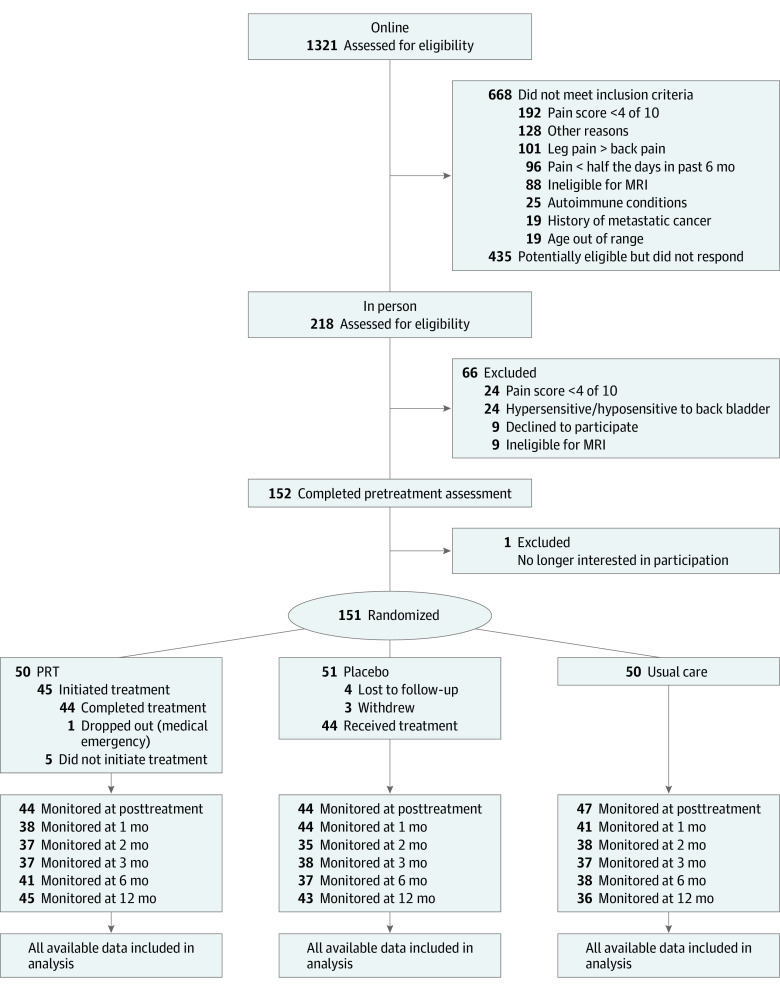
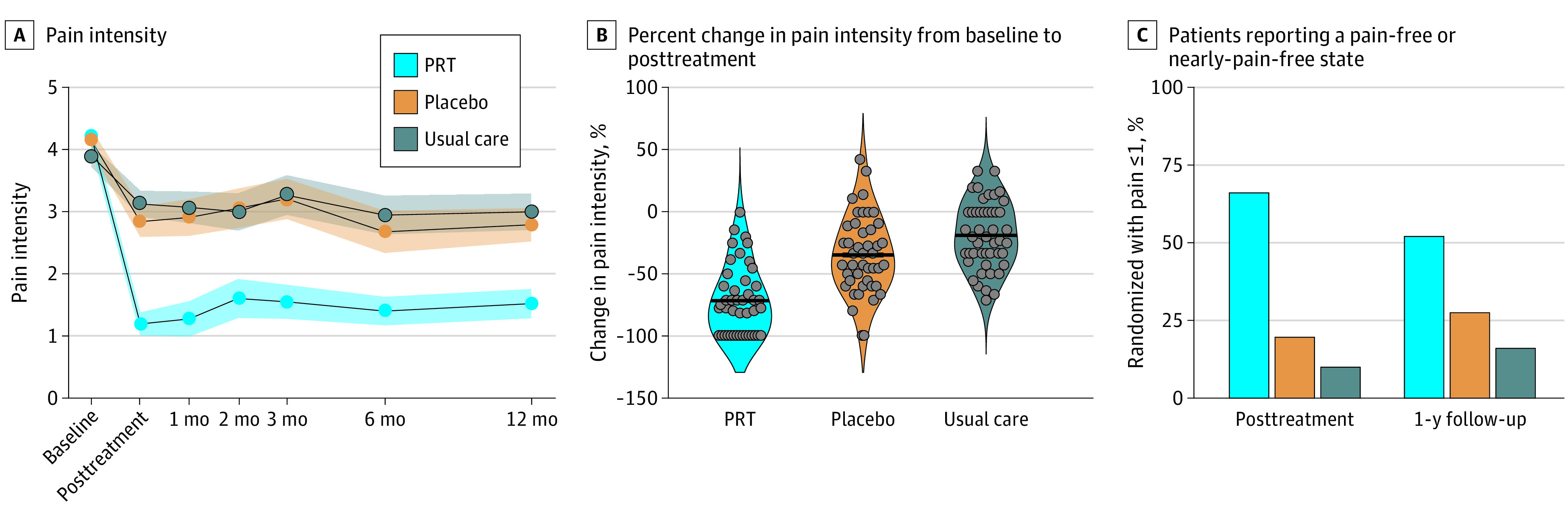
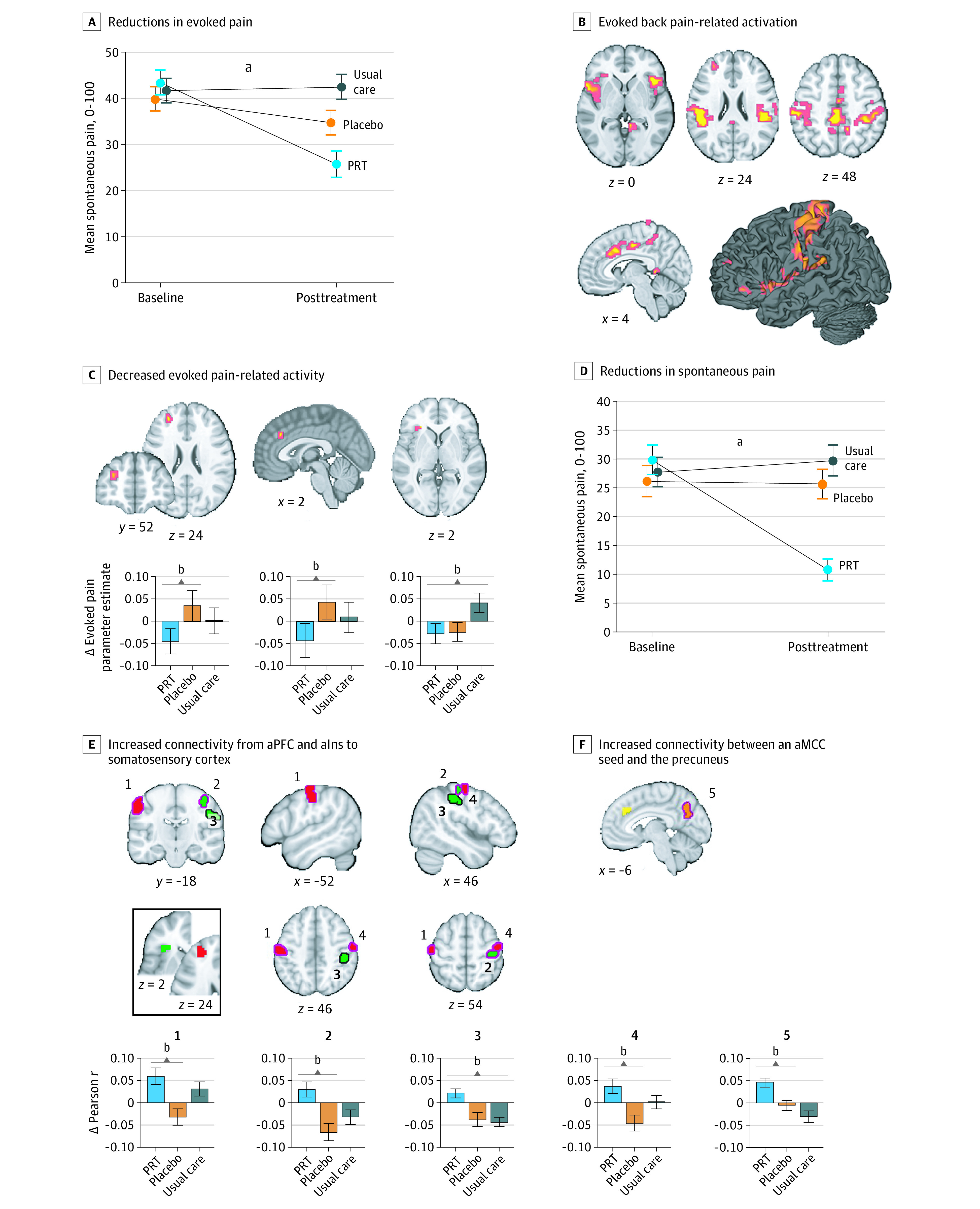
Importance: Chronic back pain (CBP) is a leading cause of disability, and treatment is often ineffective. Approximately 85% of cases are primary CBP, for which peripheral etiology cannot be identified, and maintenance factors include fear, avoidance, and beliefs that pain indicates injury. Objective: To test whether a psychological treatment (pain reprocessing therapy [PRT]) aiming to shift patients' beliefs about the causes and threat value of pain provides substantial and durable pain relief from primary CBP and to investigate treatment mechanisms. Design, Setting, and Participants: This randomized clinical trial with longitudinal functional magnetic resonance imaging (fMRI) and 1-year follow-up assessment was conducted in a university research setting from November 2017 to August 2018, with 1-year follow-up completed by November 2019. Clinical and fMRI data were analyzed from January 2019 to August 2020. The study compared PRT with an open-label placebo treatment and with usual care in a community sample. Interventions: Participants randomized to PRT participated in 1 telehealth session with a physician and 8 psychological treatment sessions over 4 weeks. Treatment aimed to help patients reconceptualize their pain as due to nondangerous brain activity rather than peripheral tissue injury, using a combination of cognitive, somatic, and exposure-based techniques. Participants randomized to placebo received an open-label subcutaneous saline injection in the back; participants randomized to usual care continued their routine, ongoing care. Main Outcomes and Measures: One-week mean back pain intensity score (0 to 10) at posttreatment, pain beliefs, and fMRI measures of evoked pain and resting connectivity. Results: At baseline, 151 adults (54% female; mean [SD] age, 41.1 [15.6] years) reported mean (SD) pain of low to moderate severity (mean [SD] pain intensity, 4.10 [1.26] of 10; mean [SD] disability, 23.34 [10.12] of 100) and mean (SD) pain duration of 10.0 (8.9) years. Large group differences in pain were observed at posttreatment, with a mean (SD) pain score of 1.18 (1.24) in the PRT group, 2.84 (1.64) in the placebo group, and 3.13 (1.45) in the usual care group. Hedges g was -1.14 for PRT vs placebo and -1.74 for PRT vs usual care (P < .001). Of 151 total participants, 33 of 50 participants (66%) randomized to PRT were pain-free or nearly pain-free at posttreatment (reporting a pain intensity score of 0 or 1 of 10), compared with 10 of 51 participants (20%) randomized to placebo and 5 of 50 participants (10%) randomized to usual care. Treatment effects were maintained at 1-year follow-up, with a mean (SD) pain score of 1.51 (1.59) in the PRT group, 2.79 (1.78) in the placebo group, and 3.00 (1.77) in the usual care group. Hedges g was -0.70 for PRT vs placebo (P = .001) and -1.05 for PRT vs usual care (P < .001) at 1-year follow-up. Longitudinal fMRI showed (1) reduced responses to evoked back pain in the anterior midcingulate and the anterior prefrontal cortex for PRT vs placebo; (2) reduced responses in the anterior insula for PRT vs usual care; (3) increased resting connectivity from the anterior prefrontal cortex and the anterior insula to the primary somatosensory cortex for PRT vs both control groups; and (4) increased connectivity from the anterior midcingulate to the precuneus for PRT vs usual care. Conclusions and Relevance: Psychological treatment centered on changing patients' beliefs about the causes and threat value of pain may provide substantial and durable pain relief for people with CBP. Trial Registration: ClinicalTrials.gov Identifier: NCT03294148.
Overview
The claims and statistics of this paper haven’t been checked yet.
Run the check — free, no account needed. It reads the open-access text and checks the sources it cites.
Integrity signals
Registry
Cites
Statistics
Figures
Verification
Claims the paper makes
The claims and statistics of this paper haven’t been checked yet.
Run the check — free, no account needed. It reads the open-access text and checks the sources it cites.
Claims other papers make about this one
Each is checked against this paper’s own text: does it say what the citing paper says it does?
The cited source says what the claim attributes to it.
In the citing paper
“In a study on patients with chronic lower back pain, it produced significant pain relief relative to placebo and usual care, mediated by decreased fear and threat beliefs (Ashar et al., 2022).”
From Listen to your inner body: embodied emotions in predictive neuroscience and traditional East Asian medicine (2026) · cites this paper as Ashar et al., 2022
The cited source says what the claim attributes to it.
In the citing paper
“There are highly successful therapeutic approaches, notably to chronic back pain, that proceed from this insight, engage with catastrophic thinking and give it a positive twist [22].”
From Endometriosis: patient–doctor communication and psychological counselling (2023) · cites this paper as [22]
Self-check
Percentages, sums and reported differences re-computed from the paper’s own numbers.
The self-check needs the paper’s full text.
Citations
Cites
How do you feel — now? The anterior insula and human awareness
(Bud) Craig, A. D. (2009) · Nature Reviews Neuroscience · doi:10.1038/nrn2555 · Cited by 6,657
Adler, N. E., Epel, E. S., Castellazzo, G., & Ickovics, J. R. (2000) · Health Psychology · doi:10.1037/0278-6133.19.6.586 · Cited by 5,080
Central sensitization: implications for the diagnosis and treatment of pain
Woolf, C. J. (2011) · Pain · doi:10.1016/j.pain.2010.09.030 · Cited by 4,771
What low back pain is and why we need to pay attention
Hartvigsen, J., Hancock, M. J., Kongsted, A., Louw, Q., Ferreira, M. L., Genevay, S., Hoy, D., Karppinen, J., Pransky, G., Sieper, J., et al. (2018) · The Lancet · doi:10.1016/s0140-6736(18)30480-x · Cited by 4,652
Prevalence of Chronic Pain and High-Impact Chronic Pain Among Adults — United States, 2016
Dahlhamer, J., Lucas, J., Zelaya, Nahin, R., Mackey, S., DeBar, L., Kerns, R., Von Korff, M., Porter, L., & Helmick, C. (2018) · MMWR. Morbidity and Mortality Weekly Report · doi:10.15585/mmwr.mm6736a2 · Cited by 2,598
Maher, C., Underwood, M., & Buchbinder, R. (2017) · The Lancet · doi:10.1016/s0140-6736(16)30970-9 · Cited by 2,535 · cited 5×
“Techniques included (1) providing personalized evidence for centralized pain; (2) guided reappraisal of pain sensations while seated and while engaging in feared postures or movements; (3) techniques addressing psychosocial threats (eg, difficult emotions) potentially amplifying pain; and (4) techniques to increase po…”
BackgroundMethodInfluentialThe brain basis of emotion: a meta-analytic review
Lindquist, K. A., Wager, T. D., Kober, H., Bliss-Moreau, E., & Barrett, L. F. (2012) · Behavioral and Brain Sciences · doi:10.1017/s0140525x11000446 · Cited by 2,320
Self-citationRELIEVING PAIN IN AMERICA: A BLUEPRINT FOR TRANSFORMING PREVENTION, CARE, EDUCATION, AND RESEARCH
Simon, L. S. (2012) · Journal of Pain & Palliative Care Pharmacotherapy · doi:10.3109/15360288.2012.678473 · Cited by 2,200
Cognitive and emotional control of pain and its disruption in chronic pain
Bushnell, M. C., Čeko, M., & Low, L. A. (2013) · Nature Reviews Neuroscience · doi:10.1038/nrn3516 · Cited by 2,076 · cited 1×
“Full-time (>30 h/wk) 33 (66) 26 (51) 28 (56)”
Interoceptive predictions in the brain
Barrett, L. F., & Simmons, W. K. (2015) · Nature Reviews Neuroscience · doi:10.1038/nrn3950 · Cited by 1,766 · cited 1×
“Part-time (5-30 h/wk) 10 (20) 12 (24) 13 (26)”
Research works printed but not linked: 1
- Schubiner, 2010, Unlearn Your Pain
Cited by
Sorted by citations
Items 101–200 of 330
The neuroscience of itch in relation to transdiagnostic psychological approaches
Kim, J. J., & Day, M. A. (2024) · Scientific Reports · doi:10.1038/s41598-024-69973-5 · Cited by 7
“…is included as a treatment rational in educational interventions 76 , cognitive-behavioural therapy 77 , and mindfulness-based cognitive therapy 78 , and emerging research is showing how changes in brain function during such treatment are driven by change in psychological processes (e.g., 79,80 ).”
BackgroundBarron, D. S., Saltoun, K., Kiesow, H., Fu, M., Cohen-Tanugi, J., Geha, P., Scheinost, D., Isaac, Z., Silbersweig, D., & Bzdok, D. (2024) · BMC Medicine · doi:10.1186/s12916-024-03807-z · Cited by 6
Jinich‐Diamant, A., Simpson, S., Zuniga-Hertz, J. P., Chitteti, R., Schilling, J. M., Bonds, J. A., Case, L. K., Chernov, A. V., Dispenza, J., Maree, J., et al. (2025) · Communications Biology · doi:10.1038/s42003-025-09088-3 · Cited by 11
Adogwa, O., Reid, M. C., Chilakapati, S. S., & Makris, U. E. (2023) · Journal of the American Geriatrics Society · doi:10.1111/jgs.18369 · Cited by 6
Chronic Pain Psychology in Neurology Practice
Serdarević, M. (2024) · Continuum · doi:10.1212/con.0000000000001471 · Cited by 4
Branco, P., Bosak, N., Vigotsky, A. D., Granovsky, Y., Yarnitsky, D., & Apkarian, A. V. (2024) · Nature Mental Health · doi:10.1038/s44220-024-00329-8 · Cited by 6
“…cognitive processes, including fear avoidance, kinesiopho-bia, and pain catastrophizing, are risk factors for the development of chronic pain in several pain conditions 36 , and their resolution through, for example, pain reprocessing therapy, shows promise for the treat-ment of chronic pain 37 .”
Ragy, S., Kahky, H. M. E., Zuelfakkar, N. M., Nassar, S. A., & Elhusseiny, R. M. (2025) · Archives of Dermatological Research · doi:10.1007/s00403-025-03820-z · Cited by 6
Yan, B., Tang, S., Zhang, Y., & Xiao, X. (2022) · Pain Medicine · doi:10.1093/pm/pnac115 · Cited by 6
Jinich‐Diamant, A., Albinni, B., Fishbein, J. N., Jacobson, E., Abraira, V. E., Hong, S., Korgan, A. C., Mazzieri, A. M., & Case, L. K. (2025) · Neuroscience & Biobehavioral Reviews · doi:10.1016/j.neubiorev.2025.106517 · Cited by 5
Intrusive Mental Imagery in Chronic Pain: Prevalence and Associations with Common Comorbidities
Watts, J. M., Blackwell, S. E., & Daniels, J. (2024) · Cognitive Therapy and Research · doi:10.1007/s10608-024-10480-2 · Cited by 5
“These sub-optimal outcomes have led not only to development of new psychological treatment approaches, such as pain reprocessing therapy (Ashar et al., 2022), but also further calls for a better understanding of the factors underlying the maintenance and treatment of chronic pain (Crofford, 2015;…”
Independent effects of transcranial direct current stimulation and social influence on pain
Dehghani, A., Bango, C. I., Murphy, E. K., Halter, R. J., & Wager, T. D. (2024) · Pain · doi:10.1097/j.pain.0000000000003338 · Cited by 5
Self-citationYang, Y., McCluskey, S. T., Bydon, M., Singh, J. R., Sheeler, R. D., Nathani, K. R., Krieger, A. C., Mehta, N. D., Weaver, J., Jia, L., et al. (2024) · North American Spine Society Journal (NASSJ) · doi:10.1016/j.xnsj.2024.100557 · Cited by 7
Sham treatment? Should it be redefined for its use in manual therapy clinical studies?
Hage, R., Demoulin, C., Puentedura, E. J., & Brismée, J. (2025) · Journal of Manual & Manipulative Therapy · doi:10.1080/10669817.2025.2448921 · Cited by 5
Flávio‐Reis, V. H. P., Pessoa‐Gonçalves, Y. M., Diaz, C. A. V., Lamoglia, A. S. A., Desidério, C. S., & Oliveira, C. J. F. (2025) · Pain Management · doi:10.1080/17581869.2025.2467025 · Cited by 5
de Lira, M. R., Meziat‐Filho, N., Silva, G. Z. M., Castro, J., Fernandez, J., Guirro, R. R. D. J., Pereira, R. B. R., & Chaves, T. C. (2025) · British Journal of Sports Medicine · doi:10.1136/bjsports-2024-109012 · Cited by 5
Loeser, J. D., & Ballantyne, J. C. (2024) · Clinical Journal of Pain · doi:10.1097/ajp.0000000000001224 · Cited by 6
Medically unexplained symptoms explained
Rème, S. E. (2024) · The Lancet · doi:10.1016/s0140-6736(24)01138-3 · Cited by 5
Belton, S., & Sheridan, K. (2025) · Health Expectations · doi:10.1111/hex.70227 · Cited by 4
Persistent Altered States: Psychological Treatment of Psychedelic Adverse Effects
Holmøy, B., & Andersen, K. A. A. (2025) · Tidsskrift for Norsk psykologforening · doi:10.52734/hgsn7664 · Cited by 4
Pain catastrophizing is associated with reduced neural response to monetary reward
Cooke, M. E., Edwards, R. R., Wheeler, G. L., Schmitt, W. A., Nielsen, L., Streck, J. M., Schuster, R. M., Potter, K. W., Evins, A. E., & Gilman, J. M. (2023) · Frontiers in Pain Research · doi:10.3389/fpain.2023.1129353 · Cited by 4
Miller-Matero, L. R. (2024) · Oxford University Press eBooks · doi:10.1093/9780197675250.003.0005 · Cited by 4
Fishbein, J. N., Malaktaris, A. L., Afari, N., & Herbert, M. S. (2024) · Journal of Pain · doi:10.1016/j.jpain.2024.104763 · Cited by 4
Oikonomou, I., & Akinosoglou, K. (2025) · Healthcare · doi:10.3390/healthcare13060677 · Cited by 7
“CLBP requires a more multidisciplinary approach, often integrating physical therapy [23], exercise [24], and cognitive-behavioral therapy [25,26] to address physical and psychosocial contributors to pain.”
Weisman, A., Yona, T., & Masharawi, Y. (2025) · PeerJ · doi:10.7717/peerj.19448 · Cited by 4
Xiao, T., Wang, Y., Zhou, C., & Yan, P. (2024) · British Journal of Hospital Medicine · doi:10.12968/hmed.2024.0450 · Cited by 4
Multimodal hypersensitivity and somatic symptoms predict adolescent postmenarchal widespread pain
Osborne, N. R., Hellman, K. M., Burda, E. M., Darnell, S. E., Singh, L., Schrepf, A., Walker, L. S., & Tu, F. F. (2025) · Pain · doi:10.1097/j.pain.0000000000003597 · Cited by 5
Preliminary study: quantification of chronic pain from physiological data
Cheng, Z., Ly, F. S., Santander, T., Turki, E., Zhao, Y., Yoo, J., Lonergan, K., Gray, J., Li, C. H., Yang, H. T. Y., et al. (2022) · PAIN Reports · doi:10.1097/pr9.0000000000001039 · Cited by 4
Frisch, S., & Gündel, H. (2022) · Journal of Psychosomatic Research · doi:10.1016/j.jpsychores.2022.111132 · Cited by 4
Trauma and Behavioral Health Care for Patients with Chronic Pain
Salahuddin, D., & Conti, T. (2022) · Primary Care - Clinics in Office Practice · doi:10.1016/j.pop.2022.04.001 · Cited by 3
Rufa, A., Brooks, G., Adams, K. R., & Dolphin, M. (2024) · Journal of Manual & Manipulative Therapy · doi:10.1080/10669817.2024.2346973 · Cited by 3
“She reports no change in symptoms in her lower extremity or low back with forward or backward bending. psychologically aimed interventions and was significantly more effective than standard care and placebo treatment for up to one year [46].”
Depression as an Independent Predictor of Incident Pain: Longitudinal Evidence From CHARLS
Song, W., Wang, S., Cao, Z., & Lin, J. (2025) · Journal of Pain Research · doi:10.2147/jpr.s551970 · Cited by 3
Exposure-based Interventions for Chronic Pain and Bodily Symptoms: A Special Interest Meeting Report
Schemer, L., Glogan, E., Sjouwerman, R., Ahm, R., Ashar, Y. K., Boddez, Y., Boersma, K., Cañeiro, J. P., Cima, R. F. F., den Hollander, M., et al. (2026) · Behaviour Research and Therapy · doi:10.1016/j.brat.2026.104998 · Cited by 3
“…placebo, and care as usual, 66% of individuals randomized to PRT were pain-free or nearly so at post-treatment, versus fewer than 20% in the control groups, with benefits largely maintained through 1-year follow-up (Ashar et al., 2022) and still evident at 5-years follow-up (Ashar et al., 2025).”
Self-citationLepping, R. J., Hoffart, C. M., Bruce, A. S., Taylor, J. M., Mardis, N., Lim, S.-L., & Wallace, D. P. (2024) · Clinical Journal of Pain · doi:10.1097/ajp.0000000000001237 · Cited by 4
“This fi nding is in line with previous studies that found greater changes in the descending pain pathway following behavioral and pharmacological treatment 39-41 and may indicate a change in the top-down modulation of the stimulation from painful to nonpainful.”
Du, H.-G., Wen, Y., Dong, J.-X., Chen, S., Jin, X., Liu, C., Ling, D.-Y., & Lv, L. (2024) · Heliyon · doi:10.1016/j.heliyon.2024.e37703 · Cited by 3
“There is currently no universally agreed upon method for determining the sample size in the field of fMRI research [16 – 18].”
MethodJiao, X., Yuan, M., Li, Q., Huang, Y., Ji, M., Li, J., Yan, S., Sun, H., Wang, X., Pan, Z., et al. (2022) · Journal of Clinical Medicine · doi:10.3390/jcm11185286 · Cited by 3
“As a cortical convergence region, the insula participates in various processes, from somatic perception to emotional conflict, receiving information directly from the spinothalamic tract [32,33].”
BackgroundCognitive Science Below the Neck: Toward an Integrative Account of Consciousness in the Body
Christov‐Moore, L., Jinich‐Diamant, A., Safron, A., Lynch, C., & Reggente, N. (2023) · Cognitive Science · doi:10.1111/cogs.13264 · Cited by 3
“…rather than physical injury nearly eliminated chronic back pain in 66% of sufferers, versus 20% (open-label placebo) and 10% (usual care) (Ashar et al., 2022), demonstrating that approaches targeting belief structures themselves may be more effective than open-label placebo (von…”
BackgroundEsposto, M., Pellicciari, L., Cecchetto, S., Chiarotto, A., Testa, M., Turolla, A., & Polli, A. (2024) · Musculoskeletal Science and Practice · doi:10.1016/j.msksp.2024.102957 · Cited by 3
Chronic pain is specifically associated with updating working memory: a longitudinal twin study
Rader, L., Wager, T. D., & Friedman, N. P. (2024) · Pain · doi:10.1097/j.pain.0000000000003347 · Cited by 3
Self-citationPain Catastrophizing: Features and Profiles in Chronic Migraine
Grazzi, L., Rizzoli, P. B., & Telesca, A. (2024) · Springer eBooks · doi:10.1007/978-3-031-32046-0_52-1 · Cited by 2
Brewer, J. R., McDermott, K. A., Greenberg, J., Presciutti, A., Camera, D. L., Ritchie, C. S., & Vranceanu, A. (2024) · Pain Management · doi:10.1080/17581869.2024.2432852 · Cited by 3
Greenlee, T. A., George, S. Z., Pickens, B., & Rhon, D. I. (2025) · Clinical Orthopaedics and Related Research · doi:10.1097/corr.0000000000003351 · Cited by 3
“Arguably, there is value in using this risk-strati fi ed approach to improve patient well-being because changes in pain beliefs have been associated with reduced psychological distress, pain, and disability in patients with LBP [1, 36, 45].”
Pain Acceptance in Adolescent Chronic Pain
Dowling, E. J., Simons, L. E., Crum, A. J., Pate, J., Chilcot, J., Laycock, H. C., Scott, W., & Heathcote, L. C. (2025) · Clinical Journal of Pain · doi:10.1097/ajp.0000000000001307 · Cited by 3
“63 Finally, the sample was recruited from a single center and mainly comprised females.”
Fabiano, N., Solmi, M., Kroenke, K., Stubbs, B., Firth, J., Gaughran, F., Machaczek, K. K., Palmer, C., & Fiedorowicz, J. G. (2026) · JCPP Advances · doi:10.1002/jcv2.70123 · Cited by 3
“…for back pain are efficacious, while psychological treatment (via pain reprocessing therapy) has demonstrated significant pain improvement, with functional MRI correlates of reduced responses to evoked back pain in the anterior midcingulate and the anterior prefrontal cortex (Ashar et al., 2022).”
Home-Use and Portable Biofeedback Lowers Anxiety and Pain in Chronic Pain Subjects
Ly, F. S., Santander, T., Pavlov, S., Zhao, J., Zhang, M., Arroyo, D., Sokolovskiy, S., Iyer, A., Yankauskas, Y., Chen, J. L., et al. (2023) · American Journal of Lifestyle Medicine · doi:10.1177/15598276231221112 · Cited by 3
Bohlen, L., Biester, A., Rapp, O., Wentzel, J., Liem, T., Cerritelli, F., & Schmidt, T. (2025) · Complementary Therapies in Clinical Practice · doi:10.1016/j.ctcp.2025.101999 · Cited by 2
Alterations in Functional Connectivity Density in Patients With Phantom Limb Pain
Liao, Y., Sang, L., Wang, Q., Li, P., Wang, L., Zhang, Y., Qiu, M., & Zhang, J. (2025) · The Journal of Comparative Neurology · doi:10.1002/cne.70058 · Cited by 2
“For example, effective psychological treatments for chronic back pain enhance connectivity from the anterior midcingulate to the PCUN (Ashar et al. 2022).”
Cardiac Vagal Control and Emotional Awareness Associated With Pain Among Breast Cancer Survivors
Harel, K., Czamanski‐Cohen, J., Cohen, M. W., Lane, R. D., Allen, J. J. B., Caspi, O., & Weihs, K. L. (2025) · Psychophysiology · doi:10.1111/psyp.70086 · Cited by 2
“…with the aim to enhance bodily interoceptive awareness and foster EA, facilitating the interpretation of bodily sensations associated with complex emotions, may be beneficial in reducing pain symptoms (Ashar et al. 2022; Calsius et al. 2016; Majore-Dusele et al. 2021; Payne and Brooks 2019).”
Pain Reprocessing Therapy for migraine: A case series
Fishbein, J. N., Schuster, N. M., Anders, A., Portera, A. M., & Herbert, M. S. (2025) · Headache The Journal of Head and Face Pain · doi:10.1111/head.15043 · Cited by 2
“14,15 Systematic investigation is needed to clarify the relationship between PRT techniques, mechanisms, and outcomes in migraine and chronic pain conditions.”
Effect Modifiers of Graded Sensorimotor Retraining for Chronic Low Back Pain
Venter, M., McAuley, J. H., Hansford, H. J., Ryan, M. L., Bagg, M. K., Wand, B. M., & Cashin, A. G. (2026) · JAMA Network Open · doi:10.1001/jamanetworkopen.2025.52787 · Cited by 2
Crouch, T. B., Nguyen, M., Wells, M., Redman, T., Ashar, Y., Schubiner, H., Westcott, G., Kinser, P., Maxwell, M., Chelimsky, G., et al. (2026) · Clinical Autonomic Research · doi:10.1007/s10286-026-01189-1 · Cited by 4
Self-citationGulyaev, D. A., Курносов, И. А., Godanyuk, D. S., Manukovsky, V. A., & Ostrovsky, V. V. (2022) · Genij Ortopedii · doi:10.18019/1028-4427-2022-28-3-410-416 · Cited by 2
Foadi, N., Winkelmann, I., Rhein, M., & Karst, M. (2022) · Der Schmerz · doi:10.1007/s00482-022-00677-3 · Cited by 2
“Dabei können schon relativ kurze Interventionen zu therapeutisch relevanten Veränderungen führen [23, 24].”
BackgroundHarvey, A. R. (2023) · Brain Behavior & Immunity - Health · doi:10.1016/j.bbih.2022.100586 · Cited by 4
Pester, B., Yamin, J. B., Cabrera, M. J., Mehta, S. M., Silverman, J. M., Grossestreuer, A. V., Howard, P., Edwards, R. R., & Donnino, M. W. (2023) · Journal of Pain Research · doi:10.2147/jpr.s416305 · Cited by 2
Marchand, S. (2024) · Springer eBooks · doi:10.1007/978-3-031-56541-0_3 · Cited by 2
Tailoring Interoceptive Exposure for Patients With Medical Comorbidities
Farris, S. G., Kibbey, M. M., Derby, L., Keller, B., Hoyt, D. L., Brinkman, H. R., Alderman, B. L., & Leyro, T. M. (2024) · Cognitive and Behavioral Practice · doi:10.1016/j.cbpra.2024.11.001 · Cited by 2
Skelly, A. C., Brodt, E., Kantner, S. N., Diulio-Nakamura, A., Mauer, K., & Shetty, K. D. (2022) · doi:10.23970/ahrqepcnoninvasivenonpharmasurveillance3 · Cited by 1
Skelly, A. C., Brodt, E., Kantner, S. N., Diulio-Nakamura, A., Mauer, K., & Shetty, K. D. (2022) · doi:10.23970/ahrqepcsurveillance2noninvasivenonpharma · Cited by 2
Rethinking chronic plantar heel pain management: moving beyond mechanical models
Rosa, M. A. B. M. V., PERSIANE, A. S., & Yi, L. C. (2025) · British Journal of Sports Medicine · doi:10.1136/bjsports-2024-109348 · Cited by 2
“6 7 This shift will help address plantar heel pain more comprehensively and mitigate negative beliefs associated with pain.”
Mindfulness-Based Interventions for Psychiatry
Ivkovic, A., Evans, S., Mirsky, P., Ashar, Y. K., & Muskin, P. R. (2024) · Tasman’s Psychiatry · doi:10.1007/978-3-030-51366-5_159 · Cited by 1
Self-citationA functional problem—on a linguistic ambiguity in dentistry
Herpel, C., Schwindling, F. S., Rammelsberg, P., & Tesarz, J. (2023) · Journal of Oral Rehabilitation · doi:10.1111/joor.13518 · Cited by 1
de Leeuw, M., Laager, M., Gaab, J., Ruppen, W., & Schneider, T. (2024) · Frontiers in Medicine · doi:10.3389/fmed.2024.1238878 · Cited by 1
Paradigms matter: why persistent pain is different and how dentists can help
Penlington, C., Durham, J., & Beecroft, E. V. (2024) · BDJ · doi:10.1038/s41415-024-7283-1 · Cited by 1
Kognitive Verhaltenstherapie mit Herzratenvariabilitäts-Biofeedback bei chronischen Schmerzen
Wünsche, S., Krempel, L., & Martin, A. (2024) · Die Psychotherapie · doi:10.1007/s00278-024-00732-7 · Cited by 1
Sullivan, M. D. (2024) · Oxford University Press eBooks · doi:10.1093/9780197675250.003.0003 · Cited by 1
Farr, E. M., Esterov, D., Kassmeyer, B. A., Lennon, R. J., & Bergquist, T. F. (2024) · Archives of Rehabilitation Research and Clinical Translation · doi:10.1016/j.arrct.2024.100409 · Cited by 1
Farris, S. G., Zvolensky, M. J., Garey, L., & Businelle, M. S. (2025) · Cognitive Behaviour Therapy · doi:10.1080/16506073.2024.2447722 · Cited by 1
“…studies of IE exclude individuals with chronic medical conditions (e.g. cardio-pulmonary conditions) or require medical evaluation and/or clearance (Ashar et al., 2022; Farris & Kibbey, 2022; Ljótsson, Atterlöf, et al., 2014; Oser et al., 2021; Särnholm et al., 2017, 2021; Smith et al., 1998;…”
Kutash, L. A., Sayer, M. A., & Delahanty, D. L. (2025) · Psychosomatic Medicine · doi:10.1097/psy.0000000000001359 · Cited by 1
“This phenomenon, grounded in neuromatrix theory, lays the foundation for contemporary interventions including pain reprocessing therapy (26) and pain neuroscience education (27), which are designed to reduce the threat value of pain.”
Patterns of Shared Genetic Risk Between Chronic Pain, Psychopathologies, and Neuroticism
Zorina-Lichtenwalter, K., Bango, C. I., Čeko, M., Ashar, Y. K., Keller, M. C., Wager, T. D., & Friedman, N. P. (2025) · Clinical Psychological Science · doi:10.1177/21677026251317431 · Cited by 3
Self-citationIntensive psychodynamische Kurzzeittherapie chronischer Schmerzen
Michal, M., Emmenegger, P.-A., & Brehm, M. (2025) · Der Schmerz · doi:10.1007/s00482-025-00884-8 · Cited by 1
Pain Reprocessing Therapy – Schmerz neu denken
Kallweit, A., & Schubiner, H. H. (2025) · Der Schmerz · doi:10.1007/s00482-025-00889-3 · Cited by 1
Self-citationSung, P. S., & Lee, D. (2025) · European Spine Journal · doi:10.1007/s00586-025-09083-6 · Cited by 1
Lajaunie, A. M., Smythe, D., Zhu, G., Sturgeon, J. A., & Pierce, J. M. (2025) · Pain Medicine · doi:10.1093/pm/pnaf091 · Cited by 1
Matheve, T., Janssens, L., Timmermans, A. A. A., Goossens, N., Danneels, L. A., Meirezonne, H., Brandt, M., & Baets, L. D. (2025) · Journal of Clinical Medicine · doi:10.3390/jcm14155328 · Cited by 1
Dyspareunia: a novel clinical approach for diagnosis based on pain mechanisms
Reichman, O., Sahar, T., & Ashar, Y. K. (2025) · Pain · doi:10.1097/j.pain.0000000000003807 · Cited by 1
Self-citationPain Catastrophizing: Features and Profiles in Chronic Migraine
Grazzi, L., Rizzoli, P. B., & Telesca, A. (2025) · Springer eBooks · doi:10.1007/978-3-031-73363-5_52 · Cited by 1
Xiong, Z., Qiu, D., Liang, J., Li, X., Guo, Z., Zhang, M., Liu, G., Gao, T., & Wang, Y. (2025) · Cephalalgia · doi:10.1177/03331024251386425 · Cited by 1
“The insula, particularly its anterior portion, plays a critical role in pain perception, emotional salience and intero-ception (35) and has been repeatedly implicated in migraine and chronic pain conditions (36,37).”
A dual-database bibliometric analysis of music-based interventions and pain from 2004 to 2024
Zou, X., Jin, Z., & Zeng, W. (2025) · Frontiers in Medicine · doi:10.3389/fmed.2025.1671234 · Cited by 1
Management of non-specific low back pain without drugs
Jones, C. M. P., Underwood, M. R., Basnet, R., Trewern, L., & Lin, C. C. (2025) · BMJ · doi:10.1136/bmj-2025-086052 · Cited by 2
Embedding expectation effects on the management of cancer pain and related symptoms: A focus review
Moss, A., Terhune, J. H., Tkaczuk, K. H. R., & Colloca, L. (2025) · Journal of Pain · doi:10.1016/j.jpain.2025.105586 · Cited by 1
Psykologisk behandling av vedvarende vansker etter bruk av psykedelika
Holmøy, B., & Andersen, K. A. A. (2025) · Tidsskrift for Norsk psykologforening · doi:10.52734/qaow7353 · Cited by 1
Ball, J. B., Finch, M. R., Taylor, J. A., Smith, Z. Z., Rocha, I. R. C., Green‐Fulgham, S. M., Rowe, E. B., Dragavon, J. M., McNulty, C. J., Dreher, R. A., et al. (2025) · Journal of Neuroscience · doi:10.1523/jneurosci.1306-25.2025 · Cited by 1
Almog, S., Weiner, M. D., Howarth, J., Becerra, J., Fux, J., & Berry, M. S. (2026) · Frontiers in Pain Research · doi:10.3389/fpain.2025.1675821 · Cited by 1
“Coaching sessions consist of a combination of methods, including Somatic Tracking within Pain Reprocessing therapy (30), Internal Family Systems therapy (31), Eye Movement Desensitization and Reprocessing [EMDR (32)], breathwork, and mindfulness meditation.”
Prediction error coding as the computational basis for nocifensive and nocifensive-like behaviors
Batsunov, A., Tugin, S., Kirasirova, L., Skobeleva, K., & Sagalajev, B. (2026) · Frontiers in Neuroscience · doi:10.3389/fnins.2026.1758337 · Cited by 1
Improving Assessment of Sexual Concerns in Interdisciplinary Chronic Pain Settings
Meltzer, K. J., & Poupore‐King, H. (2026) · Journal of Health Service Psychology · doi:10.1007/s42843-025-00141-7 · Cited by 1
“…for these presentations have used the term mind-body symptoms (Lumley & Schubiner, 2019), tension myositis or tension myoneural syndrome (first proposed by John Sarno, MD) (Sarno, 1991), and also neuroplastic pain (Ashar et al., 2022; Gordon & Ziv, 2022) to describe similar presentations.”
Wexler, R. S., Balsamo, W., Fox, D. J., ZuZero, D., Parikshak, A., Kwin, S., Ramirez, J., Thompson, A. R., Carlson, H. L., Kern, T., et al. (2026) · Mindfulness · doi:10.1007/s12671-026-02782-1 · Cited by 1
“Instead, it involves a sophisticated re-evaluation of the pain experience, consistent with previous research (Ashar et al., 2022; Schütze et al., 2010).”
Zolfaghari, N., Letafatkar, A., Rossettini, G., Villafañe, J. H., Ayed, K., Laher, I., Coso, J. D., Granacher, U., & Zouhal, H. (2026) · Pain Management · doi:10.1080/17581869.2026.2643332 · Cited by 1
Recent highlights in low back pain research, Part II: Prevention and management
Saragiotto, B. T., Shaheed, C. A., Overton, M., Hayden, J. A., Hartvigsen, J., & Pinto, R. Z. (2026) · Journal of physiotherapy · doi:10.1016/j.jphys.2026.03.002 · Cited by 1
Brain-Centered Interventions for Nociplastic Pain: From Symptom Management to Pain Resolution
Thérond, A., Yuan, C., Aiyer, R., Hasoon, J. J., Yong, R. J., Stark‐Inbar, A., Starnino, L., Kulich, R. J., & Robinson, C. L. (2026) · Current Pain and Headache Reports · doi:10.1007/s11916-026-01489-1 · Cited by 1
“PRT consists of four integrated components delivered over approximately eight sessions [ 14 ].”
InfluentialThe new generation of psychological treatments for pain: characteristics and critical appraisal
McDermott, K. A., & Keefe, F. J. (2026) · Pain · doi:10.1097/j.pain.0000000000003993 · Cited by 2
Pain reprocessing therapy in adults with chronic widespread pain: A pilot randomized clinical trial
Sit, R. W. S., Chan, C. Y.-K., Fong, H. P.-Y., Fung, C. L.-C., & Wong, S. Y. S. (2026) · Journal of Psychosomatic Research · doi:10.1016/j.jpsychores.2026.112688 · Cited by 1
Zaka, M., Mirza, U. B., Bibi, M., Bibi, A., Sheikh, A., Dars, J. A., & Raza, A. A. (2026) · Pain Management · doi:10.1080/17581869.2026.2674766 · Cited by 1
Reichert, J., Drusko, A., Beiner, E., Hermes, M., Papaioannou, V., Häuser, W., Eich, W., & Tesarz, J. (2026) · Psychotherapy and Psychosomatics · doi:10.1159/000551679 · Cited by 1
Crouch, T. B., Chelimsky, G. G., Boylan, L. E., Maxwell, M., Westcott, G., Chase, S. O., Redman, T., Burch, J., Gharbo, R. S., Wells, M. J., et al. (2026) · Frontiers in Psychology · doi:10.3389/fpsyg.2026.1829434 · Cited by 1
“This approach, which we have termed POTS Reprocessing Therapy (PORT), was adapted from Pain Reprocessing Therapy (PRT), an evidence-based treatment for centralized pain conditions, given our hypothesis that POTS represents a different manifestation of a similar functional dysregulation in the nervous system (Crouch et…”
InfluentialCarruthers, P. (2026) · Cambridge University Press eBooks · doi:10.1017/9781009506076 · Cited by 1
Wunderlich, S., López, J. E., Stoecklein, V. M., Ringel, F. A., Ricke, J., Schulz, E., & Stoecklein, S. (2026) · Journal of Pain · doi:10.1016/j.jpain.2026.106347 · Cited by 1
Psychotherapeutische Arbeit mit Angehörigen und Paaren bei psychischen und körperlichen Erkrankungen
Zimmermann, T., Wuttke, A., & Ditzen, B. (2023) · PPmP - Psychotherapie · Psychosomatik · Medizinische Psychologie · doi:10.1055/a-1841-3289 · Cited by 1
“Gerade der Fokus auf katastrophisierende Gedanken in einer „pain reprocessing therapy“ (PRT) konnte die Schmerzen bei Rückenschmerzpatient*innen deutlich reduzieren [21].”
BackgroundÄrztliche Gesprächsführung und psychologische Beratung bei Endometriose
Wischmann, T. H., & Ditzen, B. (2024) · Die Gynäkologie · doi:10.1007/s00129-024-05201-5 · Cited by 1
Polycarpou, A., Chopko, T. C., Glasgow, A. E., McCarthy, S. R. B., Hilliker, D. R., Wilder, R. T., & Klinkner, D. B. (2024) · Journal of Pediatric Surgery · doi:10.1016/j.jpedsurg.2024.02.027 · Cited by 1
Wang, R., Peng, M.-S., Wang, Y.-Z., Chen, P.-J., & Wang, X.-Q. (2024) · Depression and Anxiety · doi:10.1155/2024/9065325 · Cited by 1
Metadata
- Authors
- Ashar, Y. K., Gordon, A., Schubiner, H., Uipi, C., Knight, K., Anderson, Z., Carlisle, J., Polisky, L., Geuter, S., Flood, T. F., Kragel, P. A., Dimidjian, S., Lumley, M. A., & Wager, T. D.
- Affiliations
- University of Colorado Boulder (US)
- Pain Psychology Center, Los Angeles, California
- Ascension Providence Hospital (US)
- Panorama Orthopedics and Spine Center, Golden, Colorado
- Northwestern University (US)
- Johns Hopkins University (US)
- Brigham and Women's Hospital (US)
- Emory University (US)
- Wayne State University (US)
- Dartmouth College (US)
- Corresponding author
- Ashar, Yoni K.
- Wager, Tor D.
- ORCID
- Venue
- JAMA Psychiatry
- Publisher
- American Medical Association (AMA)
- Published
- 2022-01-01
- Volume
- 79
- Issue
- 1
- Pages
- 13
- ISSN
- 2168-622X (ISSN-L)
- PMC
- PMC8482298
- OpenAlex
- W3204387157
- Cited by
- 331
- References
- 82
- Citations by year
- 2026: 87 · 2025: 80 · 2024: 85 · 2023: 45 · 2022: 32
- FWCI
- 23.94
- Type
- journal article
- Language
- en
- Open access
- hybrid
- doi.org
- Licence
- cc-by
- Locations
- JAMA Psychiatry (publishedVersion, cc-by)
- PubMed Central (publishedVersion, cc-by)
- PubMed (publishedVersion)
- Funders
- Deutsche Forschungsgemeinschaft
- National Institutes of Health (TL1TR002386)
- National Institute of Mental Health (R01MH076136)
- National Institute on Drug Abuse (R01DA035484)
- National Center for Advancing Translational Sciences
- Topics
- Health Sciences › Health Professions › Physical Therapy, Sports Therapy and Rehabilitation › Musculoskeletal pain and rehabilitation
- Health Sciences › Medicine › Anesthesiology and Pain Medicine › Pain Management and Treatment
- Life Sciences › Neuroscience › Cognitive Neuroscience › Pain Management and Placebo Effect
- Keywords
- chronic back pain, pain beliefs, fear avoidance, placebo effect, psychological intervention, telemedicine, evoked pain, resting-state functional connectivity, therapeutic mechanisms, pain intensity, disability, treatment durability, fear-avoidance beliefs, pain catastrophizing, pain-related guilt, pain-related shame, pain-related hopelessness
- MeSH terms
- Adult, Back Pain, Disability Evaluation, Female, Humans, Male, Middle Aged, Pain, Treatment Outcome, Pain Management
About these checks
Registry, retraction, Cites and statistics results are computed, not judged, with one exception: a printed reference that no index lists is read once by a model before it counts as a citation error. Claims are extracted by a model and kept only when their quote appears verbatim in the text; each cited source is then checked, with a model’s help, for whether it says what the claim relies on. Those verdicts can be wrong — read the claim’s quote and the cited source before relying on one.
Statistics and arithmetic are recomputed, not judged.
Confidence bands are shown only for fields calibrated on our annotated test set. None is calibrated yet, so no band is shown.
What counts as a claim ›How we measure confidence ›How we check this ›
Are you an author, or do you see a problem with this page? Request a review
