

Canagliflozin reduces inflammation and fibrosis biomarkers: a potential mechanism of action for beneficial effects of SGLT2 inhibitors in diabetic kidney disease
Open accessThe DOI matches its Crossref record; 34 of the 34 references it cites were found in a registry or an index.
Abstract
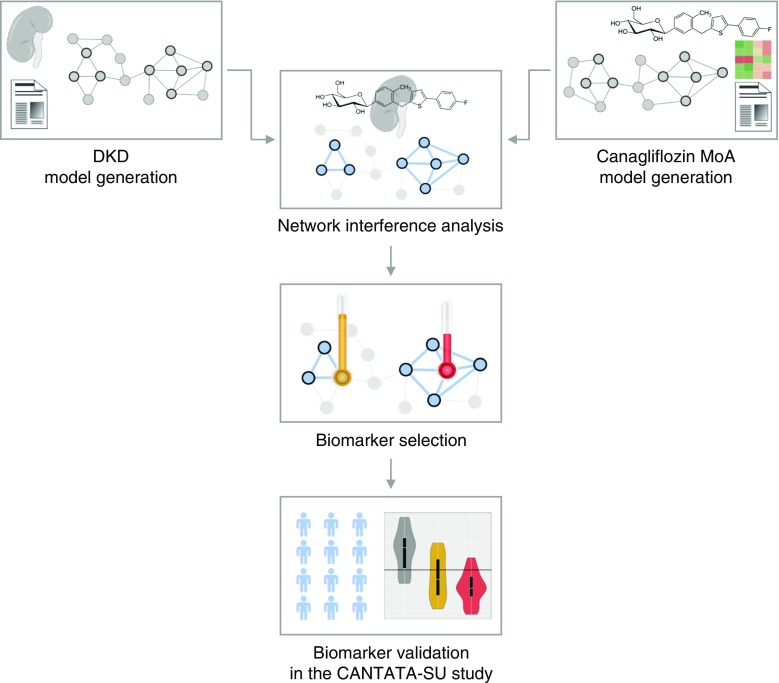
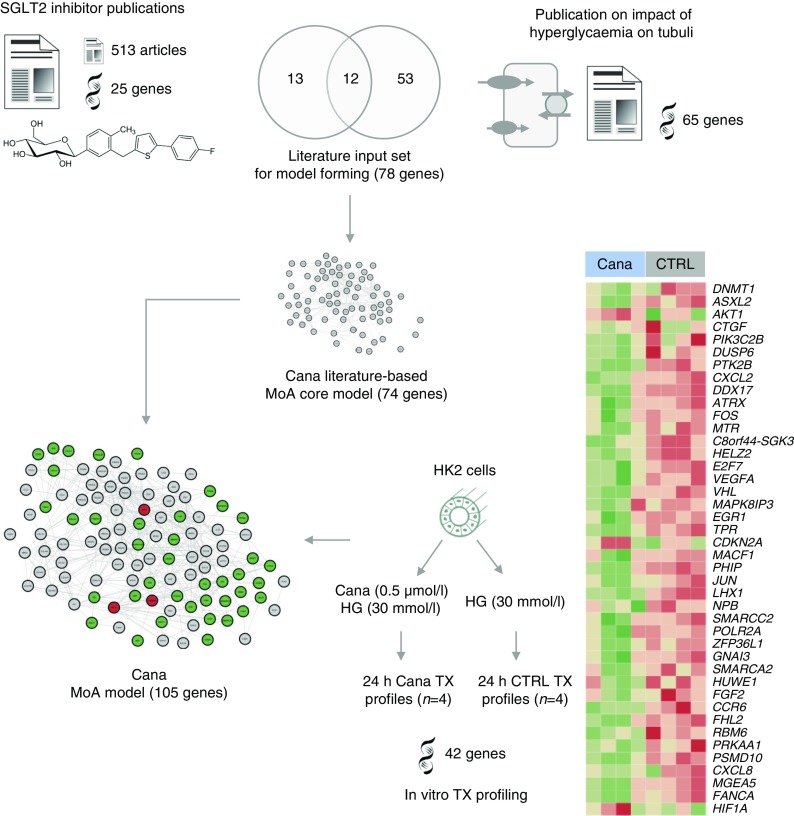
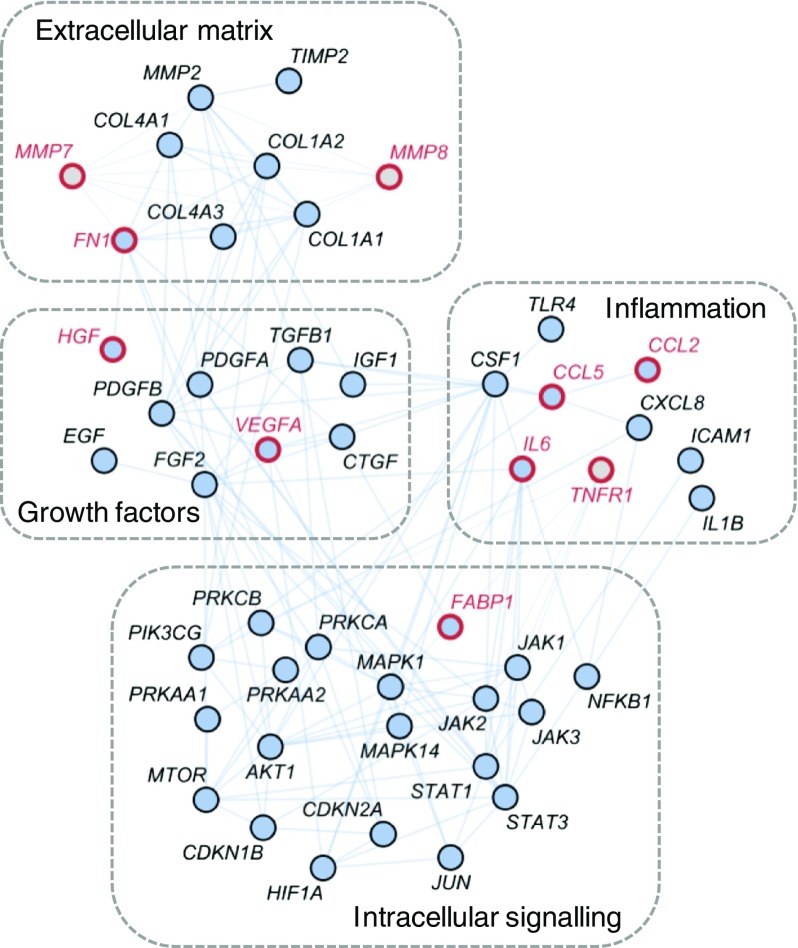
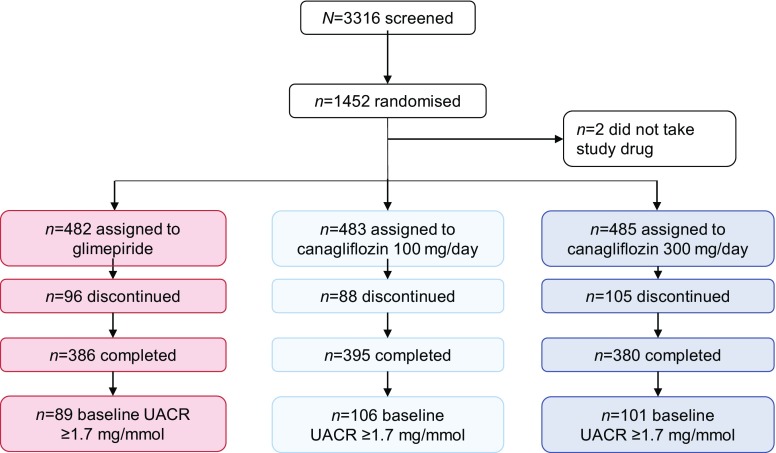
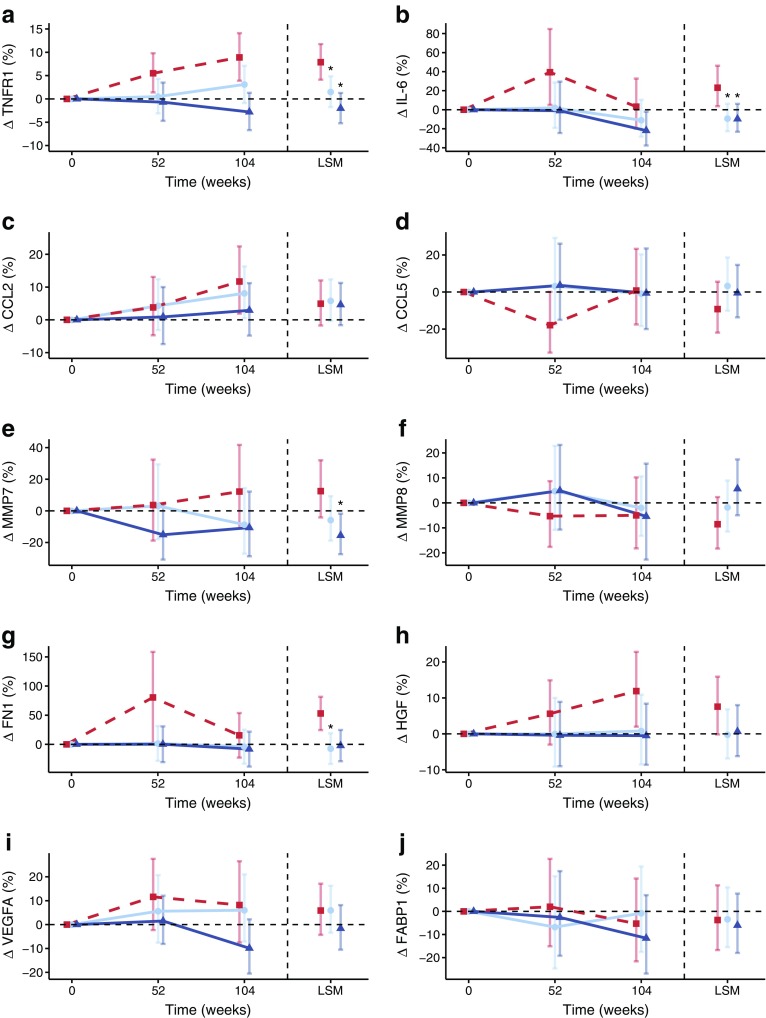
AIMS/HYPOTHESIS: The sodium-glucose cotransporter 2 (SGLT2) inhibitor canagliflozin slows progression of kidney function decline in type 2 diabetes. The aim of this study was to assess the effect of the SGLT2 inhibitor canagliflozin on biomarkers for progression of diabetic kidney disease (DKD). METHODS: A canagliflozin mechanism of action (MoA) network model was constructed based on an in vitro transcriptomics experiment in human proximal tubular cells and molecular features linked to SGLT2 inhibitors from scientific literature. This model was mapped onto an established DKD network model that describes molecular processes associated with DKD. Overlapping areas in both networks were subsequently used to select candidate biomarkers that change with canagliflozin therapy. These biomarkers were measured in 296 stored plasma samples from a previously reported 2 year clinical trial comparing canagliflozin with glimepiride. RESULTS: Forty-four proteins present in the canagliflozin MoA molecular model overlapped with proteins in the DKD network model. These proteins were considered candidates for monitoring impact of canagliflozin on DKD pathophysiology. For ten of these proteins, scientific evidence was available suggesting that they are involved in DKD progression. Of these, compared with glimepiride, canagliflozin 300 mg/day decreased plasma levels of TNF receptor 1 (TNFR1; 9.2%; p < 0.001), IL-6 (26.6%; p = 0.010), matrix metalloproteinase 7 (MMP7; 24.9%; p = 0.011) and fibronectin 1 (FN1; 14.9%; p = 0.055) during 2 years of follow-up. CONCLUSIONS/INTERPRETATION: The observed reduction in TNFR1, IL-6, MMP7 and FN1 suggests that canagliflozin contributes to reversing molecular processes related to inflammation, extracellular matrix turnover and fibrosis. Trial registration ClinicalTrials.gov NCT00968812.
Overview
The claims and statistics of this paper haven’t been checked yet.
Free: it reads the open-access text and checks the first 5 claims that cite a source we can check. Create a free account to check every claim.
Integrity signals
Registry
Cites
Statistics
Figures
Verification
Claims the paper makes
The claims and statistics of this paper haven’t been checked yet.
Free: it reads the open-access text and checks the first 5 claims that cite a source we can check. Create a free account to check every claim.
Claims other papers make about this one
Each is checked against this paper’s own text: does it say what the citing paper says it does?
The source backs part of the claim, not all of it — or backs it for a different population, condition or comparison.
In the citing paper
“Empagliflozin, dapagliflozin, canagliflozin, and ertugliflozin have shown a decrease in hospitalization for HF in their CVOTs.”
From American Association of Clinical Endocrinology Clinical Practice Guideline: Developing a Diabetes Mellitus Comprehensive Care Plan-2022 Update. (2022) · cites this paper as [444]
Experimental — accuracy not yet measuredThe source backs part of the claim, not all of it — or backs it for a different population, condition or comparison.
In the citing paper
“Empagliflozin and canagliflozin demonstrated reduction in MACE in CVOTs; empagliflozin also demonstrated decreased CV death and all-cause mortality.”
From American Association of Clinical Endocrinology Clinical Practice Guideline: Developing a Diabetes Mellitus Comprehensive Care Plan-2022 Update. (2022) · cites this paper as [444]
Experimental — accuracy not yet measuredThe source backs part of the claim, not all of it — or backs it for a different population, condition or comparison.
In the citing paper
“In humans, the serum level of IL-6 dropped by 26.6% (p = 0.010) after 2 years of canagliflozin treatment [35].”
From Neuroprotective effect of SGLT2 inhibitors. (2021) · cites this paper as [35]
Experimental — accuracy not yet measuredThe source backs part of the claim, not all of it — or backs it for a different population, condition or comparison.
In the citing paper
“Moreover, recent data support the notion that SGLT2 inhibitors reduce oxidative stress in the kidney by >50% and blunt increases in angiotensinogen as well as reduce NLRP3 inflammasome activity (100,102,103).”
From 11. Chronic Kidney Disease and Risk Management: Standards of Care in Diabetes—2026 (2026) · cites this paper as [103]
Experimental — accuracy not yet measuredThe cited source says what the claim attributes to it.
In the citing paper
“Multiple studies have shown renal and CV benefits of SGLT2is239,424–426,444,1052–1054”
From American Association of Clinical Endocrinology Clinical Practice Guideline: Developing a Diabetes Mellitus Comprehensive Care Plan-2022 Update. (2022) · cites this paper as [444]
3 more claims about this paper
Create a free account to see every claim other papers make about this one.
Self-check
Percentages, sums and reported differences re-computed from the paper’s own numbers.
The self-check needs the paper’s full text.
Citations
Cites
Canagliflozin and Cardiovascular and Renal Events in Type 2 Diabetes
Neal, B., Perkovic, V., Mahaffey, K. W., de Zeeuw, D., Fulcher, G., Erondu, N., Shaw, W., Law, G., Desai, M., & Matthews, D. R. (2017) · New England Journal of Medicine · doi:10.1056/nejmoa1611925 · Cited by 7,830
Empagliflozin and Progression of Kidney Disease in Type 2 Diabetes
Wanner, C., Inzucchi, S. E., Lachin, J. M., Fitchett, D., von Eynatten, M., Mattheus, M., Johansen, O. E., Woerle, H. J., Broedl, U. C., & Zinman, B. (2016) · New England Journal of Medicine · doi:10.1056/nejmoa1515920 · Cited by 3,655
Levey, A. S., Coresh, J., Greene, T., Marsh, J., Stevens, L. A., Kusek, J. W., Van Lente, F., & for Chronic Kidney Disease Epidemiology Collaboration (2007) · Clinical Chemistry · doi:10.1373/clinchem.2006.077180 · Cited by 1,855 · cited 1×
“Serum creatinine was used to calculate eGFR with the Modification of Diet in Renal Disease equation [20].”
MethodFox, C. S., Matsushita, K., Woodward, M., Bilo, H. J., Chalmers, J., Heerspink, H. J. L., Lee, B. J., Perkins, R. M., Rossing, P., Sairenchi, T., et al. (2012) · The Lancet · doi:10.1016/s0140-6736(12)61350-6 · Cited by 1,401
Self-citationHeerspink, H. J. L., Perkins, B. A., Fitchett, D. H., Husain, M., & Cherney, D. Z. I. (2016) · Circulation · doi:10.1161/circulationaha.116.021887 · Cited by 1,376
Self-citationKidney disease and increased mortality risk in type 2 diabetes
Afkarian, M., Sachs, M. C., Kestenbaum, B., Hirsch, I. B., Tuttle, K. R., Himmelfarb, J., & de Boer, I. H. (2013) · Journal of the American Society of Nephrology · doi:10.1681/asn.2012070718 · Cited by 1,298
Cefalu, W. T., Leiter, L. A., Yoon, K.-H., Arias, P., Niskanen, L., Xie, J., Balis, D. A., Canovatchel, W., & Meininger, G. (2013) · The Lancet · doi:10.1016/s0140-6736(13)60683-2 · Cited by 724
Sodium-Glucose Cotransport Inhibition With Dapagliflozin in Type 2 Diabetes
List, J. F., Woo, V., Morales, E., Tang, W., & Fiedorek, F. T. (2009) · Diabetes Care · doi:10.2337/dc08-1863 · Cited by 698
Pathogenesis and Treatment of Chronic Kidney Disease: A Review of Our Recent Basic and Clinical Data
Tomino, Y. (2014) · Kidney and Blood Pressure Research · doi:10.1159/000368458 · Cited by 566
Interleukin-6 Signaling Pathway and Its Role in Kidney Disease: An Update
Su, H., Lei, C.-T., & Zhang, C. (2017) · Frontiers in Immunology · doi:10.3389/fimmu.2017.00405 · Cited by 524
Cited by
Items 101–200 of 458
SGLT2 Inhibitors in Chronic Kidney Disease: From Mechanisms to Clinical Practice
Škrabić, R., Kumrić, M., Vrdoljak, J., Rušić, D., Skrabic, I., Vilović, M., Martinović, D., Duplancic, V., Kurir, T. T., & Božić, J. (2022) · Biomedicines · doi:10.3390/biomedicines10102458 · Cited by 60
Sodium-Glucose Cotransporter 2 Inhibitors and Cardiac Remodeling
Salah, H. M., Verma, S., Santos‐Gallego, C. G., Bhatt, A. S., Vaduganathan, M., Khan, M. S., Lópes, R. D., Alaref, S. J., McGuire, D. K., & Fudim, M. (2022) · Journal of Cardiovascular Translational Research · doi:10.1007/s12265-022-10220-5 · Cited by 55
The anti-inflammatory and immunological properties of SGLT-2 inhibitors
Bendotti, G., Montefusco, L. B., Pastore, I., Lazzaroni, E., Lunati, M. E., & Fiorina, P. (2023) · Journal of Endocrinological Investigation · doi:10.1007/s40618-023-02162-9 · Cited by 53
“After 2 years of follow-up, canagliflozin reduced the levels of TNFR1, IL-6/MMP7/FN1 in patients with T2D and elevated albuminuria as compared to glimepiride, independently by changes in Hb1Ac, weight, or lipids [72].”
BackgroundAvogaro, A., Fadini, G. P., & Del Prato, S. (2020) · Diabetes Care · doi:10.2337/dc19-1410 · Cited by 51
Lin, F., Song, C., Zeng, Y., Li, Y., Li, H., Liu, B., Dai, M., & Pan, P. (2020) · International Immunopharmacology · doi:10.1016/j.intimp.2020.106969 · Cited by 55
The Role of SGLT2 Inhibitors in Atherosclerosis: A Narrative Mini-Review
de Mortanges, A. P., Salvador, D., Laimer, M. W., Muka, T., Wilhelm, M., & Bano, A. (2021) · Frontiers in Pharmacology · doi:10.3389/fphar.2021.751214 · Cited by 55
Mesenchymal Stem Cell Therapy in Kidney Diseases: Potential and Challenges
Chen, F., Chen, N., Xia, C., Wang, H., Shao, L., Zhou, C., & Wang, J. (2023) · Cell Transplantation · doi:10.1177/09636897231164251 · Cited by 57
Li, X., Flynn, E. R., do Carmo, J. M., Wang, Z., da Silva, A. A., Mouton, A. J., Omoto, A. C. M., Hall, M. E., & Hall, J. E. (2022) · Frontiers in Cardiovascular Medicine · doi:10.3389/fcvm.2022.859253 · Cited by 61
Adam, C. A., Anghel, R. C., Marcu, D. T. M., Mitu, O., Roca, M., & Mitu, F. (2022) · Life · doi:10.3390/life12060803 · Cited by 53
Zannad, F. M., Ferreira, J. P., Gregson, J., Kraus, B. J., Mattheus, M., Hauske, S. J., Butler, J., Filippatos, G. S., Wanner, C., Anker, S. D., et al. (2022) · European Journal of Heart Failure · doi:10.1002/ejhf.2578 · Cited by 50
SGLT2is and Renal Protection: From Biological Mechanisms to Real-World Clinical Benefits
Leoncini, G., Russo, E., Bussalino, E., Barnini, C., Viazzi, F. C., & Pontremoli, R. (2021) · International Journal of Molecular Sciences · doi:10.3390/ijms22094441 · Cited by 49
“Several studies demonstrated that treatment with SGLT2is reduces markers of inflammation and fibrosis in proximal tubular cells [11] and in animal models [12–14].”
Liu, H., Sridhar, V. S., Lovblom, L. E., Lytvyn, Y., Burger, D. E., Burns, K. D., Brinc, D., Lawler, P. R., & Cherney, D. Z. I. (2021) · Kidney International Reports · doi:10.1016/j.ekir.2021.05.022 · Cited by 51
“In humans, Heerspink et al.11 reported that canagliflozin lowered levels of tumor necrosis factor receptor 1, interleukin-6, and fibronectin 1 in participants with T2D, suggesting an amelioration in inflammation and fibrosis with this agent.”
BackgroundAdvances in energy metabolism in renal fibrosis
Wei, X. S., Hou, Y., Long, M., Jiang, L., & Du, Y. (2022) · Life Sciences · doi:10.1016/j.lfs.2022.121033 · Cited by 45
Fan, G., & Guo, D.-L. (2023) · European Journal of Internal Medicine · doi:10.1016/j.ejim.2023.04.002 · Cited by 45
The Role of SGLT2 Inhibitors in Vascular Aging
Liu, L., Ni, Y., Zhan, J., & Liu, Y. (2021) · Aging and Disease · doi:10.14336/ad.2020.1229 · Cited by 50
“As established by prior studies, Canagliflozin can reduce the proliferation and prevent the migration of rat aortic VSMCs in a concentrationdependent manner.”
BackgroundInfluentialLipid Disorders in NAFLD and Chronic Kidney Disease
Yang, M., Geng, C., Liu, X., & Guan, M. (2021) · Biomedicines · doi:10.3390/biomedicines9101405 · Cited by 46
“In a clinical trial setting, canagliflozin treatment in individuals with diabetic kidney disease decreased the levels of inflammation and fibrosis biomarkers, including IL-6, matrix metallopeptidase 7 (MMP7) and fibronectin 1(FN1) [112].”
BackgroundSavarese, G., Butler, J., Lund, L. H., Bhatt, D. L., & Anker, S. D. (2021) · Cardiovascular Research · doi:10.1093/cvr/cvab271 · Cited by 48
MicroRNAs and their delivery in diabetic fibrosis
Wonnacott, A., Denby, L., Coward, R. J., Fraser, D. J., & Bowen, T. (2021) · Advanced Drug Delivery Reviews · doi:10.1016/j.addr.2021.114045 · Cited by 45
Recent advances in the pharmacological therapy of chronic heart failure: Evidence and guidelines
Tsutsui, H. (2022) · Pharmacology & Therapeutics · doi:10.1016/j.pharmthera.2022.108185 · Cited by 47
Rastogi, A., & Januzzi, J. L. (2023) · Journal of Clinical Medicine · doi:10.3390/jcm12082824 · Cited by 42
“Serum inflammatory markers influenced by SGLT2is are listed in Table 2 [145,146].”
BackgroundThe clinical benefits of sodium–glucose cotransporter type 2 inhibitors in people with gout
Yokose, C., McCormick, N., Abhishek, A., Dalbeth, N., Pascart, T., Lioté, F., Gaffo, A., FitzGerald, J. D., Terkeltaub, R. A., Sise, M. E., et al. (2024) · Nature Reviews Rheumatology · doi:10.1038/s41584-024-01092-x · Cited by 47
“SGLT2 inhibition has also been shown, both in vitro and in vivo, to downregulate several central pro-inflammatory mediators, including IL-6, TNF and monocyte chemoattractant protein 1 (MCP1) 106–108 .”
Costanzo, A. D., Esposito, G., Indolfi, C., & Spaccarotella, C. (2023) · International Journal of Molecular Sciences · doi:10.3390/ijms24108732 · Cited by 44
“Additionally, the observed reduction of nuclear factorκB (NFκB), monocyte chemoattractant protein-1 (MCP-1), tumor necrosis factor receptor 1 (TNFR1), interleukin-6 (IL-6), matrix metalloproteinase 7 (MMP7), and fibronectin-1 (FN1) contributes to the reversal of molecular processes related to inflammation, extracellul…”
BackgroundNaas, S., Schiffer, M., & Schödel, J. (2023) · American Journal of Physiology-Cell Physiology · doi:10.1152/ajpcell.00201.2023 · Cited by 49
Koshino, A., Neuen, B. L., Jongs, N., Pollock, C. A., Greasley, P. J., Andersson, E.-M., Hammarstedt, A., Karlsson, C., Langkilde, A. M., Wada, T., et al. (2023) · Cardiovascular Diabetology · doi:10.1186/s12933-023-02027-8 · Cited by 44
Self-citationSalman, H., Al-Zubaidy, A. A., Abbas, A. H., Hassan, D. M., & Malik, S. A. (2024) · Naunyn-Schmiedeberg s Archives of Pharmacology · doi:10.1007/s00210-024-03406-y · Cited by 50
“These findings imply that canagliflozin might possess a role in preventing inflammatory and fibrotic processes (Heerspink et al. 2019).”
Althagafy, H. S., Ali, F. E. M., Hassanein, E. H. M., Mohammedsaleh, Z. M., El-Sayed, M. I. K., Atwa, A. M., Sayed, A. M. M., & Soubh, A. A. (2023) · European Journal of Pharmacology · doi:10.1016/j.ejphar.2023.176166 · Cited by 50
McCormick, N., Yokose, C., Wei, J., Lu, N., Wexler, D. J., Aviña-Zubieta, J. A., Vera, M. A. D., Zhang, Y., & Choi, H. K. (2023) · Annals of Internal Medicine · doi:10.7326/m23-0724 · Cited by 39
Aging and atrial fibrillation: A vicious circle
Gao, P., Gao, X., Xie, B., Tse, G., & Liu, T. (2023) · International Journal of Cardiology · doi:10.1016/j.ijcard.2023.131445 · Cited by 45
SGLT2 Inhibitors and GLP-1 Receptor Agonists in Cardiovascular–Kidney–Metabolic Syndrome
Gajjar, A., Raju, A. K. V., Gajjar, A. J., Menon, M., Shah, S. A. Y., Dani, S. S., & Weinberg, A. M. (2025) · Biomedicines · doi:10.3390/biomedicines13081924 · Cited by 49
Khedr, L. H., Eladawy, R. M., Nassar, N. N., & Saad, M. A. E. (2022) · Neuropharmacology · doi:10.1016/j.neuropharm.2022.109293 · Cited by 39
Sodium-glucose cotransporter 2 inhibition: towards an indication to treat diabetic kidney disease
Górriz, J. L., Navarro‐González, J. F., Ortíz, A., Vergara, A., Núñez, J. E., Jacobs-Cachá, C., Martínez‐Castelao, A., & Soler, M. J. (2020) · Nephrology Dialysis Transplantation · doi:10.1093/ndt/gfz237 · Cited by 40
“fibronectin 1 (FN1)] that were decreased by canagliflozin, supporting the concept that SGLT2i may modulate inflammatory and fibrosis processes in DKD [31, 32].”
BackgroundSrivastava, A., Schmidt, I. M., Pálsson, R., Weins, A., Bonventre, J. V., Sabbisetti, V. S., Stillman, I. E., Rennke, H. G., & Waikar, S. S. (2021) · Kidney International Reports · doi:10.1016/j.ekir.2020.12.025 · Cited by 38
Recent advances in molecular mechanisms of acute kidney injury in patients with diabetes mellitus
Infante, B., Conserva, F., Pontrelli, P., Leo, S., Stasi, A., Fiorentino, M., Troise, D. E., Strologo, A. D., Alfieri, C., Gesualdo, L., et al. (2023) · Frontiers in Endocrinology · doi:10.3389/fendo.2022.903970 · Cited by 40
SGLT2 Inhibitors in Kidney Diseases—A Narrative Review
Gajewska, A., Wasiak, J., Sapeda, N., Młynarska, E., Rysz, J., & Franczyk, B. (2024) · International Journal of Molecular Sciences · doi:10.3390/ijms25094959 · Cited by 48
“…on biomarkers involved in DKD. Proteins were selected to facilitate the assessment of canagliflozin’s effects on DKD. Reduction in plasma levels of TNF receptor 1, matrix metalloproteinase 7, and fibronectin 1 suggests that canagliflozin may reduce fibrosis and inflammation in the kidneys [70].”
BackgroundButtice, L., Ghani, M., Suthakar, J., Gnanalingham, S., Carande, E. J., Kennedy, B. W. C., Pitcher, A., Gamble, J. H. P., Ahmad, M., Lewis, A., et al. (2024) · Diabetes Obesity and Metabolism · doi:10.1111/dom.15586 · Cited by 41
“…necrosis factor-alpha (TNF-α ), interleukin-6 (IL-6) and monocyte chemoattractant protein-1 (MCP-1) 12 in apolipoprotein E knockout mice, IL-6 and tumour necrosis factor receptor-1 (TNFR1) in human proximal tubular cells, 13 and IL-6, TNF-α and MCP-1 in mouse models of diabetic kidney disease.”
BackgroundMatrix metalloproteinases and tissue inhibitors of matrix metalloproteinases in kidney disease
Zakiyanov, O., Kalousová, M., Zima, T., & Tesař, V. (2021) · Advances in clinical chemistry · doi:10.1016/bs.acc.2021.02.003 · Cited by 42
Sen, T., Li, J., Neuen, B. L., Arnott, C. G., Neal, B., Perkovic, V., Mahaffey, K. W., Shaw, W., Canovatchel, W., Hansen, M. K., et al. (2021) · Journal of the American Heart Association · doi:10.1161/jaha.121.021661 · Cited by 35
Self-citationLi, L., Shen, Q., & Rao, S. (2022) · Therapeutics and Clinical Risk Management · doi:10.2147/tcrm.s393135 · Cited by 49
“In addition, recent studies have found that SGLT2 inhibitors can attenuate kidney inflammation by reducing the levels of inflammatory cytokines.(38) GLP-1 receptor agonists and DPP-4 inhibitors have also been shown to have renoprotective effects that may be partially related to the reduction of inflammation.”
BackgroundSodium-Glucose Cotransporter 2 Inhibitors and the Risk of Pneumonia and Septic Shock
Li, H., Tse, Y.-K., Chandramouli, C., Hon, N. W. L., Cheung, C., Lam, L.-Y., Wu, M., Huang, J.-Y., Yu, S.-Y., Leung, K. L. C., et al. (2022) · The Journal of Clinical Endocrinology & Metabolism · doi:10.1210/clinem/dgac558 · Cited by 36
Koufakis, T., Pavlidis, A. N., Metallidis, S., & Kotsa, K. (2021) · International Journal of Clinical Pharmacy · doi:10.1007/s11096-021-01256-9 · Cited by 36
Sarak, B., Verma, S., Mazer, C. D., Teoh, H., Quan, A., Gilbert, R. E., Goodman, S. G., Bami, K., Coelho‐Filho, O. R., Ahooja, V., et al. (2021) · Cardiovascular Diabetology · doi:10.1186/s12933-021-01390-8 · Cited by 38
“In diabetic kidney disease, canagliflozin was associated with attenuated or decreased levels of biomarkers that suggest an effect on molecular processes related to inflammation, the extracellular matrix and fibrosis [9].”
BackgroundMancinetti, F., Xenos, D., Fano, M. D., Mazzieri, A., Porcellati, F., Boccardi, V., & Mecocci, P. (2023) · Ageing Research Reviews · doi:10.1016/j.arr.2023.102018 · Cited by 37
Khamies, S. M., El-Yamany, M. F., & Ibrahim, S. M. (2024) · Journal of Neuroimmune Pharmacology · doi:10.1007/s11481-024-10140-y · Cited by 34
“Such results were consistent with previous studies that reported that CAN exerted anti-inflammatory effects by inhibiting the NFκB-p65 pathway in mouse lung tissue (Niu et al. 2022) and in renal extracellular matrix deregulation (Heerspink et al. 2019).”
Sharifi, Y., Payab, M., Mohammadi‐Vajari, E., Aghili, S. M. M., Sharifi, F., Mehrdad, N., Kashani, E., Shadman, Z., Larijani, B. A., & Ebrahimpur, M. (2021) · Journal of Diabetes & Metabolic Disorders · doi:10.1007/s40200-021-00822-2 · Cited by 34
Lyu, Y. S., Oh, S. K., Kim, J. H., Kim, S. Y., & Jeong, M. H. (2023) · Cardiovascular Diabetology · doi:10.1186/s12933-023-01914-4 · Cited by 36
“By dampening inflammation and oxidative stress, SGLT2i protect cardiac cells and mitigate the detrimental effects of HF [50, 52, 53].”
BackgroundFerreira, J. P., Butler, J., Anker, S. D., Januzzi, J. L., Panova‐Noeva, M., Reese‐Petersen, A. L., Sattar, N. A., Schueler, E., Pocock, S., Filippatos, G. S., et al. (2023) · European Journal of Heart Failure · doi:10.1002/ejhf.3101 · Cited by 33
“23,24 28 Still, the effect of SGLT2i on collagen turnover in HF patients has not been fully investigated.”
BackgroundSGLT2 inhibition for patients with ADPKD – closing the evidence gap
Müller, R., Guerrot, D., Chonchol, M., Schmitt, R., Uchiyama, K., Gansevoort, R. T., & Gall, É. C.-L. (2025) · Nephrology Dialysis Transplantation · doi:10.1093/ndt/gfaf061 · Cited by 35
“SGLT2i also reduce pro-inflammatory cytokines, such as interleukin-6 and tumor necrosis factor-alpha, and downregulate pathways involved in fibrosis, particularly those mediated by transforming growth factor-beta [8 –11 ].”
Pirklbauer, M., Bernd, M., Fuchs, L., Staudinger, P., Corazza, U., Leierer, J., Mayer, G. J., & Schramek, H. (2020) · International Journal of Molecular Sciences · doi:10.3390/ijms21218189 · Cited by 34
“For example, canagliflozin treatment decreased the plasma levels of biomarkers related to inflammation and fibrosis, such as tumor necrosis factor receptor 1, IL-6, matrix metalloproteinase 7 and fibronectin 1, during a two-year follow-up when analyzing samples from a clinical phase II study [42].”
BackgroundSelf-citationEmpagliflozin Inhibits IL-1β-Mediated Inflammatory Response in Human Proximal Tubular Cells
Pirklbauer, M., Sallaberger, S., Staudinger, P., Corazza, U., Leierer, J., Mayer, G. J., & Schramek, H. (2021) · International Journal of Molecular Sciences · doi:10.3390/ijms22105089 · Cited by 34
“Indeed, anti-inflammatory potential of SGLT2i has been previously demonstrated in diabetic animal [9–11] and human studies [12,13], as well as hyperglycemic cell culture models [14].”
BackgroundSelf-citationde Cos, M., Xipell, M., García‐Herrera, A., Lledó, G. M., Guillén, E., Blasco, M., Espinosa, G., Cervera, R., & Quintana, L. F. (2021) · Autoimmunity Reviews · doi:10.1016/j.autrev.2021.103014 · Cited by 33
The Anti-Inflammatory Effect of Novel Antidiabetic Agents
Theofilis, P., Sagris, Μ., Oikonomou, E. K., Antonopoulos, A. S., Siasos, G., Tsioufis, K., & Tousoulis, D. (2022) · Life · doi:10.3390/life12111829 · Cited by 35
Recent advances in pharmacological treatment of heart failure
Iacoviello, M., Palazzuoli, A., & Gronda, E. (2021) · European Journal of Clinical Investigation · doi:10.1111/eci.13624 · Cited by 39
Morsy, M. A., Khalaf, H. M., Rifaai, R. A., Bayoumi, A. M. A., Khalifa, E. M. M. A., & Ibrahim, Y. F. (2021) · Biomedicine & Pharmacotherapy · doi:10.1016/j.biopha.2021.111902 · Cited by 33
SGLT2 Inhibitors in the Treatment of Diabetic Kidney Disease: More than Just Glucose Regulation
Klen, J., & Dolžan, V. (2023) · Pharmaceutics · doi:10.3390/pharmaceutics15071995 · Cited by 38
GLP-1 Analogs, SGLT-2, and DPP-4 Inhibitors: A Triad of Hope for Alzheimer’s Disease Therapy
Złotek, M., Kurowska, A., Herbet, M., & Piątkowska‐Chmiel, I. (2023) · Biomedicines · doi:10.3390/biomedicines11113035 · Cited by 32
Early combination therapy with SGLT2i and GLP ‐1 RA or dual GIP / GLP ‐1 RA in type 2 diabetes
Vale, C., Lourenço, I. M., Jordan, G., Golovaty, I., Torres, H., Moin, T., Buysschaert, M., Neves, J. S., & Bergman, M. (2024) · Diabetes Obesity and Metabolism · doi:10.1111/dom.16077 · Cited by 33
“10,11 Several other potential mechanisms for SGLT2i-mediated cardio-renal protection have been identified including anti-inflammatory, anti-fibrotic, and anti-oxidative effects, reduction in activity of RAAS and sympathetic nervous system, increase in haematocrit and improvement of endothelial…”
Kelly, D., Kelleher, E. M., & Rothwell, P. M. (2025) · Stroke · doi:10.1161/strokeaha.124.047070 · Cited by 37
The major molecular mechanisms mediating the renoprotective effects of SGLT2 inhibitors: An update
Yaribeygi, H., Simental‐Mendía, L. E., Banach, M., Bo, S., & Sahebkar, A. (2019) · Biomedicine & Pharmacotherapy · doi:10.1016/j.biopha.2019.109526 · Cited by 33
Molecular programs associated with glomerular hyperfiltration in early diabetic kidney disease
Stefansson, V. T. N., Nair, V., Melsom, T., Looker, H. C., Mariani, L. H., Fermin, D., Eichinger, F. H., Menon, R., Subramanian, L., Ladd, P. E., et al. (2022) · Kidney International · doi:10.1016/j.kint.2022.07.033 · Cited by 32
Sarzani, R., Giulietti, F., Pentima, C. D., & Spannella, F. (2020) · Nutrition Metabolism and Cardiovascular Diseases · doi:10.1016/j.numecd.2020.05.030 · Cited by 31
Ozutsumi, T., Namisaki, T., Shimozato, N., Kaji, K., Tsuji, Y., Kaya, D., Fujinaga, Y., Furukawa, M., Nakanishi, K., Sato, S., et al. (2020) · International Journal of Molecular Sciences · doi:10.3390/ijms21062164 · Cited by 30
“It contributes to inflammatory and fibrotic changes in diabetic kidney disease [36].”
BackgroundThe Rationale and Evidence for SGLT2 Inhibitors as a Treatment for Nondiabetic Glomerular Disease
Miyata, K. N., Zhang, S., & Chan, J. S. D. (2021) · Glomerular Diseases · doi:10.1159/000513659 · Cited by 32
King, N. E., & Brittain, E. L. (2022) · Pulmonary Circulation · doi:10.1002/pul2.12028 · Cited by 30
Hassanein, E. H. M., Saleh, F. M., Ali, F. E. M., Rashwan, E. K., Atwa, A. M., & El‐Ghafar, O. A. M. A. (2022) · Immunopharmacology and Immunotoxicology · doi:10.1080/08923973.2022.2143371 · Cited by 31
Afşar, B., & Afşar, R. E. (2022) · Pharmacological Reports · doi:10.1007/s43440-022-00442-4 · Cited by 32
“demonstrated that compared with glimepiride, canagliflozin (300 mg/day) decreased plasma levels of TNF receptor 1 and IL-6 during 2 years of followup [53].”
BackgroundSGLT2 inhibitors attenuate endothelial to mesenchymal transition and cardiac fibroblast activation
Schmidt, K., Schmidt, A., Groß, S., Just, A., Pfanne, A., Fuchs, M., Jordan, M., Mohr, E., Pich, A., Fiedler, J., et al. (2024) · Scientific Reports · doi:10.1038/s41598-024-65410-9 · Cited by 33
“In total, we identified 336 differentially expressed proteins in our dataset (Fig.”
BackgroundKumar, N., Kumar, B., Ashique, S., Yasmin, S., Venkatesan, K., Islam, A., Ghosh, S., Sahu, A., Bhui, U., & Ansari, M. Y. (2025) · Diabetes Research and Clinical Practice · doi:10.1016/j.diabres.2025.112050 · Cited by 29
Dia, B., Alkhansa, S., Njeim, R., Almoussawi, S., Farhat, T., Haddad, A., Riachi, M. E., Nawfal, R., Azar, W. S., & Eid, A. A. (2023) · Pharmaceutics · doi:10.3390/pharmaceutics15030965 · Cited by 30
“SGLT2i have been demonstrated to be involved in reversing molecular processes related to inflammation, fibrosis, and ECM turnover [93].”
BackgroundHuang, C., Yu, J., Da, J., Dong, R., Dai, L., Yang, Y., Deng, Y., & Yuan, J. (2023) · Journal of Ethnopharmacology · doi:10.1016/j.jep.2023.116601 · Cited by 27
Novel Perspectives in Chronic Kidney Disease-Specific Cardiovascular Disease
Xu, C., Tsihlis, G., Chau, K., Trinh, K., Rogers, N. M., & Julovi, S. M. (2024) · International Journal of Molecular Sciences · doi:10.3390/ijms25052658 · Cited by 33
Azizogli, A., Vitti, M., Mishra, R., Osorno, L., Heffernan, C., & Kumar, V. (2023) · Advanced Therapeutics · doi:10.1002/adtp.202300143 · Cited by 36
Treatment and practical considerations of diabetic kidney disease
Bilen, Y., Almoushref, A., Alkwatli, K., Osman, O., Mehdi, A., & Sawaf, H. (2023) · Frontiers in Medicine · doi:10.3389/fmed.2023.1264497 · Cited by 32
Gaggini, M., Sabatino, L., Suman, A. F., Chatzianagnostou, K., & Vassalle, C. (2025) · Cells · doi:10.3390/cells14050387 · Cited by 35
“Moreover, the SGLT2i Canagliflozin (SGLT2i) contributes to decreased inflammation, extracellular matrix turnover, and fibrosis (300 mg/day decreased plasma levels of TNF receptor 1, IL ‐ 6, matrix metalloproteinase 7, and fibronectin 1 after 2 years of follow ‐ up) [93] .”
Pathogenesis and Therapeutic Perspectives of Tubular Injury in Diabetic Kidney Disease: An Update
Geng, J., Ma, S., Tang, H. R., & Zhang, C. (2025) · Biomedicines · doi:10.3390/biomedicines13061424 · Cited by 31
“…stem from coordinated suppression of inflammatory cascades like TNFR1/IL-6/MMP7 downregulation, oxidative stress via AGE-RAGE-ROS axis interruption, and metabolic reprogramming through PKM2-mediated glycolytic flux reduction, collectively attenuating EMT and tubulointerstitial fibrosis [135–137].”
Romagnani, P., Tang, S. C. W., Weins, A., Huber, T. B., Osafo, C., & Anders, H. (2025) · Nature Reviews Disease Primers · doi:10.1038/s41572-025-00671-w · Cited by 30
“SGLT2 inhibitors also reduce metabolic and oxidative stress of the proximal tubule 164 , thereby reducing inflammation and interstitial fibrosis 165 , and lower the risk of hyperkalaemia in at-risk individuals 166 .”
Clinical Utility of KidneyIntelX in Early Stages of Diabetic Kidney Disease in the CANVAS Trial
Lam, D. W.-H., Nadkarni, G. N., Mosoyan, G., Neal, B. C., Mahaffey, K. W., Rosenthal, N. R., Hansen, M. K., Heerspink, H. J. L., Fleming, F., & Coca, S. G. (2022) · American Journal of Nephrology · doi:10.1159/000519920 · Cited by 30
Self-citationA Glimpse of Inflammation and Anti-Inflammation Therapy in Diabetic Kidney Disease
Liu, C., Yang, M., Li, L., Luo, S., Yang, J., Li, C., Liu, J., & Sun, L. (2022) · Frontiers in Physiology · doi:10.3389/fphys.2022.909569 · Cited by 34
Özkan, U., & Gürdoğan, M. (2023) · Medicina · doi:10.3390/medicina59030505 · Cited by 29
“and antifibrotic properties, and consequently reduce glomerulosclerosis and tubulointerstitial fibrosis [12,13].”
BackgroundLiang, I.-C., Chang, H.-H., Lai, Y.-J., Chan, C.-M., Sung, C.-H., Pu, C., Chang, D., Ho, C.-C., & Hung, C. (2025) · Medicina · doi:10.3390/medicina61020202 · Cited by 28
Tubular Injury in Diabetic Kidney Disease: Early Diagnosis and Intervention Strategies
Lv, Y., Ye, C., Li, Z., Ye, J., Cao, H., Zhang, C., Jiang, H., & Wang, Y. (2025) · Diabetes/Metabolism Research and Reviews · doi:10.1002/dmrr.70098 · Cited by 35
Ott, C., Jung, S., Korn, M., Kannenkeril, D., Bosch, A., Kolwelter, J., Striepe, K., Bramlage, P., Schiffer, M., & Schmieder, R. E. (2021) · Cardiovascular Diabetology · doi:10.1186/s12933-021-01358-8 · Cited by 25
“inhibition, like modulating inflammation and fibrosis [37, 38], is beyond the scope of our single-center pilot study.”
BackgroundPlasma and urine biomarkers in chronic kidney disease: closer to clinical application
Zabetian, A., & Coca, S. G. (2021) · Current Opinion in Nephrology & Hypertension · doi:10.1097/mnh.0000000000000735 · Cited by 28
“026 when modelled as a continuous variable), independent of other risk markers of kidney function decline [35].”
BackgroundSGLT2 Inhibitors and Kidney Outcomes in Patients with Chronic Kidney Disease
Kanduri, S. R., Kovvuru, K. R., Hansrivijit, P., Thongprayoon, C., Vallabhajosyula, S., Pivovarova, A. I., Chewcharat, A., Garla, V. V., Medaura, J. A., & Cheungpasitporn, W. (2020) · Journal of Clinical Medicine · doi:10.3390/jcm9092723 · Cited by 28
Hughes, E. P., Wang, X. X., Sabol, L., Barton, K., Hegde, S., Myakala, K., Krawczyk, E., Rosenberg, A. Z., & Levi, M. (2025) · American Journal of Physiology-Renal Physiology · doi:10.1152/ajprenal.00110.2025 · Cited by 29
Unraveling the Link between Ιnsulin Resistance and Bronchial Asthma
Bartziokas, Κ., Papaioannou, A. Ι., Drakopanagiotakis, F., Gouveri, E., Παπάνας, Ν., & Steiropoulos, P. (2024) · Biomedicines · doi:10.3390/biomedicines12020437 · Cited by 28
“An in vitro transcriptomics experiment in human proximal tubular cells revealed that the SGLT-2i canagliflozin decreased TNF receptor 1, matrix metalloproteinase 7, IL-6, and fibronectin 1 during two years of follow-up, as compared with the sulfonylurea glimepiride [133].”
ResultKhedr, L. H., Rahmo, R. M., Eldemerdash, O. M., Helmy, E. M., Ramzy, F. A., Lotfy, G. H., Zakaria, H. A., Gad, M. M., Youhanna, M. M., Samaan, M. H., et al. (2024) · International Immunopharmacology · doi:10.1016/j.intimp.2024.111709 · Cited by 25
Renoprotective effects of sodium-glucose cotransporter-2 inhibitors and underlying mechanisms
Kashihara, N., Kidokoro, K., & Kanda, E. (2019) · Current Opinion in Nephrology & Hypertension · doi:10.1097/mnh.0000000000000561 · Cited by 26
“Treatment with canagliflozin was revealed to be related to the amelioration of inflammation, extracellular matrix turnover, and fibrosis [51].”
BackgroundKoh, E. S., Han, K., Nam, Y., Wittbrodt, E. T., Fenici, P., Kosiborod, M., Heerspink, H. J. L., Yoo, S., & Kwon, H. (2020) · Diabetes Obesity and Metabolism · doi:10.1111/dom.14239 · Cited by 25
“In addition, SGLT2 inhibitors could limit the activity of transforming growth factor β1, a known intrarenal cytokine associated with progressive kidney failure and lowering of the expression of inflammatory molecules.(27,28) The findings of the present study should be interpreted in the context of several potential li…”
BackgroundSelf-citationCai, X., Cao, H., Wang, M., Yu, P., Liang, X., Liang, H., Xu, F. L., & Cai, M. (2025) · Cellular and Molecular Life Sciences · doi:10.1007/s00018-025-05688-8 · Cited by 28
Recent advances in drug discovery for diabetic kidney disease
Danta, C. C., Boa, A. N., Bhandari, S., Sathyapalan, T., & Xu, S. (2020) · Expert Opinion on Drug Discovery · doi:10.1080/17460441.2021.1832077 · Cited by 24
“sis factor receptor 1 (TNFR1) and interleukin-6 (IL-6) to protect the kidney [85].”
BackgroundTian, Y., Chen, X.-M., Liang, X., Wu, X., & Yao, C.-M. (2022) · Scientific Reports · doi:10.1038/s41598-022-19988-7 · Cited by 28
Therapeutic Advances in Diabetic Kidney Disease
Georgianos, P. I., Vaios, V., Eleftheriadis, T., Papachristou, E. C., & Liakopoulos, V. (2023) · International Journal of Molecular Sciences · doi:10.3390/ijms24032803 · Cited by 26
“In the Canagliflozin Treatment and Trial Analysis-Sulfonylurea (CANTATA-SU) trial that enrolled patients with early-stage diabetic kidney disease, the SGLT-2 inhibitor therapy with canagliflozin was effective in reducing the plasma levels of inflammatory biomarkers, such as interleukin-6, matrix metalloproteinase-7, a…”
BackgroundSanz, R. L., Inserra, F., Menéndez, S. G., Mazzei, L. J., Ferder, L., & Manucha, W. A. (2023) · Current Hypertension Reports · doi:10.1007/s11906-023-01240-w · Cited by 26
Makaro, A., Świerczyński, M., Pokora, K., Sarniak, B., Kordek, R., Fichna, J., & Sałaga, M. (2023) · Inflammopharmacology · doi:10.1007/s10787-023-01227-8 · Cited by 26
“Another human study showed greater anti-inflammatory effects of CANA than glimepiride in patients with type 2 DM (Heerspink et al. 2019).”
BackgroundSrinivas, N., Sarnaik, M. K., Modi, S., Pisipati, Y., Vaidya, S., Gaggatur, N. S., Sange, A. H., & Sange, I. (2021) · Cureus · doi:10.7759/cureus.16868 · Cited by 27
“In clinical studies of SGLT2 inhibitors in individuals with T2DM, similar effects on urine IL-6 and MCP-1, as well as serum tumor necrosis factor receptor 1 (TNFR1) and IL-6, were reported [49].”
BackgroundJhuo, S., Lin, T., Lin, Y., Tsai, W., Liu, I.-H., Wu, B., Lee, K., & Lai, W. (2022) · Journal of Personalized Medicine · doi:10.3390/jpm12020271 · Cited by 21
“Several inflammatory cytokines were also revealed to be modified after SGLT2 inhibitor therapy [24,25], such as the NLRP3 inflammasome, which might reduce the area of cardiac fibrosis.”
BackgroundHernandez, M., Sullivan, R. D., McCune, M. E., Reed, G. L., & Gladysheva, I. P. (2022) · Diagnostics · doi:10.3390/diagnostics12040989 · Cited by 23
SGLT2 Inhibitors in Patients with Chronic Kidney Disease and Heart Disease: A Literature Review
Kansara, A., Mubeen, F., & Shakil, J. (2022) · Methodist DeBakey Cardiovascular Journal · doi:10.14797/mdcvj.1120 · Cited by 26
Klimontov, V. V., Korbut, A. I., Орлов, Н. Б., Dashkin, M. V., & Konenkov, V. I. (2020) · Journal of Clinical Medicine · doi:10.3390/jcm9093006 · Cited by 25
Advances in understanding the innate immune‐associated diabetic kidney disease
Wan, S., Wan, S., Jiao, X., Cao, H., Gu, Y., Yan, L., Zheng, Y., Niu, P., & Shao, F. (2021) · The FASEB Journal · doi:10.1096/fj.202002334r · Cited by 24
Metadata
- Authors
- Heerspink, H. J. L., Perco, P., Mulder, S., Leierer, J., Hansen, M. K., Heinzel, A., & Mayer, G.
- Affiliations
- University Medical Center Groningen (NL)
- Innsbruck Medical University (AT)
- Janssen Research & Development (United States) (US)
- EmergenTec (Austria) (AT)
- Corresponding author
- Heerspink, Hiddo J. L.
- ORCID
- Venue
- Diabetologia
- Published
- 2019-04-17
- Volume
- 62
- Issue
- 7
- Pages
- 1154-1166
- ISSN
- 0012-186X (ISSN-L)
- 1432-0428
- PMC
- PMC6560022
- OpenAlex
- W2940024069
- Semantic Scholar
- f618f0ee8bdd64eea246f4a3ccbb16c2ab1f7ccc
- Cited by
- 457
- References
- 34
- Citations by year
- 2026: 37 · 2025: 62 · 2024: 61 · 2023: 79 · 2022: 89 · 2021: 79 · 2020: 33 · 2019: 12
- FWCI
- 41.14
- Type
- journal article
- Language
- en
- Open access
- hybrid
- doi.org
- Licence
- cc-by
- creativecommons.org/licenses/by/4.0 (tdm)
- Locations
- Diabetologia (publishedVersion, cc-by)
- Europe PMC (PubMed Central) (publishedVersion, cc-by)
- PubMed Central (publishedVersion, cc-by)
- PubMed (publishedVersion)
- University of Groningen research database (University of Groningen / Centre for Information Technology) (publishedVersion, cc-by)
- University of Groningen research database (University of Groningen / Centre for Information Technology) (submittedVersion, cc-by)
- Funders
- Janssen Research and Development
- Topics
- Health Sciences › Medicine › Nephrology › Chronic Kidney Disease and Diabetes
- Health Sciences › Medicine › Endocrinology, Diabetes and Metabolism › Diabetes Treatment and Management
- Health Sciences › Medicine › Nephrology › Acute Kidney Injury Research
- Keywords
- canagliflozin, SGLT2 inhibitors, diabetic nephropathy, inflammation, renal fibrosis, TNF receptor 1, interleukin-6, matrix metalloproteinase-7, FN1, extracellular matrix turnover, glimepiride, type 2 diabetes, plasma biomarkers, proximal tubular epithelial cells
- MeSH terms
- Canagliflozin, Sodium-Glucose Transporter 2 Inhibitors, Cell Line, Diabetes Mellitus, Type 2, Fibronectins, Fibrosis, Humans, Inflammation, Kidney Diseases, Biomarkers, Interleukin-6, Matrix Metalloproteinase 7, Receptors, Tumor Necrosis Factor, Type I, Renal Insufficiency, Chronic
About these checks
Registry, retraction, Cites and statistics results are computed, not judged, with one exception: a printed reference that no index lists is read once by a model before it counts as a citation error. Claims are extracted by a model and kept only when their quote appears verbatim in the text; each cited source is then checked, with a model’s help, for whether it says what the claim relies on. Those verdicts can be wrong — read the claim’s quote and the cited source before relying on one.
Statistics and arithmetic are recomputed, not judged.
Confidence bands are shown only for fields calibrated on our annotated test set. None is calibrated yet, so no band is shown.
What counts as a claim ›How we measure confidence ›How we check this ›
Are you an author, or do you see a problem with this page? Request a review
Data sources
Bibliographic data: Semantic Scholar, OpenAlex, Crossref.
Contains information from the Semantic Scholar Academic Graph Datasets, made available under the ODC Attribution License (ODC-BY 1.0).
Semantic Scholar’s data is described in: Kinney, R., et al. (2023). The Semantic Scholar Open Data Platform. arXiv:2301.10140.
