

Canagliflozin reduces inflammation and fibrosis biomarkers: a potential mechanism of action for beneficial effects of SGLT2 inhibitors in diabetic kidney disease
Open accessThe DOI matches its Crossref record; 34 of the 34 references it cites were found in a registry or an index.
Abstract
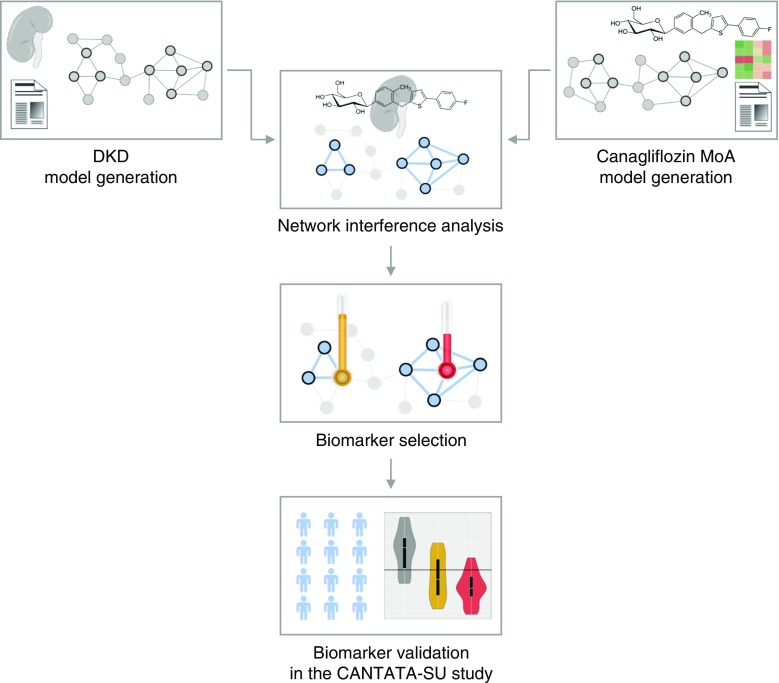
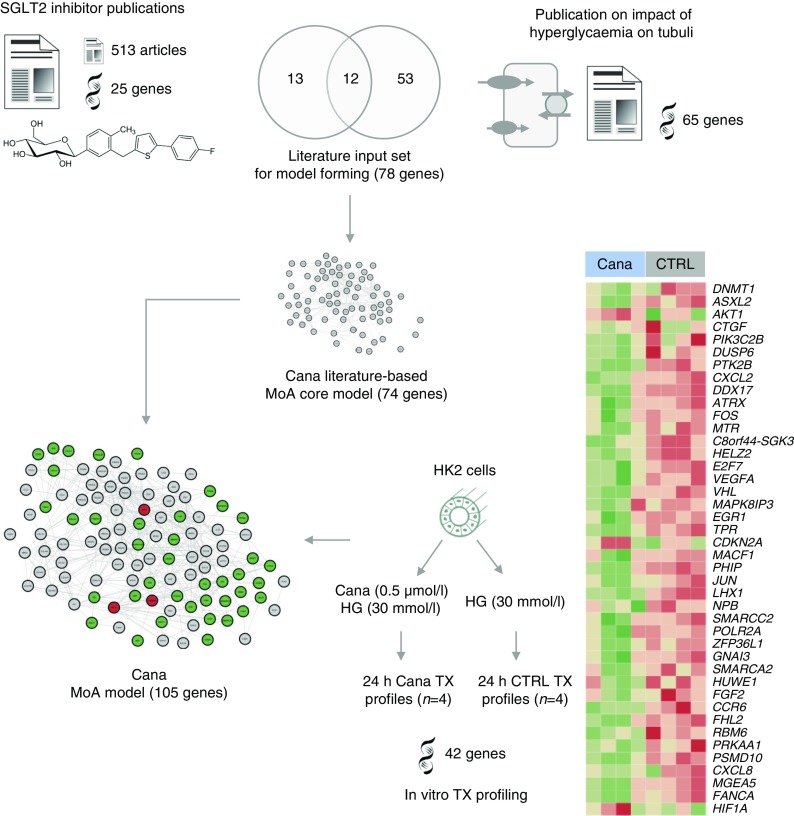
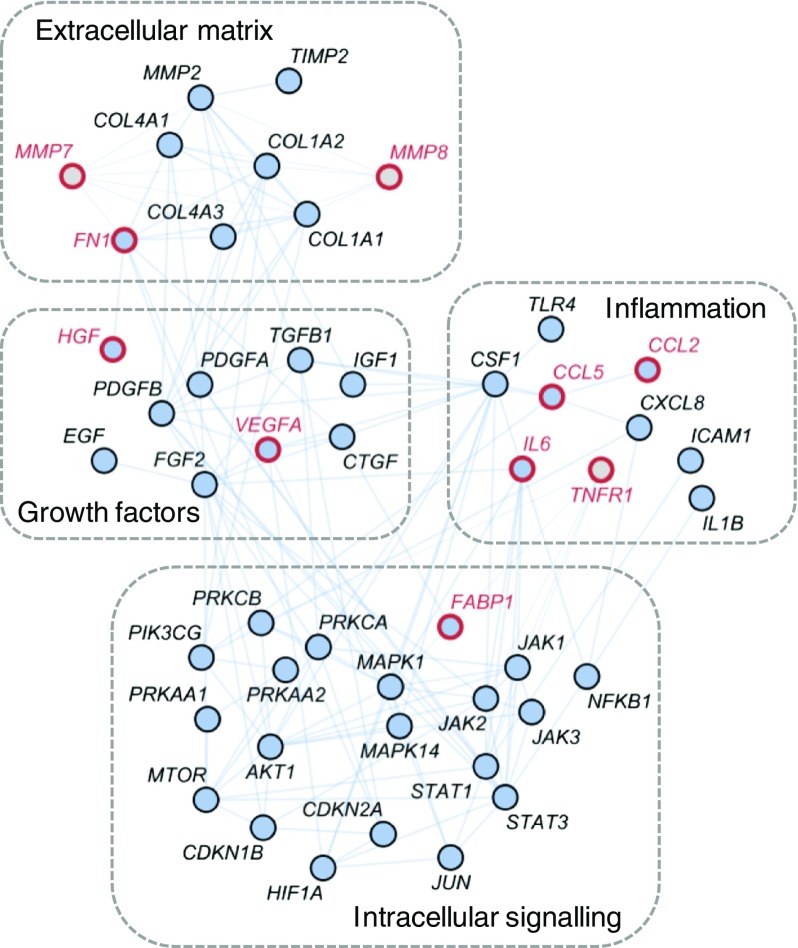
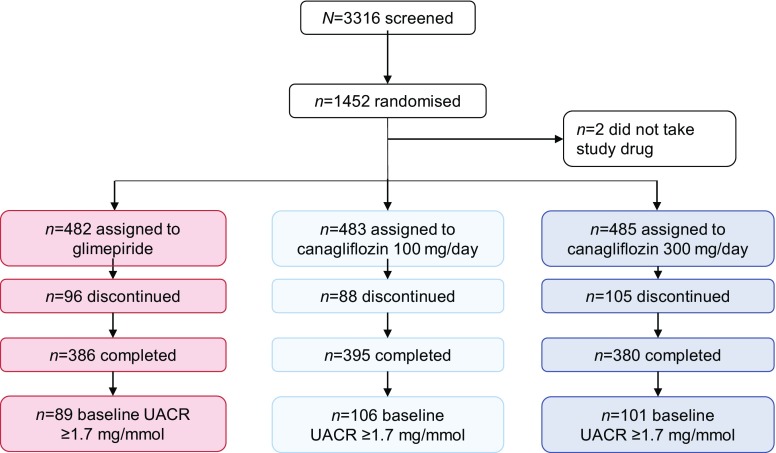
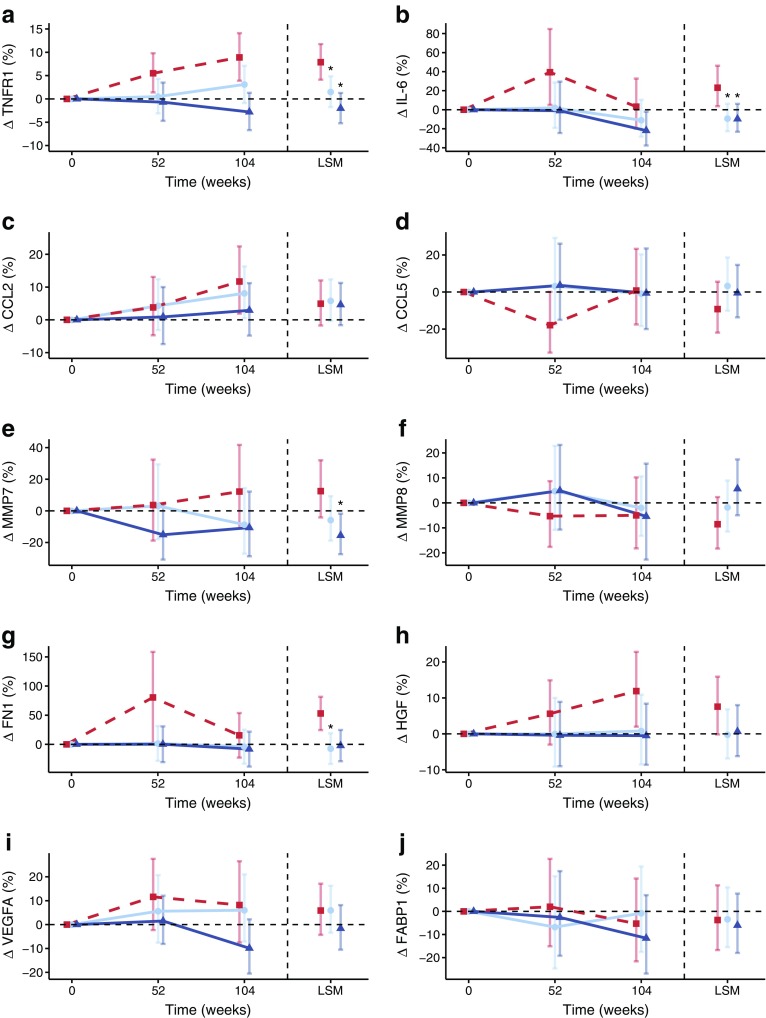
AIMS/HYPOTHESIS: The sodium-glucose cotransporter 2 (SGLT2) inhibitor canagliflozin slows progression of kidney function decline in type 2 diabetes. The aim of this study was to assess the effect of the SGLT2 inhibitor canagliflozin on biomarkers for progression of diabetic kidney disease (DKD). METHODS: A canagliflozin mechanism of action (MoA) network model was constructed based on an in vitro transcriptomics experiment in human proximal tubular cells and molecular features linked to SGLT2 inhibitors from scientific literature. This model was mapped onto an established DKD network model that describes molecular processes associated with DKD. Overlapping areas in both networks were subsequently used to select candidate biomarkers that change with canagliflozin therapy. These biomarkers were measured in 296 stored plasma samples from a previously reported 2 year clinical trial comparing canagliflozin with glimepiride. RESULTS: Forty-four proteins present in the canagliflozin MoA molecular model overlapped with proteins in the DKD network model. These proteins were considered candidates for monitoring impact of canagliflozin on DKD pathophysiology. For ten of these proteins, scientific evidence was available suggesting that they are involved in DKD progression. Of these, compared with glimepiride, canagliflozin 300 mg/day decreased plasma levels of TNF receptor 1 (TNFR1; 9.2%; p < 0.001), IL-6 (26.6%; p = 0.010), matrix metalloproteinase 7 (MMP7; 24.9%; p = 0.011) and fibronectin 1 (FN1; 14.9%; p = 0.055) during 2 years of follow-up. CONCLUSIONS/INTERPRETATION: The observed reduction in TNFR1, IL-6, MMP7 and FN1 suggests that canagliflozin contributes to reversing molecular processes related to inflammation, extracellular matrix turnover and fibrosis. Trial registration ClinicalTrials.gov NCT00968812.
Overview
The claims and statistics of this paper haven’t been checked yet.
Free: it reads the open-access text and checks the first 5 claims that cite a source we can check. Create a free account to check every claim.
Integrity signals
Registry
Cites
Statistics
Figures
Verification
Claims the paper makes
The claims and statistics of this paper haven’t been checked yet.
Free: it reads the open-access text and checks the first 5 claims that cite a source we can check. Create a free account to check every claim.
Claims other papers make about this one
Each is checked against this paper’s own text: does it say what the citing paper says it does?
The source backs part of the claim, not all of it — or backs it for a different population, condition or comparison.
In the citing paper
“Empagliflozin, dapagliflozin, canagliflozin, and ertugliflozin have shown a decrease in hospitalization for HF in their CVOTs.”
From American Association of Clinical Endocrinology Clinical Practice Guideline: Developing a Diabetes Mellitus Comprehensive Care Plan-2022 Update. (2022) · cites this paper as [444]
Experimental — accuracy not yet measuredThe source backs part of the claim, not all of it — or backs it for a different population, condition or comparison.
In the citing paper
“Empagliflozin and canagliflozin demonstrated reduction in MACE in CVOTs; empagliflozin also demonstrated decreased CV death and all-cause mortality.”
From American Association of Clinical Endocrinology Clinical Practice Guideline: Developing a Diabetes Mellitus Comprehensive Care Plan-2022 Update. (2022) · cites this paper as [444]
Experimental — accuracy not yet measuredThe source backs part of the claim, not all of it — or backs it for a different population, condition or comparison.
In the citing paper
“In humans, the serum level of IL-6 dropped by 26.6% (p = 0.010) after 2 years of canagliflozin treatment [35].”
From Neuroprotective effect of SGLT2 inhibitors. (2021) · cites this paper as [35]
Experimental — accuracy not yet measuredThe source backs part of the claim, not all of it — or backs it for a different population, condition or comparison.
In the citing paper
“Moreover, recent data support the notion that SGLT2 inhibitors reduce oxidative stress in the kidney by >50% and blunt increases in angiotensinogen as well as reduce NLRP3 inflammasome activity (100,102,103).”
From 11. Chronic Kidney Disease and Risk Management: Standards of Care in Diabetes—2026 (2026) · cites this paper as [103]
Experimental — accuracy not yet measuredThe cited source says what the claim attributes to it.
In the citing paper
“Multiple studies have shown renal and CV benefits of SGLT2is239,424–426,444,1052–1054”
From American Association of Clinical Endocrinology Clinical Practice Guideline: Developing a Diabetes Mellitus Comprehensive Care Plan-2022 Update. (2022) · cites this paper as [444]
3 more claims about this paper
Create a free account to see every claim other papers make about this one.
Self-check
Percentages, sums and reported differences re-computed from the paper’s own numbers.
The self-check needs the paper’s full text.
Citations
Cites
Canagliflozin and Cardiovascular and Renal Events in Type 2 Diabetes
Neal, B., Perkovic, V., Mahaffey, K. W., de Zeeuw, D., Fulcher, G., Erondu, N., Shaw, W., Law, G., Desai, M., & Matthews, D. R. (2017) · New England Journal of Medicine · doi:10.1056/nejmoa1611925 · Cited by 7,830
Empagliflozin and Progression of Kidney Disease in Type 2 Diabetes
Wanner, C., Inzucchi, S. E., Lachin, J. M., Fitchett, D., von Eynatten, M., Mattheus, M., Johansen, O. E., Woerle, H. J., Broedl, U. C., & Zinman, B. (2016) · New England Journal of Medicine · doi:10.1056/nejmoa1515920 · Cited by 3,655
Levey, A. S., Coresh, J., Greene, T., Marsh, J., Stevens, L. A., Kusek, J. W., Van Lente, F., & for Chronic Kidney Disease Epidemiology Collaboration (2007) · Clinical Chemistry · doi:10.1373/clinchem.2006.077180 · Cited by 1,855 · cited 1×
“Serum creatinine was used to calculate eGFR with the Modification of Diet in Renal Disease equation [20].”
MethodFox, C. S., Matsushita, K., Woodward, M., Bilo, H. J., Chalmers, J., Heerspink, H. J. L., Lee, B. J., Perkins, R. M., Rossing, P., Sairenchi, T., et al. (2012) · The Lancet · doi:10.1016/s0140-6736(12)61350-6 · Cited by 1,401
Self-citationHeerspink, H. J. L., Perkins, B. A., Fitchett, D. H., Husain, M., & Cherney, D. Z. I. (2016) · Circulation · doi:10.1161/circulationaha.116.021887 · Cited by 1,376
Self-citationKidney disease and increased mortality risk in type 2 diabetes
Afkarian, M., Sachs, M. C., Kestenbaum, B., Hirsch, I. B., Tuttle, K. R., Himmelfarb, J., & de Boer, I. H. (2013) · Journal of the American Society of Nephrology · doi:10.1681/asn.2012070718 · Cited by 1,298
Cefalu, W. T., Leiter, L. A., Yoon, K.-H., Arias, P., Niskanen, L., Xie, J., Balis, D. A., Canovatchel, W., & Meininger, G. (2013) · The Lancet · doi:10.1016/s0140-6736(13)60683-2 · Cited by 724
Sodium-Glucose Cotransport Inhibition With Dapagliflozin in Type 2 Diabetes
List, J. F., Woo, V., Morales, E., Tang, W., & Fiedorek, F. T. (2009) · Diabetes Care · doi:10.2337/dc08-1863 · Cited by 698
Pathogenesis and Treatment of Chronic Kidney Disease: A Review of Our Recent Basic and Clinical Data
Tomino, Y. (2014) · Kidney and Blood Pressure Research · doi:10.1159/000368458 · Cited by 566
Interleukin-6 Signaling Pathway and Its Role in Kidney Disease: An Update
Su, H., Lei, C.-T., & Zhang, C. (2017) · Frontiers in Immunology · doi:10.3389/fimmu.2017.00405 · Cited by 524
Cited by
Mechanisms of Cardiovascular Benefits of Sodium Glucose Co-Transporter 2 (SGLT2) Inhibitors
Lopaschuk, G. D., & Verma, S. (2020) · JACC: Basic to Translational Science · doi:10.1016/j.jacbts.2020.02.004 · Cited by 894
“canagliflozin (49), and dapagliflozin (50) have been shown to attenuate or ameliorate the inflammatory profile in patients with diabetes.”
BackgroundMolecular mechanisms and therapeutic targets for diabetic kidney disease
Tuttle, K. R., Agarwal, R., Alpers, C. E., Bakris, G. L., Brosius, F. C., Kolkhof, P., & Uribarri, J. (2022) · Kidney International · doi:10.1016/j.kint.2022.05.012 · Cited by 668
Pathophysiology of diabetic kidney disease: impact of SGLT2 inhibitors
DeFronzo, R. A., Reeves, W. B., & Awad, A. S. (2021) · Nature Reviews Nephrology · doi:10.1038/s41581-021-00393-8 · Cited by 589
Mechanisms of Cardiorenal Effects of Sodium-Glucose Cotransporter 2 Inhibitors
Zelniker, T. A., & Braunwald, E. (2020) · Journal of the American College of Cardiology · doi:10.1016/j.jacc.2019.11.031 · Cited by 566
Blonde, L., Umpierrez, G. E., Reddy, S. S., McGill, J. B., Berga, S. L., Bush, M., Chandrasekaran, S., DeFronzo, R. A., Einhorn, D., Galindo, R. J., et al. (2022) · Endocrine Practice · doi:10.1016/j.eprac.2022.08.002 · Cited by 507
Signaling pathways of chronic kidney diseases, implications for therapeutics
Yuan, Q., Tang, B., & Zhang, C. (2022) · Signal Transduction and Targeted Therapy · doi:10.1038/s41392-022-01036-5 · Cited by 453
“Transcriptomic analysis of plasma biomarkers showed canagliflozin reduced the mRNA level of TNF receptor 1, IL-6, and matrix metalloproteinase 7 (MMP7) in patients with T2DM compared with glimepiride treated group.(309) A phase 3 trial (NCT02065791) results showed the relative risk of ESRD in the canagliflozin group w…”
Result11. Microvascular Complications and Foot Care: Standards of Medical Care in Diabetes−2020
American Diabetes Association (2020) · Diabetes Care · doi:10.2337/dc20-s011 · Cited by 460
11. Microvascular Complications and Foot Care: Standards of Medical Care in Diabetes—2021
American Diabetes Association (2021) · Diabetes Care · doi:10.2337/dc21-s011 · Cited by 395
Targeting inflammation to treat diabetic kidney disease: the road to 2030
Rayego-Mateos, S., Rodrigues-Diez, R. R., Fernandez-Fernandez, B., Mora-Fernández, C., Marchant, V., Donate-Correa, J., Navarro-González, J. F., Ortiz, A., & Ruiz-Ortega, M. (2023) · Kidney International · doi:10.1016/j.kint.2022.10.030 · Cited by 366
11. Chronic Kidney Disease and Risk Management: Standards of Medical Care in Diabetes—2022
American Diabetes Association Professional Practice Committee (2022) · Diabetes Care · doi:10.2337/dc22-s011 · Cited by 344
Pathogenic Pathways and Therapeutic Approaches Targeting Inflammation in Diabetic Nephropathy
Rayego-Mateos, S., Morgado-Pascual, J. L., Opazo-Ríos, L., Guerrero-Hue, M., García-Caballero, C., Vázquez-Carballo, C., Mas, S., Sanz, A. B., Herencia, C., Mezzano, S., et al. (2020) · International Journal of Molecular Sciences · doi:10.3390/ijms21113798 · Cited by 334
Neuroprotective effect of SGLT2 inhibitors.
Pawlos, A., Broncel, M., Woźniak, E., & Gorzelak-Pabiś, P. (2021) · Molecules · doi:10.3390/molecules26237213 · Cited by 304
“Anti-inflammatory n/a Yes [35] Yes [36] Yes [37] No|n/a [38] Figure 1.”
Background11. Chronic Kidney Disease and Risk Management: Standards of Care in Diabetes—2023
ElSayed, N. A., Aleppo, G., Aroda, V. R., Bannuru, R. R., Brown, F. M., Bruemmer, D., Collins, B. S., Hilliard, M. E., Isaacs, D., Johnson, E. L., et al. (2023) · Diabetes Care · doi:10.2337/dc23-s011 · Cited by 289
11. Chronic Kidney Disease and Risk Management: Standards of Care in Diabetes—2024
American Diabetes Association Professional Practice Committee, ElSayed, N. A., Aleppo, G., Bannuru, R. R., Bruemmer, D., Collins, B. S., Ekhlaspour, L., Hilliard, M. E., Johnson, E. L., Khunti, K., et al. (2024) · Diabetes Care · doi:10.2337/dc24-s011 · Cited by 275
Pro-resolving lipid mediators: regulators of inflammation, metabolism and kidney function
Brennan, E., Kantharidis, P., Cooper, M. E., & Godson, C. (2021) · Nature Reviews Nephrology · doi:10.1038/s41581-021-00454-y · Cited by 262
Sodium–glucose cotransporter type 2 inhibitors for the treatment of type 2 diabetes mellitus
Scheen, A. J. (2020) · Nature Reviews Endocrinology · doi:10.1038/s41574-020-0392-2 · Cited by 267
An Overview of the Cardiorenal Protective Mechanisms of SGLT2 Inhibitors
Salvatore, T., Galiero, R., Caturano, A., Rinaldi, L., Di Martino, A., Albanese, G., Di Salvo, J., Epifani, R., Marfella, R., Docimo, G., et al. (2022) · International Journal of Molecular Sciences · doi:10.3390/ijms23073651 · Cited by 256
11. Chronic Kidney Disease and Risk Management: Standards of Care in Diabetes—2025
American Diabetes Association Professional Practice Committee, ElSayed, N. A., McCoy, R. G., Aleppo, G., Balapattabi, K., Beverly, E. A., Briggs Early, K., Bruemmer, D., Echouffo-Tcheugui, J. B., Ekhlaspour, L., et al. (2025) · Diabetes Care · doi:10.2337/dc25-s011 · Cited by 318
Renal Protection with SGLT2 Inhibitors: Effects in Acute and Chronic Kidney Disease
Bailey, C. J., Day, C., & Bellary, S. (2022) · Current Diabetes Reports · doi:10.1007/s11892-021-01442-z · Cited by 248
“Several preclinical and clinical studies have noted that treatment with an SGLT2 inhibitor is associated with reductions in circulating markers of inflammation and fibrosis, notably nuclear factor-κB (NFκB), interleukin 6 (IL-6), monocyte chemoattractant protein 1 (MCP-1), tumour necrosis factor receptor 1 (TNFR1), ma…”
BackgroundTargeting innate immunity-driven inflammation in CKD and cardiovascular disease
Speer, T., Dimmeler, S., Schunk, S. J., Fliser, D., & Ridker, P. M. (2022) · Nature Reviews Nephrology · doi:10.1038/s41581-022-00621-9 · Cited by 232
Jongs, N., Greene, T., Chertow, G. M., McMurray, J. J. V., Langkilde, A. M., Correa-Rotter, R., Rossing, P., Sjöström, C. D., Stefansson, B. V., Toto, R. D., et al. (2021) · The Lancet Diabetes & Endocrinology · doi:10.1016/s2213-8587(21)00243-6 · Cited by 219
Self-citationUnraveling the Role of Inflammation in the Pathogenesis of Diabetic Kidney Disease
Matoba, K., Takeda, Y., Nagai, Y., Kawanami, D., Utsunomiya, K., & Nishimura, R. (2019) · International Journal of Molecular Sciences · doi:10.3390/ijms20143393 · Cited by 223
“010) compared to glimepiride in patients with diabetes [54].”
BackgroundTuleta, I., & Frangogiannis, N. G. (2021) · Biochimica et Biophysica Acta (BBA) - Molecular Basis of Disease · doi:10.1016/j.bbadis.2020.166044 · Cited by 208
Paolisso, P., Bergamaschi, L., Santulli, G., Gallinoro, E., Cesaro, A., Gragnano, F., Sardu, C., Mileva, N., Foà, A., Armillotta, M., et al. (2022) · Cardiovascular Diabetology · doi:10.1186/s12933-022-01506-8 · Cited by 207
SGLT2 inhibitors: from glucose-lowering to cardiovascular benefits
Preda, A., Montecucco, F., Carbone, F., Camici, G. G., Lüscher, T. F., Kraler, S., & Liberale, L. (2024) · Cardiovascular Research · doi:10.1093/cvr/cvae047 · Cited by 161
Barrera‐Chimal, J., & Jaisser, F. (2020) · Diabetes, Obesity and Metabolism · doi:10.1111/dom.13969 · Cited by 174
“37 Indeed, the SGLT2 inhibitor canagliflozin reduces the levels of TNFR1, IL-6, matrix metalloproteinase 7 and fibronectin-1.(38) In a mouse model of proteinuric nondiabetic kidney disease, dapagliflozin protects against proteinuria, glomerular injury and podocyte loss, providing a possible.”
BackgroundMetaflammation in obesity and its therapeutic targeting
Schleh, M. W., Caslin, H. L., Garcia, J. N., Mashayekhi, M., Srivastava, G., Bradley, A. B., & Hasty, A. H. (2023) · Science Translational Medicine · doi:10.1126/scitranslmed.adf9382 · Cited by 177
Green, J. B., Mottl, A. K., Bakris, G., Heerspink, H. J. L., Mann, J. F. E., McGill, J. B., Nangaku, M., Rossing, P., Scott, C., Gay, A., et al. (2023) · Nephrology Dialysis Transplantation · doi:10.1093/ndt/gfac198 · Cited by 164
Self-citationThe New Biology of Diabetic Kidney Disease—Mechanisms and Therapeutic Implications
Lytvyn, Y., Bjornstad, P., van Raalte, D. H., Heerspink, H. L., & Cherney, D. Z. I. (2020) · Endocrine Reviews · doi:10.1210/endrev/bnz010 · Cited by 165
Self-citationImmune responses in diabetic nephropathy: Pathogenic mechanisms and therapeutic target
Chen, J., Liu, Q., He, J., & Li, Y. (2022) · Frontiers in Immunology · doi:10.3389/fimmu.2022.958790 · Cited by 164
A kidney perspective on the mechanism of action of sodium glucose co-transporter 2 inhibitors
Sen, T., & Heerspink, H. J. L. (2021) · Cell Metabolism · doi:10.1016/j.cmet.2021.02.016 · Cited by 161
Self-citationLiu, Z., Ma, X., Ilyas, I., Zheng, X., Luo, S., Little, P. J., Kamato, D., Sahebkar, A., Wu, W., Weng, J., et al. (2021) · Theranostics · doi:10.7150/thno.54498 · Cited by 155
Pugliese, N. R., Pellicori, P., Filidei, F., De Biase, N., Maffia, P., Guzik, T. J., Masi, S., Taddei, S., & Cleland, J. G. F. (2023) · Cardiovascular Research · doi:10.1093/cvr/cvac133 · Cited by 144
“5 Sodium-glucose cotransporter-2 inhibitors SGLT2i, or gliflozins, inhibit the kidney reabsorption of glucose but also appear to have anti-inflammatory effects.(156) They were primarily developed to treat patients with T2DM, but recent landmark RCTs of HFrEF demonstrated that SGLT2i also reduce HF hospitalizations and…”
BackgroundRavassa, S., López, B., Treibel, T. A., José, G. S., Losada-Fuentenebro, B., Tapia, L., Bayés‐Genís, A., Díez, J., & González, A. (2023) · Molecular Aspects of Medicine · doi:10.1016/j.mam.2023.101194 · Cited by 152
Tuttle, K. R., Brosius, F. C., Cavender, M. A., Fioretto, P., Fowler, K. J., Heerspink, H. J. L., Manley, T., McGuire, D. K., Molitch, M. E., Mottl, A. K., et al. (2020) · American Journal of Kidney Diseases · doi:10.1053/j.ajkd.2020.08.003 · Cited by 146
Self-citationMediators of the effects of canagliflozin on kidney protection in patients with type 2 diabetes
Li, J., Neal, B., Perkovic, V., de Zeeuw, D., Neuen, B. L., Arnott, C., Simpson, R., Oh, R., Mahaffey, K. W., & Heerspink, H. J. L. (2020) · Kidney International · doi:10.1016/j.kint.2020.04.051 · Cited by 130
Self-citationThe Efficacy and Safety of SGLT2 Inhibitor in Diabetic Kidney Transplant Recipients
Lim, J., Kwon, S., Jeon, Y., Kim, Y., Kwon, H., Kim, D. K., Lee, H., Kim, Y.-L., Kim, C., Park, S.-H., et al. (2022) · Transplantation · doi:10.1097/tp.0000000000004228 · Cited by 134
Kogot-Levin, A., Hinden, L., Riahi, Y., Israeli, T., Tirosh, B., Cerasi, E., Mizrachi, E. B., Tam, J., Mosenzon, O., & Leibowitz, G. (2020) · Cell Reports · doi:10.1016/j.celrep.2020.107954 · Cited by 126
Tuttle, K. R., Brosius, F. C., Cavender, M. A., Fioretto, P., Fowler, K. J., Heerspink, H. J. L., Manley, T., McGuire, D. K., Molitch, M. E., Mottl, A. K., et al. (2021) · Diabetes · doi:10.2337/dbi20-0040 · Cited by 123
“Although the mechanism for reduced inflammation with SGLT2 inhibition is unknown, study participants receiving canagliflozin had lower plasma levels of inflammatory and fibrotic mediators compared with those receiving glimepiride despite similar levels of glycemia, suggesting a glucose-independent effect (42).”
BackgroundSelf-citationPandey, A. K., Bhatt, D. L., Pandey, A. K., Marx, N., Cosentino, F., Pandey, A., & Verma, S. (2023) · European Heart Journal · doi:10.1093/eurheartj/ehad389 · Cited by 143
Anti-inflammatory effect of SGLT-2 inhibitors via uric acid and insulin
Grotta, R. L., de Candia, P., Olivieri, F., Matacchione, G., Giuliani, A., Rippo, M. R., Tagliabue, E., Mancino, M., Rispoli, F., Ferroni, S., et al. (2022) · Cellular and Molecular Life Sciences · doi:10.1007/s00018-022-04289-z · Cited by 123
“In this respect, two recent publications using the same cohort showed that patients treated with SGLT-2i have lower levels of IL-6 [19, 20], with a mechanism of action network model identifying IL-6 as a SGLT-2i-sensitive, central hub in the development and progression of diabetic nephropathy [19].”
BackgroundResultWang, Y., Jin, M., Cheng, C. K., & Li, Q. (2023) · Frontiers in Endocrinology · doi:10.3389/fendo.2023.1238927 · Cited by 151
Hoong, C. W. S., & Chua, M. W. J. (2021) · Endocrinology · doi:10.1210/endocr/bqab079 · Cited by 110
Applications of SGLT2 inhibitors beyond glycaemic control
O’Hara, D. V., Lam, C. S. P., McMurray, J. J. V., Yi, T. W., HOCKING, S. L., Dawson, J., Raichand, S., Januszewski, A. S., & Jardine, M. (2024) · Nature Reviews Nephrology · doi:10.1038/s41581-024-00836-y · Cited by 130
“…that the levels of markers and mediators of fibrosis and extracellular matrix turnover such as matrix metalloproteinase 7 and fibronectin 1 increased over 2 years of treatment with the glucose-lowering drug glimepiride, but were stable or improved with use of the SGLT2 inhibitor canagliflozin 38 .”
Kim, M. N., Moon, J. H., & Cho, Y. M. (2021) · Diabetes Obesity and Metabolism · doi:10.1111/dom.14503 · Cited by 123
Recent Advances in the Management of Diabetic Kidney Disease: Slowing Progression
Wang, N., & Zhang, C. (2024) · International Journal of Molecular Sciences · doi:10.3390/ijms25063086 · Cited by 143
11. Chronic Kidney Disease and Risk Management: Standards of Care in Diabetes—2026
American Diabetes Association Professional Practice Committee for Diabetes*, Bajaj, M., McCoy, R. G., Balapattabi, K., Bannuru, R. R., Bellini, N. J., Bennett, A. K., Beverly, E. A., Briggs Early, K., ChallaSivaKanaka, S., et al. (2026) · Diabetes Care · doi:10.2337/dc26-s011 · Cited by 226
Theofilis, P., Sagris, Μ., Oikonomou, E. K., Antonopoulos, A. S., Siasos, G., Tsioufis, K. P., & Tousoulis, D. (2022) · International Immunopharmacology · doi:10.1016/j.intimp.2022.109080 · Cited by 120
Accelerated Kidney Aging in Diabetes Mellitus
Guo, J., Zheng, H. J., Zhang, W., Lou, W., Xia, C., Han, X. T., Huang, W. J., Zhang, F., Wang, Y., & Liu, W. J. (2020) · Oxidative Medicine and Cellular Longevity · doi:10.1155/2020/1234059 · Cited by 93
“SGLT2i (canagliflozin) Against renal inflammation, extracellular matrix turnover and fibrosis Reduction in TNFR1, IL-6, MMP7 and FN1 HG-induced human proximal tubular epithelial cell line (HK-2) [279]”
BackgroundRavindran, S., & Munusamy, S. (2021) · Journal of Cellular Physiology · doi:10.1002/jcp.30621 · Cited by 111
“The onset of ESRD, not only demands dialysis or kidney transplant in patients, but it also doubles the risk of mortality following myocardial infarction compared to those with normal kidney function (Herzog et al., 1998).”
BackgroundInflammatory Trajectory of Type 2 Diabetes: Novel Opportunities for Early and Late Treatment
Pellegrini, V., Grotta, R. L., Carreras, F., Giuliani, A., Sabbatinelli, J., Olivieri, F., Berra, C., Ceriello, A., & Prattichizzo, F. (2024) · Cells · doi:10.3390/cells13191662 · Cited by 119
“Similar data are available for SGLT-2i, which ameliorates the circulating levels of multiple inflammatory markers in diverse settings [167–170].”
BackgroundCovid-19 and Diabetes: A Complex Bidirectional Relationship
Muniangi-Muhitu, H., Akalestou, E., Salem, V., Misra, S., Oliver, N. S., & Rutter, G. A. (2020) · Frontiers in Endocrinology · doi:10.3389/fendo.2020.582936 · Cited by 104
What’s New in the Molecular Mechanisms of Diabetic Kidney Disease: Recent Advances
Watanabe, K., Sato, E., Mishima, E., Miyazaki, M., & Tanaka, T. (2022) · International Journal of Molecular Sciences · doi:10.3390/ijms24010570 · Cited by 105
“On the other hand, plasma levels of TNF, MMP, IL-6 and fibronectin were used as inflammatory or fibrotic biomarkers in a clinical trial [103].”
MethodPathomechanisms of Diabetic Kidney Disease
Sinha, S. K., & Nicholas, S. B. (2023) · Journal of Clinical Medicine · doi:10.3390/jcm12237349 · Cited by 115
“In addition to their hemodynamic effects, described above, ACE inhibitors and ARBs can block oxidative stress and pro-inflammatory pathways.”
BackgroundAnti-inflammatory properties of antidiabetic drugs: a “promised land” in the COVID-19 era?
Katsiki, N., & Ferrannini, E. (2020) · Journal of Diabetes and its Complications · doi:10.1016/j.jdiacomp.2020.107723 · Cited by 91
“010).(138) Similar results were reported in animal studies.”
Sen, T., Li, J., Neuen, B. L., Neal, B. C., Arnott, C. G., Parikh, C. R., Coca, S. G., Perkovic, V., Mahaffey, K. W., Yavin, Y., et al. (2021) · Diabetologia · doi:10.1007/s00125-021-05512-5 · Cited by 103
“The modest attenuation in the increase in TNFR-1 has been observed in a prior study with canagliflozin [18].”
ResultSelf-citationCardiorenal Syndrome: The Role of Neural Connections Between the Heart and the Kidneys
Patel, K. P., Katsurada, K., & Zheng, H. (2022) · Circulation Research · doi:10.1161/circresaha.122.319989 · Cited by 96
Anti-Inflammatory Effects of SGLT2 Inhibitors: Focus on Macrophages
RYKOVA, E. Y., Klimontov, V. V., Shmakova, E. O., Korbut, A. I., Merkulova, T. I., & Kzhyshkowska, J. G. (2025) · International Journal of Molecular Sciences · doi:10.3390/ijms26041670 · Cited by 102
“When compared with glimepiride, canagliflozin reduced plasma levels of IL-6, tumor necrosis factor receptor 1 (TNFR1), matrix metalloproteinase 7, and fibronectin 1, suggesting the inhibition of inflammation and fibrosis [76].”
SGLT2 inhibitor counteracts NLRP3 inflammasome via tubular metabolite itaconate in fibrosis kidney
Ke, Q., Shi, C., Lv, Y., Wang, L., Luo, J., Jiang, L., Yang, J., & Zhou, Y. (2021) · The FASEB Journal · doi:10.1096/fj.202100909rr · Cited by 97
Ferreira, J. P., Anker, S. D., Butler, J., Filippatos, G. S., Iwata, T., Salsali, A., Zeller, C., Pocock, S., Zannad, F. M., & Packer, M. (2021) · European Journal of Heart Failure · doi:10.1002/ejhf.2409 · Cited by 88
Liu, H., Sridhar, V. S., Boulet, J., Dharia, A., Khan, A. A., Lawler, P. R., & Cherney, D. Z. I. (2021) · Metabolism · doi:10.1016/j.metabol.2021.154918 · Cited by 90
Novel biomarkers of diabetic kidney disease: current status and potential clinical application
Barutta, F., Bellini, S., Canepa, S., Durazzo, M., & Gruden, G. (2021) · Acta Diabetologica · doi:10.1007/s00592-020-01656-9 · Cited by 94
Immunomodulatory Effects of SGLT2 Inhibitors—Targeting Inflammation and Oxidative Stress in Aging
Schönberger, E., Mihaljević, V., Steiner, K., Šarić, S., Kurevija, T., Majnarić, L. T., Bilić-Čurčić, I., & Canecki-Varžić, S. (2023) · International Journal of Environmental Research and Public Health · doi:10.3390/ijerph20176671 · Cited by 94
Matsumori, A. (2023) · European Cardiology Review · doi:10.15420/ecr.2023.10 · Cited by 95
Sfairopoulos, D., Zhang, N., Wang, Y., Chen, Z., Letsas, K. P., Tse, G., Li, G., Lip, G. Y. H., Liu, T., & Korantzopoulos, P. (2022) · EP Europace · doi:10.1093/europace/euab177 · Cited by 76
Prattichizzo, F., de Candia, P., & Ceriello, A. (2021) · Metabolism · doi:10.1016/j.metabol.2021.154799 · Cited by 82
Novel Biomarkers of Diabetic Kidney Disease
Rico-Fontalvo, J. E., Aroca, G., Daza-Arnedo, R., Cabrales, J., Yánez, T. R., Cardona-Blanco, M., Montejo-Hernández, J. D., Rodelo-Barrios, D., Patiño-Patiño, J., & Osorio-Rodríguez, E. (2023) · Biomolecules · doi:10.3390/biom13040633 · Cited by 86
“055) during the two-year follow-up period [50,51].”
Systematic Review and Meta-Analysis of Plasma and Urine Biomarkers for CKD Outcomes
Liu, C., Debnath, N., Mosoyan, G., Chauhan, K., Vasquez‐Rios, G., Soudant, C., Menez, S. P., Parikh, C. R., & Coca, S. G. (2022) · Journal of the American Society of Nephrology · doi:10.1681/asn.2022010098 · Cited by 74
“Incorporation of such biomarkers could provide greater insight into the investigation of biologic pathways and their responses to therapy, as in the case of sodium-glucose transporter type 2 inhibitors, which have been shown to attenuate TNFR1 and TNFR2 levels and reduce KIM-1 levels among patients who are diabetic.(3…”
BackgroundRepurposing SGLT-2 Inhibitors to Target Aging: Available Evidence and Molecular Mechanisms
Grotta, R. L., Frigé, C., Matacchione, G., Olivieri, F., de Candia, P., Ceriello, A., & Prattichizzo, F. (2022) · International Journal of Molecular Sciences · doi:10.3390/ijms232012325 · Cited by 82
“Furthermore, the renal protective effects of SGLT2i in both human renal proximal tubular cells and in obese and diabetic mice were consistently traced back to the capability of these molecules to re-establish mitochondria morphology and function.”
BackgroundInfluentialThe role of inflammation in diabetic kidney disease
Jung, S. W., & Moon, J.-Y. (2021) · The Korean Journal of Internal Medicine · doi:10.3904/kjim.2021.174 · Cited by 78
SGLT2 Inhibition for Cardiovascular Diseases, Chronic Kidney Disease, and NAFLD
Ala, M. (2021) · Endocrinology · doi:10.1210/endocr/bqab157 · Cited by 75
Unlocking the Full Potential of SGLT2 Inhibitors: Expanding Applications beyond Glycemic Control
Youssef, M. E., Yahya, G., Popoviciu, M. S., Cavalu, S. D., Abdel-Dayem, M. A., & Saber, S. (2023) · International Journal of Molecular Sciences · doi:10.3390/ijms24076039 · Cited by 84
Role and mechanisms of SGLT-2 inhibitors in the treatment of diabetic kidney disease
Dai, Z.-C., Chen, J., Zou, R., Liang, X.-B., Tang, J., & Yao, C. (2023) · Frontiers in Immunology · doi:10.3389/fimmu.2023.1213473 · Cited by 84
Gager, G. M., von Lewinski, D., Sourij, H., Jilma, B., Eyileten, C., Filipiak, K., Hülsmann, M., Kubica, J., Postula, M. A., & Siller-Matula, J. M. (2021) · Biomedicine & Pharmacotherapy · doi:10.1016/j.biopha.2021.112169 · Cited by 75
Alicic, R. Z., Neumiller, J. J., & Tuttle, K. R. (2025) · Nephrology Dialysis Transplantation · doi:10.1093/ndt/gfae212 · Cited by 81
Therapeutic potential of pro-resolving mediators in diabetic kidney disease
Vartak, T., Godson, C., & Brennan, E. P. (2021) · Advanced Drug Delivery Reviews · doi:10.1016/j.addr.2021.113965 · Cited by 72
Ferreira, J. P., Inzucchi, S. E., Mattheus, M., Meinicke, T. W., Steubl, D., Wanner, C., & Zinman, B. (2021) · Diabetes Obesity and Metabolism · doi:10.1111/dom.14559 · Cited by 71
SGLT2 inhibitors: Beyond glycemic control
Hasan, I., Rashid, T., Jaikaransingh, V., Heilig, C., Abdel‐Rahman, E. M., & Awad, A. S. (2024) · Journal of Clinical & Translational Endocrinology · doi:10.1016/j.jcte.2024.100335 · Cited by 90
Renal physiology of glucose handling and therapeutic implications
Cherney, D. Z. I., Kanbay, M., & Lovshin, J. A. (2020) · Nephrology Dialysis Transplantation · doi:10.1093/ndt/gfz230 · Cited by 73
“It has been recognized for >10 years that the inhibition of glucose reabsorption at the proximal tubule suppresses pathways linked with inflammation and fibrosis [63], including cytokines and chemokines in vitro and in vivo, the intrarenal RAS and markers of oxidative stress [64, 65] and uric acid [66–68].”
BackgroundBray, J. J. H., Foster-Davies, H., & Stephens, J. W. (2020) · Diabetes Research and Clinical Practice · doi:10.1016/j.diabres.2020.108368 · Cited by 64
Koshino, A., Schechter, M., Sen, T., Vart, P., Neuen, B. L., Neal, B. C., Arnott, C. G., Perkovic, V., Ridker, P. M., Tuttle, K. R., et al. (2022) · Diabetes Care · doi:10.2337/dc22-0866 · Cited by 73
Self-citationEl-Rous, M. A., Saber, S., Raafat, E. M., & Ahmed, A. A. E. (2021) · Inflammopharmacology · doi:10.1007/s10787-021-00818-7 · Cited by 65
Feijóo‐Bandín, S., Aragón‐Herrera, A., Otero-Santiago, M., Anido‐Varela, L., Moraña‐Fernández, S., Tarazón, E., Roselló‐Lletí, E., Portolés, M., Gualillo, O., González‐Juanatey, J. R., et al. (2022) · International Journal of Molecular Sciences · doi:10.3390/ijms23105634 · Cited by 63
Targeting Redox Imbalance as an Approach for Diabetic Kidney Disease
Matoba, K., Takeda, Y., Nagai, Y., Yokota, T., Utsunomiya, K., & Nishimura, R. (2020) · Biomedicines · doi:10.3390/biomedicines8020040 · Cited by 62
“Diabetic patients treated with canagliflozin showed lower plasma levels of TNF receptor and interleukin 6 in comparison to glimepiride group [66].”
BackgroundThe effects of canagliflozin on gout in type 2 diabetes: a post-hoc analysis of the CANVAS Program
Li, J., Badve, S. V., Zhou, Z., Rodgers, A., Day, R. O., Oh, R., Lee, M., Perkovic, V., de Zeeuw, D., Mahaffey, K. W., et al. (2019) · The Lancet Rheumatology · doi:10.1016/s2665-9913(19)30078-5 · Cited by 63
Sodium-glucose cotransporter 2 inhibitors: extending the indication to non-diabetic kidney disease?
Dekkers, C. C. J., & Gansevoort, R. T. (2020) · Nephrology Dialysis Transplantation · doi:10.1093/ndt/gfz264 · Cited by 63
Liao, J., Ebrahimi, R., Ling, Z., Meyer, C. G., Martinek, M., Sommer, P., Futyma, P., Vece, D. D., Schratter, A., Acou, W., et al. (2024) · Cardiovascular Diabetology · doi:10.1186/s12933-024-02137-x · Cited by 65
“Previous studies have shown that SGLT2i may improve myocardial energy metabolism [9, 10], suppress inflammation [11], reduce oxidative stress [12], and prevent adverse cardiac remodeling [13, 14].”
BackgroundSong, Z., Zhu, J., Wei, Q., Dong, G., & Dong, Z. (2020) · American Journal of Physiology-Renal Physiology · doi:10.1152/ajprenal.00512.2019 · Cited by 61
Arai, T., Atsukawa, M., Tsubota, A., Mikami, S., Uojima, H., Yoshikata, K., Ono, H., Kawano, T., Yoshida, Y., Tanabe, T., et al. (2022) · Hepatology Communications · doi:10.1002/hep4.2069 · Cited by 55
“[43] Interestingly, anti- inflammatory and antifibrotic properties of SGLT2- Is have been suggested as a common mechanism for its protective effects on the heart[44] and kidney,[45] as well as the liver.”
BackgroundTsai, W.-C., Hsu, S.-P., Chiu, Y.-L., Yang, J.-Y., Pai, M.-F., Ko, M.-J., Tu, Y.-K., Hung, K.-Y., Chien, K.-L., Peng, Y.-S., et al. (2022) · BMJ Open · doi:10.1136/bmjopen-2021-060655 · Cited by 53
Wu, Y.-X., Jiang, F.-J., Liu, G., Wang, Y.-Y., Gao, Z.-Q., Jin, S.-H., Nie, Y., Chen, D., Chen, J.-L., & Pang, Q. (2021) · International Journal of Molecular Sciences · doi:10.3390/ijms22189754 · Cited by 54
“Studies revealed that the balance of the M1/M2 phenotype may determine the fate of an organ in inflammation or injury [16].”
BackgroundRisk of sepsis and pneumonia in patients initiated on SGLT2 inhibitors and DPP-4 inhibitors
Wu, M., Chandramouli, C., Wong, P., Chan, Y., Li, H., Yu, S.-Y., Tse, Y.-K., Ren, Q. W., Yu, S.-Y., Tse, H., et al. (2022) · Diabetes & Metabolism · doi:10.1016/j.diabet.2022.101367 · Cited by 56
The mechanisms of glycolipid metabolism disorder on vascular injury in type 2 diabetes
Chen, X., Shi, C., Wang, Y., Yu, H., Zhang, Y., Zhang, J., Li, P., & Gao, J. (2022) · Frontiers in Physiology · doi:10.3389/fphys.2022.952445 · Cited by 56
“The mechanisms of action of SGLT2i include anti-inflammatory, anti-proliferative, and antifibrotic effects (Heerspink et al., 2019; DeFronzo et al., 2021).”
BackgroundHodrea, J., Balogh, D. B., Hosszú, Á., Lénárt, L., Besztercei, B., Kőszegi, S., Sparding, N., Genovese, F., Wagner, L. J., Szabo, A. J., et al. (2020) · American Journal of Physiology-Renal Physiology · doi:10.1152/ajprenal.00021.2020 · Cited by 59
“(22) reported that canagliflozin reverses the molecular processes involved in diabetes-induced inflammation ECM turnover and fibrosis.”
BackgroundChewcharat, A., Prasitlumkum, N., Thongprayoon, C., Bathini, T. J., Medaura, J. A., Vallabhajosyula, S., & Cheungpasitporn, W. (2020) · Medical Sciences · doi:10.3390/medsci8040047 · Cited by 67
“In addition to the effect on diminishing intraglomerular hyperfiltration and hypertension, SGLT2 inhibitors also demonstrate anti-inflammatory, antifibrotic, and protective effects against deregulation of extracellular matrix evidenced by a reduction in serum levels of TNF receptor 1, IL6, matrix metalloproteinase 7,…”
Irvine, K. M., Okano, S., Patel, P. J., Horsfall, L. U., Williams, S., Russell, A. W., & Powell, E. E. (2021) · Scientific Reports · doi:10.1038/s41598-021-82315-z · Cited by 57
Cherney, D. Z. I., Udell, J. A., & Drucker, D. J. (2021) · Med · doi:10.1016/j.medj.2021.10.004 · Cited by 50
Guedes, M. H., & Pecoits‐Filho, R. (2021) · Journal of Internal Medicine · doi:10.1111/joim.13424 · Cited by 62
Tian, Q., Guo, K., Deng, J., Zhong, Y., & Yang, L. (2021) · Journal of Cellular and Molecular Medicine · doi:10.1111/jcmm.17115 · Cited by 56
Anti-Oxidative Therapy in Diabetic Nephropathy
Hernandez, L. F., Eguchi, N., Whaley, D., Alexander, M., Tantisattamo, E., & Ichii, H. (2022) · Frontiers in Bioscience-Scholar · doi:10.31083/j.fbs1402014 · Cited by 56
“(NFB), interleukin 6 (IL-6), monocyte chemoattractant protein 1 (MCP-1), and the serum uric acid level, thus reducing the risk of kidney inflammation [90,91].”
Background
Metadata
- Authors
- Heerspink, H. J. L., Perco, P., Mulder, S., Leierer, J., Hansen, M. K., Heinzel, A., & Mayer, G.
- Affiliations
- University Medical Center Groningen (NL)
- Innsbruck Medical University (AT)
- Janssen Research & Development (United States) (US)
- EmergenTec (Austria) (AT)
- Corresponding author
- Heerspink, Hiddo J. L.
- ORCID
- Venue
- Diabetologia
- Published
- 2019-04-17
- Volume
- 62
- Issue
- 7
- Pages
- 1154-1166
- ISSN
- 0012-186X (ISSN-L)
- 1432-0428
- PMC
- PMC6560022
- OpenAlex
- W2940024069
- Semantic Scholar
- f618f0ee8bdd64eea246f4a3ccbb16c2ab1f7ccc
- Cited by
- 457
- References
- 34
- Citations by year
- 2026: 37 · 2025: 62 · 2024: 61 · 2023: 79 · 2022: 89 · 2021: 79 · 2020: 33 · 2019: 12
- FWCI
- 41.14
- Type
- journal article
- Language
- en
- Open access
- hybrid
- doi.org
- Licence
- cc-by
- creativecommons.org/licenses/by/4.0 (tdm)
- Locations
- Diabetologia (publishedVersion, cc-by)
- Europe PMC (PubMed Central) (publishedVersion, cc-by)
- PubMed Central (publishedVersion, cc-by)
- PubMed (publishedVersion)
- University of Groningen research database (University of Groningen / Centre for Information Technology) (publishedVersion, cc-by)
- University of Groningen research database (University of Groningen / Centre for Information Technology) (submittedVersion, cc-by)
- Funders
- Janssen Research and Development
- Topics
- Health Sciences › Medicine › Nephrology › Chronic Kidney Disease and Diabetes
- Health Sciences › Medicine › Endocrinology, Diabetes and Metabolism › Diabetes Treatment and Management
- Health Sciences › Medicine › Nephrology › Acute Kidney Injury Research
- Keywords
- canagliflozin, SGLT2 inhibitors, diabetic nephropathy, inflammation, renal fibrosis, TNF receptor 1, interleukin-6, matrix metalloproteinase-7, FN1, extracellular matrix turnover, glimepiride, type 2 diabetes, plasma biomarkers, proximal tubular epithelial cells
- MeSH terms
- Canagliflozin, Sodium-Glucose Transporter 2 Inhibitors, Cell Line, Diabetes Mellitus, Type 2, Fibronectins, Fibrosis, Humans, Inflammation, Kidney Diseases, Biomarkers, Interleukin-6, Matrix Metalloproteinase 7, Receptors, Tumor Necrosis Factor, Type I, Renal Insufficiency, Chronic
About these checks
Registry, retraction, Cites and statistics results are computed, not judged, with one exception: a printed reference that no index lists is read once by a model before it counts as a citation error. Claims are extracted by a model and kept only when their quote appears verbatim in the text; each cited source is then checked, with a model’s help, for whether it says what the claim relies on. Those verdicts can be wrong — read the claim’s quote and the cited source before relying on one.
Statistics and arithmetic are recomputed, not judged.
Confidence bands are shown only for fields calibrated on our annotated test set. None is calibrated yet, so no band is shown.
What counts as a claim ›How we measure confidence ›How we check this ›
Are you an author, or do you see a problem with this page? Request a review
Data sources
Bibliographic data: Semantic Scholar, OpenAlex, Crossref.
Contains information from the Semantic Scholar Academic Graph Datasets, made available under the ODC Attribution License (ODC-BY 1.0).
Semantic Scholar’s data is described in: Kinney, R., et al. (2023). The Semantic Scholar Open Data Platform. arXiv:2301.10140.
