

Canagliflozin reduces inflammation and fibrosis biomarkers: a potential mechanism of action for beneficial effects of SGLT2 inhibitors in diabetic kidney disease
Open accessThe DOI matches its Crossref record; 34 of the 34 references it cites were found in a registry or an index.
Abstract
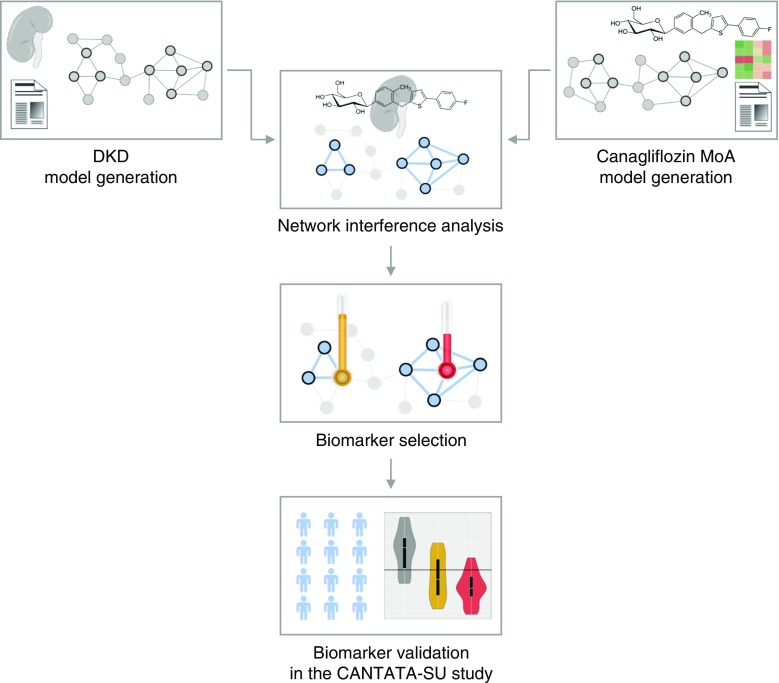
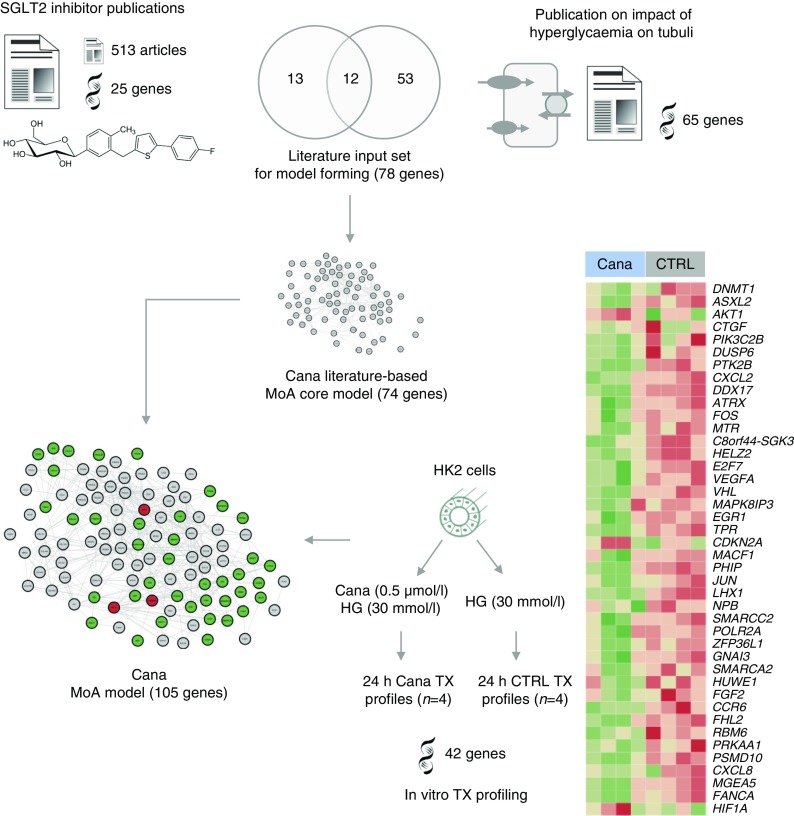
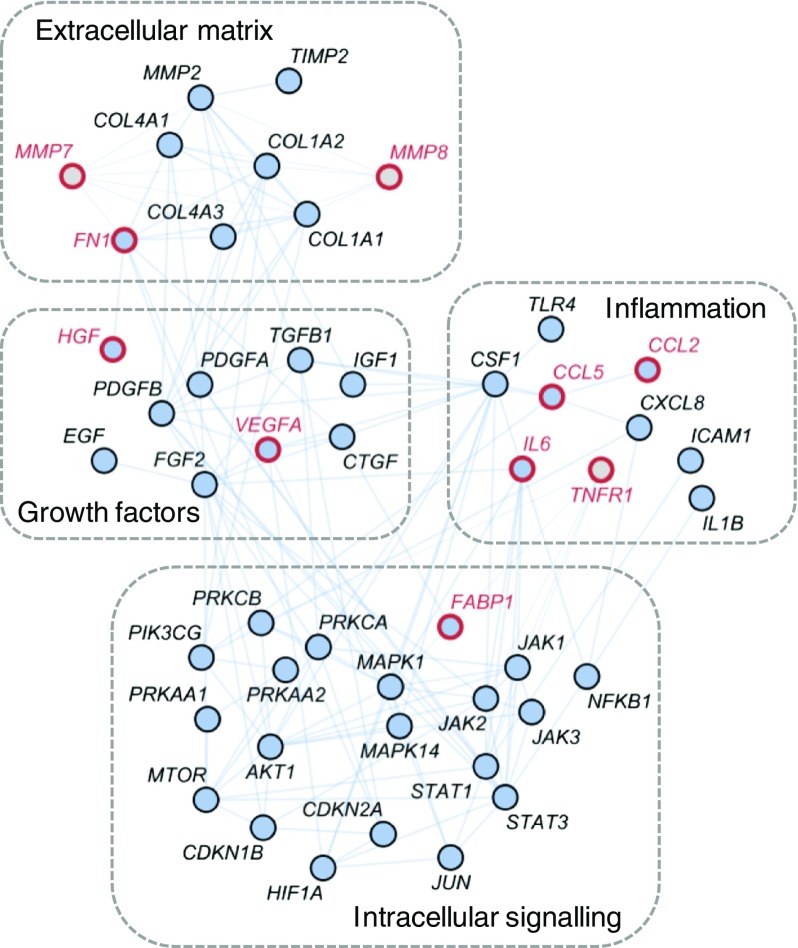
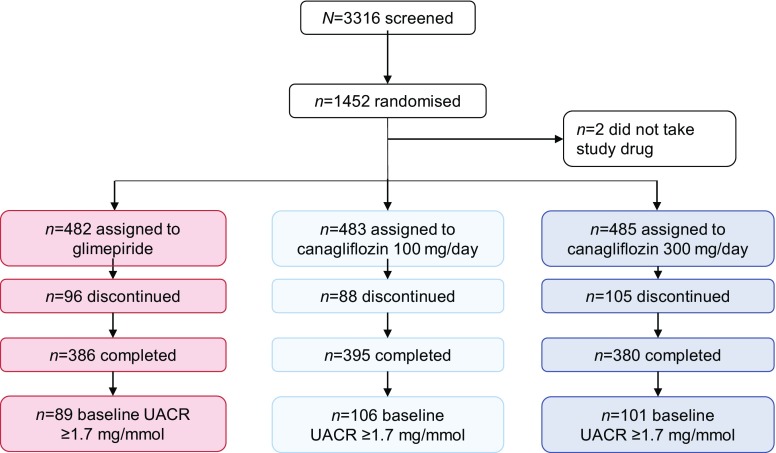
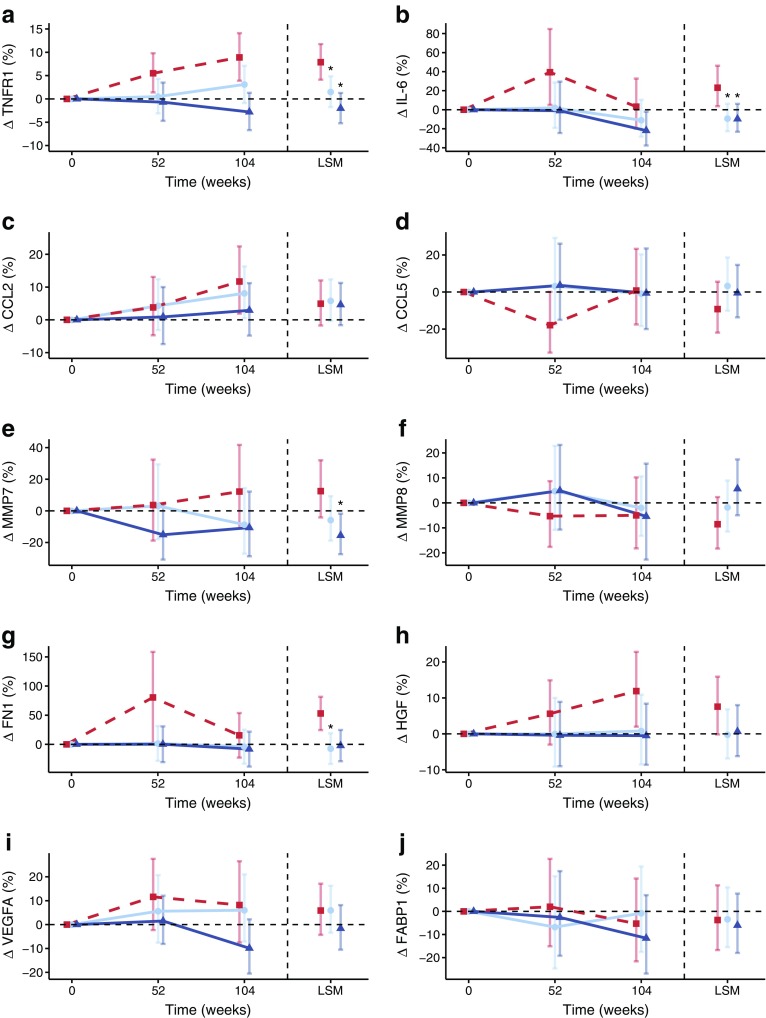
AIMS/HYPOTHESIS: The sodium-glucose cotransporter 2 (SGLT2) inhibitor canagliflozin slows progression of kidney function decline in type 2 diabetes. The aim of this study was to assess the effect of the SGLT2 inhibitor canagliflozin on biomarkers for progression of diabetic kidney disease (DKD). METHODS: A canagliflozin mechanism of action (MoA) network model was constructed based on an in vitro transcriptomics experiment in human proximal tubular cells and molecular features linked to SGLT2 inhibitors from scientific literature. This model was mapped onto an established DKD network model that describes molecular processes associated with DKD. Overlapping areas in both networks were subsequently used to select candidate biomarkers that change with canagliflozin therapy. These biomarkers were measured in 296 stored plasma samples from a previously reported 2 year clinical trial comparing canagliflozin with glimepiride. RESULTS: Forty-four proteins present in the canagliflozin MoA molecular model overlapped with proteins in the DKD network model. These proteins were considered candidates for monitoring impact of canagliflozin on DKD pathophysiology. For ten of these proteins, scientific evidence was available suggesting that they are involved in DKD progression. Of these, compared with glimepiride, canagliflozin 300 mg/day decreased plasma levels of TNF receptor 1 (TNFR1; 9.2%; p < 0.001), IL-6 (26.6%; p = 0.010), matrix metalloproteinase 7 (MMP7; 24.9%; p = 0.011) and fibronectin 1 (FN1; 14.9%; p = 0.055) during 2 years of follow-up. CONCLUSIONS/INTERPRETATION: The observed reduction in TNFR1, IL-6, MMP7 and FN1 suggests that canagliflozin contributes to reversing molecular processes related to inflammation, extracellular matrix turnover and fibrosis. Trial registration ClinicalTrials.gov NCT00968812.
Overview
The claims and statistics of this paper haven’t been checked yet.
Free: it reads the open-access text and checks the first 5 claims that cite a source we can check. Create a free account to check every claim.
Integrity signals
Registry
Cites
Statistics
Figures
Verification
Claims the paper makes
The claims and statistics of this paper haven’t been checked yet.
Free: it reads the open-access text and checks the first 5 claims that cite a source we can check. Create a free account to check every claim.
Claims other papers make about this one
Each is checked against this paper’s own text: does it say what the citing paper says it does?
The source backs part of the claim, not all of it — or backs it for a different population, condition or comparison.
In the citing paper
“Empagliflozin, dapagliflozin, canagliflozin, and ertugliflozin have shown a decrease in hospitalization for HF in their CVOTs.”
From American Association of Clinical Endocrinology Clinical Practice Guideline: Developing a Diabetes Mellitus Comprehensive Care Plan-2022 Update. (2022) · cites this paper as [444]
Experimental — accuracy not yet measuredThe source backs part of the claim, not all of it — or backs it for a different population, condition or comparison.
In the citing paper
“Empagliflozin and canagliflozin demonstrated reduction in MACE in CVOTs; empagliflozin also demonstrated decreased CV death and all-cause mortality.”
From American Association of Clinical Endocrinology Clinical Practice Guideline: Developing a Diabetes Mellitus Comprehensive Care Plan-2022 Update. (2022) · cites this paper as [444]
Experimental — accuracy not yet measuredThe source backs part of the claim, not all of it — or backs it for a different population, condition or comparison.
In the citing paper
“In humans, the serum level of IL-6 dropped by 26.6% (p = 0.010) after 2 years of canagliflozin treatment [35].”
From Neuroprotective effect of SGLT2 inhibitors. (2021) · cites this paper as [35]
Experimental — accuracy not yet measuredThe source backs part of the claim, not all of it — or backs it for a different population, condition or comparison.
In the citing paper
“Moreover, recent data support the notion that SGLT2 inhibitors reduce oxidative stress in the kidney by >50% and blunt increases in angiotensinogen as well as reduce NLRP3 inflammasome activity (100,102,103).”
From 11. Chronic Kidney Disease and Risk Management: Standards of Care in Diabetes—2026 (2026) · cites this paper as [103]
Experimental — accuracy not yet measuredThe cited source says what the claim attributes to it.
In the citing paper
“Multiple studies have shown renal and CV benefits of SGLT2is239,424–426,444,1052–1054”
From American Association of Clinical Endocrinology Clinical Practice Guideline: Developing a Diabetes Mellitus Comprehensive Care Plan-2022 Update. (2022) · cites this paper as [444]
3 more claims about this paper
Create a free account to see every claim other papers make about this one.
Self-check
Percentages, sums and reported differences re-computed from the paper’s own numbers.
The self-check needs the paper’s full text.
Citations
Cites
Canagliflozin and Cardiovascular and Renal Events in Type 2 Diabetes
Neal, B., Perkovic, V., Mahaffey, K. W., de Zeeuw, D., Fulcher, G., Erondu, N., Shaw, W., Law, G., Desai, M., & Matthews, D. R. (2017) · New England Journal of Medicine · doi:10.1056/nejmoa1611925 · Cited by 7,830
Empagliflozin and Progression of Kidney Disease in Type 2 Diabetes
Wanner, C., Inzucchi, S. E., Lachin, J. M., Fitchett, D., von Eynatten, M., Mattheus, M., Johansen, O. E., Woerle, H. J., Broedl, U. C., & Zinman, B. (2016) · New England Journal of Medicine · doi:10.1056/nejmoa1515920 · Cited by 3,655
Levey, A. S., Coresh, J., Greene, T., Marsh, J., Stevens, L. A., Kusek, J. W., Van Lente, F., & for Chronic Kidney Disease Epidemiology Collaboration (2007) · Clinical Chemistry · doi:10.1373/clinchem.2006.077180 · Cited by 1,855 · cited 1×
“Serum creatinine was used to calculate eGFR with the Modification of Diet in Renal Disease equation [20].”
MethodFox, C. S., Matsushita, K., Woodward, M., Bilo, H. J., Chalmers, J., Heerspink, H. J. L., Lee, B. J., Perkins, R. M., Rossing, P., Sairenchi, T., et al. (2012) · The Lancet · doi:10.1016/s0140-6736(12)61350-6 · Cited by 1,401
Self-citationHeerspink, H. J. L., Perkins, B. A., Fitchett, D. H., Husain, M., & Cherney, D. Z. I. (2016) · Circulation · doi:10.1161/circulationaha.116.021887 · Cited by 1,376
Self-citationKidney disease and increased mortality risk in type 2 diabetes
Afkarian, M., Sachs, M. C., Kestenbaum, B., Hirsch, I. B., Tuttle, K. R., Himmelfarb, J., & de Boer, I. H. (2013) · Journal of the American Society of Nephrology · doi:10.1681/asn.2012070718 · Cited by 1,298
Cefalu, W. T., Leiter, L. A., Yoon, K.-H., Arias, P., Niskanen, L., Xie, J., Balis, D. A., Canovatchel, W., & Meininger, G. (2013) · The Lancet · doi:10.1016/s0140-6736(13)60683-2 · Cited by 724
Sodium-Glucose Cotransport Inhibition With Dapagliflozin in Type 2 Diabetes
List, J. F., Woo, V., Morales, E., Tang, W., & Fiedorek, F. T. (2009) · Diabetes Care · doi:10.2337/dc08-1863 · Cited by 698
Pathogenesis and Treatment of Chronic Kidney Disease: A Review of Our Recent Basic and Clinical Data
Tomino, Y. (2014) · Kidney and Blood Pressure Research · doi:10.1159/000368458 · Cited by 566
Interleukin-6 Signaling Pathway and Its Role in Kidney Disease: An Update
Su, H., Lei, C.-T., & Zhang, C. (2017) · Frontiers in Immunology · doi:10.3389/fimmu.2017.00405 · Cited by 524
Cited by
Items 401–458 of 458
[Diabetes and oral contraceptives].
Aragón, J. A. V., & González, E. L. D. L. O. (1974) · PubMed
儒家思想对中国古代文学的深刻影响——以《大学语文》中的古文为例
李爱华 (2001) · 语文学刊:高等教育版
Joosten, T. K. (2007) · School for International Training Digital Collections (School for International Training)
Diabetes Mellitus and COVID-19
Bhadada, S. K., & Pal, R. (2022) · BENTHAM SCIENCE PUBLISHERS eBooks · doi:10.2174/9789815036367122010004
Brown, C. D., & Yap, E. (2022) · Springer eBooks · doi:10.1007/978-3-031-11942-2_19
Mechanisms of SGLT2 inhibition in the kidney: from mechanism towards biomarker guided therapy
Sen, T. (2023) · University of Groningen research database (University of Groningen / Centre for Information Technology) · doi:10.33612/diss.659987622
A vese védelmében és azon is túl. A renoprotekció új lehetőségei
Balogh, D. B., Fekete, A., & Reusz, G. (2023) · Hypertonia és Nephrologia · doi:10.33668/hn.27.013
Zhou, L., Zhang, Y., Huang, Z., Xu, T., & Li, Y. (2023) · Research Square · doi:10.21203/rs.3.rs-3179827/v1
Potential Reno-protective Influence of Canagliflozin in Male Albino Rats with Metabolic Syndrome
Shamardl, H. A., Sadek, S. A., & Ahmed, A. (2023) · Fayoum University Medical Journal/Fayoum University Medical Journal · doi:10.21608/fumj.2023.323609
The Use of Sodium-Glucose Cotransporter 2 Inhibitors in Non-Alcoholic Fatty Liver Disease
Li, R. H. L. (2021) · Current Trends in Gastroenterology and Hepatology · doi:10.32474/ctgh.2021.03.000159
岳, 玺. (2024) · Advances in Clinical Medicine · doi:10.12677/acm.2024.142635
Highlights of the 2023 Brano Heart Failure Forum
Merkely, B. P., Radovancevic, R., Vrtovec, B., & Gregorič, I. D. (2024) · The VAD Journal · doi:10.58464/2378-2706.1064
Prevention and management of chronic kidney disease in diabetes
Barlovič, D. P., & Groop, P. (2024) · Elsevier eBooks · doi:10.1016/b978-0-323-88426-6.00004-x
Effects of SGLT2 inhibitors on acute myocardial infarction: A systematic review and meta-analysisPreprint
Hu, C., Ou, S., Zheng, X., & Tan, X. (2024) · Research Square · doi:10.21203/rs.3.rs-4901338/v1
The impact of antidiabetic medications on COVID-19 outcomes in diabetic patients: an overview
Zarei, M., Vaighan, N. S., Shiravand, S., Samani, S. M. V., Sheikholeslami, M. A., & Roudbari, Z. (2024) · Physiology and Pharmacology · doi:10.61186/phypha.28.4.363
Validation of Nephrotoxicity Suppression by SGLT-2 Inhibitors Using the Kidney-on-a-Chip Model
Kim, S., Kim, D., Kim, K., & Sung, G. Y. (2025) · BioChip Journal · doi:10.1007/s13206-025-00190-6 · Cited by 2
“Diabetic nephropathy is observed in approximately 35–40% of patients with type 2 diabetes, accounting for more than half of the end-stage renal failure cases [18].”
Deng, L., Wang, J., Deng, Y., Huang, J., Gu, Q., Chen, Q., Pan, L., Wei, J., Wang, Q., & Sun, L. (2025) · European Journal of Clinical Pharmacology · doi:10.1007/s00228-025-03832-8
Yen, F., Wang, S., Hsu, C., Tsai, S. H. L., Hwu, C., & Wei, J. C.-C. (2026) · Frontiers in Immunology · doi:10.3389/fimmu.2026.1867117 · Cited by 1
Effects of Ertugliflozin and Lycopene on Ifosfamide-Induced Nephrotoxicity in Rats
Rashid, C. A. H., & Marouf, B. H. (2025) · Al-Rafidain Journal of Medical Sciences · doi:10.54133/ajms.v9i1.2132
“Additional effects of SGLT2 inhibitors include improved tubular oxygenation and metabolism [36], along with reduced renal inflammation and fibrosis [37].”
Cardiometabolic Biomarkers and Prediction of Kidney Disease Progression: The eGFR Cohort Study
Barr, E., Barzi, F., Mills, P., Nickels, M., Graham, S., Pearson, O. R., Obeyesekere, V. R., Hoy, W. E., Jones, G. R. D., Lawton, P. D., et al. (2025) · Canadian Journal of Kidney Health and Disease · doi:10.1177/20543581251363126 · Cited by 1
Gu, X., Zhang, D., Jiang, S., Liu, L., & Li, W. (2025) · Chinese Medical Journal · doi:10.1097/cm9.0000000000003740
“[5] The reduction of IL-6 and TNF-α has also been observed in T2DM patients treated with glucagon-like peptide 1 receptor agonists (GLP-1 RAs).”
Patient education and monitoring of sodium-glucose co-transporter 2 inhibitors in diabetes
Pignatelli-Ruiz, M., & Hill, M. (2025) · Practice Nursing · doi:10.12968/pnur.2025.0043
Rossi, M. R., Kawai, L. H. R., Mazzali, M., & de Sousa, M. V. (2025) · Brazilian Journal of Transplantation · doi:10.53855/bjt.v28i1.717_eng
Rossi, M. R., Kawai, L. H. R., Mazzali, M., & de Sousa, M. V. (2025) · Brazilian Journal of Transplantation · doi:10.53855/bjt.v28i1.717_port
Trefanenko, I. V., Shuper, V. О., & Hrechko, S. (2025) · Перспективи та інновації науки · doi:10.52058/2786-4952-2025-10(56)-2310-2323
DRUG CORRECTION OF GLYCOCALYX DISORDERS IN COMPLICATIONS OF DIABETES MELLITUS
Vorobyova, A. P., Bykov, Y. V., Батурин, В. А., & Massorov, V. V. (2025) · Zabajkalʹskij medicinskij vestnik · doi:10.52485/19986173_2025_3_118
Chronic Kidney Disease and Risk Management
(2025) · American Diabetes Association eBooks · doi:10.2337/9781580408462-ch18
Sawalha, K., Alamat, L., Rana, A., Bruich, L., & Candales, A. L. (2025) · Cureus · doi:10.7759/cureus.97446
Kato, S., Kuwatsuka, Y., Ando, M., Tatematsu, Y., Nishibori, N., & Maruyama, S. (2023) · Figshare · doi:10.6084/m9.figshare.23849510
Koshino, A., Neuen, B. L., Jongs, N., Pollock, C., Greasley, P. J., Andersson, E.-M., Hammarstedt, A., Karlsson, C., Langkilde, A. M., Wada, T., et al. (2023) · Figshare · doi:10.6084/m9.figshare.24655913
Self-citationLyu, Y. S., Oh, S. K., Kim, J. H., Kim, S. Y., & Jeong, M. H. (2024) · Figshare · doi:10.6084/m9.figshare.26605981
Liao, J., Ebrahimi, R., Ling, Z., Meyer, C., Martinek, M., Sommer, P., Futyma, P., Vece, D. D., Schratter, A., Acou, W.-J., et al. (2024) · Figshare · doi:10.6084/m9.figshare.26685225
Liao, J., Ebrahimi, R., Ling, Z., Meyer, C., Martinek, M., Sommer, P., Futyma, P., Vece, D. D., Schratter, A., Acou, W.-J., et al. (2024) · Figshare · doi:10.6084/m9.figshare.26685222
Kato, S., Kuwatsuka, Y., Ando, M., Tatematsu, Y., Nishibori, N., & Maruyama, S. (2023) · Figshare · doi:10.6084/m9.figshare.23849513
Siriwattanasit, N., & Satirapoj, B. (2026) · Journal of the Nephrology Society of Thailand · doi:10.63555/jnst.2026.284182
Management of Hypertension in Patients Undergoing Peritoneal Dialysis: A Narrative Review
Ramlal, A. A., Naimat, A., Ramakrishnan, A., Pattathil, M., Shahbaz, T., Tariq, Y., Bodige, M., Irum, Z., Dontul, V., Ali, A., et al. (2026) · Cureus · doi:10.7759/cureus.105215
“Inhibition of the IL-6 (p=0.010), matrix metalloproteinases (p=0.011), and fibronectin 1 (p=0.055) signalling was demonstrated by SGLT2 inhibitors, suppressing inflammation, extracellular matrix turnover, and fibrosis [116].”
InfluentialProtective effect of SGLT2 inhibitors on cardiovascular remodeling
Matsushita, K. (2022) · theses.fr (ABES) · doi:10.70675/a461e811zf66fz4443za0efz481618885013
David-Neto, E., David, A. E. R., Alves, B., Reusing, J. O., Lembe, C., Galante, N. Z., Silva, R., de Souza, P. S., Nakamura, M., & Junior, H. T. S. (2026) · Transplantation · doi:10.1097/tp.0000000000005741 · Cited by 1
Tsushima, H., Yajima, N., Nomiyama, T., Sakai, R., Noma, H., 片桐彰, & Tamura, N. (2026) · Journal of Diabetes Investigation · doi:10.1111/jdi.70343
Research Progress of SGLT2 Inhibitors in the Treatment of Acute Heart Failure: A Narrative Review
Wang, X., Ning, Y., Wang, X., Li, G., Wang, X., & Wu, D. (2026) · International Journal of General Medicine · doi:10.2147/ijgm.s618429
Hinton, W., Joy, M., Forbes, A., Whyte, M., Ordóñez-Mena, J. M., Fan, X., Ferreira, F., Meza-Torres, B., Munro, N. M., de Lusignan, S., et al. (2026) · Diabetes Obesity and Metabolism · doi:10.1111/dom.70946
“…reduce the risk of sustained decline in eGFR, progression to end-stage kidney disease, and kidney-related mortality [5–7], likely through mechanisms including reduced intraglomerular pressure, improved tubular-glomerular feedback, and attenuation of renal inflammation and fibrosis [28, 29].”
Cersósimo, E., & DeFronzo, R. A. (2026) · Kidney International · doi:10.1016/j.kint.2026.02.045
Kinoshita, K., Maruyama, M., Yokoyama, M., Toyozumi, T., Matsumoto, Y., Otsuka, R., Sekino, N., Hirasawa, S., Sasaki, T., Morishita, H., et al. (2026) · Transplant Immunology · doi:10.1016/j.trim.2026.102418
Liang, T., Pang, X., Liu, Q., Sun, S., Wang, L., & Yan, H. (2026) · Neuropharmacology · doi:10.1016/j.neuropharm.2026.111111
Irisin upregulation as a contributory mechanism for the therapeutic benefits of SGLT-2 inhibitors
Noto, N. M., Martin, K., Fidelia, S., Parmar, M. S., Cubeddu, L. X., Gurusamy, N., & Speth, R. C. (2026) · Pharmacology & Therapeutics · doi:10.1016/j.pharmthera.2026.109090
Naeem, F., Ong, S. C., Butt, M. D., Khan, A. H., Adnan, A. S., & Shaukat, S. (2026) · Renal Replacement Therapy · doi:10.1186/s41100-026-00748-6
“SGLT2 inhibitors also lower pro-inflammatory cytokines such as interleukin-6 and tumor necrosis factor-alpha, while downregulating pathways linked to fibrosis, especially those driven by transforming growth factor-beta [8–11].”
Gullaksen, S., Vernstrøm, L., Sørensen, S. S., Funck, K. L., Poulsen, P. L., & Laugesen, E. (2026) · Journal of Diabetes and its Complications · doi:10.1016/j.jdiacomp.2026.109397
Chowdhury, D., Dubey, P., Manna, R., Paliwal, S. K., & Bodakhe, S. H. (2026) · Precision medication. · doi:10.1016/j.prmedi.2026.100114
Chen, H., Wu, X., Yuan, M., Ren, F., Liu, T., Yang, L., An, X., & Zhan, Y. (2026) · Frontiers in Endocrinology · doi:10.3389/fendo.2026.1937754
Al-Shaheeb, S., & Mohammed, A. K. (2026) · Ukrainian Journal of Nephrology and Dialysis · doi:10.31450/ukrjnd.3(91).2026.07
SGLT2i NEUROPROTECTIVE PROPERTIES IN DEPRESSION, AUTISM SPECTRUM DISORDER AND EPILEPSY
Zając, D., Darasz, D., Jucha, J., Ochońska, I., Dziewięcka, O., Ziębka, W., Żołyński, M., Kaczorek, M., Machnik, K., & Łobaziewicz, M. (2026) · International Journal of Innovative Technologies in Social Science · doi:10.31435/ijitss.3(51).2026.6321
Kanbay, M., Shah, E., Al-Shiab, R., Rustamov, A., Ay, S., Güldan, M., Tuttle, K. R., Mallamaci, F., & Zoccali, C. (2026) · Diabetes Obesity and Metabolism · doi:10.1111/dom.71382
Beyond creatinine: biomarkers of kidney recovery after acute kidney injury
Bonelli, G. D., & Selby, N. M. (2026) · Current Opinion in Nephrology & Hypertension · doi:10.1097/mnh.0000000000001218
Brogaard, E., & Thomsen, S. F. (2026) · Targets · doi:10.3390/targets4040033
Treatment and practical considerations of IgA nephropathy
Sawaf, H., Kim, J., Mehdi, A., Cavanaugh, C. J., & Taliercio, J. J. (2026) · Frontiers in Medicine · doi:10.3389/fmed.2026.1911077
Gliflozins in the treatment of diabetes and its complications
Žák, P., Kvíčalová, K., & Ambrožová, E. (2026) · Klinická farmakologie a farmacie · doi:10.36290/far.2026.023
Seliger, S. L., Gitomer, B. Y., You, Z., Wang, W., Ostrow, A., Andrews, E. S., Diggs, C., George, D. M., West, M., Nowak, K. L., et al. (2026) · Journal of the American Society of Nephrology · doi:10.1681/asn.0000001271
Serpico, C., Luisi, E., Morello, M., Solimene, A., Granata, M., Acampora, B., Titolo, G., Bernazeaut, J., D’Elia, S., Loffredo, F. S., et al. (2026) · Journal of Personalized Medicine · doi:10.3390/jpm16110557
Metadata
- Authors
- Heerspink, H. J. L., Perco, P., Mulder, S., Leierer, J., Hansen, M. K., Heinzel, A., & Mayer, G.
- Affiliations
- University Medical Center Groningen (NL)
- Innsbruck Medical University (AT)
- Janssen Research & Development (United States) (US)
- EmergenTec (Austria) (AT)
- Corresponding author
- Heerspink, Hiddo J. L.
- ORCID
- Venue
- Diabetologia
- Published
- 2019-04-17
- Volume
- 62
- Issue
- 7
- Pages
- 1154-1166
- ISSN
- 0012-186X (ISSN-L)
- 1432-0428
- PMC
- PMC6560022
- OpenAlex
- W2940024069
- Semantic Scholar
- f618f0ee8bdd64eea246f4a3ccbb16c2ab1f7ccc
- Cited by
- 457
- References
- 34
- Citations by year
- 2026: 37 · 2025: 62 · 2024: 61 · 2023: 79 · 2022: 89 · 2021: 79 · 2020: 33 · 2019: 12
- FWCI
- 41.14
- Type
- journal article
- Language
- en
- Open access
- hybrid
- doi.org
- Licence
- cc-by
- creativecommons.org/licenses/by/4.0 (tdm)
- Locations
- Diabetologia (publishedVersion, cc-by)
- Europe PMC (PubMed Central) (publishedVersion, cc-by)
- PubMed Central (publishedVersion, cc-by)
- PubMed (publishedVersion)
- University of Groningen research database (University of Groningen / Centre for Information Technology) (publishedVersion, cc-by)
- University of Groningen research database (University of Groningen / Centre for Information Technology) (submittedVersion, cc-by)
- Funders
- Janssen Research and Development
- Topics
- Health Sciences › Medicine › Nephrology › Chronic Kidney Disease and Diabetes
- Health Sciences › Medicine › Endocrinology, Diabetes and Metabolism › Diabetes Treatment and Management
- Health Sciences › Medicine › Nephrology › Acute Kidney Injury Research
- Keywords
- canagliflozin, SGLT2 inhibitors, diabetic nephropathy, inflammation, renal fibrosis, TNF receptor 1, interleukin-6, matrix metalloproteinase-7, FN1, extracellular matrix turnover, glimepiride, type 2 diabetes, plasma biomarkers, proximal tubular epithelial cells
- MeSH terms
- Canagliflozin, Sodium-Glucose Transporter 2 Inhibitors, Cell Line, Diabetes Mellitus, Type 2, Fibronectins, Fibrosis, Humans, Inflammation, Kidney Diseases, Biomarkers, Interleukin-6, Matrix Metalloproteinase 7, Receptors, Tumor Necrosis Factor, Type I, Renal Insufficiency, Chronic
About these checks
Registry, retraction, Cites and statistics results are computed, not judged, with one exception: a printed reference that no index lists is read once by a model before it counts as a citation error. Claims are extracted by a model and kept only when their quote appears verbatim in the text; each cited source is then checked, with a model’s help, for whether it says what the claim relies on. Those verdicts can be wrong — read the claim’s quote and the cited source before relying on one.
Statistics and arithmetic are recomputed, not judged.
Confidence bands are shown only for fields calibrated on our annotated test set. None is calibrated yet, so no band is shown.
What counts as a claim ›How we measure confidence ›How we check this ›
Are you an author, or do you see a problem with this page? Request a review
Data sources
Bibliographic data: Semantic Scholar, OpenAlex, Crossref.
Contains information from the Semantic Scholar Academic Graph Datasets, made available under the ODC Attribution License (ODC-BY 1.0).
Semantic Scholar’s data is described in: Kinney, R., et al. (2023). The Semantic Scholar Open Data Platform. arXiv:2301.10140.
