

Canagliflozin reduces inflammation and fibrosis biomarkers: a potential mechanism of action for beneficial effects of SGLT2 inhibitors in diabetic kidney disease
Open accessThe DOI matches its Crossref record; 34 of the 34 references it cites were found in a registry or an index.
Abstract
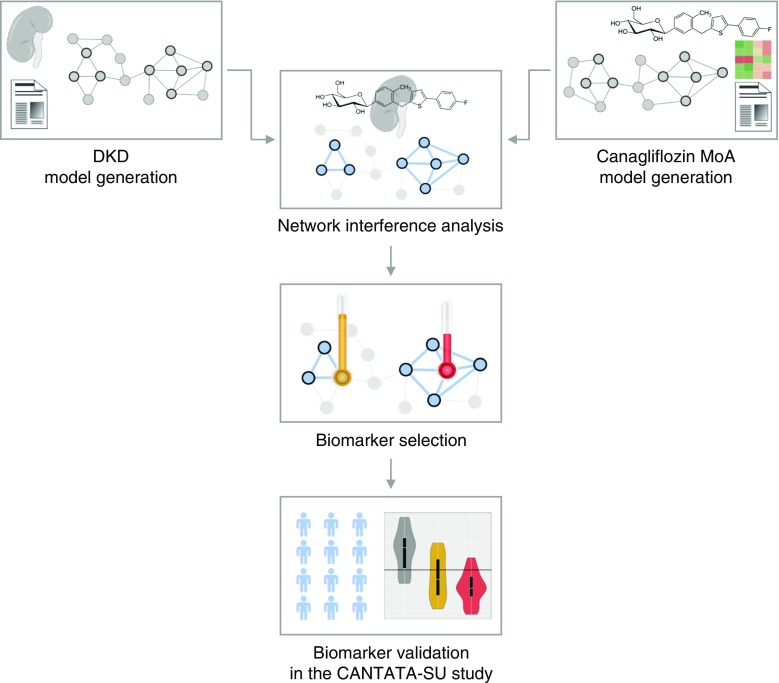
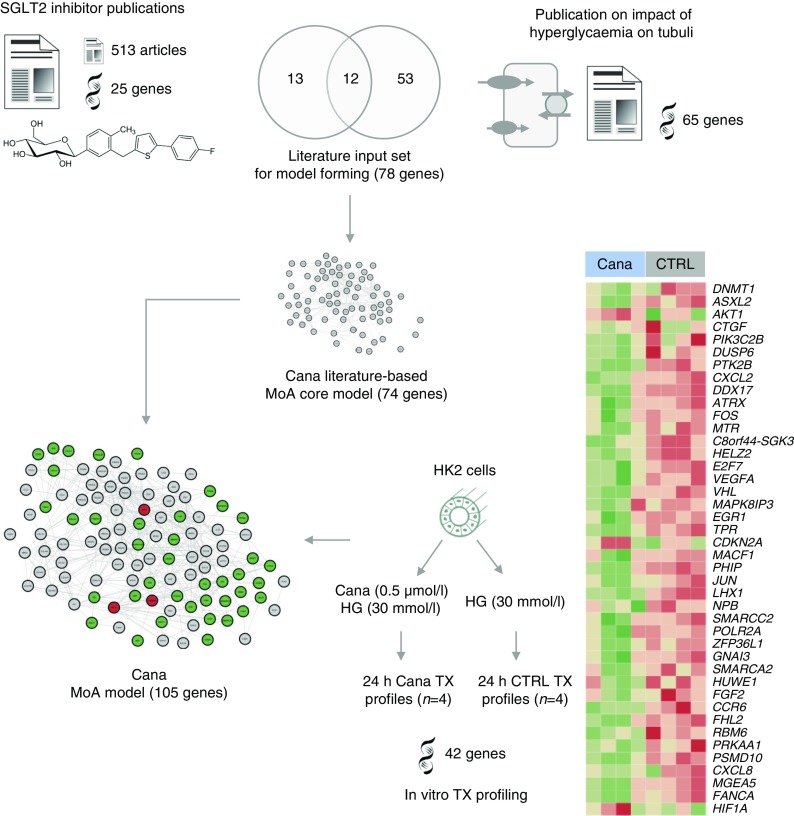
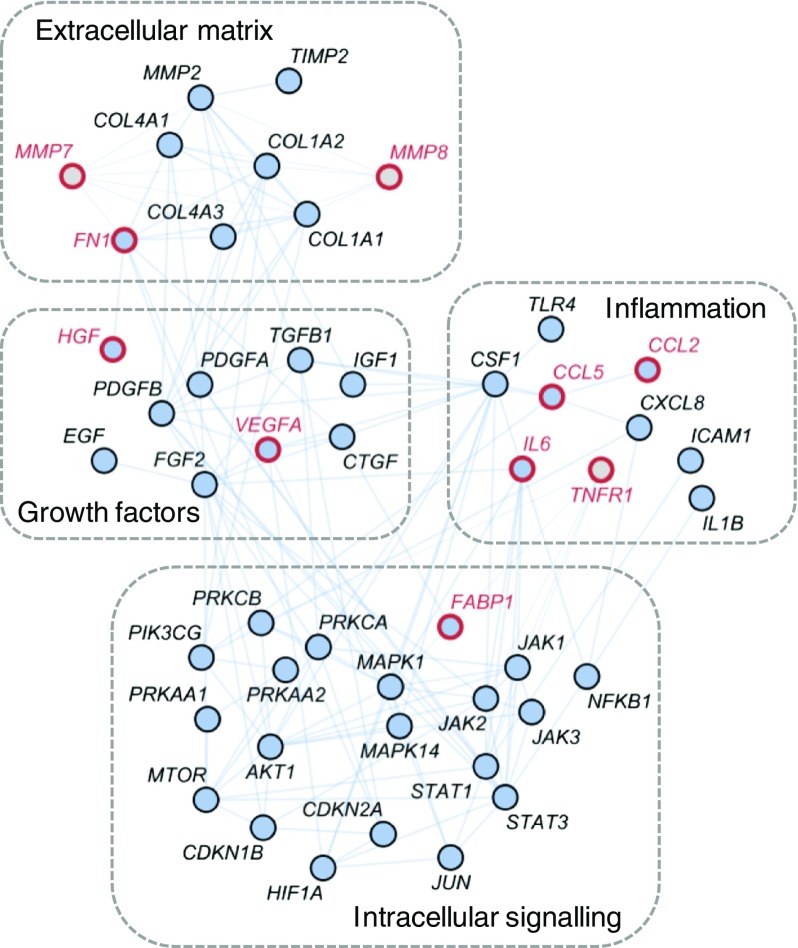
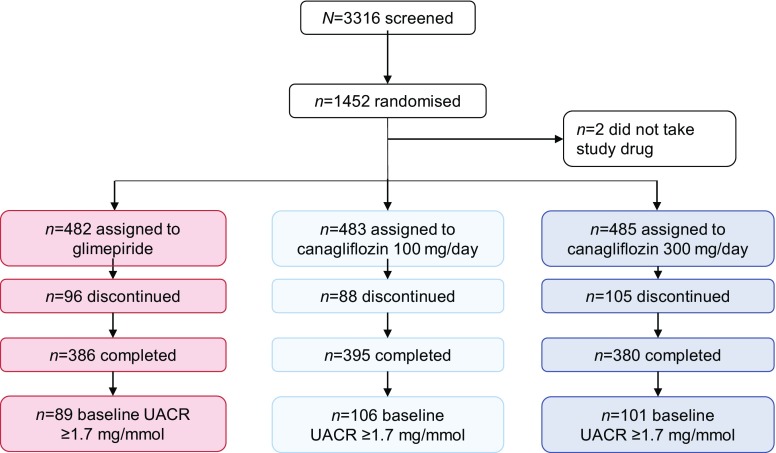
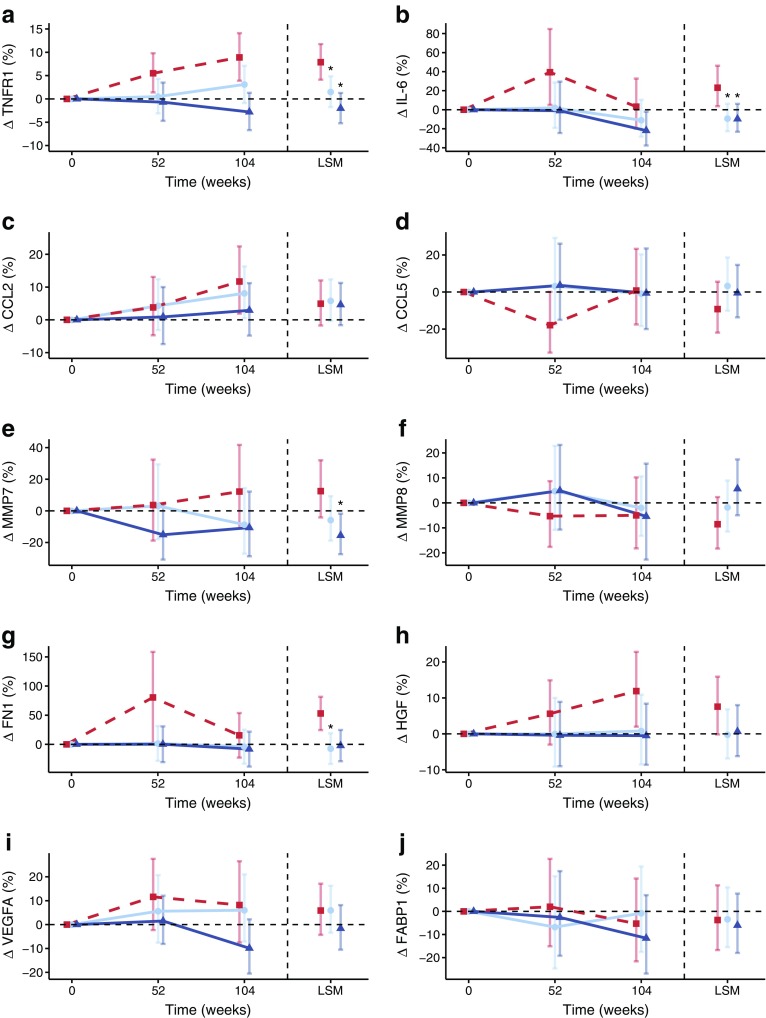
AIMS/HYPOTHESIS: The sodium-glucose cotransporter 2 (SGLT2) inhibitor canagliflozin slows progression of kidney function decline in type 2 diabetes. The aim of this study was to assess the effect of the SGLT2 inhibitor canagliflozin on biomarkers for progression of diabetic kidney disease (DKD). METHODS: A canagliflozin mechanism of action (MoA) network model was constructed based on an in vitro transcriptomics experiment in human proximal tubular cells and molecular features linked to SGLT2 inhibitors from scientific literature. This model was mapped onto an established DKD network model that describes molecular processes associated with DKD. Overlapping areas in both networks were subsequently used to select candidate biomarkers that change with canagliflozin therapy. These biomarkers were measured in 296 stored plasma samples from a previously reported 2 year clinical trial comparing canagliflozin with glimepiride. RESULTS: Forty-four proteins present in the canagliflozin MoA molecular model overlapped with proteins in the DKD network model. These proteins were considered candidates for monitoring impact of canagliflozin on DKD pathophysiology. For ten of these proteins, scientific evidence was available suggesting that they are involved in DKD progression. Of these, compared with glimepiride, canagliflozin 300 mg/day decreased plasma levels of TNF receptor 1 (TNFR1; 9.2%; p < 0.001), IL-6 (26.6%; p = 0.010), matrix metalloproteinase 7 (MMP7; 24.9%; p = 0.011) and fibronectin 1 (FN1; 14.9%; p = 0.055) during 2 years of follow-up. CONCLUSIONS/INTERPRETATION: The observed reduction in TNFR1, IL-6, MMP7 and FN1 suggests that canagliflozin contributes to reversing molecular processes related to inflammation, extracellular matrix turnover and fibrosis. Trial registration ClinicalTrials.gov NCT00968812.
Overview
The claims and statistics of this paper haven’t been checked yet.
Free: it reads the open-access text and checks the first 5 claims that cite a source we can check. Create a free account to check every claim.
Integrity signals
Registry
Cites
Statistics
Figures
Verification
Claims the paper makes
The claims and statistics of this paper haven’t been checked yet.
Free: it reads the open-access text and checks the first 5 claims that cite a source we can check. Create a free account to check every claim.
Claims other papers make about this one
Each is checked against this paper’s own text: does it say what the citing paper says it does?
The source backs part of the claim, not all of it — or backs it for a different population, condition or comparison.
In the citing paper
“Empagliflozin, dapagliflozin, canagliflozin, and ertugliflozin have shown a decrease in hospitalization for HF in their CVOTs.”
From American Association of Clinical Endocrinology Clinical Practice Guideline: Developing a Diabetes Mellitus Comprehensive Care Plan-2022 Update. (2022) · cites this paper as [444]
Experimental — accuracy not yet measuredThe source backs part of the claim, not all of it — or backs it for a different population, condition or comparison.
In the citing paper
“Empagliflozin and canagliflozin demonstrated reduction in MACE in CVOTs; empagliflozin also demonstrated decreased CV death and all-cause mortality.”
From American Association of Clinical Endocrinology Clinical Practice Guideline: Developing a Diabetes Mellitus Comprehensive Care Plan-2022 Update. (2022) · cites this paper as [444]
Experimental — accuracy not yet measuredThe source backs part of the claim, not all of it — or backs it for a different population, condition or comparison.
In the citing paper
“In humans, the serum level of IL-6 dropped by 26.6% (p = 0.010) after 2 years of canagliflozin treatment [35].”
From Neuroprotective effect of SGLT2 inhibitors. (2021) · cites this paper as [35]
Experimental — accuracy not yet measuredThe source backs part of the claim, not all of it — or backs it for a different population, condition or comparison.
In the citing paper
“Moreover, recent data support the notion that SGLT2 inhibitors reduce oxidative stress in the kidney by >50% and blunt increases in angiotensinogen as well as reduce NLRP3 inflammasome activity (100,102,103).”
From 11. Chronic Kidney Disease and Risk Management: Standards of Care in Diabetes—2026 (2026) · cites this paper as [103]
Experimental — accuracy not yet measuredThe cited source says what the claim attributes to it.
In the citing paper
“Multiple studies have shown renal and CV benefits of SGLT2is239,424–426,444,1052–1054”
From American Association of Clinical Endocrinology Clinical Practice Guideline: Developing a Diabetes Mellitus Comprehensive Care Plan-2022 Update. (2022) · cites this paper as [444]
3 more claims about this paper
Create a free account to see every claim other papers make about this one.
Self-check
Percentages, sums and reported differences re-computed from the paper’s own numbers.
The self-check needs the paper’s full text.
Citations
Cites
Canagliflozin and Cardiovascular and Renal Events in Type 2 Diabetes
Neal, B., Perkovic, V., Mahaffey, K. W., de Zeeuw, D., Fulcher, G., Erondu, N., Shaw, W., Law, G., Desai, M., & Matthews, D. R. (2017) · New England Journal of Medicine · doi:10.1056/nejmoa1611925 · Cited by 7,830
Empagliflozin and Progression of Kidney Disease in Type 2 Diabetes
Wanner, C., Inzucchi, S. E., Lachin, J. M., Fitchett, D., von Eynatten, M., Mattheus, M., Johansen, O. E., Woerle, H. J., Broedl, U. C., & Zinman, B. (2016) · New England Journal of Medicine · doi:10.1056/nejmoa1515920 · Cited by 3,655
Levey, A. S., Coresh, J., Greene, T., Marsh, J., Stevens, L. A., Kusek, J. W., Van Lente, F., & for Chronic Kidney Disease Epidemiology Collaboration (2007) · Clinical Chemistry · doi:10.1373/clinchem.2006.077180 · Cited by 1,855 · cited 1×
“Serum creatinine was used to calculate eGFR with the Modification of Diet in Renal Disease equation [20].”
MethodFox, C. S., Matsushita, K., Woodward, M., Bilo, H. J., Chalmers, J., Heerspink, H. J. L., Lee, B. J., Perkins, R. M., Rossing, P., Sairenchi, T., et al. (2012) · The Lancet · doi:10.1016/s0140-6736(12)61350-6 · Cited by 1,401
Self-citationHeerspink, H. J. L., Perkins, B. A., Fitchett, D. H., Husain, M., & Cherney, D. Z. I. (2016) · Circulation · doi:10.1161/circulationaha.116.021887 · Cited by 1,376
Self-citationKidney disease and increased mortality risk in type 2 diabetes
Afkarian, M., Sachs, M. C., Kestenbaum, B., Hirsch, I. B., Tuttle, K. R., Himmelfarb, J., & de Boer, I. H. (2013) · Journal of the American Society of Nephrology · doi:10.1681/asn.2012070718 · Cited by 1,298
Cefalu, W. T., Leiter, L. A., Yoon, K.-H., Arias, P., Niskanen, L., Xie, J., Balis, D. A., Canovatchel, W., & Meininger, G. (2013) · The Lancet · doi:10.1016/s0140-6736(13)60683-2 · Cited by 724
Sodium-Glucose Cotransport Inhibition With Dapagliflozin in Type 2 Diabetes
List, J. F., Woo, V., Morales, E., Tang, W., & Fiedorek, F. T. (2009) · Diabetes Care · doi:10.2337/dc08-1863 · Cited by 698
Pathogenesis and Treatment of Chronic Kidney Disease: A Review of Our Recent Basic and Clinical Data
Tomino, Y. (2014) · Kidney and Blood Pressure Research · doi:10.1159/000368458 · Cited by 566
Interleukin-6 Signaling Pathway and Its Role in Kidney Disease: An Update
Su, H., Lei, C.-T., & Zhang, C. (2017) · Frontiers in Immunology · doi:10.3389/fimmu.2017.00405 · Cited by 524
Cited by
Items 201–300 of 458
Anti-inflammatory potential of Empagliflozin
Pirklbauer, M. (2021) · Inflammopharmacology · doi:10.1007/s10787-021-00797-9 · Cited by 25
“1 3 biomarkers (Heerspink et al. 2019) and to reduce urinary IL-6 concentration (Dekkers et al.”
BackgroundHeerspink, H. J. L., Furtado, R. H. M., Berwanger, O. B., Koch, G. G., Martínez, F. A., Mukhtar, O., Verma, S., Gasparyan, S. B., Tang, F., Windsor, S. L., et al. (2022) · Clinical Journal of the American Society of Nephrology · doi:10.2215/cjn.14231021 · Cited by 25
“9) Insulin 40 (35) 43 (37) 83 (36) 182 (37) 171 (35) 353 (36) Anticoagulant 96 (83) 99 (85) 195 (84) 421 (85) 413 (84) 834 (84) Concomitant COVID-19 medication Remdesivir 23 (20) 21 (18) 44 (19) 91 (18) 90 (18) 181 (18) Systemic corticosteroids Dexamethasone 24 (21) 22 (19) 46 (20) 106 (21) 104 (21) 210 (21) Other sys…”
BackgroundInfluentialSelf-citationWang, J., Shi, H., Yang, Y. S., & Gong, X. (2025) · Frontiers in Immunology · doi:10.3389/fimmu.2025.1505794 · Cited by 30
Novel Biomarkers of Inflammation for the Management of Diabetes: Immunoglobulin-Free Light Chains
Matsumori, A. (2022) · Biomedicines · doi:10.3390/biomedicines10030666 · Cited by 23
“canagliflozin, was reported to decrease circulating levels of IL-6, TNF receptor 1, fibronectin 1 and matrix metalloproteinase 7, and contributes to improving molecular processes related to inflammation, extracellular matrix turnover and fibrosis [89].”
BackgroundBaker, H. E., Tune, J. D., Mather, K. J., Blaettner, B. S., Clark, H. E., Li, F., Li, X., Kowala, M. C., Fliegel, L., & Goodwill, A. G. (2022) · International Journal of Cardiology · doi:10.1016/j.ijcard.2022.06.054 · Cited by 25
Wee, C. F., Teo, Y. H., Teo, Y. N., Syn, N. L. X., See, R. M., Leong, S., Yip, A. S. Y., Ong, Z. X., Lee, C., Chan, M. Y., et al. (2022) · Journal of Cardiovascular Imaging · doi:10.4250/jcvi.2021.0159 · Cited by 22
SGLT-2 inhibitors as novel treatments of multiple organ fibrosis
Hu, J.-P., Teng, J., Hui, S., & Liang, L. (2024) · Heliyon · doi:10.1016/j.heliyon.2024.e29486 · Cited by 26
McCormick, N., Yokose, C., Lu, N., Wexler, D. J., Aviña-Zubieta, J. A., Vera, M. A. D., McCoy, R. G., & Choi, H. K. (2024) · JAMA Internal Medicine · doi:10.1001/jamainternmed.2024.0376 · Cited by 25
Diagnosis and Management of Heart Failure
Gladysheva, I. P., & Sullivan, R. D. (2022) · MDPI eBooks · doi:10.3390/books978-3-0365-4153-2 · Cited by 22
Re-thinking diabetic nephropathy: Microalbuminuria is just a piece of the diagnostic puzzle
Ceccarelli, D. C., Paleari, R., Solerte, B., & Mosca, A. (2021) · Clinica Chimica Acta · doi:10.1016/j.cca.2021.11.009 · Cited by 22
Stanciu, G. D., Ababei, D. C., Solcan, C., Bild, V., Ciobîcă, A., Chiriac, S. I. B., Ciobanu, L., & Tamba, B.-I. (2023) · Pharmaceuticals · doi:10.3390/ph16111620 · Cited by 21
Enoksen, I. T., Svistounov, D., Norvik, J. V., Stefansson, V. T. N., Solbu, M. D., Eriksen, B. O., & Melsom, T. (2021) · Nephrology Dialysis Transplantation · doi:10.1093/ndt/gfab251 · Cited by 19
Antiarrhythmic effects and mechanisms of sodium-glucose cotransporter 2 inhibitors: A mini review
Wu, J., Liu, Y., Wei, X., Zhang, X., Ye, Y., Li, W., & Su, X. (2022) · Frontiers in Cardiovascular Medicine · doi:10.3389/fcvm.2022.915455 · Cited by 24
Buckley, L. F., Schmidt, I. M., Verma, A., Pálsson, R., Adam, D., Shah, A. M., Srivastava, A., & Waikar, S. S. (2023) · JAMA Cardiology · doi:10.1001/jamacardio.2023.0056 · Cited by 21
Ostrominski, J. W., & Vaduganathan, M. (2023) · The American Journal of Medicine · doi:10.1016/j.amjmed.2023.04.035 · Cited by 21
Implications of the cGAS-STING pathway in diabetes: Risk factors and therapeutic strategies
Mohammadi, S., & Khorasani, M. (2024) · International Journal of Biological Macromolecules · doi:10.1016/j.ijbiomac.2024.134210 · Cited by 22
Endothelial Cell Dysfunction Due to Molecules Secreted by Macrophages in Sepsis
He, H., Zhang, W., Jiang, L., Tong, X., Zheng, Y., & Xia, Z. (2024) · Biomolecules · doi:10.3390/biom14080980 · Cited by 21
“Canagliflozin (CANA) is a sodium-glucose cotransporter protein 2 inhibitor commonly found in type 2 diabetes, and it also has anti-inflammatory properties [127].”
BackgroundWang, A., Li, Z., Zhuo, S., Gao, F., Zhang, H., Zhang, Z., Ren, G., & Ma, X. (2022) · Frontiers in Cardiovascular Medicine · doi:10.3389/fcvm.2022.857952 · Cited by 24
Dapagliflozin for the treatment of chronic kidney disease
Kurata, Y., & Nangaku, M. (2022) · Expert Review of Endocrinology & Metabolism · doi:10.1080/17446651.2022.2099373 · Cited by 21
Chen, G., Shen, S., Zhang, K., Zhou, L., Shen, J., Zhao, J., Ding, S.-G., Ma, L., & Gao, H. (2022) · Frontiers in Cardiovascular Medicine · doi:10.3389/fcvm.2022.926979 · Cited by 18
Georgopoulou, T., Petrakis, I., Dermitzaki, K. E., Pleros, C., Drosataki, E., Aletras, G., Foukarakis, E. G., Lioudaki, E., Androulakis, E. S., & Stylianou, K. (2023) · Journal of Clinical Medicine · doi:10.3390/jcm12124121 · Cited by 25
“assessed the levels of biomarkers in plasma samples from patients with T2D enrolled in a randomized clinical trial and found that treatment with canagliflozin decreased levels of tumor necrosis factor receptor-1 (TNFR1), interleukin-6 (IL-6), matrix metalloproteinase-7 (MMP7), and fibronectin-1 (FN1) levels compared w…”
BackgroundMolecular Therapeutics for Diabetic Kidney Disease: An Update
Guo, M., He, F.-F., & Zhang, C. (2024) · International Journal of Molecular Sciences · doi:10.3390/ijms251810051 · Cited by 20
“In addition, SGLT2 inhibitors reportedly reduce the production of circulating inflammatory factors, such as interleukins (IL) -6, TNF receptor-1, and TNF receptor-2, and decrease the production of ketones [20].”
BackgroundThe Na/K-ATPase Signaling and SGLT2 Inhibitor-Mediated Cardiorenal Protection: A Crossed Road?
Liu, J., Tian, J., Sodhi, K., & Shapiro, J. I. (2021) · The Journal of Membrane Biology · doi:10.1007/s00232-021-00192-z · Cited by 19
Liao, P.-Y., Lo, H., Liu, I.-C., Lo, L.-C., Hsiang, C., & Ho, T. (2022) · Food & Function · doi:10.1039/d1fo02788c · Cited by 19
Ma, S., Wu, C., Lyu, Y., Chou, Y., Chang, Y.-T., & Wu, C. (2022) · Clinical and Experimental Dermatology · doi:10.1111/ced.15385 · Cited by 18
Li, X., Zhu, X., Wang, Y., Tong, S., Chen, Z., Lu, Z., Zhang, J.-H., Song, L., Wang, X., Zhang, C., et al. (2024) · Acta Pharmacologica Sinica · doi:10.1038/s41401-024-01286-9 · Cited by 17
mTOR and SGLT-2 Inhibitors: Their Synergistic Effect on Age-Related Processes
Troise, D. E., Mercuri, S., Infante, B., Losappio, V., Cirolla, L. A., Netti, G. S., Ranieri, E., & Stallone, G. (2024) · International Journal of Molecular Sciences · doi:10.3390/ijms25168676 · Cited by 21
Ibrahim, N. E., & Januzzi, J. L. (2020) · Clinical Chemistry · doi:10.1093/clinchem/hvaa277 · Cited by 19
Tziastoudi, M., Pissas, G., Golfinopoulos, S., Filippidis, G., Dousdampanis, P., Eleftheriadis, T., & Stefanidis, I. (2023) · Life · doi:10.3390/life13122338 · Cited by 21
Soliman, Y. Y., Abuelazm, M. T., Amer, B. E., Hukamdad, M., Ellabban, M. H., Hendi, N. I., Mouffokes, A., Abdelazeem, B., & Hassaballa, H. (2024) · American Journal of Cardiovascular Drugs · doi:10.1007/s40256-024-00661-5 · Cited by 19
“Similarly, canagliflozin has been found to lower serum interleukin-6 and tumor necrosis factor receptor-1 levels [30].”
BackgroundLi, Z., Murakoshi, M., Ichikawa, S., Koshida, T., Adachi, E., Suzuki, C., Ueda, S., Gohda, T., & Suzuki, Y. (2020) · FEBS Open Bio · doi:10.1002/2211-5463.13014 · Cited by 21
Clinical pharmacology of SGLT-2 inhibitors in heart failure
Velliou, M., Polyzogopoulou, E., Ventoulis, I., & Parissis, J. (2023) · Expert Review of Clinical Pharmacology · doi:10.1080/17512433.2023.2173574 · Cited by 21
Vasileva, L. A., Gaynanova, G. A., Romanova, E. A., Petrov, K. A., Feng, C., Zakharova, L. Y., & Sinyashin, O. G. (2024) · Russian Chemical Reviews · doi:10.59761/rcr5150 · Cited by 16
Sodium-Glucose Cotransporter-2 Inhibitors in Vascular Biology: Cellular and Molecular Mechanisms
Xiao, L., Nie, X., Cheng, Y., & Wang, N. (2021) · Cardiovascular Drugs and Therapy · doi:10.1007/s10557-021-07216-9 · Cited by 16
Liu, H., Sridhar, V. S., Perkins, B. A., Rosenstock, J., & Cherney, D. Z. I. (2022) · Current Diabetes Reports · doi:10.1007/s11892-022-01471-2 · Cited by 15
Ma, S., Chen, L., Yan, J., Shen, M., Zhang, R., Li, M., He, M., Chen, K., Zhu, Y., Lin, H., et al. (2022) · Biomedicine & Pharmacotherapy · doi:10.1016/j.biopha.2022.113765 · Cited by 14
Sodium glucose cotransporter-2 inhibitors and heart disease: Current perspectives
Mondal, S., Pramanik, S., Khare, V. R., Fernandez, C. J., & Pappachan, J. M. (2024) · World Journal of Cardiology · doi:10.4330/wjc.v16.i5.240 · Cited by 17
Hosseini, Z. S., Jamili, M. J., Ensan, B., Donyadideh, G., Shahri, B., Eshraghi, H., Darroudi, S., & Moohebati, M. (2025) · Scientific Reports · doi:10.1038/s41598-024-82991-7 · Cited by 14
Reverte, V., Rodríguez, F., Oltra, L., Moreno, J. M., Llinás, M. T., Shea, C. M., Schwartzkopf, C. D., Buys, E. S., Masferrer, J. L., & Salazar, F. J. (2022) · American Journal of Physiology-Heart and Circulatory Physiology · doi:10.1152/ajpheart.00386.2021 · Cited by 17
Utility of Hypoglycemic Agents to Treat Asthma with Comorbid Obesity
Ge, D., Foer, D., & Cahill, K. N. (2022) · Pulmonary Therapy · doi:10.1007/s41030-022-00211-x · Cited by 14
“The authors of an in vitro transcriptomics experiment assessing the progression of diabetic kidney disease in human proximal tubular cells concluded that the one of the SGLT-2i currently available, canagliflozin, reverses inflammation by decreasing the levels of TNF receptor 1, IL-6, matrix metalloproteinase 7, and fi…”
BackgroundKabel, A. M., Arab, H. H., & Elmaaboud, M. A. A. (2021) · Fundamental and Clinical Pharmacology · doi:10.1111/fcp.12661 · Cited by 14
Redefining SGLT2 inhibitors through cytoprotective mechanisms
Stanković, S., Miloradović, Z., Petrovič, V., & Stoiljković, M. (2026) · European Journal of Pharmacology · doi:10.1016/j.ejphar.2026.178647 · Cited by 14
Chen, H., Zhang, X., Liao, N., Ji, Y., Mi, L., Gan, Y., Su, Y., & Wen, F. (2022) · Frontiers in Endocrinology · doi:10.3389/fendo.2022.1020252 · Cited by 13
Effect of SGLT2 inhibition on salt-induced hypertension in female Dahl SS rats
Kravtsova, O., Levchenko, V., Klemens, C. A., Rieg, T., Liu, R., & Staruschenko, A. (2023) · Scientific Reports · doi:10.1038/s41598-023-46016-z · Cited by 13
“Numerous preclinical and clinical studies have highlighted the connection between SGLT2i treatment and a decrease in various markers of inflammation and kidney injury 25,26 , as well as preservation of kidney function decline in CKD 27–29 .”
BackgroundWu, Y., Chen, J.-W., Lin, L.-Y., Huang, J.-H., Chang, C.-C., & Chang, T. (2025) · Biochemical Pharmacology · doi:10.1016/j.bcp.2025.116899 · Cited by 17
Ahmed, S. A., Saikia, K., Basumatary, D., Gurumayum, S., Swargiary, D., & Borah, J. C. (2025) · International Immunopharmacology · doi:10.1016/j.intimp.2025.114825 · Cited by 14
Cannarella, R., Rubulotta, M., Cannarella, V., Vignera, S. L., & Calogero, A. E. (2025) · European Journal of Internal Medicine · doi:10.1016/j.ejim.2025.06.010 · Cited by 16
Vrachatis, D. A., Papathanasiou, K. A., Iliodromitis, K. E., Giotaki, S. G., Kossyvakis, C., Raisakis, K., Kaoukis, A., Lambadiari, V., Avramides, D., Reimers, B., et al. (2021) · Drugs · doi:10.1007/s40265-021-01565-3 · Cited by 15
“Canagliflozin was previously suggested to reduce inflammation and ECM turnover-related biomarkers, such as IL-6 and matrix metalloproteinase-7 (MMP7), in human plasma [72].”
BackgroundSong, Y., Guo, F., Liu, Y., Zhao, Y., Zhao, L., Huang, F., Fan, X., & Qin, G. (2022) · Bioengineered · doi:10.1080/21655979.2022.2031391 · Cited by 14
Mihaljević, V., Zjalić, M., Kizivat, T., Kolarić, T. O., Smolić, M., Rođak, E., Čović, M., Kuna, L., Smolić, R., Včev, A., et al. (2022) · Biomedicines · doi:10.3390/biomedicines10112983 · Cited by 13
“SGLT2i has been shown to have anti-inflammatory properties in diabetic animals [33,34], human studies [36,37], and cell cultures exposed to hyperglycemic conditions [31].”
BackgroundNojima, T., Matsubayashi, Y., Yoshida, A., Suganami, H., Abe, T., Ishizawa, M., Fujihara, K., Tanaka, S., Kaku, K., & Sone, H. (2020) · Diabetic Medicine · doi:10.1111/dme.14279 · Cited by 13
Gohda, T., Yanagisawa, N., Murakoshi, M., Ueda, S., Nishizaki, Y., Nojiri, S., Ohashi, Y., Ohno, I., Shibagaki, Y., Imai, N., et al. (2021) · Frontiers in Medicine · doi:10.3389/fmed.2021.634932 · Cited by 13
Albarrán, O. G., Morales, C., Pérez-Maraver, M., Aparicio-Sánchez, J. J., & Simó, R. (2022) · Diabetes Therapy · doi:10.1007/s13300-022-01276-2 · Cited by 16
“Apart from the activation of the TGF, other mechanisms for the beneficial effects of SGLT2i on kidney function have been proposed (Table 1): induction of ketone body production and an elevation in hematocrit concentration, which can contribute to the beneficial effect of these agents on cardiovascular outcomes [30]; l…”
BackgroundSGLT2 inhibitors in the treatment of type 2 cardiorenal syndrome: Focus on renal tubules
Wang, Y., Mao, X., Shi, S., Xu, X., Lv, J., Zhang, B., Wu, H., & Song, Q. (2023) · Frontiers in Nephrology · doi:10.3389/fneph.2022.1109321 · Cited by 15
Mansouri, M. H., Mansouri, P., Sadeghi, M., Hashemi, S. M., Khosravi, A., Behjati, M., Shahabi, J., Mansouri, A., Zavar, R., Amirpour, A., et al. (2023) · Clinical Cardiology · doi:10.1002/clc.24158 · Cited by 13
“…excretion leads to a wide range of metabolic benefits, such as a decrease in glycosylated hemoglobin, 35 weight loss, 36 decreased BP, 37 anti ‐ inflammatory effects, 38 decreased oxidative stress, 39 reduced renin – angiotensin – aldosterone system activation 40 and natriuretic peptides synthesis.”
BackgroundWang, S., Yue, Y., Wang, X., Tan, Y., & Zhang, Q. (2024) · Aging Cell · doi:10.1111/acel.14266 · Cited by 14
“The FN1 has been shown to promote the recruitment of immune cells to sites of inflam - mation and to facilitate their activation and proliferation (Heerspink et al., 2019 ).”
BackgroundHeyman, S., Aronson, D., & Abassi, Z. A. (2024) · International Journal of Molecular Sciences · doi:10.3390/ijms251910759 · Cited by 17
“SGLT2i-related myocardial protection involves their osmotic diuretic and natriuretic effects, which lead to favorable cardiac hemodynamics, evidenced by reducing preload and after-load [60,61].”
BackgroundNew and future heart failure drugs
Haghighat, L., DeJong, C., & Teerlink, J. R. (2024) · Nature Cardiovascular Research · doi:10.1038/s44161-024-00576-z · Cited by 15
SGLT2 inhibitors for alleviating heart failure through non-hypoglycemic mechanisms
Chen, Y.-R., Zhu, F.-Y., & Zhou, R. (2024) · Frontiers in Cardiovascular Medicine · doi:10.3389/fcvm.2024.1494882 · Cited by 14
Chang, S., Liao, M.-C., Miyata, K. N., Pang, Y., Zhao, X. C., Peng, J., Rivard, A., Ingelfinger, J. R., Chan, J. S. D., & Zhang, S. (2025) · Translational research · doi:10.1016/j.trsl.2024.12.005 · Cited by 15
Satyam, S. M., Bairy, L. K., Rehman, A., Nair, A. A., Farook, M., Binu, N. N., Khan, S., Yehya, M., & Khan, M. M. (2025) · Sci · doi:10.3390/sci7020059 · Cited by 13
Diabetic proximal tubulopathy: Can we mimic the disease for in vitro screening of SGLT inhibitors?
Faria, J., Gerritsen, K. G. F., Nguyen, T. Q., Mihaila, S. M., & Masereeuw, R. (2021) · European Journal of Pharmacology · doi:10.1016/j.ejphar.2021.174378 · Cited by 14
Protective effect of dapagliflozin against cyclosporine A-induced nephrotoxicity
Değer, M., Kaya, B., Akdoğan, N., Kaplan, H. M., Bağır, E. K., İzol, V., & Arıdoğan, İ. A. (2021) · Drug and Chemical Toxicology · doi:10.1080/01480545.2021.1979996 · Cited by 14
“Furthermore, several in vitro studies show that SGLT2 inhibitors reduce renal inflammation, oxidative stress, and apoptosis (Chang et al. 2016, Heerspink et al. 2019, Kimura et al. 2019).”
BackgroundSGLT-2 Inhibitors: The Next-generation Treatment for Type 2 Diabetes Mellitus
Lukic, N., Mačvanin, M., Gluvic, Z. M., Rizzo, M., Radak, D. J., Suri, J. S., & Isenović, E. R. (2023) · Current Medicinal Chemistry · doi:10.2174/0109298673251493231011192520 · Cited by 16
Cheng, D., Yang, F., Saulnier, P., & Wang, N. (2019) · Endocrine · doi:10.1007/s12020-019-02153-y · Cited by 14
SGLT2 Inhibitors Empagliflozin and Canagliflozin Ameliorate Allergic Asthma Responses in Mice
Lee, Y.-A., & Im, D. (2024) · International Journal of Molecular Sciences · doi:10.3390/ijms25147567 · Cited by 13
“…6, indicating anti - inflammatory and anti - fibrotic Canagliflozin has also been reported to be an outstanding anti-inflammatory drug, among other SGLT2 inhibitors, used in lipopolysaccharide-treated mice in vivo and in human immune cells in vitro [32,33]. the kidney tissues of animals [25,29 – 31].”
BackgroundHan, J., Song, J., Jung, E. S., Choi, J. W., Ji, H. Y., & Mook‐Jung, I. (2025) · Aging Cell · doi:10.1111/acel.70101 · Cited by 11
“These findings are consistent with previous studies demonstrating the anti-inflammatory effects of SGLT2 inhibitors in various disease models (Ganbaatar et al. 2020; Heerspink et al. 2019).”
Wang, Y., Wang, Y., He, X., & Li, X. (2025) · Frontiers in Endocrinology · doi:10.3389/fendo.2025.1554637 · Cited by 19
Liu, T., Li, R., Wang, X., Gao, X., & Zhang, X. (2021) · Medicina Clínica · doi:10.1016/j.medcli.2021.09.031 · Cited by 13
Tye, S. C., de Vries, S. T., Wanner, C., Denig, P., & Heerspink, H. J. L. (2022) · Frontiers in Pharmacology · doi:10.3389/fphar.2021.786706 · Cited by 12
“Addition of biomarkers that specifically reflect these mechanistic pathways could improve efficacy prediction and could possibly be used as pharmacodynamic response biomarkers for SGLT2 inhibitors (Heerspink et al., 2019; Sen et al., 2021).”
BackgroundSelf-citationOptimal use of SGLT2 inhibitors in diabetic kidney transplant recipients
Pham, P. T., & Pham, P.-C. T. (2022) · Frontiers in Nephrology · doi:10.3389/fneph.2022.1014241 · Cited by 12
Gebeshuber, C. A., Daniel-Fischer, L., Regele, H. M., Schachner, H., Aufricht, C., Kornauth, C., Ley, M., Alper, S. L., Herzog, R., Kratochwill, K., et al. (2023) · Translational research · doi:10.1016/j.trsl.2023.04.001 · Cited by 11
Self-citationSingh, P. K., Goyal, L., Mallick, D. C., Surani, S., & Yashi, K. (2023) · Journal of Clinical Medicine · doi:10.3390/jcm12196202 · Cited by 13
“Beyond glucosuria, they also contribute to modest bp control, kaliuresis, and reduction in oxidative stress, as well as reducing markers of inflammation and fibrosis such as interleukin-6, monocyte chemoattractant protein 1 (MCP-1), nuclear factor-kB, urinary IL-6 as well as serum tumor necrosis factor receptor 1 (TNFR1…”
BackgroundThe impact of SGLT2 inhibitors on αKlotho in renal MDCK and HK-2 cells
Wolf, L., Föller, M., & Feger, M. (2023) · Frontiers in Endocrinology · doi:10.3389/fendo.2023.1069715 · Cited by 13
Targeting Pharmacotherapies for Inflammatory and Cardiorenal Endpoints in Kidney Disease
Huck, D. M., Buckley, L. F., Chandraker, A. K., Blankstein, R., & Weber, B. (2024) · Journal of Cardiovascular Pharmacology · doi:10.1097/fjc.0000000000001482 · Cited by 10
Ashry, N. A., Abdelaziz, R. R., Suddek, G. M., & Saleh, M. A. (2021) · Life Sciences · doi:10.1016/j.lfs.2021.119731 · Cited by 10
Biomolecular Mechanisms of Cardiorenal Protection with Sodium-Glucose Co-Transporter 2 Inhibitors
Prandi, F. R., Barone, L., Lecis, D., Belli, M., Sergi, D., Milite, M., Lerakis, S., Romeo, F., & Barillà, F. (2022) · Biomolecules · doi:10.3390/biom12101349 · Cited by 12
“It is then possible to hypothesize that canaglifozin therapy leads to an improvement in fibrosis and inflammation [91].”
BackgroundMøller, A. L., Thöni, S., Keller, F., Sharifli, S., Rasmussen, D. G. K., Genovese, F., Karsdal, M. A., & Mayer, G. J. (2023) · Biomedicines · doi:10.3390/biomedicines11113084 · Cited by 10
Self-citationThe kidney–skeletal muscle–heart axis in chronic kidney disease: implications for myokines
Quiroga, B., & Díez, J. (2024) · Nephrology Dialysis Transplantation · doi:10.1093/ndt/gfae193 · Cited by 9
Global trends and prospects related to macrophage in chronic kidney disease: a bibliometric analysis
Hu, Y., Wang, Y., Hong, H., Chen, Y.-X., Zhou, Q.-Y., Zhu, G., Tang, J., Liu, W., & Wang, L. (2024) · Renal Failure · doi:10.1080/0886022x.2024.2423846 · Cited by 9
Unveiling the podocyte-protective effect of sodium-glucose cotransporter-2 inhibitors
Jiang, B., Cheng, Z., Wang, D., Liu, F., Wang, J., Fu, H., & Mao, J. (2024) · Kidney Research and Clinical Practice · doi:10.23876/j.krcp.24.144 · Cited by 12
“Additionally, SGLT2 inhibitors have been shown to reduce inflammation and oxidative stress in kidney diseases [7,8].”
Gliflozins in hypertension: basic mechanisms and clinical insights
Rieg, T., Liu, R., & Staruschenko, A. (2025) · American Journal of Physiology-Renal Physiology · doi:10.1152/ajprenal.00119.2025 · Cited by 10
Azegami, T., Kaneko, H., Okada, A., Suzuki, Y., Aoyama, K., Nakayama, T., Fujiu, K., Takeda, N., Morita, H., Yokoo, T., et al. (2025) · Diabetes Obesity and Metabolism · doi:10.1111/dom.70020 · Cited by 11
“16,17 Accordingly, these agents have emerged as a novel therapeutic option for CKD, and are increasingly being recognised as a central component of CKD management.”
Bell, D. S. H. (2022) · Journal of Diabetes Research · doi:10.1155/2022/7787732 · Cited by 12
“Other possible etiologies for renoprotection with SGLT-2 inhibitors are that due to decreased glomerular pressure and glomerular wall tension, there are decreases in inflammation, oxidative stress, and fibrosis [46, 47].”
BackgroundSiriyotha, S., Lukkunaprasit, T., Looareesuwan, P., Nimitphong, H., McKay, G. J., Attia, J. R., & Thakkinstian, A. (2022) · Cardiovascular Diabetology · doi:10.1186/s12933-022-01641-2 · Cited by 10
Otoda, T., Sekine, A., Uemoto, R., Tsuji, S., Hara, T., Tamaki, M., Yuasa, T., Tamaki, T., Matsuhisa, M., & Aihara, K. (2023) · Diabetes Therapy · doi:10.1007/s13300-023-01488-0 · Cited by 9
SGLT2 inhibitors: a new pillar of the heart failure regimen
DeSa, T. B., & Gong, T. (2021) · Reviews in Cardiovascular Medicine · doi:10.31083/j.rcm2204133 · Cited by 11
Interaction between sodium-glucose co-transporter 2 and the sympathetic nervous system
Azzam, O., Matthews, V. B., & Schlaich, M. P. (2021) · Current Opinion in Nephrology & Hypertension · doi:10.1097/mnh.0000000000000767 · Cited by 10
“elevated in patients with heart failure [66,67].”
Scientific Advances in Diabetes: The Impact of the Innovative Medicines Initiative
Brito, M. D. F., Torre, C., & Lima, B. S. (2021) · Frontiers in Medicine · doi:10.3389/fmed.2021.688438 · Cited by 9
“For clinical trials, two novel designmodels were proposed, one by DIRECT and a second by BEAT—DKD: the Genotype-based Recall (GBR) (156) and “umbrella” or “platform” trials (157, 158), respectively.”
BackgroundInfluentialMorillas, H., Galcerá, E., Alania-Torres, E., Seller, J., Larumbe, A., Núñez, J. E., & Valle, A. (2022) · Reviews in Cardiovascular Medicine · doi:10.31083/j.rcm2304139 · Cited by 9
The interaction between non-coding RNAs and SGLT2: A review
Jarosz-Popek, J., Eyileten, C., Gager, G. M., Nowak, A., Szwed, P., Wicik, Z., Palatini, J., von Lewinski, D., Sourij, H., Siller-Matula, J. M., et al. (2023) · International Journal of Cardiology · doi:10.1016/j.ijcard.2023.131419 · Cited by 9
Kugathasan, L., Sridhar, V. S., Lytvyn, Y., Lovblom, L. E., Perkins, B. A., Advani, A., & Cherney, D. Z. I. (2024) · Diabetes Research and Clinical Practice · doi:10.1016/j.diabres.2024.111764 · Cited by 8
Sembach, F. E., Ægidius, H. M., Fink, L. N., Secher, T., Aarup, A., Jelsing, J., Vrang, N., Feldt‐Rasmussen, B., Rigbolt, K. T. G., Nielsen, J. C., et al. (2021) · Disease Models & Mechanisms · doi:10.1242/dmm.049086 · Cited by 8
Thongnak, L., Pengrattanachot, N., Promsan, S., Phengpol, N., Sutthasupha, P., Chatsudthipong, V., & Lungkaphin, A. (2021) · Journal of Biochemical and Molecular Toxicology · doi:10.1002/jbt.22978 · Cited by 8
Thirumathyam, R., Richter, E. A., Goetze, J. P., Fenger, M., van Hall, G., Dixen, U., Holst, J. J., Madsbad, S., Vejlstrup, N. G., Madsen, P. L., et al. (2022) · BMJ Open · doi:10.1136/bmjopen-2021-054100 · Cited by 10
Mechanisms of Sodium-glucose Cotransporter 2 Inhibitors in Heart Failure
Wei, J., & Du, J. (2023) · Cardiovascular Innovations and Applications · doi:10.15212/cvia.2023.0028 · Cited by 10
“Furthermore, SGLT2i have been found to decrease the inflammatory response in human patients [61, 62].”
BackgroundWang, L., Ding, S., Hu, Y., Su, J., Zhu, G., Hong, H., Hou, B., Dong, Z., Xue, Z., Wang, J., et al. (2025) · Frontiers in Endocrinology · doi:10.3389/fendo.2025.1513895 · Cited by 14
Beneficial cardiovascular and remodeling effects of SGLT 2 inhibitors
Chrysant, S. G., & Chrysant, G. S. (2022) · Expert Review of Cardiovascular Therapy · doi:10.1080/14779072.2022.2057949 · Cited by 8
Modeling the renoprotective mechanisms of SGLT2 inhibition in hypertensive chronic kidney disease
Clemmer, J. S., Yen, T. E., & Obi, Y. (2023) · Physiological Reports · doi:10.14814/phy2.15836 · Cited by 11
“There are many postulated mechanisms underlying the renoprotective effects of SGLT2 inhibitors including improvements in renal oxygenation and inflammation (Heerspink et al., 2019), reducing HIF-1a (Packer, 2021), and blocking hyperfiltration via TGF (Thomson & Vallon, 2021).”
BackgroundHua, T., Chu, Y., Wang, M., Zhang, Y., Shi, W., Huang, Q., Zhang, L., & Yang, M. (2023) · Intensive Care Medicine Experimental · doi:10.1186/s40635-023-00562-y · Cited by 8
Metadata
- Authors
- Heerspink, H. J. L., Perco, P., Mulder, S., Leierer, J., Hansen, M. K., Heinzel, A., & Mayer, G.
- Affiliations
- University Medical Center Groningen (NL)
- Innsbruck Medical University (AT)
- Janssen Research & Development (United States) (US)
- EmergenTec (Austria) (AT)
- Corresponding author
- Heerspink, Hiddo J. L.
- ORCID
- Venue
- Diabetologia
- Published
- 2019-04-17
- Volume
- 62
- Issue
- 7
- Pages
- 1154-1166
- ISSN
- 0012-186X (ISSN-L)
- 1432-0428
- PMC
- PMC6560022
- OpenAlex
- W2940024069
- Semantic Scholar
- f618f0ee8bdd64eea246f4a3ccbb16c2ab1f7ccc
- Cited by
- 457
- References
- 34
- Citations by year
- 2026: 37 · 2025: 62 · 2024: 61 · 2023: 79 · 2022: 89 · 2021: 79 · 2020: 33 · 2019: 12
- FWCI
- 41.14
- Type
- journal article
- Language
- en
- Open access
- hybrid
- doi.org
- Licence
- cc-by
- creativecommons.org/licenses/by/4.0 (tdm)
- Locations
- Diabetologia (publishedVersion, cc-by)
- Europe PMC (PubMed Central) (publishedVersion, cc-by)
- PubMed Central (publishedVersion, cc-by)
- PubMed (publishedVersion)
- University of Groningen research database (University of Groningen / Centre for Information Technology) (publishedVersion, cc-by)
- University of Groningen research database (University of Groningen / Centre for Information Technology) (submittedVersion, cc-by)
- Funders
- Janssen Research and Development
- Topics
- Health Sciences › Medicine › Nephrology › Chronic Kidney Disease and Diabetes
- Health Sciences › Medicine › Endocrinology, Diabetes and Metabolism › Diabetes Treatment and Management
- Health Sciences › Medicine › Nephrology › Acute Kidney Injury Research
- Keywords
- canagliflozin, SGLT2 inhibitors, diabetic nephropathy, inflammation, renal fibrosis, TNF receptor 1, interleukin-6, matrix metalloproteinase-7, FN1, extracellular matrix turnover, glimepiride, type 2 diabetes, plasma biomarkers, proximal tubular epithelial cells
- MeSH terms
- Canagliflozin, Sodium-Glucose Transporter 2 Inhibitors, Cell Line, Diabetes Mellitus, Type 2, Fibronectins, Fibrosis, Humans, Inflammation, Kidney Diseases, Biomarkers, Interleukin-6, Matrix Metalloproteinase 7, Receptors, Tumor Necrosis Factor, Type I, Renal Insufficiency, Chronic
About these checks
Registry, retraction, Cites and statistics results are computed, not judged, with one exception: a printed reference that no index lists is read once by a model before it counts as a citation error. Claims are extracted by a model and kept only when their quote appears verbatim in the text; each cited source is then checked, with a model’s help, for whether it says what the claim relies on. Those verdicts can be wrong — read the claim’s quote and the cited source before relying on one.
Statistics and arithmetic are recomputed, not judged.
Confidence bands are shown only for fields calibrated on our annotated test set. None is calibrated yet, so no band is shown.
What counts as a claim ›How we measure confidence ›How we check this ›
Are you an author, or do you see a problem with this page? Request a review
Data sources
Bibliographic data: Semantic Scholar, OpenAlex, Crossref.
Contains information from the Semantic Scholar Academic Graph Datasets, made available under the ODC Attribution License (ODC-BY 1.0).
Semantic Scholar’s data is described in: Kinney, R., et al. (2023). The Semantic Scholar Open Data Platform. arXiv:2301.10140.
