

Canagliflozin reduces inflammation and fibrosis biomarkers: a potential mechanism of action for beneficial effects of SGLT2 inhibitors in diabetic kidney disease
Open accessThe DOI matches its Crossref record; 34 of the 34 references it cites were found in a registry or an index.
Abstract
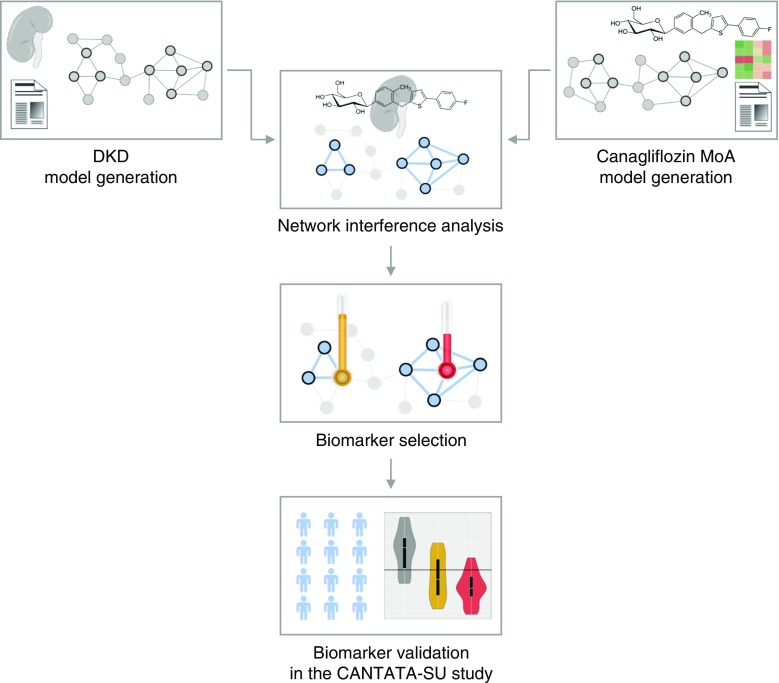
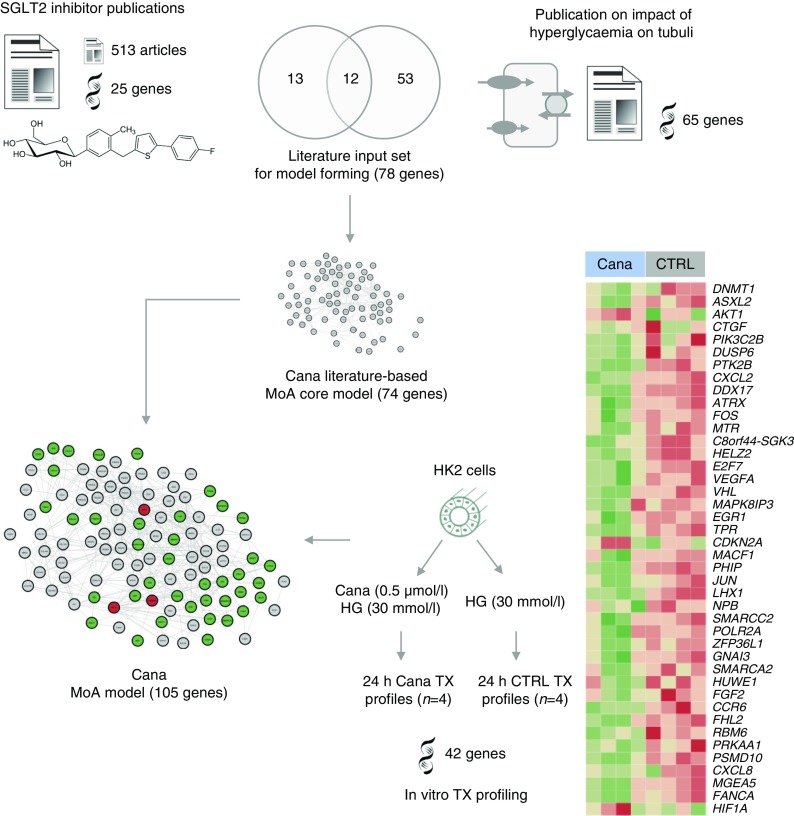
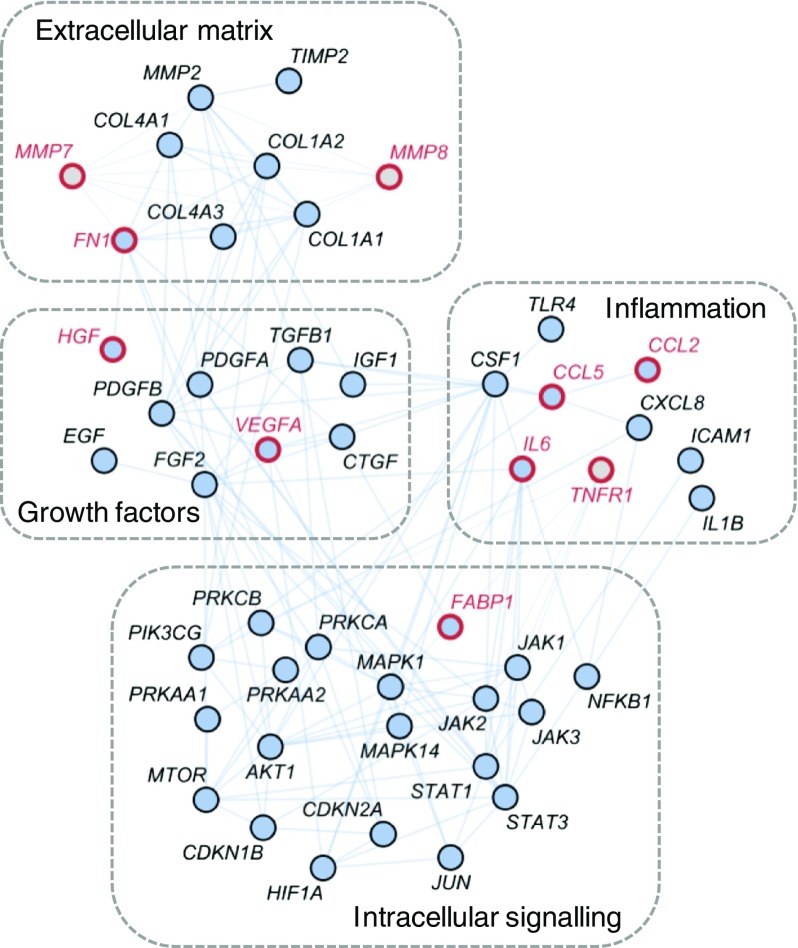
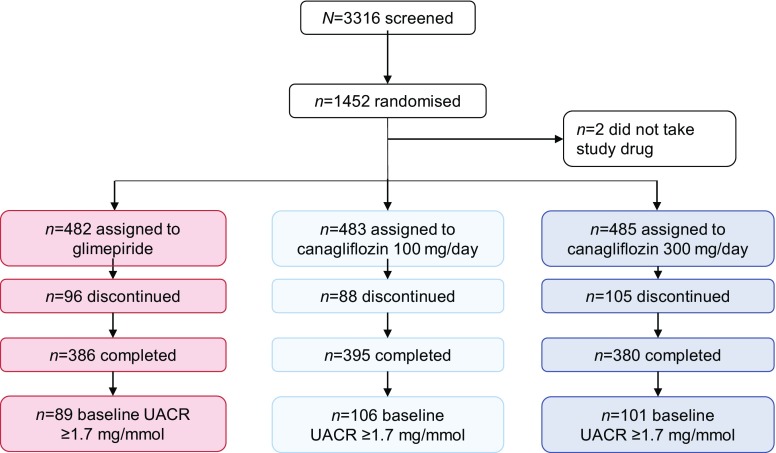
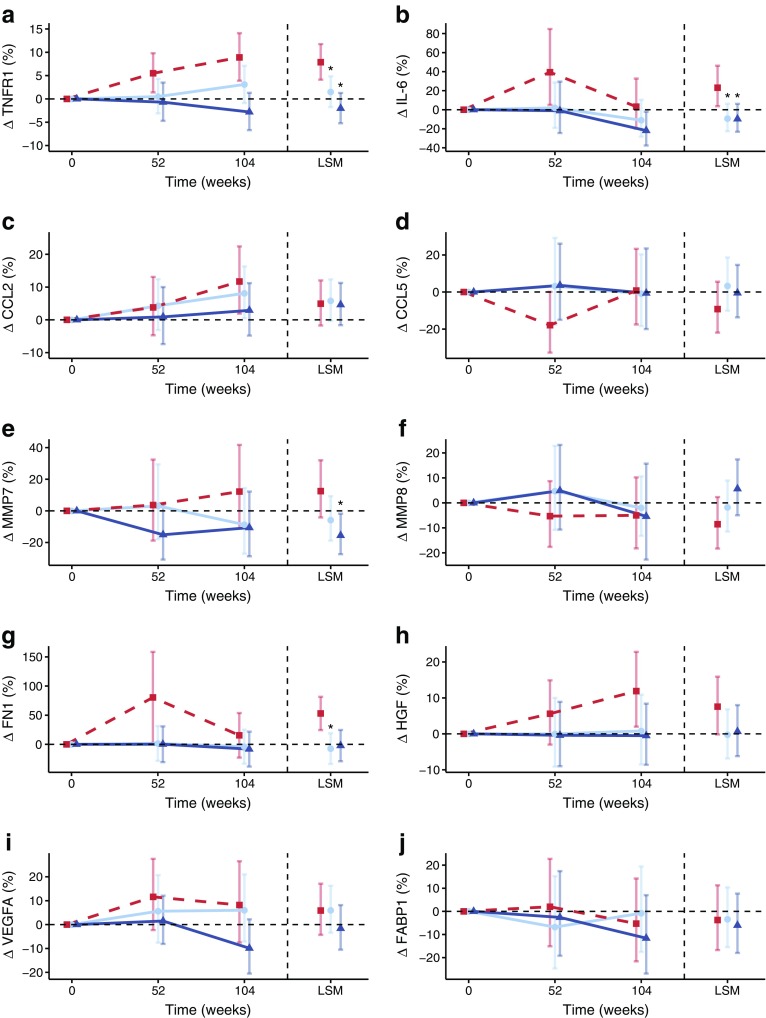
AIMS/HYPOTHESIS: The sodium-glucose cotransporter 2 (SGLT2) inhibitor canagliflozin slows progression of kidney function decline in type 2 diabetes. The aim of this study was to assess the effect of the SGLT2 inhibitor canagliflozin on biomarkers for progression of diabetic kidney disease (DKD). METHODS: A canagliflozin mechanism of action (MoA) network model was constructed based on an in vitro transcriptomics experiment in human proximal tubular cells and molecular features linked to SGLT2 inhibitors from scientific literature. This model was mapped onto an established DKD network model that describes molecular processes associated with DKD. Overlapping areas in both networks were subsequently used to select candidate biomarkers that change with canagliflozin therapy. These biomarkers were measured in 296 stored plasma samples from a previously reported 2 year clinical trial comparing canagliflozin with glimepiride. RESULTS: Forty-four proteins present in the canagliflozin MoA molecular model overlapped with proteins in the DKD network model. These proteins were considered candidates for monitoring impact of canagliflozin on DKD pathophysiology. For ten of these proteins, scientific evidence was available suggesting that they are involved in DKD progression. Of these, compared with glimepiride, canagliflozin 300 mg/day decreased plasma levels of TNF receptor 1 (TNFR1; 9.2%; p < 0.001), IL-6 (26.6%; p = 0.010), matrix metalloproteinase 7 (MMP7; 24.9%; p = 0.011) and fibronectin 1 (FN1; 14.9%; p = 0.055) during 2 years of follow-up. CONCLUSIONS/INTERPRETATION: The observed reduction in TNFR1, IL-6, MMP7 and FN1 suggests that canagliflozin contributes to reversing molecular processes related to inflammation, extracellular matrix turnover and fibrosis. Trial registration ClinicalTrials.gov NCT00968812.
Overview
The claims and statistics of this paper haven’t been checked yet.
Free: it reads the open-access text and checks the first 5 claims that cite a source we can check. Create a free account to check every claim.
Integrity signals
Registry
Cites
Statistics
Figures
Verification
Claims the paper makes
The claims and statistics of this paper haven’t been checked yet.
Free: it reads the open-access text and checks the first 5 claims that cite a source we can check. Create a free account to check every claim.
Claims other papers make about this one
Each is checked against this paper’s own text: does it say what the citing paper says it does?
The source backs part of the claim, not all of it — or backs it for a different population, condition or comparison.
In the citing paper
“Empagliflozin, dapagliflozin, canagliflozin, and ertugliflozin have shown a decrease in hospitalization for HF in their CVOTs.”
From American Association of Clinical Endocrinology Clinical Practice Guideline: Developing a Diabetes Mellitus Comprehensive Care Plan-2022 Update. (2022) · cites this paper as [444]
Experimental — accuracy not yet measuredThe source backs part of the claim, not all of it — or backs it for a different population, condition or comparison.
In the citing paper
“Empagliflozin and canagliflozin demonstrated reduction in MACE in CVOTs; empagliflozin also demonstrated decreased CV death and all-cause mortality.”
From American Association of Clinical Endocrinology Clinical Practice Guideline: Developing a Diabetes Mellitus Comprehensive Care Plan-2022 Update. (2022) · cites this paper as [444]
Experimental — accuracy not yet measuredThe source backs part of the claim, not all of it — or backs it for a different population, condition or comparison.
In the citing paper
“In humans, the serum level of IL-6 dropped by 26.6% (p = 0.010) after 2 years of canagliflozin treatment [35].”
From Neuroprotective effect of SGLT2 inhibitors. (2021) · cites this paper as [35]
Experimental — accuracy not yet measuredThe source backs part of the claim, not all of it — or backs it for a different population, condition or comparison.
In the citing paper
“Moreover, recent data support the notion that SGLT2 inhibitors reduce oxidative stress in the kidney by >50% and blunt increases in angiotensinogen as well as reduce NLRP3 inflammasome activity (100,102,103).”
From 11. Chronic Kidney Disease and Risk Management: Standards of Care in Diabetes—2026 (2026) · cites this paper as [103]
Experimental — accuracy not yet measuredThe cited source says what the claim attributes to it.
In the citing paper
“Multiple studies have shown renal and CV benefits of SGLT2is239,424–426,444,1052–1054”
From American Association of Clinical Endocrinology Clinical Practice Guideline: Developing a Diabetes Mellitus Comprehensive Care Plan-2022 Update. (2022) · cites this paper as [444]
3 more claims about this paper
Create a free account to see every claim other papers make about this one.
Self-check
Percentages, sums and reported differences re-computed from the paper’s own numbers.
The self-check needs the paper’s full text.
Citations
Cites
Canagliflozin and Cardiovascular and Renal Events in Type 2 Diabetes
Neal, B., Perkovic, V., Mahaffey, K. W., de Zeeuw, D., Fulcher, G., Erondu, N., Shaw, W., Law, G., Desai, M., & Matthews, D. R. (2017) · New England Journal of Medicine · doi:10.1056/nejmoa1611925 · Cited by 7,830
Empagliflozin and Progression of Kidney Disease in Type 2 Diabetes
Wanner, C., Inzucchi, S. E., Lachin, J. M., Fitchett, D., von Eynatten, M., Mattheus, M., Johansen, O. E., Woerle, H. J., Broedl, U. C., & Zinman, B. (2016) · New England Journal of Medicine · doi:10.1056/nejmoa1515920 · Cited by 3,655
Levey, A. S., Coresh, J., Greene, T., Marsh, J., Stevens, L. A., Kusek, J. W., Van Lente, F., & for Chronic Kidney Disease Epidemiology Collaboration (2007) · Clinical Chemistry · doi:10.1373/clinchem.2006.077180 · Cited by 1,855 · cited 1×
“Serum creatinine was used to calculate eGFR with the Modification of Diet in Renal Disease equation [20].”
MethodFox, C. S., Matsushita, K., Woodward, M., Bilo, H. J., Chalmers, J., Heerspink, H. J. L., Lee, B. J., Perkins, R. M., Rossing, P., Sairenchi, T., et al. (2012) · The Lancet · doi:10.1016/s0140-6736(12)61350-6 · Cited by 1,401
Self-citationHeerspink, H. J. L., Perkins, B. A., Fitchett, D. H., Husain, M., & Cherney, D. Z. I. (2016) · Circulation · doi:10.1161/circulationaha.116.021887 · Cited by 1,376
Self-citationKidney disease and increased mortality risk in type 2 diabetes
Afkarian, M., Sachs, M. C., Kestenbaum, B., Hirsch, I. B., Tuttle, K. R., Himmelfarb, J., & de Boer, I. H. (2013) · Journal of the American Society of Nephrology · doi:10.1681/asn.2012070718 · Cited by 1,298
Cefalu, W. T., Leiter, L. A., Yoon, K.-H., Arias, P., Niskanen, L., Xie, J., Balis, D. A., Canovatchel, W., & Meininger, G. (2013) · The Lancet · doi:10.1016/s0140-6736(13)60683-2 · Cited by 724
Sodium-Glucose Cotransport Inhibition With Dapagliflozin in Type 2 Diabetes
List, J. F., Woo, V., Morales, E., Tang, W., & Fiedorek, F. T. (2009) · Diabetes Care · doi:10.2337/dc08-1863 · Cited by 698
Pathogenesis and Treatment of Chronic Kidney Disease: A Review of Our Recent Basic and Clinical Data
Tomino, Y. (2014) · Kidney and Blood Pressure Research · doi:10.1159/000368458 · Cited by 566
Interleukin-6 Signaling Pathway and Its Role in Kidney Disease: An Update
Su, H., Lei, C.-T., & Zhang, C. (2017) · Frontiers in Immunology · doi:10.3389/fimmu.2017.00405 · Cited by 524
Cited by
Items 301–400 of 458
Advances in the Treatment of Kidney Disorders using Mesenchymal Stem Cells
Rajput, S., Malviya, R., & Uniyal, P. (2024) · Current Pharmaceutical Design · doi:10.2174/0113816128296105240305110312 · Cited by 13
Mittal, N., Sehray, V., Mittal, R., & Singh, S. (2021) · European Journal of Pharmacology · doi:10.1016/j.ejphar.2021.174320 · Cited by 8
Liang, J., He, J., Gao, Y., & Zhu, Z. (2021) · Evidence-based Complementary and Alternative Medicine · doi:10.1155/2021/1025053 · Cited by 7
Chee, Y. J., & Dalan, R. (2024) · Biomedicines · doi:10.3390/biomedicines12071386 · Cited by 10
Shepard, B. D., & ECELBARGER, C. A. (2021) · Seminars in Nephrology · doi:10.1016/j.semnephrol.2021.06.005 · Cited by 10
Kim, H. J., Kim, S. S., & Song, S. H. (2022) · The Korean Journal of Internal Medicine · doi:10.3904/kjim.2021.515 · Cited by 8
“Furthermore, matrix metalloproteinase 7 and fibronectin 1 levels were reduced in patients with diabetes who were treated with canagliflozin for 2 years compared with those treated with glimepiride [80].”
BackgroundZheng, T., Luo, L., Wang, X., Deng, X., & Xue, M. (2025) · Cellular Signalling · doi:10.1016/j.cellsig.2025.112038 · Cited by 9
The effect of GLP-1 receptor agonist and SGLT2 inhibitor on infection risk: network meta-analysis
Zeng, B.-S., Chen, J.-J., Hsu, C.-W., Hung, C.-M., Zeng, B., Suen, M., Yang, W.-C., Wang, H.-Y., Shiue, Y.-L., Su, K.-P., et al. (2026) · Clinical Microbiology and Infection · doi:10.1016/j.cmi.2026.01.014 · Cited by 8
Meier, M., Cummings, J. L., Abdelsaid, M. A., Feliciano, J., Eusebe, J., Stirn, H., & Coucha, M. M. (2026) · Kidney Medicine · doi:10.1016/j.xkme.2026.101282 · Cited by 7
Immunological Approaches in the Treatment of Diabetic Nephropathy
Pour-Reza-Gholi, F., & Assadiasl, S. (2023) · Current Diabetes Reviews · doi:10.2174/0115733998267893231016062205 · Cited by 7
Effect of Dapagliflozin on Measured vs. Panel‐Estimated Glomerular Filtration Rate
Iversen, E., Nielsen, L. J., Curovic, V. R., Walls, A. B., Eickhoff, M. K., Frimodt‐Møller, M., Persson, F., Rossing, P. R., & Houlind, M. B. (2024) · Clinical Pharmacology & Therapeutics · doi:10.1002/cpt.3480 · Cited by 6
Pieper, D., Sandek, A., Schäfer, A.-K. C., Dihazi, H., Dihazi, G. H., Leha, A., Zeisberg, M., Lüders, S., Koziolek, M. J., & Wallbach, M. (2024) · Journal of the American Heart Association · doi:10.1161/jaha.124.036637 · Cited by 6
“2–4 Thus, biomarkers that detect fibrotic processes and subclinical changes constitute a promising approach towards personalized intervention in cardiorenal syndrome.”
Pointeau, O., Ba, A. I., Geissler, A., Barbosa, R., Basu, A., Arif, M., Nivot, M., Loriot, M., Leemput, J., Passilly‐Degrace, P., et al. (2025) · British Journal of Pharmacology · doi:10.1111/bph.70118 · Cited by 9
“Interestingly, SGLT2 inhibitors also decrease inflammatory and oxidative stress (Jaikumkao et al., 2018) and tubulointerstitial fibrosis in rats (Jaikumkao et al., 2018) as well as in human tissues (Hiddo J. L. Heerspink et al., 2019).”
Sodium-Glucose Cotransporter-2 (SGLT2) Inhibitors
Kataria, A., & Argyropoulos, C. (2022) · Springer eBooks · doi:10.1007/978-3-030-86020-2_25 · Cited by 7
Soluble Tumor Necrosis Factor Receptors (sTNFRs) as biomarkers for Diabetic Kidney Disease
Moroney, E., Niewczas, M. A., Ekinci, E. I., & MacIsaac, R. J. (2025) · Journal of Diabetes and its Complications · doi:10.1016/j.jdiacomp.2025.109204 · Cited by 9
SGLT2 inhibitors: Do they have antiarrhythmic properties?
Caballero, R., Tamargo, J. L., & Delpón, E. (2026) · Pharmacology & Therapeutics · doi:10.1016/j.pharmthera.2025.108973 · Cited by 7
SGLT2 Inhibitors After Myocardial Infarction: Evidence, Mechanisms and Gaps in Knowledge
Buonpane, A., Ciardetti, M., Trimarchi, G., Scalone, G., Coceani, M. A., Pastormerlo, L. E., Marchi, F., Paradossi, U., Berti, S., Passino, C., et al. (2026) · Journal of Clinical Medicine · doi:10.3390/jcm15062260 · Cited by 6
“Experimental evidence suggests that SGLT2i attenuate these mal-adaptive responses by reducing oxidative stress and inflammatory signaling within the vascular wall [11,33,60].”
From premature birth to premature kidney disease: does accelerated aging play a role?
Sanderson, K., Wekon-Kemeni, C., & Charlton, J. R. (2023) · Pediatric Nephrology · doi:10.1007/s00467-023-06208-1 · Cited by 6
Cazzola, M., Hanania, N. A., Page, C. P., Calzetta, L., Matera, M. G., & Rogliani, P. (2025) · Expert Review of Clinical Immunology · doi:10.1080/1744666x.2025.2514607 · Cited by 6
“A recent meta-analysis also confirmed that DPP-4Is do not reduce asthma risk compared to placebo [119].”
Chan, J. S. K., Perone, F., Bayatpoor, Y., Tse, G., & Harky, A. (2023) · Expert Opinion on Pharmacotherapy · doi:10.1080/14656566.2023.2204188 · Cited by 7
Sodium glucose co-transporter 2 inhibitors (SGLT2i) for pediatric kidney disease: the future is near
Portalatin, G. M., Hong‐McAtee, I., Burgner, A. M., Gould, E. R., & Hunley, T. E. (2025) · Frontiers in Pediatrics · doi:10.3389/fped.2025.1521425 · Cited by 7
Disease-modifier Drugs in Patients with Advanced Heart Failure
Iacoviello, M., Vitale, E., Corbo, M. D., Correale, M., & Brunetti, N. D. (2021) · Heart Failure Clinics · doi:10.1016/j.hfc.2021.05.002 · Cited by 5
Nayak, S., Rathore, V., Bharati, J., & Sahu, K. K. (2021) · Expert Review of Clinical Pharmacology · doi:10.1080/17512433.2021.2028620 · Cited by 5
Kang, S. H., Choi, J., Yim, H. J., Jung, Y. K., Yim, S. Y., Lee, Y., Seo, Y. S., Kim, J. H., Yeon, J. E., & Byun, K. S. (2025) · Cancers · doi:10.3390/cancers18010120 · Cited by 5
“SGLT2is may exert anti-inflammatory effects by inhibiting inflammatory cytokines [22,23].”
Sodium-glucose Cotransporter 2 Inhibitors and Pathological Myocardial Hypertrophy
Gao, Z., Bao, J., Hu, Y., Tu, J., Ye, L., & Wang, L. (2023) · Current Drug Targets · doi:10.2174/1389450124666230907115831 · Cited by 5
Kidney Tubular Biomarkers in Type 1 Diabetes - Longitudinal Analysis of 2 Cohorts
Limonte, C. P., Prince, D. K., Hoofnagle, A. N., Hirsch, I. B., Waikar, S. S., Doria, A., Mauer, M. S., Kestenbaum, B. R., & de Boer, I. H. (2025) · Kidney International Reports · doi:10.1016/j.ekir.2025.04.057 · Cited by 4
SGLT2 inhibition mitigates intracerebral hemorrhage risk by modulating inflammation
Huang, M., Liu, Y., & Chen, C. (2025) · Scientific Reports · doi:10.1038/s41598-024-84118-4 · Cited by 5
“Aligned with these results, our research indi 49 cates that SGLT-2 inhibitors lower levels of Interferon-gamma (IFN-γ), TNF, and CRP while elevating IL-10RB levels.”
Ahmed, H., Gomaa, S., Razzak, I. A., Razzak, I. A., & Kovalovich, K. K. (2025) · Cureus · doi:10.7759/cureus.84768 · Cited by 7
Lei, Y., Yao, S., Wang, Z., Tu, Q., Yuan, Z., & Jiang, Q. (2025) · Frontiers in Endocrinology · doi:10.3389/fendo.2025.1506652 · Cited by 4
McCormick, N., Burrack, N., Yokose, C., Lu, N., Wexler, D. J., Rai, S. K., Challener, G. J., Aviña-Zubieta, J. A., McCoy, R. G., Abuhasira, R., et al. (2026) · Diabetes Care · doi:10.2337/dc25-1713 · Cited by 4
Anti‐inflammatory effects of sodium‐glucose cotransporter‐2 inhibitors in COVID‐19
Yaribeygi, H., Maleki, M., Atkin, S. L., Kesharwani, P., Jamialahmadi, T., & Sahebkar, A. (2023) · IUBMB Life · doi:10.1002/iub.2719 · Cited by 4
“Heerspink and colleagues in 2019 demonstrated that canagliflozin attenuated inflammatory response via a direct negative effect on TNFR1, IL-6, MMP7 and FN1 expression in vitro.(95) Iannantuoni and colleagues in 2019, observed that 24 weeks of empagliflozin therapy increased anti-inflammatory IL-10 in diabetic patients.”
BackgroundXiong, T., Jia, Y., Tan, F., Long, X., Yuan, X., She, Q., & Du, J. (2023) · Biochemical and Biophysical Research Communications · doi:10.1016/j.bbrc.2023.149434 · Cited by 4
Towards Optimal Cardiovascular Health: A Comprehensive Review of Preventive Strategies
Branigan, P., Duong, Y. V., Abdulfattah, A., Sabu, J., Mallappallil, M. C., & John, S. (2024) · Cureus · doi:10.7759/cureus.60877 · Cited by 8
Basutkar, R. S., Cutinha, R. M., Sathish, V., Shahil, A., & Najad Saneen, C. K. (2024) · Current Diabetes Reviews · doi:10.2174/0115733998301228240625065230 · Cited by 4
Wei, X. S., Long, M., Fan, Z., Hou, Y., Yang, L., & Du, Y. (2024) · Scientific Reports · doi:10.1038/s41598-024-78092-0 · Cited by 6
RetractedVieira, A. B., Cavanaugh, S. M., Ciambarella, B. T., & Machado, M. V. R. (2025) · Frontiers in Veterinary Science · doi:10.3389/fvets.2025.1480977 · Cited by 4
Inhibition of sodium-glucose cotransporter 2 to slow the progression of chronic kidney disease
Oguz, F., Demoulin, N., Thissen, J. P., Jadoul, M. Y., & Morelle, J. (2021) · Acta Clinica Belgica · doi:10.1080/17843286.2021.1966583 · Cited by 5
“In humans, retrospective assessment of biomarkers in stored plasma samples from a previously reported clinical trial showed that, as compared with glimepiride, canagliflozin decreased plasma levels of tumor necrosis factor receptor 1, interleukin-6, matrix metalloproteinase 7 and fibronectin 1 [50], suggesting SGLT2 i…”
ResultCurovic, V. R., Houlind, M. B., Kroonen, M. Y. A. M., Jongs, N., Zobel, E. H., Hansen, T. W., Tavenier, J., Eugen‐Olsen, J., Laverman, G. D., Kooy, A., et al. (2023) · Diabetes Obesity and Metabolism · doi:10.1111/dom.15209 · Cited by 4
Self-citationAdji, A. S., Billah, A., Baraja, A., Putri, A. A. P., & Rahman, F. S. (2022) · Open Access Macedonian Journal of Medical Sciences · doi:10.3889/oamjms.2022.8017 · Cited by 6
Emerging roles of Sodium-glucose cotransporter 2 inhibitors in Diabetic kidney disease
Gan, T., Song, Y., Guo, F., & Qin, G. (2022) · Molecular Biology Reports · doi:10.1007/s11033-022-07758-7 · Cited by 4
How to maximize graft survival
Lim, M. A., & Bloom, R. D. (2022) · Current Opinion in Organ Transplantation · doi:10.1097/mot.0000000000001039 · Cited by 4
“In-vitro models suggest that SGLT2ireduce hypoxic injury to tubular epithelia cells in tacrolimusassociated nephrotoxicity [78,79].”
BackgroundThe pharmacist's role as a member of the institutional review board.
Donehew, G. R., & Schaumberg, J. P. (1979) · PubMed · Cited by 6
Matuszewski, W., Tomaszek, L., Szklarz, M., Górny, J. M., Kordas, B., Rutkowska, J., & Juranek, J. K. (2025) · Journal of Clinical Medicine · doi:10.3390/jcm14186348 · Cited by 4
“In Hiddo et al., canagliflozins reduced inflammation and fibrosis markers such as IL-6, matrix metallopeptidase 7 (MMP7) and fibronectin 1(FN1) [64].”
Empagliflozin slows down natural kidney senescence via Six1/Wnt4/NF-κB pathway
Chen, J., Fang, R., Huang, Q., Zhang, B., Ren, Z., Tan, X., & Liu, D. (2025) · Biogerontology · doi:10.1007/s10522-025-10328-6 · Cited by 4
“SGLT-2 inhibitors provide cardiorenal benefits by reducing inflammation, oxidative stress and fibrosis, meanwhile enhancing mitochondrial functionality (Barnett et al. 2014; Heerspink et al. 2019; Kulkarni et al. 2022).”
Moedt, E., Coca, S. G., Edwards, K., Neuen, B. L., Arnott, C. G., Bakker, S. J. L., Fleming, F., & Heerspink, H. J. L. (2025) · Diabetes Care · doi:10.2337/dc25-1722 · Cited by 4
Self-citationNagy, D., Radovits, T., Bálint, T., Horváth, Z., Kocsis‐Balogh, P., Tóth, Á. G., Oláh, A., Sayour, A. A., Barta, B. A., Merkely, B. P., et al. (2025) · British Journal of Pharmacology · doi:10.1111/bph.70250 · Cited by 4
“A research on samples from patients with diabetic kidney disease observed reduced plasma levels of inflammatory and fibrotic markers in canagliflozin-treated individuals (Heerspink et al., 2019).”
Pharmacological interactions between asthma and T2DM therapies: clinical and metabolic implications
Matera, M. G., Page, C. P., Calzetta, L., Rogliani, P., & Cazzola, M. (2026) · Expert Opinion on Drug Metabolism & Toxicology · doi:10.1080/17425255.2026.2632668 · Cited by 3
“Preclinical and translational studies show anti-inflammatory and antifibrotic effects [122,123].”
Samuel, A. H., Kshatri, A. H. S., Babu, R. N., Patel, H. S., Viswanathan, S. H., Challa, M. S. R., & Swathi, N. L. (2026) · Annales d Endocrinologie · doi:10.1016/j.ando.2026.102494 · Cited by 4
Elgazzar, R. A., & Ramadan, M. M. (2026) · Cureus · doi:10.7759/cureus.105114 · Cited by 4
“Preclinical studies show that SGLT2 inhibition reduces the production of pro-inflammatory and pro-fibrotic mediators, such as nuclear factor-κ B (NF κ B), tumor necrosis factor receptor 1 (TNFR1), interleukin-6 (IL-6), matrix metalloproteinase-7 (MMP-7), and fibronectin-1 [43].”
van der Hoek, S., & Stevens, J. (2022) · Frontiers in Pharmacology · doi:10.3389/fphar.2022.837993 · Cited by 3
Longitudinal Trajectories of Biomarkers of Kidney Tubular Function in Type 1 Diabetes
Limonte, C. P., Gao, X., Bebu, I., Seegmiller, J. C., Lorenzi, G. M., Perkins, B. A., Karger, A. B., Arends, V. L., Paterson, A. D., Molitch, M. E., et al. (2024) · Kidney International Reports · doi:10.1016/j.ekir.2023.11.030 · Cited by 3
Impact of SGLT-2 Inhibitors on Biomarkers of Heart Failure
Darwish, D., Kumar, P., Urs, K., & Dave, S. (2025) · Cells · doi:10.3390/cells14120919 · Cited by 6
“In diabetic patients with albuminuria, SGLT-2 inhibitors increase urine metabolites linked to mitochondrial metabolism, potentially indicating improved mitochondrial function and activity [40].”
Peppa, Μ., Manta, A., Mavroeidi, I., Asimakopoulou, A., Syrigos, A., Nastos, C., Pikoulis, E. A., & Κόλλιας, Α. (2023) · Pharmaceutics · doi:10.3390/pharmaceutics15112526 · Cited by 5
Advances in pharmacotherapy for heart failure and reduced ejection fraction: what’s new in 2024?
Ismail, Z., Aboughdir, M., Duric, B., Kaka, S., Chan, J. S. K., Bayatpoor, Y., & Harky, A. (2024) · Expert Opinion on Pharmacotherapy · doi:10.1080/14656566.2024.2408376 · Cited by 3
Pulido‐Perez, P., Torres‐Rasgado, E., Pérez-Fuentes, R., Rosales‐Encina, J. L., Rodríguez‐Antolín, J., & Romero, J. R. (2021) · Journal of Diabetes and its Complications · doi:10.1016/j.jdiacomp.2021.107974 · Cited by 3
Bibliometric and visualized analysis of sodium–Glucose cotransporter 2 inhibitors
Sun, H. Y., Wang, Z., Wang, Y., Rong, H., Wang, D., Liu, X., Jin, K., Sun, Z., & Fan, Q. (2023) · Frontiers in Pharmacology · doi:10.3389/fphar.2022.1009025 · Cited by 3
Tansawet, A., Looareesuwan, P., Teza, H., Boongird, S., McKay, G. J., Attia, J. R., Pattanaprateep, O., & Thakkinstian, A. (2024) · Diabetology & Metabolic Syndrome · doi:10.1186/s13098-024-01522-6 · Cited by 3
Hatano, M., Sasabuchi, Y., Okada, A., Ishikura, H., Tanaka, T., Saito, T., Tanaka, S., & Yasunaga, H. (2025) · JBMR Plus · doi:10.1093/jbmrpl/ziaf132 · Cited by 3
Drugs to Slow Progression of Chronic Kidney Disease: It Is a Whole New World!
Schoonmaker, J. A., Bhasin-Chhabra, B., Alkhier, A. A., Swaminathan, S., & Hommos, M. S. (2026) · Kidney & Blood Pressure Research · doi:10.1159/000552776 · Cited by 2
Infante, M., Ricordi, C., Pacifici, F., Pastore, D., Infante, R., Caprio, M., Chiereghin, F., Stefano, A. D., Frank, G., Rose, A. D., et al. (2026) · Nutrients · doi:10.3390/nu18132038 · Cited by 3
“…may be explained by the fact that SGLT2 inhibitors have the potential to improve utilization of iron stores by promoting erythropoietin (EPO) synthesis, stimulating erythropoiesis, increasing hemoglobin and hematocrit levels [164–166], improving kidney function and reducing inflammation [52,167].”
Inflammation as a therapeutic target to improve kidney and cardiovascular outcomes
Tuttle, K. R., Kanbay, M., Alicic, R. Z., Carrero, J. J., Çöpür, S., Navar, A. M., Neuen, B. L., Perkovic, V., Rossing, P. R., Marx, N., et al. (2026) · Nature Reviews Nephrology · doi:10.1038/s41581-026-01117-6 · Cited by 5
“193,194).”
Possibilities of cardio- and nephroprotective eff ects of drugs of the SGLT2 inhibitor group
Константинович, К. В., Borovkova, N. Y., Kurashina, V. A., & Bakka, T. E. (2021) · Clinical Medicine (Russian Journal) · doi:10.30629/0023-2149-2021-99-3-172-176 · Cited by 2
The Renal Effects of SGLT2 Inhibitors
Sawaf, H., Qaz, M., Ismail, J., & Mehdi, A. (2022) · EMJ Nephrology · doi:10.33590/emjnephrol/22-00080 · Cited by 2
Lutay, Y. M., & Parkhomenko, A. N. (2023) · INTERNATIONAL JOURNAL OF ENDOCRINOLOGY (Ukraine) · doi:10.22141/2224-0721.19.1.2023.1240 · Cited by 3
Update on Sodium Glucose Cotransporter Type 2 Inhibitors Use in Kidney Transplant Patients
Salvadori, M., Rosati, A., & Rosso, G. (2024) · Transplantology · doi:10.3390/transplantology5030022 · Cited by 2
“Finally, canagliflozin reduces inflammation and fibrosis biomarkers, as documented in diabetic kidney disease [17].”
Liao, J., Chen, Y., Ling, Z., Pürerfellner, H., Martinek, M., Derndorfer, M., Niel, J., Ebrahimi, R., Heukäufer, M., Janschel, S., et al. (2024) · ESC Heart Failure · doi:10.1002/ehf2.15136 · Cited by 2
Predictive value of cumulative SII for MACE in STEMI patients after PCI
Zhang, W., Jia, H., Zhao, X., Song, W., Sun, W., Wang, Q., Li, Y., & Wang, X. (2025) · Medicine · doi:10.1097/md.0000000000041983 · Cited by 5
Pagel, P. S., Hang, D., Freed, J. K., & Crystal, G. J. (2025) · Journal of Cardiothoracic and Vascular Anesthesia · doi:10.1053/j.jvca.2025.06.015 · Cited by 5
Ge, L.-C., Zhang, Y., Peng, G., Long, M., Jin, T., Lu, B., Shao, J., & Li, X. (2025) · World Journal of Diabetes · doi:10.4239/wjd.v16.i10.111548 · Cited by 3
Advances in SGLT2 Inhibitor Research on Cognitive Impairment in Type 2 Diabetes
(2022) · Journal of Contemporary Medical Practice · doi:10.53469/jcmp.2022.04(04).37 · Cited by 2
Kato, S., Kuwatsuka, Y., Ando, M., Tatematsu, Y., Nishibori, N., & Maruyama, S. (2023) · BMC Nephrology · doi:10.1186/s12882-023-03277-0 · Cited by 2
Wang, K., Fan, T., He, F., Li, H., Fang, Y., Hu, G., & Wang, X. (2024) · Cardiovascular Diagnosis and Therapy · doi:10.21037/cdt-24-287 · Cited by 3
“The SGLT2-i agent has been demonstrated anti-inflammatory effects (9,40).”
Brisnovali, N. F., Franco, I., Abdelgawwad, A., Tsou, H. L. P., Cao, T. H., McDonald, J. E., Riva, A., Rutter, G. A., & Akalestou, E. (2025) · Diabetologia · doi:10.1007/s00125-025-06467-7 · Cited by 2
Tumor Necrosis Factor Receptors (TNFRs): a Novel Biomarker for Diabetic Kidney Disease Progression
Babu, S., Krishnan, M., & Chinnaiyan, M. (2023) · SN Comprehensive Clinical Medicine · doi:10.1007/s42399-023-01442-y · Cited by 2
Sen, T., Curovic, V. R., Jongs, N., Laverman, G. D., Kooy, A., Persson, F., Rossing, P. R., & Heerspink, H. J. L. (2023) · Diabetes Obesity and Metabolism · doi:10.1111/dom.15109 · Cited by 2
“Previous studies in patients with type 2 diabetes and CKD who were followed for more than 1 year reported that SGLT2 inhibition causes a modest reduction in plasma inflammation markers.(5,6) Whether these beneficial effects are because of a direct antiinflammatory effect, or result from improved glycaemic control or k…”
BackgroundSelf-citationPerco, P., Gebeshuber, C. A., Ley, M., Daniel-Fischer, L., Aufricht, C., & Kratochwill, K. (2024) · Drug repurposing · doi:10.58647/drugrepo.24.1.0006 · Cited by 2
Self-citationRathaur, S., Varshney, P., Vishwakarma, S., Maity, D., Khan, S. R., & Gayen, J. R. (2025) · Bioanalysis · doi:10.1080/17576180.2025.2565142 · Cited by 1
Another pleiotropic effect of SGLT2 inhibitors: Is it a new frontier in thyroid function regulation?
Szklarz, M., Wołos-Kłosowicz, K., Szulc, J., Górny, J. M., Modzelewski, R., & Matuszewski, W. (2026) · Thyroid Research · doi:10.1186/s13044-025-00282-3 · Cited by 1
“In humans, the serum level of IL-6 dropped by 26.6% ( p = 0.010) after 2 years of canagliflozin treatment [101].”
InfluentialLin, D. S., Lo, H.-Y., Huang, K.-C., Lin, T., Huang, C.-Y., Lee, J.-K., & Lin, L. (2026) · European journal of medical research · doi:10.1186/s40001-026-03849-4 · Cited by 1
Henkel, L., Ingmanns, L., Westphal, F., Menke, A. F., Pavenstädt, H., Jehn, U., Boeckel, G. R., & Reuter, S. (2026) · Frontiers in Transplantation · doi:10.3389/frtra.2026.1927374 · Cited by 1
Chang, L.-H., Chu, C.-H., Huang, C., & Lin, L. (2023) · Therapeutic Advances in Endocrinology and Metabolism · doi:10.1177/20420188231207345 · Cited by 2
“23,24 The aforementioned messages notified the crucial role of sTNFR1 levels in generating and predicting risks of cardiovascular or renal complications in subjects with T2DM other than traditional biomarkers.”
BackgroundEffect of current antidiabetic drugs on inflammation and immune system
Karoli, R. (2024) · Elsevier eBooks · doi:10.1016/b978-0-443-13195-0.00015-6 · Cited by 1
Empagliflozin does not prevent progression of Dent's disease type 1 in a mouse model
de Combiens, E., Frachon, N., Bignon, Y., Fila, M., Brossard, C., Frère, P., & Lourdel, S. (2025) · Experimental Physiology · doi:10.1113/ep092736 · Cited by 1
“Furthermore, recent studies have demonstrated that empagliflozin decreases renal fibrosis and nephrolithiasis (Chen et al., 2023; Heerspink et al., 2019).”
Abolfazli, S., Atkin, S. L., Jamialahmadi, T., & Sahebkar, A. (2025) · Glycoconjugate Journal · doi:10.1007/s10719-025-10197-8 · Cited by 2
(2024) · Frontiers research topics · doi:10.3389/978-2-8325-4643-7 · Cited by 3
Sodium-Glucose Cotransporter-2 Inhibitors in Diabetic Patients with Heart Failure: An Update
Profili, N. I., Castelli, R., Gidaro, A., Manetti, R., Maioli, M., & Delitala, A. (2024) · Pharmaceuticals · doi:10.3390/ph17111419 · Cited by 2
“…of cardiac fibrosis through different pathways: reduced expression of fibronectin 1, collage type I and III, and transforming growth factor-β [14]. and in fl ammation [12 However, it should be noted that the e ff ect of SGTL2i on the cardiorenal axis was higher bene fi cial e ff ect on the…”
Late Allograft Loss and Contemporary Cardiorenal Metabolic Therapies
Vinson, A. J., & Matas, A. J. (2025) · Journal of the American Society of Nephrology · doi:10.1681/asn.0000000726 · Cited by 2
Gruson, D., Pouleur, A., Hermans, M. P., Ahn, S. A., & Rousseau, M. F. (2021) · Annales d Endocrinologie · doi:10.1016/j.ando.2021.10.003 · Cited by 1
Sodium–glucose co-transporter-2 inhibitors
Lee, M. M. Y., Docherty, K. F., & Jhund, P. S. (2022) · Oxford University Press eBooks · doi:10.1093/med/9780198766223.003.0051 · Cited by 1
Liu, T., Li, R., Wang, X., Gao, X., & Zhang, X. (2022) · Medicina Clínica (English Edition) · doi:10.1016/j.medcle.2021.09.027 · Cited by 3
The kidney—more than the sum of its cellular parts
Perco, P., & Mayer, G. J. (2022) · Kidney International · doi:10.1016/j.kint.2022.08.032 · Cited by 1
Self-citationThe Effects and Treatment of Inflammation on Diabetes Mellitus and Cardiovascular Disease
Hattar, L., Mumtaz, T., Mouhayyar, C. E., Matevossian, A., & Johnstone, M. T. (2023) · Contemporary cardiology · doi:10.1007/978-3-031-13177-6_10 · Cited by 1
Comment on “Is the type of diabetes treatment relevant to outcome of COVID ‐19?”
Pal, R., & Banerjee, M. (2020) · Journal of Diabetes · doi:10.1111/1753-0407.13069 · Cited by 2
Zhou, Y., Wang, F., Wen, F., Li, C., & Ye, T. (2023) · Research Square · doi:10.21203/rs.3.rs-2453557/v1 · Cited by 1
Predictive Biomarkers in Nephrology Around the Corner
Perco, P., & Sharma, K. (2019) · Kidney International Reports · doi:10.1016/j.ekir.2019.10.009
“Canagliflozin significantly reduced marker levels of tumor necrosis factor-R1, interleukin-6, matrix metalloproteinase 7, and FN1 with changes in tumor necrosis factor-R1 levels being significantly associated with renal outcome.(3) In a separate study, Mulder and colleagues(4) demonstrated that urine metabolites linke…”
BackgroundSelf-citationBaker, H. E. (2020) · IUScholarWorks (Indiana University) · doi:10.7912/c2/2031
Extending the use of SGLT2 inhibitors from diabetic to non-diabetic kidney disease
Dekkers, C. C. J. (2020) · University of Groningen research database (University of Groningen / Centre for Information Technology) · doi:10.33612/diss.136049658
Direct cardial effects and mechanisms of cardiovascular action of gliflosins
Zverev, Y. F., & Rykunova, A. Y. (2021) · Reviews on Clinical Pharmacology and Drug Therapy · doi:10.17816/rcf192131-143
Противовоспалительное действие ингибиторов натрий-глюкозного котранспортера 2 (обзор литературы)
Колесников, О. Л., Колесникова, А. А., & Тарабрина, Ю. О. (2021) · Естественные и Технические Науки · doi:10.37882/2223-2966.2021.09.15
Sewage sludge treatment by membrane anaerobic system (MAS)
Musliha, M. (2010) · UMP Institutional Repository (Universiti Malaysia Pahang)
Metadata
- Authors
- Heerspink, H. J. L., Perco, P., Mulder, S., Leierer, J., Hansen, M. K., Heinzel, A., & Mayer, G.
- Affiliations
- University Medical Center Groningen (NL)
- Innsbruck Medical University (AT)
- Janssen Research & Development (United States) (US)
- EmergenTec (Austria) (AT)
- Corresponding author
- Heerspink, Hiddo J. L.
- ORCID
- Venue
- Diabetologia
- Published
- 2019-04-17
- Volume
- 62
- Issue
- 7
- Pages
- 1154-1166
- ISSN
- 0012-186X (ISSN-L)
- 1432-0428
- PMC
- PMC6560022
- OpenAlex
- W2940024069
- Semantic Scholar
- f618f0ee8bdd64eea246f4a3ccbb16c2ab1f7ccc
- Cited by
- 457
- References
- 34
- Citations by year
- 2026: 37 · 2025: 62 · 2024: 61 · 2023: 79 · 2022: 89 · 2021: 79 · 2020: 33 · 2019: 12
- FWCI
- 41.14
- Type
- journal article
- Language
- en
- Open access
- hybrid
- doi.org
- Licence
- cc-by
- creativecommons.org/licenses/by/4.0 (tdm)
- Locations
- Diabetologia (publishedVersion, cc-by)
- Europe PMC (PubMed Central) (publishedVersion, cc-by)
- PubMed Central (publishedVersion, cc-by)
- PubMed (publishedVersion)
- University of Groningen research database (University of Groningen / Centre for Information Technology) (publishedVersion, cc-by)
- University of Groningen research database (University of Groningen / Centre for Information Technology) (submittedVersion, cc-by)
- Funders
- Janssen Research and Development
- Topics
- Health Sciences › Medicine › Nephrology › Chronic Kidney Disease and Diabetes
- Health Sciences › Medicine › Endocrinology, Diabetes and Metabolism › Diabetes Treatment and Management
- Health Sciences › Medicine › Nephrology › Acute Kidney Injury Research
- Keywords
- canagliflozin, SGLT2 inhibitors, diabetic nephropathy, inflammation, renal fibrosis, TNF receptor 1, interleukin-6, matrix metalloproteinase-7, FN1, extracellular matrix turnover, glimepiride, type 2 diabetes, plasma biomarkers, proximal tubular epithelial cells
- MeSH terms
- Canagliflozin, Sodium-Glucose Transporter 2 Inhibitors, Cell Line, Diabetes Mellitus, Type 2, Fibronectins, Fibrosis, Humans, Inflammation, Kidney Diseases, Biomarkers, Interleukin-6, Matrix Metalloproteinase 7, Receptors, Tumor Necrosis Factor, Type I, Renal Insufficiency, Chronic
About these checks
Registry, retraction, Cites and statistics results are computed, not judged, with one exception: a printed reference that no index lists is read once by a model before it counts as a citation error. Claims are extracted by a model and kept only when their quote appears verbatim in the text; each cited source is then checked, with a model’s help, for whether it says what the claim relies on. Those verdicts can be wrong — read the claim’s quote and the cited source before relying on one.
Statistics and arithmetic are recomputed, not judged.
Confidence bands are shown only for fields calibrated on our annotated test set. None is calibrated yet, so no band is shown.
What counts as a claim ›How we measure confidence ›How we check this ›
Are you an author, or do you see a problem with this page? Request a review
Data sources
Bibliographic data: Semantic Scholar, OpenAlex, Crossref.
Contains information from the Semantic Scholar Academic Graph Datasets, made available under the ODC Attribution License (ODC-BY 1.0).
Semantic Scholar’s data is described in: Kinney, R., et al. (2023). The Semantic Scholar Open Data Platform. arXiv:2301.10140.
