

FRAX™ and the assessment of fracture probability in men and women from the UK
Open accessThe DOI matches its Crossref record; 106 of the 106 references it cites were found in a registry or an index.
Abstract
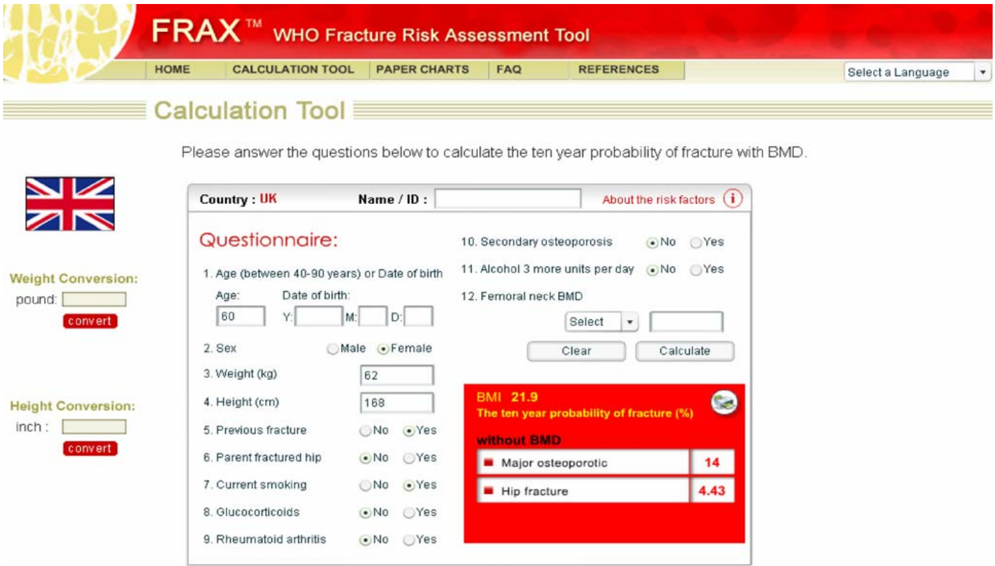
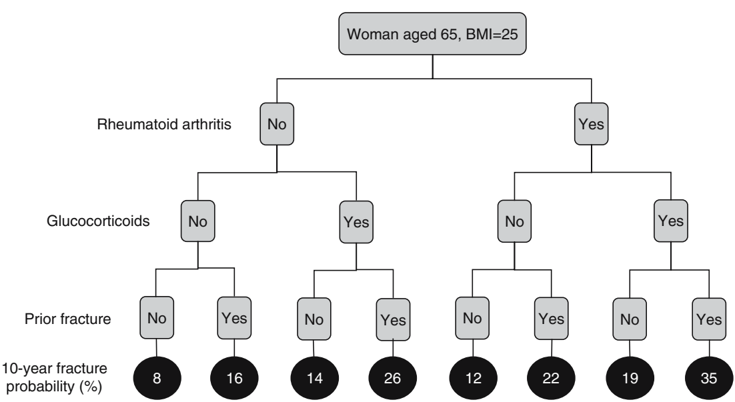
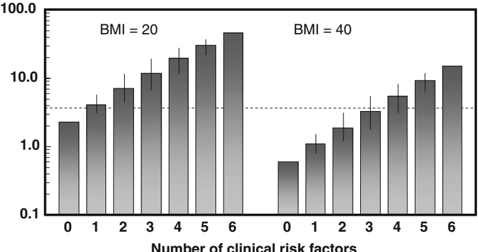
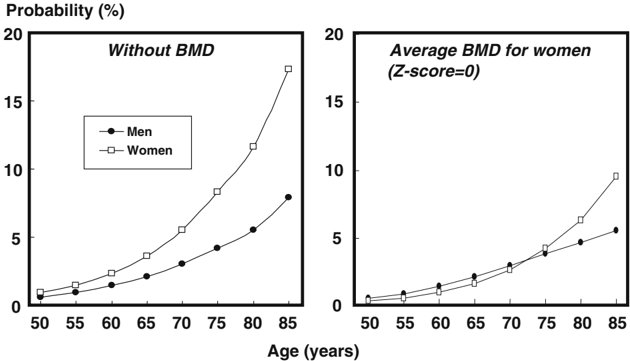
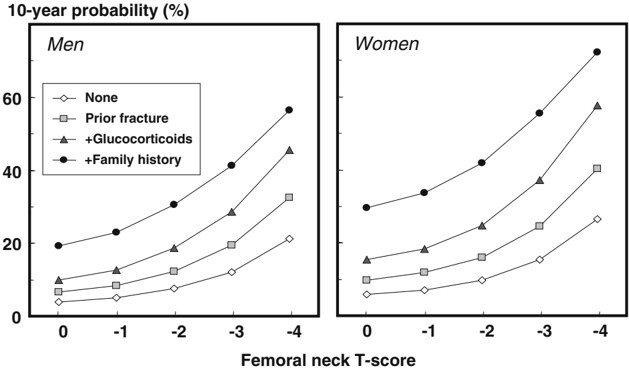
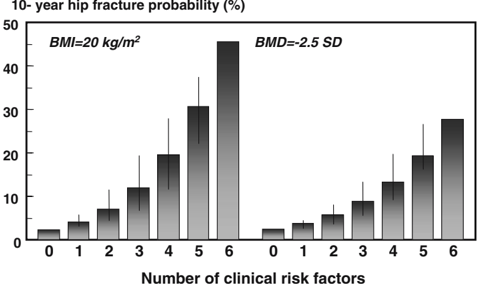
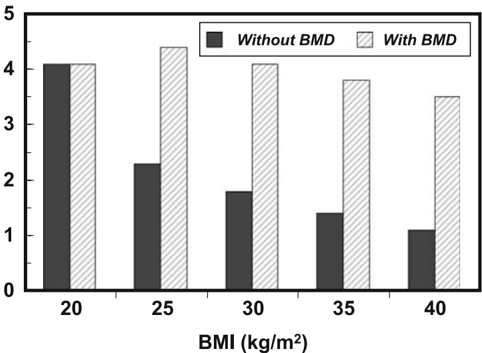
UNLABELLED: A fracture risk assessment tool (FRAX) is developed based on the use of clinical risk factors with or without bone mineral density tests applied to the UK. INTRODUCTION: The aim of this study was to apply an assessment tool for the prediction of fracture in men and women with the use of clinical risk factors (CRFs) for fracture with and without the use of femoral neck bone mineral density (BMD). The clinical risk factors, identified from previous meta-analyses, comprised body mass index (BMI, as a continuous variable), a prior history of fracture, a parental history of hip fracture, use of oral glucocorticoids, rheumatoid arthritis and other secondary causes of osteoporosis, current smoking, and alcohol intake 3 or more units daily. METHODS: Four models were constructed to compute fracture probabilities based on the epidemiology of fracture in the UK. The models comprised the ten-year probability of hip fracture, with and without femoral neck BMD, and the ten-year probability of a major osteoporotic fracture, with and without BMD. For each model fracture and death hazards were computed as continuous functions. RESULTS: Each clinical risk factor contributed to fracture probability. In the absence of BMD, hip fracture probability in women with a fixed BMI (25 kg/m(2)) ranged from 0.2% at the age of 50 years for women without CRF's to 22% at the age of 80 years with a parental history of hip fracture (approximately 100-fold range). In men, the probabilities were lower, as was the range (0.1 to 11% in the examples above). For a major osteoporotic fracture the probabilities ranged from 3.5% to 31% in women, and from 2.8% to 15% in men in the example above. The presence of one or more risk factors increased probabilities in an incremental manner. The differences in probabilities between men and women were comparable at any given T-score and age, except in the elderly where probabilities were higher in women than in men due to the higher mortality of the latter. CONCLUSION: The models provide a framework which enhances the assessment of fracture risk in both men and women by the integration of clinical risk factors alone and/or in combination with BMD.
Overview
The claims and statistics of this paper haven’t been checked yet.
Free: it reads the open-access text and checks the first 5 claims that cite a source we can check. Create a free account to check every claim.
Integrity signals
Registry
Cites
Statistics
Figures

Verification
Claims the paper makes
The claims and statistics of this paper haven’t been checked yet.
Free: it reads the open-access text and checks the first 5 claims that cite a source we can check. Create a free account to check every claim.
Claims other papers make about this one
Each is checked against this paper’s own text: does it say what the citing paper says it does?
The source backs part of the claim, not all of it — or backs it for a different population, condition or comparison.
In the citing paper
“The WHO determined that for many secondary causes of osteoporosis, fracture risk was mediated primarily through impact on BMD [28].”
From Clinician’s Guide to Prevention and Treatment of Osteoporosis (2014) · cites this paper as [28]
Experimental — accuracy not yet measured
Self-check
Percentages, sums and reported differences re-computed from the paper’s own numbers.
The self-check needs the paper’s full text.
Citations
Cites
Statistical Methods in Cancer Research
Breslow, N. E. (1980) · Cited by 7,332
Estimation of ten-year risk of fatal cardiovascular disease in Europe: the SCORE project
Conroy, R. (2003) · European Heart Journal · doi:10.1016/s0195-668x(03)00114-3 · Cited by 5,290
(1994) · PubMed · Cited by 5,043
Marshall, D., Johnell, O., & Wedel, H. (1996) · BMJ · doi:10.1136/bmj.312.7041.1254 · Cited by 3,709
Self-citationASSESSMENT OF FRACTURE RISK AND ITS APPLICATION TO SCREENING FOR POSTMENOPAUSAL OSTEOPOROSIS
Alexeeva, L. P., Burkhardt, P., Christiansen, C., Cooper, C. C., Delmas, P. D., Johnell, O., Johnston, C. C., Kanis, J. A., Lips, P. T. A. M., Melton, L. J., et al. (1994) · Cited by 2,655
Self-citationCummings, S. R. (1998) · JAMA · doi:10.1001/jama.280.24.2077 · Cited by 2,277 · cited 1×
“This concern is greatest in models that omit BMD, because pharmacological agents may not be equally effective across the entire range of BMD [90].”
BackgroundDiagnosis of osteoporosis and assessment of fracture risk
Kanis, J. A. (2002) · The Lancet · doi:10.1016/s0140-6736(02)08761-5 · Cited by 2,260 · cited 1×
“For this reason, there has been interest in the development of algorithms that express absolute risk, or the probability of fracture within a given time period [18–20], as has been done for cardiovascular and other diseases [21– 25].”
BackgroundSelf-citationEffect of Risedronate on the Risk of Hip Fracture in Elderly Women
McClung, M. R., Geusens, P., Miller, P. D., Zippel, H., Bensen, W. G., Roux, C., Adami, S., Fogelman, I., Diamond, T., Eastell, R., et al. (2001) · New England Journal of Medicine · doi:10.1056/nejm200102013440503 · Cited by 1,918
Body mass index as a predictor of fracture risk: A meta-analysis
De Laet, C., Kanis, J. A., Odén, A., Johanson, H., Johnell, O., Delmas, P., Eisman, J. A., Kroger, H., Fujiwara, S., Garnero, P., et al. (2005) · Osteoporosis International · doi:10.1007/s00198-005-1863-y · Cited by 1,622
Self-citationReginster, J.-Y., Minne, H. W., Sorensen, O. H., Hooper, M., Roux, C., Brandi, M. L., Lund, B., Ethgen, D., Pack, S., Roumagnac, I., et al. (2000) · Osteoporosis International · doi:10.1007/s001980050010 · Cited by 1,580
Research works printed but not linked: 4
- Adachi JD, Saag KG, Delmas PD et al (2001) Two year effects of alendronate on bone mineral density and vertebral fracture in patients receiving glucocorticoids: a randomised, double-blind, placebo-controlled extension trial. Arthr Rheum 44:202–211 · doi:10.1002/1529-0131(200101)44:1<202::aid-anr27>3.0.co;2-w
- Davison KS, Siminoski K, Chik C, Jen H, Warshawski R, Lee K (2003) Impact of height loss due to vertebral fractures on body mass index. J Bone Miner Res 18(Suppl 2):S243
- Standing Medical Advisory Committee to the Secretaries of State for Health and for Wales (1989) Drinking problems. A challenge for every doctor. HMSO, London
- World Health Organization (2008) Assessment of osteoporosis at the primary health care level. WHO, Geneva (in press)
Cited by
Items 901–1,000 of 1,001
Varzi, D., Coupaud, S., Purcell, M., Allan, D., Gregory, J. S., & Barr, R. J. (2015) · Bone · doi:10.1016/j.bone.2015.08.026 · Cited by 23
Ölmez, N., Yavaşi, S. K., Tan, G., Satiroglu, S., Yildiz, A. H., Öz, B., Yoleri, Ö., & Memiş, A. (2014) · Clinical Rheumatology · doi:10.1007/s10067-014-2491-8 · Cited by 23
“Use of BMD is optional [1].”
Cost Effectiveness of Screen-and-Treat Strategies for Low Bone Mineral Density
Schousboe, J. T. (2008) · Applied Health Economics and Health Policy · doi:10.2165/00148365-200806010-00001 · Cited by 23
Glucocorticoid-related bone changes from endogenous or exogenous glucocorticoids
Warriner, A. H., & Saag, K. G. (2013) · Current Opinion in Endocrinology Diabetes and Obesity · doi:10.1097/01.med.0000436249.84273.7b · Cited by 23
Carson, M. A., Nelson, J., Cancela, M. L., Laizé, V., Gavaia, P. J., Rae, M., Heesch, S., Verzin, E. J., Maggs, C. A., Gilmore, B., et al. (2018) · Scientific Reports · doi:10.1038/s41598-018-26024-0 · Cited by 23
Su, Y., Kwok, T. C. Y., Cummings, S. R., Yip, B. H. K., & Cawthon, P. M. (2019) · JBMR Plus · doi:10.1002/jbm4.10207 · Cited by 23
“FRAX was subsequently developed to determine absolute fracture risk to enable better fracture prediction than a BMD T‐score alone.((4)) Currently, the cost‐effective thresholds of absolute hip fracture risk by FRAX are applied for clinical assessment and intervention.”
BackgroundMethodBager, C. L., Karsdal, M. A., Bihlet, A. R., Thudium, C. S., Byrjalsen, I., & Bay‐Jensen, A. (2019) · BMC Musculoskeletal Disorders · doi:10.1186/s12891-019-2680-3 · Cited by 23
“As a commonly used tool to estimate the risk of vertebral fractures in osteoporosis trials, the FRAX© tool is often used in determining a suitable sample size [31].”
MethodHow to manage: patient with a low faecal elastase
Lam, K. W., & Leeds, J. S. (2019) · Frontline Gastroenterology · doi:10.1136/flgastro-2018-101171 · Cited by 23
Hoy, J., Richardson, R., Ebeling, P. R., Rojas, J., POCOCK, N. A., Kerr, S. J., Martínez, E., & Carr, A. (2018) · AIDS · doi:10.1097/qad.0000000000001911 · Cited by 23
Patellar fractures in elderly patients: a multicenter computed tomography-based analysis
Sim, J. A., Joo, Y.-B., Choi, W., Byun, S., Na, Y. G., Shon, O., & Kim, J. W. (2020) · Archives of Orthopaedic and Trauma Surgery · doi:10.1007/s00402-020-03526-z · Cited by 23
Epidemiological transition to mortality and refracture following an initial fracture
Ho-Le, T. P., Tran, T. S., Bliuc, D., Pham, H. M., Frost, S. A., Eisman, J. A., & Nguyen, T. V. (2021) · eLife · doi:10.7554/elife.61142 · Cited by 23
“All existing prediction models such as the Garvan Fracture Risk Calculator (Nguyen et al., 2008) and FRAX (Kanis et al., 2008) provide only an estimate of fracture risk, with no estimate of mortality risk.”
BackgroundHuang, H., Peng, C. C., Lin, S., Munir, K. M., Chang, R. H., Wu, B., Liu, P. P., Hsu, J., Loh, C., & Tu, Y. (2021) · Journal of the American Heart Association · doi:10.1161/jaha.120.019618 · Cited by 23
Farrell, P. M., Langfelder-Schwind, E., & Farrell, M. H. (2021) · Molecular Genetics and Metabolism · doi:10.1016/j.ymgme.2021.08.008 · Cited by 23
Prevalence and risk factors of low bone mineral density in patients with multiple sclerosis
Benlidayı, İ. C., Başaran, S., EVLİCE, A. T., Erdem, M., & Demirkıran, M. (2015) · Acta Clinica Belgica · doi:10.1179/2295333715y.0000000002 · Cited by 23
Management of glucocorticoid-induced osteoporosis: prevalence, and emerging treatment options
Payer, J., Brázdilová, K., & Jackuliak, P. (2010) · Drug Healthcare and Patient Safety · doi:10.2147/dhps.s7197 · Cited by 24
Correa‐Rodríguez, M., Schmidt‐RioValle, J., González‐Jiménez, E., & Rueda‐Medina, B. (2016) · Biological Research For Nursing · doi:10.1177/1099800416634884 · Cited by 25
Towards new material biomarkers for fracture risk
Greenwood, C., Clement, J. G., Dicken, A., Evans, P., Lyburn, I. D., Martin, R. M., Rogers, K. D., Stone, N., & Zioupos, P. (2016) · Bone · doi:10.1016/j.bone.2016.09.006 · Cited by 23
Lorenzo, J. A., CANALIS, E. M., & Raisz, L. G. (2011) · Elsevier eBooks · doi:10.1016/b978-1-4377-0324-5.00029-8 · Cited by 23
Horváth, Á., Végh, E., Pusztai, A., Pethő, Z., Hamar, A., Czókolyová, M., Bhattoa, H., Nagy, G., Juhász, B., Hodosi, K., et al. (2019) · Arthritis Research & Therapy · doi:10.1186/s13075-019-2072-y · Cited by 20
“Developing fracture risk assessment tool (FRAX) by the World Health Organization (WHO) task force in 2008 was a great leap forward the so called personalized medicine, since it provides a prediction tool for assessing an individual’s risk of fracture in order to access path for treatment decisions [5, 6].”
MethodEffective risk assessment tools for osteoporosis in the Indian menopausal female
Sharma, S., & Khandelwal, S. (2010) · Journal of Mid-life Health · doi:10.4103/0976-7800.76217 · Cited by 23
Primary and secondary osteoporotic fractures prophylaxis: evaluation of a prospective cohort
Souza, B. G. S. E., de Carvalho, L. G. V. A., de Oliveira, L. F. M. M., Ferreira, A. G., do Amaral, R. D. C. S., & de Oliveira, V. M. (2017) · Revista Brasileira de Ortopedia (English Edition) · doi:10.1016/j.rboe.2016.09.010 · Cited by 22
Avgerinou, C., Petersen, I., Clegg, A. P., West, R. M., Osborn, D., & Walters, K. R. (2023) · Osteoporosis International · doi:10.1007/s00198-023-06739-1 · Cited by 22
“Although recommended screening tools (e.g. QFracture [12] and FRAX [13]) to estimate the 10-year risk of osteoporotic fracture, as well as Bone Mineral Density (BMD) scans using DXA (dual-energy X-ray absorptiometry), are used in clinical practice, there is no nationwide systematic screening…”
MethodOng, T. I. W., Lim, L., Chan, S. P., Chee, W. S. S., Ch’ng, A. S. H., Chong, E. G. M., Damodaran, P., Hew, F. L., Ibrahim, L., Khor, H. M., et al. (2023) · Osteoporosis and Sarcopenia · doi:10.1016/j.afos.2023.06.002 · Cited by 23
“In Malaysia, we can use Osteoporosis Self-Assessment Tool for Asians (OSTA) [10], and Malaysian Osteoporosis Screening Tool (MOST) [11] as screening tools, whilst FRAX® can be used as a fracture risk assessment tool [12].”
Du, G., Fan, Z., Fan, K., Liu, H., Zhang, J., Li, D., Yan, L., Jiu, J., Li, R., Li, X., et al. (2025) · Journal of Orthopaedic Translation · doi:10.1016/j.jot.2024.10.013 · Cited by 22
Osteoporosis: From Bone Biology to Individual Treatment Decision
Gonçalves, M. J., Rodrigues, A. M., Canhão, H. M., & Fonseca, J. E. (2013) · Acta Médica Portuguesa · doi:10.20344/amp.4271 · Cited by 22
Diagnosis and Classification of Vertebral Fracture
Griffith, J. F., Adams, J. E., & Genant, H. K. (2013) · Wiley eBooks · doi:10.1002/9781118453926.ch37 · Cited by 22
Ochi, K., Go, Y., Furuya, T., Ikari, K., Taniguchi, A., Yamanaka, H., & Momohara, S. (2013) · Clinical Rheumatology · doi:10.1007/s10067-013-2415-z · Cited by 22
Glucocorticoid-induced osteoporosis: 2013 update
Mazzantini, M., & Munno, O. D. (2014) · Reumatismo · doi:10.4081/reumatismo.2014.787 · Cited by 23
“uk/FRAX) to calculate a 10-year fracture probability starting from clinical risk factors with or without BMD testing (69, 70).”
Sex‐specific responses of bone metabolism and renal stone risk during bed rest
Morgan, J. L. L., Heer, M. A., Hargens, A. R., Macias, B. R., Hudson, E. K., Shackelford, L. C., Zwart, S. R., & Smith, S. M. (2014) · Physiological Reports · doi:10.14814/phy2.12119 · Cited by 22
“Bone loss on Earth occurs at disproportionate rates depending on a person’s sex, particularly in the elderly population (Kanis et al. 2008).”
BackgroundYeap, S. S., Hew, F. L., Damodaran, P., Chee, W. S. S., Lee, J. K., Goh, E. M. L., Mumtaz, M., Lim, H. H., & Chan, S. P. (2016) · Osteoporosis and Sarcopenia · doi:10.1016/j.afos.2016.02.004 · Cited by 22
“BMD input from non-hip sites has not been validated with FRAX and is therefore not recommended [12,13] (Grade B, Level III).”
BackgroundArtificial Neural Network: A Tool for Diagnosing Osteoporosis
Shaikh, A. B., Sarim, M., Raffat, S. K., Ahsan, K., Nadeem, A., & Siddiq, M. A. (2014) · Cited by 22
Algorithm for the Management of Osteoporosis
Hamdy, R. C., Baim, S., Broy, S. B., Lewiecki, E. M., Morgan, S. L., Tanner, S. B., & Williamson, H. F. (2010) · Southern Medical Journal · doi:10.1097/smj.0b013e3181f0e8d6 · Cited by 22
Bouvard, B., Confavreux, C. B., Briot, K., Bonneterre, J. M., Cormier, C., Cortet, B., Hannoun‐Lévi, J., Hennequin, C., Javier, R., Kerbrat, P., et al. (2019) · Joint Bone Spine · doi:10.1016/j.jbspin.2019.07.005 · Cited by 22
Assessing the risk of osteoporotic fractures: the Ecuadorian FRAX model
Gavilánez, E. L., Johansson, H., McCloskey, E. V., Harvey, N. C., Bajana, A. S., Blum, D. M., Grijalva, M. N., Díaz Curiel, M., & Kanis, J. А. (2019) · Archives of Osteoporosis · doi:10.1007/s11657-019-0644-8 · Cited by 22
“Due to this enormous burden, the assessment of the individual risk of fracture is important so that treatment can be effectively targeted [2].”
BackgroundSelf-citationDrug treatment strategies for osteoporosis in stroke patients
Hsieh, C., Sung, S., & Huang, H. (2020) · Expert Opinion on Pharmacotherapy · doi:10.1080/14656566.2020.1736556 · Cited by 22
FRAX-based fracture probabilities in South Africa
Johansson, H., Dela, S. S., Cassim, B., Paruk, F., Brown, S. L., Conradie, M., Harvey, N. C., Jordaan, J. D., Kalla, A. A., Liu, E., et al. (2021) · Archives of Osteoporosis · doi:10.1007/s11657-021-00905-w · Cited by 22
Self-citationMöller, S., Skjødt, M. K., Yan, L., Abrahamsen, B., Lix, L. M., McCloskey, E. V., Johansson, H., Harvey, N. C., Kanis, J. А., Rubin, K. H., et al. (2021) · Osteoporosis International · doi:10.1007/s00198-021-06165-1 · Cited by 22
Self-citationWhittier, D. E., Manske, S. L., Billington, E. O., Walker, R. E. A., Schneider, P., Burt, L. A., Hanley, D. A., & Boyd, S. K. (2020) · Journal of Bone and Mineral Research · doi:10.1002/jbmr.4663 · Cited by 22
“for information about bone health that is not captured by FN aBMD.((11,12)) However, clinical risk factors are indirect approach”
BackgroundJenkins, T., Coutts, L. V., D’Angelo, S., Dunlop, D., Oreffo, R. O. C., Cooper, C. C., Harvey, N. C., Thurner, P. J., & and the Observational Study Examining Osteoporosis (OStEO) group (2015) · Journal of Bone and Mineral Research · doi:10.1002/jbmr.2605 · Cited by 22
“Using this patient information, FRAX 10-year hip fracture probability((20,21)) was generated.”
BackgroundMethodFRAX calculator and Garvan nomogram in male osteoporotic population
Pluskiewicz, W., Adamczyk, P., Franek, E., Sewerynek, E., Leszczyński, P., Wichrowska, H., Napiórkowska, L., Stuss, M., Ptaszek, A., Kostyk, T., et al. (2014) · The Aging Male · doi:10.3109/13685538.2013.875991 · Cited by 22
“In 2008, the WHO introduced a new fracture prediction tool (FRAX algorithm) to determine patient’s absolute fracture probability over a 10-year span [7].”
MethodInfluentialZhang, Z., Shen, X., Zhang, H., Li, S., Zhou, H., Wu, X., Sheng, Z., & Liao, E. (2012) · Clinical Endocrinology · doi:10.1111/j.1365-2265.2012.04399.x · Cited by 22
Jonasson, G., & Billhult, A. (2013) · Oral Surgery Oral Medicine Oral Pathology and Oral Radiology · doi:10.1016/j.oooo.2013.06.009 · Cited by 22
“Among them the World Health Organization fracture risk assessment tool (FRAX) has been used in numerous studies.(22,23) To substantiate the grounds for fracture risk assessment and treatment regimes for osteoporosis, epidemiological studies of diverse populations are needed.”
MethodA review of the use of dual-energy X-ray absorptiometry (DXA) in rheumatology
Tanner, S. B., & Moore (2012) · Open Access Rheumatology Research and Reviews · doi:10.2147/oarrr.s29000 · Cited by 22
Middleton, E. T., Gardiner, E., & Steel, S. A. (2009) · Calcified Tissue International · doi:10.1007/s00223-009-9268-0 · Cited by 22
“Prior fragility fracture, including asymptomatic vertebral fractures observed on radiographs, is one of the risk factors used by FRAX [ 4 ].”
BackgroundMethodInfluentialContribution of Quadriceps Weakness to Fragility Fracture: A Prospective Study
Pham, H. M., Nguyen, N. D., Eisman, J. A., & Nguyen, T. V. (2015) · Journal of Bone and Mineral Research · doi:10.1002/jbmr.2594 · Cited by 22
“Fracture risk assessment tools available at themoment, such as FRAX,(45) Garvan’s Fracture Risk Calculator,(7) or QFractureScore,(46) have not yet included muscle strength as a predictor.”
BackgroundMousa, S. M., Rasheedy, D., Elsorady, K. E., & Mortagy, A. K. (2015) · Journal of Clinical Gerontology and Geriatrics · doi:10.1016/j.jcgg.2015.08.004 · Cited by 22
Epidemiology of fracture risk in the Women’s Health Initiative
Jackson, R. D., Donepudi, S., & Mysiw, W. J. (2008) · Current Osteoporosis Reports · doi:10.1007/s11914-008-0027-3 · Cited by 22
Future Treatment and Research Directions in Distal Radius Fracture
Jupiter, J. B. (2012) · Hand Clinics · doi:10.1016/j.hcl.2012.02.006 · Cited by 22
Moayyeri, A., Kaptoge, S. K., Luben, R., Wareham, N. J., Bingham, S. A., REEVE, J., & Khaw, K. (2009) · European Journal of Epidemiology · doi:10.1007/s10654-009-9337-8 · Cited by 22
“Group, has recently become available to help clinicians in their decision-making for middle-aged and older patients [10, 11].”
BackgroundMethodInfluentialRobinson, D. E., van Staa, T. P., Dennison, E. M., Cooper, C. C., & Dixon, W. G. (2018) · Bone · doi:10.1016/j.bone.2018.09.004 · Cited by 21
Richards, C., Stevens, R., Lix, L. M., McCloskey, E. V., Johansson, H., Harvey, N. C., Kanis, J. А., & Leslie, W. D. (2023) · Rheumatology · doi:10.1093/rheumatology/kead676 · Cited by 21
Self-citationAssessment of fracture risk with FRAX and FRAXplus
Tan, A. T. H., Johansson, H., Harvey, N. C., Lorentzon, M., Kanis, J. А., McCloskey, E. V., & Schini, M. (2024) · Gaceta Médica de México · doi:10.24875/gmm.24000107 · Cited by 21
“FRAX is a computer-based algorithm first released in 2008 by the then World Health Organization Col-laborating Center for Metabolic Bone Diseases in Sheffield, United Kingdom (UK) 6,7 .”
Self-citationNaylor, K. C., Tenison, E., Hardcastle, S., Lyell, V., Gregson, C. L., & Henderson, E. J. (2025) · Age and Ageing · doi:10.1093/ageing/afaf052 · Cited by 21
“Furthermore, NOGG provides new post-FRAX fracture risk categories, which stratify patients to guide management decisions [15, 16].”
Enhancement of hip fracture healing in the elderly: Evidence deriving from a pilot randomized trial
Kanakaris, N. K., West, R. M., & Giannoudis, P. V. (2015) · Injury · doi:10.1016/j.injury.2015.06.033 · Cited by 21
“In the UK, the initiation of antiosteoporotic therapy is guided by the use of the FRAX and the QFracture tools [31,32], and the guidelines of the National Osteoporosis Guideline Group – NOGG [24], and managed usually from primary care physicians.”
MethodKenanidis, E. I., Potoupnis, M. E., Kakoulidis, P., Leonidou, A. O., Sakellariou, G. T., Sayegh, F. E., & Tsiridis, E. E. (2015) · Expert Opinion on Drug Safety · doi:10.1517/14740338.2015.1040387 · Cited by 21
“Among others the use of FRAX or BMD and the dose and duration of GC administration for treatment initiation have not been clarified.”
BackgroundInfluentialLevy, H. I., Seydafkan, S., Rice, J. D., Easley, K. A., & Tangpricha, V. (2012) · Endocrine Practice · doi:10.4158/ep11349.or · Cited by 21
District nurses’ perceptions of osteoporosis management: a qualitative study
Claesson, A., Toth-Pal, E., Piispanen, P., & Salminen, H. (2015) · Osteoporosis International · doi:10.1007/s00198-015-3086-1 · Cited by 22
Crandall, C. J., Hovey, K. M., Andrews, C., Cauley, J. A., Manson, J. E., Wactawski‐Wende, J., Wright, N. C., Li, W., Beavers, K. M., Curtis, J. R., et al. (2015) · The Journal of Clinical Endocrinology & Metabolism · doi:10.1210/jc.2015-2568 · Cited by 21
CHENG, C. K., McDonald-Blumer, H., Boire, G., Pope, J. E., Haraoui, B. P., Hitchon, C. A., Thorne, C., Sun, Y., & Bykerk, V. P. (2010) · The Journal of Rheumatology · doi:10.3899/jrheum.091368 · Cited by 21
Pense, S. L., & Chen, Y. (2016) · Journal of the mechanical behavior of biomedical materials/Journal of mechanical behavior of biomedical materials · doi:10.1016/j.jmbbm.2016.08.016 · Cited by 21
Yi, Y., Pan, F., Wu, F., Squibb, K. A., Thomson, R. J., Winzenberg, T. M., & Jones, G. (2018) · Bone · doi:10.1016/j.bone.2018.01.033 · Cited by 21
Risk of fragility fracture among patients with late-onset psoriasis: a UK population-based study
Paskins, Z., Whittle, R., Sultan, A. A., Müller, S., Bucknall, M., Helliwell, T., Packham, J., Hider, S., Roddy, E., & Mallen, C. D. (2018) · Osteoporosis International · doi:10.1007/s00198-018-4491-z · Cited by 21
“Read codes for fractures at sites of major osteoporotic fracture were selected (vertebrae, humerus, wrist, and hip) [16] in addition to Read codes for fragility fractures of unspecified site.”
BackgroundEngelke, K., Stampa, B., Steiger, P., Fuerst, T. P., & Genant, H. K. (2019) · Archives of Osteoporosis · doi:10.1007/s11657-019-0577-2 · Cited by 21
Utility of FRAX (fracture risk assessment tool) in primary care and family practice setting in India
Paul, T. V., Cherian, K. E., & Kapoor, N. (2019) · Journal of Family Medicine and Primary Care · doi:10.4103/jfmpc.jfmpc_385_19 · Cited by 21
“The major benefit of FRAX includes its extensive data driven origin from multiple cohorts and its further validation in different populations.[11] It has also been integrated as part of the National Osteoporosis Foundation (NOF) guidelines and therapeutic decisions for management of osteoporosis could now be based on…”
Hwang, H. J., Lee, S. M., Seo, J. B., Kim, J.-E., Choi, H. Y., Kim, N., Lee, J. S., Lee, S. W., & Oh, Y. (2020) · Korean Journal of Radiology · doi:10.3348/kjr.2019.0551 · Cited by 21
“Older patient age is a well-stablished risk factor for osteoporosis in the general population (40) and the association of age and osteoporosis has also been reported in the COPD population (38, 41).”
BackgroundOsteoporosis and Spine Surgery: A Critical Analysis Review
Diebo, B. G., Alshabab, B. S., Freilich, M., Shah, N. V., Redfern, J. A. I., Tarabichi, S., Shepherd, E. M., Lafage, R., Passias, P. G., Najjar, S., et al. (2020) · JBJS Reviews · doi:10.2106/jbjs.rvw.19.00160 · Cited by 21
Watts, N. B., Siris, E. S., Cummings, S. R., & Bauer, D. C. (2010) · Osteoporosis International · doi:10.1007/s00198-009-1104-x · Cited by 21
Fractures in women treated with raloxifene or alendronate: a retrospective database analysis
Foster, S. A., Shi, N., Curkendall, S. M., Stock, J. L., Chu, B. C., Burge, R. T., Diakun, D., & Krege, J. H. (2013) · BMC Women s Health · doi:10.1186/1472-6874-13-15 · Cited by 21
“Millions of individuals are at risk for fracture due to risk factors such as low bone mass and advanced age [1,3].”
BackgroundProgestin-only contraception prevents bone loss in postpartum breastfeeding women
Costa, M. L., Cecatti, J. G., Krupa, F., Rehder, P. M., Sousa, M. H., & Costa‐Paiva, L. (2011) · Contraception · doi:10.1016/j.contraception.2011.08.015 · Cited by 21
“A previous lower bone mass and lower BMI (under 20 kg/m) have been recognized as important risk factors for fractures due to osteoporosis [21,22].”
BackgroundBriot, K., Cortet, B., Roux, C., Fardet, L., Abitbol, V., Bacchetta, J., Buchon, D., Debiais, F., Guggenbuhl, P., Laroche, M., et al. (2014) · Revue du Rhumatisme · doi:10.1016/j.rhum.2014.07.009 · Cited by 25
A service development study of the assessment and management of fracture risk in Parkinson’s disease
Shribman, S., Torsney, K., Noyce, A. J., Giovannoni, G., Fearnley, J., & Dobson, R. (2014) · Journal of Neurology · doi:10.1007/s00415-014-7333-8 · Cited by 21
“FRAX was developed using nine international population-based prospective cohorts [11], whereas Qfracture was derived from prospective primary care data collected in the UK [12].”
MethodAlbertsson, D., Mellström, D., Petersson, C., Thulesius, H. O., & Eggertsen, R. (2010) · BMC Musculoskeletal Disorders · doi:10.1186/1471-2474-11-55 · Cited by 21
“Enhanced HF prediction by applying BMD on clinical risk groups is found in other studies[24,28], although the more precise OR of our risk factor combination with BMD has not been determined before.”
BackgroundMethodKastner, M., Sawka, A. M., Hamid, J. S., Chen, M., Thorpe, K. E., Chignell, M., Ewusie, J. E., Marquez, C., Newton, D. C., & Straus, S. E. (2014) · Implementation Science · doi:10.1186/s13012-014-0109-9 · Cited by 21
Granger, B., Combe, B. G., Loët, X. L., Saraux, A., Guillemin, F., & Fautrel, B. (2016) · RMD Open · doi:10.1136/rmdopen-2016-000245 · Cited by 21
Lim, Y., Kim, C. H., Lee, S., Kim, H., Ahn, S. H., Lee, S. H., Koh, J., Rhee, Y., Baek, K. H., Min, Y., et al. (2016) · Calcified Tissue International · doi:10.1007/s00223-016-0160-4 · Cited by 21
López‐González, Á. A. (2019) · TURKISH JOURNAL OF MEDICAL SCIENCES · doi:10.3906/sag-1806-117 · Cited by 21
“The FRAX model is an assessment tool for fracture risk in men and women aged 40–90 years (6).”
MethodAssessment and hormonal management of osteoporosis
Trémollières, F. (2019) · Climacteric · doi:10.1080/13697137.2018.1555582 · Cited by 21
Lam, M.-T., Sing, C., Li, G. H., Kung, A. W. C., Tan, K. C. B., & Cheung, C. (2019) · The Journals of Gerontology Series A · doi:10.1093/gerona/glz178 · Cited by 21
Northuis, C. A., Crandall, C. J., Margolis, K. L., Diem, S. J., Ensrud, K. E., & Lakshminarayan, K. (2020) · Journal of Stroke and Cerebrovascular Diseases · doi:10.1016/j.jstrokecerebrovasdis.2020.104976 · Cited by 21
Kim, J. W., Koh, J., Park, J. H., & Chang, J. S. (2015) · Bone · doi:10.1016/j.bone.2015.02.013 · Cited by 21
“The importance of FRAX in clinical practice has been emphasized by many published clinical guidelines that recommend intervention based on the 10-year predicted fracture probability [10–18].”
BackgroundNew treatments for osteoporosis
(1990) · The Lancet · doi:10.1016/0140-6736(90)92635-u · Cited by 21
Abtahi, S., Cordtz, R., Dreyer, L., Driessen, J. H. M., Boonen, A. E. R. C. H., & Burden, A. M. (2022) · The American Journal of Medicine · doi:10.1016/j.amjmed.2022.01.017 · Cited by 20
Fracture in clinical studies of tofacitinib in rheumatoid arthritis
Hansen, K. E., Mortezavi, M., Nagy, E., Wang, C., Connell, C. A., Radi, Z. A., Litman, H. J., Adami, G., & Rossini, M. (2022) · Therapeutic Advances in Musculoskeletal Disease · doi:10.1177/1759720x221142346 · Cited by 20
Womack, J. A., Murphy, T. E., Leo-Summers, L. S., Bates, J., Jarad, S., Gill, T. M., Hsieh, E., Rodriguez‐Barradas, M. C., Tien, P. C., Yin, M. T., et al. (2023) · Journal of the American Geriatrics Society · doi:10.1111/jgs.18304 · Cited by 20
“, anticonvulsants, benzodiazepines, PPIs) have long been recognized as important drivers of serious falls and/or fractures.(62,63) Alcohol consumption is a well-recognized risk for fragility fractures,(64) but illicit substance use has received less attention.”
BackgroundBone mineral density status in patients with recent-onset rheumatoid arthritis
Ketabforoush, A. H. M. E., Aleahmad, M., Qorbani, M., Mehrpoor, G., Afrashteh, S., Mardi, S., & Dolatshahi, E. (2023) · Journal of Diabetes & Metabolic Disorders · doi:10.1007/s40200-023-01200-w · Cited by 20
Morgans, A. K., & Smith, M. R. (2012) · Urologic Clinics of North America · doi:10.1016/j.ucl.2012.07.009 · Cited by 20
Kim, G., Boskey, A. L., Baker, S. P., & van der Meulen, M. C. H. (2012) · Journal of Biomechanics · doi:10.1016/j.jbiomech.2012.08.042 · Cited by 20
Pinheiro, M. M., Neto, E. T. R., Machado, F. S., Omura, F., Szejnfeld, J., & Szejnfeld, V. L. (2011) · Osteoporosis International · doi:10.1007/s00198-011-1722-y · Cited by 21
“The use of these indexes has been employed for the calculation of the absolute risk of fracture and the best indication for treatment based on a 10-year probability of fractures [19, 20].”
MethodKuet, K.-P., Charlesworth, D., & Peel, N. F. A. (2013) · Osteoporosis International · doi:10.1007/s00198-012-2255-8 · Cited by 20
Management recommendations for osteoporosis in clinical guidelines
Wang, M. T. M., Bolland, M. J., & Grey, A. B. (2016) · Clinical Endocrinology · doi:10.1111/cen.13000 · Cited by 20
Mokhtarzadeh, H., & Anderson, D. (2016) · Current Osteoporosis Reports · doi:10.1007/s11914-016-0305-4 · Cited by 22
Solomon, D. H., Shao, M., Wolski, K., Nissen, S. E., Husni, M. E., & Paynter, N. P. (2019) · Arthritis & Rheumatology · doi:10.1002/art.40870 · Cited by 21
“Heart Association guidelines (8), and the fracture risk assessment tool (9).”
BackgroundKalinowski, P., Różyło‐Kalinowska, I., Piskórz, M., & Bojakowska, U. (2019) · BMC Medical Imaging · doi:10.1186/s12880-019-0337-1 · Cited by 20
“On its basis, it is possible to assess theoccurrenceof osteoporotic hip fracture or other low-energy bone fracture in the next 10 years (absolute risk assessment –AR) [11].”
BackgroundMethodAttard, C. C., Cameron‐Pimblett, A., Puri, D., Elliot, J., Wilson, J., Talaulikar, V. S., Davies, M. C., & Conway, G. S. (2019) · Clinical Endocrinology · doi:10.1111/cen.14110 · Cited by 21
Summary of the draft federal clinical guidelines for osteoporosis
Belaya, Z. E., Rozhinskaya, L. Y., Grebennikova, T. A., Kanis, J. А., Pigarova, E. A., Rodionova, S. S., Toroptsova, N. V., Nikitinskaya, O. A., Skripnikova, I. A., Drapkina, O. M., et al. (2021) · Osteoporosis and Bone Diseases · doi:10.14341/osteo12710 · Cited by 20
Self-citationSkjødt, M. K., Möller, S., Hyldig, N., Clausen, A., Bliddal, M., Søndergaard, J., Abrahamsen, B., & Rubin, K. H. (2021) · Bone · doi:10.1016/j.bone.2021.115934 · Cited by 20
Serum Glycine Levels Are Associated With Cortical Bone Properties and Fracture Risk in Men
Eriksson, A. L., Friedrich, N., Karlsson, M. K., Ljunggren, Ö., Lorentzon, M., Nethander, M., Wallaschofski, H., Mellström, D., & Ohlsson, C. (2021) · The Journal of Clinical Endocrinology & Metabolism · doi:10.1210/clinem/dgab544 · Cited by 20
“The occurrence of fractures was cataloged by type into a main group, consisting of men with any fracture, and 2 subgroups; men with major osteoporotic fractures and men with hip fractures, according to the FRAX definition (15).”
MethodKlemt, C., Yeo, I., Cohen-Levy, W. B., Melnic, C. M., Habibi, Y., & Kwon, Y. (2022) · Journal of the American Academy of Orthopaedic Surgeons · doi:10.5435/jaaos-d-21-00775 · Cited by 20
McLeod, K. M., Johnson, S., Rasali, D. P., & Verma, A. K. (2015) · Journal of Clinical Densitometry · doi:10.1016/j.jocd.2015.02.006 · Cited by 20
Uptake of treatment for osteoporosis and compliance after bone density measurement in the community
Dugard, M. N., Jones, T. J., & Davie, M. W. J. (2009) · Journal of Epidemiology & Community Health · doi:10.1136/jech.2008.084558 · Cited by 20
“Other risk factors for fracture that we studied, which included those used in the FRAX questionnaire,”
Method
Metadata
- Authors
- Kanis, J. A., Johnell, O., Oden, A., Johansson, H., & McCloskey, E.
- Affiliations
- Northern General Hospital (GB)
- ORCID
- McCloskey, E.
- Venue
- Osteoporosis International
- Published
- 2008-02-22
- Volume
- 19
- Issue
- 4
- Pages
- 385-397
- ISSN
- 0937-941X (ISSN-L)
- 1433-2965
- PMC
- PMC2267485
- OpenAlex
- W2110768118
- Cited by
- 2,467
- References
- 106
- Citations by year
- 2026: 131 · 2025: 93 · 2024: 121 · 2023: 128 · 2022: 128 · 2021: 154 · 2020: 148 · 2019: 112 · 2018: 125 · 2017: 104 · 2016: 113 · 2015: 142 · 2014: 136 · 2013: 139 · 2012: 157
- FWCI
- 168.19
- Type
- journal article
- Language
- en
- Open access
- hybrid
- doi.org
- Licence
- cc-by-nc
- creativecommons.org/licenses/by-nc/4.0/ (tdm)
- creativecommons.org/licenses/by-nc/4.0/ (vor)
- Locations
- Osteoporosis International (publishedVersion, cc-by-nc)
- PubMed Central (publishedVersion)
- PubMed (publishedVersion)
- Research Bank (Australian Catholic University) (submittedVersion)
- Lund University Publications (Lund University) (submittedVersion)
- Chalmers Publication Library (Chalmers University of Technology) (submittedVersion)
- Chalmers Research (Chalmers University of Technology) (submittedVersion)
- Funders
- Amgen
- Eli Lilly and Company
- Pfizer
- International Osteoporosis Foundation
- Topics
- Health Sciences › Medicine › Orthopedics and Sports Medicine › Bone health and osteoporosis research
- Health Sciences › Medicine › Surgery › Hip and Femur Fractures
- Health Sciences › Medicine › Endocrinology, Diabetes and Metabolism › Menopause: Health Impacts and Treatments
- Keywords
- FRAX, fracture risk assessment, hip fracture, major osteoporotic fracture, clinical risk factors, bone mineral density, femoral neck, body mass index, glucocorticoids, smoking, alcohol consumption, sex differences, mortality, British population
- MeSH terms
- Aged, Aged, 80 and over, Epidemiologic Methods, Female, United Kingdom, Hip Fractures, Humans, Male, Middle Aged, Osteoporosis, Research Design, Time Factors, Body Mass Index
About these checks
Registry, retraction, Cites and statistics results are computed, not judged, with one exception: a printed reference that no index lists is read once by a model before it counts as a citation error. Claims are extracted by a model and kept only when their quote appears verbatim in the text; each cited source is then checked, with a model’s help, for whether it says what the claim relies on. Those verdicts can be wrong — read the claim’s quote and the cited source before relying on one.
Statistics and arithmetic are recomputed, not judged.
Confidence bands are shown only for fields calibrated on our annotated test set. None is calibrated yet, so no band is shown.
What counts as a claim ›How we measure confidence ›How we check this ›
Are you an author, or do you see a problem with this page? Request a review
Data sources
Bibliographic data: Semantic Scholar, OpenAlex, Crossref.
Contains information from the Semantic Scholar Academic Graph Datasets, made available under the ODC Attribution License (ODC-BY 1.0).
Semantic Scholar’s data is described in: Kinney, R., et al. (2023). The Semantic Scholar Open Data Platform. arXiv:2301.10140.
