

FRAX™ and the assessment of fracture probability in men and women from the UK
Open accessThe DOI matches its Crossref record; 106 of the 106 references it cites were found in a registry or an index.
Abstract
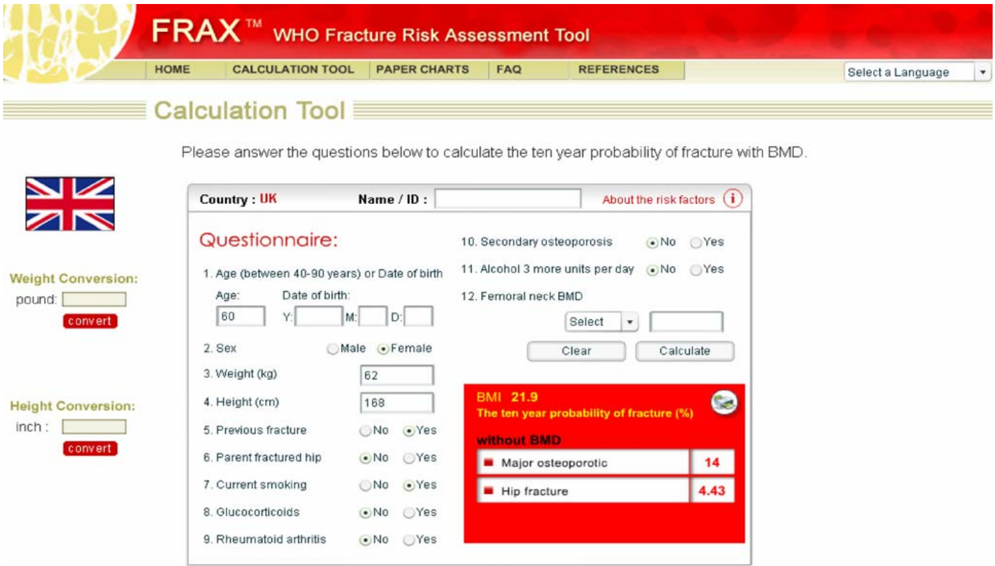
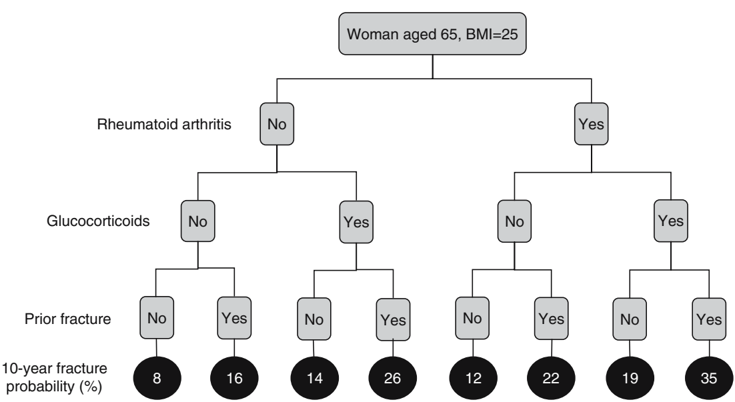
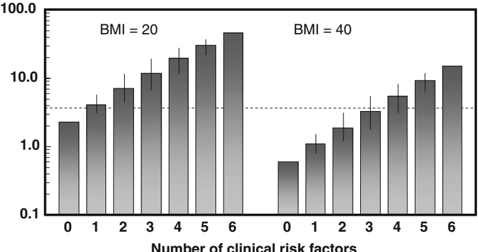
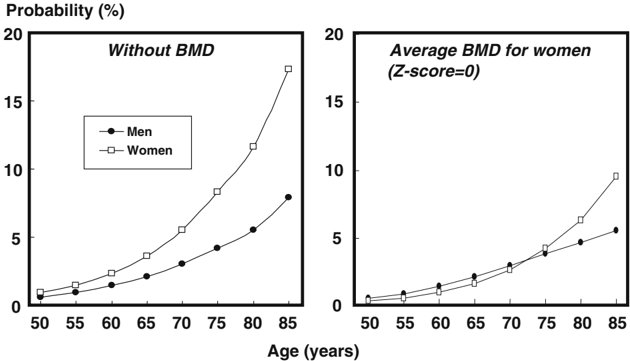
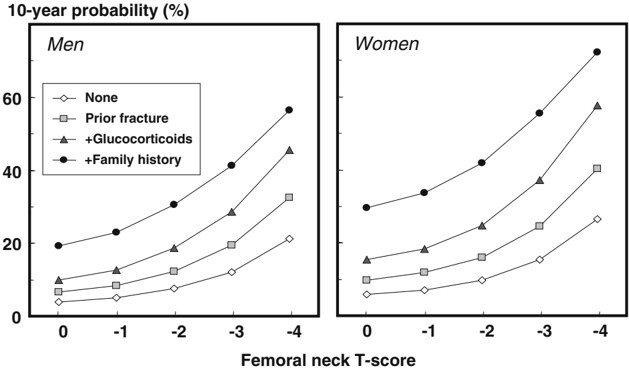
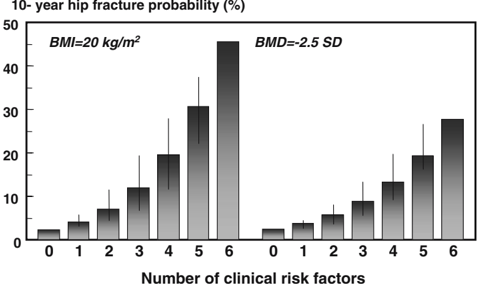
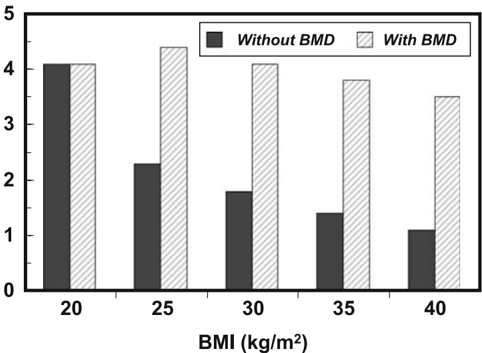
UNLABELLED: A fracture risk assessment tool (FRAX) is developed based on the use of clinical risk factors with or without bone mineral density tests applied to the UK. INTRODUCTION: The aim of this study was to apply an assessment tool for the prediction of fracture in men and women with the use of clinical risk factors (CRFs) for fracture with and without the use of femoral neck bone mineral density (BMD). The clinical risk factors, identified from previous meta-analyses, comprised body mass index (BMI, as a continuous variable), a prior history of fracture, a parental history of hip fracture, use of oral glucocorticoids, rheumatoid arthritis and other secondary causes of osteoporosis, current smoking, and alcohol intake 3 or more units daily. METHODS: Four models were constructed to compute fracture probabilities based on the epidemiology of fracture in the UK. The models comprised the ten-year probability of hip fracture, with and without femoral neck BMD, and the ten-year probability of a major osteoporotic fracture, with and without BMD. For each model fracture and death hazards were computed as continuous functions. RESULTS: Each clinical risk factor contributed to fracture probability. In the absence of BMD, hip fracture probability in women with a fixed BMI (25 kg/m(2)) ranged from 0.2% at the age of 50 years for women without CRF's to 22% at the age of 80 years with a parental history of hip fracture (approximately 100-fold range). In men, the probabilities were lower, as was the range (0.1 to 11% in the examples above). For a major osteoporotic fracture the probabilities ranged from 3.5% to 31% in women, and from 2.8% to 15% in men in the example above. The presence of one or more risk factors increased probabilities in an incremental manner. The differences in probabilities between men and women were comparable at any given T-score and age, except in the elderly where probabilities were higher in women than in men due to the higher mortality of the latter. CONCLUSION: The models provide a framework which enhances the assessment of fracture risk in both men and women by the integration of clinical risk factors alone and/or in combination with BMD.
Overview
The claims and statistics of this paper haven’t been checked yet.
Free: it reads the open-access text and checks the first 5 claims that cite a source we can check. Create a free account to check every claim.
Integrity signals
Registry
Cites
Statistics
Figures

Verification
Claims the paper makes
The claims and statistics of this paper haven’t been checked yet.
Free: it reads the open-access text and checks the first 5 claims that cite a source we can check. Create a free account to check every claim.
Claims other papers make about this one
Each is checked against this paper’s own text: does it say what the citing paper says it does?
The source backs part of the claim, not all of it — or backs it for a different population, condition or comparison.
In the citing paper
“The WHO determined that for many secondary causes of osteoporosis, fracture risk was mediated primarily through impact on BMD [28].”
From Clinician’s Guide to Prevention and Treatment of Osteoporosis (2014) · cites this paper as [28]
Experimental — accuracy not yet measured
Self-check
Percentages, sums and reported differences re-computed from the paper’s own numbers.
The self-check needs the paper’s full text.
Citations
Cites
Statistical Methods in Cancer Research
Breslow, N. E. (1980) · Cited by 7,332
Estimation of ten-year risk of fatal cardiovascular disease in Europe: the SCORE project
Conroy, R. (2003) · European Heart Journal · doi:10.1016/s0195-668x(03)00114-3 · Cited by 5,290
(1994) · PubMed · Cited by 5,043
Marshall, D., Johnell, O., & Wedel, H. (1996) · BMJ · doi:10.1136/bmj.312.7041.1254 · Cited by 3,709
Self-citationASSESSMENT OF FRACTURE RISK AND ITS APPLICATION TO SCREENING FOR POSTMENOPAUSAL OSTEOPOROSIS
Alexeeva, L. P., Burkhardt, P., Christiansen, C., Cooper, C. C., Delmas, P. D., Johnell, O., Johnston, C. C., Kanis, J. A., Lips, P. T. A. M., Melton, L. J., et al. (1994) · Cited by 2,655
Self-citationCummings, S. R. (1998) · JAMA · doi:10.1001/jama.280.24.2077 · Cited by 2,277 · cited 1×
“This concern is greatest in models that omit BMD, because pharmacological agents may not be equally effective across the entire range of BMD [90].”
BackgroundDiagnosis of osteoporosis and assessment of fracture risk
Kanis, J. A. (2002) · The Lancet · doi:10.1016/s0140-6736(02)08761-5 · Cited by 2,260 · cited 1×
“For this reason, there has been interest in the development of algorithms that express absolute risk, or the probability of fracture within a given time period [18–20], as has been done for cardiovascular and other diseases [21– 25].”
BackgroundSelf-citationEffect of Risedronate on the Risk of Hip Fracture in Elderly Women
McClung, M. R., Geusens, P., Miller, P. D., Zippel, H., Bensen, W. G., Roux, C., Adami, S., Fogelman, I., Diamond, T., Eastell, R., et al. (2001) · New England Journal of Medicine · doi:10.1056/nejm200102013440503 · Cited by 1,918
Body mass index as a predictor of fracture risk: A meta-analysis
De Laet, C., Kanis, J. A., Odén, A., Johanson, H., Johnell, O., Delmas, P., Eisman, J. A., Kroger, H., Fujiwara, S., Garnero, P., et al. (2005) · Osteoporosis International · doi:10.1007/s00198-005-1863-y · Cited by 1,622
Self-citationReginster, J.-Y., Minne, H. W., Sorensen, O. H., Hooper, M., Roux, C., Brandi, M. L., Lund, B., Ethgen, D., Pack, S., Roumagnac, I., et al. (2000) · Osteoporosis International · doi:10.1007/s001980050010 · Cited by 1,580
Research works printed but not linked: 4
- Adachi JD, Saag KG, Delmas PD et al (2001) Two year effects of alendronate on bone mineral density and vertebral fracture in patients receiving glucocorticoids: a randomised, double-blind, placebo-controlled extension trial. Arthr Rheum 44:202–211 · doi:10.1002/1529-0131(200101)44:1<202::aid-anr27>3.0.co;2-w
- Davison KS, Siminoski K, Chik C, Jen H, Warshawski R, Lee K (2003) Impact of height loss due to vertebral fractures on body mass index. J Bone Miner Res 18(Suppl 2):S243
- Standing Medical Advisory Committee to the Secretaries of State for Health and for Wales (1989) Drinking problems. A challenge for every doctor. HMSO, London
- World Health Organization (2008) Assessment of osteoporosis at the primary health care level. WHO, Geneva (in press)
Cited by
Items 701–800 of 1,001
Moraes, A. B., de Paula, M. P., Paranhos‐Neto, F. D. P., Cavalari, E. M. R., de Morais, F. F. C., Curi, D., Lima, L. F. C., de Mendonça, L. M. C., Farias, M. L. F., Madeira, M., et al. (2020) · The Journal of Clinical Endocrinology & Metabolism · doi:10.1210/clinem/dgaa263 · Cited by 32
Vena, W., Pizzocaro, A., Indirli, R., Amer, M., Maffezzoni, F., Delbarba, A., Leonardi, L., Balzarini, L., Ulivieri, F. M., Ferlin, A., et al. (2020) · Andrology · doi:10.1111/andr.12841 · Cited by 32
Pflimlin, A., Gournay, A., Delabrière, I., Chantelot, C., Puisieux, F. L., Cortet, B., & Paccou, J. (2019) · Osteoporosis International · doi:10.1007/s00198-019-05036-0 · Cited by 32
Chavda, S., Chavda, B., & Dube, R. (2022) · Cureus · doi:10.7759/cureus.26518 · Cited by 32
“…of hip fracture and major osteoporotic fracture (hip, spine, proximal humerus, or forearm) for untreated patients aged 40 to 90 years using easily obtainable clinical risk factors for fracture and femoral neck BMD (g/cm, using dual-energy x-ray absorptiometry [DXA]), when available [41].”
BackgroundMethodDimai, H. P., Muschitz, C., Amrein, K., Bauer, R., Cejka, D., Gasser, R. W., Gruber, R., Haschka, J., Hasenoehrl, T., Kainberger, F. M., et al. (2024) · Wiener klinische Wochenschrift · doi:10.1007/s00508-024-02441-2 · Cited by 32
Kanis, J. А., McCloskey, E. V., Johansson, H., Ström, O., Borgström, F., & Odén, A. (2009) · Best Practice & Research Clinical Rheumatology · doi:10.1016/j.berh.2009.09.002 · Cited by 32
Self-citationFavorable effect of immunomodulator therapy on bone mineral density in multiple sclerosis
Shuhaibar, M., McKenna, M. J., Au-Yeong, M., & Redmond, J. M. T. (2008) · Irish Journal of Medical Science (1971 -) · doi:10.1007/s11845-008-0253-9 · Cited by 32
“Early detection of bone loss by measuring bone mineral density (BMD) with DXA is advised in order to identify those at-risk of fracture and in need of specific intervention [4].”
BackgroundFactors associated with osteoporosis in Brazilian women: a population-based household survey
Baccaro, L. F., Machado, V. D. S. S., Costa‐Paiva, L., Sousa, M. H., Osis, M. J. D., & Pinto-Neto, A. M. (2013) · Archives of Osteoporosis · doi:10.1007/s11657-013-0138-z · Cited by 33
“In addition, the FRAX® tool, a computer-based algorithm that uses age, bone mineral density, and several clinical risk factors to evaluate fracture risk, has been used together with bone densitometry in various countries to determine the absolute 10-year risk of fracture, thus making it possible to individualize treat…”
MethodA perspective on male osteoporosis
Binkley, N. (2009) · Best Practice & Research Clinical Rheumatology · doi:10.1016/j.berh.2009.10.001 · Cited by 32
Ensrud, K. E., Taylor, B. C., Peters, K. W., Gourlay, M. L., Donaldson, M. G., Leslie, W. D., Blackwell, T., Fink, H. A., ORWOLL, E. S., Schousboe, J. T., et al. (2014) · BMJ · doi:10.1136/bmj.g4120 · Cited by 33
Fassio, A., Idolazzi, L., Jaber, M. A., Dartizio, C., Viapiana, O., Rossini, M., & Gatti, D. (2016) · Reumatismo · doi:10.4081/reumatismo.2016.878 · Cited by 32
“Recently, RA has been taken into account as an independent risk factor in the assessment of fracture risk (19, 20).”
BackgroundFrailty as a Predictor of Falls in HIV-Infected and Uninfected Women
Sharma, A., Hoover, D. R., Shi, Q., Gustafson, D., Plankey, M. W., Tien, P. C., Weber, K. M., & Yin, M. T. (2019) · Antiviral Therapy · doi:10.3851/imp3286 · Cited by 32
“This approach is similar to other algorithms for risk stratification of outcomes of clinical interest, such as the 10-year estimate of cardiovascular risk calculated by the Framingham risk score [45], and the 10- year risk of major osteoporotic fracture estimated by the FRAX tool [46].”
MethodAnagnostis, P. G., Vakalopoulou, S., Vyzantiadis, T., Charizopoulou, M., Karras, S. Ν., Goulis, D. G., Karagiannis, A. I., Gerou, S., & Garipidou, V. (2013) · Haemophilia · doi:10.1111/hae.12271 · Cited by 33
Predicting the fracture risk in 2008
Fardellone, P. (2008) · Joint Bone Spine · doi:10.1016/j.jbspin.2008.09.002 · Cited by 32
Vertebral anti-fracture efficacy of strontium ranelate according to pre-treatment bone turnover
Collette, J., Bruyère, O., Kaufman, J., Lorenc, R. S., Felsenberg, D., Spector, T. D., Díaz Curiel, M., Boonen, S., & Reginster, J. (2009) · Osteoporosis International · doi:10.1007/s00198-009-0940-z · Cited by 32
“current smoking, with or without the use of BMD [43].”
BackgroundSimplified 10-Year Absolute Fracture Risk Assessment: A Comparison of Men and Women
Leslie, W. D., & Lix, L. M. (2010) · Journal of Clinical Densitometry · doi:10.1016/j.jocd.2010.02.002 · Cited by 31
Vyzantiadis, T., Charizopoulou, M., Adamidou, F., Karras, S. Ν., Goulis, D. G., Karagiannis, A. I., Garipidou, V., Vakalopoulou, S., & Anagnostis, P. G. (2013) · Thrombosis and Haemostasis · doi:10.1160/th13-01-0030 · Cited by 31
“5 standard deviations (SD), if they were >50 years of age or Z-scores < -2 SD with increased fracture risk, if they were < 50 years of age, (b) a calculated 10-year probability of major osteoporotic fracture > 20% and/or that of hip fracture > 3% for those aged 40-90 years, according to the FRAX model (c) a history of…”
BackgroundStepan, J. J., Vaculík, J., Pavelká, K., Zofka, J., Johansson, H., & Kanis, J. А. (2012) · Calcified Tissue International · doi:10.1007/s00223-012-9582-9 · Cited by 31
“The development and validation of FRAX have been extensively described [17–19].”
MethodSelf-citationRisk of Fracture with Thiazolidinediones: Disease or Drugs?
Bazelier, M. T., Vestergaard, P., Gallagher, A. M., van Staa, T.-P., Cooper, C., Leufkens, H. G. M., & de Vries, F. (2012) · Calcified Tissue International · doi:10.1007/s00223-012-9591-8 · Cited by 28
“Patients with T2DM have on average a higher BMI than the general population [28], which is protective against fracture [33].”
BackgroundSecular trends in sex hormones and fractures in menand women
Trimpou, P., Lindahl, A., Lindstedt, G., Olerod, G., Wilhelmsen, L., & Landin-Wilhelmsen, K. (2012) · European Journal of Endocrinology · doi:10.1530/eje-11-0808 · Cited by 31
Efficacy and safety of bazedoxifene for postmenopausal osteoporosis
Kawate, H., & Takayanagi, R. (2011) · Clinical Interventions in Aging · doi:10.2147/cia.s15711 · Cited by 31
“30,31 In patients with a 10-year fracture risk .”
Paccou, J., Edwards, M. H., Ward, K. A., Jameson, K., Moon, R. J., Dennison, E. M., & Cooper, C. C. (2015) · Bone · doi:10.1016/j.bone.2015.05.002 · Cited by 31
“Alcohol consumption is included in fracture risk stratification tools, including FRAX®, but with a cut off of N2 drinks per day [12].”
MethodNormative Vertebral Hounsfield Unit Values and Correlation with Bone Mineral Density
Patel, S. P., & Lee, J. J. (2016) · journal of Clinical & Experimental Orthopaedics · doi:10.4172/2471-8416.100014 · Cited by 31
“Recently, the WHO’s Fracture Risk Assessment Tool (FRAX) has incorporated DXA T-scores into a more comprehensive fracture risk assessment [10].”
BackgroundNik, J., Lai, P. S. M., Ng, C. J., & Emmerton, L. (2016) · BMC Health Services Research · doi:10.1186/s12913-016-1686-x · Cited by 31
“It can be downloaded from the Internet and is easy to use [42].”
BackgroundÖzen, G., Kamen, D. L., Mikuls, T. R., England, B. R., Wolfe, F., & Michaud, K. D. (2018) · Arthritis Care & Research · doi:10.1002/acr.23331 · Cited by 31
Crandall, C. J., Larson, J. C., Cauley, J. A., Schousboe, J. T., LaCroix, A. Z., Robbins, J. A., Watts, N. B., & Ensrud, K. E. (2019) · JBMR Plus · doi:10.1002/jbm4.10239 · Cited by 31
Body, J., Marín, F., Kendler, D. L., Zerbini, C. A. F., López‐Romero, P., Moericke, R., Casado, E., Fahrleitner‐Pammer, A., Stepan, J. J., Lespessailles, É., et al. (2020) · Osteoporosis International · doi:10.1007/s00198-020-05463-4 · Cited by 31
The relationship between long-term proton pump inhibitor therapy and skeletal frailty
Lau, A. N., Tomizza, M. A., Wong‐Pack, M., Παπαϊωάννου, Α., & Adachi, J. D. (2015) · Endocrine · doi:10.1007/s12020-015-0576-z · Cited by 31
Rodríguez, M. M. R., Vázquez, M. Á., Giner, M., Vallo, F. G., Fernández-López, L., Colmenero, M. Á., & Montoya-García, M.-J. (2020) · BMJ Open · doi:10.1136/bmjopen-2020-037101 · Cited by 31
International Society for Clinical Densitometry official positions: Asia-Pacific Region consensus.
Kung, A., Wu, C.-H., Itabashi, A., Lee, J., Park, H., Zhao, Y., Chan, W., Kendler, D., Leib, E., Lewiecki, E., et al. (2010) · Journal of clinical densitometry · doi:10.1016/j.jocd.2010.05.006 · Cited by 26
Miller, P. D., Delmas, P. D., Huss, H., Patel, K., Schimmer, R. C., Adami, S., & Recker, R. R. (2010) · Calcified Tissue International · doi:10.1007/s00223-010-9403-y · Cited by 31
“Studies with the fracture risk assessment tool (FRAX) have demonstrated that other clinical factors, such as low body mass index and increased age, may contribute to fracture risk [28, 29 ].”
MethodChang, G. A., Rajapakse, C. S., Babb, J. S., Honig, S., Recht, M. P., & Regatte, R. R. (2011) · Journal of Bone and Mineral Metabolism · doi:10.1007/s00774-011-0333-1 · Cited by 31
“Indeed, because low BMI is such a strong risk factor for future fracture, it was included among the items assessed in the World Health Organization FRAX calculator for estimation of osteoporotic fracture risk [39].”
BackgroundHe, D., Liu, H., Wei, W., Zhao, Y., Cai, Q., Shi, S., Chu, X., Qin, X., Zhang, N., Xu, P., et al. (2023) · Osteoporosis International · doi:10.1007/s00198-023-06852-1 · Cited by 30
“Low bone mineral density (BMD) has been recognized as a strong risk factor for osteoporosis [4] and an important predictor of fracture [5].”
BackgroundSubtrochanteric/femoral shaft Versus hip fractures: Incidences and identification of risk factors
Maravic, M., Ostertag, A., & Cohen-Solal, M. E. (2011) · Journal of Bone and Mineral Research · doi:10.1002/jbmr.517 · Cited by 30
“Obesity is often found to be a protective factor against hip fracture;((28,29)) however, excess subcutaneous fat with less lean mass may alter the gait, thus predisposing individuals to falls.”
BackgroundEffect of including historical height and radius BMD measurement on sarco‐osteoporosis prevalence
Buehring, B., Krueger, D. C., & Binkley, N. (2012) · Journal of Cachexia Sarcopenia and Muscle · doi:10.1007/s13539-012-0080-8 · Cited by 31
“[5–11].”
BackgroundVanier, A., Smolen, J. S., Allaart, C. F., van Vollenhoven, R., Verschueren, P., Vastesaeger, N., Saevarsdóttir, S., Visser, K., Aletaha, D., Combe, B. G., et al. (2019) · Rheumatology · doi:10.1093/rheumatology/kez542 · Cited by 30
Time-Restricted Eating for 12 Weeks Does Not Adversely Alter Bone Turnover in Overweight Adults
Lobene, A. J., Panda, S., Mashek, D. G., Manoogian, E. N. C., Gallant, K. M. H., & Chow, L. S. (2021) · Nutrients · doi:10.3390/nu13041155 · Cited by 31
Bone Quality in CKD Patients: Current Concepts and Future Directions – Part I
Asadipooya, K., Abdalbary, M., Ahmad, Y., Kakani, E., Monier‐Faugere, M., & El-Husseini, A. A. (2021) · Kidney Diseases · doi:10.1159/000515534 · Cited by 30
Li, G., Thabane, L., Παπαϊωάννου, Α., & Adachi, J. D. (2015) · Bone · doi:10.1016/j.bone.2015.04.028 · Cited by 31
Ankle fractures do not predict osteoporotic fractures in women with or without diabetes
Pritchard, J. M., Giangregorio, L., Ioannidis, G., Παπαϊωάννου, Α., Adachi, J. D., & Leslie, W. D. (2011) · Osteoporosis International · doi:10.1007/s00198-011-1648-4 · Cited by 30
“of a hip fracture, smoking status, prolonged glucocorticoid exposure, rheumatoid arthritis, secondary causes of osteoporosis, and high alcohol intake [ 6 , 7]. A previous osteoporotic fracture is considered to be one of the strongest risk factors for subsequent osteoporotic fracture, and this risk is largely independe…”
BackgroundFuruya, T., Hosoi, T., Saito, S., Inoue, E., Taniguchi, A., Momohara, S., & Yamanaka, H. (2011) · Clinical Rheumatology · doi:10.1007/s10067-011-1748-8 · Cited by 30
“Among the general population, the FRAX appears to be a useful tool not only in European countries [12], but also in Japan [13] and Latin America [14].”
BackgroundManagement of fracture risk in Parkinson's: A revised algorithm and focused review of treatments
Henderson, E. J., Lyell, V., Bhimjiyani, A. G., Amin, J., Kobylecki, C., & Gregson, C. L. (2019) · Parkinsonism & Related Disorders · doi:10.1016/j.parkreldis.2019.03.021 · Cited by 30
Mary‐Krause, M., Viard, J., Ename-Mkoumazok, B., Bentata, M., Valantin, M., Missy, P., Darasteanu, I., Roux, C., Kolta, S., Costagliola, D. G., et al. (2012) · Journal of Clinical Densitometry · doi:10.1016/j.jocd.2012.04.001 · Cited by 30
“The parameters included in the analysis were risk factors for lowBMD in the general population, namely age, BMI, waist circumference, sub-Saharan African origin, alcohol consumption, smoking status with categories used in FRAX (9), factors linked to HIV infection or viral coinfection, namely the transmission group, he…”
MethodInfluentialHamdy, R. C., & Kiebzak, G. M. (2009) · Journal of Clinical Densitometry · doi:10.1016/j.jocd.2008.12.003 · Cited by 30
Tsang, S. W. Y., Bow, C., Chu, E. Y.-W., Yeung, S. C., Soong, C., & Kung, A. W. C. (2010) · Osteoporosis International · doi:10.1007/s00198-010-1260-z · Cited by 30
“The findings are in agreement with previous reports of the World Health Organization algorithms (FRAX®) for the 10-year absolute risk prediction [32–34]; we found that the prevalence of vertebral fracture was similar between those with or without the addition of BMD T-score to the model.”
ResultRecent advances in rheumatoid arthritis
Suresh, E. (2010) · Postgraduate Medical Journal · doi:10.1136/pgmj.2009.090399 · Cited by 30
“The importance of recognising osteoporosis among RA patients is underscored by the fact that the recently introduced World Health Organization fracture risk assessment tool (FRAX) recognises RA as an independent clinical risk factor for fractures.”
BackgroundGazzola, L., Comi, L., Savoldi, A., Tagliabue, L., Sole, A. D., Pietrogrande, L., Bini, T., Monforte, A. D., & Marchetti, G. C. (2010) · The Journal of Infectious Diseases · doi:10.1086/653584 · Cited by 30
Riesgo de fractura calculado con el índice FRAX en pacientes con osteoporosis tratados y no tratados
Vilaseca, D. R., Vaquero, C. G., Otero, C. H., & Solé, J. M. N. (2009) · Medicina Clínica · doi:10.1016/j.medcli.2009.05.044 · Cited by 29
Ghafoori, S., Keshtkar, A., Khashayar, P., Ebrahimi, M., Ramezani, M., Mohammadi, Z., Saeidifard, F., Nemati, N., Khoshbin, M., Azizian, S., et al. (2014) · Journal of Diabetes & Metabolic Disorders · doi:10.1186/s40200-014-0093-2 · Cited by 29
Hong, A. R., Kim, J. H., Lee, J. H., Kim, S. W., & Shin, C. S. (2019) · Journal of Bone and Mineral Metabolism · doi:10.1007/s00774-018-0980-6 · Cited by 29
“However, if LS BMD is significantly lower than FN BMD, the probability of actual fracture occurrence may be higher than that calculated by FRAX® [39, 40].”
BackgroundFrank, M., Reisinger, A., Pahr, D. H., & Thurner, P. J. (2021) · JBMR Plus · doi:10.1002/jbm4.10503 · Cited by 29
“calculate a 10-year risk probability, the fracture risk assessment tool (FRAX) score.((4)) This score enables amore reliable risk predic-”
BackgroundAstrone, P., Perracini, M. R., Martin, F. C., Marsh, D., & Cesari, M. (2022) · Aging Clinical and Experimental Research · doi:10.1007/s40520-022-02186-w · Cited by 29
Schinzel, E., Kast, S., Kohl, M., von Stengel, S., Jakob, F. J., Kerschan‐Schindl, K., Kladny, B., Lange, U., Peters, S., Thomasius, F. E., et al. (2023) · Frontiers in Physiology · doi:10.3389/fphys.2023.1135663 · Cited by 29
“, the most important sites for osteoporotic fractures (Kanis et al., 2008).”
BackgroundAlbaba, M., Cha, S. S., & Takahashi, P. Y. (2012) · Mayo Clinic Proceedings · doi:10.1016/j.mayocp.2012.01.020 · Cited by 29
Ioannidis, G., Pallan, S., Παπαϊωάννου, Α., Mulgund, M., Rios, L. P., Ma, J., Thabane, L., Davison, K. S., Josse, R. G., Kovács, C. S., et al. (2014) · Archives of Osteoporosis · doi:10.1007/s11657-013-0169-5 · Cited by 29
“The fracture risk assessment tool (FRAX) developed by the World Health Organization, considers ever use (current or past) of GC as a part of the algorithm to calculate the 10-year fracture risk [9, 10].”
MethodResultUse of thiazolidinediones and risk of osteoporotic fracture: disease or drugs?
Bazelier, M. T., Gallagher, A. M., van Staa, T., Cooper, C., Leufkens, H. G. M., Vestergaard, P., & de Vries, F. (2012) · Pharmacoepidemiology and Drug Safety · doi:10.1002/pds.3234 · Cited by 29
Prieto‐Alhambra, D., Javaid, M. K., Judge, A., Maskell, J., Kiran, A., Cooper, C. C., & Arden, N. (2010) · Osteoporosis International · doi:10.1007/s00198-010-1368-1 · Cited by 29
““Osteoporotic fractures” were defined based on fracture site: humerus, wrist/forearm, and clinical spine fractures have been defined as “major osteoporotic fractures” in the FRAX model [21].”
BackgroundLoures, M. A. A. D. R., Zerbini, C. A. F., Danowski, J. S., Pereira, R. M. R., Moreira, C., de Paula, A. P., Castro, C. H. D. M., Szejnfeld, V. L., de Mendonça, L. M. C., Radominiski, S. C., et al. (2017) · Revista Brasileira de Reumatologia (English Edition) · doi:10.1016/j.rbre.2017.07.003 · Cited by 29
Watanabe, R., Tai, N., Hirano, J., Ban, Y., Inoue, D., & Okazaki, R. (2017) · Osteoporosis International · doi:10.1007/s00198-017-4314-7 · Cited by 29
Crandall, C. J., Larson, J. C., Manson, J. E., Cauley, J. A., LaCroix, A. Z., Wactawski‐Wende, J., Datta, M., Sattari, M., Schousboe, J. T., Leslie, W. D., et al. (2018) · Journal of Bone and Mineral Research · doi:10.1002/jbmr.3636 · Cited by 29
“4) 60–64 years 1794 119 (7) 189 (11) 14.”
Frailty predicts fractures among women with and at-risk for HIV
Sharma, A., Shi, Q., Hoover, D. R., Tien, P. C., Plankey, M. W., Cohen, M. H., Golub, E. T., Gustafson, D., & Yin, M. T. (2019) · AIDS · doi:10.1097/qad.0000000000002082 · Cited by 29
“Previously identified prognostic factors for fracture [35] were candidate covariates: age, menopause (no menses for greater than 1 year), personal history of fracture, parental history of hip fracture, BMI (in kg/m(2)), race/ethnicity, current cigarette smoking, 14 or more alcoholic drinks per week, ever glucocorticoi…”
A novel risk assessment tool for bovine respiratory disease in preweaned dairy calves
Maier, G. U., Love, W. J., Karle, B. M., Dubrovsky, S. A., Williams, D. R., Champagne, J. D., Anderson, R. J., Rowe, J. D., Lehenbauer, T. W., Eenennaam, A. L. V., et al. (2020) · Journal of Dairy Science · doi:10.3168/jds.2019-17650 · Cited by 30
Optimising the management of osteoporosis
Farah, Z., & Jawad, A. S. (2020) · Clinical Medicine · doi:10.7861/clinmed.2020-0131 · Cited by 31
Ivergård, M., Ström, O., Borgström, F., Burge, R., Tosteson, A. N. A., & Kanis, J. А. (2010) · Bone · doi:10.1016/j.bone.2010.07.024 · Cited by 29
Self-citation2008 Santa Fe Bone Symposium: Update on Osteoporosis
Lewiecki, E. M., Baim, S., Bilezikian, J. P., Eastell, R., LeBoff, M. S., & Miller, P. D. (2009) · Journal of Clinical Densitometry · doi:10.1016/j.jocd.2009.02.002 · Cited by 30
Pulkkinen, P., Partanen, J., Jalovaara, P., & Jämsä, T. J. (2009) · Osteoporosis International · doi:10.1007/s00198-009-1070-3 · Cited by 29
“Even the recent WHO fracture risk assessment tool that combines clinical risk factors with and without BMD [25] ignores not”
BackgroundHaemophilia A and B as a cause for secondary osteoporosis and increased fracture risk
Anagnostis, P. G., Karras, S. Ν., Paschou, S. Α., & Goulis, D. G. (2015) · Blood Coagulation & Fibrinolysis · doi:10.1097/mbc.0000000000000330 · Cited by 29
Roux, C., & Thomas, T. (2008) · Joint Bone Spine · doi:10.1016/j.jbspin.2008.11.001 · Cited by 29
Toyoda, H., Hayashi, C., & Okano, T. (2022) · Archives of Gerontology and Geriatrics · doi:10.1016/j.archger.2022.104752 · Cited by 28
Bone Turnover Marker Profiling and Fracture Risk in Older Women: Fracture Risk from Age 75 to 90
Ivaska, K. K., McGuigan, F. E., Malmgren, L., Gerdhem, P., Johansson, H., Kanis, J. А., & Åkesson, K. (2022) · Calcified Tissue International · doi:10.1007/s00223-022-00996-8 · Cited by 28
Self-citationPan, J., Xu, G., Zhai, Z., Sun, J., Wang, Q., Huang, X., Guo, Y., Lu, Q., Mo, J., Nong, Y., et al. (2024) · Clinical Nutrition · doi:10.1016/j.clnu.2024.03.032 · Cited by 28
Azagra, R., Zwart, M., Aguyé, A., Martín‐Sánchez, J. C., Casado, E., Díaz‐Herrera, M. Á., Moriña, D., Cooper, C. C., Díez‐Pérez, A., & Dennison, E. M. (2015) · Maturitas · doi:10.1016/j.maturitas.2015.10.002 · Cited by 28
Romme, E. A., Rutten, E. P. A., Geusens, P., de Jong, J. J. A., van Rietbergen, B., Smeenk, F. W. J. M., Wouters, E. F. �., & van den Bergh, J. P. (2013) · Journal of Bone and Mineral Research · doi:10.1002/jbmr.1947 · Cited by 28
“A combination of clinical features and structural and mechanical parameters of bone is likely to be a better predictor of fragility fractures than aBMD alone.((45)) Longitudinal studies are needed to investigate which clinical features and structural and mechanical parameters of bone are related with future fractures.”
BackgroundMultiple gene polymorphisms can improve prediction of nonvertebral fracture in postmenopausal women
Lee, S. H., Lee, S., Ahn, S. H., Kim, T., Lim, K.-H., Kim, B., Cho, E.-H., Kim, S., Kim, T., Kim, G. S., et al. (2013) · Journal of Bone and Mineral Research · doi:10.1002/jbmr.1955 · Cited by 28
Li, S., He, H., Ding, M., & He, C. (2010) · BMC Musculoskeletal Disorders · doi:10.1186/1471-2474-11-183 · Cited by 29
“It has been established that BMI is a protective factor against osteoporosis, and it is also included as protective factor in FRAX [ 35-37 ].”
BackgroundDrozdzowska, B., Wiktor, K., & Pluskiewicz, W. (2013) · International Journal of Clinical Practice · doi:10.1111/ijcp.12118 · Cited by 28
Poor Trabecular Microarchitecture in Male Current Smokers: The Cross-Sectional STRAMBO Study
Szulc, P., Debiesse, E., Boutroy, S., Vilauphiou, N., & Chapurlat, R. D. (2011) · Calcified Tissue International · doi:10.1007/s00223-011-9519-8 · Cited by 28
“More importantly, smoking is associated with a higher risk of fracture even after adjustment for aBMD [4, 5]. Therefore, current smoking has been included as an independent indicator of the risk of fracture in the FRAX algorithm, which permits the identification of individuals at high risk for fracture [ 6 ].”
BackgroundRoussy, J., Bessette, L., Bernatsky, S., Rahme, E., & Lachaîne, J. (2013) · Osteoporosis International · doi:10.1007/s00198-013-2321-x · Cited by 29
“Finally, although we adjusted our regression model for several important clinical risk factors for fractures, not all documented [32, 41, 42] factors were available in our administrative database.”
MethodMüller, D., Pulm, J., & Gandjour, A. (2012) · Value in Health · doi:10.1016/j.jval.2011.11.030 · Cited by 29
The Malaysian Clinical Guidance on the Management of Postmenopausal Osteoporosis, 2012: A Summary
Yeap, S. S., Hew, F. L., Lee, J. K., Goh, E. M. L., Chee, W. S. S., Mumtaz, M., Damodaran, P., Lim, H. H., & Chan, S. P. (2013) · International Journal of Rheumatic Diseases · doi:10.1111/1756-185x.12037 · Cited by 29
Briot, K., Cortet, B., Thomas, T., Audran, M., Blain, H., Breuil, V., Chapuis, L., Chapurlat, R. D., Fardellone, P., Féron, J.-M., et al. (2012) · Revue du Rhumatisme · doi:10.1016/j.rhum.2012.02.006 · Cited by 32
Fracture Risk Score and Absolute Risk of Fracture
Henry, M. J., Pasco, J. A., Merriman, E. N., Zhang, Y., Sanders, K. M., Kotowicz, M. A., & Nicholson, G. C. (2011) · Radiology · doi:10.1148/radiol.10101406 · Cited by 28
Kanis, J. А., & Reginster, J. (2008) · Polskie Archiwum Medycyny Wewnętrznej · doi:10.20452/pamw.480 · Cited by 28
Self-citationA Simple Model for Predicting Two-Year Risk of Diabetes Development in Individuals with Prediabetes
Glauber, H. S., Vollmer, W. M., & Nichols, G. A. (2018) · The Permanente Journal · doi:10.7812/tpp/17-050 · Cited by 28
The Role of Exercise on Fracture Reduction and Bone Strengthening
KEMMLER, W. K., & von Stengel, S. (2018) · Elsevier eBooks · doi:10.1016/b978-0-12-814593-7.00020-7 · Cited by 28
Patient-Specific Bone Multiscale Modelling, Fracture Simulation and Risk Analysis—A Survey
de Alcântara, A. C. S., Assis, I., Prada, D., Mehle, K., Schwan, S., Costa‐Paiva, L., Skaf, M. S., Wrobel, L. C., & Sollero, P. (2019) · Materials · doi:10.3390/ma13010106 · Cited by 28
Hormonal Therapy in Oncology: A Primer for the Radiologist
Fairchild, A., Tirumani, S. H., Rosenthal, M. H., Howard, S. A. H., Krajewski, K. M., Nishino, M., Shinagare, A. B., Jagannathan, J. P., & Ramaiya, N. H. (2015) · American Journal of Roentgenology · doi:10.2214/ajr.14.13604 · Cited by 29
“The Fracture Risk Assessment Tool (FRAX) was developed by WHO in 2008 for predicting the 10year probability of hip fracture in untreated patients 40–90 years old on the basis of clinical risk factors [44].”
MethodCD109 Plays a Role in Osteoclastogenesis
Wang, Y., Inger, M., Jiang, H., Tenenbaum, H. C., & Glogauer, M. (2013) · PLoS ONE · doi:10.1371/journal.pone.0061213 · Cited by 28
“A new fracture prediction algorithm (FRAX) was developed in order to determine a patient’s absolute fracture risk in 10 years [66, 67].”
MethodManagement of osteoporosis in primary care in Australia
Chen, J. S., Hogan, C., Lyubomirsky, G., & Sambrook, P. N. (2008) · Osteoporosis International · doi:10.1007/s00198-008-0686-z · Cited by 28
“The 10-year probability of a major osteoporotic fracture was calculated using gender, age, body mass index and those clinical risk factors that were recorded according to the FRAX (based on the epidemiology of the UK)[5, 6].”
Ralston, S., Fraser, J., Gallacher, S., Hannaford, P., Hislop, J., Hollick, R., McConnell, C., Pullan, G., Scott, N., Smith, L., et al. (2021) · Aberdeen University Research Archive (Aberdeen University) · Cited by 28
Uwarunkowania pomyślnego starzenia
Laskowska-Szcześniak, M., & Kozak-Szkopek, E. (2013) · Forum Medycyny Rodzinnej · Cited by 27
POCOCK, N. A. (2017) · Nephrology · doi:10.1111/nep.13016 · Cited by 27
Jung, J., Choi, S. T., Park, S., Kwon, S., Kim, H., Kim, S.-S., Kim, S.-H., & Suh, C. (2020) · Osteoporosis and Sarcopenia · doi:10.1016/j.afos.2020.11.001 · Cited by 29
Sollmann, N., Kirschke, J. S., Kronthaler, S., Boehm, C., Dieckmeyer, M., Vogele, D., Kloth, C., Lisson, C. G., Carballido‐Gamio, J., Link, T. M., et al. (2022) · RöFo - Fortschritte auf dem Gebiet der Röntgenstrahlen und der bildgebenden Verfahren · doi:10.1055/a-1770-4626 · Cited by 27
“uk/FRAX/), a widely used computer-based algorithm that integrates clinical risk factors (alone or in combination with aBMD) to calculate the 10-year probability to sustain an osteoporotic fracture [15].”
BackgroundLu, S., Fuggle, N. R., Westbury, L. D., Breasail, M. Ó., Bevilacqua, G., Ward, K. A., Dennison, E. M., Mahmoodi, S., Niranjan, M., & Cooper, C. C. (2022) · Bone · doi:10.1016/j.bone.2022.116653 · Cited by 27
Shepherd, J. (2023) · Journal of Clinical Densitometry · doi:10.1016/j.jocd.2023.101369 · Cited by 27
Gazzola, L., Savoldi, A., Bai, F., Magenta, A., Dziubak, M., Pietrogrande, L., Tagliabue, L., Sole, A. D., Bini, T., Marchetti, G. C., et al. (2015) · HIV Medicine · doi:10.1111/hiv.12267 · Cited by 28
Unni, S. K., Yao, Y., Milne, N., Gunning, K. M., Curtis, J. R., & Lafleur, J. (2014) · Osteoporosis International · doi:10.1007/s00198-014-2899-7 · Cited by 27
Mandibular trabecular bone as fracture indicator in 80‐year‐old men and women
Hassani‐Nejad, A., Ahlqwist, M., Hakeberg, M., & Jonasson, G. (2013) · European Journal Of Oral Sciences · doi:10.1111/eos.12087 · Cited by 27
Bone turnover assessment: a good surrogate marker?
Dreyer, P., & Vieira, J. G. H. (2010) · Arquivos Brasileiros de Endocrinologia & Metabologia · doi:10.1590/s0004-27302010000200003 · Cited by 27
Metadata
- Authors
- Kanis, J. A., Johnell, O., Oden, A., Johansson, H., & McCloskey, E.
- Affiliations
- Northern General Hospital (GB)
- ORCID
- McCloskey, E.
- Venue
- Osteoporosis International
- Published
- 2008-02-22
- Volume
- 19
- Issue
- 4
- Pages
- 385-397
- ISSN
- 0937-941X (ISSN-L)
- 1433-2965
- PMC
- PMC2267485
- OpenAlex
- W2110768118
- Cited by
- 2,467
- References
- 106
- Citations by year
- 2026: 131 · 2025: 93 · 2024: 121 · 2023: 128 · 2022: 128 · 2021: 154 · 2020: 148 · 2019: 112 · 2018: 125 · 2017: 104 · 2016: 113 · 2015: 142 · 2014: 136 · 2013: 139 · 2012: 157
- FWCI
- 168.19
- Type
- journal article
- Language
- en
- Open access
- hybrid
- doi.org
- Licence
- cc-by-nc
- creativecommons.org/licenses/by-nc/4.0/ (tdm)
- creativecommons.org/licenses/by-nc/4.0/ (vor)
- Locations
- Osteoporosis International (publishedVersion, cc-by-nc)
- PubMed Central (publishedVersion)
- PubMed (publishedVersion)
- Research Bank (Australian Catholic University) (submittedVersion)
- Lund University Publications (Lund University) (submittedVersion)
- Chalmers Publication Library (Chalmers University of Technology) (submittedVersion)
- Chalmers Research (Chalmers University of Technology) (submittedVersion)
- Funders
- Amgen
- Eli Lilly and Company
- Pfizer
- International Osteoporosis Foundation
- Topics
- Health Sciences › Medicine › Orthopedics and Sports Medicine › Bone health and osteoporosis research
- Health Sciences › Medicine › Surgery › Hip and Femur Fractures
- Health Sciences › Medicine › Endocrinology, Diabetes and Metabolism › Menopause: Health Impacts and Treatments
- Keywords
- FRAX, fracture risk assessment, hip fracture, major osteoporotic fracture, clinical risk factors, bone mineral density, femoral neck, body mass index, glucocorticoids, smoking, alcohol consumption, sex differences, mortality, British population
- MeSH terms
- Aged, Aged, 80 and over, Epidemiologic Methods, Female, United Kingdom, Hip Fractures, Humans, Male, Middle Aged, Osteoporosis, Research Design, Time Factors, Body Mass Index
About these checks
Registry, retraction, Cites and statistics results are computed, not judged, with one exception: a printed reference that no index lists is read once by a model before it counts as a citation error. Claims are extracted by a model and kept only when their quote appears verbatim in the text; each cited source is then checked, with a model’s help, for whether it says what the claim relies on. Those verdicts can be wrong — read the claim’s quote and the cited source before relying on one.
Statistics and arithmetic are recomputed, not judged.
Confidence bands are shown only for fields calibrated on our annotated test set. None is calibrated yet, so no band is shown.
What counts as a claim ›How we measure confidence ›How we check this ›
Are you an author, or do you see a problem with this page? Request a review
Data sources
Bibliographic data: Semantic Scholar, OpenAlex, Crossref.
Contains information from the Semantic Scholar Academic Graph Datasets, made available under the ODC Attribution License (ODC-BY 1.0).
Semantic Scholar’s data is described in: Kinney, R., et al. (2023). The Semantic Scholar Open Data Platform. arXiv:2301.10140.
