

FRAX™ and the assessment of fracture probability in men and women from the UK
Open accessThe DOI matches its Crossref record; 106 of the 106 references it cites were found in a registry or an index.
Abstract
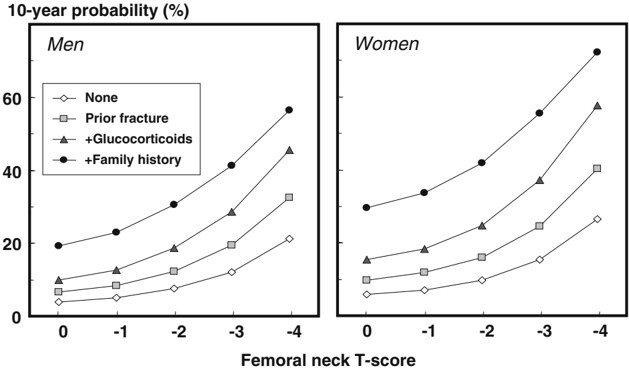
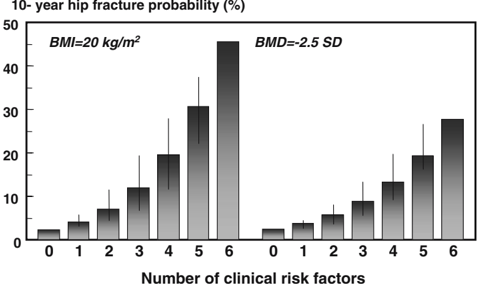
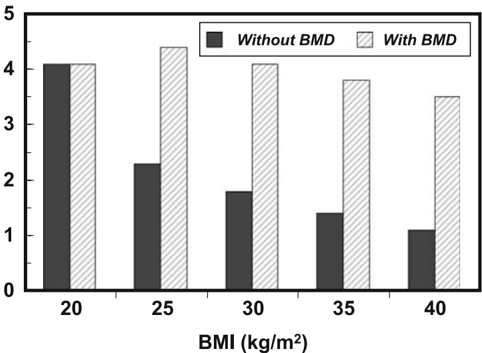
UNLABELLED: A fracture risk assessment tool (FRAX) is developed based on the use of clinical risk factors with or without bone mineral density tests applied to the UK. INTRODUCTION: The aim of this study was to apply an assessment tool for the prediction of fracture in men and women with the use of clinical risk factors (CRFs) for fracture with and without the use of femoral neck bone mineral density (BMD). The clinical risk factors, identified from previous meta-analyses, comprised body mass index (BMI, as a continuous variable), a prior history of fracture, a parental history of hip fracture, use of oral glucocorticoids, rheumatoid arthritis and other secondary causes of osteoporosis, current smoking, and alcohol intake 3 or more units daily. METHODS: Four models were constructed to compute fracture probabilities based on the epidemiology of fracture in the UK. The models comprised the ten-year probability of hip fracture, with and without femoral neck BMD, and the ten-year probability of a major osteoporotic fracture, with and without BMD. For each model fracture and death hazards were computed as continuous functions. RESULTS: Each clinical risk factor contributed to fracture probability. In the absence of BMD, hip fracture probability in women with a fixed BMI (25 kg/m(2)) ranged from 0.2% at the age of 50 years for women without CRF's to 22% at the age of 80 years with a parental history of hip fracture (approximately 100-fold range). In men, the probabilities were lower, as was the range (0.1 to 11% in the examples above). For a major osteoporotic fracture the probabilities ranged from 3.5% to 31% in women, and from 2.8% to 15% in men in the example above. The presence of one or more risk factors increased probabilities in an incremental manner. The differences in probabilities between men and women were comparable at any given T-score and age, except in the elderly where probabilities were higher in women than in men due to the higher mortality of the latter. CONCLUSION: The models provide a framework which enhances the assessment of fracture risk in both men and women by the integration of clinical risk factors alone and/or in combination with BMD.
Overview
The claims and statistics of this paper haven’t been checked yet.
Free: it reads the open-access text and checks the first 5 claims that cite a source we can check. Create a free account to check every claim.
Integrity signals
Registry
Cites
Statistics
Figures

Verification
Claims the paper makes
The claims and statistics of this paper haven’t been checked yet.
Free: it reads the open-access text and checks the first 5 claims that cite a source we can check. Create a free account to check every claim.
Claims other papers make about this one
Each is checked against this paper’s own text: does it say what the citing paper says it does?
The source backs part of the claim, not all of it — or backs it for a different population, condition or comparison.
In the citing paper
“The WHO determined that for many secondary causes of osteoporosis, fracture risk was mediated primarily through impact on BMD [28].”
From Clinician’s Guide to Prevention and Treatment of Osteoporosis (2014) · cites this paper as [28]
Experimental — accuracy not yet measured
Self-check
Percentages, sums and reported differences re-computed from the paper’s own numbers.
The self-check needs the paper’s full text.
Citations
Cites
Statistical Methods in Cancer Research
Breslow, N. E. (1980) · Cited by 7,332
Estimation of ten-year risk of fatal cardiovascular disease in Europe: the SCORE project
Conroy, R. (2003) · European Heart Journal · doi:10.1016/s0195-668x(03)00114-3 · Cited by 5,290
(1994) · PubMed · Cited by 5,043
Marshall, D., Johnell, O., & Wedel, H. (1996) · BMJ · doi:10.1136/bmj.312.7041.1254 · Cited by 3,709
Self-citationASSESSMENT OF FRACTURE RISK AND ITS APPLICATION TO SCREENING FOR POSTMENOPAUSAL OSTEOPOROSIS
Alexeeva, L. P., Burkhardt, P., Christiansen, C., Cooper, C. C., Delmas, P. D., Johnell, O., Johnston, C. C., Kanis, J. A., Lips, P. T. A. M., Melton, L. J., et al. (1994) · Cited by 2,655
Self-citationCummings, S. R. (1998) · JAMA · doi:10.1001/jama.280.24.2077 · Cited by 2,277 · cited 1×
“This concern is greatest in models that omit BMD, because pharmacological agents may not be equally effective across the entire range of BMD [90].”
BackgroundDiagnosis of osteoporosis and assessment of fracture risk
Kanis, J. A. (2002) · The Lancet · doi:10.1016/s0140-6736(02)08761-5 · Cited by 2,260 · cited 1×
“For this reason, there has been interest in the development of algorithms that express absolute risk, or the probability of fracture within a given time period [18–20], as has been done for cardiovascular and other diseases [21– 25].”
BackgroundSelf-citationEffect of Risedronate on the Risk of Hip Fracture in Elderly Women
McClung, M. R., Geusens, P., Miller, P. D., Zippel, H., Bensen, W. G., Roux, C., Adami, S., Fogelman, I., Diamond, T., Eastell, R., et al. (2001) · New England Journal of Medicine · doi:10.1056/nejm200102013440503 · Cited by 1,918
Body mass index as a predictor of fracture risk: A meta-analysis
De Laet, C., Kanis, J. A., Odén, A., Johanson, H., Johnell, O., Delmas, P., Eisman, J. A., Kroger, H., Fujiwara, S., Garnero, P., et al. (2005) · Osteoporosis International · doi:10.1007/s00198-005-1863-y · Cited by 1,622
Self-citationReginster, J.-Y., Minne, H. W., Sorensen, O. H., Hooper, M., Roux, C., Brandi, M. L., Lund, B., Ethgen, D., Pack, S., Roumagnac, I., et al. (2000) · Osteoporosis International · doi:10.1007/s001980050010 · Cited by 1,580
Research works printed but not linked: 4
- Adachi JD, Saag KG, Delmas PD et al (2001) Two year effects of alendronate on bone mineral density and vertebral fracture in patients receiving glucocorticoids: a randomised, double-blind, placebo-controlled extension trial. Arthr Rheum 44:202–211 · doi:10.1002/1529-0131(200101)44:1<202::aid-anr27>3.0.co;2-w
- Davison KS, Siminoski K, Chik C, Jen H, Warshawski R, Lee K (2003) Impact of height loss due to vertebral fractures on body mass index. J Bone Miner Res 18(Suppl 2):S243
- Standing Medical Advisory Committee to the Secretaries of State for Health and for Wales (1989) Drinking problems. A challenge for every doctor. HMSO, London
- World Health Organization (2008) Assessment of osteoporosis at the primary health care level. WHO, Geneva (in press)
Cited by
Items 801–900 of 1,001
Association between fat‐mass‐and‐obesity‐associated ( FTO ) gene and hip fracture susceptibility
Tran, B. N. H., Nguyen, N. D., Eisman, J. A., & Nguyen, T. V. (2013) · Clinical Endocrinology · doi:10.1111/cen.12335 · Cited by 27
The association between bone mineral density and metabolic syndrome: a Korean population-based study
Kim, H., Oh, H. J., Choi, H. S., Choi, W. H., Lim, S.-K., & Kim, J. G. (2013) · Journal of Bone and Mineral Metabolism · doi:10.1007/s00774-013-0446-9 · Cited by 27
“Bone mineral density (BMD) is a well-known and major determinant of bone strength and is used to diagnose and determine fracture risk [1].”
BackgroundFactors affect stability of intertrochanteric fractures when elderly patients fall
Chen, P.-H., Wu, C., & Chen, W. (2016) · Biomedical Journal · doi:10.1016/j.bj.2015.08.007 · Cited by 27
“[28] Kanis JA, Johnell O, Oden A, Johansson H, McCloskey E.”
BackgroundOfficial Positions for FRAX® Clinical Regarding Prior Fractures
Blank, R. D. (2011) · Journal of Clinical Densitometry · doi:10.1016/j.jocd.2011.05.009 · Cited by 27
Frederiksen, A. G., Abrahamsen, B., Johansen, P. B., & Sørensen, H. A. (2017) · Osteoporosis International · doi:10.1007/s00198-017-4247-1 · Cited by 27
Validation of calcaneus trabecular microstructure measurements by HR-pQCT.
Metcalf, L. M., Dall'ara, E., Paggiosi, M., Rochester, J., Vilayphiou, N., Kemp, G., & McCloskey, E. (2018) · Bone · doi:10.1016/j.bone.2017.09.013 · Cited by 22
Self-citationGranchi, D., Caudarella, R., Ripamonti, C., Spinnato, P., Bazzocchi, A., Massa, A., & Baldini, N. (2018) · Nutrients · doi:10.3390/nu10091293 · Cited by 27
McCloskey, E. V., Fitzpatrick, L. A., Hu, M.-Y. Y., Williams, G. C., & Kanis, J. A. (2019) · Archives of Osteoporosis · doi:10.1007/s11657-019-0564-7 · Cited by 27
Self-citationWaqas, K., Chen, J., van der Eerden, B. C. J., Ikram, M. A., Uitterlinden, A. G., Voortman, T., & Zillikens, M. C. (2020) · Nutrients · doi:10.3390/nu12082377 · Cited by 27
Bone Densitometry: Science and Practice
Blake, G. M., & Fogelman, I. (2012) · Springer eBooks · doi:10.1007/978-3-642-02400-9_38 · Cited by 27
Risk factors of osteoporosis in healthy Moroccan men
Maghraoui, A. E., Ghazi, M., Gassim, S., Ghozlani, I., Mounach, A., Rezqi, A., & Dehhaoui, M. (2010) · BMC Musculoskeletal Disorders · doi:10.1186/1471-2474-11-148 · Cited by 28
Sund, R., Honkanen, R., Johansson, H., Odén, A., McCloskey, E. V., Kanis, J. А., & Kröger, H. (2014) · Calcified Tissue International · doi:10.1007/s00223-014-9860-9 · Cited by 27
“This risk calculator was developed using primary data from a worldwide collection of 12 cohort studies (and validated in further 11 studies) with over a million person-years of follow-up; potential risk factors were systematically metaanalyzed, and the 10-year fracture risk was modeled according to nine clinical varia…”
MethodSelf-citationLee, S. H., Cho, E.-H., Ahn, S. H., Kim, H., Lim, K.-H., Kim, B., Kim, S., Kim, T., Kim, S., Kim, G. S., et al. (2016) · The Journal of Clinical Endocrinology & Metabolism · doi:10.1210/jc.2015-3972 · Cited by 27
Clinical update on teriparatide
File, E., & Deal, C. L. (2009) · Current Rheumatology Reports · doi:10.1007/s11926-009-0023-3 · Cited by 27
Aleksić, J., Zvekić-Svorcan, J., Stupar, N. V., Jeremić, I., & Grgurević, A. (2017) · Menopause The Journal of The North American Menopause Society · doi:10.1097/gme.0000000000001009 · Cited by 26
Krieg, M., Stoll, D., Aubry‐Rozier, B., Metzger, M., Hans, D. B., & Lamy, O. (2012) · Osteologie/Osteology · doi:10.1055/s-0037-1621671 · Cited by 26
“Taking into account epidemiological data and the impact of these CRF on the 10-year absolute probability of fracture, the FRAX® model was developed (3).”
BackgroundMethodCarbone, L. D., Vasan, S., Elam, R. E., Gupta, S. J., Tolaymat, O., Crandall, C. J., Wactawski‐Wende, J., & Johnson, K. (2020) · JBMR Plus · doi:10.1002/jbm4.10393 · Cited by 26
“dent clinical risk factor for estimation of 10-year risk of both hip and major osteoporotic fractures.((4))”
BackgroundPaskins, Z., Bullock, L., Manning, F., Cottrell, E., Fleming, J., Leyland, S., Edwards, J., Clark, E., Thomas, S., Chapman, S., et al. (2021) · BMJ Open · doi:10.1136/bmjopen-2021-048811 · Cited by 28
“9 10 Despite national osteoporosis guidance recommending the provision of information as a core component of management, 11 patients report that osteoporosis information provided in consultations is often not easy to understand.”
BackgroundThe bone strain index predicts fragility fractures. The OFELY study
Sornay‐Rendu, E., Duboeuf, F., Ulivieri, F. M., Rinaudo, L., & Chapurlat, R. D. (2022) · Bone · doi:10.1016/j.bone.2022.116348 · Cited by 26
van Abswoude, D. H., Pellikaan, K., Rosenberg, A. G. W., Davidse, K., Coupaye, M., Höybye, C., Markovic, T., Grugni, G., Crinò, A., Caixàs, A., et al. (2022) · The Journal of Clinical Endocrinology & Metabolism · doi:10.1210/clinem/dgac556 · Cited by 26
Jaiswal, R., Johansson, H., Axelsson, K. F., Magnusson, P., Harvey, N. C., Vandenput, L., McCloskey, E. V., Kanis, J. А., Litsne, H., Johansson, L., et al. (2023) · The Journal of Clinical Endocrinology & Metabolism · doi:10.1210/clinem/dgad399 · Cited by 26
“Importantly, the model used to calculate the 10-year probability of MOF was cohort specific (model coefficients derived from the SUPERB-cohort) and therefore only similar but not identical to the model used in FRAX, which used model coefficients from several cohorts (34, 35).”
MethodSelf-citationChristensen, E. R., Clausen, A., Petersen, T. G., Skjødt, M. K., Abrahamsen, B., Möller, S., & Rubin, K. H. (2023) · RMD Open · doi:10.1136/rmdopen-2023-003524 · Cited by 26
Bieglmayer, C., Dimai, H. P., Gasser, R. W., Kudlacek, S., Obermayer-Pietsch, B. M., Woloszczuk, W., Zwettler, E., & Griesmacher, A. (2012) · Wiener Medizinische Wochenschrift · doi:10.1007/s10354-012-0133-9 · Cited by 26
Preventing Type 2 Diabetes Mellitus: A Call for Personalized Intervention
Glauber, H. S., & Karnieli, E. (2013) · The Permanente Journal · doi:10.7812/tpp/12-143 · Cited by 26
Novel methods to evaluate fracture risk models
Donaldson, M. G., Cawthon, P. M., Schousboe, J. T., Ensrud, K. E., Lui, L., Cauley, J. A., Hillier, T. A., Taylor, B. C., Hochberg, M. C., Bauer, D. C., et al. (2011) · Journal of Bone and Mineral Research · doi:10.1002/jbmr.371 · Cited by 26
“Calculation of absolute risk was done following the FRAX algorithm((7,9,10))”
MethodConsensus of Official Position of IOF/ISCD FRAX Initiatives in Asia-Pacific Region
Wu, C., McCloskey, E. V., Lee, J. K., Itabashi, A., Prince, R. L., Yu, W., Li‐Yu, J., Chionh, S. B., Zhao, Y., Shin, C. S., et al. (2013) · Journal of Clinical Densitometry · doi:10.1016/j.jocd.2013.06.002 · Cited by 26
Self-citationEnhancement of Absolute Fracture Risk Prognosis with Genetic Marker: The Collagen I Alpha 1 Gene
Tran, B. N. H., Nguyen, N. D., Eisman, J. A., & Nguyen, T. V. (2009) · Calcified Tissue International · doi:10.1007/s00223-009-9296-9 · Cited by 26
“The nomogram presented here and the FRAX model [ 15 ] in conjunction with the above guidelines can help select suitable individuals for intervention.”
MethodLooker, A. C., Dawson-Hughes, B. F., Tosteson, A. N. A., Johansson, H., Kanis, J. A., & Melton, L. J. (2010) · Osteoporosis International · doi:10.1007/s00198-010-1288-0 · Cited by 26
“There is some evidence that FRAX® identifies a population of patients that respond to treatment, which has been recently reviewed [33, 34].”
BackgroundSelf-citationMcGuigan, F. E., Kumar, J., Ivaska, K. K., Obrant, K. J., Gerdhem, P., & Åkesson, K. (2010) · Journal of Bone and Mineral Research · doi:10.1002/jbmr.32 · Cited by 26
“Although models for determining fracture risk (eg, FRAX) have been published,((43)) few incorporate genotype information((44))”
BackgroundWomen with Cardiovascular Disease Have Increased Risk of Osteoporotic Fracture
Chen, J. S., Hogan, C., Lyubomirsky, G., & Sambrook, P. N. (2010) · Calcified Tissue International · doi:10.1007/s00223-010-9431-7 · Cited by 26
“In this study, we compared the risk of a major osteoporotic fracture among women with and without CVD using the World Health Organization Fracture Risk Assessment Tool (FRAX) [21, 22].”
MethodChao, A., Chen, F., Lin, Y., Huang, T., Fan, C.-M., & Yu, Y.-W. (2015) · Taiwanese Journal of Obstetrics and Gynecology · doi:10.1016/j.tjog.2015.10.005 · Cited by 26
“Moreover, it can be used as assessment thresholds [8] to decide if DXA is needed.”
BackgroundMethodHow to predict the risk of fracture in HIV?
Yin, M. T., & Falutz, J. (2016) · Current Opinion in HIV and AIDS · doi:10.1097/coh.0000000000000273 · Cited by 26
“Although several fracture risk assessment tools are available, the following ones are commonly used by specialist societies and clinicians caring for people at risk for osteoporosis: the WHO developed web-based fracture risk assessment tool (FRAX(1) [11]; the Garvan algorithm based on the Dubbo Osteoporosis Study that…”
MethodSundh, V., Hange, D., Ahlqwist, M., Hakeberg, M., Lissner, L., & Jonasson, G. (2017) · European Journal Of Oral Sciences · doi:10.1111/eos.12341 · Cited by 26
How Does Obesity Influence the Risk of Vertebral Fracture? Findings From the UK Biobank Participants
Luo, J., & Lee, R. (2020) · JBMR Plus · doi:10.1002/jbm4.10358 · Cited by 27
Effect of compression fracture on trabecular bone score at lumbar spine
Hsu, Y., Hsieh, T.-J., Ho, C., Lin, C.-H., & Chen, C. K.-H. (2020) · Osteoporosis International · doi:10.1007/s00198-020-05707-3 · Cited by 26
“Furthermore, BMD is used in the fracture risk assessment tool (FRAX) to improve prediction of who would be at a higher risk of osteoporotic fracture [6].”
MethodBühler, J., Rast, S., Beglinger, C., Peterli, R., Peters, T. T. A., Gebhart, M., Meyer‐Gerspach, A. C., & Wölnerhanssen, B. K. (2020) · Obesity Facts · doi:10.1159/000512450 · Cited by 26
Kim, J.-W., Park, S., Jung, J., Kim, H., Kwon, S., Choi, S. T., Kim, S.-S., Kim, S., & Suh, C. (2022) · Journal of Clinical Medicine · doi:10.3390/jcm11102830 · Cited by 26
“It is increasingly used in clinical practice to help decision making regarding fracture prevention and has the advantages of being able to consider various factors such as past history and comorbidities [20].”
BackgroundA FRAX model for the estimation of osteoporotic fracture probability in Portugal.
Marques, A., Mota, A., Canhão, H. M., Romeu, J. C., Machado, P., Ruano, A., Barbosa, A. P., Dias, A. A., Silva, D., Araújo, D., et al. (2013) · PubMed · Cited by 26
Self-citationEvaluation of FRAX to characterise fracture risk in Poland
Czerwinski, E. J., Kanis, J. A., Osieleniec, J., Kumorek, A., Milert, A., Johansson, H., McCloskey, E. V., & Górkiewicz, M. (2010) · Osteoporosis International · doi:10.1007/s00198-010-1502-0 · Cited by 26
“Algorithms that integrate the weight of clinical risk factors for fracture risk, with or without information on BMD, have been developed from these analyses by the WHO Collaborating Centre for Metabolic Bone Diseases at Sheffield, UK [2, 12].”
MethodSelf-citationOn behalf of the Endocrine and Metabolic Society of Singapore, Korthoewer, D., & Chandran, M. (2012) · Archives of Osteoporosis · doi:10.1007/s11657-012-0097-9 · Cited by 26
“probability of osteoporotic fracture based on either risk factors alone or in combination with a femoral neck BMD measurement [8].”
BackgroundPercutaneous Vertebral Augmentation Techniques in Osteoporotic and Traumatic Fractures
Hamze, B., Odri, G. A., Funck‐Brentano, T., Orcel, P., Larédo, J.-D., & Bousson, V. (2018) · Seminars in Interventional Radiology · doi:10.1055/s-0038-1673639 · Cited by 26
Bæch, J., Hansen, S. M., Jakobsen, L. H., Øvlisen, A. K., Severinsen, M. T., Brown, P. D. N., Vestergaard, P., Frederiksen, H., Jørgensen, J. M., Starklint, J., et al. (2020) · Leukemia & lymphoma/Leukemia and lymphoma · doi:10.1080/10428194.2020.1723015 · Cited by 26
“These events occur at a later stage of osteoporosis than low BMD by DXA-scans [28].”
Background(2009) · Kidney International · doi:10.1038/ki.2009.192 · Cited by 27
Steurer, J., Haller, C., Häuselmann, H., Brunner, F., & Bachmann, L. M. (2011) · PLoS ONE · doi:10.1371/journal.pone.0019994 · Cited by 21
“We contacted one author of for further information about missing data but did not get any response [3].”
Dual-energy X-ray absorptiometry pitfalls in Thalassemia Major
Pellegrino, F., Zatelli, M. C., Bondanelli, M., Carnevale, A., Cittanti, C., Fortini, M., Gamberini, M. R., Giganti, M., & Ambrosio, M. R. (2019) · Endocrine · doi:10.1007/s12020-019-02003-x · Cited by 25
Osteoporosis and Fragility in Elderly Patients
Falaschi, P., Marques, A., & Giordano, S. (2020) · Practical issues in geriatrics · doi:10.1007/978-3-030-48126-1_3 · Cited by 25
Li, Y., Zheng, L., Zhang, Z., & He, C. (2021) · World Neurosurgery · doi:10.1016/j.wneu.2021.07.011 · Cited by 25
Current concepts in the management of bisphosphonate associated atypical femoral fractures
Rudran, B., Super, J. T., Jandoo, R., Babu, V. A. M., Nathan, S., Ibrahim, E. F., & Wiik, A. (2021) · World Journal of Orthopedics · doi:10.5312/wjo.v12.i9.660 · Cited by 25
Bernatz, J. T., Winzenried, A. E., Hare, K. J., Mikula, A. L., Williams, S. K., Binkley, N., & Anderson, P. A. (2022) · JAAOS Global Research and Reviews · doi:10.5435/jaaosglobal-d-21-00253 · Cited by 25
Epidemiology of osteoporotic fracture in Moldova and development of a country-specific FRAX model
Zakroyeva, A. G., Lesnyak, O. M., Cazac, V., Groppa, L., Russu, E., Chișlari, L., Rotaru, L., Johansson, H., Harvey, N. C., McCloskey, E. V., et al. (2020) · Archives of Osteoporosis · doi:10.1007/s11657-019-0669-z · Cited by 25
Self-citationSornay‐Rendu, E., Duboeuf, F., & Chapurlat, R. D. (2024) · Bone · doi:10.1016/j.bone.2024.117072 · Cited by 25
Genetic profiling and individualized prognosis of fracture
Tran, B. N. H., Nguyen, N. D., Nguyen, V. X., Eisman, J. A., & Nguyen, T. V. (2010) · Journal of Bone and Mineral Research · doi:10.1002/jbmr.219 · Cited by 25
Fujiwara, S., Hamaya, E., Goto, W., Masunari, N., Furukawa, K., Fukunaga, M., Nakamura, T., Miyauchi, A., & Chen, P. (2011) · Bone · doi:10.1016/j.bone.2011.05.021 · Cited by 25
“Our study therefore demonstrates that the use of prevalent vertebral fracture status along with age, BMD, and prior clinical fracture has the capacity to predict future fracture risk at least as well as or better than the risk factors included in the WHO tool [1] but with greater simplicity.”
BackgroundMethodInfluentialNew horizons in fracture risk assessment
Aspray, T. (2013) · Age and Ageing · doi:10.1093/ageing/aft095 · Cited by 25
“FRAX [22] and QFracture [23] are the most commonly used tools for assessing fracture risk in the UK.”
MethodChodick, G., Moser, S. S., & Goldshtein, I. (2016) · Expert Review of Pharmacoeconomics & Outcomes Research · doi:10.1586/14737167.2016.1171145 · Cited by 25
“Therefore, long-term risk estimates have been developed using a computer algorithm (FRAX [6], QFractureTM [7],”
MethodManagement of Osteoporotic and Neuropathic Ankle Fractures in the Elderly
Hoogervorst, P., van Bergen, C. J. A., & van den Bekerom, M. (2017) · Current Geriatrics Reports · doi:10.1007/s13670-017-0196-y · Cited by 25
Bone Mass Assessment in a Cohort of Adults With Down Syndrome: A Cross-Sectional Study
da Costa, R. J. S., Buckley, R. D. M., García, C., de Asúa, D. R., Castañeda, S., Moldenhauer, F., & Suárez, C. (2017) · Intellectual and developmental disabilities · doi:10.1352/1934-9556-55.5.315 · Cited by 25
Anagnostis, P. G., Vakalopoulou, S., Christoulas, D., Paschou, S. Α., Παπαθεοδώρου, Α., Garipidou, V., Kokkoris, P., & Terpos, E. (2017) · Haemophilia · doi:10.1111/hae.13384 · Cited by 25
Investigating musculoskeletal health and wellbeing; a cohort study protocol
Millar, B., McWilliams, D. F., Abhishek, A., Akin-Akinyosoye, K., Auer, D. P., Chapman, V., Doherty, M., Ferguson, E., Gladman, J. R. F., Greenhaff, P. L., et al. (2020) · BMC Musculoskeletal Disorders · doi:10.1186/s12891-020-03195-4 · Cited by 25
Jin, S., Li, M., Wang, Q., Zeng, X., Xia, W., Yu, W., Guan, W., & Hsieh, E. (2021) · Arthritis Research & Therapy · doi:10.1186/s13075-021-02503-0 · Cited by 25
“Indeed, the fracture risk assessment tool (FRAX), an internationally validated tool for fracture risk prediction, includes RA as an independent risk factor for 10-year probability of osteoporotic fractures [4].”
MethodMazziotti, G., Vena, W., Pedersini, R., Piccini, S., Morenghi, E., Cosentini, D., Zucali, P. A., Torrisi, R., Sporeni, S., Simoncini, E., et al. (2022) · Journal of bone oncology · doi:10.1016/j.jbo.2022.100421 · Cited by 25
“Subjects with major osteoporotic fracture risk 20% were defined as high-risk [5,14].”
BackgroundMethodCoutts, L. V., Jenkins, T., Li, T., Dunlop, D., Oreffo, R. O. C., Cooper, C. C., Harvey, N. C., Thurner, P. J., Arden, N., Latham, J. M., et al. (2015) · Journal of the mechanical behavior of biomedical materials/Journal of mechanical behavior of biomedical materials · doi:10.1016/j.jmbbm.2015.02.004 · Cited by 25
High osteoporotic fracture risk and CVD risk co-exist in postmenopausal women
Makovey, J., Macara, M., Chen, J. S., Hayward, C., MARCH, L. M., & Sambrook, P. N. (2012) · Bone · doi:10.1016/j.bone.2012.09.025 · Cited by 25
Osteoporotic Fractures in the Brazilian Community-Dwelling Elderly: Prevalence and Risk Factors
Lopes, J. B., Figueiredo, C. P., Caparbo, V. F., Takayama, L., Menezes, P. R., Scazufca, M., & Pereira, R. M. R. (2011) · Journal of Clinical Densitometry · doi:10.1016/j.jocd.2011.04.006 · Cited by 25
Aeberli, D., & Schett, G. A. (2013) · Arthritis Research & Therapy · doi:10.1186/ar4180 · Cited by 26
Validation of the Osteoporosis Self-Assessment Tool in US Male Veterans
Richards, J. S., Lazzari, A. A., Qualler, D. A. T., Desale, S. Y., Howard, R., & Kerr, G. S. (2013) · Journal of Clinical Densitometry · doi:10.1016/j.jocd.2013.02.004 · Cited by 25
Giangregorio, L., Gibbs, J. C., Templeton, J. A., Adachi, J. D., Ashe, M. C., Bleakney, R. R., Cheung, A. M., Hill, K., Kendler, D. L., Khan, A., et al. (2018) · Osteoporosis International · doi:10.1007/s00198-018-4652-0 · Cited by 28
García‐Sempere, A., Hurtado, I., Sanfélix‐Genovés, J., Rodríguez-Bernal, C. L., Peiró, S., & Sanfélix‐Gimeno, G. (2019) · Current Medical Research and Opinion · doi:10.1080/03007995.2019.1601944 · Cited by 25
Leslie, W. D., Tsang, J. F., & Lix, L. M. (2008) · Bone · doi:10.1016/j.bone.2008.06.001 · Cited by 25
“The WHO system incorporates country- and/or ethnicity-specific fracture data in its models [8,21,22].”
MethodSecondary prevention and estimation of fracture risk
Mitchell, P., & Chem, C. (2013) · Best Practice & Research Clinical Rheumatology · doi:10.1016/j.berh.2013.11.004 · Cited by 24
Mounach, A., Rezqi, A., Ghozlani, I., Achemlal, L., Bezza, A., & Maghraoui, A. E. (2012) · ISRN Rheumatology · doi:10.5402/2012/617535 · Cited by 24
“Moreover, the consequences of this discordance on the recently described 10year absolute risk of fractures (FRAX)may be very important [19].”
Beaudoin, C., Jean, S., Moore, L., Gamache, P., Bessette, L., Ste‐Marie, L., & Brown, J. P. (2018) · Journal of Bone and Mineral Research · doi:10.1002/jbmr.3526 · Cited by 25
Barcelos, A., Lopes, D. G., Canhão, H. M., Branco, J., & Rodrigues, A. M. (2021) · Bone Reports · doi:10.1016/j.bonr.2021.101139 · Cited by 24
“Because of population ageing and changes in professions and lifestyles, the incidence of OP is predicted to exponentially increase in upcoming years (Kanis et al., 2008).”
BackgroundA summary of the Russian clinical guidelines on the diagnosis and treatment of osteoporosis
Belaya, Z. E., Rozhinskaya, L. Y., Dedov, I. I., Drapkina, O. M., Fadeev, V. V., Golounina, O. O., Lesnyak, O. M., Mamedova, E., Mel'nichenko, G. A., Petraikin, A. V., et al. (2023) · Osteoporosis International · doi:10.1007/s00198-022-06667-6 · Cited by 24
Self-citationClinical Risk Factors for Fracture in Diabetes: A Matched Cohort Analysis
Fraser, L.-A., Pritchard, J. M., Ioannidis, G., Giangegorio, L. M., Adachi, J. D., Παπαϊωάννου, Α., & Leslie, W. D. (2011) · Journal of Clinical Densitometry · doi:10.1016/j.jocd.2011.06.007 · Cited by 24
Maghraoui, A. E., Sadni, S., Jbili, N., Rezqi, A., Mounach, A., & Ghozlani, I. (2014) · BMC Musculoskeletal Disorders · doi:10.1186/1471-2474-15-365 · Cited by 24
“FRAX has been included as a tool for identifying postmenopausal women in recently updated guidelines published by the NOF in the United States [27] and by the National Osteoporosis Guideline Group [NOGG]), in the UK [16,28].”
MethodRisk factors for fracture in elderly men: a population-based prospective study
Frost, M., Abrahamsen, B., Masud, T., & Brixen, K. (2011) · Osteoporosis International · doi:10.1007/s00198-011-1575-4 · Cited by 24
“Recently, a WHO collaborative centre has developed an assessment tool (FRAX) that predicts an individual’s 10-year fracture risk on the basis of BMI, clinical risk factors and bone mineral density (BMD) in men and women [ 17 ].”
MethodSchuler, B., Fritscher, K. D., Kühn, V., Eckstein, F., Link, T. M., & Schubert, R. (2010) · Medical Physics · doi:10.1118/1.3425791 · Cited by 24
Ing, S. W., Orchard, T., Lü, B., LaMonte, M. J., Barbour, K. E., Cauley, J. A., & Jackson, R. D. (2015) · The Journal of Clinical Endocrinology & Metabolism · doi:10.1210/jc.2015-1662 · Cited by 24
Qi, F., Lin, J., Yang, Y., Zhang, X., Ma, Z., Wang, Q., Li, J., Li, D., Meng, Q., & Wang, B. (2016) · Clinical Interventions in Aging · doi:10.2147/cia.s101078 · Cited by 24
On behalf of GROIMAP study group, Azagra, R., Zwart, M., Encabo, G., Aguyé, A., Martín‐Sánchez, J. C., Puchol, N., Gabriel, P., Ortiz-Alinque, S., Gené, E., et al. (2016) · BMC Musculoskeletal Disorders · doi:10.1186/s12891-016-1096-6 · Cited by 24
“There are three instruments that have been commonly used in recent times that help to identify people at a high risk of osteoporotic fracture over a period of time: the FRAX® (Fracture Risk Assessment tool) [4], the QFractureScores [5] and the Garvan Fracture Risk Calculator [6, 7].”
MethodZhang, X., Lin, J., Yang, Y., Wu, H., Li, Y., Yang, X., & Fei, Q. (2018) · Clinical Interventions in Aging · doi:10.2147/cia.s145741 · Cited by 24
“19 Because this study mainly focused on the ability of the FRAX tool to identify primary OP in men, the data were obtained without the BMD measurement.”
Ramanau, H., Chernyanin, I. Y., Rudenka, E., Lesnyak, O. M., Zakroyeva, A. G., Bilezikian, J. P., Johansson, H., Harvey, N. C., McCloskey, E. V., & Kanis, J. А. (2018) · Archives of Osteoporosis · doi:10.1007/s11657-018-0454-4 · Cited by 24
“To develop country-specific FRAX models, data relevant to both fracture incidence and death should be available [4, 5].”
MethodSelf-citationRajapakse, C. S., & Chang, G. A. (2018) · Current Osteoporosis Reports · doi:10.1007/s11914-018-0481-5 · Cited by 24
Osteosarcopenia: una revisión narrativa
Cedeño‐Veloz, B. A., Bonnardeaux, P. L.-D., & Duque, G. (2018) · Revista Española de Geriatría y Gerontología · doi:10.1016/j.regg.2018.09.010 · Cited by 24
Nyhäll-Wåhlin, B.-M., Ajeganova, S., Petersson, I. F., & Andersson, M. (2019) · Scandinavian Journal of Rheumatology · doi:10.1080/03009742.2019.1611918 · Cited by 24
“FRAX includes RA as an important factor of risk of osteoporotic fractures, independently of GC use (16).”
BackgroundLee, T.-H., Song, Y., Kim, H., Sung, Y., & Cho, S. (2020) · Journal of Bone Metabolism · doi:10.11005/jbm.2020.27.4.247 · Cited by 24
Delbar, A., Pflimlin, A., Delabrière, I., Ternynck, C., Chantelot, C., Puisieux, F. L., Cortet, B., & Paccou, J. (2020) · Bone · doi:10.1016/j.bone.2020.115838 · Cited by 24
Recommandations françaises de la prise en charge et du traitement de l’ostéoporose masculine
Bouvard, B., Briot, K., Legrand, É., Blain, H., Breuil, V., Chapurlat, R. D., Duquenne, M., Guggenbuhl, P., Lespessailles, É., Thomas, T., et al. (2021) · Revue du Rhumatisme · doi:10.1016/j.rhum.2021.02.024 · Cited by 25
Fracture rate in patients with myasthenia gravis: the general practice research database
Pouwels, S., de Boer, A., Javaid, M. K., Hilton‐Jones, D., Verschuuren, J. J. G. M., Cooper, C. C., Leufkens, H. G. M., & de Vries, F. (2012) · Osteoporosis International · doi:10.1007/s00198-012-1970-5 · Cited by 24
James, H., Aleksić, I., Bienz, M., Pieczonka, C. M., Iannotta, P., Albala, D. M., Mariados, N. F., MOURAVIEV, V. B., & Saad, F. (2014) · Urology · doi:10.1016/j.urology.2013.12.071 · Cited by 24
Densitometric Threshold and Vertebral Fractures in Heart Transplant Patients
Carbonare, L. D., Zanatta, M., Braga, V., Sella, S., Vilei, M. T., Feltrin, G., Gambino, A., Pepe, I., Rossini, M., Adami, S., et al. (2011) · Transplantation · doi:10.1097/tp.0b013e31821cdeef · Cited by 24
Fracture Risk and Prevention: A Multidimensional Approach
Perry, S. B., & Downey, P. A. (2011) · Physical Therapy · doi:10.2522/ptj.20100383 · Cited by 24
Sanfélix‐Genovés, J., Peiró, S., Sanfélix‐Gimeno, G., Galvañ, V. G., Gil, V., Pascual, M., Fluixá, C., Fuertes, A., Hurtado, I., & Ferreros, I. (2010) · BMC Public Health · doi:10.1186/1471-2458-10-153 · Cited by 24
“More recently, Robins et al. [19], and Vazquez et al., in Spain [20], have proposed other scores although today FRAX is the scale most widely accepted internationally [ 21 ].”
BackgroundA Clinical Decision Support System for the Diagnosis, Fracture Risks and Treatment of Osteoporosis
Halldórsson, B. V., Björnsson, A. H., Gudmundsson, H. T., Birgisson, E. O., Ludviksson, B. R., & Guðbjörnsson, B. (2015) · Computational and Mathematical Methods in Medicine · doi:10.1155/2015/189769 · Cited by 24
“Due to the increasing numbers of elderly people, the number of fractures will increase to three million in 2025, resulting in a $25.3 billion annual cost in the USA [5].”
BackgroundInfluentialRuža, I., Mirfakhraee, S., ORWOLL, E. S., & Gruntmanis, U. (2013) · Therapeutic Advances in Musculoskeletal Disease · doi:10.1177/1759720x13485829 · Cited by 24
Machado, P., Coutinho, M., & da Silva, J. A. P. (2009) · Osteoporosis International · doi:10.1007/s00198-009-1036-5 · Cited by 24
“A fracture risk assessment tool (FRAX™) [ 6 ] has recently been developed based on the use of clinical risk factors with or without BMD.”
MethodPosterior single-stepping thresholds are prospectively related to falls in older women
Crenshaw, J. R., Bernhardt, K. A., Atkinson, E. J., Achenbach, S. J., Khosla, S., Amin, S., & Kaufman, K. R. (2020) · Aging Clinical and Experimental Research · doi:10.1007/s40520-020-01480-9 · Cited by 23
Fatty Liver Index and Skeletal Muscle Density
Pasco, J. A., Sui, S. X., West, E. C., Anderson, K. B., Rufus-Membere, P. G., Tembo, M. C., Hyde, N. K., Williams, L. J., Liu, Z. S.-J., & Kotowicz, M. A. (2022) · Calcified Tissue International · doi:10.1007/s00223-021-00939-9 · Cited by 23
“Alcohol consumption was estimated using the Cancer Council Victoria food frequency questionnaire [24] and high intakes recognised if the average consumption exceeded 30 g/day [25].”
MethodXu, Y., Bao, Y., Wang, M., & Wu, Q. F. (2022) · Scientific Reports · doi:10.1038/s41598-022-13356-1 · Cited by 23
Metadata
- Authors
- Kanis, J. A., Johnell, O., Oden, A., Johansson, H., & McCloskey, E.
- Affiliations
- Northern General Hospital (GB)
- ORCID
- McCloskey, E.
- Venue
- Osteoporosis International
- Published
- 2008-02-22
- Volume
- 19
- Issue
- 4
- Pages
- 385-397
- ISSN
- 0937-941X (ISSN-L)
- 1433-2965
- PMC
- PMC2267485
- OpenAlex
- W2110768118
- Cited by
- 2,467
- References
- 106
- Citations by year
- 2026: 131 · 2025: 93 · 2024: 121 · 2023: 128 · 2022: 128 · 2021: 154 · 2020: 148 · 2019: 112 · 2018: 125 · 2017: 104 · 2016: 113 · 2015: 142 · 2014: 136 · 2013: 139 · 2012: 157
- FWCI
- 168.19
- Type
- journal article
- Language
- en
- Open access
- hybrid
- doi.org
- Licence
- cc-by-nc
- creativecommons.org/licenses/by-nc/4.0/ (tdm)
- creativecommons.org/licenses/by-nc/4.0/ (vor)
- Locations
- Osteoporosis International (publishedVersion, cc-by-nc)
- PubMed Central (publishedVersion)
- PubMed (publishedVersion)
- Research Bank (Australian Catholic University) (submittedVersion)
- Lund University Publications (Lund University) (submittedVersion)
- Chalmers Publication Library (Chalmers University of Technology) (submittedVersion)
- Chalmers Research (Chalmers University of Technology) (submittedVersion)
- Funders
- Amgen
- Eli Lilly and Company
- Pfizer
- International Osteoporosis Foundation
- Topics
- Health Sciences › Medicine › Orthopedics and Sports Medicine › Bone health and osteoporosis research
- Health Sciences › Medicine › Surgery › Hip and Femur Fractures
- Health Sciences › Medicine › Endocrinology, Diabetes and Metabolism › Menopause: Health Impacts and Treatments
- Keywords
- FRAX, fracture risk assessment, hip fracture, major osteoporotic fracture, clinical risk factors, bone mineral density, femoral neck, body mass index, glucocorticoids, smoking, alcohol consumption, sex differences, mortality, British population
- MeSH terms
- Aged, Aged, 80 and over, Epidemiologic Methods, Female, United Kingdom, Hip Fractures, Humans, Male, Middle Aged, Osteoporosis, Research Design, Time Factors, Body Mass Index
About these checks
Registry, retraction, Cites and statistics results are computed, not judged, with one exception: a printed reference that no index lists is read once by a model before it counts as a citation error. Claims are extracted by a model and kept only when their quote appears verbatim in the text; each cited source is then checked, with a model’s help, for whether it says what the claim relies on. Those verdicts can be wrong — read the claim’s quote and the cited source before relying on one.
Statistics and arithmetic are recomputed, not judged.
Confidence bands are shown only for fields calibrated on our annotated test set. None is calibrated yet, so no band is shown.
What counts as a claim ›How we measure confidence ›How we check this ›
Are you an author, or do you see a problem with this page? Request a review
Data sources
Bibliographic data: Semantic Scholar, OpenAlex, Crossref.
Contains information from the Semantic Scholar Academic Graph Datasets, made available under the ODC Attribution License (ODC-BY 1.0).
Semantic Scholar’s data is described in: Kinney, R., et al. (2023). The Semantic Scholar Open Data Platform. arXiv:2301.10140.
