

FRAX™ and the assessment of fracture probability in men and women from the UK
Open accessThe DOI matches its Crossref record; 106 of the 106 references it cites were found in a registry or an index.
Abstract
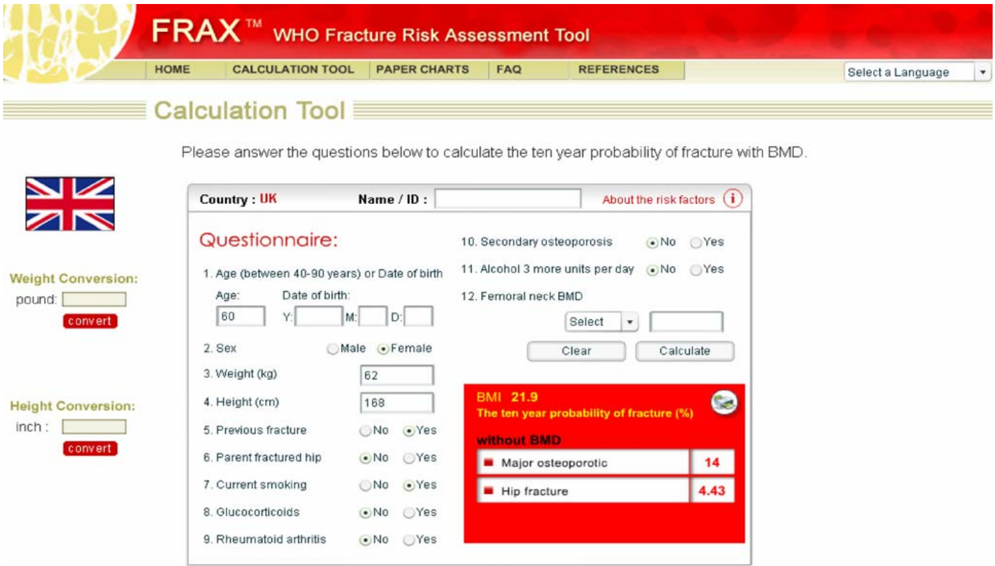
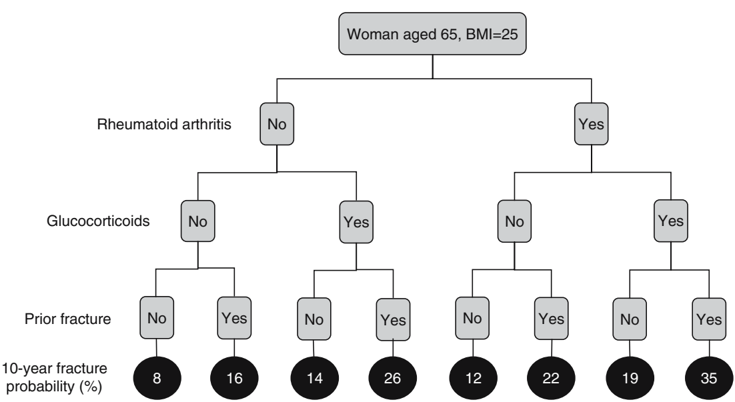
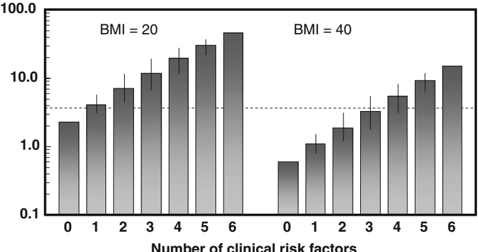
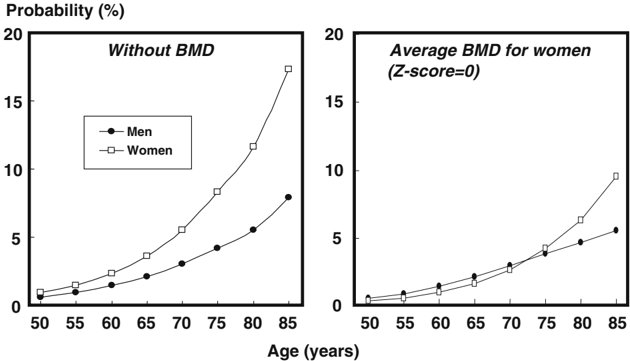
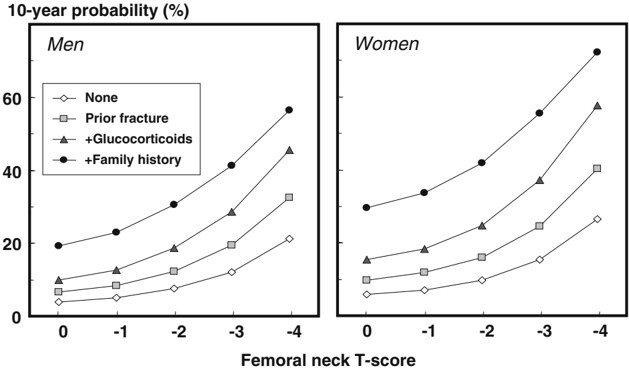
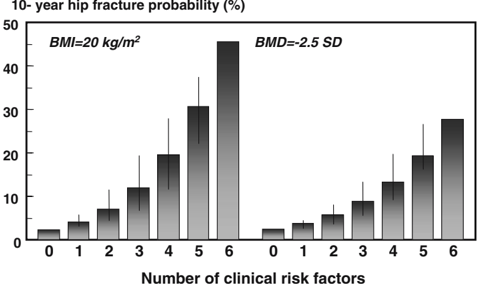
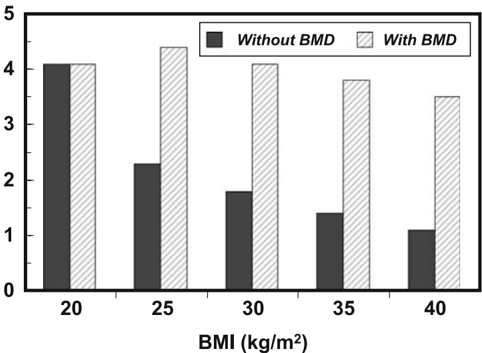
UNLABELLED: A fracture risk assessment tool (FRAX) is developed based on the use of clinical risk factors with or without bone mineral density tests applied to the UK. INTRODUCTION: The aim of this study was to apply an assessment tool for the prediction of fracture in men and women with the use of clinical risk factors (CRFs) for fracture with and without the use of femoral neck bone mineral density (BMD). The clinical risk factors, identified from previous meta-analyses, comprised body mass index (BMI, as a continuous variable), a prior history of fracture, a parental history of hip fracture, use of oral glucocorticoids, rheumatoid arthritis and other secondary causes of osteoporosis, current smoking, and alcohol intake 3 or more units daily. METHODS: Four models were constructed to compute fracture probabilities based on the epidemiology of fracture in the UK. The models comprised the ten-year probability of hip fracture, with and without femoral neck BMD, and the ten-year probability of a major osteoporotic fracture, with and without BMD. For each model fracture and death hazards were computed as continuous functions. RESULTS: Each clinical risk factor contributed to fracture probability. In the absence of BMD, hip fracture probability in women with a fixed BMI (25 kg/m(2)) ranged from 0.2% at the age of 50 years for women without CRF's to 22% at the age of 80 years with a parental history of hip fracture (approximately 100-fold range). In men, the probabilities were lower, as was the range (0.1 to 11% in the examples above). For a major osteoporotic fracture the probabilities ranged from 3.5% to 31% in women, and from 2.8% to 15% in men in the example above. The presence of one or more risk factors increased probabilities in an incremental manner. The differences in probabilities between men and women were comparable at any given T-score and age, except in the elderly where probabilities were higher in women than in men due to the higher mortality of the latter. CONCLUSION: The models provide a framework which enhances the assessment of fracture risk in both men and women by the integration of clinical risk factors alone and/or in combination with BMD.
Overview
The claims and statistics of this paper haven’t been checked yet.
Free: it reads the open-access text and checks the first 5 claims that cite a source we can check. Create a free account to check every claim.
Integrity signals
Registry
Cites
Statistics
Figures

Verification
Claims the paper makes
The claims and statistics of this paper haven’t been checked yet.
Free: it reads the open-access text and checks the first 5 claims that cite a source we can check. Create a free account to check every claim.
Claims other papers make about this one
Each is checked against this paper’s own text: does it say what the citing paper says it does?
The source backs part of the claim, not all of it — or backs it for a different population, condition or comparison.
In the citing paper
“The WHO determined that for many secondary causes of osteoporosis, fracture risk was mediated primarily through impact on BMD [28].”
From Clinician’s Guide to Prevention and Treatment of Osteoporosis (2014) · cites this paper as [28]
Experimental — accuracy not yet measured
Self-check
Percentages, sums and reported differences re-computed from the paper’s own numbers.
The self-check needs the paper’s full text.
Citations
Cites
Statistical Methods in Cancer Research
Breslow, N. E. (1980) · Cited by 7,332
Estimation of ten-year risk of fatal cardiovascular disease in Europe: the SCORE project
Conroy, R. (2003) · European Heart Journal · doi:10.1016/s0195-668x(03)00114-3 · Cited by 5,290
(1994) · PubMed · Cited by 5,043
Marshall, D., Johnell, O., & Wedel, H. (1996) · BMJ · doi:10.1136/bmj.312.7041.1254 · Cited by 3,709
Self-citationASSESSMENT OF FRACTURE RISK AND ITS APPLICATION TO SCREENING FOR POSTMENOPAUSAL OSTEOPOROSIS
Alexeeva, L. P., Burkhardt, P., Christiansen, C., Cooper, C. C., Delmas, P. D., Johnell, O., Johnston, C. C., Kanis, J. A., Lips, P. T. A. M., Melton, L. J., et al. (1994) · Cited by 2,655
Self-citationCummings, S. R. (1998) · JAMA · doi:10.1001/jama.280.24.2077 · Cited by 2,277 · cited 1×
“This concern is greatest in models that omit BMD, because pharmacological agents may not be equally effective across the entire range of BMD [90].”
BackgroundDiagnosis of osteoporosis and assessment of fracture risk
Kanis, J. A. (2002) · The Lancet · doi:10.1016/s0140-6736(02)08761-5 · Cited by 2,260 · cited 1×
“For this reason, there has been interest in the development of algorithms that express absolute risk, or the probability of fracture within a given time period [18–20], as has been done for cardiovascular and other diseases [21– 25].”
BackgroundSelf-citationEffect of Risedronate on the Risk of Hip Fracture in Elderly Women
McClung, M. R., Geusens, P., Miller, P. D., Zippel, H., Bensen, W. G., Roux, C., Adami, S., Fogelman, I., Diamond, T., Eastell, R., et al. (2001) · New England Journal of Medicine · doi:10.1056/nejm200102013440503 · Cited by 1,918
Body mass index as a predictor of fracture risk: A meta-analysis
De Laet, C., Kanis, J. A., Odén, A., Johanson, H., Johnell, O., Delmas, P., Eisman, J. A., Kroger, H., Fujiwara, S., Garnero, P., et al. (2005) · Osteoporosis International · doi:10.1007/s00198-005-1863-y · Cited by 1,622
Self-citationReginster, J.-Y., Minne, H. W., Sorensen, O. H., Hooper, M., Roux, C., Brandi, M. L., Lund, B., Ethgen, D., Pack, S., Roumagnac, I., et al. (2000) · Osteoporosis International · doi:10.1007/s001980050010 · Cited by 1,580
Research works printed but not linked: 4
- Adachi JD, Saag KG, Delmas PD et al (2001) Two year effects of alendronate on bone mineral density and vertebral fracture in patients receiving glucocorticoids: a randomised, double-blind, placebo-controlled extension trial. Arthr Rheum 44:202–211 · doi:10.1002/1529-0131(200101)44:1<202::aid-anr27>3.0.co;2-w
- Davison KS, Siminoski K, Chik C, Jen H, Warshawski R, Lee K (2003) Impact of height loss due to vertebral fractures on body mass index. J Bone Miner Res 18(Suppl 2):S243
- Standing Medical Advisory Committee to the Secretaries of State for Health and for Wales (1989) Drinking problems. A challenge for every doctor. HMSO, London
- World Health Organization (2008) Assessment of osteoporosis at the primary health care level. WHO, Geneva (in press)
Cited by
Sipuleucel-T Immunotherapy for Castration-Resistant Prostate Cancer
Kantoff, P. W., Higano, C. S., Shore, N. D., Berger, E. R., Small, E. J., Penson, D. F., Redfern, C. H., Ferrari, A. C., Dreicer, R., Sims, R. B., et al. (2010) · New England Journal of Medicine · doi:10.1056/nejmoa1001294 · Cited by 5,572
Clinician’s Guide to Prevention and Treatment of Osteoporosis
Cosman, F., de Beur, S. J., LeBoff, M. S., Lewiecki, E. M., Tanner, B., Randall, S., & Lindsay, R. (2014) · Osteoporosis International · doi:10.1007/s00198-014-2794-2 · Cited by 4,149
European guidance for the diagnosis and management of osteoporosis in postmenopausal women
Kanis, J. A., McCloskey, E. V., Johansson, H., Cooper, C., Rizzoli, R., Reginster, J.-Y., & on behalf of the Scientific Advisory Board of the European Society for Clinical and Economic Aspects of Osteoporosis and Osteoarthritis (ESCEO) and the Committee of Scientific Advisors of the International Osteoporosis Foundation (IOF) (2013) · Osteoporosis International · doi:10.1007/s00198-012-2074-y · Cited by 2,948
“uk/FRAX) that calculates the 10-year probability of a major fracture (hip, clinical spine, humerus or wrist fracture) and the 10-year probability of hip fracture [8, 75, 76].”
BackgroundMethodSelf-citationEuropean guidance for the diagnosis and management of osteoporosis in postmenopausal women
on behalf of the Scientific Advisory Board of the European Society for Clinical and Economic Aspects of Osteoporosis (ESCEO) and the Committees of Scientific Advisors and National Societies of the International Osteoporosis Foundation (IOF), Kanis, J. A., Cooper, C., Rizzoli, R., & Reginster, J.-Y. (2019) · Osteoporosis International · doi:10.1007/s00198-018-4704-5 · Cited by 1,900
Self-citationThe clinician's guide to prevention and treatment of osteoporosis
LeBoff, M. S., Greenspan, S. L., Insogna, K. L., Lewiecki, E. M., Saag, K. G., Singer, A. J., & Siris, E. S. (2022) · Osteoporosis International · doi:10.1007/s00198-021-05900-y · Cited by 1,487
“Developers of FRAX® determined that for many secondary causes of osteoporosis, fracture risk is mediated primarily through impact on BMD [77].”
BackgroundGuidelines for the management of thyroid cancer
Perros, P., Boelaert, K., Colley, S., Evans, C., Evans, R. M., Gerrard BA, G., Gilbert, J., Harrison, B., Johnson, S. J., Giles, T. E., et al. (2014) · Clinical Endocrinology · doi:10.1111/cen.12515 · Cited by 1,372
Pickhardt, P. J., Pooler, B. D., Lauder, T., del Rio, A. M., Bruce, R. J., & Binkley, N. (2013) · Annals of Internal Medicine · doi:10.7326/0003-4819-158-8-201304160-00003 · Cited by 954
Khosla, S., Amin, S., & Orwoll, E. (2008) · Endocrine Reviews · doi:10.1210/er.2008-0002 · Cited by 930
Eastell, R., O'Neill, T. W., Hofbauer, L. C., Langdahl, B., Reid, I. R., Gold, D. T., & Cummings, S. R. (2016) · Nature Reviews Disease Primers · doi:10.1038/nrdp.2016.69 · Cited by 827
Association of BMD and FRAX Score With Risk of Fracture in Older Adults With Type 2 Diabetes
Schwartz, A. V. (2011) · JAMA · doi:10.1001/jama.2011.715 · Cited by 717
Proposed guidelines for the diagnosis and management of methylmalonic and propionic acidemia
Baumgartner, M. R., Hörster, F., Dionisi-Vici, C., Haliloglu, G., Karall, D., Chapman, K. A., Huemer, M., Hochuli, M., Assoun, M., Ballhausen, D., et al. (2014) · Orphanet Journal of Rare Diseases · doi:10.1186/s13023-014-0130-8 · Cited by 705
“Tools assessing fracture risk (such as FRAX) [281,282] are not designed or validated for this patient group, and therefore are not suitable for guiding treatment decisions.”
BackgroundOsteoporosis: impact on health and economics
Harvey, N., Dennison, E., & Cooper, C. (2010) · Nature Reviews Rheumatology · doi:10.1038/nrrheum.2009.260 · Cited by 687
FRAX® and its applications to clinical practice
Kanis, J. A., Oden, A., Johansson, H., Borgström, F., Ström, O., & McCloskey, E. (2009) · Bone · doi:10.1016/j.bone.2009.01.373 · Cited by 686
“Fracture probabilities were computed using the FRAX tool calibrated to the epidemiology of fracture and death in the UK [1].”
BackgroundMethodSelf-citationBone mineral density, osteoporosis, and osteoporotic fractures: a genome-wide association study
Richards, J., Rivadeneira, F., Inouye, M., Pastinen, T., Soranzo, N., Wilson, S., Andrew, T., Falchi, M., Gwilliam, R., Ahmadi, K., et al. (2008) · The Lancet · doi:10.1016/s0140-6736(08)60599-1 · Cited by 682
De Souza, M. J., Nattiv, A., Joy, E., Misra, M., Williams, N. I., Mallinson, R. J., Gibbs, J. C., Olmsted, M., Goolsby, M., Matheson, G., et al. (2014) · British Journal of Sports Medicine · doi:10.1136/bjsports-2013-093218 · Cited by 661
Hans, D., Goertzen, A. L., Krieg, M.-A., & Leslie, W. D. (2011) · Journal of Bone and Mineral Research · doi:10.1002/jbmr.499 · Cited by 643
“Hip fractures and major osteoporotic fractures (ie, hip, clinical spine, forearm, and humerus fractures) were studied because these are the basis for the 10-year absolute fracture risk estimates published by Kanis and colleagues.((31,32)) We required that hip and forearm fractures be accompanied by a site-specific fra…”
BackgroundOsteoporosis in Men: An Endocrine Society Clinical Practice Guideline
Watts, N. B., Adler, R. A., Bilezikian, J. P., Drake, M. T., Eastell, R., Orwoll, E. S., & Finkelstein, J. S. (2012) · The Journal of Clinical Endocrinology & Metabolism · doi:10.1210/jc.2011-3045 · Cited by 611
“Both use age, weight, history of fracture, and femoral neck BMd, although other variables differ (75, 76).”
BackgroundKanis, J. A., McCloskey, E. V., Johansson, H., Strom, O., Borgstrom, F., Oden, A., & National Osteoporosis Guideline Group (2008) · Osteoporosis International · doi:10.1007/s00198-008-0712-1 · Cited by 591
“The FRAX algorithms provide two outputs; namely the 10-year probability of a major osteoporotic fracture (spine, hip, forearm or humerus) and the 10-year probability of a hip fracture [11].”
MethodInfluentialSelf-citationBone health in cancer patients: ESMO Clinical Practice Guidelines
Coleman, R., Body, J. J., Aapro, M., Hadji, P., & Herrstedt, J. (2014) · Annals of Oncology · doi:10.1093/annonc/mdu103 · Cited by 564
“in both sexes above the age of 70 years [13, 14].”
BackgroundStröm, O., Borgström, F., Kanis, J. A., Compston, J., Cooper, C., McCloskey, E. V., & Jönsson, B. (2011) · Archives of Osteoporosis · doi:10.1007/s11657-011-0060-1 · Cited by 546
“Men have higher rates offracture-related mortality than women [ 18 ], possibly related to higher rates of co-morbidity.”
BackgroundSelf-citationInterpretation and use of FRAX in clinical practice
Task Force of the FRAX Initiative, Kanis, J. A., Hans, D., Cooper, C., Baim, S., Bilezikian, J. P., Binkley, N., Cauley, J. A., Compston, J. E., Dawson-Hughes, B., et al. (2011) · Osteoporosis International · doi:10.1007/s00198-011-1713-z · Cited by 532
Self-citationOsteosarcopenia: epidemiology, diagnosis, and treatment—facts and numbers
Kirk, B., Zanker, J., & Duque, G. (2020) · Journal of Cachexia, Sarcopenia and Muscle · doi:10.1002/jcsm.12567 · Cited by 529
“There are seven validated tools for risk stratification in those with osteoporosis; however, the FRAX is most widely used and cited.(32) The FRAX”
MethodWang, Y., Xing, M., Cao, Q., Ji, A., Liang, H., & Song, S. (2019) · Marine Drugs · doi:10.3390/md17030183 · Cited by 506
Hippisley-Cox, J., & Coupland, C. (2009) · BMJ · doi:10.1136/bmj.b4229 · Cited by 479
“Traditional approaches based on measurement of bone mineral density alone are unsuitable for population screening because of cost and low sensitivity.”
Implications of absolute fracture risk assessment for osteoporosis practice guidelines in the USA
Dawson-Hughes, B., Tosteson, A. N. A., Melton, L. J., Baim, S., Favus, M. J., Khosla, S., & Lindsay, R. L. (2008) · Osteoporosis International · doi:10.1007/s00198-008-0559-5 · Cited by 427
“As described elsewhere [12], the risk factors include age, femoral neck BMD (T-score or Z-score compared to norms from the National Health and Nutrition Examination Survey [18]) and body mass index (BMI) as continuous variables, along with a personal history of prior fragility fracture, rheumatoid arthritis, other put…”
BackgroundMethodInfluentialTBS (Trabecular Bone Score) and Diabetes-Related Fracture Risk
Leslie, W. D., Aubry-Rozier, B., Lamy, O., Hans, D., & Program, F. T. M. B. D. (2013) · The Journal of Clinical Endocrinology & Metabolism · doi:10.1210/jc.2012-3118 · Cited by 426
“Major osteoporotic fractures (hip, clinical spine, forearm, and humerus fractures) were studied because these are the basis for the 10-year absolute fracture risk estimates published by Kanis et al (36, 37).”
BackgroundCompston, J., Cooper, A., Cooper, C., Francis, R., Kanis, J. A., Marsh, D., McCloskey, E. V., Reid, D. M., Selby, P., & Wilkins, M. (2009) · Maturitas · doi:10.1016/j.maturitas.2008.11.022 · Cited by 403
Self-citationVasikaran, S., Cooper, C., Eastell, R., Griesmacher, A., Morris, H. A., Trenti, T., & Kanis, J. A. (2011) · Clinical Chemistry and Laboratory Medicine (CCLM) · doi:10.1515/cclm.2011.602 · Cited by 380
Self-citationThe Assessment of Fracture Risk
Unnanuntana, A., Gladnick, B. P., Donnelly, E., & Lane, J. M. (2010) · The Journal of Bone and Joint Surgery-American Volume · doi:10.2106/jbjs.i.00919 · Cited by 361
Hippisley-Cox, J., & Coupland, C. (2012) · BMJ · doi:10.1136/bmj.e3427 · Cited by 351
Risk of subsequent fracture after prior fracture among older women
Balasubramanian, A., Zhang, J., Chen, L., Wenkert, D., Daigle, S. G., Grauer, A., & Curtis, J. R. (2019) · Osteoporosis International · doi:10.1007/s00198-018-4732-1 · Cited by 345
Cardiovascular Diseases and Risk of Hip Fracture
Sennerby, U. (2009) · JAMA · doi:10.1001/jama.2009.1463 · Cited by 339
“We advocate that individuals with a recent diagnosis of CVD should have their future fracture risk evaluated with clinical risk factors and bone scans (eg, by the recently established 10-year probability using the World Health Organization fracture risk assessment tool [FRAX] algorithm).(20) Furthermore, it should be…”
MethodJoint IOF-ECTS GIO Guidelines Working Group, Lekamwasam, S., Adachi, J. D., Agnusdei, D., Bilezikian, J., Boonen, S., Borgström, F., Cooper, C., Diez Perez, A., Eastell, R., et al. (2012) · Osteoporosis International · doi:10.1007/s00198-012-1958-1 · Cited by 335
Self-citationSilva, B. C., Broy, S. B., Boutroy, S., Schousboe, J. T., Shepherd, J. A., & Leslie, W. D. (2015) · Journal of Clinical Densitometry · doi:10.1016/j.jocd.2015.06.008 · Cited by 331
The impact of fragility fracture and approaches to osteoporosis risk assessment worldwide
Curtis, E. M., Moon, R. J., Harvey, N. C., & Cooper, C. (2017) · Bone · doi:10.1016/j.bone.2017.01.024 · Cited by 330
“uk/FRAX) [65], which has been developed across a large number of population-based cohorts worldwide.”
BackgroundMethodGuidelines for the management of osteoporosis and fragility fractures
Nuti, R., Brandi, M. L., Checchia, G., Di Munno, O., Dominguez, L., Falaschi, P., Fiore, C. E., Iolascon, G., Maggi, S., Michieli, R., et al. (2019) · Internal and Emergency Medicine · doi:10.1007/s11739-018-1874-2 · Cited by 328
Guidance for the adjustment of FRAX according to the dose of glucocorticoids
Kanis, J. A., Johansson, H., Oden, A., & McCloskey, E. V. (2011) · Osteoporosis International · doi:10.1007/s00198-010-1524-7 · Cited by 323
“Rather, FRAX assumes an average risk, providing hazard ratios for an average number of cigarettes smoked and an average duration of smoking exposure [2].”
BackgroundMethodSelf-citationPickhardt, P. J., Lee, L. J., Muñoz del Rio, A., Lauder, T., Bruce, R. J., Summers, R. M., Pooler, B. D., & Binkley, N. (2011) · Journal of Bone and Mineral Research · doi:10.1002/jbmr.428 · Cited by 320
“Of course, when an unsuspected lumbar compression fracture is identified at CT (or other VFA technique) in a patient without osteoporosis according to his or her DXA T-score, the fracture finding strongly influences both diagnosis and treatment, as seen with the FRAX fracture risk assessment tool.((28)) In a significa…”
Holroyd, C., Cooper, C., & Dennison, E. (2008) · Best Practice & Research Clinical Endocrinology & Metabolism · doi:10.1016/j.beem.2008.06.001 · Cited by 316
Genetics of osteoporosis from genome-wide association studies: advances and challenges
Richards, J. B., Zheng, H.-F., & Spector, T. D. (2012) · Nature Reviews Genetics · doi:10.1038/nrg3228 · Cited by 312
Compston, J., Bowring, C., Cooper, A., Cooper, C., Davies, C., Francis, R., Kanis, J. A., Marsh, D., McCloskey, E. V., Reid, D. M., et al. (2013) · Maturitas · doi:10.1016/j.maturitas.2013.05.013 · Cited by 304
Self-citationScreening in the community to reduce fractures in older women (SCOOP): a randomised controlled trial
Shepstone, L., Lenaghan, E., Cooper, C., Clarke, S., Fong-Soe-Khioe, R., Fordham, R., Gittoes, N., Harvey, I., Harvey, N., Heawood, A., et al. (2018) · The Lancet · doi:10.1016/s0140-6736(17)32640-5 · Cited by 298
Self-citationRyg, J., Rejnmark, L., Overgaard, S., Brixen, K., & Vestergaard, P. (2009) · Journal of Bone and Mineral Research · doi:10.1359/jbmr.090207 · Cited by 293
Cesari, M., Fielding, R. A., Pahor, M., Goodpaster, B., Hellerstein, M., Van Kan, G. A., Anker, S. D., Rutkove, S., Vrijbloed, J. W., Isaac, M., et al. (2012) · Journal of Cachexia, Sarcopenia and Muscle · doi:10.1007/s13539-012-0078-2 · Cited by 285
“With this rationale, the FRAX [50] and QFractureScores [51] algorithms were recently developed to guide osteoporosis treatment.”
MethodThe clinical consequences of an ageing world and preventive strategies
Lunenfeld, B., & Stratton, P. (2013) · Best Practice & Research Clinical Obstetrics & Gynaecology · doi:10.1016/j.bpobgyn.2013.02.005 · Cited by 285
Independent clinical validation of a Canadian FRAX tool: Fracture prediction and model calibration
Leslie, W. D., Lix, L. M., Johansson, H., Oden, A., McCloskey, E., & Kanis, J. A. (2010) · Journal of Bone and Mineral Research · doi:10.1002/jbmr.123 · Cited by 285
“mineral density (BMD).((10,11)) The fracture risk assessment (FRAX) tool (www.”
BackgroundMethodSelf-citationDuncan, E. L., Danoy, P., Kemp, J. P., Leo, P. J., McCloskey, E., Nicholson, G. C., Eastell, R., Prince, R. L., Eisman, J. A., Jones, G., et al. (2011) · PLoS Genetics · doi:10.1371/journal.pgen.1001372 · Cited by 281
“Bone mineral density (BMD) is strongly correlated with bone strength and fracture risk, and its measurement is widely used as a diagnostic tool in the assessment of fracture risk [4–6].”
BackgroundSelf-citationUse of computed tomography for assessing bone mineral density
Schreiber, J. J., Anderson, P. A., & Hsu, W. K. (2014) · Neurosurgical Focus · doi:10.3171/2014.5.focus1483 · Cited by 278
Weinstein, R. S., Wan, C., Liu, Q., Wang, Y., Almeida, M., O’Brien, C. A., Thostenson, J., Roberson, P. K., Boskey, A. L., Clemens, T. L., et al. (2010) · Aging Cell · doi:10.1111/j.1474-9726.2009.00545.x · Cited by 276
“…the findings of the present report, an increase in endogenous glucocorticoids or the sensitivity of bone to these hormones evidently increases the risk of fractures in elderly patients treated with glucocorticoids for collagen vascular diseases, such as rheumatoid arthritis, (Kanis et al., 2008).”
BackgroundA broader strategy for osteoporosis interventions
Reid, I. R. (2020) · Nature Reviews Endocrinology · doi:10.1038/s41574-020-0339-7 · Cited by 276
COPD and multimorbidity: Recognising and addressing a syndemic occurrence
Fabbri, L. M., Celli, B. R., Agustí, A., Criner, G. J., Dransfield, M. T., Divo, M., Krishnan, J. K., Lahousse, L., Montes de Oca, M., Salvi, S. S., et al. (2023) · The Lancet Respiratory Medicine · doi:10.1016/s2213-2600(23)00261-8 · Cited by 274
Osteosarcopenia: where osteoporosis and sarcopenia collide
Clynes, M. A., Gregson, C. L., Bruyère, O., Cooper, C., & Dennison, E. M. (2021) · Rheumatology · doi:10.1093/rheumatology/keaa755 · Cited by 268
Increased Risk of Fragility Fractures among HIV Infected Compared to Uninfected Male Veterans
Womack, J. A., Goulet, J. L., Gibert, C., Brandt, C., Chang, C. C., Gulanski, B., Fraenkel, L., Mattocks, K., Rimland, D., Rodriguez-Barradas, M. C., et al. (2011) · PLoS ONE · doi:10.1371/journal.pone.0017217 · Cited by 261
“These include a large and diverse national sample, incident outcomes, and data on most of the major risk factors for fragility fracture.[51] We were able to assess most of the FRAXH risk factors as well as others, including comorbid disease, alcohol abuse, smoking, corticosteroid use, and proton pump inhibitor use.”
BackgroundUpdate on the pathogenesis and treatment of skeletal fragility in type 2 diabetes mellitus
Khosla, S., Samakkarnthai, P., Monroe, D. G., & Farr, J. N. (2021) · Nature Reviews Endocrinology · doi:10.1038/s41574-021-00555-5 · Cited by 260
Baillet, A., Gossec, L., Carmona, L., Wit, M. D., van Eijk-Hustings, Y., Bertheussen, H., Alison, K., Toft, M., Kouloumas, M., Ferreira, R. J. O., et al. (2016) · Annals of the Rheumatic Diseases · doi:10.1136/annrheumdis-2016-209233 · Cited by 259
Joy, E., De Souza, M. J., Nattiv, A., Misra, M., Williams, N. I., Mallinson, R. J., Gibbs, J. C., Olmsted, M., Goolsby, M., Matheson, G., et al. (2014) · Current Sports Medicine Reports · doi:10.1249/jsr.0000000000000077 · Cited by 251
Coordinator-based systems for secondary prevention in fragility fracture patients
IOF CSA Fracture Working Group, Marsh, D., Åkesson, K., Beaton, D. E., Bogoch, E. R., Boonen, S., Brandi, M.-L., McLellan, A. R., Mitchell, P. J., Sale, J. E. M., et al. (2011) · Osteoporosis International · doi:10.1007/s00198-011-1642-x · Cited by 248
“To take into account most major clinical determinants of fracture risk, a calculation tool was recently developed (FRAX®) [53, 85].”
BackgroundMethodSCOPE: a scorecard for osteoporosis in Europe
Kanis, J. A., Borgström, F., Compston, J., Dreinhöfer, K., Nolte, E., Jonsson, L., Lems, W. F., McCloskey, E. V., Rizzoli, R., & Stenmark, J. (2013) · Archives of Osteoporosis · doi:10.1007/s11657-013-0144-1 · Cited by 246
Self-citationDual-Energy CT for the Musculoskeletal System
Mallinson, P. I., Coupal, T. M., McLaughlin, P. D., Nicolaou, S., Munk, P. L., & Ouellette, H. A. (2016) · Radiology · doi:10.1148/radiol.2016151109 · Cited by 242
The challenges of diagnosing osteoporosis and the limitations of currently available tools
Choksi, P., Jepsen, K. J., & Clines, G. A. (2018) · Clinical Diabetes and Endocrinology · doi:10.1186/s40842-018-0062-7 · Cited by 240
“uk/FRAX/) is one such fracture prediction algorithm [44].”
Inhaled Corticosteroids Safety and Adverse Effects in Patients with Asthma
Heffler, E., Madeira, L. N. G., Ferrando, M., Puggioni, F., Racca, F., Malvezzi, L., Passalacqua, G., & Canonica, G. W. (2018) · The Journal of Allergy and Clinical Immunology: In Practice · doi:10.1016/j.jaip.2018.01.025 · Cited by 233
Biver, E., Salliot, C., Combescure, C., Gossec, L., Hardouin, P., Legroux-Gerot, I., & Cortet, B. (2011) · The Journal of Clinical Endocrinology & Metabolism · doi:10.1210/jc.2011-0047 · Cited by 231
Incidence of hip fracture and prevalence of osteoporosis in Turkey: the FRACTURK study
Turkish Osteoporosis Society, Tuzun, S., Eskiyurt, N., Akarirmak, U., Saridogan, M., Senocak, M., Johansson, H., & Kanis, J. A. (2012) · Osteoporosis International · doi:10.1007/s00198-011-1655-5 · Cited by 223
Self-citationLippuner, K., Johansson, H., Kanis, J. A., & Rizzoli, R. (2009) · Osteoporosis International · doi:10.1007/s00198-008-0779-8 · Cited by 220
“4 Comparative incidence of major osteoporotic fractures (hip, spine, distal radius and proximal humerus) in number of fractures per 100,000 inhabitants Switzerland and other high-risk countries, will allow for the development of a fracture risk assessment tool (FRAX®), as it has already been published for the UK, the…”
BackgroundMethodInfluentialSelf-citationTrémollieres, F. A., Pouillès, J.-M., Drewniak, N., Laparra, J., Ribot, C. A., & Dargent-Molina, P. (2010) · Journal of Bone and Mineral Research · doi:10.1002/jbmr.12 · Cited by 218
“For instance, at the 30% cutoff, the specificity was approximately equal to 70% for both FRAX and hip BMD.”
MethodInfluentialThe epidemiology and management of postmenopausal osteoporosis: a viewpoint from Brazil
Baccaro, L. F., Conde, D., Costa-Paiva, L., & Pinto-Neto, A. M. (2015) · Clinical Interventions in Aging · doi:10.2147/cia.s54614 · Cited by 216
Bone turnover markers: understanding their value in clinical trials and clinical practice
Civitelli, R., Armamento-Villareal, R., & Napoli, N. (2009) · Osteoporosis International · doi:10.1007/s00198-009-0838-9 · Cited by 216
“Although the FRAX tool can be used with or without the inclusion of BMD, BMD of the proximal femur remains the primary component of fracture risk estimation [6].”
MethodVilaca, T., Eastell, R., & Schini, M. (2022) · The Lancet Diabetes & Endocrinology · doi:10.1016/s2213-8587(22)00012-2 · Cited by 210
Osteoporosis, Fractures, and Diabetes
Jackuliak, P., & Payer, J. (2014) · International Journal of Endocrinology · doi:10.1155/2014/820615 · Cited by 208
Antiresorptive therapies for osteoporosis: a clinical overview
Chen, J. S., & Sambrook, P. N. (2012) · Nature Reviews Endocrinology · doi:10.1038/nrendo.2011.146 · Cited by 207
Al Maini, M., Adelowo, F., Al Saleh, J., Al Weshahi, Y., Burmester, G.-R., Cutolo, M., Flood, J., March, L., McDonald-Blumer, H., Pile, K., et al. (2015) · Clinical Rheumatology · doi:10.1007/s10067-014-2841-6 · Cited by 207
“Absolute fracture risk calculators such as the FRAX model (a validated web-based algorithm) may provide a suitable alternative [37].”
MethodPhysical Activity for an Aging Population
King, A. C., & King, D. K. (2010) · Public Health Reviews · doi:10.1007/bf03391609 · Cited by 156
“Application of the current evidence base in developing, in a more thorough fashion, clinical preventive services guidelines that explicitly incorporate, wherever appropriate, regular physical activity recommendations remains to be realized.(84) In a related area, training healthcare providers across disciplines in pro…”
BackgroundTarantino, U., Iolascon, G., Cianferotti, L., Masi, L., Marcucci, G., Giusti, F., Marini, F., Parri, S., Feola, M., Rao, C., et al. (2017) · Journal of Orthopaedics and Traumatology · doi:10.1007/s10195-017-0474-7 · Cited by 201
“Specific algorithms such as the Garvan calculator [78], the QFracture [79], and FRAX® [80], which incorporate several risk factors in addition to age (as described above), have been developed to better define the risk for fracture and the consequent intervention threshold.”
MethodInfluentialShort-term and long-term effects of osteoporosis therapies
Reid, I. R. (2015) · Nature Reviews Endocrinology · doi:10.1038/nrendo.2015.71 · Cited by 201
FRAX® with and without Bone Mineral Density
Kanis, J. A., McCloskey, E., Johansson, H., Oden, A., & Leslie, W. D. (2012) · Calcified Tissue International · doi:10.1007/s00223-011-9544-7 · Cited by 192
Self-citationZhu, X., Bai, W., & Zheng, H. (2021) · Bone Research · doi:10.1038/s41413-021-00143-3 · Cited by 192
“However, theoretical and empirical studies have suggested that profiling multiple variants that are associated with bone phenotypes could improve the accuracy of fracture prediction and classification beyond that obtained by conventional clinical risk factors, such as the Fracture Risk Assessment Tool (FRAX).(127)”
BackgroundBiologic therapies and bone loss in rheumatoid arthritis
on behalf of the IOF Chronic Inflammation and Bone Structure (CIBS) Working Group, Zerbini, C. A. F., Clark, P., Mendez-Sanchez, L., Pereira, R. M. R., Messina, O. D., Uña, C. R., Adachi, J. D., Lems, W. F., Cooper, C., et al. (2017) · Osteoporosis International · doi:10.1007/s00198-016-3769-2 · Cited by 191
State of the art in osteoporosis risk assessment and treatment
Liu, J., Curtis, E. M., Cooper, C., & Harvey, N. C. (2019) · Journal of Endocrinological Investigation · doi:10.1007/s40618-019-01041-6 · Cited by 189
“FRAX® was developed by the then WHO Collaborating Centre for Metabolic Bone Diseases at the University of Sheffield, UK, and is the most comprehensively evaluated risk assessment tool currently available [52].”
BackgroundMethodAdjusting Fracture Probability by Trabecular Bone Score
McCloskey, E. V., Odén, A., Harvey, N. C., Leslie, W. D., Hans, D., Johansson, H., & Kanis, J. A. (2015) · Calcified Tissue International · doi:10.1007/s00223-015-9980-x · Cited by 189
Self-citationDevelopment and application of a Japanese model of the WHO fracture risk assessment tool (FRAX™)
Fujiwara, S., Nakamura, T., Orimo, H., Hosoi, T., Gorai, I., Oden, A., Johansson, H., & Kanis, J. A. (2008) · Osteoporosis International · doi:10.1007/s00198-007-0544-4 · Cited by 188
Self-citationPhysical therapy approaches to reduce fall and fracture risk among older adults
Karinkanta, S., Piirtola, M., Sievänen, H., Uusi-Rasi, K., & Kannus, P. (2010) · Nature Reviews Endocrinology · doi:10.1038/nrendo.2010.70 · Cited by 187
“Unfortunately, although assessment tools to screen people at high risk of fractures are available (for example, the WHO fracture risk assessment algorithm FRAX ® ), these programs have not included any, or only modest, efforts to address falls and their risk factors”
BackgroundMuscle and Bone Mass Loss in the Elderly Population: Advances in diagnosis and treatment
Colón, C. J. P., Molina-Vicenty, I. L., Frontera-Rodríguez, M., García-Ferré, A., Rivera, B. P., Cintrón-Vélez, G., & Frontera-Rodríguez, S. (2018) · Journal of Biomedicine · doi:10.7150/jbm.23390 · Cited by 150
“However, genetics, nutritional factors, lifestyle factors, and comorbidities have been shown to be associated with bone mass loss [10, 31].”
BackgroundKim, S. K. (2018) · PLOS ONE · doi:10.1371/journal.pone.0200785 · Cited by 185
Antidepressant medications and osteoporosis
Rizzoli, R., Cooper, C., Reginster, J.-Y., Abrahamsen, B., Adachi, J. D., Brandi, M. L., Bruyère, O., Compston, J., Ducy, P., Ferrari, S., et al. (2012) · Bone · doi:10.1016/j.bone.2012.05.018 · Cited by 185
“Antidepressant use is not listed as a secondary cause of osteoporosis in the FRAX algorithm [64], though it may be useful to consider this possibility, particularly since the association may be independent of BMD.”
BackgroundSelf-citationEpidemiology and management of osteoporosis in the People’s Republic of China: current perspectives
Yuan, L.-Q., Lin, X., Xiong, D., Peng, Y.-Q., Sheng, Z.-F., Wu, X.-P., Wu, F., Liao, E.-Y., & Wu, X.-Y. (2015) · Clinical Interventions in Aging · doi:10.2147/cia.s54613 · Cited by 184
2012 update of French guidelines for the pharmacological treatment of postmenopausal osteoporosis
Briot, K., Cortet, B., Thomas, T., Audran, M., Blain, H., Breuil, V., Chapuis, L., Chapurlat, R., Fardellone, P., Feron, J.-M., et al. (2012) · Joint Bone Spine · doi:10.1016/j.jbspin.2012.02.014 · Cited by 183
Glucocorticoid-induced osteoporosis: 2019 concise clinical review
Adami, G., & Saag, K. G. (2019) · Osteoporosis International · doi:10.1007/s00198-019-04906-x · Cited by 183
“Algorithms had been developed to better quantify the fracture risk in GIOP patients most incorporating use of FRAX to help risk stratify [80, 81]; however, the FRAX algorithm instrument includes only a dichotomous variable for glucocorticoids, an assumption that does not consider treatment duration and dosage concurre…”
MethodFracture prediction and calibration of a Canadian FRAX® tool: a population-based report from CaMos
CaMos Research Group, Fraser, L.-A., Langsetmo, L., Berger, C., Ioannidis, G., Goltzman, D., Adachi, J. D., Papaioannou, A., Josse, R., Kovacs, C. S., et al. (2011) · Osteoporosis International · doi:10.1007/s00198-010-1465-1 · Cited by 182
“In the original FRAX tool development studies, each CRF contributed independently to fracture probability [15].”
BackgroundMethodInfluentialSelf-citationFracture prediction, imaging and screening in osteoporosis
Fuggle, N. R., Curtis, E. M., Ward, K. A., Harvey, N. C., Dennison, E. M., & Cooper, C. (2019) · Nature Reviews Endocrinology · doi:10.1038/s41574-019-0220-8 · Cited by 182
Cortical Porosity Identifies Women With Osteopenia at Increased Risk for Forearm Fractures
Bala, Y., Zebaze, R., Ghasem-Zadeh, A., Atkinson, E. J., Iuliano, S., Peterson, J. M., Amin, S., Bjørnerem, Å., Melton, L. J., Johansson, H., et al. (2014) · Journal of Bone and Mineral Research · doi:10.1002/jbmr.2167 · Cited by 181
“The fracture occurred 7 (3-13) months (median (IQR)) before the investigation.”
BackgroundSelf-citationDe Souza, M. J., Nattiv, A., Joy, E., Misra, M., Williams, N. I., Mallinson, R. J., Gibbs, J. C., Olmsted, M., Goolsby, M., & Matheson, G. (2014) · Clinical Journal of Sport Medicine · doi:10.1097/jsm.0000000000000085 · Cited by 180
Vertebral bone quality score predicts fragility fractures independently of bone mineral density
Ehresman, J., Schilling, A., Yang, X., Pennington, Z., Ahmed, A. K., Cottrill, E., Lubelski, D., Khan, M., Moseley, K. F., & Sciubba, D. M. (2021) · The Spine Journal · doi:10.1016/j.spinee.2020.05.540 · Cited by 179
Pearson, R. G., Clement, R. G. E., Edwards, K. L., & Scammell, B. E. (2016) · BMJ Open · doi:10.1136/bmjopen-2015-010303 · Cited by 174
Osteoporosis Pathophysiology, Epidemiology, and Screening in Rheumatoid Arthritis
Adami, G., & Saag, K. G. (2019) · Current Rheumatology Reports · doi:10.1007/s11926-019-0836-7 · Cited by 174
Comparison of Fracture Risk Prediction among Individuals with Reduced and Normal Kidney Function
Naylor, K. L., Garg, A. X., Zou, G., Langsetmo, L., Leslie, W. D., Fraser, L.-A., Adachi, J. D., Morin, S., Goltzman, D., Lentle, B., et al. (2015) · Clinical Journal of the American Society of Nephrology · doi:10.2215/cjn.06040614 · Cited by 173
A Comparison of Prediction Models for Fractures in Older Women: Is More Better?
Ensrud, K. E. (2009) · Archives of Internal Medicine · doi:10.1001/archinternmed.2009.404 · Cited by 172
“Thus, recent efforts by the World Health Organization Metabolic Bone Disease Group have focused on developing a risk assessment tool (FRAX) using clinical risk factors with and without femoral neck BMD to enhance fracture prediction.(4) To develop the Webbased FRAX tool, Kanis and colleagues(5-13) used data from 9 epi…”
MethodThe pathogenesis, diagnosis, investigation and management of osteoporosis
Sandhu, S. K., & Hampson, G. (2011) · Journal of Clinical Pathology · doi:10.1136/jcp.2010.077842 · Cited by 172
Lee, J., & Vasikaran, S. (2012) · Annals of Laboratory Medicine · doi:10.3343/alm.2012.32.2.105 · Cited by 146
Shevroja, E., Lamy, O., Kohlmeier, L., Koromani, F., Rivadeneira, F., & Hans, D. (2017) · Journal of Clinical Densitometry · doi:10.1016/j.jocd.2017.06.019 · Cited by 169
Updated fracture incidence rates for the US version of FRAX®
Ettinger, B., Black, D. M., Dawson-Hughes, B., Pressman, A. R., & Melton, L. J. (2010) · Osteoporosis International · doi:10.1007/s00198-009-1032-9 · Cited by 169
“The solution was derived from the previous work of Kanis et al. [30], who used the ratio of clinical vertebral fractures to hip fractures from Malmo, Sweden to estimate clinical vertebral fracture rates for women in the UK implementation of FRAX® [ 31 ].”
BackgroundMethodInfluential
Metadata
- Authors
- Kanis, J. A., Johnell, O., Oden, A., Johansson, H., & McCloskey, E.
- Affiliations
- Northern General Hospital (GB)
- ORCID
- McCloskey, E.
- Venue
- Osteoporosis International
- Published
- 2008-02-22
- Volume
- 19
- Issue
- 4
- Pages
- 385-397
- ISSN
- 0937-941X (ISSN-L)
- 1433-2965
- PMC
- PMC2267485
- OpenAlex
- W2110768118
- Cited by
- 2,467
- References
- 106
- Citations by year
- 2026: 131 · 2025: 93 · 2024: 121 · 2023: 128 · 2022: 128 · 2021: 154 · 2020: 148 · 2019: 112 · 2018: 125 · 2017: 104 · 2016: 113 · 2015: 142 · 2014: 136 · 2013: 139 · 2012: 157
- FWCI
- 168.19
- Type
- journal article
- Language
- en
- Open access
- hybrid
- doi.org
- Licence
- cc-by-nc
- creativecommons.org/licenses/by-nc/4.0/ (tdm)
- creativecommons.org/licenses/by-nc/4.0/ (vor)
- Locations
- Osteoporosis International (publishedVersion, cc-by-nc)
- PubMed Central (publishedVersion)
- PubMed (publishedVersion)
- Research Bank (Australian Catholic University) (submittedVersion)
- Lund University Publications (Lund University) (submittedVersion)
- Chalmers Publication Library (Chalmers University of Technology) (submittedVersion)
- Chalmers Research (Chalmers University of Technology) (submittedVersion)
- Funders
- Amgen
- Eli Lilly and Company
- Pfizer
- International Osteoporosis Foundation
- Topics
- Health Sciences › Medicine › Orthopedics and Sports Medicine › Bone health and osteoporosis research
- Health Sciences › Medicine › Surgery › Hip and Femur Fractures
- Health Sciences › Medicine › Endocrinology, Diabetes and Metabolism › Menopause: Health Impacts and Treatments
- Keywords
- FRAX, fracture risk assessment, hip fracture, major osteoporotic fracture, clinical risk factors, bone mineral density, femoral neck, body mass index, glucocorticoids, smoking, alcohol consumption, sex differences, mortality, British population
- MeSH terms
- Aged, Aged, 80 and over, Epidemiologic Methods, Female, United Kingdom, Hip Fractures, Humans, Male, Middle Aged, Osteoporosis, Research Design, Time Factors, Body Mass Index
About these checks
Registry, retraction, Cites and statistics results are computed, not judged, with one exception: a printed reference that no index lists is read once by a model before it counts as a citation error. Claims are extracted by a model and kept only when their quote appears verbatim in the text; each cited source is then checked, with a model’s help, for whether it says what the claim relies on. Those verdicts can be wrong — read the claim’s quote and the cited source before relying on one.
Statistics and arithmetic are recomputed, not judged.
Confidence bands are shown only for fields calibrated on our annotated test set. None is calibrated yet, so no band is shown.
What counts as a claim ›How we measure confidence ›How we check this ›
Are you an author, or do you see a problem with this page? Request a review
Data sources
Bibliographic data: Semantic Scholar, OpenAlex, Crossref.
Contains information from the Semantic Scholar Academic Graph Datasets, made available under the ODC Attribution License (ODC-BY 1.0).
Semantic Scholar’s data is described in: Kinney, R., et al. (2023). The Semantic Scholar Open Data Platform. arXiv:2301.10140.
