

FRAX™ and the assessment of fracture probability in men and women from the UK
Open accessThe DOI matches its Crossref record; 106 of the 106 references it cites were found in a registry or an index.
Abstract
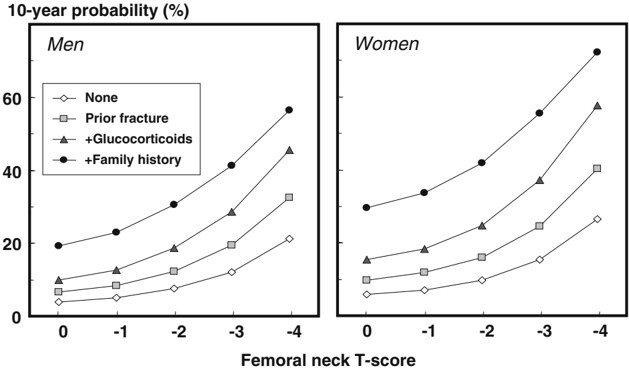
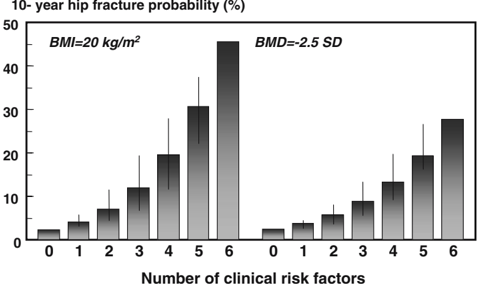
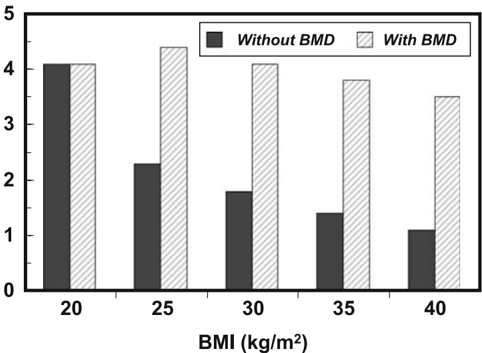
UNLABELLED: A fracture risk assessment tool (FRAX) is developed based on the use of clinical risk factors with or without bone mineral density tests applied to the UK. INTRODUCTION: The aim of this study was to apply an assessment tool for the prediction of fracture in men and women with the use of clinical risk factors (CRFs) for fracture with and without the use of femoral neck bone mineral density (BMD). The clinical risk factors, identified from previous meta-analyses, comprised body mass index (BMI, as a continuous variable), a prior history of fracture, a parental history of hip fracture, use of oral glucocorticoids, rheumatoid arthritis and other secondary causes of osteoporosis, current smoking, and alcohol intake 3 or more units daily. METHODS: Four models were constructed to compute fracture probabilities based on the epidemiology of fracture in the UK. The models comprised the ten-year probability of hip fracture, with and without femoral neck BMD, and the ten-year probability of a major osteoporotic fracture, with and without BMD. For each model fracture and death hazards were computed as continuous functions. RESULTS: Each clinical risk factor contributed to fracture probability. In the absence of BMD, hip fracture probability in women with a fixed BMI (25 kg/m(2)) ranged from 0.2% at the age of 50 years for women without CRF's to 22% at the age of 80 years with a parental history of hip fracture (approximately 100-fold range). In men, the probabilities were lower, as was the range (0.1 to 11% in the examples above). For a major osteoporotic fracture the probabilities ranged from 3.5% to 31% in women, and from 2.8% to 15% in men in the example above. The presence of one or more risk factors increased probabilities in an incremental manner. The differences in probabilities between men and women were comparable at any given T-score and age, except in the elderly where probabilities were higher in women than in men due to the higher mortality of the latter. CONCLUSION: The models provide a framework which enhances the assessment of fracture risk in both men and women by the integration of clinical risk factors alone and/or in combination with BMD.
Overview
The claims and statistics of this paper haven’t been checked yet.
Free: it reads the open-access text and checks the first 5 claims that cite a source we can check. Create a free account to check every claim.
Integrity signals
Registry
Cites
Statistics
Figures

Verification
Claims the paper makes
The claims and statistics of this paper haven’t been checked yet.
Free: it reads the open-access text and checks the first 5 claims that cite a source we can check. Create a free account to check every claim.
Claims other papers make about this one
Each is checked against this paper’s own text: does it say what the citing paper says it does?
The source backs part of the claim, not all of it — or backs it for a different population, condition or comparison.
In the citing paper
“The WHO determined that for many secondary causes of osteoporosis, fracture risk was mediated primarily through impact on BMD [28].”
From Clinician’s Guide to Prevention and Treatment of Osteoporosis (2014) · cites this paper as [28]
Experimental — accuracy not yet measured
Self-check
Percentages, sums and reported differences re-computed from the paper’s own numbers.
The self-check needs the paper’s full text.
Citations
Cites
Statistical Methods in Cancer Research
Breslow, N. E. (1980) · Cited by 7,332
Estimation of ten-year risk of fatal cardiovascular disease in Europe: the SCORE project
Conroy, R. (2003) · European Heart Journal · doi:10.1016/s0195-668x(03)00114-3 · Cited by 5,290
(1994) · PubMed · Cited by 5,043
Marshall, D., Johnell, O., & Wedel, H. (1996) · BMJ · doi:10.1136/bmj.312.7041.1254 · Cited by 3,709
Self-citationASSESSMENT OF FRACTURE RISK AND ITS APPLICATION TO SCREENING FOR POSTMENOPAUSAL OSTEOPOROSIS
Alexeeva, L. P., Burkhardt, P., Christiansen, C., Cooper, C. C., Delmas, P. D., Johnell, O., Johnston, C. C., Kanis, J. A., Lips, P. T. A. M., Melton, L. J., et al. (1994) · Cited by 2,655
Self-citationCummings, S. R. (1998) · JAMA · doi:10.1001/jama.280.24.2077 · Cited by 2,277 · cited 1×
“This concern is greatest in models that omit BMD, because pharmacological agents may not be equally effective across the entire range of BMD [90].”
BackgroundDiagnosis of osteoporosis and assessment of fracture risk
Kanis, J. A. (2002) · The Lancet · doi:10.1016/s0140-6736(02)08761-5 · Cited by 2,260 · cited 1×
“For this reason, there has been interest in the development of algorithms that express absolute risk, or the probability of fracture within a given time period [18–20], as has been done for cardiovascular and other diseases [21– 25].”
BackgroundSelf-citationEffect of Risedronate on the Risk of Hip Fracture in Elderly Women
McClung, M. R., Geusens, P., Miller, P. D., Zippel, H., Bensen, W. G., Roux, C., Adami, S., Fogelman, I., Diamond, T., Eastell, R., et al. (2001) · New England Journal of Medicine · doi:10.1056/nejm200102013440503 · Cited by 1,918
Body mass index as a predictor of fracture risk: A meta-analysis
De Laet, C., Kanis, J. A., Odén, A., Johanson, H., Johnell, O., Delmas, P., Eisman, J. A., Kroger, H., Fujiwara, S., Garnero, P., et al. (2005) · Osteoporosis International · doi:10.1007/s00198-005-1863-y · Cited by 1,622
Self-citationReginster, J.-Y., Minne, H. W., Sorensen, O. H., Hooper, M., Roux, C., Brandi, M. L., Lund, B., Ethgen, D., Pack, S., Roumagnac, I., et al. (2000) · Osteoporosis International · doi:10.1007/s001980050010 · Cited by 1,580
Research works printed but not linked: 4
- Adachi JD, Saag KG, Delmas PD et al (2001) Two year effects of alendronate on bone mineral density and vertebral fracture in patients receiving glucocorticoids: a randomised, double-blind, placebo-controlled extension trial. Arthr Rheum 44:202–211 · doi:10.1002/1529-0131(200101)44:1<202::aid-anr27>3.0.co;2-w
- Davison KS, Siminoski K, Chik C, Jen H, Warshawski R, Lee K (2003) Impact of height loss due to vertebral fractures on body mass index. J Bone Miner Res 18(Suppl 2):S243
- Standing Medical Advisory Committee to the Secretaries of State for Health and for Wales (1989) Drinking problems. A challenge for every doctor. HMSO, London
- World Health Organization (2008) Assessment of osteoporosis at the primary health care level. WHO, Geneva (in press)
Cited by
Items 501–600 of 1,001
Bone health in HIV and hepatitis B or C infections
Biver, E., Calmy, A., & Rizzoli, R. (2016) · Therapeutic Advances in Musculoskeletal Disease · doi:10.1177/1759720x16671927 · Cited by 48
FRAX and the effect of teriparatide on vertebral and non-vertebral fracture
Harvey, N. C., Kanis, J. A., Odén, A., Burge, R. T., Mitlak, B. H., Johansson, H., & McCloskey, E. V. (2015) · Osteoporosis International · doi:10.1007/s00198-015-3173-3 · Cited by 45
Self-citationBiamonte, E., Levi, R., Carrone, F., Vena, W., Brunetti, A., Battaglia, M., Garoli, F., Savini, G., Riva, M., Ortolina, A., et al. (2022) · Journal of Endocrinological Investigation · doi:10.1007/s40618-022-01837-z · Cited by 47
Fragility fracture: recent developments in risk assessment
Aspray, T. (2014) · Therapeutic Advances in Musculoskeletal Disease · doi:10.1177/1759720x14564562 · Cited by 48
Assessing 5-year incidence rates and determinants of osteoporotic fractures in primary care
Lapi, F., Simonetti, M., Michieli, R., Pasqua, A., Brandi, M. L., Frediani, B., Cricelli, C. A., & Mazzaglia, G. (2011) · Bone · doi:10.1016/j.bone.2011.09.048 · Cited by 47
“Density (BMD) measurement at the femoral neck with Dual energy X-ray Absorptiometry (DXA) is a strong predictor of the osteoporotic fracture risk [5], there have been several issues associated with its use as a clinical diagnostic test, because of its relevant cost and low sensitivity [6].”
BackgroundPulkkinen, P., Glüer, C., & Jämsä, T. J. (2011) · Bone · doi:10.1016/j.bone.2011.07.022 · Cited by 48
“The fracture risk assessment tool (FRAX®) developed for this purpose takes into account selected clinical risk factors (age, sex, weight, previous fractures, the parents' history of hip fractures, current smoking, usingof glucocorticoids, rheumatoidarthritis, secondary osteoporosis and alcohol consumption) with or wit…”
MethodNew perspectives in echographic diagnosis of osteoporosis on hip and spine
Casciaro, S., Conversano, F., Pisani, P., & Muratore, M. (2015) · Clinical cases in mineral and bone metabolism · doi:10.11138/ccmbm/2015.12.2.142 · Cited by 47
“As a general result, FS preliminarily showed the following interesting properties: 1) the same discrimination power of spinal DXA in the identification of patients that reported a recent non-vertebral osteoporotic fracture; 2) significant linear correlations with fracture risk probabilities provided by FRAX® integrate…”
MethodInfluentialOsteoporosis: A Hidden Nonmotor Face of Parkinson's Disease
Metta, V., Sanchez, T. C., & Padmakumar, C. P. (2017) · International review of neurobiology · doi:10.1016/bs.irn.2017.05.034 · Cited by 48
Yu, K.-H., Chen, H.-H., Cheng, T.-T., Jan, Y.-J., Weng, M.-Y., Lin, Y.-J., Chen, H.-A., Cheng, J.-T., Huang, K.-Y., Li, K.-J., et al. (2022) · Medicine · doi:10.1097/md.0000000000028501 · Cited by 47
“Given that clinical risk factors for fragility fractures are numerous, the FRAX is a valuable instrument to quantify the 10-year probability for both hip and major fractures.([77,78])”
BackgroundChotiyarnwong, P., McCloskey, E. V., Harvey, N. C., Lorentzon, M., Prieto‐Alhambra, D., Abrahamsen, B., Adachi, J. D., Borgström, F., Bruyère, O., CAREY, J. J., et al. (2022) · Archives of Osteoporosis · doi:10.1007/s11657-022-01117-6 · Cited by 48
Self-citationRiancho, J., Peris, P., González-Macías, J., & Pérez-Castrillón, J.-L. (2022) · Revista de Osteoporosis y Metabolismo Mineral · doi:10.4321/s1889-836x2022000100003 · Cited by 48
“Olmos JM, Hernández JL, Llorca J, Nan D, Valero C, González‐Macías J. Effects of 25‐Hydroxyvitamin D3 Therapy on Bone Turnover Markers and PTH Le‐ vels in Postmenopausal Osteoporotic Women Treated with Alendronate.”
BackgroundInfluentialBone health in persons with haemophilia
Kempton, C. L., Antoniucci, D. M., & Rodriguez-Merchan, E. C. (2015) · Haemophilia · doi:10.1111/hae.12736 · Cited by 49
Update on Glucocorticoid-Induced Osteoporosis
Maricic, M. J. (2011) · Rheumatic Disease Clinics of North America · doi:10.1016/j.rdc.2011.07.003 · Cited by 48
“FRAX provides hazard ratios based on an average dose or exposure for these variables.(58) Because fracture risk associated with glucocorticoid use is clearly dose related, this limits the use of the FRAX tool in this instance.”
MethodWhole-Body versus Local DXA-Scan for the Diagnosis of Osteoporosis in COPD Patients
Graat‐Verboom, L., Spruit, M. A., van den Borne, B. E. E. M., Smeenk, F. W. J. M., & Wouters, E. F. �. (2010) · Journal of Osteoporosis · doi:10.4061/2010/640878 · Cited by 49
“Even more because in the general population the fracture risk is increased in females [21] and in COPD patients, a higher prevalence of osteoporosis has been found in patients with higher GOLD classification and/or hypercapnic patients [22–26].”
BackgroundIncidence of Hip Fracture in Romania and the Development of a Romanian FRAX Model
Grigorie, D., Şucaliuc, A., Johansson, H., Kanis, J. А., & McCloskey, E. V. (2013) · Calcified Tissue International · doi:10.1007/s00223-013-9697-7 · Cited by 46
Self-citationWOMEN IN CANCER THEMATIC REVIEW: Thyroid-stimulating hormone in thyroid cancer: does it matter?
Nieto, H. R., & Boelaert, K. (2016) · Endocrine Related Cancer · doi:10.1530/erc-16-0328 · Cited by 46
Epidemiology and awareness of osteoporosis: a viewpoint from the Middle East and North Africa
Hammam, T. A. G. N. (2018) · International Journal of Clinical Rheumatology · doi:10.4172/1758-4272.1000177 · Cited by 46
“Among Saudi Arabians >60 years attending the primary care, fracture assessment tool (FRAX) [118] used to estimate the 10-years probability of OP reported 14.”
MethodInfluentialCarnevale, V., Morano, S., Fontana, A., Annese, M. A., Fallarino, M., Filardi, T., Copetti, M., Pellegrini, F., Romagnoli, E., Eller-Vainicher, C., et al. (2014) · Diabetes/Metabolism Research and Reviews · doi:10.1002/dmrr.2497 · Cited by 46
Hollick, R. J., & Reid, D. M. (2011) · Menopause international · doi:10.1258/mi.2011.011014 · Cited by 46
Sirola, J. P., Rikkonen, T., Tuppurainen, M. T., Jurvelin, J. S., Alhava, E. M., & Kröger, H. (2008) · Calcified Tissue International · doi:10.1007/s00223-008-9155-0 · Cited by 46
“Most recently, a score for evaluation of bone fragility risk (FRAX) was introduced, which combines BMD with other fracture risk factors for prediction of 10-year probability of fractures for both men and women [8].”
BackgroundFuruya, T., Inoue, E., Hosoi, T., Taniguchi, A., Momohara, S., & Yamanaka, H. (2012) · Osteoporosis International · doi:10.1007/s00198-012-2080-0 · Cited by 46
“However, the present data are consistent with previous reports [2, 6, 8] and indicate that advanced age and low BMI are important risk factors for hip fracture in patients with RA, as well as osteoporosis.”
BackgroundResultInfluentialA systematic review on the performance of fracture risk assessment tools: FRAX, DeFRA, FRA-HS
Adami, G., Biffi, A., Porcu, G., Ronco, R., Alvaro, R., Bogini, R., Caputi, A. P., Cianferotti, L., Frediani, B., Gatti, D., et al. (2023) · Journal of Endocrinological Investigation · doi:10.1007/s40618-023-02082-8 · Cited by 45
Systemic bone effects of biologic therapies in rheumatoid arthritis and ankylosing spondylitis
Confavreux, C. B., & Chapurlat, R. D. (2010) · Osteoporosis International · doi:10.1007/s00198-010-1462-4 · Cited by 45
“The relationship between RA and fragility fracture has been established in various studies, summarized in a meta-analysis that served as a base to establish the role of RA in the Fracture Risk Assessment (FRAX) tool [35].”
MethodVescini, F., Attanasio, R., Balestrieri, A., Bandeira, F. A. F., Bonadonna, S., Camozzi, V., Cassibba, S., Cesareo, R., Chiodini, I., Francucci, C. M., et al. (2016) · Journal of Endocrinological Investigation · doi:10.1007/s40618-016-0434-8 · Cited by 46
“FRAX, an algorithm approved by the WHO for estimating the 10-year risk probability of hip and other major osteoporotic fracture [20], should be the tool to identify those patients candidate to pharmacological intervention [21].”
BackgroundMethodEngels, A., Reber, K. C., Lindlbauer, I., Rapp, K., Büchele, G., Klenk, J., Meid, A. D., Becker, C., & König, H. (2020) · PLoS ONE · doi:10.1371/journal.pone.0232969 · Cited by 45
Mao, S. S., Li, D., Luo, Y., Syed, Y. S., & Budoff, M. J. (2015) · Clinical Imaging · doi:10.1016/j.clinimag.2015.09.016 · Cited by 47
The relationship between the OSTEODENT index and hip fracture risk assessment using FRAX
Horner, K., Allen, P. D., Jim Graham, A., Jacobs, R., Boonen, S., Pavitt, S. H., Nackaerts, O., Marjanovic, E. J., Adams, J. E., Karayianni, K., et al. (2010) · Oral Surgery Oral Medicine Oral Pathology Oral Radiology and Endodontology · doi:10.1016/j.tripleo.2010.03.035 · Cited by 45
Beaton, D., Dyer, S., Jiang, D., Sujic, R., Slater, M. B., Sale, J. E. M., & Bogoch, E. R. (2013) · Osteoporosis International · doi:10.1007/s00198-013-2430-6 · Cited by 45
2011 Up-Date of the Consensus Statement of the Spanish Society of Rheumatology on Osteoporosis
Pérez-Edo, L., Ruiz, A. A., Vilaseca, D. R., García-Vadillo, A., Gay, N. G., Peris, P., Eslava, A. T., Audera, C. B., Aresté, J. F., Rodríguez, L. M. A., et al. (2011) · Reumatología Clínica (English Edition) · doi:10.1016/j.reumae.2011.05.007 · Cited by 45
Musculoskeletal Response to Space Flight
Shackelford, L. C. (2008) · Springer eBooks · doi:10.1007/978-0-387-68164-1_14 · Cited by 45
Updated fracture incidence rates for the Italian version of FRAX®
Piscitelli, P., Chitano, G., Johansson, H., Brandi, M. L., Kanis, J. A., & Black, D. M. (2012) · Osteoporosis International · doi:10.1007/s00198-012-2021-y · Cited by 44
“Ten-year probabilities for hip fracture and major osteoporotic fractures were calculated by age and sex from the death and fracture hazard by Poisson models [19, 20].”
MethodSelf-citationRud, B., Hilden, J., Hyldstrup, L., & Hróbjartsson, A. (2008) · Osteoporosis International · doi:10.1007/s00198-008-0713-0 · Cited by 45
SIGN Guidelines for Scotland: BMD Versus FRAX Versus QFracture
Kanis, J. А., Compston, J. E., Cooper, C. C., Harvey, N. C., Johansson, H., Odén, A., & McCloskey, E. V. (2015) · Calcified Tissue International · doi:10.1007/s00223-015-0092-4 · Cited by 44
“uk/FRAX) provides models for the assessment of fracture probability in men and women [20, 21].”
BackgroundSelf-citationthe REFReSH study team, Shah, A., Prieto‐Alhambra, D., Hawley, S. J., Delmestri, A., Lippett, J., Cooper, C. C., Judge, A., & Javaid, M. K. (2016) · Osteoporosis International · doi:10.1007/s00198-016-3811-4 · Cited by 44
“The National Osteoporosis Guidance Group recommendations deliver treatment thresholds within FRAX as a decision aid to support physicians in the diagnosis of patients who would benefit from therapy [25].”
MethodInfluentialEpidemiology and correlates of osteoporotic fractures among type 2 diabetic patients
Goldshtein, I., Nguyen, A. M., DePapp, A., Ish‐Shalom, S., Chandler, J. M., Chodick, G., & Shalev, V. (2018) · Archives of Osteoporosis · doi:10.1007/s11657-018-0432-x · Cited by 44
“sites included the femur neck, clinical spine, forearm, and proximal humerus fractures, in accordance with fracture risk assessment definitions [19].”
MethodActualisation 2018 des recommandations françaises du traitement de l’ostéoporose post-ménopausique
Briot, K., Roux, C., Thomas, T., Blain, H., Buchon, D., Chapurlat, R. D., Debiais, F., Féron, J.-M., Gauvain, J. B., Guggenbuhl, P., et al. (2018) · Revue du Rhumatisme · doi:10.1016/j.rhum.2018.02.005 · Cited by 50
Tanphiriyakun, T., Rojanasthien, S., & Khumrin, P. (2021) · Scientific Reports · doi:10.1038/s41598-021-93152-5 · Cited by 44
Cardiac Sarcoidosis: When and How to Treat Inflammation
Giblin, G. T., Murphy, L., Stewart, G. C., Desai, A. S., Carli, M. F. D., Blankstein, R., Givertz, M. M., Tedrow, U. B., Sauer, W. H., Hunninghake, G. M., et al. (2021) · Cardiac failure review · doi:10.15420/cfr.2021.16 · Cited by 44
Bone Loss and Avascular Necrosis of Bone After Hematopoietic Cell Transplantation
McClune, B. L., Majhail, N. S., & Flowers, M. E. D. (2012) · Seminars in Hematology · doi:10.1053/j.seminhematol.2011.10.007 · Cited by 44
Premaor, M. O., Pilbrow, L., Tonkin, C., Adams, M., Parker, R. A., & Compston, J. E. (2009) · QJM · doi:10.1093/qjmed/hcp154 · Cited by 45
Clinical Utility of Biochemical Marker of Bone Turnover: Fracture Risk Prediction and Bone Healing
Yoon, B., & Yu, W. (2018) · Journal of Bone Metabolism · doi:10.11005/jbm.2018.25.2.73 · Cited by 44
“[2,10] However, BMD measured by dual energy X-ray absorptiometry (DXA) or FRAX cannot detect all osteoporotic fractures, so several tools have been developed to improve the assessment of individual risk of major osteoporotic fracture in elderly patients.”
BackgroundGaines, J. M., & Marx, K. (2010) · Maturitas · doi:10.1016/j.maturitas.2010.08.013 · Cited by 44
Post-fracture management of patients with hip fracture: a perspective
Bruyère, O., Brandi, M. L., Burlet, N., Harvey, N. C., Lyritis, G. P., Minne, H. W., Boonen, S., Reginster, J.-Y., Rizzoli, R., & Åkesson, K. (2008) · Current Medical Research and Opinion · doi:10.1185/03007990802381430 · Cited by 44
Imminent fracture risk assessments in the UK FLS setting: implications and challenges
Pinedo‐Villanueva, R., Charokopou, M., Toth, E., Donnelly, K., Cooper, C. C., Prieto‐Alhambra, D., Libanati, C. R., & Javaid, M. K. (2019) · Archives of Osteoporosis · doi:10.1007/s11657-019-0569-2 · Cited by 44
Pepe, J., Isidori, A. M., Falciano, M., Iaiani, G., Salotti, A., Diacinti, D., Fiacco, R. D., Sbardella, E., Cipriani, C., Piemonte, S., et al. (2012) · Clinical Endocrinology · doi:10.1111/j.1365-2265.2012.04452.x · Cited by 43
Abtahi, S., Driessen, J. H. M., Burden, A. M., Souverein, P. C., van den Bergh, J. P., van Staa, T. P., Boonen, A. E. R. C. H., & de Vries, F. (2021) · Rheumatology · doi:10.1093/rheumatology/keab548 · Cited by 43
Is the Swedish FRAX model appropriate for Swedish immigrants?
Johansson, H., Odén, A., Lorentzon, M., McCloskey, E. V., Kanis, J. А., Harvey, N. C., Karlsson, M. K., & Mellström, D. (2015) · Osteoporosis International · doi:10.1007/s00198-015-3180-4 · Cited by 43
“such a clinical tool for the calculation of fracture probability to identify individuals at high risk [8, 9].”
Self-citationLeslie, W. D., Kovács, C. S., Olszynski, W. P., Towheed, T., Kaiser, S., Prior, J. C., Josse, R. G., Jamal, S. A., Kreiger, N., & Goltzman, D. (2011) · Journal of Clinical Densitometry · doi:10.1016/j.jocd.2011.04.011 · Cited by 43
Chan, M., Nguyen, N. D., Eisman, J. A., & Nguyen, T. V. (2011) · Calcified Tissue International · doi:10.1007/s00223-011-9556-3 · Cited by 43
“They are based on BMD and various clinical risk factors to predict short-term fracture risk for each individual [47].”
BackgroundBleicher, K., Cumming, R. G., Naganathan, V., Seibel, M. J., Sambrook, P. N., Blyth, F., Couteur, D. G. L., Handelsman, D. J., Creasey, H. M., & Waite, L. M. (2010) · Osteoporosis International · doi:10.1007/s00198-010-1478-9 · Cited by 45
“Nevertheless, it is important to note that age has been found to be a risk factor for fracture, independent of BMD [27, 28].”
BackgroundMurray, T. E., Williams, D. J., & Lee, M. J. (2017) · Abdominal Radiology · doi:10.1007/s00261-017-1274-5 · Cited by 43
Ko, C. H., Chan, R. L. Y., Siu, W. S., Shum, W. T., Leung, P. C., Zhang, L., & Cho, C. H. (2015) · Calcified Tissue International · doi:10.1007/s00223-015-9966-8 · Cited by 42
Dilemmas in the Management of Osteoporosis in Younger Adults
Herath, M., Cohen, A., Ebeling, P. R., & Milat, F. (2022) · JBMR Plus · doi:10.1002/jbm4.10594 · Cited by 42
“The Fracture Risk Assessment Tool (FRAX®) and the Garvan fracture risk calculators cannot be used to assess fracture risk in YAs.”
MethodInfluentialDieckmeyer, M., Löffler, M. T., Husseini, M. E., Sekuboyina, A., Menze, B. H., Sollmann, N., Wostrack, M., Zimmer, C., Baum, T. H., & Kirschke, J. S. (2022) · Frontiers in Endocrinology · doi:10.3389/fendo.2022.882163 · Cited by 42
“However, the currently recommended threshold of 80 mg/cm(3) yields a rather low specificity, which seems clinically acceptable, in particular in an opportunistic screening setting since it could be compensated by subsequent clinical fracture risk assessment (42).”
BackgroundMétrailler, A., Hans, D. B., Lamy, O., Rodríguez, E. G., & Shevroja, E. (2023) · Osteoporosis International · doi:10.1007/s00198-023-06728-4 · Cited by 42
Estimación del riesgo de fractura osteoporótica a los 10 años para la población española
López‐Valcárcel, B. G., & Henríquez, M. S. (2012) · Medicina Clínica · doi:10.1016/j.medcli.2011.11.030 · Cited by 46
Choplin, R. H., Lenchik, L., & Wuertzer, S. D. (2014) · Current Radiology Reports · doi:10.1007/s40134-014-0048-x · Cited by 42
“The patient’s fracture risk is usually estimated by use of the FRAX model, which estimates the patient’s hip fracture risk for the next 10 years [5].”
Eller-Vainicher, C., Chiodini, I., Santi, I., Massarotti, M. S., Pietrogrande, L., Cairoli, E., Beck-Peccoz, P., Longhi, M., Galmarini, V., Gandolini, G., et al. (2011) · PLoS ONE · doi:10.1371/journal.pone.0027277 · Cited by 42
“Thus, recent efforts by the World Health Organization Metabolic Bone Disease Group have focused on developing a risk assessment tool (FRAX) using clinical risk factors with and without femoral neck BMD to enhance fracture prediction [6].”
BackgroundBaim, S. (2011) · Rheumatic Disease Clinics of North America · doi:10.1016/j.rdc.2011.07.001 · Cited by 43
Shen, J., Nielson, C. M., Marshall, L. M., Lee, D. C., Keaveny, T. M., & ORWOLL, E. S. (2015) · Journal of Bone and Mineral Research · doi:10.1002/jbmr.2450 · Cited by 42
“The FRAX algorithm uses a series of clinical risk factors, including BMI as a continuous variable, to calculate fracture risk.((32)) It has been noted that FRAXmay underestimate fracture probability in obese individuals and thus the US FRAX-based intervention Table 2.”
MethodEpidemiology of hip fracture and the development of FRAX in Ukraine
Povoroznyuk, V. V., Grygorieva, N. V., Kanis, J., Ev, M., Johansson, H., Harvey, N. C., Korzh, M., Strafun, S. S., Vaida, V. M., Klymovytsky, F. V., et al. (2017) · Archives of Osteoporosis · doi:10.1007/s11657-017-0343-2 · Cited by 42
“This algorithm calculates fracture probability from clinical risk factors in women and men [1, 2].”
MethodSelf-citationJohansson, L., Johansson, H., Axelsson, K. F., Litsne, H., Harvey, N. C., Liu, E., Leslie, W. D., Vandenput, L., McCloskey, E. V., Kanis, J. A., et al. (2022) · Osteoporosis International · doi:10.1007/s00198-022-06387-x · Cited by 42
Self-citationDonaldson, M. G., Cawthon, P. M., Lui, L., Schousboe, J. T., Ensrud, K. E., Taylor, B. C., Cauley, J. A., Hillier, T. A., Dam, T.-T. L., Curtis, J. R., et al. (2010) · Journal of Bone and Mineral Research · doi:10.1002/jbmr.55 · Cited by 42
“Calculation of absolute risk was done following the FRAX algorithm.((2,9)) FRAX is described in detail elsewhere.”
MethodScreening for chronic comorbid diseases in people with HIV : the need for a strategic approach
Peters, B., Post, F. A., Wierzbicki, A. S., Phillips, A. N., Power, L., Das, S., Johnson, M. A., Moyle, G. J., Hughes, L., Wilkins, E., et al. (2012) · HIV Medicine · doi:10.1111/j.1468-1293.2012.01055.x · Cited by 42
Self-citationLassemillante, A. M., Doi, S. A. R., Hooper, J. D., Prins, J. B., & Wright, O. R. L. (2015) · Endocrine · doi:10.1007/s12020-015-0536-7 · Cited by 43
The risk of fracture in incident multiple sclerosis patients: The Danish National Health Registers
Bazelier, M. T., Bentzen, J., Vestergaard, P., Stenager, E., Leufkens, H. G. M., van Staa, T. P., & de Vries, F. (2012) · Multiple Sclerosis Journal · doi:10.1177/1352458512442755 · Cited by 42
Ho-Pham, L. T., Chau, P. M. N., Do, A. T., Nguyen, H. C., & Nguyen, T. V. (2018) · Osteoporosis International · doi:10.1007/s00198-018-4579-5 · Cited by 44
Meehan, A. J., Maher, A. B., Brent, L., Copanitsanou, P., Cross, J., Kimber, C. M., MacDonald, V., Marques, A., Peng, L., Queirós, C., et al. (2018) · International Journal of Orthopaedic and Trauma Nursing · doi:10.1016/j.ijotn.2018.11.001 · Cited by 44
Updated incidence rates of fragility fractures in Italy: extension study 2002-2008.
Piscitelli, P., Tarantino, U., Chitano, G., Argentiero, A., Neglia, C., Agnello, N., Saturnino, L., Feola, M., Celi, M., Raho, C., et al. (2011) · PubMed · Cited by 41
Kim, D., Cho, S., Kim, J. Y., Choi, Y. Y., & Sung, Y. (2015) · Modern Rheumatology · doi:10.3109/14397595.2015.1101212 · Cited by 41
“uk/FRAX), which can predict the probability of future fracture by integrating the clinical variables that are associated with fracture and can be used with or without hip BMD, was developed to estimate the fracture risk [9].”
BackgroundPop, L. C., Sukumar, D., Schneider, S. H., Schlussel, Y., Stahl, T. J., Gordon, C. L., Wang, X., Papathomas, T. V., & Shapses, S. A. (2016) · Osteoporosis International · doi:10.1007/s00198-016-3735-z · Cited by 41
Factores de riesgo de fracturas por fragilidad en una cohorte de mujeres españolas
Tebé, C., del Río, L. M., Casas, L., Estrada, M.-D., Kotzeva, A., Gregorio, S. D., & Espallargues, M. (2011) · Gaceta Sanitaria · doi:10.1016/j.gaceta.2011.06.007 · Cited by 41
Miller, P. D., & Derman, R. J. (2010) · Osteoporosis International · doi:10.1007/s00198-010-1208-3 · Cited by 41
“The FRAX® [27, 28] considers the contribution of validated clinical risk factors for fracture beyond BMD.”
BackgroundInfluentialKayan, K., Johansson, H., Odén, A., Vasireddy, S., Pande, K. C., Orgee, J., Kanis, J. A., & McCloskey, E. V. (2009) · Osteoporosis International · doi:10.1007/s00198-009-0942-x · Cited by 41
“The World Health Organisation has recently developed a sophisticated algorithm for the estimation of 10-year fracture probability of individuals [1–4].”
MethodSelf-citationPotential cost-effectiveness of denosumab for the treatment of postmenopausal osteoporotic women
Hiligsmann, M., & Reginster, J. (2010) · Bone · doi:10.1016/j.bone.2010.03.009 · Cited by 41
“Recentdevelopments in fracture risk assessment include the FRAX® tool, which estimates the 10-year probability of fracture [47,48].”
MethodUpdated clinical recommendations for the use of tibolone in Asian women
Huang, K.-E., & Baber, R. (2010) · Climacteric · doi:10.3109/13697131003681458 · Cited by 41
Ziemlewicz, T. J., Maciejewski, A., Binkley, N., Brett, A., Brown, J. K., & Pickhardt, P. J. (2016) · American Journal of Roentgenology · doi:10.2214/ajr.15.15128 · Cited by 41
“This tool is being used worldwide to guide treatment of patients with low BMD [12].”
MethodSCOOP study team, Söreskog, E., Borgström, F., Shepstone, L., Clarke, S., Cooper, C. C., Harvey, I. M., Harvey, N. C., Howe, A. C., Johansson, H., et al. (2020) · Osteoporosis International · doi:10.1007/s00198-020-05372-6 · Cited by 41
Self-citationFragility Fracture Nursing: Holistic Care and Management of the Orthogeriatric Patient
(2018) · Perspectives in Nursing Management and Care for Older Adults · doi:10.1007/978-3-319-76681-2 · Cited by 40
Cost-effectiveness of bazedoxifene incorporating the FRAX® algorithm in a European perspective
Borgström, F., Ström, O., Kleman, M., McCloskey, E. V., Johansson, H., Odén, A., & Kanis, J. A. (2010) · Osteoporosis International · doi:10.1007/s00198-010-1291-5 · Cited by 40
“This assumption has also been used in the development of some of the FRAX® algorithms [ 31 ] and appears to hold true for several countries where this has been tested [28].”
MethodSelf-citationAlajlouni, D. A., Tran, T. S., Bliuc, D., Blank, R. D., Cawthon, P. M., ORWOLL, E. S., & Jacqueline R Center (2020) · Journal of Bone and Mineral Research · doi:10.1002/jbmr.4483 · Cited by 40
10-Year Fracture Risk in Postmenopausal Women with Osteopenia and Osteoporosis in South Korea
Baek, Y., Cho, S. W., Jeong, H. E., Kim, J. H., Hwang, Y., Lange, J. L., & Shin, J. (2021) · Endocrinology and Metabolism · doi:10.3803/enm.2021.1215 · Cited by 40
“Of 10 risk factors for fracture that are commonly considered in clinical practice [47], the data source for this study had data on eight risk factors (covariates of age, sex, systemic glucocorticoid use, rheumatoid arthritis diagnosis, prior fracture, BMI, alcohol use, smoking status), but did not include data on the…”
BackgroundWihlborg, A., Englund, M., Åkesson, K., & Gerdhem, P. (2015) · Osteoporosis International · doi:10.1007/s00198-015-3106-1 · Cited by 41
Simplified System for Absolute Fracture Risk Assessment: Clinical Validation in Canadian Women
Leslie, W. D., Tsang, J. F., & Lix, L. M. (2009) · Journal of Bone and Mineral Research · doi:10.1359/jbmr.081012 · Cited by 40
“Hip, clinical vertebral, forearm, and humerus fractures were collectively designated as ‘‘osteoporotic’’ fractures because they are the basis for the 10-yr absolute fracture risk estimates published by Kanis et al.((11,21))”
BackgroundResultInfluentialKim, J. W., Herbert, B., Hao, J., Min, W., Ziran, B. H., & Mauffrey, C. P. (2015) · International Orthopaedics · doi:10.1007/s00264-015-2711-0 · Cited by 40
“Females are at a higher risk for sustaining a fragility fracture [17], as the incidence of hip fractures in women in the US is three times that of men [18].”
BackgroundRate of Bone Density Change Does Not Enhance Fracture Prediction in Routine Clinical Practice
Leslie, W. D., Morin, S. N., Lix, L. M., & Program, F. T. M. B. D. (2012) · The Journal of Clinical Endocrinology & Metabolism · doi:10.1210/jc.2011-2871 · Cited by 40
Prevention of osteoporosis-related fractures among postmenopausal women and older men
Rahmani, P., & Morin, S. N. (2009) · Canadian Medical Association Journal · doi:10.1503/cmaj.080709 · Cited by 40
“†Tool developed by the World Health Association.17 ‡One drink is equivalent to 285 mL of beer, 120 mL of wine or 30 mL of spirits. who were most adherent to therapy and among those who received at least 1200 mg of calcium and 800 IU of vitamin D daily (number needed to treat = 53).”
BackgroundMethodInfluentialPlasma Sphingosine 1-Phosphate Levels and the Risk of Vertebral Fracture in Postmenopausal Women
Kim, B., Koh, J., Lee, S., Lee, Y., Lee, S. H., Lim, K.-H., Cho, E.-H., Kim, S., Kim, T., Kim, S., et al. (2012) · The Journal of Clinical Endocrinology & Metabolism · doi:10.1210/jc.2012-2346 · Cited by 40
“Because of the low sensitivity of BMD testing, the WHO formed a working group that identified clinical risk factors (CRF) that could enhance fracture risk prediction with or without the use of BMD measurements; these identified CRF were used to build fracture risk assessment tool models (6, 7).”
MethodKamer, L., Noser, H., Popp, A. W., Lenz, M., & Blauth, M. (2015) · Journal of Orthopaedic Translation · doi:10.1016/j.jot.2015.09.006 · Cited by 40
“Such fractures follow fractures of the femoral neck and distal radius as the third most common type of osteoporotic fracture [8].”
BackgroundKral, R., Osima, M., Borgen, T. T., Vestgaard, R., Richardsen, E. H., & Bjørnerem, Å. (2017) · PLoS ONE · doi:10.1371/journal.pone.0185363 · Cited by 40
“In order to address this lack of sensitivity, tools such as the Fracture Risk Assessment Tool (FRAX) [5,6] and the Garvan Fracture Risk Calculator have been developed [7].”
BackgroundMethodInfluentialMusculoskeletal disorders: time for joint action in primary care
Margham, T. (2011) · British Journal of General Practice · doi:10.3399/bjgp11x601541 · Cited by 40
Seto, W., Asahina, Y., Brown, T. T., Peng, C., Stanciu, C., Abdurakhmanov, D., Tabak, F., Nguyen, T., Chuang, W., Inokuma, T., et al. (2018) · Clinical Gastroenterology and Hepatology · doi:10.1016/j.cgh.2018.06.023 · Cited by 40
RetractedDexa (Densitometria): diagnóstico e avaliação de risco na osteoporose
Carneiro, J. P. P. T. (2011) · Portuguese National Funding Agency for Science, Research and Technology (RCAAP Project by FCT) · doi:10.34626/6zj5-nv66 · Cited by 40
Crandall, C. J., Larson, J. C., Schousboe, J. T., Manson, J. E., Watts, N. B., Robbins, J. A., Schnatz, P. F., Nassir, R., Shadyab, A. H., Johnson, K., et al. (2023) · JAMA Internal Medicine · doi:10.1001/jamainternmed.2023.1253 · Cited by 39
Duaso, E., Casas, Á., Formiga, F., del Nogal, M. L., Salvà, A., Marcellán, T., & Navarro, C. (2011) · Revista Española de Geriatría y Gerontología · doi:10.1016/j.regg.2011.05.002 · Cited by 39
Waqas, K., Chen, J., Koromani, F., Trajanoska, K., van der Eerden, B. C. J., Uitterlinden, A. G., Rivadeneira, F., & Zillikens, M. C. (2020) · Journal of Bone and Mineral Research · doi:10.1002/jbmr.4096 · Cited by 39
“These fractures are the basis for the 10-year absolute fracture risk estimates via the Fracture Risk Assessment Tool (FRAX) used in multiple large-scale clinical studies.((33)) Clinical vertebral fractures were defined as those that came to medical attention when subjects with symptoms (mainly back pain) visited the m…”
MethodFragility Fracture Nursing. Holistic Care and Management of the Orthogeriatric Patient
Santy‐Tomlinson, J. (2021) · doi:10.33029/9704-6116-7-hol-2021-1-256 · Cited by 39
Alajlouni, D. A., Bliuc, D., Tran, T. S., Blank, R. D., & Jacqueline R Center (2022) · Bone · doi:10.1016/j.bone.2023.116755 · Cited by 39
Efficacy of weekly teriparatide does not vary by baseline fracture probability calculated using FRAX
Harvey, N. C., Kanis, J. A., Odén, A., Nakamura, T., Shiraki, M., Sugimoto, T., Kuroda, T., Johansson, H., & McCloskey, E. V. (2015) · Osteoporosis International · doi:10.1007/s00198-015-3129-7 · Cited by 39
Self-citationSelection of antiresorptive or anabolic treatments for postmenopausal osteoporosis
Papapoulos, S. E., & Makras, P. (2008) · Nature Clinical Practice Endocrinology & Metabolism · doi:10.1038/ncpendmet0941 · Cited by 39
“The combination of age and BMI, with or without BMD, can be used to create algorithms that take these risk factors into account”
Metadata
- Authors
- Kanis, J. A., Johnell, O., Oden, A., Johansson, H., & McCloskey, E.
- Affiliations
- Northern General Hospital (GB)
- ORCID
- McCloskey, E.
- Venue
- Osteoporosis International
- Published
- 2008-02-22
- Volume
- 19
- Issue
- 4
- Pages
- 385-397
- ISSN
- 0937-941X (ISSN-L)
- 1433-2965
- PMC
- PMC2267485
- OpenAlex
- W2110768118
- Cited by
- 2,467
- References
- 106
- Citations by year
- 2026: 131 · 2025: 93 · 2024: 121 · 2023: 128 · 2022: 128 · 2021: 154 · 2020: 148 · 2019: 112 · 2018: 125 · 2017: 104 · 2016: 113 · 2015: 142 · 2014: 136 · 2013: 139 · 2012: 157
- FWCI
- 168.19
- Type
- journal article
- Language
- en
- Open access
- hybrid
- doi.org
- Licence
- cc-by-nc
- creativecommons.org/licenses/by-nc/4.0/ (tdm)
- creativecommons.org/licenses/by-nc/4.0/ (vor)
- Locations
- Osteoporosis International (publishedVersion, cc-by-nc)
- PubMed Central (publishedVersion)
- PubMed (publishedVersion)
- Research Bank (Australian Catholic University) (submittedVersion)
- Lund University Publications (Lund University) (submittedVersion)
- Chalmers Publication Library (Chalmers University of Technology) (submittedVersion)
- Chalmers Research (Chalmers University of Technology) (submittedVersion)
- Funders
- Amgen
- Eli Lilly and Company
- Pfizer
- International Osteoporosis Foundation
- Topics
- Health Sciences › Medicine › Orthopedics and Sports Medicine › Bone health and osteoporosis research
- Health Sciences › Medicine › Surgery › Hip and Femur Fractures
- Health Sciences › Medicine › Endocrinology, Diabetes and Metabolism › Menopause: Health Impacts and Treatments
- Keywords
- FRAX, fracture risk assessment, hip fracture, major osteoporotic fracture, clinical risk factors, bone mineral density, femoral neck, body mass index, glucocorticoids, smoking, alcohol consumption, sex differences, mortality, British population
- MeSH terms
- Aged, Aged, 80 and over, Epidemiologic Methods, Female, United Kingdom, Hip Fractures, Humans, Male, Middle Aged, Osteoporosis, Research Design, Time Factors, Body Mass Index
About these checks
Registry, retraction, Cites and statistics results are computed, not judged, with one exception: a printed reference that no index lists is read once by a model before it counts as a citation error. Claims are extracted by a model and kept only when their quote appears verbatim in the text; each cited source is then checked, with a model’s help, for whether it says what the claim relies on. Those verdicts can be wrong — read the claim’s quote and the cited source before relying on one.
Statistics and arithmetic are recomputed, not judged.
Confidence bands are shown only for fields calibrated on our annotated test set. None is calibrated yet, so no band is shown.
What counts as a claim ›How we measure confidence ›How we check this ›
Are you an author, or do you see a problem with this page? Request a review
Data sources
Bibliographic data: Semantic Scholar, OpenAlex, Crossref.
Contains information from the Semantic Scholar Academic Graph Datasets, made available under the ODC Attribution License (ODC-BY 1.0).
Semantic Scholar’s data is described in: Kinney, R., et al. (2023). The Semantic Scholar Open Data Platform. arXiv:2301.10140.
