

Neurochemistry of major depression: a study using magnetic resonance spectroscopy
Open accessThe DOI matches its Crossref record; 36 of the 36 references it cites were found in a registry or an index.
Abstract
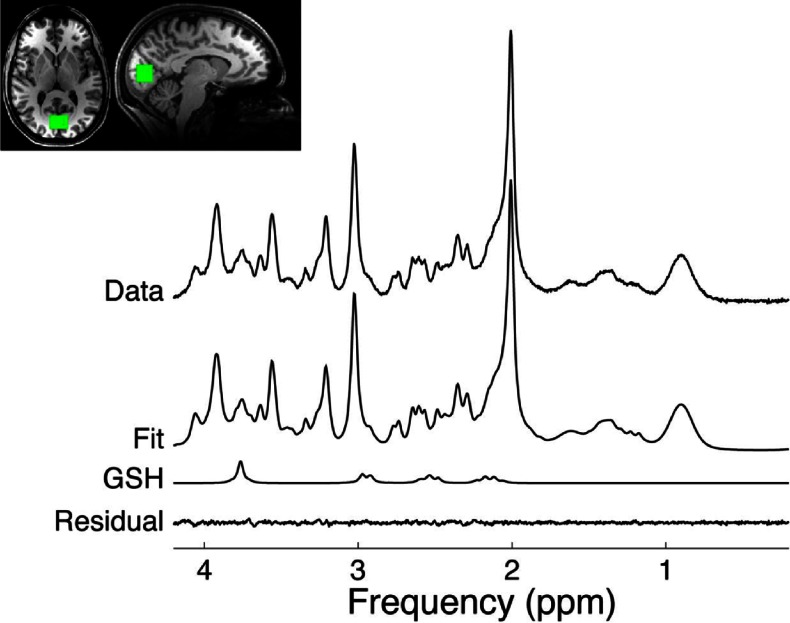
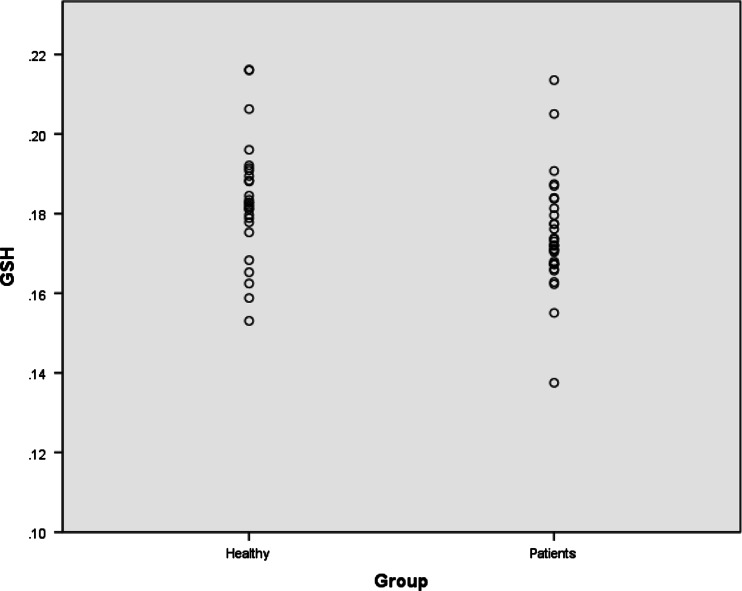
RATIONALE: Magnetic resonance spectroscopy (MRS) is an acceptable non-invasive means of studying brain neurochemistry in depression. Previous studies in depressed patients have focused on measurement of the amino acid neurotransmitters, γ-aminobutyric acid (GABA) and glutamate. OBJECTIVES: The aim of this study is to use MRS in conjunction with the ultrashort echo time 'SPECIAL' technique to measure cortical levels of GABA, glutamate and glutathione (GSH) levels in unmedicated patients with major depression. We also examined the effect of 6-week treatment with the selective serotonin re-uptake inhibitor, escitalopram. METHODS: We studied patients with DSM-IV major depression and healthy age-matched controls using proton MRS. GABA, glutamate and GSH were measured relative to creatine in a voxel placed in occipital cortex. RESULTS: There was no difference in GABA or glutamate levels between depressed participants and controls; however, depressed patients had lower GSH levels. Six-week escitalopram treatment, which resulted in significant clinical responses in some patients, did not alter concentrations of GABA, glutamate or GSH. CONCLUSIONS: The sources of variability of GABA and glutamate measures in different studies of depressed patients require further study. Our results suggest that concomitant treatment with selective serotonin re-uptake inhibitors (SSRIs) is unlikely to be an important confounding factor. If lowered GSH levels can be confirmed, they may represent the presence of oxidative stress in some depressed patients.
Overview
The claims and statistics of this paper haven’t been checked yet.
Free: it reads the open-access text and checks the first 5 claims that cite a source we can check. Create a free account to check every claim.
Integrity signals
Registry
Cites
Statistics
Figures
Verification
Claims the paper makes
The claims and statistics of this paper haven’t been checked yet.
Free: it reads the open-access text and checks the first 5 claims that cite a source we can check. Create a free account to check every claim.
Claims other papers make about this one
Each is checked against this paper’s own text: does it say what the citing paper says it does?
The check wasn’t confident either way, so it gives no verdict — never disputed.
In the citing paper
“In line with the hypothesis that antidepressant medications might exert their effects by normalizing negative emotional biases before changes in symptoms, eventual week 6 responders showed greater reduction in neural responses to fearful vs. happy faces after 7 days of escitalopram treatment in the pgACC, dACC and amygdala [197].”
From Prefrontal cortex and depression (2022) · cites this paper as [197]
Experimental — accuracy not yet measured
Self-check
Percentages, sums and reported differences re-computed from the paper’s own numbers.
The self-check needs the paper’s full text.
Citations
Cites
An inventory for measuring depression
BECK, A. T. (1961) · Archives of General Psychiatry · doi:10.1001/archpsyc.1961.01710120031004 · Cited by 38,032 · cited 2×
“Mood ratings were measured using the Hamilton Rating Scale for depression (HAM-D) (Hamilton 1960) and the Beck Depression Inventory (BDI) (Beck et al. 1961), while anxiety ratings were scored using the Spielberger’s State-Trait Anxiety Inventory (Spielberger et al. 1993).”
MethodHamilton, M. (1960) · Journal of Neurology, Neurosurgery & Psychiatry · doi:10.1136/jnnp.23.1.56 · Cited by 32,817 · cited 6×
“Mood ratings were measured using the Hamilton Rating Scale for depression (HAM-D) (Hamilton 1960) and the Beck Depression Inventory (BDI) (Beck et al. 1961), while anxiety ratings were scored using the Spielberger’s State-Trait Anxiety Inventory (Spielberger et al. 1993).”
MethodInfluential(1970) · Cited by 24,983
Scoville, W. B. (1949) · Journal of neurosurgery · doi:10.3171/jns.1949.6.1.0065 · Cited by 7,381
Estimation of metabolite concentrations from localized in vivo proton NMR spectra
Provencher, S. W. (1993) · Magnetic Resonance in Medicine · doi:10.1002/mrm.1910300604 · Cited by 3,655 · cited 2×
“Following spectral processing, SPECIAL data were analysed with LCModel version 6.2-2B (Provencher 1993) using a basis set that consisted of 21 simulated metabolite basis spectra.”
MethodInfluentialStructured clinical interview for DSM-IV axis I disorders : SCID-I : clinical version : scoresheet
First, M. B., Spitzer, R. L., Gibbon, M., & Williams, J. B. W. (1997) · American Psychiatric Press eBooks · Cited by 3,101
Targeting the glutamatergic system to develop novel, improved therapeutics for mood disorders
Sanacora, G., Zarate, C. A., Krystal, J. H., & Manji, H. K. (2008) · Nature Reviews Drug Discovery · doi:10.1038/nrd2462 · Cited by 894 · cited 2×
“Particular attention has focused on levels of the amino acid neurotransmitters, glutamate and γ-aminobutyric acid (GABA) because of their postulated role in the pathophysiology of depression (Taylor et al. 2003; Sanacora et al. 2008; Sanacora 2010).”
BackgroundMethodMajor depressive disorder: new clinical, neurobiological, and treatment perspectives
Kupfer, D. J., Frank, E., & Phillips, M. L. (2012) · The Lancet · doi:10.1016/s0140-6736(11)60602-8 · Cited by 894 · cited 2×
“While some investigations have found decreases in grey matter in certain brain regions in depression, the occipital cortex is not usually implicated (Kupfer et al. 2012).”
BackgroundHasler, G., van der Veen, J. W., Tumonis, T., Meyers, N., Shen, J., & Drevets, W. C. (2007) · Archives of General Psychiatry · doi:10.1001/archpsyc.64.2.193 · Cited by 846 · cited 3×
“GABA concentrations are also reported to be lowered in depression, particularly in occipital cortex where GABA is easier to measure with current MRS methodology (Sanacora et al. 1999, 2004; Hasler et al. 2007).”
BackgroundResultSubtype-Specific Alterations of γ-Aminobutyric Acid and Glutamatein Patients With Major Depression
Sanacora, G., Gueorguieva, R., Epperson, C. N., Wu, Y.-T., Appel, M., Rothman, D. L., Krystal, J. H., & Mason, G. F. (2004) · Archives of General Psychiatry · doi:10.1001/archpsyc.61.7.705 · Cited by 796 · cited 5×
“GABA concentrations are also reported to be lowered in depression, particularly in occipital cortex where GABA is easier to measure with current MRS methodology (Sanacora et al. 1999, 2004; Hasler et al. 2007).”
BackgroundResultInfluentialBains, J. S., & Shaw, C. A. (1997) · Brain Research Reviews · doi:10.1016/s0165-0173(97)00045-3 · Cited by 717 · cited 1×
“GSH is an important antioxidant in the CNS, and GSH depletion is believed to contribute to various forms of cell death (Bains and Shaw 1997).”
BackgroundSanacora, G., Mason, G. F., Rothman, D. L., Behar, K. L., Hyder, F., Petroff, O. A. C., Berman, R. M., Charney, D. S., & Krystal, J. H. (1999) · Archives of General Psychiatry · doi:10.1001/archpsyc.56.11.1043 · Cited by 627 · cited 2×
“GABA concentrations are also reported to be lowered in depression, particularly in occipital cortex where GABA is easier to measure with current MRS methodology (Sanacora et al. 1999, 2004; Hasler et al. 2007).”
ResultGawryluk, J. W., Wang, J.-F., Andreazza, A. C., Shao, L., & Young, L. T. (2011) · The International Journal of Neuropsychopharmacology · doi:10.1017/s1461145710000805 · Cited by 594 · cited 2×
“Near FMRIB Centre, Department of Clinical Neurology, University of Oxford, Oxford, UK (Gawryluk et al. 2011).”
BackgroundMethodIncreased Cortical GABA Concentrations in Depressed Patients Receiving ECT
Sanacora, G., Mason, G. F., Rothman, D. L., Hyder, F., Ciarcia, J. J., Ostroff, R. B., Berman, R. M., & Krystal, J. H. (2003) · American Journal of Psychiatry · doi:10.1176/appi.ajp.160.3.577 · Cited by 513 · cited 2×
“2002), and a similar effect was reported with electroconvulsive therapy (Sanacora et al. 2003).”
ResultSanacora, G., Mason, G. F., Rothman, D. L., & Krystal, J. H. (2002) · American Journal of Psychiatry · doi:10.1176/appi.ajp.159.4.663 · Cited by 494 · cited 2×
“There is, however, a previous report that SSRIs increase occipital GABA levels in depressed patients over about 2 months of treatment (Sanacora et al. 2002), and a similar effect was reported with electroconvulsive therapy (Sanacora et al.”
ResultMagnetic Resonance Spectroscopy Studies of Glutamate-Related Abnormalities in Mood Disorders
Yüksel, C., & Öngür, D. (2010) · Biological Psychiatry · doi:10.1016/j.biopsych.2010.06.016 · Cited by 493 · cited 2×
“However, a recent meta-analysis of studies of glutamate in depressed patients indicated that MRS glutamate was likely to be decreased in acute depression, particularly in anterior brain regions (Yüksel and Öngür 2010).”
ResultMekle, R., Mlynárik, V., Gambarota, G., Hergt, M., Krueger, G., & Gruetter, R. (2009) · Magnetic Resonance in Medicine · doi:10.1002/mrm.21961 · Cited by 324
Walter, M., Henning, A., Grimm, S., Schulte, R. F., Beck, J., Dydak, U., Schnepf, B., Boeker, H., Boesiger, P., & Northoff, G. (2009) · Archives of General Psychiatry · doi:10.1001/archgenpsychiatry.2009.39 · Cited by 306 · cited 1×
“GABA concentration has also been reported to be lower in MRS studies in depression, in both anterior brain regions and in occipital cortex, though again not all studies are in agreement (Sanacora et al. 1999, 2004; Hasler et al. 2007; Walter et al. 2009;Murrough et al. 2010).”
ResultBhagwagar, Z., Wylezinska, M., Jezzard, P., Evans, J., Ashworth, F., Sule, A., Matthews, P. M., & Cowen, P. J. (2007) · Biological Psychiatry · doi:10.1016/j.biopsych.2006.08.048 · Cited by 303 · cited 2×
“…patients reported an increase in glutamate (Sanacora et al. 2004); we also found increased Glx in occipital cortex in recovered depressed patients (Bhagwagar et al. 2007) and increased glutamate in the same brain region in euthymic young people at risk of depression through having a depressed…”
BackgroundSelf-citationPrice, R. B., Shungu, D. C., Mao, X., Nestadt, P., Kelly, C., Collins, K. A., Murrough, J. W., Charney, D. S., & Mathew, S. J. (2009) · Biological Psychiatry · doi:10.1016/j.biopsych.2008.10.025 · Cited by 270 · cited 5×
“However, the treatment resistance of these patients was clearly less than those studied by Price et al. (2009).”
BackgroundResultInfluentialCreatine abnormalities in schizophrenia and bipolar disorder
Öngür, D., Prescot, A. P., Jensen, J. E., Cohen, B. M., & Renshaw, P. F. (2009) · Psychiatry Research: Neuroimaging · doi:10.1016/j.pscychresns.2008.06.002 · Cited by 189 · cited 1×
“Another potential limitation of our study is the use of creatine as a reference because it is possible that certain psychiatric disorders might be associated with changes in brain creatine levels (Öngür et al. 2009).”
BackgroundGlutathione: a novel treatment target in psychiatry
Berk, M., Ng, F., Dean, O., Dodd, S., & Bush, A. I. (2008) · Trends in Pharmacological Sciences · doi:10.1016/j.tips.2008.05.001 · Cited by 183 · cited 1×
“Glutathione (GSH) is a major endogenous free radical scavenger, and its reduction can increase vulnerability to cellular oxidative stress (Berk et al. 2008).”
BackgroundShungu, D. C., Weiduschat, N., Murrough, J. W., Mao, X., Pillemer, S., Dyke, J. P., Medow, M. S., Natelson, B. H., Stewart, J. M., & Mathew, S. J. (2012) · NMR in Biomedicine · doi:10.1002/nbm.2772 · Cited by 178 · cited 4×
“A recent MRS study reported lower levels of GSH in occipital cortex in both patients with major depression and those with chronic fatigue syndrome (Shungu et al. 2012).”
BackgroundResultInfluentialPortella, M. J., de Diego-Adeliño, J., Gómez-Ansón, B., Morgan-Ferrando, R., Vives, Y., Puigdemont, D., Pérez-Egea, R., Ruscalleda, J., Álvarez, E., & Pérez, V. (2011) · Journal of Psychiatric Research · doi:10.1016/j.jpsychires.2010.08.010 · Cited by 127
Maes, M. H. J., Mihaylova, I., Kubera, M., Uytterhoeven, M., Vrydags, N., & Bosmans, E. (2011) · PubMed · Cited by 95
Near, J., Andersson, J., Maron, E., Mekle, R., Gruetter, R., Cowen, P., & Jezzard, P. (2013) · NMR in Biomedicine · doi:10.1002/nbm.2960 · Cited by 91 · cited 3×
“In conjunction with proton MRS, the short echo time ‘SPECIAL’ technique (Mekle et al. 2009; Near et al. 2013) enables simultaneous detection of GSH as well as several other neurometabolites, including GABA, glutamate and glutamine in a single acquisition, without the need for spectral editing.”
MethodInfluentialSelf-citationde Diego-Adeliño, J., Portella, M. J., Gómez-Ansón, B., López-Moruelo, O., Serra-Blasco, M., Vives, Y., Puigdemont, D., Pérez-Egea, R., Álvarez, E., & Pérez, V. (2013) · Journal of Psychiatry and Neuroscience · doi:10.1503/jpn.110185 · Cited by 86
Murrough, J. W., Mao, X., Collins, K. A., Kelly, C., Andrade, G., Nestadt, P., Levine, S. M., Mathew, S. J., & Shungu, D. C. (2010) · NMR in Biomedicine · doi:10.1002/nbm.1512 · Cited by 82 · cited 2×
“…in agreement with a recent study that found no difference in occipital Glx between depressed patients, patients with chronic fatigue and controls (Murrough et al. 2010), as well as an earlier investigation that included both medication-naive and medication-resistant depressed patients (Price et…”
ResultGodlewska, B. R., Yip, S. W., Near, J., Goodwin, G. M., & Cowen, P. J. (2013) · Psychopharmacology · doi:10.1007/s00213-013-3244-0 · Cited by 69 · cited 1×
“However, two recent MRS studies in bipolar disorder failed to find differences in cortical GSH between bipolar patients and controls (Godlewska et al. 2014; Lagopoulos et al. 2013) suggesting that lowered GSH is probably not a feature of mood disorders in general.”
ResultSelf-citationLagopoulos, J., Hermens, D. F., Tobias‐Webb, J., Duffy, S. L., Naismith, S. L., White, D., Scott, E. M., & Hickie, I. B. (2013) · Journal of Psychiatric Research · doi:10.1016/j.jpsychires.2012.12.006 · Cited by 56 · cited 1×
“However, two recent MRS studies in bipolar disorder failed to find differences in cortical GSH between bipolar patients and controls (Godlewska et al. 2014; Lagopoulos et al. 2013) suggesting that lowered GSH is probably not a feature of mood disorders in general.”
ResultTAYLOR, M., BHAGWAGAR, Z., COWEN, P. J., & SHARP, T. (2003) · Psychological Medicine · doi:10.1017/s0033291702006876 · Cited by 50
Self-citationSanacora, G. (2010) · Biological Psychiatry · doi:10.1016/j.biopsych.2010.01.003 · Cited by 47 · cited 1×
“Particular attention has focused on levels of the amino acid neurotransmitters, glutamate and γ-aminobutyric acid (GABA) because of their postulated role in the pathophysiology of depression (Taylor et al. 2003; Sanacora et al. 2008; Sanacora 2010).”
BackgroundElevated cortical glutamate in young people at increased familial risk of depression
Taylor, M. J., Mannie, Z. N., Norbury, R., Near, J., & Cowen, P. J. (2011) · The International Journal of Neuropsychopharmacology · doi:10.1017/s1461145710001094 · Cited by 38 · cited 2×
“2007) and increased glutamate in the same brain region in euthymic young people at risk of depression through having a depressed parent (Taylor et al. 2011).”
BackgroundSelf-citationStructural and functional imaging of the hippocampus in young people at familial risk of depression
Mannie, Z. N., Filippini, N., Williams, C., Near, J., Mackay, C. E., & Cowen, P. J. (2014) · Psychological Medicine · doi:10.1017/s0033291714000580 · Cited by 37 · cited 1×
“More recently, we have also found elevated levels of Glx in the hippocampus in young people at increased risk of depression (Mannie et al. 2014).”
BackgroundSelf-citationTaylor, M. J., Godlewska, B. R., Norbury, R., Selvaraj, S., Near, J., & Cowen, P. J. (2012) · The International Journal of Neuropsychopharmacology · doi:10.1017/s1461145712000272 · Cited by 35 · cited 3×
“There is little work on the effects of sub-chronic antidepressant treatment on Glx concentrations in MR studies of depressed patients, though our findings are in agreement with previous work from our group that studied the effect of 1week treatment with escitalopram in depressed patients (Taylor et al. 2012).”
ResultSelf-citationTaylor, M., Norbury, R., Murphy, S. E., Rudebeck, S. R., Jezzard, P., & Cowen, P. J. (2009) · Journal of Psychopharmacology · doi:10.1177/0269881109105679 · Cited by 24
Self-citation
Cited by
Prefrontal cortex and depression
Pizzagalli, D. A., & Roberts, A. C. (2022) · Neuropsychopharmacology · doi:10.1038/s41386-021-01101-7 · Cited by 667
“happy faces after 7 days of escitalopram treatment in the pgACC, dACC and amygdala [197].”
MethodA Meta-analysis of oxidative stress markers in depression
Liu, T., Zhong, S., Liao, X., Chen, J., He, T., Lai, S., & Jia, Y. (2015) · PLOS ONE · doi:10.1371/journal.pone.0138904 · Cited by 485
“Lower glutathione (GSH) levels [12] and a negative relationship between anhedonia severity and occipital GSH levels [13] were found through magnetic resonance spectroscopy (MRS).”
BackgroundMoriguchi, S., Takamiya, A., Noda, Y., Horita, N., Wada, M., Tsugawa, S., Plitman, E., Sano, Y., Tarumi, R., ElSalhy, M., et al. (2019) · Molecular Psychiatry · doi:10.1038/s41380-018-0252-9 · Cited by 357
Godfrey, K. E. M., Gardner, A. C., Kwon, S., Chea, W., & Muthukumaraswamy, S. D. (2018) · Journal of Psychiatric Research · doi:10.1016/j.jpsychires.2018.08.015 · Cited by 206
The role of oxidative and nitrosative stress in accelerated aging and major depressive disorder
Maurya, P. K., Noto, C., Rizzo, L. B., Rios, A. C., Nunes, S. O. V., Barbosa, D. S., Sethi, S., Zeni, M., Mansur, R. B., Maes, M., et al. (2016) · Progress in Neuro-Psychopharmacology and Biological Psychiatry · doi:10.1016/j.pnpbp.2015.08.016 · Cited by 171
Metadata
- Authors
- Godlewska, B. R., Near, J., & Cowen, P. J.
- Affiliations
- Warneford Hospital (GB)
- Corresponding author
- Cowen, Philip J.
- Venue
- Psychopharmacology
- Published
- 2014-07-31
- Volume
- 232
- Issue
- 3
- Pages
- 501-507
- ISSN
- 0033-3158 (ISSN-L)
- 1432-2072
- PMC
- PMC4302231
- OpenAlex
- W2066809233
- Cited by
- 97
- References
- 36
- Citations by year
- 2026: 2 · 2025: 5 · 2024: 8 · 2023: 12 · 2022: 7 · 2021: 8 · 2020: 9 · 2019: 9 · 2018: 7 · 2017: 16 · 2016: 6 · 2015: 8
- FWCI
- 7.29
- Type
- journal article
- Language
- en
- Open access
- hybrid
- doi.org
- Locations
- Psychopharmacology (publishedVersion, cc-by)
- Europe PMC (PubMed Central) (publishedVersion)
- PubMed Central (publishedVersion, cc-by)
- PubMed (publishedVersion)
- Topics
- Health Sciences › Medicine › Pharmacology (medical) › Treatment of Major Depression
- Health Sciences › Medicine › Radiology, Nuclear Medicine and Imaging › Advanced MRI Techniques and Applications
- Life Sciences › Neuroscience › Biological Psychiatry › Tryptophan and brain disorders
- Keywords
- major depressive disorder, brain neurochemistry, glutathione, GABA, glutamate, selective serotonin reuptake inhibitors, escitalopram, oxidative stress, occipital cortex, 1H NMR, untreated depression
- MeSH terms
- Adult, Major Depressive Disorder, Depressive Disorder, Major, Female, gamma-Aminobutyric Acid, Glutathione, Humans, Male, Magnetic Resonance Spectroscopy, Citalopram, Treatment Outcome, Selective Serotonin Reuptake Inhibitors, Glutamic Acid
About these checks
Registry, retraction, Cites and statistics results are computed, not judged, with one exception: a printed reference that no index lists is read once by a model before it counts as a citation error. Claims are extracted by a model and kept only when their quote appears verbatim in the text; each cited source is then checked, with a model’s help, for whether it says what the claim relies on. Those verdicts can be wrong — read the claim’s quote and the cited source before relying on one.
Statistics and arithmetic are recomputed, not judged.
Confidence bands are shown only for fields calibrated on our annotated test set. None is calibrated yet, so no band is shown.
What counts as a claim ›How we measure confidence ›How we check this ›
Are you an author, or do you see a problem with this page? Request a review
Data sources
Bibliographic data: Semantic Scholar, OpenAlex, Crossref.
Contains information from the Semantic Scholar Academic Graph Datasets, made available under the ODC Attribution License (ODC-BY 1.0).
Semantic Scholar’s data is described in: Kinney, R., et al. (2023). The Semantic Scholar Open Data Platform. arXiv:2301.10140.
