

Mechanisms of neuroimmune gene induction in alcoholism
Open accessThe DOI matches its Crossref record; 122 of the 124 references it cites were found in a registry or an index.
Abstract
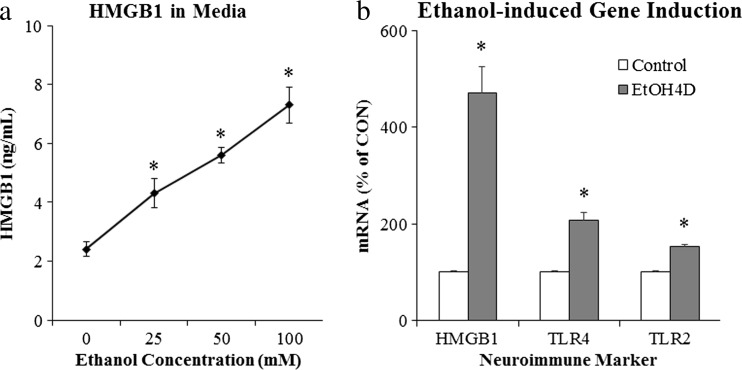
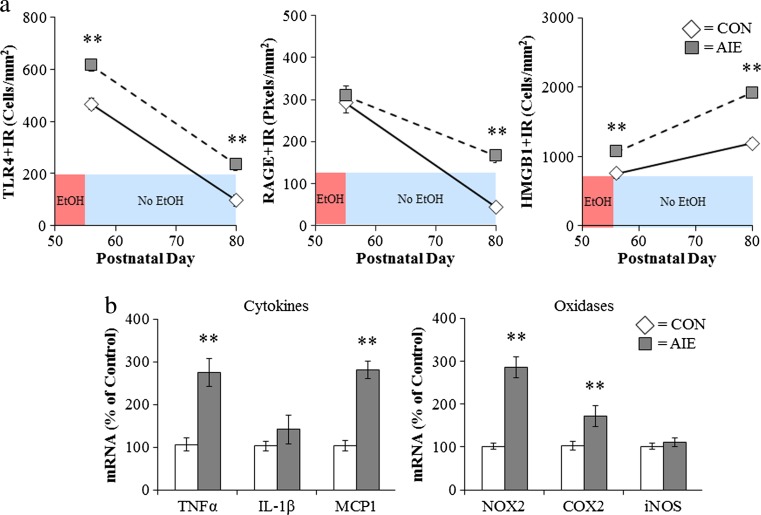
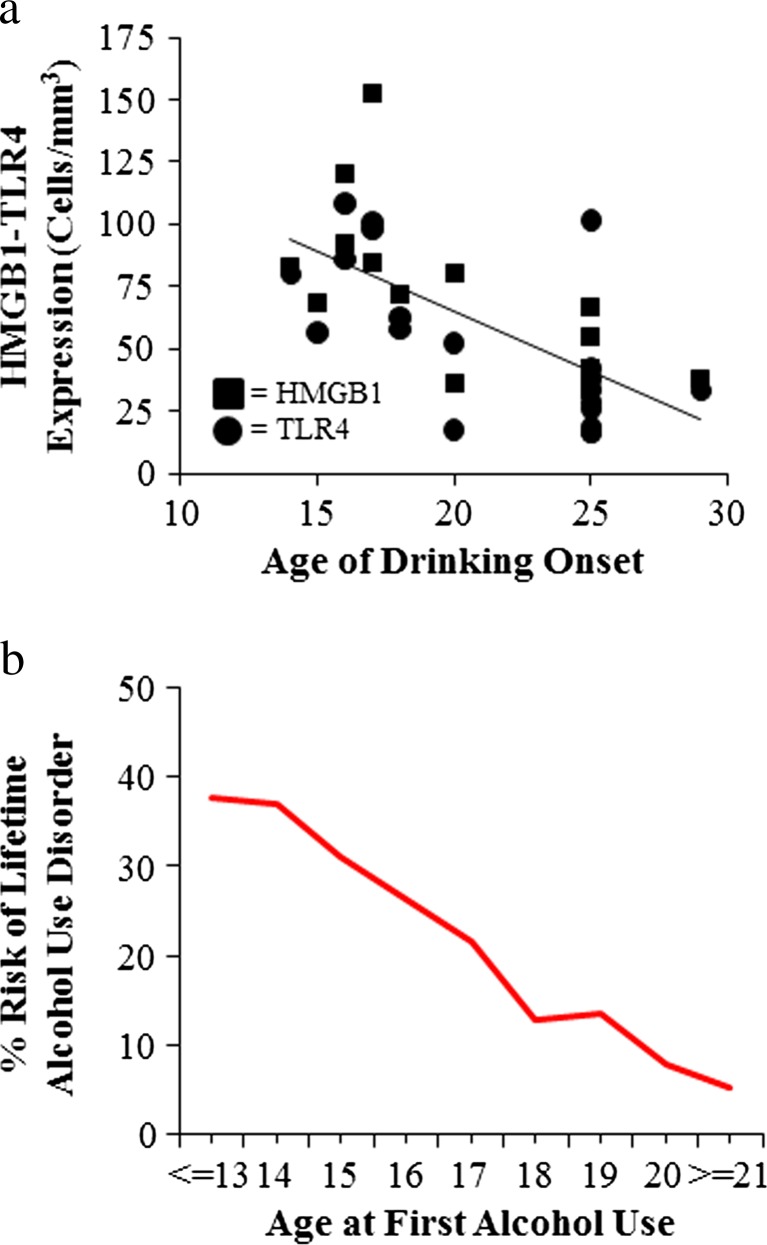
RATIONALE: Alcoholism is a primary, chronic relapsing disease of brain reward, motivation, memory, and related circuitry. It is characterized by an individual's continued drinking despite negative consequences related to alcohol use, which is exemplified by alcohol use leading to clinically significant impairment or distress. Chronic alcohol consumption increases the expression of innate immune signaling molecules (ISMs) in the brain that alter cognitive processes and promote alcohol drinking. OBJECTIVES: Unraveling the mechanisms of alcohol-induced neuroimmune gene induction is complicated by positive loops of multiple cytokines and other signaling molecules that converge on nuclear factor kappa-light-chain-enhancer of activated B cells and activator protein-1 leading to induction of additional neuroimmune signaling molecules that amplify and expand the expression of ISMs. RESULTS: Studies from our laboratory employing reverse transcription polymerase chain reaction (RT-PCR) to assess mRNA, immunohistochemistry and Western blot analysis to assess protein expression, and others suggest that ethanol increases brain neuroimmune gene and protein expression through two distinct mechanisms involving (1) systemic induction of innate immune molecules that are transported from blood to the brain and (2) the direct release of high-mobility group box 1 (HMGB1) from neurons in the brain. Released HMGB1 signals through multiple receptors, particularly Toll-like receptor (TLR) 4, that potentiate cytokine receptor responses leading to a hyperexcitable state that disrupts neuronal networks and increases excitotoxic neuronal death. Innate immune gene activation in brain is persistent, consistent with the chronic relapsing disease that is alcoholism. Expression of HMGB1, TLRs, and other ISMs is increased several-fold in the human orbital frontal cortex, and expression of these molecules is highly correlated with each other as well as lifetime alcohol consumption and age of drinking onset. CONCLUSIONS: The persistent and cumulative nature of alcohol on HMGB1 and TLR gene induction support their involvement in alcohol-induced long-term changes in brain function and neurodegeneration.
Overview
The claims and statistics of this paper haven’t been checked yet.
Free: it reads the open-access text and checks the first 5 claims that cite a source we can check. Create a free account to check every claim.
Integrity signals
Registry
Cites
Statistics
Figures
Verification
Claims the paper makes
The claims and statistics of this paper haven’t been checked yet.
Free: it reads the open-access text and checks the first 5 claims that cite a source we can check. Create a free account to check every claim.
Claims other papers make about this one
Each is checked against this paper’s own text: does it say what the citing paper says it does?
The source backs part of the claim, not all of it — or backs it for a different population, condition or comparison.
In the citing paper
“Of equal importance is that repeated AAE can cause neuroinflammation via the release of pro-inflammatory cytokines, which can disrupt synaptic plasticity and lead to neuropathology and cell death [37–39].”
From Consequences of adolescent drug use (2023) · cites this paper as [37]
Experimental — accuracy not yet measuredThe source backs part of the claim, not all of it — or backs it for a different population, condition or comparison.
In the citing paper
“Neuroinflammatory signaling pathways in the central nervous system are also hypothesized to contribute to neuroadaptive processes that mediate the dysregulation of hyperkatifeia that is associated with the withdrawal/negative affect stage of the addiction cycle (Koob and Volkow, 2010;Crews and Vetreno, 2016).”
From Drug Addiction: Hyperkatifeia/Negative Reinforcement as a Framework for Medications Development (2021) · cites this paper as Crews and Vetreno, 2016
Experimental — accuracy not yet measured
Self-check
Percentages, sums and reported differences re-computed from the paper’s own numbers.
The self-check needs the paper’s full text.
Citations
Cites
From inflammation to sickness and depression: when the immune system subjugates the brain
Dantzer, R., O'Connor, J. C., Freund, G. G., Johnson, R. W., & Kelley, K. W. (2008) · Nature Reviews Neuroscience · doi:10.1038/nrn2297 · Cited by 7,395
Fate Mapping Analysis Reveals That Adult Microglia Derive from Primitive Macrophages
Ginhoux, F., Greter, M., Leboeuf, M., Nandi, S., See, P., Gokhan, S., Mehler, M. F., Conway, S. J., Ng, L. G., Stanley, E. R., et al. (2010) · Science · doi:10.1126/science.1194637 · Cited by 5,175 · cited 2×
“Frontal cortex Introduction: microglia and innate immune genes Microglia are tissue-specific monocyte-like cells of mesodermal origin (Ginhoux et al. 2010), whereas all other brain cells are derived from the neuroectoderm.”
BackgroundMicroglia: a sensor for pathological events in the CNS
Kreutzberg, G. W. (1996) · Trends in Neurosciences · doi:10.1016/0166-2236(96)10049-7 · Cited by 4,396 · cited 2×
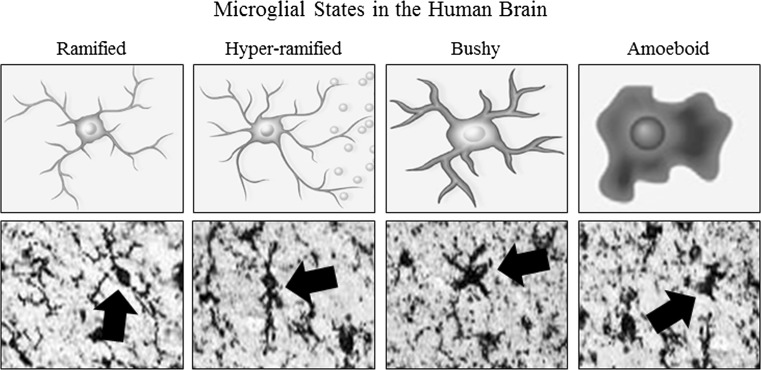
“Amoeboid or Bphagocytic^ microglia are characterized rounded macrophage-like morphology with no or few processes and are associated with maximal proinflammatory activation, oxidative-free radicals, and microglial apoptosis (Kreutzberg 1996; Raivich et al. 1999).”
BackgroundNF-κB regulation in the immune system
Li, Q., & Verma, I. M. (2002) · Nature Reviews Immunology · doi:10.1038/nri910 · Cited by 4,007
Mechanisms underlying inflammation in neurodegeneration
Glass, C. K., Saijo, K., Winner, B., Marchetto, M. C., & Gage, F. H. (2010) · Cell · doi:10.1016/j.cell.2010.02.016 · Cited by 3,580
Integrating cell-signalling pathways with NF-κB and IKK function
Perkins, N. D. (2007) · Nature Reviews Molecular Cell Biology · doi:10.1038/nrm2083 · Cited by 2,350
Systemic LPS causes chronic neuroinflammation and progressive neurodegeneration
Qin, L., Wu, X., Block, M. L., Liu, Y., Breese, G. R., Hong, J., Knapp, D. J., & Crews, F. T. (2007) · Glia · doi:10.1002/glia.20467 · Cited by 2,144 · cited 12×
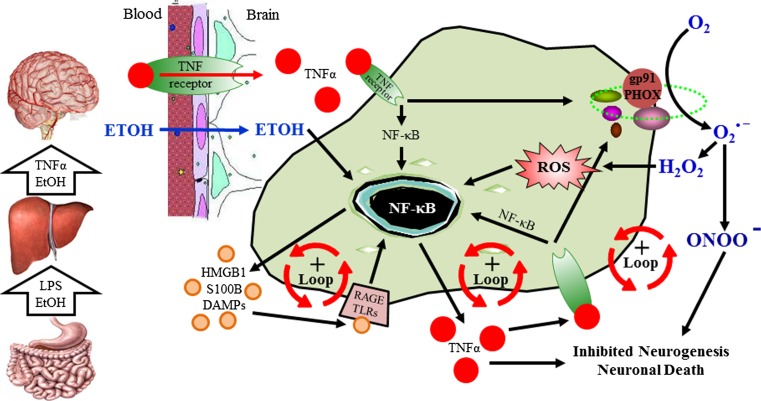
“Proinflammatory cytokines in the blood are transported across the blood–brain barrier (Banks and Erickson 2010; Qin et al. 2007) such that both cytokines and alcohol enter the brain where they induce neuroimmune activation.”
BackgroundInfluentialSelf-citationFunction and regulation of CREB family transcription factors in the nervous system
Lonze, B. E., & Ginty, D. D. (2002) · Neuron · doi:10.1016/s0896-6273(02)00828-0 · Cited by 2,127 · cited 2×
“(CREB) and many of its target genes, including neuropeptide Y (NPY) and brain-derived neurotrophic factor (BDNF), promote neuronal survival and protect neurons from excitotoxicity and apoptosis (Lonze and Ginty 2002).”
BackgroundHMGB1 and RAGE in Inflammation and Cancer
Sims, G. P., Rowe, D. C., Rietdijk, S. T., Herbst, R., & Coyle, A. J. (2010) · Annual Review of Immunology · doi:10.1146/annurev.immunol.021908.132603 · Cited by 1,436 · cited 4×
“2006]) that activate gut innate immune signaling through disruption of gut tight junctions that allows the gut microbiome bacteria and their endotoxins to enter portal circulation leading to the liver inducing an innate immune response in blood (Sims et al. 2010).”
BackgroundInfluentialNew regulators of NF-κB in inflammation
Ghosh, S., & Hayden, M. S. (2008) · Nature Reviews Immunology · doi:10.1038/nri2423 · Cited by 1,334
Cited by
Items 201–269 of 269
Airapetov, M. I., Eresko, S. O., Rogova, A. S., Бычков, Э. Р., Aa, L., & Shabanov, P. D. (2024) · Biomedical Chemistry Research and Methods · doi:10.18097/bmcrm00208 · Cited by 1
HLA Allele's Role in Cannabis Addiction
Buciuta, A., Coman, H. G., Nemeş, B., Oroian, R., Vușcan, M. E., Vică, M. L., & Matei, H. V. (2025) · BRAIN BROAD RESEARCH IN ARTIFICIAL INTELLIGENCE AND NEUROSCIENCE · doi:10.70594/brain/15.4/6 · Cited by 1
Association of inflammatory gene variants with problematic alcohol use in a Colombian population
Buitrago, M. R., & Aristizábal, F. (2025) · Cellular and Molecular Biology · doi:10.14715/cmb/2025.71.6.3 · Cited by 1
The role of neurons and glia in ethanol-induced innate immune signaling
Lawrimore, C. J. (2018) · Carolina Digital Repository (University of North Carolina at Chapel Hill) · doi:10.17615/74k5-zh70 · Cited by 1
Roya-Kouchaki, K., Korterik, J. P., Tjebbes, F., Schenk, G. J., Offerhaus, H. L., & Luchicchi, A. (2026) · Advanced Science · doi:10.1002/advs.76471 · Cited by 1
Transcriptomic Signatures in Alcohol Use Disorder - A Translational Approach
Friske, M. M. (2023) · heiDOK (Heidelberg University) · doi:10.11588/heidok.00033856 · Cited by 1
Kisby, B. R., Castro‐Piedras, I., Shanmugam, S., & Ponomarev, I. (2025) · bioRxiv (Cold Spring Harbor Laboratory) · doi:10.1101/2025.05.06.652465 · Cited by 1
Microglial mechanisms of cell death and the role of the P2X7 receptor in relation to glaucoma
Newman, J. (2023) · UEA Digital Repository (University of East Anglia) · Cited by 1
Airapetov, M. I., Eresko, S. O., Galustyan, A. N., Aa, L., & Shabanov, P. D. (2022) · Reviews on Clinical Pharmacology and Drug Therapy · doi:10.17816/rcf202219-224 · Cited by 1
Role of TrkB.T1 in Glial Inflammatory Response Elicited by MHV
Heiratifar, N. (2023) · Carleton University's Institutional Repository (MacOdrum Library, Carleton University) · doi:10.22215/etd/2023-15452
Microglial activation and neuroinflammation: implications for neuropsychiatric symptoms
Uddin, T., Halder, C., Asma, A., Zaheen, A., Nahian, A., Nipun, R. S., Ferdous, J., Sarker, R., Misha, M. M., Tasnim, S., et al. (2026) · Exploration of Neuroprotective Therapy · doi:10.37349/ent.2026.1004158
TSPO Imaging in Psychiatric Disorders
Červenka, S., & Mizrahi, R. (2020) · Springer eBooks · doi:10.1007/978-3-030-57231-0_18
Context-dependent effects of microglial MyD88 removal on voluntary ethanol consumption in mice
Dziabis, J. E., Rogers, N., Horvath, B. L., Patton, M. S., Jonathan, I. O., Freeman, E. J., Sun, W., Moulden, J., Zhang, G., & Bilbo, S. D. (2026) · Neuropharmacology · doi:10.1016/j.neuropharm.2026.111076
Effects of Stress and Chronic Alcohol Exposure on Emotional Behavior and Alcohol Consumption
Knapp, D. J. (2018) · Elsevier eBooks · doi:10.1016/b978-0-12-813693-5.00008-3
Trang, B. K., Chesi, A., Toikumo, S., Pippin, J. A., Pahl, M. C., O’Brien, J. M., Amundadottir, L. T., Brown, K. M., Yang, W., Welles, J. E., et al. (2024) · medRxiv · doi:10.1101/2024.07.18.24310649
Stoyanov, O. M., Kalashnikov, V. Y., Vastyanov, R. S., Melnik, Y. V., & Kugel, Y. I. (2026) · Psychiatry Neurology and Medical Psychology · doi:10.26565/2312-5675-2026-35-10
Guerra, B. D. O., Delgado, C., & Sacomboio, E. N. M. (2025) · Health Science Reports · doi:10.1002/hsr2.71358
(2021) · Elsevier eBooks · doi:10.1016/b978-0-12-816793-9.00001-3
Haidary, M., Ansari, M., Ansari, S., Rezayee, H., Hanifi, S., & Hossaini, D. (2025) · Alcoholism Treatment Quarterly · doi:10.1080/07347324.2025.2603655
Rezayee, H., Haidary, M., Hossaini, D., Akbari, E., Nazari, M. L., Ilbeigi, D., & Saadat, M. (2026) · Alcoholism Treatment Quarterly · doi:10.1080/07347324.2026.2716244
Grodin, E. N., Meredith, L. R., Burnette, E. M., & Ray, L. A. (2023) · Springer eBooks · doi:10.1007/978-3-031-32483-3_30
Neuroinflammation, Glia–Neuron Crosstalk, and Energy Metabolism in Alcohol Use Disorder
Skryabin, V. Y., Sokolova, S. I., & Masyakin, A. V. (2026) · Biochemistry (Moscow) · doi:10.1134/s0006297925604149
Balan, I., Lopez, A. G., Gilmore, T. A., Bremmer, M. P., O’Buckley, T. K., Xia, K., Hendershot, C. S., & Morrow, A. L. (2026) · Alcoholism Clinical and Experimental Research · doi:10.1111/acer.70236
Mechanisms of organic dust induced neuroinflammation
Massey, N. (2021) · doi:10.31274/td-20240329-498
In depth systemic biology analysis of central nervous system injuries
Mallah, K. (2018) · theses.fr (ABES) · doi:10.70675/29123d99z419ez476dza406z3333a44da69d
de Castro, S. T., Petrouski, A. G., Castillo, J. E., Crews, F. T., & Vetreno, R. P. (2026) · Journal of Neuroscience · doi:10.1523/jneurosci.2004-25.2026
Self-citationHasany, A., Tyler, J. R., Lu, H., Blum, K., Sun, W., Salvi, R., Elman, I., & Thanos, P. K. (2026) · Brain Research · doi:10.1016/j.brainres.2026.150600
Gano, A., Vore, A. S., Geraci, D., Varlinskaya, E. I., & Deak, T. (2025) · Pharmacology Biochemistry and Behavior · doi:10.1016/j.pbb.2025.173998
Neuromodulation as a Potential Strategy to Remodel Brain Parenchyma in Addiction
Limens-Pinaque, J., Selim, M. K., Santis, S. D., Camarena, F., & Canals, S. (2026) · Springer eBooks · doi:10.1007/978-3-031-35658-2_18-1
Wang, J.-Q., Xia, Q. R., Zhou, X., Yan, C.-Y., Hong, W.-X., Deng, Y.-Y., Shan, F., Liu, Y.-R., & Liang, J. (2026) · Artificial Cells Nanomedicine and Biotechnology · doi:10.1080/21691401.2026.2617703
Genes and the Inflammatory Response Pathway: Linking in Alcohol Usage
Buitrago, M. R. (2026) · Springer eBooks · doi:10.1007/978-3-031-35658-2_100-1
Meredith Broussard, L. R. (2024) · eScholarship (California Digital Library)
Ran, X., Zhang, W., Lv, M., Huang, R., Wang, L., Zhang, G., & Wang, A. (2026) · European Journal of Neuroscience · doi:10.1111/ejn.70430
Neurotropic and immunomodulatory properties of a novel bioflavonoid composition
Гольдина, И. А., Markova, E. V., Владимирович, С. И., Anikeeva, O., Серенко, Е. В., Владимировна, С. А., Шушпанова, Т. В., & Knyazheva, M. A. (2024) · Reviews on Clinical Pharmacology and Drug Therapy · doi:10.17816/rcf633855
Airapetov, M. I., Eresko, S. O., Щукина, А. А., Matveev, N. M., Andreev, M. E., Бычков, Э. Р., Aa, L., & Шабанов, П. Д. (2025) · Biomeditsinskaya Khimiya · doi:10.18097/pbmcr1523
Heide, E. (2020) · eDiss (Georg-August-Universität Göttingen) · doi:10.53846/goediss-7860
8th Biennial International Drug and Alcohol Research Society (IDARS) Conference 2022
(2025) · Frontiers Media SA eBooks · doi:10.3389/978-2-8325-6231-4
Exploring the Pharmacology of (+)-Naltrexone on Alcohol Reward and Anxiety Behaviours
Jacobsen, J. H. W. (2017) · Adelaide Research & Scholarship (AR&S) (University of Adelaide)
Hade, A.-C. (2026) · DSpace repository (University of Tartu)
Hodge, K., Buck, D. J., Das, S., & Davis, R. L. (2024) · Oklahoma State Medical Proceedings
Étude translationnelle des interactions cerveau-foie dans les troubles de l'usage de l'alcool
Lanquetin, A. (2020) · theses.fr (ABES) · doi:10.70675/dafff686z6e49z461dzac95z8a723ed0c079
Fernández‐Rodríguez, S. (2023) · Repository of Digital Objects for Teaching Research and Culture (University of Valencia)
Role of Caveolin-1 in microglial phenotype: impact on Glioblastoma
Neto, C. (2021) · ORCA Online Research @Cardiff (Cardiff University)
Role of the IKKβ/NF-κB pathway in alcoholism
Truitt, J. (2015) · Texas ScholarWorks (Texas Digital Library) · doi:10.15781/t2mw28w7q
Probing Inflammation and Reward In Alcohol Use Disorder
Burnette, E. M. (2023) · eScholarship (California Digital Library)
Oligodendrocyte degeneration and demyelination: pathways involved and functional consequences
Zhan, J. (2021) · Elektronische Hochschulschriften der LMU München (Ludwig-Maximilians-Universität München) · doi:10.5282/edoc.27868
Boor, K. S. C. (2020) · heiDOK (Heidelberg University) · doi:10.11588/heidok.00028095
Belnap, M. A. (2026) · eScholarship (California Digital Library)
Galcerán, C. A. O., & Martínez, R. R. C. (2022) · Repositorio Institucional Universidad El Bosque
Ye, J.-H., Duman, L., Zuo, W., & Li, D. (2026) · European Journal of Pharmacology · doi:10.1016/j.ejphar.2026.179526
Langston, S. E. (2020) · Carolina Digital Repository (University of North Carolina at Chapel Hill) · doi:10.17615/gk04-ds15
Evans, L. P., Woll, A. W., Wu, S., Todd, B. P., Hehr, N., Hedberg-Buenz, A., Anderson, M. G., Newell, E. A., Ferguson, P. J., Mahajan, V. B., et al. (2019) · bioRxiv (Cold Spring Harbor Laboratory) · doi:10.1101/659581
Centellas, C., & Lídia (2019) · Repositori digital de la UPF (Universitat Pompeu Fabra)
The role of GPR120 in diet induced obesity, mood dysregulation, and microglial function
Dashtehei pour, Z. (2020) · doi:10.71781/30028
The innate immune system and alcohol responses in Drosophila
Troutwine, B. (2016) · Texas ScholarWorks (Texas Digital Library) · doi:10.15781/t2bv79v9q
Duffus, B.-L. M. (2024) · IUScholarWorks (Indiana University) · doi:10.7912/0r5g-n566
Etanol: A Inexistência de Dose Segura ou Terapêutica à Luz da Máxima de Paracelso
Coelho, L. G. D. S., & Colacite, J. (2026) · Revista de Ciências Médicas & Saúde (RCMS) · doi:10.64326/rcms.v1i4.459
ヒト型可溶性トロンボモジュリンのHMGB1誘起アロディニアに対する抑制作用の分子メカニズムに関する研究
辻田, 隆. (2018) · Institutional Repositories DataBase (IRDB)
The role of the neuroimmune system in the pathogenesis of fetal alcohol spectrum disorders
Rios, M. S. (2020) · RECERCAT (Consorci de Serveis Universitaris de Catalunya)
Havik, M. (2021) · NVA (Nasjonalt vitenarkiv)
Heineman, B. D., Steffens, D. C., Pearlson, G. D., & Wang, L. (2026) · American Journal of Geriatric Psychiatry · doi:10.1016/j.jagp.2026.11.006
Nutrition and Central Nervous System
Mohajeri, M. H. (2020) · MDPI eBooks · doi:10.3390/books978-3-03943-231-8
Avaliação da língua num modelo de alcoolismo experimental
Semedo, M. I. M. M. (2015) · Portuguese National Funding Agency for Science, Research and Technology (RCAAP Project by FCT)
Mangu, R. L. (2021) · Journal of Sociology Psychology & Religious Studies · doi:10.53819/81018102t5007
Shokri-Asl, V., Amirsayyafi, H., Moradi, S., Hajipour, H., & Hemmatabadi, F. K. (2026) · Russian Open Medical Journal · doi:10.15275/rusomj.2026.0101
Parveen, R., Singh, V. P., & Singh, S. (2026) · International Journal of Drug Delivery Technology · doi:10.25258/ijddt.16.62s.190
Metadata
- Authors
- Crews, F. T., & Vetreno, R. P.
- Affiliations
- University of North Carolina at Chapel Hill (US)
- Corresponding author
- Crews, Fulton T.
- Venue
- Psychopharmacology
- Published
- 2015-03-20
- Volume
- 233
- Issue
- 9
- Pages
- 1543-1557
- ISSN
- 0033-3158 (ISSN-L)
- 1432-2072
- PMC
- PMC4828484
- OpenAlex
- W2048926737
- Cited by
- 232
- References
- 124
- Citations by year
- 2026: 15 · 2025: 18 · 2024: 19 · 2023: 26 · 2022: 18 · 2021: 19 · 2020: 26 · 2019: 21 · 2018: 25 · 2017: 25 · 2016: 18 · 2015: 1
- FWCI
- 1.83
- Type
- journal article
- Language
- en
- Open access
- hybrid
- doi.org
- Locations
- Psychopharmacology (publishedVersion, cc-by)
- PubMed Central (publishedVersion, cc-by)
- PubMed (publishedVersion)
- Carolina Digital Repository (University of North Carolina at Chapel Hill) (submittedVersion, other-oa)
- UNC Libraries
- Funders
- University of North Carolina at Chapel Hill
- National Institute on Alcohol Abuse and Alcoholism (P50AA011605, AA 11605, U24AA020022, U01AA020023, AA020023, L40 AA021590, AA 007573, F32AA021040, AA020022, AA020024, U24AA020024, U54AA019767, AA019767, P60AA011605, T32AA007573)
- Topics
- Life Sciences › Neuroscience › Neurology › Neuroinflammation and Neurodegeneration Mechanisms
- Life Sciences › Neuroscience › Biological Psychiatry › Tryptophan and brain disorders
- Health Sciences › Medicine › Pathology and Forensic Medicine › Alcohol Consumption and Health Effects
- Keywords
- alcoholism, high mobility group box 1, TLR4, NF-κB, activator protein-1, cytokines, excitotoxicity, orbitofrontal cortex, neurodegeneration, chronic alcohol consumption, age of onset of drinking, brain reward system
- MeSH terms
- Alcoholism, Humans, Psychoneuroimmunology, HMGB1 Protein, Toll-Like Receptors
About these checks
Registry, retraction, Cites and statistics results are computed, not judged, with one exception: a printed reference that no index lists is read once by a model before it counts as a citation error. Claims are extracted by a model and kept only when their quote appears verbatim in the text; each cited source is then checked, with a model’s help, for whether it says what the claim relies on. Those verdicts can be wrong — read the claim’s quote and the cited source before relying on one.
Statistics and arithmetic are recomputed, not judged.
Confidence bands are shown only for fields calibrated on our annotated test set. None is calibrated yet, so no band is shown.
What counts as a claim ›How we measure confidence ›How we check this ›
Are you an author, or do you see a problem with this page? Request a review
Data sources
Bibliographic data: Semantic Scholar, OpenAlex, Crossref.
Contains information from the Semantic Scholar Academic Graph Datasets, made available under the ODC Attribution License (ODC-BY 1.0).
Semantic Scholar’s data is described in: Kinney, R., et al. (2023). The Semantic Scholar Open Data Platform. arXiv:2301.10140.
