

Mechanisms of neuroimmune gene induction in alcoholism
Open accessThe DOI matches its Crossref record; 122 of the 124 references it cites were found in a registry or an index.
Abstract
RATIONALE: Alcoholism is a primary, chronic relapsing disease of brain reward, motivation, memory, and related circuitry. It is characterized by an individual's continued drinking despite negative consequences related to alcohol use, which is exemplified by alcohol use leading to clinically significant impairment or distress. Chronic alcohol consumption increases the expression of innate immune signaling molecules (ISMs) in the brain that alter cognitive processes and promote alcohol drinking. OBJECTIVES: Unraveling the mechanisms of alcohol-induced neuroimmune gene induction is complicated by positive loops of multiple cytokines and other signaling molecules that converge on nuclear factor kappa-light-chain-enhancer of activated B cells and activator protein-1 leading to induction of additional neuroimmune signaling molecules that amplify and expand the expression of ISMs. RESULTS: Studies from our laboratory employing reverse transcription polymerase chain reaction (RT-PCR) to assess mRNA, immunohistochemistry and Western blot analysis to assess protein expression, and others suggest that ethanol increases brain neuroimmune gene and protein expression through two distinct mechanisms involving (1) systemic induction of innate immune molecules that are transported from blood to the brain and (2) the direct release of high-mobility group box 1 (HMGB1) from neurons in the brain. Released HMGB1 signals through multiple receptors, particularly Toll-like receptor (TLR) 4, that potentiate cytokine receptor responses leading to a hyperexcitable state that disrupts neuronal networks and increases excitotoxic neuronal death. Innate immune gene activation in brain is persistent, consistent with the chronic relapsing disease that is alcoholism. Expression of HMGB1, TLRs, and other ISMs is increased several-fold in the human orbital frontal cortex, and expression of these molecules is highly correlated with each other as well as lifetime alcohol consumption and age of drinking onset. CONCLUSIONS: The persistent and cumulative nature of alcohol on HMGB1 and TLR gene induction support their involvement in alcohol-induced long-term changes in brain function and neurodegeneration.
Overview
The claims and statistics of this paper haven’t been checked yet.
Free: it reads the open-access text and checks the first 5 claims that cite a source we can check. Create a free account to check every claim.
Integrity signals
Registry
Cites
Statistics
Figures
Verification
Claims the paper makes
The claims and statistics of this paper haven’t been checked yet.
Free: it reads the open-access text and checks the first 5 claims that cite a source we can check. Create a free account to check every claim.
Claims other papers make about this one
Each is checked against this paper’s own text: does it say what the citing paper says it does?
The source backs part of the claim, not all of it — or backs it for a different population, condition or comparison.
In the citing paper
“Of equal importance is that repeated AAE can cause neuroinflammation via the release of pro-inflammatory cytokines, which can disrupt synaptic plasticity and lead to neuropathology and cell death [37–39].”
From Consequences of adolescent drug use (2023) · cites this paper as [37]
Experimental — accuracy not yet measuredThe source backs part of the claim, not all of it — or backs it for a different population, condition or comparison.
In the citing paper
“Neuroinflammatory signaling pathways in the central nervous system are also hypothesized to contribute to neuroadaptive processes that mediate the dysregulation of hyperkatifeia that is associated with the withdrawal/negative affect stage of the addiction cycle (Koob and Volkow, 2010;Crews and Vetreno, 2016).”
From Drug Addiction: Hyperkatifeia/Negative Reinforcement as a Framework for Medications Development (2021) · cites this paper as Crews and Vetreno, 2016
Experimental — accuracy not yet measured
Self-check
Percentages, sums and reported differences re-computed from the paper’s own numbers.
The self-check needs the paper’s full text.
Citations
Cites
From inflammation to sickness and depression: when the immune system subjugates the brain
Dantzer, R., O'Connor, J. C., Freund, G. G., Johnson, R. W., & Kelley, K. W. (2008) · Nature Reviews Neuroscience · doi:10.1038/nrn2297 · Cited by 7,395
Fate Mapping Analysis Reveals That Adult Microglia Derive from Primitive Macrophages
Ginhoux, F., Greter, M., Leboeuf, M., Nandi, S., See, P., Gokhan, S., Mehler, M. F., Conway, S. J., Ng, L. G., Stanley, E. R., et al. (2010) · Science · doi:10.1126/science.1194637 · Cited by 5,175 · cited 2×
“Frontal cortex Introduction: microglia and innate immune genes Microglia are tissue-specific monocyte-like cells of mesodermal origin (Ginhoux et al. 2010), whereas all other brain cells are derived from the neuroectoderm.”
BackgroundMicroglia: a sensor for pathological events in the CNS
Kreutzberg, G. W. (1996) · Trends in Neurosciences · doi:10.1016/0166-2236(96)10049-7 · Cited by 4,396 · cited 2×
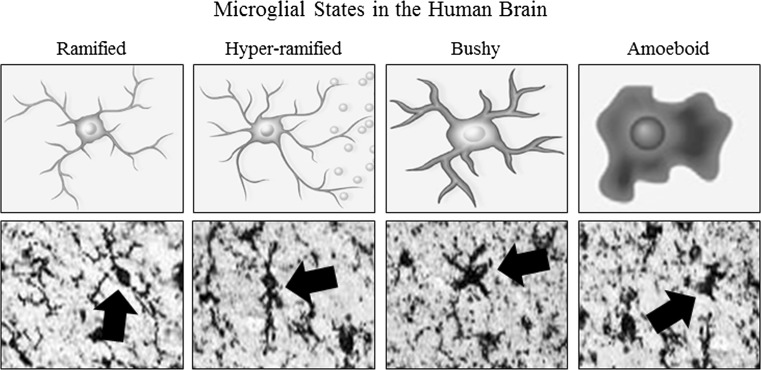
“Amoeboid or Bphagocytic^ microglia are characterized rounded macrophage-like morphology with no or few processes and are associated with maximal proinflammatory activation, oxidative-free radicals, and microglial apoptosis (Kreutzberg 1996; Raivich et al. 1999).”
BackgroundNF-κB regulation in the immune system
Li, Q., & Verma, I. M. (2002) · Nature Reviews Immunology · doi:10.1038/nri910 · Cited by 4,007
Mechanisms underlying inflammation in neurodegeneration
Glass, C. K., Saijo, K., Winner, B., Marchetto, M. C., & Gage, F. H. (2010) · Cell · doi:10.1016/j.cell.2010.02.016 · Cited by 3,580
Integrating cell-signalling pathways with NF-κB and IKK function
Perkins, N. D. (2007) · Nature Reviews Molecular Cell Biology · doi:10.1038/nrm2083 · Cited by 2,350
Systemic LPS causes chronic neuroinflammation and progressive neurodegeneration
Qin, L., Wu, X., Block, M. L., Liu, Y., Breese, G. R., Hong, J., Knapp, D. J., & Crews, F. T. (2007) · Glia · doi:10.1002/glia.20467 · Cited by 2,144 · cited 12×
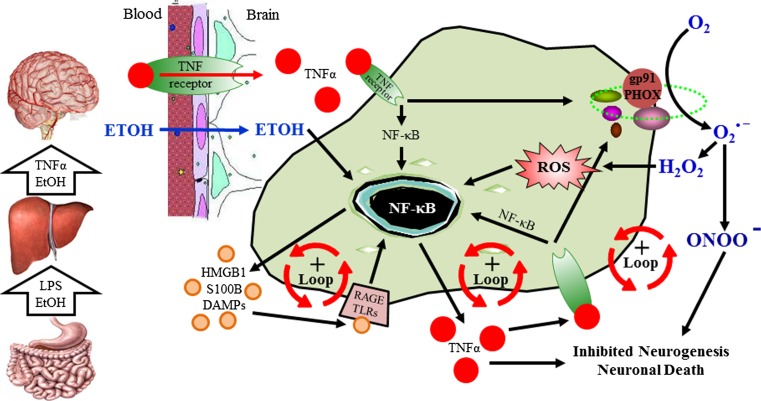
“Proinflammatory cytokines in the blood are transported across the blood–brain barrier (Banks and Erickson 2010; Qin et al. 2007) such that both cytokines and alcohol enter the brain where they induce neuroimmune activation.”
BackgroundInfluentialSelf-citationFunction and regulation of CREB family transcription factors in the nervous system
Lonze, B. E., & Ginty, D. D. (2002) · Neuron · doi:10.1016/s0896-6273(02)00828-0 · Cited by 2,127 · cited 2×
“(CREB) and many of its target genes, including neuropeptide Y (NPY) and brain-derived neurotrophic factor (BDNF), promote neuronal survival and protect neurons from excitotoxicity and apoptosis (Lonze and Ginty 2002).”
BackgroundHMGB1 and RAGE in Inflammation and Cancer
Sims, G. P., Rowe, D. C., Rietdijk, S. T., Herbst, R., & Coyle, A. J. (2010) · Annual Review of Immunology · doi:10.1146/annurev.immunol.021908.132603 · Cited by 1,436 · cited 4×
“2006]) that activate gut innate immune signaling through disruption of gut tight junctions that allows the gut microbiome bacteria and their endotoxins to enter portal circulation leading to the liver inducing an innate immune response in blood (Sims et al. 2010).”
BackgroundInfluentialNew regulators of NF-κB in inflammation
Ghosh, S., & Hayden, M. S. (2008) · Nature Reviews Immunology · doi:10.1038/nri2423 · Cited by 1,334
Microglia: new roles for the synaptic stripper
Kettenmann, H., Kirchhoff, F., & Verkhratsky, A. (2013) · Neuron · doi:10.1016/j.neuron.2012.12.023 · Cited by 1,173 · cited 1×
“In the brain, microglia constitutively express Toll-like receptor (TLR) 4 and other innate immune receptors that are responsive to proinflammatory signals like high-mobility group box 1 (HMGB1) but are also responsive to neurotransmitters (Kettenmann et al. 2013).”
BackgroundViviani, B., Bartesaghi, S., Gardoni, F., Vezzani, A., Behrens, M. M., Bartfai, T., Binaglia, M., Corsini, E., Di Luca, M., Galli, C. L., et al. (2003) · The Journal of Neuroscience · doi:10.1523/jneurosci.23-25-08692.2003 · Cited by 893 · cited 2×
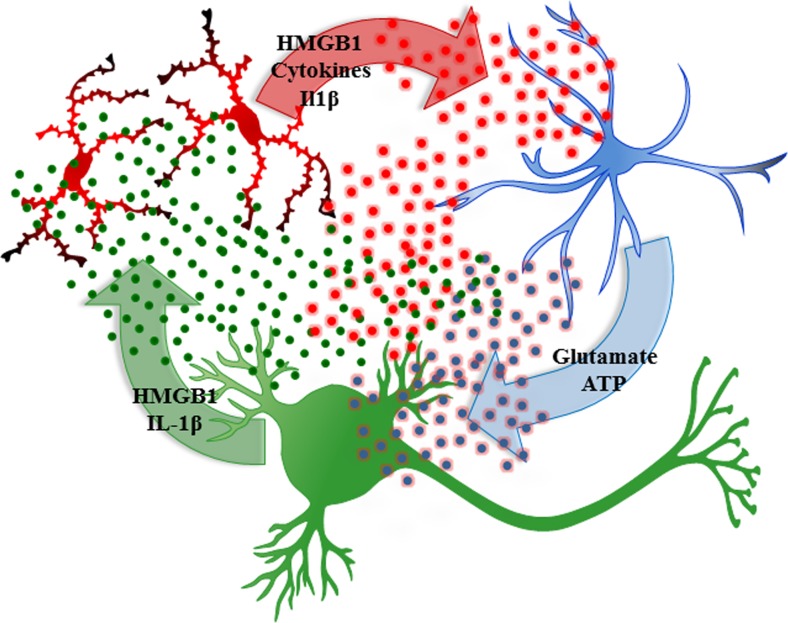
“Both HMGB1TLR4 signaling (Balosso et al. 2014) and IL1β-IL1R signaling (Viviani et al. 2003) have been shown to increase NMDA receptor-mediated calcium flux, neuronal excitability, and excitotoxicity through activation of kinase cascades.”
BackgroundHeterogeneity of Microglial Activation in the Innate Immune Response in the Brain
Colton, C. A. (2009) · Journal of Neuroimmune Pharmacology · doi:10.1007/s11481-009-9164-4 · Cited by 877
Raivich, G., Bohatschek, M., Kloss, C. U. A., Werner, A., Jones, L. L., & Kreutzberg, G. W. (1999) · Brain Research Reviews · doi:10.1016/s0165-0173(99)00007-7 · Cited by 844
Maroso, M., Balosso, S., Ravizza, T., Liu, J., Aronica, E., Iyer, A. M., Rossetti, C., Molteni, M., Casalgrandi, M., Manfredi, A. A., et al. (2010) · Nature Medicine · doi:10.1038/nm.2127 · Cited by 842
Functional requirement for class I MHC in CNS development and plasticity
Huh, G. S., Boulanger, L. M., Du, H., Riquelme, P. A., Brotz, T. M., & Shatz, C. J. (2000) · Science · doi:10.1126/science.290.5499.2155 · Cited by 828 · cited 1×
“Indeed, recent studies find that MHC molecules contribute not only to most neurodegenerative diseases (Gage 2002; Glass et al. 2010) as well as alcohol and drug dependence (Crews 2012) but are also critically involved in brain development (Huh et al. 2000).”
BackgroundNeurogenesis in the Adult Brain
Gage, F. H. (2002) · The Journal of Neuroscience · doi:10.1523/jneurosci.22-03-00612.2002 · Cited by 803
Harrison, N. A., Brydon, L., Walker, C., Gray, M. A., Steptoe, A., & Critchley, H. D. (2009) · Biological Psychiatry · doi:10.1016/j.biopsych.2009.03.015 · Cited by 756
Mutually exclusive redox forms of HMGB1 promote cell recruitment or proinflammatory cytokine release
Venereau, E., Casalgrandi, M., Schiraldi, M., Antoine, D. J., Cattaneo, A., De Marchis, F., Liu, J., Antonelli, A., Preti, A., Raeli, L., et al. (2012) · Journal of Experimental Medicine · doi:10.1084/jem.20120189 · Cited by 720 · cited 3×
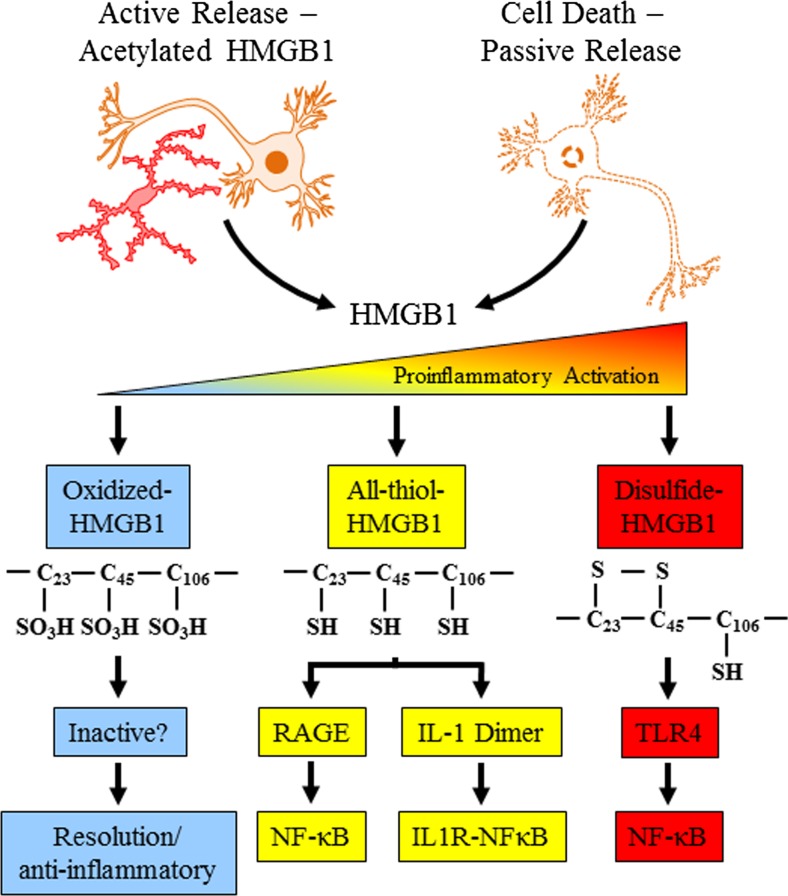
“2014) and also dimerizes with proinflammatory molecules (Tang et al. 2012; Venereau et al. 2012), such as IL-1β (Wahamaa et al.”
BackgroundPreparing for the Next Pandemic
Osterholm, M. T. (2005) · New England Journal of Medicine · doi:10.1056/nejmp058068 · Cited by 651
Transcriptional regulation via the NF-κB signaling module
Hoffmann, A., Natoli, G., & Ghosh, G. (2006) · Oncogene · doi:10.1038/sj.onc.1209933 · Cited by 629
Graeber, M. B. (2010) · Science · doi:10.1126/science.1190929 · Cited by 608 · cited 1×
“Although microglia are unique tissuespecific brain monocyte-like cells, similar to all monocytes, microglia undergo morphological changes that characterize stages of activation (Graeber 2010) (Fig.”
BackgroundCytokine-to-brain communication: A review & analysis of alternative mechanisms
Watkins, L. R., Maier, S. F., & Goehler, L. E. (1995) · Life Sciences · doi:10.1016/0024-3205(95)02047-m · Cited by 597 · cited 2×
“2007]) and also stimulate endothelial cells to release cytokines in brain (Watkins et al. 1995) (see Fig.”
BackgroundPivotal role of TLR4 receptors in alcohol-induced neuroinflammation and brain damage
Alfonso-Loeches, S., Pascual-Lucas, M., Blanco, A. M., Sanchez-Vera, I., & Guerri, C. (2010) · Journal of Neuroscience · doi:10.1523/jneurosci.0976-10.2010 · Cited by 579 · cited 6×
“More recent studies by Guerri’s laboratory found that TLR4 is also integral to ethanolinduced cortical neuronal death (Alfonso-Loeches et al. 2010), dopamine release (Pascual et al.”
BackgroundInfluentialKim, J.-B., Sig Choi, J., Yu, Y.-M., Nam, K., Piao, C.-S., Kim, S.-W., Lee, M.-H., Han, P.-L., Park, J.-S., & Lee, J.-K. (2006) · Journal of Neuroscience · doi:10.1523/jneurosci.3815-05.2006 · Cited by 579
Mechanisms of Neurodegeneration and Regeneration in Alcoholism
Crews, F. T., & Nixon, K. (2009) · Alcohol and Alcoholism · doi:10.1093/alcalc/agn079 · Cited by 571
Self-citationQin, L., He, J., Hanes, R. N., Pluzarev, O., Hong, J.-S., & Crews, F. T. (2008) · Journal of Neuroinflammation · doi:10.1186/1742-2094-5-10 · Cited by 532
Self-citationThe blood-brain barrier and immune function and dysfunction
Banks, W. A., & Erickson, M. A. (2010) · Neurobiology of Disease · doi:10.1016/j.nbd.2009.07.031 · Cited by 523 · cited 3×
“Proinflammatory cytokines in the blood are transported across the blood–brain barrier (Banks and Erickson 2010; Qin et al. 2007) such that both cytokines and alcohol enter the brain where they induce neuroimmune activation.”
BackgroundIncreased MCP-1 and microglia in various regions of the human alcoholic brain
He, J., & Crews, F. T. (2008) · Experimental Neurology · doi:10.1016/j.expneurol.2007.11.017 · Cited by 513
Self-citationHMGB1 as a Late Mediator of Lethal Systemic Inflammation
WANG, H., YANG, H., CZURA, C. J., SAMA, A. E., & TRACEY, K. J. (2001) · American Journal of Respiratory and Critical Care Medicine · doi:10.1164/ajrccm.164.10.2106117 · Cited by 490
Parvathenani, L. K., Tertyshnikova, S., Greco, C. R., Roberts, S. B., Robertson, B., & Posmantur, R. (2003) · Journal of Biological Chemistry · doi:10.1074/jbc.m209478200 · Cited by 488 · cited 2×
“dicates that stimulation of P2X7Rs mediate ATP-induced apoptosis through microglial production of superoxide (Parvathenani et al. 2003; Raouf et al. 2007).”
BackgroundExtracellular ATP Triggers Tumor Necrosis Factor‐α Release from Rat Microglia
Hide, I., Tanaka, M., Inoue, A., Nakajima, K., Kohsaka, S., Inoue, K., & Nakata, Y. (2000) · Journal of Neurochemistry · doi:10.1046/j.1471-4159.2000.0750965.x · Cited by 447
Pattern of Motor and Cognitive Deficits in Detoxified Alcoholic Men
Sullivan, E. V., Rosenbloom, M. J., & Pfefferbaum, A. (2000) · Alcoholism: Clinical and Experimental Research · doi:10.1097/00000374-200005000-00005 · Cited by 442
Toll-like receptors in neurodegeneration
Okun, E., Griffioen, K. J., Lathia, J. D., Tang, S.-C., Mattson, M. P., & Arumugam, T. V. (2009) · Brain Research Reviews · doi:10.1016/j.brainresrev.2008.09.001 · Cited by 429
Pfefferbaum, A., Sullivan, E. V., Mathalon, D. H., Shear, P. K., Rosenbloom, M. J., & Lim, K. O. (1995) · Alcoholism: Clinical and Experimental Research · doi:10.1111/j.1530-0277.1995.tb01598.x · Cited by 421
Zou, J. Y., & Crews, F. T. (2005) · Brain Research · doi:10.1016/j.brainres.2004.11.014 · Cited by 410
Self-citationCrews, F. T., Bechara, R., Brown, L. A., Guidot, D. M., Mandrekar, P., Oak, S., Qin, L., Szabo, G., Wheeler, M., & Zou, J. (2006) · Alcoholism: Clinical and Experimental Research · doi:10.1111/j.1530-0277.2006.00084.x · Cited by 406
Self-citationA Recent Perspective on Alcohol, Immunity, and Host Defense
Szabo, G., & Mandrekar, P. (2009) · Alcoholism: Clinical and Experimental Research · doi:10.1111/j.1530-0277.2008.00842.x · Cited by 387 · cited 1×
“Initial studies of alcohol and innate immune responses were confounded by the ethanol blockade of LPS-TLR4 signaling in monocytes and possibly other immune cells (Crews et al. 2006, 2011; Szabo and Mandrekar 2009).”
BackgroundCritical role of TLR4 response in the activation of microglia induced by ethanol
Fernandez-Lizarbe, S., Pascual, M., & Guerri, C. (2009) · The Journal of Immunology · doi:10.4049/jimmunol.0803590 · Cited by 373 · cited 7×
“…within and across cells by induction of TLRs and cytokine receptors, many belonging to the IL-1β receptor family that activate kinase cascades that converge on NF-κB (Blanco and Guerri 2007; Blanco et al. 2004, 2005; Fernandez-Lizarbe et al. 2009, 2013; Pascual et al. 2011b; Valles et al. 2004).”
BackgroundInfluentialToward understanding the genetics of alcohol drinking through transcriptome meta-analysis
Mulligan, M. K., Ponomarev, I., Hitzemann, R. J., Belknap, J. K., Tabakoff, B., Harris, R. A., Crabbe, J. C., Blednov, Y. A., Grahame, N. J., Phillips, T. J., et al. (2006) · Proceedings of the National Academy of Sciences · doi:10.1073/pnas.0510188103 · Cited by 347
Guerri, C., & Pascual, M. (2010) · Alcohol · doi:10.1016/j.alcohol.2009.10.003 · Cited by 347
Neural Origins of Human Sickness in Interoceptive Responses to Inflammation
Harrison, N. A., Brydon, L., Walker, C., Gray, M. A., Steptoe, A., Dolan, R. J., & Critchley, H. D. (2009) · Biological Psychiatry · doi:10.1016/j.biopsych.2009.03.007 · Cited by 345 · cited 7×
“Ethanol induces IL-1β and IL-6 as well as transforming growth factor-β1 (TGF-β1; Alfonso-Loeches et al. 2010; Chen et al. 2006).”
BackgroundInfluentialPascual, M., Boix, J., Felipo, V., & Guerri, C. (2009) · Journal of Neurochemistry · doi:10.1111/j.1471-4159.2008.05835.x · Cited by 317
Induction of innate immune genes in brain create the neurobiology of addiction
Crews, F. T., Zou, J., & Qin, L. (2011) · Brain, Behavior, and Immunity · doi:10.1016/j.bbi.2011.03.003 · Cited by 313
Self-citationAcute Binge Drinking Increases Serum Endotoxin and Bacterial DNA Levels in Healthy Individuals
Bala, S., Marcos, M., Gattu, A., Catalano, D., & Szabo, G. (2014) · PLoS ONE · doi:10.1371/journal.pone.0096864 · Cited by 311 · cited 4×
“However, in healthy adults, an acute alcohol binge dose also increases blood cytokines (Bala et al. 2014), and in human alcoholics without liver disease, gut permeability is increased during active drinking with increased blood endotoxin and proinflammatory cytokines (Leclercq et al.”
BackgroundInfluentialLeclercq, S., Cani, P. D., Neyrinck, A. M., Stärkel, P., Jamar, F., Mikolajczak, M., Delzenne, N. M., & de Timary, P. (2012) · Brain, Behavior, and Immunity · doi:10.1016/j.bbi.2012.04.001 · Cited by 310
Crews, F. T., Qin, L., Sheedy, D., Vetreno, R. P., & Zou, J. (2013) · Biological Psychiatry · doi:10.1016/j.biopsych.2012.09.030 · Cited by 294
Self-citationQin, L., & Crews, F. T. (2012) · Journal of Neuroinflammation · doi:10.1186/1742-2094-9-5 · Cited by 290 · cited 6×
“For instance, Qin and Crews (2012) found that mice exposed to chronic 10-day ethanol treatment (5.0 g/kg, i.g.) evidence increased expression of NADPH oxidase (an enzyme that produces ROS), O2 −, microglial activation, and cell death in cortical and hippocampal brain regions.”
BackgroundInfluentialSelf-citationSullivan, E. V., Rosenbloom, M. J., Lim, K. O., & Pfefferbaum, A. (2000) · Neuropsychology · doi:10.1037//0894-4105.14.2.178 · Cited by 286
ATP-mediated cytotoxicity in microglial cells
Ferrari, D., Chiozzi, P., Falzoni, S., Dal Susino, M., Collo, G., Buell, G., & Di Virgilio, F. (1997) · Neuropharmacology · doi:10.1016/s0028-3908(97)00137-8 · Cited by 275
Vallés, S. L., Blanco, A. M., Pascual, M., & Guerri, C. (2004) · Brain Pathology · doi:10.1111/j.1750-3639.2004.tb00079.x · Cited by 271 · cited 4×
“…that ethanol treatment induces neuroimmune genes in microglia and astrocyte cultures as well as in vivo in mice but not in transgenic cells or mice that lack TLR4 receptors (Alfonso-Loeches et al. 2010; Blanco et al. 2005; Fernandez-Lizarbe et al. 2009; Pascual et al. 2011a; Valles et al. 2004).”
BackgroundInfluentialQin, L., Liu, Y., Hong, J., & Crews, F. T. (2013) · Glia · doi:10.1002/glia.22479 · Cited by 271 · cited 8×
“Studies in post-mortem human alcoholic brain also find increased expression of HMGB1, TLR2, TLR3, and TLR4 (Crews et al. 2013).”
BackgroundInfluentialSelf-citationBlanco, A. M., Vallés, S. L., Pascual, M., & Guerri, C. (2005) · The Journal of Immunology · doi:10.4049/jimmunol.175.10.6893 · Cited by 258
Molecular and behavioral aspects of the actions of alcohol on the adult and developing brain
Alfonso-Loeches, S., & Guerri, C. (2011) · Critical Reviews in Clinical Laboratory Sciences · doi:10.3109/10408363.2011.580567 · Cited by 254 · cited 10×
“However, TLRs and many cytokine receptors are within the IL1-receptor family and share kinase signaling cascades in the brain and glial cells that all converge upon NF-κB (Blanco et al. 2005, 2008) confounding which signals might be first.”
BackgroundInfluentialGrant, B. F. (1998) · PubMed Central · Cited by 253
The role of the purinergic P2X7 receptor in inflammation
Lister, M. F., Sharkey, J., Sawatzky, D. A., Hodgkiss, J. P., Davidson, D. J., Rossi, A. G., & Finlayson, K. (2007) · Journal of Inflammation · doi:10.1186/1476-9255-4-5 · Cited by 253
Blednov, Y. A., Ponomarev, I., Geil, C., Bergeson, S., Koob, G. F., & Harris, R. A. (2012) · Addiction Biology · doi:10.1111/j.1369-1600.2010.00284.x · Cited by 251
Ferrier, L., Bérard, F., Debrauwer, L., Chabo, C., Langella, P., Buéno, L., & Fioramonti, J. (2006) · The American Journal of Pathology · doi:10.2353/ajpath.2006.050617 · Cited by 247
Marshall, S. A., McClain, J. A., Kelso, M. L., Hopkins, D. M., Pauly, J. R., & Nixon, K. (2013) · Neurobiology of Disease · doi:10.1016/j.nbd.2012.12.016 · Cited by 244
Blednov, Y. A., Benavidez, J. M., Geil, C., Perra, S., Morikawa, H., & Harris, R. A. (2011) · Brain, Behavior, and Immunity · doi:10.1016/j.bbi.2011.01.008 · Cited by 239
Innate immunity in alcoholic liver disease
Gao, B., Seki, E., Brenner, D. A., Friedman, S., Cohen, J. I., Nagy, L., Szabo, G., & Zakhari, S. (2011) · American Journal of Physiology-Gastrointestinal and Liver Physiology · doi:10.1152/ajpgi.00537.2010 · Cited by 230
Ethanol Increases Cytochrome P4502E1 and Induces Oxidative Stress in Astrocytes
Montoliu, C., Sancho‐Tello, M., Azorin, I., Burgal, M., Vallés, S., Renau‐Piqueras, J., & Guerri, C. (1995) · Journal of Neurochemistry · doi:10.1046/j.1471-4159.1995.65062561.x · Cited by 218
Pascual, M., Baliño, P., Alfonso-Loeches, S., Aragón, C. M. G., & Guerri, C. (2011) · Brain, Behavior, and Immunity · doi:10.1016/j.bbi.2011.02.012 · Cited by 213
HMGB1 Mediates Cognitive Impairment in Sepsis Survivors
Chavan, S. S., Huerta, P. T., Robbiati, S., Valdes-Ferrer, S. I., Ochani, M., Dancho, M., Frankfurt, M., Volpe, B. T., Tracey, K. J., & Diamond, B. (2012) · Molecular Medicine · doi:10.2119/molmed.2012.00195 · Cited by 199
Neuroimmune signaling: a key component of alcohol abuse
Mayfield, J., Ferguson, L., & Harris, R. A. (2013) · Current Opinion in Neurobiology · doi:10.1016/j.conb.2013.01.024 · Cited by 193
Vetreno, R. P., & Crews, F. T. (2012) · Neuroscience · doi:10.1016/j.neuroscience.2012.08.046 · Cited by 183 · cited 4×
“Data are adapted from Vetreno and Crews (2012) and Vetreno et al. (2013) are decreased in the rat frontal cortex following a 24-h withdrawal from chronic ethanol exposure (Pandey et al. 1999, 2001).”
BackgroundInfluentialSelf-citationEthanol induces TLR 4/TLR 2 association, triggering an inflammatory response in microglial cells
Fernandez‐Lizarbe, S., Montesinos, J., & Guerri, C. (2013) · Journal of Neurochemistry · doi:10.1111/jnc.12276 · Cited by 182
Amphoterin as an extracellular regulator of cell motility: from discovery to disease
Huttunen, H. J., & Rauvala, H. (2004) · Journal of Internal Medicine · doi:10.1111/j.1365-2796.2003.01301.x · Cited by 173
Zhao, Y., Wang, F., Fan, Y., Ping, G.-F., Yang, J., & Wu, C. (2012) · Behavioural Brain Research · doi:10.1016/j.bbr.2012.08.052 · Cited by 171
Beynon, S. B., & Walker, F. R. (2012) · Neuroscience · doi:10.1016/j.neuroscience.2012.07.029 · Cited by 169
Zou, J. Y., & Crews, F. T. (2014) · PLoS ONE · doi:10.1371/journal.pone.0087915 · Cited by 169
Self-citationMaroso, M., Balosso, S., Ravizza, T., Liu, J., Bianchi, M. E., & Vezzani, A. (2011) · Journal of Internal Medicine · doi:10.1111/j.1365-2796.2011.02431.x · Cited by 165
Zou, J., & Crews, F. (2006) · Cellular and Molecular Neurobiology · doi:10.1007/s10571-006-9045-9 · Cited by 164
Self-citationBalosso, S., Liu, J., Bianchi, M. E., & Vezzani, A. (2014) · Antioxidants & Redox Signaling · doi:10.1089/ars.2013.5349 · Cited by 161
High Mobility Group Box-1 (HMGB1) Participates in the Pathogenesis of Alcoholic Liver Disease (ALD)
Ge, X., Antoine, D. J., Lu, Y., Arriazu, E., Leung, T.-M., Klepper, A. L., Branch, A. D., Fiel, M. I., & Nieto, N. (2014) · Journal of Biological Chemistry · doi:10.1074/jbc.m114.552141 · Cited by 160
Neuroimmune Basis of Alcoholic Brain Damage
Crews, F. T., & Vetreno, R. P. (2014) · International Review of Neurobiology · doi:10.1016/b978-0-12-801284-0.00010-5 · Cited by 160
Self-citationZou, J., & Crews, F. (2010) · Alcoholism: Clinical and Experimental Research · doi:10.1111/j.1530-0277.2010.01150.x · Cited by 159
Self-citationEthanol tolerance and synaptic plasticity
Chandler, L. J., Harris, R. A., & Crews, F. T. (1998) · Trends in Pharmacological Sciences · doi:10.1016/s0165-6147(98)01268-1 · Cited by 154
Self-citationLiu, J., Yang, A. R., Kelly, T., Puche, A., Esoga, C., June, H. L., Elnabawi, A., Merchenthaler, I., Sieghart, W., June, H. L., et al. (2011) · Proceedings of the National Academy of Sciences · doi:10.1073/pnas.1019020108 · Cited by 152
Perturbation of chemokine networks by gene deletion alters the reinforcing actions of ethanol
BLEDNOV, Y., BERGESON, S., WALKER, D., FERREIRA, V, KUZIEL, W., & HARRIS, R. (2005) · Behavioural Brain Research · doi:10.1016/j.bbr.2005.06.026 · Cited by 149 · cited 1×
“Transgenic knock down of certain neuroimmune genes in mice (Blednov et al. 2005, 2012) and targeted disruption of TLR4 in the central amygdala (Liu et al. 2011) reduced alcohol consumption.”
BackgroundAlcohol‐responsive genes in the frontal cortex and nucleus accumbens of human alcoholics
Flatscher‐Bader, T., van der Brug, M., Hwang, J. W., Gochee, P. A., Matsumoto, I., Niwa, S., & Wilce, P. A. (2005) · Journal of Neurochemistry · doi:10.1111/j.1471-4159.2004.03021.x · Cited by 147
Guadagno, J., Xu, X., Karajgikar, M., Brown, A., & Cregan, S. P. (2013) · Cell Death & Disease · doi:10.1038/cddis.2013.59 · Cited by 141
Alcohol‐responsive genes in the frontal cortex and nucleus accumbens of human alcoholics
Flatscher‐Bader, T., Van Der Brug, M., W. Hwang, J., Gochee, P., Matsumoto, I., Niwa, S., & Wilce, P. (2005) · Journal of Neurochemistry · doi:10.1111/j.1471-4159.2005.03282.x · Cited by 139
Bell, R. L., Lopez, M. F., Cui, C., Egli, M., Johnson, K. W., Franklin, K. M., & Becker, H. C. (2015) · Addiction Biology · doi:10.1111/adb.12106 · Cited by 138
Wähämaa, H., Schierbeck, H., Hreggvidsdottir, H. S., Palmblad, K., Aveberger, A.-C., Andersson, U., & Harris, H. E. (2011) · Arthritis Research & Therapy · doi:10.1186/ar3450 · Cited by 137
Vetreno, R. P., Qin, L., & Crews, F. T. (2013) · Neurobiology of Disease · doi:10.1016/j.nbd.2013.07.002 · Cited by 132
Self-citationInflammasome-IL-1β Signaling Mediates Ethanol Inhibition of Hippocampal Neurogenesis
Zou, J., & Crews, F. T. (2012) · Frontiers in Neuroscience · doi:10.3389/fnins.2012.00077 · Cited by 126
Self-citationSzabo, G., Mandrekar, P., & Catalano, D. (1995) · Journal of Leukocyte Biology · doi:10.1002/jlb.58.3.342 · Cited by 121
Toll‐like receptor 4 participates in the myelin disruptions associated with chronic alcohol abuse
Alfonso‐Loeches, S., Pascual, M., Gómez‐Pinedo, U., Pascual‐Lucas, M., Renau‐Piqueras, J., & Guerri, C. (2012) · Glia · doi:10.1002/glia.22327 · Cited by 117
Differential regulation of microglial P2X4 and P2X7 ATP receptors following LPS-induced activation
Raouf, R., Chabot‐Doré, A., Ase, A. R., Blais, D., & Séguéla, P. (2007) · Neuropharmacology · doi:10.1016/j.neuropharm.2007.06.010 · Cited by 117
Schwarz, J. M., & Bilbo, S. D. (2013) · The Journal of Neuroscience · doi:10.1523/jneurosci.2516-12.2013 · Cited by 115
Pandey, S. C., Roy, A., & Mittal, N. (2001) · Journal of Pharmacology and Experimental Therapeutics · doi:10.1016/s0022-3565(24)38827-5 · Cited by 113
A Janus Tale of Two Active High Mobility Group Box 1 (HMGB1) Redox States
Tang, D., Billiar, T. R., & Lotze, M. T. (2012) · Molecular Medicine · doi:10.2119/molmed.2012.00314 · Cited by 112 · cited 3×
“Disulfide-HMGB1 is a TLR4 agonist (Tang et al. 2012), and thiol-HMGB1 is an agonist at the receptor for advanced glycation end products (RAGE; Allette et al. 2014) and also dimerizes with proinflammatory molecules (Tang et al. 2012; Venereau et al. 2012), such as IL-1β (Wahamaa et al. 2011) that…”
BackgroundPandey, S. C., Zhang, D., Mittal, N., & Nayyar, D. (1999) · The Journal of Pharmacology and Experimental Therapeutics · doi:10.1016/s0022-3565(24)38032-2 · Cited by 107
Ethanol-induced iNOS and COX-2 expression in cultured astrocytes via NF-κB
Blanco, A. M., Pascual, M., Valles, S. L., & Guerri, C. (2004) · NeuroReport · doi:10.1097/00001756-200403220-00021 · Cited by 103
Differential microglial activation between acute stress and lipopolysaccharide treatment
Sugama, S., Takenouchi, T., Fujita, M., Conti, B., & Hashimoto, M. (2008) · Journal of Neuroimmunology · doi:10.1016/j.jneuroim.2008.11.007 · Cited by 101
Pruett, S. B., Zheng, Q., Fan, R., Matthews, K., & Schwab, C. L. (2004) · Alcohol · doi:10.1016/j.alcohol.2004.08.001 · Cited by 99
Alcohol Withdrawal Increases Neuropeptide Y Immunoreactivity in Rat Brain
Bison, S., & Crews, F. (2003) · Alcoholism: Clinical and Experimental Research · doi:10.1097/01.alc.0000075827.74538.fe · Cited by 99
Self-citationBlanco, A. M. (2007) · Frontiers in Bioscience · doi:10.2741/2259 · Cited by 97
Vetreno, R. P., Broadwater, M., Liu, W., Spear, L. P., & Crews, F. T. (2014) · PLoS ONE · doi:10.1371/journal.pone.0113421 · Cited by 97
Self-citationAllette, Y. M., Due, M. R., Wilson, S. M., Feldman, P., Ripsch, M. S., Khanna, R., & White, F. A. (2014) · Brain Behavior and Immunity · doi:10.1016/j.bbi.2014.06.199 · Cited by 95
Blanco, A. M., Perez‐Arago, A., Fernandez‐Lizarbe, S., & Guerri, C. (2008) · Journal of Neurochemistry · doi:10.1111/j.1471-4159.2008.05425.x · Cited by 92
Neurotoxicity by microglia: Mechanisms and potential therapeutic strategy
Takeuchi, H. (2010) · Clinical and Experimental Neuroimmunology · doi:10.1111/j.1759-1961.2009.00001.x · Cited by 85
Neurogenesis in the adult brain
石, 龍., 澤本, 和., Parent, J. M., & Álvarez-Buylla, A. (2011) · Springer eBooks · Cited by 85
Endotoxin induces a delayed loss of TH-IR neurons in substantia nigra and motor behavioral deficits
Liu, Y., Qin, L., Wilson, B., Wu, X., Qian, L., Granholm, A.-C., Crews, F. T., & Hong, J.-S. (2008) · NeuroToxicology · doi:10.1016/j.neuro.2008.02.014 · Cited by 84 · cited 3×
“However, females requiredmultiple monthly LPS treatments that after 7 and 20 months later showed an approximate 40 to 50 % loss of SN TH-IR DA neurons and reduced rotor-rod ability that was transiently restored by Ldopa/carbidopa treatment (Liu et al. 2008).”
BackgroundSelf-citationNeuroadaptations in Human Chronic Alcoholics: Dysregulation of the NF-κB System
Ökvist, A., Johansson, S., Kuzmin, A., Bazov, I., Merino-Martinez, R., Ponomarev, I., Mayfield, R. D., Harris, R. A., Sheedy, D., Garrick, T., et al. (2007) · PLoS ONE · doi:10.1371/journal.pone.0000930 · Cited by 84 · cited 3×
“…analysis of gene expression in post-mortem alcoholic prefrontal cortex found 479 transcripts with NF-κB–DNA binding sites that were generally upregulated, with analysis of NF-κB subunit proteins indicating NF-κB p50 was the dominant subunit expressed in human alcoholic brain (Okvist et al. 2007).”
BackgroundMethodInfluentialOsterndorff-Kahanek, E., Ponomarev, I., Blednov, Y. A., & Harris, R. A. (2013) · PLoS ONE · doi:10.1371/journal.pone.0059870 · Cited by 82
Whitman, B. A., Knapp, D. J., Werner, D. F., Crews, F. T., & Breese, G. R. (2013) · Alcoholism: Clinical and Experimental Research · doi:10.1111/acer.12189 · Cited by 79
Self-citationEthanol Alters Trafficking and Functional N-Methyl-D-aspartate Receptor NR2 Subunit Ratio via H-Ras
Suvarna, N., Borgland, S. L., Wang, J., Phamluong, K., Auberson, Y. P., Bonci, A., & Ron, D. (2005) · Journal of Biological Chemistry · doi:10.1074/jbc.m504120200 · Cited by 78
Boyadjieva, N. I., & Sarkar, D. K. (2013) · Alcoholism Clinical and Experimental Research · doi:10.1111/acer.12104 · Cited by 77
Guerri, C., Montoliu, C., & Renau‐Piqueras, J. (1994) · Advances in experimental medicine and biology · doi:10.1007/978-1-4615-1833-4_20 · Cited by 74
Current hypotheses on the mechanisms of alcoholism
(2014) · Handbook of Clinical Neurology · doi:10.1016/b978-0-444-62619-6.00027-6 · Cited by 70
Self-citationBoyadjieva, N. I., & Sarkar, D. K. (2013) · Alcoholism: Clinical and Experimental Research · doi:10.1111/j.1530-0277.2012.01889.x · Cited by 65
Immune function genes, genetics, and the neurobiology of addiction
Crews, F. T. (2012) · Alcohol research · doi:10.35946/arcr.v34.3.11 · Cited by 64
Self-citationChandler, L. J., Guzman, N. J., Sumners, C., & Crews, F. T. (1994) · Journal of Pharmacology and Experimental Therapeutics · doi:10.1016/s0022-3565(25)22715-x · Cited by 62
Self-citationRole of TLR4 in ethanol effects on innate and adaptive immune responses in peritoneal macrophages
Pascual, M., Fernández‐Lizarbe, S., & Guerri, C. (2011) · Immunology & Cell Biology · doi:10.1038/icb.2010.163 · Cited by 60
INTERLEUKIN-1 GENE CLUSTER POLYMORPHISMS AND ALCOHOLISM IN SPANISH MEN
PASTOR, I. J., LASO, F. J., ROMERO, A., & GONZÁLEZ-SARMIENTO, R. (2005) · Alcohol and Alcoholism · doi:10.1093/alcalc/agh153 · Cited by 57
ATP‐P2X7receptor signaling controls basal and TNFα‐stimulated glial cell proliferation
Zou, J., Vetreno, R. P., & Crews, F. T. (2012) · Glia · doi:10.1002/glia.22302 · Cited by 52
Self-citationInterleukin-10 Gene Polymorphism is Associated with Alcoholism but not With Alcoholic Liver Disease
Marcos, M., Pastor, I., GonzAlez-Sarmiento, R., & Laso, F. J. (2008) · Alcohol and Alcoholism · doi:10.1093/alcalc/agn026 · Cited by 46
Chen, C. P., Kuhn, P. E., Chaturvedi, K., Boyadjieva, N. I., & Sarkar, D. K. (2005) · Molecular Pharmacology · doi:10.1124/mol.105.017004 · Cited by 44
Qin, L., & Crews, F. T. (2013) · Alcoholism Clinical and Experimental Research · doi:10.1111/acer.12272 · Cited by 34
Self-citationKuhn, P. E., & Sarkar, D. K. (2008) · Alcoholism Clinical and Experimental Research · doi:10.1111/j.1530-0277.2008.00627.x · Cited by 30
Cited by
Microglia in physiology and disease
Wolf, S. A., Boddeke, H. W. G. M., & Kettenmann, H. (2017) · Annual Review of Physiology · doi:10.1146/annurev-physiol-022516-034406 · Cited by 1,426
Byun, K., Yoo, Y., Son, M., Lee, J., Jeong, G.-B., Park, Y. M., Salekdeh, G. H., & Lee, B. (2017) · Pharmacology & Therapeutics · doi:10.1016/j.pharmthera.2017.02.030 · Cited by 357
“HMGB1 up-regulation leads to microglial activation in many diseases including alcoholic brain damage (Crews & Vetreno, 2014, 2016), stroke (Liesz et al., 2015; Xiong et al., 2016), spinal cord injury (SCI) (Kikuchi et al., 2011), AMI (Herzog et al., 2014) and acute lung injury (ALI) (Deng et al.,…”
Drug Addiction: Hyperkatifeia/Negative Reinforcement as a Framework for Medications Development
Koob, G. F. (2021) · Pharmacological Reviews · doi:10.1124/pharmrev.120.000083 · Cited by 337
Adolescent Alcohol Exposure Persistently Impacts Adult Neurobiology and Behavior
Crews, F. T., Vetreno, R. P., Broadwater, M. A., & Robinson, D. L. (2016) · Pharmacological Reviews · doi:10.1124/pr.115.012138 · Cited by 324
Self-citationThe role of neuroimmune signaling in alcoholism
Crews, F. T., Lawrimore, C. J., Walter, T. J., & Coleman, L. G. (2017) · Neuropharmacology · doi:10.1016/j.neuropharm.2017.01.031 · Cited by 321
“gene induction (Crews and Vetreno, 2016; He and Crews, 2008; Qin et al., 2008) that are linked to changes in executive function, reinforcement-reward and negative affect-craving-anxiety that promote alcohol abuse and addiction (Vetreno and Crews, 2014).”
Self-citation
Metadata
- Authors
- Crews, F. T., & Vetreno, R. P.
- Affiliations
- University of North Carolina at Chapel Hill (US)
- Corresponding author
- Crews, Fulton T.
- Venue
- Psychopharmacology
- Published
- 2015-03-20
- Volume
- 233
- Issue
- 9
- Pages
- 1543-1557
- ISSN
- 0033-3158 (ISSN-L)
- 1432-2072
- PMC
- PMC4828484
- OpenAlex
- W2048926737
- Cited by
- 232
- References
- 124
- Citations by year
- 2026: 15 · 2025: 18 · 2024: 19 · 2023: 26 · 2022: 18 · 2021: 19 · 2020: 26 · 2019: 21 · 2018: 25 · 2017: 25 · 2016: 18 · 2015: 1
- FWCI
- 1.83
- Type
- journal article
- Language
- en
- Open access
- hybrid
- doi.org
- Locations
- Psychopharmacology (publishedVersion, cc-by)
- PubMed Central (publishedVersion, cc-by)
- PubMed (publishedVersion)
- Carolina Digital Repository (University of North Carolina at Chapel Hill) (submittedVersion, other-oa)
- UNC Libraries
- Funders
- University of North Carolina at Chapel Hill
- National Institute on Alcohol Abuse and Alcoholism (P50AA011605, AA 11605, U24AA020022, U01AA020023, AA020023, L40 AA021590, AA 007573, F32AA021040, AA020022, AA020024, U24AA020024, U54AA019767, AA019767, P60AA011605, T32AA007573)
- Topics
- Life Sciences › Neuroscience › Neurology › Neuroinflammation and Neurodegeneration Mechanisms
- Life Sciences › Neuroscience › Biological Psychiatry › Tryptophan and brain disorders
- Health Sciences › Medicine › Pathology and Forensic Medicine › Alcohol Consumption and Health Effects
- Keywords
- alcoholism, high mobility group box 1, TLR4, NF-κB, activator protein-1, cytokines, excitotoxicity, orbitofrontal cortex, neurodegeneration, chronic alcohol consumption, age of onset of drinking, brain reward system
- MeSH terms
- Alcoholism, Humans, Psychoneuroimmunology, HMGB1 Protein, Toll-Like Receptors
About these checks
Registry, retraction, Cites and statistics results are computed, not judged, with one exception: a printed reference that no index lists is read once by a model before it counts as a citation error. Claims are extracted by a model and kept only when their quote appears verbatim in the text; each cited source is then checked, with a model’s help, for whether it says what the claim relies on. Those verdicts can be wrong — read the claim’s quote and the cited source before relying on one.
Statistics and arithmetic are recomputed, not judged.
Confidence bands are shown only for fields calibrated on our annotated test set. None is calibrated yet, so no band is shown.
What counts as a claim ›How we measure confidence ›How we check this ›
Are you an author, or do you see a problem with this page? Request a review
Data sources
Bibliographic data: Semantic Scholar, OpenAlex, Crossref.
Contains information from the Semantic Scholar Academic Graph Datasets, made available under the ODC Attribution License (ODC-BY 1.0).
Semantic Scholar’s data is described in: Kinney, R., et al. (2023). The Semantic Scholar Open Data Platform. arXiv:2301.10140.
