

Prebiotics, Bone and Mineral Metabolism
Open accessThe DOI matches its Crossref record; 130 of the 131 references it cites were found in a registry or an index.
Abstract
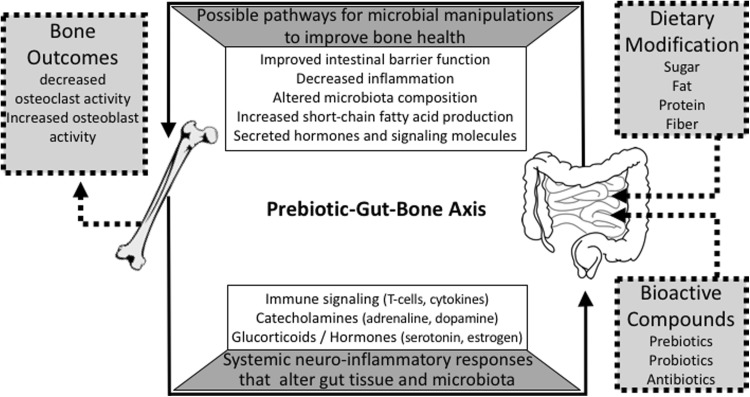
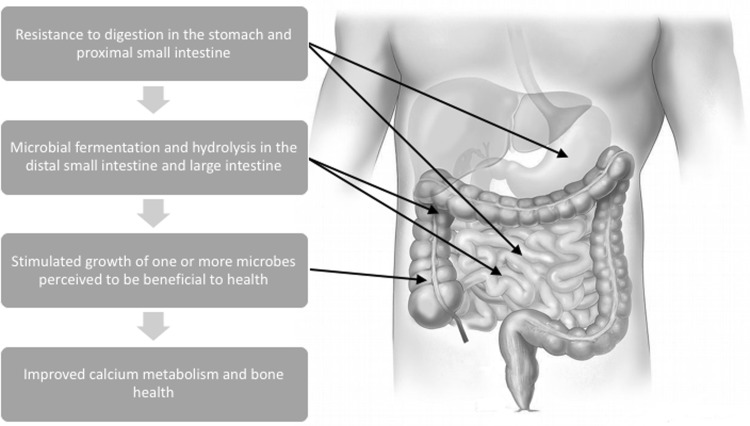
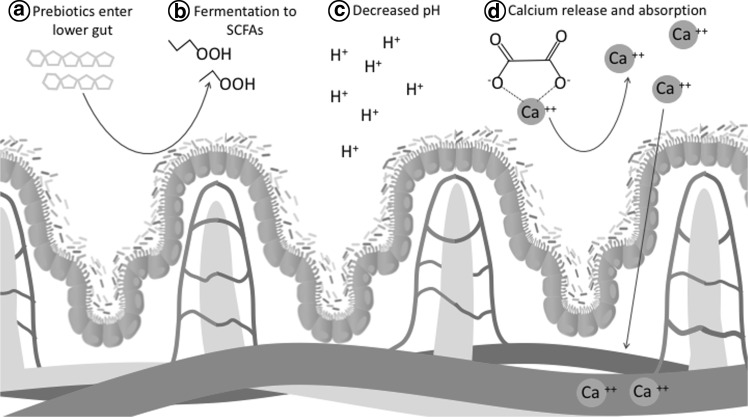
Increasing interest in functional foods has driven discovery in the area of bioactive compounds. Prebiotics are non-digestible carbohydrate compounds that, when consumed, elicit health benefits and aid in the prevention and treatment of chronic diseases. While prebiotics have been shown to improve a number of chronic, inflammatory conditions, growing evidence exists for prebiotic effects on calcium metabolism and bone health. These novel dietary fibers have been shown to increase calcium absorption in the lower intestines of both preclinical and human models. Rodent models have also been imperative for understanding prebiotic effects on bone mineral density and measures of skeletal strength. Although fewer data are available for humans, bone-related prebiotic effects exist across the lifecycle, suggesting benefits for attainment of peak bone mass during adolescence and minimized bone resorption among postmenopausal women. These effects are thought to occur through prebiotic-microbe interactions in the large intestine. Current prebiotic mechanisms for improved mineral absorption and skeletal health include alterations in gut microbiota composition, production of short-chain fatty acids, altered intestinal pH, biomarker modification, and immune system regulation. While the majority of available data support improved mineral bioavailability, emerging evidence suggests alternate microbial roles and the presence of an intricate gut-bone signaling axis. Overall, the current scientific literature supports prebiotic consumption as a cost-effective and sustainable approach for improved skeletal health and/or fracture prevention. The goal of this review is to discuss both foundational and recent research in the area of prebiotics, mineral metabolism, and bone health.
Overview
The claims and statistics of this paper haven’t been checked yet.
Free: it reads the open-access text and checks the first 5 claims that cite a source we can check. Create a free account to check every claim.
Integrity signals
Registry
Cites
Statistics
Figures
Verification
Claims the paper makes
The claims and statistics of this paper haven’t been checked yet.
Free: it reads the open-access text and checks the first 5 claims that cite a source we can check. Create a free account to check every claim.
Claims other papers make about this one
Each is checked against this paper’s own text: does it say what the citing paper says it does?
The source backs part of the claim, not all of it — or backs it for a different population, condition or comparison.
In the citing paper
“Several studies have reported an association of dysbiosis with chronic inflammation, which may in turn result in an association with bone diseases [129,132,215,216].”
From Bone diseases in patients with chronic liver disease (2019) · cites this paper as [132]
Experimental — accuracy not yet measured
Self-check
Percentages, sums and reported differences re-computed from the paper’s own numbers.
The self-check needs the paper’s full text.
Citations
Cites
A human gut microbial gene catalogue established by metagenomic sequencing
MetaHIT Consortium, Qin, J., Li, R., Raes, J., Arumugam, M., Burgdorf, K. S., Manichanh, C., Nielsen, T., Pons, N., Levenez, F., et al. (2010) · Nature · doi:10.1038/nature08821 · Cited by 11,624 · cited 1×
“Intestinal microbiota represent an immensely rich community of bacteria, fungi, viruses, and archaea that collectively contribute more than 3 million unique genes [70], the activities of which are farreaching as evidenced by the excretion of more than 200 microbially produced metabolites in urine [71].”
BackgroundDietary Modulation of the Human Colonic Microbiota: Introducing the Concept of Prebiotics
Gibson, G. R., & Roberfroid, M. B. (1995) · The Journal of Nutrition · doi:10.1093/jn/125.6.1401 · Cited by 7,667 · cited 1×
“Although prebiotics are classified under the umbrella of dietary fiber, the scientific concept of this more functional classification did not emerge until 1995 [10].”
BackgroundFiber and prebiotics: Mechanisms and health benefits
Slavin, J. (2013) · Nutrients · doi:10.3390/nu5041417 · Cited by 2,340 · cited 2×
“Beyond the compounds mentioned above, other functional fibers and prebiotics have been identified for their positive health effects [9, 14].”
BackgroundPrebiotic effects: metabolic and health benefits
Roberfroid, M., Gibson, G. R., Hoyles, L., McCartney, A. L., Rastall, R., Rowland, I., Wolvers, D., Watzl, B., Szajewska, H., Stahl, B., et al. (2010) · British Journal of Nutrition · doi:10.1017/s0007114510003363 · Cited by 2,085 · cited 4×
“Their effects on calcium absorption and bone mineral density have been reviewed [14, 15].”
BackgroundInfluentialThe microbiome and butyrate regulate energy metabolism and autophagy in the mammalian colon
Donohoe, D. R., Garge, N., Zhang, X., Sun, W., O'Connell, T. M., Bunger, M. K., & Bultman, S. J. (2011) · Cell Metabolism · doi:10.1016/j.cmet.2011.02.018 · Cited by 2,003 · cited 1×
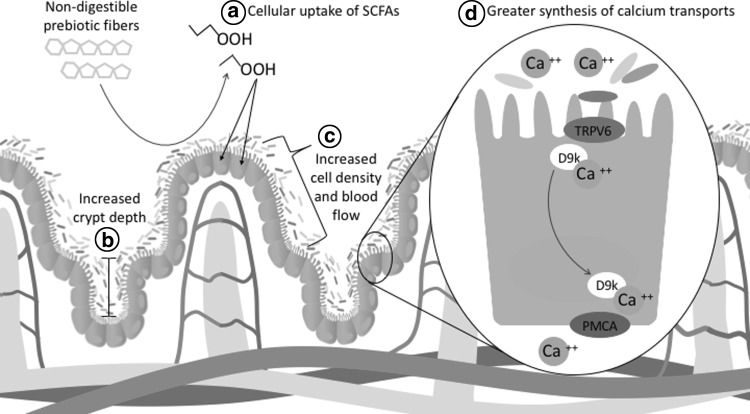
“A possible reason for these morphological changes is greater SCFA production, as butyrate is the preferred energy source for colonocytes [82].”
BackgroundInteractions between commensal intestinal bacteria and the immune system
Macpherson, A. J., & Harris, N. L. (2004) · Nature Reviews Immunology · doi:10.1038/nri1373 · Cited by 1,610 · cited 1×
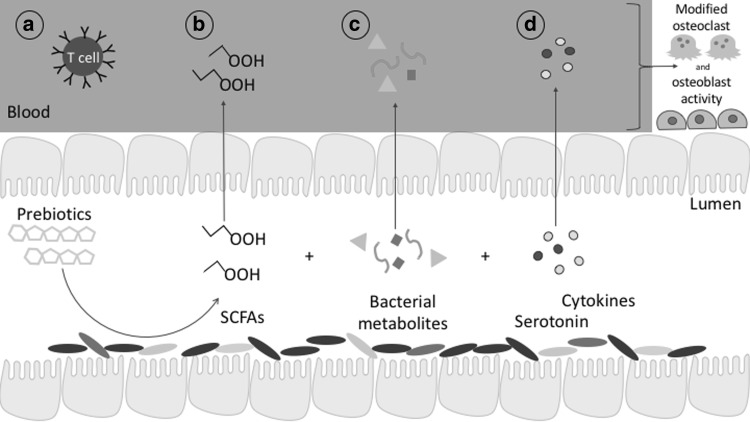
“Gut microbiota are believed to interact with the immune system as evidenced by germ-free mice presenting with reduced mucosal immune function and signaling [74, 86].”
BackgroundProbiotics, prebiotics and synbiotics- a review
Pandey, K. R., Naik, S. R., & Vakil, B. V. (2015) · Journal of Food Science and Technology · doi:10.1007/s13197-015-1921-1 · Cited by 1,291 · cited 1×
“Traditionally, the term ‘‘synbiotic’’ has been used to refer to the combination of prebiotics and probiotics which improve the viability of probiotics being consumed [45].”
BackgroundTowards a more comprehensive concept for prebiotics
Bindels, L. B., Delzenne, N. M., Cani, P. D., & Walter, J. (2015) · Nature Reviews Gastroenterology & Hepatology · doi:10.1038/nrgastro.2015.47 · Cited by 914 · cited 2×
“With rapid growth in the area of diet–gut microbiome interactions, a new definition has recently been proposed which challenges the idea that prebiotic effects must be selective or specific [8].”
BackgroundInulin-Type Fructans: Functional Food Ingredients
Roberfroid, M. B. (2007) · The Journal of Nutrition · doi:10.1093/jn/137.11.2493s · Cited by 878 · cited 1×
“Their effects on calcium absorption and bone mineral density have been reviewed [14, 15].”
BackgroundOn the presence of Inulin and Oligofructose as natural ingredients in the western diet
Van Loo, J., Coussement, P., De Leenheer, L., Hoebregs, H., & Smits, G. (1995) · Critical Reviews in Food Science and Nutrition · doi:10.1080/10408399509527714 · Cited by 836 · cited 1×
“Current prebiotic consumption in Western industrialized countries is quite low in comparison with estimated daily consumption ranging from 1 to 4 g in Americans and 3–11 g in Western Europeans [12].”
Background
Research works printed but not linked: 1
- Lugani Y Sooch S Xylitol, an emerging prebiotic: a review Int J Appl Pharm Biol Res 2017 2 67 73
Cited by
Gasaly, N., de Vos, P., & Hermoso, M. A. (2021) · Frontiers in Immunology · doi:10.3389/fimmu.2021.658354 · Cited by 578
“org 3 The human digestive system lacks enzymes to digest complex polysaccharides, such as pectins, xylan or celluloses, consequently reaching the colon with their intact structure, and subsequently fermented by GM bacteria (41, 42).”
BackgroundFunctions of Gut Microbiota Metabolites, Current Status and Future Perspectives
Liu, J., Tan, Y., Cheng, H., Zhang, D., Feng, W., & Peng, C. (2022) · Aging and disease · doi:10.14336/ad.2022.0104 · Cited by 529
“contents and changing the intestinal tissue morphology and transport proteins [82].”
BackgroundGut microbiota-derived short-chain fatty acids and their role in human health and disease
Mukhopadhya, I., & Louis, P. (2025) · Nature Reviews Microbiology · doi:10.1038/s41579-025-01183-w · Cited by 501
“In addition to providing energy to host tissues as discussed earlier, they are also implicated in aiding mineral absorption via several mechanisms of action, including a lowering of gut pH leading to enhanced mineral solubility, an increase in the intestinal surface area and regulatory effects 59 .”
Whole Fruits and Fruit Fiber Emerging Health Effects
Dreher, M. (2018) · Nutrients · doi:10.3390/nu10121833 · Cited by 370
Nutritional intake and bone health
Rizzoli, R., Biver, E., & Brennan-Speranza, T. C. (2021) · The Lancet Diabetes & Endocrinology · doi:10.1016/s2213-8587(21)00119-4 · Cited by 303
Metadata
- Authors
- Whisner, C. M., & Castillo, L. F.
- Affiliations
- Arizona State University (US)
- Corresponding author
- Whisner, Corrie M.
- Venue
- Calcified Tissue International
- Published
- 2017-10-27
- Volume
- 102
- Issue
- 4
- Pages
- 443-479
- ISSN
- 0171-967X (ISSN-L)
- 1432-0827
- PMC
- PMC5851694
- OpenAlex
- W2767047143
- Cited by
- 292
- References
- 131
- Citations by year
- 2026: 27 · 2025: 43 · 2024: 33 · 2023: 34 · 2022: 37 · 2021: 45 · 2020: 42 · 2019: 16 · 2018: 14
- FWCI
- 2.03
- Type
- journal article
- Language
- en
- Open access
- hybrid
- doi.org
- Locations
- Calcified Tissue International (publishedVersion, cc-by)
- PubMed Central (publishedVersion, cc-by)
- PubMed (publishedVersion)
- Funders
- National Institute of General Medical Sciences (UL1GM118970, TL4GM118971, RL5GM118969)
- Topics
- Health Sciences › Nursing › Nutrition and Dietetics › Microbial Metabolites in Food Biotechnology
- Health Sciences › Medicine › Orthopedics and Sports Medicine › Bone health and osteoporosis research
- Life Sciences › Biochemistry, Genetics and Molecular Biology › Molecular Biology › Gut microbiota and health
- Keywords
- prebiotics, bone health, mineral metabolism, calcium absorption, bone mineral density, gut microbiota, short-chain fatty acids, intestinal pH, peak bone mass, fracture prevention, gut-bone axis, dietary fiber, functional foods
- MeSH terms
- Gastrointestinal Microbiome, Animals, Bone and Bones, Dietary Fiber, Humans, Minerals, Bone Density, Prebiotics
About these checks
Registry, retraction, Cites and statistics results are computed, not judged, with one exception: a printed reference that no index lists is read once by a model before it counts as a citation error. Claims are extracted by a model and kept only when their quote appears verbatim in the text; each cited source is then checked, with a model’s help, for whether it says what the claim relies on. Those verdicts can be wrong — read the claim’s quote and the cited source before relying on one.
Statistics and arithmetic are recomputed, not judged.
Confidence bands are shown only for fields calibrated on our annotated test set. None is calibrated yet, so no band is shown.
What counts as a claim ›How we measure confidence ›How we check this ›
Are you an author, or do you see a problem with this page? Request a review
How to cite
Cite CoChat for the checks on this page, and the paper for its own findings.
- This page
- CoChat. (2026). Citation check: Prebiotics, Bone and Mineral Metabolism. https://app.cochat.ai/papers/10.1007/s00223-017-0339-3
- The paper
- Whisner, C. M., & Castillo, L. F. (2018). Prebiotics, Bone and Mineral Metabolism. Calcified Tissue International. https://doi.org/10.1007/s00223-017-0339-3
Data sources
Bibliographic data: Semantic Scholar, OpenAlex, Crossref.
Contains information from the Semantic Scholar Academic Graph Datasets, made available under the ODC Attribution License (ODC-BY 1.0).
Semantic Scholar’s data is described in: Kinney, R., et al. (2023). The Semantic Scholar Open Data Platform. arXiv:2301.10140.
