

An update on genetic frontotemporal dementia
Open accessThe DOI matches its Crossref record; 91 of the 91 references it cites were found in a registry or an index.
Abstract
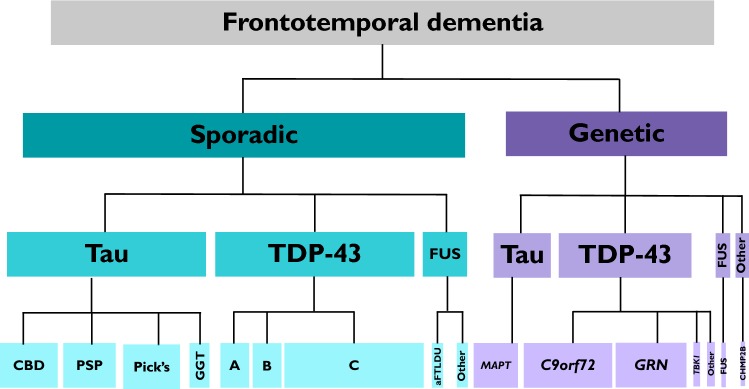
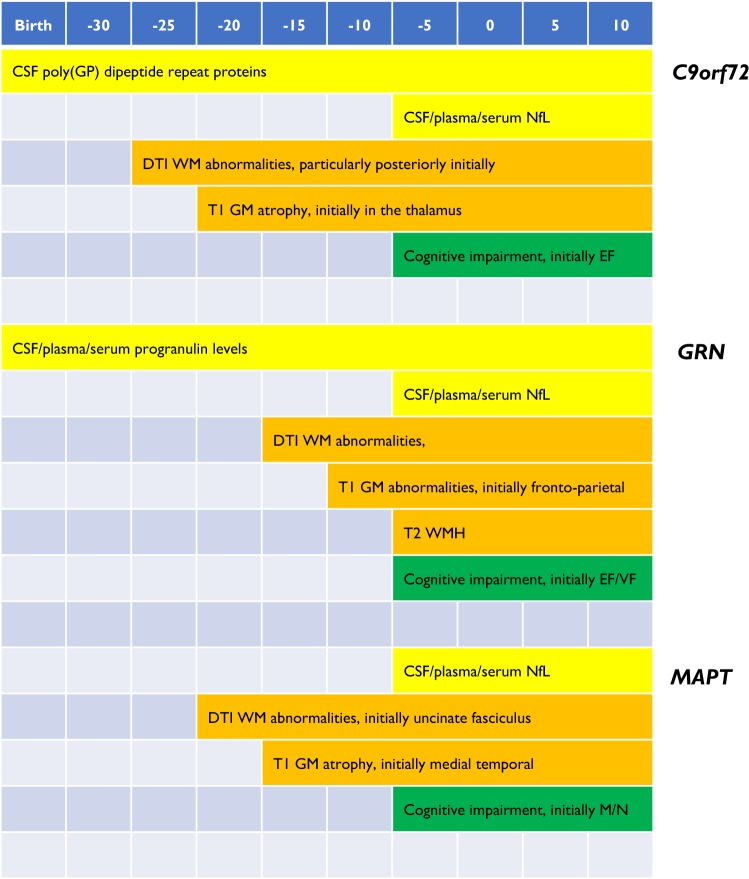
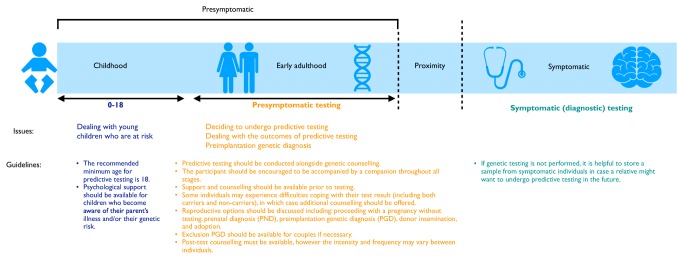
Frontotemporal dementia (FTD) is a highly heritable group of neurodegenerative disorders, with around 30% of patients having a strong family history. The majority of that heritability is accounted for by autosomal dominant mutations in the chromosome 9 open reading frame 72 (C9orf72), progranulin (GRN), and microtubule-associated protein tau (MAPT) genes, with mutations more rarely seen in a number of other genes. This review will discuss the recent updates in the field of genetic FTD. Age at symptom onset in genetic FTD is variable with recently identified genetic modifiers including TMEM106B (in GRN carriers particularly) and a polymorphism at a locus containing two overlapping genes LOC101929163 and C6orf10 (in C9orf72 carriers). Behavioural variant FTD (bvFTD) is the most common diagnosis in each of the genetic groups, although in C9orf72 carriers amyotrophic lateral sclerosis either alone, or with bvFTD, is also common. An atypical neuropsychiatric presentation is also seen in C9orf72 carriers and family members of carriers are at greater risk of psychiatric disorders including schizophrenia and autistic spectrum disorders. Large natural history studies of presymptomatic genetic FTD are now underway both in Europe/Canada (GENFI-the Genetic FTD Initiative) and in the US (ARTFL/LEFFTDS study), collaborating together under the banner of the FTD Prevention Initiative (FPI). These studies are taking forward the validation of cognitive, imaging and fluid biomarkers that aim to robustly measure disease onset, staging and progression in genetic FTD. Grey matter changes on MRI and hypometabolism on FDG-PET are seen at least 10 years before symptom onset with white matter abnormalities seen earlier, but the pattern and exact timing of changes differ between different genetic groups. In contrast, tau PET has yet to show promise in genetic FTD. Three key fluid biomarkers have been identified so far that are likely to be helpful in clinical trials-CSF or blood neurofilament light chain levels (in all groups), CSF or blood progranulin levels (in GRN carriers) and CSF poly(GP) dipeptide repeat protein levels (in C9orf72 carriers). Increased knowledge about genetic FTD has led to more clinical presymptomatic genetic testing but this has not yet been mirrored in the development of either an accepted FTD-specific testing protocol or provision of appropriate psychological support mechanisms for those living through the at-risk phase. This will become even more relevant as disease-modifying therapy trials start in each of the genetic groups over the next few years.
Overview
The claims and statistics of this paper haven’t been checked yet.
Free: it reads the open-access text and checks the first 5 claims that cite a source we can check. Create a free account to check every claim.
Integrity signals
Registry
Cites
Statistics
Figures
Verification
Claims the paper makes
The claims and statistics of this paper haven’t been checked yet.
Free: it reads the open-access text and checks the first 5 claims that cite a source we can check. Create a free account to check every claim.
Claims other papers make about this one
Each is checked against this paper’s own text: does it say what the citing paper says it does?
The source backs part of the claim, not all of it — or backs it for a different population, condition or comparison.
In the citing paper
“Known genetic modifiers of f-FTD disease progression were not included, such as specific mutations (for MAPT) and TMEM106B, a modifier of penetrance in GRN.2,40”
From Temporal order of clinical and biomarker changes in familial frontotemporal dementia (2022) · cites this paper as [2]
Experimental — accuracy not yet measuredThe cited source says what the claim attributes to it.
In the citing paper
“Approximately 20–30% of FTD is caused by autosomal dominant mutations (familial, or f-FTD), usually in one of three genes: chromosome 9 open reading frame 72 (C9orf72), progranulin (GRN), or microtubule-associated protein tau (MAPT).2”
From Temporal order of clinical and biomarker changes in familial frontotemporal dementia (2022) · cites this paper as [2]
The cited source says what the claim attributes to it.
In the citing paper
“Although the clinical manifestations of the f-FTD mutations are similar, the biology and neuropathology associated with C9orf72, GRN, and MAPT mutations are vastly different.2”
From Temporal order of clinical and biomarker changes in familial frontotemporal dementia (2022) · cites this paper as [2]
The cited source says what the claim attributes to it.
In the citing paper
“Mutations in genes such as microtubule-associated protein tau (MAPT), progranulin (GRN), and chromosome 9 open reading frame 72 (C9ORF72) represent the most common genetic cause of FTD [5].”
From A role for astrocytic miR-129-5p in frontotemporal dementia (2025) · cites this paper as [5]
In the citing paper
“since 70 % of bvFTD cases is non-genetic (Greaves and Rohrer, 2019)”
From The pursuit for markers of disease progression in behavioral variant frontotemporal dementia: a scoping review to optimize outcome measures for clinical trials (2024) · cites this paper as Greaves and Rohrer, 2019
Self-check
Percentages, sums and reported differences re-computed from the paper’s own numbers.
The self-check needs the paper’s full text.
Citations
Cites
Sensitivity of revised diagnostic criteria for the behavioural variant of frontotemporal dementia
Rascovsky, K., Hodges, J. R., Knopman, D., Mendez, M. F., Kramer, J. H., Neuhaus, J., van Swieten, J. C., Seelaar, H., Dopper, E. G. P., Onyike, C. U., et al. (2011) · Brain · doi:10.1093/brain/awr179 · Cited by 5,221
Self-citationClassification of primary progressive aphasia and its variants
Gorno-Tempini, M. L., Hillis, A. E., Weintraub, S., Kertesz, A., Mendez, M., Cappa, S. F., Ogar, J. M., Rohrer, J. D., Black, S., Boeve, B. F., et al. (2011) · Neurology · doi:10.1212/wnl.0b013e31821103e6 · Cited by 5,141
Self-citationClinical diagnosis of progressive supranuclear palsy: The movement disorder society criteria
Höglinger, G. U., Respondek, G., Stamelou, M., Kurz, C., Josephs, K. A., Lang, A. E., Mollenhauer, B., Müller, U., Nilsson, C., Whitwell, J. L., et al. (2017) · Movement Disorders · doi:10.1002/mds.26987 · Cited by 2,359
Criteria for the diagnosis of corticobasal degeneration
Armstrong, M. J., Litvan, I., Lang, A. E., Bak, T. H., Bhatia, K. P., Borroni, B., Boxer, A. L., Dickson, D. W., Grossman, M., Hallett, M., et al. (2013) · Neurology · doi:10.1212/wnl.0b013e31827f0fd1 · Cited by 1,904
Strong, M. J., Abrahams, S., Goldstein, L. H., Woolley, S., Mclaughlin, P., Snowden, J., Mioshi, E., Roberts-South, A., Benatar, M., HortobáGyi, T., et al. (2017) · Amyotrophic Lateral Sclerosis and Frontotemporal Degeneration · doi:10.1080/21678421.2016.1267768 · Cited by 909
Young, A. L., Marinescu, R. V., Oxtoby, N. P., Bocchetta, M., Yong, K., Firth, N. C., Cash, D. M., Thomas, D. L., Dick, K. M., Cardoso, J., et al. (2018) · Nature Communications · doi:10.1038/s41467-018-05892-0 · Cited by 596
Self-citationMutations in progranulin are a major cause of ubiquitin-positive frontotemporal lobar degeneration
Gass, J., Cannon, A., Mackenzie, I. R., Boeve, B., Baker, M., Adamson, J., Crook, R., Melquist, S., Kuntz, K., Petersen, R., et al. (2006) · Human Molecular Genetics · doi:10.1093/hmg/ddl241 · Cited by 580
Prevalence, characteristics, and survival of frontotemporal lobar degeneration syndromes
Coyle-Gilchrist, I. T. S., Dick, K. M., Patterson, K., Vázquez Rodríquez, P., Wehmann, E., Wilcox, A., Lansdall, C. J., Dawson, K. E., Wiggins, J., Mead, S., et al. (2016) · Neurology · doi:10.1212/wnl.0000000000002638 · Cited by 540
Rohrer, J. D., Nicholas, J. M., Cash, D. M., van Swieten, J., Dopper, E., Jiskoot, L., van Minkelen, R., Rombouts, S. A., Cardoso, M. J., Clegg, S., et al. (2015) · The Lancet Neurology · doi:10.1016/s1474-4422(14)70324-2 · Cited by 538
Self-citationThe heritability and genetics of frontotemporal lobar degeneration
Rohrer, J. D., Guerreiro, R., Vandrovcova, J., Uphill, J., Reiman, D., Beck, J., Isaacs, A. M., Authier, A., Ferrari, R., Fox, N. C., et al. (2009) · Neurology · doi:10.1212/wnl.0b013e3181bf997a · Cited by 536
Self-citation
Cited by
Items 301–400 of 541
Camic, P. M., Harding, E., Rossi-Harries, S., Hayes, O. S., Sullivan, M. P., Wilson, L., Zimmermann, N., McKee‐Jackson, R., Stott, J. C. H., Fox, N. C., et al. (2025) · Frontiers in Dementia · doi:10.3389/frdem.2024.1488025 · Cited by 3
“There are also rarer forms of dementia which can be directly inherited [as in familial Alzheimer’s disease (FAD) (Ryan et al., 2016) and familial frontotemporal dementia (fFTD) (Greaves and Rohrer, 2009)], and most of these rarer forms disproportionately affect those under the age of 65.”
Self-citationDecline in activities of daily living in the rarer dementias
Taylor, B., Mohamud, S., Brotherhood, E., Harding, E., Waddington, C., Camic, P. M., Alexander, D. C., Crutch, S. J., Stott, J. C. H., Hardy, C. J. D., et al. (2025) · General Psychiatry · doi:10.1136/gpsych-2024-101905 · Cited by 3
“14 Consequently, both conditions constitute less than 1% of all dementia diagnoses.”
Nassan, M. M., Ayala, I. A., Sloan, J., Bonfitto, A., Stark, B., Song, S., Naymik, M., Geula, C., Gefen, T. D., Barbieri, E., et al. (2026) · Neurology Genetics · doi:10.1212/nxg.0000000000200369 · Cited by 3
“29 To our knowledge, no previously associated common variants with TDP-C have been replicated.”
Sogorb‐Esteve, A., Colas, R. A., Dalli, J., & Rohrer, J. D. (2021) · Journal of Alzheimer s Disease · doi:10.3233/jad-210559 · Cited by 4
Self-citationAxelsen, T. M., Bager, C. L., Bihlet, A. R., Karsdal, M. A., Henriksen, K., & Tang, M. E. (2023) · The Journal of Prevention of Alzheimer s Disease · doi:10.14283/jpad.2023.36 · Cited by 3
Necarsulmer, J., Simon, J. M., Evangelista, B., Chen, Y., Tian, X., Nafees, S., Gonzalez, A. M., Wang, P., Ajit, D., Nikolova, V. D., et al. (2022) · Research Square · doi:10.21203/rs.3.rs-2200020/v1 · Cited by 3
Matos, M. S., Sil, A., Riedel, G., Platt, B., & Delibegović, M. (2024) · Neurobiology of Aging · doi:10.1016/j.neurobiolaging.2024.11.004 · Cited by 4
Neurobiology of Behavioral and Psychological Symptoms of Dementia
Tampi, R. R., Joshi, P., & Zdanys, K. F. (2025) · Advances in Psychiatry and Behavioral Health · doi:10.1016/j.ypsc.2025.01.002 · Cited by 2
Lee, H., Chatterjee, A., Mackenzie, I. R., Scott, I. M., Beg, M. F., Popuri, K., Wittenberg, D., Rademakers, R., & Hsiung, G. R. (2025) · Journal of Alzheimer s Disease · doi:10.1177/13872877251350684 · Cited by 2
“GM structural change is among the MRI markers that decline relatively later in the presympto-matic time window, 62,63 at the global/lobar level, hence an association with NPS changes may not emerge until later in the course of the disease.”
Genetic structure of different ethnic populations at the frontotemporal dementia risk loci
Mavrych, V., Alamil, M., Bolgova, O., & Dvornyk, V. (2025) · PLoS ONE · doi:10.1371/journal.pone.0329809 · Cited by 3
“FTD has a strong genetic component, particularly significant for fFTD [13].”
InfluentialUnderstanding the genetics and neurology: an overview of adult neurogenetics
Hemachudha, P., Anukoolwittaya, P., Pongpitakmetha, T., Joyjinda, Y., Ruchisrisarod, C., Saraya, A. W., Rattanawong, W., Thanapornsungsuth, P., & Hemachudha, T. (2025) · Asian Biomedicine · doi:10.2478/abm-2025-0022 · Cited by 2
“Approximately 20% of patients exhibit autosomal-dominant inheritance patterns and among patients with behavioral variant FTD, particularly those with concurrent motor neuron disease, inherited conditions are more prevalent [15, 16].”
Infante-Tadeo, S., & Barber, D. L. (2025) · Molecular Biology of the Cell · doi:10.1091/mbc.e24-12-0539 · Cited by 2
“Genetic factors contribute to 30–40% of FTD cases, with alterations in C9orf72 being the most prevalent, but FTD is also associated with mutations in progranulin (GRN) or tau (MAPT; Greaves and Rohrer, 2019).”
Introduction to the neurobiology of aging
Prajapati, C., Singh, P., & Nand, S. (2025) · Elsevier eBooks · doi:10.1016/b978-0-443-36295-8.00004-3 · Cited by 2
Dutt, S., Leichter, D., Cobigo, Y., Wolf, A. A., Kornak, J., Clark, A. L., Russell, L. L., Bouzigues, A., Cash, D. M., Bocchetta, M., et al. (2026) · Annals of Neurology · doi:10.1002/ana.78167 · Cited by 2
“4,5 In recent years, several targeted treatments have entered clinical trials for these genetic forms.”
Self-citationCSF1R mutations in an Italian population of early-onset dementia: a case series
Pancaldi, B., Mastrangelo, A., Zilioli, A., Ruggeri, E., Vacchiano, V., Pasini, E., Busi, G., Parchi, P., Spallazzi, M., & Capellari, S. (2026) · Journal of Neurology · doi:10.1007/s00415-026-13643-1 · Cited by 2
“Although most cases of FTD are sporadic, about 20–25% of patients present with a familial form with autosomal dominant inheritance primarily associated with mutations in C9orf72, Progranulin (GRN), and Microtubule-Associ-ated Protein Tau (MAPT) [6, 7].”
Clinical and neuropathological variability in the rare IVS10 + 14 tau mutation
Maxwell, S. P., Cash, M. K., Rockwood, K. J., Fisk, J. D., & Darvesh, S. (2021) · Neurobiology of Aging · doi:10.1016/j.neurobiolaging.2021.01.004 · Cited by 2
Velasco, S. L., Arteche‐López, A., Méndez-Guerrero, A., Puertas‐Martín, V., Quesada‐Espinosa, J. F., Rosales, J. M. L., González‐Sánchez, M., Blanco-Palmero, V. A., Milla, C. P., Martín, A. H. S., et al. (2021) · Amyotrophic Lateral Sclerosis and Frontotemporal Degeneration · doi:10.1080/21678421.2021.1927101 · Cited by 2
“4% of cases had a positive family history, higher than the 25%–50% reported in previous studies (4,8,26).”
ResultGenetics of frontotemporal dementia
Gökalp, E. E., Adapınar, D. Ö., & Artan, S. (2021) · Elsevier eBooks · doi:10.1016/b978-0-12-817990-1.00001-9 · Cited by 2
Genetic investigation of dementias in clinical practice
Takada, L. T. (2022) · Arquivos de Neuro-Psiquiatria · doi:10.1590/0004-282x-anp-2022-s103 · Cited by 3
Aguzzoli, C. S., Battista, P., Hadad, R., Borges, Y. F. F., Schilling, L. P., & Miller, B. L. (2022) · Neurocase · doi:10.1080/13554794.2022.2135448 · Cited by 2
“The genetic underlying FTD is heterogeneous and mainly associated with progranulin (GRN), microtubuleassociated protein tau (MAPT) and chromosome 9 open reading frame 72 (C9orf72) (Greaves & Rohrer, 2019).”
BackgroundSeltene Demenzerkrankungen: Frontotemporale Demenz
Diehl‐Schmid, J. (2023) · Fortschritte der Neurologie · Psychiatrie · doi:10.1055/a-2055-4496 · Cited by 2
“[11] Greaves C, Rohrer J An update on genetic frontotemporal dementia.”
BackgroundMalerba, F., Florio, R., Arisi, I., Zecca, C., Dell’Abate, M. T., Logroscino, G., & Cattaneo, A. (2024) · Frontiers in Aging Neuroscience · doi:10.3389/fnagi.2023.1298307 · Cited by 3
“The most common genes linked to familial FTD are: MAPT (microtubule associated protein tau), GRN (progranulin), and C9orf72 (chromosome 9 open reading frame 72) (Rohrer et al., 2009; Greaves and Rohrer, 2019; del Campo et al., 2022).”
BackgroundRoy, A. R. K., Noohi, F., Morris, N., Ljubenkov, P. A., Heuer, H. W., Fong, J. C., Hall, M., Lago, A. L., Rankin, K. P., Miller, B. L., et al. (2024) · NeuroImage Clinical · doi:10.1016/j.nicl.2024.103649 · Cited by 3
“(Greaves and Rohrer, 2019) The hexanucleotide repeat expansion in chromosome 9 open reading frame 72 ( C9orf72 or C9 ) is the most common genetic cause of FTD and amyotrophic lateral sclerosis (ALS).”
BackgroundPiga, G., Fadda, L., Borghero, G., Maccabeo, A., Pala, F., Murru, M. R., Giglio, S., Puligheddu, M., & Floris, G. (2024) · Amyotrophic Lateral Sclerosis and Frontotemporal Degeneration · doi:10.1080/21678421.2024.2439448 · Cited by 2
“Approximately 30% of FTD disorders are genetically linked, with the highest heritability observed in bvFTD compared to svPPA (8).”
The promise of gene therapy in common types of dementia
Ghobadi, M., Heidari, M. F., Farhadi, A., Shakerimoghaddam, A., Ghorbani, M., Hami, Z., Ehtesham, N., & Behroozi, J. (2025) · Bioimpacts · doi:10.34172/bi.30795 · Cited by 2
Villaseñor, A. A., & Saidi, L. G. (2025) · Dementia · doi:10.1177/14713012251342630 · Cited by 2
“Genetic studies of FTD disorders have shown that FTD has 30% family history (Greaves & Rohrer, 2019; Moore et al., 2020) and demonstrates an association with history of other neurological disorders such as dementia, psychiatric disorders, or motor symptoms (Antonioni et al., 2023; Johnson et al.,…”
Baglivo, M., Manara, E., Capodicasa, N., Maltese, P. E., Stuppia, L., Michelini, S., Compagna, R., Amato, B., & Bertelli, M. (2020) · Open Medicine Journal · doi:10.2174/1874220302007010025 · Cited by 2
Sung, W., Kim, Y.-E., & Kim, S. H. (2021) · Journal of Clinical Neurology · doi:10.3988/jcn.2021.17.3.478 · Cited by 2
Velilla, L. M., Calle, J. A. H., Giraldo, M., Guzmán‐Vélez, E., Quiroz, Y. T., & Lopera, F. J. (2021) · Frontiers in Neurology · doi:10.3389/fneur.2021.656478 · Cited by 2
“The atrophy patterns associated with frontotemporal lobar degeneration (FTLD) have been found associated with family mutations in three genes, namely, chromosome 9 openreading-frame 72 (C9ORF72), microtubule-associated protein tau (MAPT), and progranulin (GRN), and their clinical profiles are highly variable (7).”
BackgroundGénétique de la maladie d’Alzheimer et des maladies apparentées : qu’en sait-on en 2022 ?
Formaglio, M., Ber, I. L., & Wallon, D. (2022) · La Presse Médicale Formation · doi:10.1016/j.lpmfor.2022.01.017 · Cited by 3
Amin, S. N., Mohd, A. B., Samain, C. A., & Ghannam, R. A. (2024) · Elsevier eBooks · doi:10.1016/b978-0-443-15702-8.00008-7 · Cited by 2
Hoag, T. P., Koga, S., Dickson, D. W., & Kumar, R. (2023) · Clinical Parkinsonism & Related Disorders · doi:10.1016/j.prdoa.2023.100210 · Cited by 1
Fukatsu, S., Okawa, M., Okabe, M., Cho, M., Isogai, M., Yokoi, T., Shirai, R., Oizumi, H., Yamamoto, M., Ohbuchi, K., et al. (2024) · Current Issues in Molecular Biology · doi:10.3390/cimb46020090 · Cited by 1
PSEN2 Mutations May Mimic Frontotemporal Dementia: Two New Case Reports and a Review
Pereiro, A. M. M., Castro, B. Q., Ouro, A., Aldrey, J. M., Hernández, J. C., Aramburu-Núñez, M., Arias, M., Martín, I. J., Sobrino, T., & Peleteiro, J. M. P. (2024) · Biomedicines · doi:10.3390/biomedicines12081881 · Cited by 1
Ghezzi, A., Gianferrari, G., Baldassarri, E., Zucchi, E., Martinelli, I., Vacchiano, V., Bonan, L., Zinno, L., Nuredini, A., Canali, E., et al. (2025) · Genes · doi:10.3390/genes16030309 · Cited by 1
Ioannidis, S., Konstantinidou, N., Giannakis, A., Sioka, C., & Ioannidis, P. (2025) · International Journal of Molecular Sciences · doi:10.3390/ijms262010090 · Cited by 1
“The three most common mutations associated with familial bvFTD are MAPT , GRN , and C9orf72 [40].”
Tahedl, M., Kleinerová, J., McKenna, M. C., Siah, W. F., Hardiman, O. M., Hengeveld, J. C., Doherty, M. A., McLaughlin, R. L., Tan, E. L., Hutchinson, S., et al. (2025) · Journal of Neurology · doi:10.1007/s00415-025-13552-9 · Cited by 1
“The most common FTD-associated genetic variants include GGG GCC hexanu-cleotide repeat expansions in C9orf72 , progranulin ( GRN ), and microtubule-associated protein tau ( MAPT ) genetic variants [37].”
Mir, H.-D., Giorgini, G., Santos‐García, I., Dumais, E., Rodríguez‐Cueto, C., de Lago, E., Silvestri, C., Flamand, N., Fernández‐Ruíz, J., & Marzo, V. D. (2026) · The FASEB Journal · doi:10.1096/fj.202502312rr · Cited by 1
Jun, Y., Hass, E. P., Lee, S., Fazzio, T. G., & Gao, F. (2026) · Acta Neuropathologica Communications · doi:10.1186/s40478-026-02222-0 · Cited by 1
“Frontotemporal dementia (FTD) is a neurodegenerative disorder characterized by progressive atrophy of the frontal and temporal lobes, leading to impairments in behavior, language, and executive functions [1–4].”
Peripheral microRNA signature in genetic frontotemporal dementia—findings from the GENFI initiative
Fenoglio, C., Serpente, M., Arcaro, M., Carandini, T., Sacchi, L., Pintus, M., Borracci, V., Giudici, G., Rigoni, M., Muti, P. C., et al. (2026) · GeroScience · doi:10.1007/s11357-026-02214-x · Cited by 1
Self-citationAhmed, M., Volkening, K., McLellan, C., Shoesmith, C. L., Balci, T. B., & Strong, M. J. (2026) · Amyotrophic Lateral Sclerosis and Frontotemporal Degeneration · doi:10.1080/21678421.2026.2655734 · Cited by 1
Life, B. E., Kazemian, P., Petkau, T. L., Gomes, A. D. M., Thomson, S. B., Shen, N., Myung, J. J. K., Jayousi, F., Lengyell, T. C., Lange, P. F., et al. (2026) · Neurobiology of Disease · doi:10.1016/j.nbd.2026.107419 · Cited by 1
Băjan, S., Sikora-Medvid, A. K., Tamasan, S. C., Murariu, A., & ENĂTESCU, V. R. (2026) · Reports — Medical Cases Images and Videos · doi:10.3390/reports9020133 · Cited by 1
“The bvFTD, the most common subtype accounting for 50–70% of FTD cases, is defined by early and prominent behavioral changes, including apathy, disinhibition, loss of empathy, and impaired social cognition, often associated with psychotic symptoms [8,10].”
Brien, R., Mead, S., Tibber, M. S., & Chan, E. (2026) · Alzheimer s & Dementia Behavior & Socioeconomics of Aging · doi:10.1002/bsa3.70083 · Cited by 1
Diagnosis and management of frontotemporal dementia: a narrative review
Cenacchi, V., Lombardo, T., Palacino, F., Cattaruzza, T., Manganotti, P., & Benussi, A. (2026) · Neurodegenerative Disease Management · doi:10.1080/17582024.2026.2687481 · Cited by 2
Wrasidlo, W., & Masliah, E. (2026) · Cells · doi:10.3390/cells15131177 · Cited by 2
“These mutations are associated with abnormal aggregation of tau, TDP-43, or fused in sarcoma (FUS) proteins [66,67].”
Jacobs, L. L., FTD, C. M., Steel, T., Dawson, B., Frommell, B., Roll, A., & Grems, M. (2026) · npj Dementia · doi:10.1038/s44400-026-00131-6 · Cited by 1
So, I., Birkle, T. J. Y., Duff, K., Restrepo-Martínez, M., Ducharme, S., & Finger, E. C. (2026) · Alzheimer s & Dementia · doi:10.1002/alz.71754 · Cited by 1
Precision Nutrition for Dementia: Exploring the Potential in Mitigating Dementia Progression
Jewell, T. J., Minehan, M., Williams, J., & D'Cunha, N. M. (2025) · Journal of dementia and Alzheimer's disease · doi:10.3390/jdad2030028 · Cited by 1
Seltene Demenzerkrankungen: Frontotemporale Demenz
Diehl‐Schmid, J. (2022) · PSYCH up2date · doi:10.1055/a-0900-7742 · Cited by 1
Jain, V., Duffin, D., & Clarke, A. (2020) · InnovAiT Education and inspiration for general practice · doi:10.1177/1755738020910779 · Cited by 1
Management of Patients with Dementia: An Introduction
Frederiksen, K. S., & Waldemar, G. (2021) · Springer eBooks · doi:10.1007/978-3-030-77904-7_1 · Cited by 2
Are the UK genetic testing criteria for dementia too exclusive?
Christodoulidou, A., McKenna, G. E., Holden, S. T., Rowe, J. B., & Cope, T. (2021) · Journal of Neurology · doi:10.1007/s00415-021-10867-1 · Cited by 1
“The majority of inherited FTDs are associated with mutations in either C9ORF72, MAPT or GRN, with geographical variability in their relative prevalence [4].”
BackgroundNeuropsychology Assessment in Dementia and Neurodegenerative Disease
Mordhorst, S., Coulehan, K., & Roseman, E. C. (2021) · Springer eBooks · doi:10.1007/978-3-030-82367-2_21 · Cited by 1
Nuclear Imaging in Frontotemporal Dementia
Reesink, F. E., Stormezand, G. N., Dierckx, R. A. J. O., & Deyn, P. P. D. (2020) · Springer eBooks · doi:10.1007/978-3-030-53168-3_15 · Cited by 3
Sawyer, R. P., Stone, H. K., Salim, H., Lu, X., Weirauch, M. T., & Kottyan, L. C. (2022) · Medicine · doi:10.1097/md.0000000000031078 · Cited by 1
“[2] Heritability is observed in 12% to 48% of FTD subjects, [3] with most of the heritability attributed to autosomal dominant mutations in progranulin ( GRN ), microtubule-associated protein tau ( MAPT ) and chromosome 9 open reading frame 72 ( C9orf72 ).”
Dimitriou, T.-D., John, P., Konsta, A., Dimitrios, K., Athanasiadis, L., Ioannidis, P., Efrosini, K., Tegos, T., Loukou, S., & Magda, T. (2022) · Advances In Clinical And Medical Research · doi:10.52793/acmr.2022.3(4)-39 · Cited by 1
Using mass spectrometry to validate mouse models of tauopathy
Yan, Y., & Cook, C. N. (2023) · Molecular Neurodegeneration · doi:10.1186/s13024-023-00615-6 · Cited by 1
“Following the biochemical characterization of tau deposition, Wenger and associates utilized a quantitative mass spectrometry method called FLEXITau (full-length expressed stable isotope-labeled Tau)[7] to generate a tau PTM map across aging and brain region in both mouse Aggregation of the microtubule-binding protein…”
MethodI. Genomic Medicine in Dementia
Ikeuchi, T. (2022) · Nihon Naika Gakkai Zasshi · doi:10.2169/naika.111.1504 · Cited by 1
Behavioural Variant Frontotemporal Dementia due to CCNF Gene Mutation: A Case Report
You, F.-L., Xia, G.-F., & Cai, J. (2023) · Current Alzheimer Research · doi:10.2174/1567205020666230811092906 · Cited by 1
Flight to insight: maximizing the potential of Drosophila models of C9orf72-FTD
d’Almeida, N. A., & Tipping, M. (2024) · Frontiers in Molecular Neuroscience · doi:10.3389/fnmol.2024.1434443 · Cited by 1
“Deciding which genetic variant model to employ depends on the topic of interest, as the prominent aspects of the FTD phenotype and the geographical variability differ across variants (Greaves and Rohrer, 2019).”
BackgroundEpidemiology, Risk Factors, and Disease Burden
Schillerstrom, J. E., Benavente, K. S., & Velazquez-Negron, I. M. (2024) · Oxford University Press eBooks · doi:10.1093/med/9780197690024.003.0002 · Cited by 2
Fluid and Imaging Markers of Frontotemporal Lobar Degeneration
Prinse, F., Houwer, J. F. H. D., Dopper, E. G. P., & Seelaar, H. (2025) · Springer eBooks · doi:10.1007/978-3-031-80849-4_9 · Cited by 1
Executive Function Deficits in Genetic Frontotemporal Dementia: Results From the GENFI Study
Russell, L. L., Bouzigues, A., Convery, R. S., Foster, P. H., Ferry‐Bolder, E., Cash, D. M., Swieten, J. C. V., Jiskoot, L. C., Seelaar, H., Moreno, F., et al. (2025) · Neurology Genetics · doi:10.1212/nxg.0000000000200248 · Cited by 1
Self-citationZheng, W., Xu, L., Cai, J., Hou, J., Chen, L., Zhang, N., Zhan, S., Fan, D., & He, J. (2025) · Neural Regeneration Research · doi:10.4103/nrr.nrr-d-24-00701 · Cited by 1
“Of these 35 patients, behavioral variant FTD was the most prevalent subtype, accounting for 60% of FTD cases.”
InfluentialGomes, K. B. (2024) · Annals of Translational Medicine · doi:10.21037/atm-24-104 · Cited by 1
“For the GRN gene, a lower age at onset may be related to carrying the TMEM106B risk allele, and symptomatic GRN carriers are rarely found to be homozygous for the protective allele (21,22).”
MRI-based classifier to identify close-to-onset cases in C9orf72 genetic frontotemporal dementiaPreprint
Soltaninejad, M., Iturria‐Medina, Y., Rajabli, R., Bezgin, G., Hosseini‐Kamkar, N., Bouzigues, A., Russell, L. L., Foster, P. H., Ferry‐Bolder, E., Swieten, J. C. V., et al. (2025) · bioRxiv (Cold Spring Harbor Laboratory) · doi:10.1101/2025.10.18.683237 · Cited by 1
Self-citationDistinct tau filament folds in familial frontotemporal dementia due to the MAPT S305I mutationPreprint
Pan, H. S., Merz, G. E., Nana, A. L., Le, M. Q., Jo, H., Quddus, A., Yung, A., Kormos, R. C., Melo, A. A., Ramos, E. M., et al. (2026) · bioRxiv (Cold Spring Harbor Laboratory) · doi:10.64898/2026.02.12.705620 · Cited by 3
So, I., Lombardi, J., Staffaroni, A. M., Coleman, K. K. L., Bouzigues, A., Ferry‐Bolder, E., Cullen, E., Russell, L. L., Foster, P. H., Farley, S., et al. (2026) · medRxiv · doi:10.64898/2026.06.08.26355165 · Cited by 2
Self-citationShared lipidome and proteome signatures of frontotemporal lobar degeneration and Alzheimer’s diseasePreprint
Ambaw, Y. A., Nana, A. L., Li, Z., Singh, S., Monetti, M., Miller, B. L., Spina, S., Grinberg, L. T., Seeley, W. W., Walther, T. C., et al. (2026) · Research Square · doi:10.64898/2026.07.11.737778 · Cited by 1
International view on genetic frontotemporal dementia
Wauters, E., & Broeckhoven, C. V. (2019) · The Lancet Neurology · doi:10.1016/s1474-4422(19)30406-5
Clinical Reasoning: A 72-year-old man with a progressive cognitive and cerebellar syndrome
Lad, M., & Griffiths, T. D. (2020) · Neurology · doi:10.1212/wnl.0000000000010467
Issues of diagnosis and treatment of frontotemporal degeneration
Гришина, Д. А. (2020) · Russian Journal of Geriatric Medicine · doi:10.37586/2686-8636-3-2020-217-224
Environmental and Genetic Influence on Cognition in ALS-FTD Spectrum Disease
Placek, K. (2020) · ScholarlyCommons (University of Pennsylvania) · Cited by 1
Diagnostic brain imaging and blood biomarkers for early frontotemporal lobar degeneration
Cajanus, A. (2020) · UEF eRepo (University of Eastern Finland)
A pipeline for the identification and examination of proteins implicated in frontotemporal dementia
Waury, K. (2020) · Uppsala University Publications (Uppsala University)
Dietary Polyphenols and Neuroprotection
Silva, R. F. M., & Pogačnik, L. (2022) · MDPI eBooks · doi:10.3390/books978-3-0365-2882-3
Deramecourt, V. (2022) · La Presse Médicale Formation · doi:10.1016/j.lpmfor.2022.01.014 · Cited by 1
Approche clinique des troubles neurocognitifs des pathologies dégénératives
Corneille, L., & Félician, O. (2022) · La Presse Médicale Formation · doi:10.1016/j.lpmfor.2022.01.015
Verhaltens- und Persönlichkeitsveränderung
Gerhard, A., & Trender‐Gerhard, I. (2022) · Springer eBooks · doi:10.1007/978-3-662-63309-0_16
Tracking Neurodegeneration: Advancement in Experimental Study Models
Arumugam, M., & Sugin Lal Jabaris, S. (2022) · Springer eBooks · doi:10.1007/978-981-16-6703-9_3
Sogorb‐Esteve, A., Nilsson, J., Swift, I. J., Heller, C., Russell, L. L., Peakman, G., Convery, R. S., Swieten, J. C. V., Seelaar, H., Borroni, B., et al. (2022) · Research Square · doi:10.21203/rs.3.rs-1188941/v2
Self-citationFrontotemporal dementia: peculiarities of clinical variants
Klimbytė, B., & Vaitkus, A. (2021) · Neurologijos seminarai · doi:10.29014/ns.2021.26
Correcting the Aberrant Progranulin-Deficient Lysosomal Proteome via HDAC InhibitionPreprint
Werthmann, G. C., Tesla, R., Wong, C. H. Y., Haggarty, S. J., & Herz, J. (2022) · SSRN Electronic Journal · doi:10.2139/ssrn.4160142
Exercise-induced microRNA modulations and their role in cognition
Goldberg, M. (2022) · eDiss (Georg-August-Universität Göttingen) · doi:10.53846/goediss-9462
Gene-expression control in early and late-onset dementia
Zhou, J. (2022) · eDiss (Georg-August-Universität Göttingen) · doi:10.53846/goediss-9465
Chapter 3. Genomics in Geriatric Psychiatry
Diniz, B. S., & Qiu, W. Q. (2022) · American Psychiatric Association Publishing eBooks · doi:10.1176/appi.books.9781615375196.ds03
RNA-binding deficient TDP-43 drives cognitive decline in a mouse model of TDP-43 proteinopathyPreprint
Necarsulmer, J., Simon, J. M., Evangelista, B., Chen, Y., Tian, X., Nafees, S., Gonzalez, A. M., Wang, P., Ajit, D., Nikolova, V. D., et al. (2023) · Research Square · doi:10.21203/rs.3.rs-2200020/v2
Challenging Cases of Neurocognitive Disorders
Mastrianni, J. A., & Seibert, K. (2022) · Seminars in Neurology · doi:10.1055/s-0042-1760378
Review: Applications of Artificial Intelligence in Dementia Research — R0/PR3
(2022) · Cambridge Prisms Precision Medicine · doi:10.1017/pcm.2022.10.pr3
Decision: Applications of Artificial Intelligence in Dementia Research — R1/PR8
(2022) · Cambridge Prisms Precision Medicine · doi:10.1017/pcm.2022.10.pr8
Review: Applications of Artificial Intelligence in Dementia Research — R0/PR2
(2022) · Cambridge Prisms Precision Medicine · doi:10.1017/pcm.2022.10.pr2
Decision: Applications of Artificial Intelligence in Dementia Research — R0/PR5
(2022) · Cambridge Prisms Precision Medicine · doi:10.1017/pcm.2022.10.pr5
Analysis of “clinical exome” panel in Serbian patients with cognitive disorders
Branković, M., Stefanova, E. D., Mandić, G., Marjanović, A., Dobričić, V., Maver, A., Bergant, G., Stević, Z., Janković, M. Z., Novaković, I. V., et al. (2022) · Genetika · doi:10.2298/gensr2203351b
Recommendation: Applications of Artificial Intelligence in Dementia Research — R1/PR7
(2022) · Cambridge Prisms Precision Medicine · doi:10.1017/pcm.2022.10.pr7
Author comment: Applications of Artificial Intelligence in Dementia Research — R1/PR6
Tsoi, K. K. F. (2022) · Cambridge Prisms Precision Medicine · doi:10.1017/pcm.2022.10.pr6
Recommendation: Applications of Artificial Intelligence in Dementia Research — R0/PR4
(2022) · Cambridge Prisms Precision Medicine · doi:10.1017/pcm.2022.10.pr4
Author comment: Applications of Artificial Intelligence in Dementia Research — R0/PR1
Tsoi, K. K. F. (2022) · Cambridge Prisms Precision Medicine · doi:10.1017/pcm.2022.10.pr1
Caceres, A. D. P. L. (2019) · Repositorio Institucional (Pontificia Universidad Javeriana) · doi:10.11144/javeriana.10554.61852
Metadata
- Authors
- Greaves, C. V., & Rohrer, J. D.
- Affiliations
- UCL Queen Square Institute of Neurology (GB)
- Corresponding author
- Rohrer, Jonathan D.
- Venue
- Journal of Neurology
- Published
- 2019-05-22
- Volume
- 266
- Issue
- 8
- Pages
- 2075-2086
- ISSN
- 0012-1037 (ISSN-L)
- 0340-5354
- 1432-1459
- PMC
- PMC6647117
- OpenAlex
- W2946423464
- Semantic Scholar
- a2e7ba961fbe79feb913f4882aa50a437a1e08c7
- Cited by
- 500
- References
- 91
- Citations by year
- 2026: 55 · 2025: 78 · 2024: 77 · 2023: 65 · 2022: 100 · 2021: 78 · 2020: 42 · 2019: 4
- FWCI
- 7.53
- Type
- journal article
- Language
- en
- Open access
- hybrid
- doi.org
- Licence
- cc-by
- creativecommons.org/licenses/by/4.0 (tdm)
- creativecommons.org/licenses/by/4.0 (vor)
- Locations
- Journal of Neurology (publishedVersion, cc-by)
- Europe PMC (PubMed Central) (publishedVersion, cc-by)
- PubMed Central (publishedVersion, cc-by)
- PubMed (publishedVersion)
- UCL Discovery (University College London) (submittedVersion)
- Funders
- National Institute for Health and Care Research (CL-2012-18-010)
- Medical Research Council (MR/M023664/1, MR/M008525/1, MR/J009482/1)
- Topics
- Health Sciences › Medicine › Clinical Neurology › Amyotrophic Lateral Sclerosis Research
- Health Sciences › Medicine › Psychiatry and Mental health › Dementia and Cognitive Impairment Research
- Life Sciences › Neuroscience › Cellular and Molecular Neuroscience › Alzheimer's disease research and treatments
- Keywords
- frontotemporal dementia, genetic frontotemporal dementia, C9orf72, progranulin, MAPT, TMEM106B, behavioral variant frontotemporal dementia, amyotrophic lateral sclerosis, presymptomatic genetic testing, genetic modifiers, neurofilament light chain, dipeptide repeat proteins, biomarkers
- MeSH terms
- C9orf72 Protein, Humans, Membrane Proteins, Mutation, Nerve Tissue Proteins, Biomarkers, Genetic Predisposition to Disease, Frontotemporal Dementia
About these checks
Registry, retraction, Cites and statistics results are computed, not judged, with one exception: a printed reference that no index lists is read once by a model before it counts as a citation error. Claims are extracted by a model and kept only when their quote appears verbatim in the text; each cited source is then checked, with a model’s help, for whether it says what the claim relies on. Those verdicts can be wrong — read the claim’s quote and the cited source before relying on one.
Statistics and arithmetic are recomputed, not judged.
Confidence bands are shown only for fields calibrated on our annotated test set. None is calibrated yet, so no band is shown.
What counts as a claim ›How we measure confidence ›How we check this ›
Are you an author, or do you see a problem with this page? Request a review
Data sources
Bibliographic data: Semantic Scholar, OpenAlex, Crossref.
Contains information from the Semantic Scholar Academic Graph Datasets, made available under the ODC Attribution License (ODC-BY 1.0).
Semantic Scholar’s data is described in: Kinney, R., et al. (2023). The Semantic Scholar Open Data Platform. arXiv:2301.10140.
