

An update on genetic frontotemporal dementia
Open accessThe DOI matches its Crossref record; 91 of the 91 references it cites were found in a registry or an index.
Abstract
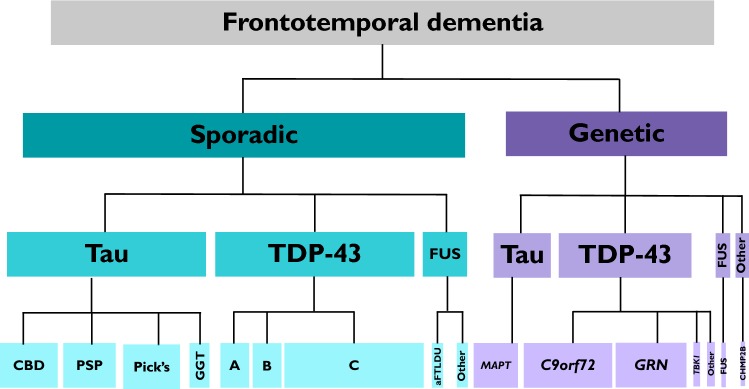
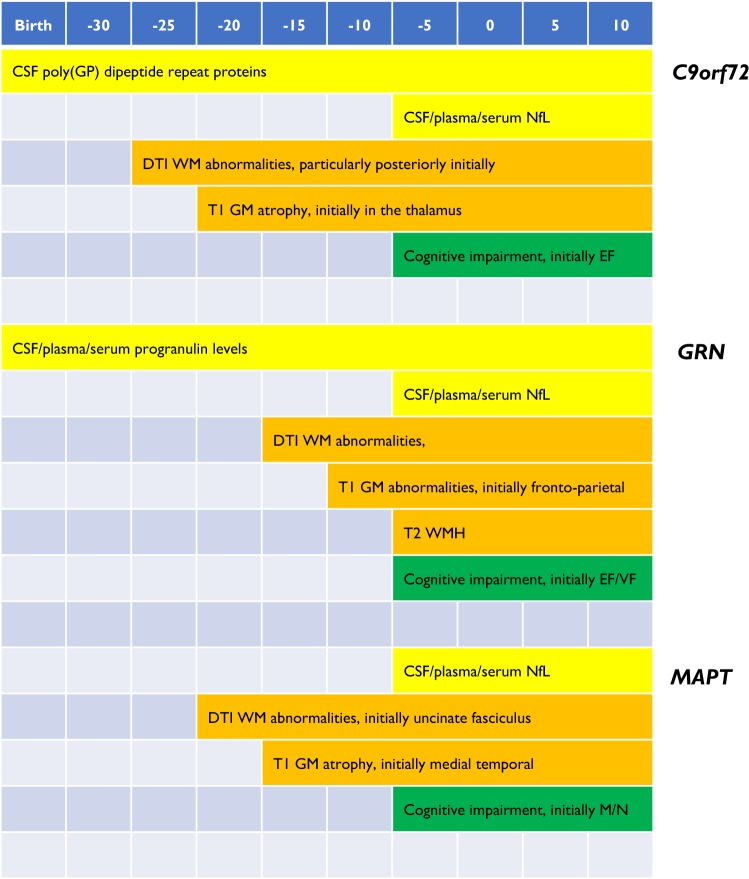
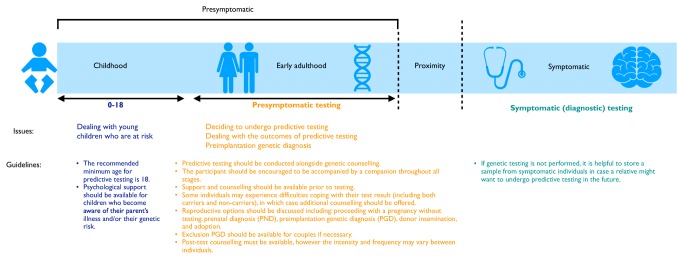
Frontotemporal dementia (FTD) is a highly heritable group of neurodegenerative disorders, with around 30% of patients having a strong family history. The majority of that heritability is accounted for by autosomal dominant mutations in the chromosome 9 open reading frame 72 (C9orf72), progranulin (GRN), and microtubule-associated protein tau (MAPT) genes, with mutations more rarely seen in a number of other genes. This review will discuss the recent updates in the field of genetic FTD. Age at symptom onset in genetic FTD is variable with recently identified genetic modifiers including TMEM106B (in GRN carriers particularly) and a polymorphism at a locus containing two overlapping genes LOC101929163 and C6orf10 (in C9orf72 carriers). Behavioural variant FTD (bvFTD) is the most common diagnosis in each of the genetic groups, although in C9orf72 carriers amyotrophic lateral sclerosis either alone, or with bvFTD, is also common. An atypical neuropsychiatric presentation is also seen in C9orf72 carriers and family members of carriers are at greater risk of psychiatric disorders including schizophrenia and autistic spectrum disorders. Large natural history studies of presymptomatic genetic FTD are now underway both in Europe/Canada (GENFI-the Genetic FTD Initiative) and in the US (ARTFL/LEFFTDS study), collaborating together under the banner of the FTD Prevention Initiative (FPI). These studies are taking forward the validation of cognitive, imaging and fluid biomarkers that aim to robustly measure disease onset, staging and progression in genetic FTD. Grey matter changes on MRI and hypometabolism on FDG-PET are seen at least 10 years before symptom onset with white matter abnormalities seen earlier, but the pattern and exact timing of changes differ between different genetic groups. In contrast, tau PET has yet to show promise in genetic FTD. Three key fluid biomarkers have been identified so far that are likely to be helpful in clinical trials-CSF or blood neurofilament light chain levels (in all groups), CSF or blood progranulin levels (in GRN carriers) and CSF poly(GP) dipeptide repeat protein levels (in C9orf72 carriers). Increased knowledge about genetic FTD has led to more clinical presymptomatic genetic testing but this has not yet been mirrored in the development of either an accepted FTD-specific testing protocol or provision of appropriate psychological support mechanisms for those living through the at-risk phase. This will become even more relevant as disease-modifying therapy trials start in each of the genetic groups over the next few years.
Overview
The claims and statistics of this paper haven’t been checked yet.
Free: it reads the open-access text and checks the first 5 claims that cite a source we can check. Create a free account to check every claim.
Integrity signals
Registry
Cites
Statistics
Figures
Verification
Claims the paper makes
The claims and statistics of this paper haven’t been checked yet.
Free: it reads the open-access text and checks the first 5 claims that cite a source we can check. Create a free account to check every claim.
Claims other papers make about this one
Each is checked against this paper’s own text: does it say what the citing paper says it does?
The source backs part of the claim, not all of it — or backs it for a different population, condition or comparison.
In the citing paper
“Known genetic modifiers of f-FTD disease progression were not included, such as specific mutations (for MAPT) and TMEM106B, a modifier of penetrance in GRN.2,40”
From Temporal order of clinical and biomarker changes in familial frontotemporal dementia (2022) · cites this paper as [2]
Experimental — accuracy not yet measuredThe cited source says what the claim attributes to it.
In the citing paper
“Approximately 20–30% of FTD is caused by autosomal dominant mutations (familial, or f-FTD), usually in one of three genes: chromosome 9 open reading frame 72 (C9orf72), progranulin (GRN), or microtubule-associated protein tau (MAPT).2”
From Temporal order of clinical and biomarker changes in familial frontotemporal dementia (2022) · cites this paper as [2]
The cited source says what the claim attributes to it.
In the citing paper
“Although the clinical manifestations of the f-FTD mutations are similar, the biology and neuropathology associated with C9orf72, GRN, and MAPT mutations are vastly different.2”
From Temporal order of clinical and biomarker changes in familial frontotemporal dementia (2022) · cites this paper as [2]
The cited source says what the claim attributes to it.
In the citing paper
“Mutations in genes such as microtubule-associated protein tau (MAPT), progranulin (GRN), and chromosome 9 open reading frame 72 (C9ORF72) represent the most common genetic cause of FTD [5].”
From A role for astrocytic miR-129-5p in frontotemporal dementia (2025) · cites this paper as [5]
In the citing paper
“since 70 % of bvFTD cases is non-genetic (Greaves and Rohrer, 2019)”
From The pursuit for markers of disease progression in behavioral variant frontotemporal dementia: a scoping review to optimize outcome measures for clinical trials (2024) · cites this paper as Greaves and Rohrer, 2019
Self-check
Percentages, sums and reported differences re-computed from the paper’s own numbers.
The self-check needs the paper’s full text.
Citations
Cites
Sensitivity of revised diagnostic criteria for the behavioural variant of frontotemporal dementia
Rascovsky, K., Hodges, J. R., Knopman, D., Mendez, M. F., Kramer, J. H., Neuhaus, J., van Swieten, J. C., Seelaar, H., Dopper, E. G. P., Onyike, C. U., et al. (2011) · Brain · doi:10.1093/brain/awr179 · Cited by 5,221
Self-citationClassification of primary progressive aphasia and its variants
Gorno-Tempini, M. L., Hillis, A. E., Weintraub, S., Kertesz, A., Mendez, M., Cappa, S. F., Ogar, J. M., Rohrer, J. D., Black, S., Boeve, B. F., et al. (2011) · Neurology · doi:10.1212/wnl.0b013e31821103e6 · Cited by 5,141
Self-citationClinical diagnosis of progressive supranuclear palsy: The movement disorder society criteria
Höglinger, G. U., Respondek, G., Stamelou, M., Kurz, C., Josephs, K. A., Lang, A. E., Mollenhauer, B., Müller, U., Nilsson, C., Whitwell, J. L., et al. (2017) · Movement Disorders · doi:10.1002/mds.26987 · Cited by 2,359
Criteria for the diagnosis of corticobasal degeneration
Armstrong, M. J., Litvan, I., Lang, A. E., Bak, T. H., Bhatia, K. P., Borroni, B., Boxer, A. L., Dickson, D. W., Grossman, M., Hallett, M., et al. (2013) · Neurology · doi:10.1212/wnl.0b013e31827f0fd1 · Cited by 1,904
Strong, M. J., Abrahams, S., Goldstein, L. H., Woolley, S., Mclaughlin, P., Snowden, J., Mioshi, E., Roberts-South, A., Benatar, M., HortobáGyi, T., et al. (2017) · Amyotrophic Lateral Sclerosis and Frontotemporal Degeneration · doi:10.1080/21678421.2016.1267768 · Cited by 909
Young, A. L., Marinescu, R. V., Oxtoby, N. P., Bocchetta, M., Yong, K., Firth, N. C., Cash, D. M., Thomas, D. L., Dick, K. M., Cardoso, J., et al. (2018) · Nature Communications · doi:10.1038/s41467-018-05892-0 · Cited by 596
Self-citationMutations in progranulin are a major cause of ubiquitin-positive frontotemporal lobar degeneration
Gass, J., Cannon, A., Mackenzie, I. R., Boeve, B., Baker, M., Adamson, J., Crook, R., Melquist, S., Kuntz, K., Petersen, R., et al. (2006) · Human Molecular Genetics · doi:10.1093/hmg/ddl241 · Cited by 580
Prevalence, characteristics, and survival of frontotemporal lobar degeneration syndromes
Coyle-Gilchrist, I. T. S., Dick, K. M., Patterson, K., Vázquez Rodríquez, P., Wehmann, E., Wilcox, A., Lansdall, C. J., Dawson, K. E., Wiggins, J., Mead, S., et al. (2016) · Neurology · doi:10.1212/wnl.0000000000002638 · Cited by 540
Rohrer, J. D., Nicholas, J. M., Cash, D. M., van Swieten, J., Dopper, E., Jiskoot, L., van Minkelen, R., Rombouts, S. A., Cardoso, M. J., Clegg, S., et al. (2015) · The Lancet Neurology · doi:10.1016/s1474-4422(14)70324-2 · Cited by 538
Self-citationThe heritability and genetics of frontotemporal lobar degeneration
Rohrer, J. D., Guerreiro, R., Vandrovcova, J., Uphill, J., Reiman, D., Beck, J., Isaacs, A. M., Authier, A., Ferrari, R., Fox, N. C., et al. (2009) · Neurology · doi:10.1212/wnl.0b013e3181bf997a · Cited by 536
Self-citation
Cited by
Items 401–500 of 541
Beyond behavioral changes in semantic dementia: principal hurdles on the road to the clinic
Maia, M. V. R. F., Freitas, V. H. M., da Nóbrega, L. O., Coimbra, L. O., Lócio, A. M., Duarte, F. S., Ribeiro, R. M., Mororó, V. M., de Medeiros, S. D. P., de Menezes, A. R. B., et al. (2023) · Brazilian Journal of Clinical Medicine and Review · doi:10.52600/2965-0968.bjcmr.2023.1.3.49-57
“Its occurrence is strongly related to the genetic factor, with most sporadic mutations, but approximately 20% of cases are linked to autosomal dominant inheritance of various genes, such as chromosome 9 open reading frame 72 (C9orf72), progranulin (GRN), and microtubule-associated protein tau (MAPT) [1, 6] (Table 01).”
InfluentialRNA-binding deficient TDP-43 drives cognitive decline in a mouse model of TDP-43 proteinopathyPreprint
Necarsulmer, J., Simon, J. M., Evangelista, B., Chen, Y., Tian, X., Nafees, S., Gonzalez, A. M., Jiang, H., Wang, P., Ajit, D., et al. (2023) · Research Square · doi:10.21203/rs.3.rs-2200020/v4
RNA-binding deficient TDP-43 drives cognitive decline in a mouse model of TDP-43 proteinopathyPreprint
Necarsulmer, J., Simon, J. M., Evangelista, B., Chen, Y., Tian, X., Nafees, S., Gonzalez, A. M., Jiang, H., Wang, P., Ajit, D., et al. (2023) · Research Square · doi:10.21203/rs.3.rs-2200020/v5
Chaar, D. (2023) · Deep Blue (University of Michigan) · doi:10.7302/22275
Carlisle, T. C. (2024) · Elsevier eBooks · doi:10.1016/b978-0-323-95702-1.00120-2
Kulkarni, R. R., Pai, R., Pandurangi, S. A., & Kalachari, M. B. (2024) · Annals of Indian Psychiatry · doi:10.4103/aip.aip_175_23
Chen, Z., Chu, M. K., Liu, L., Zhang, J., Kong, Y., Xie, K., Cui, Y., Ye, H., Li, J., Wang, L., et al. (2022) · Figshare · doi:10.6084/m9.figshare.20193930
Lagarde, J. (2022) · theses.fr (ABES) · doi:10.70675/3cc93d32z274fz4079zb037z280b6cc59858 · Cited by 1
van Gils, A. M. (2024) · doi:10.5463/thesis.750 · Cited by 2
Genetic Semantic Dementia? Twins’ Data and Review of Autosomal Dominant CasesPreprint
Henderson, S. K., Ralph, M. A. L., Jones, P. S., Naessens, M., Cope, T., Whiteside, D. J., Bouzigues, A., Russell, L. L., Foster, P. H., Ferry‐Bolder, E., et al. (2024) · medRxiv · doi:10.1101/2024.10.18.24313757
Self-citationLinguistic and Medical Aspects in Health Care. Focus on Dementia
Balode, I., Blumberga, I., Burmistrova, A., Claes, S., Gross-Paju, K., Jaakson, S., Lele-Rozentāle, D., Mitchell, I., Palosaari, A.-L., Priede, Z., et al. (2024) · doi:10.22364/lmahc.fd.24
Lingvistikas un medicīnas aspekti veselības aprūpē. Uzmanības centrā – demence
(2024) · LU Akadēmiskais apgāds eBooks · doi:10.22364/lmava.duc.24
“I Am Okay”: Frontotemporal Dementia
Gibfried, M., & Grossberg, G. T. (2024) · Cambridge University Press eBooks · doi:10.1017/9781108630344.006
Su, Y. R., Chu, M. K., Wang, H., Wu, L., & Gao, Y. (2024) · bioRxiv (Cold Spring Harbor Laboratory) · doi:10.1101/2024.11.25.625321
Orbitofrontal atrophy on MRI appears to be an indicator of C9orf72 repeat expansion status in FTD
Yli-Anttila, N., Solje, E., Aho, K., Katisko, K., Kivisild, A., Soppela, H., Krüger, J., Hartikainen, P. H., Lötjönen, J. M. P., & Hakumäki, J. M. (2026) · Journal of Neuroradiology · doi:10.1016/j.neurad.2026.101575
Genetics of frontotemporal dementia
Šutovský, S., Petrovič, R., Kolejakova, K. L., & Turčáni, P. (2025) · Neurologie pro praxi · doi:10.36290/neu.2025.014
Koumasopoulos, E., Stanitsa, E., Angelopoulou, E., Koros, C., Barbarousi, V., Velonakis, G., Koulouris, A., Michaletou, C., Alevetsovitis, S. K., Constantinides, V. C., et al. (2025) · Neurocase · doi:10.1080/13554794.2025.2491746
“Other, less common genes (altogether contributes <5% of FTD cases), such as VCP, CHMP2B, TARDBP, FUS, SQSTM1, CHCHD10, OPTN, CCNF, TIA1, ITM2B, TBK1, and TBP, have also been identified (Greaves & Rohrer, 2019; Olszewska et al., 2016).”
Nicholl, C. G., Wilson, K. J., & D'Souza, S. (2025) · Wiley eBooks · doi:10.1002/9781394397976.ch8
Shi, D., Bao, J., Wu, H., Huang, B., Zheng, Y., Xu, F., Wang, H., Liu, J. J., Guan, S., & Du, K. (2025) · Neurological Sciences · doi:10.1007/s10072-025-08472-5
Genetics of Frontotemporal Dementia in the Serbian Population: Findings from a Hospital-Based Cohort
Milošević, V., Bašić, J., Semnic, M. D., Antić, E., Malobabić, M., & Stoiljković, M. (2025) · Neurology International · doi:10.3390/neurolint17100162
“Likewise, GRN and MAPT mutations exhibit regional founder effects in certain European populations [5].”
Akgun-Unal, N., ÜNAL, Ö., Akkoca, A., & Tiryaki, E. S. (2025) · Bidge Yayınları eBooks · doi:10.70269/10.70269/7541669118
Genetic Approaches to Neurodegenerative Disease
Takada, L. T., & Yokoyama, J. S. (2025) · Cambridge University Press eBooks · doi:10.1017/9781108985055.009
Zhang, Y., Chen, S., Yan, G., Zhang, Z., Amina, Wang, T., Wang, S., Zhang, C., & Sun, Y. (2025) · Frontiers in Genetics · doi:10.3389/fgene.2025.1645068
“…by core features of behavioral abnormalities and language impairment (Author Anonymous, 1994), The pathological mechanisms are frequently associated with mutations in MAPT, GRN, or C9orf72 genes, with other rare pathogenic genes identi fi ed in less than 5% of cases (Greaves and Rohrer, 2019).”
Ando, K., Ferlini, L., Suain, V., Yilmaz, Z., Mansour, S., Ber, I. L., Bouchard, C., Leroy, K., Dürr, A., Clot, F., et al. (2020) · Figshare · doi:10.6084/m9.figshare.12872180
Sogorb‐Esteve, A., Nilsson, J., Swift, I. J., Heller, C., Bocchetta, M., Russell, L. L., Peakman, G., Convery, R. S., Swieten, J. C. V., Seelaar, H., et al. (2022) · Figshare · doi:10.6084/m9.figshare.20762867
Self-citationNan, H., Kim, Y.-J., Chu, M., Li, D., Li, J., Jiang, D., Wu, Y., Ohtsuka, T., & Wu, L. (2024) · Figshare · doi:10.6084/m9.figshare.26036365
Huang, M., Modeste, E. S., Dammer, E., Merino, P., Taylor, G., Duong, D. M., Deng, Q., Holler, C. J., Gearing, M., Dickson, D. W., et al. (2020) · Figshare · doi:10.6084/m9.figshare.13064301
Rossi-Harries, S., Harrison, C., Camic, P. M., Sullivan, M. P., Grillo, A., Crutch, S. J., & Harding, E. (2024) · Figshare · doi:10.6084/m9.figshare.26730781
Marian, O. C., Teo, J. D., Lee, J. Y., Song, H., Kwok, J. B., Landín-Romero, R., Halliday, G. M., & Don, A. S. (2024) · Figshare · doi:10.6084/m9.figshare.26577845
Phänomenologische und bildgebende Charakterisierung von FTD-Spektrum-Erkrankungen
Schönecker, S. (2025) · Electronic Theses of LMU Munich (Ludwig-Maximilians-Universität München) · doi:10.5282/edoc.34842
Mol, M. O., Miedema, S. S. M., Melhem, S., Li, K. W., Koopmans, F., Seelaar, H., Gottmann, K., Leßmann, V., Bank, N. B., SMIT, A. B., et al. (2024) · Figshare · doi:10.6084/m9.figshare.26557811
Santos‐García, I., Rodríguez‐Cueto, C., Villegas, P., Piscitelli, F., Lauritano, A., Shen, C.-K. J., Marzo, V. D., Fernández‐Ruíz, J., & de Lago, E. (2024) · Figshare · doi:10.6084/m9.figshare.26587602
Sogorb‐Esteve, A., Nilsson, J., Swift, I. J., Heller, C., Bocchetta, M., Russell, L. L., Peakman, G., Convery, R. S., Swieten, J. C. V., Seelaar, H., et al. (2022) · Figshare · doi:10.6084/m9.figshare.20762873
Self-citationMarian, O. C., Teo, J. D., Lee, J. Y., Song, H., Kwok, J. B., Landín-Romero, R., Halliday, G. M., & Don, A. S. (2024) · Figshare · doi:10.6084/m9.figshare.26577842
Miedema, S. S. M., Mol, M. O., Koopmans, F., Hondius, D., van Nierop, P., Menden, K., Mestdagh, C. F. D. V., van Rooij, J., Ganz, A. B., Paliukhovich, I., et al. (2022) · Figshare · doi:10.6084/m9.figshare.20267362
Harding, E., Rossi-Harries, S., Gerritzen, E. V., Zimmermann, N., Hoare, Z., Proctor, D., Brotherhood, E., Crutch, S. J., & Gonzalez, A. S. (2023) · Figshare · doi:10.6084/m9.figshare.23590366
Santos‐García, I., Rodríguez‐Cueto, C., Villegas, P., Piscitelli, F., Lauritano, A., Shen, C.-K. J., Marzo, V. D., Fernández‐Ruíz, J., & de Lago, E. (2024) · Figshare · doi:10.6084/m9.figshare.26587587
Modeling pathological consequences of astrocytic tauopathy
Pratsch, K. (2023) · doi:10.5282/edoc.31342
Huang, M., Modeste, E. S., Dammer, E., Merino, P., Taylor, G., Duong, D. M., Deng, Q., Holler, C. J., Gearing, M., Dickson, D. W., et al. (2020) · Figshare · doi:10.6084/m9.figshare.13064298
Giannini, L. A., Mol, M. O., Rajicic, A., van Buuren, R., Sarkar, L., Arezoumandan, S., Ohm, D. T., Irwin, D. J., Rozemüller, A. J. M., Swieten, J. C. V., et al. (2024) · Figshare · doi:10.6084/m9.figshare.26608093
Chen, Z., Chu, M., Liu, L., Zhang, J., Kong, Y., Xie, K., Cui, Y., Ye, H., Li, J., Wang, L., et al. (2022) · Figshare · doi:10.6084/m9.figshare.20193924
Santos‐García, I., Rodríguez‐Cueto, C., Villegas, P., Piscitelli, F., Lauritano, A., Shen, C.-K. J., Marzo, V. D., Fernández‐Ruíz, J., & de Lago, E. (2024) · Figshare · doi:10.6084/m9.figshare.26587584
Italia, M. (2024) · Archivio Istituzionale della Ricerca (Universita Degli Studi Di Milano) · doi:10.13130/italia-maria_phd2024-01-19
Santos‐García, I., Rodríguez‐Cueto, C., Villegas, P., Piscitelli, F., Lauritano, A., Shen, C.-K. J., Marzo, V. D., Fernández‐Ruíz, J., & de Lago, E. (2024) · Figshare · doi:10.6084/m9.figshare.26587596
Santos‐García, I., Rodríguez‐Cueto, C., Villegas, P., Piscitelli, F., Lauritano, A., Shen, C.-K. J., Marzo, V. D., Fernández‐Ruíz, J., & de Lago, E. (2024) · Figshare · doi:10.6084/m9.figshare.26587590
Additional file 1 of Diagnostic accuracy of research criteria for prodromal frontotemporal dementia
Benussi, A., Premi, E., Grassi, M., Alberici, A., Cantoni, V., Gazzina, S., Archetti, S., Gasparotti, R., Fumagalli, G., Bouzigues, A., et al. (2024) · Figshare · doi:10.6084/m9.figshare.24993750
Self-citationMiedema, S. S. M., Mol, M. O., Koopmans, F., Hondius, D., van Nierop, P., Menden, K., Mestdagh, C. F. D. V., van Rooij, J., Ganz, A. B., Paliukhovich, I., et al. (2022) · Figshare · doi:10.6084/m9.figshare.20267329
Sogorb‐Esteve, A., Nilsson, J., Swift, I. J., Heller, C., Bocchetta, M., Russell, L. L., Peakman, G., Convery, R. S., Swieten, J. C. V., Seelaar, H., et al. (2022) · Figshare · doi:10.6084/m9.figshare.20762870
Self-citationChen, Z., Chu, M., Liu, L., Zhang, J., Kong, Y., Xie, K., Cui, Y., Ye, H., Li, J., Wang, L., et al. (2022) · Figshare · doi:10.6084/m9.figshare.20193933
Liu, L., Chu, M., Nie, B., Liu, L., Xie, K., Cui, Y., Kong, Y., Chen, Z., Nan, H., Chen, K., et al. (2022) · Figshare · doi:10.6084/m9.figshare.19581918
Mol, M. O., Miedema, S. S. M., Melhem, S., Li, K. W., Koopmans, F., Seelaar, H., Gottmann, K., Leßmann, V., Bank, N. B., SMIT, A. B., et al. (2024) · Figshare · doi:10.6084/m9.figshare.26557808
Rossi-Harries, S., Harrison, C., Camic, P. M., Sullivan, M. P., Grillo, A., Crutch, S. J., & Harding, E. (2024) · Figshare · doi:10.6084/m9.figshare.26730787
Miedema, S. S. M., Mol, M. O., Koopmans, F., Hondius, D., van Nierop, P., Menden, K., Mestdagh, C. F. D. V., van Rooij, J., Ganz, A. B., Paliukhovich, I., et al. (2022) · Figshare · doi:10.6084/m9.figshare.20267326
Liu, L., Chu, M., Nie, B., Liu, L., Xie, K., Cui, Y., Kong, Y., Chen, Z., Nan, H., Chen, K., et al. (2022) · Figshare · doi:10.6084/m9.figshare.19581915
Whiteside, D. J. (2023) · Apollo (University of Cambridge) · doi:10.17863/cam.105517
Franklin, H., Russell, L. L., Peakman, G., Greaves, C. V., Bocchetta, M., Nicholas, J. M., Poos, J. M., Convery, R. S., Cash, D. M., Swieten, J. C. V., et al. (2021) · Figshare · doi:10.6084/m9.figshare.14966272
Self-citationNan, H., Kim, Y.-J., Chu, M., Li, D., Li, J., Jiang, D., Wu, Y., Ohtsuka, T., & Wu, L. (2024) · Figshare · doi:10.6084/m9.figshare.26036529
Santos‐García, I., Rodríguez‐Cueto, C., Villegas, P., Piscitelli, F., Lauritano, A., Shen, C.-K. J., Marzo, V. D., Fernández‐Ruíz, J., & de Lago, E. (2024) · Figshare · doi:10.6084/m9.figshare.26587605
Nan, H., Kim, Y.-J., Chu, M., Li, D., Li, J., Jiang, D., Wu, Y., Ohtsuka, T., & Wu, L. (2024) · Figshare · doi:10.6084/m9.figshare.26733424
Santos‐García, I., Rodríguez‐Cueto, C., Villegas, P., Piscitelli, F., Lauritano, A., Shen, C.-K. J., Marzo, V. D., Fernández‐Ruíz, J., & de Lago, E. (2024) · Figshare · doi:10.6084/m9.figshare.26587599
Santos‐García, I., Rodríguez‐Cueto, C., Villegas, P., Piscitelli, F., Lauritano, A., Shen, C.-K. J., Marzo, V. D., Fernández‐Ruíz, J., & de Lago, E. (2024) · Figshare · doi:10.6084/m9.figshare.26587608
Liu, L., Chu, M., Nie, B., Liu, L., Xie, K., Cui, Y., Kong, Y., Chen, Z., Nan, H., Chen, K., et al. (2022) · Figshare · doi:10.6084/m9.figshare.19581912
Santos‐García, I., Rodríguez‐Cueto, C., Villegas, P., Piscitelli, F., Lauritano, A., Shen, C.-K. J., Marzo, V. D., Fernández‐Ruíz, J., & de Lago, E. (2024) · Figshare · doi:10.6084/m9.figshare.26587593
Harding, E., Rossi-Harries, S., Gerritzen, E. V., Zimmermann, N., Hoare, Z., Proctor, D., Brotherhood, E., Crutch, S. J., & Gonzalez, A. S. (2023) · Figshare · doi:10.6084/m9.figshare.23590369
Nicolas, G., Sévigny, M., Lecoquierre, F., Marguet, F., Deschênes, A., del Pelaez, M. C., Feuillette, S., Audebrand, A., Lecourtois, M., Rousseau, S., et al. (2022) · Figshare · doi:10.6084/m9.figshare.19166677
Rossi-Harries, S., Harrison, C., Camic, P. M., Sullivan, M. P., Grillo, A., Crutch, S. J., & Harding, E. (2024) · Figshare · doi:10.6084/m9.figshare.26730784
da Silva, I. D. (2025) · Portuguese National Funding Agency for Science, Research and Technology (RCAAP Project by FCT)
Roque, M. N. (2023) · Portuguese National Funding Agency for Science, Research and Technology (RCAAP Project by FCT) · Cited by 1
The Genetic Landscape of Neurodegenerative and Cerebrovascular Disease Phenotypes.
Dilliott, A. A. (2021) · Scholarship@Western (Western University)
Mitochondria: de gemeenschappelijke oorzaak in ALS?
Vanderhaeghe, S. (2024) · Lirias
Characterising the Function of the Novel Endosomal protein Tmep in D.melanogaster
Beigaitė, E. (2023) · White Rose eTheses Online (University of Leeds, The University of Sheffield, University of York)
Nunes, A. M. M. (2022) · Portuguese National Funding Agency for Science, Research and Technology (RCAAP Project by FCT)
Best, T. (2023) · eScholarship@McGill (McGill) · doi:10.82308/5468
Improving Wellbeing in At-Risk Frontotemporal Dementia
Greaves, C. V. (2024) · UCL Discovery (University College London)
Self-citationBreakthroughs in Stem Cell-Based Treatments for ALS and FTD: Promises and Challenges Ahead
Frederiksen, H. R. S., & Freude, K. (2025) · Stem cell biology and regenerative medicine · doi:10.1007/978-3-031-94101-6_7
Review of Prognostic Testing for Amyotrophic Lateral Sclerosis and Frontotemporal Dementia
Pakeltytė, D., & Burnytė, B. (2024) · Neurologijos seminarai · doi:10.15388/ns.2024.28.102.3
Frontotemporal dementia: a clinical review
Κωνσταντίνου, Α. Ν., & Κωνσταντίνου, Α. Ν. (2024) · University of Thessaly Institutional Repository (University of Thessaly)
Understanding Mitochondrial Dysfunction Linked to C9orf72 Hexanucleotide Repeat Expansion
Anoar, S. (2025) · UCL Discovery (University College London)
Embryological Origins and Genetics in Frontotemporal Dementia
Hayırlıoğlu, Z., YÜCEL, Z., & YÜKSEL, E. B. (2025) · Ahi Evran Medical Journal · doi:10.46332/aemj.1652578
Román, K. D., Cristalli, C. A. A., Surace, E. I., Mezmezian, M. B., Levy, A., Lovera, A. B., Turizo, C. R. C., Sorbara, M., y Rojas, M. M. E., Graviotto, H. G., et al. (2026) · Brain Pathology · doi:10.1111/bpa.70057
“Approximately 40% of FTD cases have a family history, though only about 20% exhibit a clear autosomal dominant inheritance pattern [6].”
Apraxias in the Diagnosis of Frontotemporal Dementia and Alzheimer’s Disease
Yliranta, A. (2023) · Tampere University Institutional Repository (Tampere University)
Clinical relevance of CSF analysis in various neurodegenerative diseases
André, Z., Gaštanová, B., Kopániová, A., & Gmitterová, K. (2026) · Neurologie pro praxi · doi:10.36290/neu.2025.022
The brainstem in neurodegenerative diseases
Grinberg, L. T. (2026) · Handbook of clinical neurology · doi:10.1016/b978-0-443-15736-3.00017-2 · Cited by 1
Liu, H. (2021) · theses.fr (ABES) · doi:10.70675/5a9f2da3zbf5bz475czba47zc4c2a7f9d903
Differential lysosomal burden in the excitatory and inhibitory neurons of the FTD-GRN brain.
Joyce, J. (2023) · theses.fr (ABES) · doi:10.70675/48f8ae85z4049z4ff7za748z0b87206a8dab
CSF Biomarkers, Tissue Biopsy, and Genetic Analysis
Smith, S. (2026) · Oxford University Press eBooks · doi:10.1093/9780197619537.003.0012
Luo, C., Wang, R., Feng, S., Qin, L., & Chen, Q. (2026) · Neurological Sciences · doi:10.1007/s10072-026-09026-z
Λιάσκα, Δ.-Π. Ν. (2026) · University of Thessaly Institutional Repository (University of Thessaly)
ABCA7 Mutation in Behavioral Variant of Frontotemporal Dementia: A Case Report
Geron, C., & Maquet, P. (2026) · Case Reports in Neurology · doi:10.1159/000552305
“Moreover, the FTD spectrum is highly heterogeneous, and individuals carrying the same mutation can present with markedly different clinical phenotypes [2], underscoring the importance of thorough cognitive and behavioral assessment.”
InfluentialMRI Microscopic Fractional Anisotropy Differences in Genetic Frontotemporal Degeneration
So, I., Ríos-Carrillo, R., Coleman, K. K. L., Finger, E. C., & Baron, C. A. (2026) · Journal of Magnetic Resonance Imaging · doi:10.64898/2026.05.25.26354046
Zhu, N. (2026) · Tesis Doctorals en Xarxa (Consorci de Serveis Universitaris de Catalunya)
The effect of human-specific genetic variants on neuronal spinogenesis
Rosas, N. M., Szombathy, A. M., & Szigeti, K. (2026) · Frontiers in Genetics · doi:10.3389/fgene.2026.1786287
“…also linked to Alzheimer’s disease and schizophrenia (Wang X. et al., 2018), while MAPT is associated with dementia, corticobasal degeneration and increased Alzheimer’s disease risk (Greaves and Rohrer, 2019; Forrest et al., 2018; Zhang et al., 2017; Tahir et al., 2000; Buchholz and Zempel, 2024).”
Tau368 improves p-tau diagnostic accuracy for FTLD-tau from FTLD-TDP
Kac, P. R., Cousins, K. A. Q., Szadziewska, A., Shaw, L. M. J., Turton, M., Deerlin, V. M. V., Harrison, P., Zetterberg, H., Wolk, D. A., McMillan, C. T., et al. (2026) · Acta Neuropathologica · doi:10.1007/s00401-026-03042-1
“…be manifested both clinically—including behavioral frontotemporal dementia (bvFTD) or language variants (primary progressive aphasia; PPA)—and biologically, where aside from tau, TAR-DNA binding protein 43 (TDP-43; FTLD-TDP) inclusions are observed in roughly 60% of patients [37, 39, 54, 63, 76].”
Harrington, E. A., Dratch, L., Jones, T. A., Fong, J. C., Kinnamon, D. D., Goldman, J. S., Uhlmann, W. R., & Roggenbuck, J. (2026) · Amyotrophic Lateral Sclerosis and Frontotemporal Degeneration · doi:10.1080/21678421.2026.2696378
Metadata
- Authors
- Greaves, C. V., & Rohrer, J. D.
- Affiliations
- UCL Queen Square Institute of Neurology (GB)
- Corresponding author
- Rohrer, Jonathan D.
- Venue
- Journal of Neurology
- Published
- 2019-05-22
- Volume
- 266
- Issue
- 8
- Pages
- 2075-2086
- ISSN
- 0012-1037 (ISSN-L)
- 0340-5354
- 1432-1459
- PMC
- PMC6647117
- OpenAlex
- W2946423464
- Semantic Scholar
- a2e7ba961fbe79feb913f4882aa50a437a1e08c7
- Cited by
- 500
- References
- 91
- Citations by year
- 2026: 55 · 2025: 78 · 2024: 77 · 2023: 65 · 2022: 100 · 2021: 78 · 2020: 42 · 2019: 4
- FWCI
- 7.53
- Type
- journal article
- Language
- en
- Open access
- hybrid
- doi.org
- Licence
- cc-by
- creativecommons.org/licenses/by/4.0 (tdm)
- creativecommons.org/licenses/by/4.0 (vor)
- Locations
- Journal of Neurology (publishedVersion, cc-by)
- Europe PMC (PubMed Central) (publishedVersion, cc-by)
- PubMed Central (publishedVersion, cc-by)
- PubMed (publishedVersion)
- UCL Discovery (University College London) (submittedVersion)
- Funders
- National Institute for Health and Care Research (CL-2012-18-010)
- Medical Research Council (MR/M023664/1, MR/M008525/1, MR/J009482/1)
- Topics
- Health Sciences › Medicine › Clinical Neurology › Amyotrophic Lateral Sclerosis Research
- Health Sciences › Medicine › Psychiatry and Mental health › Dementia and Cognitive Impairment Research
- Life Sciences › Neuroscience › Cellular and Molecular Neuroscience › Alzheimer's disease research and treatments
- Keywords
- frontotemporal dementia, genetic frontotemporal dementia, C9orf72, progranulin, MAPT, TMEM106B, behavioral variant frontotemporal dementia, amyotrophic lateral sclerosis, presymptomatic genetic testing, genetic modifiers, neurofilament light chain, dipeptide repeat proteins, biomarkers
- MeSH terms
- C9orf72 Protein, Humans, Membrane Proteins, Mutation, Nerve Tissue Proteins, Biomarkers, Genetic Predisposition to Disease, Frontotemporal Dementia
About these checks
Registry, retraction, Cites and statistics results are computed, not judged, with one exception: a printed reference that no index lists is read once by a model before it counts as a citation error. Claims are extracted by a model and kept only when their quote appears verbatim in the text; each cited source is then checked, with a model’s help, for whether it says what the claim relies on. Those verdicts can be wrong — read the claim’s quote and the cited source before relying on one.
Statistics and arithmetic are recomputed, not judged.
Confidence bands are shown only for fields calibrated on our annotated test set. None is calibrated yet, so no band is shown.
What counts as a claim ›How we measure confidence ›How we check this ›
Are you an author, or do you see a problem with this page? Request a review
Data sources
Bibliographic data: Semantic Scholar, OpenAlex, Crossref.
Contains information from the Semantic Scholar Academic Graph Datasets, made available under the ODC Attribution License (ODC-BY 1.0).
Semantic Scholar’s data is described in: Kinney, R., et al. (2023). The Semantic Scholar Open Data Platform. arXiv:2301.10140.
