

Lab-scale photobioreactor systems: principles, applications, and scalability
Open accessThe DOI matches its Crossref record; 223 of the 225 references it cites were found in a registry or an index, and 1 are not checked yet; 56 of the 239 sources its claims cite were checked for support.
Abstract
Review of laboratory-scale photobioreactor designs including illuminated shake flasks, bubble columns, flat-plate and stirred-tank systems, with selection criteria for scale-up.
Verified 2026-11-22 · 1 reference not checked yet
Overview
CoChat Summary
TL;DR
This review surveys laboratory-scale photobioreactor designs for microalgae and cyanobacteria and evaluates their advantages, disadvantages, and scalability. It recommends matching lab reactors to the projected large-scale geometry and using light-dependent growth kinetics for model-based scale-up, while addressing contamination, temperature, shear, biofilm, and flashing-light effects.
Key findings
- Lab-scale photobioreactors span microliter to liter scales: microtiter plates have wells < 4000 µL and enable parallel batch experiments, but light attenuation is not comparable to industrial-scale reactors and continuous sampling is not possible.
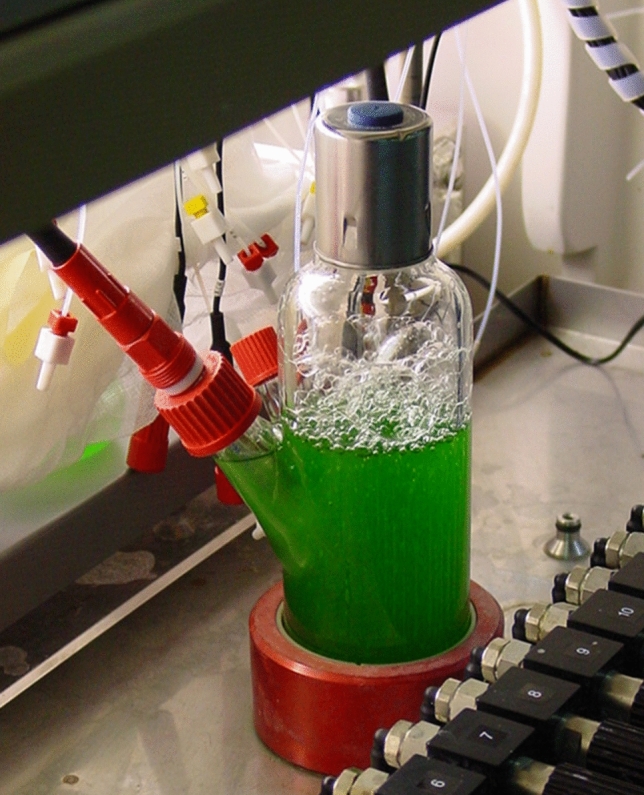
- Bubble column photobioreactors commonly operate at 1–10 L (smallest described: 450 mL; up to 28 L with internal illumination), with gas flow rates of 0.1–1 vvm and incident light intensities of 15–220 µmol m⁻² s⁻¹; external illumination creates light gradients, while internal illumination gives more homogeneous light distribution.
- Flat plate photobioreactors often use 80–400 µmol m⁻² s⁻¹; reducing the light path from 30 to 15 mm increased *C. vulgaris* biomass productivity 2.5-fold, and increasing flow from 45 to 77 L min⁻¹ reduced biofilm-bound *C. vulgaris* cells from 70% to 19%.
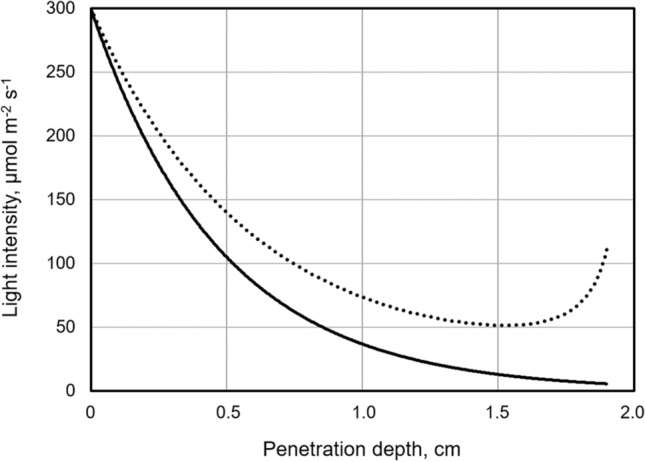
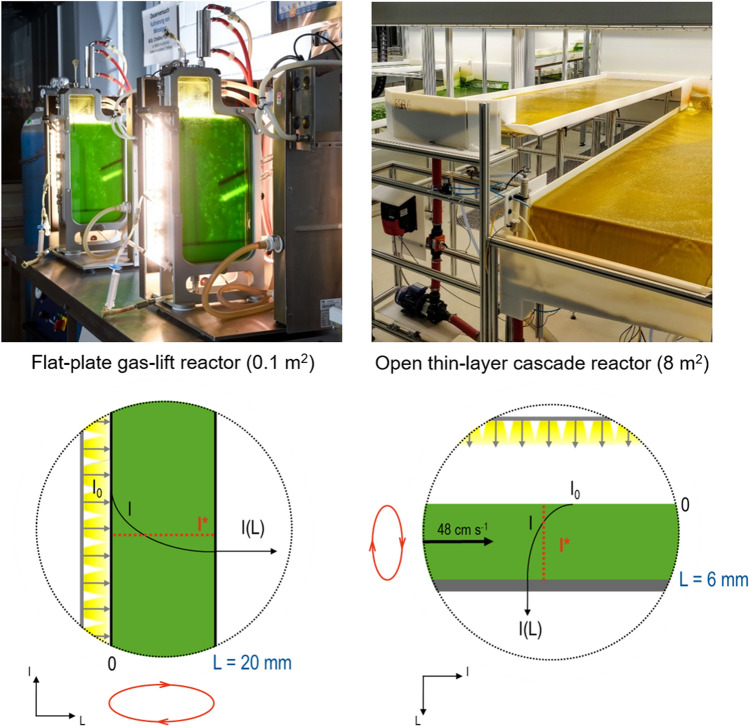
- For scale-up, a factor of 10 is generally recommended, though light-sensitive cyanobacteria may require a lower factor; open raceway ponds are typically 20–30 cm deep, thin-layer cascade reactors use 0.5–1 cm layers (lab-scale example: 8 m², 65 L, ~0.6 cm), and artificial LED lighting was estimated at $1.9 per kg of purple phototrophic bacteria biomass.
Methods
- Narrative review of laboratory-scale photobioreactor systems, covering microfluidic, shaken (microtiter plate and shake flask), bubble column, flat plate, stirred-tank, tubular, and other designs.
- No primary experimental dataset; the paper synthesizes published studies and examples, including reported volumes, light intensities, gas flow rates, and scale-up cases.
- Main analysis is qualitative comparison of reactor advantages/disadvantages and recommendations for reactor selection, operation, and scale-up, with emphasis on light-dependent microalgae growth kinetics as a basis for model-based scale-up.
Limitations
- The paper states system-specific limitations, including that microtiter plate light attenuation is not comparable to industrial scale, continuous sampling is not possible in low-volume systems, dead microalgae cells cannot be distinguished from living cells in microfluidic chips, and custom microfluidic designs may hinder experiment replication.
- The paper notes that flashing-light effects have not been unequivocally proven at pilot or production scale, and that most large-scale phototrophic cultivations give lower yields than expected from laboratory results.
- Evident from the text: as a narrative review, it does not report a systematic search strategy or quantitative meta-analysis, and its scale-up recommendations are largely qualitative and based on cited examples rather than a unified experimental validation.
Model-written summary. Check it against the paper before relying on it.
Integrity signals
Registry
Cites
Statistics
Figures
Verification
Claims the paper makes
41 Valid · 4 Not valid · 111 Not checked · 57 Own results and interpretations
At least one cited source doesn’t support this claim or points to a different paper, and none confirmed it — see the verdicts below.
In the paper
“In 1932, Emerson and Arnold first found that microalgae cells can exhibit the same maximum rates of oxygen production and carbon dioxide uptake under a sequence of short light flashes as under continuous light [217].”
§ Lab-scale photobioreactor systems: principles, applications, and scalability > Scalability of photobioreactor systems > Flashing light effects should be considered if positive effects on microalgae process performance has been observed
What the sources say
- Disputedcites [217] Emerson R Arnold W A separation of the reactions in photosynthesis by means of intermittent light J Gen Physiol 1932 15 391 420 10.1085/jgp.15.4.391 19872654 PMC2141175 sourceExperimental — accuracy not yet measured
Table IV (pp. 408–409) reports substantially lower oxygen-production rates under flashing light than under continuous light at the same carbon dioxide concentrations; the paper says the curves are similar in shape, not equal in height. Its comparison therefore contradicts the claimed equality of maximum rates, and it does not establish equal maximum carbon dioxide uptake rates. (LLM, conf=0.87)
Checked by a reasoning model — may be wrong.
plain- Asserted: passes — The authors put it forward as true.
- Checkable: passes — It can be checked against evidence.
- Load-bearing: unclear — It is unclear whether the paper’s conclusions depend on it.
- Based: passes — The paper gives a reason why it holds.
- Disputed
The cited sources support only part of this claim — read each source’s verdict below.
In the paper
“It is possible to reach higher biomass or product concentration with the light of a certain wavelength: white, red, and blue light have shown to be sufficient for laboratory-scale cultivation [27, 28].”
§ Lab-scale photobioreactor systems: principles, applications, and scalability > Introduction
What the sources say
- Partly supportedcites [27] Silva LML Santiago AF Silva GA Optimization and scale-up of an LED-illuminated microalgal photobioreactor for wastewater treatment Water Sci Technol 2019 80 2352 2361 10.2166/wst.2020.058 32245927 sourceExperimental — accuracy not yet measured
The Optimization procedures section (page unavailable) reports testing white, red, and blue LEDs in small-scale microalgal photobioreactors. But the comparison measured pollutant removal, not whether each wavelength was sufficient for cultivation or increased biomass or product concentration; the Optimization of photobioreactors section reports the best removal with blue light. (LLM, conf=0.82)
- Not checked — no full text of the sourcecites [28] Wang C-Y Fu C-C Liu Y-C Effects of using light-emitting diodes on the cultivation of Spirulina platensis Biochem Eng J 2007 37 21 25 10.1016/j.bej.2007.03.004 source
plainstates a cause- Asserted: passes — The authors put it forward as true.
- Checkable: passes — It can be checked against evidence.
- Load-bearing: unclear — It is unclear whether the paper’s conclusions depend on it.
- Based: passes — The paper gives a reason why it holds.
- Partly supported
The cited sources support only part of this claim — read each source’s verdict below.
In the paper
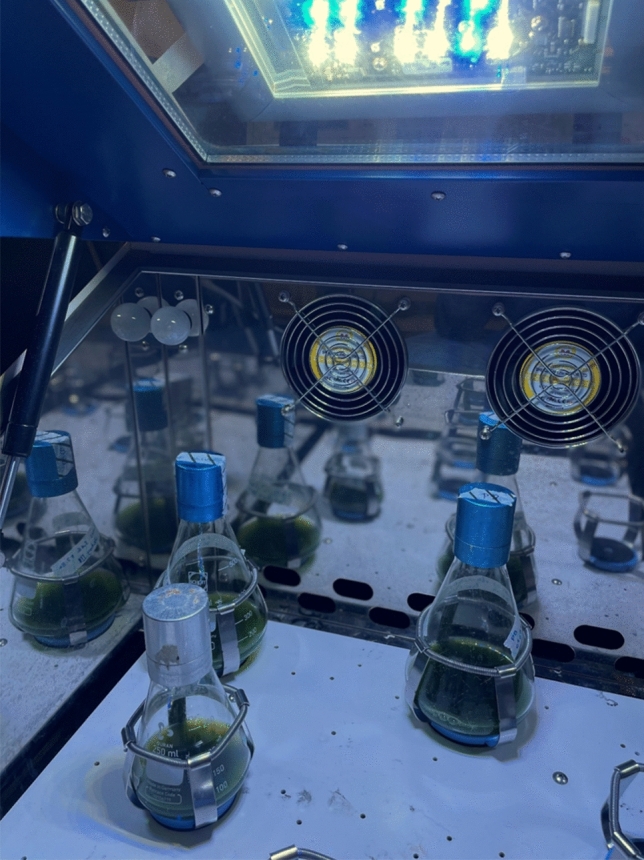
“In general, the biomass of photosynthetically active microalgae and cyanobacteria in shake flasks tends to be higher under higher light intensities in the range of 50 µmol m−2 s−1 to at least a few hundred µmol m−2 s−1 [24, 77].”
§ Lab-scale photobioreactor systems: principles, applications, and scalability > Lab-scale photobioreactor systems > Shaken photobioreactors
What the sources say
- Partly supportedcites [24] Nedbal J Gao L Suhling K Bottom-illuminated orbital shaker for microalgae cultivation HardwareX 2020 8 e00143 10.1016/j.ohx.2020.e00143 33442569 PMC7786639 sourceExperimental — accuracy not yet measured
The Microalgae cultivation section (page not available) reports faster growth for two microalgal species at 220 than at 26 µmol m−2 s−1. It does not report biomass comparisons across the claimed range starting at 50 µmol m−2 s−1, or results for cyanobacteria. (LLM, conf=0.87)
- Not checked — no full text of the sourcecites [77] Chang J Le K Song X Scale-up cultivation enhanced arachidonic acid accumulation by red microalgae Porphyridium purpureum Bioprocess Biosyst Eng 2017 40 1763 1773 10.1007/s00449-017-1831-x 28836004 source
hedgedstates an association- Asserted: passes — The authors put it forward as true.
- Checkable: passes — It can be checked against evidence.
- Load-bearing: unclear — It is unclear whether the paper’s conclusions depend on it.
- Based: passes — The paper gives a reason why it holds.
- Partly supported
The cited sources support only part of this claim — read each source’s verdict below.
In the paper
“Thin-layer cascade photobioreactors are able to achieve the highest biomass densities described in the literature [159, 163].”
§ Lab-scale photobioreactor systems: principles, applications, and scalability > Lab-scale photobioreactor systems > Other photobioreactor designs
What the sources say
- Not checked — no full text of the sourcecites [159] Apel AC Pfaffinger CE Basedahl N Open thin-layer cascade reactors for saline microalgae production evaluated in a physically simulated Mediterranean summer climate Algal Res 2017 25 381 390 10.1016/j.algal.2017.06.004 source
- Partly supportedcites [163] Schädler T Neumann-Cip A-C Wieland K High-density microalgae cultivation in open thin-layer cascade photobioreactors with water recycling Appl Sci 2020 10 3883 10.3390/app10113883 sourceExperimental — accuracy not yet measured
The Introduction (p. 2) reports that a thin-layer cascade reactor achieved 50 g/L cell dry weight and contrasts this with the 0.3–1.0 g/L concentrations typical of raceway ponds. The paper supports the ability of these reactors to achieve very high biomass densities, but it does not establish that they achieve the highest densities reported across the literature. (LLM, conf=0.86)
plainstates a cause- Asserted: passes — The authors put it forward as true.
- Checkable: passes — It can be checked against evidence.
- Load-bearing: unclear — It is unclear whether the paper’s conclusions depend on it.
- Based: passes — The paper gives a reason why it holds.
The cited sources support only part of this claim — read each source’s verdict below.
In the paper
“A critical factor is a fast-rising temperature in thin microalgae suspensions due to the illumination especially in non-controlled outdoor photobioreactors [155, 202].”
§ Lab-scale photobioreactor systems: principles, applications, and scalability > Scalability of photobioreactor systems > Active temperature control should be avoided by operating conditions and the selection of robust microalgae
What the sources say
- Partly supportedcites [155] Huang Q Jiang F Wang L Yang C Design of photobioreactors for mass cultivation of photosynthetic organisms Engineering 2017 3 318 329 10.1016/J.ENG.2017.03.020 sourceExperimental — accuracy not yet measured
Section 2.4 (Temperature; page unavailable) says temperature rise is significant on sunny summer days and that a photobioreactor without temperature control may reach 10–30 °C above ambient. Section 2.1 (Light; page unavailable) identifies solar radiation as a cause of warming and describes thin optical paths, but the paper does not establish how fast the temperature rises. (LLM, conf=0.83)
- Not checked — no full text of the sourcecites [202] Scott SA Davey MP Dennis JS Biodiesel from algae: challenges and prospects Curr Opin Biotechnol 2010 21 277 286 10.1016/j.copbio.2010.03.005 20399634 source
plainstates a cause- Asserted: passes — The authors put it forward as true.
- Checkable: passes — It can be checked against evidence.
- Load-bearing: passes — The paper’s conclusions depend on it.
- Based: passes — The paper gives a reason why it holds.
- Partly supported
111 more claims · 26 with their cited sources checked
Create a free account to see all 213 claims and to verify the 11 references still open.
- It may state two separate claims as one. 68
- Probably not a substantial claim. 42
Citations
Cites
Chisti, Y. (2007) · Biotechnology Advances · doi:10.1016/j.biotechadv.2007.02.001 · Cited by 9,524
Brennan, L., & Owende, P. (2010) · Renewable and Sustainable Energy Reviews · doi:10.1016/j.rser.2009.10.009 · Cited by 4,894 · cited 1×
“For large open cultivation volumes, many authors consider temperature control not economically feasible [190, 199, 207].”
BackgroundRodolfi, L., Chini Zittelli, G., Bassi, N., Padovani, G., Biondi, N., Bonini, G., & Tredici, M. R. (2009) · Biotechnology and Bioengineering · doi:10.1002/bit.22033 · Cited by 2,879
High-value products from microalgae—their development and commercialisation
Borowitzka, M. A. (2013) · Journal of Applied Phycology · doi:10.1007/s10811-013-9983-9 · Cited by 1,585 · cited 1×
“Therefore, open pond photo bioreactors are often preferred [208].”
BackgroundMicroalgae and wastewater treatment
Abdel-Raouf, N., Al-Homaidan, A. A., & Ibraheem, I. B. M. (2012) · Saudi Journal of Biological Sciences · doi:10.1016/j.sjbs.2012.04.005 · Cited by 1,579
The Potential of Sustainable Algal Biofuel Production Using Wastewater Resources
Pittman, J. K., Dean, A. P., & Osundeko, O. (2011) · Bioresource Technology · doi:10.1016/j.biortech.2010.06.035 · Cited by 1,526
Biodiesel from algae: challenges and prospects
Scott, S. A., Davey, M. P., Dennis, J. S., Horst, I., Howe, C. J., Lea-Smith, D. J., & Smith, A. G. (2010) · Current Opinion in Biotechnology · doi:10.1016/j.copbio.2010.03.005 · Cited by 1,183 · cited 2×
“Giving an example, the process can be made from shaken flasks with 100 mL to medium size reactors (1–10 L), followed by a transfer to photobioreactors on a pilot-scale (10–100 L) and an upscale to an industrial cultivation system up to 1 m3 [48, 132, 202].”
BackgroundMethodEffect of temperature and light on the growth of algae species: A review
Singh, S. P., & Singh, P. (2015) · Renewable and Sustainable Energy Reviews · doi:10.1016/j.rser.2015.05.024 · Cited by 1,017
Commercialization potential of microalgae for biofuels production
Singh, J., & Gu, S. (2010) · Renewable and Sustainable Energy Reviews · doi:10.1016/j.rser.2010.06.014 · Cited by 1,001 · cited 1×
“Besides the crucial light supply, the optimization of state variables such as pH, temperature, CO2 supply and O2 release, inoculum concentration in batch processes and nutrient composition is also required before any scale-up can be considered [39, 42].”
BackgroundBiodiesel from microalgae: A critical evaluation from laboratory to large scale production
Rawat, I., Ranjith Kumar, R., Mutanda, T., & Bux, F. (2013) · Applied Energy · doi:10.1016/j.apenergy.2012.10.004 · Cited by 977 · cited 3×
“Before cultivating at the production scale, the cultivation method needs to be chosen wisely by weighing the different cultivation systems against each other [40].”
BackgroundMethod
Research works printed but not linked: 1
- Burk MJ Sustainable production of industrial chemicals from sugars Int Sugar J 2010 112 6
Cited by
Recent advancements in photo-bioreactors for microalgae cultivation: a brief overview
Penloglou, G., Pavlou, A., & Kiparissides, C. (2024) · Processes · doi:10.3390/pr12061104 · Cited by 166
“Common types of laboratory-scale PBRs include flat-panel, column, tubular, plate, bag, etc., configurations, aiming to enhance the efficiency, scalability and automation, while reducing the costs and environmental impact [79].”
BackgroundPhotobioreactor configurations in cultivating microalgae biomass for biorefinery
Barboza-Rodríguez, R., Rodríguez-Jasso, R. M., Rosero-Chasoy, G., Rosales Aguado, M. L., & Ruiz, H. A. (2024) · Bioresource Technology · doi:10.1016/j.biortech.2023.130208 · Cited by 97
Towards industrial biological hydrogen production: a review
Teke, G. M., Cho, B. A., Bosman, C. E., Mapholi, Z., Zhang, D., & Pott, R. W. M. (2023) · World Journal of Microbiology and Biotechnology · doi:10.1007/s11274-023-03845-4 · Cited by 126
“…and airlift bioreactor that hold specific orientation, flat plates do present different orientations (vertical, tilted, rocking motion, V-shaped and so forth) with increasing yield and productivity, as reported in several studies (Dasgupta et al. 2010; Benner et al. 2022; Sirohi et al. 2022).”
ResultAli, S. S., Al-Tohamy, R., Al-Zahrani, M., Schagerl, M., Kornaros, M., & Sun, J. (2025) · Microbial Cell Factories · doi:10.1186/s12934-025-02685-1 · Cited by 88
Carbon capture, storage, and usage with microalgae: a review
Tripathi, S., Choudhary, S., Meena, A., & Poluri, K. M. (2023) · Environmental Chemistry Letters · doi:10.1007/s10311-023-01609-y · Cited by 98
Yu, B. S., Pyo, S., Lee, J., & Han, K. (2024) · Microbial Cell Factories · doi:10.1186/s12934-024-02588-7 · Cited by 83
“These characteristics are critical for boosting heat and mass transfer within the reactor and ensuring optimal growth conditions [55, 56].”
Gurau, S., Imran, M., & Ray, R. L. (2024) · Environmental Technology & Innovation · doi:10.1016/j.eti.2024.103980 · Cited by 83
Hasnain, M., Zainab, R., Ali, F., Abideen, Z., Yong, J. W. H., El‐Keblawy, A. A., Hashmi, S., & Radicetti, E. (2023) · Ecotoxicology and Environmental Safety · doi:10.1016/j.ecoenv.2023.115646 · Cited by 67
“On the other hand, the controlled environment in PBRs provides numerous advantages such as large-scale biomass generation, increased photosynthetic capacity, decreased water evaporation, and reduction of CO 2 loss (Benner et al., 2022; SundarRajan et al., 2019).”
BackgroundInfluentialGabrielyan, D. A., Gabel, B. V., Sinetova, M. A., Gabrielian, A. K., Markelova, A. G., Shcherbakova, N. V., & Los, D. A. (2022) · Life · doi:10.3390/life12101469 · Cited by 53
“of CO2 utilization decreases due to a number of challenges associated with scaling-up, ranging from energy consumption to the design of photobioreactors (PBRs) [7,10,11].”
BackgroundBiohydrogen production from lignocellulosic feedstock: Abiotic and biotic methods
Machineni, L., Deepanraj, B., Chew, K. W., & Rao, A. G. (2023) · Renewable and Sustainable Energy Reviews · doi:10.1016/j.rser.2023.113344 · Cited by 44
Kossalbayev, B. D., Yilmaz, G., Sadvakasova, A. K., Zayadan, B. K., MARATOVICH, B. A., Kamshybayeva, G. K., Sainova, G. A., Bozieva, A. M., Alharby, H. F., Tomo, T., et al. (2023) · International Journal of Hydrogen Energy · doi:10.1016/j.ijhydene.2023.09.001 · Cited by 40
Recent advancements in wastewater treatment via anaerobic fermentation process: A systematic review
Elsayad, R. M., Sharshir, S. W., Khalil, A., & Basha, A. M. (2024) · Journal of Environmental Management · doi:10.1016/j.jenvman.2024.121724 · Cited by 39
Wu, F., Kong, F., Liu, B.-F., Song, X., Ren, N. Q., & Ren, H.-Y. (2025) · Journal of Cleaner Production · doi:10.1016/j.jclepro.2025.145605 · Cited by 45
Saini, N., Dhull, P., Pal, M., Manzoor, I., Rao, R., Mushtaq, B., & Aamir, M. (2024) · Journal of environmental chemical engineering · doi:10.1016/j.jece.2024.112669 · Cited by 36
Ugya, A. Y., Chen, H., Sheng, Y., Ajibade, F. O., & Wang, Q. (2023) · Environmental Research · doi:10.1016/j.envres.2023.116833 · Cited by 37
Popa, M. D., Simionov, I.-A., Petrea, Ș. M., Georgescu, L., Ifrim, G. A., & Iticescu, C. (2025) · Water · doi:10.3390/w17020260 · Cited by 44
Microalgal remediation and valorisation of polluted wastewaters for zero-carbon circular bioeconomy
Goveas, L. C., Nayak, S., Vinayagam, R., Show, P. L., & Selvaraj, R. (2022) · Bioresource Technology · doi:10.1016/j.biortech.2022.128169 · Cited by 30
Manu, L., Mokolensang, J. F., Gunawan, W. B., Setyawardani, A., Salindeho, N., Syahputra, R. A., Iqhrammullah, M., & Nurkolis, F. (2024) · Journal of Agriculture and Food Research · doi:10.1016/j.jafr.2024.101282 · Cited by 42
Kangarshahi, B. M., Naghib, S. M., Younesian, D., & Rabiee, N. (2024) · Advanced Functional Materials · doi:10.1002/adfm.202413760 · Cited by 31
Janjua, M. Y., Azfar, A., Asghar, Z., & Shehzad Quraishi, K. (2024) · Bioresource Technology · doi:10.1016/j.biortech.2024.130687 · Cited by 26
Utilizing CO 2 in industrial off-gas for microalgae cultivation: considerations and solutions
Comley, J. G., Scott, J. A., & Laamanen, C. A. (2024) · Critical Reviews in Biotechnology · doi:10.1080/07388551.2023.2233692 · Cited by 25
“…automation and control of critical variables (including gas flow, light, nutrients, pH, and temperature), even gas distribution of CO 2 and O 2 , consistent and reliable measurement, conversion from batch to continuous operations, sufficient mixing, and productivity optimization [45,75–77].”
Microalgae-derived biolubricants: Challenges and opportunities
Nguyen, D. T., Johir, M. A. H., Mahlia, T. M. I., Silitonga, A. S., Zhang, X., Liu, Q., & Nghiem, L. D. (2024) · The Science of The Total Environment · doi:10.1016/j.scitotenv.2024.176759 · Cited by 30
Huang, Y., Yu, J., Huang, X. F., Sun, J., Tang, W., Wei, M., Yang, G., & Fu, Y. (2025) · npj Clean Water · doi:10.1038/s41545-025-00475-1 · Cited by 38
“However, the fl at-panel PBR also has some problems, such as a large footprint, high construction cost, and light attenuation caused by internal organisms 74 .”
Patrinou, V., Patsialou, S., Daskalaki, A., Economou, C. Ν., Aggelis, G., Vayenas, D. V., & Tekerlekopoulou, A. G. (2023) · Life · doi:10.3390/life13020480 · Cited by 22
“This study investigated different-scaled PBRs manufactured from non-expensive materials that have been proposed as low-cost systems [45,46].”
BackgroundBöpple, H., Slegers, P. M., Breuhaus, P., & Kleinegris, D. M. M. (2024) · Bioresource Technology · doi:10.1016/j.biortech.2024.131881 · Cited by 23
Patel, A. K. (2025) · Current Pollution Reports · doi:10.1007/s40726-025-00362-w · Cited by 24
“Existing challenges, particularly in light distribution, gas-exchange efficiency, and reactor scalability, are crucial, among others, in microalgal biorefinery [112].”
Moia, I. C., Kanaropoulou, A., Ghanotakis, D. F., Carlozzi, P., & Touloupakis, E. (2023) · Energy Reviews · doi:10.1016/j.enrev.2023.100055 · Cited by 26
Machado, C. A., Esteves, A. F., & Pires, J. C. M. (2022) · Processes · doi:10.3390/pr10061124 · Cited by 23
“Microalgae are photosynthetic microorganisms that have a wide variety of environmental applications: (i) the bioremediation of wastewater in terms of nutrient removal/recovery; (ii) carbon dioxide (CO2) sequestration from biogas and industrial flue gases; and (iii) the bioenergy production of fuels such as biodiesel,…”
BackgroundLaboratory System for Intensive Cultivation of Microalgae and Cyanobacteria
Gabrielyan, D. A., Sinetova, M. A., Gabrielyan, A. K., Bobrovnikova, L. A., Bedbenov, V. S., Starikov, A., Zorina, A. A., Gabel, B. V., & Los, D. A. (2023) · Russian Journal of Plant Physiology · doi:10.1134/s1021443722602737 · Cited by 21
Abdel-Baset, A., Matter, I. A., & Ali, M. A.-S. (2024) · Sustainability · doi:10.3390/su16083148 · Cited by 19
Bai, R. G., Salini, C. N., Joller, L., & Kikas, T. (2025) · Biomass · doi:10.3390/biomass5040061 · Cited by 20
“…efficiency measurements often result in yield values of 1–2% [22] whereas microalgae show a 10–20% photosynthetic efficiency from lab and optimized photobioreactor studies conducted under similar continuous light and nutrient conditions, minimizing photo inhibition and light saturation [23].”
CFD modeling of CO2 fixation by microalgae cultivated in a lab scale photobioreactor
Ojaniemi, U., Tamminen, A., Syrjänen, J., & Barth, D. (2024) · Bioresource Technology · doi:10.1016/j.biortech.2024.131715 · Cited by 19
Metabolic sink engineering in cyanobacteria: Perspectives and applications
Bongirwar, R., & Shukla, P. (2023) · Bioresource Technology · doi:10.1016/j.biortech.2023.128974 · Cited by 17
Castro-Cosio, P., Monreal‐Escalante, E., Romero-Geraldo, R. D. J., & Angulo, C. (2023) · Algal Research · doi:10.1016/j.algal.2023.103273 · Cited by 17
Ziganshina, E. E., Bulynina, S. S., Yureva, K. A., & Ziganshin, A. M. (2023) · Applied Sciences · doi:10.3390/app132312753 · Cited by 17
Optimizing Phosphorus Removal for Municipal Wastewater Post-Treatment with Chlorella Vulgaris
Lavrinovičs, A., Mežule, L., Cacivkins, P., & Juhna, T. (2022) · Journal of Environmental Management · doi:10.1016/j.jenvman.2022.116313 · Cited by 23
Sustainable Microalgal Biomass for Efficient and Scalable Green Energy Solutions: Fueling Tomorrow
Rathinavel, L., Singh, S., Rai, P. K., Chandra, N., Jothinathan, D., Gaffar, I., Pandey, A. K., Choure, K., Waoo, A. A., Joo, J. C., et al. (2024) · Fuels · doi:10.3390/fuels5040049 · Cited by 15
“Emerging technologies such as membrane photobioreactors (MPBRs) and ceramic hydrophobic membranes enhance nutrient recovery and the CO 2 solution in the process, increasing overall productivity [84].”
Dodangodage, C. A., Kasturiarachchi, J. C., Wijesekara, I. A., Perera, T. A., Rajapakshe, D., & Halwatura, R. U. (2026) · Phycology · doi:10.3390/phycology6010014 · Cited by 15
“Nevertheless, the compact foot-print and high throughput of algal systems offer advantages over land-intensive treatment approaches such as constructed wetlands [54].”
Microfluidic systems as a novel approach for microalgal bioprocess
Karacaoğlu, B., İnan, B., & Özçimen, D. B. (2023) · Biochemical Engineering Journal · doi:10.1016/j.bej.2023.108959 · Cited by 15
Suparmaniam, U., Lam, M. K., Lim, J. W., Rawindran, H., Ho, Y., Tan, I. S., Kansedo, J., Lim, S., Cheng, Y. W., & Naqvi, S. R. (2024) · Journal of Environmental Management · doi:10.1016/j.jenvman.2024.120988 · Cited by 16
Synthetic Biology Strategies and Tools to Modulate Photosynthesis in Microbes
Fu, S., Ma, K., Song, X., Sun, T., Chen, L., & Zhang, W. (2025) · International Journal of Molecular Sciences · doi:10.3390/ijms26073116 · Cited by 19
“Each reactor type is tailored through differentiated designs (e.g., light source arrangement, structural optimization) to meet microalgal cultivation needs, spanning from laboratory pre-culture to industrial-scale production [96,97].”
Ummalyma, S. B., Maharajan, T., Sreelekshmy, B. R., & Eswaran, K. (2025) · ACS ES&T Water · doi:10.1021/acsestwater.5c00517 · Cited by 13
Hashmi, Z., Idriss, I. M., Zaini, J., Bakar, M. S. A., & Bilad, M. R. (2025) · Algal Research · doi:10.1016/j.algal.2025.104282 · Cited by 17
Muys, M., Cámara, S. J. G., Arnau, C., Garcia-Gragera, D., Peiro, E., Gòdia, F., Sui, Y., Vermeir, P., & Vlaeminck, S. E. (2024) · Algal Research · doi:10.1016/j.algal.2024.103443 · Cited by 17
Witting, L., Seiffarth, J., Stute, B., Schulze, T., Hofer, J. M., Nöh, K., Eisenhut, M., Weber, A. P. M., von Lieres, E., & Kohlheyer, D. (2025) · Lab on a Chip · doi:10.1039/d4lc00567h · Cited by 17
Algae to Biofuels: Catalytic Strategies and Sustainable Technologies for Green Energy Conversion
Kumar, S., Kim, G., & Song, H. (2025) · Catalysts · doi:10.3390/catal15090806 · Cited by 15
“In large-scale PBRs, light shading becomes significant and limits algal growth [46].”
Pasquini, V., Biancacci, C., Milia, M., Moccia, D., Solari, P., Angioni, A., & Addis, P. (2024) · Algal Research · doi:10.1016/j.algal.2024.103749 · Cited by 12
Vân, Đ. T. C., Thi, D., Uyen, B. T. T., Dung, N. T. P., Ha, L. T. T., Liễu, N. T., Minh, D. N., Thuần, T. Đ., & Le, G. T. (2024) · Biochemical Engineering Journal · doi:10.1016/j.bej.2024.109555 · Cited by 10
Photobioreactor design utilizing procedural three-dimensional modelling and ray tracing
Riihiaho, K. A., Lind, L., Calderini, M. L., Halonen, V., Pölönen, I., & Salmi, P. (2025) · Journal of The Royal Society Interface · doi:10.1098/rsif.2024.0451 · Cited by 15
Marine Algae as Sustainable Platforms for the Green Synthesis of Metal Nanoparticles
Doan, L., Pham, N. H., Nguyen, P. B. N., Le, Q. N., Phung, T. K., & Ngo, T. T. (2026) · ACS Omega · doi:10.1021/acsomega.5c12334 · Cited by 16
Ma, J., Cui, Y., Sun, F., Zhou, R., Liu, F., Cao, K., Zhu, B., Zhang, H., Meng, C., Chen, G., et al. (2025) · Bioresource Technology · doi:10.1016/j.biortech.2025.132868 · Cited by 15
Microalga Growth-Promoting Bacteria as Strategy to Improve CO2 Removal from Biogas
Contreras, C., Palacios, O. A., de‐Bashan, L. E., & Choix, F. J. (2024) · BioEnergy Research · doi:10.1007/s12155-024-10800-0 · Cited by 12
Kurniawan, S. B., Čížková, M., Ahmad, A., Wibowo, Y. G., Said, N. S. M., Jusoh, H. H. W., Ismail, A., & Imron, M. F. (2025) · Desalination and Water Treatment · doi:10.1016/j.dwt.2025.101159 · Cited by 15
Condori, M. A. M., Jove, M. D. C., Morales, S. F. A., Llayqui, N. E. V., Ángeles, R., Lebrero, R., & García-Camacho, F. (2025) · Environmental Science and Pollution Research · doi:10.1007/s11356-025-36416-1 · Cited by 10
“Flat-panel PBRs are particularly suited for this purpose due to their inherently S/V ratios across different sizes (Benner et al. 2022).”
Ding, Y., Lu, C., Wang, H., et al. (2024) · Physics of Fluids · doi:10.1063/5.0207587 · Cited by 9
Zohir, W. F., Makhlof, M. E. M., Abdallah, A. M., & El-Sheekh, M. M. (2024) · Value-added Products from Algae · doi:10.1007/978-3-031-42026-9_2 · Cited by 9
Faulkner, M., Andrews, F., & Scrutton, N. (2024) · Biotechnology for Biofuels and Bioproducts · doi:10.1186/s13068-024-02589-z · Cited by 8
“L scale may be due to the larger vessel size which increases light path length through the culture leading to increased shading and reduced photon uptake per cell, particularly at a higher culture density in the later stage of the experiment [41].”
Integration of Fluorescence Spectroscopy into a Photobioreactor for the Monitoring of Cyanobacteria
García, B. G., Fernández-Manteca, M. G., Gómez-Galdós, C., Álvarez, S. D., Monteoliva, A., Higuera, J. M. L., Algorri, J. F., Ocampo-Sosa, A. A., Cobo, L. R., & Cobo, A. (2025) · Biosensors · doi:10.3390/bios15030128 · Cited by 8
“In this context, photobioreactors provide an ideal environment for investigating these processes under precisely controlled conditions [25], making them particularly useful in research related to the evolution of phytoplankton.”
Lim, H. R., Khoo, K. S., & Show, P.-L. (2025) · Frontiers in Bioengineering and Biotechnology · doi:10.3389/fbioe.2025.1546801 · Cited by 10
“However, there is a problem when scaling up the photobioreactor as biomass yield would decrease (Benner et al., 2022).”
Modelling challenges to unlock the power of phototrophic systems for wastewater valorization
Casagli, F., Turolla, A., Batstone, D. J., Capson‐Tojo, G., Ficara, E., García, J., Gonzalez-Flo, E., Laurent, J., Lorenz, T., Pierrelée, M., et al. (2025) · Biotechnology Advances · doi:10.1016/j.biotechadv.2025.108709 · Cited by 8
Benner, P., Lüdtke, F. J., Beyer, N., von den Eichen, N., Vargas, J. E. O., & Weuster‐Botz, D. (2023) · Applied Sciences · doi:10.3390/app13085064 · Cited by 11
“The need to control the various process variables in combination with shear sensitive microalgae has led to the emergence of many different externally illuminated photobioreactor (PBR) designs [18].”
BackgroundSelf-citationSustainable Approaches to Algal Biofuels: Opportunities, Key Challenges and Current Status
Devi, A., Saran, C., Ferreira, L. F. R., Mulla, S. I., & Bharagava, R. N. (2024) · Springer eBooks · doi:10.1007/978-981-97-1662-3_8 · Cited by 10
Microalgal Neutral Lipid Accumulation: Cellular Mechanism and Ways to Improve Biodiesel Production
Sreelakshmi, M., & Arunkumar, K. (2025) · BioEnergy Research · doi:10.1007/s12155-025-10851-x · Cited by 8
“Cultivation of “summer strains” and “winter strains” that can adapt to a particular climatic condition is one of the approaches to address seasonal temperature fluctuations [144].”
Cultivation Conditions and Operating Modes in Large-Scale Microalgae Processes
Ahamefule, C. S., Osilo, C. B., Idenyi, J. N., Ogbonna, I. O., & Ogbonna, J. C. (2025) · Grand challenges in biology and biotechnology · doi:10.1007/978-3-031-84282-5_3 · Cited by 11
Ojaniemi, U., Syrjänen, J., & Barth, D. (2025) · Algal Research · doi:10.1016/j.algal.2025.104209 · Cited by 9
Techno-economic analysis of biodiesel and bioethanol production from Chlorella sp. algae biomass
Aletheia, S. P., Syauqi, A., Kelvin, K., Khaira, K., & Rafi, M. M. (2024) · E3S Web of Conferences · doi:10.1051/e3sconf/202450302004 · Cited by 7
The application of bubble column photobioreactor for algal cultivation
O'Higgins, L., Haider, M. N., Verma, N., & Bose, A. (2025) · Algal Bioreactors · doi:10.1016/b978-0-443-14058-7.00003-8 · Cited by 6
Flat-plate photobioreactors for renewable resources production
Rahman, M. R., & Hellgardt, K. (2025) · Algal Bioreactors · doi:10.1016/b978-0-443-14058-7.00019-1 · Cited by 6
Sartori, R. B., Deprá, M. C., Dias, R. R., Fagundes, M. B., Zepka, L. Q., & Lopes, E. J. (2023) · Recent Patents on Biotechnology · doi:10.2174/1872208317666230504104051 · Cited by 9
Balsebre, N., Rojas, N., Díaz-Alvarado, F. A., & Prieto, A. L. (2025) · Bioresource Technology · doi:10.1016/j.biortech.2025.132506 · Cited by 6
“Although AMPBRs perform well in terms of nutrient removal and biomass production, this technology is still in the laboratory and pilot scale due to issues such as the need for particle-free substrates, biofilm formation, and uneven light penetration (Benner et al., 2022; Luo et al., 2017).”
Duan, M., Tian, W., Pang, X., Li, R., Wang, J., Cui, X., Yang, L., & Li, X. (2025) · Lab on a Chip · doi:10.1039/d5lc00759c · Cited by 5
Dębowski, M., Kisielewska, M., Zieliński, M., & Kazimierowicz, J. (2026) · Applied Sciences · doi:10.3390/app16052524 · Cited by 9
Sinha, P., & Mukherji, S. (2025) · Environmental Science Water Research & Technology · doi:10.1039/d5ew00144g · Cited by 5
Microalgae and biogas: a boon to energy sector
Jha, P., Ghosh, S., Panja, A., Kumar, V., Singh, A. K., & Prasad, R. (2023) · Environmental Science and Pollution Research · doi:10.1007/s11356-023-29135-y · Cited by 6
“Photo-bioreactors have the potential to outrage the limitations of the open pond system and their compact size and shape to keep microbial contamination at a far end (Vup-paladadiyam et al. 2018; Benner et al. 2022).”
Casas, M. E., Pastor-López, E. J., Rodríguez-Espelta, Y., & Matamoros, V. (2024) · Environmental Technology & Innovation · doi:10.1016/j.eti.2024.103677 · Cited by 7
FlaskLED: an additive manufacturing approach for low-cost illuminated culture flask bioreactors
Landschaft, O., & Wishkerman, A. (2024) · Journal of Applied Phycology · doi:10.1007/s10811-024-03260-8 · Cited by 4
“On an industrial scale, microalgae are usually cultivated in open-ponds (e.g., shallow ponds, circular and raceway ponds) and/or closed photobioreactor systems (Benner et al. 2022).”
Sustainability assessment of a sequential anaerobic-algal membrane bioreactor for wastewater reuse
Rodríguez-Castillo, M., Balsebre, N., Bolívar-Paypay, V., et al. (2024) · Sustainable Production and Consumption · doi:10.1016/j.spc.2024.06.017 · Cited by 5
González, L. D., Cansino-Loeza, B., Chavkin, T. A., Gay, J. D., Larson, R. A., Pfleger, B. F., & Zavala, V. M. (2024) · Computers & Chemical Engineering · doi:10.1016/j.compchemeng.2025.109149 · Cited by 5
Bristol, D. M. N., Ubando, A. T., & Mayol, A. P. (2025) · Journal of Water Process Engineering · doi:10.1016/j.jwpe.2025.108022 · Cited by 4
Algae- a self-sustaining closed loop ecosystem as a resilient solution to future energy needs
Shreya, & Kshitij, A. (2025) · International Journal of Green Energy · doi:10.1080/15435075.2025.2516037 · Cited by 8
“Photobioreactors also limit contamination risks, enabling more efficient use of resources compared to open pond systems (Benner et al. 2022).”
Doan, L., Tran, A. Q. V., Ong, Q. K. L., Huynh, K. G., Tran, K. A., & Phung, T. K. (2026) · Biomass and Bioenergy · doi:10.1016/j.biombioe.2026.109210 · Cited by 5
Sustainable Recirculating Aquaculture Systems (RAS): Development and Challenges
Kabir, A., Shitu, A., Ye, Z., Li, X., Ma, H. F., Liu, G., Zhu, S., Zou, J., Liu, Y., & Liu, D. G. (2026) · Water · doi:10.3390/w18091093 · Cited by 6
Recent Advancements in Microalgae-Based Biofuel Production
Singh, A. K. (2024) · Environmental science and engineering · doi:10.1007/978-3-031-52167-6_14 · Cited by 7
Demirden, S. F., Erdoğan, B., Senyay-Oncel, D., & Öncel, S. Ş. (2024) · Biotechnology Progress · doi:10.1002/btpr.3480 · Cited by 5
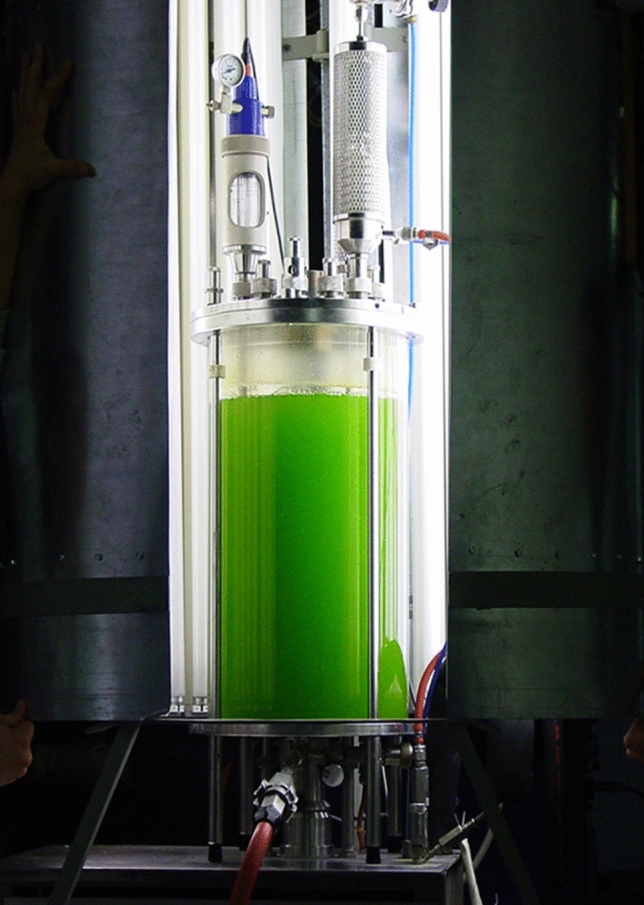
“22,23 26 Stirred tank PBRs are used in various applications with different illumination systems such as internal or external.”
Implementation of Algal Approach in Techno-socio-economical Aspect of Wastewater Treatment
Tazkiaturrizki, Rinanti, A., Fachrul, M. F., Hendrawan, D. I., Aphirta, S., Marendra, S. M. P., & Sipahutar, N. O. L. (2024) · Environmental science and engineering · doi:10.1007/978-981-97-2371-3_10 · Cited by 4
Microfluidic method for rapidly determining the protein and lipid yield of microalgae
Mishra, S., Pan, T.-Y., Liu, Y.-J., Chen, C., & Yao, D. (2025) · New Biotechnology · doi:10.1016/j.nbt.2025.02.001 · Cited by 5
Obidi, P. O., & Bayless, D. J. (2025) · Algal Research · doi:10.1016/j.algal.2025.104102 · Cited by 5
A Review of Biological Methods for Air Pollution Control and Environmental Sustainability
Jadoun, S., Erfani, H., Khodayari, S., Kalantari, F., Fatahi, S., & Gorjizadeh, F. (2025) · Water Air & Soil Pollution · doi:10.1007/s11270-025-08315-1 · Cited by 5
“This is a basic explanation of how the bioreactor functions, although it is somewhat more complex (Benner et al., 2022).”
Cutting-edge approaches for overcoming challenges in microalgal biodiesel production
Mondal, A. S., Sharma, R., & Trivedi, N. (2023) · Elsevier eBooks · doi:10.1016/b978-0-443-13927-7.00022-0 · Cited by 5
Combined in-situ immobilization system of Chlorella sp. in photobioreactor
Ocampo-López, C., Ramírez-Carmona, M., Rendón-Castrillón, L., Muñoz-Blandón, O., González-Pérez, L., & Ospina-Sanjuan, Á. (2023) · Case Studies in Chemical and Environmental Engineering · doi:10.1016/j.cscee.2023.100462 · Cited by 3
Jalalah, M., Ullah, W., Alsaiari, K. E., Salama, E., & Harraz, F. A. (2025) · Waste and Biomass Valorization · doi:10.1007/s12649-025-03449-z · Cited by 4
“The basic principle of a PBR is using light energy, providing essential nutrients, CO 2 , and temperature to increase growth and biomass productivity [15].”
Ranjan, A., Ngobeni, P. V., & Welz, P. J. (2026) · Processes · doi:10.3390/pr14071145 · Cited by 3
Sustainable Production of Natural Pigments from Microalgae: A Review Study
Mokhtarani, B., Zanganeh, J., & Moghtaderi, B. (2026) · Applied Sciences · doi:10.3390/app16147081 · Cited by 3
Algae as a Sustainable Source for Energy Storage Technologies
Rinanti, A., Rahmiyati, L., Fachrul, M. F., Aphirta, S., Marendra, S. M. P., & Savira, N. (2024) · Environmental science and engineering · doi:10.1007/978-981-97-2371-3_20 · Cited by 3
Manoharan, L., Suparmaniam, U., Lam, M. K., Chai, Y. H., Loy, A. C. M., Tan, I. S., Foo, H. C. Y., & Lim, S. (2025) · Brazilian Journal of Chemical Engineering · doi:10.1007/s43153-025-00567-y · Cited by 9
Algae cultivation systems integrated with photovoltaic cell: A systematic review
Atikah, M. S. N., Harun, R., Ilyas, R. A., Norrrahim, M. N. F., & Knight, V. F. (2025) · Results in Engineering · doi:10.1016/j.rineng.2025.106294 · Cited by 4
Gorin, K. V., Pozhidaev, V. M., Tikhomirov, S. A., Kondratev, O. A., Gasanovna, M. P., & Vasilov, R. G. (2023) · Nanobiotechnology Reports · doi:10.1134/s2635167623010020 · Cited by 3
Nonconventional and Novel Strategies to Produce Spirulina Biomass
Safdar, W., Qazi, A. S., Ahmed, S., Tariq, M., & Ahmed, H. (2024) · Springer eBooks · doi:10.1007/978-3-031-45523-0_7 · Cited by 5
Optimizing Phosphorus Removal for Municipal Wastewater Post-Treatment with Chlorella VulgarisPreprint
Lavrinovičs, A., Mežule, L., Cacivkins, P., et al. (2022) · SSRN Electronic Journal · doi:10.2139/ssrn.4173945 · Cited by 3
Airlift photobioreactors applied to algal production
Aslanbay Guler, B., Yarkent, Ç., Oncel, S. S., & Imamoglu, E. (2025) · Algal Bioreactors · doi:10.1016/b978-0-443-14058-7.00018-x · Cited by 3
Metadata
- Authors
- Benner, P., Meier, L., Pfeffer, A., Krüger, K., Oropeza Vargas, J. E., & Weuster-Botz, D.
- Affiliations
- Technical University of Munich (DE)
- Venue
- Bioprocess and Biosystems Engineering
- Published
- 2022-03-18
- Volume
- 45
- Issue
- 5
- Pages
- 791-813
- ISSN
- 1615-7591 (ISSN-L)
- 1615-7605
- PMC
- PMC9033726
- OpenAlex
- W4220668937
- Cited by
- 215
- References
- 222
- Citations by year
- 2026: 70 · 2025: 60 · 2024: 51 · 2023: 29 · 2022: 5
- FWCI
- 2.30
- Type
- journal article
- Language
- en
- Open access
- hybrid
- doi.org
- Licence
- cc-by
- creativecommons.org/licenses/by/4.0 (tdm)
- creativecommons.org/licenses/by/4.0 (vor)
- Locations
- Bioprocess and Biosystems Engineering (publishedVersion, cc-by)
- PubMed Central (publishedVersion, cc-by)
- PubMed (publishedVersion)
- mediaTUM (Technical University of Munich) (submittedVersion)
- mediaTUM – the media and publications repository of the Technical University Munich (Technical University Munich) (submittedVersion, other-oa)
- Funders
- Technische Universität München
- Topics
- Physical Sciences › Energy › Renewable Energy, Sustainability and the Environment › Algal biology and biofuel production
- Physical Sciences › Chemical Engineering › Fluid Flow and Transfer Processes › Fluid Dynamics and Mixing
- Physical Sciences › Environmental Science › Environmental Chemistry › Aquatic Ecosystems and Phytoplankton Dynamics
- Keywords
- photobioreactors, microalgae, cyanobacteria, phototrophic cultivation, microplates, microfluidics, shake flask, bubble column, stirred tank bioreactor, raceway ponds, scale-up, scale-down model, CO2 fixation, bioactive compounds, bioprocess design
- MeSH terms
- Cyanobacteria, Carbon Dioxide, Humans, Biomass, Microalgae, Photobioreactors
About these checks
Registry, retraction, Cites and statistics results are computed, not judged, with one exception: a printed reference that no index lists is read once by a model before it counts as a citation error. Claims are extracted by a model and kept only when their quote appears verbatim in the text; each cited source is then checked, with a model’s help, for whether it says what the claim relies on. Those verdicts can be wrong — read the claim’s quote and the cited source before relying on one.
The claim verdicts this report counts are experimental: their accuracy is not yet measured.
A language model drew the claims from the paper on 2026-10-10, under version 3 of the claim definition (model deepseek-v4.1-flash, prompt extract-v3).
A second model labelled each claim on 2026-10-10 (model jev-1.13-20260917, definition revision gold-guideline-v0.2).
Cited sources are checked with a language model’s help (gpt-6-sol).
Statistics and arithmetic are recomputed, not judged.
Confidence bands are shown only for fields calibrated on our annotated test set. None is calibrated yet, so no band is shown.
What counts as a claim ›How we measure confidence ›How we check this ›
Are you an author, or do you see a problem with this page? Request a review
Data sources
Bibliographic data: Semantic Scholar, OpenAlex, Crossref.
Contains information from the Semantic Scholar Academic Graph Datasets, made available under the ODC Attribution License (ODC-BY 1.0).
Semantic Scholar’s data is described in: Kinney, R., et al. (2023). The Semantic Scholar Open Data Platform. arXiv:2301.10140.
