

The creatine kinase system and pleiotropic effects of creatine
Open accessThe DOI matches its Crossref record; 253 of the 254 references it cites were found in a registry or an index.
Abstract
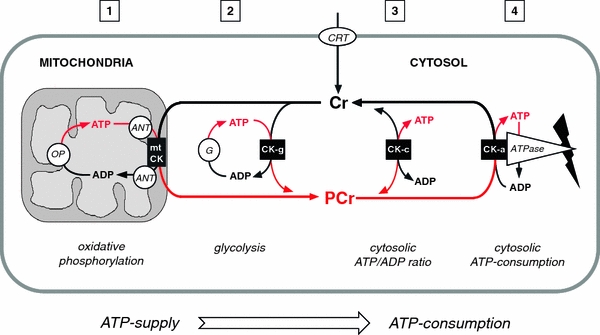
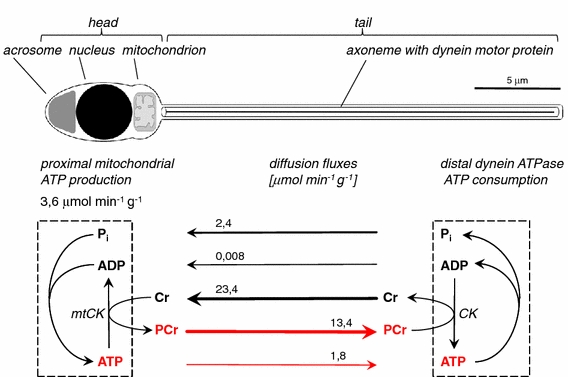
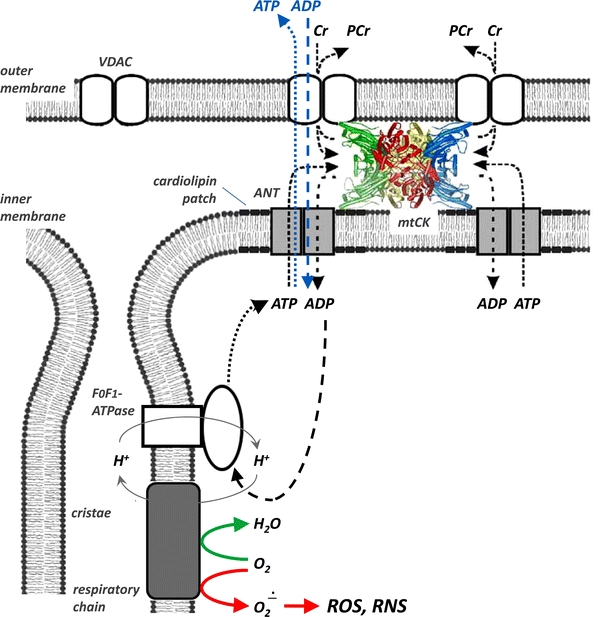
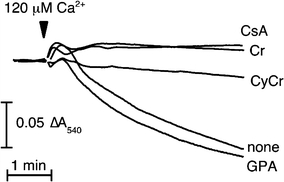
The pleiotropic effects of creatine (Cr) are based mostly on the functions of the enzyme creatine kinase (CK) and its high-energy product phosphocreatine (PCr). Multidisciplinary studies have established molecular, cellular, organ and somatic functions of the CK/PCr system, in particular for cells and tissues with high and intermittent energy fluctuations. These studies include tissue-specific expression and subcellular localization of CK isoforms, high-resolution molecular structures and structure-function relationships, transgenic CK abrogation and reverse genetic approaches. Three energy-related physiological principles emerge, namely that the CK/PCr systems functions as (a) an immediately available temporal energy buffer, (b) a spatial energy buffer or intracellular energy transport system (the CK/PCr energy shuttle or circuit) and (c) a metabolic regulator. The CK/PCr energy shuttle connects sites of ATP production (glycolysis and mitochondrial oxidative phosphorylation) with subcellular sites of ATP utilization (ATPases). Thus, diffusion limitations of ADP and ATP are overcome by PCr/Cr shuttling, as most clearly seen in polar cells such as spermatozoa, retina photoreceptor cells and sensory hair bundles of the inner ear. The CK/PCr system relies on the close exchange of substrates and products between CK isoforms and ATP-generating or -consuming processes. Mitochondrial CK in the mitochondrial outer compartment, for example, is tightly coupled to ATP export via adenine nucleotide transporter or carrier (ANT) and thus ATP-synthesis and respiratory chain activity, releasing PCr into the cytosol. This coupling also reduces formation of reactive oxygen species (ROS) and inhibits mitochondrial permeability transition, an early event in apoptosis. Cr itself may also act as a direct and/or indirect anti-oxidant, while PCr can interact with and protect cellular membranes. Collectively, these factors may well explain the beneficial effects of Cr supplementation. The stimulating effects of Cr for muscle and bone growth and maintenance, and especially in neuroprotection, are now recognized and the first clinical studies are underway. Novel socio-economically relevant applications of Cr supplementation are emerging, e.g. for senior people, intensive care units and dialysis patients, who are notoriously Cr-depleted. Also, Cr will likely be beneficial for the healthy development of premature infants, who after separation from the placenta depend on external Cr. Cr supplementation of pregnant and lactating women, as well as of babies and infants are likely to be of benefit for child development. Last but not least, Cr harbours a global ecological potential as an additive for animal feed, replacing meat- and fish meal for animal (poultry and swine) and fish aqua farming. This may help to alleviate human starvation and at the same time prevent over-fishing of oceans.
Overview
The claims and statistics of this paper haven’t been checked yet.
Free: it reads the open-access text and checks the first 5 claims that cite a source we can check. Create a free account to check every claim.
Integrity signals
Registry
Cites
Statistics
Figures
Verification
Claims the paper makes
The claims and statistics of this paper haven’t been checked yet.
Free: it reads the open-access text and checks the first 5 claims that cite a source we can check. Create a free account to check every claim.
Claims other papers make about this one
Each is checked against this paper’s own text: does it say what the citing paper says it does?
The source backs part of the claim, not all of it — or backs it for a different population, condition or comparison.
In the citing paper
“These findings support contentions that it is prudent for individuals to consume at least 3 g/day of creatine to support general health as one ages [1,50].”
From Creatine in health and disease (2021) · cites this paper as [50]
Experimental — accuracy not yet measuredThe source backs part of the claim, not all of it — or backs it for a different population, condition or comparison.
In the citing paper
“As noted above, creatine and phosphagens play an important role in maintaining energy availability [38,39,56,57], particularly related to the role of the CK/PRr system and shuttling of ATP, ADP, and Pi in and out of the mitochondria for cellular metabolism [50,54,55].”
From Creatine in health and disease (2021) · cites this paper as [50]
Experimental — accuracy not yet measuredThe source backs part of the claim, not all of it — or backs it for a different population, condition or comparison.
In the citing paper
“Since sperm motility is dependent on ATP availability and CK activity has been associated with greater sperm quality and function [50,327,328,329], there has been some interest in whether creatine supplementation and/or administration might improve fertility.”
From Creatine in health and disease (2021) · cites this paper as [50]
Experimental — accuracy not yet measuredThe source backs part of the claim, not all of it — or backs it for a different population, condition or comparison.
In the citing paper
“Creatine [166,167], citrulline [168,169], and leucine-rich feedings [111,162] are best interpreted as compounds that help maintain a permissive metabolic and signalling environment in which mechanical loading can drive nucleolar expansion.”
From Ribosome Biogenesis as a Putative Bottleneck to Skeletal Muscle Hypertrophy: Mechanisms, Human Evidence, and Practical Modulators (2026) · cites this paper as [167]
Experimental — accuracy not yet measuredThe source backs part of the claim, not all of it — or backs it for a different population, condition or comparison.
In the citing paper
“creatine is best interpreted as a plausible indirect supporter of ribosome biogenesis, not as a proven direct activator of nucleolar output [166,167]”
From Ribosome Biogenesis as a Putative Bottleneck to Skeletal Muscle Hypertrophy: Mechanisms, Human Evidence, and Practical Modulators (2026) · cites this paper as [167]
Experimental — accuracy not yet measured
10 more claims about this paper
Create a free account to see every claim other papers make about this one.
Self-check
Percentages, sums and reported differences re-computed from the paper’s own numbers.
The self-check needs the paper’s full text.
Citations
Cites
Mitochondrial membrane permeabilization in cell death
Kroemer, G., Galluzzi, L., & Brenner, C. (2007) · Physiological Reviews · doi:10.1152/physrev.00013.2006 · Cited by 3,598 · cited 2×
“Although the molecular composition of the pore remains an open question, it seems to involve the adenine nucleotide transporter ANT-1 isoform and the voltage-dependent anion carrier VDAC (Zhivotovsky et al. 2009) together with mtCK (Kroemer et al. 2007).”
BackgroundCreatine and Creatinine Metabolism
Wyss, M., & Kaddurah-Daouk, R. (2000) · Physiological Reviews · doi:10.1152/physrev.2000.80.3.1107 · Cited by 2,950 · cited 2×
“In particular, the neuroprotective role of Cr that is relevant to a number of neuromuscular and neuro-degenerative diseases is well documented (Matthews et al. 1998; Klivenyi et al. 1999; Brewer and Wallimann 2000; Wyss and Kaddurah-Daouk 2000; Baker and Tarnopolsky 2003; Andres et al. 2005a, b; Brosnan and Brosnan 20…”
BackgroundWallimann, T., Wyss, M., Brdiczka, D., Nicolay, K., & Eppenberger, H. M. (1992) · Biochemical Journal · doi:10.1042/bj2810021 · Cited by 2,011
Self-citationElevation of creatine in resting and exercised muscle of normal subjects by creatine supplementation
Harris, R. C., Söderlund, K., & Hultman, E. (1992) · Clinical Science · doi:10.1042/cs0830367 · Cited by 1,168 · cited 2×
“Cr improves cellular energy state (PCr/ATP ratio) and muscle performance (Harris et al. 1992; Greenhaff et al. 1993) Cr facilitates intracellular energy transport (PCr circuit or shuttle) (Wallimann 1975; Saks et al. 1978, 2006b; Bessman and Geiger 1981; Wallimann and Eppenberger 1985; Bessman…”
BackgroundMcPherron, S. P., Alemseged, Z., Marean, C. W., Wynn, J. G., Reed, D., Geraads, D., Bobe, R., & Béarat, H. A. (2010) · Nature · doi:10.1038/nature09248 · Cited by 832
Transport of Energy in Muscle: The Phosphorylcreatine Shuttle
Bessman, S. P., & Geiger, P. J. (1981) · Science · doi:10.1126/science.6450446 · Cited by 758
Neuroprotective effects of creatine in a transgenic animal model of amyotrophic lateral sclerosis
Klivenyi, P., Ferrante, R. J., Matthews, R. T., Bogdanov, M. B., Klein, A. M., Andreassen, O. A., Mueller, G., Wermer, M., Kaddurah-Daouk, R., & Beal, M. F. (1999) · Nature Medicine · doi:10.1038/6568 · Cited by 682
Nutritional recommendations for the management of sarcopenia
Morley, J. E., Argiles, J. M., Evans, W. J., Bhasin, S., Cella, D., Deutz, N. E. P., Doehner, W., Fearon, K. C. H., Ferrucci, L., Hellerstein, M. K., et al. (2010) · Journal of the American Medical Directors Association · doi:10.1016/j.jamda.2010.04.014 · Cited by 664 · cited 2×
“Recent nutritional recommendations by the US Society for Sarcopenia, Cachexia and Wasting Disease proposed Cr supplementation together with other measures for the management of sarcopenia (age-dependent progressive muscle loss) which is prevalent among the elderly (Morley et al. 2010).”
BackgroundMitochondrial creatine kinase in human health and disease
Schlattner, U., Tokarska-Schlattner, M., & Wallimann, T. (2006) · Biochimica et Biophysica Acta (BBA) - Molecular Basis of Disease · doi:10.1016/j.bbadis.2005.09.004 · Cited by 622
Self-citationGreenhaff, P. L., Casey, A., Short, A. H., Harris, R., Soderlund, K., & Hultman, E. (1993) · Clinical Science · doi:10.1042/cs0840565 · Cited by 460 · cited 4×
“Cr improves cellular energy state (PCr/ATP ratio) and muscle performance (Harris et al. 1992; Greenhaff et al. 1993)”
BackgroundInfluential
Research works printed but not linked: 5
- Saks VA Molecular systems bioenergetics: energy for life 2007 Weinheim Wiley
- Tokarska-Schlattner M Meiler F Zandomeneghi G Meier BH Saks V Neumann D Wallimann T Schlattner U Do creatine and other guanidino compounds bind to phospholipid membranes? Studies with SPR and P-31-NMR-spectroscopy Biophys J 2003 84 49A
- Tokarska-Schlattner M Wallimann T Schlattner U Membrane protective effects of phosphocreatine Biophys J 2005 88 418A
- Wallimann T (1975) Creatine kinase isoenzymes and myofibrillar structure. PhD Thesis Nr 5437, ETH Zurich
- Ziegenfuss TN Lowery LM Lemon PWR Acute fluid volume changes in men during three days of creatine supplementation J Exerc Physiol 1998 1 1 9
Cited by
Items 601–700 of 954
Steinritz, D., Lüling, R., Siegert, M., Mückter, H., Popp, T., Reinemer, P., Gudermann, T. W., Thiermann, H., & John, H. (2021) · Archives of Toxicology · doi:10.1007/s00204-021-03137-6 · Cited by 3
Vraneš, M., Ostojić, S. M., Podlipnik, Č., & Tot, A. S. (2020) · Journal of Chemical Research · doi:10.1177/1747519820978583 · Cited by 3
Gu, J., Li, Y., Xiao, J., & Zhang, Y. (2026) · Frontiers in Nutrition · doi:10.3389/fnut.2026.1800546 · Cited by 3
Wu, Q., Mao, W.-Y., Gao, Y., Wen, Z.-P., Chen, B., Zhang, J., Xu, Y. J., & Liu, S. (2025) · Depression and Anxiety · doi:10.1155/da/9633212 · Cited by 2
Korzeniewski, B. (2026) · European Journal of Applied Physiology · doi:10.1007/s00421-026-06365-9 · Cited by 2
Fields, B. D., Pascal, D. G., Rando, O. K., Huddleston, M., Ingram, K., Hopton, R., Grogg, M. W., Nelson, M., & Voigt, C. A. (2025) · ACS Synthetic Biology · doi:10.1021/acssynbio.4c00690 · Cited by 2
Toniolo, R. A. (2016) · Digital Library of Theses and Dissertations (Universidade de São Paulo) · doi:10.11606/t.5.2016.tde-07122016-150647 · Cited by 2
Doorenbos, C. S. E., Post, A., Stegmann, M., Franssen, C. F. M., Dullaart, R. P. F., Navis, G., Connelly, M. A., & Bakker, S. J. L. (2025) · European Journal of Clinical Investigation · doi:10.1111/eci.70110 · Cited by 2
Yu, H., Xue, J., Li, Y., Shi, Y., Xiong, Y., Nie, Y., Hegazy, A. M., & Zhang, X. (2025) · Aquaculture · doi:10.1016/j.aquaculture.2025.743184 · Cited by 2
Amino acids: Specific functions
Wu, G. (2022) · Elsevier eBooks · doi:10.1016/b978-0-12-821848-8.00049-4 · Cited by 2
Huuskonen, A. S. (2013) · UEF eRepo (University of Eastern Finland) · Cited by 2
β–alanine: performance effects, usage and side effects
Kelly, V. G. (2017) · The University of Queensland · doi:10.14264/uql.2017.370 · Cited by 2
Molz, P., Schlickmann, D. D. S., Steffens, J. P., Castilhos, E. D. S. L., Pohl, H. H., Fenech, M. F., & Franke, S. I. R. (2023) · Nutrition · doi:10.1016/j.nut.2023.112080 · Cited by 2
Sugimoto, C., Perna, M. K., Regan, S. L., Tepe, E. A., Liou, R., Fritz, A. L., Williams, M. T., Vorhees, C. V., & Skelton, M. R. (2023) · Brain Research · doi:10.1016/j.brainres.2023.148690 · Cited by 2
Zhang, G., He, X., Li, Y., Wu, J., Qian, G., Chen, Z., Li, C., & Wang, W. (2025) · Aquaculture Reports · doi:10.1016/j.aqrep.2025.102867 · Cited by 2
Creatine in neuroprotection and neurotoxicity
Kanekar, S. (2024) · Elsevier eBooks · doi:10.1016/b978-0-443-23763-8.00058-0 · Cited by 2
Advances and Trends in Animal-Based Food Bioactives
Ahmad, M. F., Alsayegh, A. A., Ahmed, A., Ashraf, S. A., Haque, A., Otayf, A. Y., Khairat, M. A., Bajahzer, M., Elbendary, E. Y., Kambal, N., et al. (2025) · Springer eBooks · doi:10.1007/978-981-97-9723-3_5 · Cited by 2
Guanidinoacetic acid as a feed supplement offered to weaned piglets
Pedersen, E. K., Dall, J., Amdi, C., & Madsen, J. G. (2021) · Acta Agriculturae Scandinavica Section A – Animal Science · doi:10.1080/09064702.2021.1984560 · Cited by 2
Dietary Creatine and Hydration Biomarkers in the General Population: NHANES 1999–2023
Ostojić, S. M., & Grasaas, E. (2025) · Food Science & Nutrition · doi:10.1002/fsn3.70524 · Cited by 2
Dietary tryptophan’s effect on lipid metabolism in the leopard coral grouper Plectropomus leopardus
Mekuchi, M., Soma, S., Asakura, T., Furuita, H., Shimizu, T., Sanda, T., Yamaguchi, T., Fujikura, Y., Sakata, K., Terayama, K., et al. (2025) · Computational and Structural Biotechnology Reports · doi:10.1016/j.csbr.2025.100077 · Cited by 2
Liu, X., Mao, Y., Hu, L., He, W., Wang, X. N., Guo, X., Li, M., Wang, Y., Wang, Y., Ma, W., et al. (2026) · EClinicalMedicine · doi:10.1016/j.eclinm.2026.104081 · Cited by 2
Ribes, A., Pajares, S., Arias, Á., & García‐Villoria, J. (2015) · Biomarkers in disease · doi:10.1007/978-94-007-7696-8_39 · Cited by 2
Impact of Creatine Supplementation on Muscle and Bone Strength in Older Adults: A Narrative Review
Michalak, P., Borowski, K., Pastuszek, O., Radziwon, M., Bolesta-Okuniewska, E., Marchwińska-Pancer, A., Kopeć, K., Ceryn, J., & Wicher, A. (2026) · Journal of Education Health and Sport · doi:10.12775/jehs.2026.88.68067 · Cited by 2
Chen, G., Zhao, S. S., Chinoy, H., Lilleker, J. B., Liu, W., Li, Y., Morris, A. P., & Lamb, J. A. (2026) · EBioMedicine · doi:10.1016/j.ebiom.2026.106274 · Cited by 2
Watanabe, L. M., Pinhel, M. A. D. S., Noronha, N. Y., & Nonino, C. B. (2022) · Biomarkers in disease · doi:10.1007/978-3-030-81304-8_55-1 · Cited by 2
Al-Hwiesh, A. K., Al-Amoudi, K., Alshehabi, K. M., Abdelgalil, M. M., Al-Hwiesh, B., Alhwiesh, A., Al‐Audah, N., Solami, S. M. A., Hamza, W. M., & Abdul‐Rahman, I. S. (2022) · Saudi Journal of Kidney Diseases and Transplantation · doi:10.4103/1319-2442.390263 · Cited by 2
Chronic Hepatitis B: A Critical Discussion
Long, J., Wang, M., Chen, B., Zhang, J., & Wang, B. (2017) · Future Virology · doi:10.2217/fvl-2016-0094 · Cited by 2
Kale, N. R., Liyanage, W., Huang, R., Murugesan, K., Vyas, P., Labastida, J. A., Kannan, S., & Kannan, R. M. (2026) · Regenerative Engineering and Translational Medicine · doi:10.1007/s40883-025-00500-2 · Cited by 2
Niedźwiecka, N., Grzyb, K., Nona-Mołdawa, A., Gronczewska, J., & Skorkowski, E. F. (2015) · Comparative Biochemistry and Physiology Part B Biochemistry and Molecular Biology · doi:10.1016/j.cbpb.2015.03.002 · Cited by 2
Xu, L., & Han, G. (2023) · Annals of Vascular Medicine & Research · doi:10.47739/2378-9344.vascularmedicine.1173 · Cited by 2
Effect of creatine supplementation on women and children/adolescent
Marques, M. V. D. C. (2020) · Portuguese National Funding Agency for Science, Research and Technology (RCAAP Project by FCT) · Cited by 2
Biofortification of Plant-Based Food Products and Applications to the Athlete
Shaw, K. A. (2023) · HARVEST (University of Saskatchewan) · Cited by 3
Homoarginine test for evaluation of metabolic renal dysfunction
Жлоба, А. А., & Subbotina, T. F. (2021) · Russian Clinical Laboratory Diagnostics · doi:10.51620/0869-2084-2021-66-12-709-717 · Cited by 2
Preclinical safety evaluation of sodium l-methylfolate
Morris‐Schaffer, K., Dahlberg, S., Johann, E., Murphy, M. M., Tran, N. L., & Freeman, E. L. (2025) · Food and Chemical Toxicology · doi:10.1016/j.fct.2025.115822 · Cited by 2
Imaz, J. A. (2020) · The Sydney eScholarship Repository (The University of Sydney) · Cited by 2
A simplified and highly efficient cell-free protein synthesis system for prokaryotes
Lang, X., Zhang, C., Lin, J., Zhang, Z., & Li, W. (2026) · eLife · doi:10.7554/elife.109495.5 · Cited by 2
Xie, L., Wu, D., Yang, W., Li, Y., Zhang, J., & Geng, Z. (2025) · Animals · doi:10.3390/ani15243516 · Cited by 2
Bai, C., Wang, Z., Wang, J., Zhou, L., Wang, J., Chai, Y., Xiong, G., Wang, L., & Liao, T. (2026) · Aquaculture · doi:10.1016/j.aquaculture.2025.743612 · Cited by 2
Video Gaming Reduces Circulating Creatine Levels in Young Male E-Gamers
Andjelic, B., Todorović, N., Panić, J. J., Vraneš, M., & Ostojić, S. M. (2024) · Journal of Endocrinology and Metabolism · doi:10.14740/jem923 · Cited by 2
Prognostic significance of preoperative creatine kinase in resected thymic epithelial tumors
Hashinokuchi, A., Takamori, S., Yamaguchi, M., Shunichi, S., Matsudo, K., Nagano, T., Kinoshita, F., Akamine, T., Kohno, M., Shimokawa, M., et al. (2024) · Journal of Thoracic Disease · doi:10.21037/jtd-23-1797 · Cited by 2
Rakhmetov, A. D., Pil, L. S., Ostapchenko, L. I., & Zoon, C. H. (2015) · The Ukrainian Biochemical Journal · doi:10.15407/ubj87.01.075 · Cited by 2
Nikolov, V., Karamfilov, S., Malinova, R., & Николов, С. (2022) · Bulgarian Portal for Open Science · Cited by 2
Muñoz López, M., López-Gil, J. F., Ramírez de la piscina Viúdez, X., Baz-Valle, E., & Tornero Aguilera, J. F. (2026) · Cells · doi:10.3390/cells15111041 · Cited by 1
“Crea-tine [166,167], citrulline [168,169], and leucine-rich feedings [111,162] are best interpreted as compounds that help maintain a permissive metabolic and signalling environment in which mechanical loading can drive nucleolar expansion.”
Bian, X., Zhu, J., Jia, X., Liang, W., Yu, S., Li, Z., Zhang, W., & Rao, Y. (2023) · eLife · doi:10.7554/elife.89317.2 · Cited by 1
de Stefano, M. I., Monda, A., Maio, G. D., Casillo, M., Messina, A., Monda, V., Moscatelli, F., Monda, M., Polito, R., & Messina, G. (2026) · Sport Sciences for Health · doi:10.1007/s11332-025-01600-w · Cited by 1
Rizzo, G., & Baroni, L. (2026) · Royal Society of Chemistry eBooks · doi:10.1039/9781837678907-00401 · Cited by 1
Sales, L. P. (2019) · Digital Library of Theses and Dissertations (Universidade de São Paulo) · doi:10.11606/d.5.2019.tde-22082019-094019 · Cited by 1
Creatine: Clinical Implications for Orthopedic Surgeons
Al-Humadi, S. M., Kohut, K. T., & Denard, P. J. (2026) · Cureus · doi:10.7759/cureus.103937 · Cited by 1
Salazar‐Méndez, J., Núñez‐Cortés, R., Salazar-Orellana, C., Suso‐Martí, L., Calatayud, J., Cuyúl-Vásquez, I., Pizarro-Corbalán, K., & Ponce‐Fuentes, F. (2026) · Nutrition · doi:10.1016/j.nut.2026.113330 · Cited by 1
Sal-Sarria, S., & Fernández-Blanco, A. (2026) · Behavioural Brain Research · doi:10.1016/j.bbr.2026.116340 · Cited by 1
Cardiovascular diseases and energy deficiency: pathogenetic ways of correction
Cherska, М. S., & Kukharchuk, H. M. (2024) · EMERGENCY MEDICINE · doi:10.22141/2224-0586.19.8.2023.1639 · Cited by 1
Doorenbos, C. S. E., Post, A., van der Veen, Y., Franssen, C. F. M., Eisenga, M. F., Dullaart, R. P. F., Navis, G., Wu, Q., Connelly, M. A., Bakker, S. J. L., et al. (2025) · Clinical Nutrition ESPEN · doi:10.1016/j.clnesp.2025.07.030 · Cited by 1
Impact of Creatine Supplementation on Strength Training
Janik, I., Kuśmierska, M., & Kuśmierski, J. (2024) · Quality in Sport · doi:10.12775/qs.2024.15.51885 · Cited by 1
Lima, E. C. S. B., Maia, A. S. S., Silva, P. L., Tancredi, E., Teruel, M. S., & Ribeiro, C. (2025) · Nutraceuticals · doi:10.3390/nutraceuticals6010001 · Cited by 1
Taşkın, S., Çelık, H., Demiryürek, Ş., & Taşkın, A. (2021) · International Journal of Research -GRANTHAALAYAH · doi:10.29121/granthaalayah.v9.i10.2021.4279 · Cited by 1
Sarcopenia – Potential Beneficial Effects of Creatine Supplementation
Forbes, S. C., Candow, D. G., & McLeod, K. M. (2015) · Elsevier eBooks · doi:10.1016/b978-0-12-418680-4.00004-x · Cited by 1
Lehmeidi, Y., & Neto, T. B. (2025) · Cureus · doi:10.7759/cureus.90661 · Cited by 1
Bekkelund, S. I., Abeler, K., Lilleng, H., & Løseth, S. (2024) · Scientific Reports · doi:10.1038/s41598-024-64555-x · Cited by 1
Identification of Novel HIF1A Target Genes That Regulate Tumor Progression and Metastasis
Peacock, D. L. (2013) · doi:10.21007/etd.cghs.2013.0241 · Cited by 1
Zhang, G., Liu, Y., Li, Y., Tian, J., Zhu, Y., Qian, G., Chen, Z., Li, C., & Wang, W. (2025) · Aquaculture · doi:10.1016/j.aquaculture.2025.742242 · Cited by 1
Wolschick, P. T., de Vitt, M. G., Kroth, A. V., Damo, M., da Silva, M. D. J., Silva, L. E. L. E., Wagner, R. C., Bajay, M. M., Jung, C. T. K., Kozloski, G. V., et al. (2026) · Fermentation · doi:10.3390/fermentation12020118 · Cited by 1
Mitochondrial Gene Regulation and Pain Susceptibility: A Multi-Omics Causal Inference Study
Liu, C. (2025) · International Journal of Molecular Sciences · doi:10.3390/ijms26178690 · Cited by 1
Mitochondrial ATP promotes T cell differentiation through chromatin accessibility
Ng, C., Fung, T. S., Li, D., Kropp, K. N., Patterson, L. F. S., Markovitz, A., Weinberg, D. N., Jones, O., Kim, J.-Y., Zhang, G., et al. (2026) · Cell · doi:10.1016/j.cell.2026.08.023 · Cited by 1
Ribes, A., Pajares, S., Arias, Á., & García‐Villoria, J. (2014) · Springer eBooks · doi:10.1007/978-94-007-7740-8_39-1 · Cited by 1
Wang, K., Liu, C., He, J., Xu, M., Li, L., & Li, H. (2026) · Biochemical Pharmacology · doi:10.1016/j.bcp.2026.118167 · Cited by 1
The use of adjuvant L-arginine in schizophrenia: A behavioural and neurochemical analysis
MacKay, M.-A. B. (2016) · ERA: Education and Research Archive (University of Alberta) · doi:10.7939/r3zs2kq4m · Cited by 1
Бокша, И. С., Prokhorova, T. A., Savushkina, O. K., Терешкина, Е. Б., Vorobyeva, E. A., & Burbaeva, G. S. (2023) · Нейрохимия · doi:10.31857/s1027813323040088 · Cited by 1
Sîrbulescu, R. F., Ilieş, I., Amelung, L., & Zupanc, G. K. H. (2022) · Journal of Comparative Physiology A · doi:10.1007/s00359-022-01591-w · Cited by 1
Zou, H., Lin, L., Liu, L., Shi, M., & Lu, W. (2024) · Comparative Biochemistry and Physiology Part A Molecular & Integrative Physiology · doi:10.1016/j.cbpa.2024.111740 · Cited by 1
Doorenbos, C. S. E., Post, A., van der Veen, Y., Franssen, C. F. M., Eisenga, M. F., Dullaart, R. P. F., Navis, G., Wu, Q., González-Delgado, J. M., Connelly, M. A., et al. (2025) · Clinical Nutrition Open Science · doi:10.1016/j.nutos.2025.11.013 · Cited by 1
Bernard, K., Corenblum, M. J., Tonino, P., & Madhavan, L. (2025) · Neurobiology of Disease · doi:10.1016/j.nbd.2025.107222 · Cited by 1
Cui, M., Jayalakshmi, K., Liu, L., Guha, C., & Branch, C. A. (2015) · NMR in Biomedicine · doi:10.1002/nbm.3391 · Cited by 1
Machado, M. (2026) · Experimental Physiology · doi:10.1113/ep094109 · Cited by 1
Perna, M. K., Gechijian, L., Blanchette, H., Liou, R., Williams, M. T., Vorhees, C. V., & Skelton, M. R. (2026) · Brain Research · doi:10.1016/j.brainres.2026.150151 · Cited by 1
Yau‐Qiu, Z. X., Madrid-Gambín, F., Brennan, L., Palou, A., & Rodríguez, A. M. (2021) · Molecular Nutrition & Food Research · doi:10.1002/mnfr.202001046 · Cited by 1
Ahmed, N., Yousaf, M., Muneeb, M., Akram, C. A., Ahmed, I., Qumar, M., GHAYAS, A., Asif, M., Sulaiman, A. R. A., & Abudabos, A. M. (2026) · Life · doi:10.3390/life16081225 · Cited by 1
Elnesr, S. S., & Shehab-El-Deen, M. (2026) · Veterinary Sciences · doi:10.3390/vetsci13010046 · Cited by 1
Ito, S., Iwata, Y., Uemura, T., Sugimoto, M., Kumabe, H., Miyano, A., Nakamura, T., Tashiro, N., Ieiri, M., Umezaki, M., et al. (2026) · Journal of Neuroscience · doi:10.1523/jneurosci.2010-25.2026 · Cited by 1
Bortoluzzi, V. T. (2019) · Lume (Universidade Federal do Rio Grande do Sul) · Cited by 1
Identification of the mitochondrial HSPD1 as metabolic vulnerability in non-small cell lung cancer
Parma, B. (2023) · Cited by 1
Kopsidas, K., Javidi, H., Kelly, S. P., Aslam, T. M., Black, G. C. M., & Mahmood, S. (2019) · Case Reports in Ophthalmology · doi:10.1159/000503853 · Cited by 1
Arginine Kinase 1 supports energy homeostasis in Drosophila flight muscle development
Zappia, M. P., Westacott, A., Cooke, H., Geary, R., Travers, L., de Castro, L., Carty, O., & Frolov, M. V. (2026) · PLoS Genetics · doi:10.1371/journal.pgen.1012304 · Cited by 1
Kishi, S., Sasaki, R., Fujiwara‐Tani, R., Ohmori, H., Luo, Y., Fujii, K., Sasaki, T., Goto, K., Miyagawa, Y., Kawahara, I., et al. (2025) · International Journal of Molecular Sciences · doi:10.3390/ijms262311555 · Cited by 1
Mohammad Firoz, A. L. A. M., Anwer, T., Mawkili, W., Qadri, M. M., Khardali, A., Alshamrani, A. A., Alshahrani, S., Hazazi, A. M. A., Thaibah, H. A., Ibrahim, S., et al. (2026) · International Journal of Food Science & Technology · doi:10.1093/ijfood/vvaf243 · Cited by 1
Piemontese, C., Girelli, C. R., Stabile, M., Lacitignola, L., Fraccascia, A., Crovace, A., Fanizzi, F. P., & Staffieri, F. (2026) · Frontiers in Veterinary Science · doi:10.3389/fvets.2026.1811478 · Cited by 1
Duarte‐Silva, S. (2015) · Portuguese National Funding Agency for Science, Research and Technology (RCAAP Project by FCT) · Cited by 1
Нерсесова, Л. С., Petrosyan, M. S., Gasparyan, S. S., Газарянц, М. Г., & Akopian, J. I. (2022) · Biology Bulletin · doi:10.1134/s1062359022110152 · Cited by 1
Kočvarová, R., Azar, S., Agranovich, B., Abramovich, I., Kirillov, S., Nemirovski, A., Baraghithy, S., Plaschkes, I., Merquiol, E., Rouvinski, A., et al. (2026) · British Journal of Pharmacology · doi:10.1111/bph.70387 · Cited by 1
Regulation | Metabolite Channeling in Energy Metabolism
Schlattner, U., Tokarska-Schlattner, M., Saudou, F., & Wallimann, T. (2021) · Elsevier eBooks · doi:10.1016/b978-0-12-819460-7.00336-4 · Cited by 1
Self-citationLemeshko, V. V. (2025) · Biochimica et Biophysica Acta (BBA) - Bioenergetics · doi:10.1016/j.bbabio.2025.149571 · Cited by 1
Li, J., Bao, H., Jia, S., Huo, H., Hu, D., & Yin, H. (2026) · Journal of Ethnopharmacology · doi:10.1016/j.jep.2026.121530 · Cited by 1
Evaluation of Yeast Fermentate Supplementation on Poultry Stress Susceptibility and Physiology
Nelson, J. R. (2020) · OakTrust (Texas A&M University Libraries) · Cited by 1
Genetics of muscle and meat quality in chicken
Zahoor, I. (2013) · ERA · Cited by 1
Boudoures, A. L. (2017) · Open Scholarship Institutional Repository (Washington University in St. Louis) · doi:10.7936/k7qz28dv · Cited by 1
DeBrosse, C. (2017) · ScholarlyCommons (University of Pennsylvania) · Cited by 1
Lozano, B. C. (2015) · Dipòsit Digital de la Universitat de Barcelona (Universitat de Barcelona) · Cited by 1
Serum GAA as a Possible Biomarker of Exhaustive Exercise?
Ostojić, S. M., Štajer, V., Rátgéber, L., Betlehem, J., Acs, P., & Olah, A. (2019) · Frontiers in Physiology · doi:10.3389/fphys.2019.01506 · Cited by 1
Understanding and ameliorating perturbations of human cerebral energy metabolism after major trauma
Stovell, M. G. (2020) · Apollo (University of Cambridge) · doi:10.17863/cam.70621 · Cited by 1
24-h Urinary Creatinine Excretion and Associated factors: Results from Nutrition UP65.
Leitão, A. M. S. (2018) · Portuguese National Funding Agency for Science, Research and Technology (RCAAP Project by FCT) · doi:10.34626/cesn-z807 · Cited by 1
Metadata
- Authors
- Wallimann, T., Tokarska-Schlattner, M., & Schlattner, U.
- Affiliations
- ETH Zurich (CH)
- Inserm (FR)
- Corresponding author
- Wallimann, Theo
- Schlattner, Uwe
- Venue
- Amino Acids
- Published
- 2011-03-30
- Volume
- 40
- Issue
- 5
- Pages
- 1271-1296
- ISSN
- 0939-4451 (ISSN-L)
- 1438-2199
- PMC
- PMC3080659
- OpenAlex
- W2041686985
- Cited by
- 797
- References
- 254
- Citations by year
- 2026: 79 · 2025: 84 · 2024: 59 · 2023: 68 · 2022: 60 · 2021: 61 · 2020: 41 · 2019: 43 · 2018: 42 · 2017: 44 · 2016: 58 · 2015: 46 · 2014: 43 · 2013: 35 · 2012: 26
- FWCI
- 3.15
- Type
- journal article
- Language
- en
- Open access
- hybrid
- doi.org
- Licence
- cc-by-nc
- Locations
- Amino Acids (publishedVersion, cc-by-nc)
- PubMed Central (publishedVersion, cc-by-nc)
- PubMed (publishedVersion)
- reroDoc Digital Library (submittedVersion)
- HAL (submittedVersion, other-oa)
- Repository for Publications and Research Data (ETH Zurich) (submittedVersion, other-oa)
- ETH Zürich Research Collection
- Funders
- National Science Foundation
- European Commission (249202)
- Schweizerischer Nationalfonds zur Förderung der Wissenschaftlichen Forschung
- Topics
- Life Sciences › Biochemistry, Genetics and Molecular Biology › Molecular Biology › Mitochondrial Function and Pathology
- Health Sciences › Nursing › Nutrition and Dietetics › Muscle metabolism and nutrition
- Life Sciences › Biochemistry, Genetics and Molecular Biology › Molecular Biology › Metabolism, Diabetes, and Cancer
- Keywords
- creatine kinase, phosphocreatine, creatine, creatine supplementation, ATP transport, adenine nucleotide transporter, mitochondrial permeability transition, reactive oxygen species, antioxidant activity, creatine kinase isoforms, neuroprotection, muscle growth, bone preservation, preterm infants, dialysis patients, feed additives, structure-function relationship, spermatozoa
- MeSH terms
- Animals, Creatine, Creatine Kinase, Humans, Phosphocreatine
About these checks
Registry, retraction, Cites and statistics results are computed, not judged, with one exception: a printed reference that no index lists is read once by a model before it counts as a citation error. Claims are extracted by a model and kept only when their quote appears verbatim in the text; each cited source is then checked, with a model’s help, for whether it says what the claim relies on. Those verdicts can be wrong — read the claim’s quote and the cited source before relying on one.
Statistics and arithmetic are recomputed, not judged.
Confidence bands are shown only for fields calibrated on our annotated test set. None is calibrated yet, so no band is shown.
What counts as a claim ›How we measure confidence ›How we check this ›
Are you an author, or do you see a problem with this page? Request a review
Data sources
Bibliographic data: Semantic Scholar, OpenAlex, Crossref.
Contains information from the Semantic Scholar Academic Graph Datasets, made available under the ODC Attribution License (ODC-BY 1.0).
Semantic Scholar’s data is described in: Kinney, R., et al. (2023). The Semantic Scholar Open Data Platform. arXiv:2301.10140.
