

The creatine kinase system and pleiotropic effects of creatine
Open accessThe DOI matches its Crossref record; 253 of the 254 references it cites were found in a registry or an index.
Abstract
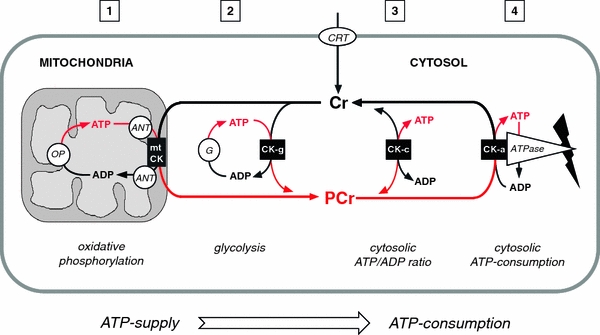
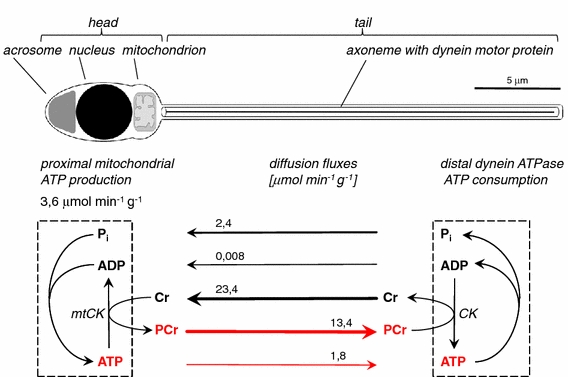
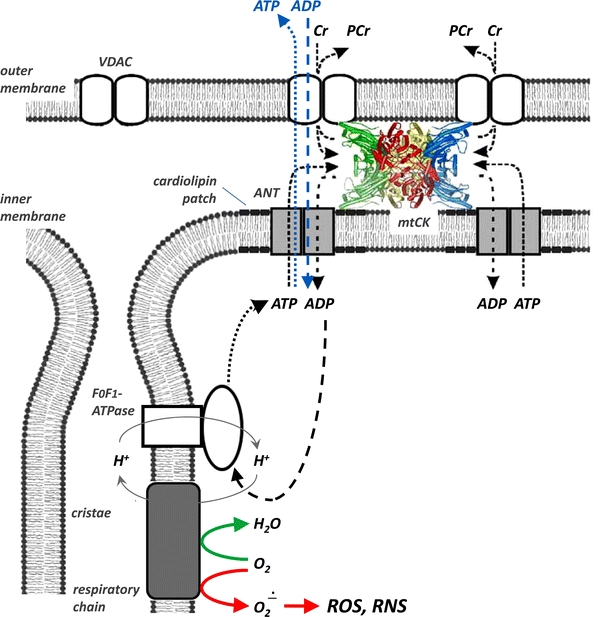
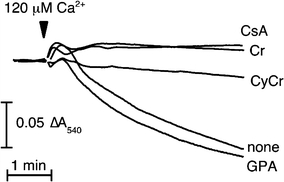
The pleiotropic effects of creatine (Cr) are based mostly on the functions of the enzyme creatine kinase (CK) and its high-energy product phosphocreatine (PCr). Multidisciplinary studies have established molecular, cellular, organ and somatic functions of the CK/PCr system, in particular for cells and tissues with high and intermittent energy fluctuations. These studies include tissue-specific expression and subcellular localization of CK isoforms, high-resolution molecular structures and structure-function relationships, transgenic CK abrogation and reverse genetic approaches. Three energy-related physiological principles emerge, namely that the CK/PCr systems functions as (a) an immediately available temporal energy buffer, (b) a spatial energy buffer or intracellular energy transport system (the CK/PCr energy shuttle or circuit) and (c) a metabolic regulator. The CK/PCr energy shuttle connects sites of ATP production (glycolysis and mitochondrial oxidative phosphorylation) with subcellular sites of ATP utilization (ATPases). Thus, diffusion limitations of ADP and ATP are overcome by PCr/Cr shuttling, as most clearly seen in polar cells such as spermatozoa, retina photoreceptor cells and sensory hair bundles of the inner ear. The CK/PCr system relies on the close exchange of substrates and products between CK isoforms and ATP-generating or -consuming processes. Mitochondrial CK in the mitochondrial outer compartment, for example, is tightly coupled to ATP export via adenine nucleotide transporter or carrier (ANT) and thus ATP-synthesis and respiratory chain activity, releasing PCr into the cytosol. This coupling also reduces formation of reactive oxygen species (ROS) and inhibits mitochondrial permeability transition, an early event in apoptosis. Cr itself may also act as a direct and/or indirect anti-oxidant, while PCr can interact with and protect cellular membranes. Collectively, these factors may well explain the beneficial effects of Cr supplementation. The stimulating effects of Cr for muscle and bone growth and maintenance, and especially in neuroprotection, are now recognized and the first clinical studies are underway. Novel socio-economically relevant applications of Cr supplementation are emerging, e.g. for senior people, intensive care units and dialysis patients, who are notoriously Cr-depleted. Also, Cr will likely be beneficial for the healthy development of premature infants, who after separation from the placenta depend on external Cr. Cr supplementation of pregnant and lactating women, as well as of babies and infants are likely to be of benefit for child development. Last but not least, Cr harbours a global ecological potential as an additive for animal feed, replacing meat- and fish meal for animal (poultry and swine) and fish aqua farming. This may help to alleviate human starvation and at the same time prevent over-fishing of oceans.
Overview
The claims and statistics of this paper haven’t been checked yet.
Free: it reads the open-access text and checks the first 5 claims that cite a source we can check. Create a free account to check every claim.
Integrity signals
Registry
Cites
Statistics
Figures
Verification
Claims the paper makes
The claims and statistics of this paper haven’t been checked yet.
Free: it reads the open-access text and checks the first 5 claims that cite a source we can check. Create a free account to check every claim.
Claims other papers make about this one
Each is checked against this paper’s own text: does it say what the citing paper says it does?
The source backs part of the claim, not all of it — or backs it for a different population, condition or comparison.
In the citing paper
“These findings support contentions that it is prudent for individuals to consume at least 3 g/day of creatine to support general health as one ages [1,50].”
From Creatine in health and disease (2021) · cites this paper as [50]
Experimental — accuracy not yet measuredThe source backs part of the claim, not all of it — or backs it for a different population, condition or comparison.
In the citing paper
“As noted above, creatine and phosphagens play an important role in maintaining energy availability [38,39,56,57], particularly related to the role of the CK/PRr system and shuttling of ATP, ADP, and Pi in and out of the mitochondria for cellular metabolism [50,54,55].”
From Creatine in health and disease (2021) · cites this paper as [50]
Experimental — accuracy not yet measuredThe source backs part of the claim, not all of it — or backs it for a different population, condition or comparison.
In the citing paper
“Since sperm motility is dependent on ATP availability and CK activity has been associated with greater sperm quality and function [50,327,328,329], there has been some interest in whether creatine supplementation and/or administration might improve fertility.”
From Creatine in health and disease (2021) · cites this paper as [50]
Experimental — accuracy not yet measuredThe source backs part of the claim, not all of it — or backs it for a different population, condition or comparison.
In the citing paper
“Creatine [166,167], citrulline [168,169], and leucine-rich feedings [111,162] are best interpreted as compounds that help maintain a permissive metabolic and signalling environment in which mechanical loading can drive nucleolar expansion.”
From Ribosome Biogenesis as a Putative Bottleneck to Skeletal Muscle Hypertrophy: Mechanisms, Human Evidence, and Practical Modulators (2026) · cites this paper as [167]
Experimental — accuracy not yet measuredThe source backs part of the claim, not all of it — or backs it for a different population, condition or comparison.
In the citing paper
“creatine is best interpreted as a plausible indirect supporter of ribosome biogenesis, not as a proven direct activator of nucleolar output [166,167]”
From Ribosome Biogenesis as a Putative Bottleneck to Skeletal Muscle Hypertrophy: Mechanisms, Human Evidence, and Practical Modulators (2026) · cites this paper as [167]
Experimental — accuracy not yet measured
10 more claims about this paper
Create a free account to see every claim other papers make about this one.
Self-check
Percentages, sums and reported differences re-computed from the paper’s own numbers.
The self-check needs the paper’s full text.
Citations
Cites
Mitochondrial membrane permeabilization in cell death
Kroemer, G., Galluzzi, L., & Brenner, C. (2007) · Physiological Reviews · doi:10.1152/physrev.00013.2006 · Cited by 3,598 · cited 2×
“Although the molecular composition of the pore remains an open question, it seems to involve the adenine nucleotide transporter ANT-1 isoform and the voltage-dependent anion carrier VDAC (Zhivotovsky et al. 2009) together with mtCK (Kroemer et al. 2007).”
BackgroundCreatine and Creatinine Metabolism
Wyss, M., & Kaddurah-Daouk, R. (2000) · Physiological Reviews · doi:10.1152/physrev.2000.80.3.1107 · Cited by 2,950 · cited 2×
“In particular, the neuroprotective role of Cr that is relevant to a number of neuromuscular and neuro-degenerative diseases is well documented (Matthews et al. 1998; Klivenyi et al. 1999; Brewer and Wallimann 2000; Wyss and Kaddurah-Daouk 2000; Baker and Tarnopolsky 2003; Andres et al. 2005a, b; Brosnan and Brosnan 20…”
BackgroundWallimann, T., Wyss, M., Brdiczka, D., Nicolay, K., & Eppenberger, H. M. (1992) · Biochemical Journal · doi:10.1042/bj2810021 · Cited by 2,011
Self-citationElevation of creatine in resting and exercised muscle of normal subjects by creatine supplementation
Harris, R. C., Söderlund, K., & Hultman, E. (1992) · Clinical Science · doi:10.1042/cs0830367 · Cited by 1,168 · cited 2×
“Cr improves cellular energy state (PCr/ATP ratio) and muscle performance (Harris et al. 1992; Greenhaff et al. 1993) Cr facilitates intracellular energy transport (PCr circuit or shuttle) (Wallimann 1975; Saks et al. 1978, 2006b; Bessman and Geiger 1981; Wallimann and Eppenberger 1985; Bessman…”
BackgroundMcPherron, S. P., Alemseged, Z., Marean, C. W., Wynn, J. G., Reed, D., Geraads, D., Bobe, R., & Béarat, H. A. (2010) · Nature · doi:10.1038/nature09248 · Cited by 832
Transport of Energy in Muscle: The Phosphorylcreatine Shuttle
Bessman, S. P., & Geiger, P. J. (1981) · Science · doi:10.1126/science.6450446 · Cited by 758
Neuroprotective effects of creatine in a transgenic animal model of amyotrophic lateral sclerosis
Klivenyi, P., Ferrante, R. J., Matthews, R. T., Bogdanov, M. B., Klein, A. M., Andreassen, O. A., Mueller, G., Wermer, M., Kaddurah-Daouk, R., & Beal, M. F. (1999) · Nature Medicine · doi:10.1038/6568 · Cited by 682
Nutritional recommendations for the management of sarcopenia
Morley, J. E., Argiles, J. M., Evans, W. J., Bhasin, S., Cella, D., Deutz, N. E. P., Doehner, W., Fearon, K. C. H., Ferrucci, L., Hellerstein, M. K., et al. (2010) · Journal of the American Medical Directors Association · doi:10.1016/j.jamda.2010.04.014 · Cited by 664 · cited 2×
“Recent nutritional recommendations by the US Society for Sarcopenia, Cachexia and Wasting Disease proposed Cr supplementation together with other measures for the management of sarcopenia (age-dependent progressive muscle loss) which is prevalent among the elderly (Morley et al. 2010).”
BackgroundMitochondrial creatine kinase in human health and disease
Schlattner, U., Tokarska-Schlattner, M., & Wallimann, T. (2006) · Biochimica et Biophysica Acta (BBA) - Molecular Basis of Disease · doi:10.1016/j.bbadis.2005.09.004 · Cited by 622
Self-citationGreenhaff, P. L., Casey, A., Short, A. H., Harris, R., Soderlund, K., & Hultman, E. (1993) · Clinical Science · doi:10.1042/cs0840565 · Cited by 460 · cited 4×
“Cr improves cellular energy state (PCr/ATP ratio) and muscle performance (Harris et al. 1992; Greenhaff et al. 1993)”
BackgroundInfluential
Research works printed but not linked: 5
- Saks VA Molecular systems bioenergetics: energy for life 2007 Weinheim Wiley
- Tokarska-Schlattner M Meiler F Zandomeneghi G Meier BH Saks V Neumann D Wallimann T Schlattner U Do creatine and other guanidino compounds bind to phospholipid membranes? Studies with SPR and P-31-NMR-spectroscopy Biophys J 2003 84 49A
- Tokarska-Schlattner M Wallimann T Schlattner U Membrane protective effects of phosphocreatine Biophys J 2005 88 418A
- Wallimann T (1975) Creatine kinase isoenzymes and myofibrillar structure. PhD Thesis Nr 5437, ETH Zurich
- Ziegenfuss TN Lowery LM Lemon PWR Acute fluid volume changes in men during three days of creatine supplementation J Exerc Physiol 1998 1 1 9
Cited by
Items 301–400 of 954
Molecular Biomarkers for the Diagnosis, Prognosis, and Pharmacodynamics of Spinal Muscular Atrophy
Babić, M., Banović, M., Berečić, I., Banić, T., Leko, M. B., Ulamec, M., Junaković, A., Kopić, J., Sertić, J., Barišić, N., et al. (2023) · Journal of Clinical Medicine · doi:10.3390/jcm12155060 · Cited by 20
Creatine for women in pregnancy for neuroprotection of the fetus
Bain, E., Wilkinson, D., Middleton, P., Crowther, C. A., Dickinson, H., & Walker, D. W. (2013) · Cochrane Database of Systematic Reviews · doi:10.1002/14651858.cd010846 · Cited by 19
Sartini, S., Lattanzi, D., Palma, M. D., Savelli, D., Eusebi, S., Sestili, P., Cuppini, R., & Ambrogini, P. (2019) · Nutrients · doi:10.3390/nu11092014 · Cited by 19
Creatine supplementation and muscle-brain axis: a new possible mechanism?
Ribeiro, F., Forbes, S. C., Candow, D. G., Perim, P., Lira, F. S., Lancha, A. H., & Neto, J. C. R. (2025) · Frontiers in Nutrition · doi:10.3389/fnut.2025.1579204 · Cited by 19
The potential role of creatine supplementation in neurodegenerative diseases
Chang, H., & Leem, Y. (2023) · Physical Activity and Nutrition · doi:10.20463/pan.2023.0037 · Cited by 19
Belfiori-Carrasco, L. F., Marcora, M. S., Bocai, N. I., Ceriani, M. F., Morelli, L., & Castaño, E. M. (2017) · Frontiers in Aging Neuroscience · doi:10.3389/fnagi.2017.00061 · Cited by 19
Actividad física y síndrome metabólico: Citius-Altius-Fortius
Aguirre-Urdaneta, M. A., Rojas, J., & Lima-Martínez, M. M. (2012) · Avances en Diabetología · doi:10.1016/j.avdiab.2012.10.002 · Cited by 19
Overview of the Effect of Citrobacter rodentium Infection on Host Metabolism and the Microbiota
Hopkins, E. G. D., & Frankel, G. M. (2021) · Methods in molecular biology · doi:10.1007/978-1-0716-1339-9_20 · Cited by 19
Low Tissue Creatine: A Therapeutic Target in Clinical Nutrition
Ostojić, S. M. (2022) · Nutrients · doi:10.3390/nu14061230 · Cited by 19
Lemeshko, V. V. (2016) · Biochimica et Biophysica Acta (BBA) - Biomembranes · doi:10.1016/j.bbamem.2016.04.005 · Cited by 19
Delfinis, L. J., Ogilvie, L. M., Khajehzadehshoushtar, S., Gandhi, S., Garibotti, M. C., Thuhan, A. K., Matuszewska, K., Pereira, M., Jones, R. G., Cheng, A. J., et al. (2024) · Molecular Metabolism · doi:10.1016/j.molmet.2024.101976 · Cited by 19
Yang, B., Bundkirchen, K., Krettek, C., Relja, B., & Neunaber, C. (2019) · Scientific Reports · doi:10.1038/s41598-019-42085-1 · Cited by 19
Chidlow, G., Wood, J. P. M., Sia, P. I., & Casson, R. J. (2019) · Investigative Ophthalmology & Visual Science · doi:10.1167/iovs.18-25536 · Cited by 19
García‐Reyero, N., Ekman, D. R., Habib, T., Villeneuve, D. L., Collette, T. W., Bencic, D. C., Ankley, G. T., & Perkins, E. J. (2014) · General and Comparative Endocrinology · doi:10.1016/j.ygcen.2014.03.022 · Cited by 19
Chauton, M. S., Galloway, T. F., Kjørsvik, E., Størseth, T. R., Puvanendran, V., van der Meeren, T., Karlsen, Ø., Rønnestad, I., & Hamre, K. (2015) · Biology Open · doi:10.1242/bio.014431 · Cited by 19
Wang, W., Lee, J., Jin, Q.-X., Fang, N.-Y., Si, Y.-X., Yin, S., Qian, G.-Y., & Park, Y. (2013) · International Journal of Biological Macromolecules · doi:10.1016/j.ijbiomac.2013.06.015 · Cited by 19
Ellery, S. J., LaRosa, D. A., Cullen-McEwen, L. A., Brown, R. D., Snow, R. J., Walker, D. W., Kett, M. M., & Dickinson, H. (2017) · Pediatric Research · doi:10.1038/pr.2016.268 · Cited by 18
Turner, C. E., & Gant, N. (2014) · Elsevier eBooks · doi:10.1016/b978-0-12-401688-0.00007-0 · Cited by 18
Venter, G., Polling, S., Pluk, H., Venselaar, H., Wijers, M., Willemse, M. P., Fransen, J. A. M., & Wieringa, B. (2014) · European Journal of Cell Biology · doi:10.1016/j.ejcb.2014.11.002 · Cited by 18
Sousa-Silva, R., Cholewa, J. M., Pessôa, K. D. A., Xia, Z., Lauver, J. D., Rossi, F. E., & Zanchi, N. E. (2023) · Applied Physiology, Nutrition, and Metabolism · doi:10.1139/apnm-2022-0209 · Cited by 18
Duan, B., Xu, J., Xing, T., Li, J. L., Zhang, L., & Gao, F. (2021) · Poultry Science · doi:10.1016/j.psj.2021.101653 · Cited by 18
Mitochondrial NM23-H4/NDPK-D: a bifunctional nanoswitch for bioenergetics and lipid signaling
Schlattner, U., Tokarska-Schlattner, M., Epand, R. M., Boissan, M., Lacombe, M., Klein‐Seetharaman, J., & Kagan, V. E. (2014) · Naunyn-Schmiedeberg s Archives of Pharmacology · doi:10.1007/s00210-014-1047-4 · Cited by 18
Self-citationAcland, M., Lokman, N. A., Young, C., Anderson, D., Condina, M. R., Desire, C. T., Noye, T. M., Wang, W., Ricciardelli, C., Creek, D. J., et al. (2022) · Cancers · doi:10.3390/cancers14112763 · Cited by 18
Creatine metabolism at the uterine–placental interface throughout gestation in sheep
Sah, N., Stenhouse, C., Halloran, K. M., Moses, R. M., Seo, H., Burghardt, R. C., Johnson, G. A., Wu, G., & Bazer, F. W. (2023) · Biology of Reproduction · doi:10.1093/biolre/ioad052 · Cited by 18
Nasirikhah, A., Zhandi, M., Shakeri, M., Sadeghi, M., Ansari, M., Deldar, H., & Yousefi, A. R. (2019) · Theriogenology · doi:10.1016/j.theriogenology.2019.03.006 · Cited by 18
Single-dose oral guanidinoacetic acid exhibits dose-dependent pharmacokinetics in healthy volunteers
Ostojić, S. M., & Vojvodic-Ostojic, A. (2015) · Nutrition Research · doi:10.1016/j.nutres.2014.12.010 · Cited by 18
Deletion of the Creatine Transporter (Slc6a8) in Dopaminergic Neurons Leads to Hyperactivity in Mice
Abdulla, Z. I., Pahlevani, B., Lundgren, K. H., Pennington, J. L., Udobi, K. C., Seroogy, K. B., & Skelton, M. R. (2019) · Journal of Molecular Neuroscience · doi:10.1007/s12031-019-01405-w · Cited by 18
Iqbal, F., Hoeger, H., Lubec, G., & Bodamer, O. A. (2017) · Metabolic Brain Disease · doi:10.1007/s11011-017-0092-3 · Cited by 18
Azizollahi, M., Ghasemi, H. A., Foroudi, F., & Hajkhodadadi, I. (2023) · Poultry Science · doi:10.1016/j.psj.2023.103297 · Cited by 18
Li, C., Wang, W., Lee, J., Zeng, L., Yang, Y., Yin, S., Park, Y., & Qian, G.-Y. (2020) · International Journal of Biological Macromolecules · doi:10.1016/j.ijbiomac.2020.06.036 · Cited by 18
Association of creatine kinase and skin toxicity in phase I trials of anticancer agents
Garcia, V. M., Thavasu, P., Codesido, M. B., Molife, L. R., Vitfell-Pedersen, J., Puglisi, M., Basu, B., Shah, K. J., Iqbal, J., Bono, J. S. D., et al. (2012) · British Journal of Cancer · doi:10.1038/bjc.2012.482 · Cited by 18
The regulating pathway of creatine on muscular protein metabolism depends on the energy state
Sun, M., Jiao, H., Wang, X., Li, H., Zhou, Y., Zhao, J., & Lin, H. (2022) · American Journal of Physiology-Cell Physiology · doi:10.1152/ajpcell.00447.2021 · Cited by 17
Creatine Supplementation: Practical Strategies and Considerations for Mixed Martial Arts
Ricci, T., Forbes, S. C., & Candow, D. G. (2020) · Journal of Exercise and Nutrition · Cited by 17
Post, A., Groothof, D., Kremer, D., Knobbe, T. J., Abma, W., Koops, C. A., Tsikas, D., Wallimann, T., Dullaart, R. P. F., Franssen, C. F. M., et al. (2024) · Amino Acids · doi:10.1007/s00726-024-03401-w · Cited by 17
Self-citationATP Metabolism of Astrocytes: Consumption, Regeneration and Restoration
Dringen, R., Karger, G., Winkler, U., & Hirrlinger, J. (2025) · Neurochemical Research · doi:10.1007/s11064-025-04604-7 · Cited by 17
Creatine as a mitochondrial theranostic in predictive, preventive, and personalized medicine
Ostojić, S. M., & Rátgéber, L. (2025) · The EPMA Journal · doi:10.1007/s13167-025-00420-9 · Cited by 17
Khoja, S., Lambert, J., Nitzahn, M., Eliav, A., Zhang, Y., Tamboline, M., Le, C., Nasser, E., Li, Y., Patel, P. D., et al. (2022) · Molecular Therapy — Methods & Clinical Development · doi:10.1016/j.omtm.2022.03.015 · Cited by 17
Blonç, M., Brandts, I., Cánovas, M., Franco‐Martínez, L., Rubio, C. P., Tort, L., Tvarijonaviciute, A., Gravato, C., & Teles, M. (2023) · Ecological Indicators · doi:10.1016/j.ecolind.2023.109966 · Cited by 17
Jing, Z., Wang, C., Wen, S., Jin, Y., Meng, Q., Liu, Q., Wu, J., Sun, H., & Liu, M. (2020) · Current Pharmaceutical Biotechnology · doi:10.2174/1389201021999201116160247 · Cited by 17
Allen, J., Pham, L., Bond, S. T., O’Brien, W. T., Spitz, G., Shultz, S. R., Drew, B. G., Wright, D. K., & McDonald, S. J. (2023) · Frontiers in Molecular Neuroscience · doi:10.3389/fnmol.2023.1208697 · Cited by 17
Li, Y., Liu, M., Gao, S., Cai, L., Zhang, Q., Yan, S., Liu, G., & Ji, B. (2019) · Interactive Cardiovascular and Thoracic Surgery · doi:10.1093/icvts/ivz147 · Cited by 17
Xu, S., Zhu, W., Wan, Y., Wang, J., Chen, X., Pi, L., Lobo, M. K., Ren, B., Ying, Z., Morris, M. A., et al. (2018) · Molecular Imaging · doi:10.1177/1536012117749051 · Cited by 17
(Phospho)creatine: the reserve and merry-go-round of brain energetics
Chen, H., deGrauw, T. J., & Kuan, C.-Y. (2022) · Neural Regeneration Research · doi:10.4103/1673-5374.346470 · Cited by 17
Pan, N., Yu-ling, W., Yang, B., Zhang, M., He, Y., Wang, Z., Tan, L., & Zhang, L. (2023) · Clinica Chimica Acta · doi:10.1016/j.cca.2023.117335 · Cited by 17
Štajer, V., Trivić, T., Drid, P., Vraneš, M., & Ostojić, S. M. (2016) · Applied Physiology, Nutrition, and Metabolism · doi:10.1139/apnm-2016-0102 · Cited by 17
Pourmajidian, M., Hansen, J. Y., Shafiei, G., Mišić, B., & Dagher, A. (2026) · PLoS Biology · doi:10.1371/journal.pbio.3003619 · Cited by 16
Ghirardini, E., Sagona, G., Márquez-Galera, Á., Calugi, F., Navarrón, C. M., Cacciante, F., Chen, S., Vetta, F. D., Dadà, L., Mazziotti, R. M., et al. (2023) · Acta Neuropathologica Communications · doi:10.1186/s40478-023-01533-w · Cited by 16
Creatine as a Promising Component of Paternal Preconception Diet
Ostojić, S. M., Stea, T. H., & Engeset, D. (2022) · Nutrients · doi:10.3390/nu14030586 · Cited by 16
Gonçalves, M. G., Medeiros, M. A., de Lemos, L. I. C., Pedrosa, L. F. C., Santos, P. P. D. A., Abreu, B. J., & Lima, J. P. M. S. (2022) · Nutrients · doi:10.3390/nu14030431 · Cited by 16
Reactive Oxygen Species: Friends and Foes of Signal Transduction
Retta, S. F., Chiarugi, P., Trabalzini, L., Pinton, P., & Belkin, A. M. (2012) · Journal of Signal Transduction · doi:10.1155/2012/534029 · Cited by 16
Creatine is Neuroprotective to Retinal Neurons In Vitro But Not In Vivo
Sia, P. I., Wood, J. P. M., Chidlow, G., & Casson, R. J. (2019) · Investigative Ophthalmology & Visual Science · doi:10.1167/iovs.18-25858 · Cited by 16
Yu, H., He, Y., Qin, M., Wang, L., Rong, K., & Zhang, X. (2024) · Aquaculture · doi:10.1016/j.aquaculture.2024.740591 · Cited by 16
Soukup, T. (2014) · Physiological Research · doi:10.33549/physiolres.932623 · Cited by 16
Wallimann, T. (2015) · Journal of Muscle Research and Cell Motility · doi:10.1007/s10974-015-9427-z · Cited by 16
Self-citationDemarquoy, J. (2025) · Nutrients · doi:10.3390/nu17243860 · Cited by 16
Skin ultrasonography and magnetic resonance; new clinical applications and instrumentation
Zemtsov, A. (2024) · Skin Research and Technology · doi:10.1111/srt.13633 · Cited by 16
Creatine supplementation with methylglyoxal: A potent therapy for cancer in experimental models
Pal, A., Roy, A., & Ray, M. (2016) · Amino Acids · doi:10.1007/s00726-016-2224-1 · Cited by 15
de Guingand, D. L., Palmer, K. R., Bilardi, J. E., & Ellery, S. J. (2020) · Midwifery · doi:10.1016/j.midw.2019.102599 · Cited by 15
Bonilla, D. A., Moreno, Y., Rawson, E. S., Forero, D. A., Stout, J. R., Kerksick, C. M., Roberts, M. D., & Kreider, R. B. (2021) · Nutrients · doi:10.3390/nu13082521 · Cited by 15
Shi, H., Huang, L., Wang, Q., Zhang, N., Lv, C., Lin, C., Shao, L., Xia, D., Zhao, Z., Yang, G., et al. (2025) · International Journal of Surgery · doi:10.1097/js9.0000000000003030 · Cited by 15
Transcriptomic and metabolic analyses reveal salvage pathways in creatine-deficient AGAT−/− mice
Stockebrand, M. C., Sasani, A., Neu, A. D., Kharbanda, K. K., Sauter, K., Schillemeit, S., Isbrandt, D., & Choe, C. (2016) · Amino Acids · doi:10.1007/s00726-016-2202-7 · Cited by 15
Godinho, L. C., Cella, P. S., Guimarães, T. A. S., Palma, G. H. D., Nunes, J. H. C., & Deminice, R. (2023) · Antioxidants · doi:10.3390/antiox12040823 · Cited by 15
Lemeshko, V. V. (2018) · Biochimica et Biophysica Acta (BBA) - Biomembranes · doi:10.1016/j.bbamem.2018.10.004 · Cited by 15
Xu, H.-L., Li, H., Bao, R., Tang, Y.-X., Elsherbeni, A. I. A., Gharib, H. B., & Li, J. (2022) · Frontiers in Veterinary Science · doi:10.3389/fvets.2022.938826 · Cited by 15
Bioinformatic Analysis of the Perilymph Proteome to Generate a Human Protein Atlas
van Dieken, A., Staecker, H., Schmitt, H., Harre, J., Pich, A., Roßberg, W., Lenarz, T., Ďurišin, M., & Warnecke, A. (2022) · Frontiers in Cell and Developmental Biology · doi:10.3389/fcell.2022.847157 · Cited by 15
Bruschetta, G., Notti, A., Lando, G., & Ferlazzo, A. M. (2021) · Biochemistry and Biophysics Reports · doi:10.1016/j.bbrep.2021.101087 · Cited by 15
Li, W., Wu, Q., Cui, Z.-Y., Jiang, Y.-W., Aisikaer, A., Zhang, F., Chen, H.-W., Wang, W., Wang, Y.-L., Lv, L., et al. (2022) · Frontiers in Veterinary Science · doi:10.3389/fvets.2022.954675 · Cited by 15
Molecular and metabolic insights of creatine supplementation on resistance training
Bonilla, D. A., & Moreno, Y. (2016) · Revista Colombiana de Química · doi:10.15446/rev.colomb.quim.v44n1.53978 · Cited by 14
Dietary creatine and kidney function in adult population: NHANES 2017–2018
Ostojić, S. M. (2021) · Food Science & Nutrition · doi:10.1002/fsn3.2200 · Cited by 14
Optimization of training: New developments in safe strength training
Виноградова, О. Л., Popov, D. V., Netreba, A. I., Tsvirkun, D., Kurochkina, N. S., Bachinin, A. V., Bravyy, Y. R., Lyubaeva, E. V., Lysenko, E. A., Miller, T. F., et al. (2013) · Human Physiology · doi:10.1134/s0362119713050162 · Cited by 14
Schmitz, W., Koderer, C., El‐Mesery, M., Gubik, S., Sampers, R., Straub, A., Kübler, A. C., & Seher, A. (2021) · International Journal of Molecular Sciences · doi:10.3390/ijms22063039 · Cited by 14
Lefevre, C. M., Cain, J. W., Kramer, A. C., Seo, H., Lopez, A. N., Sah, N., Wu, G., Bazer, F. W., & Johnson, G. A. (2024) · Biology of Reproduction · doi:10.1093/biolre/ioae088 · Cited by 14
Faulkner, P. C., Burleson, M. L., Simonitis, L. E., Marshall, C. D., Hala, D. N., & Petersen, L. H. (2018) · Journal of Experimental Biology · doi:10.1242/jeb.181172 · Cited by 14
Jiang, Y., Su, Z., Lin, Y., Xiong, Y., Li, C., Li, J., Wang, R., Zhong, R., Cheng, B., He, J., et al. (2021) · Translational Lung Cancer Research · doi:10.21037/tlcr-21-600 · Cited by 14
Homoarginine deficiency is associated with increased bone turnover
Pilz, S., Meinitzer, A., Tomaschitz, A., Kienreich, K., Fahrleitner‐Pammer, A., Drechsler, C., Boehm, B. O., & März, W. (2012) · Osteoporosis International · doi:10.1007/s00198-012-1904-2 · Cited by 14
Rojas, D. B., de Andrade, R. B., Gemelli, T., Oliveira, L. S., Campos, A. G., Dutra‐Filho, C. S., & Wannmacher, C. M. D. (2012) · Metabolic Brain Disease · doi:10.1007/s11011-012-9319-5 · Cited by 13
Saks, V. A., Schlattner, U., Tokarska-Schlattner, M., Wallimann, T., Bagur, R., Zorman, S., Pelosse, M., Santos, P. D. D., Boucher, F. R., Käämbre, T., et al. (2013) · Springer series in biophysics · doi:10.1007/978-3-642-38505-6_11 · Cited by 13
Self-citationNutritional approaches targeting mitochondria for the prevention of sarcopenia
Hahm, J., Nirmala, F. S., Ha, T. Y., & Ahn, J. (2023) · Nutrition Reviews · doi:10.1093/nutrit/nuad084 · Cited by 13
Xu, W., Lin, D., & Huang, C. (2017) · Acta Biochimica et Biophysica Sinica · doi:10.1093/abbs/gmx043 · Cited by 14
Creatine in Sustainable Fish Aquaculture
Villasante, A., Ramírez, C., Figueroa, E., Pereira, W. A., Powell, M. S., Gatlin, D. M., Dantagnan, P., & Romero, J. (2023) · Reviews in Fisheries Science & Aquaculture · doi:10.1080/23308249.2023.2210689 · Cited by 13
Assessing Dietary Creatine Intake in Population Studies: Challenges and Opportunities
Ostojić, S. M. (2024) · Nutrition Reviews · doi:10.1093/nutrit/nuae155 · Cited by 13
Tran, N. T., Muccini, A. M., Hale, N., Tolcos, M., Snow, R. J., Walker, D. W., & Ellery, S. J. (2023) · Frontiers in Cellular Neuroscience · doi:10.3389/fncel.2023.1154772 · Cited by 13
Choi, S. J., Choi, H. S., Kim, H., Lee, J. M., Kim, S. H., Yoon, J. H., Keum, B., Kim, H. J., Chun, H. J., & Park, Y. H. (2024) · International Journal of Molecular Sciences · doi:10.3390/ijms25179509 · Cited by 13
Karger, G., Berger, J., & Dringen, R. (2023) · Neurochemical Research · doi:10.1007/s11064-023-04039-y · Cited by 14
Narayan, D. S., Chidlow, G., Wood, J. P. M., & Casson, R. J. (2019) · Frontiers in Neuroscience · doi:10.3389/fnins.2019.01234 · Cited by 13
Kang, N., Sargsyan, S., Chough, I., Petrick, L. M., Liao, J., Wu, C., Pavlovic, N., Lurmann, F., Martinez, M. P., McConnell, R., et al. (2024) · Environmental Pollution · doi:10.1016/j.envpol.2024.124729 · Cited by 13
Cal, K., Leyva, A., Rodriguez‐Duarte, J., Ruiz, S., Santos, L., Garat, M. P., Colella, L., Ingold, M., Benítez-Rosendo, A., Pérez-Torrado, V., et al. (2025) · Nature Metabolism · doi:10.1038/s42255-025-01311-z · Cited by 13
Hamlin, A. N., Tillotson, J., & Bumpus, N. N. (2019) · Pharmacogenomics · doi:10.2217/pgs-2018-0140 · Cited by 13
Ucp1 Ablation Improves Skeletal Muscle Glycolytic Function in Aging Mice
Qiu, J., Guo, Y., Guo, X., Liu, Z., Li, Z., Zhang, J., Cao, Y., Li, J., Yu, S., Xu, S., et al. (2024) · Advanced Science · doi:10.1002/advs.202411015 · Cited by 13
Bonelli, R., Woods, S. M., Lockwood, S. H., Bishop, P. N., Khan, K. N., Bahlo, M., Ansell, B. R. E., & Fruttiger, M. (2023) · Metabolomics · doi:10.1007/s11306-022-01969-6 · Cited by 13
Matsuura, K., Otani, M., Takano, M., Kadoyama, K., & Matsuyama, S. (2016) · European Journal of Pharmacology · doi:10.1016/j.ejphar.2016.03.025 · Cited by 13
Xu, L., Wang, C., Lv, L., Liu, K., Sun, H., & Han, G. (2014) · Pharmacological Reports · doi:10.1016/j.pharep.2014.05.013 · Cited by 13
Chen, C., Duan, F., Xie, Y., Wan, Q., Liu, H., Gong, J., Huang, L., & Song, Z. (2022) · Molecular Omics · doi:10.1039/d2mo00158f · Cited by 13
de Guingand, D. L., Palmer, K. R., Callahan, D. L., Snow, R. J., Davies-Tuck, M. L., & Ellery, S. J. (2024) · American Journal of Clinical Nutrition · doi:10.1016/j.ajcnut.2023.11.006 · Cited by 13
Sun, N., Li, Q., Zhao, L., He, H., Zhang, M., & Wang, X. (2019) · Biomedical Chromatography · doi:10.1002/bmc.4558 · Cited by 13
Cao, S., He, W., Qi, G., Wang, J., Qiu, K., Ayalew, H., Zhang, H., & Wu, S. (2024) · Journal of Animal Science · doi:10.1093/jas/skae001 · Cited by 13
EVALUATION OF THE TOXICITY OF PHYLLANTHUS AMARUS IN WISTAR ALBINO RATS
Adomi, P. O., Owhe-Ureghe, U., & Asagba, S. (2017) · African Journal of Cellular Pathology · doi:10.5897/ajcpath17.005 · Cited by 13
Quality assessment of cryopreserved black-lip pearl oyster Pinctada margaritifera spermatozoa
Demoy, M., Schmitt, N., Pennec, G. L., Suquet, M., & Cosson, J. (2018) · Aquaculture · doi:10.1016/j.aquaculture.2018.07.067 · Cited by 13
Kagda, M. S., Vu, A. L., Ah‐Fong, A. M. V., & Judelson, H. S. (2018) · Molecular Microbiology · doi:10.1111/mmi.14108 · Cited by 12
Creatine metabolism at the uterine–conceptus interface during early gestation in sheep
Sah, N., Stenhouse, C., Halloran, K. M., Moses, R. M., Seo, H., Burghardt, R. C., Johnson, G. A., Wu, G., & Bazer, F. W. (2022) · Biology of Reproduction · doi:10.1093/biolre/ioac171 · Cited by 14
Metadata
- Authors
- Wallimann, T., Tokarska-Schlattner, M., & Schlattner, U.
- Affiliations
- ETH Zurich (CH)
- Inserm (FR)
- Corresponding author
- Wallimann, Theo
- Schlattner, Uwe
- Venue
- Amino Acids
- Published
- 2011-03-30
- Volume
- 40
- Issue
- 5
- Pages
- 1271-1296
- ISSN
- 0939-4451 (ISSN-L)
- 1438-2199
- PMC
- PMC3080659
- OpenAlex
- W2041686985
- Cited by
- 797
- References
- 254
- Citations by year
- 2026: 79 · 2025: 84 · 2024: 59 · 2023: 68 · 2022: 60 · 2021: 61 · 2020: 41 · 2019: 43 · 2018: 42 · 2017: 44 · 2016: 58 · 2015: 46 · 2014: 43 · 2013: 35 · 2012: 26
- FWCI
- 3.15
- Type
- journal article
- Language
- en
- Open access
- hybrid
- doi.org
- Licence
- cc-by-nc
- Locations
- Amino Acids (publishedVersion, cc-by-nc)
- PubMed Central (publishedVersion, cc-by-nc)
- PubMed (publishedVersion)
- reroDoc Digital Library (submittedVersion)
- HAL (submittedVersion, other-oa)
- Repository for Publications and Research Data (ETH Zurich) (submittedVersion, other-oa)
- ETH Zürich Research Collection
- Funders
- National Science Foundation
- European Commission (249202)
- Schweizerischer Nationalfonds zur Förderung der Wissenschaftlichen Forschung
- Topics
- Life Sciences › Biochemistry, Genetics and Molecular Biology › Molecular Biology › Mitochondrial Function and Pathology
- Health Sciences › Nursing › Nutrition and Dietetics › Muscle metabolism and nutrition
- Life Sciences › Biochemistry, Genetics and Molecular Biology › Molecular Biology › Metabolism, Diabetes, and Cancer
- Keywords
- creatine kinase, phosphocreatine, creatine, creatine supplementation, ATP transport, adenine nucleotide transporter, mitochondrial permeability transition, reactive oxygen species, antioxidant activity, creatine kinase isoforms, neuroprotection, muscle growth, bone preservation, preterm infants, dialysis patients, feed additives, structure-function relationship, spermatozoa
- MeSH terms
- Animals, Creatine, Creatine Kinase, Humans, Phosphocreatine
About these checks
Registry, retraction, Cites and statistics results are computed, not judged, with one exception: a printed reference that no index lists is read once by a model before it counts as a citation error. Claims are extracted by a model and kept only when their quote appears verbatim in the text; each cited source is then checked, with a model’s help, for whether it says what the claim relies on. Those verdicts can be wrong — read the claim’s quote and the cited source before relying on one.
Statistics and arithmetic are recomputed, not judged.
Confidence bands are shown only for fields calibrated on our annotated test set. None is calibrated yet, so no band is shown.
What counts as a claim ›How we measure confidence ›How we check this ›
Are you an author, or do you see a problem with this page? Request a review
Data sources
Bibliographic data: Semantic Scholar, OpenAlex, Crossref.
Contains information from the Semantic Scholar Academic Graph Datasets, made available under the ODC Attribution License (ODC-BY 1.0).
Semantic Scholar’s data is described in: Kinney, R., et al. (2023). The Semantic Scholar Open Data Platform. arXiv:2301.10140.
