

The creatine kinase system and pleiotropic effects of creatine
Open accessThe DOI matches its Crossref record; 253 of the 254 references it cites were found in a registry or an index.
Abstract
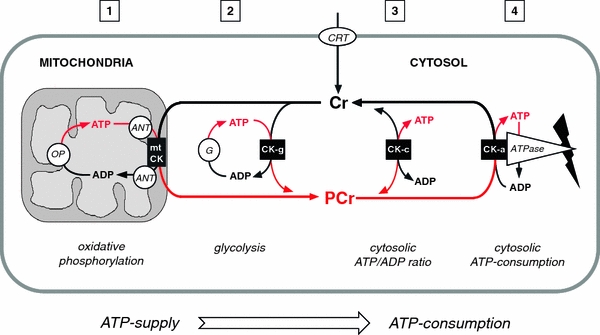
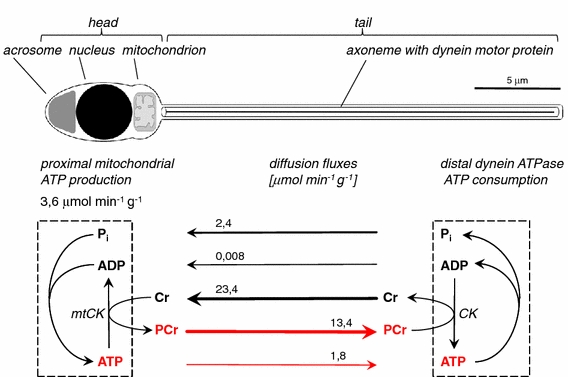
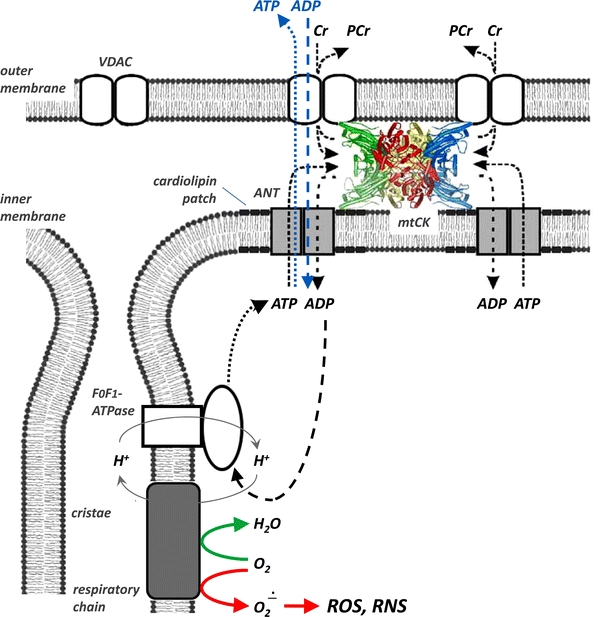
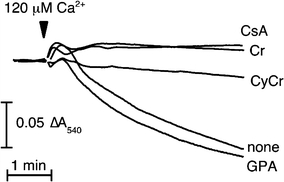
The pleiotropic effects of creatine (Cr) are based mostly on the functions of the enzyme creatine kinase (CK) and its high-energy product phosphocreatine (PCr). Multidisciplinary studies have established molecular, cellular, organ and somatic functions of the CK/PCr system, in particular for cells and tissues with high and intermittent energy fluctuations. These studies include tissue-specific expression and subcellular localization of CK isoforms, high-resolution molecular structures and structure-function relationships, transgenic CK abrogation and reverse genetic approaches. Three energy-related physiological principles emerge, namely that the CK/PCr systems functions as (a) an immediately available temporal energy buffer, (b) a spatial energy buffer or intracellular energy transport system (the CK/PCr energy shuttle or circuit) and (c) a metabolic regulator. The CK/PCr energy shuttle connects sites of ATP production (glycolysis and mitochondrial oxidative phosphorylation) with subcellular sites of ATP utilization (ATPases). Thus, diffusion limitations of ADP and ATP are overcome by PCr/Cr shuttling, as most clearly seen in polar cells such as spermatozoa, retina photoreceptor cells and sensory hair bundles of the inner ear. The CK/PCr system relies on the close exchange of substrates and products between CK isoforms and ATP-generating or -consuming processes. Mitochondrial CK in the mitochondrial outer compartment, for example, is tightly coupled to ATP export via adenine nucleotide transporter or carrier (ANT) and thus ATP-synthesis and respiratory chain activity, releasing PCr into the cytosol. This coupling also reduces formation of reactive oxygen species (ROS) and inhibits mitochondrial permeability transition, an early event in apoptosis. Cr itself may also act as a direct and/or indirect anti-oxidant, while PCr can interact with and protect cellular membranes. Collectively, these factors may well explain the beneficial effects of Cr supplementation. The stimulating effects of Cr for muscle and bone growth and maintenance, and especially in neuroprotection, are now recognized and the first clinical studies are underway. Novel socio-economically relevant applications of Cr supplementation are emerging, e.g. for senior people, intensive care units and dialysis patients, who are notoriously Cr-depleted. Also, Cr will likely be beneficial for the healthy development of premature infants, who after separation from the placenta depend on external Cr. Cr supplementation of pregnant and lactating women, as well as of babies and infants are likely to be of benefit for child development. Last but not least, Cr harbours a global ecological potential as an additive for animal feed, replacing meat- and fish meal for animal (poultry and swine) and fish aqua farming. This may help to alleviate human starvation and at the same time prevent over-fishing of oceans.
Overview
The claims and statistics of this paper haven’t been checked yet.
Free: it reads the open-access text and checks the first 5 claims that cite a source we can check. Create a free account to check every claim.
Integrity signals
Registry
Cites
Statistics
Figures
Verification
Claims the paper makes
The claims and statistics of this paper haven’t been checked yet.
Free: it reads the open-access text and checks the first 5 claims that cite a source we can check. Create a free account to check every claim.
Claims other papers make about this one
Each is checked against this paper’s own text: does it say what the citing paper says it does?
The source backs part of the claim, not all of it — or backs it for a different population, condition or comparison.
In the citing paper
“These findings support contentions that it is prudent for individuals to consume at least 3 g/day of creatine to support general health as one ages [1,50].”
From Creatine in health and disease (2021) · cites this paper as [50]
Experimental — accuracy not yet measuredThe source backs part of the claim, not all of it — or backs it for a different population, condition or comparison.
In the citing paper
“As noted above, creatine and phosphagens play an important role in maintaining energy availability [38,39,56,57], particularly related to the role of the CK/PRr system and shuttling of ATP, ADP, and Pi in and out of the mitochondria for cellular metabolism [50,54,55].”
From Creatine in health and disease (2021) · cites this paper as [50]
Experimental — accuracy not yet measuredThe source backs part of the claim, not all of it — or backs it for a different population, condition or comparison.
In the citing paper
“Since sperm motility is dependent on ATP availability and CK activity has been associated with greater sperm quality and function [50,327,328,329], there has been some interest in whether creatine supplementation and/or administration might improve fertility.”
From Creatine in health and disease (2021) · cites this paper as [50]
Experimental — accuracy not yet measuredThe source backs part of the claim, not all of it — or backs it for a different population, condition or comparison.
In the citing paper
“Creatine [166,167], citrulline [168,169], and leucine-rich feedings [111,162] are best interpreted as compounds that help maintain a permissive metabolic and signalling environment in which mechanical loading can drive nucleolar expansion.”
From Ribosome Biogenesis as a Putative Bottleneck to Skeletal Muscle Hypertrophy: Mechanisms, Human Evidence, and Practical Modulators (2026) · cites this paper as [167]
Experimental — accuracy not yet measuredThe source backs part of the claim, not all of it — or backs it for a different population, condition or comparison.
In the citing paper
“creatine is best interpreted as a plausible indirect supporter of ribosome biogenesis, not as a proven direct activator of nucleolar output [166,167]”
From Ribosome Biogenesis as a Putative Bottleneck to Skeletal Muscle Hypertrophy: Mechanisms, Human Evidence, and Practical Modulators (2026) · cites this paper as [167]
Experimental — accuracy not yet measured
10 more claims about this paper
Create a free account to see every claim other papers make about this one.
Self-check
Percentages, sums and reported differences re-computed from the paper’s own numbers.
The self-check needs the paper’s full text.
Citations
Cites
Mitochondrial membrane permeabilization in cell death
Kroemer, G., Galluzzi, L., & Brenner, C. (2007) · Physiological Reviews · doi:10.1152/physrev.00013.2006 · Cited by 3,598 · cited 2×
“Although the molecular composition of the pore remains an open question, it seems to involve the adenine nucleotide transporter ANT-1 isoform and the voltage-dependent anion carrier VDAC (Zhivotovsky et al. 2009) together with mtCK (Kroemer et al. 2007).”
BackgroundCreatine and Creatinine Metabolism
Wyss, M., & Kaddurah-Daouk, R. (2000) · Physiological Reviews · doi:10.1152/physrev.2000.80.3.1107 · Cited by 2,950 · cited 2×
“In particular, the neuroprotective role of Cr that is relevant to a number of neuromuscular and neuro-degenerative diseases is well documented (Matthews et al. 1998; Klivenyi et al. 1999; Brewer and Wallimann 2000; Wyss and Kaddurah-Daouk 2000; Baker and Tarnopolsky 2003; Andres et al. 2005a, b; Brosnan and Brosnan 20…”
BackgroundWallimann, T., Wyss, M., Brdiczka, D., Nicolay, K., & Eppenberger, H. M. (1992) · Biochemical Journal · doi:10.1042/bj2810021 · Cited by 2,011
Self-citationElevation of creatine in resting and exercised muscle of normal subjects by creatine supplementation
Harris, R. C., Söderlund, K., & Hultman, E. (1992) · Clinical Science · doi:10.1042/cs0830367 · Cited by 1,168 · cited 2×
“Cr improves cellular energy state (PCr/ATP ratio) and muscle performance (Harris et al. 1992; Greenhaff et al. 1993) Cr facilitates intracellular energy transport (PCr circuit or shuttle) (Wallimann 1975; Saks et al. 1978, 2006b; Bessman and Geiger 1981; Wallimann and Eppenberger 1985; Bessman…”
BackgroundMcPherron, S. P., Alemseged, Z., Marean, C. W., Wynn, J. G., Reed, D., Geraads, D., Bobe, R., & Béarat, H. A. (2010) · Nature · doi:10.1038/nature09248 · Cited by 832
Transport of Energy in Muscle: The Phosphorylcreatine Shuttle
Bessman, S. P., & Geiger, P. J. (1981) · Science · doi:10.1126/science.6450446 · Cited by 758
Neuroprotective effects of creatine in a transgenic animal model of amyotrophic lateral sclerosis
Klivenyi, P., Ferrante, R. J., Matthews, R. T., Bogdanov, M. B., Klein, A. M., Andreassen, O. A., Mueller, G., Wermer, M., Kaddurah-Daouk, R., & Beal, M. F. (1999) · Nature Medicine · doi:10.1038/6568 · Cited by 682
Nutritional recommendations for the management of sarcopenia
Morley, J. E., Argiles, J. M., Evans, W. J., Bhasin, S., Cella, D., Deutz, N. E. P., Doehner, W., Fearon, K. C. H., Ferrucci, L., Hellerstein, M. K., et al. (2010) · Journal of the American Medical Directors Association · doi:10.1016/j.jamda.2010.04.014 · Cited by 664 · cited 2×
“Recent nutritional recommendations by the US Society for Sarcopenia, Cachexia and Wasting Disease proposed Cr supplementation together with other measures for the management of sarcopenia (age-dependent progressive muscle loss) which is prevalent among the elderly (Morley et al. 2010).”
BackgroundMitochondrial creatine kinase in human health and disease
Schlattner, U., Tokarska-Schlattner, M., & Wallimann, T. (2006) · Biochimica et Biophysica Acta (BBA) - Molecular Basis of Disease · doi:10.1016/j.bbadis.2005.09.004 · Cited by 622
Self-citationGreenhaff, P. L., Casey, A., Short, A. H., Harris, R., Soderlund, K., & Hultman, E. (1993) · Clinical Science · doi:10.1042/cs0840565 · Cited by 460 · cited 4×
“Cr improves cellular energy state (PCr/ATP ratio) and muscle performance (Harris et al. 1992; Greenhaff et al. 1993)”
BackgroundInfluential
Research works printed but not linked: 5
- Saks VA Molecular systems bioenergetics: energy for life 2007 Weinheim Wiley
- Tokarska-Schlattner M Meiler F Zandomeneghi G Meier BH Saks V Neumann D Wallimann T Schlattner U Do creatine and other guanidino compounds bind to phospholipid membranes? Studies with SPR and P-31-NMR-spectroscopy Biophys J 2003 84 49A
- Tokarska-Schlattner M Wallimann T Schlattner U Membrane protective effects of phosphocreatine Biophys J 2005 88 418A
- Wallimann T (1975) Creatine kinase isoenzymes and myofibrillar structure. PhD Thesis Nr 5437, ETH Zurich
- Ziegenfuss TN Lowery LM Lemon PWR Acute fluid volume changes in men during three days of creatine supplementation J Exerc Physiol 1998 1 1 9
Cited by
Items 101–200 of 954
Calbet, J. A. L., Martín-Rodríguez, S., Martín-Rincón, M., & Morales‐Álamo, D. (2020) · Redox Biology · doi:10.1016/j.redox.2020.101478 · Cited by 63
FOXO/DAF-16 Activation Slows Down Turnover of the Majority of Proteins in C. elegans
Dhondt, I., Petyuk, V., Cai, H., Vandemeulebroucke, L., Vierstraete, A. R., Smith, R. D., Depuydt, G., & Braeckman, B. P. (2016) · Cell Reports · doi:10.1016/j.celrep.2016.07.088 · Cited by 63
Li, S., Wang, C., Wu, Z. Z., Liu, Q., Guo, G., Huo, W., Zhang, J., Chen, L., Zhang, Y. L., Pei, C. X., et al. (2020) · animal · doi:10.1017/s1751731120001603 · Cited by 63
Qasim, N., & Mahmood, R. (2015) · PLoS ONE · doi:10.1371/journal.pone.0141975 · Cited by 62
Biomarkers of post-match recovery in semi-professional and professional football (soccer)
Pérez-Castillo, Í. M., Rueda, R., Bouzamondo, H., Chicharro, J. L., & Mihic, N. (2023) · Frontiers in Physiology · doi:10.3389/fphys.2023.1167449 · Cited by 64
Shahin, S., Banerjee, S., Singh, S. P., & Chaturvedi, C. M. (2015) · Toxicological Sciences · doi:10.1093/toxsci/kfv205 · Cited by 62
Liu, M., Liu, X. Z., Wang, H., Xiao, H., Jing, F., Tang, L., Li, D., Zhang, Y., Wu, H., & Yang, H. (2016) · Journal of Ethnopharmacology · doi:10.1016/j.jep.2016.01.016 · Cited by 62
Balestrino, M., Sarocchi, M., Adriano, E., & Spallarossa, P. (2016) · Amino Acids · doi:10.1007/s00726-016-2173-8 · Cited by 60
Analyzing the Functional Properties of the Creatine Kinase System with Multiscale ‘Sloppy’ Modeling
Hettling, H., & van Beek, H. (2011) · PLoS Computational Biology · doi:10.1371/journal.pcbi.1002130 · Cited by 60
Abplanalp, J., Laczko, E., Philp, N. J., Neidhardt, J., Zuercher, J., Braun, P., Schorderet, D. F., Munier, F. L., Verrey, F., Berger, W., et al. (2013) · Human Molecular Genetics · doi:10.1093/hmg/ddt175 · Cited by 59
Árnason, E., & Halldórsdóttir, K. (2015) · PeerJ · doi:10.7717/peerj.786 · Cited by 59
Differences Between Human and Murine Tau at the N-terminal End
Hernández, F., Merchán-Rubira, J., Vallés-Saiz, L., Rodríguez-Matellán, A., & Avila, J. (2020) · Frontiers in Aging Neuroscience · doi:10.3389/fnagi.2020.00011 · Cited by 58
Creatine transporter deficiency leads to increased whole body and cellular metabolism
Perna, M. K., Kokenge, A. N., Miles, K. N., Udobi, K. C., Clark, J. F., Pyne‐Geithman, G. J., Khuchua, Z. A., & Skelton, M. R. (2016) · Amino Acids · doi:10.1007/s00726-016-2291-3 · Cited by 58
Ydfors, M., Hughes, M. C., Laham, R., Schlattner, U., Norrbom, J., & Perry, C. G. R. (2016) · The Journal of Physiology · doi:10.1113/jp271259 · Cited by 57
Self-citationChanging appetites: the adaptive advantages of fuel choice
Stanley, I. A., Ribeiro, S. M., Giménez-Cassina, A., Norberg, E., & Danial, N. N. (2014) · Trends in Cell Biology · doi:10.1016/j.tcb.2013.07.010 · Cited by 56
Sonnay, S., Poirot, J., Just, N., Clerc, A., Gruetter, R., Rainer, G., & Duarte, J. M. N. (2018) · Glia · doi:10.1002/glia.23259 · Cited by 56
Giraldo-Vallejo, J. E., Cardona-Guzmán, M. Á., Rodríguez-Alcivar, E. J., Kočí, J., Petro, J. L., Kreider, R. B., Cannataro, R., & Bonilla, D. A. (2023) · Nutrients · doi:10.3390/nu15040819 · Cited by 55
Creatine, Creatine Kinase, and Aging
Sumien, N., Shetty, R. A., & Gonzales, E. B. (2018) · Sub-cellular biochemistry/Subcellular biochemistry · doi:10.1007/978-981-13-2835-0_6 · Cited by 55
Marshall, R. P., Droste, J.-N., Gießing, J., & Kreider, R. B. (2022) · Nutrients · doi:10.3390/nu14030529 · Cited by 57
Gupta, A. K., & Houston, B. A. (2017) · Heart Failure Reviews · doi:10.1007/s10741-017-9623-6 · Cited by 54
Creatine deficiency and heart failure
Franco, A. D., Ambrosio, G., Baroncelli, L., Pizzorusso, T., Barison, A., Olivotto, I., Recchia, F. A., Lombardi, C., Metra, M., Chen, Y. F., et al. (2021) · Heart Failure Reviews · doi:10.1007/s10741-021-10173-y · Cited by 54
Guzun, R., Kaambre, T., Bagur, R., Grichine, A., Usson, Y., Varikmaa, M., Anmann, T., Tepp, K., Timohhina, N., Shevchuk, I., et al. (2015) · Acta Physiologica · doi:10.1111/apha.12287 · Cited by 53
Self-citationPinilla, I., Maneu, V., Campello, L., Fernández‐Sánchez, L., Martínez‐Gil, N., Kutsyr, O., Sánchez‐Sáez, X., Sánchez‐Castillo, C., Lax, P., & Cuenca, N. (2022) · Antioxidants · doi:10.3390/antiox11061086 · Cited by 53
Wang, Z., Qiu, B., Li, R., Han, Y., Petersen, C. J., Liu, S., Zhang, Y., Liu, C., Candow, D. G., & Coso, J. D. (2024) · Nutrients · doi:10.3390/nu16213665 · Cited by 54
Hughes, M. C., Ramos, S. V., Turnbull, P. C., Edgett, B. A., Huber, J. S., Polidovitch, N., Schlattner, U., Backx, P. H., Simpson, J. A., & Perry, C. G. R. (2019) · The Journal of Physiology · doi:10.1113/jp277306 · Cited by 53
Self-citationZhang, L., Li, J. L., Wang, X., Zhu, X., Gao, F., & Zhou, G. (2019) · Poultry Science · doi:10.3382/ps/pez052 · Cited by 52
Cella, P. S., Marinello, P. C., Borges, F. H., Ribeiro, D. F., Chimin, P., Testa, M. T. J., Guirro, P. B., Duarte, J. A., Cecchini, R., Guarnier, F. A., et al. (2020) · European Journal of Nutrition · doi:10.1007/s00394-019-01933-6 · Cited by 51
Nutritional approaches to counter performance constraints in high‐level sports competition
Burke, L. M. (2021) · Experimental Physiology · doi:10.1113/ep088188 · Cited by 51
“As well as shuttling intracellular energy from the mitochondria to the cytosol, it has a limiting role within the skeletal muscle cell as an energy reservoir that rapidly responds to a sudden increase in energy turnover, restoring cellular ATP without the need for oxygen (Wallimann et al., 2011).”
BackgroundZhang, L., Wang, X., Li, J., Zhu, X., Gao, F., & Zhou, G. (2017) · Journal of Agricultural and Food Chemistry · doi:10.1021/acs.jafc.7b02740 · Cited by 51
Liu, Y., Chen, J., Wang, D. H., Wu, M., Zheng, C., Wu, Z. Z., Wang, C., Liu, Q., Zhang, J., Guo, G., et al. (2020) · British Journal Of Nutrition · doi:10.1017/s0007114520004341 · Cited by 51
Barbieri, E., Guescini, M., Calcabrini, C., Vallorani, L., Diaz, A. R., Fimognari, C., Canonico, B., Luchetti, F., Papa, S., Battistelli, M., et al. (2016) · Oxidative Medicine and Cellular Longevity · doi:10.1155/2016/5152029 · Cited by 50
Jiang, X., Wang, W., Tang, J., Han, M., Xu, Y., Zhang, L., Wu, J., Huang, Y., Ding, Z., Sun, H., et al. (2023) · Advanced Science · doi:10.1002/advs.202306780 · Cited by 50
Saraiva, A. L. L., Ferreira, A. P. O., Silva, L. F. A., Hoffmann, M. S., Dutra, F. D., Furian, A. F., Oliveira, M. S., Fighera, M. R., & Royes, L. F. F. (2012) · Brain Research Bulletin · doi:10.1016/j.brainresbull.2011.10.010 · Cited by 49
Brain levels of high-energy phosphate metabolites and executive function in geriatric depression
Harper, D. G., Joe, E., Jensen, J. E., Ravichandran, C. T., & Forester, B. P. (2016) · International Journal of Geriatric Psychiatry · doi:10.1002/gps.4439 · Cited by 49
Tackling guanidinoacetic acid for advanced cellular bioenergetics
Ostojić, S. M. (2016) · Nutrition · doi:10.1016/j.nut.2016.09.010 · Cited by 49
Exploratory studies of the potential anti-cancer effects of creatine
Campos-Ferraz, P. L., Gualano, B., das Neves, W., Andrade, I. T., Hangai, I., Pereira, R. T. S., Bezerra, R. N., Deminice, R., Seelaender, M., & Lancha, A. H. (2016) · Amino Acids · doi:10.1007/s00726-016-2180-9 · Cited by 47
“Additionally, creatine has been shown to display pleiotropic properties (Wallimann et al. 2011) that could potentially explain its value as a putative anti-cancer dietary agent, moderating apoptosis, oxidative stress and cancer-related inflammation (Martin et al. 1994).”
BackgroundWallimann, T., Hall, C., Colgan, S., & Glover, L. (2021) · Nutrients · doi:10.3390/nu13051429 · Cited by 47
Self-citationOliver, J. M., Anzalone, A. J., & Turner, S. M. (2018) · Sports Medicine · doi:10.1007/s40279-017-0847-3 · Cited by 47
β-alanine supplementation improves isometric endurance of the knee extensor muscles
Sale, C., Hill, C. A., Ponte, J., & Harris, R. C. (2012) · Journal of the International Society of Sports Nutrition · doi:10.1186/1550-2783-9-26 · Cited by 47
Wang, X. F., Zhu, X., Li, Y. J., Liu, Y., Li, J., Gao, F., Zhou, G., & Zhang, L. (2015) · Poultry Science · doi:10.3382/ps/pev255 · Cited by 47
Horzmann, K. A., Reidenbach, L. S., Thanki, D. H., Winchester, A. E., Qualizza, B. A., Ryan, G. A., Egan, K. E., Hedrick, V., Sobreira, T. J. P., Peterson, S. M., et al. (2018) · Journal of Proteomics · doi:10.1016/j.jprot.2018.07.006 · Cited by 47
Richardson, S. J., Leete, P., Dhayal, S., Russell, M. A., Oikarinen, M., Laiho, J. E., Svedin, E., Lind, K., Rosenling, T., Chapman, N. M., et al. (2013) · Diabetologia · doi:10.1007/s00125-013-3094-7 · Cited by 45
Creatine supplementation prevents acute strength loss induced by concurrent exercise
Painelli, V. D. S., Alves, V. T., Ugrinowitsch, C., Benatti, F. B., Artioli, G. G., Lancha, A. H., Gualano, B., & Roschel, H. (2014) · European Journal of Applied Physiology · doi:10.1007/s00421-014-2903-0 · Cited by 44
Bernat, P., Candow, D. G., Gryzb, K., Butchart, S., Schoenfeld, B. J., & Bruno, P. (2019) · Applied Physiology, Nutrition, and Metabolism · doi:10.1139/apnm-2019-0066 · Cited by 44
Lin, Y.-S., Cheng, T.-H., Chang, C.-P., Chen, H., & Chern, Y. (2013) · Biochimica et Biophysica Acta (BBA) - Molecular Basis of Disease · doi:10.1016/j.bbadis.2013.02.006 · Cited by 44
The multiple facets of mitochondrial regulations controlling cellular thermogenesis
Beignon, F., Guéguen, N., Tricoire-Leignel, H., Mattei, C., & Lenaers, G. (2022) · Cellular and Molecular Life Sciences · doi:10.1007/s00018-022-04523-8 · Cited by 44
Metabolic Profiling of the Diabetic Heart: Toward a Richer Picture
Sowton, A. P., Griffin, J. L., & Murray, A. J. (2019) · Frontiers in Physiology · doi:10.3389/fphys.2019.00639 · Cited by 44
Sharer, J. D., Bodamer, O. A., Longo, N., Tortorelli, S., Wamelink, M. M. C., & Young, S. P. (2017) · Genetics in Medicine · doi:10.1038/gim.2016.203 · Cited by 44
Zequan, X., Yonggang, S., Guangjuan, L., Shijun, X., Li, Z., Zhu, M., Xu, Y., & Wang, Z. (2020) · Meat Science · doi:10.1016/j.meatsci.2020.108353 · Cited by 44
Creatine monohydrate supplementation for older adults and clinical populations
Candow, D. G., Ostojic, S. M., Chilibeck, P. D., Longobardi, I., Gualano, B., Tarnopolsky, M. A., Wallimann, T., Moriarty, T., Kreider, R. B., Forbes, S. C., et al. (2025) · Journal of the International Society of Sports Nutrition · doi:10.1080/15502783.2025.2534130 · Cited by 43
Self-citationFernández-Landa, J., Santibañez-Gutierrez, A., Todorović, N., Štajer, V., & Ostojić, S. M. (2023) · Sports Medicine · doi:10.1007/s40279-023-01823-2 · Cited by 44
Jagim, A. R., Oliver, J. M., Sanchez, A., Galvan, E., Fluckey, J., Riechman, S., Greenwood, M., Kelly, K., Meininger, C., Rasmussen, C., et al. (2012) · Journal of the International Society of Sports Nutrition · doi:10.1186/1550-2783-9-43 · Cited by 42
“A number of potential therapeutic benefits have also been suggested in various clinical populations [11-17].”
BackgroundNutritional Considerations for the Vegan Athlete
West, S., Monteyne, A. J., van der Heijden, I., Stephens, F. B., & Wall, B. T. (2023) · Advances in Nutrition · doi:10.1016/j.advnut.2023.04.012 · Cited by 42
“The creatine kinase/PCr system also acts as an energy shuttling system, connecting sites of energy production (glycolysis and oxidative phosphorylation in the mitochondria) to subcellular sites of ATP utilization to fuel energy metabolism [155].”
BackgroundHan, P., Li, P., Zhou, W., Fan, L., Wang, B., Liu, H., Chen, G., Du, T., Pu, G., Wu, C., et al. (2020) · Meat Science · doi:10.1016/j.meatsci.2020.108160 · Cited by 42
The Evolving Applications of Creatine Supplementation: Could Creatine Improve Vascular Health?
Clarke, H., Kim, D.-H., Meza, C. A., Ormsbee, M. J., & Hickner, R. C. (2020) · Nutrients · doi:10.3390/nu12092834 · Cited by 41
Bian, X., Zhu, J., Jia, X., Liang, W., Yu, S., Li, Z., Zhang, W., & Rao, Y. (2023) · eLife · doi:10.7554/elife.89317 · Cited by 41
Aliev, M., Guzun, R., Karu-Varikmaa, M., Kaambre, T., Wallimann, T., & Saks, V. (2011) · International Journal of Molecular Sciences · doi:10.3390/ijms12129296 · Cited by 41
Self-citationDoerrier, C., García, J. A. G., Volt, H., Díaz-Casado, M. E., Luna‐Sánchez, M., Fernández-Gil, B. I., Escames, G., López, L. C., & Acuña-Castroviejo, D. (2015) · Mitochondrion · doi:10.1016/j.mito.2015.12.010 · Cited by 41
The evolution of metabolic regulation in animals
Seebacher, F. (2017) · Comparative Biochemistry and Physiology Part B Biochemistry and Molecular Biology · doi:10.1016/j.cbpb.2017.11.002 · Cited by 41
The Sarcomeric M-Region: A Molecular Command Center for Diverse Cellular Processes
Hu, L. R., Ackermann, M. A., & Kontrogianni‐Konstantopoulos, A. (2015) · BioMed Research International · doi:10.1155/2015/714197 · Cited by 41
Bedford, A., Yu, H., Squires, E. J., Leeson, S., & Gong, J. (2017) · Poultry Science · doi:10.3382/ps/pex098 · Cited by 41
Bilodeau, D., Dupont, É., Journet, M., Oula, M.-L., Gómez, J. G., Léveillé, C., & Loing, E. (2014) · Clinical Cosmetic and Investigational Dermatology · doi:10.2147/ccid.s53580 · Cited by 40
The Potential Role of Creatine in Vascular Health
Clarke, H., Hickner, R. C., & Ormsbee, M. J. (2021) · Nutrients · doi:10.3390/nu13030857 · Cited by 40
A critical assessment of the role of creatine in brown adipose tissue thermogenesis
Nicholls, D. G., & Brand, M. D. (2023) · Nature Metabolism · doi:10.1038/s42255-022-00718-2 · Cited by 40
The Effect of Passive Versus Active Recovery on Power Output Over Six Repeated Wingate Sprints
Lopez, E.-I. D., Smoliga, J. M., & Zavorsky, G. S. (2014) · Research Quarterly for Exercise and Sport · doi:10.1080/02701367.2014.961055 · Cited by 40
Ramos, S. V., Hughes, M. C., Delfinis, L. J., Bellissimo, C. A., & Perry, C. G. R. (2020) · PLoS ONE · doi:10.1371/journal.pone.0237138 · Cited by 40
Abnormal Brain Bioenergetics in First-Episode Psychosis
Yüksel, Ç., Chen, X., Chouinard, V., Nickerson, L. D. H., Gardner, M., Cohen, T. R., Öngür, D., & Du, F. (2021) · Schizophrenia Bulletin Open · doi:10.1093/schizbullopen/sgaa073 · Cited by 40
Ellery, S. J., Walker, D. W., & Dickinson, H. (2016) · Amino Acids · doi:10.1007/s00726-016-2199-y · Cited by 39
“The ability of creatine to maintain ATP turnover, acid– base balance, mitochondrial function, together with its antioxidant, vasodilator, and anti-excitotoxic properties (Wallimann et al. 2011), make it a candidate for use to treat ischemic/reperfusion injuries, particular when these occur in the brain.”
BackgroundInfluentialDietary nitrate accelerates postexercise muscle metabolic recovery and O2delivery in hypoxia
Vanhatalo, A., Jones, A. M., Blackwell, J. R., Winyard, P. G., & Fulford, J. (2014) · Journal of Applied Physiology · doi:10.1152/japplphysiol.00096.2014 · Cited by 39
Zhang, L., Zhu, X., Wang, X. F., Li, J., Gao, F., & Zhou, G. (2016) · Poultry Science · doi:10.3382/ps/pew130 · Cited by 39
Heteromeric Solute Carriers: Function, Structure, Pathology and Pharmacology
Fairweather, S. J., Shah, N., & Bröer, S. (2020) · Advances in experimental medicine and biology · doi:10.1007/5584_2020_584 · Cited by 39
Beyond mitochondria: Alternative energy-producing pathways from all strata of life
Auger, C., Vinaik, R., Appanna, V. D., & Jeschke, M. G. (2021) · Metabolism · doi:10.1016/j.metabol.2021.154733 · Cited by 39
Metabolic reservoir cycles in cancer
Zhang, C., Quinones, A., & Le, A. (2022) · Seminars in Cancer Biology · doi:10.1016/j.semcancer.2022.03.023 · Cited by 39
Neufer, P. D. (2017) · Cold Spring Harbor Perspectives in Medicine · doi:10.1101/cshperspect.a029678 · Cited by 39
Chen, F., Zhu, K., Chen, L., Ouyang, L., Chen, C., Gu, L., Jiang, Y., Wang, Z., Lin, Z., Zhang, Q., et al. (2019) · Journal of Ginseng Research · doi:10.1016/j.jgr.2019.02.005 · Cited by 39
Safety of Dietary Guanidinoacetic Acid: A Villain of a Good Guy?
Ostojić, S. M. (2021) · Nutrients · doi:10.3390/nu14010075 · Cited by 39
Ghirardini, E., Calugi, F., Sagona, G., Vetta, F. D., Palma, M., Battini, R., Cioni, G., Pizzorusso, T., & Baroncelli, L. (2021) · Genes · doi:10.3390/genes12081123 · Cited by 38
Miotto, P. M., & Holloway, G. P. (2016) · Biochemical Journal · doi:10.1042/bcj20160373 · Cited by 38
Creatine: a miserable life without it
Wallimann, T., & Harris, R. C. (2016) · Amino Acids · doi:10.1007/s00726-016-2297-x · Cited by 39
Self-citationBeta-Alanine Supplementation in High-Intensity Exercise
Harris, R. C., & Sale, C. (2012) · Medicine and Sport Science · doi:10.1159/000342372 · Cited by 38
Liquid Chromatography–Mass Spectrometry-based Metabolomic Analysis of Livers from Aged Rats
Son, N.-R., Hur, H. J., Sung, M. J., Kim, M., Hwang, J., Park, J. H., Yang, H. J., Kwon, D. Y., Yoon, S. H., Chung, H. Y., et al. (2012) · Journal of Proteome Research · doi:10.1021/pr201263q · Cited by 38
Metabolomics and metabolites in ischemic stroke
Chumachenko, M. S., Waseem, T. V., & Fedorovich, S. V. (2021) · Reviews in the Neurosciences · doi:10.1515/revneuro-2021-0048 · Cited by 38
Subramani, E., Jothiramajayam, M., Dutta, M., Chakravorty, D., Joshi, M. V., Srivastava, S., Mukherjee, A., Ray, C. D., Chakravarty, B. N., & Chaudhury, K. (2016) · Human Reproduction · doi:10.1093/humrep/dew003 · Cited by 38
Deminice, R., Cella, P. S., Padilha, C. S., Borges, F. H., da Silva, L. E. C. M., Campos-Ferraz, P. L., Jordao, A. A., Robinson, J. L., Bertolo, R. F., Cecchini, R., et al. (2016) · Amino Acids · doi:10.1007/s00726-016-2172-9 · Cited by 37
“The pleiotropic effects of creatine supplementation are reviewed in Wallimann et al. (2011), while the therapeutic role of creatine in muscular, neurological and metabolic diseases has been recently described by Gualano et al. (2012).”
BackgroundCreatine supplementation and glycemic control: A systematic review
Pinto, C. L., Botelho, P. B., Pimentel, G. D., Campos-Ferraz, P. L., & Mota, J. F. (2016) · Amino Acids · doi:10.1007/s00726-016-2277-1 · Cited by 37
NMR-based metabonomic analysis of HUVEC cells during replicative senescence
Yi, S., Lin, K., Jiang, T., Shao, W., Huang, C., Jiang, B., Li, Q., & Lin, D. (2020) · Aging · doi:10.18632/aging.102834 · Cited by 37
Creatine in T Cell Antitumor Immunity and Cancer Immunotherapy
Li, B., & Yang, L. (2021) · Nutrients · doi:10.3390/nu13051633 · Cited by 37
Xu, S., Waddell, J., Zhu, W., Shi, D., Marshall, A. D., McKenna, M. C., & Gullapalli, R. P. (2014) · Magnetic Resonance in Medicine · doi:10.1002/mrm.25537 · Cited by 37
Tapeh, R. S., Zhandi, M., Zaghari, M., & Akhlaghi, A. (2016) · Theriogenology · doi:10.1016/j.theriogenology.2016.11.012 · Cited by 37
Solis, M. Y., Hayashi, A. P., Artioli, G. G., Roschel, H., Sapienza, M. T., Otaduy, M. C., De Sã Pinto, A. L., Silva, C. A., Sallum, A. M. E., Pereira, R. M. R., et al. (2016) · Muscle & Nerve · doi:10.1002/mus.24681 · Cited by 36
“…of muscle damage.9 Given that the creatine/PCr system exerts a pivotal role in energy transfer in skeletal muscle and bone (see Gualano et al.10 and Wallimann et al.11), it has been suggested that low creatine levels may be implicated in the weakness, fatigue, and physical dysfunction Additional…”
BackgroundTwycross-Lewis, R., Kilduff, L. P., Wang, G., & Pitsiladis, Y. P. (2016) · Amino Acids · doi:10.1007/s00726-016-2237-9 · Cited by 36
Sestili, P., Ambrogini, P., Barbieri, E., Sartini, S., Fimognari, C., Calcabrini, C., Diaz, A. R., Guescini, M., Polidori, E., Luchetti, F., et al. (2016) · Amino Acids · doi:10.1007/s00726-015-2161-4 · Cited by 36
Lee, N., Kim, I., Park, S., Han, D., Ha, S., Kwon, M., Kim, J., Byun, S.-H., Oh, W., Jeon, H. B., et al. (2015) · Stem Cells and Development · doi:10.1089/scd.2014.0130 · Cited by 36
Metabolic profiling of elite athletes with different cardiovascular demand
Al‐Khelaifi, F., Donati, F., Botrè, F., Latiff, A. A., Abraham, D., Hingorani, A. D., Georgakopoulos, C. G., Suhre, K., Yousri, N. A., & Elrayess, M. A. (2019) · Scandinavian Journal of Medicine and Science in Sports · doi:10.1111/sms.13425 · Cited by 36
Leem, Y., Park, J., Park, J.-E., Kim, D., & Kim, H.-S. (2024) · The Journal of Nutritional Biochemistry · doi:10.1016/j.jnutbio.2024.109586 · Cited by 36
Warren, E. B., Aicher, A., Fessel, J. P., & Konradi, C. L. (2017) · PLoS ONE · doi:10.1371/journal.pone.0190456 · Cited by 36
Ahmadipour, B., Naeini, S. Z., Sharifi, M., & Khajali, F. (2017) · The Journal of Poultry Science · doi:10.2141/jpsa.0170044 · Cited by 36
Ch, R., Singh, A. K., Pathak, M. K., Singh, A., Kesavachandran, C. N., Bihari, V., & Mudiam, M. K. R. (2019) · Chemosphere · doi:10.1016/j.chemosphere.2019.03.157 · Cited by 36
Consumption of vitamin D2 enhanced mushrooms is associated with improved bone health
Chen, S., Yu, H.-T., Kao, J.-P., Yang, C., Chiang, S., Mishchuk, D. O., Mau, J., & Slupsky, C. M. (2015) · The Journal of Nutritional Biochemistry · doi:10.1016/j.jnutbio.2015.01.006 · Cited by 36
Hayashi, A. P., Solis, M. Y., Sapienza, M. T., Otaduy, M. C. G., de Sá Pinto, A. L., Silva, C. A., Sallum, A. M. E., Pereira, R. M. R., & Gualano, B. (2014) · Lupus · doi:10.1177/0961203314546017 · Cited by 35
Metadata
- Authors
- Wallimann, T., Tokarska-Schlattner, M., & Schlattner, U.
- Affiliations
- ETH Zurich (CH)
- Inserm (FR)
- Corresponding author
- Wallimann, Theo
- Schlattner, Uwe
- Venue
- Amino Acids
- Published
- 2011-03-30
- Volume
- 40
- Issue
- 5
- Pages
- 1271-1296
- ISSN
- 0939-4451 (ISSN-L)
- 1438-2199
- PMC
- PMC3080659
- OpenAlex
- W2041686985
- Cited by
- 797
- References
- 254
- Citations by year
- 2026: 79 · 2025: 84 · 2024: 59 · 2023: 68 · 2022: 60 · 2021: 61 · 2020: 41 · 2019: 43 · 2018: 42 · 2017: 44 · 2016: 58 · 2015: 46 · 2014: 43 · 2013: 35 · 2012: 26
- FWCI
- 3.15
- Type
- journal article
- Language
- en
- Open access
- hybrid
- doi.org
- Licence
- cc-by-nc
- Locations
- Amino Acids (publishedVersion, cc-by-nc)
- PubMed Central (publishedVersion, cc-by-nc)
- PubMed (publishedVersion)
- reroDoc Digital Library (submittedVersion)
- HAL (submittedVersion, other-oa)
- Repository for Publications and Research Data (ETH Zurich) (submittedVersion, other-oa)
- ETH Zürich Research Collection
- Funders
- National Science Foundation
- European Commission (249202)
- Schweizerischer Nationalfonds zur Förderung der Wissenschaftlichen Forschung
- Topics
- Life Sciences › Biochemistry, Genetics and Molecular Biology › Molecular Biology › Mitochondrial Function and Pathology
- Health Sciences › Nursing › Nutrition and Dietetics › Muscle metabolism and nutrition
- Life Sciences › Biochemistry, Genetics and Molecular Biology › Molecular Biology › Metabolism, Diabetes, and Cancer
- Keywords
- creatine kinase, phosphocreatine, creatine, creatine supplementation, ATP transport, adenine nucleotide transporter, mitochondrial permeability transition, reactive oxygen species, antioxidant activity, creatine kinase isoforms, neuroprotection, muscle growth, bone preservation, preterm infants, dialysis patients, feed additives, structure-function relationship, spermatozoa
- MeSH terms
- Animals, Creatine, Creatine Kinase, Humans, Phosphocreatine
About these checks
Registry, retraction, Cites and statistics results are computed, not judged, with one exception: a printed reference that no index lists is read once by a model before it counts as a citation error. Claims are extracted by a model and kept only when their quote appears verbatim in the text; each cited source is then checked, with a model’s help, for whether it says what the claim relies on. Those verdicts can be wrong — read the claim’s quote and the cited source before relying on one.
Statistics and arithmetic are recomputed, not judged.
Confidence bands are shown only for fields calibrated on our annotated test set. None is calibrated yet, so no band is shown.
What counts as a claim ›How we measure confidence ›How we check this ›
Are you an author, or do you see a problem with this page? Request a review
Data sources
Bibliographic data: Semantic Scholar, OpenAlex, Crossref.
Contains information from the Semantic Scholar Academic Graph Datasets, made available under the ODC Attribution License (ODC-BY 1.0).
Semantic Scholar’s data is described in: Kinney, R., et al. (2023). The Semantic Scholar Open Data Platform. arXiv:2301.10140.
