

The DOI matches its Crossref record; 48 of the 48 references it cites were found in a registry or an index.
Mental health problems in Austrian adolescents: a nationwide, two-stage epidemiological study applying DSM-5 criteria
Open accessAbstract
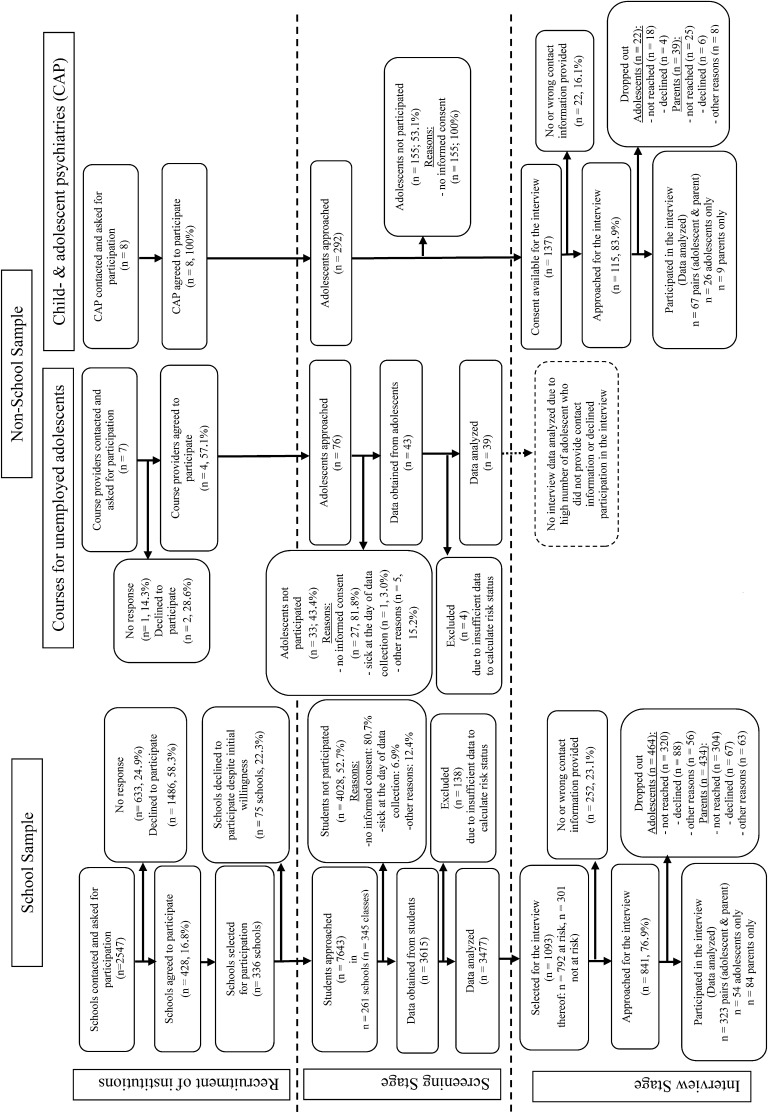
This is a nationwide epidemiological study using DSM-5 criteria to assess the prevalence of mental disorders in a large sample of Austrian adolescents between 10 and 18 years including hard-to-reach samples. A sample of 3615 adolescents from four cohorts (school grades 5, 7, 9, 11; age range 10-18 years) was recruited from 261 schools, samples of unemployed adolescents (n = 39) and adolescents from mental health institutions (n = 137) were added. The Youth Self-Report and SCOFF were used to screen for mental health problems. In a second phase, the Childrens' Diagnostic Interview for Mental Disorders was used to make point and lifetime psychiatric diagnoses. Mental health service use was also assessed. Point prevalence and lifetime prevalence rates for at least one psychiatric disorder were 23.9% and 35.8%. The highest lifetime prevalence rates were found for anxiety disorders (15.6%), neurodevelopmental disorders (9.3%; ADHD 5.2%) and depressive disorders (6.2%). Forty-seven percent of adolescents with a lifetime psychiatric disorder had a second diagnosis. Internalising disorders were more prevalent in girls, while neurodevelopmental disorders and disruptive, impulse control and conduct disorders were more prevalent in boys. Of those with a lifetime psychiatric disorder, 47.5% had contacted mental health services. Of the residual 52.5% who had not contacted mental health services, 18.1% expressed an interest in treatment. DSM-5 mental health disorders are highly prevalent among Austrian adolescents. Over 50% had or were interested in accessing treatment. Early access to effective interventions for these problems is needed to reduce burden due to mental health disorders.
Overview
The claims and statistics of this paper haven’t been checked yet.
Run the check — free, no account needed. It reads the open-access text and checks the sources it cites.
Integrity signals
Registry
Cites
Statistics
Figures
Verification
Claims the paper makes
The claims and statistics of this paper haven’t been checked yet.
Run the check — free, no account needed. It reads the open-access text and checks the sources it cites.
Claims other papers make about this one
Each is checked against this paper’s own text: does it say what the citing paper says it does?
The cited source says what the claim attributes to it.
In the citing paper
“Research consistently shows that anxiety disorders (ADs) are the most common mental health conditions during adolescence [2–8]”
From Acceptance and commitment therapy as a transdiagnostic approach to adolescents with different anxiety disorders: study protocol. (2025) · cites this paper as [8]
Self-check
Percentages, sums and reported differences re-computed from the paper’s own numbers.
The self-check needs the paper’s full text.
Citations
Cites
Diagnostic and Statistical Manual of Mental Disorders
Williams, J. B. W., & First, M. B. (2013) · Oxford University Press eBooks · doi:10.1093/acrefore/9780199975839.013.104 · Cited by 109,845
Merikangas, K. R., He, J.-P., Burstein, M., Swanson, S. A., Avenevoli, S., Cui, L., Benjet, C., Georgiades, K., & Swendsen, J. (2010) · Journal of the American Academy of Child & Adolescent Psychiatry · doi:10.1016/j.jaac.2010.05.017 · Cited by 6,278
Prevalence and development of psychiatric disorders in childhood and adolescence
Costello, E. J., Mustillo, S., Erkanli, A., Keeler, G., & Angold, A. (2003) · Archives of General Psychiatry · doi:10.1001/archpsyc.60.8.837 · Cited by 4,035
Polanczyk, G. V., Salum, G. A., Sugaya, L. S., Caye, A., & Rohde, L. A. (2015) · Journal of Child Psychology and Psychiatry · doi:10.1111/jcpp.12381 · Cited by 3,990 · cited 2×
“Functional impairment can be assessed from disorder-specific measures or a global measure such as the CGAS (Child Global Assessment Scale) [12].”
Background(1991) · Cited by 3,844
Mental health of young people: A global public-health challenge
Patel, V., Flisher, A. J., Hetrick, S., & McGorry, P. (2007) · The Lancet · doi:10.1016/s0140-6736(07)60368-7 · Cited by 3,126 · cited 1×
“A continuum of different treatment levels, from primary to tertiary prevention, from the community to specialist health services has been proposed, and appropriate interventions should be widely available to speed initial treatment contact [49, 50].”
BackgroundChild and adolescent mental health worldwide: evidence for action
Kieling, C., Baker-Henningham, H., Belfer, M., Conti, G., Ertem, I., Omigbodun, O., Rohde, L. A., Srinath, S., Ulkuer, N., & Rahman, A. (2011) · The Lancet · doi:10.1016/s0140-6736(11)60827-1 · Cited by 2,449
Merikangas, K. R., He, J.-P., Burstein, M., Swendsen, J., Avenevoli, S., Case, B., Georgiades, K., Heaton, L., Swanson, S., & Olfson, M. (2011) · Journal of the American Academy of Child & Adolescent Psychiatry · doi:10.1016/j.jaac.2010.10.006 · Cited by 1,579 · cited 1×
“The numbers are comparable to the study of Merikangas who found fewer than half of youth with current mental disorders receiving treatment within the mental health service and that health service use differed a lot between diagnoses with highest treatment use for neurodevelopmental disorders and lowest for internalisi…”
ResultThe SCOFF questionnaire: Assessment of a new screening tool for eating disorders
Morgan, J. F., Reid, F., & Lacey, J. H. (1999) · BMJ · doi:10.1136/bmj.319.7223.1467 · Cited by 1,416 · cited 1×
“As eating pathology is not covered in the Youth SelfReport, the SCOFF questionnaire [26] was used to assess a potential risk for eating disorders.”
MethodBoyce, W., Torsheim, T., Currie, C. E., & Zambon, A. (2006) · Social Indicators Research · doi:10.1007/s11205-005-1607-6 · Cited by 966
Research works printed but not linked: 2
- Bruneforth M, Herzog-Bunzenberger B, Lassnig L (eds) (2012) Nationaler Bildungsbericht Österreich: Indikatoren und Themen im Überblick. Leykam, Graz
- Schneider S, Unnewehr S, Margraf J (eds) (2009) Kinder-DIPS. Diagnostisches Interview bei psychischen Störungen im Kindes- und Jugendalter. Springer Medizin, Heidelberg
Cited by
Sorted by citations
Worldwide prevalence of DSM-5 eating disorders among young people
Silén, Y., & Keski‐Rahkonen, A. (2022) · Current Opinion in Psychiatry · doi:10.1097/yco.0000000000000818 · Cited by 464
Kien, C., Sommer, I., Faustmann, A., Gibson, L., Schneider, M., Krczal, E., Jank, R., Klerings, I., Szeląg, M., Kerschner, B., et al. (2018) · European Child & Adolescent Psychiatry · doi:10.1007/s00787-018-1215-z · Cited by 333
Sacco, R., Camilleri, N., Eberhardt, J., Umla‐Runge, K., & Newbury‐Birch, D. (2022) · European Child & Adolescent Psychiatry · doi:10.1007/s00787-022-02131-2 · Cited by 341
“( Source : Lithuania [47], Austria [45], Turkey [44], Denmark [43], England [46]) Fig.”
InfluentialPhilipp, J., Zeiler, M. D., Wöber, C., Wagner, G., Karwautz, A. F. K., Steiner, T. J., & Wöber, C. (2019) · The Journal of Headache and Pain · doi:10.1186/s10194-019-1050-8 · Cited by 129
Self-citationKurz, M., Rosendahl, J., Rodeck, J., Muehleck, J., & Berger, U. (2022) · Journal of Prevention · doi:10.1007/s10935-021-00660-1 · Cited by 110
Wang, S., Li, Q., Lu, J., Ran, H., Che, Y., Fang, D., Liang, X., Sun, H., Chen, L., Peng, J., et al. (2023) · JAMA Network Open · doi:10.1001/jamanetworkopen.2023.38174 · Cited by 106
Prevalence of attention-deficit hyperactivity disorder (ADHD): systematic review and meta-analysis
Popit, S., Serod, K., Locatelli, I., & Štuhec, M. (2024) · European Psychiatry · doi:10.1192/j.eurpsy.2024.1786 · Cited by 132
Heavy Metal Uptake by Plants and Cyanobacteria
Küpper, H., & Kroneck, P. M. H. (2005) · CRC Press eBooks · doi:10.1201/9780849346071-5 · Cited by 92
DSM‐5 eating disorders among adolescents and young adults in Finland: A public health concern
Silén, Y., Sipilä, P. N., Raevuori, A., Mustelin, L., MARTTUNEN, M. J., Kaprio, J. A., & Keski‐Rahkonen, A. (2020) · International Journal of Eating Disorders · doi:10.1002/eat.23236 · Cited by 91
Tang, X., Liu, Q., Cai, F., Tian, H., Shi, X., & Tang, S. (2022) · Frontiers in Psychology · doi:10.3389/fpsyg.2022.792356 · Cited by 83
“, 2019) and Austria (3.5%; Wagner et al., 2017), which had a higher prevalence than Chinese CAYA.”
BackgroundInfluentialTuomainen, H., Schulze, U., Warwick, J., Paul, M., Dieleman, G. C., Franić, T., Madan, J. J., Maras, A., McNicholas, F., Purper‐Ouakil, D., et al. (2018) · BMC Psychiatry · doi:10.1186/s12888-018-1758-z · Cited by 71
Kothgassner, O. D., & Felnhofer, A. (2021) · neuropsychiatrie · doi:10.1007/s40211-020-00349-7 · Cited by 61
Philipp, J., Zeiler, M. D., Waldherr, K., Truttmann, S., Dür, W., Karwautz, A. F. K., & Wagner, G. (2018) · Social Psychiatry and Psychiatric Epidemiology · doi:10.1007/s00127-018-1586-y · Cited by 68
Self-citationGrebosz‐Haring, K., & Thun‐Hohenstein, L. (2018) · Heliyon · doi:10.1016/j.heliyon.2018.e01014 · Cited by 58
Luo, Y., Cui, Z., Zou, P., Wang, K., Lin, Z., He, J., & Wang, J. (2020) · International Journal of Environmental Research and Public Health · doi:10.3390/ijerph17165944 · Cited by 54
“Indeed, half of all lifetime cases of mental health problems begin by the age of 14 years, and three-quarters begin before the age of 25 [2,3,13].”
BackgroundBerger, G., Waldhoer, T., Barrientos, I., Kunkel, D., Rami-Merhar, B. M., Schober, E., Karwautz, A., & Wagner, G. (2019) · Pediatric Diabetes · doi:10.1111/pedi.12784 · Cited by 49
Self-citationSilén, Y., Sipilä, P. N., Raevuori, A., Mustelin, L., MARTTUNEN, M. J., Kaprio, J. A., & Keski‐Rahkonen, A. (2021) · European Eating Disorders Review · doi:10.1002/erv.2838 · Cited by 50
“The scarcity of treatment in our setting matches previous reports, indicating a significant discrepancy between the need for help and the available services (Micali et al., 2017; Solmi et al., 2016; Smink et al., 2014; Wagner et al., 2017).”
InfluentialNiederkrotenthaler, T., Laido, Z., Kirchner, S., Braun, M., Metzler, H., Waldhör, T., Strauss, M., Garcia, D., & Till, B. (2021) · Journal of Affective Disorders · doi:10.1016/j.jad.2021.08.153 · Cited by 39
Dale, R., Jesser, A., Pieh, C., O’Rourke, T., Probst, T., & Humer, E. C. (2022) · European Child & Adolescent Psychiatry · doi:10.1007/s00787-022-02032-4 · Cited by 50
Yu, M., Zhou, H., Wang, M., & Tang, X. (2020) · Journal of Affective Disorders · doi:10.1016/j.jad.2020.06.003 · Cited by 46
Zeiler, M., Philipp, J., Truttmann, S., Waldherr, K., Wagner, G., & Karwautz, A. (2021) · Nutrients · doi:10.3390/nu13114096 · Cited by 41
“mental health problems among children and adolescents in general [35,52].”
BackgroundSelf-citationPetersen, J. M., Zurita Ona, P., & Twohig, M. P. (2024) · Cognitive and Behavioral Practice · doi:10.1016/j.cbpra.2022.08.002 · Cited by 42
Lifetime prevalence and treatment of mental disorders in Saudi youth and adolescents
Altwaijri, Y. A., Kazdin, A. E., Al‐Subaie, A., Alhabeeb, A. A., Hyder, S., Bilal, L., Naseem, M. T., & Devol, E. B. (2023) · Scientific Reports · doi:10.1038/s41598-023-33005-5 · Cited by 49
“Consistent with adolescent studies from the US 103 , Austria 104 , and Lebanon 28 , family history of psychiatric disorders significantly increased the risk of all classes of mental disorders among Saudi youth.”
Niermann, H. C. M., Voss, C., Pieper, L., Venz, J., Ollmann, T. M., & Beesdo-Baum, K. (2021) · Journal of Anxiety Disorders · doi:10.1016/j.janxdis.2021.102453 · Cited by 39
Otero, A. Á., Bravo, A., Santos, I., & del Valle, J. F. (2020) · Children and Youth Services Review · doi:10.1016/j.childyouth.2020.104923 · Cited by 50
McElroy, E., Tibber, M. S., Fearon, P. R. M., Patalay, P., & Ploubidis, G. B. (2022) · Journal of Child Psychology and Psychiatry · doi:10.1111/jcpp.13730 · Cited by 37
“Mental health problems often emerge in adolescence (Wagner et al., 2017), show strong levels of persistence into adulthood (Ormel et al., 2015), and are associated with a range of negative personal and economic outcomes later in life (Copeland, Wolke, Shanahan, & Costello, 2015; Ploubidis, Batty,…”
BackgroundWarschburger, P., & Zitzmann, J. (2018) · Journal of Youth and Adolescence · doi:10.1007/s10964-018-0852-3 · Cited by 41
Gröbner, E., Zeiler, M. D., Fischmeister, F. P. S., Kollndorfer, K., Schmelz, S., Schneider, A. E., Haid-Stecher, N., Sevecke, K., Wagner, G., Keller, L., et al. (2021) · European Eating Disorders Review · doi:10.1002/erv.2876 · Cited by 38
“44% for AN was found in 10–18‐year‐old adolescents (Wagner et al., 2017).”
Self-citationYu, Y., Yan, W., Yu, J., Xu, Y., Wang, D., & Wang, Y. (2022) · Frontiers in Psychology · doi:10.3389/fpsyg.2022.842378 · Cited by 46
Jones, M., Zeiler, M. D., Herrero, R., Kuso, S., Nitsch, M., Etchemendy, E., Fonseca-Baeza, S., Oliver, E., Adamcik, T., Karwautz, A. F. K., et al. (2018) · Internet Interventions · doi:10.1016/j.invent.2018.02.007 · Cited by 36
Self-citationKrammer, I., Schrank, B., Pollak, I., Stiehl, K. A. M., Nater, U. M., & Woodcock, K. A. (2023) · Journal of School Psychology · doi:10.1016/j.jsp.2023.03.001 · Cited by 43
Philipp, J., Franta, C., Zeiler, M. D., Truttmann, S., Wittek, T., Imgart, H., Zanko, A., Auer‐Welsbach, E., Mairhofer, D., Mitterer, M., et al. (2021) · International Journal of Environmental Research and Public Health · doi:10.3390/ijerph18094656 · Cited by 30
“Anorexia nervosa (AN) is a severe psychiatric disorder with a prevalence of about 1% [1,2] that is defined by persistent restriction of energy intake, intense fear of gaining weight and disturbance in self-perception [1,3,4].”
BackgroundSelf-citationWittek, T., Truttmann, S., Zeiler, M. D., Philipp, J., Auer‐Welsbach, E., Koubek, D., Ohmann, S., Werneck‐Rohrer, S., Sackl‐Pammer, P., Schöfbeck, G., et al. (2021) · Journal of Eating Disorders · doi:10.1186/s40337-021-00387-8 · Cited by 29
Self-citationFliedl, R., Ecker, B., & Karwautz, A. F. K. (2020) · Neuropsychiatrie · doi:10.1007/s40211-020-00374-6 · Cited by 28
Self-citationRockstroh, F., Edinger, A., Josi, J., Fischer-Waldschmidt, G., Brunner, R. M., Resch, F., & Kaess, M. (2023) · Psychotherapy and Psychosomatics · doi:10.1159/000531092 · Cited by 28
The black hole of the transition process: dropout of care before transition age in adolescents
Reneses, B., Escudero, A., Tur, N., Agüera-Ortíz, L., Moreno, D. M., Sáiz-Ruiz, J., Bruguera, M. R., Pando, M.-F., Bravo‐Ortiz, M. F., Moreno, A., et al. (2022) · European Child & Adolescent Psychiatry · doi:10.1007/s00787-021-01939-8 · Cited by 27
A Diagnostic Biomarker for Pediatric Generalized Anxiety Disorder Using the Error-Related Negativity
Hanna, G. L., Liu, Y., Rough, H. E., Surapaneni, M., Hanna, B. S., Arnold, P. D., & Gehring, W. J. (2020) · Child Psychiatry & Human Development · doi:10.1007/s10578-020-01021-5 · Cited by 24
Fuchs, M., & Karwautz, A. (2017) · neuropsychiatrie · doi:10.1007/s40211-017-0238-x · Cited by 23
Self-citationCheng, Q., Shi, C., Yan, C., Ren, Z., Chan, S. H.-W., Xiong, S., Zhang, T., & Zheng, H. (2022) · Anxiety, Stress, & Coping · doi:10.1080/10615806.2021.1955864 · Cited by 24
“…as an intense and persistent fear of social situations (Leigh & Clark, 2018), is common in adolescents worldwide, with the prevalence ranging from 3.5% to 26.1% (Cheng et al., 2020; Feehan et al., 1994; Knappe et al., 2011; Li et al., 2016; Merikangas et al., 2010; Wagner et al., 2017).”
BackgroundInfluentialSevecke, K., Wenter, A., Haid-Stecher, N., Fuchs, M., & Böge, I. (2022) · Neuropsychiatrie · doi:10.1007/s40211-022-00438-9 · Cited by 21
“Die Punktprävalenz für eine psychische Störung lag in der MHAT-Studie bei 23,9% und es wurde eine Lebenszeitprävalenz von 35,8% ermittelt.”
BackgroundInfluentialThe Role of the Gut Microbiota in Anorexia Nervosa in Children and Adults—Systematic Review
Anton-Păduraru, D.-T., Trofin, F., Năstase, E. V., Miftode, R.-Ş., Miftode, I.-L., Trandafirescu, M. F., Cojocaru, E., Țarcă, E., Mîndru, D. E., & Dorneanu, O. (2023) · International Journal of Molecular Sciences · doi:10.3390/ijms25010041 · Cited by 21
Jesser, A., Schaffler, Y., Gächter, A., Dale, R., Humer, E. C., & Pieh, C. (2022) · Healthcare · doi:10.3390/healthcare10071334 · Cited by 23
Wagner, G., Karwautz, A. F. K., Philipp, J., Truttmann, S., Dür, W., Waldherr, K., Berger, G., & Zeiler, M. D. (2023) · Journal of Clinical Medicine · doi:10.3390/jcm12051927 · Cited by 19
“To detect potential differences between participating and non-participating adolescents, we used teachers’ ratings for all adolescents [32].”
MethodSelf-citationRodney-Wolf, K., & Schmitz, J. (2025) · Frontiers in Public Health · doi:10.3389/fpubh.2025.1480630 · Cited by 19
Schneidtinger, C., & Haslinger‐Baumann, E. (2019) · Journal of Child and Adolescent Psychiatric Nursing · doi:10.1111/jcap.12245 · Cited by 25
Tsarpalis-Fragkoulidis, A., van Eickels, R. L., & Zemp, M. (2022) · Journal of Clinical Medicine · doi:10.3390/jcm11205979 · Cited by 21
Zeiler, M., Vögl, S., Prinz, U., Werner, N., Wagner, G., Karwautz, A., Zeller, N., Ackermann, L., & Waldherr, K. (2025) · JMIR Mental Health · doi:10.2196/67418 · Cited by 19
Self-citationSchmidt, P. P., Jendryczko, D., Zurbriggen, C., & Nußbeck, F. W. (2023) · Journal of Adolescence · doi:10.1002/jad.12162 · Cited by 19
Stressbewältigung im Kindes- und Jugendalter
Stelzig, O., & Sevecke, K. (2019) · Praxis der Kinderpsychologie und Kinderpsychiatrie · doi:10.13109/prkk.2019.68.7.592 · Cited by 15
Speyer, L. G., Hall, H. A., Ushakova, A., Luciano, M., Bonnie Auyeung, B., & Murray, A. L. (2022) · Research on Child and Adolescent Psychopathology · doi:10.1007/s10802-022-00933-1 · Cited by 19
Reimagining Education: The International Science and Evidence Based Education (ISEE) Assessment
Duraiappah, A. K., van Atteveldt, N., Buil, J. M., Singh, K., & Wu, R. (2022) · doi:10.56383/jofk3902 · Cited by 15
Deng, J., Liu, J., Luo, J., Pi, Y., Pan, J., Fu, Z., & Tang, X. (2024) · Child Abuse & Neglect · doi:10.1016/j.chiabu.2024.107052 · Cited by 17
van Doorn, M., Nijhuis, L. A., Monsanto, A., van Amelsvoort, T., Popma, A., Jaspers, M., Noordzij, M. L., Öry, F. G., Álvarez‐Jiménez, M., & Nieman, D. H. (2022) · Frontiers in Psychiatry · doi:10.3389/fpsyt.2022.871813 · Cited by 13
“Of the participants that had used the platform, most noted that they used the platform on their laptop [3] and that they planned time in their agenda to go on the platform [2].”
BackgroundZeiler, M. D., Kuso, S., Nitsch, M., Simek, M., Adamcik, T., Herrero, R., Etchemendy, E., Mira, A., Oliver, E., Jones, M., et al. (2021) · European Journal of Public Health · doi:10.1093/eurpub/ckab039 · Cited by 28
Self-citationWang, F., Yang, H., Li, F., Zheng, Y., Xu, H., Wang, R., Li, Y., & Cui, Y. (2024) · BMJ Paediatrics Open · doi:10.1136/bmjpo-2023-001967 · Cited by 12
Coughlan, E. C., Heyland, L. K., Sheaves, A., Parlee, M., Wiley, C., Page, D. P., & Hill, T. G. (2024) · Discover Mental Health · doi:10.1007/s44192-024-00079-0 · Cited by 11
“Indeed, When analysing the discrepancies between mental health diagnoses across genders, female teenagers tend to experience internalising disorders such as anxiety more often than male teenagers [107].”
BackgroundSundgot-Borgen, C., Sundgot-Borgen, J. K., Sølvberg, N., Torstveit, M. K., Mountjoy, M. L., & Mathisen, T. F. (2025) · British Journal of Sports Medicine · doi:10.1136/bjsports-2024-108808 · Cited by 14
The anonymously adopted child: Impact of age and parental psychopathology on adoptees’ mental health
Kernreiter, J., Klier, C. M., Zeiler, M. D., Huscsava, M., Fiala, C., & Felnhofer, A. (2020) · Children and Youth Services Review · doi:10.1016/j.childyouth.2020.105672 · Cited by 13
Self-citationSiegel, M., Nöstlinger, C., Dürrauer, F., Kirchner, S., Niederkrotenthaler, T., & Zemp, M. (2022) · Neuropsychiatrie · doi:10.1007/s40211-022-00436-x · Cited by 12
Kinnunen, L., Nordström, T., Niemelä, M., Räsänen, S., Whittle, S., & Miettunen, J. (2021) · Journal of Child and Family Studies · doi:10.1007/s10826-021-02079-y · Cited by 10
Daeem, R., Mansbach‐Kleinfeld, I., Farbstein, I., Goodman, R., Elias, R., Ifrah, A., Chodick, G., Khamaisi, R., Fennig, S., & Apter, A. S. (2019) · Israel Journal of Health Policy Research · doi:10.1186/s13584-018-0281-5 · Cited by 10
Jesser, A., Schmalwieser, S., Mädge, A.-L., Culen, C., Schrank, B., & Böckle, M. (2021) · Psychotherapie Forum · doi:10.1007/s00729-021-00188-z · Cited by 9
“6,5% (Wagner et al. 2017).”
BackgroundInfluentialKusters, M. S. W., Pérez‐Crespo, L., Canals, J., & Guxens, M. (2021) · Revista de Psiquiatría y Salud Mental · doi:10.1016/j.rpsm.2021.02.005 · Cited by 9
Plener, P. L., Klier, C. M., Thun‐Hohenstein, L., & Sevecke, K. (2021) · Neuropsychiatrie · doi:10.1007/s40211-021-00409-6 · Cited by 9
“Das führt dazu, dass weniger als die Hälfte (47,5%) jener Kinder und Jugendlicher, die über eine psychische Erkrankung in ihrer Lebenszeit berichten, irgendeine Form der Behandlung erhalten haben [11].”
BackgroundJungmann, S. M., Grebinyk, G., & Witthöft, M. (2023) · PLoS ONE · doi:10.1371/journal.pone.0287339 · Cited by 10
Heshmati, R., Abbasoghli, P. H., Pour, N. S. Y., & Habibi, M. (2024) · European Journal of Investigation in Health Psychology and Education · doi:10.3390/ejihpe14070137 · Cited by 11
Mittmann, G., Steiner‐Hofbauer, V., & Schrank, B. (2024) · Wiener klinische Wochenschrift · doi:10.1007/s00508-024-02391-9 · Cited by 10
Zechmeister‐Koss, I., Grössmann, N., & Wolf, S. (2021) · Psychiatrische Praxis · doi:10.1055/a-1517-6171 · Cited by 8
“(Raten bezogen auf klinische Populationen) [2].”
BackgroundInfluential“They Really Only Look for the Best”: How Young People Frame Problems in School‐to‐Work Transition
Wintersteller, T., Wöhrer, V., Danz, S., & Malik, M. (2022) · Social Inclusion · doi:10.17645/si.v10i2.5158 · Cited by 8
“Based on their study conducted between 2013 and 2015, Wagner et al. (2017) state that in Austria, 23.9% of young people surveyed between the ages of 10 and 18 experiencedmental health problems.”
BackgroundInfluentialvan Doorn, M., Monsanto, A., Boeschoten, C. M., van Amelsvoort, T., Popma, A., Öry, F. G., Álvarez‐Jiménez, M., Gleeson, J., Jaspers, M., & Nieman, D. H. (2023) · Frontiers in Digital Health · doi:10.3389/fdgth.2022.1020753 · Cited by 9
“Other reasons were that ENYOY “has no waiting lists” [4], “is easy to do from home” [2], “has a low threshold” [2], “is free” [1] and “respects your autonomy” [2].”
BackgroundInfluentialLet’s Ask the Teachers: A Qualitative Analysis of Health Education in Schools and Its Effectiveness
Laschke, L., Flottmann, M., & Schlüter, K. (2023) · Sustainability · doi:10.3390/su15064887 · Cited by 8
Mittmann, G., Schmalwieser, S. S., Diendorfer, T., Schrank, B., & Boeckle, M. (2022) · Frontiers in Digital Health · doi:10.3389/fdgth.2022.833006 · Cited by 7
“(20) confirmed this percentage, with the most common mental issues being anxiety or developmental disorders.”
BackgroundTransitionspsychiatrische Bedürfnisse und Identitätsentwicklung von Adoleszenten in Tirol
Kunczicky, K., Jahnke‐Majorkovits, A., & Sevecke, K. (2023) · Neuropsychiatrie · doi:10.1007/s40211-023-00477-w · Cited by 7
“Etwa 23,9% der österreichischen Kinder und Jugendlichen im Alter von 10 und 18 Jahren leiden an einer psychischen Erkrankung [5].”
BackgroundPhilipp, J., Franta, C., Zeiler, M. D., Truttmann, S., Wittek, T., Schöfbeck, G., Mairhofer, D., Mitterer, M., Laczkovics, C., Treasure, J. L., et al. (2024) · European Eating Disorders Review · doi:10.1002/erv.3080 · Cited by 7
Self-citationThe lived experience of Omani adolescents and young adults with mental illness: A qualitative study
Omari, O. A., Matua, G. A., Al‐Adawi, S., Shebani, Z., Harthy, I. A., Obeidat, A. A., Dameery, K. A., Qadire, M. I. A., Hashmi, I. A., Khawldeh, A. A., et al. (2023) · PLoS ONE · doi:10.1371/journal.pone.0294856 · Cited by 6
Dona, S. W. A., McKenna, K., Ho, T. Q. A., Mudiyanselage, S. B., Seymour, M., Le, H., & Gold, L. H. (2025) · Social Science & Medicine · doi:10.1016/j.socscimed.2025.118023 · Cited by 7
Mental health and non-communicable diseases: a narrative review
Gray, N. J., & Klein, J. D. (2021) · Pediatric Medicine · doi:10.21037/pm-20-84 · Cited by 6
Konicar, L., Prillinger, K., Klöbl, M., Lanzenberger, R. R., Antal, A., & Plener, P. L. (2022) · Frontiers in Psychiatry · doi:10.3389/fpsyt.2022.840836 · Cited by 7
“7%) also presented significant amounts (2).”
Metacognitive Transmission Between Parents and Children in the Context of Anxiety Disorders
Köcher, L. M., Schlömer-Böttner, S., & Christiansen, H. (2023) · Child Psychiatry & Human Development · doi:10.1007/s10578-023-01577-y · Cited by 6
“In many cases, they are accompanied by comorbid mental disorders such as depression or other anxiety disorders [ 1 , 4 ].”
Mühleck, J., Richter, F., Adametz, L., Strauss, B. M., & Berger, U. (2017) · Psychiatrische Praxis · doi:10.1055/s-0043-117053 · Cited by 7
Incidence and Prevalence of Eating Disorders Among Children and Adolescents
Keski‐Rahkonen, A., & Silén, Y. (2018) · Elsevier eBooks · doi:10.1016/b978-0-323-54852-6.00009-4 · Cited by 6
Kim, B.-N., Do, R., Sim, H., Kim, S., Park, M.-H., Kim, J. I., Eoh, Y., Jo, M., Choi, J. Y., Hahm, B., et al. (2025) · Asian Journal of Psychiatry · doi:10.1016/j.ajp.2025.104425 · Cited by 7
Goreis, A., Pfeffer, B., Zesch, H. E., Klinger, D., Reiner, T., Bock, M. M., Ohmann, S., Sackl‐Pammer, P., Werneck‐Rohrer, S., Eder, H., et al. (2023) · Child and Adolescent Psychiatry and Mental Health · doi:10.1186/s13034-022-00554-y · Cited by 5
Haider, K., Humer, E. C., Weber, M., Pieh, C., Ghorab, T., Dale, R., Dinhof, C., Gächter, A., Probst, T., & Jesser, A. (2023) · International Journal of Environmental Research and Public Health · doi:10.3390/ijerph20064749 · Cited by 9
Zechmeister‐Koss, I., Goodyear, M. J., Grössmann, N., & Wolf, S. (2021) · Neuropsychiatrie · doi:10.1007/s40211-021-00404-x · Cited by 5
Köcher, L. M., Pflug, V., Schneider, S., & Christiansen, H. (2022) · Children · doi:10.3390/children9020168 · Cited by 8
“With a point prevalence of about 10%, anxiety disorders are the most common men‐ tal disorders of childhood and adolescence, outpacing depression and hyperkinetic dis‐ orders [1].”
BackgroundKoubek, D., Krönke, H., & Karwautz, A. F. K. (2022) · Neuropsychiatrie · doi:10.1007/s40211-022-00437-w · Cited by 5
“Zur Erhebung der Bedarfssituation vor Beginn der Corona-Pandemie sei hier die 2017 publizierte MHAT Studie [2] genannt, die diesbezüglich ein eindrückliches Bild zeichnet.”
BackgroundSelf-citationZukunft der Kinder- und Jugendpsychiatrie in Österreich
Thun‐Hohenstein, L., Fliedl, R., Sevecke, K., & Karwautz, A. F. K. (2017) · Neuropsychiatrie · doi:10.1007/s40211-017-0242-1 · Cited by 5
Self-citationSkrivanek, C., Marte, E., Winds, K., Thun‐Hohenstein, L., & Plattner, B. (2019) · Neuropsychiatrie · doi:10.1007/s40211-019-0313-6 · Cited by 5
Arbeitslosigkeit und psychische Belastung
Sabatella, F., & Mirer, A. (2018) · Springer eBooks · doi:10.1007/978-3-662-55733-4_4 · Cited by 5
Critical appraisal of studies evaluating prevalence of attention deficit hyperactivity disorder
Tivadar, M., Popit, S., Locatelli, I., & Štuhec, M. (2025) · Frontiers in Psychiatry · doi:10.3389/fpsyt.2025.1646618 · Cited by 5
Vossoughi, M., Kharazi, M., Mani, A., Safari, F., Habibi, P., Zarei, L., Sarikhani, Y., Heydari, S. T., & Lankarani, K. B. (2024) · BMC Psychology · doi:10.1186/s40359-024-01945-w · Cited by 4
“Anxiety disorders, which impact 10 to 30% of children and adolescents, are the most common mental disorders among youth [1–4].”
BackgroundFlook, L., O’Toole, C., Ritter, J. K., & Schonert-Reichl, K. A. (2022) · UNESCO MGIEP eBooks · doi:10.56383/foqi1067 · Cited by 5
Grebosz‐Haring, K., & Thun‐Hohenstein, L. (2024) · Neuropsychiatrie · doi:10.1007/s40211-024-00502-6 · Cited by 4
Ziółkowska, B., Ocalewski, J., & Da̧browska, A. (2022) · Frontiers in Psychiatry · doi:10.3389/fpsyt.2021.765276 · Cited by 4
“, those who practice dancing, running, skating, gymnastics), especially girls aged 15 to 19, for whom a sense of physical attractiveness has a rewarding function (10, 11).”
BackgroundMethodGill, J., Jones, A., Price, K., Goodison, E., & Tyson, P. J. (2024) · Journal of Child and Adolescent Psychiatric Nursing · doi:10.1111/jcap.12459 · Cited by 2
Stefanek, E., Bleis, T., Schwab, M., & Spiel, G. (2022) · International Journal of Environmental Research and Public Health · doi:10.3390/ijerph19031074 · Cited by 3
“Furthermore, mental health disorders have a high comorbidity [7,8].”
BackgroundMethodBrookman, R., Bird, F., Harris, C. B., & Grant, K. (2022) · Child Psychiatry & Human Development · doi:10.1007/s10578-022-01336-5 · Cited by 4
“Mental health difficulties in adolescents are prevalent and have reportedly risen in recent years with the prevalence of anxiety disorders surpassing that of depression [1, 2].”
BackgroundLi, T., Li, C., Zhang, G., Zhang, N., Li, J., Ren, Q., Li, W., Li, Z., Huang, G., & Yan, J. (2024) · Jornal de Pediatria · doi:10.1016/j.jped.2024.03.004 · Cited by 3
Noske, J., & Thun‐Hohenstein, L. (2020) · Neuropsychiatrie · doi:10.1007/s40211-020-00378-2 · Cited by 3
Metadata
- Authors
- Wagner, G., Zeiler, M., Waldherr, K., Philipp, J., Truttmann, S., Dür, W., Treasure, J. L., & Karwautz, A. F. K.
- Affiliations
- Medical University of Vienna (AT)
- Ludwig Boltzmann Institut Health Promotion Research (AT)
- King's College London (GB)
- Corresponding author
- Wagner, Gudrun
- Karwautz, Andreas F. K.
- ORCID
- Venue
- European Child & Adolescent Psychiatry
- Published
- 2017-05-24
- Volume
- 26
- Issue
- 12
- Pages
- 1483-1499
- ISSN
- 1018-8827 (ISSN-L)
- 1435-165X
- PMC
- PMC5701961
- OpenAlex
- W2619347777
- Cited by
- 151
- References
- 48
- Citations by year
- 2026: 4 · 2025: 11 · 2024: 20 · 2023: 21 · 2022: 31 · 2021: 26 · 2020: 10 · 2019: 9 · 2018: 12 · 2017: 6
- FWCI
- 14.48
- Type
- journal article
- Language
- en
- Open access
- hybrid
- doi.org
- Locations
- European Child & Adolescent Psychiatry (publishedVersion, cc-by)
- PubMed Central (publishedVersion, cc-by)
- PubMed (publishedVersion)
- Research Portal (King's College London) (submittedVersion, cc-by)
- Funders
- Gemeinsame Gesundheitsziele – Pharma Master Agreement (99901001300)
- Topics
- Health Sciences › Medicine › Psychiatry and Mental health › Mental Health Treatment and Access
- Social Sciences › Psychology › Clinical Psychology › Child and Adolescent Psychosocial and Emotional Development
- Health Sciences › Medicine › Public Health, Environmental and Occupational Health › Health and Medical Studies
- Keywords
- adolescent mental health, mental illness, prevalence, anxiety disorders, neurodevelopmental disorders, attention deficit hyperactivity disorder, depressive disorders, internalizing disorders, mental health service utilization, treatment seeking, sex differences
- MeSH terms
- Adolescent, Austria, Mental Disorders, Child, Female, Humans, Male, Mental Health, Epidemiologic Studies, Diagnostic and Statistical Manual of Mental Disorders
About these checks
Registry, retraction, Cites and statistics results are computed, not judged, with one exception: a printed reference that no index lists is read once by a model before it counts as a citation error. Claims are extracted by a model and kept only when their quote appears verbatim in the text; each cited source is then checked, with a model’s help, for whether it says what the claim relies on. Those verdicts can be wrong — read the claim’s quote and the cited source before relying on one.
Statistics and arithmetic are recomputed, not judged.
Confidence bands are shown only for fields calibrated on our annotated test set. None is calibrated yet, so no band is shown.
What counts as a claim ›How we measure confidence ›How we check this ›
Are you an author, or do you see a problem with this page? Request a review
