

Born to be Happy? The Etiology of Subjective Well-Being
Open accessThe DOI matches its Crossref record; 60 of the 61 references it cites were found in a registry or an index, and 1 are not checked yet.
Abstract
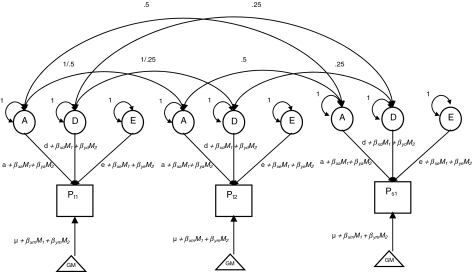
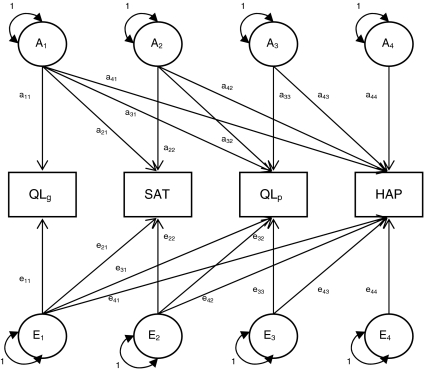
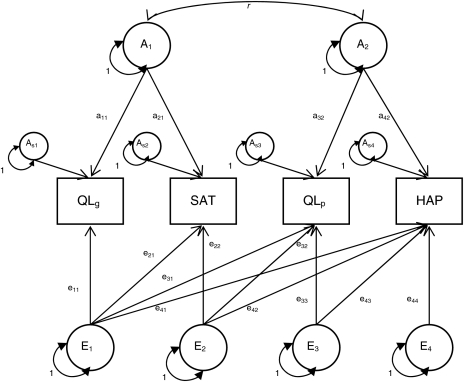
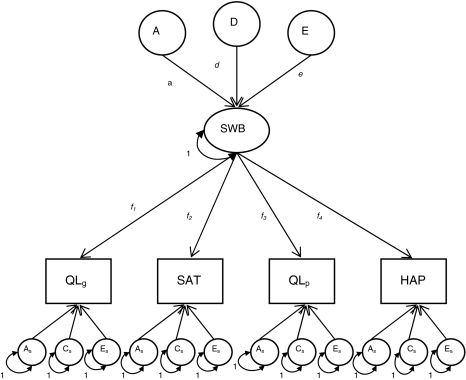
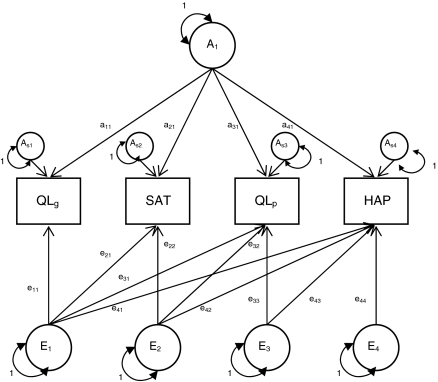
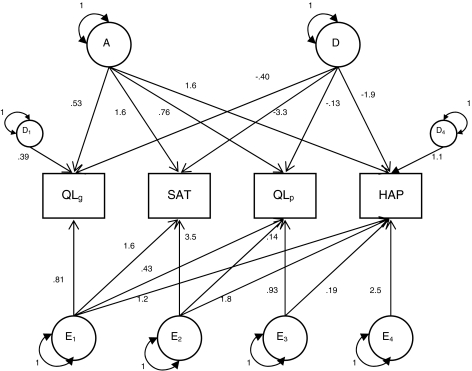
Subjective Wellbeing (SWB) can be assessed with distinct measures that have been hypothesized to represent different domains of SWB. The current study assessed SWB with four different measures in a genetically informative sample of adolescent twins and their siblings aged 13-28 years (N = 5,024 subjects from 2,157 families). Multivariate genetic modeling was applied to the data to explore the etiology of individual differences in SWB measures and the association among them. Developmental trends and sex differences were examined for mean levels and the variance-covariance structure. Mean SWB levels were equal in men and women. A small negative effect of age on mean levels of SWB was found. Individual differences in SWB were accounted for by additive and non-additive genetic influences, and non-shared environment. The broad-sense heritabilities were estimated between 40 and 50%. The clustering of the four different measures (quality of life in general, satisfaction with life, quality of life at present, and subjective happiness) was explained by an underlying additive genetic factor and an underlying non-additive genetic factor. The effect of these latent genetic factors on the phenotypes was not moderated by either age or sex.
Overview
The claims and statistics of this paper haven’t been checked yet.
Free: it reads the open-access text and checks the first 5 claims that cite a source we can check. Create a free account to check every claim.
Integrity signals
Registry
Cites
Statistics
Figures
Verification
Claims the paper makes
The claims and statistics of this paper haven’t been checked yet.
Free: it reads the open-access text and checks the first 5 claims that cite a source we can check. Create a free account to check every claim.
Claims other papers make about this one
Each is checked against this paper’s own text: does it say what the citing paper says it does?
The cited source says what the claim attributes to it.
In the citing paper
“Five studies, all extended twin designs, report significant non-additive genetic effects (Bartels and Boomsma 2009; Hahn et al. 2013; Nes et al. 2010a; Stubbe et al. 2005; Tellegen et al. 1988)”
From Genetics of Wellbeing and Its Components Satisfaction with Life, Happiness, and Quality of Life: A Review and Meta-analysis of Heritability Studies (2015) · cites this paper as Bartels and Boomsma 2009
Self-check
Percentages, sums and reported differences re-computed from the paper’s own numbers.
The self-check needs the paper’s full text.
Citations
Cites
The satisfaction with life scale
Diener, E., Emmons, R. A., Larsen, R. J., & Griffin, S. (1985) · Journal of Personality Assessment · doi:10.1207/s15327752jpa4901_13 · Cited by 31,768 · cited 1×
“This aspect of time fluctuation is also captured in the time-sequential framework of subjective well-being as proposed by Kim-Prieto, Diener (2005).”
MethodSubjective well-being: Three decades of progress.
Diener, E., Suh, E. M., Lucas, R. E., & Smith, H. L. (1999) · Psychological Bulletin · doi:10.1037/0033-2909.125.2.276 · Cited by 12,910
Взаимосвязь статуса занятости и пола с уровнем психологического благополучия
М.Р., Н., & С.И., Б. (2026) · Cifra LLC Journals · doi:10.60797/irj.2026.170.43 · Cited by 7,950
A Measure of Subjective Happiness: Preliminary Reliability and Construct Validation
Lyubomirsky, S., & Lepper, H. S. (1999) · Social Indicators Research · doi:10.1023/a:1006824100041 · Cited by 4,071 · cited 2×
“Subjective Happiness (HAP) was assessed with the 4-item Subjective Happiness Scale (Lyubomirsky and Lepper 1999).”
MethodResilient Individuals Use Positive Emotions to Bounce Back From Negative Emotional Experiences.
Tugade, M. M., & Fredrickson, B. L. (2004) · Journal of Personality and Social Psychology · doi:10.1037/0022-3514.86.2.320 · Cited by 3,947 · cited 2×
“If happiness of these people could be slightly increased it could result in better mental and physical health, more effective coping and in the longer end longevity (Tugade and Fredrickson 2004; Cohn et al. 2009).”
BackgroundSocial Indicators of Well-Being
Andrews, F. M., & Withey, S. B. (1976) · Springer eBooks · doi:10.1007/978-1-4684-2253-5 · Cited by 3,653 · cited 2×
“Andrews and Withey (1976) found, for example, that life satisfaction formed a separate factor form positive affect and this finding was replicated 20 years later (Lucas et al. 1996).”
BackgroundPersonality, Culture, and Subjective Well-Being: Emotional and Cognitive Evaluations of Life
Diener, E., Oishi, S., & Lucas, R. E. (2003) · Annual Review of Psychology · doi:10.1146/annurev.psych.54.101601.145056 · Cited by 3,434 · cited 1×
“One of the growing topics within this field is the cross-cultural comparison of wellbeing (Diener et al. 2003).”
BackgroundRelative Income, Happiness, and Utility: An Explanation for the Easterlin Paradox and Other Puzzles
Clark, A. E., Frijters, P., & Shields, M. A. (2008) · Journal of Economic Literature · doi:10.1257/jel.46.1.95 · Cited by 3,159 · cited 1×
“Obvious factors of importance are income (Clark et al. 2008; Stutzer 2004), education (Blanchflower and Oswald 2004; Bukenya et al. 2003), unemployment (Clark and Oswald 1994; Lucas et al. 2004), religion (Ciarrochi and Deneke 2005; Francis and Kaldor 2002), exercise (Stubbe et al. 2007; Biddle and…”
BackgroundWell-Being Over Time in Britain and the USA
Oswald, A. J., & Blanchflower, D. G. (1999) · Cited by 2,808
Clark, A. E., & Oswald, A. J. (1994) · The Economic Journal · doi:10.2307/2234639 · Cited by 2,562 · cited 2×
“2003), unemployment (Clark and Oswald 1994; Lucas et al. 2004), religion (Ciarrochi and Deneke 2005; Francis and Kaldor 2002), exercise (Stubbe et al.”
Background
Research works printed but not linked: 2
- Ciarrochi JW Deneke E Happiness and the varieties of religious experience: religious support, practices, and spirituality as predictors of well-being Res Soc Sci Study Relig 2005 15 209 223
- Neale MC Boker SM Xie G Maes HH Mx: statistical modeling 2006 7 Richmond VCU Department of Psychiatry
Cited by
Study, L. C., Okbay, A., Baselmans, B. M. L., De Neve, J.-E., Turley, P., Nivard, M. G., Fontana, M. A., Meddens, S. F. W., Linnér, R. K., Rietveld, C. A., et al. (2016) · Nature Genetics · doi:10.1038/ng.3552 · Cited by 1,013
Self-citationMeasuring objective and subjective well-being: dimensions and data sources
Voukelatou, V., Gabrielli, L., Miliou, I., Cresci, S., Sharma, R., Tesconi, M., & Pappalardo, L. (2021) · International Journal of Data Science and Analytics · doi:10.1007/s41060-020-00224-2 · Cited by 365
Academic and emotional functioning in middle school: The role of implicit theories
Romero, C., Master, A., Paunesku, D., Dweck, C. S., & Gross, J. J. (2014) · Emotion · doi:10.1037/a0035490 · Cited by 341
Life satisfaction and mental health problems (18 to 35 years)
Fergusson, D. M., McLeod, G. F. H., Horwood, L. J., Swain, N. R., Chapple, S., & Poulton, R. (2015) · Psychological Medicine · doi:10.1017/s0033291715000422 · Cited by 321
“© Cambridge University Press 2015 doi:10.1017/S0033291715000422 ORIGINAL ARTICLE modest amounts of variance in overall life satisfaction measures (DeNeve & Cooper, 1998; Diener et al. 1999; Bartels & Boomsma, 2009).”
BackgroundInfluentialMultivariate genome-wide analyses of the well-being spectrum
BIOS consortium, Baselmans, B. M. L., Social Science Genetic Association Consortium, Jansen, R., Ip, H. F., van Dongen, J., Abdellaoui, A., van de Weijer, M. P., Bao, Y., Smart, M., et al. (2019) · Nature Genetics · doi:10.1038/s41588-018-0320-8 · Cited by 320
Self-citationBartels, M. (2015) · Behavior Genetics · doi:10.1007/s10519-015-9713-y · Cited by 293
“Other studies applied a multivariate model to multiple measures of wellbeing (Archontaki et al. 2013; Bartels and Boomsma 2009; Gigantesco et al. 2011; Keyes et al. 2010), longitudinal data (Kendler et al.”
BackgroundMethodInfluentialSelf-citationDe Neve, J.-E., & Oswald, A. J. (2012) · Proceedings of the National Academy of Sciences · doi:10.1073/pnas.1211437109 · Cited by 272
Kandler, C., Zimmermann, J., & McAdams, D. P. (2014) · European Journal of Personality · doi:10.1002/per.1952 · Cited by 226
“Several studies have revealed heritability estimates for SWB to be quite similar to the estimates for basic traits, ranging between 38% and 50% (see Bartels & Boomsma, 2009, for a review).”
Exploring the Association Between Well-Being and Psychopathology in Adolescents
Bartels, M., Cacioppo, J. T., van Beijsterveldt, T. C. E. M., & Boomsma, D. I. (2013) · Behavior Genetics · doi:10.1007/s10519-013-9589-7 · Cited by 224
“A small but significant effect of age on mean levels has been reported for SWB and psychopathology (e.g. Bartels et al. 2011; Bartels and Boomsma 2009; Lamb et al. 2010), so age was included as a fixed effect on the means.”
BackgroundSelf-citationHelliwell, J. F., & Wang, S. (2011) · International Journal of Wellbeing · doi:10.5502/ijw.v1i1.3 · Cited by 124
Lindsay, E. K., Chin, B., Greco, C. M., Young, S., Brown, K. W., Wright, A. G. C., Smyth, J. M., Burkett, D., & Creswell, J. D. (2018) · Journal of Personality and Social Psychology · doi:10.1037/pspa0000134 · Cited by 218
“%) in a person’s set level of happiness (e.g., Bartels & Boomsma, 2009).”
The Structure of the Genetic and Environmental Influences on Mental Well-Being
Keyes, C. L. M., Myers, J. M., & Kendler, K. S. (2010) · American Journal of Public Health · doi:10.2105/ajph.2010.193615 · Cited by 195
“or both aspects, with evidence suggesting that a common set of genes underlies both life satisfaction and positive affect.(16) Broad herita-”
Happiness and health behaviours in Chilean college students: A cross-sectional survey
Piqueras, J. A., Kuhne, W., Vera-Villarroel, P., van Straten, A., & Cuijpers, P. (2011) · BMC Public Health · doi:10.1186/1471-2458-11-443 · Cited by 170
“Anyway, genetic studies do not find any age effect [39,40].”
BackgroundPatterns and sources of personality development in old age.
Kandler, C., Kornadt, A. E., Hagemeyer, B., & Neyer, F. J. (2015) · Journal of Personality and Social Psychology · doi:10.1037/pspp0000028 · Cited by 157
van Beijsterveldt, C. E. M., Groen-Blokhuis, M., Hottenga, J. J., Franić, S., Hudziak, J. J., Lamb, D., Huppertz, C., de Zeeuw, E., Nivard, M., Schutte, N., et al. (2013) · Twin Research and Human Genetics · doi:10.1017/thg.2012.118 · Cited by 167
“…Questionnaire (DHBQ), which focuses on emotional and behavior problems assessed by the Youth Self-Report (Achenbach, 1991), subjective well-being (Bartels & Boomsma, 2009a), lifestyle (Geels et al., 2011), exercise behavior (van der Aa, et al., 2010a), sedentary TWIN RESEARCH AND HUMAN GENETICS…”
BackgroundMethodSelf-citationA Note on False Positives and Power in G × E Modelling of Twin Data
van der Sluis, S., Posthuma, D., & Dolan, C. V. (2012) · Behavior Genetics · doi:10.1007/s10519-011-9480-3 · Cited by 147
“For these reasons, researchers have resorted to what we call Purcell’s (2002) univariate moderation model (e.g., Bartels et al. 2009; Bartels and Boomsma 2009; Dick et al. 2009; Distel et al. 2010; Grant et al. 2010; Harden et al. 2007; McCaffery et al. 2008, 2009; Taylor et al. 2010; Timberlake et al. 2006; Turkheime…”
BackgroundInfluentialGenes, economics, and happiness.
De Neve, J.-E., Christakis, N. A., Fowler, J. H., & Frey, B. S. (2012) · Journal of Neuroscience, Psychology, and Economics · doi:10.1037/a0030292 · Cited by 148
“, 2005) to 36–50% (Bartels and Boomsma, 2009) to 42–56% (Nes et al.”
BackgroundMethodInfluentialWeiß, A., Adams, M. J., Widdig, A., & Gerald, M. S. (2011) · Journal of comparative psychology · doi:10.1037/a0021187 · Cited by 154
Social conditions for human happiness: A review of research
Veenhoven, R. (2015) · International Journal of Psychology · doi:10.1002/ijop.12161 · Cited by 160
The YouBeauty.com Team, Swami, V., Tran, U. S., Stieger, S., & Voracek, M. (2014) · Journal of Happiness Studies · doi:10.1007/s10902-014-9530-7 · Cited by 152
“That is, while life satisfaction is an important component of subjective well-being, it can be distinguished conceptually from subjective happiness (Bartels and Boomsma 2009; Mattei and Schaeder 2004), which is a more affective state and less consistent over time (Moons et al.”
BackgroundBaselmans, B. M. L., Willems, Y. E., van Beijsterveldt, C. E. M., Ligthart, L., Willemsen, G., Dolan, C. V., Boomsma, D. I., & Bartels, M. (2018) · Frontiers in Psychiatry · doi:10.3389/fpsyt.2018.00261 · Cited by 131
“In our previous work (35), we report on moderate to strong positive correlations between the Cantril ladder and other measures of well-being [see also (2, 36)].”
BackgroundResultSelf-citationGenetics, personality and wellbeing. A twin study of traits, facets and life satisfaction
Røysamb, E., Nes, R. B., Czajkowski, N. O., & Vassend, O. M. (2018) · Scientific Reports · doi:10.1038/s41598-018-29881-x · Cited by 154
Evidence for a midlife crisis in great apes consistent with the U-shape in human well-being
Weiß, A., King, J. E., Inoue‐Murayama, M., Matsuzawa, T., & Oswald, A. J. (2012) · Proceedings of the National Academy of Sciences · doi:10.1073/pnas.1212592109 · Cited by 156
“In addition, like human subjective well-being questionnaires (6, 26, 34, 35), scores on the present questionnaire are stable over time (31), associated with analogous personality traits (30, 31, 33), and both heritable and genetically correlated with personality (36, 37).”
Personality and well-being in adolescents
Moreira, P., Cloninger, C. R., Dinis, L., Sá, L., Oliveira, J., Dias, A., & Oliveira, J. (2015) · Frontiers in Psychology · doi:10.3389/fpsyg.2014.01494 · Cited by 132
“Well-being is a multidimensional phenomenon, integrating biological, psychological, social, and spiritual dimensions (Cloninger, 2004, 2006a,b; Lyubomirsky et al., 2005; Bartels and Boomsma, 2009; McDowell, 2010).”
BackgroundMajor depression and life satisfaction: A population-based twin study
Nes, R. B., Czajkowski, N. O., Røysamb, E., Ørstavik, R., Tambs, K., & Reichborn‐Kjennerud, T. (2012) · Journal of Affective Disorders · doi:10.1016/j.jad.2012.05.060 · Cited by 130
“Different aspects of positive mental health have also been shown to share a genetic core (Bartels and Boomsma, 2009, Caprara et al., 2009, Keyes et al., 2010).”
BackgroundMethodIntelligence, health and death
Deary, I. J., Hill, W. D., & Galé, C. R. (2021) · Nature Human Behaviour · doi:10.1038/s41562-021-01078-9 · Cited by 119
Links Between Parents’ and Children’s Levels of Gratitude, Life Satisfaction, and Hope
Hoy, B. D., Suldo, S. M., & Mendez, L. M. R. (2012) · Journal of Happiness Studies · doi:10.1007/s10902-012-9386-7 · Cited by 124
“…there have been several other twin studies looking at the similarity 32 between children and their parents, all of which agree with the 50% estimate of happiness heritability (Bartels & Boomsma, 2009; Bartels, Saviouk, De Moor, Willemsen, Van Beijsterveldt, Hottenga, et. al., 2010; Lykken, 1999).”
ResultDe Neve, J.-E. (2011) · Journal of Human Genetics · doi:10.1038/jhg.2011.39 · Cited by 108
Molecular genetics and subjective well-being
Rietveld, C. A., Cesarini, D., Benjamin, D. J., Koellinger, P. D., De Neve, J.-E., Tiemeier, H., Johannesson, M., Magnusson, P. K. E., Pedersen, N. L., Krueger, R. F., et al. (2013) · Proceedings of the National Academy of Sciences · doi:10.1073/pnas.1222171110 · Cited by 104
“Several recent, large-scale, twin-family studies, including both twin and sibling pairs, have indeed documented evidence for the importance of both additive and nonadditive genetic effects in explaining individual differences in SWB (14, 16).”
BackgroundResultSelf-citationSubjective Wellbeing and Longevity: A Co-Twin Control Study
Sadler, M. E., Miller, C. J., Christensen, K., & McGue, M. (2011) · Twin Research and Human Genetics · doi:10.1375/twin.14.3.249 · Cited by 95
“Yet distinct measures of SWB, such as quality of life, life satisfaction, happiness, and optimism are moderately to highly correlated at the phenotypic level, with much of the overlap among similar constructs accounted for by genetic effects (Bartels & Boomsma, 2009; Mosing et al., 2009).”
BackgroundRevisiting the Paradox of Well-being: The Importance of National Context
Swift, H. J., Vauclair, C., Abrams, D., Bratt, C., Marques, S., & Lima, M. L. (2014) · The Journals of Gerontology Series B · doi:10.1093/geronb/gbu011 · Cited by 112
“For example, personality and genetic factors are strong and consistent predictors of SWB (Bartels & Boomsma, 2009; Weiss, Bates, & Luciano, 2008).”
BackgroundDeserno, M. K., Borsboom, D., Begeer, S., & Geurts, H. M. (2017) · Autism · doi:10.1177/1362361316660309 · Cited by 89
“Subjective well-being can be assessed with distinct concepts reflecting the affective and cognitive evaluation of one’s life (Bartels and Boomsma, 2009).”
BackgroundDoes Childhood Predict Adult Life Satisfaction? Evidence from British Cohort Surveys
Frijters, P., Johnston, D. W., & Shields, M. A. (2014) · The Economic Journal · doi:10.1111/ecoj.12085 · Cited by 109
A genetic perspective on the relationship between eudaimonic –and hedonic well-being
Baselmans, B. M. L., & Bartels, M. (2018) · Scientific Reports · doi:10.1038/s41598-018-32638-1 · Cited by 92
Self-citationPsychology of Child Well-Being
Holte, A., Barry, M. M., Bekkhus, M., Borge, A. I. H., Bowes, L., Casas, F., Friborg, O., Grinde, B., Headey, B., Jozefiak, T., et al. (2013) · Springer eBooks · doi:10.1007/978-90-481-9063-8_13 · Cited by 106
“, SWB, PE) commonly accounts for 35 50 % of the total variation at least in adult and adolescent samples (Bartels and Boomsma 2009; Nes et al. 2010; 2006; Tellegen et al. 1988).”
BackgroundA Case-Controlled Study of Successful Aging in Older HIV-Infected Adults
Moore, R. C., Moore, D. J., Thompson, W. K., Vahia, I. V., Grant, I., & Jeste, D. V. (2013) · The Journal of Clinical Psychiatry · doi:10.4088/jcp.12m08100 · Cited by 80
Yakushko, O. F., & Blodgett, E. (2018) · Journal of Humanistic Psychology · doi:10.1177/0022167818794551 · Cited by 80
“of the technologies of the self that describe how social institutions not only dictate the formation of an “individual self” but also order how individuals self-regulate themselves with regard to these institutions, Becker and Marecek (2008) question how pursuits of happiness, strengths, and resilience disregard these…”
BackgroundThe Overall Satisfaction with Life: Subjective Approaches (1)
Veenhoven, R. (2014) · Springer eBooks · doi:10.1007/978-94-017-9178-6_9 · Cited by 106
Benefits of Older Volunteering on Wellbeing: An International Comparison
Gil‐Lacruz, M., Gil, M. I. S., & Gil‐Lacruz, A. I. (2019) · Frontiers in Psychology · doi:10.3389/fpsyg.2019.02647 · Cited by 75
“Even if we only focus on subjective wellbeing, it can be assessed with measures of distinct concepts such as satisfaction with life, happiness, quality of life, and life fulfillment (Bartels and Boomsma, 2009).”
BackgroundPersonality and Subjective Well-Being: What Hides Behind Global Analyses?
Albuquerque, I., de Lima, M. P., Matos, M., & Figueiredo, C. (2011) · Social Indicators Research · doi:10.1007/s11205-010-9780-7 · Cited by 79
“A recent study on the etiology of SWB (Bartels and Boomsma 2009, p. 613) suggests that ‘‘…although it can be assumed that each individual has its, probably genetically determined, setpoint of SWB (Lykken 1999), influences of environmental factors unique to each individual are important’’.”
BackgroundGenetic Influences on Psychological Well‐Being: A Nationally Representative Twin Study
Archontaki, D., Lewis, G. J., & Bates, T. C. (2013) · Journal of Personality · doi:10.1111/j.1467-6494.2012.00787.x · Cited by 60
Sleep determines quality of life in autistic adults: A longitudinal study
Deserno, M. K., Borsboom, D., Begeer, S., Agelink van Rentergem, J. A., Mataw, K., & Geurts, H. M. (2019) · Autism Research · doi:10.1002/aur.2103 · Cited by 58
Happiness in Behaviour Genetics: An Update on Heritability and Changeability
Nes, R. B., & Røysamb, E. (2016) · Journal of Happiness Studies · doi:10.1007/s10902-016-9781-6 · Cited by 71
“The estimates are based on thousands of twins from several different countries, the majority reared together, but some also reared apart (Bartels and Boomsma 2009; Bartels et al. 2010; Nes et al. 2006; Nes et al. 2010a, b; Røysamb et al. 2002; Røysamb et al. 2003; Schnittker 2008).”
BackgroundInfluentialBe Happy in your Work: The Role of Positive Psychology in Working with Change and Performance
Allen, M. S., & McCarthy, P. J. (2015) · Journal of Change Management · doi:10.1080/14697017.2015.1128471 · Cited by 80
“Heritability estimates, however, demonstrate that much of the variance in happiness is explained by non-shared environmental factors (Bartels & Boomsma, 2009) and longitudinal studies demonstrate that critical life events (such as unemployment) are associated with long-term changes in levels of…”
BackgroundHeritability and Genome-Wide Linkage Scan of Subjective Happiness
Bartels, M., Saviouk, V., de Moor, M. H. M., Willemsen, G., van Beijsterveldt, T. C. E. M., Hottenga, J.-J., de Geus, E. J. C., & Boomsma, D. I. (2010) · Twin Research and Human Genetics · doi:10.1375/twin.13.2.135 · Cited by 56
“In a large sample of adolescent twins and their siblings subjective happiness (HAP) has been found to be part of the overall construct of subjective wellbeing (SWB) and the broad-sense heritability of HAP was estimated at 40% (Bartels & Boomsma, 2009).”
BackgroundResultInfluentialSelf-citationElsamani, Y., Mejía, C., & Kajikawa, Y. (2023) · PLoS ONE · doi:10.1371/journal.pone.0280005 · Cited by 67
The Genetic Overlap and Distinctiveness of Flourishing and the Big Five Personality Traits
Keyes, C. L. M., Kendler, K. S., Myers, J., & Martin, C. C. (2014) · Journal of Happiness Studies · doi:10.1007/s10902-014-9527-2 · Cited by 59
Scheeren, A. M., Buil, J. M., Howlin, P., Bartels, M., & Begeer, S. (2021) · Autism · doi:10.1177/13623613211027673 · Cited by 63
“Higher scores indicate higher subjective well-being (Bartels & Boomsma, 2009; Begeer et al., 2017).”
BackgroundSelf-citationHaworth, C. M. A., Carter, K., Eley, T. C., & Plomin, R. (2017) · Developmental Science · doi:10.1111/desc.12376 · Cited by 51
The Majority of Genetic Variation in Orangutan Personality and Subjective Well-Being is Nonadditive
Adams, M. J., King, J. E., & Weiß, A. (2012) · Behavior Genetics · doi:10.1007/s10519-012-9537-y · Cited by 58
The Structure of Subjective Well-Being and Its Determinants: A Micro-Data Study for Portugal
Soukiazis, E., & Ramos, S. (2015) · Social Indicators Research · doi:10.1007/s11205-015-0938-1 · Cited by 55
Happy orang-utans live longer lives
Weiss, A., Adams, M. J., & King, J. E. (2011) · Biology Letters · doi:10.1098/rsbl.2011.0543 · Cited by 48
Informed Pursuit of Happiness: What we should know, do know and can get to know
Veenhoven, R. (2014) · Journal of Happiness Studies · doi:10.1007/s10902-014-9560-1 · Cited by 65
Anxious or Depressed and Still Happy?
Spinhoven, P., Elzinga, B. M., Giltay, E. J., & Penninx, B. W. J. H. (2015) · PLoS ONE · doi:10.1371/journal.pone.0139912 · Cited by 49
“These interventions may be especially indicated for persons who perhaps are not “born to be happy” [46], but can in this way compensate for their natural shortcomings.”
BackgroundBeyond the heritability of life satisfaction – The roles of personality and twin-specific influences
Hahn, E., Johnson, W., & Spinath, F. M. (2013) · Journal of Research in Personality · doi:10.1016/j.jrp.2013.07.003 · Cited by 48
“A number of these studies have reported that genetic influences account for as much as 35–50% of the phenotypic variance in life satisfaction (Bartels & Boomsma, 2009; Franz et al., 2012; Lykken & Tellegen, 1996; Nes, Czajkowski, & Tambs, 2010; Nes, Røysamb, Tambs, Harris, & Reichborn-Kjennerud,…”
BackgroundHahn, E., Specht, J., Gottschling, J., & Spinath, F. M. (2015) · European Journal of Personality · doi:10.1002/per.2034 · Cited by 56
“A number of studies have reported that genetic influences account for as much as 30% to 50% of the phenotypic variance in SWB measures (e.g. Bartels & Boomsma, 2009; Hahn et al., 2013), supporting the idea of a genetically influenced life satisfaction set point.”
BackgroundResultThe Relationship between Self-Esteem and Depression when Controlling for Neuroticism
Mu, W., Luo, J., Rieger, S., Trautwein, U., & Roberts, B. W. (2019) · Collabra Psychology · doi:10.1525/collabra.204 · Cited by 48
Determinantes do Bem-Estar Subjetivo
Woyciekoski, C., Stenert, F., & Hutz, C. S. (2012) · Psico · Cited by 101
Biomarkers: Symptoms, Survivorship, and Quality of Life
Miaskowski, C. A., & Aouizerat, B. E. (2012) · Seminars in Oncology Nursing · doi:10.1016/j.soncn.2012.03.008 · Cited by 48
Røysamb, E., Nes, R. B., & Vittersø, J. (2014) · Elsevier eBooks · doi:10.1016/b978-0-12-411478-4.00002-3 · Cited by 49
Perceived Social Support and Mental Health: Cultural Orientations as Moderators
Shelton, A. J., Wang, C. D. C., & Zhu, W. (2017) · Journal of College Counseling · doi:10.1002/jocc.12062 · Cited by 46
Family Matters: Happiness in Nuclear Families and Twins
Nes, R. B., Czajkowski, N., & Tambs, K. (2010) · Behavior Genetics · doi:10.1007/s10519-010-9365-x · Cited by 41
“2006), whereas other reports have not indicated sex-specific effects (Bartels and Boomsma 2009).”
BackgroundMethodInfluentialGigantesco, A., Stazi, M. A., Alessandri, G., Medda, E., Tarolla, E., & Fagnani, C. (2011) · Psychological Medicine · doi:10.1017/s0033291711000663 · Cited by 48
“Most twin studies have provided evidence of non-additive genetic effects on SWB; however, some studies have found sex-specific additive effects (Nes et al. 2006) or both additive and nonadditive genetic effects (Bartels & Boomsma, 2009).”
BackgroundMontag, C., Hahn, E., Reuter, M., Spinath, F. M., Davis, K., & Panksepp, J. (2016) · PLoS ONE · doi:10.1371/journal.pone.0151405 · Cited by 39
Wollast, R., Riemer, A. R., Bernard, P., Leys, C., Kotsou, I., & Klein, O. (2019) · Scandinavian Journal of Psychology · doi:10.1111/sjop.12553 · Cited by 45
Simons, M., Peeters, S. C. T., Janssens, M., Lataster, J., & Jacobs, N. (2016) · Journal of Happiness Studies · doi:10.1007/s10902-016-9806-1 · Cited by 42
“Happiness was measured by the Dutch version of the Subjective Happiness Scale (Lyubomirsky and Lepper 1999; Bartels and Boomsma 2009).”
MethodInvestigation of age and gender effects on positive orientation in Italian twins
Fagnani, C., Medda, E., Stazi, M. A., Caprara, G. V., & Alessandri, G. (2014) · International Journal of Psychology · doi:10.1002/ijop.12053 · Cited by 41
Bartels, M., de Moor, M. H. M., van der Aa, N., Boomsma, D. I., & de Geus, E. J. C. (2012) · Frontiers in Genetics · doi:10.3389/fgene.2012.00004 · Cited by 37
“For SWB, rc was not modeled, because shared environmental influences did not contribute to variation in SWB in boys and girls (Bartels and Boomsma, 2009; van der Aa et al., 2010b).”
BackgroundMethodInfluentialSelf-citationSteenstrup, T., Pedersen, O. B., Hjelmborg, J., Skytthe, A., & Kyvik, K. O. (2013) · Twin Research and Human Genetics · doi:10.1017/thg.2013.21 · Cited by 38
“Previous studies on the heritability of QL and subjective well-being report heritability estimates of 36–50% (Bartels & Boomsma, 2009; Bartels et al., 2010).”
Moreira, P., Pedras, S., Silva, M., Moreira, M., & Oliveira, J. (2020) · Journal of Happiness Studies · doi:10.1007/s10902-020-00299-5 · Cited by 42
Genetic and Environmental Multidimensionality of Well- and Ill-Being in Middle Aged Twin Men
Franz, C. E., Panizzon, M. S., Eaves, L. J., Thompson, W., Lyons, M. J., Jacobson, K. C., Tsuang, M., Glatt, S. J., & Kremen, W. S. (2012) · Behavior Genetics · doi:10.1007/s10519-012-9538-x · Cited by 36
“Multivariate twin studies of well-being Bartels and Boomsma (2009) found that approximately half of the overlap among four measures of satisfaction and happiness was accounted for by genetic influences in common whereas the patterns of associations among unique environmental factors across measures…”
InfluentialVermeulen, M. C. M., van der Heijden, K. B., Kocevska, D., Treur, J. L., Huppertz, C., van Beijsterveldt, C. E. M., Boomsma, D. I., Swaab, H., Someren, E. J. W. V., & Bartels, M. (2020) · Journal of Child Psychology and Psychiatry · doi:10.1111/jcpp.13238 · Cited by 36
“Longitudinal reciprocal associations of sleep duration and sleep problems with psychological functioning (INT, EXT, and SWB) across adolescence were examined using cross-lagged path models.”
Self-citationHahn, E., Gottschling, J., König, C. J., & Spinath, F. M. (2015) · Journal of Business and Psychology · doi:10.1007/s10869-015-9413-x · Cited by 41
“This is in contrast to the assertion that most or all of the genetic variation in job satisfaction is additive (Arvey et al. 1994), but in line with findings for general life satisfaction (Hahn et al. 2013; Bartels and Boomsma 2009).”
ResultGartner, M. C., Powell, D., & Weiß, A. (2016) · Journal of Applied Animal Welfare Science · doi:10.1080/10888705.2016.1141057 · Cited by 41
“In addition, subjective well-being is heritable in humans (Bartels & Boomsma, 2009); chimpanzees ( Pan troglodytes ), in whom it is genetically correlated with Dominance (Weiss et al., 2002); and orangutans (Adams et al., 2012).”
BackgroundMenne‐Lothmann, C., Jacobs, N., Derom, C. A., Thiery, E. W., van Os, J., & Wichers, M. (2012) · Behavior Genetics · doi:10.1007/s10519-012-9553-y · Cited by 36
“Although SWB appears to be moderately determined by genes (Bartels and Boomsma 2009; Lyubomirksy et al. 2005b; Nes et al. 2010), it is unlikely that people are born with a certain level of SWB.”
Life satisfaction and inflammation in couples: an actor–partner analysis
Uchino, B. N., de Grey, R. G. K., Cronan, S. B., Smith, T. W., Diener, E., Joel, S., & Bosch, J. A. (2017) · Journal of Behavioral Medicine · doi:10.1007/s10865-017-9880-9 · Cited by 37
“These studies suggest that genes and non-shared experiences explain by far most of the variance in life satisfaction, and the shared environment between siblings (e.g., family life) had a negligible contribution (Bartels, 2015; Bartels & Boomsma, 2009).”
BackgroundResultRelating ASD symptoms to well-being: moving across different construct levels
Deserno, M. K., Borsboom, D., Begeer, S., & Geurts, H. M. (2017) · Psychological Medicine · doi:10.1017/s0033291717002616 · Cited by 40
“WB can be assessed with distinct concepts reflecting the affective and cognitive evaluation of one’s life (Bartels & Boomsma, 2009).”
BackgroundSubjective Wellbeing, Psychology of
Armenta, C. N., Ruberton, P. M., & Lyubomirsky, S. (2015) · Elsevier eBooks · doi:10.1016/b978-0-08-097086-8.25039-3 · Cited by 47
Disability-based inequity in youth subjective well-being: current findings and future directions
Savage, A., McConnell, D., Emerson, E., & Llewellyn, G. M. (2014) · Disability & Society · doi:10.1080/09687599.2014.880331 · Cited by 37
Adaptation following stroke: A personal projects analysis.
Davis, C. G., Egan, M. Y., Dubouloz, C., Kubina, L.-A., & Kessler, D. (2013) · Rehabilitation Psychology · doi:10.1037/a0033400 · Cited by 40
Sprangers, M. A. G., Bartels, M., Veenhoven, R., Baas, F., Martin, N. G., Mosing, M. A., Movsas, B., Ropka, M. E., Shinozaki, G., & Swaab, D. F. (2010) · Quality of Life Research · doi:10.1007/s11136-010-9652-2 · Cited by 37
Self-citationJamshidi, J., Williams, L. M., Schofield, P. R., Park, H. R. P., Montalto, A., Chilver, M. R., Bryant, R. A., Toma, C., Fullerton, J. M., & Gatt, J. M. (2020) · Genes Brain & Behavior · doi:10.1111/gbb.12694 · Cited by 34
“Subjective wellbeing (hedonia) pertains to positive affect and satisfaction with life, whereas psychological wellbeing (eudaimonia) pertains to attributes of human potential.(3,4) Twin studies have shown that variation in wellbeing can be attributed to genetic factors, with a broad range of heritability estimates rang…”
BackgroundSametoğlu, S., Pelt, D. H. M., Eichstaedt, J. C., Ungar, L., & Bartels, M. (2023) · The Journal of Positive Psychology · doi:10.1080/17439760.2023.2218341 · Cited by 36
“At the same time, studies have shown that different wellbeing measures correlate with each other at moderate to high levels (e.g., Bartels & Boomsma, 2009; Busseri, 2018), implying a general wellbeing factor (Longo et al., 2016).”
BackgroundSelf-citationGeurts, H. M., van Rentergem, J. A. A., Radhoe, T. A., Torenvliet, C., van der Putten, W., & Groenman, A. P. (2021) · BMJ Open · doi:10.1136/bmjopen-2020-040943 · Cited by 31
“Psychiatric comorbidity was assessed with the MINI 65 66 in all participants independent of group.”
MethodPersonality Polygenes, Positive Affect, and Life Satisfaction
Weiß, A., Baselmans, B. M. L., Hofer, E., Yang, J., Okbay, A., Lind, P. A., Miller, M. B., Nolte, I. M., Zhao, W., Hagenaars, S. P., et al. (2016) · Twin Research and Human Genetics · doi:10.1017/thg.2016.65 · Cited by 31
Self-citationAssociations between subjective well-being and subcortical brain volumes
Ent, D. V. ‘., den Braber, A., Baselmans, B. M. L., Brouwer, R. M., Dolan, C. V., Pol, H. E. H., de Geus, E. J. C., & Bartels, M. (2017) · Scientific Reports · doi:10.1038/s41598-017-07120-z · Cited by 29
“The omnibus test of these correlations indicated that they did not differ from zero (Chi2(4) = 1.”
Self-citationNGUYEN, K. T., DUONG, T. M., Nhi Yen, T. R. A. N., Anh Thao, H. A., & PHUNG, Y. N. T. (2019) · Journal of Asian Finance Economics and Business · doi:10.13106/jafeb.2020.vol7.no1.183 · Cited by 37
“Wellbeing is a multi-dimensional phenomenon, integrating biological, psychological, social and spiritual dimensions (Cloninger, 2004, 2006a, 2006b; Bartels & Boomsma, 2009; McDowell, 2010).”
BackgroundLonghurst, P. (2021) · Counselling and Psychotherapy Research · doi:10.1002/capr.12494 · Cited by 30
Curtin, S., & Brown, L. (2018) · Tourist Studies · doi:10.1177/1468797618804162 · Cited by 29
Nes, R. B., Røysamb, E., Harris, J. R., Czajkowski, N., & Tambs, K. (2010) · Twin Research and Human Genetics · doi:10.1375/twin.13.4.312 · Cited by 26
“Keywords: subjective wellbeing, mental health, heritability, twin research, marital status A number of twin and family studies have documented the importance of genetic differences for variation in happiness and wellbeing (e.g., Bartels & Boomsma, 2009; Lykken & Tellegen, 1996; Nes et al., 2006).”
BackgroundResultInfluentialStones, M. J., Kozma, A., McNeil, K., & Worobetz, S. (2011) · Canadian Journal on Aging / La Revue canadienne du vieillissement · doi:10.1017/s0714980811000365 · Cited by 27
“Bartels and Boomsma ( 2009 ) reported overall heritability estimates of 40 to 50 per cent for measures of life satisfaction, happiness, and quality of life in a study of 5,024 individuals.”
BackgroundStudy, L. C., Okbay, A., Baselmans, B. M. L., Neve, J.-E. D., Turley, P., Nivard, M. G., Fontana, M. A., Meddens, S. F. W., Linnér, R. K., Rietveld, C. A., et al. (2016) · Nature Genetics · doi:10.1038/ng1216-1587b · Cited by 27
Psychological Mechanism of Subjective Well-Being: A Stable Trait or Situational Variability
Li, Z., Yin, X., Jiang, S., Wang, M., & Cai, T. (2013) · Social Indicators Research · doi:10.1007/s11205-013-0449-x · Cited by 25
“Furthermore, Bartels and Boomsma (2009) reported that, aside from genes, other innate factors determine wellbeing (e.g., gender and age); specifically, these two genetically determined demographic variables have equal influence on well-being.”
BackgroundVothknecht, S., Meijer, C. J., Zwinderman, A. H., Kikkert, M., Dekker, J., van Beveren, N. J. M., Schoevers, R. A., & de Haan, L. (2012) · Psychiatry Research · doi:10.1016/j.psychres.2012.09.004 · Cited by 27
“Research in twin studies have shown that different measures of subjective well-being are probably largely overlapping constructs (Bartels and Boomsma, 2009).”
BackgroundInfluentialPredictors of Life Satisfaction in New Zealand: Analysis of a National Dataset
Jarden, R., Joshanloo, M., Weijers, D., Sandham, M. H., & Jarden, A. (2022) · International Journal of Environmental Research and Public Health · doi:10.3390/ijerph19095612 · Cited by 28
Epigenome-Wide Association Study of Wellbeing
Baselmans, B. M. L., van Dongen, J., Nivard, M. G., Lin, B. D., Zilhäo, N. R., Boomsma, D. I., & Bartels, M. (2015) · Twin Research and Human Genetics · doi:10.1017/thg.2015.85 · Cited by 25
“A multivariate twin-sibling study exploring the etiology of the covariance among multiple WB indices revealed that the genetic variance in the different measures was explained by one underlying set of genes (Bartels & Boomsma, 2009).”
BackgroundSelf-citationChu, X., Liu, L., Wen, Y. F., Li, P., Cheng, B., Cheng, S., Zhang, L., Ma, M., Qi, X., Liang, C., et al. (2020) · Journal of Psychiatric Research · doi:10.1016/j.jpsychires.2020.02.012 · Cited by 24
Within-person variations and between-person differences in self-control and wellbeing
Büyükcan-Tetik, A., Finkenauer, C., & Bleidorn, W. (2017) · Personality and Individual Differences · doi:10.1016/j.paid.2017.10.013 · Cited by 28
Happy Temperament? Four Types of Stimulation Control Linked to Four Types of Subjective Well-Being
Bojanowska, A., & Zalewska, A. M. (2016) · Journal of Happiness Studies · doi:10.1007/s10902-016-9777-2 · Cited by 21
“Newer studies also pointed out that heritable factors are responsible for the levels of individual well-being up to 50 % of variance (Bartels and Boomsma 2009).”
Backgroundvan der Aa, N., Boomsma, D. I., Rebollo-Mesa, I., Hudziak, J. J., & Bartels, M. (2010) · Twin Research and Human Genetics · doi:10.1375/twin.13.2.143 · Cited by 20
“Genetic factors also have been found to account for individual differences in evaluations of SWB (e.g., Bartels & Boomsma, 2009; Nes et al., 2006; Røysamb et al., 2002).”
BackgroundSelf-citation
Metadata
- Authors
- Bartels, M., & Boomsma, D. I.
- Affiliations
- Vrije Universiteit Amsterdam (NL)
- Corresponding author
- Bartels, Meike
- Venue
- Behavior Genetics
- Published
- 2009-09-03
- Volume
- 39
- Issue
- 6
- Pages
- 605-615
- ISSN
- 0001-8244 (ISSN-L)
- 1573-3297
- PMC
- PMC2780680
- OpenAlex
- W1980406651
- Semantic Scholar
- d66321a79b719ffd4a1dddfc5e69be56a98ad958
- Cited by
- 217
- References
- 60
- Citations by year
- 2026: 6 · 2025: 8 · 2024: 11 · 2023: 14 · 2022: 10 · 2021: 14 · 2020: 7 · 2019: 12 · 2018: 12 · 2017: 11 · 2016: 14 · 2015: 22 · 2014: 20 · 2013: 15 · 2012: 17
- FWCI
- 17.84
- Type
- journal article
- Language
- en
- Open access
- hybrid
- doi.org
- Licence
- cc-by-nc
- Locations
- Behavior Genetics (publishedVersion, cc-by-nc)
- PubMed Central (publishedVersion, cc-by-nc)
- PubMed (publishedVersion)
- Digital Academic REpository of VU University Amsterdam (Vrije Universiteit Amsterdam) (submittedVersion)
- VU Research Portal (submittedVersion, other-oa)
- Data Archiving and Networked Services (DANS) (submittedVersion, other-oa)
- Topics
- Social Sciences › Psychology › Social Psychology › Psychological Well-being and Life Satisfaction
- Life Sciences › Neuroscience › Cellular and Molecular Neuroscience › Neurotransmitter Receptor Influence on Behavior
- Life Sciences › Biochemistry, Genetics and Molecular Biology › Genetics › Genetic Associations and Epidemiology
- Keywords
- subjective well-being, heritability, genetic factors, non-additive genetic effects, nonshared environment, life satisfaction, subjective happiness, quality of life, individual differences, age differences, sex differences, twins and siblings
- MeSH terms
- Adolescent, Adult, Female, Genotype, Happiness, Humans, Individuality, Male, Models, Genetic, Netherlands, Personality Inventory, Phenotype, Psychometrics, Quality of Life, Social Environment, Temperament, Twins, Dizygotic, Twins, Monozygotic, Multivariate Analysis, Siblings, Young Adult
About these checks
Registry, retraction, Cites and statistics results are computed, not judged, with one exception: a printed reference that no index lists is read once by a model before it counts as a citation error. Claims are extracted by a model and kept only when their quote appears verbatim in the text; each cited source is then checked, with a model’s help, for whether it says what the claim relies on. Those verdicts can be wrong — read the claim’s quote and the cited source before relying on one.
Statistics and arithmetic are recomputed, not judged.
Confidence bands are shown only for fields calibrated on our annotated test set. None is calibrated yet, so no band is shown.
What counts as a claim ›How we measure confidence ›How we check this ›
Are you an author, or do you see a problem with this page? Request a review
Data sources
Bibliographic data: Semantic Scholar, OpenAlex, Crossref.
Contains information from the Semantic Scholar Academic Graph Datasets, made available under the ODC Attribution License (ODC-BY 1.0).
Semantic Scholar’s data is described in: Kinney, R., et al. (2023). The Semantic Scholar Open Data Platform. arXiv:2301.10140.
