

Historicizing Modern Slavery: Free-Grown Sugar as an Ethics-Driven Market Category in Nineteenth-Century Britain
Open accessThe DOI matches its Crossref record; 176 of the 187 references it cites were found in a registry or an index, and 1 are not checked yet; 2 of the 93 sources its claims cite were checked for support.
Abstract
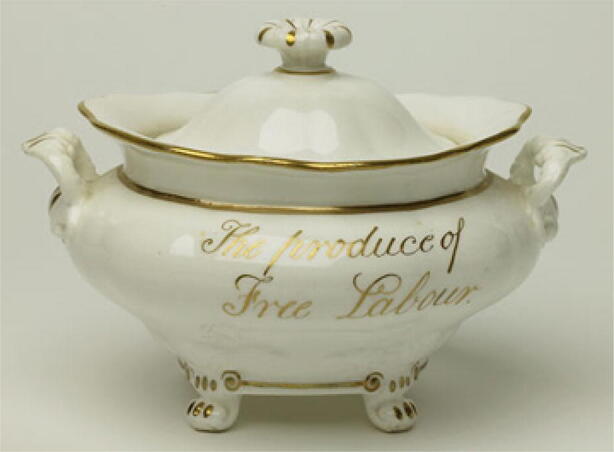
The modern slavery literature engages with history in an extremely limited fashion. Our paper demonstrates to the utility of historical research to modern slavery researchers by explaining the rise and fall of the ethics-driven market category of "free-grown sugar" in nineteenth-century Britain. In the first decades of the century, the market category of "free-grown sugar" enabled consumers who were opposed to slavery to pay a premium for a more ethical product. After circa 1840, this market category disappeared, even though considerable quantities of slave-grown sugar continued to arrive into the UK. We explain the disappearance of the market category. Our paper contributes to the on-going debates about slavery in management by historicizing and thus problematizing the concept of "slavery". The paper challenges those modern slavery scholars who argue that lack of consumer knowledge about product provenance is the main barrier to the elimination of slavery from today's international supply chains. The historical research presented in this paper suggests that consumer indifference, rather than simply ignorance, may be the more fundamental problem. The paper challenges the optimistic historical metanarrative that pervades much of the research on ethical consumption. It highlights the fragility of ethics-driven market categories, offering lessons for researchers and practitioners seeking to tackle modern slavery.
Verified 2026-11-22 · 1 reference not checked yet
Overview
CoChat Summary
TL;DR
The paper uses the rise and fall of the ethics-driven market category “free-grown sugar” in nineteenth-century Britain to argue that modern slavery research is largely ahistorical and that consumer indifference, not merely ignorance, may be the more fundamental barrier to ethical consumption. It finds the category emerged in the 1790s, became established, then disappeared after circa 1840 despite continued slave-grown sugar imports, challenging linear-progressive narratives of ethical consumption.
Key findings
- The free-grown sugar category was created in 1792 by London merchants tied to the East India Company; the 1791 boycott affected 400,000 consumers and sugar sales fell by between a third and a half, while East Indian sugar sales “increased tenfold” during the 1790s.
- The category became established in the early 1800s but disappeared after circa 1840; as late as 1880, slave-produced tropical sugars still represented 12% of all UK imports, and the paper found no evidence the category re-appeared despite slave-grown sugar from Cuba and Brazil continuing until the 1880s.
- Consumer indifference rather than ignorance is emphasized: newspapers and parliamentary speakers discussed slave-produced sugar, yet the 1862 parliamentary investigation found no evidence retailers categorized sugar by free versus slave labour.
- State action, not ethical consumerism, ended slavery: by 1890 slavery had disappeared from all New World regions supplying Britain’s sugar, in every case through state action. The paper also argues intensifying racism after 1840 and the death of James Cropper contributed to the category’s decline; UK GDP per capita rose from US$2,300 in 1801 to $3,900 in 1860, but ethical concern did not rise with affluence.
Methods
- The paper is a conceptualizing historical study using a reflexive historical case study approach, abductive analysis, periodization, source criticism, hermeneutics, and process tracing.
- Secondary-source search: Historical Abstracts for “sugar” and “slavery” produced 2,924 results from 1958 to 2017; narrowing to Great Britain reduced this to 152 sources, then to 30 that discussed sugar and slavery in a sustained way, supplemented by classics such as Williams’s *Capitalism and Slavery*.
- Primary sources included digitized newspapers such as the London Times back to 1785 and the Manchester Guardian, parliamentary debates from 1803, parliamentary papers, and UK trade statistics; searches used “slave-grown sugar,” “free-grown sugar,” and “free-labour sugar.”
Limitations
- Stated: data gaps include the absence of primary sources recording nineteenth-century consumers’ precise motives for buying free-labour sugar, no internal records from Smith and Leaper, and Cropper firm records that do not allow comparison of the profitability of his free-labour sugar venture with other ventures.
- Stated: the evidence base is less comprehensive than for more recent historical phenomena, and process-tracing confidence is only at the “hoop” standard, stronger than “straw-in-the-wind” but less strong than “smoking gun,” so causal claims are expressed tentatively.
- Stated: the authors’ left-of-centre UK context and one researcher’s African background may have influenced interpretation, though they took steps to mitigate ideological bias; evident from the text, quantitative market-share data are limited, relying on proxy annual trade statistics rather than market research reports.
Model-written summary. Check it against the paper before relying on it.
Integrity signals
Registry
Cites
Statistics
Figures
Verification
Claims the paper makes
2 Valid · 41 Not valid · 77 Not checked · 106 Own results and interpretations
A result the paper states — it cites no source for it, so there is none to check. The quote shows it is in the paper.
In the paper
“This market category appealed to British consumers who supported the new anti-slavery movement and who did not want to support the institution of slavery by purchasing sugar from the West Indies.”
§ Historicizing Modern Slavery: Free-Grown Sugar as an Ethics-Driven Market Category in Nineteenth-Century Britain > Introduction
plainstates a cause- Asserted: passes — The authors put it forward as true.
- Checkable: passes — It can be checked against evidence.
- Load-bearing: passes — The paper’s conclusions depend on it.
- Based: passes — The paper gives a reason why it holds.
The paper states this without a source or data behind it here, so there is nothing to check it against. The quote shows it is in the paper.
In the paper
“During this period, significant numbers of British consumers paid a premium for sugar that was marketed as being produced without slave labour.”
§ Historicizing Modern Slavery: Free-Grown Sugar as an Ethics-Driven Market Category in Nineteenth-Century Britain > Introduction
plainstates an association- Asserted: passes — The authors put it forward as true.
- Checkable: passes — It can be checked against evidence.
- Load-bearing: passes — The paper’s conclusions depend on it.
- Based: unclear — It is unclear why the paper says it holds.
The paper states this without a source or data behind it here, so there is nothing to check it against. The quote shows it is in the paper.
In the paper
“The academic literature on modern slavery consists, overwhelmingly, of books and papers that were published by scholars who work outside of management schools.”
§ Historicizing Modern Slavery: Free-Grown Sugar as an Ethics-Driven Market Category in Nineteenth-Century Britain > Literature Review > Research on Modern Slavery
plain- Asserted: passes — The authors put it forward as true.
- Checkable: passes — It can be checked against evidence.
- Load-bearing: passes — The paper’s conclusions depend on it.
- Based: unclear — It is unclear why the paper says it holds.
A result the paper reports from its own data — it cites no other source for it, so there is none to check. The quote shows it is in the paper.
In the paper
“In our case study, we document a process of moralisation and demoralization.”
§ Historicizing Modern Slavery: Free-Grown Sugar as an Ethics-Driven Market Category in Nineteenth-Century Britain > Literature Review > Historical Metanarratives
plainSingle case- Asserted: passes — The authors put it forward as true.
- Checkable: passes — It can be checked against evidence.
- Load-bearing: passes — The paper’s conclusions depend on it.
- Based: passes — The paper gives a reason why it holds.
In the paper
“Management research on modern slavery has overlooked the historical continuities between contemporary management practices, such as cost accounting, and slavery (Rosenthal 2018).”
§ Historicizing Modern Slavery: Free-Grown Sugar as an Ethics-Driven Market Category in Nineteenth-Century Britain > Literature Review > Research on Modern Slavery
What the sources say
- Not checked — no full text of the sourcecites Rosenthal 2018 matched to “Accounting for Slavery: Masters and Management” (2018) source
plain- Asserted: passes — The authors put it forward as true.
- Checkable: passes — It can be checked against evidence.
- Load-bearing: passes — The paper’s conclusions depend on it.
- Based: passes — The paper gives a reason why it holds.
98 more claims
Create a free account to see all 226 claims and to verify the 9 references still open.
- Probably not a substantial claim. 95
- It may state two separate claims as one. 47
- The quote only partly states this claim. 4
Self-check
Percentages, sums and reported differences re-computed from the paper’s own numbers.
Each contradiction between two passages listed here was confirmed by an independent check.
Rated minor: it would not touch a result — a value no result rests on, a p-value that stays on the same side of the significance level, or a conflict that is clerical, resolved elsewhere in the paper, or outside its own findings.
In the paper
§ Historicizing Modern Slavery: Free-Grown Sugar as an Ethics-Driven Market Category in Nineteenth-Century Britain > Literature Review > Our Case Study
“The first of our historical periods begins in the 1600s when sizeable volumes of slave-produced sugar first entered the British market and ends in the late 1790 s, when members of Britain’s new anti-slavery movement attacked sugar as an immoral commodity.”
§ Historicizing Modern Slavery: Free-Grown Sugar as an Ethics-Driven Market Category in Nineteenth-Century Britain > Literature Review > Our Case Study
“The emergence of the anti-slavery movement in the 1760s and 1770s led, in the late 1780s and early 1790s, to a period of “turmoil” that witnessed boycotts of sugar by so-called “anti-saccharites”, who regarded the consumption of sugar as inherently immoral.”
Citations
Cites
The Discovery of Grounded Theory: Strategies for Qualitative Research.
Wagner, H. R., Glaser, B. G., & Strauss, A. L. (1968) · Social Forces · doi:10.2307/2575405 · Cited by 46,361
The Discovery of Grounded Theory; Strategies for Qualitative Research
Glaser, B. G., Strauss, A. L., & Strutzel, E. (1968) · Nursing Research · doi:10.1097/00006199-196807000-00014 · Cited by 39,449
Building Theories from Case Study Research
Eisenhardt, K. M. (1989) · The Academy of Management Review · doi:10.2307/258557 · Cited by 17,455
Seeking Qualitative Rigor in Inductive Research: Notes on the Gioia Methodology
Gioia, D. A., Corley, K. G., & Hamilton, A. L. (2013) · Organizational Research Methods · doi:10.1177/1094428112452151 · Cited by 13,227
(2019) · AEA Papers and Proceedings · doi:10.1257/pandp.109.612 · Cited by 10,902
Strategies for Theorizing from Process Data
Langley, A. (1999) · The Academy of Management Review · doi:10.5465/amr.1999.2553248 · Cited by 7,008 · cited 1×
“This analytical process, which corresponds to what organizational studies scholars call temporal bracketing (Langley and Truax 1994; Langley 1999), is called periodization (Bentley 1996).”
Background(1985) · American Economic Review · Cited by 6,056
The Silent Revolution: Changing Values and Political Styles Among Western Publics
Inglehart, R. (2015) · Princeton University Press eBooks · doi:10.1515/9781400869589 · Cited by 3,723
The Silent Revolution: Changing Values and Political Styles among Western Publics
Morse, E. L., & Inglehart, R. (1978) · Foreign Affairs · doi:10.2307/20039864 · Cited by 3,566
(1986) · Medical Entomology and Zoology · Cited by 2,441
Collier, D. (2011) · PS: Political Science & Politics · doi:10.1017/s1049096511001429 · Cited by 2,238 · cited 2×
“Within process tracing, the hoop standard is stronger than merely indicative “straw-in-the-wind” evidence but less strong than “smoking gun” evidence (Collier 2011).”
BackgroundMOHR, L. A., WEBB, D. J., & HARRIS, K. E. (2001) · Journal of Consumer Affairs · doi:10.1111/j.1745-6606.2001.tb00102.x · Cited by 2,119
Darwin, C. (1860) · J. Murray eBooks · doi:10.1037/14088-000 · Cited by 2,021
Michalos, A. C., & Poff, D. C. (2018) · Encyclopedia of Business and Professional Ethics · doi:10.1007/978-3-319-23514-1_260-2 · Cited by 1,946
Enlightenment Now: The Case for Reason, Science, Humanism, and Progress
Pinker, S. A. (2018) · Cited by 1,764
The myth of the ethical consumer – do ethics matter in purchase behaviour?
Carrigan, M., & Attalla, A. (2001) · Journal of Consumer Marketing · doi:10.1108/07363760110410263 · Cited by 1,650
Williams, E. (1944) · Project Muse (Johns Hopkins University) · Cited by 1,362
The Oxford Handbook of Political Methodology
(2008) · Oxford University Press eBooks · doi:10.1093/oxfordhb/9780199286546.001.0001 · Cited by 1,362
Do Consumers Care about Ethics? Willingness to Pay for Fair‐Trade Coffee
DE PELSMACKER, P., DRIESEN, L., & RAYP, G. (2005) · Journal of Consumer Affairs · doi:10.1111/j.1745-6606.2005.00019.x · Cited by 1,361
Grand Challenges and Inductive Methods: Rigor without Rigor Mortis
Eisenhardt, K. M., Graebner, M. E., & Sonenshein, S. (2016) · Academy of Management Journal · doi:10.5465/amj.2016.4004 · Cited by 1,129
Donnan, E., & Williams, E. (1945) · The American Historical Review · doi:10.1086/ahr/50.4.782 · Cited by 1,054
Donnan, E., & Williams, E. (1945) · The American Historical Review · doi:10.2307/1842707 · Cited by 1,048
The better angels of our nature : the decline of violence in history and its causes
Pinker, S. A. (2011) · Cited by 967
Navis, C., & Glynn, M. A. (2010) · Administrative Science Quarterly · doi:10.2189/asqu.2010.55.3.439 · Cited by 923
An exploratory study into the factors impeding ethical consumption
Bray, J., Johns, N., & Kilburn, D. (2011) · Journal of Business Ethics · doi:10.1007/s10551-010-0640-9 · Cited by 891
(2021) · Encyclopedia of Evolutionary Psychological Science · doi:10.1007/978-3-319-19650-3_303511 · Cited by 863
The Nuclear Taboo: The United States and the Normative Basis of Nuclear Non-Use
Tannenwald, N. (1999) · International Organization · doi:10.1162/002081899550959 · Cited by 782
Virginia Journal of International Law
Ducamp, R. (1967) · The Military Law and the Law of War Review · doi:10.4337/mllwr.1967.01.33 · Cited by 730
Democracy and Coercive Diplomacy
Schultz, K. A. (2001) · Cambridge University Press eBooks · doi:10.1017/cbo9780511491658 · Cited by 692
Do What Consumers Say Matter? The Misalignment of Preferences with Unconstrained Ethical Intentions
Auger, P., & Devinney, T. M. (2007) · Journal of Business Ethics · doi:10.1007/s10551-006-9287-y · Cited by 665
The Better Angels in Our Nature: The Decline of Violence in History and Its Causes
Bulloch, D. (2012) · Global Policy · doi:10.1111/j.1758-5899.2012.00186.x · Cited by 636
Harrison, R., Newholm, T., & Shaw, D. (2005) · SAGE Publications Ltd eBooks · doi:10.4135/9781446211991 · Cited by 628
Disposable People: New Slavery in the Global Economy
Seidman, G. W., & Bales, K. (2000) · Contemporary Sociology · doi:10.2307/2654399 · Cited by 619
Castaldo, S., Perrini, F., Misani, N., & Tencati, A. (2009) · Journal of Business Ethics · doi:10.1007/s10551-008-9669-4 · Cited by 614
Do consumers really care about corporate responsibility? Highlighting the attitude—behaviour gap
Boulstridge, E., & Carrigan, M. (2000) · Journal of Communication Management · doi:10.1108/eb023532 · Cited by 559
Multiple Category Memberships in Markets: An Integrative Theory and Two Empirical Tests
Hsu, G., Hannan, M. T., & Koçak, Ö. (2009) · American Sociological Review · doi:10.1177/000312240907400108 · Cited by 537
Khaire, M., & Wadhwani, R. D. (2010) · Academy of Management Journal · doi:10.5465/amj.2010.57317861 · Cited by 489
The Problem of Slavery in the Age of Revolution, 1770-1823.
Degler, C. N., & Davis, D. B. (1975) · The Journal of Southern History · doi:10.2307/2206413 · Cited by 480
Crane, A. (2013) · Academy of Management Review · doi:10.5465/amr.2011.0145 · Cited by 478
Organizations in time: history, theory, methods
(2014) · Choice Reviews Online · doi:10.5860/choice.52-0942 · Cited by 459
The Expanding Circle: Ethics, Evolution, and Moral Progress
Singer, P. (2011) · Princeton University Press eBooks · doi:10.1515/9781400838431 · Cited by 427
Process Tracing And Causal Inference
Bennett, A. (2010) · Rethinking Social Inquiry · doi:10.5040/9798216385530.ch-010 · Cited by 415
Conceptualizing Historical Organization Studies
Maclean, M., Harvey, C., & Clegg, S. R. (2016) · Academy of Management Review · doi:10.5465/amr.2014.0133 · Cited by 410
Modern slavery challenges to supply chain management
Gold, S., Trautrims, A., & Trodd, Z. (2015) · Supply Chain Management: An International Journal · doi:10.1108/scm-02-2015-0046 · Cited by 357
Cross-Cultural Interaction and Periodization in World History
Bentley, J. H. (1996) · The American Historical Review · doi:10.1086/ahr/101.3.749 · Cited by 354
:From Reliable Sources: An Introduction to Historical Methods
Fritze, R. H. (2002) · The Sixteenth Century Journal · doi:10.2307/4144236 · Cited by 351
Carfagna, L. B., Dubois, E. A., Fitzmaurice, C., Ouimette, M. Y., Schor, J. B., Willis, M., & Laidley, T. (2014) · Journal of Consumer Culture · doi:10.1177/1469540514526227 · Cited by 350
Bisgaard, M. (2015) · The Journal of Politics · doi:10.1086/681591 · Cited by 347 · cited 1×
“The literature on inductive and abductive research methods (e.g., Strang 2015), and on ideology, confirmation bias, and motivated reasoning in academic research (Tetlock 1994; Bisgaard 2015), made us conscious that ideology influences pattern matching and thus might affect our abductive research.”
BackgroundCategorizing Categorization Research: Review, Integration, and Future Directions
Vergne, J. ‐., & Wry, T. (2014) · Journal of Management Studies · doi:10.1111/joms.12044 · Cited by 333
Durand, R., & Paolella, L. (2013) · Journal of Management Studies · doi:10.1111/j.1467-6486.2011.01039.x · Cited by 319
Motivations of the Ethical Consumer
Freestone, O. M., & McGoldrick, P. J. (2008) · Journal of Business Ethics · doi:10.1007/s10551-007-9409-1 · Cited by 315
Lounsbury, M., & Rao, H. (2004) · Social Forces · doi:10.1353/sof.2004.0046 · Cited by 311
Enlightenment Now: The Case for Reason, Science, Humanism, and Progress
Hobson, J. (2019) · Occupational Medicine · doi:10.1093/occmed/kqz016 · Cited by 311
The Denial of Slavery in Management Studies
Cooke, B. (2003) · Journal of Management Studies · doi:10.1046/j.1467-6486.2003.00405.x · Cited by 308
Process Tracing and Historical Explanation
Mahoney, J. (2015) · Security Studies · doi:10.1080/09636412.2015.1036610 · Cited by 296 · cited 2×
“…t p op ul ar a tti tu de s t o sl av er y in th e 17 90 s, th e ap pr ox im at e tim e th e m ar ke t c at eg or y w as cr ea te d 1 3 each document in an open-minded fashion consistent the mindset that researchers engaged in process tracing are expected to cultivate (Bennett 2010; Mahoney 2015).”
BackgroundThe Idea of Progress in Eighteenth-Century Britain
Spadafora, D. (1990) · Yale University Press eBooks · doi:10.12987/9780300159424 · Cited by 293
Empire of things: how we became a world of consumers, from the fifteenth century to the twenty-first
Stobart, J. (2017) · European Review of History: Revue européenne d'histoire · doi:10.1080/13507486.2017.1282216 · Cited by 290
The Problem of Slavery in the Age of Revolution 1770-1823
Davis, D. B. (1999) · doi:10.1093/oso/9780195126716.001.0001 · Cited by 290
History in Organization and Management Theory: More Than Meets the Eye
Kipping, M., & Üsdiken, B. (2014) · Academy of Management Annals · doi:10.5465/19416520.2014.911579 · Cited by 280 · cited 2×
“As both Kipping and Üsdiken (2014) and McLaren and Durepos (2015) argue, management scholars frequently ignore historical context in their case studies.”
BackgroundDurand, R., & Paolella, L. (2011) · SSRN Electronic Journal · doi:10.2139/ssrn.1978917 · Cited by 277
Strauss, K., & McGrath, S. (2017) · Geoforum · doi:10.1016/j.geoforum.2016.01.008 · Cited by 274
Modern slavery and the supply chain: the limits of corporate social responsibility?
New, S. J. (2015) · Supply Chain Management: An International Journal · doi:10.1108/scm-06-2015-0201 · Cited by 257
Davidson, J. O. (2015) · doi:10.1057/9781137297297 · Cited by 249
New slavery, old binaries: human trafficking and the borders of ‘freedom’
DAVIDSON, J. O. (2010) · Global Networks · doi:10.1111/j.1471-0374.2010.00284.x · Cited by 243
Vaara, E., & Lamberg, J.-A. (2016) · Academy of Management Review · doi:10.5465/amr.2014.0172 · Cited by 238
The business of empire: the East India Company and imperial Britain, 1756-1833
(2006) · Choice Reviews Online · doi:10.5860/choice.44-1626 · Cited by 234
Accounting for Slavery: Masters and Management
Rosenthal, C. (2018) · doi:10.4159/9780674988590 · Cited by 231
Outsourcing governance: states and the politics of a ‘global value chain world’
Mayer, F. W., & Phillips, N. (2017) · New Political Economy · doi:10.1080/13563467.2016.1273341 · Cited by 224
Governance gaps in eradicating forced labor: From global to domestic supply chains
Crane, A., LeBaron, G., Allain, J., & Behbahani, L. (2017) · Regulation & Governance · doi:10.1111/rego.12162 · Cited by 222
Modern slavery in supply chains: a secondary data analysis of detection, remediation and disclosure
Stevenson, M., & Cole, R. (2018) · Supply Chain Management: An International Journal · doi:10.1108/scm-11-2017-0382 · Cited by 222
Ethical Consumers Among the Millennials: A Cross-National Study
Bucic, T., Harris, J., & Arli, D. (2012) · Journal of Business Ethics · doi:10.1007/s10551-011-1151-z · Cited by 222
British Slave Emancipation: The Sugar Colonies and the Great Experiment, 1830-1865
Knight, F. W., & Green, W. A. (1977) · The American Historical Review · doi:10.2307/1850201 · Cited by 213
Process Tracing: a Bayesian Perspective
Bennett, A. (2009) · The Oxford Handbook of Political Methodology · doi:10.1093/oxfordhb/9780199286546.003.0030 · Cited by 212
Philosophy and Ethical Consumption
Barnett, C., Cafaro, P., & Newholm, T. (2005) · The Ethical Consumer · doi:10.4135/9781446211991.n2 · Cited by 205
The role of ethical obligation and self‐identity in ethical consumer choice
Shaw, D., & Shiu, E. (2002) · International Journal of Consumer Studies · doi:10.1046/j.1470-6431.2002.00214.x · Cited by 200
Purchase decision‐making in fair trade and the ethical purchase ‘gap’: ‘is there a fair trade twix?’
Nicholls, A., & Lee, N. (2006) · Journal of Strategic Marketing · doi:10.1080/09652540600956384 · Cited by 199
Smith, E. B. (2011) · Administrative Science Quarterly · doi:10.2189/asqu.2011.56.1.061 · Cited by 195
Cross-Cultural Interaction and Periodization in World History
Bentley, J. H. (1996) · The American Historical Review · doi:10.2307/2169422 · Cited by 192
A PROCESS STUDY OF NEW TECHNOLOGY ADOPTION IN SMALLER MANUFACTURING FIRMS*
Langley, A., & Truax, J. (1994) · Journal of Management Studies · doi:10.1111/j.1467-6486.1994.tb00632.x · Cited by 187
Analyzing and Interpreting Historical Sources: A Basic Methodology
Kipping, M., Wadhwani, R. D., & Bucheli, M. (2013) · Organizations in Time · doi:10.1093/acprof:oso/9780199646890.003.0013 · Cited by 183
Durand, R., & Khaire, M. (2017) · Journal of Management · doi:10.1177/0149206316669812 · Cited by 178
Generation Y’s Ethical Ideology and Its Potential Workplace Implications
VanMeter, R. A., Grisaffe, D. B., Chonko, L. B., & Roberts, J. A. (2012) · Journal of Business Ethics · doi:10.1007/s10551-012-1505-1 · Cited by 176
The consequences of category spanning depend on contrast
Kovács, B., & Hannan, M. T. (2010) · Research in the Sociology of Organizations · doi:10.1108/s0733-558x(2010)0000031008 · Cited by 174
Yin, J., Qian, L., & Singhapakdi, A. (2016) · Journal of Business Ethics · doi:10.1007/s10551-016-3043-8 · Cited by 174
Tetlock, P. E. (1994) · Political Psychology · doi:10.2307/3791569 · Cited by 171
Out of Sight, Out of Mind? Evidence of Perceptual Factors in the Multiple-Category Discount
Leung, M. D., & Sharkey, A. (2013) · Organization Science · doi:10.1287/orsc.2013.0828 · Cited by 166
The incumbent discount: Stock market categories and response to radical technological change
Benner, M. J. (2007) · Academy of Management Review · doi:10.5465/amr.2007.25275206 · Cited by 161
Narrative thinking as a heuristic process.
Robinson, J. A., & Hawpe, L. S. (1986) · Cited by 158
LeBaron, G., & Rühmkorf, A. (2017) · Socio-Economic Review · doi:10.1093/ser/mwx047 · Cited by 152
Ethical Consumption and New Business Models in the Food Industry. Evidence from the Eataly Case
Sebastiani, R., Montagnini, F., & Dalli, D. (2012) · Journal of Business Ethics · doi:10.1007/s10551-012-1343-1 · Cited by 145
Moraes, C., Carrigan, M., Bosangit, C., Ferreira, C., & McGrath, M. (2017) · Journal of Business Ethics · doi:10.1007/s10551-015-2893-9 · Cited by 138
Why modern slavery thrives in multinational corporations’ global value chains
Stringer, C. A., & Michailova, S. (2018) · Multinational Business Review · doi:10.1108/mbr-04-2018-0032 · Cited by 130
Reconceptualizing Debt Bondage: Debt as a Class-Based Form of Labor Discipline
LeBaron, G. (2014) · Critical Sociology · doi:10.1177/0896920513512695 · Cited by 130
Richardson, D., & Oldfield, J. R. (2000) · The International Journal of African Historical Studies · doi:10.2307/220311 · Cited by 127
Caruana, R., Carrington, M. J., & Chatzidakis, A. (2016) · Journal of Business Ethics · doi:10.1007/s10551-014-2444-9 · Cited by 123
Which Road to the past? Two Views of History
Salmon, J. H. M., Fogel, R. W., & Elton, G. R. (1985) · Social Science History · doi:10.2307/1170922 · Cited by 120
Segmenting consumers’ reasons for and against ethical consumption
F. Burke, P., Eckert, C., & Davis, S. (2014) · European Journal of Marketing · doi:10.1108/ejm-06-2013-0294 · Cited by 111
Disposable people new slavery in the global economy
Bales, K. (2004) · Cited by 109
The Business of Empire: The East India Company and Imperial Britain, 1756–1833
Bowen, H. V. (2005) · doi:10.1017/cbo9780511495724 · Cited by 102
Hsu, G., & Grodal, S. (2015) · American Sociological Review · doi:10.1177/0003122414565391 · Cited by 100
Culiberg, B., & Mihelič, K. K. (2015) · Business Ethics A European Review · doi:10.1111/beer.12106 · Cited by 92
Before “Fair Trade”: Empire, Free Trade, and the Moral Economies of Food in the Modern World
Trentmann, F. (2007) · Environment and Planning D: Society and Space · doi:10.1068/d448t · Cited by 86 · cited 2×
“Trentmann (2007) is a rare example of a paper on the history of consumer ethics that challenges the dominant “linear progressive” metanarrative.”
BackgroundThe idea of progress in eighteenth-century Britain
(1991) · Choice Reviews Online · doi:10.5860/choice.28-3453 · Cited by 84
Modern Slavery: A Global Perspective
Kara, S. (2017) · Columbia University Press eBooks · doi:10.7312/kara15846 · Cited by 83
New Middle-Class Consumers in Rising Powers: Responsible Consumption and Private Standards
Guarín, A., & Knorringa, P. (2014) · Oxford Development Studies · doi:10.1080/13600818.2013.864757 · Cited by 81
Green, W. A. (1995) · History and Theory · doi:10.2307/2505437 · Cited by 76
Product Categories as Judgment Devices: The Moral Awakening of the Investment Industry
Arjaliès, D.-L., & Durand, R. (2019) · Organization Science · doi:10.1287/orsc.2018.1267 · Cited by 75
Introduction aux études historiques
(2014) · doi:10.4000/books.enseditions.273 · Cited by 74
Slave sugar boycotts, female activism and the domestic base of British anti‐slavery culture1
Midgley, C. (1996) · Slavery & Abolition · doi:10.1080/01440399608575190 · Cited by 68
Trafficking In Human Beings: Modern Slavery
(2018) · doi:10.65398/rjaw2614 · Cited by 66
Modern Slavery: A Global Perspective
Kara, S. (2017) · Cited by 65
FREE TRADE, FREE LABOUR, AND SLAVE SUGAR IN VICTORIAN BRITAIN
HUZZEY, R. (2010) · The Historical Journal · doi:10.1017/s0018246x10000051 · Cited by 65 · cited 1×
“The government did so on the grounds that allowing cheaper slave-produced sugar into the British market would be good for consumers (Huzzey 2010).”
BackgroundFrom Reliable Sources: An Introduction to Historical Methods
Howell, M. A. P. (2001) · University of Michigan Library Repository · Cited by 64
Wadhwani, R. D., & Decker, S. (2017) · Routledge eBooks · doi:10.4324/9781315686103-8 · Cited by 64
(2013) · doi:10.1093/acprof:oso/9780199646890.003.0012 · Cited by 62
Blood-Stained Sugar: Gender, Commerce and the British Slave-Trade Debates
Holcomb, J. L. (2014) · Slavery & Abolition · doi:10.1080/0144039x.2014.927988 · Cited by 57
Accounting for Slavery: Masters and Management
Rosenthal, C. C. (2018) · Cited by 56
Yin, J., Qian, L., & Singhapakdi, A. (2016) · Journal of Business Ethics · doi:10.1007/s10551-016-3120-z · Cited by 53
“I Used to Care but Things Have Changed”: A Genealogy of Compassion in Organizational Theory
Simpson, A. V., Clegg, S., & Pitsis, T. (2014) · Journal of Management Inquiry · doi:10.1177/1056492614521895 · Cited by 53
Slavery, Abolitionism and Empire in India, 1772–1843
Major, A. (2012) · doi:10.5949/upo9781846317255 · Cited by 52
Between Monopoly and Free Trade
(2014) · doi:10.1515/9781400850334 · Cited by 51
The Discursive Perspective of Market Categorization: Interaction, Power, and Context
Grodal, S., & Kahl, S. J. (2017) · Research in the Sociology of Organizations · doi:10.1108/s0733-558x20170000051004 · Cited by 50
Current perceptions on the problem of modern slavery in business
Christ, K. L., & Burritt, R. L. (2018) · Business Strategy & Development · doi:10.1002/bsd2.15 · Cited by 50
Facing the Normative Challenges: The Potential of Reflexive Historical Research
Stutz, C., & Sachs, S. (2018) · Business & Society · doi:10.1177/0007650316681989 · Cited by 49
Stobart, J. (2012) · doi:10.1093/acprof:oso/9780199577927.001.0001 · Cited by 43
Doherty, V. S. (1986) · Journal of Development Economics · doi:10.1016/0304-3878(86)90014-3 · Cited by 41
Investing in charities in the nineteenth century: The financialization of philanthropy
Maltby, J., & Rutterford, J. (2016) · Accounting History · doi:10.1177/1032373216638105 · Cited by 39
The Problem of Slavery in the Age of Revolution
Money, D., & Xidas, J. (2017) · Macat Library eBooks · doi:10.4324/9781912281367 · Cited by 39
Weber, J., & Urick, M. J. (2017) · Business and Society Review · doi:10.1111/basr.12128 · Cited by 38
The British Sugar Duties and West Indian Prosperity
Curtin, P. D. (1954) · The Journal of Economic History · doi:10.1017/s002205070006544x · Cited by 37
A history for consumption ethics
Newholm, T., Newholm, S., & Shaw, D. (2015) · Business History · doi:10.1080/00076791.2014.935343 · Cited by 30
LeBaron, G. (2014) · Brown Digital Repository · doi:10.26300/ayah-wq79 · Cited by 27
Subjugation and Bondage: Critical Essays on Slavery and Social Philosophy
Crawford, J. W. (1999) · Teaching Philosophy · doi:10.5840/teachphil199922456 · Cited by 25
Popular Politics and British Anti-Slavery
Oldfield, J. R. (2012) · doi:10.4324/9780203061794 · Cited by 25
Yang, A. A. (1987) · The Journal of Asian Studies · doi:10.2307/2056708 · Cited by 22
(2017) · doi:10.1007/978-3-319-48968-1 · Cited by 21
Race, polygenesis and equality: John Crawfurd and nineteenth-century resistance to evolution
Knapman, G. (2016) · History of European Ideas · doi:10.1080/01916599.2016.1161535 · Cited by 21
Between Monopoly and Free Trade: The English East India Company, 1600-1757
Erikson, E. (2014) · doi:10.23943/princeton/9780691159065.001.0001 · Cited by 21
James Cropper and the British Anti-Slavery Movement, 1823-1833
Davis, D. B. (1961) · The Journal of Negro History · doi:10.2307/2716046 · Cited by 20
The Seven-Percent Solution: A Review of Philanthropic Housing, 1870-1910
Birch, E. L., & Gardner, D. S. (1981) · Journal of Urban History · doi:10.1177/009614428100700401 · Cited by 18
Matching Research Method with Ideology and Strategy
(2015) · doi:10.1057/9781137484956_4 · Cited by 17
Peasants versus Capitalists in the Indian Sugar Industry: The Impact of the Irrigation Frontier
Attwood, D. W. (1985) · The Journal of Asian Studies · doi:10.2307/2056824 · Cited by 17
The New Slave Narrative and the Illegibility of Modern Slavery
Murphy, L. T. (2015) · Slavery & Abolition · doi:10.1080/0144039x.2014.977528 · Cited by 16
Laissez Faire, Sugar and Slavery
Williams, E. (1943) · Political Science Quarterly · doi:10.2307/2144428 · Cited by 15
Chapter 2. Uncomfortable Silences: Contemporary Slavery and the “Lessons” of History
Quirk, J. (2012) · From Human Trafficking to Human Rights · doi:10.9783/9780812205732.25 · Cited by 12
Moral Commerce: Quakers and the Transatlantic Boycott of the Slave Labor Economy
(2016) · Cited by 12
The Poverty of Slavery: How Unfree Labor Pollutes the Economy
(2017) · Cited by 10
Promislo, M. D., Giacalone, R. A., & Deckop, J. R. (2015) · Journal of Business Ethics · doi:10.1007/s10551-015-2788-9 · Cited by 9
The Abolition of British Imperial Preference, 1846-1860
Schuyler, R. L. (1918) · Political Science Quarterly · doi:10.2307/2141881 · Cited by 8
1. The Problem of Slavery as History
(2017) · doi:10.12987/9780300178067-002 · Cited by 6
Sugar and Spice: Grocers and Groceries in Provincial England, 1650-1830
(2012) · Cited by 5
Moral Commerce: Quakers and the Transatlantic Boycott of the Slave Labor Economy
Holcomb, J. L. (2016) · doi:10.7591/cornell/9780801452086.001.0001 · Cited by 5
Meta-Narratives as Heuristic Generalisations of Rural Change
Shucksmith, M., Talbot, H., & Lee, R. (2011) · Newcastle University ePrints (Newcastle Univesity) · doi:10.25405/ncl.34175394 · Cited by 5
Tea, Porcelain, and Sugar in the British Atlantic World
Guerty, P. M., & Switaj, K. (2004) · OAH Magazine of History · doi:10.1093/maghis/18.3.56 · Cited by 4
Changing Faces of Change: Metanarratives in the 2016 U.S. Presidential Election
Butters, A. M. (2017) · European journal of American studies · doi:10.4000/ejas.12116 · Cited by 4 · cited 2×
“The researchers who use historical metanarratives to understand the world are frequently unaware that they are doing so (Butters 2017).”
Background“Polluted Luxuries”: Consumer Resistance, the Senses of Horror, and Abolitionist Boycott Literature
Conrad, J. (2018) · American Literature · doi:10.1215/00029831-4326379 · Cited by 2 · cited 1×
“…installed signs boasting that their sugar was produced by free labour, although the absence of either a certification regime or any laws mandating truth in advertising meant that some unscrupulous grocers likely sold slave-labour sugar as free-grown sugar (Midgley 1996; Holcomb 2014; Conrad 2018).”
BackgroundTrafficking in Human Beings: Modern Slavery
(2010) · doi:10.1093/ijrl/eeq008 · Cited by 2
Royal Jennerian Society: For the Extermination of the Small-Pox.
(1806) · Cited by 2
(2008) · bepress Legal Repository
(2002)
Research works printed but not linked: 14
- Cropper J Relief of West Indian Distress 1823 London Hatcher and son
- Cropper M The leaves we write on: James Cropper: A history in paper-making 2004 London Ellergreen Press
- Davis, J. (1862). Testimony of John Davis Chairman of the Committee of London Refiners, 2 June 1862. In Report from the Select Committee on the Sugar Duties; Together with the proceedings of the committee, minutes of evidence, appendix, and index.
- Hill, T. D. (1879). Testimony of Thomas Daniel Hill, 1 July 1879. In Select Committee on Effects produced on Home and Colonial Sugar Industries by System of Taxation, Drawbacks and Bounties in Foreign Countries on Sugar Industries, Report, Proceedings, Minutes of Evidence, Appendix.
- Lott T Lott T Early Enlightenment conceptions of the rights of slaves Subjugation and bondage 1998 Oxford Rowman and Littlefield 171 186
- Naish W Reasons for using East India Sugar 1828 London Peckham Ladies' African and Anti-Slavery Association
- Ratledge A Competing for the British sugar bowl: East India Sugar 1792-1865 politics, trade and sugar consumption 2009 Saarbrücken VDM Verlag Dr. Müller
- Ratledge, A. J. (2004). From promise to stagnation: East India Sugar 1792-1865. Doctoral dissertation, University of Adelaide, School of History and Politics.
- Ross E Report on employment of native labor in Portuguese Africa 1925 New York Abbott Press
- Smith D Slavery: Now and then 2007 Eastbourne Kinsway
- Stephen J West India Slavery 1825 Aberdeen Aberdeen Anti-Slavery Society
- Stetson C Creating a Better Hour: Lessons from William Wilberforce 2007 Macon, GA Stroud and Hall
- The Ipswich Journal. (1877). Current Topics, April 24.
- Travers, A. (1862). Testimony on 8 May 1862. In Report from the select committee on the sugar duties; Together with the proceedings of the committee, minutes of evidence, appendix, and index (p. 18)
Cited by
Modern Slavery in Business: The Sad and Sorry State of a Non-Field
Caruana, R., Crane, A., Gold, S., & LeBaron, G. (2021) · Business & Society · doi:10.1177/0007650320930417 · Cited by 184
Navigating Ethical Supply Chains: The Intersection of Diplomatic Management and Theological Ethics
Chukwu, E., Adu-Baah, A., Niaz, M., Nwagwu, U., & Chukwu, M. U. (2023) · International Journal of Multidisciplinary Sciences and Arts · doi:10.47709/ijmdsa.v2i1.2874 · Cited by 139
Confronting the Business Models of Modern Slavery
Crane, A., LeBaron, G., Phung, K., Behbahani, L., & Allain, J. (2021) · Journal of Management Inquiry · doi:10.1177/1056492621994904 · Cited by 99
Modern slavery statements: From regulation to substantive supply chain reporting
Schaper, S., & Pollach, I. (2021) · Journal of Cleaner Production · doi:10.1016/j.jclepro.2021.127872 · Cited by 83
The Past, History, and Corporate Social Responsibility
Phillips, R. A., Schrempf‐Stirling, J., & Stutz, C. (2019) · Journal of Business Ethics · doi:10.1007/s10551-019-04319-0 · Cited by 101
Metadata
- Authors
- Smith, A., & Johns, J.
- Affiliations
- University of Liverpool (GB)
- University of Bristol (GB)
- Corresponding author
- Smith, Andrew
- Venue
- Journal of Business Ethics
- Published
- 2019-10-28
- Volume
- 166
- Issue
- 2
- Pages
- 271-292
- ISSN
- 0167-4544 (ISSN-L)
- 1573-0697
- PMC
- PMC7510010
- OpenAlex
- W2981728200
- Semantic Scholar
- a8d0995950000aa27e9f4abaada7d700901162ce
- Cited by
- 48
- References
- 187
- Citations by year
- 2026: 7 · 2025: 4 · 2024: 8 · 2023: 11 · 2022: 9 · 2021: 6 · 2020: 2 · 2019: 1
- FWCI
- 5.62
- Type
- journal article
- Language
- en
- Open access
- hybrid
- doi.org
- Licence
- cc-by
- creativecommons.org/licenses/by/4.0 (tdm)
- creativecommons.org/licenses/by/4.0 (vor)
- Locations
- Journal of Business Ethics (publishedVersion, cc-by)
- PubMed Central (publishedVersion, cc-by)
- PubMed (publishedVersion)
- University of Birmingham Research Portal (University of Birmingham) (publishedVersion, cc-by)
- Explore Bristol Research (publishedVersion, cc-by)
- Bristol Research (University of Bristol) (submittedVersion, cc-by)
- RePEc: Research Papers in Economics (submittedVersion)
- Funders
- Department for International Development, UK Government (TS170023)
- Topics
- Social Sciences › Business, Management and Accounting › Strategy and Management › Global trade, sustainability, and social impact
- Social Sciences › Arts and Humanities › History › Colonialism, slavery, and trade
- Social Sciences › Business, Management and Accounting › Organizational Behavior and Human Resource Management › Ethics in Business and Education
- Keywords
- modern slavery, ethical consumption, product provenance, nineteenth-century Britain, supply chain ethics, consumer boycotts
About these checks
Registry, retraction, Cites and statistics results are computed, not judged, with one exception: a printed reference that no index lists is read once by a model before it counts as a citation error. Claims are extracted by a model and kept only when their quote appears verbatim in the text; each cited source is then checked, with a model’s help, for whether it says what the claim relies on. Those verdicts can be wrong — read the claim’s quote and the cited source before relying on one.
A language model drew the claims from the paper on 2026-10-10, under version 3 of the claim definition (model deepseek-v4.1-flash, prompt extract-v3).
A second model labelled each claim on 2026-10-10 (model jev-1.13-20260917, definition revision gold-guideline-v0.2).
Statistics and arithmetic are recomputed, not judged.
Confidence bands are shown only for fields calibrated on our annotated test set. None is calibrated yet, so no band is shown.
What counts as a claim ›How we measure confidence ›How we check this ›
Are you an author, or do you see a problem with this page? Request a review
Data sources
Bibliographic data: Semantic Scholar, OpenAlex, Crossref.
Contains information from the Semantic Scholar Academic Graph Datasets, made available under the ODC Attribution License (ODC-BY 1.0).
Semantic Scholar’s data is described in: Kinney, R., et al. (2023). The Semantic Scholar Open Data Platform. arXiv:2301.10140.
