

Response Inhibition and ADHD Traits: Correlates and Heritability in a Community Sample
Open accessThe DOI matches its Crossref record; 47 of the 48 references it cites were found in a registry or an index.
Abstract
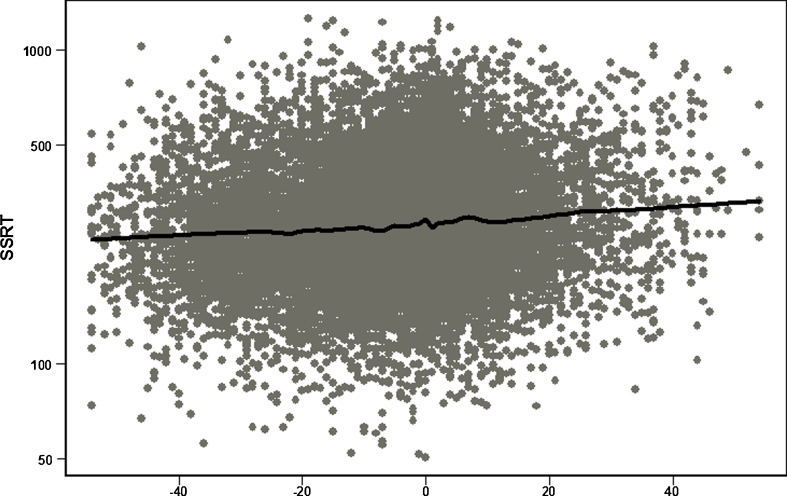
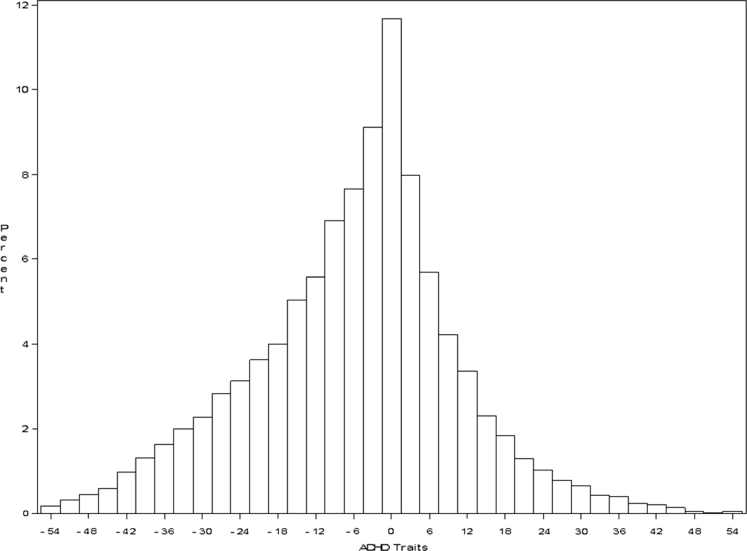
Endophenotypes or intermediate phenotypes are of great interest in neuropsychiatric genetics because of their potential for facilitating gene discovery. We evaluated response inhibition, latency and variability measures derived from the stop task as endophenotypes of ADHD by testing whether they were related to ADHD traits in the general population, heritable and shared genetic risk with ADHD traits. Participants were 16,099 children and adolescents, ages 6 to 18 years who visited a local science center. We measured ADHD traits using the Strengths and Weaknesses of ADHD-symptoms and Normal-Behavior (SWAN) rating scale and performance on the stop signal task (SST)-response inhibition (SSRT), response latency (GoRT), and response variability (GoRTSD). Regression analysis was used to assess the relationship of cognitive measures and ADHD traits while controlling for family, age, sex, ethnicity, socioeconomic status and treatment status. Heritability of ADHD and cognitive traits was estimated using SOLAR in 7,483 siblings from 3,507 families that included multiple siblings. Bivariate relationships between pairs of variables were examined. Individuals with greater ADHD trait scores had worse response inhibition, slower response latency, and greater variability. Younger participants and girls had inferior performance although the gender effects were minimal and evident in youngest participants. Inhibition, latency, variability, total ADHD traits, inattention and hyperactivity-impulsivity scores were significantly heritable. ADHD traits and inhibition, but not latency or variability were coheritable. In the largest study in the general population, we found support for the validity of response inhibition as an endophenotype of ADHD.
Overview
The claims and statistics of this paper haven’t been checked yet.
Free: it reads the open-access text and checks the first 5 claims that cite a source we can check. Create a free account to check every claim.
Integrity signals
Registry
Cites
Statistics
Figures
Verification
Claims the paper makes
The claims and statistics of this paper haven’t been checked yet.
Free: it reads the open-access text and checks the first 5 claims that cite a source we can check. Create a free account to check every claim.
Claims other papers make about this one
Each is checked against this paper’s own text: does it say what the citing paper says it does?
The source backs part of the claim, not all of it — or backs it for a different population, condition or comparison.
In the citing paper
“Research has shown that greater ADHD traits are associated with longer SSRT and gender affects at younger ages (e.g., Crosbie et al., 2013)”
From Response Inhibition in Youth Undergoing Intensive Treatment for Obsessive Compulsive Disorder (2023) · cites this paper as Crosbie et al., 2013
Experimental — accuracy not yet measuredThe cited source says what the claim attributes to it.
In the citing paper
“Evidence indeed suggests that impairments in EF are related to deficits in attention, hyperactivity and impulsivity [6], [7], [8], [9], [10], [11]”
In the citing paper
“The serious game is based on ADHD theories which argue that deficits in executive functioning are related to impulsivity, hyperactivity, and attention (69–77).”
From Serious Games for Mental Health: Are They Accessible, Feasible, and Effective? A Systematic Review and Meta-analysis (2017) · cites this paper as [73]
Self-check
Percentages, sums and reported differences re-computed from the paper’s own numbers.
The self-check needs the paper’s full text.
Citations
Cites
The Endophenotype Concept in Psychiatry: Etymology and Strategic Intentions
Gottesman, I. I., & Gould, T. D. (2003) · American Journal of Psychiatry · doi:10.1176/appi.ajp.160.4.636 · Cited by 5,615 · cited 3×
“Potentially useful endophenotypes are those that are associated with the disorder, evident in relatives because of their increased genetic risk, heritable and share genetic risk with the disease phenotype (Crosbie et al. 2008; Gottesman and Gould 2003; Kendler and Neale 2010).”
BackgroundMultipoint Quantitative-Trait Linkage Analysis in General Pedigrees
Almasy, L., & Blangero, J. (1998) · The American Journal of Human Genetics · doi:10.1086/301844 · Cited by 3,028 · cited 6×
“SOLAR decomposes the total variance of the phenotype into components that are the result of genetic effects (i.e. polygenic, additive genetic variance), measured covariates and random environmental effects (i.e. measured environmental factors and random unmeasured factors).”
BackgroundMethodInfluentialIndividual differences in executive functions are almost entirely genetic in origin.
Friedman, N. P., Miyake, A., Young, S. E., DeFries, J. C., Corley, R. P., & Hewitt, J. K. (2008) · Journal of Experimental Psychology: General · doi:10.1037/0096-3445.137.2.201 · Cited by 1,547 · cited 9×
“Friedman et al. (2008) has argued that combining multiple cognitive measures into a latent factor can increase the heritability of clusters of executive control measures by minimizing the effect of variance not attributable to the particular executive control construct.”
BackgroundResultInfluentialImpulsivity and Inhibitory Control
Logan, G. D., Schachar, R. J., & Tannock, R. (1997) · Psychological Science · doi:10.1111/j.1467-9280.1997.tb00545.x · Cited by 1,394 · cited 5×
“Regression analysis was conducted to identify the best combination of variables making a unique contribution to SSRT, GoRT and GoRTSD while considering family as a random effect (Singer 1998).”
BackgroundMethodInfluentialSelf-citationUsing SAS PROC MIXED to Fit Multilevel Models, Hierarchical Models, and Individual Growth Models
Singer, J. D. (1998) · Journal of Educational and Behavioral Statistics · doi:10.2307/1165280 · Cited by 1,092 · cited 2×
“Regression analysis was conducted to identify the best combination of variables making a unique contribution to SSRT, GoRT and GoRTSD while considering family as a random effect (Singer 1998).”
BackgroundMethodDevelopment of inhibitory control across the life span.
Williams, B. R., Ponesse, J. S., Schachar, R. J., Logan, G. D., & Tannock, R. (1999) · Developmental Psychology · doi:10.1037/0012-1649.35.1.205 · Cited by 889 · cited 2×
“Older participants exhibited better response inhibition than did younger participants as has been found in most (Williams et al. 1999) but not all (Friedman et al. 2008; Young et al. 2009) studies of inhibition and other executive functions.”
ResultSelf-citationA common genetic variant is associated with adult and childhood obesity.
Herbert, A., Gerry, N. P., McQueen, M. B., Heid, I. M., Pfeufer, A., Illig, T., Wichmann, H.-E., Meitinger, T., Hunter, D., Hu, F. B., et al. (2006) · Science · doi:10.1126/science.1124779 · Cited by 732 · cited 1×
“The approach has been successful in studies of QT interval (Arking et al. 2006), obesity (Herbert et al. 2006), foetal haemoglobin level (Menzel and Thein 2009), and in one previous candidate gene study for ADHD traits (Cornish et al. 2005).”
ResultModels of response inhibition in the stop-signal and stop-change paradigms
Verbruggen, F., & Logan, G. D. (2009) · Neuroscience & Biobehavioral Reviews · doi:10.1016/j.neubiorev.2008.08.014 · Cited by 724 · cited 4×
“In this study, we use the stop signal task (SST) (Logan et al. 1997; Verbruggen and Logan 2009a) to investigate the relationship of response inhibition, latency and variability and ADHD traits in the general population.”
BackgroundMethodInfluentialTobin, M. D., Sheehan, N. A., Scurrah, K. J., & Burton, P. R. (2005) · Statistics in Medicine · doi:10.1002/sim.2165 · Cited by 691 · cited 3×
“We addressed this potential confound with what is thought to be the optimal strategy, namely by estimating the effect of stimulant treatment on inhibition from a prior study in order to introduce a correction among medicated individuals, thereby reducing the bias arising from treatment or from their exclusion (Rice et…”
BackgroundThe cognitive-energetic model: an empirical approach to attention-deficit hyperactivity disorder
Sergeant, J. (2000) · Neuroscience & Biobehavioral Reviews · doi:10.1016/s0149-7634(99)00060-3 · Cited by 645 · cited 2×
“71) (Lipszyc and Schachar 2010; Sergeant 2000) in distinguishing individuals with and without an ADHD diagnosis.”
BackgroundInfluentialInhibitory control and psychopathology: A meta-analysis of studies using the stop signal task
LIPSZYC, J., & SCHACHAR, R. (2010) · Journal of the International Neuropsychological Society · doi:10.1017/s1355617710000895 · Cited by 627 · cited 5×
“71) (Lipszyc and Schachar 2010; Sergeant 2000) in distinguishing individuals with and without an ADHD diagnosis.”
BackgroundResultInfluentialSelf-citationA common genetic variant in the NOS1 regulator NOS1AP modulates cardiac repolarization
Arking, D. E., Pfeufer, A., Post, W., Kao, W. H. L., Newton-Cheh, C., Ikeda, M., West, K., Kashuk, C., Akyol, M., Perz, S., et al. (2006) · Nature Genetics · doi:10.1038/ng1790 · Cited by 537 · cited 2×
“The approach has been successful in studies of QT interval (Arking et al. 2006), obesity (Herbert et al. 2006), foetal haemoglobin level (Menzel and Thein 2009), and in one previous candidate gene study for ADHD traits (Cornish et al. 2005).”
MethodResultMeta-Analysis of Genome-Wide Association Studies of Attention-Deficit/Hyperactivity Disorder
Neale, B. M., Medland, S. E., Ripke, S., Asherson, P., Franke, B., Lesch, K.-P., Faraone, S. V., Nguyen, T. T., Schäfer, H., Holmans, P., et al. (2010) · Journal of the American Academy of Child & Adolescent Psychiatry · doi:10.1016/j.jaac.2010.06.008 · Cited by 450 · cited 2×
“Meta-analyses of ADHD linkage studies supports genome-wide significance on 16q21-16q24 (Zhou et al. 2008) but the largest and most comprehensive genome-wide association study did not identify any genome-wide significant findings (Franke et al. 2009; Neale et al. 2010).”
BackgroundGenome-wide association studies in ADHD
Franke, B., Neale, B. M., & Faraone, S. V. (2009) · Human Genetics · doi:10.1007/s00439-009-0663-4 · Cited by 422 · cited 2×
“Meta-analyses of ADHD linkage studies supports genome-wide significance on 16q21-16q24 (Zhou et al. 2008) but the largest and most comprehensive genome-wide association study did not identify any genome-wide significant findings (Franke et al. 2009; Neale et al. 2010).”
BackgroundYoung, S. E., Friedman, N. P., Miyake, A., Willcutt, E. G., Corley, R. P., Haberstick, B. C., & Hewitt, J. K. (2009) · Journal of Abnormal Psychology · doi:10.1037/a0014657 · Cited by 420 · cited 4×
“Older participants exhibited better response inhibition than did younger participants as has been found in most (Williams et al. 1999) but not all (Friedman et al. 2008; Young et al. 2009) studies of inhibition and other executive functions.”
BackgroundResultInfluentialEndophenotype: a conceptual analysis
Kendler, K. S., & Neale, M. C. (2010) · Molecular Psychiatry · doi:10.1038/mp.2010.8 · Cited by 373 · cited 2×
“Potentially useful endophenotypes are those that are associated with the disorder, evident in relatives because of their increased genetic risk, heritable and share genetic risk with the disease phenotype (Crosbie et al. 2008; Gottesman and Gould 2003; Kendler and Neale 2010).”
BackgroundThe use of likelihood-based confidence intervals in genetic models
Neale, M. C., & Miller, M. B. (1997) · Behavior Genetics · doi:10.1023/a:1025681223921 · Cited by 310 · cited 2×
“The largest difference in GoRT between the lowest and highest ADHD trait score of 30 ms (ES00.”
BackgroundMethodTANNOCK, R., ICKOWICZ, A., & SCHACHAR, R. (1995) · Journal of the American Academy of Child & Adolescent Psychiatry · doi:10.1097/00004583-199507000-00012 · Cited by 305 · cited 4×
“On the other hand, stimulants are known to improve response inhibition (Tannock et al. 1995) raising the possibility that our data could be censored at the high end of the distribution.”
BackgroundMethodInfluentialSelf-citationAntidepressants in panic disorder: clinical and preclinical mechanisms.
Conners, C. K. (1998) · PubMed · Cited by 282
Swanson, J., Oosterlaan, J., Murias, M., Schuck, S., Flodman, P., Spence, M. A., Wasdell, M., Ding, Y., Chi, H.-C., Smith, M., et al. (2000) · Proceedings of the National Academy of Sciences · doi:10.1073/pnas.080070897 · Cited by 267 · cited 2×
“Several risk alleles are associated with poor inhibition (Bellgrove and Mattingley 2008; Langley et al. 2004; Swanson et al. 2000) and with brain activity associated with response inhibition (Barnes et al.”
BackgroundSelf-citationCornish, K. M., Manly, T., Savage, R., Swanson, J., Morisano, D., Butler, N., Grant, C., Cross, G., Bentley, L., & Hollis, C. P. (2005) · Molecular Psychiatry · doi:10.1038/sj.mp.4001641 · Cited by 220 · cited 5×
“Typically, there are several such participatory research studies going on at the Science Centre at any one time as part of the mission of the Centre.”
BackgroundResultInfluentialSelf-citationMeta‐analysis of genome‐wide linkage scans of attention deficit hyperactivity disorder
Zhou, K., Dempfle, A., Arcos‐Burgos, M., Bakker, S. C., Banaschewski, T., Biederman, J., Buitelaar, J., Castellanos, F. X., Doyle, A., Ebstein, R. P., et al. (2008) · American Journal of Medical Genetics Part B: Neuropsychiatric Genetics · doi:10.1002/ajmg.b.30878 · Cited by 201 · cited 2×
“Meta-analyses of ADHD linkage studies supports genome-wide significance on 16q21-16q24 (Zhou et al. 2008) but the largest and most comprehensive genome-wide association study did not identify any genome-wide significant findings (Franke et al. 2009; Neale et al. 2010).”
BackgroundLangley, K., Marshall, L., van den Bree, M., Thomas, H., Owen, M., O’Donovan, M., & Thapar, A. (2004) · American Journal of Psychiatry · doi:10.1176/appi.ajp.161.1.133 · Cited by 183 · cited 1×
“Several risk alleles are associated with poor inhibition (Bellgrove and Mattingley 2008; Langley et al. 2004; Swanson et al. 2000) and with brain activity associated with response inhibition (Barnes et al. 2011; Cummins et al. 2011).”
BackgroundReaction time performance in ADHD: improvement under fast-incentive condition and familial effects
ANDREOU, P., NEALE, B. M., CHEN, W., CHRISTIANSEN, H., GABRIELS, I., HEISE, A., MEIDAD, S., MULLER, U. C., UEBEL, H., BANASCHEWSKI, T., et al. (2007) · Psychological Medicine · doi:10.1017/s0033291707000815 · Cited by 182 · cited 2×
“31) are comparable to heritability estimates from prior studies of executive functions, specifically those on SSRT (Andreou et al. 2007; Frazier-Wood et al. 2012; Friedman et al. 2008; Kuntsi et al. 2010; Schachar et al. 2011).”
ResultInfluentialAcross the continuum of attention skills: a twin study of the SWAN ADHD rating scale
Polderman, T. J. C., Derks, E. M., Hudziak, J. J., Verhulst, F. C., Posthuma, D., & Boomsma, D. I. (2007) · Journal of Child Psychology and Psychiatry · doi:10.1111/j.1469-7610.2007.01783.x · Cited by 171 · cited 4×
“…Parent and Teacher Rating Scales (Conners 1998) and SWAN ratings of approximately 0.90 for teacher ratings and 0.80 for parent ratings (Cornish et al. 2005) and there is high agreement on which individuals were in the extremes of the distribution on these two measures (Polderman et al. 2007).”
BackgroundMethodResultInfluentialThe Molecular Genetics of Executive Function: Role of Monoamine System Genes
Barnes, J. J. M., Dean, A. J., Nandam, L. S., O'Connell, R. G., & Bellgrove, M. A. (2011) · Biological Psychiatry · doi:10.1016/j.biopsych.2010.12.040 · Cited by 164 · cited 2×
“2000) and with brain activity associated with response inhibition (Barnes et al. 2011; Cummins et al. 2011).”
BackgroundKuntsi, J., Wood, A. C., Johnson, K. A., Andreou, P., Arias-Vasquez, A., Buitelaar, J. K., Rommelse, N. N. J., Sergeant, J. A., Sonuga-Barke, E. J., Uebel, H., et al. (2010) · Archives of General Psychiatry · doi:10.1001/archgenpsychiatry.2010.139 · Cited by 162 · cited 3×
“31) are comparable to heritability estimates from prior studies of executive functions, specifically those on SSRT (Andreou et al. 2007; Frazier-Wood et al. 2012; Friedman et al. 2008; Kuntsi et al. 2010; Schachar et al. 2011).”
BackgroundResultInfluentialCrosbie, J., Pérusse, D., Barr, C. L., & Schachar, R. J. (2007) · Neuroscience & Biobehavioral Reviews · doi:10.1016/j.neubiorev.2007.05.002 · Cited by 146 · cited 3×
“Potentially useful endophenotypes are those that are associated with the disorder, evident in relatives because of their increased genetic risk, heritable and share genetic risk with the disease phenotype (Crosbie et al. 2008; Gottesman and Gould 2003; Kendler and Neale 2010).”
BackgroundSelf-citationClinical Predictors of Acute Response With Olanzapine in Psychotic Mood Disorders
Zarate, C. A., Narendran, R., Tohen, M., Greaney, J. J., Berman, A., Pike, S., & Madrid, A. (1998) · The Journal of Clinical Psychiatry · doi:10.4088/jcp.v59n0106 · Cited by 135
van der Sluis, S., Verhage, M., Posthuma, D., & Dolan, C. V. (2010) · PLoS ONE · doi:10.1371/journal.pone.0013929 · Cited by 134 · cited 1×
“Identification of the genetic contributions to the disorder is complicated by phenotypic and genetic heterogeneity, low penetrance and low statistical power of existing studies (van der Sluis et al. 2010).”
BackgroundNeuropsychological correlates of emotional lability in children with ADHD
Banaschewski, T., Jennen‐Steinmetz, C., Brandeis, D., Buitelaar, J. K., Kuntsi, J., Poustka, L., Sergeant, J. A., Sonuga‐Barke, E. J., Frazier‐Wood, A. C., Albrecht, B., et al. (2012) · Journal of Child Psychology and Psychiatry · doi:10.1111/j.1469-7610.2012.02596.x · Cited by 122
Hay, D. A., Bennett, K., Lévy, F., Sergeant, J. A., & Swanson, J. M. (2006) · Biological Psychiatry · doi:10.1016/j.biopsych.2006.04.040 · Cited by 114 · cited 3×
“The heritability of ADHD traits as measured by the SWAN is comparable to some (Hay et al. 2007) but not other (Polderman et al. 2007) twin studies and is lower than typically reported using other measures of ADHD.”
BackgroundResultSelf-citationPower of Selective Genotyping in Genetic Association Analyses of Quantitative Traits
Van Gestel, S., Houwing-Duistermaat, J. J., Adolfsson, R., van Duijn, C. M., & Van Broeckhoven, C. (2000) · Behavior Genetics · doi:10.1023/a:1001907321955 · Cited by 108 · cited 1×
“The “extreme trait” (also known as “selective genotyping”) approach using endophenotypes is a particularly powerful and cost-effective design for detecting genetic association (Huang and Lin 2007; Van Gestel et al. 2000).”
MethodGenetic influences on attention deficit hyperactivity disorder
Faraone, S. V., & Doyle, A. E. (2000) · Current Psychiatry Reports · doi:10.1007/s11920-000-0059-6 · Cited by 106 · cited 1×
“…the observed interfamilial correlation as indicative of genetic effects because previous twin studies show that familial influences on ADHD traits (Faraone and Doyle 2000) and on SST parameters (Schachar et al. 2011) are largely due to genetic effects with minimal influence of shared environment.”
ResultAdvances in genetic findings on attention deficit hyperactivity disorder
THAPAR, A., LANGLEY, K., OWEN, M. J., & O'DONOVAN, M. C. (2007) · Psychological Medicine · doi:10.1017/s0033291707000773 · Cited by 106 · cited 2×
“…disorder characterized by extremes of inattention, hyperactivity and impulsivity, by clinical and genetic heterogeneity and by high heritability whether it is measured as a discrete diagnostic entity or as a continuous trait in the general population (Swanson et al. 2009; Thapar et al. 2007).”
BackgroundInformative phenotypes for genetic studies of psychiatric disorders
Szatmari, P., Maziade, M., Zwaigenbaum, L., Mérette, C., Roy, M., Joober, R., & Palmour, R. (2007) · American Journal of Medical Genetics Part B: Neuropsychiatric Genetics · doi:10.1002/ajmg.b.30426 · Cited by 89 · cited 2×
“Endophenotypes are biological traits that mediate the association between some of the genetic risks for a disease and the disease phenotype and which have a genetic architecture that is less complex than that of the disorder itself (Crosbie et al. 2008; Gottesman and Gould 2003; Szatmari et al. 2007).”
BackgroundSchachar, R. J., Crosbie, J., Barr, C. L., Ornstein, T. J., Kennedy, J., Malone, M., Roberts, W., Ickowicz, A., Tannock, R., Chen, S., et al. (2005) · American Journal of Psychiatry · doi:10.1176/appi.ajp.162.6.1076 · Cited by 87 · cited 1×
“63 (Lipszyc and Schachar 2010) and that inhibitory control is worse in nonADHD siblings and in parents of ADHD probands than it is in normally developing individuals (Goos et al. 2009; Schachar et al. 2005).”
BackgroundSelf-citationGoos, L. M., Crosbie, J., Payne, S., & Schachar, R. (2009) · American Journal of Psychiatry · doi:10.1176/appi.ajp.2009.08040621 · Cited by 86 · cited 2×
“63 (Lipszyc and Schachar 2010) and that inhibitory control is worse in nonADHD siblings and in parents of ADHD probands than it is in normally developing individuals (Goos et al. 2009; Schachar et al. 2005).”
BackgroundInfluentialSelf-citationMolecular Genetics of Attention
Bellgrove, M. A., & Mattingley, J. B. (2008) · Annals of the New York Academy of Sciences · doi:10.1196/annals.1417.013 · Cited by 81 · cited 1×
“Several risk alleles are associated with poor inhibition (Bellgrove and Mattingley 2008; Langley et al. 2004; Swanson et al. 2000) and with brain activity associated with response inhibition (Barnes et al.”
BackgroundDopamine transporter genotype predicts behavioural and neural measures of response inhibition
Cummins, T. D. R., Hawi, Z., Hocking, J., Strudwick, M., Hester, R., Garavan, H., Wagner, J., Chambers, C. D., & Bellgrove, M. A. (2012) · Molecular Psychiatry · doi:10.1038/mp.2011.104 · Cited by 74 · cited 2×
“2000) and with brain activity associated with response inhibition (Barnes et al. 2011; Cummins et al. 2011).”
BackgroundHeritability of Response Inhibition in Children
Schachar, R. J., Forget-Dubois, N., Dionne, G., Boivin, M., & Robaey, P. (2010) · Journal of the International Neuropsychological Society · doi:10.1017/s1355617710001463 · Cited by 69 · cited 5×
“31) are comparable to heritability estimates from prior studies of executive functions, specifically those on SSRT (Andreou et al. 2007; Frazier-Wood et al. 2012; Friedman et al. 2008; Kuntsi et al. 2010; Schachar et al. 2011).”
BackgroundResultInfluentialSelf-citationEfficient Association Mapping of Quantitative Trait Loci with Selective Genotyping
Huang, B. E., & Lin, D. Y. (2007) · The American Journal of Human Genetics · doi:10.1086/512727 · Cited by 64 · cited 1×
“The “extreme trait” (also known as “selective genotyping”) approach using endophenotypes is a particularly powerful and cost-effective design for detecting genetic association (Huang and Lin 2007; Van Gestel et al. 2000).”
MethodFrazier‐Wood, A. C., Bralten, J., Arias‐Vasquez, A., Luman, M., Ooterlaan, J., Sergeant, J., Faraone, S. V., Buitelaar, J., Franke, B., Kuntsi, J., et al. (2012) · American Journal of Medical Genetics Part B: Neuropsychiatric Genetics · doi:10.1002/ajmg.b.32018 · Cited by 42 · cited 4×
“Twin studies have found that response variability was heritable (Frazier-Wood et al. 2012; Friedman et al. 2008; Young et al. 2009).”
BackgroundResultInfluentialGenetic architecture of hemoglobin F control
Menzel, S., & Thein, S. L. (2009) · Current Opinion in Hematology · doi:10.1097/moh.0b013e328329d07a · Cited by 37 · cited 1×
“The approach has been successful in studies of QT interval (Arking et al. 2006), obesity (Herbert et al. 2006), foetal haemoglobin level (Menzel and Thein 2009), and in one previous candidate gene study for ADHD traits (Cornish et al. 2005).”
ResultDSM-V and the future diagnosis of attention-deficit/hyperactivity disorder
Swanson, J. M., Wigal, T., & Lakes, K. (2009) · Current Psychiatry Reports · doi:10.1007/s11920-009-0060-7 · Cited by 36 · cited 2×
“…disorder characterized by extremes of inattention, hyperactivity and impulsivity, by clinical and genetic heterogeneity and by high heritability whether it is measured as a discrete diagnostic entity or as a continuous trait in the general population (Swanson et al. 2009; Thapar et al. 2007).”
BackgroundSelf-citationRice, T., Sung, Y. J., Shi, G., Gu, C. C., & Rao, D. C. (2009) · BMC Proceedings · doi:10.1186/1753-6561-3-s7-s52 · Cited by 4 · cited 1×
“…thought to be the optimal strategy, namely by estimating the effect of stimulant treatment on inhibition from a prior study in order to introduce a correction among medicated individuals, thereby reducing the bias arising from treatment or from their exclusion (Rice et al. 2009; Tobin et al. 2005).”
BackgroundS08-02 Dopamine Transporter Genotype Predicts Behavioural and Neural Measures of Response Inhibition
Cummins, T. D. R., Hawi, Z., Hocking, J. S., Strudwick, M. W., Hester, R., Garavan, H., Wagner, J., Chambers, C., & Bellgrove, M. A. (2011) · Asian Journal of Psychiatry · doi:10.1016/s1876-2018(11)60045-2 · Cited by 2 · cited 1×
“Several risk alleles are associated with poor inhibition (Bellgrove and Mattingley 2008; Langley et al. 2004; Swanson et al. 2000) and with brain activity associated with response inhibition (Barnes et al. 2011; Cummins et al. 2011).”
Background
Research works printed but not linked: 2
- American Psychiatric Association Diagnostic and statistical manual of mental disorders, 4th edition (DSM-IV) 1994 Washington, DC American Psychiatric Association
- Verbruggen F Logan GD Models of response inhibition in the stop-signal and stop-change paradigms Neuroscience and Biobehavioral Reviews 2009 33 647 661 10.1016/j.neubiorev.2008.08.014 18822313 PMC2696813 · DOI · Paper page
Cited by
The reliability paradox: Why robust cognitive tasks do not produce reliable individual differences
Hedge, C., Powell, G., & Sumner, P. (2018) · Behavior Research Methods · doi:10.3758/s13428-017-0935-1 · Cited by 1,457
“…of the neural, genetic, and behavioral correlates of performance on tasks with their origins in experimental research (e.g., Chen et al., 2015; Crosbie et al., 2013; Forstmann et al., 2012; Marhe, Luijten, van de Wetering, Smits, & Franken, 2013; L. Sharma, Markon, & Clark, 2014; Sumner,…”
BackgroundMacKillop, J., Weafer, J., C. Gray, J., Oshri, A., Palmer, A., & de Wit, H. (2016) · Psychopharmacology · doi:10.1007/s00213-016-4372-0 · Cited by 408
“…action, and IPTs (Eisenberg et al. 2007; Benko et al. 2010; Filbey et al. 2012), and there is increasing evidence of substantial heritability for impulsive choice from twin studies and preclinical models (Anokhin et al. 2011; Crosbie et al. 2013; Richards et al. 2013; Anokhin et al. 2014).”
Lau, H. M., Smit, J. H., Fleming, T. M., & Riper, H. (2017) · Frontiers in Psychiatry · doi:10.3389/fpsyt.2016.00209 · Cited by 328
Dovis, S., Van der Oord, S., Wiers, R. W., & Prins, P. J. M. (2015) · PLOS ONE · doi:10.1371/journal.pone.0121651 · Cited by 272
“Evidence indeed suggests that impairments in EF are related to deficits in attention, hyperactivity and impulsivity [6], [7], [8], [9], [10], [11], and with associated problems such as deficient academic functioning [12], [13].”
BackgroundLinking RDoC and HiTOP: A new interface for advancing psychiatric nosology and neuroscience
Michelini, G., Palumbo, I. M., DeYoung, C. G., Latzman, R. D., & Kotov, R. (2021) · Clinical Psychology Review · doi:10.1016/j.cpr.2021.102025 · Cited by 273
Metadata
- Authors
- Crosbie, J., Arnold, P., Paterson, A., Swanson, J., Dupuis, A., Li, X., Shan, J., Goodale, T., Tam, C., Strug, L. J., & Schachar, R. J.
- Affiliations
- University of Toronto (CA)
- Florida International University (US)
- Corresponding author
- Schachar, R. J.
- Venue
- Journal of Abnormal Child Psychology
- Published
- 2013-01-13
- Volume
- 41
- Issue
- 3
- Pages
- 497-507
- ISSN
- 0091-0627 (ISSN-L)
- 1573-2835
- PMC
- PMC3600128
- OpenAlex
- W1992297809
- Cited by
- 218
- References
- 48
- Citations by year
- 2026: 7 · 2025: 14 · 2024: 8 · 2023: 12 · 2022: 16 · 2021: 29 · 2020: 22 · 2019: 15 · 2018: 15 · 2017: 20 · 2016: 21 · 2015: 23 · 2014: 11 · 2013: 4
- FWCI
- 13.98
- Type
- journal article
- Language
- en
- Open access
- hybrid
- doi.org
- Locations
- Research on Child and Adolescent Psychopathology (publishedVersion, cc-by)
- Europe PMC (PubMed Central) (publishedVersion)
- PubMed Central (publishedVersion, cc-by)
- PubMed (publishedVersion)
- Florida International University Digital Commons (Florida International University) (submittedVersion)
- eScholarship (California Digital Library) (submittedVersion)
- Funders
- Canadian Institutes of Health Research (44070, 64277, 74699)
- Topics
- Health Sciences › Medicine › Psychiatry and Mental health › Attention Deficit Hyperactivity Disorder
- Life Sciences › Neuroscience › Cognitive Neuroscience › Autism Spectrum Disorder Research
- Life Sciences › Neuroscience › Cellular and Molecular Neuroscience › Neurotransmitter Receptor Influence on Behavior
- Keywords
- response inhibition, ADHD traits, endophenotypes, heritability, stop-signal task, response latency, response variability, children and adolescents, inattention, hyperactivity/impulsivity, gender differences
- MeSH terms
- Adolescent, Attention Deficit Disorder with Hyperactivity, Child, Female, Humans, Inhibition, Psychological, Male, Psychomotor Performance, Reaction Time, Regression Analysis, Endophenotypes
About these checks
Registry, retraction, Cites and statistics results are computed, not judged, with one exception: a printed reference that no index lists is read once by a model before it counts as a citation error. Claims are extracted by a model and kept only when their quote appears verbatim in the text; each cited source is then checked, with a model’s help, for whether it says what the claim relies on. Those verdicts can be wrong — read the claim’s quote and the cited source before relying on one.
Statistics and arithmetic are recomputed, not judged.
Confidence bands are shown only for fields calibrated on our annotated test set. None is calibrated yet, so no band is shown.
What counts as a claim ›How we measure confidence ›How we check this ›
Are you an author, or do you see a problem with this page? Request a review
Data sources
Bibliographic data: Semantic Scholar, OpenAlex, Crossref.
Contains information from the Semantic Scholar Academic Graph Datasets, made available under the ODC Attribution License (ODC-BY 1.0).
Semantic Scholar’s data is described in: Kinney, R., et al. (2023). The Semantic Scholar Open Data Platform. arXiv:2301.10140.
